Gaming

Home Gaming Page 21

How Ninja Theory Paved A Way For The Elden Ring Movie 

How Ninja Theory Paved A Way For The Elden Ring Movie 


Earlier this week, it was reported that Microsoft has entered negotiations to shut down, or grant independence to, acclaimed action-game studio Ninja Theory just a mere eight days after the studio revealed its newest title, Senua, at this year’s Xbox Games Showcase. While the potential dismantling of a tenured studio is always tragic, Ninja Theory leaves behind a legacy that goes beyond video games, ultimately shaping Hollywood films that perhaps would not have been made without the studio’s ambition.

Founded in 2000 under the name Just Add Monsters, Ninja Theory built itself upon a promise of delivering high-octane action games with unique aesthetics, such as Kung Fu Chaos and Heavenly Sword. The studio emphasized creativity and narrative as its core values and sought to deliver AAA-level experiences despite its smaller team and budgets.

In 2009 after the studio delivered their first Sony exclusive with Heavenly Sword, this ambition led founder Tameem Antoniades and his team to visit numerous Hollywood studios to pitch their next project, Enslaved: Odyssey to the West, as a CGI film. The project would be a retelling of the classic Chinese novel Journey to the West, but set 150 years after mankind has been wiped out in an apocalyptic event. However, Ninja Theory found itself unable to convince a movie studio to fund it. Ninja Theory then began pitching it as a video game and, eventually, struck a deal with Bandai Namco to publish the title.

With development of the game fully underway, the studio then opted to bring on Hollywood screenwriter Alex Garland, who had just begun to make a name for himself for his work on films such as 28 Days Later and Sunshine. Eager to find a way to break into game development, Garland offered his services to help make Enslaved’s story more cinematic. He took an active role in the game’s design, stripping down the exposition in the script and allowing the gameplay and environments to convey information to the player. According to Antoniades, Garland was “intimidating” to work with, but the studio founder later praised Garland’s gameplay design choices as the correct decisions in retrospect.

Enslaved: Odyssey to the West

Upon its release, it seemed as though the general public agreed. Enslaved: Odyssey to the West released in 2010 to critical acclaim, with GameSpot’s review calling it, “A great adventure that has just enough excitement and diversity in the gameplay to keep you engaged” and a game with “striking visuals.”

For the studio’s next project, Ninja Theory would collaborate once again with Garland. After being impressed with the studio’s previous titles, Capcom reached out to Ninja Theory to reboot its Devil May Cry franchise. Antoniades would write the game’s script with Garland, while the latter would also serve as script and story supervisor. The reboot, DmC: Devil May Cry, marked a drastic departure from the previous, gothic-inspired games in the franchise. Instead, DmC offered a dark and gritty take on the world that was inspired by a grittiness similar to Christopher Nolan’s The Dark Knight and British punk-rock sensibilities. The game reworked the series’ lore, and served as a refresh of the origin of protagonist Dante as he traversed the world between Heaven and Hell.

DmC: Devil May Cry

DmC released in 2013, and while praised for its gameplay mechanics, was largely reviled by fans of the series and seen as a commercial failure by Capcom. Its biggest criticisms were the disregard for series’ lore and the characterization of Dante. However, Devil May Cry series producer Matt Walker praised the game, saying it had “an amazing world all its own that could only have been produced by the amazing artists and imaginations at Ninja Theory.”

Alex Garland would end his relationship with Ninja Theory with DmC: Devil May Cry, opting instead to return to the world of filmmaking. The following year, Garland made his directorial debut with the indie darling Ex Machina; he would then go on to make films such as Annihilation and Civil War, both of which were critically praised. 

Interestingly, though perhaps unsurprisingly, Garland’s style of filmmaking features the same storytelling elements that were present in his games, and it features cinematic action sequences that feel ripped straight from a video game.

Ex Machina (2014)

In a full circle moment, it was announced in 2024 that Alex Garland would write and direct an adaptation of From Software’s Elden Ring for A24. The story goes that, after being impressed while playing through the game, Garland decided to write a 160-page spec script and fly all the way to Japan to directly pitch it to game director Hidetaka Miyazaki, ultimately earning the game studio’s approval.

Alex Garland took what he learned working with Ninja Theory and applied it to a whole different medium of entertainment. Without the ambition and collaborative nature cultivated at Ninja Theory–ideas that challenged what it means to be a AAA action game or a narrative-focused video game–this, presumably, wouldn’t have taken place. Ninja Theory helped give filmmaking one of its most ambitious directors, among many other achievements. To see them close their doors would not only be a great loss to Microsoft and Xbox, but to gaming as a whole.


Source link

The Culture Awards Brings Pikachu Out For Pokémon Theme Song

The Culture Awards Brings Pikachu Out For Pokémon Theme Song


Las Culturistas podcast co-hosts Bowen Yang and Matt Rogers hosted the fifth edition of their Culture Awards, streaming on Bravo, and the variety show masquerading as a very serious awards show gave out accolades for categories like “Fastest Four-Legged Mammal” and “The Break Me Off a Piece of That Award for Man We Wanna Dip in the Chocolate.” The duo’s whole show is streaming now on Peacock if you’re one of the seven people who subscribe to that service, while the rest of us make do with clips circulating online of good bits and special guest appearances. One of those guest appearances in particular featured a star who deserves a spotlight: Pikachu.

Yang and Rogers took the stage for a campy performance of the original Pokémon anime theme song, with dancers dressed like trainers from across the series carrying props of “tall grass” similar to the kind you walk through in old Pokémon games to find and catch wild critters. Who do they find in this grass? None other than the little yellow guy himself. 

For those who aren’t aware, that’s not just any ol’ Pikachu mascot costume on the stage; it’s an official one that you might see at events like Go Fest and the World Championships tournament. In other words, this performance was an officially sanctioned collaboration between the show and The Pokémon Company. Appearing at a show like this put Pikachu in the company of some pretty NSFW performers. That’s growth for a brand that is typically very precious about its image (unless you’re the U.S. government, I guess). The official Pokemon account on Instagram even commented on a clip of the musical number, saying it was the “most iconic performance” of the night.

Anyway, you can check out Yang, Rogers, and Pikachu’s performance below. The boys have got vocals for days.


Source link

Sync and Stream: GeForce NOW Connects to Members’ Game Libraries Across Devices

Sync and Stream: GeForce NOW Connects to Members’ Game Libraries Across Devices


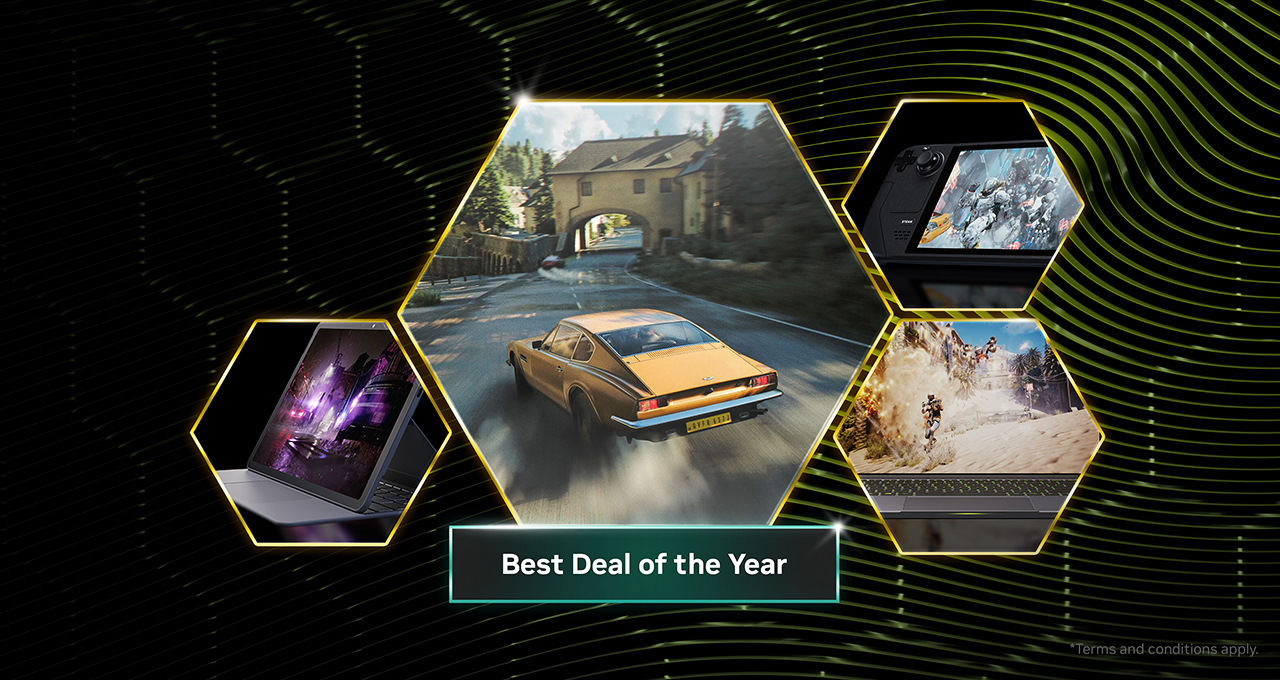
Play favorite titles from popular game libraries, keep progress synced and jump back into gaming sessions on virtually any device.

That’s the power of GeForce NOW cloud gaming.

From providing access to members’ favorite game libraries to offering some of the season’s best membership pricing, GeForce NOW is making it easier than ever to get more from the cloud this summer.

Plus, check out the seven new games arriving in the GeForce NOW library this week.

Hit Play Across Top Game Stores

That’s a whole lotta ways to play.

Whether it’s blockbuster franchises, competitive shooters, sprawling role-playing games (RPGs) or indie gems, GeForce NOW supports thousands of games from leading PC game stores, making it easy to bring existing game libraries to the cloud.

Connect supported game store accounts and stream titles with GeForce RTX power. Games that include cloud-save functionality help keep progress intact across devices. Start a game on one screen, pick up where playtime left off on another and spend less time managing installs and storage space.

Jump into fan favorites like Cyberpunk 2077 and The Witcher 3: Wild Hunt streaming through GOG. These sci-fi and fantasy favorites support cloud saves, making it easy to continue where play left off. GOG single sign-on and game library syncing — coming this summer — will make that process even smoother.

Explore ancient mysteries in the Assassin’s Creed franchise or team up for tactical action in Tom Clancy’s Rainbow Six Siege through Ubisoft+, delivering iconic worlds and competitive experiences to the cloud. 

Whether joining massive, all-in combat in Battlefield 6 or shaping the fate of Thedas with compelling companions in Dragon Age: The Veilguard, the EA app offers action-packed experiences and beloved RPGs.

Find them in the GeForce NOW app by simply searching and filtering by store.

Choose the Screen, Keep the Adventure

Gaming doesn’t always happen at a desk — community members are sharing how GeForce NOW lets them play across their favorite devices.

GeForce NOW Ambassador and cloud gaming creator Anytime Anywhere Gaming recently showcased Dead as Disco — a PC title without a native mobile version — running on an iPhone through the cloud.

As he put it: “One of the coolest benefits of GeForce NOW is I can take the same copy of the game I own on Steam and carry it to my iPhone … it’s super awesome being able to play a game on a multitude of devices without having to buy it again.”

That flexibility extends beyond mobile. One GeForce NOW member on Reddit shared being “blown away” by the experience of playing on Mac through the cloud, highlighting how GeForce RTX-powered gaming can be enjoyed across devices, no upgrades required.

Whether via phone on the go, on a MacBook between work meetings or on a TV in the living room, GeForce NOW helps make PC gaming accessible across nearly every screen.

Upgrade and Unlock More This Summer

Summer lovin’, havin’ a sale.

For a limited time, annual memberships are available at the best prices of the year:

$35 off a 12-month Performance membership
$70 off a 12-month Ultimate membership

Performance memberships deliver high-quality cloud gaming across devices, while Ultimate unlocks GeForce RTX 5080-class performance in the cloud with up to 5K resolution, up to 120 frames per second and advanced technologies like NVIDIA DLSS, ray tracing and NVIDIA Reflex.

Pair these special prices with thousands of supported games across top PC game stores. Plus, with GeForce NOW, spend less time downloading, upgrading hardware and managing storage — and more time gaming.

New on the Cloud 

In addition, members can look for the following:

Embers of the Uncrowned Demo (New release on Steam, available June 13)
Pro Cycling Manager 26 (New release on Steam, available June 15)
Aphelion (Steam)
Citizen Sleeper (Epic Game Store, free from June 18-25)
Megastore Simulator (Steam)
OPERATOR (Steam)
Super Meat Boy 3D (Xbox, available on Game Pass)

What are you planning to play this weekend? Let us know on X or in the comments below.


Source link

Gothic 1 Remake: How to Get Digger’s Dress Armor for Free

Gothic 1 Remake: How to Get Digger’s Dress Armor for Free


Gothic 1 Remake’s early game is very difficult, as most of the common enemies strike you down with one hit. It is mainly because of the lack of armor. You can get decent armor from the vendors at the Old Camp and the New Camp at a cost of hefty Ore nuggets. Wolf in the New Camp sells the Digger’s Dress, which is one of the best early armors you can get without getting into any trouble. However, there is an easy, free way to get the Digger’s Dress armor. In this guide, we will explain how to get Digger’s Dress Armor for free in Gothic 1 Remake.

How to Get Digger’s Dress Armor for Free in Gothic 1 Remake

You can get the Digger’s Dress Armor for free by speaking with Swiney at the Free Mine. While speaking with Swiney, you need to select the following dialogue options.

“I want to become a digger.”

“Yes”

Once done, Swiney will give you the Digger’s Dress for free for joining the Free Mine.

How to Reach the Free Mine in Gothic 1 Remake

The biggest challenge to get the Digger’s Dress for free is reaching the Free Mine. To get the Free Mine, you will first have to get to the New Camp. While you are in the Old Camp, speak with Drax or Mordrag. You can find Drax past the bridge from the Old Camp north gate, or you can find Mordrag near the Old Camp south gate. Speak to either of them, and you will have the option to get an escort to the New Camp.

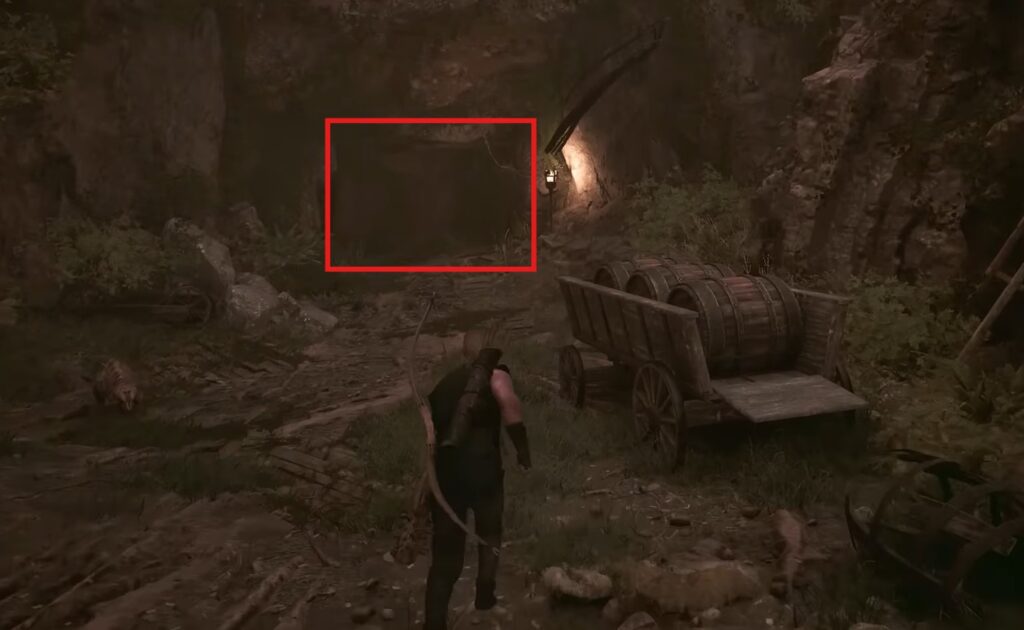
Once you are inside the New Camp, you need to follow the path uphill to get to the Free Mine. From the tavern, follow along the path on the left, up the hill. Continue ahead on this path and stick to the left side. After a few moments, you will see a waterfall ahead. Go left from here, and continue along the path until you reach the cave.

NOTE: There will be some Scavengers along the way.

Go inside the cave and continue along the cavern path to exit through the other side. There will be some Molerats inside the cave, so be careful. Once you exit the cave, continue along the path straight ahead, and you will reach the Free Mine.

Find Swiney at Free Mine

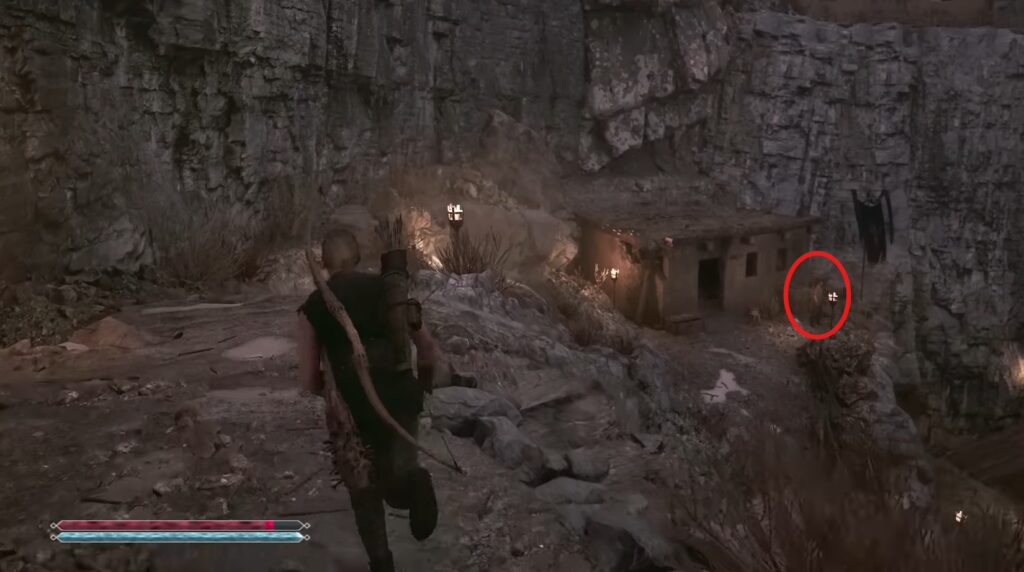
Upon reaching the Free Mine, you will see a mercenary at the entrance. Go to the left, and as you go down the path, Swiney will be standing outside his cabin. Speak with him, and you will get the Digger’s Dress armor for free.

Digger’s Dress Armor Stats

The Digger’s Dress armor has the following stats in Gothic 1 Remake.

Edge Resistance: 10

Blunt Resistance: 10

Fire Resistance: 5


Source link

Do You Really Know About Soccer? Review | TheXboxHub

Do You Really Know About Soccer? Review | TheXboxHub


If you’re like me and you’ve been listening to Lee Dixon’s commentary of World Cup 2026, you might be thinking “I could do a better job than that”. In that case, Do You Really Know About Soccer? might be for you. It’s a quiz game focused on the glorious game, and it’s a chance to brush up on your football knowledge before taking his seat pitch-side.

First up, Do You Really Know About Soccer? is NOT multiplayer. This isn’t a chance to unleash your inner Statto against your mates. This is purely a solo experience with a single game mode, where you answer increasingly difficult questions as you climb a tower. Why a tower? Presumably you kicked your ball up there and you want it back.

Do You Really Know About Soccer? question about the king of football
Do you know your stuff?

The Other Side Just Hasn’t Turned up, Jeff

Including no multiplayer mode is a bit rubbish, of course. There’s something slightly pointless about reeling out football trivia on your own. You can play as a team, of course, but there’s no denying that the lack of competitive game modes lessens the experience. I want to wow my mates with my knowledge of stadium names, thank you very much.

What is included is four rounds with five questions in each. Get a single question wrong and it’s Game Over. You need to get all twenty questions correct in a row to reach Do You Really Know About Soccer?’s end screen. There are no question categories to work through; no highscore tables; no endless runs through the game’s entire question bank.

As a quiz format, it’s far from the best. I deeply disliked that a single wrong answer would boot you back to the start. It puts a lot of onus on the questions being watertight (spoiler: they aren’t), and there needs to be a large-enough pool of questions to ensure that starting all over again doesn’t feel repetitious (spoiler: there isn’t). The format works for games like Who Wants to Be a Millionaire? because the stakes are so high, but in a low-budget quiz game, it feels deflating.

Lifelines Gives the Quiz a Lifeline

The questions are all multiple choice, with four options per question. There are also some lifelines, or power-ups, that can be bought to help you along. You can spend an accrued currency to re-roll questions or remove options, giving you a greater chance of maintaining your winning streak. It’s slightly surprising just how much currency you get: you can use a lifeline on pretty much every round and still have cash to spare. I found it a little too generous: I didn’t want a helping hand all the time.

A quiz game lives or dies on the quality of its questions, though, and that quality is spotty in Do You Really Know About Soccer?. First of all, you better expect a European and South American emphasis: there are virtually no questions on Asian or African football, for example. That’s perhaps unsurprising, but a noticeable pair of blinkers.

Do You Really Know About Soccer? question about the World CupDo You Really Know About Soccer? question about the World Cup
Simple stuff – at least to begin with

Questions in the opening rounds are farcical in how easy they are (“what shape is a football?”,  “What part of the body do you play football with?”), but I quite liked that. I could kick back and imagine the kind of person who gets them wrong. 

In the following rounds, the questions get pretty tough. You need to be well-versed in your Champions’ League and World Cup winners, as well as the scorers of the goals in each final. There are a surprising number of questions about South American leagues, which is something that I definitely need to brush up on. Where did Ronaldinho start his footballing career, for example? That was my first time being chucked out of the tower in Do You Really Know About Soccer?. (The answer is Grêmio, by the way.)

Wording that Drives you Kaka

Play for long enough, though, and you start to notice some cracks. I’m not convinced by some of the questions, or – at least – their wording. Which team ‘developed’ Haaland, for example? The multiple choice lists every club that he’s played for. Perhaps I overthought it, but I went for Borussia Dortmund, as that was where he really kicked on, but the answer was Molde FK. It makes sense in hindsight, but did the question need to be worded in such a way that the answer was debatable? Why not just ‘first club’?

Which defensive midfielder won the Ballon d’Or? My head immediately went to Lothar Matthäus or Rodri, but the answer was Luca Modric. A CDM? Modric? I started getting my “well actually”s ready, but there was no one to complain to. “Which nation is considered the home of football?”: England is one of the options, but the answer is actually Brazil.

I’m being a little critical, as the answers are generally on point. But with a one-mistake-and-you’re-out policy, a muddled question can get frustrating. You’re back to the start, armed with the answers to a few more questions. Which, as it turns out, is a useful thing to have as the questions repeat.

They’re Trying to Walk it in

And boy do they repeat. I’ve played Do You Really Know About Soccer? to completion four times now, and about three-quarters of the questions are familiar to me now. There can’t be more than 100 questions here in total, which – and I know this is a budget release – is way too low for me. I don’t want to be seeing repeated questions on a second run.

Do You Really Know About Soccer? Germany questionDo You Really Know About Soccer? Germany question
Runs out of questions pretty swiftly

The best thing I can say about Do You Really Know About Soccer? is that it’s well timed. I was well up for a football trivia game, and it arrives during the World Cup group matches. But everything else is so lacklustre, as if it was an opportunistic rushed release rather than something thought out. 

With some multiplayer, more modes, about ten times the number of questions and an editor to check the wording, Do You Really Know About Soccer? might have passed muster. But as Lee Dixon would probably say, they’ve just not turned up today. 

A football quiz game released during the World Cup is an open goal, but Do You Really Know About Soccer? has only gone and missed it.

The World Cup Is On – But Do You Really Know About Soccer? – https://www.thexboxhub.com/the-world-cup-is-on-but-do-you-really-know-about-soccer/

Buy from the Xbox Store, Optimised for Series X|S – https://www.xbox.com/en-gb/games/store/do-you-really-know-about-soccer-xbox-series/9ph8nx0gtxvd

Buy an Xbox One edition – https://www.microsoft.com/en-gb/store/p/do-you-really-know-about-soccer-xbox-one/9p9htbh878lh

Buy a Windows PC version – https://www.xbox.com/en-gb/games/store/do-you-really-know-about-soccer-windows/9p4kv5rlx5tf


Source link

Stellaris: Nomads makes exploration the heart of empire building – Adventure Gamers

Stellaris: Nomads makes exploration the heart of empire building – Adventure Gamers


Stellaris: Nomads is available now, opening Stellaris: Season 10 with a new style of play built around travel, survival and discovery across the galaxy.

Rather than asking players to begin by claiming systems and settling planets, the expansion lets them lead a civilization that exists on the move. Nomadic Empires are designed around journeys between stars, with power coming from mobility, relationships and the routes they create along the way.

That shift gives Stellaris a stronger adventure focus. Players are no longer tied to a fixed homeworld in the usual sense. Instead, their society is carried aboard Arkships, which act as mobile capitals, population centers, industrial hubs and defensive strongholds.

Each Arkship class supports a different kind of voyage. Military Arkships are built for force projection, Scientific Arkships focus on research and discovery, and Civilian Arkships support industry and resource gathering. Together, they turn the empire itself into a travelling fleet rather than a static territory.

The wider galaxy also plays a larger role in nomadic play. The Wayline Network allows players to build Waystations and establish interstellar routes that can support their own people while also providing value to settled empires. Contracts add another layer, letting nomadic civilizations complete tasks for other powers in exchange for rewards such as resources, favor and influence.

Several new origins lean into the theme of life on the move. The Sacred Path follows pilgrims seeking ancestral holy sites, while Heirs of the Khan casts players as a displaced successor hunted by marauder forces. Forever Cruise focuses on tension aboard an Arkship divided between wealthy passengers and the crew keeping it running, while Voidfarers offers a more open-ended nomadic start.

The expansion also adds the Defender of the Galaxy Ambition, the Stellar Cannon megastructure, Champion’s Forge Live! fleet tournaments, new civics, the Wanderlust Ascension Perk, renowned nomadic paragons, tradition swaps and new music.

If you want to read all about the new expansion with further detail, you can view the full announcement here.


Source link

Stellaris: Nomads brings mobile empires to Paradox’s space strategy game – VideoGamer

Stellaris: Nomads brings mobile empires to Paradox’s space strategy game – VideoGamer


You can trust VideoGamer. Our team of gaming experts spend hours testing and reviewing the latest games, to ensure you’re reading the most comprehensive guide possible. Rest assured, all imagery and advice is unique and original. Check out how we test and review games here

Paradox Interactive has released Stellaris: Nomads, the first expansion in Stellaris: Season 10, introducing civilizations that survive and grow without relying on fixed borders or traditional colonies.

The expansion is available as a standalone release, listed at £20.99, and is also included in the Season 10 pass. Its main feature is the new Nomadic Empire type, which changes the usual Stellaris loop by replacing territorial ownership with movement, contracts and mobile infrastructure.

The announcement notes that nomadic civilizations are built around Arkships, large mobile habitats that act as the centre of government, population, industry and military operations. Players can select from three Arkship classes depending on their preferred approach. The Military Class is designed for force projection, the Scientific Class supports exploration and research, and the Civilian Class focuses on industry and resource gathering.

Rather than expanding through claimed systems, nomadic empires build influence as they travel. The Wayline Network allows players to create Waystations and establish interstellar routes used for trade and resource movement. These routes can support the nomadic fleet while also benefiting settled empires.

Nomads also adds a Contract System, giving mobile civilizations a way to interact with established powers. Settled empires can issue tasks, while nomadic players can complete them for rewards such as resources, favor and influence.

The expansion includes several origins designed around different versions of life in motion. Voidfarers offers a flexible starting point, while Heirs of the Khan follows the successor of a murdered Khan. The Sacred Path frames the journey as a pilgrimage, and Forever Cruise focuses on class division aboard an Arkship.

Other additions include the Defender of the Galaxy Ambition, the Stellar Cannon megastructure, new civics, the Wanderlust Ascension Perk, renowned nomadic paragons, tradition swaps and new music. A new enclave, Champion’s Forge Live!, adds fleet tournaments where players compete for a Trophy relic.


Source link

The under-16 social media ban marks the end of the open UK internet

The under-16 social media ban marks the end of the open UK internet


We’ve got the Online Safety Act in the UK, and now we’re about to have new rules “to protect children online” – although it mostly affects social media. This is not the usual sort of news we would cover here on GamingOnLinux, but these type of laws tend to have a lot of knock-on effects.

So what exactly has been announced? Starting sometime next year, the UK will follow Australia to completely ban social media for under 16s. This includes the likes of Instagram, YouTube, TikTok, Snapchat, Facebook and X (formerly Twitter). While WhatsApp and Signal appear to currently be exempt.

The UK gov said that high-risk features like livestreaming and “strangers being able to contact children” will also be restricted for under 16s on “other online services like gaming” which will require “stronger requirements for age checks on platforms”. It will also hit AI chatbots, specifically those of a “romantic companion” which will be limited to 18+.

I would expect the likes of Reddit, Discord, Bluesky, Threads to also end up included.

In another government post they confirmed that while the law will affect communication features in games, it won’t stop under 16s from playing online games.

When children reach 16 / 17 they will be able to access social media but “live streaming, and stranger communication including in gaming, will be switched off by default for these ages”.

How will you prove your age across various platforms? Interestingly, the UK gov actually suggests simply using the account age is good enough (or has a linked credit card – like Steam, or an email address that’s age verified) but the rules have not yet been formalised. They said Ofcom will “set out in the coming months different options for effective forms of age assurance for proving whether someone is over 16 that are accurate, robust, reliable, and fair”.

What’s the actual time-line here? They’re not being exactly clear. They said the changes should be implemented “in Spring 2027” with the first set of regulations due to be laid before the end of the year.

The end result is that we are all going to have to verify our identities just to access more and more of the internet in the UK. We’re past the point of a slippery slope; when it comes to privacy, we are staring down a massive cliff-edge. This is very much a Papers, Please situation for all UK adults.

Just think about how this will affect gaming – any game that has text or voice chat is then likely included (just like with the Online Safety Act – but now this too). It all depends on exactly how Ofcom will lay down the law.

The era of the open internet is over.

Article taken from GamingOnLinux.com.


Source link

Super Street Fighter 2 Turbo is still coming to the Commodore 64/128 by RetroGL!

Super Street Fighter 2 Turbo is still coming to the Commodore 64/128 by RetroGL!


With the amount of news stories throughout the last week and the weekend just gone, you’d think we’d take a break, but not so! As I was surprised to learn that RetroGL has released an updated work in progress Super Street Fighter II Turbo for the Commodore 64 using his RetroFighter engine. An engine that was also used in the more recent homebrew C64 hit of SNK vs CAPCOM. To coincide with this news, Saberman has provided a new video of the update with an inclusive download.

Here’s the latest by the creator “In this video you can find some updates on the Super Street Fighter 2 Turbo game for C64/C128 platforms using my RetroFighter engine. This adaptation of SSF2T for CBM platforms is based on the GameBoy Advance version called SSF2T Revival, but obviously my version will have something different. The game is to be executed on a 1Mbyte EasyFlash or Kung Fu Flash cartridge.

Author/credits: 

Programming by RetroGL.Graphics by Jonathan Eggelton.Testing by Danilo Serrago, Vincenzo Morana. and Salvo Cristaldi

This new changes includes the following:

This game version is updated with enhancements and bug-fixes, including AI adjustments, UI graphic improvements, and wrestling-style throws (e.g. suplex) that put opponents on hold.


Source link

Is Skull and Bones worth playing in 2026? | TheSixthAxis

Is Skull and Bones worth playing in 2026? | TheSixthAxis


Skull and Bones hasn’t had the smoothest of voyages – from its prolonged development cycle to lukewarm reviews at launch, an air of negativity has clung to Ubisoft’s seafaring sim, supercharged by a collective fatigue surrounding live service games. The publisher’s tone deaf claims of Skull and Bones being the first “AAAA” title, despite being derivative of Assassin’s Creed IV: Black Flag, didn’t exactly help its reputation either. However, with Skull and Bones Year 3 having recently weighed anchor, now seemed like a good time to hoist the game from the abyssal depths of my bountiful backlog and finally set sail.

My previous experience with the game was brief to say the very least, having dabbled with the Skull and Bones beta for less than an hour. Then, at launch, I barely had enough time to create my own pirate and watch the intro cutscene before turning my attention to other, more pressing new releases. Little did I know that this would cause some friction upon my return to the virtual high seas a couple of years later. For whatever reason, I was dumped into the game’s main hub area with no way to access the tutorial, meaning I had no real bearings or any context for what was happening.

Thankfully, it wasn’t too hard to wrap my head around where the game wanted me to go. Upon booting up the game a handy welcome screen will suggest various activities such as pursuing the main story or completing one of the many side quests. Naturally, with the game mistaking me for a lapsed player, I found my inbox stuffed with free gifts that gave me a nice leg up, outfitting my first ship with some decent starter weapons and armour.

Read more – Interview: Skull and Bones – How Ubisoft found fun in the Golden Age of Piracy

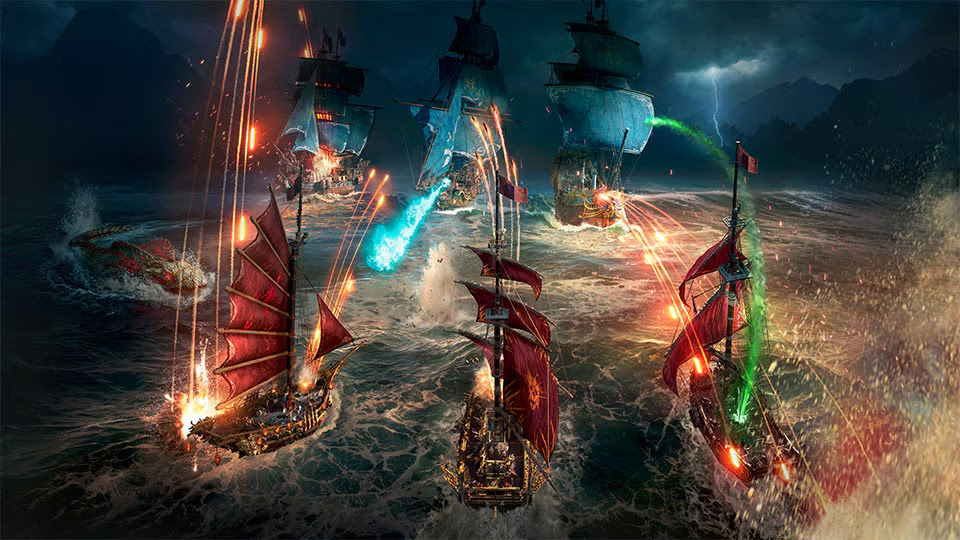
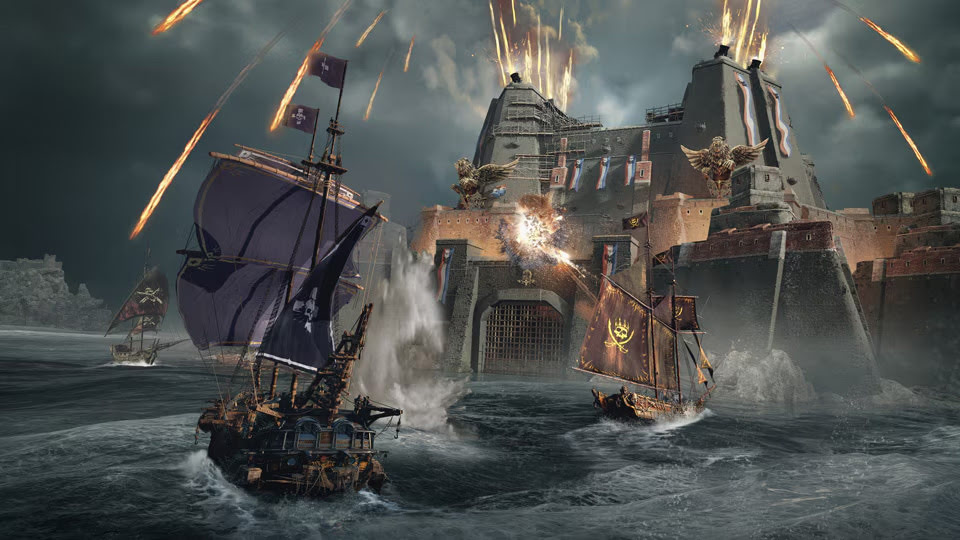
For those completely new to Skull and Bones, it’s best described as a pirate RPG set in a shared open world. You play as a swashbuckling captain who takes on increasingly challenging missions, attacking enemy factions and plundering their settlements to gain resources and currency which are then used to unlock and upgrade new ships. It’s played in third person with most of your time spent engaged in naval combat, outmanoeuvring your foes and hitting them with an arsenal of cannons, mortars, and other more exotic weaponry. As you level up and explore, you’ll discover new activities and landmarks while rubbing shoulders with other player pirates with a number of PvE and PvP opportunities being available.

As with any live service RPG, you’ll find yourself embroiled in a web of menus though these thankfully aren’t as egregious as those plastered all over your typical free-to-play gacha game. To make progress in Skull and Bones you’ll need to learn what the various NPCs have to offer, including vendors who sell blueprints, and craftsmen who transmute your stockpile of resources into gear, upgrades, ammunition, and consumables.

The sheer quantity and variety of items you’ll amass can be overwhelming at first though you’ll soon learn which resources to focus on, what to sell, what to refine, and what to salvage. Your ultimate goal is to expand your personal fleet, levelling up the gear score of your flagship in order to access a more diverse and difficult pool of challenges including world events and co-op activities.

So, what does Year 3 have in store for new players? At first, it doesn’t appear like there’s much new content and features being targeted at S&B’s saltiest seadogs, namely the addition of a new endgame Galleon ship and an overhaul to the World Tier system, dialling up the difficulty for veterans while offering better rewards. There’s also the new Seasonal Mastery feature, offering a new layer of progression as you unlock buffs and upgrades though, as the name suggests, these will reset with each new season, though your finishing rank will influence your starting position going into the next one. There are some quality of life improvements that benefit everyone with a new, cleaner loadout menu for managing your fleet.

While the developers continue to refine what players enjoy about the game, it’s far from being the ultimate pirate sim. Sadly, Ubisoft Singapore shelved its plans for land combat, a feature that could have helped to make off-ship gameplay more versatile and meaningful. Skull and Bones also suffers from a common sandbox game problem in terms of story. While the Indian Ocean makes for a gorgeous watery playground waiting to be plundered, its narrative hooks are blunted by a lack of compelling characters or scenarios, leaving players to create their own memorable sagas upon the high seas.

Despite these shortcomings – and the game’s penchant for resource grinding – there’s still a fun experience to be had, especially in multiplayer. Stumbling upon world events and having fellow pirates join you to take down notorious bounties or colossal sea monsters adds an MMO-like twist, as does the increasing depth of loadout and playstyle options. With Skull and Bones having been heavily discounted at various time (it’s also bundled in with certain PlayStation Plus tiers) the arrival of Year 3 marks an opportune moment to jump in, buoyed by a sizeable fanbase of loyal fans and plenty of content in the pipeline: 2026 will see the introduction of even more large ships as well as competitive Trials, challenging new Elite Bosses, and a treasure trove of smaller upgrades.


Source link

Popular Posts

My Favorites

Pamper Yourself at the Chloe Wine Collection x Drybar Holiday Bow...

0
Because self-care should be at the top of everyone’s list, even during this busy holiday season, Chloe Wine Collection is inviting Drybar salon...