Paul C. Brunson was left deeply affected by the murder of 15-year-old Elianne Andam, and the case inspired his new TV series, Red Flag.
The relationship expert and podcast host is fronting the new show, which aims to support survivors and help others recognise the dangers of abusive relationships.
Paul wants to “uncover the hidden warning signs” before those he meets are subjected to violence, coercion and control.
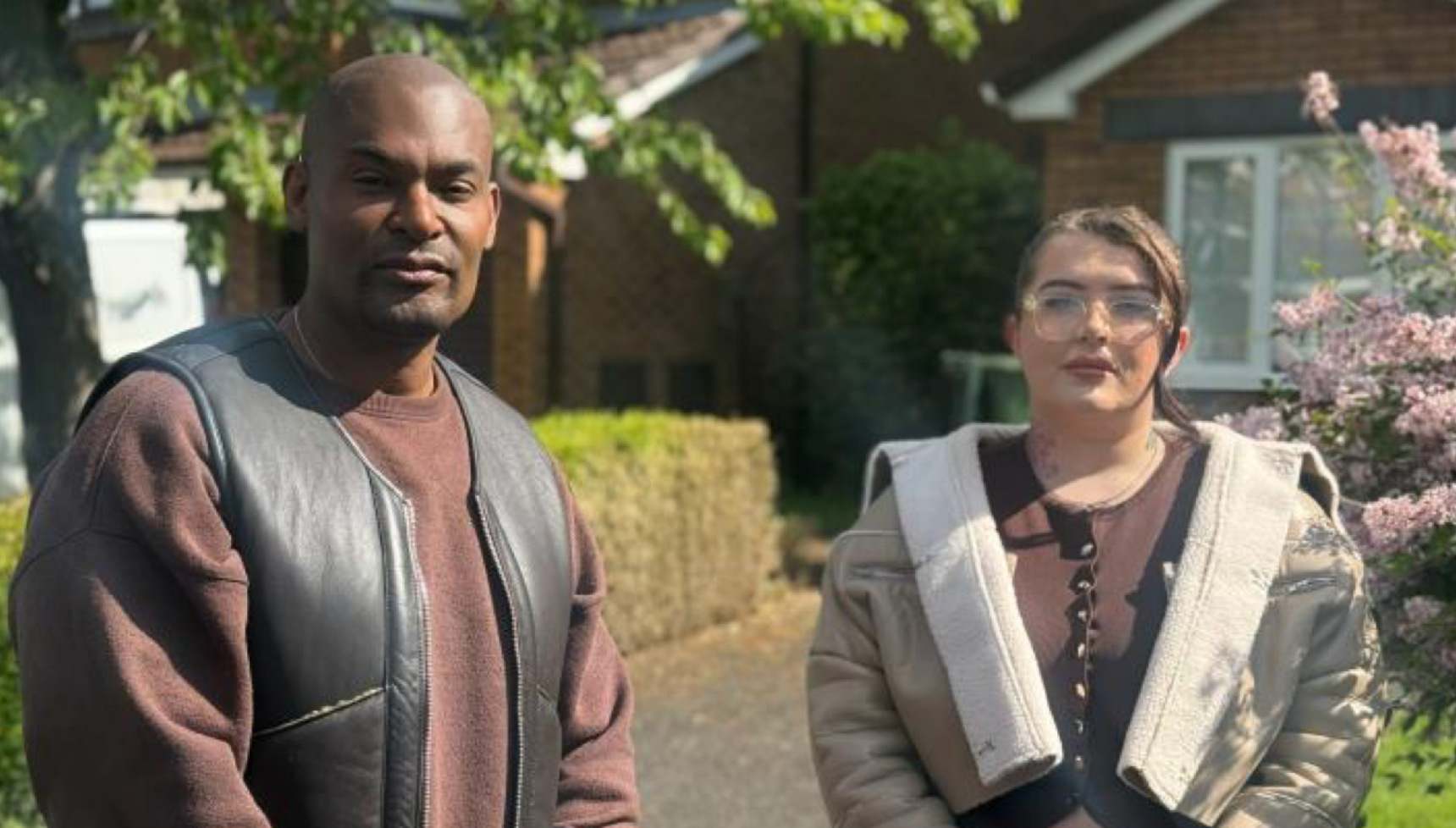
Paul C. Brunson is meeting domestic abuse survivors in his new crime series Red Flag (Credit U)
Across the series, he will hear from eight survivors about their experiences, as well as speaking to the friends and loved ones who supported them.
Their stories reveal just how damaging abusive relationships can become. Here’s what we know.
Paul C. Brunson’s Red Flag’s link to murder of Elianne Andam
In 2023, Elianne Andam was stabbed to death near a shopping centre in Croydon, close to Paul’s London home. She had been accompanying her friend to meet an ex boyfriend on a Saturday morning.
Elianne’s friend had arranged to return some belongings to Hassan Sentamu, including a teddy bear. However, Sentamu arrived carrying a knife.
A confrontation followed, during which 17-year-old Sentamu repeatedly stabbed Elianne in front of horrified members of the public. He is currently serving a life sentence for her murder, with a minimum of 23 years.
Paul says: “There was an incident that happened a few years ago that has led me to want to try and help educate both myself and others on some of the dark, manipulative and sometimes violent aspects of toxic relationships.
“There was a young girl by the name of Elianne Andam, who was killed at the age of 15 not too far from where I live and our families have mutual friends. I became obsessed not only with her particular case, but with the patterns that led to the abuser killing her.
“It was that case, quite honestly, that led me to this series. Through this I have been simultaneously distraught and hyper-aware of how abusers use a very specific pattern when assaulting.”
Elianne Andam was murdered by her friend’s ex-boyfriend in broad daylight (Credit: Shutterstock)
‘A national crisis’
Each episode will see Paul meet another survivor of domestic abuse. One of them is Jak, who became a victim of the Tinder Predator, Christopher Harkins. He was later convicted of rape, assault and fraud.
Kathryn was manipulated so severely by her ‘alpha male’ partner that she left her children. She also suffered a broken back because of the abuse.
Gareth, meanwhile, was controlled and starved by his abusive girlfriend.
Paul will meet eight survivors in total throughout the series.
He says: “My hope is that viewers take away two things when hearing these true stories of our very heroic survivors. One is awareness.
“If you were like me, you may not be aware of how horrific, how prevalent, how much of a national crisis we’re in when it comes to abuse, sexual assault and stalking.
“Secondly, my question is, now that you are aware, what can we do to help stop this? This level of crisis that we’re in right now requires an entire community, an entire nation. And so, it is our obligation.”
When does Paul C. Brunson: Red Flag start?
Paul C. Brunson: Red Flag starts on U&W next week. The first episode will air at 9pm on Tuesday September 8, with the second episode airing straight after.
The series will also be available to stream on U.
A difficult watch, but we will definitely be tuning in to this one.
Read more: This Morning bosses issue on-air warning to Miriam Margolyes as she grills host Andi Peters about his race: ‘What are you?’
Paul C. Brunson starts at 9pm on U&W on Tuesday September 8, 2026. The series will also be available to stream on U.
Coronation Street fans have been given a promising update on Betsy Swain’s recovery, but spoilers confirm her progress is about to take another worrying turn.
Betsy has spent the last few weeks recovering from a stroke, which was brought on by consensual strangulation during sex with her boyfriend Dylan. The storyline has highlighted the dangers that young people may not know enough about.
And just as Betsy appeared to be making some huge progress in tonight’s episode (September 2), things are set to take another turn for the worse, leaving her fearing for her health once again.
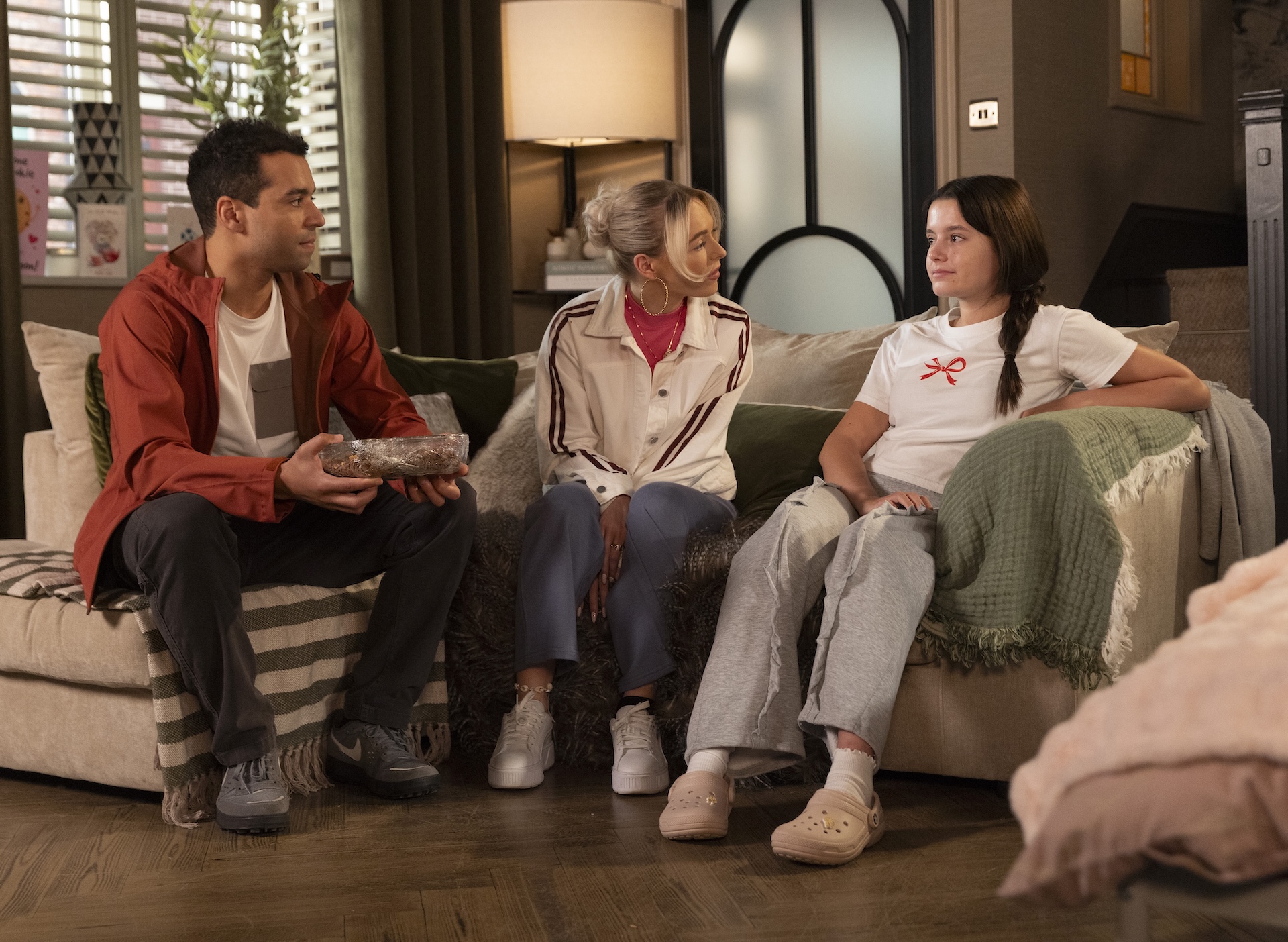
Things looked to be getting better for Betsy (Credit: ITV)
Betsy began walking in Coronation Street
In tonight’s episode, Betsy was once again working with her physiotherapist to improve her mobility.
As Lisa watched on, everyone was overcome with happiness when Betsy managed to take a few steps on her own. It was a huge moment for the teenager after weeks of turmoil and setbacks.
The victory continued when Carla returned just in time to see her step-daughter making such incredible progress.
Betsy has spent the last few weeks refusing to go outside and trying to avoid as many people as possible. So, Lauren decided it was time for her best friend to start seeing more people again.
She brought Ollie round with some desserts in a bid to keep Betsy happy, but it didn’t exactly go to plan.
Betsy doesn’t really know Ollie that well and clearly wasn’t comfortable with him seeing her after the stroke. She made her feelings known when she and Lauren were left alone.
Just like that, the pair were at odds once again, and the happiness Betsy had felt after managing to walk appeared to disappear.
However, things are set to take another worrying turn.
Betsy faces a setback next week (Credit: ITV)
Spoilers confirm another health scare is on the way
Coronation Street spoilers for next week confirm that Betsy will face another health scare, and it’s so severe that she even fears she could be having another stroke.
After finally deciding to focus on her future, Carla happily agrees to help Betsy with her application for a fashion course at the local college.
Lisa is delighted to see Betsy so energised and finally looking towards the future after such a difficult time.
But events take a worrying turn when Bethany arrives to give Betsy a manicure.
Betsy is suddenly left in agony as she clutches her head in pain. This leaves her fearing that another stroke could be happening.
Is it happening again just as Betsy is beginning to look towards her future? Or could there be another explanation for the sudden pain?
For now, fans will have to wait and see what is wrong with Betsy. But her latest health scare threatens to overshadow what had been a huge step forward in her recovery.
Read more: Coronation Street fans predict heartbreaking alcoholism storyline for Todd as his family worry about his ‘self-destructive’ behaviour
There are handbags you admire, and then there are handbags you actually live with. The tote belongs firmly in the second category.
A good luxury tote bag can carry a laptop, sunglasses, a wallet, a water bottle, and the inevitable collection of things that somehow accumulate at the bottom of every handbag. More importantly, it can move through your day without forcing you to change your outfit, or your plans, or your bag.
That practicality is exactly what has made luxury tote bags for women so enduring. From the iconic Louis Vuitton Neverfull and understated Goyard Saint Louis to statement-making Dior Book Totes and lightweight Prada Re-Nylon styles, today’s best designer totes combine the functionality of an everyday carryall with the craftsmanship and design language of a luxury house.
But the most expensive tote isn’t automatically the best one for you.
This guide evaluates 14 of the most notable luxury and designer tote bags for 2026 based on craftsmanship, materials, practicality, versatility, brand heritage, everyday usability, and pre-owned appeal. It also covers what to consider when buying a luxury tote in Dubai, including whether buying pre-owned makes more sense for your budget and wardrobe.
Quick Guide: The Best Luxury Tote Bags at a Glance
What Is a Tote Bag?
Loewe Anagram Beige/Brown Canvas and Leather Tote Bag in Good Condition
At its simplest, a tote is a roomy bag with two parallel handles designed to be carried by hand or over the shoulder. Unlike a satchel or structured handbag, the traditional tote prioritizes capacity and easy access over rigid construction.
That simplicity is part of its appeal.
A tote can be a work bag in the morning, a shopping companion in the afternoon, and a travel carryall by evening. The same basic silhouette can be reinterpreted in leather, coated canvas, nylon, embroidered fabric, or even raffia, which is why the category spans everything from understated everyday tote bags for women to highly recognizable luxury icons.
Distinguishing a Tote from Other Common Handbag Silhouettes:
The distinction isn’t absolute—luxury houses regularly reinterpret these categories—but capacity and easy access remain the defining characteristics of the classic tote.
What Makes a Tote Bag Luxury?
A designer logo alone doesn’t make a tote luxurious. The difference usually shows up in the details you notice after the novelty of the name wears off.
Material quality
Louis Vuitton Damier Ebene Canvas Neverfull MM Bag in Good Condition
Luxury totes may use full-grain or grained leather, coated canvas, technical nylon, or specialized textiles. The best materials are chosen not just for appearance, but for how they behave over time.
Construction
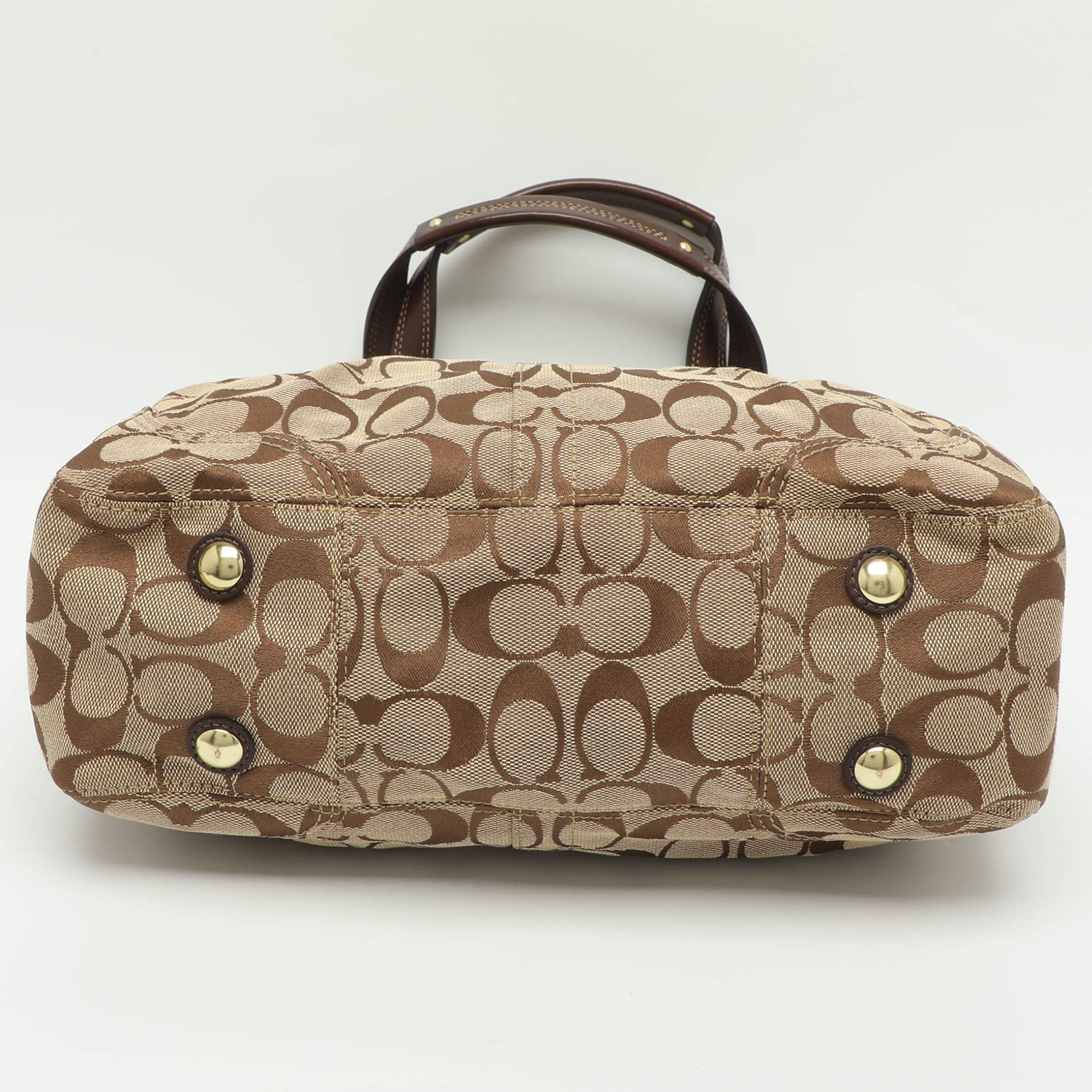
Chanel Tortoise Chain Dark Brown Quilted Leather Tote in Good ConditionCoach Hampton Beige Signature Canvas and Leather Tote in Good Condition
Look closely at the stitching, handles, edge finishing, lining, hardware, base, and protective feet. A well-made tote should feel considered from the inside out.
Design identity
Goyard Saint Louis GM Green Goyardine Coated Canvas and Leather Tote in Pristine Condition
The strongest luxury totes have a visual language that remains recognizable without relying entirely on a logo. Think Louis Vuitton’s Monogram, Goyard’s Goyardine pattern, Gucci’s GG canvas, or Dior’s distinctive embroidered motifs.
Functionality
Luxury matters less when your laptop won’t fit.
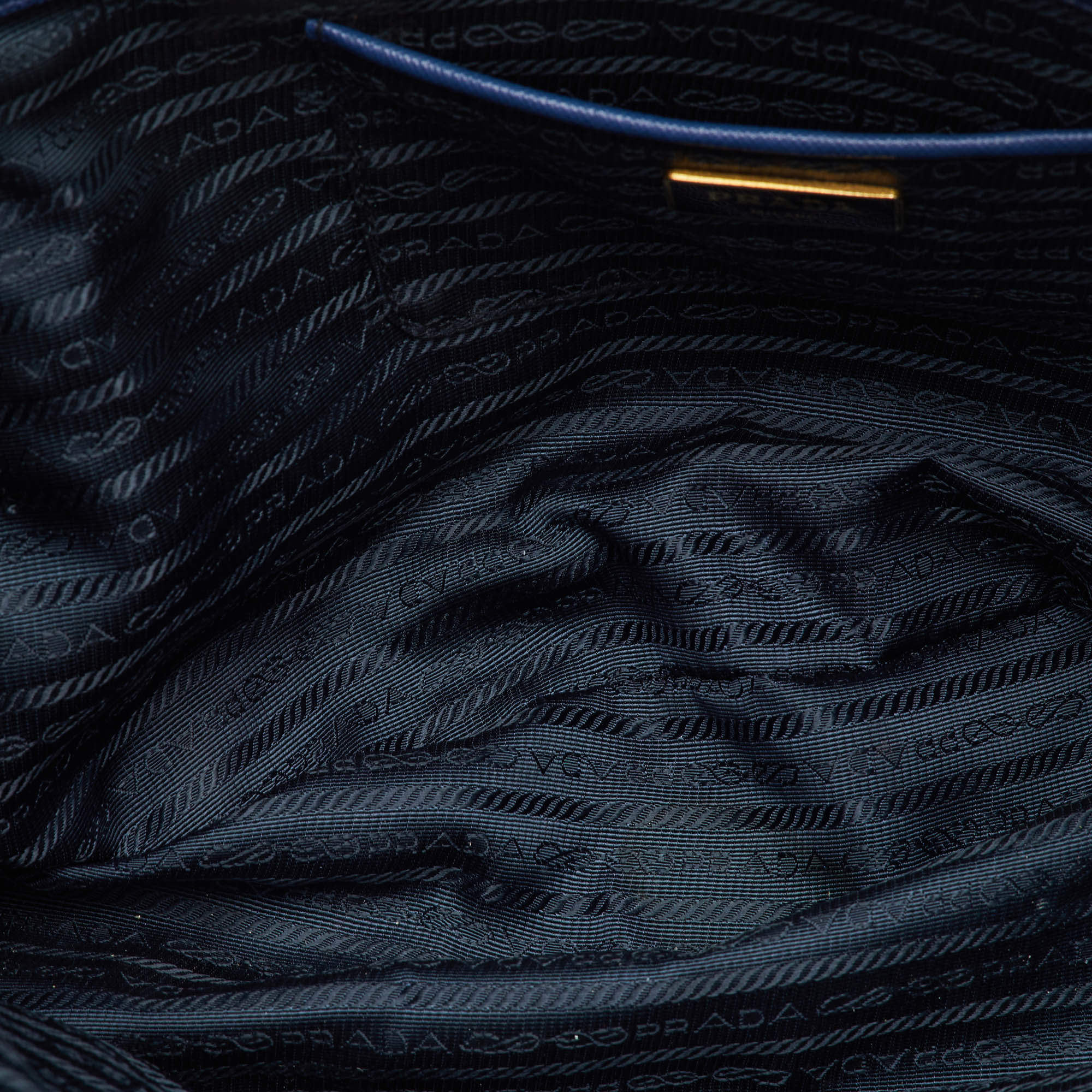
Prada Galleria Large Blue Saffiano Lux large Leather ToteGucci Zumi Medium Green Medium Leather Tote
Consider the bag’s capacity, interior pockets, closure, handle drop, and weight before the hardware distracts you. A beautiful tote that hurts your shoulder after 20 minutes is not a particularly successful everyday bag.
Longevity
Gucci Dahlia Medium Black Leather Tote Bag in Good Condition
The best luxury tote is one you can imagine carrying for years. That may mean choosing a timeless silhouette rather than chasing the season’s color or shape.
How to Choose the Right Luxury Tote for Your Lifestyle
Before choosing a brand, decide what you actually want the bag to do.
Louis Vuitton x Takashi Murakami Onthego MM Multicolore Monogram Canvas Tote in Excellent Condition
For Work
Look for enough space for your laptop, charger, notebook and daily essentials. Structured leather or coated canvas can work particularly well for office use, while comfortable shoulder handles become increasingly important if you’re commuting.
For travel
Prioritize a lightweight construction, generous capacity and easy access. A tote that can sit securely on top of a suitcase is even better.
For everyday errands
A medium-to-large tote with some internal organization is usually more practical than the biggest bag you can find. Otherwise, your keys will disappear into the handbag abyss.
For the beach bag or gym
Hermes Apres la Vague Jaune/Bleu Canvas Beach Tote in Excellent Condition
This is where washable, coated or water-resistant materials have a distinct advantage. A dedicated beach bag or beach tote calls for raffia, straw or coated canvas rather than delicate untreated leather, which rarely survives sand, sunscreen, sweat or accidental spills well. You can explore pre-owned luxury beach bags in good to excellent condition at The Luxury Closet.
Hermès Bridleback 50 Ecru/Noir/Fire/Amber Toile Goeland and Rocabar Duffel Bag in Excellent Condition
Duffel bags are great for carrying to the gym.
For a true gym bag, the best options have a separate ventilated or wet-dry compartment to keep sweaty gear away from clean clothes, a base sturdy enough to stand upright on a locker room floor, and an exterior material—coated canvas, technical nylon, or treated leather—that wipes clean easily.
For the UAE climate
Dubai’s heat means material choice and storage deserve particular attention. Avoid leaving a luxury bag in a hot car, keep leather away from prolonged direct heat and sunlight, and store your bag properly when you’re not using it.
For frequent travellers
Check the empty weight as carefully as the capacity. A huge tote can become surprisingly heavy once you’ve filled it with a laptop, water bottle, charger, passport and everything else you thought you’d “just carry for the flight.”
The 14 Best Luxury Tote Bags in 2026 (Each Best In Its Own Genre)
Luxury comes in many forms. This list spans heritage luxury maisons, contemporary designer brands and accessible-luxury labels. Rather than ranking them purely by price, we’ve considered craftsmanship, design identity, practicality, versatility and pre-owned appeal, because the best tote is ultimately the one that fits your lifestyle.
1. Louis Vuitton Neverfull — Best Overall Luxury Tote
Louis Vuitton offers a wide collection of women’s tote bags. That said, few designer tote bags have achieved the staying power of the Louis Vuitton Neverfull.
Louis Vuitton Neverfull MM Monogram Canvas Bag
The classic Monogram version combines coated canvas with natural cowhide leather trim, side laces, and a removable zipped pouch. The MM is particularly versatile: spacious enough for everyday essentials and a laptop, but still manageable enough to carry over the shoulder. Louis Vuitton lists the standard Monogram MM at 47 × 28 × 14 cm, and confirms that it fits a 13-inch laptop.
Finding the standard Neverfull piece might be fairly difficult given how quickly it moves. A couple of other options worth knowing about don’t match the standard MM dimensions above exactly, but remain genuinely useful takes on the same silhouette.
Louis Vuitton Monogram Neo Neverfull Inside Out MM Tote Bag in Excellent Condition
Other Neverfull Options
The Neo Neverfull Inside Out above reworks the silhouette with its own proportions and a reversible design, while the Damier Race edition listed below brings the same functional shape into a limited-run print. Both trade the exact standard measurements for something a little more distinctive, and either is a strong pick if the classic Monogram MM isn’t available when you’re ready to buy.
Louis Vuitton Limited Edition Damier Canvas Race Neverfull MM Bag in Good Condition
Best for: Work, everyday use and travelMaterial: Coated canvas and leather trim, depending on versionWhy it stands out: Exceptional versatility and recognizable heritagePre-owned appeal: Strong
The Neverfull is not the most discreet tote on this list, but that isn’t really the point. It has become one of those rare luxury bags that works with jeans, tailoring, airport clothes, and weekend looks without feeling out of place.
For shoppers who want one designer tote to do almost everything, this is still one of the easiest recommendations.
2. Marc Jacobs Tote Bag — Best Accessible Designer Tote
Pre-owned Marc Jacobs The Monogram Small Grey/Black Jacquard Tote in Excellent Condition
The Marc Jacobs Tote Bag took a decidedly more contemporary route to handbag fame.
Its bold typography and straightforward shape give it an immediately recognizable identity. At the same time, its range of canvas and leather versions makes it accessible to shoppers who want designer appeal without entering the price territory of traditional luxury maisons.
Available in multiple sizes, it can work as anything from a compact everyday bag to a larger work or travel tote. You can browse pre-loved Marc Jacobs tote bags in different sizes, contours and colors at The Luxury Closet.
Best for: First designer tote buyersMaterial: Canvas or leather, depending on modelWhy it stands out: Contemporary design and strong visual identityPre-owned appeal: Varies by model
This is the kind of bag that makes a good argument for the idea that luxury doesn’t have to be formal. If your wardrobe is more street-style than old-money, the Marc Jacobs Tote may feel more natural than a heritage monogram.
3. Goyard Saint Louis — Best for Understated Luxury
If the Neverfull announces itself, the Goyard Saint Louis takes the opposite approach.
Goyard Saint Louis PM Grey Coated Canvas Leather Tote Bag in Pristine Condition
The Saint Louis is instantly recognizable to those who know the house, but its distinctive Goyardine pattern is far more discreet than the logos on many competing designer totes. Its lightweight construction and generous capacity are equally important to its appeal.
Best for: Quiet luxury and frequent everyday use.Material: Goyardine canvas with leather details, depending on version.Why it stands out: Lightweight design and understated recognition.Pre-owned appeal: Strong
It is also a particularly interesting choice for shoppers who want a luxury tote that doesn’t feel overly precious. The silhouette is relaxed, easy to carry, and roomy enough for daily essentials. Pre-owned Goyard Saint Louis tote bags are a great option and worth considering.
4. Gucci Ophidia GG Tote — Best Heritage Tote
The Gucci Ophidia brings one of the house’s most recognizable signatures into an everyday tote silhouette.
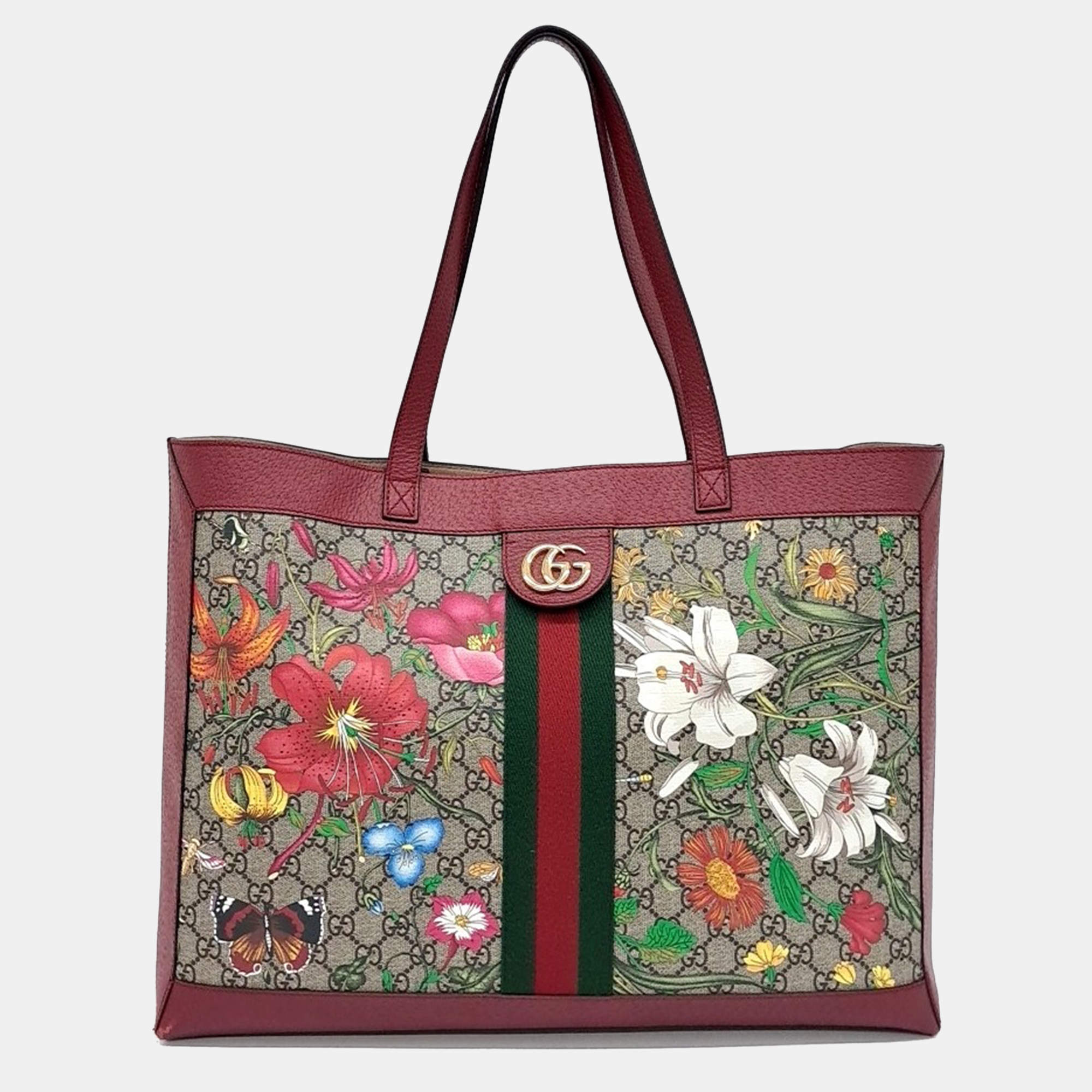
Gucci Ophidia Medium Burgundy GG Supreme Canvas and Leather Tote in Good ConditionGucci Beige Red PVC Ophidia GG Supreme Tote Bag in Good Condition
The GG canvas, green-and-red Web stripe and leather details give it an unmistakable Gucci identity, while the roomy interior keeps it practical rather than purely decorative.
Best for: Heritage fashionMaterial: GG canvas and leather, depending on versionWhy it stands out: Classic Gucci house codesPre-owned appeal: Good, particularly for sought-after versions
If you like your everyday bags to have a little more personality, the Ophidia is an appealing middle ground between quiet luxury and overt branding.
5. Chanel Deauville — Best Casual Chanel Tote
Chanel isn’t usually the first name people think of for practical carryalls. The Deauville makes a convincing case for changing that.
Chanel Deauville Large Navy Blue Leather Tote Bag in Good Condition
With its relaxed construction, roomy proportions, and signature Chanel details, the Deauville brings the house’s unmistakable aesthetic into a considerably more casual setting.
Best for: Casual luxuryMaterial: Canvas or other fabric/leather combinations, depending on versionWhy it stands out: Chanel heritage in an everyday silhouettePre-owned appeal: Strong for desirable versions and conditions
It’s particularly appealing if you love Chanel but don’t want every handbag in your wardrobe to feel like it belongs at a black-tie event.
6. Dior Book Tote — Best Statement Tote
The Dior Book Tote proves a tote can be practical and still make a serious fashion statement.
Dior Book Medium Beige Embroidered 3D Macrame Butterfly Mesh Tote in Pristine Condition
Its defining feature is the highly recognizable “CHRISTIAN DIOR PARIS” lettering and elaborate embroidery featured on many versions. The open, structured silhouette gives it plenty of room, while the decorative craftsmanship turns an otherwise straightforward carryall into a statement piece.
Best for: Fashion-forward dressing and travel.Material: Embroidered canvas or other materials, depending on version.Why it stands out: Signature embroidery and strong visual impact.Pre-owned appeal: Varies significantly by design.
Choose this tote when you want your handbag to be part of the outfit, not just what carries it.
7. Saint Laurent (YSL) Rive Gauche — Best Everyday Canvas Tote
The Saint Laurent Rive Gauche has an appealingly uncomplicated attitude.
Saint Laurent Rive Gauche Beige Black Woven Raffia Canvas Tote Bag in Good Condition
Its canvas construction, leather detailing, and understated branding make it easy to wear with casual wardrobes. At the same time, the roomy interior gives it the practical credentials expected from a proper everyday tote.
Best for: Everyday city dressingMaterial: Canvas and leather, depending on versionWhy it stands out: Relaxed Parisian aestheticPre-owned appeal: Good
It doesn’t need elaborate hardware or complicated construction to make an impression. That restraint is precisely why it works.
8. Prada Re-Nylon Tote — Best Lightweight Luxury Tote
Prada’s Re-Nylon Tote takes the traditional luxury tote in a more technical direction.
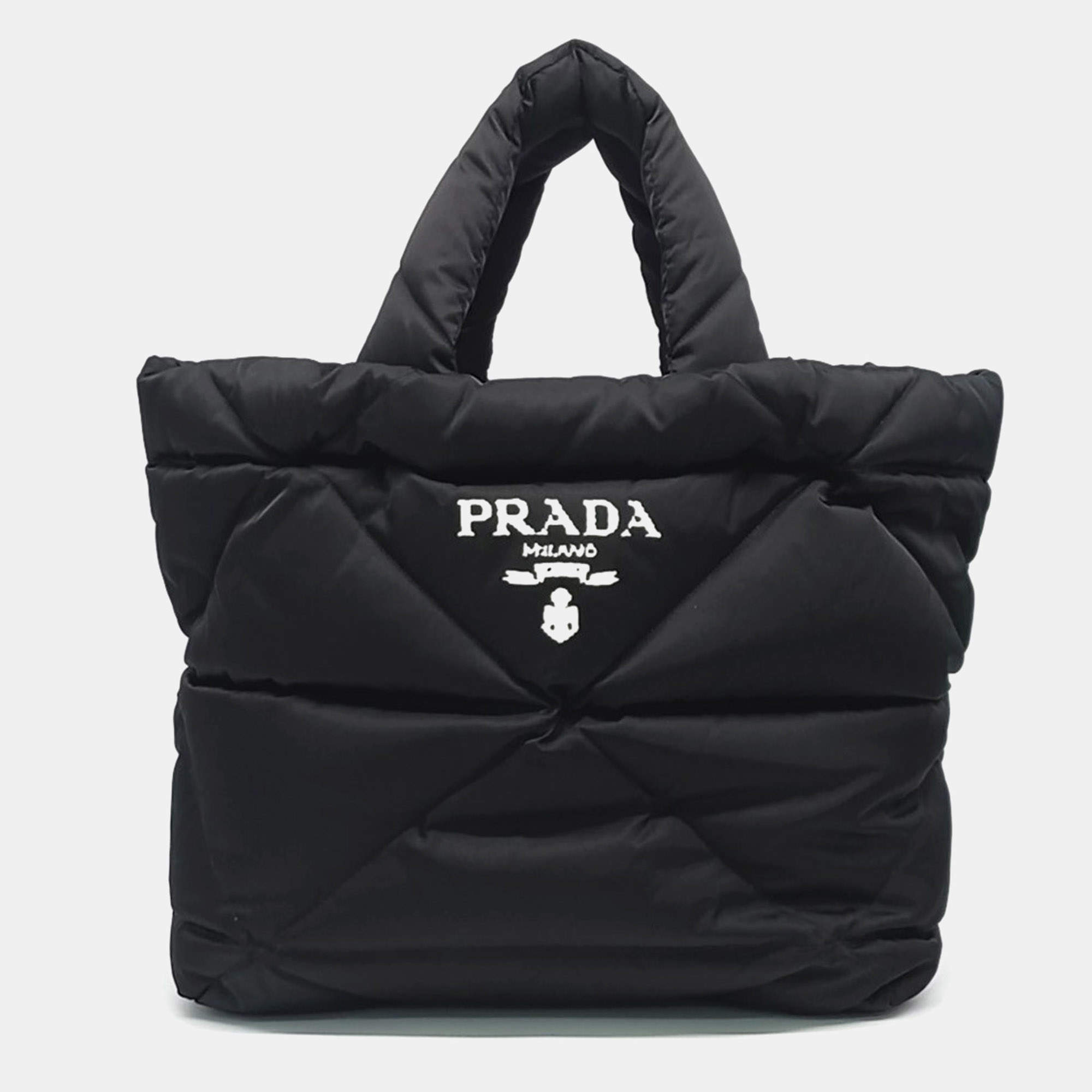
Prada Re-Nylon Padded Black Nylon Tote Bag in Good Condition.
The current Re-Nylon Tote features recycled polyamide, a detachable adjustable shoulder strap, multiple internal and external pockets, a zip closure, and Prada’s enameled triangle logo. The pictured model measures 37.5 cm in height, 36–51.5 cm in length (adjustable), and 17.5 cm in width, with a 16 cm shoulder strap drop.
Best for: Lightweight everyday use and travelMaterial: Recycled polyamideWhy it stands out: Functional design and lightweight constructionPre-owned appeal: Depends on model and condition
One important distinction: this is a Re-Nylon Tote, rather than a “Re-Edition Nylon Tote.” Re-Nylon is Prada’s sustainability initiative and the name of the regenerated material itself; the Re-Edition line happens to be made from it. The two names belong to related Prada nylon stories, but you shouldn’t treat them as interchangeable.
The appeal here is obvious: you get Prada’s design language without committing to a heavy leather carryall.
9. Longchamp Le Pliage — Best Travel Tote
Not every great designer tote needs to cost thousands.
Longchamp Le Pliage Medium Navy Blue Leather and Nylon Tote in Good Condition
Longchamp’s Le Pliage has earned its place through usefulness, not exclusivity. Its lightweight, foldable construction makes it especially practical for travel, commuting, and days when you need a spare bag that disappears into your luggage.
Best for: Travel and everyday practicalityMaterial: Nylon with leather details, depending on versionWhy it stands out: Lightweight and foldable designPre-owned appeal: Moderate
For someone who values function over status, Le Pliage may actually be a smarter everyday purchase than a much more expensive tote.
And that is worth saying out loud: luxury is not always synonymous with the highest possible price. You can explore pre-loved Longchamp Le Pliage totes for more options.
10. Coach Tote — Best Accessible American Luxury
Coach brings a distinctly American take to the luxury tote category.
Pre-owned Coach Gallery Beige/White Signature Coated Canvas and Leather Tote in Good Condition
Its leather and canvas totes span structured work bags, relaxed carryalls and more contemporary silhouettes, often offering practical details such as protective feet, internal pockets and laptop-friendly proportions.
Best for: Accessible luxury and work.Material: Leather, canvas or fabric depending on modelWhy it stands out: Heritage craftsmanship at a comparatively approachable pricePre-owned appeal: Varies by style
Coach has roots as a family-run New York leather workshop dating back to 1941, and its modern positioning makes it an attractive option for shoppers who want heritage without the price point or formality associated with some European luxury houses. Besides, pre-owned Coach totes are a great way to access the craftsmanship.
11. Michael Kors Tote Bag — Best for Jet-Set Glamour
MICHAEL Michael Kors Black Saffiano Leather Large Cynthia Tote in Good Condition
Where Coach leans into quiet American craftsmanship, Michael Kors goes the opposite direction: bold hardware, generous scale and an unapologetically glossy attitude.
The brand’s totes are typically built in saffiano or pebbled leather, finished with polished gold-tone hardware and sized generously enough to double as a weekend or travel bag. This tote is designed to be noticed, not blended in.
Best for: Statement dressing and travel.Material: Saffiano or pebbled leather, depending on model.Why it stands out: Bold hardware and confident scale.Pre-owned appeal: Moderate, strongest for classic silhouettes and neutral colorways
If Coach is the understated American answer to European heritage houses, Michael Kors is the louder one—glamorous, jet-set in spirit, and built for shoppers who want their tote to read as an accessory in its own right rather than a background piece. The pre-owned market offers a broad selection of Michael Kors tote styles and colorways.
12. Kate Spade Tote Bag — Best for Playful, Colour-Driven Style
Kate Spade’s totes take a markedly different approach from most of the names on this list: color and personality come first, restraint comes second.
Pre-owned Kate Spade Neon Pink Leather Cedar Street Harmony Tote in Good Condition
Constructed in saffiano leather or coated canvas and often finished with the brand’s signature spade motif, these totes are built for shoppers who want their everyday bag to feel a little more fun than functional-only pieces typically allow, without sacrificing the structure needed for daily use.
Best for: Everyday style with a playful edgeMaterial: Saffiano leather or coated canvas, depending on modelWhy it stands out: Wide, expressive color rangePre-owned appeal: Good for popular colorways and classic shapes
This is the tote for anyone whose wardrobe already leans toward color and print—it rewards personality over blending in, and it does so at a notably more accessible price point than most of the European houses on this list.
13. Hermès Garden Party — Best for Quiet-Luxury Purists
The Hermès Garden Party is the quiet-luxury answer to the logo-heavy designer tote.
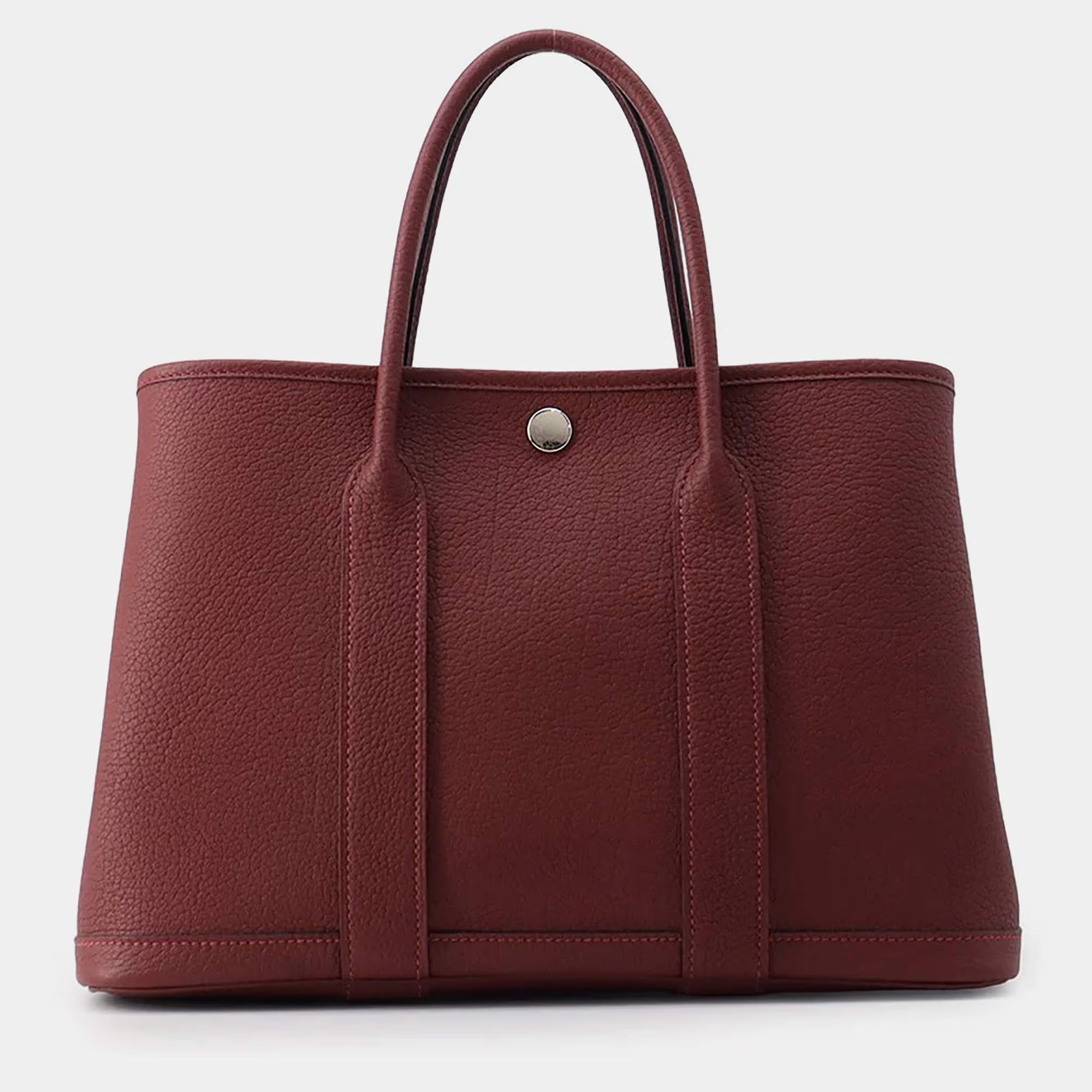
Hermès Garden Party TPM Rouge H Negonda Leather Top Handle Bag in Pristine Condition
Its understated shape and canvas-and-leather versions make it exceptionally versatile.
Best for: Craftsmanship-first shoppers.Material: Leather, canvas, or a combination, depending on version.Why it stands out: Minimal branding paired with maximal construction quality.Pre-owned appeal: Strong, though supply is limited
It is a particularly good choice if your definition of luxury begins with material quality and craftsmanship rather than recognisability. Availability can be limited compared to other bags on this list, which makes the pre-owned market a genuinely useful route in for many shoppers.
14. The Row Park Tote — Best Minimalist Luxury Tote
The Row takes the opposite approach to maximalist designer branding. The Park Tote is defined by soft construction, premium materials, and a deliberately restrained aesthetic.
The Row Park Tottenham Black Fabric Leather Tote Bag in Good Condition
Best for: Minimalists and quiet-luxury dressing.Material: Soft leather.Why it stands out: Restraint as a design philosophy.Pre-owned appeal: Moderate, growing as the brand’s resale profile strengthens
For shoppers who prefer their luxury to whisper rather than announce itself, it is one of the most compelling alternatives to the more recognizable names on this list.
What Makes a Luxury Tote Brand Worth Trusting?
When you’re spending significantly on a handbag, the brand name is only part of the equation. Consider the house’s reputation for craftsmanship, the quality of its materials and construction, after-sales service, and how established its models are on the pre-owned market.
For pre-owned shoppers, authentication and condition assessment matter just as much. Established luxury houses such as Louis Vuitton, Chanel, Hermès, Goyard and Dior have extensive secondary-market histories, making it easier to research specific models, materials and variations before buying.
For more accessible designer brands, factors such as construction quality, functionality, warranty or repair support, and price should carry more weight than prestige alone.
In other words, “trusted” shouldn’t simply mean expensive. It should mean that the bag and the brand behind it give you good reasons to feel confident about your purchase.
That’s much safer and, frankly, more sophisticated.
Fashionable Tote Bags for All Seasons
Use-case is only half the equation; the time of year affects material and color choices just as much as what you’re using the bag for.
Spring
Dior Book Tote Small Beige Raffia Canvas Top Handle Bag in Good Condition
Lighter canvas, raffia blends, and pale neutrals feel most at home here. A tote in a soft pastel or unbleached canvas pairs naturally with the lighter tailoring and looser silhouettes spring wardrobes tend to favor, and it’s a good season to introduce a more decorative style, like an embroidered Dior Book Tote, before summer’s harder-wearing demands take over.
Summer
Michael Kors Gilly Large White/Brown Signature Coated Canvas Tote
This is where water-resistant, washable materials genuinely earn their keep. Coated canvas, raffia and technical nylon hold up far better than delicate leather against sand, sunscreen and humidity, which is why a dedicated beach tote or beach bag, rather than your everyday leather carryall, makes sense for this stretch of the year.
Autumn
Chanel Pearl Deauville Small Black Canvas Tote Bag in Excellent Condition
Richer, deeper tones and structured leather come into their own once the palette shifts. A Chanel Deauville in a deeper hue or a Louis Vuitton Neverfull in classic Monogram canvas both read as distinctly “autumn” choices; heavier materials feel appropriate again once the weather cools, and darker colorways hide the wear of daily use more forgivingly.
Winter
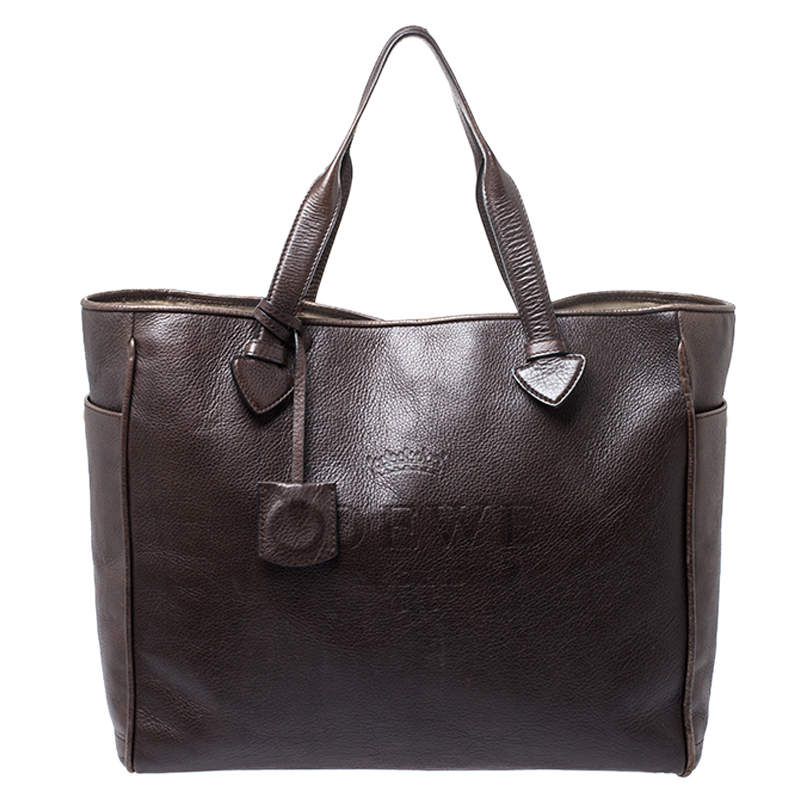
Loewe Dark Brown Leather Heritage Shopper Tote in Good Condition
Capacity becomes more important in winter, since bulkier coats, gloves, scarves, and shorter daylight hours all mean carrying more. Larger, structured totes in heritage leather—Coach and Michael Kors both do this well—tend to outperform smaller or more delicate styles this time of year, and darker, saturated colors suit the season’s palette.
The takeaway: a well-chosen wardrobe of two totes, one practical, weather-resistant piece for spring and summer, and one structured leather piece for autumn and winter, will generally serve you better than a single luxury tote asked to do every job, year-round.
New vs Pre-Owned Luxury Totes: Which Should You Buy?
Buying a luxury tote new certainly has its advantages. You get pristine condition, access to current-season colors and designs, and the complete boutique experience.
But buying pre-owned can be the more strategic choice—particularly if you’re interested in heritage handbags.
An authenticated pre-owned luxury tote can offer:
A lower entry price: Depending on the model, age, and condition, pre-owned can cost less than buying the same style new.
Access to discontinued designs: Older colorways, materials, and versions may no longer be available through the brand.
More choice: The secondary market can bring together current and discontinued styles from multiple luxury houses.
A way to test a brand: If you’re unsure whether a particular silhouette fits your lifestyle, buying pre-owned can reduce the financial commitment.
Potentially stronger value retention: Some iconic styles have established demand in the secondary market, although resale value is never guaranteed.
The key is authentication.
When shopping for a pre-owned luxury tote, look beyond the headline condition and examine the corners, handles, glazing, lining, hardware, interior marks, and signs of repair. Ask whether the item’s condition has been professionally assessed and whether the seller provides authentication and a clear return policy.
An unusually low price isn’t necessarily a bargain. In luxury resale, it can also be a warning sign.
How to Buy a Luxury Tote in Dubai
Dubai is one of the world’s major luxury-shopping destinations, so shoppers have several routes to consider.
Buy new from a luxury boutique.
This is the most straightforward choice if you want a current-season piece, a specific new color, or the full brand experience.
Compare luxury retailers
If you’re deciding between several brands, multi-brand luxury retailers can make comparison easier, particularly when you already know your preferred price range and size.
Explore the pre-owned market.
This is where the selection can become particularly interesting.
Pre-owned luxury platforms can give Dubai shoppers access to discontinued models, older colorways and established designer totes that may no longer be available in boutiques. For a high-value purchase, prioritize authentication, detailed photographs, transparent condition grading and a clear return policy.
For shoppers looking for authenticated pre-owned luxury bags in the UAE, a specialist resale platform such as The Luxury Closet can also make it easier to compare brands and styles in one place.
What Should You Look for in a Luxury Tote in the UAE?
The right luxury tote for Dubai isn’t necessarily the same as the right tote for a cooler climate.
Consider the heat
Don’t leave leather and delicate finishes in direct sunlight or inside a hot car. Store your bag somewhere cool and dry when you’re not using it.
Think about air-conditioning
Dubai’s dramatic temperature changes—from hot outdoor conditions to heavily air-conditioned interiors—make sensible storage and regular care particularly important for luxury leather goods.
Choose practical materials for everyday use.
Coated canvas and technical nylon can be easier to live with than delicate, untreated leather if you’ll use your bag heavily.
Think about your commute.
If you’re carrying a laptop between home, office, and meetings, shoulder comfort and weight matter as much as capacity.
Consider travel
Dubai is a major international travel hub. If your tote regularly accompanies you to the airport, look for a comfortable handle drop, useful capacity, and a shape that sits securely on luggage.
How to Care for a Luxury Tote
A luxury tote is designed to be used, but “use it” doesn’t mean “throw everything into it and hope for the best.”
Keep the bag away from prolonged direct sunlight and heat.
Avoid overloading it, particularly if the construction is soft or unstructured.
Keep cosmetics, pens and liquids in separate pouches.
Wipe coated canvas gently with a soft cloth when appropriate.
Follow the specific leather care instructions rather than applying a generic leather conditioner.
Keep sand, sunscreen and oils away from delicate materials.
Store the bag in its dust bag when not in use.
Avoid hanging a heavy bag for long periods if doing so could distort the handles or shape.
For technical materials such as Prada’s Re-Nylon, follow the manufacturer’s specific care guidance rather than assuming the material can be thrown in the washing machine—regenerated nylon still benefits from gentle handling, air-drying, and being kept away from excess heat, oils, and cosmetics.
So, Which Luxury Tote Should You Buy?
The best luxury tote isn’t necessarily the one with the highest price tag or the biggest logo. It is the one that earns a permanent place in your routine.
Choose the Louis Vuitton Neverfull if you want a versatile all-rounder. Go for Goyard Saint Louis if understated recognition is more your style. The Dior Book Tote makes sense when you want your bag to become part of the outfit, while the Prada Re-Nylon Tote is a smart choice if lightweight functionality matters most. If you want color and personality over restraint, the Kate Spade Tote Bag is worth a look, and if you’d rather your tote announce itself, the Michael Kors Tote Bag does exactly that. For travel on a more approachable budget, Longchamp Le Pliage remains difficult to beat.
And if you’re shopping in Dubai, don’t limit yourself to what’s hanging in a boutique window.
The pre-owned market can open the door to discontinued styles, older colorways and established luxury houses at different price points. The smartest purchase is ultimately the one that fits your lifestyle, your wardrobe and your budget—not simply the one with the most famous name.
Because the real luxury of a great tote is surprisingly simple: you reach for it every morning, and it never feels like the wrong choice.
The Prada sunglasses price sits in an unusual bracket of the eyewear market. They carry the weight of a century-old fashion house, yet they’re priced closely enough to mainstream designer eyewear that shoppers often assume the numbers are interchangeable. They aren’t. Whether you’re searching for the Prada sunglasses price or the Prada shades price, the answer depends heavily on where you’re buying, which collection you want, and whether you’re comfortable with pre-owned. This guide breaks down what Prada sunglasses actually cost across retail and resale in 2026, so you can budget with confidence before you shop.
Prada Sunglasses Price in 2026: What You’ll Actually Pay
New Prada sunglasses are priced by collection, materials, and region, so there is no single number that applies everywhere. Prada doesn’t publish one global price list — figures shift with import duty, VAT treatment, and seasonal promotions from one market to the next. A boutique in Dubai and an authorized optical retailer in the same city can post different prices for the identical SKU depending on current stock and promotional cycles. That said, current-season pricing does fall into fairly consistent tiers once you sort by collection, whether you’re browsing Prada sunglasses for men or Prada sunglasses for women.
How Much Do Prada Linea Rossa Sunglasses Cost in 2026?
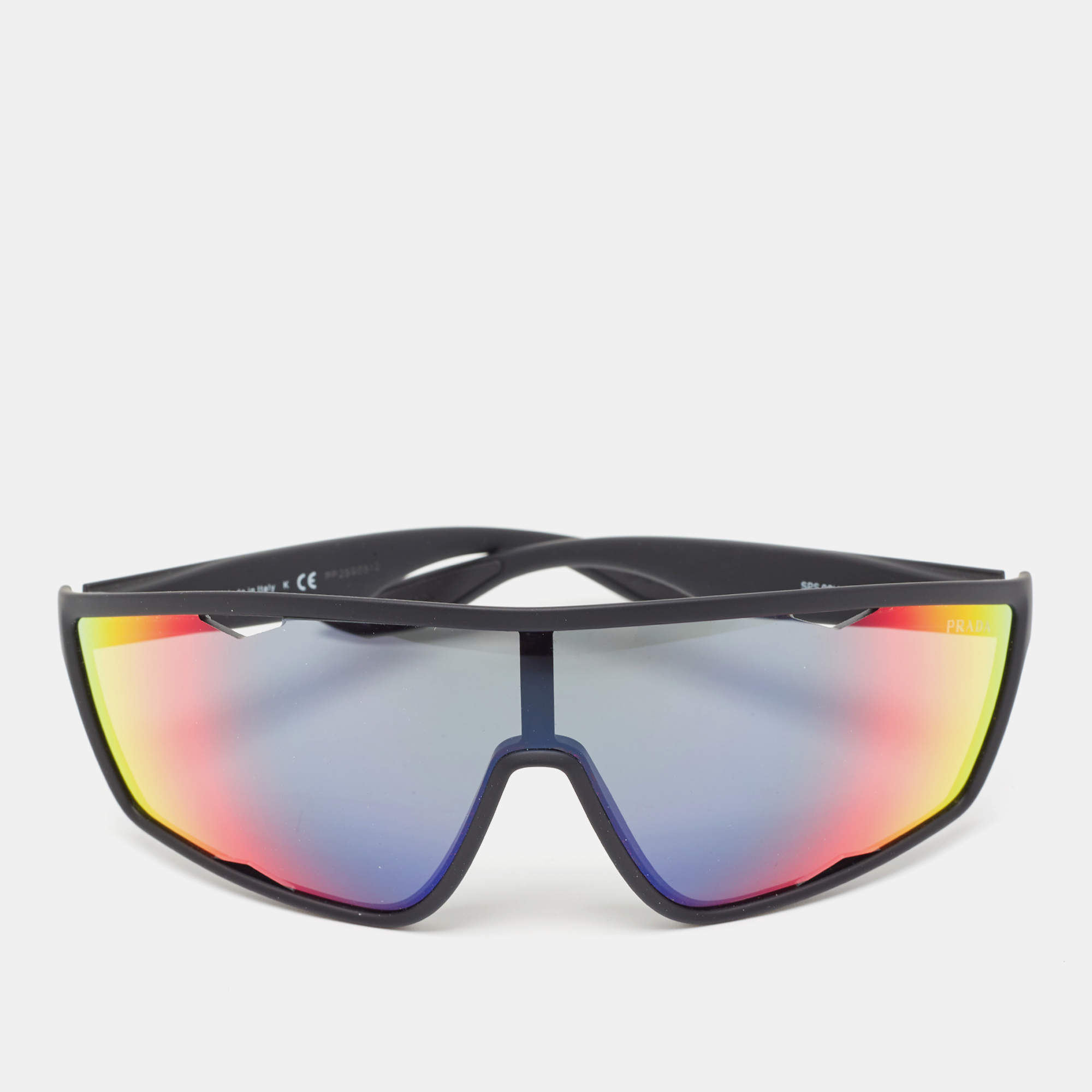
Prada Sport Multicolor SPS09U Linea Rossa Sunglasses in Good Condition
Prada’s sport-oriented, red-stripe line is the most accessible entry point into the brand, built around technical materials like nylon and lightweight acetate rather than the more elevated construction used in Prada’s core collections like Symbole.
Linea Rossa Core Acetate/Nylon
$320–$460
AED 1,000–1,450
Linea Rossa Sport/Wraparound
$370–$490
AED 1,150–1,550
Linea Rossa Metal/Double-Bridge
$450–$690
AED 1,450–2,200
How Much Do Prada Symbole Sunglasses Cost in 2026?
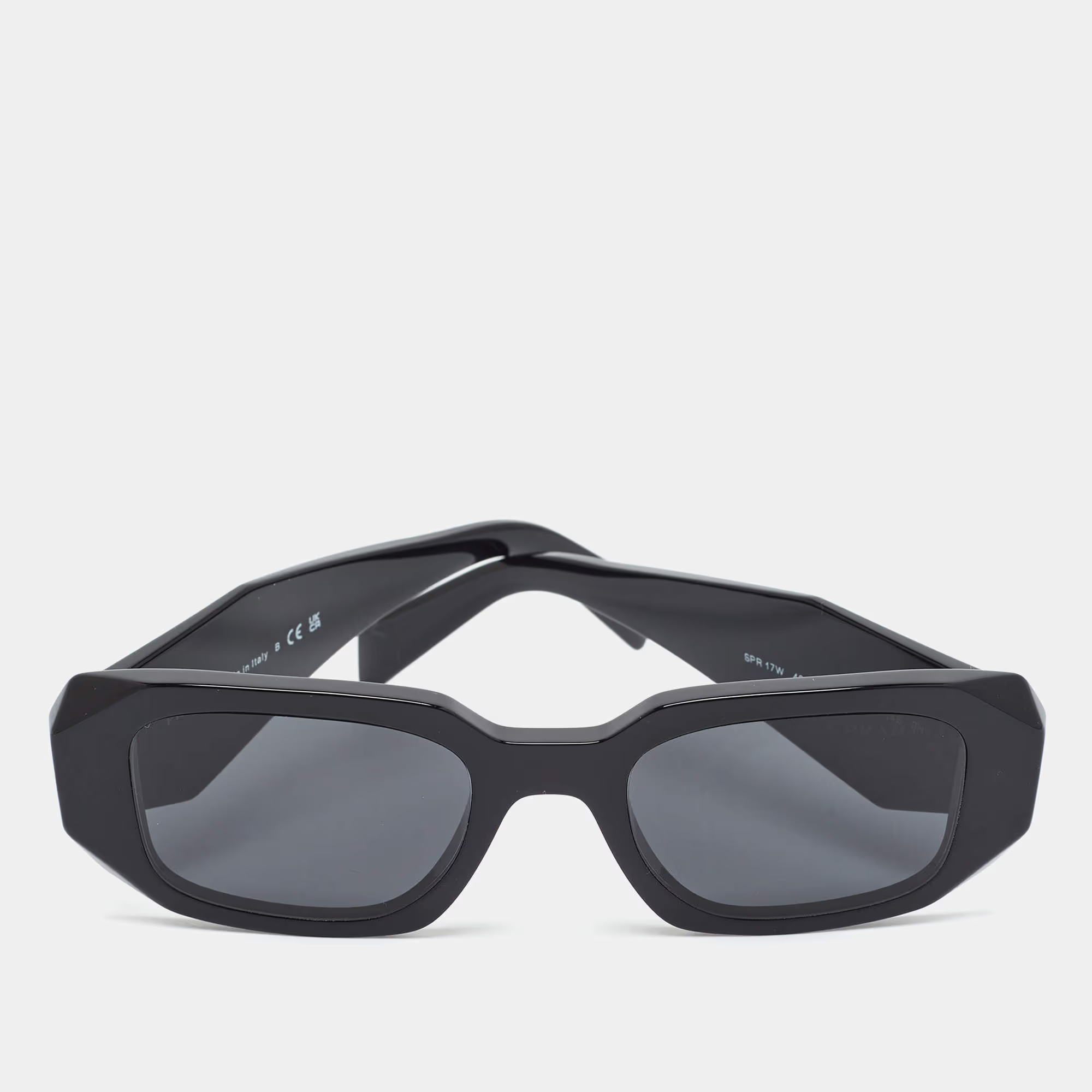
Prada Black SPR 17W Symbole Square Sunglasses in Good Condition
The Symbole collection is Prada’s current core seasonal line, built around a three-dimensional reinterpretation of the house’s triangle logo on the temples. It’s the collection most likely to show up when someone searches “Prada sunglasses price” without specifying a style, since it anchors the brand’s mid-tier positioning.
How Much Do Prada Classic Acetate & Cat-Eye Sunglasses Cost in 2026?
Prada Acetate, Gold Tone Metal sunglasses in Good Condition
Prada’s non-collection-specific core styles — the cat-eye, oversized square, and classic rectangle frames that recur across seasons in refreshed colorways — sit in a similar band to Symbole but skew slightly higher when they carry embellished hardware or premium acetate finishes.
Limited/Embellished or Premium-Material Runs
$530–$800+
AED 2,300–3,000+
A note on precision: Prada doesn’t run a single documented, dated price increase the way some handbag houses do — pricing shifts collection by collection, and the same silhouette is frequently sold across acetate, metal, and mixed-material versions that price very differently. Treat the ranges above as a 2026 snapshot, and always confirm the exact SKU and material on prada.com or in a boutique before buying, since embellishment and lens technology alone can move the price by $100 or more within the same frame shape.
A handful of factors explain why one pair of Prada shades costs noticeably more than another, even within the same collection:
Frame material:
Acetate sits at the lower end, while metal, double-bridge construction, and mixed-material frames push prices higher
Lens Technology:
Polarized and gradient lenses add a premium over standard tinted lenses
Collection Tier:
Linea Rossa is positioned as Prada’s sport-oriented, lower-priced line, while the core Symbole collection and classic acetate styles sit higher
Limited or Discontinued runs:
Styles no longer in production often trade above their original retail price once they leave shelves, since supply dries up faster than demand
Retailer and Region:
Authorized boutiques, department stores, and duty-free outlets each set their own margins, so the same frame rarely costs the same amount twice — the Prada shades price you see at a Dubai Mall boutique can differ from the price at an authorized optical retailer a few floors away.
Best Country to Buy Prada Sunglasses in 2026
Like handbags, Prada sets a broad global reference price and lets local currency, VAT, and import duty do the rest of the work. The mechanics are the same ones that shape Gucci, Louis Vuitton, or Chanel pricing across regions.
Europe
Generally the most forgiving place to buy new. Italy — Prada’s home market — and other Eurozone countries carry VAT of roughly 19–25% depending on the country, largely reclaimable by non-EU tourists. Milan flagship and outlet-adjacent boutiques are the most common shopping stops for sunglasses specifically, since Prada’s eyewear line is manufactured under license by Luxottica in Italy.
Japan
Competitive with Europe thanks to the instant 10% consumption-tax refund at the register, and often edges ahead of Europe when the yen is weak, as it has been through much of 2026.
The US
Carries the highest sticker prices of the major markets once state sales tax is added, with no VAT-style reclaim mechanism. The advantage is the depth of the outlet and department-store discount channel — Prada sunglasses show up on markdown far more readily than Prada handbags, since eyewear turns over seasonally and older stock gets cleared through outlets, Macy’s clearance sections, and authorized resellers.
Dubai/UAE
Offers a 5% VAT refund for tourists, but base prices sit close to US levels, so net savings after the refund are modest. Selection and shopping experience are the draw more than price; Dubai also has an active authenticated resale market for designer eyewear.
As with handbags, exchange rates move daily and VAT refund processing fees eat into the reclaim, so cross-border shopping trips only make sense if travel is already planned — the arithmetic rarely works if you’re booking a flight purely to save on one pair of sunglasses.
Pre-Owned Prada Sunglasses: What They’re Worth on Resale
Designer sunglasses depreciate faster than handbags or fine jewelry. Industry data on comparable brands puts typical resale retention for designer sunglasses, Prada included, in the 30–50% range of original retail price, condition- and rarity-dependent. That means a pair that retailed at $400 new might reasonably resell between $120 and $200, with well-preserved, boxed, and complete sets sitting at the top of that range and worn or incomplete pairs at the bottom.
A few conditions push resale value up rather than down:
Original case, cloth, and authenticity card included
Minimal lens scratching and no frame discoloration
Discontinued or archival styles with active collector demand
Popular, widely searched silhouettes such as cat-eye and oversized square frames
This is where the Prada sunglasses price gap becomes most useful to a buyer. A verified pre-owned platform gives you access to the same authenticated frame at a meaningful discount to boutique pricing, provided the listing includes proper authentication and honest condition grading. Unlike handbags, where a strong secondary market can make new vs. pre-owned a closer call, sunglasses depreciate predictably enough that pre-owned is almost always the better-value route if the specific model and condition work for you.
Buying Pre-Owned Prada Sunglasses: What to Check Before You Pay
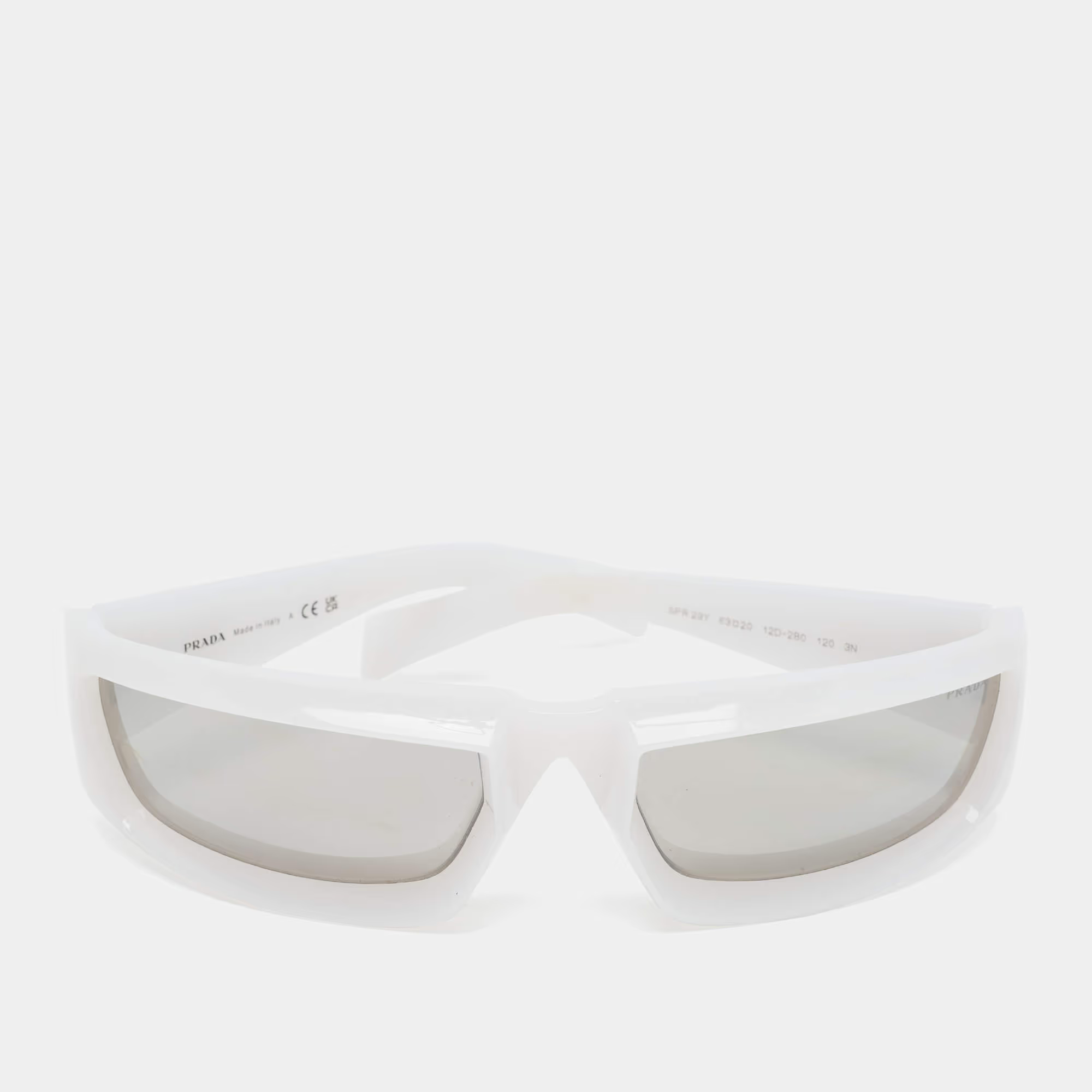
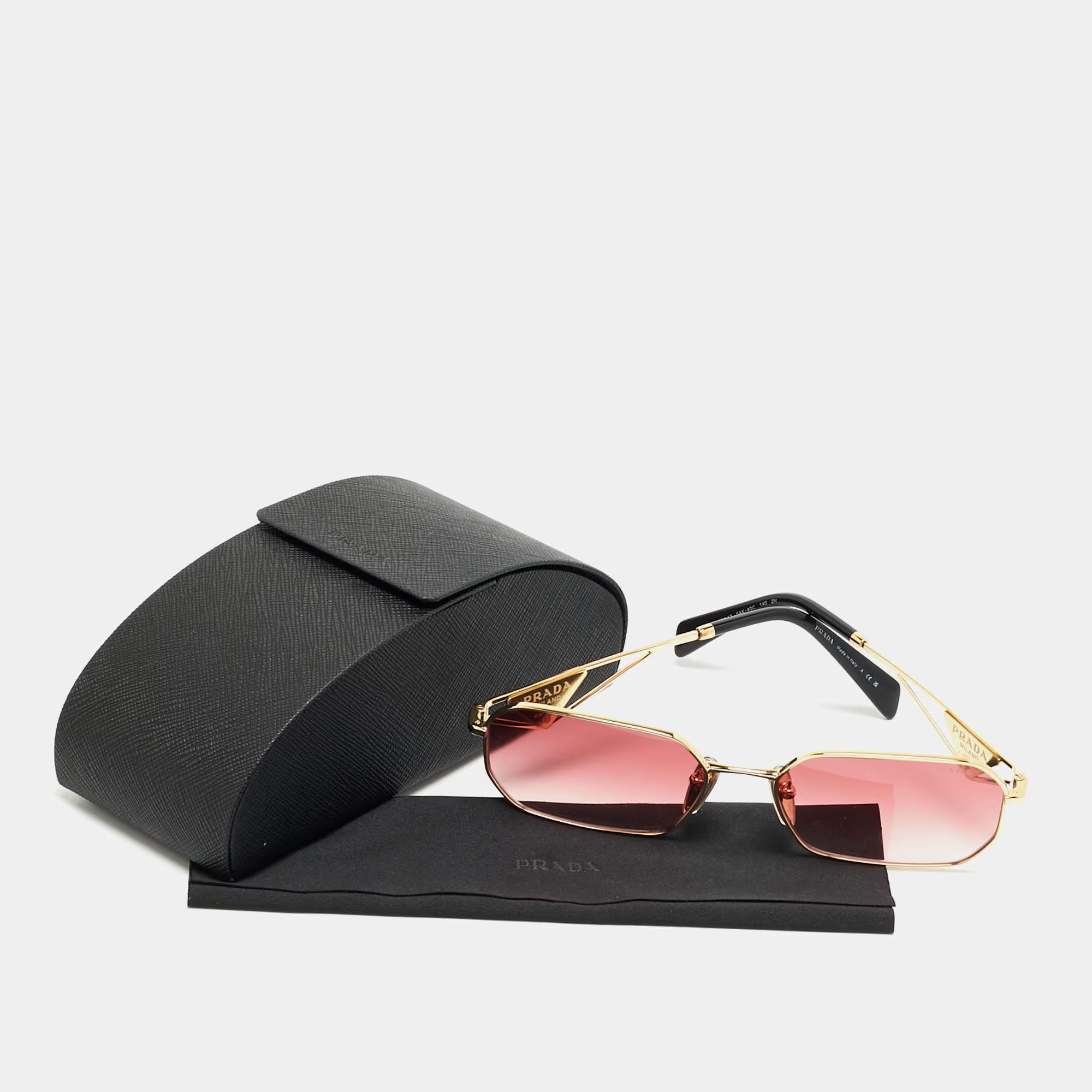
Prada Off White/Grey Mirrored SPR 29Y Runway Rectangle Sunglasses in Good Condition
Confirm the seller offers third-party or in-house authentication, not just a stock photo match
Ask for close-up images of the hinge stamps, temple engravings, and lens etching
Check that the model number on the temple matches the listed style
Factor in the cost of professional lens replacement (typically $50–150+) or nose pad replacement, if the listing notes scratches or heavy wear, as this can meaningfully change the true value of a pre-owned pair
Buy from platforms that specialize in luxury authentication, like The Luxury Closet, rather than unverified marketplace listings. (Eyewear is easier to counterfeit convincingly than handbags, since fewer buyers know what to check).
Frames from recognizable, still-in-demand collections like Symbole tend to sell faster and closer to the top of the resale range, while heavily worn or discontinued off-trend Linea Rossa styles may need a lower asking price to move within a reasonable window. See the FAQs below for the full selling process and expected payout range.
How to Buy Prada Sunglasses for Less: A Smart Buying Guide
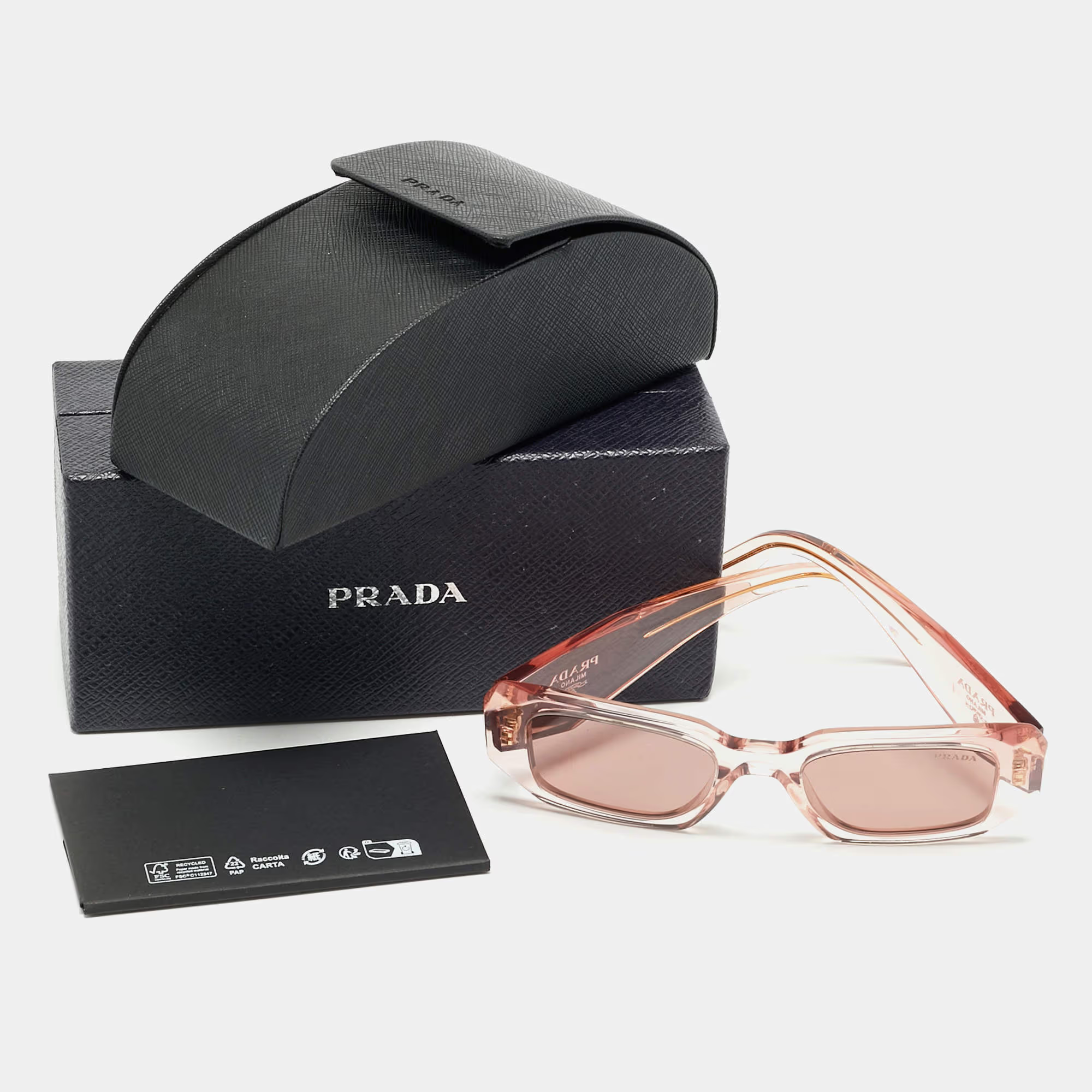
Prada Pink/Gold Triangle Logo SPR A51 Rectangle Sunglasses
If you want a brand-new pair and can travel: Europe (with a VAT refund) or Japan (with a favorable yen) will generally beat US retail — but only if a trip is already on the calendar.
If you want a new pair without traveling: check outlet and department-store clearance sections before paying full boutique price. Unlike handbags, Prada sunglasses genuinely do go on markdown through authorized retail and outlet channels once a season ages out.
If value matters more than “brand new”: pre-owned is close to a default good choice with sunglasses, given how predictably the category depreciates. Authenticated platforms that specialize in condition reporting and verification matter enormously here, since eyewear counterfeiting is common and harder for the average buyer to spot than it is with handbags.
Frequently Asked Questions About Prada Sunglasses Prices in 2026
What is the average Prada sunglasses price in the UAE?
Current-season Prada sunglasses in the UAE generally range from AED 1,000 for entry-level Linea Rossa styles to AED 2,300 or more for core collection and limited pieces, depending on the retailer.
What is the average Prada sunglasses price in the US?
Current-season styles generally list between $320 and $690 at official boutiques and authorized department stores, with outlet and clearance retailers occasionally clearing older stock for $150 to $300.
Are Prada shades a good resale investment?
Like most designer sunglasses, Prada shades depreciate rather than appreciate in most cases. Value retention typically falls between 30 and 50 percent of original retail price, with rare or discontinued styles performing better than mainstream current-season frames.
Why do Prada sunglasses prices vary so much between retailers?
Prada does not enforce a single global retail price. Import duty, VAT, retailer margin, and promotional timing all affect the final price, which is why the same frame can be listed differently across boutiques, department stores, and duty-free outlets.
Is it safe to buy pre-owned Prada sunglasses?
It’s safe when the platform authenticates each item and provides detailed condition photos. Always confirm hinge stamps, temple engravings, and model numbers before completing a purchase.
What is the cheapest Prada sunglasses price point in 2026?
Entry-level Linea Rossa acetate and nylon frames are the most affordable route into the brand, typically starting around $320–$350 at retail, with outlet pricing sometimes dropping below $200 for older stock.
Are Prada sunglasses worth it?
For most shoppers, yes — provided the price paid matches the tier. Prada sunglasses carry genuine Italian manufacturing (produced under license by Luxottica), recognizable design details, and solid build quality that holds up to daily wear. The value proposition weakens at the very top of the range, where limited or embellished styles can command a significant premium over comparable quality from other houses. Buying within your intended tier — Linea Rossa for everyday durability, Symbole or classic acetate for a more elevated look — tends to deliver the best value for the price.
What’s special about Prada sunglasses?
Prada’s eyewear is distinguished by its design language — the triangle logo detailing across the Symbole collection, architectural frame shapes borrowed from the house’s runway aesthetic, and technical performance features in the Linea Rossa sport line. Manufacturing quality is also a factor: Prada eyewear is produced by Luxottica, the same group behind Ray-Ban and Oakley, which means the frames benefit from established optical manufacturing standards rather than being a pure fashion-only accessory.
Why are Prada sunglasses so expensive?
Pricing reflects a combination of brand positioning, materials, and manufacturing. Prada sits in the designer-fashion tier of eyewear rather than the mass-market or even premium-mainstream tier, which brings a markup tied to the house’s runway and heritage positioning. On top of that, materials like acetate, metal hardware, and specialty lens coatings cost more to produce than standard plastic frames, and licensed manufacturing through Luxottica adds its own cost structure. It’s worth noting Prada sunglasses are still meaningfully less expensive than Prada handbags or ready-to-wear; eyewear is one of the more accessible entry points into the brand precisely because the price gap between “designer” and “premium mainstream” is narrower here than in other categories.
Is Prada better than Ray-Ban?
They serve different priorities rather than one being categorically better. Ray-Ban (also owned by the EssilorLuxottica group) focuses on iconic, largely unchanging silhouettes at a lower price point, with strong resale and replacement-parts availability. Prada leans into seasonal design, fashion-forward shapes, and brand cachet, at a higher price point with faster style turnover. If durability and iconic simplicity matter most, Ray-Ban is generally the stronger value pick; if current design and fashion positioning matter more, Prada is the better fit.
FAQ: Prada Sunglasses in Dubai & the UAE
How much is a pair of Prada sunglasses in Dubai in 2026?
Base prices in Dubai run close to US retail once converted from AED, since the UAE doesn’t offer the deep VAT reclaim that pushes European prices lower for tourists. A core Symbole style, for example, typically lands in a similar range to its US price once you account for currency conversion.
Does Prada offer a tax refund for tourists in the UAE?
Yes. The UAE refunds 5% VAT to eligible tourists through the official Tax Refund for Tourists Scheme at exit points like Dubai International Airport — a smaller reclaim than the 19–25% VAT rates available in parts of Europe, so it won’t close the price gap on its own.
Where are the main Prada boutiques and authorized opticians in Dubai?
Prada operates boutiques at The Dubai Mall and Mall of the Emirates, alongside authorized opticians across major UAE malls that carry the current eyewear collection at the same AED pricing regardless of location.
Is there a strong pre-owned market for designer sunglasses in Dubai and the UAE?
Yes. Dubai has an active pre-owned luxury market, with authenticated platforms offering designer sunglasses, Prada included, at 30–50% below current retail — in line with the discount range seen globally for this category.
Does Prada go on sale in Dubai?
Prada boutiques don’t typically run promotional markdowns in the UAE, though authorized multi-brand opticians occasionally discount older seasonal stock. Beyond that, savings come from VAT refunds or the resale market.
Selling Prada Sunglasses Online
How do I sell my Prada sunglasses online?
If you want to sell your Prada sunglasses online, the most reliable route is an authenticated resale platform rather than an unverified marketplace or classifieds listing. Submit photos and details of the frame, receive a suggested price range based on condition and current demand, ship or drop off the item for in-person authentication, and receive payment once it’s verified and listed. Platforms that specialize in luxury authentication, like The Luxury Closet, handle the cleaning, photography, and listing for you.
How much can I sell my Prada sunglasses for?
Expect roughly 30–50% of current retail for a pair in good condition with its original case and cloth, with complete sets and popular silhouettes like cat-eye and oversized square frames commanding the strongest resale demand. Lens condition and frame discoloration are the two biggest factors that pull the price toward the lower end of that range.
Where can I sell my Prada sunglasses in the UAE or Dubai?
Authenticated resale platforms operating in the UAE accept designer sunglasses for consignment or direct purchase, using the same appraise-authenticate-list process as shipped submissions elsewhere. Selling through a verified platform rather than a private UAE classifieds listing protects both the seller’s price and the buyer’s confidence in authenticity, which matters in a category as easy to counterfeit as eyewear.
What’s the fastest way to sell designer sunglasses in Dubai?
Submitting through an established authenticated consignment or buyout platform is faster than private sale, since the platform handles authentication, pricing, and buyer vetting. Drop-off or WhatsApp photo submission is the standard first step with most UAE luxury resale platforms.
Prices, VAT rates, and exchange rates shift regularly. Treat the figures above as a 2026 snapshot rather than a live price list, and confirm current pricing directly with Prada or your resale platform of choice before purchasing.
Citations
Current Linea Rossa and Symbole retail pricing (US)
Macy’s — Prada Linea Rossa Sunglasses for Men — macys[dot]com
Fashion Eyewear US — Prada Linea Rossa Sunglasses collection — fashioneyewear[dot]com
EyeOns.com — Prada Symbole Eyewear Collection 2026 — eyeons[dot]com
Prada official — Symbole and Linea Rossa product pages — prada[dot]com
Resale retention benchmark for designer sunglasses (30–50% of retail)
Cross-category resale market data on comparable designer eyewear brands, consistent with figures observed on Stock-X and 1stDibs pre-owned Prada listings
VAT/tax refund mechanics (Europe, Japan, UAE)
Consistent with mechanics cited in companion pieces on Louis Vuitton and Gucci pricing in this series
I think its time I reiterate my views on AI in gaming. Every few weeks I get an angry comment calling me a hypocrite for using AI images for editorials. I am not a hypocrite. I am not against AI for creative purposes. In fact, I have another pretty successful side hobby devoted to AI Music (I keep my two hobbies completely separate, so I’m not linking to it here, but trust me, it exists). What I do have a problem with is charging money for your AI creations because its lazy. If you’re charging $19.99 for a crappy solitaire game, I expect you to make the waifus yourself. And that brings me to Solitaire World Anime Waifus.
Solitaire World Anime Waifus is quite possibly the worst solitaire game I have ever played. The controls are crap, you have to slowly move your cursor across the screen to do anything. The card dealing is completely random so you might not win a hand, yet the game won’t tell you that. You’ll have to manually go back to the main menu and start over. Win hands and you’ll get exp to level up to unlock card backs, face card variations and background. But the exp is so slow you’ll be playing hundreds of hands to get it all. And you’ll be bored to tears doing it.
Solitaire World Anime Waifus has nice waifus, but they’re AI generated. I can generate better waifus on various sites for less than $19.99. So where does that leave us? With a crap solitaire game. You’re better off playing free solitaire on Windows or any of the countless better solitaire games on the Switch. I give this game a Garbage verdict with a one score. Its lazy. The developers, epiXR, are no better than 17Studio. But gullible fools keep buying, so they keep selling.
Overall: Solitaire World Anime Waifus is a terrible solitaire game with AI generated anime waifus. Its a scam, do not buy it. You can generate hotter waifus yourself.
A family affair! When it comes to working out, many Hollywood stars turn to their little ones as the perfect workout buddy.
“As Founder of @centrfit, I take my role in personally trying out every program seriously,” Chris Hemsworth wrote via Instagram in February 2022, referencing his fitness program. “This one was a full body and emotionally taxing workout specifically designed for parents. It didn’t make the cut.”
In the photo, the Thor actor’s three children — India, Sasha and Tristan, whom he shares with wife Elsa Pataky — climbed atop their dad.
As for sisters Kim Kardashian and Khloé Kardashian, they’ve also hit the gym with their respective little ones.
“My favorite workout buddy ever,” Khloé wrote via Instagram in 2022, referring to daughter True.
Scroll below to see how celebrities have incorporated their little ones into their fitness routines:
When discussing high-quality free-to-play video games, the focus is usually on multiplayer titles whose content density lies primarily in their online component, along with their microtransactions models.
Related
8 Best Free-to-Play Open World Games
Exploring massive worlds on a tiny budget.
However, the industry is large enough that not everything without a required payment follows this seemingly unchangeable pattern, as there’s always an exception to the rule.
From titles designed to monetize their base through expansions to historical classics made available to the community at no cost, you’d be surprised how many video games offer hours of fun without requiring anything more than your dedication.
Therefore, to shed light on titles that cost nothing despite trying to give you everything, I invite you to discover these ten free single-player games that are perfect time sinks.
10
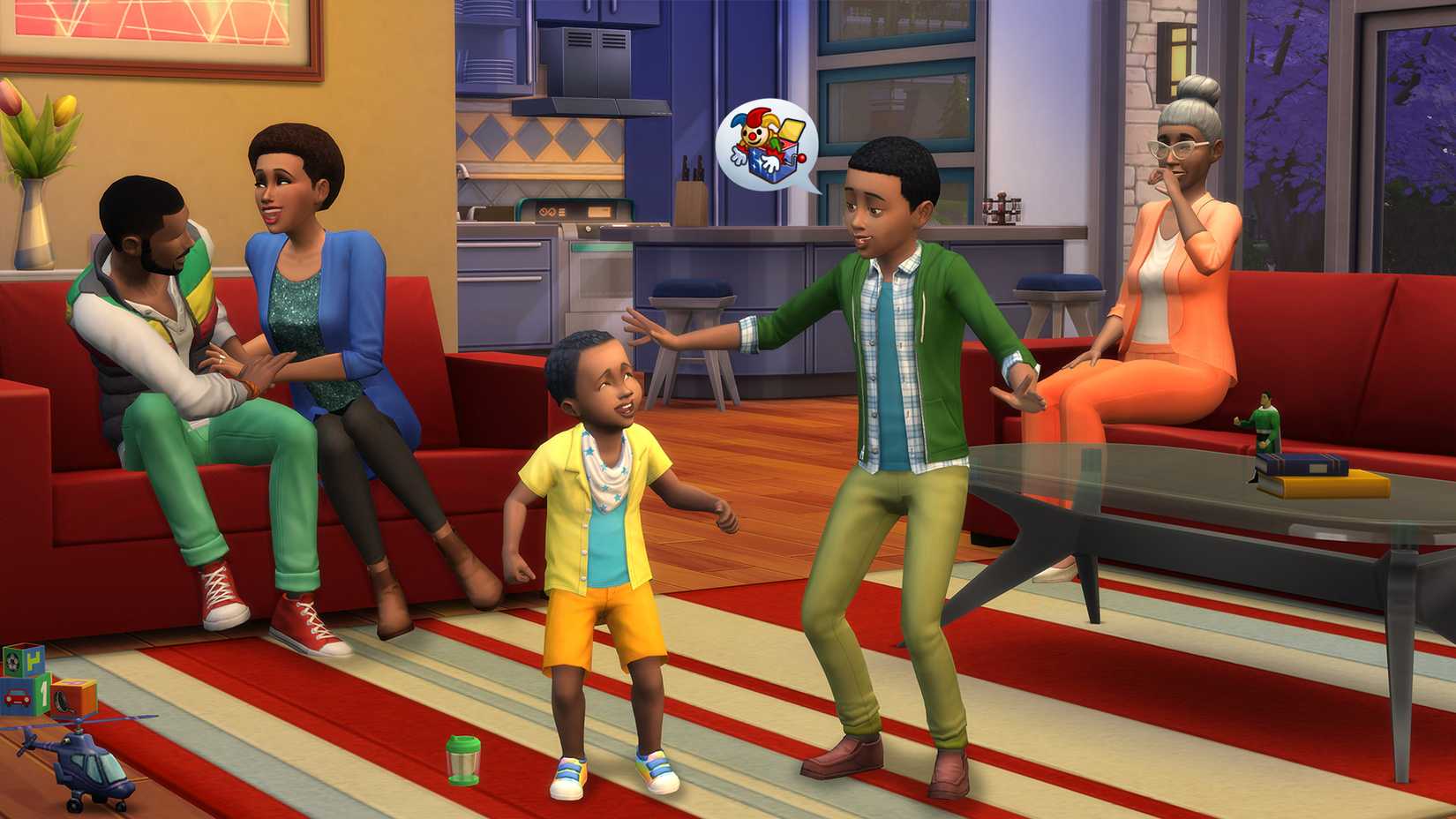
The Sims 4
Excellent for the Right Audience
Despite being validly criticized for its monetization methods, I’ve experienced firsthand how The Sims 4 can become a second life for the right audience.
Seeing my sister and her friends dedicate countless hours to the game despite not spending a single penny on its DLCs always intrigued me, and it only took me a few hours to realize it’s simultaneously the entire series’ best and worst entry.
On the one hand, the way it limits content to force you to buy expansions is abominable, but on the other hand, the way it refines Maxis’ long-standing formula to its fullest potential is palpable for those of us who have played the original releases.
It might fall into the category of guilty pleasures, though I can confidently say that, if you’re a casual player or simply enjoy games in this genre, The Sims 4’s base version hides more hours of entertainment than it initially reveals.
9
Age of Empires Mobile: PC Edition
Nice for Casual Playing
Considering Age of Empires III will no longer be available for free after August 2026, the alternative that emerges is Age of Empires Mobile: PC Edition, which I recommend for casual enjoyment.
Its pay-to-win nature is practically undeniable, which has led to a deservedly mixed reception, but you’d be surprised how quickly the hours you dedicate to it can accumulate if you take it lightly.
Thanks to its single-player empire-building system, with its own campaign missions and solo progression, you can enjoy it without encountering any other players, although its online component can be a welcome incentive for those who want to dedicate the necessary time.
Nevertheless, coming from a fan of the classics who doesn’t have the time or desire to play it, Age of Empires Mobile: PC Edition has been an interesting way to continue enjoying the formula without having to overthink it.
8
Endless Sky
A Great Space Simulator
Developer(s)
Michael Zahniser
Publisher(s)
Michael Zahniser
Release Date
October 30, 2015
Platform(s)
PC
Genre(s)
2D, Open World, Science Fiction
Its 2D nature places it below its peers in terms of visual spectacle and combat, but the significant contribution Endless Sky makes to the science fiction genre shouldn’t be underestimated.
With dozens of hours of content for completionists, it offers one of the most satisfying gameplay loops you can find in the free-to-play ecosystem without resorting to cheap gimmicks to grab your attention.
Discovering planets, managing your fleet, gathering resources, and improving your skills in the art of interstellar commerce are highly satisfying and more accessible than in paid counterparts like Star Citizen and Elite Dangerous, so it has its own appeal for newcomers.
Its lack of visual flair is compensated for by simple yet functional entertainment wrapped in a robust progression system, making Endless Sky a game that, to be honest, I’m quite surprised is free.
7
Clicker Heroes
To Damage Your Mouse
Ever since I played MMORPGs where I had to break my fingers manually distributing all the skill points I acquired, I’ve been a fan of anything that involves wearing out a mouse, which brings us to Clicker Heroes.
Of all the idle games out there, this is the one I’ve sunk the most hours into, as its simplicity makes it so addictive yet so accessible that you can enjoy it even if you’re just looking at it.
Moving through biomes, defeating new monsters, and acquiring new heroes to see ever-increasing numbers appeals to a practically chemical response in the brain where, even if you don’t know why, you’re happily mesmerized throughout the entire process.
This genre of titles isn’t for everyone, and perhaps this particular entry isn’t as spectacular as some of its peers that came later, but there’s no denying Clicker Heroes is a more than enjoyable time sink.
6
Bloons Tower Defense 5
A Loop That Never Gets Old
Developer(s)
Ninja Kiwi
Publisher(s)
Ninja Kiwi
Release Date
December 13, 2011
Platform(s)
PC
Genre(s)
Strategy, Tower Defense
The Bloons series has been one of my favorites since the Flash era, when they were puzzle games where you popped balloons and little else, but it became even more of a favorite thanks to the obscene number of hours I dedicated to entries like Bloons Tower Defense 5.
Tower defense titles are relatively new and still have a lot of room to grow, but they’ve already given us some wonderful titles where designating a series of towers with different abilities in strategic locations is fantastic, whether you’re playing for the first hour or the hundred.
Mechanically, Bloons Tower Defense 5 boasts great variety thanks to its large number of units, upgrades, branching paths, difficulty levels, and maps where you can unleash your problem-solving skills, to which you have to add a pleasant audiovisual component that makes the experience even more pleasurable.
Undeniably, the franchise’s most recent installment is the best, though Bloons Tower Defense 5 has nothing to envy about it because, when it comes to hours of entertainment, it has plenty in reserve.
5
Dragonsweeper
Looking for More Than Mines
Developer(s)
Daniel Benmergui
Publisher(s)
Daniel Benmergui
Release Date
January 15, 2015
Platform(s)
PC
Genre(s)
Strategy
For years, my country has been experiencing an electricity crisis that leads us to countless consecutive hours without power every day, a situation that guided me to become an expert in the art of Minesweeper and, subsequently, to become addicted to Dragonsweeper.
Related
8 Free-to-Play Games Even Deeper than Where Winds Meet
For those times when we need to play something low-budget and new.
This reinterpretation of the timeless classic merges it with a Dungeons & Dragons theme where, instead of simply avoiding mines, you have to undertake a grid-based quest to gain enough power to defeat a dragon.
Your health points are also your attack points, and you must manage each encounter accordingly to level up and recover them, always trying to find information through inference like in the original Minesweeper.
Compared to the previous entries on this list, reaching the mastery point where you’ve seen all the content in Dragonsweeper takes considerably fewer hours, but believe me when I say you’ll spend your entire time with the game completely absorbed.
A Classic Never Hurts
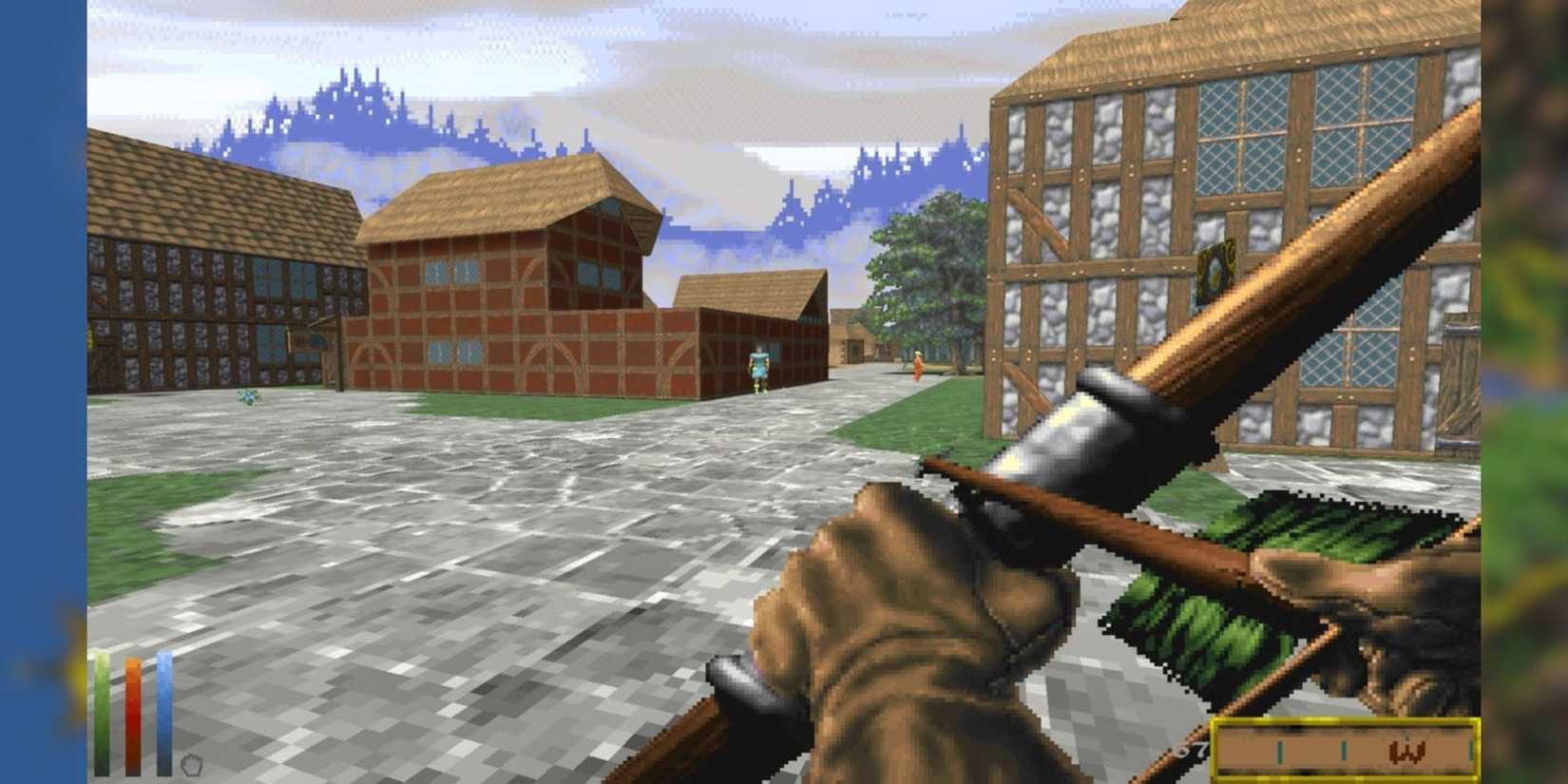
Although it’s been largely forgotten, especially considering it’s been a decade and a half since we last saw a new installment, The Elder Scrolls actually dates back to the 90s, including the classic Daggerfall.
This entry, like its predecessor, has been available for free on PC for quite some time, and it’s an excellent choice if you can look beyond its age to appreciate the immeasurable scope of its journey.
It’s a particularly complex recommendation because its timeless quality is based on elements like atmosphere and freedom, as it feels more like a medieval fantasy life simulator than an epic action RPG in the vein of Skyrim.
If you value its contemplative nature and can adapt to its immense procedural size, The Elder Scrolls II: Daggerfall can offer you an adventure that will literally feel like traveling to a different era, which is something I cherish even more in these hyperactive times.
3
Idle Slayer
Quiet and Addictive
One of the key aspects of idle games is that you can witness the progress rather than participate in it, which is also true of Idle Slayer, even though it strives to involve the player more actively.
Related
10 Best Paid Games That Switched To Free-To-Play
Some games jump on the free-to-play bandwagon later in their lifecycle to either drive numbers or microtransactions. But which have done it well?
With an absurdly deep skill tree, sporadic events and combat that encourage you to be attentive and click at the right moments, and a mesmerizing soundtrack you could listen to on repeat forever, it’s a tangible advancement of the genre’s formula.
The progression is uneven, with periods of rapid progress followed by periods of slow progress, though during those times you can have the game running in the background and rack up hours of progress without even lifting a finger.
These kinds of projects are designed to be time sinks, but Idle Slayer makes the greatest effort to provide a dynamism that’s ultimately appreciated when you want to take a more operational role in its addictive gameplay.
2
Kingdom Rush
The Unforgettable Pioneer
When it comes to being an endless time sink, Kingdom Rush isn’t among the first choices, because it’s clear this tower defense pioneer focuses much more on quality than quantity.
From the level design to the variety of units, enemies, and active abilities, it exudes a meticulousness that prioritizes perfection over vastness, encouraging replayability even where it doesn’t formally exist.
It’s a title with a fair number of hours to enjoy all its content, with quick matches and challenging levels that encourage you to constantly improve, though its mechanics are so satisfying that it’s normal to play it on multiple occasions.
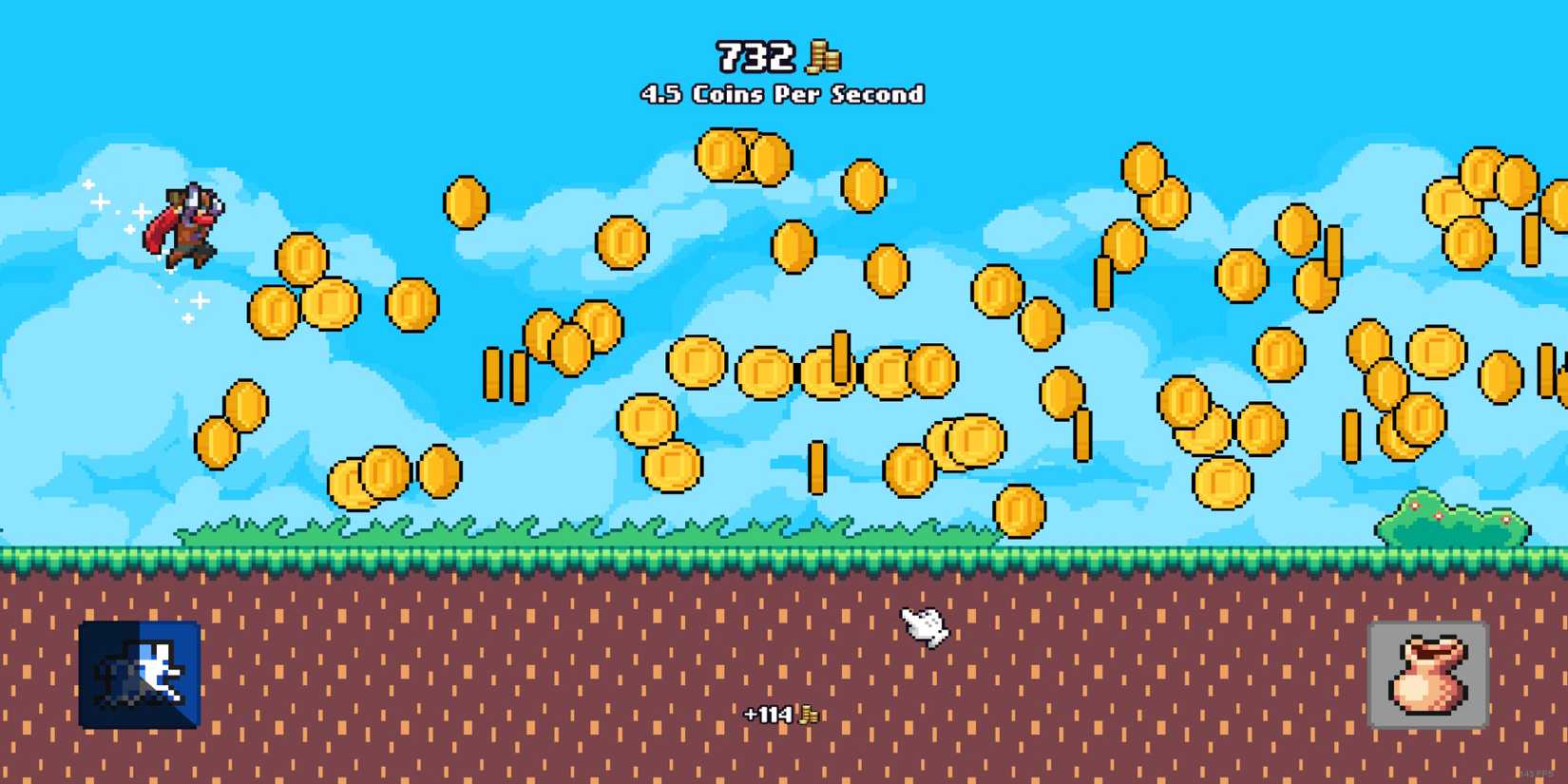
In a way, more than a title to kill time, Kingdom Rush is a safe haven you return to for an enjoyable medieval respite of goblin-slaying, something I value considerably more than the sensory overload of modern casual games.
1
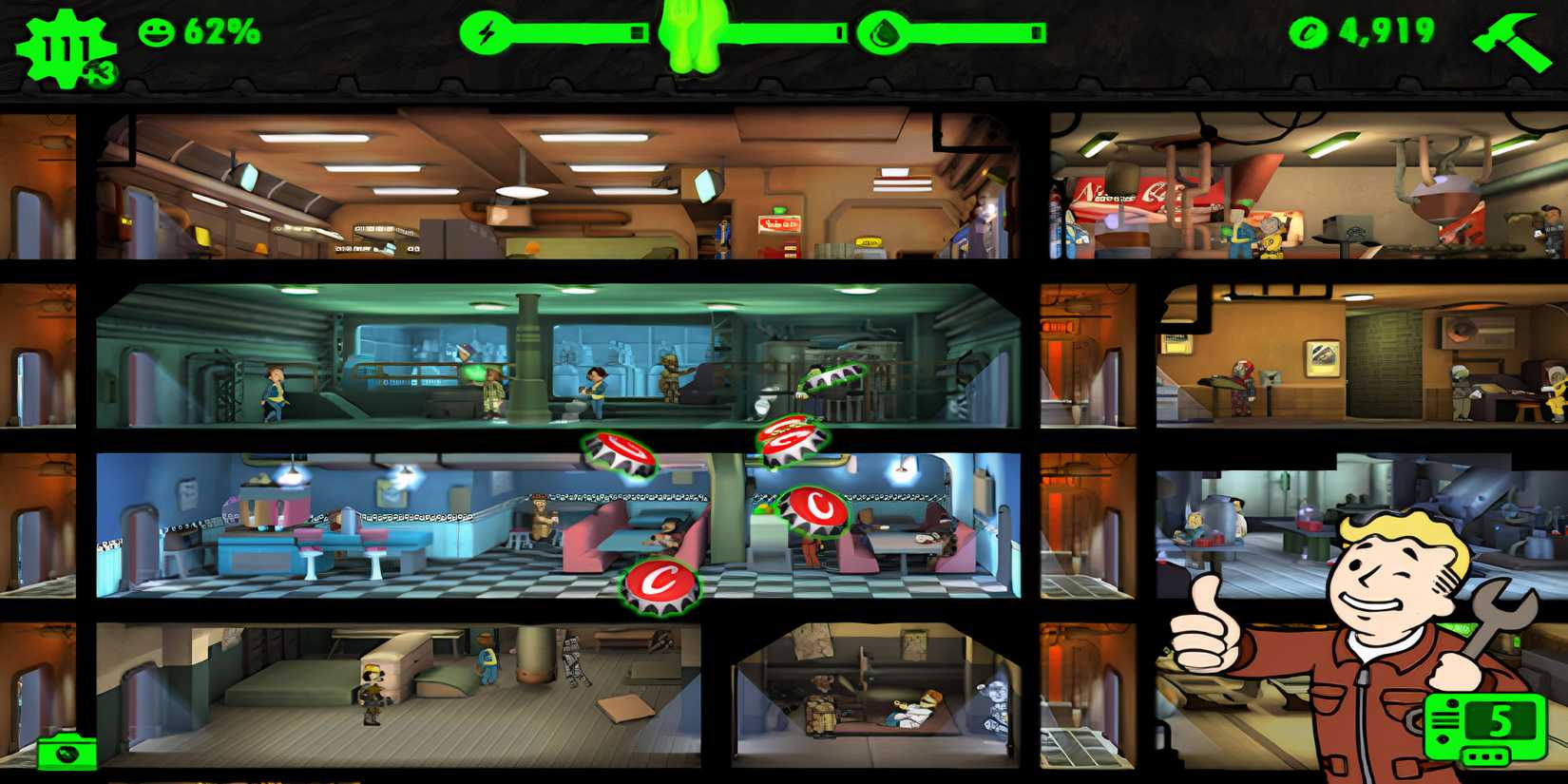
Fallout Shelter
A New Way of Enjoying the Wasteland
When I designed the list, I started with the premise of which free-to-play, non-predominantly online games I’ve spent the most time on, and I immediately knew the top spot would go to Fallout Shelter.
Beyond the immersion and perspective, one of my favorite aspects of the Fallout franchise is its tone and lore, which is why Fallout Shelter is simply a blessing that I’m grateful it’s available for free.
From its base-building mechanics to its take on the resource management genre, it’s a game whose creativity translates the main franchise’s formula to a more accessible model without losing an ounce of its identity.
The fidelity with which it replicates Fallout’s core philosophies through a completely different gameplay and even aesthetic concept is impressive, quite fitting for short, quick sessions that, in total, add up to hundreds of hours.
To be honest, the only downside I’d give to Fallout Shelter is that, if you’re not careful, you’ll end up dedicating more time to it than you should each day, because its production values and polish are so high that there’s almost no pressure to make you want to stop.
Next
10 Free Indie Games That Feel Premium
Not having money is no excuse to avoid enjoying these interesting gems.
Fresh cryptographic evidence published on August 4 by Bitcoin developer James O’Beirne has tied the faulty randomness code behind the ongoing Coldcard hardware-wallet exploit directly to Coinkite co-founder and CTO Peter Gray, publicly known on X.
The library at the center of the incident, libngu, was published on GitHub under a pseudonymous account named switck and presented as an external, low-profile dependency. O’Beirne’s analysis argues that switck and Gray are the same person.
Exploit began on July 30, with four waves of attacks draining over 5,200 addresses of roughly 1,800 BTC.
Critical flaw was introduced in a March 1, 2021 commit and remained unreviewed for over five years, affecting Coldcard firmware v4.0.0 and later.
May 2025 warning from James O’Beirne about the RNG path was dismissed by Coinkite, allowing the vulnerability to remain until the July 2024 attacks.
Confirmed losses from the exploit, which began on July 30, now sit above $110 million, with Galaxy Research’s running tally pointing toward roughly 1,800 BTC drained from more than 5,200 addresses across four waves. Coinkite has acknowledged the entropy failure and shipped emergency firmware, but has not publicly addressed the GPG identity link. The Crypto Times previously reported that confirmed losses had passed the $100 million mark on August 4.
I haven’t told the full story yet, but I came to the same conclusion back in May 2025 when I started doing an audit of `coldcard/firmware`.
I wanted to figure out conclusively where the CC RNG was getting sourced from, and found that it backed up to some shady library called… https://t.co/QWKCna97Qi pic.twitter.com/nUEeK1Kjb6
— James O’Beirne (@jamesob) August 4, 2026
The GPG Trail: 58 Signed Commits, One Key
O’Beirne’s case rests on GPG commit signatures, the same mechanism GitHub uses to prove a specific cryptographic identity authored a commit. According to his write-up, 58 commits authored as “switck” on the libngu repository carry valid GPG signatures from Gray’s personal key, the same key that signs Gray’s commits made under the name Peter D.
Gray elsewhere. The switck account itself, by contrast, has never uploaded a public key of its own. The overlap has been independently verified by Bitcoin analyst Dylan LeClair and further community researchers, and security firm Wizardsardine has named libngu as one of three repositories involved in the vulnerability.
The connection matters because Coldcard’s production firmware pulls libngu in as a direct dependency. A library that looked like an outside project appears, on the cryptographic evidence, to have been maintained by the CTO himself under an alternate identity, without that fact being disclosed to Coldcard users or, apparently, to independent auditors.
The Bug: A One-Line Preprocessor Guard
Coldcard is marketed as an air-gapped, high-security cold-storage device. Under the hood, however, seed generation on affected firmware silently stopped using the device’s hardware true random number generator and fell back to a weak software fallback. The failure, as documented by Block’s Bitcoin engineering team and Wizardsardine, sits in a single preprocessor guard inside libngu.
Coldcard’s board config defined the macro MICROPY_HW_ENABLE_RNG and set it to 0, intending to disable MicroPython’s built-in RNG so Coinkite’s own hardware TRNG wrapper would be used instead. The libngu guard, however, only checked whether the macro was defined, not whether it was enabled. Because 0 still counts as defined, the guard passed, and seed generation was routed through MicroPython’s Yasmarang software fallback. That fallback was seeded from the chip’s unique ID and timer registers, then XORed with a second Yasmarang instance initialized from public hardcoded constants, a construction that produces a deterministic stream.
Effective entropy collapsed to roughly 40 bits on Mk2 and Mk3 devices, and about 72 bits on Mk4, Mk5 and Q models, against the 128 bits a 12-word BIP-39 seed is supposed to have. Both figures sit inside the range a well-resourced attacker can brute-force offline.
The change entered the codebase in a March 1, 2021 commit titled “First pass w/ libNgU” and shipped to users in Coldcard firmware v4.0.0 on March 17, 2021. It remained in production, unreviewed, for more than five years.
The May 2025 Warning That Was Waved Away
The most damaging detail in O’Beirne’s account is not technical, but procedural. In May 2025, more than a year before the first sweep, O’Beirne says he audited the coldcard/firmware repository, traced the RNG path back to libngu, and flagged it to Coinkite. He described the library at the time as a low-star, single-maintainer dependency with hardcoded Yasmarang constants, and advised Coinkite to rip it out and link against libsecp256k1 directly.
According to O’Beirne, he was told that if something were wrong the company would already know about it by now, and that everything was properly configured for the real boards. The library stayed. Fourteen months later, the sweeps began.
$110M and Rising, Attack Still Live
The exploit went from theoretical to catastrophic on July 30, when attackers began sweeping vulnerable single-signature Coldcard wallets in a coordinated first wave that moved roughly 594 BTC from around 500 addresses in under an hour. Subsequent waves followed within days, and Galaxy Research now places confirmed losses at approximately 1,600 to 1,800 BTC across more than 5,200 addresses, worth roughly $110 million to $130 million at the time of the thefts.
The Crypto Times covered the live fourth wave that swept 449 BTC as victims raced to save funds, and the subsequent escalation to as many as 15 distinct attackers exploiting the same firmware flaw. Most of the stolen Bitcoin remains unspent, and one attacker-linked address has become an on-chain public bulletin board of victim pleas written into OP_RETURN fields. The bleed has also stirred long-dormant Bitcoin wallets, some untouched since 2013, as long-term holders migrate to fresh seeds.
Who Was Protected, and Who Wasn’t
Coinkite’s advisory scopes the confirmed exploit to Coldcard Mk2 and Mk3 devices running firmware v4.0.0 through v5.0.3, with reduced-but-still-worrying entropy on Mk4, Mk5 and Q models.
Users were protected if they had generated their seed with the on-device dice-roll option using a sufficient number of rolls, if they had layered a strong and unique BIP-39 passphrase on top of the device seed, or if they had used a multisig setup in which the Coldcard-generated key was only one of several signers. Users of plain, on-device single-signature seeds generated on affected firmware have no such protection.
Firmware Fixed, Seeds Not
Coinkite has shipped emergency firmware for every affected model that correctly routes seed generation through the hardware TRNG going forward. Installing the update, however, does not repair an already-generated weak seed. Anyone who created a single-signature seed on vulnerable firmware must generate an entirely new seed on patched firmware and migrate their funds.
The company has publicly acknowledged the entropy failure and published technical background, but as of publication has not issued a detailed public response to the GPG identity link between Switch and Peter Gray. It told Bloomberg it was heads down helping affected customers rather than estimating losses.
Why This One Hurts
The Coldcard incident has reopened a bruising debate about the trade-offs of self-custody, with on-chain analyst Willy Woo arguing that self-custody remains the only path to sovereign ownership even after the exploit. But the specifically damaging piece of this story is the governance picture the GPG evidence draws. A security-critical entropy path in a flagship hardware wallet was maintained under an alternate identity that presented itself as an outside contributor.
An external audit that flagged exactly this class of risk more than a year before the thefts was, by O’Beirne’s account, dismissed on internal confidence rather than a technical rebuttal.
The substantive questions Coinkite has yet to answer publicly are pointed. Why was a security-critical cryptographic library for a flagship hardware wallet maintained under a pseudonymous account tied to the CTO’s own GPG key? Why was the May 2025 external report on the RNG path not escalated to a build-level review? And what internal review, if any, was performed on the March 1, 2021 “First pass w/ libNgU” commit before it shipped in v4.0.0?
Until those questions are answered on the record, Coldcard’s marketing of an air-gapped, high-security device sits in uncomfortable tension with the code trail investigators are now unwinding.
The Bottom Line
More than a week after the first sweeps, the Coldcard exploit has become one of the largest self-custody thefts in Bitcoin’s history, and, unusually, one that is still in progress. The new GPG evidence turns what looked like a supply-chain failure involving an unknown dependency into a question about internal governance at Coinkite itself.
For holders, the takeaway is unchanged and pressing: any single-signature Coldcard wallet created on the affected firmware should be treated as compromised, and its funds moved without delay. Primary sources for verification include James O’Beirne’s public post on X, the GitHub history of the switck/libngu repository, Coinkite’s official security advisories, and the technical write-ups from Block and Wizardsardine.
Also Read: Galaxy Research Confirms $111M Stolen Funds in Coldcard Exploit
Disclaimer: The information researched and reported by The Crypto Times is for informational purposes only and is not a substitute for professional financial advice. Investing in crypto assets involves significant risk due to market volatility. Always Do Your Own Research (DYOR) and consult with a qualified Financial Advisor before making any investment decisions.
The initiative says it has scanned about 150 Bitcoin repositories and made more than a dozen vulnerability disclosures.
The team is developing an open-source AI platform for auditing Bitcoin software.
Developers say the effort is uncovering critical vulnerabilities across wallets, cryptographic libraries, and infrastructure.
A volunteer security initiative says it used frontier AI models to scan 150 Bitcoin repositories and found more than a dozen vulnerabilities as developers increasingly use artificial intelligence to audit blockchains.
In a post on X earlier this week, AnchorWatch CEO Rob Hamilton said the group has spent about $20,000 on AI services while building a “Bitcoin red team” platform.
“We have been working around the clock, with ~$20,000 of spend up to this point across different services,” he wrote. “Funding is secured, I appreciate all the gestures for donations but it is not necessary. The bill is taken care of.”
A red team refers to cybersecurity professionals who test software from an attacker’s perspective, probing for vulnerabilities before they can be exploited.
According to Hamilton, the Bitcoin red team uses Kimi K3 alongside OpenAI’s GPT Sol, Anthropic’s Claude Fable and Opus models, and Z.ai’s GLM 5.2 to identify vulnerabilities and generate supporting documentation.
“We also have been connected with OpenAI for some help so I could manage getting the Cyber Harness running as well,” he wrote. “It’s a much more expensive scan, but well worth it for load-bearing portions of the Bitcoin ecosystem and has already yielded good results.”
Pseudonymous Bitcoin developer Calle said the initiative has built multiple AI-powered review systems targeting wallets, cryptographic libraries, infrastructure, and other Bitcoin projects.
“We’re averaging on the order of one critical exploit per hour per person,” Calle wrote on X. “We’ve reported critical vulnerabilities to several projects in the last 12 hours. Thankfully, this is a very expensive exercise. We’re burning through $10,000 per day.”
The team did not disclose which projects were affected or provide details of the vulnerabilities.
The announcement comes as AI is playing a growing role in finding security flaws across the crypto industry. Earlier this year, researchers using Anthropic’s Claude Opus 4.8 uncovered a four-year-old flaw in Zcash that could have allowed attackers to create unlimited counterfeit ZEC. In August, Coinkite said it believes attackers used AI to identify the Coldcard wallet vulnerability, while Bitcoin bridge Boltz suspended its swap service after saying attackers were using AI to identify vulnerabilities faster than its team could patch them.
Daily Debrief Newsletter
Start every day with the top news stories right now, plus original features, a podcast, videos and more.
Many people know University of Fashion as the premier online destination for fashion design—draping, drawing, drafting, sewing, and illustration. But that’s only part of the story. We go far beyond technique.
As founder, I believe that mastering hands-on design is essential, but it’s not enough. To succeed, you also need a sharp business mindset. I ran my own eponymous label in New York City for over a decade, selling to top retailers. That experience taught me the realities of fashion business firsthand: factoring, payment terms like 8/10 EOM, COD, CBD, CIA, CBS, markdown allowances, P&L, sell-through, net vs. gross sales, cost of goods, markup, wholesale vs. retail pricing, returns, and how retailers protect their margins—often at the brand’s expense.
That’s why I brought together leading fashion business experts to build a comprehensive suite of business courses. These lessons cover everything you need to launch and run your own company: fashion retailing and merchandising, visual merchandising, branding and licensing, and even fashion law. My philosophy is simple: when you think like a retailer, you become a stronger, more strategic designer.
How to Start Your Own Brand
University of Fashion’s 3-part Fashion Start-up series. (Image credit: University of Fashion)
Are you thinking about building your own brand? Start with our 3-part Fashion Start-Up series, the essential foundation for every aspiring fashion entrepreneur.
You’ll learn how to choose the market category you want to design for, identify your customer by age, lifestyle, and demographics, and legally establish your brand. Our instructor also covers how to merchandise and price your collection, plus how to promote and sell your brand through a variety of distribution channels.
Trademark, Copyright & Brand Protection
Do you know the difference between a trademark and a copyright? In our 3-part fashion law series, you’ll learn about U.S. trademark law as it applies to fashion, starting with the basics of what a trademark is. Our fashion law expert will explain what trademark law protects, how to register your trademark, and the benefits of doing so. You’ll also learn what to do if someone infringes on your trademark, and what damages may be available under the law. This lesson is essential for all designers.
You’ll also learn what a copyright is, what types of works can be protected, and how copyright infringement works, including statutory damages and cease-and-desist letters. We’ll cover how to register your copyright, as well as important exceptions such as the Fair Use Doctrine.
Since social media plays a major role in building your brand, it also comes with risks. Our legal expert will explain the difference between defamation and libel, how to reduce risk when using social media, and what to do if someone defames your brand. This lesson is essential for anyone using the internet to promote a brand.
How to Think Like a Retailer
University of Fashion’s 4-part series on retailing. (Image credit: University of Fashion)
A career as a retail buyer requires a strong foundation in math concepts such as decimals, percentages, and fractions. Learning how to add, multiply, and divide decimals, and then convert them into fractions and percentages, is essential for buying, planning, and allocating retail merchandise. When a designer takes the time to understand the functions of a buyer, such as creating a retail merchandise plan, managing retail profit and loss, and marketing a designer’s collection, they gain a valuable advantage in tailoring their brand for maximum success at retail.
How to Brand & License Your Work
University of Fashion’s 4-part series on branding & licensing. (Image credit: University of Fashion)
Many designers begin with a single standout idea—such as a great pair of board shorts—and soon realize that success requires growth. In our 4-part series on branding and licensing, we explore what it means to be a brand, the psychology behind building a successful brand, and the importance of creating a distinctive logo. We also discuss why trademarking your brand matters and present a range of branding strategies to help your product stand out and gain a competitive edge.
Once your brand is established, you may be approached with a licensing opportunity—often considered a designer’s dream. We begin with the History of Licensing and then move into Licensing Fundamentals for Fashion Designers,including what kinds of products can be licensed, the roles of the licensor and licensee, and key terms such as royalties, guarantees, advances, GMS, and GMR. This lesson also examines the benefits and risks of licensing.
Because licensing deals involve financial details, our licensing expert also covers the Money Matters behind royalties and what to look for in a licensing partner. You’ll learn the difference between flat and graduated royalties, how advertising and marketing influence royalty payments, and how royalties are adjusted as licensees reach certain milestones.
How to Think Like a Retail Visual Merchandiser
University of Fashion’s 9-part Visual Merchandising series. (Image credit: University of Fashion)
One of the best-kept secrets in fashion is that retail buyers are often drawn to brands whose collections align with a visual merchandiser’s upcoming theme. Buyers work closely with visual merchandisers to build excitement and connect with their target audience through store windows and in-store displays. Designers with a clear brand identity and an understanding of retail visual merchandising can create collections that inspire compelling presentations, capture attention, and attract the right customers.
Linsoul proudly introduces the Kiwi Ears Halcyon, a breakthrough in in-ear monitor innovation that redefines what’s possible in portable audio.NEW YORK CITY, NY...