Gaming

Home Gaming Page 16

Painting with Memory Quest Guide in Palia

0
Painting with Memory Quest Guide in Palia


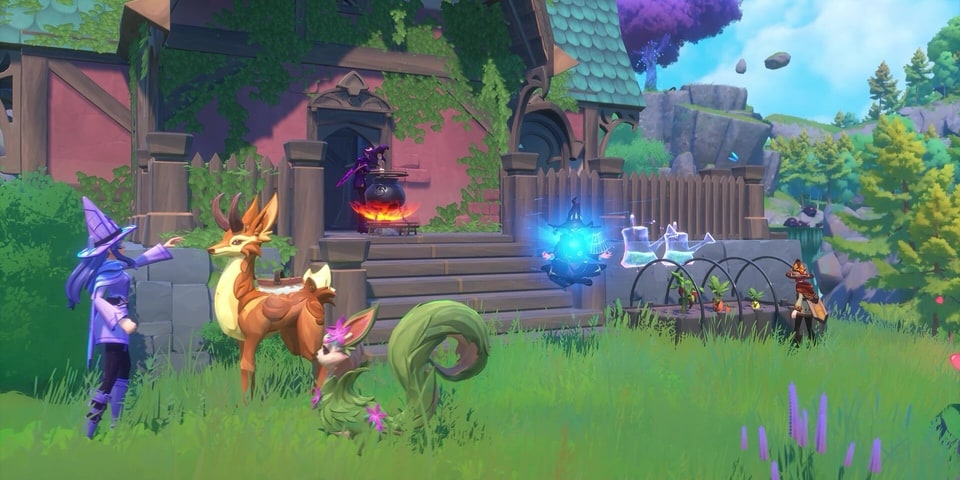
Painting with Memory is a friendship quest for Ulfe in Palia. Friendship with Ulfe unlocks after completing the main story of Elderwood. Tamala will ask you to find the locations in the journal of Ulfe to help Ulfe with his past. In this guide, we will walk you through the Painting with Memory quest in Palia.

How to Complete the Painting with Memory Quest in Palia

The Painting with Memory quest becomes available after reaching Friendship Level 4 with Ulfe and completing the “Talk the Talk” quest. Speak with Ulfe daily and bring him his favorite gifts to easily increase the friendship level. At friendship level 4, Tamala will send you a letter. Read the letter from Tamala to start the Painting with Memory quest.

Speak to Tamala

Go to the Elderwood zone and find Tamala to speak with her about her discovery. She will hand you the Journal and ask you to visit the places and chant the words.

Proceed to the first location

The first location is in the Beast Cave, located southeast of the Okanaa Bog area in Elderwood. Follow the quest marker on the map to easily locate the cave’s entrance. Head inside the cave and make your way to the open area to spot Ulfe. The first location is just beside Ulfe. Interact with the sparkling spot on the ground to chant the words, and two Echolings will appear. These are Ulfe’s mere and pere echolings. Go through the dialogues with the echolings, and then speak with Ulfe.

Go to the second location

The second location is at Ulfe’s Old House at Zendruu Tree’s location. Head over to the Central Stables and walk across the echo wall. Now, go inside Ulfe’s Old House and chant the words at the sparkling spot to spawn the two echolings. Go through the dialogues with echolings and then speak with Ulfe.

Go to the final location

The final location from the book is Zendruu Tree. Head outside Ulfe’s Old House, and go to the Zendruu Tree on the left to find the sparkling spot. Interact with the spot to chant the words and spawn the echolings. Go through the dialogues and then speak with Ulfe.

Make any Flowtato Dish

It seems Ulfe is hungry, make him any dish that includes Flowtato to fill his hunger. You can make any one of the following dishes to fulfill the objective.

After making the dish, go to Ulfe to give him the dish. Once done, you have to wait for Ulfe to visit your housing plot.

Wait for Ulfe’s Visit

Head to your housing plot area and wait for Ulfe. As he arrives, speak with him and go through the dialogue to conclude the quest.

Rewards

Completing the Painting with Memory quest in Palia gives the following rewards.

1x Ulfe’s Sketch

30 Renown Points


Source link

The Darkness Awaits In Unmourned On Xbox | TheXboxHub

0
The Darkness Awaits In Unmourned On Xbox | TheXboxHub


A screenshot from Unmourned as it releases on Xbox
Unmourned – now on Xbox

You know the feeling. A quiet house. Empty rooms. Nothing obviously wrong… and yet something feels off. Unmourned builds itself entirely around that unease, slowly tightening the screws until you’re no longer sure what’s real, what’s memory, and what’s watching you from the dark.

Now available on Xbox One, Xbox Series X|S and PC via Play Anywhere for £24.99 – following earlier releases on Steam and PlayStation 5 – this first-person psychological horror experience looks to drag players into a deeply personal and unsettling story.

At A Glance

Game: Unmourned

Developer: Codebros Studio

Publisher: Codebros Studio

Price: £24.99

Platforms: Xbox One, Xbox Series X|S, PC, Play Anywhere, – previously on Steam and PlayStation 5

Game Type: Psychological Horror

A House With A Story To Tell

Unmourned follows Jason, a man trying to start fresh in a new home. But it doesn’t take long before that fresh start begins to unravel.

Strange occurrences turn into full-blown hauntings, and what initially feels like paranoia quickly becomes something much harder to explain. As Jason digs deeper, the house begins to reveal fragments of its past – a family that vanished, a tragedy left unresolved, and a hidden door that shouldn’t exist.

It’s not just about what happened here. It’s about why it refuses to stay buried.

Reality Doesn’t Stay Still

What sets Unmourned apart is how it plays with perception.

You won’t just explore a static environment. The game constantly shifts between present-day reality and disturbing visions of the past, forcing you to piece together events as they unfold around you. These transitions aren’t always predictable, keeping you on edge as the line between what’s real and what isn’t becomes increasingly blurred.

Sanity Under Pressure

A dedicated sanity system means your mental state is always in play. Stay in the dark too long and the world begins to twist – paranormal activity increases, your surroundings feel less stable, and the threat level ramps up.

It creates a constant push to keep moving, even when you’re not sure what’s ahead.

Don’t think you are completely helpless. It’s just that survival comes with limitations.

A night vision camera helps you navigate the darkest areas, while a photographic camera reveals hidden elements that aren’t visible to the naked eye. These mechanics aren’t just gimmicks; they’re essential to uncovering the truth behind the house and its past.

And sometimes, seeing more only makes things worse.

A Slow Burn Into Something Darker

At £24.99 from the Xbox Store, Unmourned offers a more methodical take on psychological horror. It’s not about constant action – it’s about atmosphere, discovery, and the creeping realisation that you’re uncovering something you probably shouldn’t.

For those who prefer their horror to linger rather than shout, this is one that looks ready to get under your skin. Just don’t expect the house to let you leave unchanged.


Source link

Ubisoft Shaped The Games Industry, Only To Be Left Behind By Its Creation

0
Ubisoft Shaped The Games Industry, Only To Be Left Behind By Its Creation


Ubisoft is celebrating its 40-year anniversary today, March 28, 2025. Below, we look at how Ubisoft helped to establish the modern game industry, and where it may go from here.

In 1986, Zombi was released for the Amstrad CPC computer. The first-person adventure game heavily borrowed from George A. Romero’s Dawn of the Dead, to the point that knowledge of the film’s plot was necessary to complete the game. While it received decent reviews, Zombi’s only remarkable quality is being the debut game of a French developer called, at the time, Ubi Soft.

Four decades later, and Ubisoft has shed both the space in its name and its somewhat humble beginnings to be one of the biggest names in the entire video game industry. Ubisoft franchises are some of the best-selling in history, from Assassin’s Creed to Just Dance; the company has dealt with some of the biggest IPs around, from Star Wars to Avatar; its list of subsidiaries spans the globe, from Abu Dhabi to Toronto. Anyone who has played a video game in the past 20 years or so has likely touched an Ubisoft game.

Continue Reading at GameSpot


Source link

Life is Strange Reunion Review: An Absolute Shakabrah Redemption Ride

0
Life is Strange Reunion Review: An Absolute Shakabrah Redemption Ride


It was the summer of 2017 when the entire season of Life is Strange went up as a free title on the PS Plus monthly tier. And while this was just a typical auto-download for me, as I always do with every other prior PS Plus freebie, I never realized how this game/series would shape my entire adolescence. Especially with a character that I grew so personally attached to, Chloe Elizabeth Price.

See, I’ve been here every step of the way, from Sean and Daniel’s harrowing road trip in Life is Strange 2, Chloe’s prequel rollercoaster ride in Before the Storm, the peculiar yet oddly cathartic tale of Alex Chen in True Colors. Heck, I even became infatuated with the original creators (Dontnod) to the point where I obsessively played Lost Records: Bloom & Rage just last year.

Related

10 Best Games With Short But Powerful Narratives

Make sure you have some tissues handy.

Needless to say, would DeckNine pull me back in the saddle with Double Exposure? They sure did, even if half of my review for that entry (admittedly) had grace marks written all over it because of my rose-tinted nostalgia goggles for an adult Max Caulfield. Look, we don’t talk about that game, or even its half-baked ending. I’m sure every other Pricefield stan would agree in a heartbeat, more or less.

But with the unveiling of Life is Strange: Reunion, my expectations were at a more cautious state than ever, and my inner teenage self was scared out of his wits about how they were going to handle Chloe here.

And with the credits rolling just a few hours ago on my screen, I can’t believe I’m going to say it with confidence to you all: DeckNine actually managed to hit a full-blown victory lap here that faithfully concludes this beloved duo’s adventure. Just how did they pull that off, you ask? Well, you’re going to have to jump in the mosh pit with me here to find out.

This review will not contain or showcase spoilers related to the major story events of Life is Strange: Reunion. However, opinions on certain character developments and revelations will still be discussed to an extent.

Starring Mad Max and Her Ravenous Partner in Time

Dual Protagonists, yup, they finally went ahead and did it. You play as both Max and Chloe in this (heavily implied) last iteration of their saga, and there is no better way to close out their final chapter than to steer both their fates together. You finally get the chance to undo the damage to Chloe from Double Exposure by being able to shape her character motives yourself. Well, most of them.

But does that automatically erase the ending or implications of that game? Well, there’s a bit of technicality here via the starting options, which let you choose the obvious Bay or Bae canon, being friends or having romanced Double Exposure’s romantic interests, as well as whether you supported Safi’s actions. It’s pretty self-explanatory, but more on that in a bit here. Life is Strange: Reunion kicks off soon after the fallout from Double Exposure. After impossibly combining two different realities in an ex machina attempt to save both Safi and Caledon University, Max gets roped into another heated turmoil, literally.

A distressing text from Moses makes her rush back to campus from her road trip, only to find everything set ablaze and in disarray. In a desperate attempt to save everyone and possibly find out what happened, she uses a Polaroid photo of herself to rewind time enough to give her a few days to track down the mystery back at Caledon in Lakeport, instead of going on her gallery trip.

19d320ba6f596-screenshotUrl

As Max and Moses begin to unravel this ticking-bomb arson mystery, we shift to everyone’s favorite (former blue-haired) wildcard punk gal, Chloe Price, who’s unfortunately going through her own ordeals as a Music Band Manager. Simultaneously, Chloe’s having an existential crisis with strange, nightmarish visions involving her, Max, and Safi. Obviously, who better to help her resolve them or find out their cause than her ex, whom she broke up with over a darn letter of all things and hasn’t been in contact with for several years?

Dual Protagonists, yup, they finally went ahead and did it.

The game is officially set afoot when Chloe rushes from the Snapping Turtle Bar to rescue Max from her disastrous sneak-in mission at the Abraxas House – Which I hope the rest of the DE players still remember, since it is one of the central plot elements of this game, with a whole cultist backdrop, not to mention the other disastrous arson attack on the campus itself.

Reunion has a relatively strong foundation here for this gameplay loop of making you switch between its two main characters. The game isn’t episodic this time, so it’s a one-way long shot where you swap periodically between both Max and Chloe as they try to accomplish their goals and motives to pull the curtain down on this crazy conundrum surrounding Caledon. Both of these characters have their own way of doing things, some better or worse depending on how you look at them.

Take a Shot Every Time You Use Rewind or When Chloe Uses Her Sharp Tongue

We all know it wouldn’t be a Life is Strange entry without you running into the consequences of your actions, or rather, some of the choices that your morbid curiosity bites into along the way. And with how you control and handle two characters this time, what on earth could possibly go wrong with a quasi-famous photographer with time-warping abilities and her Partner in Time, who’s constantly haunted by the ghosts in her past? Well, non-spoiler alert; it hits the fan harder than you’d imagine, especially after the subpar quality from Double Exposure.

Firstly, the thing that stood out to me about this game right away was how grounded and laser-focused the narrative felt. A fair bit of the plot elements, like the whole Avengers-esque ending or everyone in Caledon knowing about Max’s powers, were retconned with a simple explanation: Moses called it “Storm Amnesia.” A very bold move, but not surprising given the (carefully) high expectations from longtime fans for this game after the previous iteration’s travesty.

collage of 3 games; mgs2, last of us 2 and life is strange

Related

10 Best Games Where The Good Guys Lose

Nice guys finish last.

There’s still a lot of ground to cover, but I wanted to quickly point out the gameplay presentation here. After she merged realities, this also caused Max to regain her OG Time Rewind ability, and to my surprise, they handled its inclusion extremely well. I really mean that, even if I prefer Dontnod’s design philosophy more. You have segments where you consecutively use Rewind to squeeze a different answer out of someone, perform an action in a different manner, or use it as a last line of defense; I won’t spoil that one, but it’s fantastic.

On the other hand, for all my Before the Storm enjoyers, Chloe’s backtalk segments are back, and they’re just as cool as you would’ve remembered them. However, I apologize if you get too overzealous with my statement there, because there’s quite literally only three total Backtalk encounters. When the completion trophy for all of them popped up, I sat there like Patchy the Pirate, saying, “That’s it?”

Thankfully, a smidgen of that disappointment is offset by Chloe’s overall rebellious and eccentric demeanor.

Either that or just going through the briefly updated journals and the back-and-forth text messages in this game are an absolute delight, and almost kind of help break the ice between some intense or rather heated exchanges between the game’s main plot intricacies.

Collectibles make their obvious return with Polaroid Snapshots once again being the main focus for Max, while Chloe can doodle up some sketches from key points of interest. And if you’re wondering about any puzzles, negative on that as well. Most, if not all, are pretty self-explanatory to complete, and they just end up feeling like minor setbacks to our two characters – Especially since most of these are your typical find X item or interaction spot in the environment quests.

Firstly, the thing that stood out to me about this game right away was how grounded and laser-focused the narrative felt.

Also, speaking of setbacks, the slightly rushed production quality was so noticeable here because there were a number of occasions when the character’s face rig glitched out, almost creating an uncanny effect of them creepily smiling mid-sentence or just their model being uncharacteristic. That, and the lighting would sometimes break in some chapters or transitions, requiring full checkpoint resets or game restarts. This was very annoying to deal with, but then again, something I got familiar with in Double Exposure on a similar scale.

Bound By Time, Trauma, Existential Dread, and the Illusion of Choice

At the core of the game, you must remember that it still carries the golden torch that made the first game special. Max and Chloe still have their signature cringey, cheesy one-liners and quips they throw out in environmental interactions. In one interaction, Max will probably play out a heartfelt conjecture, but if you interact with the same thing as Chloe, you’ll get an entirely opposite outcome — throwing out her usual dose of snarky attitude without giving a care if it’s a little more than someone could chew. Either that, or she’ll make her occasional witty remarks on other points of interest; just your average Chloe Pricefield in her natural state.

The entire narrative and mystery elements of Reunion are genuinely well-written, from start to finish. This isn’t Double Exposure, where it all came plummeting down midway and felt like a massive trainwreck by the end of it. Actual care went into making this spider-webbed mystery tale feel like a proper front-end detective case, even more so when you realize the game outright tells you to look and search everywhere for clues or potentially hidden deets about the cases.

Like, seriously, there’s a hidden trophy/achievement for finding all the optional evidence, and half the playerbase that I interacted with online couldn’t find it all on their initial playthrough. The secrets and hidden divergences here can almost certainly throw you into a state of skepticism over anything you might’ve missed in the game because, believe me, choosing the true culprits behind your cases can directly impact a few of the sequential moments in the finale.

However, as much as I could ramble on about how they introduced these unexpected stakes or the attention to detail to some of the slow-burning mystery aspects of the game, it just unfortunately feels too held back by shoestrings. Again, trying to avoid making any comparisons, but just can’t help but feel as if the repercussions and overall ramifications are non-existent in this game. It has been a recurring case for me since LiS: True Colors, because even in LiS: 2, I knew Sean and Daniel had so much to lose at every step of their journey, especially with the brilliantly designed moral scale for Daniel that could tip the ending’s balance in different ways.

Even saying it outright makes me feel like I’m acting too hypocritical about this whole thing, but darn it, I’m standing by it; it almost felt akin to the Illusion of Choice effect, where my options or even consequences barely felt multifaceted. And I think part of that may stem from how I didn’t care for half of the characters in this game, even if they’re unintentionally treated like an afterthought.

Max and Chloe still have their signature cringey, cheesy one-liners and quips they throw out in environmental interactions.

Loretta, Reggie, and Vinh? I was actually surprised to see them show up for the game’s ending. Moses? He’s probably the MVP of this game, especially with how he acts as the big-brained intellectual yet extremely caring big bear to both Max and Chloe. Safi? We’ll go over to her in a bit. Amanda’s an absolute darling. I 10/10 would get Princess Leia buns done just to twin with her. As for the rest, like Yasmin, Owen, and even Lucas? They generally just become fixated on the overarching plot as recurring yet integral characters.

I didn’t feel the slightest attached to most of them, no matter how hard I tried. The spotlight is rightfully on Max and Chloe, but that still doesn’t make me want to sweep this flawed direction under the rug. They could easily improve it if they wanted to. Properly incentivize me to take risks, and if they don’t pay off, let me face huge or otherwise fatal outcomes; don’t just save them for the end, especially for characters I literally didn’t think or care about in the previous game/entry. But hey, maybe that’s even more of an indication of Double Exposure’s writing quality.

Rewinding the Past, Redeeming the Present, and Finding Reunion for the Future

To have loved someone is to have lived. Heartbreaks truly hurt the most when you’re infatuated with your past, yearning for the same affection as that once significant other gave you that no one else could provide thereafter. Max and Chloe’s relationship, depending on which end of the spectrum you’re on here, was the straw that broke the camel’s back for many. Both the Bay and Bae canons are notoriously mishandled in DE. And going into Reunion, I was downright terrified of what they were going to do with not just that, but Chloe Price herself, because it almost seemed like Deck Nine had a personal vendetta against her existence prior to this game.

God of War, Marvel's Spider Man 2, The Witcher 3

Related

8 Best Games With A Three-Act Narrative

And, scene.

I legitimately can’t believe I’m saying this, but Life is Strange: Reunion felt like the most endearing form of relationship reconciliation in video games thus far. Even when the game is on-rails, with the whole race-against-time to save Caledon, there are a handful of treasured moments of respite between Max and Chloe, where they individually try to harmonize their fractured pasts. It especially adds weight to that one scene from Double Exposure in which Max is confessing her past with Chloe to Safi.

It’s further amplified by the fact that you can control both characters’ dialogue in major scenarios when they’re together. It can feel jarring at first, but I can assure you it adds so many variables to their mutual redemption; to how they couldn’t open up, speak about their compressed feelings or regrets about one another, or just yearn while maintaining eye contact. Despite my adoration for Ashly Burch and my wanting her to return as Chloe, both Hannah Telle and Rhianna DaVies did a phenomenal job reprising their roles, rightfully deserving their flowers.

I legitimately can’t believe I’m saying this, but Life is Strange: Reunion felt like the most endearing form of relationship reconciliation in video games thus far.

Even with these two stealing the spotlight at every turn and signal, a part of me felt at ease knowing we also received a proper sendoff for Safi as well, considering whatever they had planned for her previously must’ve been revamped. There’s a very specific scene with her and Chloe towards the end that I won’t spoil, but I can promise you, as someone who’s been avoidant, self-destructive, and decomposing for a majority of his life, it hit me like a freight train. And that’s excluding others, where, again, I can’t even tell what happens in them, but let’s just say that the game self-consciously mocks one of the intimate moments between Max and Chloe; it’s so darn beautiful and playful.

I’ll completely agree with anyone any day of the week that LiS 1’s magical feeling and emotional resonance can’t be outmatched, but what I can confidently say with every ounce of my fibre is how Reunion celebrates these two characters in a way you wouldn’t expect at all. It actively rewards your patience for sitting through their slow, awkward moments at the beginning by repaying in full interest, with a closure that satisfies fans like me who grew up with them, enough to bid them farewell whilst holding back the tears.

Life is Strange_ Reunion_20260327202902

Life is Strange: Reunion feels like something I wasn’t sure we’d ever actually get—a sincere, tender, and heartfelt goodbye to Max and Chloe that understands why people fell in love with them in the first place. It’s far from perfect, with its technical hiccups, underdeveloped side cast, and that lingering illusion of choice holding it back from true greatness. But where it truly matters, it delivers. The mystery narrative holds its ground with a slew of twists and red herrings thrown at you. Most importantly, the emotional depth (finally) lands with a kind of honesty the series has been chasing for a few years. This isn’t about surpassing the original; it’s about making peace with its past. And somehow, against all the stacked odds, Deck Nine manages to pull that off in a redeeming fashion. If you’ve been on this journey since the beginning, it feels like closure, the kind that quietly sticks with you long after the credits roll as you’re waving goodbye.

life-is-strange-reunion-tag-page-cover-art.jpg

Released

March 26, 2026

ESRB

Mature 17+ / Mild Violence, Strong Language, Suggestive Themes, Use of Drugs

Publisher(s)

Square Enix

Pros & Cons

Strong narrative foundation with a compelling mystery
Emotional and satisfying reconciliation between Max and Chloe
Hidden details, new journal entries, and optional evidence add replay value
Laser-focused pacing and dual-protagonist elements

Major choices often feel like they lack real consequences
Weak side characters with little emotional impact
Minor yet noticeable technical issues

What Remains of Edith FInch, The Walking Dead, and God Of War 4

Next

10 Best Games That Tell Someone’s Life Story

A happy ending is not always guaranteed.


Source link

The Succession of Changing Kings – Review

0
The Succession of Changing Kings – Review


For me, The Succession of Changing Kings brought back memories of the old-school choose-your-own-adventure books, the kind where you’d make a decision and flip to entry 234 to see how well it panned out. Spoiler alert: it didn’t, because you used the fucking rope like 30 minutes ago, so now you’re screwed. Point is, The Succession of Changing Kings is very much a text adventure in that classic mould.

The idea is that you are next in line to take the crown and be declared king, but before that, you need to serve as dauphin for 444 days. Apparently, very few rulers actually make it that far before dying either by natural causes or catching a nasty case of wefuckingtoldyounottodothat. Yes, it’s a real disease, and entirely fatal.

Structurally, the game revolves around a simple daily loop. Each day, you’re presented with a bunch of events on a small world map, with icons indicating which faction they relate to, and can pick two. You read through the scenario and pick from a list of decisions, some of which are locked behind previous choices, constructed buildings, or hired characters. Sometimes the consequences are immediate, sometimes they might not pop up until later.

At the end of the day, you head to the throne room for a handful of bigger, story-driven decisions. These tend to carry more weight, feeling less like side events and more like the moments that actually shape your rule.

There’s also a management layer where you can spend Initiative to construct buildings like inns, granaries, or barracks, or hire useful figures such as a detective. These can boost faction reputation, tweak stats like health or security, and open up new events and dialogue options. Most of them also slowly drain Initiative, though, so going on a spending spree is a good way to quietly ruin your future.

Initiative itself acts as the game’s core currency, and almost everything feeds into it. You’ll gain it through certain decisions, but far more often you’ll be spending it, whether that’s helping rebuild after a fire or agreeing to a request from the military leader, Bardican. Let it run dry, and you’re in serious trouble, so keeping one eye on your reserves at all times is essential.

As you’d expect, every decision you make is likely to annoy someone. Whether it’s the commoners, the nobles, the church, or one of the smaller factions, keeping everyone happy is impossible. The game quickly becomes a juggling act where letting any one group’s opinion drop too low can result in you getting stabbed, poisoned, hanged, or otherwise removed from the equation—sometimes in a fairly undignified fashion.

That balancing act is made trickier by the fact that faction opinions are hidden unless you unlock a specific upgrade so that you can spy on the cold hard numbers. Annoy the church a couple of times, and you’ll need to remember that and actively work to repair the damage before it comes back to bite you. The game also leans heavily on random chance, with higher difficulties increasing the likelihood of death tied to certain decisions. On easy mode, you at least get a warning when a choice carries a risk of death. On normal, you’re largely flying blind, and that includes some options where you do something that seems entirely safe.

Yes, that does mean you can do everything right and still just die. Randomly. Realistic? Absolutely. Still kind of annoying? Abso-fucking-lutely.

The issue isn’t just the randomness itself, but how unclear its causes can be. Sometimes it’s obvious you took a risk and lost. Other times, it’s difficult to tell whether your death was tied to the decision you just made or something you did an hour earlier. Autosaves usually put you a few in-game days back, so it’s not devastating, but it does chip away at the sense of control the game is trying to build.

There are also a few rough edges that don’t help matters. I ran into multiple instances of events referencing things I hadn’t actually done, like a character talking about a binding promise I never made. It’s not constant, but it happens often enough to be noticeable. And I also noted that at some point in my adventure, the game just stopped using quotation marks around characters’ speech and instead swapped to dashes. What the hell is that about?

Really, this is a game that lives or dies on the quality of its writing and overall narrative. Did I enjoy it? Was I hooked? The answer to both is…meh.

The writing is decent enough on a moment-to-moment basis, and many of the individual events are well constructed. They’re often presented in a way where each side has a reasonable argument, which makes roleplaying a fair and just ruler surprisingly tricky. Sometimes they tilt toward funny, sometimes serious, sometimes thoughtful. It’s good stuff.

The problem is that the broader cast never gets the depth it needs. The three main faction leaders, in particular, feel underdeveloped, which turns most interactions with them into little more than a calculation of which reputation bar needs boosting this time so I don’t get murdered in my sleep. The side characters fare no better, rarely leaving much of an impression. That culminated in one story beat falling completely flat when it was revealed that a character was actually someone else, and my dumbass stared at the computer screen and audibly said, “who?”

That lack of depth also clashes with the game’s systems. While it wants to support roleplaying, everything ultimately comes back to numbers. Sooner or later, decisions stop being about what feels right for the king of ruler you’re aiming to be, and start being about what keeps the right bars from dropping too low. Maybe that’s a deliberate commentary on leadership. After all, when you’re caring for millions, they start to become numbers. Maybe it isn’t. Either way, it does limit how engaging those choices feel over time. I can never properly abandon the church or overthrow the nobles or stomp on the commoners. I always have to keep them at least a little bit happy, rather than taking a hard turn.

To the game’s credit, I did enjoy experimenting in later playthroughs to see what I could change. The problem is that the scope feels smaller than it first appears. On my second run, I tried to side heavily with the mysterious red-hooded group, only to find that I couldn’t meaningfully support them. Even more strangely, the threat they posed seemed to vanish by the end of the first chapter without much in the way of resolution. The more I prodded, the more I found walls. But then again, this is an inexpensive, small project, so my expectations are perhaps unfair.

Still, it left me with the impression that the game isn’t always sure how to respond when you push too hard in a specific direction, which undercuts the sense of agency it’s trying to create. I probably noticed it most during the final chapter, where I could not for the life of me find any way to support a certain character, which was a shame because I had spent a lot of the game trying to set that decision up. And it did feel like the game was laying the groundwork for me to do it.

All in all, the game promises six different endings, along with plenty of smaller variations depending on your choices. Chapters can also play out differently, whether that’s avoiding conflict with a neighbouring country or gearing up for war. But while there’s clearly variety on paper, I didn’t find enough unique events to keep repeat playthroughs consistently engaging, which makes seeing everything it has to offer feel more like a chore than a reward. Again, though, the scope is understandable.

In Conclusion…


Rating: 2.5 out of 5.

Look, there is an undeniable quality to The Succession of Changing Kings. It’s cheap as chips and has a surprisingly cosy vibe—right up until the point where you die because you decided to go ice skating. Yes, that’s a real thing that can happen. Cosy, but with occasional, abrupt reminders that your life expectancy is apparently terrible.

Mostly, though, this feels like a strong foundation rather than a fully realised experience. There’s plenty of potential in the core idea, and you can absolutely see how a sequel could build on it with deeper characters and a more engaging overarching narrative. As it stands, though, it’s a little thin in those areas, which makes it harder to stay invested over the long haul.

Every now and then, however, the game does land a moment where a past decision comes back to bite you, and in those flashes, it shows exactly why the concept works. It’s just a shame those moments aren’t quite frequent—or impactful—enough to carry the whole experience.


Source link

Remaking Ocarina of Time in 2026 is a much bigger deal than it was 15 years ago

0
Remaking Ocarina of Time in 2026 is a much bigger deal than it was 15 years ago


Nintendo reportedly has a new remake of The Legend of Zelda: Ocarina of Time coming in 2026, a major release that will be closely timed to the series’ 40th anniversary. If accurate, the remake for Switch 2 would be one of Nintendo’s most ambitious (and riskiest) remakes to date.

The existence of The Legend of Zelda: Ocarina of Time remake was unofficially outed by reliable leaker Nate the Hate in his most recent podcast. The remake, he said, is planned to be one of Nintendo’s major holiday 2026 releases. Beyond the game’s existence and a release window — and an assertion that there won’t be a new 3D Mario game until next year — there aren’t many details on what the new Ocarina of Time will be.

Nintendo is no stranger to remakes, but it cautiously approaches what it updates. The company already revisited The Legend of Zelda: Ocarina of Time once, updating the Nintendo 64 game in 2011 for the Nintendo 3DS. Ocarina of Time 3D featured updated graphics, quality of life changes (like touchscreen controls that made the game’s infamous Water Temple much more tolerable), and stereoscopic 3D effects. The 3DS version was somewhere between a remaster and a remake, hewing closely to Link’s original 3D adventure.

In 2019, Nintendo also revisited The Legend of Zelda: Link’s Awakening with a Switch remake that radically overhauled the original Game Boy game’s visual style. Despite some technical issues that plagued the Switch version of Link’s Awakening, the remake was positively received.

Revisiting Ocarina of Time for a second time will no doubt carry massive expectations, especially when a large portion of the current Nintendo audience expects Zelda games to look and play like Breath of the Wild and Tears of the Kingdom. For those players, a 3D Zelda game like Ocarina of Time might feel antiquated or constrained. But if the company opts to massively rework how Ocarina of Time plays, it risks alienating fans who consider the original sacrosanct.

Nintendo rarely remakes its games in the bold scope of, say, one of Capcom’s Resident Evil remakes or Bloober Team’s Silent Hill 2. The company instead often rereleases games with modern graphics (Metroid Prime Remastered, The Legend of Zelda: The Wind Waker HD) or new experiences tailored to its distinctive hardware (Super Mario 64 DS, Star Fox 64 3D). Once in a while, though, Nintendo will take a bigger swing, such as it did with Metroid: Samus Returns.

Nintendo will need to swing for the fences with any modern remake of Ocarina of Time, while also cautiously approaching the game that changed The Legend of Zelda forever. It will be fascinating, and even a little scary, to see how Nintendo brings a ’90s classic into the modern era… and tees up next year’s The Legend of Zelda movie.

Related

The Zelda movie has found its Zelda and Link

Young British actors Bo Bragason and Benjamin Evan Ainsworth have been cast


Source link

TapJewels – A Match-3 diamond/jewels style game is coming to an Amiga near you

0
TapJewels – A Match-3 diamond/jewels style game is coming to an Amiga near you


The Amiga scene continues its impressive overload of homebrew announcements, as developers Thomas Claus and Frank Menzel of EntwicklerX announce their latest project, TapJewels for the Commodore Amiga. Described as “another addictive Match-3 diamond/jewels style game for your Amiga Computer,” this new title brings polished casual gaming to the platform as the creators first small commercial game for this classic computer. As in their words “We aim to improve our programming and graphics skills with each project and gradually build up the quality and scope of our games. This is the next step on our journey”.

Here’s the latest from the EAB discussion thread. “TapJewels is our second project for the classic Amiga, following Dodge These Balls. Dodge These Balls was the first step in building our game engine and learning to program on the Amiga. Graphics creation is also still in its infancy and is being improved bit by bit (this is where I’m always struggling—it’s not that easy to pixel art). TapJewels has now implemented additional features that weren’t previously available in our engine. These include, for example, sprites, copper effects, color palette changes, MOD support, and advanced text rendering features.”

“Please note: Everything is built from scratch. No use of AI, no use of cheap graphics assets, no use of third-party game engines! Exploring the system and learning through our projects is very important to us, and we don’t want to rely on ready-made modules from AI or other providers. We hope to keep it this way for as long as possible and gradually work our way toward higher quality and scope. For us, this can only be achieved through a few smaller projects, regular releases, and your support. We hope, of course, that you’ll have some fun playing the finished game. For our first projects, we’re focusing on smaller casual games that you can play for a quick round whenever you have a moment. Tap Jewels is the first in this series.”

Playable on Amiga 500 (512kb Chip + 512kb Fast) + Kickstart 1.3 and above.

Links :1) Source 2) Patreon


Source link

Crimson Desert’s Week 2 Twitch Drops are live, and here’s how to get them

0
Crimson Desert’s Week 2 Twitch Drops are live, and here’s how to get them


While you might be out and about in Pywel defeating bosses, cleaning chimneys, and collecting what gear you can to survive, there are some additional bonuses you can secure by watching some streams on the side.

Of course, we’re talking about Twitch Drops, and while the initial batch has come and gone, there are more on offer to celebrate the second week of Crimson Desert’s launch.

Crimson Desert Week 2 Twitch Drops explained

The first week of Crimson Desert’s Twitch Drops offered up a few blue-themed items to make Kliff look a little more fashionable.

This second week of Drops keeps that blue theme in mind, but instead of Kliff getting the good stuff, it’s all horse gear to make sure your steed has got the drip as well.

On offer is the Blue Scout Stirrups, Blue Scout Champron, and Blue Scout Saddle, and will be available between March 26, 2026 and April 1, 2026.

To earn these rewards, you will have to watch Twitch streams that have Crimson Desert Drops enabled for specific amounts of time.

You’ll then be able to claim these for your specific platform via the Inventory page. For Steam, these will automatically be available in-game, but other systems require you to redeem a coupon code.

Here are the watch time requirements you’ll need to hit:

Blue Scout Stirrups – Watch for 60 minutes

Blue Scout Champron – Watch for 120 minutes

Blue Scout Saddle – Watch for 180 minutes

So, to get the whole set, you’ll have to hit a total of 3 hours, which is pretty steep.

However, what we recommend is that you just have a stream going in the background while you’re playing the game yourself. This way, you won’t be wasting too much time when you could be getting cool, unique weapons like Darkbringer or Frozen Anguish, and slaying those who oppose you.

The post Crimson Desert’s Week 2 Twitch Drops are live, and here’s how to get them appeared first on Adventure Gamers.


Source link

Project Songbird Review – The horrors of writer’s block | TheSixthAxis

0
Project Songbird Review – The horrors of writer’s block | TheSixthAxis


Sometimes you can feel the passion and love that an indie developer has poured into their game. It’s rarely a tangible thing, although art-style and narrative often play a part, and instead comes through as a sense that the game is the medium for something heartfelt and meaningful – raising the experience into art as well as entertainment. Project Songbird is very much one of these titles. From the direct personal messages to the player at the game’s opening to the meta-narrative of a designer struggling to bring their vision to life, Project Songbird is a beautifully meditative creation that is also an excellent fusion of walking simulator and survival horror.

When you first boot up the game a message displays from the developer outlining the accessibility options and offering content warnings for anyone who may require them. I appreciate the way this is handled as it provides the necessary safety net whilst also leaving the game’s themes a mystery for those who want to keep it that way. It also immediately creates a sense of direct engagement between developer and player that is returned to at pivotal moments of the story.

The backstory of Project Songbird is one of creative struggle and the ongoing effects of grief and loss. You play as Dakota, a musician trying to write new material after a tragic event and finding that their output has understandably changed from the upbeat pop that made their name. You begin by taking a call from their manager who is concerned that the record label will not like the new direction and offering a creative escape in an isolated cabin in the Appalachians. The game deliberately flirts with the slasher potential of this remote setting, but instead goes down a more interesting and psychological avenue in the shift to horror.

The cabin and surrounding forest are beautifully realised, and the default choice of a more cinematic aspect ratio gives the game a different feel. Similarly, the more nightmarish environments that Dakota find themselves in later in the game are well designed and levels, even when designed as mazes, make sense and ensure that navigation does not become frustrating.

As music is such a central part of the story, the audio design is particularly important and this is an absolute highlight of Project Songbird. Incidental music is perfectly judged, there is a considerable collection of licensed tracks that Dakota can play at their record player, and the song that Dakota returns to throughout as a leitmotif is haunting both in thematic and musical terms. On top of this, the voice acting is superb and the main performance of Valerie Rose Lohman is one of the best you’ll find in the medium. The supporting cast are good too, so the game’s cinematic aspirations are matched by the delivery.

Project Songbird axe in the woods

A fusion of walking simulator and survival horror may sound like an odd combination, but the narrative framing makes it work well in practice. Exploring the cabin and it’s surroundings is generally risk-free and involves a series of well designed puzzles and item manipulation. As the game develops, however, you’ll find yourself transported into uncanny liminal spaces that reflect parts of Dakota’s fears and memories and these are far more dangerous locations. Items that you find in the ‘real’ world are carried over, so the axe that you use to chop firewood becomes your first weapon, and so on.

There’s a short scene in the accompanying movie where Conner (the game’s developer) meets a friend for a coffee and struggles with the suggestion that combat needs to be added to the game in order for it retain player’s interest. This meta-commentary adds to the discomfort of these sections, and it is often better to avoid enemies than try to directly engage with them – at least in the first playthrough. Enemies are divided into two main types: lumbering tree-like monsters that hit hard and terrifying demonic entities that move whenever you take your eyes off them. The sound design for the latter takes what is a fairly overdone game mechanic into a truly horrific experience, especially in puzzles where you have to interact with a piano whilst they are hunting you down. I had to have the key layout on a second screen as I can never remember it!

Project Songbird liminal space

One thing to know about the game’s story is that it covers some dark issues, with themes of loss and suicide being paramount. These are dealt with both directly and through their effect on the notions of creativity and art. I felt they were handled with admirable sensitivity but obviously, such issues are inherently subjective and players need to consider their own situation and potential reactions.


Source link

Never one to lag behind HSR and ZZZ, Genshin Impact will introduce its own new pink-haired animal-themed girl in Version Luna 6

0
Never one to lag behind HSR and ZZZ, Genshin Impact will introduce its own new pink-haired animal-themed girl in Version Luna 6


Today’s Genshin Impact Special Program has wrapped up, and it’s brought us some big news about the next major update. Luna 6 is the next phase in the action RPG’s story, titled Song of the Welkin Moon: Rondo – Augured Homecoming.

It’s set to arrive on April 8, bringing with it a tonne of new content, including a big expansion to the original region of Mondstadt.

Manage cookie settings

As part of this new update, Mondstadt’s northern parts expand with new areas. The new Dornman Port is one thing, but the most exciting is the Temple of Space. This floating structure is home to Asmoday fragments, and is made up of different realms inspired by Liyue, Sumeru, and various other civilizations from around Teyvat. Launching with the update is a new mechanic that lets you manipulate the space to reveal hidden paths containing secrets.

If you take the time to explore, you’ll find a lot to there to learn about Asmoday, Ruler of Space. There’s a new boss to take on in the temple, too: Watcher: Fallen Vigil.

Watch on YouTube

The only new character in Luna 6 is Linnea, who continues the current trend within HoYoverse games of focussing heavily on cute pink-haired animal-themed girls. Linnea is a 5-Star Geo Bow user who can really work with parties made up of Lunar-Crystallize characters, with her big gimmick being the ability to turn Hydro-Crystallize reactions into Lunar-Crystallize reactions.

Linnea has a companion, Lumi, who allows her to increase the Lunar-Crystallize damage she deals, while also lowering her enemies’ Geo resistance. Linnea can also deliver either off-field Geo damage or a Lunar-Crystallize reaction hit with her Elemental Skill.

Beyond that, she can heal the party using her Elemental Burst. If you take Linnea with you as you explore, she can help you discover rare animals, thanks to her innate naturalist abilities.

Image credit: HoYoverse.

This update will also see Chasca get her first-ever rerun, and you’ll be able to roll for her in the first phase of Event Wishes. The second phase will feature no new characters and instead focus on Nefer and Lauma. There’s going to be another Chronicled Wish banner, this time specifically for Fontaine characters.

You can look forward to a few other new arrivals in Luna 6, including The Nod-Krai Trade Expo, some quality of life updates to Miliastra Wonderland to up the number of players in each lobby, not to mention various other UI changes.

Catch up on the latest Genshin Impact codes before you jump for some freebies.


Source link

Popular Posts

My Favorites

Reviews Featuring ‘Emio – The Smiling Man’, Plus Today’s New Releases...

0
Hello gentle readers, and welcome to the SwitchArcade Round-Up for September 5th, 2024. Thursday already, eh? Where does the time go? We’re going...