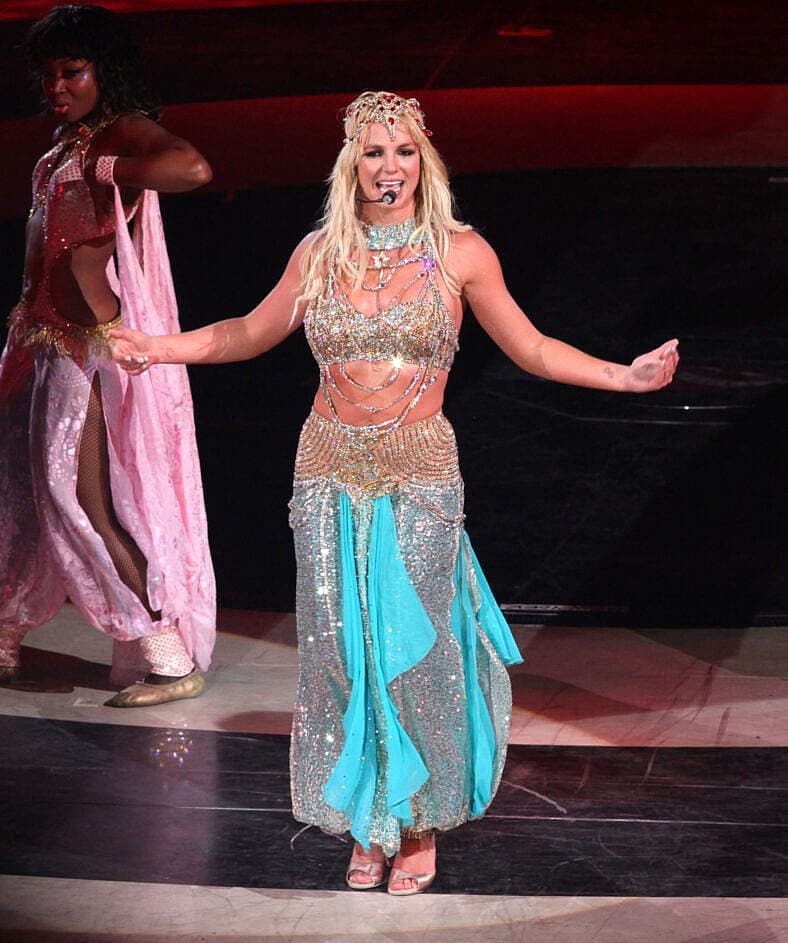
Britney Spears continues to speak her truth, this time admitting she feels like a failure when it comes to motherhood.
After reconnecting with her sons, Sean Preston, 20, and Jayden James, 19, earlier this year, the singer and her boys have been spending more time together.
Now, Spears, in a raw confession, revealed a moment with one of her boys confirmed her biggest fear of being a bad parent, just like hers.
4Tony Oudot/Capital Pictures / MEGA
In one of her usual social media rants, the Princess of Pop uploaded a throwback picture of Sean and Jayden as toddlers.
Gushing about their little bodies came out of her, Spears revealed, “Yes, they are mine. Unfortunately, it wasn’t until 5 years ago that I saw they were secretly taken to the beach by my mom and dad.”
The “Toxic” singer recalled being ostracized from the summer outings with her sons, with her dad once refusing to let her go to a diner after getting the attention of the paparazzi. Lamenting the pain, she wrote:
“I felt demoralized to live in a country where it was accepted for people like my mom and dad to live secret lives with my children. It was demoralizing. I honestly went to my knees and cried for two months.”
The Singer Says Everyone Took Advantage Of Her
Spears then painfully looked back at her conservatorship, which ended in November 2021, admitting it stripped her of the right and freedom to truly be herself.
The 44-year-old noted she used to be “unbelievably intelligent,” until she was “brainwashed into an Ignorant system where every goddamn person took advantage of me.”
Calling herself an angel, Spears reflected on her youthful exuberance and passion for life.
However, all that was stripped from her during the conservatorship, and she can’t help but ask now that she’s older, “How the hell would a government allow that?”
Britney Spears Talks Failing Her Kids, Apologizes For Past Mistakes
4Lumeimages / MEGA
The X post then took a somber tone when Spears honestly examined her parenting skills, recalling the moment one of her sons told her he doesn’t personally believe in God.
Although she didn’t reveal the identity, the “Gimme More” songstress confessed in that moment she believed she “had failed as a mother. Nevertheless, Spears, who has had a phase of doubt like her son, declared “there is a Holy Spirit that sits high in the kingdom of heaven…I’ve been there. I’ve felt it.”
The entertainer noted that she wants to turn over a new leaf and apologize to her kids and others about her past mistakes. She also revealed her intention not to participate in the business of music anymore.
Britney Spears Alleges She Was Forced To Perform In The Past
4MEGA
For the “Mickey Mouse Club House” alum, the music industry isn’t the same as it used to be when she was younger.
“Not one time in those 15 years was it ever me,” she wrote. “I was shamed, embarrassed, and forced to do all of it.”
Spears continued, explaining that she was beholden to a good girl image, but life felt better when she was bad. However, her family and the country didn’t like it when she was better. “I’m proud of bringing it up because it’s honestly unbelievably sad,” she noted of her past.
Concluding her post, Spears got philosophical about fame, revealing that she would rather hang out with those not in the public eye. “I want to get closer to God, she declared.
Britney Spears’ Son Denies Claims Of Artist Being Cloned
4Xavier Collin/Image Press Agency / MEGA
The “Crossroads” alum’s emotional rant comes weeks after her youngest son, Jayden, addressed speculations of a clone.
After several of Spears’ dancing videos on social media sparked a storm, Jayden took to TikTok to clear the air, assuring fans his mother was very much alive and real.
As The Blast reported, the teenager slammed, “I hop on TikTok, and I see this one video that has 1.2 million likes, and the caption is like, ‘The biggest theory ever: Is Britney Spears still alive?’ Like, bro, you can go to her page and see her right now.”
Jayden, during the Livestream, then criticized the media for pushing “exaggerated and fake” news.
Big Brother week 5 head of household results are in and it broke a record and will flip the house even though the nominations she’s talking about are 2 out of 3 not what I would’ve chosen.
Before we get into the HOH comp results, how satisfying was it to see Haley Thogmartin’s jaw drop when Julie Chen announced that Lyric Medeiros was evicted? Drew Campbell was her initial target, Melody Morris was her back-up target. They’d talked about Lyric but then decided to keep her, then BOOM. Flipped!
Big Brother: Week 5 Betrayal
The icons betrayed the rest of the Red Corner. Haley’s look was everything. To her credit, Dee Valladares faked looking absolutely stunned about it. And then, when her back was to Haley, I saw Dee’s scheming face on and she was in damage control mode.
Chuk Anyanwu and Kamuela “Kamu” Kirk’s faces were also so incredibly vacant and stunned. After all of Haley’s drama about having 3 rough weeks, she ran power mad and then was totally blindsided.
On the plus side, Lyric really didn’t want to be in the house. She wants to be with Rome Seymour who I bet is hopping a flight right now from Delray Beach to get to LA to canoodle with his future fiancée.
Big Brother 28: Icon Damage Control and Strategic Maneuvering
So, after the icons hijacked eviction night, Angela Murray, Dee and Rick Devens had to cover their butts. Angela immediately ran over to chat with Haley and Chuk about this shocking turn of events. Haley was upset saying she made it clear she wanted Melody gone.
Angela talked to Melody and promised to save her. And right after eviction reminded Mallory and Melody no one could know that she flipped on the others. They are sitting on her and Dee’s secret. What’s funny is Angela convinced Haley it wasn’t her.
Dee playing shocked convinced Haley. And Devens owned his vote but played it off saying he thought he was supposed to do that after Drew won blockbuster. Devens claimed he thought Lyric was the target. And that seems to have bought him some grace since he owned it.
Big Brother: Doubts in the House
What’s funny is Chuk, Kamu, Haley and Yash Patel are now all doubting each other. Angela even floated an idea that Lyric might’ve earned a penalty vote. Angela said “You know how when you are a have-not and if you eat there is a penalty?”
She told Haley if you are on the block you get a penalty vote on you. Haley asked “So you mean a vote got taken away?” Angela said, “It could be either way”. Haley said “So you think Lyric ate something?”
Angela told her,” I don’t know. We were suspect. I’m just wondering cause it’s a special season.”
Haley actually bought it which is insane because the math doesn’t math. There would’ve been one more vote than expected. Next, Haley suspected a power was used to swap votes and maybe no one flipped. And Haley later suspected Kamu flipped on her because of a dream she had.
Big Brother 28: Wall Competition and Lala’s Victory
Then the feeds went down for the wall comp but then came back up. Angela was instantly down, with her pink shirt spotlessly clean. One tilt and boom. It was a national forest themed comp and the competitor was in a park ranger outfit.
Big Foot showed up and after each appearance they got splattered with colored slime and the obligatory freezing cold rainstorms. Next off the wall, which surprised me, was Taylor Brown dropping next after 30 minutes.
Long tall Barrett Pfeiffer was out 10 minutes later. And Devens went right after him. I’d predicted Angela then Devens so Taylor and Barrett surprised me going out so soon.
Lala Makes Big Brother History
This year, they had more of a variety of handholds. Each person had a height-adjusted station with an overhead bar parallel to the ground and then the usual hand holds to each side of your hips.
Dee fell 20 minutes after Taylor which was surprising as well. 10 more minutes, Melody. Another 10 minutes and musclebound mini Mallory was off the wall and Chuk went next but he slipped.
Yash slipped and fell maybe two minutes later. That left Kamu, LaTrice “Lala” Verrett and Drew. An hour and 20 minutes into it, Drew slipped, swung by the upper bar for a moment then fell.
That left Kamu vs Lala. And then of course, production cut the feeds so we didn’t get to see how much longer Kamu lasted. In less than two hours, the houseguests were back inside the house and Lala had the HOH key.
Lala won. Which is truly impressive since she’s had reconstructive surgery on both her shoulders. And she’s the oldest woman in the house. And this makes Lala the oldest wall comp winner in Big Brother history – regular Big Brother that is.
Because in Celebrity Big Brother S2, Kato Kaelin actually won the wall comp at age 59. You know, the guy who used to live in OJ Simpson’s guest house. Taylor and Devens did a cute skit on the wall that I hope makes it to the CBS edited episode.
Big Brother 28: Lala’s Nomination Strategy
So, Lala and Taylor had an epic celebration. And now, Lala’s planning to nominate Drew, Barrett and Kamu and save Haley for a backdoor to give the poor girl a rest for a day or two after her really rough week abusing her power.
Lala said she will not nominate Angela or Dee, and won’t nominate Chuk because he’s another black houseguest. Lala was very clear on that even though Taylor kinda wanted him on the block.
As for her nominee choices, although they’re not locked in yet. Drew is an emotional choice, I feel like more so than strategic. But I get it. He’s been hating on Lala since day 1. I heard Drew talking about how he hates seeing Lala walk around in her bikini and heels. Drew actually used the word hate.
Barrett’s in the middle with him and Kamu’s problematic. However, last night, things were still in flux and Lala told Taylor that she wanted Devens out. Thing is, Lala doesn’t know he won’t go on her HOH. Devens can’t be evicted this week because of his power.
Big Brother 28: Melody Morris
Big Brother: Diamond Power of Veto Not Used?
Lala doesn’t know Devens is sitting on the Diamond Power of Veto. At least if she doesn’t nominate Angela and Dee, he won’t use it. Not sure if Devens would use it on Angela but he would on Dee. Because if Lala nominated or renoms Devens, he can pull out that DPOV.
Then, he pulls himself off the block and renoms someone else. He could renom Haley or Chuk so 2 of the 3 Red Corner triplets are block-sitting on eviction night. Lala and Taylor suspect Devens has a power and want to flush it.
But it will flush Lala’s HOH down the toilet if she does but she has no idea. Fortunately, Devens got closer to Taylor this week and they’re lowkey working together. So, Devens asked Taylor if it’s okay to mention to Lala they’re working together and she said yes.
And then Taylor went to work as soon as Lala brought up Devens name and talked her out of putting him up. Taylor gently worked her around asking if it was good for Lala’s game or was it retribution for Rome. Lala admitted she didn’t like Devens lying to Rome’s face.
Big Brother: Barrett’s Not Getting it
Ultimately, Taylor convinced her not to go after Devens. She said it could come back and bite Lala later. Drew anticipated that he’d be nominated again. But Barrett’s going to be blindsided. He thought Lala being in power meant he was safe, but he’s more of a pawn.
Kamu nommed with Haley as backdoor are Lala’s targets. And the icons will live to fight another day. They got away with their vote flip. Have Nots for the week are Barrett, Chuk, Haley and Drew.
Suffice to say that Haley’s about to have a really bad week after being a bit of a tyrant on her HOH.
It has been notable that Rockstar and Take-Two have not yet mentioned the launch of a new Grand Theft Auto Online to coincide with GTA 6 coming out in November of this year. And now, according to the usually very reliable Jason Schreier of Bloomberg, that won’t be changing in the near future.
In the latest video on his personal YouTube channel, Schreier discusses having an opportunity to interview Take-Two boss Strauss Zelnick about GTA 6. Before he launches into his brief chat with Strauss Zelnick, he drops an interesting tidbit of information: Rockstar and Take-Two aren’t planning on discussing GTA Online “anytime soon.”
Here’s Schreier’s exact quote, which runs from 5:50-6:15 in his video.
“Take 2 is only talking about GTA 6 in terms of the single player portion… and not GTA Online. They have not talked at all and they are not planning to talk anytime soon about what the new GTA Online will look like…”
Now, Schreier does not attribute this to Strauss Zelnick, nor does he mention where the information comes from. However, Schreier is a man who knows a great many things about the industry, and he’s very confident in his assertion, which to me indicates that he’s heard this information from somewhere very reliable. He doesn’t throw it out as a possibility, or a guess or even his own opinion – he states it like it’s fact.
It’s not surprising, really, though, because Rockstar have been very careful to describe GTA 6 as a “single player experience.”
And, of course, Schreier’s words could mean quite a lot. The original GTA Online launched a few weeks after the main game dropped, so perhaps Rockstar is planning something similar so that the single player portion can get time to sell a few billion copies and be enjoyed by everyone before the new online mode begins to absorb every minute of everyone’s free time. Or maybe GTA Online isn’t to be replaced, just upgraded, or left exactly as it is.
We don’t know. And I guess we aren’t going to know for a little while.
But we will get an extended look at GTA 6 later this month when it appears on Netflix, and then YouTube 6 hours later. Which is a weird sentence to type.
The Fortnite item shop has always been kind of annoying, because it’s never had a consistent inventory you could browse like a normal store. There are more than 2,000 Fortnite skins that have been sold in the item shop, but only a few dozen are available on any given day. But Epic has never been content with just the FOMO angle–the company has been dinged by regulatory agencies all over the world for its “dark patterns” and coercive sale techniques.
In some very significant ways, the Fortnite item shop is in much better shape now because of the changes those agencies forced Epic to implement–like being able to cancel an errant purchase, and knowing exactly when an item will leave the shop. Still, though, Epic continues to come up with new ways to make the Fortnite shopping experience more complicated and annoying, particularly in the past year. Let’s break it down.
Fortnite gift cards no longer exist
You used to be able to buy a Fortnite gift card that would redeem directly for V-Bucks, but Epic stopped making those in 2025. While Epic does still have an item that it refers to as a “Fortnite Gift Card – Powered by the Epic Games Store,” these are not actually Fortnite products at all. Instead, a current “Fortnite gift card” simply grants you credit in the Epic Games Store, and you can spend it on anything they sell on mobile or PC, including V-Bucks. So in reality these are EGS gift cards, and there is no current way to gift V-Bucks directly.
This distinction is important because the physical “Fortnite gift cards” that are sold in stores (in denominations of $15, $30, $50, and $100) don’t line up with any V-Buck purchase amounts. So if you receive a $30 card for your birthday, you can buy a 2,400 pack of V-Bucks and have $7 left over, or you can throw in $7 of your own money and get a 4,500 pack. Epic gift cards do have the added benefit of a 20% rebate in EGS credit when you put it toward Fortnite–but that’s still an additional layer of stuff you have to think about beyond the original purchase, and all it really does is make you take extra steps to counter the most recent V-Buck price increase.
Oh, and if you play on Switch or Switch 2, you can’t even use V-Bucks purchased with an EGS gift card on your device, because your V-Buck balance doesn’t transfer to Nintendo’s systems. Instead, you’ll have to shop in a web browser and then restart your game to receive the items. More extra steps.
Prices are a mess since the latest price change
The latest price increase, back in the spring, was an example of shrinkflation–the prices stayed the same, but the amounts of V-Bucks you’d receive for your purchase went down. It used to be that $23 got you 2,800 V-Bucks, but now it’s 2,400, and the other standard amounts have been adjusted similarly. On top of that, Epic added a new “exact purchase” feature that would allow you to purchase only the specific amount required for the thing you want to buy. That sounds good in theory, but it’s a horrendous value given the way Epic implemented it.
How it works is that it charges you two different rates within the same transaction. Let’s use the new Lil Tecca bundle, which costs 2,600 V-Bucks, as an example. If you use the “exact amount” feature to purchase 2,600 V-Bucks, you’ll pay $27–the first 2,400 costs $23 ($.95 per 100 V-Bucks), and the other 200 costs $4 ($2 per 100 V-Bucks). That might be tolerable in small amounts, but the value becomes increasingly terrible the more you’re spending.
Fortnite caps the price to use the “exact amount” just below that of the next tier of V-Bucks, meaning that if you’re buying less than 4,500 V-Bucks with the “exact amount” feature, you will always pay less than the $37 that a 4,500 pack costs. But since using this feature is so exorbitantly expensive, you’ll reach that cap by purchasing just 3,100 V-Bucks. And that means that using the “exact amount” feature to purchase any amount of V-Bucks between 3,100 and 4,400 will cost exactly $36.49. So if you were to use this feature to buy the Addison Rae bundle for 3,600 V-Bucks, you’d be shorting yourself 900 V-Bucks to save 50 cents.
The price change and the expensive top-up are changes that work in tandem, because so many past shop bundles were oriented around the 2,800 V-Buck pack. I suspect that was one of the reasons Epic opted to shrink the V-Buck packs instead of raising prices again, because it theoretically pushes folks toward the unreasonable “exact amount” purchase or encourages them to get a bigger pack of V-Bucks instead.
Fortunately for players, Epic has been offering more new shop bundles that actually line up with the new V-Buck amounts–Harley and Ivy, The Odyssey, Spider-Man, and David Beckham all received bundles that cost 2,400 or less, taking most of the friction out of the process for those items. But there are still plenty of new bundles that go beyond that price, like the recent Addison Rae, Lil Tecca, and Supergirl bundles.
Shop FOMO is out of control
There are more than 2,000 item shop skins, and just over half of them have appeared in the item shop at any point in the past four months. There are only a few dozen skins available to buy on any given day, there seems to be a limit on how many collabs they can have available at the same time, and the most popular Fortnite-original items rotate through over and over (like Aura, who appears in the shop several days every month) while less popular ones disappear indefinitely (like this cool bag man, who first appeared in the shop for three days last June and has never returned). Even collabs frequently suffer a similar fate–just ask any of the Attack on Titan or Transformers or God of War fans who’ve been waiting years to see those skins return. Similarly, they seem to only sell Star Wars cosmetics in May now.
The takeaway here is that it’s not easy to shop for the things you want in Fortnite, because only a tiny portion of the game’s cosmetics are available at a time. For Epic, that’s always been the point–the FOMO system encourages you to watch the shop change every day and leap into action when something you want comes back. But if there’s too much friction in that process, or if buying stuff routinely requires too much math and other mental effort, it can sour folks on the shop entirely.
Other shenanigans
Along with these broad, all-encompassing strategies, it appears that Epic has also been trying various other, more low-key techniques to boost sales both directly and indirectly.
Since the Great AdiraFNInfo Incident back in the spring, in which Epic sued one of its former contractors for leaking upcoming collaborations, the Fortnite leaks scene has pretty much disappeared. This makes it harder to plan ahead, because we have much less of a sense of whether there’s anything on the way worth saving our V-Bucks for.
Epic has been frequently bringing back items individually, without the accessories that go with them or the bundles they belong to, which has been frustrating for folks who like having the full set. Sometimes they even return a skin and all its accessories but still leave out the bundle anyway, which essentially raises the price of the set.
Over the past few months I’ve noticed a lot of strangely jumbled shop sections, like the above tab from the Toon Takeover section on June 15. It’s impossible to tell with any confidence if the way this whole section was arranged–the above was one of six tabs of items and bundles from Futurama, Adventure Time, and Phineas and Ferb that were seemingly tossed together in a random order–was on purpose or just incompetence. But putting things in an order that people can’t make sense of and deemphasizing the bundles so they look like just another item in the pile sounds more like a sales technique than it does an accident. Fortunately, we haven’t seen this phenomenon pop up since Hot Bat Summer began in late July, so either they fixed the problem or stopped using this strategy, whatever the case actually was.
The thing you have to keep in mind about all of this is that every irritation we’ve talked about here compounds with each other, and it ultimately creates a buying experience in which discerning customers are constantly frustrated, and undiscerning customers are overpaying without realizing it.
It’s been nearly eight weeks since Mitch McConnell has been seen in public.
The 84-year-old senator from Kentucky was rushed to the hospital by ambulance in June, and for obvious reasons, many feared the worst.
But despite rumors to the contrary, McConnell’s wife maintained that he was still alive. And now, Mitch — or someone speaking on his behalf — claims that he’s been released from the hospital and is resting comfortably at home.
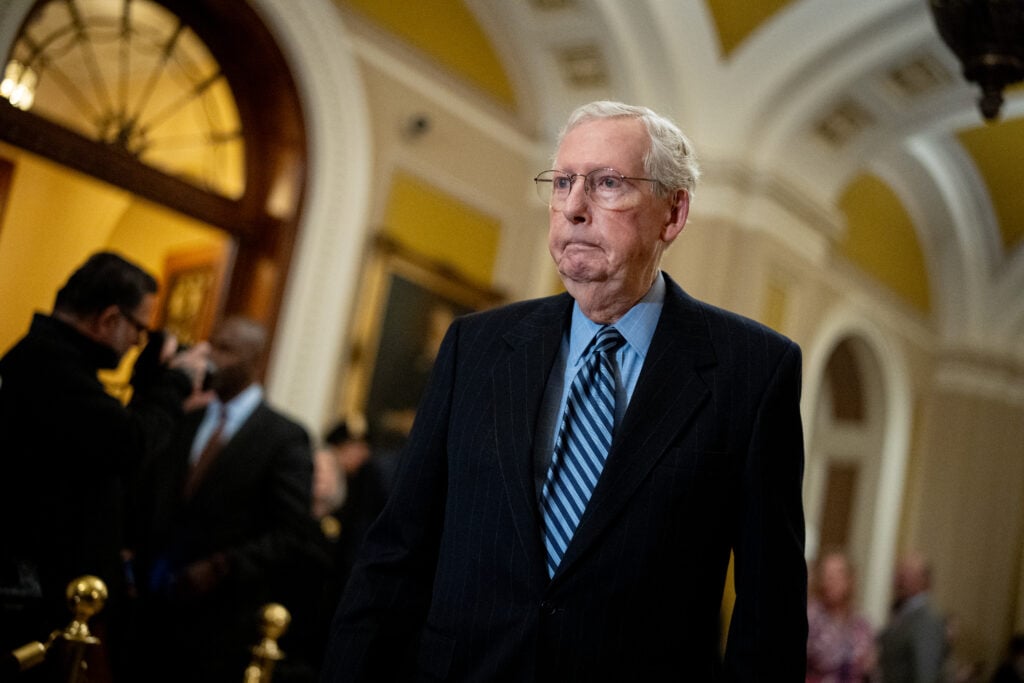
U.S. Senate Minority Leader Mitch McConnell (R-KY) arrives for a news conference following the weekly Senate Republican policy luncheon at the U.S. Capitol on November 19, 2024 in Washington, DC. ((Photo by Andrew Harnik/Getty Images))
“Earlier today, I was discharged from the rehabilitation center to continue my recovery at home,” reads a post on McConnell’s Facebook page:
“Elaine and I are grateful for the many well wishes and support from friends, colleagues, and Kentuckians, and for the attentive care I’ve received from excellent doctors, nurses, therapists, and hospital staff.
“On the advice of my doctors, I’ll maintain an intensive regimen of physical therapy from home during the state work period, and I’ll continue to engage with my staff and colleagues on important Senate business.”
The news comes at the start of a five-week Senate hiatus, so it might be quite some time before McConnell casts another vote.
Not surprisingly, critics and conspiracy theorists have snarkily described the timing as “convenient.”
According to his office, McConnell has been undergoing multiple physical therapy sessions each day focused on improving his strength and reducing the risk of future falls.
Those efforts are especially significant given the senator’s history with childhood polio, which left him with lasting mobility issues. In recent years, McConnell has also experienced several high-profile health setbacks, including multiple falls and widely publicized freezing episodes during press appearances.
His extended absence from the Senate also fueled growing questions about his fitness for office, with some Kentucky political leaders calling for greater transparency regarding his condition.
McConnell did not provide a date for when he expects to resume in-person duties on Capitol Hill.
.McConnell said he plans to remain engaged with his staff and Senate colleagues throughout his recovery.
The Republican senator previously announced that he will not seek reelection when his current term expires, bringing an end to one of the longest and most influential careers in modern Senate history. For now, though, his focus appears to be on continuing his rehabilitation and regaining his strength at home.
Well, we wish Senator McConnell all the best — and we’re glad we don’t need a Ouija board to convey that wish.
Senate Majority Leader John Thune still intends to file cloture on the motion to proceed to the CLARITY Act before lawmakers leave for August recess, according to sources.
Negotiators continue working through disagreements over stakingyield and bipartisan ethics language.
Cloture requires 60 votes; Republicans have 53 in support, meaning at least seven Democrats must cross.
Senate Republican leadership is still preparing to advance the CLARITY Act before Congress begins its August recess, even as lawmakers continue negotiating several unresolved provisions that have repeatedly delayed the crypto market-structure legislation.
In an X post on Saturday, journalist Eleanor Terrett reported that Senate Majority Leader John Thune’s office has told crypto industry leaders that he still intends to file cloture on the motion to proceed to the CLARITY Act before lawmakers leave Washington.
🚨NEW: Leader Thune’s office is telling crypto industry leaders today that the majority leader still intends to file cloture on the motion to proceed to the Clarity Act before lawmakers leave for August recess, per multiple sources.
The move would tee up a vote on the Clarity…
— Eleanor Terrett (@EleanorTerrett) August 7, 2026
If that procedural step is completed, it would allow the Senate to take up the legislation after lawmakers return in September, though the bill’s ultimate path remains uncertain.
The signal comes days after the CLARITY Act missed its August 7 deadline. Thune declined to file the cloture motion required to start a floor vote, instead filing on the motion to proceed to the Protect College Sports Act, on a substitute amendment to the continuing-resolution vehicle, and on Todd Blanche’s nomination for attorney general, with no corresponding filing for CLARITY. Terrett read the college sports filing as a signal that no bipartisan agreement existed on the crypto bill.Under Senate Rule XXII, a cloture motion must ripen for an intervening day before a vote can occur, which is why the filing deadline runs ahead of any floor action.
Latest step in weeks of Senate negotiations
The reported plan follows several weeks of stop-and-start negotiations surrounding the CLARITY Act.
Earlier this week, Senate leaders delayed filing cloture as negotiators attempted to bridge differences over key sections of the bill, particularly ethics provisions and the treatment of staking yield. Despite those delays, Thune’s office now appears to be keeping the legislation on the Senate’s agenda rather than postponing it indefinitely.
Under Senate Rule XXII, a cloture motion must ripen for an intervening day before a vote can occur, which is why the filing deadline runs ahead of any floor action.
The latest update also follows Senator Tim Scott’s public call for the Senate to begin considering the CLARITY Act before lawmakers departed for the August recess, arguing there was still enough time to move the legislation forward despite competing items on the legislative calendar.
Yield dispute returns to the forefront
One of the biggest obstacles remains the bill’s language governing staking yield.
According to Terrett’s reporting, negotiations over yield have intensified after recent Wall Street Journal opinion pieces and renewed lobbying from banking groups, which have reportedly convinced some Republican lawmakers that portions of the current language should be revised.
Negotiators are now attempting to find a compromise that preserves support from the digital asset industry while addressing concerns raised by traditional financial institutions.
Ethics talks continue
Lawmakers are also still trying to reach agreement on bipartisan ethics provisions, another issue that has complicated efforts to assemble sufficient Senate support.
Previous negotiations have centered on conflict-of-interest rules and restrictions involving public officials’ participation in digital asset markets.
Without an agreement on ethics language, the bill could struggle to attract the bipartisan backing likely required to clear procedural hurdles in the Senate.
Industry pressure builds
The latest procedural update comes as pressure from the crypto industry continues to mount.
Earlier this week, Senator Bill Hagerty called for a Senate vote on the CLARITY Act, arguing the United States risks falling behind other jurisdictions in developing a regulatory framework for digital assets.
Recently, Coinbase CEO Brian Armstrong urged senators to “call the vote,” arguing that the legislation had broad support and was being delayed by procedural negotiations rather than fundamental policy disagreements.
Industry groups have likewise continued pressing lawmakers to advance the bill, arguing that a federal market structure framework is needed to provide regulatory clarity for digital asset businesses operating in the United States.
White House yet to respond
The White House has not publicly commented on the latest negotiations.
According to Terrett’s sources, there has been no new response from the administration, although officials are reportedly under less immediate pressure to weigh in now that Senate leadership intends to pursue cloture before the recess.
Whether the CLARITY Act ultimately advances will depend on lawmakers’ ability to resolve disagreements over staking yield, ethics provisions, and broader bipartisan support before the Senate returns in September.
Also Read: Trump Discusses Crypto Legislation, Family Ties and China Competition
Disclaimer: The information researched and reported by The Crypto Times is for informational purposes only and is not a substitute for professional financial advice. Investing in crypto assets involves significant risk due to market volatility. Always Do Your Own Research (DYOR) and consult with a qualified Financial Advisor before making any investment decisions.
Thank the Founders. This article contains spoilers for “Silo” Season 3, Episode 6, “The Drive.”
What’s the real reason behind the success story of “Silo” Season 3 to this point? Could it be as straightforward as the sheer star power of main lead Rebecca Ferguson and the nerves of steel behind her portrayal of Juliette Nichols? Is it the inescapable parallels between this dystopian tale and our own hyper-digital existence in a 21st Century surveillance state? Or has creator Graham Yost simply found the perfect balance between a faithful retelling and an adaptation willing to depart from the original books when needed? We’d say it’s all of the above … and more.
Of all the reasons why “Silo” remains the most underrated show on Apple TV, perhaps it has to do with Season 3 finally confirming — beyond any doubt — who its best character is and why. Make no mistake, Mayor Juliette has to rank near the top of anyone’s list, of course. But we’re willing to accept that the contenders for this title are many. There’s the returning (but seemingly reformed) villain Bernard Holland (Tim Robbins), perhaps, or maybe Harriet Walter as Juliette’s ever-reliable ally Martha Walker. The dark and mysterious Robert Sims (Common) feels worthy of the crown, but is there a dark-horse candidate (or two) in Jessica Henwick’s Helen Drew and Ashely Zukerman’s Daniel Keene?
No, our pick has been a steady presence in “Silo” since the beginning, and this week’s installment only emphasizes why there’s only one name that applies: Camille Sims. Thanks to Alexandria Riley’s committed performance, writing that allows her to be as complex and conflicted as the story demands, and an episode that provides the perfect opportunity to showcase her strengths and weaknesses as a character, we’re making it official: Camille rules.
Camille Sims gets two show-stopping scenes in Silo Season 3, Episode 6
Apple TV
I’ll be honest — I didn’t go into “Silo” Season 3 expecting big things from Camille Sims, of all people. Technically, she’s been a mainstay since the first season, but only later on when the plot begins to escalate and a fugitive Juliette holds her and her son hostage in a desperate attempt to escape the authorities (including, namely, Camille’s husband Robert) in Episode 9. She appears more frequently throughout Season 2, but it hasn’t been until this year that she’s finally come into her own as the unexpected Head of IT, handpicked by the Algorithm.
And what a choice she’s proven to be. Where Bernard spiraled into a suicidal depression at the reveal of the Safeguard procedure, Camille has proved far more capable of getting her hands dirty and making impossible choices. No, none of this makes her a heroic figure, a devoted and trustworthy wife to Robert, or a Mother of the Year recipient for her young son Anthony (Oscar Coleman), who’s doomed to forget everything about his parents should her plan involving Vitamin D (already dumped into the water supply) go off without a hitch. But this sure makes her into as compelling an individual as any other in the entire show — if not the most by far.
She proves this emphatically in a pair of moments in “The Drive.” First, the tension simmering between herself and her husband ultimately boils over when Anthony acts out at school. Robert isn’t wrong when he implicitly lays the blame at Camille’s feet … but neither is she when she calls him out for keeping secrets of his own. But the second one is the clincher, when she takes her frustrations out on the Algorithm itself.
Camille Sims becomes the MVP of Silo Season 3 in her confrontation with the Algorithm
Apple TV
Welcome to the big leagues, Camille Sims. “Silo” Season 3 has taken great pains to depict our newest antagonist as someone with the absolute best of intentions while also having what it takes to go to great lengths and see her mission accomplished at all costs. On the surface, that’s a combination that our main protagonist Juliette shares as well, but with one striking difference. Only Camille is willing and able to damn the rest of the Silo to a memoryless fate by unknowingly ingesting the Vitamin D drugs if it means saving their lives … or what remains of it, anyway.
This is front and center in Camille’s big confrontation with the Algorithm following her disastrous family dinner at home. Having finally reached her breaking point, the Head of IT lashes out at the Silo’s enigmatic decision-maker and accuses it of making a “mistake” by allowing Juliette to send friends to the other Silo in order to rescue the children left behind in Season 2. Camille’s greatest (and worst) attribute is her sense of right and wrong, along with her stubbornness in believing that she’s always making the correct call. But it isn’t until she admits she’s “failing” as Head of IT and as a mother/wife that she’s able to reset, rebalance, and remember why she was picked for this role — because she’s capable, as the Algorithm helpfully tells her.
It’s a rare moment of introspection for Camille, but it may prove to be a turning point. When we next find her ordering Juliette around, we can practically see the clarity of purpose written on her face. Strap in, folks. “Silo” Season 3’s big bad is only getting started.
XRP fell 2.05% in 24 hours to $1.02, the lone red coin among the top 10; every other major is green.
The Senate left Washington without voting on the Clarity Act, delaying the market-structure bill until at least September.
XRP trades within a confirmed death cross, but prediction market traders remain optimistic for now.
The Senate left town without taking up the Clarity Act, pushing the market-structure vote to at least September. Every major coin shrugged it off—except XRP.
While Bitcoin stayed flat, dealing with its own headwinds, and Dogecoin gained 1.38% over the day to be the best performer in the top 10 crypto assets by market cap, XRP dropped 2.05%, the only major token to close red.
On a week that saw it fall 3%, it’s the weakest of the majors by a wide margin.
The delay isn’t just procedural for XRP. The token’s entire 2025–2026 rally thesis rested on the U.S. finally deciding what XRP is. The Clarity Act would sort crypto into securities and commodities and, in drafts Decrypt previously reported, would reclassify XRP, Solana, and Dogecoin as non-securities.
That means these coins would fall under the regulatory purview of the CFTC, widely viewed as the more preferable option by crypto industry observers, rather than the historically tougher SEC.
For Ripple, whose co-founder created the XRP cryptocurrency, that’s the prize years of litigation were about: a federal answer to the SEC’s long fight over whether XRP was an unregistered security. Ripple agreed to pay $50 million to settle its cross-appeal with the SEC, but a statute beats a settlement.
A law settles the question for every exchange, custodian, and regulator at once. Without it, XRP stays in legal limbo—and limbo is what the chart appears to be pricing.
XRP price: What the charts say
XRP is trading at $1.028, roughly a $64 billion market cap, down 0.71% on the day, after a red candle that has kept it pinned just above the $1.00 psychological floor. It’s the second-lowest print on the daily chart since early 2024, above only the $0.9153 low marked last month.
XRP price data. Image: Tradingview
The trajectory is a clean, grinding downtrend. XRP has been in a strong bearish trend since 2025, when it reached $3 per coin. The 50-day EMA (the average price over the last 50 sessions) has crossed below the 200-day EMA (the average over the last 200 sessions) in a formation known as a death cross. XRP’s current price is below both lines, so there’s no average acting as support beneath it.
The Relative Strength Index, or RSI, reads 35.9. RSI is a momentum gauge on a 0–100 scale: above 70 is overbought, below 30 is oversold. At 35.9, momentum is bearish with room for more downside before buyers typically step in.
The Average Directional Index, or ADX, reads 11.9. ADX measures trend strength, not direction: below 20 means the move lacks conviction and chop is common. However, the Squeeze Momentum indicator is still off, meaning volatility is expanding rather than coiling.
No compression means no loaded spring waiting to fire; moves here tend to be slow.
A bull case would appear if a daily close back above $1.10 (the lower Fib zone and first real resistance) and then the $1.13 point of control signal the floor is holding. An advance in the Clarity Act, though not until September at the earliest now, could also ignite some bullish appetite among traders.
Bear case: a break under $1.00 opens the path to $0.9153, the chart’s lowest mark since 2024. A daily close there confirms the downtrend and erases the post-2024 recovery. The current trend is bearish, so this is a very likely scenario.
On Myriad, a prediction market developed by Decrypt’s parent company Dastan, traders are currently optimistic on XRP’s short-term outlook. Traders are pricing in 77% odds that XRP stays above $1.00, at least over the weekend.
For now, $1.00 is the line. Above it, XRP is cheap and oversold; below it, the chart says the slide isn’t done.
Daily Debrief Newsletter
Start every day with the top news stories right now, plus original features, a podcast, videos and more.
The sudden death of Ondo Finance founder Nathan Allman has triggered an escalating governance dispute that now threatens to overshadow one of the fastest-growing companies in the tokenized real-world asset (RWA) sector. Court filings in Delaware reveal a bitter legal battle between Allman’s estate and current CEO Ian De Bode over who has the legal authority to control the company following the founder’s passing.
While Ondo continues operating and maintains support from key investors, the dispute introduces significant uncertainty at a time when the company has emerged as one of the leading issuers of tokenized financial products. The case also highlights the governance risks that can arise when founder-led crypto companies lack clearly tested succession mechanisms.
Power Struggle Erupts at Ondo Finance After Founder’s Death
Legal dispute centers on control after founder’s passing
According to filings submitted to the Delaware Court of Chancery, Nathan Allman died in May while serving simultaneously as Ondo Finance’s CEO, sole director, and controlling shareholder. Because his voting power became part of his estate, it could not immediately be exercised until probate proceedings concluded in Hawaii.
The estate argues that this temporary governance gap became the catalyst for the current conflict. Kathleen Allman, Nathan Allman’s mother, was formally appointed personal representative of the estate on June 26, giving her authority to exercise the voting rights attached to the founder’s shares.
The lawsuit alleges that before probate was completed, Ian De Bode improperly claimed he automatically became CEO under the company’s bylaws. The estate further contends that De Bode used a voting agreement to appoint himself as Ondo’s sole director before taking several major corporate actions, including approving equity compensation, hiring advisers, and attempting to expand the board.
According to the complaint, these actions were invalid because the company’s bylaws required board approval—not automatic succession—to fill the CEO position.
Estate says it initially sought cooperation
Rather than immediately seeking to replace the existing leadership, Kathleen Allman reportedly attempted to work alongside De Bode after gaining authority over the estate’s voting shares.
Court filings state that she appointed herself to the board, adopted an interim policy allowing ordinary business operations to continue, reaffirmed De Bode as president, and requested access to basic corporate information such as shareholder records.
The estate claims those efforts failed after De Bode and the company’s outside legal counsel allegedly refused to recognize her authority or provide the requested documentation.
According to the filings, Kathleen Allman subsequently expanded the board and convened a meeting on July 24, where directors voted to remove De Bode from all company positions. She was then appointed interim chair and interim CEO while the board begins searching for a permanent successor.
The estate argues that its objective is not to permanently control Ondo Finance but to stabilize corporate governance during the leadership transition and ensure normal business operations continue without disruption.
Ondo CEO rejects allegations
De Bode has firmly rejected the estate’s claims, describing the lawsuit as harmful to the company and its broader ecosystem.
In comments provided to CoinDesk, De Bode said the legal action was “regretful” and argued that the allegations lacked merit.
He also maintained that Ondo Finance continues to receive backing from its board, lead investors, and the Ondo Foundation, adding that the leadership team remains committed to executing Nathan Allman’s long-term vision for expanding on-chain financial markets.
Separately, Ondo’s board emphasized that the company remains focused on serving customers and supporting ongoing business operations while searching for a permanent successor to its late founder.
Court decision could shape company governance
The estate has requested an expedited ruling from the Delaware Court of Chancery, arguing that uncertainty over corporate authority could affect numerous business decisions.
According to the filings, unresolved questions surrounding company control could influence contracts, spending approvals, equity issuances, and other significant corporate actions if competing leadership groups continue asserting authority.
For now, however, the court has not ruled on the allegations, and the claims presented represent only the estate’s version of events.
The eventual outcome may establish not only who governs Ondo Finance but also how Delaware courts interpret succession disputes involving crypto companies whose founders simultaneously hold executive, board, and controlling shareholder roles.
A critical moment for a leading RWA platform
The legal dispute comes during a period of rapid growth for Ondo Finance.
Founded in 2021, the company has become one of the largest tokenized real-world asset platforms, offering products such as USDY and OUSG while expanding tokenized access to traditional financial instruments. Under Nathan Allman’s leadership, Ondo reportedly grew to manage approximately $3.5 billion in tokenized RWA products.
More recently, the company announced initiatives to tokenize U.S. securities, including products linked to Micron stock and BlackRock’s iShares Core S&P 500 ETF through partnerships with Broadridge and Oasis Pro. It has also worked with regulators, including the U.S. Securities and Exchange Commission, on compliance frameworks for tokenized securities.
Those developments have positioned Ondo as one of the industry’s most prominent bridges between traditional finance and blockchain infrastructure, making the current governance dispute especially significant for institutional participants monitoring the sector.
Market watches governance risks
Although Ondo Finance has stated that operations continue normally, the leadership dispute has attracted attention across the crypto market.
Some market observers have pointed to increased token transfers to exchanges and heightened selling activity following news of the lawsuit, suggesting investors are reassessing governance risk alongside the project’s long-term fundamentals. Reports also noted that ONDO experienced notable price volatility in the days after details of the legal battle became public.
ONDO Price Performance (Source: CoinMarketCap)
Whether the dispute remains an isolated corporate governance issue or evolves into a prolonged legal confrontation could prove important for investor confidence. For a company widely viewed as a leader in bringing traditional financial assets on-chain, restoring governance clarity may become just as important as continuing product innovation.
Brooklyn Beckham has left fans unconvinced after re-sharing a cooking video in which he fills a pan with seawater before making tomato pasta on a yacht.
The 27-year-old originally posted the TikTok last summer but shared it with followers again this week, according to The Sun. He is currently holidaying in the south of France with his wife, Nicola Peltz.
Their trip comes as Brooklyn and Nicola mark the first anniversary of their vow renewal, which they reportedly intend to celebrate in future instead of their original April wedding date.
@brooklynbeckham Tomato pasta ❤️❤️ @Cloud23 ♬ original sound – Brooklyn Beckham
In the footage, Brooklyn announced that he was making tomato pasta before collecting water from the sea at the back of the boat.
He then used the water to cook the pasta and added his own Cloud 23 hot sauce to the dish.
However, some viewers were more interested in where the water had come from than in the finished meal. They raised concerns about possible contamination from the yacht and questioned whether it was suitable for cooking.
One person asked: “Isn’t the ocean water dirty?”
Another joked: “Is boat exhaust the secret ingredient?”
A third added: “Pasta water with a hint of burnt boat fuel please, sir.”
“Hi, quick question. I haven’t got the sea in my back Garden. Will tap water do?” another asked.
However, there was some support for Brooklyn. “Nasty jealous comments have a day off trolls; grow up, honestly,” one fumed.
Brooklyn came under fire (Credit: Linnea Stephan/BFA.com/Shutterstock)
Resurfaced video follows anniversary celebrations
The clip was not filmed during the couple’s latest holiday. Brooklyn first shared it last summer before bringing it back to his social-media page this week.
According to The Sun, Brooklyn and Nicola have been spending time in the south of France with his godfather, Elton John. Members of Brooklyn’s estranged family have reportedly also been holidaying a few miles away in St Tropez.
The couple recently celebrated a year since renewing their vows in August 2025. The ceremony reportedly involved Nicola’s family and the couple’s friends, but no members of the Beckham family.
An unnamed source told The Sun that Brooklyn and Nicola now associate the vow renewal with happier memories and plan to mark that date publicly rather than their original April 2022 wedding anniversary.
Read more: Brooklyn Beckham promises to ‘always protect’ wife Nicola Peltz amid family feud
What do you think of this story? Leave us a comment on our Facebook page @EntertainmentDailyFix and then let us know your thoughts! We want to hear from you.
Colin Farrell explained the difficult decision of putting his 21-year-old son James Farrell in a long-term care facility.
“It’s tricky — some parents will...