On Strictly tonight (Saturday, October 5) the celebs dressed as iconic film characters as they performed in movie week.
And one performance in particular drew widespread praise, with many branding it “stunning”
Dr Punam danced to a Bollywood song tonight (Credit: BBC)
Strictly tonight: Dr Punam Krishan and Gorka Marquez’s Bollywood routine
Tonight’s edition of Strictly saw Dr. Punam and Gorka perform the first couple’s choice of the series.
The duo danced to the song Bole Chudiyan from the Bollywood movie, Kabhi Khushi Kabhie Gham….
During the VT before the performance, Dr. Punam spoke about how much dancing to the song meant to her.
Speaking about her youth, she said: “I never saw Indian girls dancing on mainstream television.
“So to be doing now, an Indian dance, on a platform like Strictly, it’s huge,” she then added.
Dr Punam and Gorka were praised by the judges (Credit: BBC)
Judges and Dr Punam emotional on Strictly tonight
After their performance, both Dr Punam and the judges were emotional.
Fighting back tears, Punam listened as Motsi Mabuse choked back tears to compliment the routine.
“I promised myself this year that I’m not going to cry,” she said. “But that really moved me.
“I know so many people are watching you right now and are so proud to see this on Strictly Come Dancing. I know that for a fact!” she then added.
In the Claudatiorium later, Dr Punam emotionally dedicated the dance to her late grandfather, but also to her mum, who was “worried that her girls would grow up not connected to their culture”.
The routine was described as “beautiful” (Credit: BBC)
Viewers in tears
It’s safe to say that fans of the show were in bits after watching Dr Punam’s routine.
“‘Punam princess from the Punjab!’ I was in floods of tears I felt so proud of you & my heart felt warm with the love & passion you brought to the dance floor! LUV U,” one fan tweeted.
“I’m in tears. Punam and Gorka’s Bollywood-inspired dance was wonderful. It was fabulous,” another gushed.
“Happy tears…amazing…Bollywood!!” a third wrote.
“I am in floods of tears that was beautiful,” another said.
Read more: Strictly tonight: Viewers demand Toyah Willcox be next to be eliminated after ‘awful’ routine
Strictly continues tomorrow night (Sunday, October 6) with the results show at 7.15pm on BBC One and BBC iPlayer.
Leave us a comment on our Facebook page @EntertainmentDailyFix and let us know what you think of this story.
Superfans of Strictly will very likely be aware of a man who runs the well-known Strictly Spoiler blog and reveals inside information each week.
Over the years, the blog has helped fans find out the results before it airs on their TV screens on the weekend.
But how? And who is the guy behind the site?
Claudia Winkleman and Tess Daly host Strictly every weekend (Credit: BBC)
Who is the Strictly Spoiler blog owner?
The Strictly Spoiler site is run by a photographer named Dave Thorp who is from Preston in Lancashire. The blog was initially run as a passion project. However, due to the show’s massive popularity, his page started to take off after he began to tweet the results before Sunday’s episode had even aired.
Despite the BBC attempting to make the Sunday night results show appear live, it is pre-recorded straight after Saturday’s taping.
The BBC’s attempt to convince viewers that Sunday’s show is live goes as far as the hosts referring to Saturday’s episode as “last night” and everyone on the show changing their outfits.
If you want to get all the latest Strictly news, head to our dedicated Facebook fan page HERE.
“No the results show isn’t live, it is pre recorded shortly after the main live show. The BBC goes to great lengths to try and maintain the illusion,” Dave has explained.
“This is also the reason why voting lines only remain open for about five seconds each show. The only time the results are live is during the final.”
The results show every Sunday is pre-recorded the night before (Credit: BBC)
The blog has no direct links to the BBC
According to Dave, the blog has no direct links to the BBC. If he did, he insisted he would have been “fired long ago”.
The way he receives the results on a weekly basis is from a number of “sources and moles”. His track record has proven to be incredibly strong as he has only received the wrong results once in the last few years.
“An initial spoiler was always posted by me on a Saturday night, however, this spoiler was based on polling and did not prove to be correct all the time though was a lot more accurate for those who looked at the bigger picture,” he added.
Dave himself has admitted that the success of the blog has exceeded his expectations.
He said: “Originally this started out as a bit of fun and also a way for me to provide the spoiler to people on Twitter who follow me without the need to send multiple direct messages to avoid spoiling the result for people publicly. I never for one minute expected this site to become as popular as it has done!”
Strictly judge Anton Du Beke admits spoilers ‘irritate’ him
As of October 2024, the BBC has yet to respond to the blog.
However, judge Anton Du Beke clapped back at spoilers surrounding the show during an interview with Metro in 2023.
“That irritates me. I get irritated, I hate anybody who’s a spoiler,” Anton told the outlet.
“I can only think they take great pleasure from it and I just want to say grow up. Don’t spoil it for other people.”
Read more: Strictly Come Dancing makes ‘disappointing’ announcement ahead of first live show: ‘Shame on you BBC’
Strictly continues this Saturday (October 5) from 6.25pm on BBC One and BBC iPlayer.
What do you think? Leave us a comment on our Facebook page @EntertainmentDailyFix and let us know.
In the world of information and technology, safety and security have become the topmost priority in every aspect of our daily lives. From personal information to financial transactions, we trust the intermediaries to protect our data and transactions. Yet, traditional systems are vulnerable to hacking, fraud, and errors. Welcome to the Blockchain, a revolutionary technology that promises decentralized data, provides security, and makes it virtually tamper-proof. Blockchain spreads control across a network, ensuring that every transaction is recorded transparently. In this blog, we will explore what sets Blockchain apart from the conventional method we used to know and why Blockchain is rapidly evolving in this decentralized world.
What is Blockchain?
Blockchain is the decentralized, digital ledger technology that records transactions across the network of computers in a secure, transparent, and immutable way. Each transaction is recorded into a “block” (A block in the Blockchain is a digital record that contains a collection of data, a list of transactions), which is linked to the previous block, forming a continuous “chain.” It ensures that your data cannot be altered or deleted. Unlike the conventional way, Blockchain relies on a distributed network where every participant (node) has access to the same information, fostering trust and transparency.
Now let’s get to know about the key components of Blockchain.
Key Components of Blockchain:
1. Blocks: The basic units that store data, such as transaction records, and are linked together in chronological order.
2. Nodes: Independent computers within the blockchain network that maintain copies of the ledger, validate transactions, and communicate with each other to reach consensus.
3. Hash: A cryptographic signature unique to each block, ensuring data integrity. Each block also contains the hash of the previous block, linking them together.
4. Consensus Mechanism: The process by which nodes agree on the validity of transactions, ensuring the integrity of the blockchain. Common methods include Proof of Work (PoW) and Proof of Stake (PoS).
5. Smart Contracts: Self-executing contracts with the terms of the agreement directly written into code, enabling automated and trustless transactions.
6. Distributed Ledger: A decentralized, shared ledger where all participants have access to the same data, promoting transparency and reducing the need for intermediaries.
But you might wonder how Blockchain works. What is the actual process?
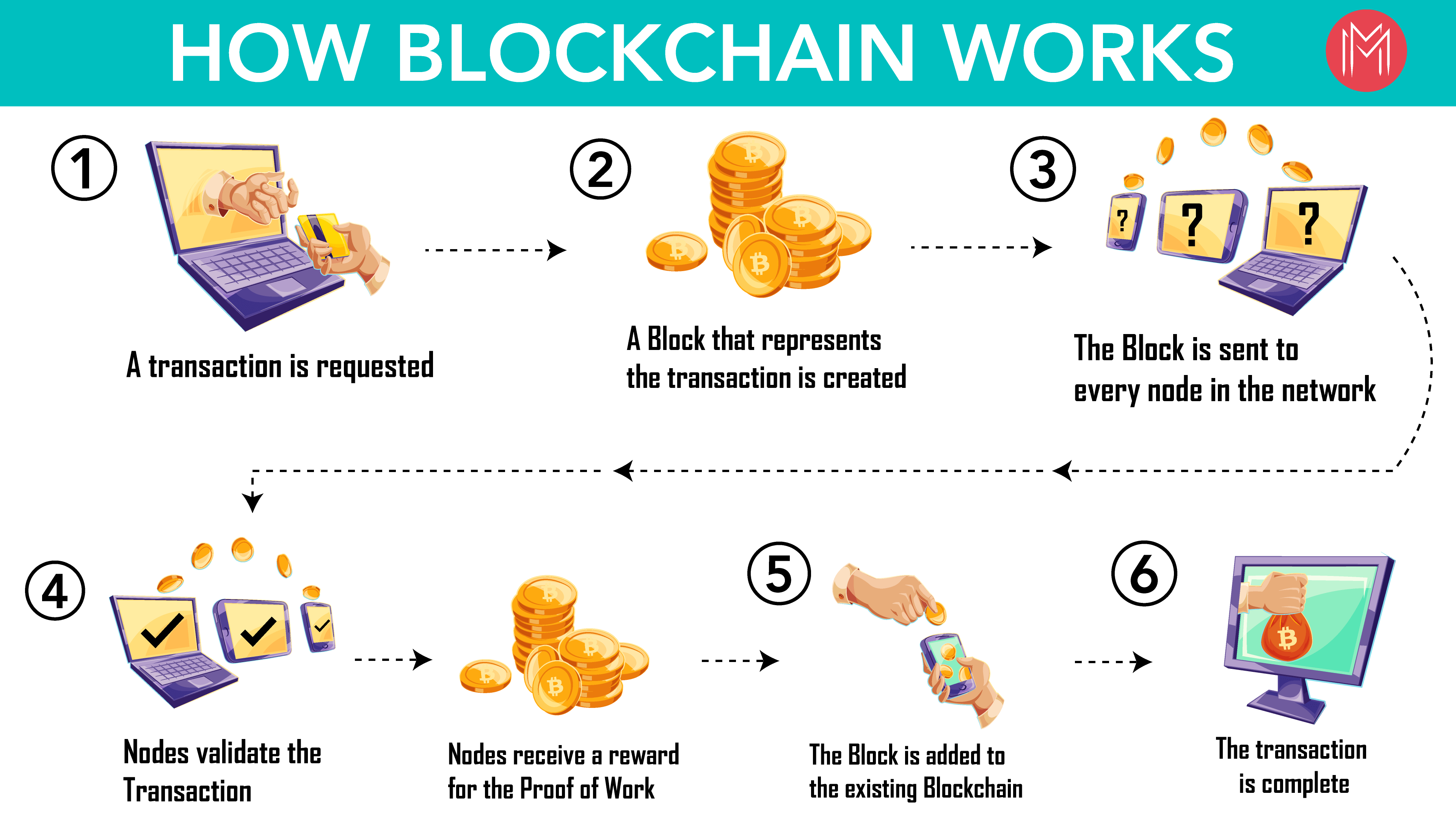
How Blockchain Works?
Source: Mindmajix
1. Transaction Origination:
The transaction occurs when any user wants to transfer assets (be it cryptocurrency, data, or any other digital good). It could be a straightforward payment in the case of Bitcoin or a highly complex operation that involves smart contracts. The transaction includes information about the sender, receiver, and amount, along with a digital signature that authenticates the identity of the user.
2. Transaction Broadcast to the Network:
Once a transaction is started, it is sent to a network of nodes or computers in the blockchain. Every node in the network receives the transaction request and verifies its authenticity by checking if the user has the right to perform this transaction.
3. Transaction Validation:
Nodes validate the transaction by verifying the user’s digital signature and ensuring that all transaction conditions are met (such as checking if the funds are available).
Proof of Work (PoW): Miners (nodes) compete to solve a complex mathematical puzzle to validate transactions and add them to the blockchain. The first miner to solve it gets to add the block and is rewarded with cryptocurrency.
Proof of Stake (PoS): Validators are selected to create new blocks based on the number of coins they “stake” in the network, with fewer energy requirements compared to PoW.
4. Transaction Collated into a Block:
Once confirmed, the transaction is grouped with other transactions that occurred around the same time into a block. A block contains several different elements –
The list of successful transactions.
A hash for the current block.
A hash of the previous block, linking it to the prior block, creates a sequence of blocks-thus the name “Blockchain”.
5. Block Added to the Blockchain:
Once the block is verified by the network through the consensus mechanism, it is added to the existing blockchain, becoming a permanent part of the ledger. The chain of blocks is stored across the distributed network of nodes, and all nodes update their copy of the blockchain to include the newly added block.
6. Immutability and Security:
After a block is added to the blockchain, its data may never be altered or deleted without affecting every block afterward. Because each block is secured by its hash and the hash of the block that it follows, if a person wants to alter a block, the hash would change, breaking the link to the block after it and signaling to the network that something was amiss. This immutability makes blockchain very secure and resistant to fraud or manipulation.
7. Complete the Transaction:
Once the block is appended to the chain, that transaction is finally complete and confirmed. The data is visible and accessible to nodes across the network. Depending on the blockchain, the transaction confirmation may require multiple blocks to be added after the current one to ensure security (for example, Bitcoin requires six blocks for full confirmation).
But why would you use Blockchain technology? Why Blockchain is so unique?
Benefits of Using Blockchain:
1. Decentralization:
Blockchain does not require any central authority because it scatters data across a network of nodes. Decentralization decreases dependence on third-party intermediary organizations such as banks or any other system for verification; because of that reason, it reduces the cost of transactions and enhances processes to work efficiently.
2. Security:
Blockchain uses advanced cryptography, and recorded data in the block cannot be altered, it would be linked to the prior block, hence it is impossible to alter or change information by hackers. Blockchain ensures that transactions are safe and of integrity.
3. Transparency and Trust:
All the participants of a blockchain system have access to the same data, which is verifiable. The transparency of the blockchain ledger fosters trust among participants because transactions are easily auditable and traceable, reducing the risk of fraud.
4. Increased Efficiency and Speed:
Traditional systems rely on the intermediary which causes the transactions to take more time. Blockchain technology automatically executes smart contracts and removes vast processes by determining the conditions when they are fulfilled for self-execution as payments, transfer of assets, and settling contracts.
5. Cost Savings:
Removing the intermediary in blockchain and automated verification, auditing, and record-keeping saves costs related to operations. Be it financial services, supply chains, or health care; organizations can cut transaction fees as well as labor-intensive processes.
Types of Blockchains:
There are various types of Blockchain. Public Blockchain, Private Blockchain, Consortium Blockchain, Hybrid Blockchain.
1. Public Blockchains vs. Private Blockchains:
Source: academy.moralis.io
FeaturePublic BlockchainsPrivate BlockchainsAccessOpen to anyone to join and participateRestricted access, typically within an organizationAuthorityDecentralized, no single entity controls the networkCentralized, controlled by one organizationConsensus MechanismUses mechanisms like Proof of Work (PoW) or Proof of Stake (PoS)Can use customized, permission consensus mechanismsTransparencyFully transparent, all transactions are visible to the publicTransactions are visible only to authorized usersExamplesBitcoin, EthereumHyperledger, Corda
2. Consortium Blockchains:
Source: slideteam.net
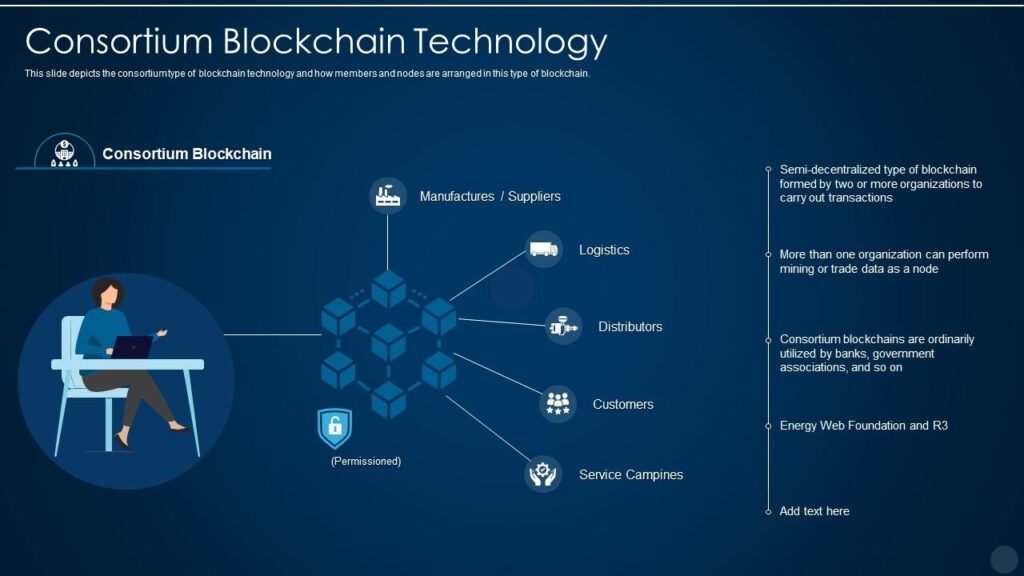
A Consortium Blockchain, known as Federated Blockchain, is a semi-decentralized network, where the blockchain is managed by a group of organizations or institutions rather than a single entity. Unlike, public blockchains, which are fully decentralized, and private blockchains, controlled by only one organization, consortium blockchains offer this middle-ground approach with a selective decentralization model.
Example: R3 (used in banking), Energy Web (used in the energy sector).
3. Hybrid Blockchains:
Source: slideteam.net
A hybrid blockchain combines the features of public and private blockchains. It offers a flexible solution that allows for both open and closed systems. While some parts of data may be public in a hybrid blockchain, the other parts remain private or accessible only to chosen participants. With such capability, organizations can control access to sensitive information while taking advantage of the transparency and security provided by blockchain technology.
Example: Dragonchain, XinFin.
Applications of Blockchain Technology:
There are various types of applications of Blockchain technology. Let’s get to know about them.
1. Blockchain in Finance:
Source: hyperhci.com
Blockchain is transforming the finance form with efficient, transparent, and secure platforms.
Cryptocurrency: Cryptocurrencies like Bitcoin and Ethereum, support decentralized cryptocurrency exchanges.
Smart Contracts: Smart Contracts will automate agreements and enforce compliance on both sides, without intermediaries, for example: loans or insurance.
Cross-border payments: Cross-border payments became faster and cheaper, and intermediaries such as banks were no more required.
DeFi: DeFi is short for Decentralized Finance. It means decentralized financial services that give access to lending, borrowing, and trading without central authorities.
2. Blockchain in Supply Chain:
Source: techment.com
While controlling and efficiently working with the supply chains, Blockchain technology also affords a higher level of operational transparency and traceability.
Traceability: Each and every step undergone from preparing such product for sale e.g. in the food or pharmaceutical industries can be stored and verified on the blockchain network.
Fraud Management: There is no way of keeping back or altering any record on the chain and therefore such enables risk or chance of fraudulent activities to an extent.
Smart Contracts: Entering supply or service agreements with the respective suppliers is a straightforward process that rarely has delays or disagreements.
Environmental Impact: Blockchain can facilitate the assessment and evidence of these kinds of ethical considerations and their practice – e.g. fair trade or organic certification.
3. Blockchain in Healthcare:
Source: blockchainappsdeveloper.com
With the rise of blockchain technology, healthcare management can also be more efficient in the management of patient data privacy and research.
Security of Patients’ Medical Data: Patients can share and control their medical data across different health providers while reducing the risk of duplicity and mistakes.
Pharmaceutical Chain Improvement: The potential of blockchain can be fully realized in tracking all manufacturers and patients of a given drug and hence include the fight against fake pharmaceuticals.
Clinical Studies: Blockchain allows for the preservation of sensitive results from research in clinical trials.
Sharing of Datasets: Blockchain may enable the controlled and secure sharing of linked de-identified patient data for the purpose of conducting clinical research.
4. Blockchain in Gaming Industry:
Source: in.pinterest.com
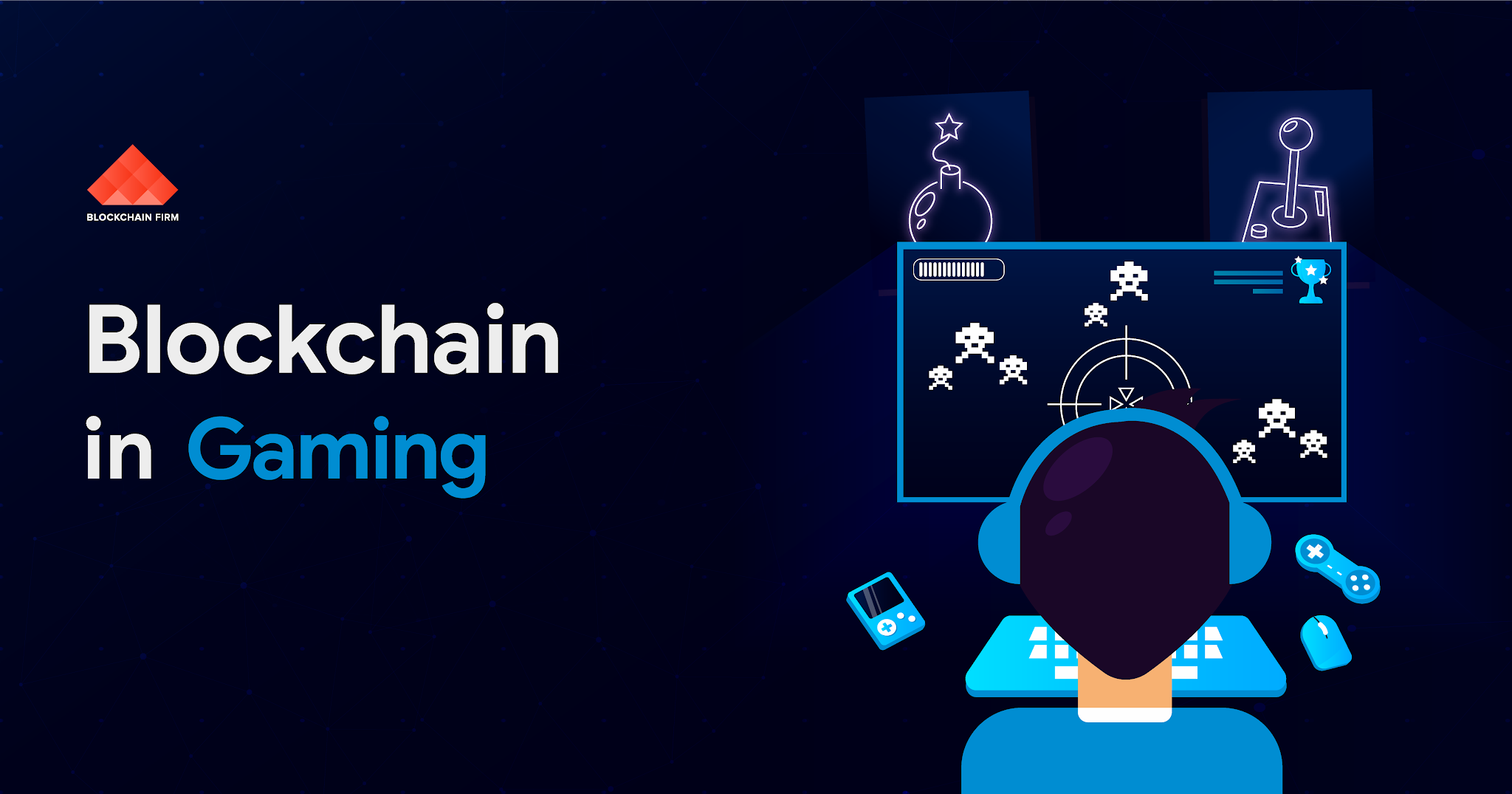
The advent of blockchain technology has come with digital property, distributed economies, and enriching play experiences that are revolutionizing gaming.
In-game Assets: Players can now buy, sell, or trade much-loved in-game characters, clothes, weapons, and skins as NFTs.
Play to earn: Players have a chance to earn some cryptocurrency or tokens by engaging in such games adding another layer of economic value.
Decentralized gaming: Games developed on the blockchain are more transparent, allowing for fewer unfair advantages and the ability to restrain the players.
Asset portability: One of the features of blockchain is it allows the assets to be used in more than one game or application by the same player.
Blockchain and its Cryptocurrencies:
The emergence of blockchain technology has taken the world by storm especially due to its use in cryptocurrencies. These unique networks have changed the way transactions, contracts, and assets are handled by providing a high degree of safety and eliminating the need for middlemen. Now, let’s try to highlight several essential blockchains and explain how these blockchains support various cryptocurrencies.
1. Bitcoin Blockchain:
Source: lens.monash.edu
Bitcoin’s blockchain, created in 2009 by the elusive Satoshi Nakamoto, is the earliest and the most famous of them all. It is the backbone of Bitcoin, the digital currency that started it all. The blockchain underpinning Bitcoin uses a consensus mechanism called Proof of Work (PoW), where participants known as miners help validate transactions and keep the network secure by solving puzzles that involve cryptographic hashes.
Due to its robustness and its dispersed nature, it is no wonder that even with the emergence of many other digital currencies, bitcoin remains the most prestigious and highly valued of them all. However, the issue of its scalability and how fast transactions are processed has always been a matter of contention.
2. Ethereum Blockchain:
Source: tarlogic.com
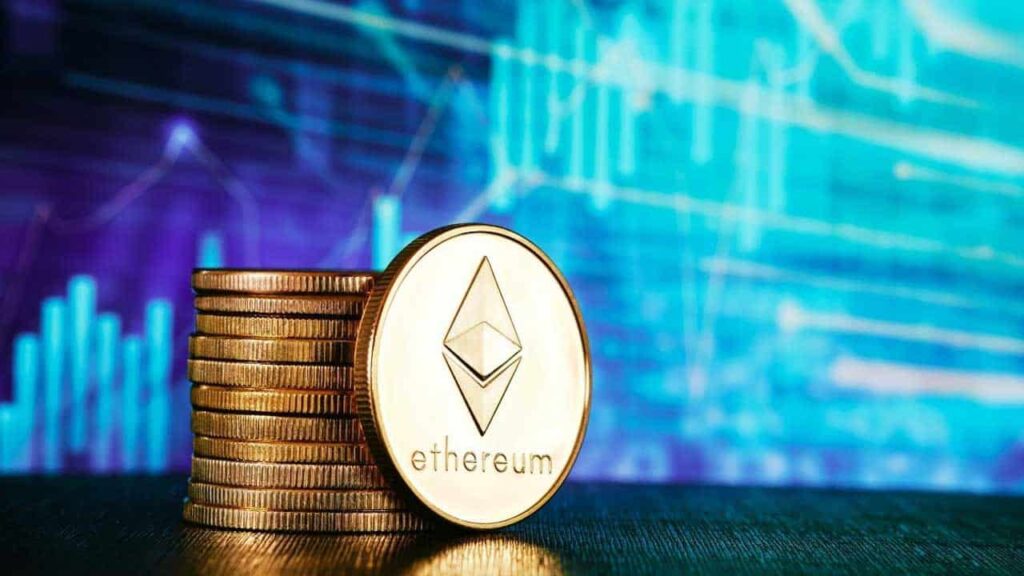
Ethereum, proposed in 2015 by the self-described geek Vitalik Buterin, is more than just an electronic currency. The Users can freely serve the ETH cryptocurrency, which is the default currency for Ethereum, but this is not what ETH is about. What makes Ethereum so different from the other blockchains is the smart contracts feature that simply allows the Ethereum blockchain to create contracts that are executed as codes on the blockchain. This allowed the emergence of dApps and many more uses including DeFi and NFTs.
While Ethereum started by using Proof of Work consensus, it is now based on the Proof of Stake consensus of Ethereum 2.0 in order to solve the issues of scalability and environmental impact.
3. Tron Blockchain:
Source: en.cryptonomist.ch
As launched by Justin Sun in 2017, Tron has adapted cryptocurrency technology to allow the free creation of content without the censorship threats on the creators. Thus, the platform focuses on high transaction speeds and the growing number of dApps available a majority are in the content sharing and entertainment sector.
Tron works under the Dpos model which is cost-effective and timesaving as transactions can be completed in a matter of seconds without costing much, that is why it is widely used in several mobile applications where content is shared, hosted, and played, games and social networks. TRX is the main token used in the TRON network and it is aimed at removing intermediaries allowing content creators to be rewarded directly.
4. Solana blockchain:
Source: 0xdev.co
Launched in 2020 by Anatoly Yakovenko, Solana Blockchain is popular for its incredible speed and low transaction cost, making it one of the fastest blockchains in its entire history. By utilizing a blend of proof of stake and a unique system of proof of history, Solana is capable of processing thousands of transactions in a matter of seconds which solves the scalability challenges many of the traditional blockchain networks face. This makes Solana especially suitable for DeFi, gaming, and NFT projects. Its coin SOL plays an important role in securing the network and staking.
5. Bitcoin Cash Blockchain:
Source: Quartz
This is a process of the Bitcoin Blockchain which is known as the Bitcoin Cash Blockchain. Bitcoin Cash (BCH) on the other hand came into existence in the year of 2017, which was a fork that addressed the issue of Bitcoin’s scalability issues by increasing the block size limit. This allows Bitcoin Cash to accommodate more transactions within a single block, thus making cheaper and faster transactions as opposed to Bitcoin.
Even though they both share the same basic tenets of being decentralized and providing security, Bitcoin Cash is more precise for daily transactions considering its speed and low charges, even though most people do not use it as much as they do with Bitcoin.
6. WAX Blockchain:
Source: defipedia.com
WAX Blockchain was launched in the year two thousand seventeen, it has gained popularity among gamers and NFTs because it is an eco-friendly, energy-saving Proof of Stake model. WAX (Worldwide Asset eXchange) is a blockchain focused on virtual and digital assets, particularly when it comes to games and NFTs. It is now possible for users to create, purchase, rent, or trade virtual items such as NFTs with very low costs of operations. There is also an easy dev interface, and the platform has collaborations with world-known gaming and entertainment companies. The ecosystem is powered by WAXP cryptocurrency which is used for staking, governance, and transactions.
Investment in Blockchain:
However, with developments in technology, Blockchain has expanded its scope to even further technologies. There are new things to explore for investors whereby blockchain introduces means to enhance one’s investments and it portrays the future of human beings. Investments in blockchain might take so many forms and two of them are Blockchain ETFs and Blockchain Certifications.
Blockchain ETF:
As an alternative, Blockchain Exchange Traded Funds will allow investors to access blockchain-related industries without buying volumes of cryptocurrencies concentrating on a particular one. These funds purchase stock in firms working on the blockchain, from manufacturers of the components to companies that create applications that run on blockchain technology.
Example: Technology companies like IBM or financial service firms like Square. By holding shares in blockchain ETFs, investors can indirectly gain from the growth of blockchain applications without the volatility associated with direct cryptocurrency investments.
Blockchain Certification:
Source: Software Testing help
As blockchain’s influence grows, so does the need for expertise in the field. Blockchain certification programs offer a direct investment in knowledge, enabling professionals to capitalize on the expanding job market for blockchain developers, analysts, and consultants. Programs like the Certified Blockchain Professional (CBP) or Certified Blockchain Developer (CBD) provide industry-recognized credentials that signal expertise to employers. These certifications not only boost individual career prospects but also make professionals critical contributors to blockchain’s continued evolution, providing a solid investment in long-term success.
Emerging Blockchain Technologies and Trends:
Over recent years, Blockchain has undergone numerous changes and improvements. Blockchain platforms and applications spreading across almost all industries. These changes are altering the perception of decentralized systems and are leading to the adoption of blockchains in activities other than cryptocurrencies. Below are some exciting blockchain technologies and trends to watch out for.
1. Riot Blockchain:
Source: watcher.guru
Riot Blockchain is one of the biggest Bitcoin mining companies in the USA. It mainly focuses on its mining operations and aims to enhance the infrastructure for Bitcoin by developing symbiotic large-scale mining operations. To improve mining capability and secure and decentralize the Bitcoin network as a whole, Riot employs state-of-the-art mining equipment and energy-efficient technology. With the rise in the popularity of cryptocurrency mining, this business sector must hopefully lead innovation, growth, and expansion of operations for Riot Blockchain.
2. Hive Blockchain:
Source: steempeak.com
Hive Blockchain combines cryptocurrency mining with a green energy approach, focusing on mining Bitcoin and Ethereum using renewable energy. With data centers in countries like Sweden and Iceland, Hive aims to operate sustainably by reducing carbon footprints in the energy-intensive mining process. By aligning with eco-friendly initiatives, Hive Blockchain is carving a niche in the mining industry while contributing to environmentally conscious blockchain practices.
3. Argo Blockchain:
Source: argoblockchain.com
Cryptocurrency mining has also become popular among other industries, so Argo Blockchain’s differences are not only in this it. Its focus is on energy-efficient mining. Based in the United Kingdom, Argo has several huge mining farms throughout the world but concentrates on climate change mitigation. With this agenda, Argo aims to lead the blockchain mining sector and be described as innovative, transparent, and environmentally responsible. So, this corporation is also diversifying its activities by researching technologies such as non-Bitcoin cryptocurrencies and decentralized finance (deFi) alongside blockchain.
4. Flow Blockchain:
Source: coingecko.com
Flow Blockchain is designed with NFTs, games, and decentralized applications in mind. Flow was developed by Dapper Labs, the guys behind CryptoKitties, and this is a fast, developer-centric blockchain that overcomes many of the scaling problems typical of other blockchains. Flow’s unique architecture allows for a high transaction throughput, while still maintaining a level of decentralization which is perfect for use in applications such as NBA Top Shot and other entertainment-orientated applications. Because of its emphasis on usability and scaling, this is one of the most advanced blockchains for gaming, digital assets, and consumer-orientated dApps.
Tools and Resources for Blockchain:
Blockchain technology is transforming industries across the globe, and understanding the tools and resources available can help you navigate this new digital frontier. Whether you’re managing cryptocurrency, tracking transactions, or deep diving into the technology behind a project, the following tools can be invaluable.
1. Blockchain Wallets:
Blockchain wallets are digital tools that allow users to store, send, and receive cryptocurrencies securely. These wallets come in various forms, including hot wallets (connected to the internet, like mobile or desktop apps) and cold wallets (offline, such as hardware devices). They ensure that only the wallet owner can access the private keys necessary to authorize transactions. Popular wallets like MetaMask and Ledger not only provide secure storage but also allow interaction with decentralized applications (dApps), enabling users to engage in various blockchain activities.
2. Blockchain Explorers:
A blockchain explorer is a tool that functions like a search engine for the blockchain network and its activity and displays information on various transactions, blocks, and addresses. Such tools allow for a very quick degree of transparency as users can observe the transactions being made or even the specific money being used in a particular transaction.
An example, Explorers like Etherscan (for Ethereum) and Blockchain.info (for Bitcoin) are widely used to monitor network activity, confirm transactions, and even audit smart contracts. They are essential for anyone involved in blockchain, as they offer a detailed look into the functioning of a blockchain.
3. Blockchain Whitepapers:
A blockchain whitepaper is a detailed document that outlines the technical and business aspects of a blockchain project. It’s often the first introduction to a new cryptocurrency or decentralized solution, offering potential investors or developers a deep dive into its mechanics, use case, and potential market impact.
The Bitcoin whitepaper, written by Satoshi Nakamoto, is one of the most famous examples, setting the stage for the entire cryptocurrency movement. Whitepapers help users understand the innovation and problem-solving approach behind blockchain projects, making them key resources for evaluating new opportunities.
Future of Blockchain:
Blockchain technology, once synonymous only with cryptocurrencies, is rapidly expanding into various industries, promising to reshape how we conduct business, share data, and build trust. As we look to the future, blockchain’s evolution presents both exciting opportunities and notable challenges. Below is a glimpse into the trends, predictions, and hurdles that will shape its path forward.
1. Trends and Predictions:
Mass Adoption of Decentralized Finance (DeFi):
DeFi is expected to grow, offering decentralized financial services that eliminate intermediaries like banks. With lending, borrowing, and staking becoming more user-friendly, DeFi could democratize access to financial tools globally.
Enterprise Blockchain Solutions:
More corporations are expected to adopt private and consortium blockchains for internal use. Sectors like supply chain management, healthcare, and finance will use blockchain for secure data sharing and operational transparency.
NFT Evolution:
Non-fungible tokens (NFTs) are evolving beyond collectibles into real-world applications, such as tokenized assets in real estate or intellectual property. NFTs could expand into digital rights management or even personal identity verification.
Interoperability Between Blockchains:
One significant trend is the focus on cross-chain interoperability, where different blockchain networks communicate seamlessly. This will help reduce the fragmentation of ecosystems and enable more fluid transactions across networks.
Governments and Central Bank Digital Currencies (CBDCs):
Countries are exploring CBDCs—blockchain-based versions of national currencies. Governments will likely use blockchain to improve the transparency and efficiency of their financial systems, with CBDC projects emerging from countries like China, the EU, and the US.
2. Challenges and Opportunities
Scalability Issues:
As blockchain networks grow, ensuring they can handle large volumes of transactions efficiently remains a significant challenge. Layer 2 solutions like rollups, sharding, and sidechains are emerging to improve scalability, but widespread implementation will take time.
Energy Consumption:
The high energy consumption of blockchain networks, especially those based on Proof of Work (like Bitcoin), poses environmental concerns. Shifting to more eco-friendly models such as Proof of Stake and adopting green blockchain initiatives will be crucial.
Regulation and Compliance:
Governments worldwide are grappling with how to regulate blockchain without stifling innovation. Clear regulations that protect users and encourage innovation could unlock more blockchain adoption, while restrictive rules may slow progress.
Security Risks and Hacks:
While blockchain is secure by design, hacks of decentralized applications and exchanges are not uncommon. Building more robust security frameworks and educating users will be essential for reducing risks in the decentralized space.
Opportunity in Tokenization of Assets:
Beyond digital currencies, blockchain presents a massive opportunity in asset tokenization, where real-world assets like real estate, commodities, or art are represented as digital tokens. This could revolutionize investment opportunities, making them more accessible to a broader audience.
Blockchain is reshaping industries with its potential for transparency, security, and decentralization, from finance to healthcare and beyond. While challenges like scalability and regulation remain, the opportunities for innovation are immense.
What do you think? Will blockchain drive the next wave of technological disruption? Share your thoughts in the comments!
For more insights on blockchain, Web3, and the future of decentralized tech, subscribe to our newsletter and stay updated.
Crab Pot Pie is one of the uncommon meals in Palia that players can consume to gain a decent amount of Focus or give it to the characters who love/need it. This guide will walk you through how to unlock the Crab Pot Pie recipe and make it in Palia.
How to Unlock the Crab Pot Pie Recipe in Palia
Like every cooking recipe in Palia, players must first learn its recipe and it is the same for Crab Pot Pie. Before players get to make the Crab Pot Pie, they will have to unlock it. To unlock the recipe for Crab Pot Pie, you have to purchase it from the Cooking Guild Store after reaching Cooking Level 5 and it will cost 1,000 Gold.
How to Make the Crab Pot Pie in Palia
Once you have the Crab Pot Pie recipe, you will be able to make it using your cooking appliances. As each recipe requires certain cooking appliances and ingredients, it is the same for the Crab Pot Pie. You need 1 Standard Stove and 1 Prep Station to make the Crab Pot Pie using the following ingredients.
1x Butter
1x Corn
1x Wheat
1x Onion
1x Any Vegetable
1x Any Crab
Follow the following steps to make the Crab Pot Pie.
Step 1: Interact with the Standard Stove and select the Crab Pot Pie recipe to start making it.
Step 2: Go to the Prep Station and interact with it to make Chopped Crab by chopping any crab.
Step 3: Interact with the Prep Station again to make Chopped Vegetable by chopping any vegetable.
Step 4: Interact with the Prep Station again to make Chopped Onion by chopping the Onion.
Step 5: Interact with the Prep Station again to make Basic Dough by rolling the Wheat.
Step 6: Go to the Standard Stove and add Butter, Corn, Chopped Crab, Chopped Vegetable, Chopped Onion, and Basic Dough to finish making Crab Pot Pie.
Make sure to complete all of the above steps in under 1min 40sec otherwise, you will get Spoiled Food.
Use of Crab Pot Pie in Palia
The Crab Pot Pie meal is mainly used in the Another Way quest for Tish. Moreover, consuming Crab Pot Pie generates 225 Focus (Basic) or 337 Focus (Star Quality). You can sell it for 79 Gold (Basic) or 102 Gold (Star Quality) at the Shipping Bin. Additionally, you can give it to the villagers who like it or who need it as a weekly want.
No Villager needs Crab Pot Pie until October 6, 2024, so if you have prepared some, save them so that you can give them to villagers later.
Every now and then, we get to witness hard-hitting stories that profoundly explore grief and human emotions. Although it’s very hard to depict authentically, certain filmmakers go all out and knock it out of the park. Amberlee Colson and Laura Campbell are two such filmmakers who have particularly explored grief and trauma in their short film ‘PLAY DATE’. The short film follows two mothers forging an unexpected connection on the first anniversary of a school shooting, as they relive the precious moments of their daughters’ final play date. Apart from directing the film, Colson and Campbell portray the lead characters, taking viewers on an uncomfortable journey.
I recently got a chance to talk to Amberlee Colson and Laura Campbell about their short film ‘PLAY DATE’ and how they approached such a sensitive story. Additionally, they opened up about how they focused on the theme of gun violence without even showing what actually happened.
Laura Campbell and Amberlee Colson in a behind-the-scenes still from ‘PLAY DATE’
Aayush Sharma: Congratulations on the short film ‘PLAY DATE,’ but before we talk about the movie, I would love to know how your journeys have been in the entertainment industry.
Amberlee Colson: Yeah, I started as an actor, obviously, as a theater dork at heart, I love acting in any way that it happens. But in the industry, to be honest, I sort of started writing as a frustrated actor, and then it became so inspiring. When I first moved to LA, I was surrounded by a lot of independent filmmakers who were doing their work and being very proactive. I had a lot of teachers around me who were like, “If you have an idea, write it, do it, film it, figure out a way.” So, in hindsight, I’m really grateful that I had so many opportunities. I did my first feature with a woman named Mariana Palka. She’s a Scottish filmmaker, and she’s always working. Watching her do her first film was incredibly inspiring—seeing this woman write her own film, direct it, star in it, produce it, and then have it go to Sundance. It really paved the way for a vision I didn’t know was possible in a weird way. So, I sort of did a feature film that I wrote, produced, and starred in, which led to other collaborations. I just want to say that Laura Campbell is such a fierce female director; she champions you from the get-go. This script only came to my lap because Laura was already attached, and it was very much in progress in a full-blown way.
Laura Campbell: I feel the same way, so it’s lovely to work with people who champion each other. Amberlee made this happen. I had been sitting there trying to make it (PLAY DATE) happen, and it was just a magical collaboration between the two of us. She sparked that initiation. It was great. It’s been wonderful. As for my journey, I studied theater, did theater in college, and then went to grad school for theater, where I got my MFA in theater. I stayed in New York City at Columbia University for 13 years, doing a lot of theater, including off-Broadway and regional theater. Then my agent got me into TV and film acting, which I didn’t know much about. It was a very new experience. When I moved out to LA, I started becoming more proactive about producing my projects. Like Amberlee, there was a frustration of waiting for the phone to ring, waiting for someone to let you tell their stories. A lot of the time, the stories don’t line up with who you are or what you want to tell in the world. It’s a real privilege to be able to say, “These are stories that I think are important. These are stories I want to tell,” and to tell them with people I love to work with. So, I got to LA, produced a couple of plays and a couple of shorts, and then this was our first directing role. We co-directed and co-starred in it, making it a community effort with the people around us who love and support us and the project. I think collaboration is key to my success and enjoyment of it all.
Aayush: The film centers around a tragedy and the reconnection of two mothers. How did you approach balancing the emotional weight of grief with the lighter moment of joy over a grilled cheese sandwich?
Amberlee: So Gavin Broady wrote this amazing story, and I felt it when Laura gave me the script because she was already attached and trying to make it happen. The connection these women have, their relationship, really imprinted on me, and I resonated with it. It sounds weird to say, but I resonated with the guilt. In some way, I did. I connected with that heartbreak. Laura and Gavin had done so much research and sent me a slew of articles, documentaries, music, and everything that had been inspiring them for the past couple of years while they were trying to get this off the ground. So, I just leaned into their heavy research and watched so much of these tragedies, letting whatever happens… I don’t know how to explain it. Whatever that is when you start dancing with it, opening yourself up to that imaginary world. It’s hard to talk about because it’s devastating that it’s a real thing. Laura and I are very sensitive to this story, and it’s unfortunately common now. I don’t know how I approached it other than to say I did feel a connection to a story about mothers and this divide between them. I’m hoping Laura will answer this question better. But all I know is I researched it, had conversations with Laura, and we both put these hats on for a lot of months while workshopping the story. By the time we were filming, I felt very connected to her and trusted her with everything. It was really about allowing all our homework to show up and being available to all the things that can happen on set. I don’t know if I answered your question, but yeah, it’s a hard one because it’s so real. It’s a real pain that’s happening right now. So I’m just glad it resonated with you as a viewer and that it felt real.
Aayush: Laura, the scene where you drink the milk in one go. I really want to know how did you do it? Because it can be really difficult when there are cameras and people are looking at you while you are drinking the milk.
Laura: Amberlee and our DP, Audrey Biche, who was fantastic and such an amazing part of this project, were talking about this milk scene for a long time, deciding on what we would use—like something that looked like milk or milk itself. We tested a few different things to see how they would look on camera. But to me, everything that wasn’t actual milk bumped into my mind as “That’s not real milk.” And if I’m going to chug three glasses of milk for three different takes, I’m going to… if anyone in that theater goes, “That’s not really milk,” I’m going to be very unhappy. So I was like, it has to be milk. I have to chug it, and it has to be in one go, and we have to do it in one take. You know, the way you get into it with the cameras and everything else is through character. I mean, the character at that moment is starting to step into this space where, you know, the last time she was there, her daughter was there, and she’s thinking about the time when she left but her daughter stayed for this playdate, this time with her friend and her friend’s daughter. She’s thinking about what they did, and so she starts to say, “Maybe she drank milk. Maybe I can find my daughter if I drink this milk and if I focus on it and ingest it. I can feel what she felt, and I can experience what she experienced while she was drinking it.” Of course, she’s going a bit beyond how a kid would drink a glass of milk, but I think she’s desperately trying to find her daughter, find the memory of her daughter doing what she did on that day. So when you’re in it like that, you kind of don’t really think about the cameras and everything else.
Laura Campbell in a still from ‘PLAY DATE’
Aayush: What role does silence play in the film, especially in the context of the “painfully awkward exchanges”? How did you use dialogue to enhance or contrast with these moments?
Amberlee: I definitely want Laura to speak to this too, because we worked so well together in crafting this from what Gavin had gifted us. I think I already mentioned that we workshopped it and everything. So, I think the marriage between us, with both of us having a strong actor’s hat already, was key. We found organic things just by workshopping them as actors first. Then, we brought it to the set, and we both played in the space for a while, trying to find the tension between these women and the dance. It was really important to us when we were shot listing, to find the story in these frames and make sure that we were… I’m just so happy you picked up on the distance because that was such a big conversation for many weeks between Laura and me, about when these women are close and when they’re not, and crafting that in our shot list. Finding things organically from an actor’s standpoint helped. Then, when the director’s hat was on and we were working together like that, making sure the integrity of the truth was there. We just had to make sure it was in the lens.
Laura: I think a lot of the silent moments came from us workshopping this when we were diving into the idea that these two had been best friends. So how do you build a history with somebody without giving a lot of exposition, without walking in and saying, “Hello, best friend? Haven’t seen you in a while, best friend.” I think a lot of it comes from when you’ve gone through something very intense and then reunite with somebody after it, and people don’t know what to say or do. I think it built in some history between them and some knowledge that the audience doesn’t have—and that’s okay, that they don’t have it. I think it makes them lean in, wondering, “What is going on with these two?” And I’m really happy that we found it through all this stuff that Amberlee was just talking about. Yeah, amazing.
Aayush: The grilled cheese sandwich becomes a pivotal moment of connection. What inspired the use of this seemingly simple element, and what does it symbolize within the broader narrative?
Laura: That was Gavin’s original idea, and, yeah, it’s an extremely pivotal moment. It ties into the idea of the playdate, the reenactment of the playdate. Right. Going through, touching where she was, being where she was, hearing the sound of Moana playing on the floor, and wanting more and more. The more that April’s character wants more of these moments, the more Kristen’s character leans in, to the point where she says, “Okay, I’ll make you this. I will make you this thing to put inside your body, to feel and taste and be with.” I think it’s a massively important part of it. I’m glad that it came across as such a pivotal point, and we talked a lot about it. Maybe Amberlee would have something to say about this, but we talked a lot about the idea of what it would be like in life if we all didn’t shy away from these very difficult things because people are so alone in them. We’ve read so much, listened to so many interviews, and watched so many documentaries where, especially the parents of the survivors, after these kinds of events, feel like they’re radioactive. They feel like when they walk down the street, people cross it, and turn the other way in the grocery store. They don’t want to get close to them because they’re uncomfortable and don’t know what to say. Like, what can you say? But also because there’s some sort of thing that’s like, “Well, you’re a little contagious. I don’t want that in my space, my energy space, because what if it happens to me?” And I can’t fathom the idea of that being a real thing that happens to people. So we talked a lot about the difference—how on this day, Kristen leans in. Kristen says, “Okay, I will go on this journey with you.” And it enables April to drop the mask that she usually wears to try and make people comfortable. Even though it’s not working, she tries hard to make them comfortable, and Kristen gives her that gift of being like, “I’m going to be here with you and do the thing with you that people might think is strange,” which unlocks her ability to grieve and to connect with this woman again and to find her daughter at that moment, you know? So I think it’s a pretty profound way of going about it around a grilled cheese. I think it’s pretty special. Gavin’s a special one.
Aayush: When you started writing the film, did you see yourselves playing the role? Or you decided after the writing process that this is something that you guys wanted to portray on the screen.
Laura: I received the script from Gavin, who sent it to me and suggested that I should play this role. Originally, I was just set to play the character of April. I had been trying to get it going with Gavin for many years, but it wasn’t moving forward. However, I knew in the back of my mind that I had to make it happen. Then I met the wonderful Amberlee. We had coffee and talked about various things, and she asked if I had any projects going on. I had already been thinking about this project, and I was so glad that she organically allowed me to mention it. I told her, “Actually, I do have something, and you would be beyond perfect for the other role.” So, at the start, it felt like the roles chose us more than we chose them. Gavin saw me in this role, and I saw Amberlee in the other role. We began with the idea of being the actors only, focusing solely on those roles. As we workshopped it and immersed ourselves fully in it, we realized that we were the ones who should tell this story ourselves. We decided that we should direct it, produce it, and be the ones to make it happen because it felt right.
Amberlee: Yeah, I was going to say exactly what Laura mentioned. That’s precisely what happened. It was a fun ride, though. We were both very open, and that’s why Laura is so great. We remained receptive to all ideas, but the project kept guiding us toward what was right. We were always on the same page with that, so it was a real joy.
Amberlee Colson in a still from ‘PLAY DATE’
Aayush: Apart from that, the film also deals with the massive problem of mass shootings. Even though we get to know about it in just one sentence, it shows how it manages to ruin lives. Did you ever talk about including a scene or a flashback scene of what happened with their daughter?
Amberlee: I do want to say that a short answer would be no in the sense that Gavin’s script never had that. I think that’s what made it so special. He really went about telling this story of grief in these two different ways. These women are grieving in a way that I think like Laura said, I mean, it’s a special, unique, really original way to be invited into that conversation. However, I also, and correct me if I’m wrong, Laura, we did talk about it, once we had the director’s hat on, and we were just looking at the cinematic approach about, whether is it powerful to do we need to see anything or hear anything? And we obviously chose not to. And I’m really glad we did that. It was something we had talked about in the early stages, for sure. Just what would be more impactful, as far as hearing the child, her fictional name was Beth. What is the most impactful way to hear that? And we chose not to do it.
Laura: Yeah, we talked through many options, and the flashback idea did come up, or flashes. We always knew we would never show what happened inside that school. We were very conscious of that; it’s not something we were going to show. But we did consider flashbacks to maybe that day, and, you know, maybe shots of a school, but nothing of anything happening—just a school. You know, things like that to build that idea. But throughout workshopping it, we really found that it wanted to be simple, and focused on these two characters. You want people to go on that ride, not get ahead of it so that they infuse themselves into those characters and relate in a way that isn’t distant for them. That’s the whole deal with this. As you said, these occurrences are unfathomably frequent—gun violence is the number one killer of children under the age of eleven in the United States. It is absurd that this is the case. This is the reality, and we wanted to tell a story that people could relate to in a way that says, “That could be me.” By setting it in a house, at a birthday party with two friends a year after the event, we show the ripple effects of it, but also that grief is grief. I have grief, and you have grief, and it unites us all. How do we relate to that kind of grief so that we remember it enough to be effective in changing it at the end of the day?
Aayush: The movie explores how people can decided to have little moments of joy in the cruellest times. Given the current global challenges, how do you guys find the motivation to carry on when the world seems to be facing such difficult times?
Amberlee: That’s a great question. I think it’s tough, especially right now. Mental health, for me, is a lot about how you manage your mind and the stories you choose to keep in it. So, I immerse myself in being sensitive to what I absorb and don’t absorb, and where I put my focus and energy. Right now, I feel like I need to keep a tight leash on who I surround myself with. This may sound very self-help-y, but it’s real for me. Just, again, circling back to Laura and who you surround yourself with and where you tune in, and what you choose to listen to—all of that can really make a huge difference. Joy is important, and I do believe in finding what’s good, even if it’s something small, like, “God, that glass of water this morning was so good.” Just finding ways to stay ahead and find some momentum for yourself, because a lot of times right now, it’s not outside of you. It’s so important right now.
Laura: I think I find it very easy to fall into despair and hopelessness when I see the pain and suffering around the world that feels beyond my control. It’s really easy for me to think, “What’s the point? Why does it matter? People are awful.” But then I remember how lucky I am. It’s all… You know, I can’t be in despair because I don’t really have the right to. When I see the pain and suffering, I think about those who are enduring it. Everyone has their internal version of that, for sure. People in my position have their internal reasons for it, too. But at the same time, we must move forward with hope and try to change things for those who are going through it. If we all just give up and say, “It’s pointless because the world is so horrible,” then nothing will ever change. I look at my nieces and think, “What about them? What about the future for them?” And what about the future for all the people who come out on the other side of hard things and try to make changes? There are very inspirational people around the world doing incredible work to make things better, and I’m inspired by them. I hope that in my little corner of the world, I can make some sort of difference where people feel seen and heard, and that keeps hope alive. I think the main joy I get out of life is a collaboration between artists working together. Amberlee brings me a lot of joy, and I’m very grateful for that. But, yeah, collaboration is amazing.
Aayush: How did you pitch this film to the likes of Kenneth Lonergan and J. Smith-Cameron? And when they got on board, did they give you any advice on what should remain and how to approach this narrative?
Laura: I met J. Smith-Cameron and Kenneth Lonergan many, many years ago. I did a play in New York with Smith-Cameron and became really good friends with her, and then I became friends with Kenny and their daughter and their community. At the time, I was a very young actor, and they took me under their wing. They were extraordinarily supportive, helpful, and wonderful. So when I approached them and said I was directing for the first time, they were extremely excited for us. It couldn’t have been more of a “yes, we’re here to support” moment. I’ve received a lot of advice from them over the years. One thing Smith-Cameron told me that I remember very clearly was, “Start thinking now about roles you want to do in ten years. Start thinking about stories you want to tell in ten years and keep them in your mind because they will start to bubble up and come to the surface. You’ll see them and find them and they’ll come to you.” I started doing that, and I feel like this was one of those projects that aligned with the sense of characters and stories I wanted to explore. Watching Kenny go through his process of creating, writing, and editing a film, and using his community for feedback, I saw how he surrounded himself with people he deeply trusted and listened to them when they gave feedback. No one in his life was considered not good enough to give feedback; he took input from everyone. He wanted to tell genuine, real human stories and truly wanted to know if they resonated. That’s something we did on this set—we collaborated and took ideas from anyone who wanted to contribute in a way that felt like it was moving the project forward.
‘PLAY DATE’ had its premiere at this year’s HollyShorts Film Festival
Nostalgia is a powerful tool. The gaming industry has been going through some changes in the last couple of years and games have been very hit or miss. So when a game like The Plucky Squire comes along, which showcases gameplay that plays to old school platforming and mechanics with a modern twist, it can be incredibly enticing.
Right off the bat, The Plucky Squire is a visually beautiful game. The unique format of a story book to tell the narrative, is well done. The art style is captivating, with smooth animations and transitions that make the game feel like a story book come to life. The characters don’t talk, with the exception of the occasional cheer, but the overarching plot is conveyed by a fantastic narrator that does a great job from start to finish.
The characters are fun and quirky, and while the plot isn’t going to blow your mind, the presentation makes it an enjoyable experience from start to finish.
The Plucky Squire – a storybook adventure
As a game, The Plucky Squire blends 2D platforming and combat with 3D through “meta magic”. Meta magic allows Jot, the plucky squire, to literally break the fourth wall. The evil doer Humpgrump unleashes a spell that forces Jot out of the story book, which unintentionally gives Jot the ability to jump in and out of the book whenever magic swirls are present.
There are abilities that allow Jot to manipulate the pages of the book, mess around with words to change the reality of the book, and fight Humpgrump’s minions to restore order.
While an overall enjoyable experience, The Plucky Squire suffers from pacing issues and a lack of depth of gameplay mechanics, which become more apparent as the game goes on.
Every boss encounter in the game plays to a specific gimmick; typically nods to old school games. For example, Jot’s first boss fight early on is an homage to Mike Tyson’s Punch Out. In it, Jot becomes a jacked boxer who needs to fight a badger. It’s something that older gamers will notice and appreciate.
However, the tedious pacing of the game, along with the incredibly low difficulty make it feel out of place. Way too often, control is taken away from the player to pan over the scene or to provide exposition that makes the game way too easy. As a result, it feels more like it would be ideal for younger players. This is why the inclusion of references to a game like Punch Out feel so out of place. After all, the first one came out in 1987.
Punching out
The other boss fights are incredibly similar. One involves shooting colored balls at an approaching wall, matching colors to clear them before they hit the bottom of the screen. This is a game that I’ve seen recreated in mobile games and old computer games with a million different names.
It’s fun, and while I can appreciate the references, it takes away from the gameplay identity of The Plucky Squire. Boss fights are often defining segments of the games, and every single one in The Plucky Squire is an homage more than an original idea.
Granted, each one is done well and plays cleanly. But why is there a random rhythm game sequence near the end of the game? It doesn’t fit in with the rest of the offering and it doesn’t add anything new.
It’s weird because the platforming elements are done very well. The world is unique, and while the book sequences focus on platforming in a fantasy world, the desk segments are unique and offer a lot of variety. On the desk there are sheets of paper that allow Jot to switch between 3D space and 2D space to navigate. As the plot progresses the desk gets reorganised and the set pieces change. Jot can go from climbing around a doll house to running from dinosaurs in a prehistoric jungle, without it being jarring. It feels like running and jumping around the play sets like everyone wishes they could’ve done when playing growing up.
Visually stunning
The platforming is the strongest aspect of The Plucky Squire, and I wish there would’ve been a bigger focus on the mechanics that make The Plucky Squire standout.
Again, everything the developers do in the game is done well. It never felt unfair or mechanically broken, so it is definitely a success as a game when it comes to paying homage to gaming classics. But again, The Plucky Squire is not hard and the people who are going to fully appreciate those references are going to be the people who find the game incredibly easy.
The pacing issues do get better as things progress, but these could be easily fixed by allowing player movement while the narrator speaks, instead of locking the camera and making you sit and listen.
Performance wise, The Plucky Squire plays well for the most part. There is some stuttering in the 3D sections, but this seems to be more of an issue when transitioning from 2D to 3D more than anything else. There does appear to be an issue with memory leak during extended sequences, because some puzzles stopped functioning properly during my playtime, only to be fixed when I restarted the game. Thankfully, auto saves are frequent, and I lost at most a minute or two of playtime.
Overall, if you know what you’re getting when you boot up The Plucky Squire, you’ll be in for a very enjoyable experience. The plot in the second half is very engaging, the visuals are stunning, and the mechanics introduced are all done well. They may not have the mechanical depth that I was hoping for when I booted things up, but they were fun.
The Plucky Squire – a cute platformer
The Plucky Squire doesn’t overstay its welcome either, and it took about six and a half hours for me to play through. Going for collectibles and playing around with some of the mechanics can pad that time out if you want it to, but it’s a game that can be finished in a weekend.
Despite its flaws, this is a game that achieves what it wants to in a fun and accessible format. If you’re looking for a cute platformer, then The Plucky Squire is worth playing through at least once.
From Page to Play: The Plucky Squire’s 2D-to-3D Adventure – https://www.thexboxhub.com/from-page-to-play-the-plucky-squires-2d-to-3d-adventure/
Buy The Plucky Squire on Xbox – https://www.xbox.com/en-gb/games/store/the-plucky-squire/9nc3fhgqrs88
When someone thinks of symbols of wealth, elegance, and luxury, few things capture the imagination quite like diamond rings. The brilliance and rarity of these precious stones represent the ultimate status of symbol for centuries. every diamond holds its specialty and allure but some of them are known to the most expensive diamond rings for their radiance, brightness, size, color and history. Moving from royal collections to record-breaking auction sales, these rings are not just jewels but works of art that collectors and connoisseurs want.
Here are the top 10 most expensive diamond rings ever sold
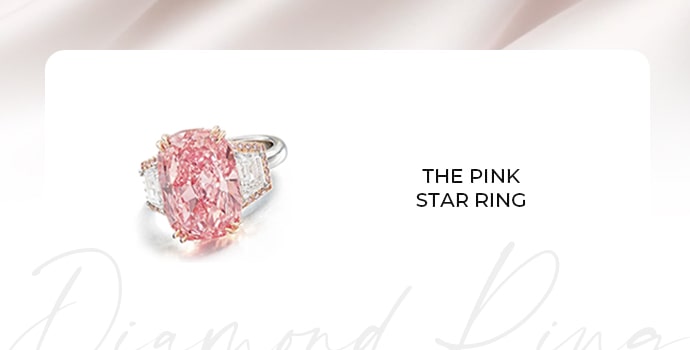
1. The Pink Star Ring
The Pink Star is an extraordinary gemstone that holds the title of the most expensive diamond ever sold. Weighing an astonishing 59.60 carats, this flawless and fancy vivid pink diamond is unmatched in both size and color. Cut from a 132.5-carat rough women’s luxury ring discovered by De Beers in Africa, it took over two years to cut and polish to perfection.
In 2017, the Pink Star made headlines when it was auctioned by Sotheby’s in Hong Kong, fetching an astounding $71.2 million. This record-breaking sale solidified its place as one of the world’s most iconic and valuable diamonds. Its vivid pink hue, coupled with exceptional clarity, makes it a truly rare gem, far exceeding the quality of most colored diamonds.
The Pink Star is classified as a Type IIa diamond, which means it is almost entirely devoid of impurities, adding to its exceptional clarity and brilliance. Its sheer size and rarity make it not just a luxury item, but a piece of history.
2. The Graff Pink Ring
The Graff Pink is one of the most spectacular diamonds worldwide and perhaps one of the finest gemstones ever sold at auction. This stunning diamond weighs 24.78 carats, boasts an extraordinary saturation of pink, and has perfect clarity. The Graff Pink once belonged to renowned jeweler Harry Winston. This diamond has a history making it even more desirable.
The diamond was sold to British jeweler Laurence Graff in 2010 for a record amount of $46.2 million at Sotheby’s, one of the highest prices ever paid for a gemstone at the time. After Graff bought the diamond, some slight re-cutting was done to brighten its shine, and hence, forever sealed its place as one of the world’s most spectacular diamonds.
The Graff Pink is a Type IIa diamond, which means that it is almost flawless in terms of impurities and points of clarity. It greatly surpasses the clarity of this gem. Less than 2% of diamonds have a natural pink color; hence this bright pink color is simply unique. Rarity combined with size and high-class craftsmanship on behalf of Graff makes it stand out as the masterpiece of luxury jewelry.
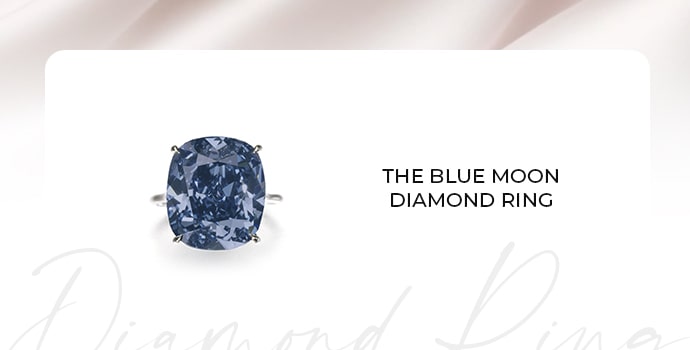
3. The Blue Moon Diamond Ring
The Blue Moon Diamond, weighing 12.03 carats, is one of the world’s most beautiful blue diamonds. This diamond enthralls with its profound flawless color and extraordinary clarity. Discovered in South Africa in 2014, it quickly gained attention for its intense, unique hue, and very highly prized within the colored diamond world.
Named after the phrase “once in a blue moon,” the rarity of the diamond was again highlighted with the sale of the diamond at an astonishing $48.4 million at Sotheby’s auction in 2015, which, incidentally, breaks the world record for the highest price paid per carat for a diamond.
More interestingly, this diamond falls into a Type IIb classification which constitutes less than 0.1% of all the diamonds. Type IIb contains trace amounts of boron, giving this stone its characteristic color of blue. What makes the Blue Moon special is its perfect cut, luminous blue shade, and flawless clarity, making it a true masterpiece and one of the rarest in the world.
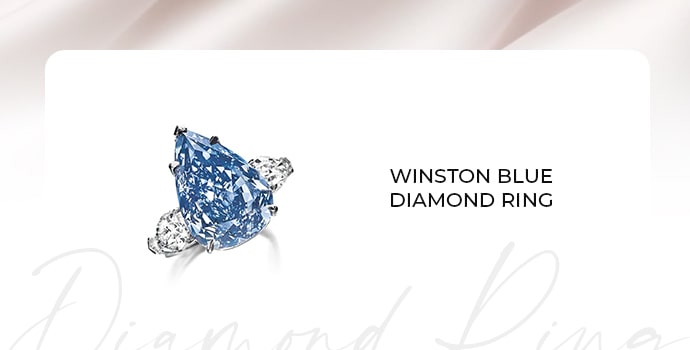
4. Winston Blue Diamond Ring
The Winston Blue Diamond is one such blue diamond, which brims over with colors and is devoid of all sorts of impurities. Consisting of 13.22 carats, this deep blue diamond has been reported as one of the largest and also one of the purest blue diamonds in existence. Its luminous color and intense clarity have led to it being one of the most precious valuables in the high-value gemstones market.
Sold to Harry Winston in 2014, when it was acquired at a Christie’s auction for $23.8 million, the stone received its “Winston Blue.” This sale then set a record for price per carat at the time. Such a staggering price for a gem further proved to be a reflection of the stone’s rarity and beauty as well as the prestige surrounding vivid blue diamonds, one of the rarest in the world.
Winston Blue is a Type IIb diamond and falls into a category of fewer than 0.1% of diamonds sold. The color of this diamond comes from the trace amounts of boron, which has given it the luxurious deep blue color. For such a large size, perfect cut, and rich color, this diamond represents luxury and craftsmanship, hence placing it among the highest-priced sold blue diamonds in history.
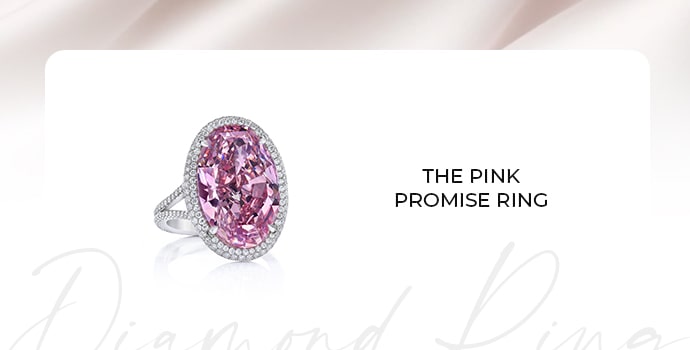
5. The Pink Promise Ring
The Pink Promise is that fabulous pink diamond, which caught the world of collectors and gem enthusiasts. It carries an impressive weight of 14.93 carats and is known for its exceptional intense captivating color with an almost flawlessly clear quality. One of the most exquisite pink diamonds ever to have been seen in human history.
In 2017, the Pink Promise fetched an astonishing $32.4 million at Christie’s auction record for the highest price per carat that has ever been fetched by a pink diamond. Its price of over $2 million per carat underlines the extraordinary rareness and desirability of this gem.
Its oval cut enhances brilliance as it allows the vivid pink hue that flow through it with incredible intensity. Being classified as a Type IIa diamond, it is nearly free from impurities which accounts for its remarkable clarity. The rarity of this pink color paired with flawless craftsmanship and exceptional size makes the Pink Promise a masterpiece in the world of luxury diamonds.
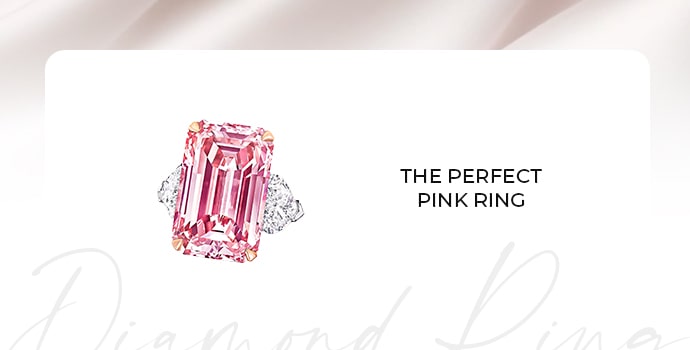
6. The Perfect Pink Ring
The Perfect Pink is an outstanding piece in the classification of rarity and allure for fancy-colored diamonds. Weighing 14.23 carats, this truly is an intense, flawless pink hue that collectors would kill to have. Its uniqueness does not only come from its striking color but also in size and clarity, i.e., it is one of the finest pink diamonds ever sold through auction.
In 2010, the Perfect Pink was sold at Christie’s in Hong Kong for $23.2 million, considered the most expensive pink diamond sold till today in Asia. It has the flawless quality of the diamond and the strong color of the perfect pink that drove the hefty price during the auction and further emphasized its exceptional value.
The Perfect Pink is an intense pink diamond, its clarity makes it more phenomenal. Diamonds of this size and color are always rare; most pink diamonds contain inclusions or imperfections. The rectangular cut brings brilliance and depth to its color such that it adds up to create the priceless perfect pink gem into luxury diamonds.
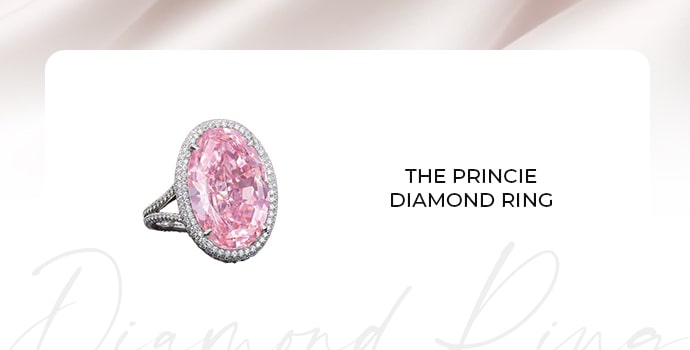
7. The Princie Diamond Ring
Princie Diamond possesses a fantastic history as one of the world’s most enormous and glorious pink diamonds. This fancy intense pink diamond weighs 34.65 carats and is valuable for its exceptional size, beautiful color, and flawless clarity.
According to some sources, it bears a royal heritage, once belonging to the Nizam of Hyderabad, one of the richest rulers in Indian history. The diamond was named after the young prince of Baroda, who saw the first presentation of the diamond in 1960. Since then, it has become a symbol of royalty and luxury.
It was sold at Christie’s auction in 2013, which makes an astonishing price of $39.3 million, the highest price a pink diamond has ever commanded, and its vivacious color, notable size, and storied history will give it a substantially enormous value. The Princie Diamond has been classified as a Type IIa diamond. It’s nearly free of impurities.
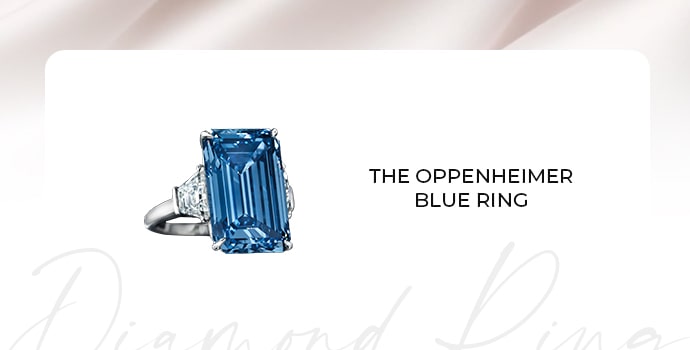
8. The Oppenheimer Blue Ring
Oppenheimer Blue is one of the most famous and expensive blue diamonds in the world. The remarkable gemstone weighs 14.62 carats, giving it extraordinary attributes that express a deep and vibrant tone of blue along with exceptional craftsmanship. It got its name from its former owner, Sir Philip Oppenheimer, who was a well-known figure in the diamond industry, due to the high level of rarity and quality the Oppenheimer Blue portrays.
The Oppenheimer Blue was sold at Christie’s auction in 2016 for a record-breaking $57.5 million, which made it the costliest blue diamond sold at auction at that time. Its sale price has cemented it as one of the most expensive diamonds in history books that have ever been sold, sought after for its vibrant blue color, a color hitherto prized as one of the rarest and most sought-after shades in the diamond world.
It falls into the rare Type IIb class, where trace amounts of boron are found, which gives the stone that bright blue color. As an emerald cut, the stone is maximized for clarity and enables this gemstone to glow in its bright color. With rarity, size, and flawless beauty, Oppenheimer Blue is certainly one of the most legendary in existence.
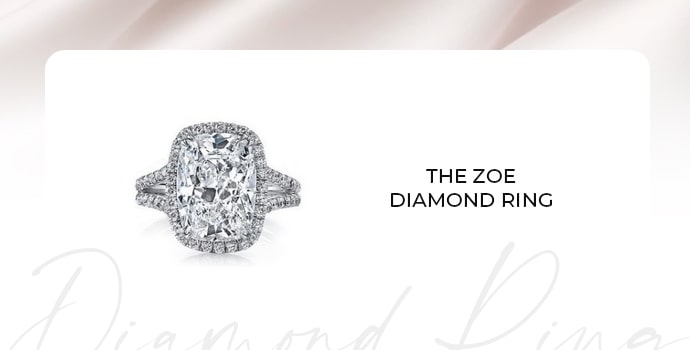
9. The Zoe Diamond Ring
Zoe Diamond is a very exceptional gemstone that has its merits in outstanding clarity and color, weighing 9.75 carats in vibrant blue. This intense, deep-hued diamond is the most spectacular blue diamond sold within this class, primarily because of its deep blue color and flawless quality.
The Zoe Diamond in 2014 was sold to Sotheby’s for $32.6 million, thereby making it the highest price paid per carat at that time for a blue diamond. Its sale highlighted the diamond’s rarity as well as the high demand for such diamonds in the luxury market.
The Zoe Diamond is a Type IIb diamond that has a minuscule amount of boron in it that makes it this mind-boggling blue- and its cushion cut enhances its brilliance even further and pops out that vivid blue hue at you. Its size, color, and clarity are what makes this so special and truly a true masterpiece, representing the epitome of luxury and elegance in the world of gemstones.
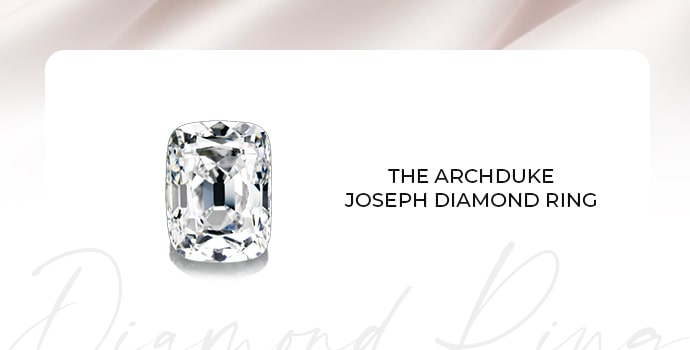
10. The Archduke Joseph Diamond Ring
The Archduke Joseph Diamond is a precious stone appreciated for its unmatched enormous size as well as historical significance and flawlessness. It has weighed about 76.02 carats, being the largest and most valuable diamond ever seen. Its color is D, and it is flawless in clarity, highlighting the exceptional qualities of this wonderful gem.
The diamond’s history alone makes it alluring. It once belonged to a member of the House of Habsburg family and then to Archduke Joseph August of Austria. This royal link has increased the luster and value of the diamond and was sold at a Christie’s auction for 21.5 million dollars in 2012 to highlight its exclusivity and demand.
The Archduke Joseph Diamond is classified as a Type IIa diamond and includes very few impurities, it is almost a pure diamond. This is, no doubt, one of the finest examples of truly high-quality gems. It is a true masterpiece in the world of diamonds by combining size, clarity, and historical significance.
Conclusion
In the world of luxury and opulence, these ten diamond rings stand as unparalleled symbols of beauty, rarity, and prestige. As we marvel at these stunning jewels, it becomes clear that they are not just treasures of the earth but enduring symbols of human achievement and luxury. Whether they grace the fingers of royalty or are held in private collections, these diamonds remind us of the timeless allure and magnificence of the world’s most extraordinary gemstones.
Fool Me Once actor Michelle Keegan has revealed that her marriage to TV star Mark Wright is no longer as eventful as it used to be.
Michelle, who rose to fame on Corrie, married former TOWIE star Mark in May 2015 at Hengrave Hall in Suffolk. Despite their high-profile status and regular red-carpet appearances, the pair have managed to maintain their privacy over the years.
Mark and Michelle have been married for nine years (Credit: Splashnews.com)
Michelle Keegan spills details about her marriage to Mark Wright
In a new interview with Closer Magazine, Michelle gave a little more insight into her marriage to Mark nine years later.
“I’m happy to have a night on the sofa with our dogs watching TV and relaxing,” she admitted, adding, “But we do still like to get dressed up and go out for dinner.”
Michelle insisted that “in the old days,” she and Mark would “go out for dinner and drinks until the early hours.” However, those days appear to be long done.
“But now, after dinner, I’ll look at my watch and say, ‘It’s 9:30 pm, we’d better get back home for bedtime! It’s a bit more boring now!’” she continued.
Michelle would rather stay at home with Mark instead of a night out (Credit: Splashnews.com)
Michelle and Mark’s luxurious home
It’s no surprise that Michelle would rather spend time at home with Mark when the pair own a £3.5 million Essex mansion.
The home features five bedrooms, a state-of-the-art gym, a sauna, an outdoor pool, and a cinema room.
While talking to The Guardian, Michelle gushed about her luxurious home with Mark.
“It still gets me emotional. Because we’ve worked really hard for it. We’ve had to make a lot of sacrifices,” she said.
“I missed lots of milestones in my life due to work. Mark went to LA and we spent months apart, which was hard. But, it’s worth it.”
Read more: Michelle Keegan reveals difficulty of living in Essex with husband Mark Wright: ‘It wasn’t easy’
So what do you think? Tell us on our Facebook page @EntertainmentDailyFix.
Travis Kelce’s “Grotesquerie” character was a stripper back in the day, but he’s now getting opportunities to bring Ed Lachlan’s past back to the present … with several male revues telling TMZ Sports they would love “Big Peter and His Banana Splitter” to make a special appearance!!
The Kansas City Chiefs superstar made his debut on the Ryan Murphy show this past week … and in one scene, his role was revealed as a former dancer at a male strip club in Juneau, Alaska, where he was “jiggling it for horny mamas coming off of cruise ships.”
I can’t wait to hear @JasonKelce reaction after this scene 🤣 pic.twitter.com/iM9d46oitI
— Travis Kelce Fan Page (@traviskelce_fan) October 3, 2024
@traviskelce_fan
Unfortunately, there weren’t any flashback scenes.
Regardless, a bunch of men-focused adult entertainment establishments started to salivate after Kelce’s Lachlan delivered the lines … and immediately thought of some one-of-a-kind opportunities for the three-time Super Bowl champ.
The folks at the famous Thunder From Down Under are willing to open their doors for Taylor Swift’s boyfriend … saying they’d LOVE to welcome him to either their Las Vegas or Nashville residency “to reenact his role from ‘Grotesquerie.'”
“I think the audience would go wild for a little NFL meets thunder magic!” co-owner Adam Steck said.
The Kings of Hustler strip club in Sin City is also pouncing on the chance to host the jock — with general manager Brittany Rose saying, “Travis Kelce can rock his banana hammock on our stage.”
“I’m sure that all the Vegas Swifties will want to catch a glimpse of what Taylor is working with behind the scenes. You know he’s given her a private show.”
The “Girls Night Out The Show” — a traveling tour of hunks — would have no problem welcoming the Banana Splitter to their stage … with their booking agent, John Johnson, saying they “would love to extend an open invitation to Travis Kelce to reprise his role as Ed Lachlan on ‘Grotesquerie’ and heat up the stage with us.”
For good measure, even the iconic Chippendales want Kelce … saying, “Travis has an open invite to wear our iconic cuffs and collars [and] join our guys onstage in Vegas”
“We’ve had many celebrity guest stars and he would be an amazing addition to the show. Our cast would put him through our Chipps boot camp for sure!”
Chances are we won’t see Kelce shake what Donna gave him — but hey, we can dream. In the meantime, hoping for a flashback on a future episode.
Non-fungible tokens (NFTs) have gained significant attention since the 2021 bull market. As unique digital assets, they are unlike any other forms of cryptocurrency or digital items. But why do people buy NFTs?
In this guide, we will explore why they buy NFTs and the main reasons behind this trend, discuss whether people are still buying NFTs, and provide answers to common questions.
Key Takeaways:
NFTs, or Non-Fungible Tokens, are one-of-a-kind digital items stored on the blockchain, that prove ownership for items like digital art, music, and collectibles, unlike regular cryptocurrencies that can be exchanged equally.People buy NFTs for ownership, supporting creators, scarcity, investment potential, use in gaming, access to exclusive content, community belonging, meme culture, and experimentation with new technology.NFTs can be purchased on various platforms such as OpenSea, Blur, Magic Eden, Super Rare, and Rarible, which serve as online marketplaces for buying, selling, and trading digital assets.
Why Do People Buy NFTs: Top 7 Reasons
1. Ownership and Collectibility
Ownership is one of the most important motivators for purchasing NFTs. People appreciate the sense of having unique and authentic items in the digital world. NFTs provide a digital certificate of authenticity that proves the buyer has the original material. This approach is comparable to collecting tangible art, rare items, or sports cards.
High-profile NFTs, such as Beeple’s “The First 5000 Days”, have sold for over $69 million, demonstrating the importance of exclusive ownership of digital assets. Also, the NBA Top Shot NFT collection, which allows users to purchase, sell, and trade legally licensed NBA memorabilia, has surpassed $1 billion in sales.
2. Supporting Creators and Artists
NFTs also allow artists to monetize their work directly. Unlike traditional models where intermediaries such as galleries or record labels take a significant cut, NFTs enable creators to sell their work with built-in royalties. This ensures they continue earning from secondary sales.
Emerging artists benefit significantly from this model, as it allows them to retain control of their work. For example, artists can receive between 5-10% in royalties every time their NFT changes hands.
3. Investment and Speculation
Many buyers view NFTs as an investment opportunity. NFTs have been known to appreciate in value, especially those tied to well-known creators or projects. Speculators purchase NFTs with the hope of selling them later at a profit.
For instance, Bored Ape Yacht Club NFTs originally sold for around $160 but later reached values upwards of $413,000, representing a massive return on investment (ROI).
4. Virtual Worlds and Gaming
NFTs have taken the gaming industry by storm. In-game assets, characters, and even virtual land can now be represented as NFTs, allowing gamers to buy, sell, and trade assets across different platforms. This introduces real-world value into virtual worlds. Gamers can now own rare items that they can sell for profit or use to enhance their gaming experience.
The use of NFTs in games like Axie Infinity, where players earn tokens by battling digital pets, has created new income streams for many players worldwide.
5. Access to Exclusive Experiences
Owning an NFT can unlock exclusive access or privileges, making it more than just a digital asset. Many NFTs offer additional perks, such as access to special events, VIP treatment, or early product releases.
For example, Kings of Leon released an NFT that provided holders with unique audiovisual experiences and even front-row seats at future concerts.
6. Philanthropy and Social Causes
NFTs have also been used as a vehicle for supporting charitable causes. Many creators and organizations have minted NFTs specifically to raise funds for various philanthropic efforts.
In 2022, UNICEF launched a collection of NFTs to fund initiatives for schools in developing countries, showing how NFTs can go beyond financial speculation and serve as tools for social good.
7. Community and Belonging
In the NFT market, many projects build strong communities where buyers feel a sense of belonging. These communities often hold events or meetups, such as Bored Ape Yacht Club’s “ApeFest”, which attracts hundreds of attendees. The community aspect makes NFT ownership feel more like being part of an exclusive club.
Are People Still Buying NFTs?
Yes, despite some fluctuations in the market, people are still purchasing and trading NFTs. However, the overall demand has become more selective. The initial craze has cooled down, and buyers now focus more on quality and long-term value. Interest remains strong in niche areas such as digital artwork, gaming, and virtual real estate.
Based on our 2024 NFT research report, 96% of NFTs have become inactive. On average, an NFT lasts for 1.14 years, which is 2.5 times shorter than the lifespan of typical cryptocurrency projects. The year 2023 recorded the most NFT failures, with almost one-third of them becoming inactive during that time.
However, as technology evolves, the use cases for NFTs continue to expand, which helps maintain a level of interest in the market. While it may not be as explosive as it once was, NFTs are still relevant. You can also check out our guide on the best NFTs to buy.
Conclusion
To sum up, people buy NFTs for different reasons, including the chance to invest and a personal interest in digital collectibles. Although the initial excitement around NFTs has decreased, many still find value in owning these special items.
NFTs provide a mix of digital ownership, exclusivity, and new ideas, which attract various buyers. Whether for making money, gaining social status, or joining digital communities, the hype surrounding NFTs is likely to continue in some way.
FAQs
Why would a rich person buy NFTs?
Wealthy individuals often buy NFT projects for several reasons. They may view NFTs as a new investment opportunity, hoping for future appreciation. Some may also purchase NFTs as a way to support artists or showcase their digital collection, similar to owning rare physical art. For others, NFTs serve as a status symbol in the digital world.
What are people using NFTs for?
People use NFTs for various purposes. Some buy them to collect unique digital art or virtual items, while others use NFTs in gaming or virtual spaces. Additionally, NFTs can provide access to exclusive events, communities, or content, making them valuable for more than just ownership. Buyers also view NFTs as investment opportunities, hoping their value will increase over time.