Metaverse

Home Metaverse Page 83

Coinbase Ventures-Backed Supra Offers $1M Bounty to Beat Its Parallel EVM Execution Engine

0
Coinbase Ventures-Backed Supra Offers M Bounty to Beat Its Parallel EVM Execution Engine


Sponsored

Stories and Reviews


November 14, 2025

Coinbase Ventures-Backed Supra Offers $1M Bounty to Beat Its Parallel EVM Execution Engine

Zug, Switzerland, November 14th, 2025, Chainwire

Supra, the first Layer-1 blockchain built for Automatic DeFi (AutoFi) via full vertical integration, is proud to announce an expansion of its SupraEVM Beta Bounty. CEO and Co-Founder Joshua Tobkin has committed up to $1 million worth of his own $SUPRA tokens as a personal bounty to any developer or research team that can demonstrate a faster, verifiably correct EVM-parallel execution engine than SupraBTM, the core execution engine powering SupraEVM.

The personal bounty, touted as the SupraEVM Speed Challenge, is offered in addition to an ongoing $40,000 USDC performance-based reward offered by the foundation. To date, no participating team has surpassed the benchmarks established by SupraBTM, which remains the top performer in public tests against all known EVM-parallel solutions, including Monad, one of the more optimized projects in the high-performance EVM space.

“I am betting $1 million of my own tokens that no one can beat Supra,” said Co-Founder and CEO Joshua Tobkin. “Supra is built on transparency. We claim to be the fastest, so we are aiming to prove it in public. And if someone can demonstrate a superior execution engine under clear conditions, I will honor that outcome directly.”

Addressing the Core Bottleneck in Blockchain Scalability

While consensus protocols, data availability layers, and oracle infrastructure have all seen significant improvements in recent years, transaction execution remains a limiting factor for scaling decentralized applications. Safe and deterministic parallel execution within the Ethereum Virtual Machine (EVM) is particularly challenging, yet essential for enabling low-latency DeFi, real-time games, and AI-driven autonomous agents.

SupraEVM, powered by SupraBTM (Block Transactional Memory), addresses this challenge with a conflict-specification aware architecture that reduces overhead, anticipates transaction collisions, and schedules execution based on statically analyzed dependency graphs.

Benchmark Results: Superior Performance Over Monad

SupraBTM has been benchmarked on 10,000 Ethereum mainnet blocks and tested head-to-head against Monad’s 2-Phase Execution (2PE) approach using identical commodity hardware (16-core AMD 4564P CPU with 192 GB RAM). 

Results showed SupraBTM delivering:

1.5 to 1.7 times higher throughput than Monad across various workloads
~4 to 7 times speedup over traditional sequential EVM execution
Consistent performance under high-conflict conditions typical in DeFi and arbitrage use cases

The engine’s design avoids the need for speculative execution and frequent rollbacks, instead relying on a deterministic scheduling model that is adaptable across varying thread configurations.

“Supra was built from the ground up to integrate execution, consensus, and core infrastructure components into a cohesive framework,” said Jon Jones, CBO and Co-Founder at Supra. “The result is an architecture that not only delivers performance, but does so in a way that is reproducible and testable against any known parallel EVM engine available today.”

Challenge Guidelines and Structure

The $1 million token commitment is available to developers or research teams who can produce a faster EVM execution engine under defined test conditions. Entries must be open source, verifiable, and reproducible. 

The full criteria include:

Processing at least 100,000 consecutive Ethereum mainnet blocks
Executing on commodity hardware with no more than 16 CPU cores
Achieving at least a 15 percent performance improvement across 4, 8, and 16 thread configurations
Publishing benchmark results publicly and submitting to community and independent verification
Code must be released under an open-source license and remain accessible for audit

Participants may choose to claim the reward directly, or engage further with Supra’s engineering organization to collaborate. Token rewards are from Tobkin’s personal allocation, unlocking in 2027 and vesting over two years. The prize is independent of Supra’s core operations or treasury.

“This challenge is focused on the core technical issue that continues to constrain the EVM,” Tobkin added. “The objective is to find or validate the most performant execution engine possible. If someone is able to build a better system than what we have achieved at Supra, the industry should recognize it and benefit from it.”

For full technical documentation, rules, and binaries for the SupraEVM Beta Bounty, users can visit the bounty’s dedicated docs page, with in-depth details of the $1M SupraEVM Speed Challenge available on its dedicated landing page. Supra’s technical team has provided a deep-dive benchmark report comparing SupraBTM and Monad available on their website, while developers interested in early SupraEVM access can join the waitlist here.

About Supra

Supra is the first chain built for Automatic DeFi (AutoFi), a novel self-operating automated financial system that also serves as the perfect framework for crypto AI Agents, built upon its vertically integrated Layer-1 blockchain with built-in high-speed smart contracts, native price oracles, system-level automation and bridgeless cross-chain messaging.

Supra’s vertical stack unlocks all-new AutoFi primitives that can generate fair recurring protocol revenue and redistribute it across the ecosystem, reducing reliance on inflationary block rewards entirely over time. This stack also equips onchain AI Agents with all the tools they need to run a wide variety of powerful DeFi workflows for users automatically, autonomously, and securely.

Contact

Press ManagerSupra[email protected]

Disclaimer

In line with the Trust Project guidelines, please note that the information provided on this page is not intended to be and should not be interpreted as legal, tax, investment, financial, or any other form of advice. It is important to only invest what you can afford to lose and to seek independent financial advice if you have any doubts. For further information, we suggest referring to the terms and conditions as well as the help and support pages provided by the issuer or advertiser. MetaversePost is committed to accurate, unbiased reporting, but market conditions are subject to change without notice.

About The Author


Chainwire is the top blockchain and cryptocurrency newswire, distributing press releases, and maximizing crypto news coverage.

More articles

Chainwire is the top blockchain and cryptocurrency newswire, distributing press releases, and maximizing crypto news coverage.




Source link

Bitcoin Dips Below $95K: Bearish Signals Emerge, But Resilience Suggests A ‘Wait And See’ Approach

0
Bitcoin Dips Below K: Bearish Signals Emerge, But Resilience Suggests A ‘Wait And See’ Approach


In Brief

Bitcoin has fallen below $95,000 amid broader crypto and equity declines, prompting caution as analysts debate whether a bear phase is beginning or support levels will hold.

Bitcoin Dips Below $95K: Bearish Signals Emerge, But Resilience Suggests A ‘Wait And See’ Approach

Price of Bitcoin has fallen below the $95,000 mark and is currently trading at $94,958, reflecting a decline of over 7.37% in the past 24 hours, according to CoinMarketCap data. During this period, Bitcoin reached a high of $103,143 and a low of $94,714. 

The total market capitalization of cryptocurrencies stands at $3.21 trillion, down 7.12% over the last day, while the 24-hour trading volume across digital assets has increased by 46.11% to $257.25 billion. 

Data from CoinGlass indicates that out of $1.37 billion in liquidations, $1.23 billion came from long positions. US spot Bitcoin exchange-traded funds (ETFs) experienced $869.9 million in outflows on Thursday, marking their second-largest withdrawals on record. The Fear and Greed Index has dropped to 16 points.

Bitcoin is not alone in experiencing losses; other major cryptocurrencies, including Ethereum and Solana, have fallen approximately 10%, while crypto-related equities are also under pressure. The tech-heavy Nasdaq index has declined 2.30%, and the S&P 500 has fallen 1.66% at the time of reporting. 

These movements have led market participants to express concerns about the potential onset of a bearish phase, with analysts offering a range of forecasts from negative to neutral.

Is Bitcoin Entering A Bear Phase Or Awaits Upside Movement?

Analyst Axel Adler Jr. noted that the cryptocurrency market is approaching a bear phase based on three key institutional metrics and suggested that Bitcoin could fall to $74,000. 

He highlighted $87,000 and $74,000 as critical support levels, emphasizing that the current price is nearly 12% below the 200-day moving average of $110,486, which by BlackRock and Goldman Sachs standards signals a bear trend. 

Axel Adler Jr. also pointed to a pattern of lower highs and lows on the daily chart since November 13th. An imminent moving-average crossover, known as a “death cross,” is forming as the gap between the 50-day SMA ($110,972) and the 200-day SMA ($110,486) narrows to $486 (0.44%), potentially activating the third bearish metric used in institutional models. 

Historically, such death crosses have signaled the end of bull cycles, leading to corrections in 2014, 2017, and 2021, though they have also produced false bearish signals in September 2023, August 2024, and April 2025.

Meanwhile, CEO of CryptoQuant, Ki Young Ju, commented on the situation, stating, “Those who entered Bitcoin 6 to 12 months ago have a cost basis near 94K. Personally, I do not think the bear cycle is confirmed unless we lose that level. I would rather wait than jump to conclusions.” 

JPMorgan analysts, led by Managing Director Nikolaos Panigirtzoglou, noted that Bitcoin’s downside appears limited, with a support level around $94,000, which aligns with the estimated production cost of the cryptocurrency. 

Furthermore, Wintermute analysts observed that Bitcoin continues to correlate with equities but is increasingly sensitive to Nasdaq losses rather than gains, a behavior typical of the final phases of a market correction. This asymmetry suggests exhaustion rather than euphoria, indicating that Bitcoin’s price has remained relatively resilient despite the current dynamics.

The current market conditions suggest a “wait and see” approach may be prudent. While Bitcoin has experienced notable declines, there are also signs of resilience. Adopting a patient, observant stance allows investors to monitor how the situation develops before making decisive moves.

Disclaimer

In line with the Trust Project guidelines, please note that the information provided on this page is not intended to be and should not be interpreted as legal, tax, investment, financial, or any other form of advice. It is important to only invest what you can afford to lose and to seek independent financial advice if you have any doubts. For further information, we suggest referring to the terms and conditions as well as the help and support pages provided by the issuer or advertiser. MetaversePost is committed to accurate, unbiased reporting, but market conditions are subject to change without notice.

About The Author


Alisa, a dedicated journalist at the MPost, specializes in cryptocurrency, zero-knowledge proofs, investments, and the expansive realm of Web3. With a keen eye for emerging trends and technologies, she delivers comprehensive coverage to inform and engage readers in the ever-evolving landscape of digital finance.

More articles


Alisa, a dedicated journalist at the MPost, specializes in cryptocurrency, zero-knowledge proofs, investments, and the expansive realm of Web3. With a keen eye for emerging trends and technologies, she delivers comprehensive coverage to inform and engage readers in the ever-evolving landscape of digital finance.


More articles


Source link

Turning RWAfi Into Real Payments the World Actually Uses with WeFi

0
Turning RWAfi Into Real Payments the World Actually Uses with WeFi


In Brief

Michael Batuev sees crypto going mainstream when people stop noticing they’re using it, and in this chat he explains why RWAfi is booming and how WeFi plans to make everyday crypto effortless.

Former Visa Payments Executive Michael Batuev Joins WeFi To Drive Global Payments Expansion

What stands out immediately in Michael Batuev’s perspective is his simple prediction: crypto will go mainstream the moment people stop noticing they’re using it. In this conversation, the former Visa Innovations leader — now Global Head of Payments at WeFi — breaks down why RWAfi is surging in 2025. Additionally, what’s still holding back everyday crypto payments, and how WeFi aims to turn tokenized assets into something people can actually spend, send, and use without thinking about blockchains at all.

RWAfi has become one of the hottest narratives of 2025. What’s driving this momentum?

High interest rates made real yield attractive, pushing capital toward tokenized treasuries, credit and money-market products.

Institutions finally moved on-chain — asset managers, banks and fintechs started issuing and settling real-world assets directly via blockchain.

DeFi requires higher-quality collateral, provides stability, transparency and lower liquidation risk.

Regulatory clarity improved, especially in the EU and APAC, creating legally compliant frameworks for tokenized assets.

Cross-border payments and treasury operations went on-chain

What do you see as the biggest barrier between crypto and everyday payments today — regulation, technology, or mindset?

The biggest barrier between crypto and everyday payments isn’t just one factor — it’s the intersection of all three: regulation, technology and mindset.

Regulation is the biggest blocker, technology is catching up quickly, and mindset will shift once the first two are solved.

How can crypto payments move beyond speculation and actually create tangible financial inclusion?

Crypto payments can drive real financial inclusion when they stop being investment products and start solving practical problems. The shift happens in three ways:

Removing barriers to basic financial services;

Enabling low-cost cross-border money movement;

Building new rails for small business and digital workers.

Crypto payments create inclusion not by replacing banks, but by giving people and businesses access to global money movement that’s faster, cheaper and independent of local financial limits.

Many RWAfi projects focus on yield — but how can this space also improve utility in payments?

RWAfi can turn payments from a passive transfer into a dynamic financial layer — with stable value, real liquidity and embedded credit — making global money movement faster, cheaper and more useful than today’s banking rails.

WeFi can play a key role in bringing RWAfi utility into everyday payments by combining tokenized real-world assets with a full payments stack — cards, IBAN accounts, stablecoin rails and global on/off-ramp infrastructure. By giving users access to stable, yield-generating assets on-chain while enabling them to spend, send and settle funds instantly across borders, WeFi turns RWA-backed value into a practical payment tool. This bridges the gap between traditional finance and crypto, making real yield, liquidity and credit usable for merchants, freelancers and consumers in their daily financial lives.

Many projects talk about bridging TradFi and DeFi. What does that bridge actually look like in practice?

It looks like tokenized deposits and treasuries that settle 24/7, on/off-ramp infrastructure integrated directly into wallets, compliant KYC/KYT layers, and payment products — like cards and IBANs — that let users spend or receive on-chain value in the real world. We believe that DeFi’s speed and programmability are usable within the legal and operational frameworks of traditional finance.

In your view, what’s the missing piece that would make stablecoin or tokenized payments mainstream in Europe or APAC?

The missing piece is a fully compliant, consumer-grade on/off-ramp integrated directly into everyday payment tools. Europe and APAC don’t need new stablecoins — they need a regulated way for users and businesses to move between bank accounts, cards and tokenized value without friction. Today the rails are fragmented: KYC is duplicated, issuers block crypto relate, and settlement depends on legacy banking hours. Once a unified, licensed layer exists that makes stablecoin balances spendable through cards, IBANs or local payment schemes — just as easily as euros or yen — stablecoin and tokenized payments will move from niche to mainstream.

How do you see regulatory frameworks evolving to support real-world crypto payments without killing innovation?

For everyday crypto users in Europe and Asia, the biggest change is that the rules have finally become clearer and more user-friendly. In Europe, the new MiCA framework now sets one unified standard for all crypto services, making licensed exchanges and stablecoins safer and more trustworthy. In Asia, countries like Japan and South Korea introduced clearer laws separating payments, stablecoins and investment tokens, which means fewer surprises from banks and more reliable access to on/off-ramps. Overall, crypto has become more regulated, less risky, and much easier to use in day-to-day life.

How will real-world payments evolve once RWAs, stablecoins, and CBDCs all coexist?

Stablecoins will power day-to-day consumer spending, CBDCs will handle regulated settlement between banks and governments, and RWA tokens will provide the liquidity, yield and credit that sit underneath those payment flows. Instead of today’s fragmented systems, money will move on interoperable rails where value can be held, transferred, financed or settled instantly — across borders, currencies and platforms. In practice, this means faster payments, lower costs, built-in credit, and a financial system.

Do you think we’re moving toward a multi-asset world where users don’t even realize they’re transacting on-chain?

Yes — we’re absolutely moving toward a multi-asset world where users won’t even notice what rail their payment is using. And this is exactly what we’re building at WeFi. The future of payments is abstraction: our platform lets users hold stablecoins or tokenized assets, but pay, transfer or cash-out as simply as using a normal card or account. Behind the scenes, WeFi automatically handles on-chain settlement, FX, liquidity and compliance, choosing the fastest and most efficient rail — whether it’s stablecoins, RWAs or traditional fiat. When the rails disappear from the user experience and the complexity is handled by the platform, that’s when crypto payments truly become mainstream — and that’s the gap WeFi is closing.

Finally, what does “real-world crypto adoption” look like to you — and what will it take to get there?

Real-world crypto adoption means people using digital assets without thinking about blockchains at all — getting paid, sending money, spending with a card, or settling cross-border instantly, simply because it’s faster and cheaper than the old system. To get there, we need three things: 

clear regulation so banks and issuers feel safe; 

consumer-grade payment rails that abstract away the complexity; 

real utility like stable value, on/off-ramps and embedded credit. 

Once that foundation is in place, crypto stops being an investment niche and becomes invisible infrastructure. And this is exactly where WeFi with our DeoBank concept is focused — turning on-chain value into everyday payments that feel as simple as using your normal card or bank account.

Disclaimer

In line with the Trust Project guidelines, please note that the information provided on this page is not intended to be and should not be interpreted as legal, tax, investment, financial, or any other form of advice. It is important to only invest what you can afford to lose and to seek independent financial advice if you have any doubts. For further information, we suggest referring to the terms and conditions as well as the help and support pages provided by the issuer or advertiser. MetaversePost is committed to accurate, unbiased reporting, but market conditions are subject to change without notice.

About The Author


Victoria is a writer on a variety of technology topics including Web3.0, AI and cryptocurrencies. Her extensive experience allows her to write insightful articles for the wider audience.

More articles


Victoria d’Este


Victoria is a writer on a variety of technology topics including Web3.0, AI and cryptocurrencies. Her extensive experience allows her to write insightful articles for the wider audience.


Source link

Top 10 Crypto Analytics Platforms For Investors In 2025

0
Top 10 Crypto Analytics Platforms For Investors In 2025


In Brief

In 2025, crypto investing relies on advanced analytics platforms like Nansen, Glassnode, Messari, and others to provide data-driven insights, track on-chain flows, and anticipate market trends, moving beyond hype and intuition.

Top 10 Crypto Analytics Platforms For Investors In 2025

As crypto matures into a multi-trillion-dollar ecosystem, investors can no longer rely on Twitter hype or gut feeling to make decisions. The 2025 market is defined by data — from on-chain flows and sentiment tracking to AI-driven predictive models. 

Today’s leading crypto analytics platforms have evolved into full-fledged intelligence engines, helping traders and funds navigate volatility, spot emerging trends, and identify value before the market does.

Here are the ten most powerful crypto analytics tools shaping investor decision-making in 2025.

Top 10 Crypto Analytics Platforms For Investors In 2025

Alt cap: Nansen logo showing a simple, abstract teal shape with four rounded, intersecting loops forming a symmetrical design on a white background.

Best for: Tracking institutional wallets, NFTs, and DeFi capital flows.

Nansen has become the go-to tool for identifying what “smart money” is doing. By clustering millions of wallets and tagging them according to activity — such as “VC funds,” “NFT whales,” or “active traders” — it gives investors a powerful edge in following capital trends.

Investors use Nansen to track early movements in DeFi protocols, whale behavior, and token accumulation trends before public listings. The platform’s Token God Mode lets users dive into holder demographics and flow patterns.

Nansen offers a free plan with limited dashboards and premium tiers, offering full DeFi and NFT analytics. 

Top 10 Crypto Analytics Platforms For Investors In 2025

Alt cap: Glassnode logo showing a lowercase white letter g centered on a solid black background.

Best for: Market cycle analysis and Bitcoin fundamentals.

Glassnode has long been the backbone of on-chain analytics. Its advanced indicators — like MVRV Ratio, Net Unrealized Profit/Loss (NUPL), and Realized Cap HODL Waves — help investors understand long-term holder conviction and price cycle momentum.

Institutional desks use Glassnode to identify accumulation phases and potential market reversals. It’s widely cited in reports by firms like ARK Invest and Bloomberg Intelligence.

Glassnode offers a free plan with basic metrics and paid tiers for access to more complex data and API support.

Top 10 Crypto Analytics Platforms For Investors In 2025

Alt cap: Messari logo showing a white geometric logo with three vertical shapes on a blue background, forming an abstract M in the center.

Best for: Deep token research, governance analysis, and compliance-grade data.

Messari bridges the gap between Bloomberg Terminal and crypto. Its dashboards give investors access to token fundamentals, DeFi project financials, and market trends — all tied to verified data sources.

It’s especially valued for Messari Governor, which tracks DAO proposals and treasury activity, helping investors assess protocol governance health. Institutional users leverage its Messari Enterprise for due diligence and regulatory compliance.

Messari offers a free tier for general insights and a Pro plan for full access.

Top 10 Crypto Analytics Platforms For Investors In 2025

Alt cap: Santiment logo showing a bold black letter S is centered between two solid black dots inside a white circle with a light gray border.

Best for: Sentiment and behavioral analysis.

Santiment focuses on the human side of markets — analyzing crowd sentiment, social trends, and developer activity. Investors use its “social dominance” metric to spot hype cycles and corrections before they occur.

By combining on-chain data with social chatter from platforms like Telegram, Reddit, and X, Santiment’s analytics often reveal early divergence between price and sentiment.

Free + premium plans allow retail investors to incorporate sentiment and dev data into their decision-making; premium gives real-time feeds and API access.

Sentora (Formerly IntoTheBlock)

Top 10 Crypto Analytics Platforms For Investors In 2025

Alt cap: Sentora logo showing a stylized white outline of a centaur drawing a bow, set against a solid blue background, with a registered trademark symbol near the hind legs.

Best for: Data-driven trading insights.

Sentora uses machine learning to interpret blockchain data into actionable metrics. Its dashboards highlight everything from “In/Out of the Money” ratios to holder concentration and exchange flow trends — giving investors context on token risk and liquidity.

For investors, that means getting digestible signals rather than raw charts. It supports DeFi & NFT tracking as well — valuable for modern portfolios.

The platform integrates directly with exchanges like Binance and OKX, making it ideal for active traders.

Use this when you want a full-stack view of an asset: who holds it, where funds are flowing, what derivative positioning looks like. It helps with both discovery and risk management.

Sentora offers some free data access via integrations but charges for institutional analytics and API services.

Top 10 Crypto Analytics Platforms For Investors In 2025

Alt cap: White CryptoQuant logo and text on a solid purple background. The logo features two abstract circular shapes to the left of the company name.

Best for: Exchange reserves and miner behavior tracking.

CryptoQuant has become indispensable for Bitcoin traders. Its real-time data on exchange inflows/outflows, miner selling pressure, and stablecoin reserves helps investors gauge market sentiment shifts before they play out.

Many analysts credit CryptoQuant alerts for signaling early 2021 and 2022 market pivots. Its clean dashboard and custom alerts make it suitable for both beginners and professional traders.

When you’re stressed about exchange inflows or miner pressure (which often precede corrections), CryptoQuant gives metrics many funds use to time entries or exits.

Free + premium plans are both available, but paying for access to exchange and miner data can provide timing advantage.

Top 10 Crypto Analytics Platforms For Investors In 2025

Alt cap: Coin Metrics logo showing a minimalist logo featuring the letters C and M in bold, dark blue font, with a diagonal, lighter blue line separating the letters. The design is set against a light gray background.

Best for: Institutional-grade analytics and historical accuracy.

Coin Metrics stands out for its precision and transparency. It’s the preferred provider for financial firms like Fidelity Digital Assets and VanEck because of its focus on data integrity and methodology.

When you’re building models or want reliable foundational data (node counts, network fees, chain health) to supplement your trading or investment dashboards, Coin Metrics is a solid source.

The platform’s Network Data and Market Data Feed products power professional-grade risk models. 

Investors rely on its “Free Network Data” for essential metrics and can subscribe to premium enterprise APIs for deeper insights.

Top 10 Crypto Analytics Platforms For Investors In 2025

Alt cap: Token Terminal logo. A lowercase black letter t is followed by a thick horizontal teal line on a light gray background, resembling a terminal or command prompt symbol.

Best for: Valuation and financial analysis of crypto protocols.

Token Terminal translates decentralized projects into traditional financial terms — tracking revenue, price-to-sales ratios, and developer activity. It’s widely used by analysts who treat DeFi projects like startups with financial statements.

Its intuitive charts help investors find undervalued protocols or identify sustainability issues in tokenomics.

If you treat tokens like equities and want to evaluate their fundamentals rather than just hype, this platform gives you an edge.

The platform provides a free plan for browsing key metrics and a Pro plan for deeper analytics and CSV exports.

Top 10 Crypto Analytics Platforms For Investors In 2025

Alt cap: Dune logo featuring a circle split diagonally into orange (top left) and dark blue (bottom right) next to the word “Dune” in bold black text on a light background.

Best for: Custom dashboards and open data exploration.

Dune lets anyone build SQL-powered dashboards that pull directly from blockchain data — creating a community-driven analytics ecosystem. For investors, it’s a goldmine of user-generated insights, from NFT sales breakdowns to DeFi protocol comparisons.

Because all dashboards are public, investors can leverage community intelligence without coding from scratch.

Dune offers free access for reading dashboards and Pro tiers for advanced querying and private data visualization. It’s become a research staple for journalists and VC analysts alike.

Top 10 Crypto Analytics Platforms For Investors In 2025

Alt cap: DefiLlama logo showing a stylized white llama head on a blue circular background, next to the bold, black text “DefiLlama.

Best for: TVL tracking and multi-chain comparisons.

DefiLlama remains the most trusted source for Total Value Locked (TVL) and cross-chain analytics. Its clean UI lets investors compare liquidity and yield opportunities across protocols and chains — from Ethereum to Solana.

In 2025, the platform added NFT and bridge analytics, expanding its reach beyond DeFi. 

Investors appreciate its fully free, ad-supported model, making professional-level insights accessible to everyone.

Overall, when you’re trying to assess which chains are gaining traction or identifying cross-chain liquidity shifts, DefiLlama is essential. It’s become a staple in protocol-allocation decisions.

Industry commentators frequently call DefiLlama the CoinMarketCap of DeFi.

Disclaimer

In line with the Trust Project guidelines, please note that the information provided on this page is not intended to be and should not be interpreted as legal, tax, investment, financial, or any other form of advice. It is important to only invest what you can afford to lose and to seek independent financial advice if you have any doubts. For further information, we suggest referring to the terms and conditions as well as the help and support pages provided by the issuer or advertiser. MetaversePost is committed to accurate, unbiased reporting, but market conditions are subject to change without notice.

About The Author


Alisa, a dedicated journalist at the MPost, specializes in cryptocurrency, zero-knowledge proofs, investments, and the expansive realm of Web3. With a keen eye for emerging trends and technologies, she delivers comprehensive coverage to inform and engage readers in the ever-evolving landscape of digital finance.

More articles


Alisa, a dedicated journalist at the MPost, specializes in cryptocurrency, zero-knowledge proofs, investments, and the expansive realm of Web3. With a keen eye for emerging trends and technologies, she delivers comprehensive coverage to inform and engage readers in the ever-evolving landscape of digital finance.


More articles


Source link

Disney+ is Radically Changing with AI: Users Will Now Be Able to Produce Disney Content

0
Disney+ is Radically Changing with AI: Users Will Now Be Able to Produce Disney Content


Disney+ is preparing for a major transformation with AI-powered user-generated content, gamified experiences, and a partnership with Epic Games. The new features announced by Bob Iger and Disney’s AI strategy are under the microscope.

Disney CEO Bob Iger announced at today’s investor meeting that a major transformation is on the way for Disney+. The platform will expand with new AI-powered features and offer subscribers the ability to produce Disney-themed content.

Interactive Viewing Experience with Artificial Intelligence

Iger stated that AI will bring a much more interactive user experience to Disney+. According to The Hollywood Reporter, the CEO said users will be able to create short, Disney-themed content and watch other users’ shares. Thus, the doors will open for an era of user-generated content (UGC) on the platform.

New Gamified Experiences with Epic Games Collaboration

Disney+ is preparing to expand its existing partnership with Epic Games. The collaboration, strengthened by themed seasons like Star Wars and The Simpsons in Fortnite, will now be reflected on Disney+. New interactive content with a gaming feel will be added to the platform.

Iger, recalling the need for a quick fix after the AI-voiced Darth Vader character produced inappropriate expressions during Fortnite’s Star Wars season, emphasized the importance of using such technologies carefully.

The Biggest Technological Innovation Since 2019

Iger described these additions as the “biggest and most comprehensive change in terms of product and technology” since Disney+’s 2019 launch. On the studio front, Disney is moving both ambitiously externally and cautiously internally regarding AI.

Hollywood’s AI Lawsuits and Disney’s Stance

Disney, along with other giant studios like Universal and Warner Bros., is involved in lawsuits against AI companies like Midjourney and MiniMax. The reason: the unauthorized reproduction of copyrighted characters using artificial intelligence.

However, the company is also exploring the use of AI in its own content. According to a Wall Street Journal report in August, Disney executives attempted to utilize AI in the live-action Moana adaptation and Tron: Ares projects, but these ideas were shelved due to copyright and potential public backlash.

Copyright Negotiations Continue, but Public Concern Persists

Iger said in his statement today that they are having “productive discussions” with some AI companies but did not specify which ones. He stated their goal is to reach an agreement that will protect Disney’s intellectual property.

Public reaction, however, remains a big question mark. Disney’s subsidiary Marvel Studios received intense criticism in 2023 for the AI-generated opening credits of the series Secret Invasion. Allegations of AI traces in the posters for the Fantastic Four: First Steps movie earlier this year led to a similar reaction.

Disney in the Shadow of Public Relations Crises

Disney has recently been experiencing a loss of public trust due to some political debates and controversial decisions. The company faced a significant boycott wave, especially after the temporary removal of Jimmy Kimmel following his comments about the death of right-wing activist Charlie Kirk.

Will “AI videos with Grogu and Spider-Man” Calm the Controversy?

Disney is preparing to test a new era by allowing users to create short, AI-powered videos with beloved characters like Grogu and Spider-Man. Will this innovation be enough to regain the trust the platform has lost? The company aims to get the answer soon.

You Might Also Like;

Follow us on TWITTER (X) and be instantly informed about the latest developments…


Source link

Beyond the Scalpel: How AR and VR Are Transforming The World Of Surgery

0
Beyond the Scalpel: How AR and VR Are Transforming The World Of Surgery


First impressions matter!

A transformation is unfolding in operating rooms across the world, but it doesn’t begin with a scalpel. It begins with a headset.

Across hospitals and universities, surgeons and students are stepping into immersive environments where every movement, incision, and reaction feels real—yet no patient is ever at risk. This is the new era of surgical training powered by augmented and virtual reality, where precision and confidence are built long before the first real operation begins.

A new way to learn surgery

For decades, surgical training followed a traditional model: observe, assist, and eventually perform. Opportunities were limited, feedback was subjective, and progress depended heavily on experience and mentorship.

Immersive simulation is changing that dynamic.

In a virtual environment, trainees can practice a procedure repeatedly until it becomes second nature. Every motion is captured and analysed, offering immediate feedback on accuracy, timing, and technique. Errors become opportunities for improvement rather than risks to patient safety.

With augmented and mixed reality, digital anatomy and imaging data can be layered directly over the real world. This allows trainees and practicing surgeons alike to visualize hidden structures and plan their approach with unprecedented clarity.

Inside the immersive operating room

Picture a young surgeon wearing a lightweight headset in an empty room. Before her appears a life-sized 3D model of the human heart, beating rhythmically. She can rotate it, explore its chambers, and simulate a complex procedure using realistic haptic feedback. Every movement is tracked, every cut analysed.

If she makes an error, the system highlights it instantly and suggests corrections. Each session generates a record of performance, showing steady progress over time.

This is more than practice; it is a digital rehearsal space where learning becomes active, measurable, and data-driven. Experienced surgeons use the same environments to refine techniques or plan intricate cases before entering the real operating room.

The technology driving the change

Several technologies are working together to make this shift possible:

Virtual Reality (VR) creates fully immersive operating environments where users interact with 3D anatomy and instruments.Augmented Reality (AR) overlays digital data such as anatomy, imaging, or guidance cues onto the physical field of view.Mixed Reality (MR) enables realistic 3D holograms to appear in the real world, blending physical and digital interaction.Haptic Feedback Systems simulate tactile sensations—from the softness of tissue to the resistance of bone.Artificial Intelligence (AI) monitors performance, recognizes errors, and provides tailored feedback.3D Modelling and Digital Twins recreate patient-specific anatomies from scans for preoperative visualization.

Together, these technologies make surgical learning repeatable, precise, and risk-free.

Transforming the learning curve

Immersive training has proven far more effective than conventional methods. Repeated virtual practice builds muscle memory and cognitive understanding without the constraints of operating rooms or cadaver labs.

Trainees can experience rare or complex cases that would be difficult to access otherwise. Every repetition refines their judgment and control, accelerating the path from novice to expert.

For institutions, it means consistent, measurable learning outcomes. For healthcare systems, it means greater efficiency and fewer complications. For surgeons, it means mastery achieved through experience that feels real, yet carries no risk.

How patients benefit

The advantages extend well beyond training. When surgeons can rehearse procedures in a detailed virtual environment, they enter the operating room more confident and precise. Operations are often shorter, with fewer complications and faster recovery times.

Patients also benefit directly from immersive visualization. Using AR and 3D models, doctors can guide patients through their own anatomy and explain planned procedures in a clear, visual way. This helps patients understand their treatment, reduces anxiety, and strengthens trust between doctor and patient.

A safer, smarter future

The rise of AR and VR in surgical training marks a turning point in medical education. It shifts learning from passive observation to active experience, from subjective assessment to data-driven insight. It ensures that every surgeon, regardless of location, can access high-quality, repeatable, and safe training.

As immersive technologies continue to evolve, they are becoming an integral part of modern healthcare not as novelties, but as essential tools that elevate skill, safety, and confidence in surgical practice.

TILTLABS- Enabling healing through innovation

At TILTLABS, we believe the future of healthcare lies in experiences that merge technology with human capability. By combining augmented and virtual reality with advanced visualization, we help medical professionals and educators create safer, smarter, and more effective ways to learn and heal.

Because the best way to prepare for the future of medicine is to practice it before it happens.

The post Beyond the Scalpel: How AR and VR Are Transforming The World Of Surgery appeared first on TILTLABS.


Source link

Top 8 AI Voice Cloning Tools: Copy Your Own Voice (2025 Review)

0
Top 8 AI Voice Cloning Tools: Copy Your Own Voice (2025 Review)


It used to be pure science fiction: creating a perfect, digital copy of your own voice. Today, it’s a reality available to everyone.

AI voice cloning is one of the most powerful and personal technologies to emerge in recent years. You can “train” an AI on a short recording of your voice, and it will be able to read any text you type with your unique tone, pacing, and emotion.

Why would you do this?

For Content Creators: Fix mistakes in a podcast or video without re-recording.For E-Learning: Narrate entire courses without spending days in a studio.For Personal Use: Have your emails and articles read to you in a voice you trust—your own.

I’ve tested dozens of these tools, and they range from “fun but robotic” to “scarily accurate.” Here are the 8 best AI voice cloning tools available in 2025.

🏆 The Top 8 AI Voice Cloning Tools

(Note: Pricing is based on information from late 2025 and is subject to change. Most “Pro” plans are required to access voice cloning.)

1. ElevenLabs

What It Is: The undisputed market leader for high-quality, emotionally realistic AI voices.Key Features:Instant Voice Cloning (IVC): Needs just 10-30 seconds of your audio to create a “good enough” clone.Professional Voice Cloning (PVC): Requires at least 30 minutes of high-quality audio but creates a flawless, broadcast-quality digital twin of your voice.Unmatched Emotional Range: The AI can deliver scripts with anger, sadness, excitement, or joy.Pricing:Free: Limited characters and no cloning.Starter: ~$5/month. Unlocks Instant Voice Cloning.Creator: ~$22/month. Unlocks Professional Voice Cloning.My Take (Personal Comment): This is the one that will make your jaw drop. The quality from their Professional Voice Cloning is so good it’s genuinely unsettling. For storytelling, audiobooks, or high-end YouTube content, ElevenLabs is the king.

2. Descript (Overdub)

What It Is: An all-in-one podcast and video editor that has voice cloning (called “Overdub”) as a core feature.Key Features:“Overdub” Feature: You train it by reading a 90-second script.Mistake Correction: Its main use. If you say a wrong word in your podcast, you can just delete the word in the text transcript and type the correct one. Descript will generate it in your voice, and the audio is fixed.Full Editing Suite: It’s a complete non-linear editor for audio and video.Pricing:Free: Includes a trial for Overdub.Pro: ~$12-15/month. Required for full Overdub and cloning features.My Take: This isn’t just a cloner; it’s a problem-solver. I use this for my own content. It has saved me hours of re-recording. It’s less for creating new content from scratch and more for fixing the content you’ve already made.

3. Play.ht

What It Is: A powerful, high-fidelity text-to-speech and voice-cloning platform that is a direct competitor to ElevenLabs.Key Features:High-Fidelity Cloning: Creates very realistic voice clones from a small audio sample.Extensive Language Support: Supports cloning and generation in over 140 languages and accents, which is a huge advantage.Great for AI Agents: Built with a strong API for powering real-time conversational AI.Pricing:Free Plan: Includes limited characters.Creator: ~$39/month. Unlocks cloning features.My Take: If ElevenLabs is the “Apple” of voice cloning (pure quality), Play.ht is the “Microsoft” (power, versatility, and enterprise-ready). If your content is for a global audience and you need your voice to speak other languages, Play.ht is the better choice.

4. Murf.ai

What It Is: A user-friendly voice generator aimed at corporate, e-learning, and presentation use.Key Features:Voice Cloning Service: Available on their Business/Enterprise plans.Very Simple UI: Designed for people who are not audio engineers. It’s perfect for quickly adding a professional voiceover to a training video or slide deck.Large Stock Voice Library: Comes with over 120 stock voices if you don’t want to use your own.Pricing:Free: 10 minutes of voice generation.Creator: ~$29/month.Business: ~$99/month. This is typically where the voice cloning feature is unlocked.My Take: If you work in a business and the idea of “APIs” or “audio samples” scares you, start with Murf. It’s the most “business-friendly” and straightforward tool for making professional presentations.

5. Resemble AI

What It Is: A high-end, developer-focused platform for building AI voice applications.Key Features:Real-Time API: Can generate speech with very low latency, making it perfect for AI assistants or game characters.Resemble Detect: A unique tool to detect “deepfake” audio, which shows their commitment to ethics.Speech-to-Speech (STS): Can take your voice and change its emotion or style without changing the words.Pricing:Pay-as-you-go & Custom Enterprise Plans. This is not a “hobbyist” tool; it’s priced for developers and companies.My Take: This is the “tech” option. You don’t use Resemble to make a YouTube video. You use Resemble to build an app that uses your voice, like a custom AI-powered “you” that can talk to customers.

6. Lovo.ai (Genny)

What It Is: An all-in-one AI suite that includes voice cloning, an AI writer, an AI video generator, and an AI art generator.Key Features:“Genny” Suite: The main product, which is a full creative studio.“Voice Lab”: Their voice cloning feature, which is included in Pro plans.“Pro V2” Voices: Advanced AI models with directable emotion and style.Pricing:Free Trial: Available to test features.Pro Plans: Required to get unlimited cloning and access to the best features.My Take: This is the “all-in-one value” choice. If you’re a solo creator and need an AI tool for your voice, your video script, and your video’s stock footage, Lovo’s “Genny” suite gives you everything.

7. Speechify

What It Is: A popular text-to-speech app (for listening to articles, books, etc.) that has expanded into voice cloning.Key Features:Productivity Focus: The main use case is cloning your voice so you can listen to your documents, emails, or articles read in your own voice instead of a stock robotic one.Simple to Use: Very straightforward app and web interface.Pricing:Free Plan: Limited TTS.Studio Starter: ~$11-12/month (billed annually) unlocks the cloning and advanced studio features.My Take: This is the “personal productivity” cloner. I love this idea. It’s less about creating content for others and more about improving your own workflow. It’s a very practical and cool use of the technology.

8. Respeecher

What It Is: The “Hollywood-grade” solution. This is less “text-to-speech” and more “voice-to-voice” conversion.Key Features:Broadcast Quality: This is the tool used in actual Star Wars shows (e.g., to create a younger version of an actor’s voice) and major video games.High-End Service: You work with their team to get a perfect clone.Speech-to-Speech: You record a line, and it “converts” your performance into the target cloned voice, capturing all your original emotion.Pricing:Custom/Enterprise only. There is no monthly plan; this is for professional studios with large budgets.My Take: I’m including this so you can see the absolute peak of the mountain. You won’t use this for your podcast, but it’s what the pros use. It’s the “Bugatti” of voice cloning.

🤔 Conclusion: Which Voice Cloner is for You?

For the Best Quality & Storytelling: Use ElevenLabs.For Fixing Podcast/Video Mistakes: Use Descript (Overdub).For Global Content (Many Languages): Use Play.ht.For Corporate E-Learning: Use Murf.ai.For Building an App/AI Agent: Use Resemble AI.

You Might Also Like;

Follow us on TWITTER (X) and be instantly informed about the latest developments…


Source link

IBM Introduces Nighthawk and Loon Quantum Chips

0
IBM Introduces Nighthawk and Loon Quantum Chips


IBM aims to reduce error rates in quantum computing, run complex circuits, and validate quantum supremacy by 2026 with its Nighthawk and Loon chips.

IBM has announced two new chips aimed at achieving error-free results in quantum computing: Nighthawk and Loon. The company expects these chips, which operate with different quantum bit (qubit) connection methods, to produce fewer errors and support more complex calculations. According to IBM, these developments could be an indicator that “quantum supremacy” can be achieved by the end of 2026—meaning a quantum computer can solve problems faster than a classical computer.

IBM’s Move with Nighthawk and Loon

Among the new chips, IBM Quantum Nighthawk stands out as the chip IBM believes can demonstrate quantum supremacy. IBM states that the version of Nighthawk it will offer to partners at the end of 2025 will connect 120 qubits with 218 next-generation adjustable couplers. These couplers link qubits with their neighbors in a square grid structure.

IBM says that thanks to this structure, Nighthawk can run 30% more complex circuits while keeping error rates low and can solve computation problems requiring up to 5,000 two-qubit gates. It will be developed to support 7,500 two-qubit gates in 2026, 10,000 in 2027, and 15,000 in 2028. Nighthawk will also enable the connection of more than 1,000 qubits using long-range couplers.

The other chip, IBM Quantum Loon, presents a more experimental approach. Loon can connect qubits not only horizontally but also vertically. According to IBM, regardless of which chip proves more useful, the additional connection options mean fewer errors and more complex calculations. This could bring quantum computers closer to real-world applications.

IBM also announced that, along with the new chips, it will contribute to a community-driven quantum supremacy tracking platform, supported by researchers from Algorithmiq, Flatiron Institute, and BlueQubit. The company states that this platform supports three different quantum supremacy experiments: observable estimation, variational problems, and efficient classical verification problems.

IBM’s quantum software, Qiskit, provides developers with more control than ever before. Dynamic circuits achieve 24% higher accuracy, and the cost of extracting accurate results is reduced 100-fold with HPC-powered error mitigation.

Different Approaches from Competitors

On the other hand, IBM’s approach differs from competitors like Google. IBM focuses on connecting qubits in small groups. Google, however, had announced in 2024 that it could theoretically demonstrate quantum supremacy with its Willow chip. In 2025, Google announced the Quantum Echoes algorithm for Willow, declaring that it had run the “first verifiable quantum supremacy” using the OTOC (out-of-order time correlator) algorithm.

What is a Quantum Chip?

A quantum chip (or quantum processing unit, QPU) is the “brain” or core component of a quantum computer.

Unlike a classical computer chip that uses “bits” (which are either a 0 or a 1), a quantum chip uses “qubits” (quantum bits).

Because of quantum mechanics, qubits can exist in multiple states at once (a 0 and a 1 at the same time, known as superposition) and can be linked together (known as entanglement). These properties allow the chip to perform many calculations simultaneously, giving it the potential to solve extremely complex problems—like drug discovery or advanced materials science—that are impossible for even the most powerful classical supercomputers.

You Might Also Like;

Follow us on TWITTER (X) and be instantly informed about the latest developments…


Source link

Sony Enters the Horizon Universe with a New MMO – Metaverse Planet

0
Sony Enters the Horizon Universe with a New MMO – Metaverse Planet


Sony and NCSoft have announced a new MMO set in the Horizon universe, titled Horizon Steel Frontiers. Players will be able to hunt giant machines and create their own characters.

Sony and the Korean game company NCSoft have officially announced they are developing a new MMO game set in the popular Horizon series’ universe. The game’s name is Horizon Steel Frontiers, and it is being designed as free-to-play with cross-platform support for PC as well as iOS and Android platforms.

Horizon MMO on the Way

The game aims to deliver the experience of hunting the Horizon series’ giant mechanical creatures in a multiplayer environment. The nearly 10-minute announcement video featured cinematic and pre-alpha gameplay footage, along with developer interviews. The video shows players navigating natural environments and familiar metal structures while battling giant machines.

Players will take on the role of a machine hunter in a region called the Deathlands, inspired by Arizona and New Mexico. In the same region with thousands of players, it will be possible to both collaborate to hunt machines and engage in conflict with rival tribes or over resources.

The game’s Executive Producer, Sung-Gu Lee, also mentioned that they are working on new mechanics where players can pick up weapons dropped by the machines they hunt, carry them on their mounts, and use them in subsequent battles.

The announcement video also showcases the game’s character customization features. Players will now be able to create their own characters instead of playing as Aloy, who has been the series’ main character until now.

Sony and NCSoft have not yet shared any information about the game’s release date. However, Lee stated in the video that the team aims to bring the game to players as soon as possible.

What is the Horizon Universe?

The Horizon Universe is a post-apocalyptic science-fiction world set in the 31st century, thousands of years after a cataclysm destroyed our modern civilization (known as the “Old Ones”).

Key elements include:

Tribal Humans: Humanity has survived but regressed to primitive tribal societies. They hunt with bows and spears in a world they don’t fully understand.Robotic Wildlife: The world is dominated by giant robotic “Machines” that are designed to look like animals, from small “Watchers” to massive dinosaur-like “Thunderjaws.”The Core Mystery: The central story involves uncovering the past: how our 21st-century civilization fell, why these robotic creatures exist, and who created the system (Project Zero Dawn) that rebuilt the planet after a total extinction event.

In short, it’s a world where primitive tribes hunt robotic dinosaurs while living among the ruins of our lost, high-tech past.

You Might Also Like;

Follow us on TWITTER (X) and be instantly informed about the latest developments…


Source link

First Flight of Reusable Neutron Rocket Postponed

0
First Flight of Reusable Neutron Rocket Postponed


Rocket Lab has postponed the first launch of its reusable Neutron rocket to 2026. With a 13-ton payload capacity, Neutron is designed as a competitor to SpaceX’s Falcon 9.

Rocket Lab has announced that it has delayed the first launch of its medium-lift Neutron rocket to 2026. In a statement, company founder and CEO Peter Beck noted that although planned progress has been made in Neutron’s development process, additional time is needed.

Beck stated that the production of all main hardware components is complete and they are in the final testing phase. However, he said the engineering team needs extra time to eliminate risks and adhere to Rocket Lab’s meticulous processes. The company plans for the rocket to make its first flight in the first quarter of 2026 or immediately thereafter. For Rocket Lab, the success criterion is reaching orbit on the first attempt.

A Competitor to Falcon 9

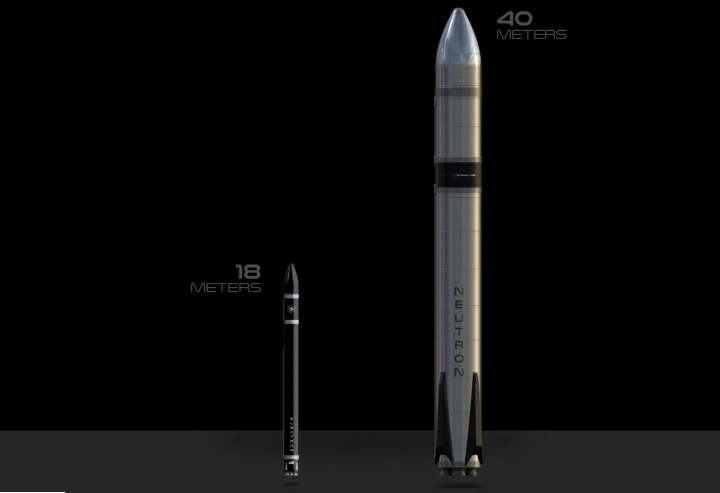
The Neutron, which is approximately 43 meters long, is powered by Rocket Lab’s entirely in-house developed Archimedes engines. The rocket’s reusable first stage is designed to land on an ocean platform. However, on the first launch, this section is expected to make a water landing.

Neutron has a payload capacity of 13,000 kilograms to low Earth orbit, which positions it to compete directly with SpaceX’s Falcon 9 rocket. This is precisely why the company and the rocket are attracting so much interest, as SpaceX has effectively become a monopoly in the launch industry.

The Neutron program is seen as one of the fundamental steps in Rocket Lab’s transformation from a small satellite launch company to a full-scale space service provider. Another part of this transformation is NASA’s ESCAPADE Mars mission. Rocket Lab produced the two ESCAPADE satellites that will be sent to Mars orbit for this mission.

The company is also experiencing a busy period with its Electron rocket, which it uses for small satellite transport. According to Beck’s statement, Rocket Lab has signed 17 new launch contracts in the last three months. Electron is expected to break its annual launch record in 2025. The company’s 17th mission could take place before the end of this month.

What is the Rocket Lab Neutron Rocket?

The Neutron is a medium-lift, reusable launch vehicle (rocket) currently in development by the aerospace company Rocket Lab.

Its primary mission is to compete directly with SpaceX’s Falcon 9 and transform Rocket Lab from a small satellite company into a provider for large-scale satellite and constellation launches.

Key features and goals include:

Payload Capacity: Capable of carrying 13,000 kg (13 tons) to low Earth orbit.Reusability: The first stage is designed to be fully reusable, with the ability to land on an ocean platform to be flown again.Engines: It is powered by Rocket Lab’s in-house Archimedes engines.Competition: It is specifically designed to challenge the SpaceX Falcon 9, which currently dominates the medium-lift launch market.Current Status: The first orbital launch attempt has been postponed and is now scheduled for 2026.

You Might Also Like;

Follow us on TWITTER (X) and be instantly informed about the latest developments…


Source link

Popular Posts

My Favorites