Metaverse

Home Metaverse Page 84

Best Crypto for Higher Returns: Zero Knowledge Proof Beats Ethena, Cronos & Pi in Long Term Potential

0
Best Crypto for Higher Returns: Zero Knowledge Proof Beats Ethena, Cronos & Pi in Long Term Potential


In Brief

Discover the best crypto for higher returns with a clear look at Zero Knowledge Proof, Ethena, Cronos, and Pi. Learn about real activity, price updates, strengths, and growth potential in a simple, easy-to-read breakdown for 2025.

Choosing strong crypto projects can feel confusing, especially when each one claims to offer future growth. But when you look at real activity, working products, and current market signals, a few names stand out clearly. These projects give a better idea of where steady progress and real potential meet. In this article, we explore four such projects and how they are performing right now.
Best Crypto for Higher Returns: Zero Knowledge Proof Beats Ethena, Cronos & Pi in Long Term Potential

The keyword best crypto for higher returns helps explain why people look closely at these assets today. Whether it is unique technology, fair token distribution, or recent price movements, each of these cryptos offers something of interest for anyone tracking realistic growth opportunities in 2025.

1. Zero Knowledge Proof – Fair Access Meets Real Utility

Zero Knowledge Proof is one of the most talked-about projects because it launched with its full system already built. Instead of collecting money first and promising to build later, the team spent more than $100 million before selling a single token. Over $20 million went into infrastructure that is already live, and another $17 million was used to manufacture Proof Pods that ship within five days of the presale launch. This preparation has created strong excitement among users searching for the best crypto for higher returns.

Best Crypto for Higher Returns: Zero Knowledge Proof Beats Ethena, Cronos & Pi in Long Term Potential

The project runs a privacy-first compute network designed for AI tasks. Its structure uses four layers that keep data private while allowing full verification. Daily Initial Coin Auctions allow anyone to participate from $50 to $50,000. Each auction distributes 200 million ZKP coins based on contribution percentage, with no gas wars or insider advantages. All tokens appear instantly on dashboards, making the entire process clear and completely automatic. This format also helps people understand why many view ZKP as a possible best crypto for higher returns.

ZKP also offers hardware called Proof Pods. These devices perform real compute work, generating ZKP rewards daily based on the previous day’s auction price. A base Pod earns about $1 worth of ZKP per day, and upgrading increases earnings. The balance between live infrastructure, working hardware, and fair distribution gives Zero Knowledge Proof a strong place in any discussion about the best crypto for higher returns.

2. Ethena – A Project Facing Pressure but Still Active

Ethena (ENA) is currently priced around $0.3162, with trading ranges between $0.3026 and $0.3335. The project is dealing with major outflows, with its USDe stablecoin supply falling by billions. Revenue has dropped sharply, and on-chain activity is much lower than earlier this year. Even with this slowdown, some users are still tracking it because it recently bounced from the lower support area. This gives it a cautious but noticeable presence on market watchlists.

Ethena continues to update its tools and maintain its structure, even with the pressure it faces. Some traders see its activity around the $0.30 zone as a possible rebound point. While this does not guarantee strong upside, it still places Ethena in conversations around the best crypto for higher returns for people who follow recovery-based setups.

3. Cronos – Steady Network, Slow Momentum

Cronos (CRO) trades around $0.1283, with daily movement between $0.1230 and $0.1307. Even though it has a large circulating supply of more than 36 billion coins, recent reports suggest it has been under pressure. Many analysts describe the price action as soft, with support levels being tested more often. Without new catalysts in recent weeks, Cronos is moving mostly sideways, which makes it a slower asset for short-term growth.

Best Crypto for Higher Returns: Zero Knowledge Proof Beats Ethena, Cronos & Pi in Long Term Potential

Still, Cronos is part of a large exchange ecosystem, and this gives it a stable base. Investors watching long-term development may see value here, especially if the network regains activity. It is not the strongest choice on this list, but its potential improvement still connects it to the wider discussion of the best crypto for higher returns for certain user groups.

4. Pi Network – Early Stage With Mixed Signals

Pi Network (PI) is currently priced near $0.2256, with this week showing slight gains even after months of decline. The project recently released its node software update (v0.5.4) on 12 November 2025, aimed at improving network reliability. However, the next 30 days may bring over 145 million PI tokens unlocked into circulation, which could increase selling pressure. Liquidity also remains limited across exchanges, making it a higher-risk option.
Best Crypto for Higher Returns: Zero Knowledge Proof Beats Ethena, Cronos & Pi in Long Term Potential

Even with these challenges, Pi continues to have an active user base, and its technical setup still interests a portion of the market. Some traders believe falling-wedge patterns may support a bounce. Others stay cautious because of tokenomics concerns. Still, these mixed conditions keep Pi in the conversation when people search for the best crypto for higher returns through early-stage or speculative assets.

Summing Up

Finding the best crypto for higher returns depends on knowing a project’s actual activity, not just its claims. Zero Knowledge Proof stands out because it already has working infrastructure, live auctions, and hardware ready to ship. Ethena, Cronos, and Pi each have their own strengths and challenges, but all show enough movement to stay on watchlists as 2025 continues.

Best Crypto for Higher Returns: Zero Knowledge Proof Beats Ethena, Cronos & Pi in Long Term Potential

Every crypto on this list offers a different path forward. Some provide steady progress, while others depend on recovery or long-term development. By staying aware of current updates and real data, investors can better understand which assets match their goals and risk comfort in the search for the best crypto for higher returns.

Disclaimer

In line with the Trust Project guidelines, please note that the information provided on this page is not intended to be and should not be interpreted as legal, tax, investment, financial, or any other form of advice. It is important to only invest what you can afford to lose and to seek independent financial advice if you have any doubts. For further information, we suggest referring to the terms and conditions as well as the help and support pages provided by the issuer or advertiser. MetaversePost is committed to accurate, unbiased reporting, but market conditions are subject to change without notice.

About The Author


Gregory, a digital nomad hailing from Poland, is not only a financial analyst but also a valuable contributor to various online magazines. With a wealth of experience in the financial industry, his insights and expertise have earned him recognition in numerous publications. Utilising his spare time effectively, Gregory is currently dedicated to writing a book about cryptocurrency and blockchain.

More articles


Gregory, a digital nomad hailing from Poland, is not only a financial analyst but also a valuable contributor to various online magazines. With a wealth of experience in the financial industry, his insights and expertise have earned him recognition in numerous publications. Utilising his spare time effectively, Gregory is currently dedicated to writing a book about cryptocurrency and blockchain.


Source link

DeFAI Explained: How AI Could Reshape Decentralized Finance | NFT News Today

0
DeFAI Explained: How AI Could Reshape Decentralized Finance | NFT News Today


Artificial intelligence is beginning to transform the blockchain landscape. DeFAI — short for Decentralized Finance Artificial Intelligence — represents the emerging intersection between AI and decentralized systems. It blends machine learning with blockchain infrastructure to explore new forms of adaptive, data-driven finance.

These are no longer just automated protocols — they’re early prototypes of systems designed to learn from data and assist in financial decisions with limited human input.

Key Takeaways

DeFAI combines AI and decentralized finance to create adaptive, data-driven ecosystems.

AI agents can analyze markets, help manage risk, and suggest optimized strategies in near-real time.

The approach promises greater efficiency and smarter automation — but introduces new security, transparency, and governance challenges.

Most DeFAI systems remain experimental, with live deployments still rare.

As the field matures, DeFAI could redefine how decentralized economies function.

What DeFAI Actually Is

Traditional DeFi protocols rely on static smart contracts that execute predefined rules.

Experimental DeFAI systems, by contrast, aim to use AI models that interpret market conditions and act contextually — for example, adjusting liquidity positions, rebalancing portfolios, or tweaking collateral ratios based on live data rather than fixed thresholds.

In essence, DeFAI aspires to give DeFi something new: context awareness.

It’s finance that doesn’t just execute instructions — it analyzes why those instructions make sense.That said, today’s systems remain largely in prototype stages; fully autonomous, learning DeFi protocols are not yet widely deployed.

How Artificial Intelligence Powers DeFAI

In DeFAI architectures, AI acts as the analytical core. It gathers data, detects patterns, and can initiate or recommend transactions through smart contracts — usually under human-defined guardrails.

An AI agent might:

Collect on-chain and off-chain data (token flows, sentiment, liquidity, oracles).

Analyze market behavior to estimate volatility or risk.

Suggest or trigger rebalancing actions based on those insights.

Because blockchain computation is limited, most AI processing occurs off-chain, typically through oracles or agent frameworks such as Fetch.ai, Autonolas, or Chainlink Functions, which relay decisions back on-chain for execution.

This hybrid design keeps AI flexible while preserving decentralization — though it introduces new security and trust considerations.

At present, these agents operate with strict safety limits and human oversight; full autonomy remains a research goal.

Early Examples of DeFAI in Action

A handful of projects explore elements of this vision:

Fetch.ai – develops AI agents that negotiate and coordinate across decentralized networks.

Autonolas (Olas) – builds multi-agent systems for on-chain coordination.

Numerai – uses crowdsourced AI models for market prediction (bridging AI and crypto).

SingularityNET – connects AI developers through decentralized infrastructure.

Gauntlet – applies machine learning for DeFi risk management and optimization.

Not all of these operate purely in DeFi, but collectively they illustrate how decentralized AI infrastructure can enhance financial use cases.

Why DeFAI Matters

If successful, DeFAI could make decentralized finance smarter, more efficient, and more adaptive.

Potential benefits include:

Efficiency: AI can reduce human lag in volatile markets.

Accessibility: Automated interfaces could simplify participation for non-technical users.

Security: Predictive models might flag unusual wallet activity or potential exploits faster.

Optimization: Yield and liquidity strategies could evolve dynamically as market data changes.

Still, these benefits are potential, not guaranteed. AI can also introduce new attack surfaces, data dependencies, and black-box behavior that complicates trust.

Governance, Ethics, and Practical Limits

As AI grows more autonomous, governance becomes critical. Who’s accountable if an AI agent mismanages liquidity or exploits emerge from biased models?

To maintain trust, some projects are testing DAO-based oversight, auditable model registries, and “human-in-the-loop” controls requiring approval before high-impact AI actions execute.

However, these frameworks are experimental and far from standardized.

Key challenges include:

Bias: AI can inherit or amplify bias from training data.

Security: Off-chain components expand the attack surface.

Complexity: Hybrid architectures complicate audits and risk assessments.

Cost: AI inference remains computationally expensive and gas-intensive.

Transparency and explainability will be essential. Open-source frameworks, cryptographic proofs of model integrity, and algorithmic audits are emerging as possible safeguards.

The Growing Ecosystem

Interest in AI-driven blockchain research is accelerating.Ecosystems such as BNB Chain, Polygon, and Ethereum Foundation have funded AI-related research, while venture funding for AI + Web3 startups surged in 2024.

Early adoption is most likely in yield aggregators, risk engines, and DeFi insurance, where real-time analytics already play a central role.

Data infrastructure is equally vital: AI models require verifiable, high-quality data streams.

Protocols such as The Graph, Ocean Protocol, and Arweave help build this foundation — the data “highways” that make DeFAI possible without relying on centralized feeds.

Regulation and Real-World Use Cases

As regulators grapple with both AI and crypto, DeFAI sits squarely at their intersection.Frameworks like the EU AI Act may soon require explainable models, audit trails, and risk disclosures — areas where blockchain transparency could help compliance.

Beyond trading and lending, DeFAI concepts could extend to:

Insurance underwriting (AI adjusting risk pools in real time).

DAO governance (agents simulating proposals or risk impacts).

Credit scoring (on-chain behavior as a privacy-preserving signal).

These remain conceptual, pending reliable AI performance and regulatory clarity.

What the Future Could Look Like

(Speculative roadmap — a plausible scenario, not a forecast.)

Short term (1–3 years): smarter risk monitoring, predictive analytics for liquidity, AI-assisted auditing.

Mid-term (3–5 years): interoperable AI agents coordinating across chains.

Long term (5–10 years): partially autonomous, self-correcting financial ecosystems governed by transparent AI and DAO mechanisms.

In the long run, users may delegate portfolio management to AI assistants that trade, lend, and manage risk under defined guardrails — combining algorithmic precision with decentralized trust.

Final Thought

DeFAI isn’t just a buzzword; it signals a possible next phase for blockchain and finance.The technology is early, complex, and full of unanswered questions — but its promise is real.

Systems that evolve through learning, rather than rigid automation, could mark one of the most significant shifts since DeFi itself.

Yet turning that vision into scalable, reliable systems will require years of collaboration, testing, and thoughtful governance. Without these, DeFAI risks becoming just another hype cycle.

Frequently Asked Questions

Here are some frequently asked questions about this topic:

What does DeFAI mean?

It stands for Decentralized Finance Artificial Intelligence — using AI to enhance and automate decentralized finance.

How does it differ from traditional DeFi?

DeFAI systems learn from data, while traditional DeFi follows fixed logic.

Is DeFAI safe?

It’s still experimental. Users should stick with audited, transparent platforms.

Which projects are building DeFAI tech?

Fetch.ai, Numerai, SingularityNET, and Autonolas are notable examples working on AI-driven blockchain systems.

Will DeFAI replace human traders?

Unlikely. DeFAI is more about augmentation than replacement — empowering users with smarter tools.


Source link

Interactive service for choosing a jurisdiction for crypto businesses and startups from Gofaizen & Sherle

0
Interactive service for choosing a jurisdiction for crypto businesses and startups from Gofaizen & Sherle


Sponsored

Stories and Reviews


November 13, 2025

Interactive service for choosing a jurisdiction for crypto businesses and startups from Gofaizen & Sherle

Tallinn, Estonia, November 13th, 2025, Chainwire

Fintech law company Gofaizen & Sherle has announced the launch of the Crypto License Navigator, an interactive tool designed to help crypto businesses assess and compare licensing options across jurisdictions ahead of the full implementation of the Markets in Crypto-Assets Regulation (MiCAR) in the EU in 2026. As MiCAR introduces stricter licensing requirements and heightened regulatory oversight, selecting the right jurisdiction has become a critical strategic consideration for crypto companies and startups.

Whether a small crypto exchange or a large trading platform (MTF), the License Navigator enables businesses to make informed decisions when selecting a crypto jurisdiction and supports sustainable growth in a dynamic regulatory environment.

The service considers factors such as minimum capital requirements, corporate tax rate in the selected jurisdiction, license acquisition times, access to banking services, and the jurisdiction’s reputation, providing a comprehensive analysis to support informed decisions.

Key factors to consider when choosing a jurisdiction

Based on Gofaizen & Sherle’s experience, the choice of jurisdiction for a crypto license should consider a wide range of factors to ensure business compliance and operational efficiency. The main factors to consider are:

Global recognition – the jurisdiction’s recognition among banks and fintech partners, which simplifies the launch and establishment of partnerships.
Reputation – trust from customers, investors, and regulators, which affects the attraction of capital and partners.
Scope of operations – the list of crypto services permitted by a single license.
Legislation sustainability – possible risk of sudden regulatory changes.
Operating costs – regular expenses for office space, personnel, compliance, and license renewal.
Tax regime – corporate tax rate and government incentives for crypto businesses.
Initial budget – costs of registration, licensing, and launching operations.
Launch time – time required to obtain a license and start operations.
Local presence – requirement to have a regional director or compliance officer.

License Navigator combines these key regulatory and tax parameters into an interactive dashboard with real-time analytics, allowing you to select a jurisdiction and model a crypto licensing strategy tailored to their own goals.

Popular crypto jurisdictions in 2026 according to Gofaizen & Sherle

El Salvador

Offers zero corporate income tax for digital asset activities and crypto-friendly banks with SWIFT connection. In 2026, major exchanges are expected to continue expanding their operations thanks to DASP regulation, which covers a broad spectrum of crypto activities under one license — from operating a Multilateral Trading Facility with derivatives contracts to the ability to issue security tokens.

Canada

A regulatory leader with transparent and recognizable MSB legislation for the majority of licensed exchanges. In 2026, it will maintain its status as a key North American jurisdiction thanks to low barriers to entry and strong institutional credibility.

Montana (USA)

The state has become a hub for blockchain innovation without needing to comply with burdensome state-level crypto regulations. This enables global operations, maintains legitimacy, and avoids substantial setup costs. 

Switzerland

A fintech hub with flexible FINMA regulation for SROs. AML compliance and membership in a self-regulatory organization are mandatory. In 2026, it will continue to be a leading jurisdiction that covers operations with both fiat and crypto under one license. 

Bosnia and Herzegovina

Offers fast licensing outside of MiCA in as little as 3 months, low taxes, and minimal costs. Suitable for projects seeking to avoid strict EU requirements.

About Gofaizen & Sherle

Gofaizen & Sherle is a leader in fintech law, specializing in crypto and blockchain projects. The company has assisted clients in obtaining more than 800 crypto licenses in 50+ jurisdictions. We operate within the MICAR framework and in full compliance with FATF requirements, with a deep understanding of current AML/CTF policies and regulations. We provide comprehensive support to crypto companies, encompassing crypto licensing, accounting, HR, and reporting, and accompany clients at every stage — from project planning to hiring staff and opening an office.

The company has a strong presence in the EU with headquarters in Tallinn, Estonia, as well as offices in Lithuania, Poland, the Czech Republic, Hong Kong, and other countries. In 2024, Gofaizen & Sherle opened an office in El Salvador. In 2025, we further strengthened our presence in the US, Canada, South Africa, Brazil, Mexico, and other markets.

Over the past 12 months, Fintech Lawyers Gofaizen & Sherle has completed over 450 projects and helped clients hire 200+ professionals worldwide, including top managers.

Disclaimer: This article is for informational purposes only and does not constitute legal advice. The regulatory environment is subject to change. We recommend consulting our qualified professionals for personalized legal advice.

Contact

Mark GofaizenGofaizen & Sherle[email protected]

Disclaimer

In line with the Trust Project guidelines, please note that the information provided on this page is not intended to be and should not be interpreted as legal, tax, investment, financial, or any other form of advice. It is important to only invest what you can afford to lose and to seek independent financial advice if you have any doubts. For further information, we suggest referring to the terms and conditions as well as the help and support pages provided by the issuer or advertiser. MetaversePost is committed to accurate, unbiased reporting, but market conditions are subject to change without notice.

About The Author


Chainwire is the top blockchain and cryptocurrency newswire, distributing press releases, and maximizing crypto news coverage.

More articles


Chainwire is the top blockchain and cryptocurrency newswire, distributing press releases, and maximizing crypto news coverage.


Source link

An Embarrassing Moment at the Humanoid Robot Presentation in Russia – Metaverse Planet

0
An Embarrassing Moment at the Humanoid Robot Presentation in Russia – Metaverse Planet


AIdol, introduced with great excitement and dubbed ‘Russia’s first humanoid robot,’ collapsed in front of hundreds of spectators. This dramatic accident once again proved the harsh realities of this field, which technology giants are pursuing.

The technology world is currently gripped by what can be described as humanoid robot fever. Every ambitious company in the field is in a fierce race to develop its own bipedal machine to potentially bring to market. However, in the shadow of this intense competition and excitement, most of the prototypes unveiled unfortunately paint a picture far from meeting expectations.

One of the most striking examples of this situation occurred in Russia recently. At the forum of the New Technology Coalition, where Russian humanoid robot development companies gathered, a company named Idol introduced its highly anticipated bipedal robot, AIdol. The stage performance of this droid, billed as “Russia’s first humanoid robot,” ended in total failure in front of hundreds of onlookers. During the launch, the robot suddenly lost its balance, collapsed face-first, and was damaged on stage.

The sad irony of the incident, as many news sources pointed out, was that the inspiring theme music from the famous “Rocky” movie was playing in the venue at the moment AIdol fell. This unfortunate debut was cemented in memory more by its mechanical failure than by the robot’s capabilities.

Idol CEO Vladimir Vitukhin described the event as a learning opportunity in a statement following this embarrassing situation. Vitukhin stated, “This is a real-time learning process of the kind where a successful mistake turns into knowledge, and an unsuccessful mistake turns into experience,” and expressed his hope that this failure would become an experience.

However, such misfortunes have not only happened to the Russian company. Similar gaffes have been frequently encountered in recent years during the public introductions of humanoid robots. For example, recall the moment Tesla CEO Elon Musk first announced Optimus; the prototype introduced was just an actor in a suit. Although Musk has since shared more concrete progress on the bot, now named “Optimus,” the embarrassing impression created by that first introduction still lingers.

There Are Also Those Who Succeed: The Boston Dynamics Difference

Despite all these stumbles, there are also robotics companies producing surprisingly, and to some, alarmingly, successful work in the same field. Foremost among these companies is Boston Dynamics, known for its four-legged robot dog, “Spot.”

The company also demonstrates significant competence in the field of humanoid robots. Their bipedal robot “Atlas,” developed with funding from DARPA (Defense Advanced Research Projects Agency), is significantly more agile and capable than many of its competitors. Atlas’s ability to overcome complex obstacles, jump, and even perform parkour movements creates both great excitement and a deep area for thought about the future of humanoid robot technology.

In light of these developments, it is clear that we are in the maturation process of humanoid robots. While companies take the stage with big promises, they are also succumbing to gravity and mechanical failures. In this difficult marathon, time will tell which companies will find their balance and achieve victory.

You Might Also Like;

Follow us on TWITTER (X) and be instantly informed about the latest developments…


Source link

Anichess ($CHECK) Guide: Gameplay, Token Utility, Staking & Roadmap Explained | NFT News Today

0
Anichess ($CHECK) Guide: Gameplay, Token Utility, Staking & Roadmap Explained | NFT News Today


Anichess ($CHECK) brings competitive chess into a new era by adding spells, player ownership, and on-chain progression. The project blends classic strategy with fantasy elements, digital assets, and skill-based rewards. It launched under the guidance of Animoca Brands and in partnership with Chess.com, a platform trusted by hundreds of millions of players. This mix of gaming design, blockchain systems, and esports structure makes Anichess one of the most talked-about Web3 strategy games today.

This guide walks you through every major part of the project. You’ll learn how it works, why players enjoy it, what $CHECK offers, and what the broader Checkmate Ecosystem aims to achieve. It reads like an expert walkthrough rather than a sales pitch, giving you the context needed to understand the entire model.

Background and Origins

How Anichess Started

Anichess emerged from Animoca Brands, a company known for building digital economies with actual utility. They partnered with Chess.com, which has more than 600 million registered players, to create a strategy game that rewards skill, creativity, and consistent performance. The goal wasn’t to replace chess. Instead, the team wanted to extend it with fresh mechanics that give experienced and new players something to explore.

Why Spell-Chess?

Classic chess rewards planning, foresight, and pattern recognition. Anichess adds spells that modify the board state and push players to think beyond traditional lines. You’ll see abilities such as reviving a piece, teleporting a unit, or creating temporary obstacles. These mechanics encourage inventive gameplay while maintaining the core logic of chess.

The Development Vision

The creators intend to build a long-lasting strategy ecosystem. Their approach emphasizes skill-to-value progression. Consistent players earn non-transferable points, cosmetic rewards, tournament entries, and access to special features. Over time, the ecosystem expands into mobile gaming, creator tools, on-chain education, and a competitive infrastructure that can host global tournaments.

Gameplay Breakdown

Spell-Enhanced Chess Mechanics

The core experience still feels like chess. You study positions, anticipate your opponent, and execute plans. Spells introduce new layers. You may:

teleport a vulnerable piece to safety

revive a fallen unit

create a defensive barrier

shift the board’s tempo

build advanced checkmate sequences with spell synergy

This hybrid gameplay supports casual fun and esports-tier depth.

Game Modes You Can Explore

Players don’t need tokens or NFTs to start. You can log in with an email or wallet and play instantly.

Daily PuzzlesShort challenges that reward consistent practice.

PvP BattlesReal-time matches where spells and smart decisions decide outcomes.

Ranked SeasonsCompetitive climb with rewards for high performers.

Gambit ModeFast matches built for quick sessions. This mode will tie heavily into $CHECK in upcoming updates.

Progression and Rewards

The more you play, the more you gain:

puzzle streak bonuses

competitive ladder progress

cosmetic items

M8 (Mate) points for long-term boosts

special drops for holding Ethernals NFTs

Long-term players advance faster through staking pools and missions.

Web3 Technology and Architecture

Why Multi-Chain Matters

Anichess uses more than one chain to keep gameplay smooth while supporting a thriving economy.

Abstract ChainHandles staking, claims, M8 generation, and early $CHECK mechanics.

Base (via Coinbase’s L2)Hosts $CHECK liquidity and trading on AerodromeFi.Players bridge tokens from Abstract to Base when they want to trade or provide liquidity.

Ethereum CompatibilityEnsures NFTs and assets remain composable with major marketplaces.

Supporting Infrastructure

The team built and integrated tools to power the ecosystem:

PenguBoard for matchmaking

VibeCheck for AI-assisted creative content

Checkmate Ecosystem APIs for future games and education modules

This foundation sets the stage for mobile expansion and cross-game strategy features.

The Checkmate Ecosystem

Expanding Beyond a Single Game

Anichess serves as the flagship product. The Checkmate Ecosystem includes:

Each part supports a unified goal: reward skill, creativity, and consistent engagement.

Community-Driven Growth

Players, creators, and tournament organizers contribute to development by:

This structure keeps the ecosystem active and adaptive.

Understanding the $CHECK Token

What $CHECK Powers

$CHECK acts as the central currency for the strategy ecosystem. It supports competition, creation, progression, and governance.

Its utilities include:

Competition

Progression Through Staking

Players earn M8 points by staking $CHECK. These points unlock permanent boosts and access to:

Creation and Curation Tools

Creators use $CHECK to publish AI-generated content and compete for community votes.

Collectibles, Access, and Events

Token-gated cosmetics, NFT drops, and special tournaments rely on $CHECK.

Governance

Holders propose and vote on CIPs (Checkmate Improvement Proposals).This ensures the community guides future updates.

Contract Addresses

Tokenomics Overview

Fixed Supply and Distribution

The total supply is capped at 1 billion $CHECK. The breakdown emphasizes players and long-term stability.

Player Rewards: 39.38%Ecosystem & Treasury: 20%Investors: 13.62%Team: 10%Liquidity: 7%Operations: 4%Advisors: 4%Kaito Launchpad: 2%

Unlock Schedules

A large portion vests over long periods:

Investors: 6-month cliff → 18 months linear

Team: 12-month cliff → 40 months linear

Advisors: 4-month cliff → 16 months linear

Player rewards: 36 months linear after small TGE unlocks

Treasury: 39 months linear

These schedules help reduce sudden supply shocks.

Liquidity Setup

Initial liquidity came from a 4% supply injection into AerodromeFi on Base.Trading launched near $0.02 with high volatility during the first hours due to early unlocks and refund expectations from Kaito’s presale.

Funding, Backers, and Credibility

Capital Raised

The project secured $3.3 million across several rounds.

Seed and private: ~$3.3M

Kaito public sale: $700K

The public sale hit 5x oversubscription, reflecting strong early demand.

Strategic Support

The backing roster includes respected groups:

Partnerships extend to:

Chess.com

Base

Abstract

Nansen

AerodromeFi

Monprotocol

KaitoAI

This combination provides experience across gaming, blockchains, analytics, and creator tooling.

Launch Status and Market Activity

Token Generation Event (TGE)

The TGE went live on November 13, 2025 at 00:00 UTC.Players began claiming tokens on Abstract, and tokens autostake into the OG pool to start M8 generation immediately.

Exchange Listings

$CHECK launched on:

Additional CEX listings arrive on November 17.

Early Price Action

Trading ranged around $0.017–0.02 in the first hours. This sat below the Kaito presale price of $0.035, which triggered refund discussions and some selling from early unlocks. Despite the dip, long-term players remained focused on staking and upcoming catalysts.

Player and Community Metrics

User Statistics

Since July 2025 testing:

These numbers reflect genuine gameplay interest rather than artificial metrics.

Social Channels

The official X (Twitter) account grew to 220,000 followers.Monthly “yapper” competitions reward active community members with $CHECK.

Community Sentiment

Short-term reaction after TGE leaned cautious due to the early price dip.Long-term sentiment remained positive, driven by Animoca’s support, Chess.com’s presence, strong staking incentives, and the upcoming mobile launch.

Roadmap and Upcoming Catalysts

Near-Term Events (Nov–Dec 2025)

November 14: Monprotocol launchpool

November 17: New CEX listings

November 25: Nansen airdrop

December 1: Kaito leaderboard rewards

Seasonal updates for PvP and Gambit Mode

Major Q4 2025 Expansions

A huge milestone arrives with King’s Gambit, the mobile version of Anichess.This release brings full $CHECK integration into Gambit Mode, tournaments, and creator tools.

Long-Term Vision for 2026 and Beyond

Plans include:

DAO governance

Cross-game educational modules

Larger collectible lines

Expanded AI content creation tools

Esports-ready tournament structure

The team sees Anichess as a strategy ecosystem that spans multiple devices and audiences.

Risks and Considerations

Market Conditions

Tokens with large unlock schedules often face strong early selling pressure. $CHECK showed this during its launch window. Volatility remains a constant factor for any gaming asset.

Project Development Risks

Game features roll out in phases. Utility increases as staking pools, spells, tournaments, and mobile launches come online. Players should understand the timeline rather than expect immediate full utility.

Regulatory Uncertainty

Token models face shifting rules across regions. Future updates may adapt to stay compliant.

Technical Safety

Staking, bridges, and smart contracts carry risk. Although Animoca projects follow strict standards, no system is perfect. Players should review official documentation before making decisions.

Conclusion

Anichess blends classic strategy with creative design and blockchain-backed progression. The combination of spells, puzzles, PvP combat, and on-chain systems creates a fresh experience for long-time chess fans and newcomers. Animoca Brands and Chess.com bring strong credibility, while the $CHECK token strengthens long-term engagement through staking, tournaments, creation tools, and governance.

The early price dip doesn’t erase the project’s strengths. Upcoming mobile releases, CEX listings, and ecosystem expansions should influence how the token and the game mature. Players who enjoy strategic thinking, progression systems, or AI-assisted creation tools will find plenty to explore.

Frequently Asked Questions

Here are some frequently asked questions about this topic:

Is Anichess free to play?

Yes. You can start with puzzles and PvP at no cost.

How do spells work?

Spells change the board by adding creative maneuvers like reviving or repositioning pieces.

How do I bridge $CHECK?

You claim tokens on Abstract, then bridge to Base if you want to trade or add liquidity. The process is guided inside the website.

What are M8 points?

These are progression points earned through staking. They improve boosts, perks, and future systems across the Checkmate Ecosystem.

Do I need tokens to play?

No. Tokens enhance progression but aren’t required to enjoy the game.

What’s Gambit Mode?

A quick, action-driven match type that rewards fast decision-making.

Is $CHECK high-risk?

Any gaming token carries risk. Price swings can be sharp, especially after a launch. Research and personal judgment matter.


Source link

BestChange Announces Major Platform Update at Blockchain Life 2025

0
BestChange Announces Major Platform Update at Blockchain Life 2025


In Brief

At Blockchain Life 2025 in Dubai, BestChange unveiled a redesigned website, a mobile app, and a Telegram Mini App to enhance convenience, transparency, and trust for users navigating cryptocurrency exchanges.

BestChange Announces Major Platform Update at Blockchain Life 2025

At the Blockchain Life 2025 forum in Dubai––one of the world’s biggest events on cryptocurrency and Web3––BestChange announced its key ecosystem updates: a newly designed website, a mobile application, and a Telegram Mini App. The announcement was made in front of almost 17,000 participants and experts from 130 countries, along with industry leaders such as the founder of Telegram, Pavel Durov.

Launched in 2007, BestChange has established itself as a leading aggregator of cryptocurrency exchangers. The platform offers its users the ability to compare offers from over 450 vetted exchangers, filter results according to fees and exchange conditions, and review exchange services before completing transactions. With new updates, the company aims to enhance convenience, transparency, and security for users in an increasingly complex crypto market.

According to BestChange research, confirmed by other participants of Blockchain Life 2025, one of the biggest difficulties for users is to find the most beneficial exchange rate. The huge number of options, along with changes in rates that occur every minute, turns comparison into a drudgery even for advanced traders. Mobile applications can compare tens of thousands of exchange rates online, but BestChange highlights the point that trust remains important. Users need to be confident that exchangers are reliable, have sufficient reserves, a reliable history of service, and comply with legislation and regulatory requirements.

That’s why BestChange not only monitors over 900,000 exchange rates but also supplies verified information about the reliability of an exchanger, feedback from their clients, and safety—all with continuous customer support. Thanks to nearly two decades of rigorous partner verification, cases of fraud or exchanger-related issues remain exceptionally rare.

As the CTO mentioned during the forum:

“Trust is our most valuable asset. Every partner undergoes thorough verification because when a user loses funds, our reputation suffers even more. We and our users are on the same team.”

Mobile and Telegram Apps for Seamless Crypto Monitoring Experience

Following the trend of user preferences for mobile and messaging platforms, BestChange introduced a mobile application, which is now available in App Store, Google Play, and App Gallery (Huawei). It supports the main features of the website: fast access to competitive rates, detailed service information, and user reviews, in addition to responsive customer service.

Noting the prevalence of Telegram among crypto users, BestChange also introduced a Telegram Mini App and bot, which allow users to choose currency pairs, check rates, and access the functionality of the platform without leaving the messaging ecosystem.

A Redesigned Website for a Better User Journey

Rounding out its presentation at Blockchain Life 2025, BestChange revealed a completely new look for the website—a first major visual and functional overhaul in 18 years. The new design features a more streamlined user interface with enhanced navigation, smart filters, improved multi-step exchange, and easier ways to manage favorite and blocked exchangers. These updates make navigating the website easier, highlighting the best exchange routes and keeping the platform’s trusted features intact.

About BestChange

Founded in 2007, BestChange is a reliable aggregator of cryptocurrency and electronic currency exchangers. BestChange monitors current exchange rates across more than 450 exchangers in real-time and enables users to choose the most profitable offers with minimal risk. The database on BestChange includes over 45,000 currency pairs for fiat, e-money, and crypto and serves millions of visitors every month.

Media Contact:

Contact Person: BestChange team

Website: www.bestchange.сom 

X: https://x.com/bestchangeeng

Email: [email protected]

Disclaimer

In line with the Trust Project guidelines, please note that the information provided on this page is not intended to be and should not be interpreted as legal, tax, investment, financial, or any other form of advice. It is important to only invest what you can afford to lose and to seek independent financial advice if you have any doubts. For further information, we suggest referring to the terms and conditions as well as the help and support pages provided by the issuer or advertiser. MetaversePost is committed to accurate, unbiased reporting, but market conditions are subject to change without notice.

About The Author


Gregory, a digital nomad hailing from Poland, is not only a financial analyst but also a valuable contributor to various online magazines. With a wealth of experience in the financial industry, his insights and expertise have earned him recognition in numerous publications. Utilising his spare time effectively, Gregory is currently dedicated to writing a book about cryptocurrency and blockchain.

More articles


Gregory, a digital nomad hailing from Poland, is not only a financial analyst but also a valuable contributor to various online magazines. With a wealth of experience in the financial industry, his insights and expertise have earned him recognition in numerous publications. Utilising his spare time effectively, Gregory is currently dedicated to writing a book about cryptocurrency and blockchain.


Source link

Former Visa Payments Executive Michael Batuev Joins WeFi To Drive Global Payments Expansion

0
Former Visa Payments Executive Michael Batuev Joins WeFi To Drive Global Payments Expansion


In Brief

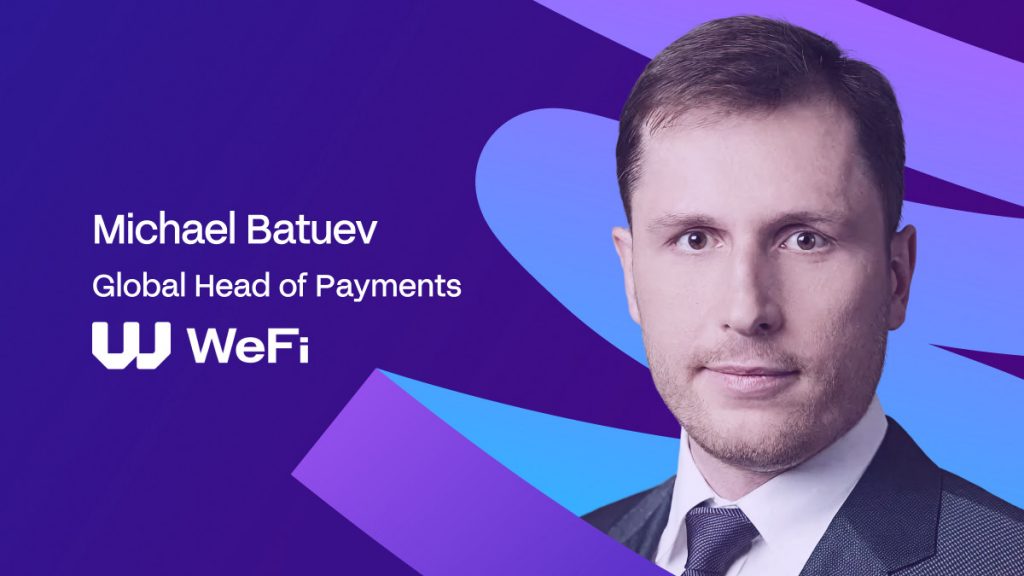
WeFi appoints former Visa executive Michael Batuev as Global Head of Payments to lead the expansion of its decentralized financial infrastructure across Europe and Asia-Pacific.

Former Visa Payments Executive Michael Batuev Joins WeFi To Drive Global Payments Expansion

World’s first deobank focused on advancing financial sovereignty through decentralized infrastructure, WeFi appointed Michael Batuev as its Global Head of Payments. Batuev, formerly leading digital solutions at Visa, brings over 18 years of experience in fintech and banking to support WeFi’s growth across Europe, the Asia-Pacific region, and other markets.

A graduate of FESAEM and MIT, Batuev has built his career at the intersection of finance, technology, and innovation strategy. At Tangem, he contributed to the development of the first self-custody payment card integrated with a cold crypto wallet, creating a bridge between traditional finance and decentralized finance. 

During his tenure at Visa, he led emerging product initiatives that expanded mobile and peer-to-peer payments globally, increased contactless adoption, and advanced NFC-enabled wearables. Earlier in his career, he focused on retail digital services, research and development, card programs, and joint venture projects, accumulating two decades of industry expertise.

“The payments industry is now at a turning point,” said Michael Batuev, WeFi’s Global Head of Payments, in a written statement. “Legacy systems are struggling to keep up with the fluid, borderless nature of digital finance. WeFi’s model combines the trust of banking with the freedom of Web3. It creates the foundation for what modern payments should be: instant, transparent, and truly global. I’m thrilled to help build that future,” he added.

Michael Batuev To Unlock Next-Level Global Payments And Web3 Financial Infrastructure

In his new position, Michael Batuev will oversee the expansion and development of WeFi’s payments systems and infrastructure across multiple regions, beginning with Europe and the Asia-Pacific, with a focus on product strategy, partnerships, financial services, and scalable integration of decentralized finance frameworks. WeFi, co-founded by Maksym Sakharov, aims to create a model for decentralized finance that aligns with modern banking compliance standards, combining the accessibility of DeFi with the reliability of traditional financial institutions while giving users control over their assets and ensuring full legal and operational transparency. Batuev’s addition is a step toward achieving institutional-grade scalability.

“Michael understands how the world’s largest payment networks work and, even more importantly, where they can be significantly strengthened using Web3,” said Maksym Sakharov, Founder and Group CEO of WeFi, in a written statement. “Having Michael join us feels like unlocking the next level of payments development. At WeFi, what we’re trying to build is not actually a bank; it’s a new kind of financial infrastructure that gives people control and freedom. Michael’s arrival makes that vision real,” he added.

Batuev’s appointment aligns with WeFi’s goal of evolving from a disruptive DeFi platform into a comprehensive global financial ecosystem. The company’s “deobank” approach aims to offer end-to-end financial autonomy—including cards, deposits, loans, and payments conducted on-chain while remaining fully compliant. With growing institutional and retail interest in regulated on-chain banking, WeFi is strategically positioned to capitalize on the expanding market.

The company is actively scaling operations in Europe and establishing new partnerships in Asia-Pacific jurisdictions favorable to digital assets, such as Singapore, Hong Kong, and the UAE. Batuev’s extensive experience across corporate banking and global payment networks equips him to coordinate these initiatives and drive WeFi’s cross-regional growth.

Disclaimer

In line with the Trust Project guidelines, please note that the information provided on this page is not intended to be and should not be interpreted as legal, tax, investment, financial, or any other form of advice. It is important to only invest what you can afford to lose and to seek independent financial advice if you have any doubts. For further information, we suggest referring to the terms and conditions as well as the help and support pages provided by the issuer or advertiser. MetaversePost is committed to accurate, unbiased reporting, but market conditions are subject to change without notice.

About The Author


Alisa, a dedicated journalist at the MPost, specializes in cryptocurrency, zero-knowledge proofs, investments, and the expansive realm of Web3. With a keen eye for emerging trends and technologies, she delivers comprehensive coverage to inform and engage readers in the ever-evolving landscape of digital finance.

More articles


Alisa, a dedicated journalist at the MPost, specializes in cryptocurrency, zero-knowledge proofs, investments, and the expansive realm of Web3. With a keen eye for emerging trends and technologies, she delivers comprehensive coverage to inform and engage readers in the ever-evolving landscape of digital finance.


More articles


Source link

The First Hollywood Movie to Be Shot in Space is Coming: I See You

0
The First Hollywood Movie to Be Shot in Space is Coming: I See You


Hollywood is preparing to make history with I See You, the first movie to be shot in space. Producer Andrea Iervolino is working with NASA astronaut Scott Kelly.

Hollywood is preparing to take a step into cinematic history: a film will be shot in space for the first time.

I See You, a romantic space drama, is set to begin filming next year, 60 miles (about 100 km) above Earth. The film is being produced by Andrea Iervolino, known for productions like Paradox Effect, In the Fire, and Finding Steve McQueen.

The Italian-Canadian producer brought in an experienced NASA astronaut as a script consultant to ensure the story is scientifically accurate.

The film’s storyline is currently being kept secret, but according to Iervolino, the themes of human resilience, loneliness, and emotional connection will be prominent.

Hollywood’s First Fiction Film in Space

Two years ago, Russia made history with The Challenge, the first fiction film shot in space. I See You will be Hollywood’s first feature film in this realm.

Tom Cruise and director Doug Liman had also announced a few years ago that they were working on an action film to be shot in space, but that project has yet to materialize.

Legendary Astronaut Scott Kelly Joins the Project

One of the names involved in the project is retired NASA astronaut Scott Kelly. Kelly, who participated in four space missions, holds the record for the longest single space flight in NASA history (340 days).

Kelly will consult on the script to “realistically reflect human resilience and emotional connection in space.”

Iervolino states, “It is a great honor for us to have Scott Kelly on the project. His experience adds emotional depth and scientific authenticity to the film.”

Script by Legendary TV Writers

The film’s screenplay is being written by Andrew Schneider and Diane Frolov, known for TV series such as The Sopranos and Northern Exposure.

However, the director, cast, and release date have not yet been announced.

The Production Team Will Go to Space

Andrea Iervolino says he will also travel to space when filming begins. Some actors may join the crew on this journey.

Discussions for the rocket that will carry the production team are reported to be in the “advanced stages.”

Space Tourism is Now Real

Going to space no longer sounds as crazy as it once did. Private companies like Blue Origin have already started taking tourists—and even celebrities like Katy Perry—to space.

The production team will undergo an intensive physical and technical training program before filming.

Not every scene will be shot in space. Iervolino says that some parts of the film will use real space footage (stock video). This will reduce both the cost and the shooting time.

The New Era of Space Entertainment

Iervolino is also the CEO of Space11, a company founded in 2021. The company holds the distinction of being the first space film studio, aiming to “take the world of entertainment to space.”

This idea was actually realized by Russian director Klim Shipenko. Shipenko’s The Challenge (2023) was the first fictional feature film shot in space.

In the film, a surgeon named Yulia Peresild embarks on a mission to rescue an astronaut on the space station.

While documentaries like Apollo 11 (2019) and In the Shadow of the Moon (2007) also feature space footage, this new era for fiction films is only just beginning now.

What was once only a dream, “filming in space,” could become the new standard in the world of cinema in the coming century.

You Might Also Like;

Follow us on TWITTER (X) and be instantly informed about the latest developments…


Source link

How Fast Do Electric Vehicle Batteries Age?

0
How Fast Do Electric Vehicle Batteries Age?


Battery life and capacity degradation, the biggest concern in the transition to electric vehicle (EV) technology, may have been resolved by a comprehensive test conducted by ADAC, Germany’s largest automobile association. ADAC subjected a Volkswagen ID.3 model to a rigorous real-world experiment for four years, investigating how well the battery packs held up in the long run.

ADAC took delivery of the 77 kWh VW ID.3 Pro S Tour in May 2021 and subjected it to over 40,000 kilometers of annual driving. By the end of the four-year test period, the vehicle had covered over 172,000 kilometers. During this time, the vehicle’s battery health was closely monitored by the Bavarian Test and Technology Center.

Volkswagen guarantees that the ID.3’s battery will retain at least 70% of its original net capacity after eight years or 160,000 kilometers. However, after four years and 172,000 kilometers, ADAC’s test vehicle still retained 91% of its original net capacity. This result proved that the vehicle was within a healthy range, not requiring a battery replacement under warranty.

Calculations show that despite 40% of charging being done at fast-charging stations during the test period, the ID.3 only lost 13 kilometers from its declared maximum range of 526 kilometers.

ADAC intentionally conducted the test to simulate typical user behavior. This meant the vehicle was frequently charged up to 100% capacity and then left unused for several days. Conversely, most EV manufacturers recommend keeping the charge at 80% capacity if the vehicle is to be left standing for a long time, in order to preserve battery life. ADAC’s findings demonstrated that the battery health was surprisingly well preserved despite these challenging conditions.

Another detail highlighted in the test was that the ID.3 only achieved a range of approximately 400 km instead of the official WLTP range of 526 km during highway driving. On the other hand, Volkswagen released software updates throughout the testing period, increasing the vehicle’s charging capacity up to 170 kW. VW states that these software improvements had a positive effect on power consumption and range, especially over short distances and in cold winter temperatures between 0 and 5°C.

Is the Worry About Battery Aging Exaggerated?

This comprehensive real-world data supports other research which suggests that concerns about electric vehicle battery degradation are often exaggerated.

A Swedish car dealership, in its review of over 1,000 used EVs, found that both pure electric and hybrid battery packs retained more than 90% of their capacity even after high mileage and intensive fast charging. Research by the British leasing company Arval showed that the average battery health level was 93%, and even after 200,000 kilometers, the average capacity remained close to 90%.

All this means that for many second-hand electric vehicles, the range drops only a few kilometers, while the charging speeds and efficiency remain largely the same. With far fewer mechanical components that can malfunction, EVs, in light of this data, may become an increasingly reliable and attractive second-hand purchase option.

You Might Also Like;

Follow us on TWITTER (X) and be instantly informed about the latest developments…


Source link

Did NASA Find Traces of Human DNA on an Asteroid?

0
Did NASA Find Traces of Human DNA on an Asteroid?


When NASA’s OSIRIS-REx spacecraft returned to Earth carrying dust and rock samples from the Bennu asteroid, scientists expected to learn more about the early formation of our solar system. What they didn’t expect was a discovery that would ignite one of the most fascinating questions of all time:Did life on Earth originate in space?

Recently, a team of researchers examining the Bennu samples announced that they found 14 of the 20 amino acids essential for building DNA — the molecular blueprint of all known living organisms. These findings, while not direct evidence of extraterrestrial life, have reignited the age-old debate about whether humans might be the product of cosmic chemistry rather than purely Earth-based evolution.

🌌 A 2-Billion-Year-Old Messenger

The Bennu asteroid is estimated to be more than 2 billion years old, a remnant of the early solar system that has remained relatively unchanged since its formation. When NASA’s OSIRIS-REx mission successfully returned with samples in 2023, it provided scientists with the rare opportunity to study pristine cosmic material untouched by Earth’s atmosphere.

Inside those grains of dust, researchers detected organic molecules — the same kinds of compounds found in living systems on Earth. Among them were amino acids, the building blocks of proteins and the structural foundation of DNA and RNA.

The discovery instantly drew attention far beyond the scientific community. Social media buzzed with questions:“Did NASA just find human DNA in space?”“Could this prove we were seeded by aliens?”“Is Prometheus becoming real?”

🧬 Science Behind the Mystery

While the idea of extraterrestrial DNA sounds sensational, scientists urge caution. These amino acids, though identical in structure to those used by Earth’s life forms, do not necessarily mean that life exists — or once existed — on Bennu.

According to NASA astrobiologist Dr. Jason Dworkin, “Amino acids can form through purely chemical reactions without any biological input. Space is full of energy, radiation, and raw elements that naturally assemble into complex organic compounds.”

In other words, the Bennu discovery doesn’t prove that humans have extraterrestrial ancestors. Rather, it demonstrates that the ingredients for life are far more common in the cosmos than previously imagined. The same chemistry that gave rise to life on Earth might be happening — or might have already happened — in countless other places.

☄️ Seeds of Life from the Stars

The discovery strengthens support for the panspermia hypothesis — the theory that life on Earth could have originated from organic materials delivered by asteroids or comets billions of years ago.

If early Earth was bombarded by asteroids carrying amino acids and other complex molecules, these ingredients might have mixed with the planet’s primordial oceans, eventually sparking self-replicating life. In essence, life may not have started on Earth, but rather arrived here ready to evolve.

Some scientists even speculate that this process could be universal — that the same cosmic chemistry which gave rise to life here could be happening across the Milky Way, forming other “Earths” with their own evolutionary stories.

👽 Science Meets Science Fiction

The discovery has also reignited cultural fascination with the idea that humans may have extraterrestrial origins. Films like Prometheus and 2001: A Space Odyssey explore similar questions — whether intelligent beings from beyond Earth might have influenced or even initiated life here.

Although such scenarios remain within the realm of speculation, discoveries like Bennu’s amino acids continue to blur the line between fiction and possibility. As science advances, the gap between “what if” and “what is” grows smaller with every cosmic revelation.

🔭 The Future of Astrobiology

NASA plans to continue analyzing the Bennu samples for years to come using advanced spectrometers and gene-sequencing technology to determine how these molecules formed. Future missions, such as OSIRIS-APEX and JAXA’s Hayabusa2 follow-ups, will expand this search by collecting samples from other asteroids.

Each new discovery brings us closer to answering the ultimate question:Are we alone in the universe — or are we part of something much larger, something cosmic in origin?

🌐 Conclusion

So, did NASA find human DNA on an asteroid?Not exactly. But they may have uncovered something even more profound — proof that the universe is inherently designed to create life.

Whether through random chemistry or cosmic intention, the discovery on Bennu reminds us that life’s story is not confined to Earth.It’s written among the stars.

You Might Also Like;

Follow us on TWITTER (X) and be instantly informed about the latest developments…

Copy URL


Source link

Popular Posts

My Favorites

Nordstrom Discounted Cashmere Sweaters, Loungewear and More

0
Us Weekly has affiliate partnerships. We receive compensation when you click on a link and make a purchase. Learn more! Cashmere is a delicate,...