For centuries, dreams have been humanity’s most intimate, secret, and untouchable sanctuary. It was the one safe space where no one else could enter, judge, or interfere. However, technology has begun to force this door open. By 2025, developments in AI and neurotechnology are proving that our dreams are not only “observable” but also “directable.” The question is: Is your brain ready to be hacked?
1. Not Sci-Fi, But Reality: How Does the Technology Work?
Scientists have been analyzing brain waves using fMRI and EEG devices for years. However, the entry of Generative AI into this equation has changed everything.
Brain Decoders: In studies conducted at the University of Texas and Kyoto University, images visualized by participants (both while awake and asleep) were reconstructed by AI with startling accuracy (60-80%).Neuralink and BCIs (Brain-Computer Interfaces): Ventures like Elon Musk’s Neuralink are accelerating the speed at which brain signals are converted into digital data. This suggests that in the near future, our dreams could be “recorded” just like a movie.
2. Targeted Dream Incubation (TDI): Can Ads Be Placed in Your Dreams?
The scariest scenario isn’t just reading dreams, but manipulating them. The “Dormio” device developed by the MIT Media Lab successfully altered the content of subjects’ dreams by delivering specific audio cues during the onset of sleep (the Hypnagogic state).
This technology begs the question: Can corporations place ads in your dreams? There have already been experiments where beverage companies attempted “dream incubation” to insert their products into people’s dreams before major events like the Super Bowl. Imagine waking up suddenly craving a specific product without knowing why, only to realize the urge came from a signal implanted in your dream. This is exactly what “Dream Hacking” is.
3. Biological Data Privacy and “Neurorights”
If your smartwatch knows your heart rate and your phone knows your location, your neuro-devices will soon know your deepest fears and desires. This situation is giving birth to a new concept of human rights: Neurorights.
Chile became the first country in the world to constitutionally protect “brain data.” In the near future, the “Right to Cognitive Liberty” will need to be established on a legal ground just as significant as freedom of speech.
Conclusion: Awakening or Nightmare?
This technology holds incredible potential for treating PTSD or preventing chronic nightmares. However, if this power is used unchecked for commercial or malicious purposes, the movie “Inception” could become our reality.
Our mental freedom is more valuable than the comfort technology brings. As we step into the future, we must ask: Do our dreams still belong to us, or do they belong to the algorithms?
You Might Also Like;
Follow us on TWITTER (X) and be instantly informed about the latest developments…
Samsung has stopped the production of the low-cost micro-OLED screens required for Apple’s lighter and more affordable Vision Air headset. Here are the details…
The glass-based micro-OLED G-VR panel developed by Samsung for Apple has now been removed from the production phase. This new change creates a significant obstacle for Apple’s long-rumored Vision Air project.
A Change in Strategy
For those who missed it, G-VR technology, with its glass-based micro-OLED structure, would have made it possible to develop a more affordable model compared to the Vision Pro. It is reported that Apple has suspended this project, and Samsung’s decision may be linked to this halt in production.
At the root of the change in Apple’s strategy lies the Vision Pro’s high price and limited market impact. There is also the competitive pressure created by the Galaxy XR‘s $1,800 price tag in the company’s product planning. Similarly, the fact that the Vision Pro cannot reach mass audiences at the $3,499 price level is causing Apple to re-evaluate the feasibility of a lower-cost XR device.
Focus Shifts to Smart Glasses
According to the latest information, Apple will take a step back in the VR/AR headset segment and direct its focus toward AI-supported smart glasses. The first model without a screen is expected to be released in 2026, followed by a more advanced version in 2027.
Although the cancellation of Samsung’s G-VR project eliminates the possibility of a more affordable Vision Air in the short term, it appears that Apple wants to open a new page for the XR ecosystem. This restructuring process signifies a noteworthy transformation in both the company’s hardware strategy and long-term product planning.
You Might Also Like;
Follow us on TWITTER (X) and be instantly informed about the latest developments…
AgiBot A2, the humanoid robot developed by the Chinese technology company AgiBot, has become the new holder of the Guinness World Record by completing a total walk of 106 kilometers from Suzhou to Shanghai without stopping. In its statement, the company emphasized that the robot did not shut down even once during the three-day journey, a feat made possible by its replaceable battery system.
AgiBot A2 is Now the Registered Record Holder
As a result of the 3-day walk, Guinness officials officially declared A2 the record holder in the category of “longest walk by a humanoid robot.” AgiBot Senior Vice President Wang Chuang stated that the walk was performed to demonstrate the point robot technology has reached in terms of durability, balance control, and hardware reliability.
A2 was developed as a humanoid robot standing 175 cm tall and weighing 55 kg. Thanks to AI-supported perception systems, it can analyze text, voice, and image data. It also offers high accuracy in jobs requiring fine motor control. For example, it can perform delicate tasks like threading a needle. AgiBot’s product family also includes models for different use cases, such as A2 Max, A2-W, X1, and X1-W.
Diverse Terrain and Navigation
The robot proceeded along the Suzhou–Shanghai route, traversing city roads, coastlines, and various national and interstate highways. AgiBot A2 encountered a wide variety of terrains, such as asphalt, bridge surfaces, tactile paving (guiding blocks), sloped roads, and low-light areas. The company announced that the robot complied completely with traffic rules throughout the route.
Following the journey, no issues were detected in its mechanical structure other than slight wear on the rubber coating of A2’s soles. AgiBot specifically noted that the robot used was a fully mass-produced commercial model and that no special adjustments were made. Meanwhile, the robot used dual GPS modules, LIDAR sensors, and infrared depth cameras for navigation. This hardware combination provided continuous location accuracy in variable light conditions and complex city environments.
“I Need New Shoes”
AgiBot’s A2 humanoid is taking on a new challenge, a 106 km cross-province walk from Suzhou’s Jinji Lake all the way to the Shanghai Bund.
The goal: set a new Guinness World Record for long-distance robotic travel. pic.twitter.com/wuQfpH7uVh
— AIBot Hub | AI & Robotics Hub (@theaibothub) November 20, 2025
At the finish point in Shanghai, the robot had a brief chat with members of the press. describing the journey as an “unforgettable experience,” it jokingly stated, “I think I need a new pair of shoes now.”
Wang explained that A2 can perform tasks such as multi-lingual communication, face recognition, memory creation, autonomous guidance, and reporting. AgiBot announced that it has produced and shipped over a thousand commercial A2 units in 2025.
You Might Also Like;
Follow us on TWITTER (X) and be instantly informed about the latest developments…
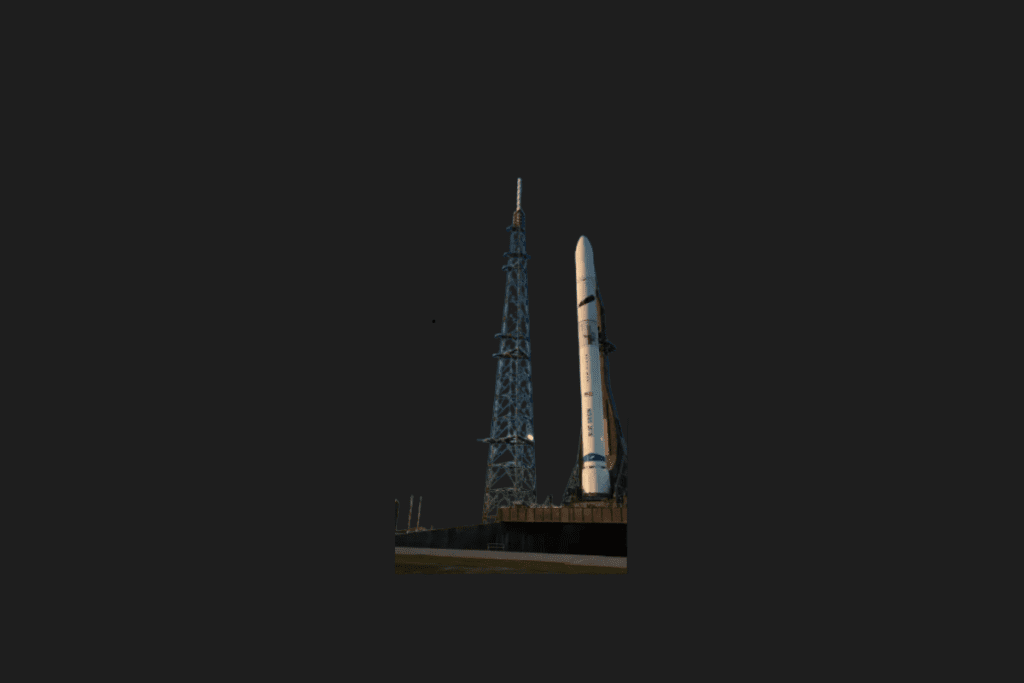
Blue Origin has unveiled a super-heavy version of the New Glenn rocket, featuring higher carrying capacity for orbital and lunar missions.
The new model, named New Glenn 9×4, can carry over 70 tons of payload to low Earth orbit (LEO) and utilizes an extended payload fairing with a diameter of 8.7 meters.
Bigger Design, More Power
The first stage of the New Glenn 9×4 features nine BE-4 engines, while the upper stage houses four BE-3U engines. This represents a significant increase compared to the seven-plus-two engine layout currently in use.
This new configuration elevates New Glenn into the super-heavy class, positioning the vehicle closer to SpaceX Starship and surpassing the capacity of most commercial rockets. The growth of both the booster and the second stage expands the mission range.
The New Glenn 9×4 is capable of delivering over 70 tons to low Earth orbit, over 14 tons directly to geostationary orbit, and over 20 tons to trans-lunar injection (TLI). This opens up a much wider field for commercial, scientific, and defense missions. For comparison, Starship can carry over 100 tons to low Earth orbit.
Additionally, the massive 8.7-meter payload fairing allows for the launch of more voluminous satellites and multi-mission packages. Blue Origin stated that this design was developed to support mega-constellation projects, Moon and deep space missions, and national security needs similar to “Golden Dome.”
Improvements Coming to the Existing New Glenn
Despite the prominence of the 9×4 model, Blue Origin announced that performance updates are also being made to the existing 7×2 version. These innovations will be implemented gradually, starting with the NG-3 flight.
The total thrust of the seven BE-4 engines is being increased from 3.9 million lbf to 4.5 million lbf. The company reported that the BE-4 engine produced 625,000 lbf in tests and will reach the 640,000 lbf level by the end of the year, exceeding 550,000 lbf with chilled fuel. The two BE-3U engines in the second stage are also gaining power, with total thrust rising from 320,000 lbf to 400,000 lbf. Blue Origin reported that the BE-3U reached 211,658 lbf in tests.
In addition to these, changes such as reusable payload fairings, lower-cost tank designs, and an improved thermal protection system are also coming. The goal is to reduce the preparation time between missions.
Blue Origin emphasized that the 9×4 will not replace the 7×2, but that both models will be used simultaneously to offer customers different capacity and timing options.
This announcement came just a few days after New Glenn’s second flight, in which it successfully carried NASA‘s ESCAPADE Mars probes and landed its booster back on the ship. With the new 9×4 design, Blue Origin aims to increase its competition in the heavy payload market and strengthen its position in lunar logistics programs.
You Might Also Like;
Follow us on TWITTER (X) and be instantly informed about the latest developments…
Prototyping has always been the moment when an idea turns into something real enough to evaluate, doubt, and refine. The trouble is that traditional prototyping demands time, materials, and repeated fabrication. AR and VR shift this narrative. They let teams experience ideas almost instantly, without waiting for physical models to catch up.
Let us walk through how this is changing the game.
When ideas become life sizeThe first time a design team views a product in VR, something clicks. A sketch on a screen becomes a full-scale object you can walk around, inspect, and judge with your natural sense of proportion. This life-sized presence helps teams catch issues that never show up on drawings or CAD views.
The prototype that never sleepsPhysical prototypes take time. VR prototypes evolve instantly. You move a surface, adjust an angle, reposition a control, or test a variation, and the change appears right away. Teams experiment more because the cost of exploration is close to zero. That freedom speeds up decision making.
The human eye factorHuman factors testing becomes far more insightful in AR and VR. You can simulate how someone sits, stands, reaches, turns, or presses a control. You can evaluate visibility, comfort, and safety under realistic conditions. It takes guesswork out of ergonomics.
Fixing assembly problems before they existManufacturing teams can test how parts come together in a virtual environment. They spot clashes, awkward angles, or assembly sequences that may slow down production. AR brings these insights directly onto the factory floor by overlaying virtual components onto real spaces.
Designing interactions before developmentModern products depend heavily on digital interfaces. AR and VR give teams a way to prototype screens, gestures, flows, and multimodal interactions. It is easier to sense what feels intuitive and what feels forced long before development begins.
Testing your product in any world you imagineYou can test how a product behaves in bright sunlight, a noisy warehouse, a hospital corridor, or a moving vehicle. You can check reflections, visibility, usability, and environmental impact without needing access to the real location.
Bringing global teams into the same roomDesign reviews become more productive when people across continents step into the same virtual model. They discuss changes in real time, explore alternatives, and build shared clarity. It reduces delays without losing depth of collaboration.
Turning stakeholders into believersA VR walkthrough shifts conversations instantly. Stakeholders do not need to imagine the product. They experience it. This strengthens clarity, improves alignment, and accelerates approvals.
Training teams on a product that is not built yetBefore the real product reaches the field, VR simulations prepare service teams, operators, and technicians. They learn how it works, how to assemble it, and how to troubleshoot. By launch day, they are ready.
What this really means is that AR and VR allow product teams to operate with sharper insight, deeper confidence, and far fewer blind spots. They reduce risk and open space for creativity.
And quietly leading much of this progress are studios like TILTLABS, who have been building immersive prototypes, simulations, and interactive experiences for global brands. Their ability to blend design sensitivity with deep technical skill makes them a strong partner for companies looking to move beyond traditional prototyping.
The post The Future of Prototyping Is Not Physical Anymore – It Is Immersive appeared first on TILTLABS.
Published: November 21, 2025 at 2:39 pm Updated: November 21, 2025 at 2:40 pm
by Ana
Edited and fact-checked:
November 21, 2025 at 2:39 pm
To improve your local-language experience, sometimes we employ an auto-translation plugin. Please note auto-translation may not be accurate, so read original article for precise information.
In Brief
Anthony Leutenegger, CEO of Aragon, shares how DAOs are maturing in 2025 and evolving toward more resilient, transparent, and scalable governance systems.
Few leaders have seen the development of DAOs from as many angles as Anthony Leutenegger, from early experimentation to steering one of the ecosystem’s most influential governance projects. In this interview, the Aragon CEO reflects on how decentralized governance is maturing in 2025, why the next wave of DAOs will look nothing like their predecessors, and what it really takes to build resilient, transparent decision-making systems at scale.
Anthony, could you share your journey into Web3?
I’ve been working at Aragon for four and a half years. I joined crypto because I found this great project that used to be a subsidiary of Aragon called Vocdoni, and they were building a blockchain-based voting protocol. Its goal was eventually to have nation-states running incorruptible elections.
I thought, what an incredible and perfect use case for blockchain technology. We’re in a world and industry where there’s a lot of speculation and money flowing around, and those are legitimate use cases, but being able to have incorruptible elections could solve a plethora of world problems.
That’s why I applied for a job at Vocdoni. I eventually moved into the Aragon project, which owned Vocdoni at the time and focused more on governance, capital distribution, and token economics at a much higher level than just voting. I later took over the company, and now things are going great.
Could you give us an overview of Aragon’s current mission and how it has evolved over the past couple of years?
Yeah, our current mission has definitely evolved over the last few years. It used to be about allowing organizations to experiment with governance at the speed of software. The point was that you could have decisions executed without trusted intermediaries. It’s the same as making a payment on a blockchain; you remove the intermediary. With blockchain technology, we can remove intermediaries from executing an action. In the traditional world, people vote or participate, but actions usually require others to execute them.
Now, decisions, whether it’s moving funds, upgrading code, or granting access, can be made by a larger group of people without anyone in the middle. It becomes very censorship-resistant. It’s the first time in history we can do this because we abide by the code as law.
That was Aragon’s old mission, and we still work heavily in governance. We still allow organizations to build their access-control mechanisms for how they govern their code base. For example, when Lido wants to upgrade its code, they do it on Aragon’s smart contracts. We secure their code base. If Katana wants to move money on the new Polygon project, that’s the same thing.
Now we’ve expanded into tokenomics. We support projects in building their own governance systems, tokenomic systems, and growth flywheels. Our mission is much broader today.
In your view, what are the key differentiators of Aragon’s governance framework compared to other DAO tooling or platforms?
Yeah, we definitely have the newest modular model. We separate the vault and core permissions from the governance methodologies, and anyone can install these methodologies or plugins to achieve what they want. For example, if you want a governance type that isn’t token-based voting, you can install the multisig plugin or the digital identification plugin.
You can even install multiple plugins at the same time, allowing different groups, maybe a multisig and token holders, to govern together. It’s highly customizable, upgradable, and always involves tokenomics. Tokens drive almost everything in our industry, so with the Aragon stack, you can create lockers, stakers, and mechanisms for locking, staking, and capital distribution. It’s modular, customizable, and future-proof.
What is the strategic significance of modular governance contracts, for example, plugins for scaling organizations over time?
Yeah, it’s super important. Major projects want to adjust governance and capital flows more easily, but many can’t do it safely because they’re stuck with old, heavy, library-based contracts. Making things modular allows easier adjustments. Upgrading becomes as simple as uninstalling and installing a new plugin, which is just a small part of the code base.
You can upgrade from multisig to token-holder voting as you decentralize over time. You can add staking mechanisms for token holders to control capital flows. It makes governance safer, more customizable, and more future-proof. It’s unquestionably a better system.
What are the most important policy or regulatory trends you see that will affect on-chain organizations in the next 12 to 24 months?
Yeah, that’s a great question. What we’re seeing, especially from the United States and from what firms like a16z are discussing, is that on-chain ownership or on-chain control will become the most important parameter defining decentralization. It won’t necessarily look like the old DAO model where everyone votes on everything.
It will focus on a smaller surface area of control, but that control must be decentralized, meaning token holders must actually have control without an intermediary foundation or multisig. Or the system will need to be immutable, where no individual or group can change the code for personal benefit.
So decentralization will be defined by control and ownership. I think we’ll see less generalized governance and more focus on governing specific things that must be decentralized, protocol upgrades, fee switches that distribute value to token holders, and similar components.
How do you prepare for adapting to these regulatory changes?
Luckily, we’ve been preparing for years. Three years ago, we already saw this problem and started moving toward addressing it. On our current stack, you can control your protocol in a highly decentralized way without having to vote on everything. Different people can control different things, and projects can define how access control is structured.
On top of that, we create automated and programmatic capital-distribution flows. Projects that want to accrue value to their token can do so in a programmatic, automated way that isn’t centrally controlled, making it more likely to meet future regulatory expectations, something our competitors cannot do.
What are the main risks you foresee for organizations adopting on-chain governance, and how does Aragon seek to mitigate them?
I think the technological side is mostly solved. We’ve created a very safe environment for organizations, and we’ve secured 45 billion dollars in assets since 2017–18. For me, the bigger risk is what is being controlled and by whom.
Right now, many projects relying on token holders for security face a problem: security degrades over time if the token has no value. If a token secures a protocol but the project isn’t generating revenue, there’s no incentive to hold it. People sell, decentralization decreases, and the system breaks down.
We need tokens to hold value and secure something meaningful. When that happens, the system naturally becomes more secure.
For an organization considering launching a DAO through the Aragon app, what key strategic governance decisions must be made upfront?
They need to understand who will control what. They also need to understand the value of the token that controls protocol parameters, which is essential. Other considerations include whether they want a VE model, a locker model, for token holders to lock or stake, or whether they want an ERC20 vote-standard token. These are nuanced decisions, and they should reach out to us before launching.
But most importantly, they must understand where their product is heading, how it will be controlled, and why people will participate in ensuring it remains decentralized.
Could you share any success stories or case studies where Aragon’s governance architecture significantly improved organizational outcomes?
Yeah, for sure. Let’s look at Curve. Many projects are now adopting the VE gauge mechanism, which is becoming popular again. The first version of ve & gauges was built in Aragon in 2020 by Curve. VE stands for vote escrow, meaning a token holder locks tokens for a period and gains specific voting power based on parameters set by the project.
The idea is that because they are locked into the system, they want the token to be worth more when it unlocks. They are often given power over distributing capital, liquidity, or other important resources. They vote in the long-term interest of the protocol. The more they participate, the more rewards they receive.
This creates a growth flywheel, incentives to hold, participate, and make good decisions. Projects with decent product-market fit using ve & gauges, Curve, Aerodrome, Katana, and others, have seen positive outcomes, including a higher percentage of tokens locked and increased valuation.
How do you view the future of governance standards, best practices, auditability, and transparency for on-chain organizations?
I don’t think we’re at a technological point where we should define strict standards yet. It’s still too early. We need more organic adoption and more tooling before things ossify into standards.
However, governance standards will be shaped by regulation, particularly around how capital and incentives can be distributed. Projects ultimately want to generate revenue and increase token value, so they’ll learn and adapt as clearer regulations emerge. As adoption grows and more use cases appear, we’ll be able to define better best practices.
We already see early examples. Lido is a successful DAO operating in a strategic way. The ve & gauge mechanism works well for DEXs like Curve. And DUNA is emerging for projects like Uniswap, with decentralized governance over specific parameters.
We’re starting to see the first hints of standards and best practices.
Disclaimer
In line with the Trust Project guidelines, please note that the information provided on this page is not intended to be and should not be interpreted as legal, tax, investment, financial, or any other form of advice. It is important to only invest what you can afford to lose and to seek independent financial advice if you have any doubts. For further information, we suggest referring to the terms and conditions as well as the help and support pages provided by the issuer or advertiser. MetaversePost is committed to accurate, unbiased reporting, but market conditions are subject to change without notice.
About The Author
Victoria is a writer on a variety of technology topics including Web3.0, AI and cryptocurrencies. Her extensive experience allows her to write insightful articles for the wider audience.
More articles
Victoria d’Este
Victoria is a writer on a variety of technology topics including Web3.0, AI and cryptocurrencies. Her extensive experience allows her to write insightful articles for the wider audience.
Microsoft Ignite 2025 in San Francisco was an great experience — energy, innovation, and a huge leap forward for Frontier Firms, Digital Employees and Agentic AI. This year I had the privilege of presenting “Multi-Agent Workflows in Microsoft Copilot Studio” as a theater session (not recorded). Because many asked for the slides I wanted to them here on my blog.
I was happily surprised by the number of people present – 5pm session at 3rd Microsoft Ignite day is usually quieter than first two days.
And if you wonder, I did stay on time! I had about 5 seconds to spare when I finished the session.
The Coach ( Orchestrator ) Agent takes care of the process. I created instructions with Copilot ( GPT-5), to cover various aspects.
These instructions are a lot longer, that is just the beginning of it.
The demo setup has 4 agents: 3 child agents and one Copilot Studio connected agent.
The activity shows how these agents work together, in sequential process way.
I will present the next evolution of this session at AI Community Conference Dubai December 10-11 and at AI Community Conference Tunisia, December 18-20. There will be something new to this, by that time!
Sharing is Caring! #CommunityRocks
Aiheeseen liittyy
Published by Vesa Nopanen
Vesa “Vesku” Nopanen, Principal Consultant and Microsoft MVP (Microsoft 365 and Azure AI Foundry) working on Future Work at Sulava MEA.
I work, blog and speak about Future Work : AI, Microsoft 365, Copilot, Loop, Azure, and other services & platforms in the cloud connecting digital and physical and people together.
I have 30 years of experience in IT business on multiple industries, domains, and roles.
View all posts by Vesa Nopanen
Published: November 21, 2025 at 9:40 am Updated: November 21, 2025 at 8:44 am
by Ana
Edited and fact-checked:
November 21, 2025 at 9:40 am
To improve your local-language experience, sometimes we employ an auto-translation plugin. Please note auto-translation may not be accurate, so read original article for precise information.
In Brief
10x Research reports that Bitcoin’s recent sell-off reflects structural stress from institutional ETF liquidations rather than long-term holders.
10x Research, a firm focused on digital asset analysis for wealth managers and cryptocurrency service providers, has published a report examining recent market activity in Bitcoin.
Analysts highlight that Wall Street investors experienced one of the largest liquidations since the introduction of Bitcoin exchange-traded funds (ETFs), signaling more than a typical market correction.
On-chain data suggests that the current sell-off is part of a structural adjustment rather than being driven by long-term, early adopters. Liquidity is tightening in critical price zones while institutional flows are showing signs of stress, and shifts in wallet behavior indicate broader changes in market dynamics.
Since mid-2024, wallets holding between 100 and 1,000 BTC have been accumulating at an accelerated pace, increasing their combined holdings from 3.9 million BTC to 5.17 million BTC, largely sourced from mega-whales, including legacy holders, miners, and early investors.
This growth is thought to reflect institutional participation, such as from firms like MicroStrategy and BlackRock, which distribute their holdings across hundreds of wallets.
Analysts note that the current sell-off is being driven by these newer, institutional participants, particularly ETF investors, who are liquidating positions regardless of price.
The market is experiencing a forced unwinding of trades that did not perform as expected, with risk management interventions determining the pace of liquidation.
Bitcoin Falls To $83K Amid $2B Liquidations And ETF Outflows
As of the latest update, Bitcoin is trading at $83,327, reflecting a 9.14% decline over the past 24 hours. During this period, the price fluctuated between a low of $80,760 and a high of $91,757, according to CoinMarketCap. The overall cryptocurrency market capitalization stands at $2.87 trillion, down 8.08% over the same timeframe, while the total trading volume across all digital assets reached $279.97 billion, marking a 52.64% increase.
The market experienced volatility, with nearly $2 billion in leveraged positions liquidated as Bitcoin briefly dropped to around $82,000. Data from CoinGlass indicates that over 396,000 traders were affected, including the largest single liquidation of $36.78 million on the Hyperliquid decentralized exchange.
This sell-off comes amid consecutive market disturbances this month, driven by accelerating ETF outflows and mixed macroeconomic sentiment, pushing Bitcoin to multi-month lows.
Bitcoin ETFs recorded $903 million in net outflows on Thursday, the second largest since their inception, with analysts suggesting that redemptions from Wall Street investors contributed to the decline.
Disclaimer
In line with the Trust Project guidelines, please note that the information provided on this page is not intended to be and should not be interpreted as legal, tax, investment, financial, or any other form of advice. It is important to only invest what you can afford to lose and to seek independent financial advice if you have any doubts. For further information, we suggest referring to the terms and conditions as well as the help and support pages provided by the issuer or advertiser. MetaversePost is committed to accurate, unbiased reporting, but market conditions are subject to change without notice.
About The Author
Alisa, a dedicated journalist at the MPost, specializes in cryptocurrency, zero-knowledge proofs, investments, and the expansive realm of Web3. With a keen eye for emerging trends and technologies, she delivers comprehensive coverage to inform and engage readers in the ever-evolving landscape of digital finance.
More articles
Alisa, a dedicated journalist at the MPost, specializes in cryptocurrency, zero-knowledge proofs, investments, and the expansive realm of Web3. With a keen eye for emerging trends and technologies, she delivers comprehensive coverage to inform and engage readers in the ever-evolving landscape of digital finance.
Published: November 21, 2025 at 9:00 am Updated: November 21, 2025 at 9:03 am
by Ana
Edited and fact-checked:
November 21, 2025 at 9:00 am
To improve your local-language experience, sometimes we employ an auto-translation plugin. Please note auto-translation may not be accurate, so read original article for precise information.
In Brief
Cysic is delivering a full-stack compute network that enables zero-knowledge proof generation for AI-powered and Web3 applications, supporting large-scale, real-time decentralized workloads.
First full-stack compute network Cysic announced that an increasing number of cryptocurrency networks are adopting zero-knowledge systems as the industry advances toward more robust verification and privacy standards. Bitcoin.com has implemented ZK-based age verification across 75 million wallets, while Ripple is preparing ZK privacy enhancements designed for institutional adoption by 2026.
As these applications continue to scale, there is a growing need for proving infrastructure that is both cost-effective and capable of supporting real-time workloads efficiently.
Cysic is providing the underlying infrastructure to support NOYA, an AI agent-driven network that leverages ZKML to manage trustless omnichain liquidity. Through this integration, NOYA is able to perform large-scale proof generation with improved speed and efficiency, achieving lower latency and reduced operational costs.
Currently, Cysic is delivering this infrastructure to support NOYA, an AI agent-powered network that leverages ZKML to coordinate trustless omnichain liquidity. Through this integration, NOYA can perform high-volume proof generation with significantly lower latency and reduced operational expenses, enabling more efficient execution of real-time decentralized processes and expanding the capabilities of large-scale Web3 ecosystems.
Promising High-Speed, High-Throughput Proving Capabilities For Large-Scale ZK Applications
Early performance assessments highlight the substantial advancements achieved by Cysic. Its C1 chip, a hardware-optimized prover, can process 1.31 million Keccak functions per second. Verification costs can be lowered by as much as 91% through batching techniques, while proving speeds are at least 70% faster than those of DeepProve.
In a prior collaboration with Succinct Labs, Cysic successfully completed over four million proofs with a 99.7% success rate, demonstrating reliability at production-scale volumes. Collectively, these results indicate that Cysic can deliver the high-speed, high-throughput proving environment necessary for large-scale zero-knowledge applications, including emerging ZKML networks.
Cysic represents the first full-stack compute network specifically designed to handle AI, zero-knowledge, and mining workloads. By integrating vertically from the silicon level through to the blockchain layer, Cysic provides exceptional control over system performance, operational costs, and scalability. This architecture establishes Cysic as a core infrastructure platform, supporting large-scale Web3 applications and decentralized computing with efficiency and reliability.
Recently, Cysic has partnered with zkVerify to further accelerate proof generation on its platform. In addition, the integration of the Succinct Prover Network enhances both the speed and scalability of the proof generation infrastructure, supporting real-time workloads and expanding the capabilities for complex decentralized applications.
Disclaimer
In line with the Trust Project guidelines, please note that the information provided on this page is not intended to be and should not be interpreted as legal, tax, investment, financial, or any other form of advice. It is important to only invest what you can afford to lose and to seek independent financial advice if you have any doubts. For further information, we suggest referring to the terms and conditions as well as the help and support pages provided by the issuer or advertiser. MetaversePost is committed to accurate, unbiased reporting, but market conditions are subject to change without notice.
About The Author
Alisa, a dedicated journalist at the MPost, specializes in cryptocurrency, zero-knowledge proofs, investments, and the expansive realm of Web3. With a keen eye for emerging trends and technologies, she delivers comprehensive coverage to inform and engage readers in the ever-evolving landscape of digital finance.
More articles
Alisa, a dedicated journalist at the MPost, specializes in cryptocurrency, zero-knowledge proofs, investments, and the expansive realm of Web3. With a keen eye for emerging trends and technologies, she delivers comprehensive coverage to inform and engage readers in the ever-evolving landscape of digital finance.
Published: November 21, 2025 at 8:46 am Updated: November 21, 2025 at 8:46 am
by Ana
Edited and fact-checked:
November 21, 2025 at 8:46 am
To improve your local-language experience, sometimes we employ an auto-translation plugin. Please note auto-translation may not be accurate, so read original article for precise information.
In Brief
The third week of November saw major players like Mastercard, UFC, Bitget, and WhiteBIT launch partnerships that accelerate blockchain’s push into payments, trading, and large-scale digital infrastructure.
The third week of November delivered a surge of high-impact crypto partnerships, with giants like Mastercard, UFC, Bitget, and WhiteBIT rolling out deals that push blockchain deeper into payments, trading, and global infrastructure. From alias-based transfers to national-scale digital initiatives, here are the collaborations shaping Web3’s next wave.
Mastercard, Polygon, and Mercuryo Launch Alias-Based Crypto Transfers
Mastercard is expanding its Crypto Credential system with help from Polygon Labs and Mercuryo, introducing an alias-based feature that lets users send crypto without dealing with long wallet addresses. Polygon is supplying the underlying blockchain infrastructure, while Mercuryo is serving as the first issuer responsible for onboarding users and completing KYC verification. Mastercard is layering in its own verification standards to keep the system interoperable across Web3 applications.
Under the model, a user completes KYC through Mercuryo, receives a short alias, and links it to a self-custody wallet. They can also opt to mint a soulbound token on Polygon as an on-chain proof that the wallet belongs to a verified individual. From there, transfers happen using just the alias.
Polygon’s CEO described this as a moment when “self-custody becomes simple,” while Mercuryo said the approach could accelerate mainstream usage by making crypto transfers more intuitive. Mastercard added that broad ecosystem partnerships ensure the system works across multiple apps.
UFC Teams Up With Polymarket for Crypto-Powered Predictions
The UFC has entered an exclusive partnership with Polymarket, bringing decentralized prediction markets directly into the organization’s fan ecosystem. The deal marks a notable step in the UFC’s push toward Web3 tools, giving viewers a new way to interact with fight nights through real-time, crypto-based predictions.
With Polymarket’s platform, users can forecast outcomes such as winners, round finishes, or bonus awards, all settled on-chain.
According to industry experts, the attraction of Polymarket is its transparency and decentralized liquidity pools which make the platform more open than the traditional betting operators. UFC officials, on the other hand, view this partnership as an avenue to better connect with the audience, as it would not only be interactive but also based on data thus more fans to be involved.
The move also reflects a broader trend across professional sports, where leagues are experimenting with blockchain products to boost loyalty and participation. For Polymarket, tapping into the UFC’s global audience could push prediction markets further into the mainstream.
Bitget has formed a new partnership with Tiger.com, a professional trading terminal known for its speed, precision, and multi-market tools. The integration gives traders the ability to connect directly to Bitget within seconds, creating a smoother workflow for intraday strategies and real-time market analysis.
Tiger.com is used by hundreds of thousands of traders worldwide and offers access to crypto, stocks, futures, and Forex. Its interface includes advanced charting, customizable Depth of Market views, cluster and tape feeds, strategy playback tools, and built-in risk management—features designed for users who rely on fast execution and granular data.
Industry analysts note that the collaboration pairs Bitget’s liquidity and institutional-grade infrastructure with Tiger’s high-performance environment. Executives from both companies said the partnership brings traders closer to a “professional-grade experience” by combining speed, depth, and strategic tooling. The move also aligns with Bitget’s broader push to evolve into a Universal Exchange offering an integrated, trader-first ecosystem.
Blockchain Council Partners With Global Blockchain Show for 2026 Event
Blockchain Council has declared that it will cooperate with the Global Blockchain Show as a media partner for the event which will take place on February 9-10, 2026, at the Riyadh Front Exhibition and Conference Center. The whole event and the partnership itself is part of the technology Council’s initiatives on the decentralized tech ecosystem by conducting dialogues and empowering innovations and educating people.
Those who will attend the event will be the world’s top-experts in Web3, digital assets, DeFi, and distributed systems, and will have the chance to listen to the leading organizations and innovators influencing the future of trustless networks and digital ownership. The audience will be given a sneak peek of where the different sectors are going to with the adoption of blockchain, such as finance, supply chain, government, cybersecurity, and corporate systems which will reflect that the technology has now moved from the experimenting phase to the real-world transformation one.
Riyadh’s increasing importance as a global tech hub makes it an ideal venue for the show that is expected to bring in a lot of professionals looking for collaboration and investment opportunities. Blockchain Council, being a media partner, will be responsible for the coverage of the event and the dissemination of educational content that will guarantee the important points reaching a wide global audience.
CentToken and CentPay Partner to Bring Crypto Into Everyday Payments
CentToken and CentPay have announced a partnership aimed at turning cryptocurrency into a practical, globally accepted payment method. The collaboration combines CentToken’s blockchain utility with CentPay’s Visa-compatible crypto payment card, creating an ecosystem where digital assets can be earned, stored, transferred, and spent instantly worldwide.
CentToken is designed for high scalability and real-time settlement, supporting use cases across DeFi, gaming, e-commerce, and developer applications. It offers fast transactions and transparent, decentralized infrastructure suitable for both enterprise-level activity and day-to-day micro-payments.
CentPay complements this by offering a crypto card that converts USDT and other supported assets into spendable balance at the point of purchase. The card works in physical and virtual formats, supports Apple Pay and Google Pay, and is usable wherever Visa or Mastercard are accepted. By removing traditional banking friction and offering near-instant activation, CentPay gives users a direct, global way to spend digital assets.
Together, the two platforms aim to make crypto functional in everyday life.
WhiteBIT Expands Into Saudi Arabia Through Strategic Digital Infrastructure Partnership
WhiteBIT has entered the Saudi market through a major cooperation agreement with Durrah AlFodah Holding, represented by His Royal Highness Prince Naif Bin Abdullah Bin Saud Bin Abdulaziz Al Saud. Announced in Riyadh and facilitated by Seaside Arabia, the partnership supports Saudi Arabia’s Vision 2030 push toward economic diversification and advanced digital infrastructure.
Both parties will collaborate on national initiatives aimed at strengthening the Kingdom’s blockchain and digital finance capabilities. Plans include exploring tokenized securities for the Saudi stock market, with industry officials suggesting these tools could enhance transparency and market efficiency. The agreement also outlines early research into a potential central bank digital currency, with WhiteBIT contributing technical expertise to the underlying architecture.
Another focus area involves developing large-scale computing and mining centers to support secure data processing and blockchain operations. Durrah AlFodah will guide market entry and regulatory engagement, while WhiteBIT provides infrastructure design. The partnership positions Saudi Arabia for a larger regional role in blockchain innovation and digital finance.
Disclaimer
In line with the Trust Project guidelines, please note that the information provided on this page is not intended to be and should not be interpreted as legal, tax, investment, financial, or any other form of advice. It is important to only invest what you can afford to lose and to seek independent financial advice if you have any doubts. For further information, we suggest referring to the terms and conditions as well as the help and support pages provided by the issuer or advertiser. MetaversePost is committed to accurate, unbiased reporting, but market conditions are subject to change without notice.
About The Author
Victoria is a writer on a variety of technology topics including Web3.0, AI and cryptocurrencies. Her extensive experience allows her to write insightful articles for the wider audience.
More articles
Victoria d’Este
Victoria is a writer on a variety of technology topics including Web3.0, AI and cryptocurrencies. Her extensive experience allows her to write insightful articles for the wider audience.