Metaverse

Home Metaverse Page 78

Web3 Data Needs an Upgrade – And SQD Network’s Portal Might Be It

0
Web3 Data Needs an Upgrade – And SQD Network’s Portal Might Be It


In Brief

SQD Network’s upcoming Portal upgrade transforms Web3 data delivery from on-demand requests to continuous streaming, giving developers faster, multi-chain, real-time data for more reliable and composable applications.

Data is arguably the most precious onchain resource of all. Not only must it be delivered with sufficient rapidity and volume, but it must be supplied to decentralized applications, whose distributed design adds complexity. Throw in the fact that dapps now routinely require the latest data not just from their native chain, but from dozens of other blockchains and protocols – as well as off-chain sources – and it’s easy to see why reliable access to real-time data is so desirable and yet so hard to reliably attain.

Just as the computational demands of computers processing AI workloads has prompted a GPU arms race, something similar is occurring with Web3 data delivery. No matter how much infra providers supply, applications demand more. Now, in a bid to keep pace with the escalating data demands of the dapps and centralized applications it serves, SQD has done something bold: it’s torn up its current playbook and devised an entirely new delivery framework.

Its name is Portal and it will be the principal feature that’s implemented when SQD undergoes its next network upgrade. If Portal lives up to its billing, it has the potential to level up Web3 data while making it easier for developers to create composable applications. These will be equipped with endless data that isn’t delivered on demand, but is instead streamed, ensuring that accurate pricing and other blockchain events are always available. Let’s unpack how it works and the challenges Portal aims to solve.

Addressing Web3’s Data Problem

At present, blockchain applications operate in an environment where data arrives only when requested. That worked fine when blockchains were fewer and their data requirements predictable. But as networks have scaled and real-time systems emerged, from algorithmic trading to autonomous agents, the traditional request-response model has begun to strain. SQD’s upcoming upgrade, Portal, is an attempt to solve that tension by moving Web3 from “pulling” data to continuously receiving it.

At present, SQD provides developers with indexed data at the moment they ask for it. Dapps make a request – say for price updates or transaction histories – and SQD returns the latest information it has indexed. Portal changes this pattern by continuously streaming updates as they occur onchain.

The shift may sound subtle, but this streaming architecture does more than merely reduce latency. It changes not just how data is delivered, but what developers can realistically build on top of it. It replaces a model built on indexing and querying with a framework designed to deliver constant streams of on- and off-chain information. For a rapidly expanding blockchain ecosystem, this turns high-volume, multi-source data into something that arrives automatically and stays up-to-date without extra engineering overhead.

The first-order benefits of this shift are easy to grasp: data will be supplied more rapidly and with greater accuracy, ensuring that dapps always have the latest information to work with, whether it’s the price of BTC to power perps markets or the latest sports odds to inform prediction markets. But over and above this, Portal – with the aid of the accompanying Pipes SDK which is also bundled with the network upgrade – does more. It simplifies dapp creation, enabling builders to create sophisticated multi-chain applications.

More Data, More Modularity

Portal’s streaming model eliminates the round-trip inherent in RPC-style requests, allowing applications to stay synced with the latest events in real time. For execution-sensitive systems such as perps trading or onchain AI agents, that difference matters more than ever.

Portal also arrives with a fully redesigned query engine written in Rust. This improves stability and error handling while reducing SQD’s reliance on a centralized gateway. Instead, Portal forms a decentralized network where performance does not hinge on a single bottleneck. But the second-order effects that Portal engenders are just as vital, because when paired with the Pipes SDK, it empowers devs to create highly modular applications.

Portal handles the raw transport layer while Pipes gives developers the ability to actually use that stream effectively. This setup allows developers to build their own data pipelines, while giving teams flexibility to integrate with their existing architecture. The result is a combination of speed, control, and composability.

Smarter, Faster

Once Portal goes live, multi-chain applications that once needed several indexing solutions can operate on a consolidated stream that includes both blockchain and off-chain sources. For emerging categories such as LLM-powered smart contracts or real-time prediction markets, this expands what’s technically feasible.

When we talk about composability, what we’re actually referring to is the ease with which developers can connect different onchain components in the manner that’s caused DeFi to sometimes be described as “money Legos.” You can connect Uniswap’s open-source AMM with liquidity sourced from Orbs and vault optimization derived from Yearn, for example. Or you can create a cross-chain lending application that allows funds deposited on one chain to be used on another without first needing to bridge them.

The easier it is to connect these components – while ensuring that the data required to keep everything operating smoothly is always available – the better DeFi becomes. Greater utility. Greater reliability. Greater capital efficiency. While SQD’s forthcoming upgrade doesn’t address all of these challenges, it solves one of the most critical in making data easier to work with. Which means devs are free to create applications where the only limitations are their imagination. If you can conceive it, Portal can provide the data to make it a reality.

Why Streaming Data Is Becoming a Baseline Requirement

With the imminent launch of Portal, the days of the humble RPC may be numbered. RPC endpoints are still the default way of interacting with blockchain nodes, but they were never designed to deliver high-throughput data at scale. The RPC model is fine for handling discrete requests such as wallet balances and transaction submissions but is inefficient for applications that are constantly querying the newest block or external event.

Positioned between nodes and application pipelines, Portal extracts and streams data at high throughput via an optimized HTTP API, removing the need for recurrent polling. This reduces the load on nodes and on the developer’s infrastructure. In practical terms, this means devs can build systems that remain synchronized with network activity without constantly engineering around latency and rate limits across different chains.

If Portal delivers on its goals, including lower latency, greater accuracy, improved composability, and a cleaner developer experience, it will give builders a more reliable foundation for crafting the next generation of Web3 applications. For a space now defined by real-time logic and multi-chain coordination, that’s welcome news.

Disclaimer

In line with the Trust Project guidelines, please note that the information provided on this page is not intended to be and should not be interpreted as legal, tax, investment, financial, or any other form of advice. It is important to only invest what you can afford to lose and to seek independent financial advice if you have any doubts. For further information, we suggest referring to the terms and conditions as well as the help and support pages provided by the issuer or advertiser. MetaversePost is committed to accurate, unbiased reporting, but market conditions are subject to change without notice.

About The Author


Victoria is a writer on a variety of technology topics including Web3.0, AI and cryptocurrencies. Her extensive experience allows her to write insightful articles for the wider audience.

More articles


Victoria d’Este


Victoria is a writer on a variety of technology topics including Web3.0, AI and cryptocurrencies. Her extensive experience allows her to write insightful articles for the wider audience.


Source link

Crypto portfolio diversification: The best cryptocurrencies and strategies to consider | NFT News Today

0
Crypto portfolio diversification: The best cryptocurrencies and strategies to consider | NFT News Today


Smart traders must always seek the best strategies for investing in cryptocurrencies. And in most cases, portfolio diversification has proved the best way to minimize risk and have a growth-oriented portfolio. Crypto portfolio diversification means spreading your investments across multiple crypto assets rather than focusing on just one. Diversification has also been used for other investments and asset classes, as it is always better to have a balanced approach, rather than having a negative outcome because the cryptocurrency you have invested in hasn’t performed the way you envisioned. A diversified portfolio will help you protect against volatility, as you are the one who controls the exposure to risk, and you can balance investing in high-risk digital coins with those that are more stable.

Diversification will also help you achieve optimized returns and take advantage of the different directions the crypto market is headed, as you can earn returns from more digital coins. However, even though crypto portfolio diversification has proved to be a successful idea, the result of this depends on the cryptocurrencies you want to add to your portfolio. You can’t just pick cryptocurrencies at random; this process involves carefully selecting them after reviewing their risk and return profiles. Additionally, you need to ensure these digital coins align with your financial goals.

When you want to discover the cryptocurrencies that performed well lately, it is a good idea to take a look at reputable cryptocurrency exchanges. For instance, on Binance, you can access real-time data and charts to discover the best cryptocurrency for your portfolio. There, you will see the top-gaining cryptocurrencies, the top cryptocurrencies by market cap, and the new assets that have been listed on this platform. This is why you can improve your decisions by considering the data from this site.

In this article, we will explore more about the best cryptocurrencies and strategies to consider for portfolio diversification. Keep reading to learn more.

Taking a look at the risk level of different cryptocurrencies

Cryptocurrencies have different risk levels, which is why it is essential to understand this, so that you can consider the best approach for your portfolio. Here are the crypto groups considering their risk level:

Low-risk cryptocurrencies

All cryptocurrencies carry a certain risk, but some are safer than others. These are mostly represented by stablecoins, whose value is pegged to fiat currencies like the Euro or the Dollar. Because of this, they won’t go through the same price fluctuations as the others. The most popular stablecoin is Tether (USDT), which is why it is a useful tool for investors who want to minimize risk. Stablecoins have many use cases and can be used for saving, transactions, and as a store of value when the crypto market is experiencing extreme volatility.

Medium-risk crypto assets

Bitcoin

Bitcoin is the largest cryptocurrency by market cap, and also the one that has inspired the entire cryptocurrency space. Bitcoin has experienced many ups and downs over the years, yet it has remained the largest cryptocurrency. This is why Bitcoin is relatively stable, especially given its continued leadership position. Bitcoin is volatile, but in some cases it can be a powerful tool, especially for those seeking short-term gains. Another reason Bitcoin is a good investment is its limited supply, which adds scarcity and protects it from inflation.

Altcoins

Altcoins are also medium-risk crypto assets, a term referring to all digital currencies other than Bitcoin. Many altcoins, including Ethereum (ETH), Cardano (ADA), and Solana (SOL), were developed to address Bitcoin’s limitations and add additional features. This is why they truly took advantage of blockchain technology and have integrated plenty of other new applications. Altcoins are great for portfolio diversification, especially since they have more use cases.

High-risk crypto assets

Among the high-risk asset classes are meme coins, which often lack technological innovation and are characterized by community support. Dogecoin (DOGE) is among the most popular meme coins at the moment, having started as a joke but evolved significantly. The increase is particularly due to the online communities these cryptocurrencies have engaged with, which have supported their evolution.

Meme coins are high-risk cryptocurrencies because they lack robust technical development and often have little practical use. This is why they are risky and volatile, and their prices fluctuate more with the market sentiment and trends. However, meme coins can still be part of a crypto diversification, as they have the potential for quick returns.

Diversification strategies

Diversifying by market cap

Large-cap cryptocurrencies: Bitcoin and Ethereum

Mid-cap cryptocurrencies: Solana, XRP

Small-cap cryptocurrencies: Celer Network (CELR), Nolus (NLS).

Diversifying by risk level

This strategy means you will select cryptocurrencies with varying levels of risk. This includes a mix of Bitcoin, altcoins, and meme coins. A good example will be:

Allocate a percentage to the largest cryptocurrency, Bitcoin

Allocate a part for altcoins with a high growth potential: Ether, SOL

Allocate a part for crypto speculation: meme coins

Keep the rest of the portfolio stabilized through stablecoins

Diversifying by use and sector

You can also try to diversify your portfolio while considering the use and sector of cryptocurrencies. In this way, your portfolio will comprise more investment strategies and industries that can grow independently. Here is a model of diversification while keeping in mind the sector and use:

Investing in smart contract application: Ether

Investing in the DeFi landscape: Uni of Uniswap

Investing in Non-fungible tokens (NFTs): AXS of Axie Infinity.

Conclusion

For all the smart traders, crypto portfolio diversification remains an important strategy to better protect crypto investments. Crypto portfolio diversification has many advantages, among the most important being that it mitigates risk and can improve long-term success. But to be able to benefit from a good portfolio diversification, you must know what the best digital coins to invest in are, as you cannot pick them by chance.

We hope this article will help you on your journey to selecting the best digital coins.

Main Image Credit: Unsplash


Source link

Security Expert Fired by Figure AI Warns: These Robots Can Harm Humans | Metaverse Planet

0
Security Expert Fired by Figure AI Warns: These Robots Can Harm Humans | Metaverse Planet


Figure AI, known for its humanoid robots, is at the center of a significant lawsuit. The company’s former product safety expert, Robert Gruendel, alleges he was fired for raising concerns that these robots could cause serious injury to humans.

The Growing Danger of Humanoid Robotics

The explosion in the Artificial Intelligence (AI) field, coupled with significant advancements in robotics, has suddenly made humanoid robots—once seen only in science fiction—a much more tangible reality. Today, these robots are slowly being integrated into the workforce, and they are expected to enter homes as assistants in the very near future. However, some experts are warning that this could be quite dangerous for humans. Even an ordinary software glitch in these robots could result in serious human injury.

This destructive potential of robots is the subject of a new lawsuit filed this week. The former security expert at Figure AI, one of the leading companies producing notable humanoid robots, is suing the company, claiming he was fired for voicing security concerns.

Figure AI Robots Could Severely Injure a Human If Malfunctioning

According to statements in the court filing, Robert Gruendel, the company’s former Head of Product Safety, reported during impact and speed tests in July that the robots moved at “superhuman speeds” and generated forces reaching “twenty times the pain threshold.” These values are stated to be more than double the force required to fracture an adult human skull.

The complaint also details that during one test, a malfunctioning robot tore a approximately 6-millimeter gash in a steel refrigerator door, with a human employee standing right beside it. Following these findings, Gruendel prepared a comprehensive safety roadmap within the company. The document detailed necessary sensor limitations, force ceilings, software safety protocols, and testing procedures to ensure the robots’ safe integration into the workplace.

However, Gruendel claims his security plan was “significantly pruned” by company management, and critical measures were disabled because they supposedly “slowed down product development.”

When Gruendel believed the security vulnerabilities had reached a level that could mislead investors, he escalated the matter directly to CEO Brett Adcock and Chief Engineer Kyle Edelberg. Gruendel alleges these warnings were dismissed as unimportant, and he was treated adversely for making the job difficult. Indeed, Gruendel was abruptly terminated just days after sending his clearest, most documented objections to management.

Figure AI rejects all allegations. In a statement, the company claims Gruendel was fired due to “poor performance” and asserts that the accusations in the lawsuit are baseless claims that will be easily refuted in court.

This lawsuit against Figure AI brings to mind a video that went viral on social media a few months ago showing a “glitching robot.” The video, in which a robot with a software issue suddenly thrashed uncontrollably, destroying its surroundings, thoroughly spooked people. A similar malfunction by a much larger and more powerful robot used in factories or homes could lead to far more terrifying consequences. For this reason, Gruendel’s warnings do not seem unfounded.

You Might Also Like;

Follow us on TWITTER (X) and be instantly informed about the latest developments…


Source link

World’s First Fully AR-Integrated Helmet Unveiled: Shoei GT-Air 3 Smart | Metaverse Planet

0
World’s First Fully AR-Integrated Helmet Unveiled: Shoei GT-Air 3 Smart | Metaverse Planet


Shoei, in collaboration with EyeLights, has introduced the GT-Air 3 Smart, the first motorcycle helmet to offer completely integrated Augmented Reality (AR). The helmet features a nano-OLED Head-Up Display (HUD) and a universal intercom system.

A New Standard in Rider Technology

Shoei, a brand that sets the standards in motorcycle equipment, has achieved another industry first. The company unveiled the GT-Air 3 Smart, the world’s first motorcycle helmet offering fully integrated Augmented Reality (AR). To realize this technology, Shoei partnered with France-based company EyeLights.

EyeLights’ third-generation technology, which specializes in HUD (head-up display) and Bluetooth systems, projects riding data directly into the rider’s field of view via an integrated projection system embedded in the helmet’s visor. This eliminates the need for any external, add-on hardware.

Critical Information on the HUD Screen

According to EyeLights, critical data such as speed, GPS navigation, call information, and radar warnings appear in the rider’s field of view at a distance equivalent to 3 meters. This shortens the eye’s focus time, and the company claims that reaction time can be reduced by more than 32%.

The issue of visibility in sunlight, which is the biggest problem for HUD screens, has been solved with a nano-OLED screen. This screen is stated to have Full HD resolution and remains easily readable even under direct sunlight. Riders can instantly access all information by simply looking slightly up.

Universal Intercom and Safety Features

The GT-Air 3 Smart doesn’t just stand out for its AR system. The helmet also features a built-in universal intercom system. This communication system operates in both online and offline mesh modes and is compatible with all brands of intercoms. EyeLights’ microphone with active noise cancellation support, integrated speakers, and support for Siri and Google Assistant are also included in the package. The battery life is stated to be 10 hours.

On the helmet side, Shoei’s long-standing safety standard is maintained. The model features a multi-layered AIM composite shell structure that meets DOT and ECE 22.06 certifications. While the standard GT-Air 3 weighs approximately 1.77 kg, the Smart version will be slightly heavier due to the integrated electronics, though the exact weight has not yet been disclosed. The helmet also includes Shoei’s Defogger airflow system with a QSV-2 internal sun visor, a Pinlock-compatible CNS-1C outer visor, and wide adjustable upper and chin air intakes.

Price and Market Position

The price tag was announced as $1,199. This is nearly double the cost of the standard GT-Air 3. While there are more affordable alternatives like the Sena Phantom at $499 or similarly priced competitors like the Cardo Beyond GTS, none of these models feature the integrated AR HUD technology.

You Might Also Like;

Follow us on TWITTER (X) and be instantly informed about the latest developments…


Source link

Don’t Miss These Abu Dhabi Events This December After HSC Asset Management

0
Don’t Miss These Abu Dhabi Events This December After HSC Asset Management


In Brief

As December nears, Abu Dhabi becomes a global hub for finance and Web3, highlighted by HSC Asset Management on December 9–10.

Don’t Miss These Abu Dhabi Events This December After HSC

As December approaches, Abu Dhabi transforms into a hub of finance and Web3 innovation, with world-class events attracting investors, innovators, and thought leaders from across the globe. At the center of this activity is HSC Asset Management, happening on December 9–10.

Backed by the Sino-International Entrepreneurs Federation (SIEF) and Sycamore Investment Fund Management (HK Fok Family, $70B AUM), HSC Asset Management brings together an exceptional mix of sovereign wealth funds, family offices, institutional investors, and technology leaders. The goal: to shape the global dialogue on how AI, DeFi, RWA tokenization, and sustainable finance are reshaping modern investment strategies.

HSC’s programming will feature the MENA–Asia Investment Summit, government-level dialogues, and strategic MOU signings between leading financial institutions. Among the invited speakers are industry icons such as Arthur Hayes, Joseph Lubin, Yat Siu, Rob Hadick, and Kelvin Koh, alongside founders and executives from the world’s top Web3 ecosystems, including Polygon, Celestia, Hashed, 1inch, Monad, ZKsync, and Ava Labs.

But HSC is just the beginning. We’ve rounded up other must-attend finance and Web3 events in Abu Dhabi this December that are worth marking in your calendar:

December 8–11, 2025

Returning for its fourth edition, Abu Dhabi Finance Week is the MENA region’s premier finance and investment summit, bringing together leaders from over 100 countries. Under the theme “Engineering the Capital Network,” ADFW 2025 will explore how innovation, AI, and cross-border investment are reengineering global capital systems, and why the UAE is emerging as a gravitational hub for the next era of finance.

The four-day summit includes five flagship forums and more than 60 curated events, featuring top policymakers, market experts, and investors shaping the global economic narrative. From institutional finance to fintech, ADFW serves as a nexus between East and West — driving the conversations that define tomorrow’s capital flows.

Don’t Miss These Abu Dhabi Events This December After HSC Asset Management

December 8–9, 2025

Following its groundbreaking debut last year, Bitcoin MENA returns bigger and bolder for 2025. As the premier Bitcoin gathering in the Middle East and North Africa, it anchors Abu Dhabi’s position as a rising hub for global Bitcoin dialogue, innovation, and adoption.

Timed perfectly after the Abu Dhabi Formula 1 Grand Prix, the event blends high-energy networking with deep industry insight. Expect an expanded exhibition floor, interactive outdoor activations, and curated experiences featuring world-class speakers, Bitcoin startups, and investors. For anyone passionate about Bitcoin’s role in global finance, this is the MENA stage you can’t afford to miss.

Don’t Miss These Abu Dhabi Events This December After HSC Asset Management

December 11–13, 2025

Solana’s flagship global conference, Breakpoint, lands in Abu Dhabi for the first time, bringing together founders, builders, and institutions that are shaping the future of the Internet’s financial layer. Representing over 110 countries, Breakpoint is where the Solana community meets to celebrate innovation, showcase real revenue-driving projects, and debate the evolution of Internet Capital Markets.

The 2025 edition focuses on Revenue and Returns, spotlighting builders and investors who are delivering real results, not just hype. True to Solana’s no-nonsense ethos, panels are banned, replaced by debates, keynotes, and fireside conversations with industry peers who are in the arena. Aligned with Abu Dhabi Finance Week and Bitcoin MENA, Breakpoint rounds out an electrifying month for the city, now firmly established as the capital of capital.

Don’t Miss These Abu Dhabi Events This December After HSC Asset Management

Disclaimer

In line with the Trust Project guidelines, please note that the information provided on this page is not intended to be and should not be interpreted as legal, tax, investment, financial, or any other form of advice. It is important to only invest what you can afford to lose and to seek independent financial advice if you have any doubts. For further information, we suggest referring to the terms and conditions as well as the help and support pages provided by the issuer or advertiser. MetaversePost is committed to accurate, unbiased reporting, but market conditions are subject to change without notice.

About The Author


Victoria is a writer on a variety of technology topics including Web3.0, AI and cryptocurrencies. Her extensive experience allows her to write insightful articles for the wider audience.

More articles


Victoria d’Este


Victoria is a writer on a variety of technology topics including Web3.0, AI and cryptocurrencies. Her extensive experience allows her to write insightful articles for the wider audience.


Source link

Gate Technology Ltd. CEO Engages Malta’s Finance Minister to Strengthen Web3 Growth and Regulatory Progress

0
Gate Technology Ltd. CEO Engages Malta’s Finance Minister to Strengthen Web3 Growth and Regulatory Progress


In Brief

Gate CEO Giovanni Cunti and Malta’s Finance Minister Clyde Caruana met at the FinanceMalta Conference to discuss strengthening Malta’s Web3 ecosystem and Gate’s growing role in compliant digital-asset infrastructure across Europe.

Gate Technology Ltd. CEO Engages Malta’s Finance Minister to Strengthen Web3 Growth and Regulatory Progress

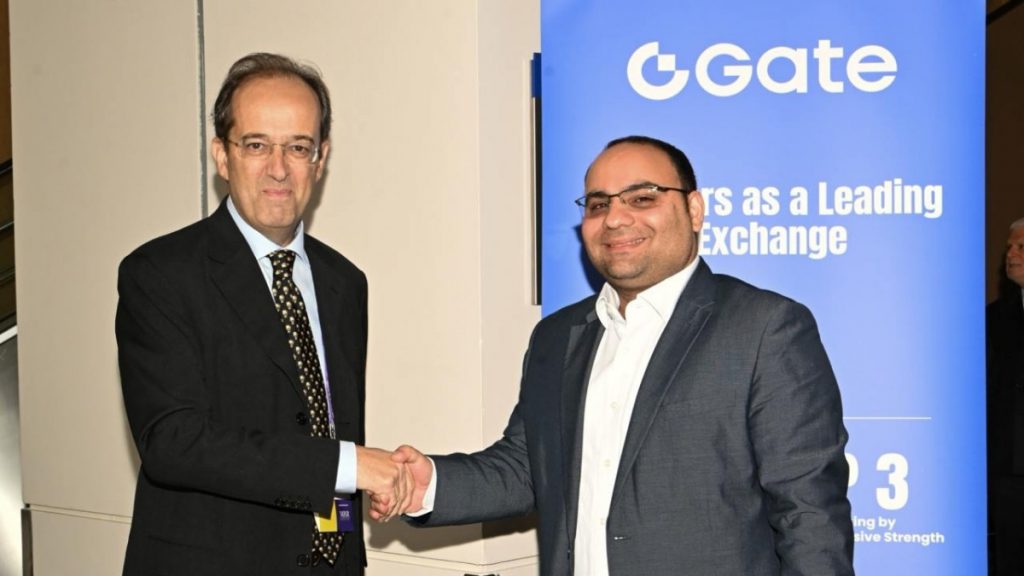
On November 19, Gate Technology Ltd. CEO Giovanni Cunti met with Malta’s Minister for Finance, Hon. Clyde Caruana, during the FinanceMalta Conference, where Gate participated as the exclusive crypto partner. The two sides held a constructive exchange on the continued development of Malta’s Web3 ecosystem and Gate’s expanding role as compliant digital-asset infrastructure becomes increasingly critical across Europe.

Mr. Cunti outlined Gate’s recent regulatory progress, including Gate Technology Ltd’s approval under the MiCA framework by the Malta Financial Services Authority (MFSA). He shared Gate’s long-term approach to deepening its regulated presence in Europe through strengthened compliance, a diversified product suite, and active engagement with regional policymakers.

Minister Caruana welcomed Gate’s ongoing involvement in the region and reiterated Malta’s dedication to fostering responsible innovation, enhancing market transparency, and maintaining its leadership among jurisdictions advancing digital-asset oversight. He noted the Ministry’s intention to continue working closely with Gate as part of a broader effort to reinforce Malta’s standing within Europe’s evolving Web3 landscape.

The conversation took place during a week of significant engagement for Gate in Malta. As part of the same conference, Gate hosted the Gate Europe Exclusive VIP Dinner, which convened senior figures from regulatory authorities, traditional finance, and the global crypto sector. The event created a high-level platform for dialogue on MiCA implementation, institutional participation, and the future of innovation under unified European regulation.

With MiCA now entering the implementation phase, Gate will continue collaborating with regulators and industry partners to advance a secure, transparent, and sustainable digital-asset market across Europe while supporting Malta’s development as a key hub for Web3 innovation.

About Gate

Gate, founded in 2013 by Dr. Han, is one of the world’s earliest cryptocurrency exchanges. The platform serves over 45 million users with 4,000+ digital assets and pioneered the industry’s first 100% proof-of-reserves. Beyond core trading services, Gate’s ecosystem includes Gate Wallet, Gate Ventures, and other innovative solutions.

For more information, please visit: Website | X | Telegram | LinkedIn| Instagram | YouTube

Gate Technology Ltd is authorised by the Malta Financial Services Authority (MFSA) as a Class 3 Crypto Assets Service Provider pursuant to Article 28 of the Markets in Crypto-Assets Act (Chapter 647 of the laws of Malta). The products and/or services referred to (if any) are made available solely in accordance with applicable laws and regulations. Gate Technology Ltd may, at its discretion, restrict or prohibit access to all or part of its Services from certain jurisdictions deemed to be restricted locations. Gate Technology Ltd operates independently from other entities trading under the “Gate” name. For further information, please refer to the Gate User Agreement available at: https://www.gate.com/en-eu/legal/user-agreement.

Disclaimer:

The information contained herein does not constitute an offer, solicitation, or recommendation of any kind. Individuals should always seek independent professional advice before making any investment or financial decisions.

Disclaimer

In line with the Trust Project guidelines, please note that the information provided on this page is not intended to be and should not be interpreted as legal, tax, investment, financial, or any other form of advice. It is important to only invest what you can afford to lose and to seek independent financial advice if you have any doubts. For further information, we suggest referring to the terms and conditions as well as the help and support pages provided by the issuer or advertiser. MetaversePost is committed to accurate, unbiased reporting, but market conditions are subject to change without notice.

About The Author


Victoria is a writer on a variety of technology topics including Web3.0, AI and cryptocurrencies. Her extensive experience allows her to write insightful articles for the wider audience.

More articles


Victoria d’Este


Victoria is a writer on a variety of technology topics including Web3.0, AI and cryptocurrencies. Her extensive experience allows her to write insightful articles for the wider audience.



Source link

Foresight News Releases 2026 Global Guide To Blockchain And Web3 Summits

0
Foresight News Releases 2026 Global Guide To Blockchain And Web3 Summits


In Brief

Foresight News has released its 2026 Web3 Global Summit Guide, offering an overview of major blockchain and crypto conferences scheduled across Asia, Europe, North America, and the Middle East.

Foresight News Releases 2026 Global Guide To Blockchain And Web3 Summits

Web3 media platform Foresight News has announced the publication of its “2026 Web3 Global Summit Guide Article,” which provides a comprehensive overview of major cryptocurrency and blockchain events scheduled worldwide in 2026.

The report highlights that throughout 2026, numerous in-person blockchain and Web3 summits will take place across the globe, offering industry participants opportunities for knowledge sharing, networking, and collaboration. These gatherings not only present the latest advancements in blockchain technology but also demonstrate the growing global reach of the cryptocurrency ecosystem.

Foresight News has compiled a summary of the most influential blockchain events in 2026, covering regions including Asia, Europe, North America, and the Middle East. The guide spans a variety of event types, from broad blockchain weeks to focused summits on specific networks such as Ethereum, Bitcoin, and Solana, as well as specialized events related to NFT art and DeFi finance. With major summits occurring in every quarter, the schedule provides participants with a continuous platform for engagement and knowledge exchange throughout the year.

Analysts observed that the conference landscape in 2026 appears more balanced, reflecting both the globalization of the industry and its increasing maturity in terms of geographic distribution and event scheduling. Notably, the number of conferences in Asia has grown, underscoring the region’s expanding role in the global blockchain ecosystem.

From Davos To Dubai: Blockchain Conferences Span Every Month And Region In 2026

According to the review, the key blockchain and cryptocurrency events scheduled for 2026 span every month and cover multiple regions worldwide. 

In January, notable events include PTC’26 in Hawaii from January 18th to 21st, DavosWeb3 in Switzerland on January 21st, WallStreetBets Live 2026 in Miami from January 28th to 30th, and CatLumpurr 2026 in Kuala Lumpur from January 30th to February 1st. February highlights include NFT Paris 2026 on February 4-5, Consensus Hong Kong 2026 on February 10-12, ETHDenver 2026 from February 17-21, and XRP Australia 2026 on February 27th.

In March, important summits include Crypto Expo Europe 2026 in Bucharest on March 1-2, the DC Blockchain Summit in Washington, DC on March 17-18, Next Block Expo in Warsaw on March 24-25, and EthCC 9 in Cannes from March 30th to April 2nd. April features TEAMZ Web3/AI Week 2026 in Tokyo from April 4-10, Blockchain Forum Russia 2026 in Moscow on April 14-16, Paris Blockchain Week 2026 on April 15-16, Hong Kong Web3 Carnival 2026 from April 20-23, Bitcoin Las Vegas 2026 on April 27-29, and TOKEN2049 Dubai 2026 on April 29-30.

In May, the Digital Asset Summit 2026 is scheduled in London on May 13-14, followed by ETHConf in New York from June 8-10 and BTC Prague in Prague from June 11-13. July includes IVS2026 in Kyoto from July 1-3, WebX 2026 in Tokyo on July 13-14, and the Blockchain Futures Conference 2026 in Florida on July 21-22. In August, Bitcoin Asia 2026 will take place in Hong Kong on August 27-28.

September will host ICBC 2026 in Singapore on September 7-8 and the European Blockchain Convention 12 in Barcelona on September 17-18. October sees TOKEN2049 Singapore 2026 on October 7-8, and November features the 20th International Conference on Blockchain and Cryptocurrencies (ICBC 2026) in Singapore on November 23-24. In December, Blockchain Life 2026 will take place in Dubai on December 1-2.

Additional events with dates yet to be determined include KBW2026 in South Korea, Southeast Asia Blockchain Week in Bangkok, ETHGlobal Taipei 2026 in Taiwan, Istanbul Blockchain Week in Turkey, NFT NYC 2026 in New York, 2026 Shanghai International Blockchain Week in China, Solana Breakpoint 2026 at a to-be-determined location, and Devcon 8 in Mumbai during the fourth quarter of 2026. This extensive calendar demonstrates the global reach and ongoing momentum of the blockchain and Web3 ecosystem throughout the year.

Global Blockchain Conferences Drive Innovation, Collaboration, And Adoption 

Blockchain conferences play a critical role in the development and maturation of the cryptocurrency and Web3 industry by providing centralized forums for knowledge exchange, networking, and collaboration. These events allow developers, investors, entrepreneurs, regulators, and enthusiasts to share insights on emerging technologies, discuss best practices, and explore new business models, fostering innovation and accelerating adoption. 

Conferences also offer opportunities for project showcases, product launches, and strategic partnerships, which can influence market trends and enhance the visibility of blockchain initiatives. 

Globally, the majority of these events are concentrated in regions with strong technology ecosystems and active cryptocurrency communities. Asia hosts major summits in countries such as China, Japan, Singapore, and Hong Kong, reflecting the region’s dynamic blockchain adoption. 

North America, including the United States and Canada, is another key hub, with conferences emphasizing both enterprise blockchain solutions and retail cryptocurrency adoption. 

Europe, particularly cities like Paris, Barcelona, and Warsaw, is home to numerous gatherings focusing on regulatory developments, decentralized finance (DeFi), and non-fungible token (NFT) ecosystems. 

The Middle East and the UAE have also emerged as growing centers for blockchain conferences, driven by government support and investment in fintech and digital assets. 

By connecting global stakeholders and fostering the exchange of knowledge and ideas, blockchain conferences contribute to the industry’s evolution and long-term growth.

Disclaimer

In line with the Trust Project guidelines, please note that the information provided on this page is not intended to be and should not be interpreted as legal, tax, investment, financial, or any other form of advice. It is important to only invest what you can afford to lose and to seek independent financial advice if you have any doubts. For further information, we suggest referring to the terms and conditions as well as the help and support pages provided by the issuer or advertiser. MetaversePost is committed to accurate, unbiased reporting, but market conditions are subject to change without notice.

About The Author


Alisa, a dedicated journalist at the MPost, specializes in cryptocurrency, zero-knowledge proofs, investments, and the expansive realm of Web3. With a keen eye for emerging trends and technologies, she delivers comprehensive coverage to inform and engage readers in the ever-evolving landscape of digital finance.

More articles


Alisa, a dedicated journalist at the MPost, specializes in cryptocurrency, zero-knowledge proofs, investments, and the expansive realm of Web3. With a keen eye for emerging trends and technologies, she delivers comprehensive coverage to inform and engage readers in the ever-evolving landscape of digital finance.


More articles


Source link

The 5 Best AI Meeting Summarizers for Zoom, Teams & Meet 2026 | Metaverse Planet

0
The 5 Best AI Meeting Summarizers for Zoom, Teams & Meet 2026 | Metaverse Planet


In the fast-paced digital workplace of 2026, meeting efficiency is paramount. Gone are the days of frantically trying to type notes while simultaneously participating in a discussion. AI Meeting Assistants have revolutionized this process by automatically joining your calls (Zoom, Microsoft Teams, Google Meet), transcribing them accurately, and generating intelligent summaries, action items, and key decisions. This not only saves hours of post-meeting work but also ensures no crucial detail is missed.

Here are the top 5 AI tools leading the charge in meeting summarization and productivity enhancement.

1. Fireflies.ai

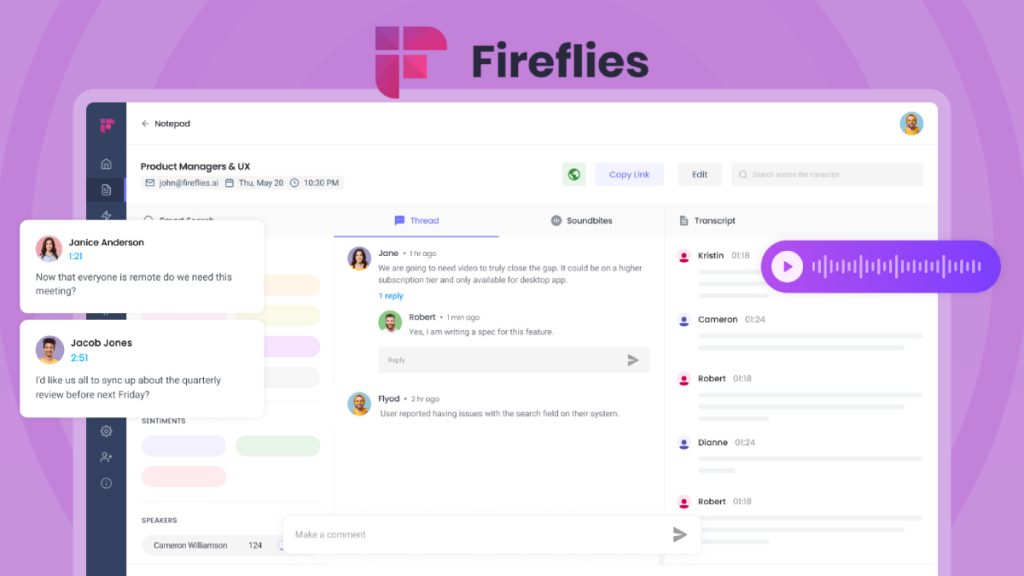
Fireflies is arguably one of the most widely recognized and robust AI note-takers on the market. It seamlessly integrates with nearly all major video conferencing platforms and dialers.

Key Features:Automated Meeting Capture: Fireflies can automatically join and record your meetings based on your calendar.Smart Search: Search through an hour-long meeting transcript in minutes to find specific keywords, topics, or action items.Soundbites and Playlists: Easily clip key moments from a meeting to share with colleagues.Integrations: Connects with CRMs (e.g., Salesforce, HubSpot) and project management tools (e.g., Asana, Slack).SEO Focus: AI meeting transcription, Fireflies.ai features, best automated note-taker.

2. Otter.ai

Otter.ai offers excellent real-time transcription and summary generation, making it a favorite for professionals and students alike. Its proprietary OtterPilot feature is designed to automate the entire meeting workflow.

Key Features:Live Transcription: Provides highly accurate, real-time captions and transcripts during the call.Automated Outlines and Summaries: Uses AI to identify key topics and generate a concise summary of the discussion shortly after the meeting concludes.Speaker Identification: Clearly separates and labels who said what, even in large groups.Otter Chat: Allows users to ask the AI questions about the meeting content and get instant answers.SEO Focus: Otter.ai review, real-time meeting transcription, best AI for Google Meet summaries.

3. Fathom

Fathom is a highly-rated, free-to-use tool known for its user-friendliness and focus on sales and customer success teams. It excels at instantly highlighting and summarizing critical parts of the call.

Key Features:Instant Call Highlighting: Users can click a button during the call to automatically highlight and label a key moment (e.g., Action Item, Pain Point, Positive Feedback).One-Click Summaries: Generates a ready-to-share summary that can be instantly copied and pasted into emails or Slack.CRM Integration: Automatically syncs notes and highlights directly to the relevant contact record in Salesforce or HubSpot.Multi-Language Support: Transcribes and summarizes meetings in multiple languages.SEO Focus: Fathom AI assistant, free Zoom summary tool, AI for sales call notes.

4. Avoma

Avoma (Assistant for Voice Operations and Meeting Analysis) is a powerful, all-in-one meeting intelligence platform that goes beyond simple summarization. It is particularly strong for businesses focused on coaching, compliance, and detailed analytics.

Key Features:AI-Generated Coaching Insights: Provides analytics on talk-to-listen ratios, pacing, and use of filler words to help team members improve their communication skills.Topic Tracking: Automatically detects and tracks custom topics across all team meetings.Meeting Agenda Integration: Allows teams to build shared agendas that automatically populate relevant notes and action items.Comprehensive Workspace: Central repository for all meeting recordings, transcripts, and summaries.SEO Focus: Avoma meeting intelligence, AI coaching platform, advanced meeting analytics.

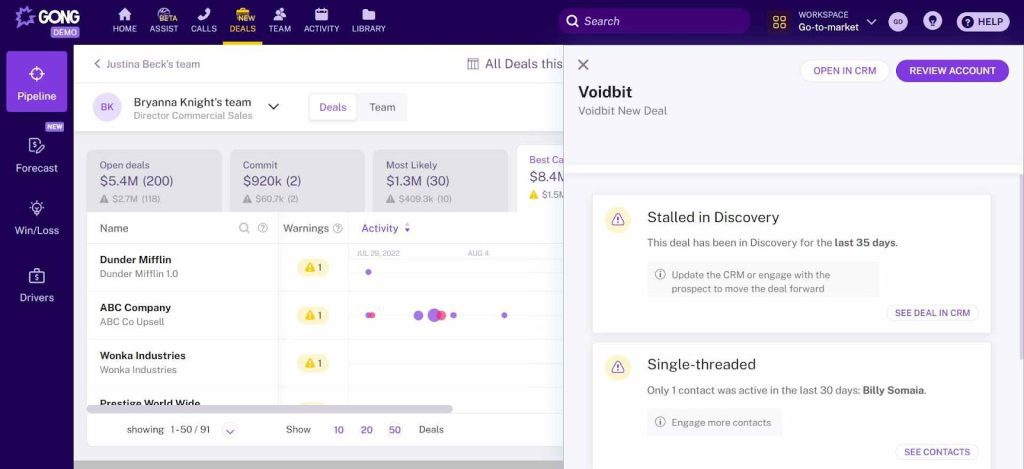
5. Gong.io

While often marketed as a Revenue Intelligence platform primarily for sales teams, Gong’s core strength is its powerful AI that captures, transcribes, and analyzes customer interactions, including meetings. It is the gold standard for high-level business analysis.

Key Features:Revenue Intelligence: Analyzes conversation content to forecast deals, assess risks, and track competitive mentions.Deep Contextual Analysis: Provides insights into sentiment, emotional tone, and engagement levels during a call.Team Collaboration: Enables quick sharing of insights and best practices across sales, marketing, and product teams.High-End Security: Designed to meet the security and compliance needs of large enterprises.SEO Focus: Gong.io revenue intelligence, AI for sales meetings, best enterprise call summary tool.

Conclusion: The Future is Automated 🚀

The adoption of AI Meeting Assistants in 2025 is no longer a luxury; it’s a necessity for teams aiming for peak productivity. By offloading the burden of note-taking and manual summary creation, these five tools—Fireflies.ai, Otter.ai, Fathom, Avoma, and Gong.io—allow professionals to focus their full attention on the conversation, leading to better decisions and faster outcomes. Choose the tool that best aligns with your team’s specific needs, whether it’s simple summarization or deep revenue analysis, and transform your meeting culture today.

You Might Also Like;

Follow us on TWITTER (X) and be instantly informed about the latest developments…


Source link

Elon Musk’s Trial by the Sun: Why More Than a Thousand Starlink Satellites Burned Up | Metaverse Planet

0
Elon Musk’s Trial by the Sun: Why More Than a Thousand Starlink Satellites Burned Up | Metaverse Planet


The approach to the peak of Solar Cycle 25 has heated and expanded the Earth’s upper atmosphere. This expansion created excessive drag on low-Earth orbit Starlink satellites, causing more than 1,200 satellites to de-orbit and burn up upon re-entry since 2019. When you combine an extraordinary amount of solar activity with thousands of satellites orbiting in Low Earth Orbit (LEO), you get a collision course where the Sun always prevails. Since SpaceX began the Starlink program in 2019, over 500 Starlink satellites have made unplanned atmospheric re-entries.

This situation does not mean the Starlink network is failing. Nor does it mean that these satellites are crashing to Earth like giant anvils; most satellite components burn up and disintegrate before reaching the Earth’s surface. However, it does mean that unwanted and intense drag is occurring in orbit. The main culprit for this drag is the Sun, the star at the center of our Solar System.

Thanks to the current, relatively intense Solar Cycle, which is filled with sunspots, solar flares, and coronal mass ejections (CMEs), the Earth’s upper atmosphere is heating up significantly, causing it to expand. This expansion increases the amount of drag on spacecraft in low orbit. When the gravitational force becomes overwhelming, objects like Starlink satellites “fall” out of orbit and are destroyed by burning up in the upper atmosphere.

The Most Active Solar Cycle in History and SpaceX’s Cost

The Sun is currently in the middle of Solar Cycle 25, an 11-year period during which its magnetic poles gradually reverse. According to a team of scientists led by space physicist Denny Oliveira, our Solar System is experiencing a peak in activity as the Sun approaches Solar Maximum, which is the solar magnetic pole reversal.

When solar flares or coronal mass ejections erupt, the Earth’s upper atmosphere is filled with streams of charged particles. These particles heat and expand the upper atmosphere. Scientists did not expect the current Solar Cycle to be this active, and SpaceX is first in line among those who have to bear the cost of the Sun‘s numerous temper tantrums.

While all objects in Low Earth Orbit are sensitive to increased solar activity, SpaceX has launched 8,873 Starlink satellites since 2019, with 7,669 still operational. This means that 1,204 satellites are no longer functional. Hundreds have been actively de-orbited. Never before have there been so many low-orbit satellites in orbit during periods of such high solar activity.

Still, it is important to remember that many of the Starlink satellites that de-orbit and burn up are consciously programmed by SpaceX to do so. As new satellites are sent into orbit and older hardware becomes outdated, deliberately de-orbiting obsolete hardware is the only way to keep these constellations current and provide the high-speed internet that Starlink promises.

However, the Sun‘s increased activity becomes a difficult variable to account for, especially considering we cannot physically “cool” the upper atmosphere when it overheats. SpaceX designs its satellites to be retired after five years of service, and the hardware is manufactured to disintegrate before reaching the Earth’s surface. While occasional small debris pieces manage to fall to the ground, the vast majority of these satellites never make it down to the lower layers of the upper atmosphere.

While this is a cost of doing business in space for SpaceX, it also serves as a reminder that no matter how incredible human technology may be, the Sun and gravity are ultimately the reigning forces.

You Might Also Like;

Follow us on TWITTER (X) and be instantly informed about the latest developments…


Source link

Trump Family’s $WLFI Token Under Federal Probe for Sanctioned Wallet Sales | NFT News Today

0
Trump Family’s $WLFI Token Under Federal Probe for Sanctioned Wallet Sales | NFT News Today


A federal spotlight now sits squarely on World Liberty Financial (WLF) after senators raised concerns that the Trump family’s $WLFI token ended up in wallets linked to sanctioned actors in Russia, North Korea, and Iran. The allegation isn’t simply about money. It’s about influence, governance rights, national security, and whether a fast-growing DeFi project tied to a former president’s family followed the rules expected of any financial platform.

This in-depth article brings clarity to a story flooded with political tension, blockchain analysis, and crypto-industry debate. You’ll get clear explanations, expert context, contrasting opinions, and an honest look at what’s known so far.

Why the $WLFI Investigation Matters

Concerns about Trump-connected crypto projects have been simmering for monhs. Those concerns erupted into mainstream attention on November 18, 2025, when Senators Elizabeth Warren and Jack Reed urged the Department of Justice and Treasury Department to investigate World Liberty Financial, a DeFi platform launched earlier this year.

Their letter claims WLF may have allowed $WLFI governance tokens to reach wallets linked to state-backed hacking groups, sanctioned intermediaries, and laundering operations. These claims strike at two pillars of national policy: sanctions enforcement and anti–money laundering expectations for digital asset platforms.

The allegation touches the Trump family directly, since its entity DT Marks DEFI LLC receives 75% of WLF’s token sale proceeds and holds 22.5 billion WLFI tokens.

What Is World Liberty Financial?

WLF started in early 2025 with a high-profile launch and big promise. Its founders marketed it as an open financial network powered by decentralized infrastructure, allowing users to lend, borrow, and exchange digital assets with lower fees and fewer barriers. Plans for tokenized real estate, a crypto debit card, and global payments added hype.

Fundraising and Token Structure

WLF has raised $550–$800 million in private token rounds. A UAE investment group, MGX, pledged $100 million in June 2025 to support WLF’s stablecoin USD1, backed by U.S. dollars and Treasuries.

The $WLFI token serves as the platform’s governance token. Holders can vote on proposals that shape WLF’s operations. Because it’s not publicly tradable, every token recipient must be approved during private rounds. That’s why any sale to a questionable wallet raises immediate questions about compliance standards.

Why Governance Rights Matter

Governance tokens open the door to influence. They let holders weigh in on protocol upgrades, treasury allocations, and strategic partnerships. If adversarial actors obtained even a small number of tokens, critics argue they could try to affect how WLF evolves—or exploit governance as a cover for deeper infiltration.

Even a $10,000 sale, if tied to a strategic wallet, could give foreign groups visibility into internal decisions.

WLF’s founding lineup includes:

Donald Trump — Co-Founder Emeritus

Eric Trump — Co-Founder

Donald Trump Jr. — Co-Founder

Barron Trump — Advisor

The family’s entity DT Marks DEFI LLC holds an enormous stash of WLFI and receives the vast majority of sale proceeds. Estimates place this payout between $412 million and $600 million so far.

Watchdog group Accountable.US says 73% of Donald Trump’s total wealth now hinges on crypto assets such as WLF and the widely traded $TRUMP memecoin.

That financial exposure is unprecedented for any political figure of his stature. It also raises conflict-of-interest questions, especially when foreign actors surface in token sale data.

Senators Warren and Reed initiated the inquiry after reviewing a September 2025 report by Accountable.US, a left-leaning watchdog. The group analyzed blockchain activity tied to early $WLFI token sales.

Their findings point to:

Wallets interacting with Lazarus Group–linked North Korean addresses

Russian wallets tied to A7A5, a ruble-backed token used for sanctions evasion

Iranian intermediaries connected to a sanctioned crypto exchange and Tornado Cash, the mixing service banned for laundering billions

The senators argue these patterns reflect serious gaps in WLF’s sanctions screening and AML procedures.

Their letter demands:

Details of any ongoing federal investigations

Plans to protect U.S. national security from crypto projects offering governance rights

Clear assurance that updated crypto legislation won’t weaken AML requirements for governance tokens

The deadline for a federal response: December 1, 2025.

The data doesn’t indicate that WLF directly sent tokens to officially sanctioned addresses. Instead, the analysis points to three types of indirect exposure:

North Korea

Roughly $10,000 in WLFI appears to have reached wallets that interacted with addresses tied to the Lazarus Group, responsible for billions in crypto theft.

Russia

Some tokens went to wallets connected with A7A5, a digital ruble project accused of helping Russian entities skirt sanctions.

Iran

A handful of transactions touch addresses linked to an Iranian crypto exchange and activity around Tornado Cash, used heavily for laundering illicit funds.

Supporters of the probe say this proves WLF failed to block suspicious participants. Critics counter that these indirect connections appear in countless token ecosystems and often involve innocent users.

WLF’s Security Troubles Add Fuel to the Debate

WLF’s technical challenges in late 2025 complicated public perception:

272 wallets were frozen, involving users caught in phishing or suspected price manipulation.

One wallet linked to Justin Sun held over $100 million in affected tokens.

WLF redirected these funds back to “verified owners,” a move some praised and others criticized.

Developers later burned $22 million in tokens to address contract vulnerabilities.

These events raised questions about governance, security, and whether the platform operates as truly decentralized as advertised.

How WLF and the Trump Family Responded

WLF leadership rejects the allegations entirely. The platform insists it uses strict AML/KYC protocols, claiming it rejected “millions in suspicious funds” during token sales.

CEO Zach Witkoff, whose father is a Trump advisor, described conflict-of-interest claims as “complete nonsense.”

Donald Trump Jr. echoed that message, highlighting WLF’s focus on stablecoins and saying politics isn’t involved.

As of November 24, neither the DOJ nor Treasury has issued a formal comment.

Crypto Experts Push Back

Several well-known blockchain analysts challenged the watchdog report.

ZachXBT’s View

On-chain investigator ZachXBT called the accusations weak.

He notes that:

The flagged $10K sale represents 0.0018% of WLF’s fundraising

Many DeFi platforms show similar trace patterns

Context matters more than raw transaction paths

Nick Bax’s Analysis

Researcher Nick Bax found false positive signals in multiple transactions tied to meme tokens.

In one case, WLF froze a legitimate user’s wallet because its activity overlapped with noise from unrelated token movements.

Industry Concerns

Developers worry that such investigations encourage overregulation.Others believe high-profile projects should exceed compliance expectations due to national security sensitivity.

How the Public Reacted

The story went viral on X under #WLFIProbe.

The reaction:

Progressive commentators viewed it as proof Trump’s crypto empire presents systemic risks

Crypto traders analyzed whether the controversy affects WLF’s ambitions

Analysts published explainers on wallet tracing and sanctions compliance

Meme accounts flooded the hashtag with satire

Market reaction stayed mild.

Because $WLFI is non-tradable, it didn’t budge.

The broader Trump token ecosystem dipped 2–5% on November 19.

Bitcoin hovered near $84K, reflecting broader bearish sentiment.

Supporters vs. Critics: The Core Arguments

Here’s how each side frames the situation:

The Pro-Probe Perspective

Even tiny exposures matter if governance rights are involved

Sanctions and AML safeguards appear insufficient

Allowing adversaries to influence WLF creates national risk

The Counter-View

The amounts in question are trivial

Many flagged connections appear in unrelated protocols too

The watchdog group has a political agenda

The evidence depends heavily on indirect wallet relationships

The senators’ request is non-binding, but it places pressure on federal agencies during a time when Congress debates new crypto rules.

Potential paths:

The DOJ or Treasury could announce a formal inquiry

Investigators could examine WLF’s AML controls, sale processes, and KYC records

Congress may add stricter governance-token requirements to market structure legislation

The story could fade if agencies dismiss the concerns

Analysts agree on one thing: WLF’s expansion into areas like tokenized real estate, AI chip assets, and stablecoin infrastructure ensures regulators will keep watching.

Final Thoughts

The $WLFI controversy sits at the center of politics, crypto innovation, sanctions policy, and national security. WLF’s rapid growth, the Trump family’s large financial stake, and the global reach of blockchain technology create a uniquely tense mix.

Some see a meaningful warning sign. Others see political noise amplified by flawed analysis. The truth may land somewhere between those poles.

One thing is clear:

Projects offering governance rights—especially those connected to public figures—must demonstrate exceptional care with compliance and transparency. As digital finance expands into real estate, stablecoins, and international partnerships, these expectations grow even stronger.

If federal agencies respond next month, this story could shift fast. Keep an eye on the Senate Banking Committee, official releases from Treasury and DOJ, and independent blockchain analytics platforms for the next wave of developments.

Frequently Asked Questions

Here are some frequently asked questions about this topic:

Did WLF directly sell tokens to sanctioned addresses?

No direct sales have been confirmed. The concerns stem from indirect wallet relationships seen in on-chain data.

Could foreign actors influence WLF governance?

They could, though the scale appears small. Even so, governance access raises security questions.

Does the Trump family profit from WLFI sales?

Yes. Their entity receives 75% of revenue, totaling hundreds of millions so far.

Will a federal investigation hurt the project?

It depends on whether DOJ or Treasury act by the December 1 deadline. Any official probe could trigger fines or scrutiny of similar projects.

Does this affect upcoming crypto regulation?

Almost certainly. Lawmakers already cite this case while arguing for clearer rules around governance tokens and AML obligations.


Source link

Popular Posts

My Favorites