Metaverse

Home Metaverse Page 77

Mastercard, Binance, Galaxy: November’s Last Week Becomes Crypto’s Power Grid

0
Mastercard, Binance, Galaxy: November’s Last Week Becomes Crypto’s Power Grid


In Brief

The final days of November saw a wave of major crypto partnerships — from Solflare and Mastercard launching a self-custody Solana debit card to Klarna and Stripe testing bank-issued stablecoins.

Mastercard, Binance, Galaxy: November’s Last Week Becomes Crypto’s Power Grid

The final days of November delivered a surge of high-impact crypto alliances — from Solflare and Mastercard reshaping stablecoin spending to Klarna and Stripe testing bank-issued digital dollars. Binance, Arkham, Galaxy Digital, and edgeX added their own moves, marking a week where partnerships, not prices, steered the industry’s momentum.

Solflare & Mastercard to Launch Solana Debit Card

Solflare has teamed up with Mastercard to launch the Solflare Card — the first true self-custody debit card on Solana — giving users the ability to spend USDC directly from their Solflare Wallet without preloading, conversions, or handing over control of their assets. The digital card is rolling out first to users in the UK and European Economic Area, with more regions to follow.

The card brings full self-custody into everyday payments by linking directly to a user-controlled Solflare Wallet. Each transaction is signed by the user through a three-factor setup: biometric verification, a PIN, and the physical card. Solflare handles payment rails while private keys remain untouched and unexposed. At launch, the card works with Google Pay, with Apple Pay support on the way.

Executives from both companies pointed to a shift in how crypto is used day-to-day — describing the move as part of a broader effort to make stablecoin spending “safe, simple, and instant,” while giving users confidence through fraud detection, real-time alerts, and 3DS security. With more than 115,000 users already signed up, the Solflare Card aims to blur the boundary between digital assets and traditional payments, bringing stablecoins to millions of Mastercard-enabled merchants worldwide.

VerifiedX — the decentralized Layer 1 network and Bitcoin sidechain — has chosen Crypto.com to provide institutional-grade custody and OTC liquidity services for the $1.5 billion in assets secured on its network. The collaboration gives eligible institutions building on VerifiedX access to Crypto.com’s regulated custody framework, including cold-storage security, governance controls, and professional asset-management workflows.

Alongside custody, Crypto.com will supply OTC trading to support deeper liquidity across the VerifiedX ecosystem. Executives at the exchange noted that its custody stack was built specifically to meet the expectations of institutional clients, making VerifiedX a natural fit.

Formerly known as ReserveBlock, VerifiedX positions itself as a “people’s network,” operating as both a universal Layer 1 chain and a Bitcoin sidechain. It enables users to mint Verified Bitcoin Tokens (vBTC) through a self-custodial 1:1 peg. This new agreement expands on a prior partnership enabling VFX SwitchBlade Wallet users to buy crypto directly with fiat and transact via Crypto.com Pay. Following the announcement, VFX surged nearly 70%.

HCMC and Binance Unite to Accelerate Vietnam’s Bid for Global Financial Leadership

Ho Chi Minh City has taken a major step toward its ambition of becoming a regional financial powerhouse, signing a new memorandum of understanding with Binance on November 26, 2025. The collaboration is designed to pull more capital, technology, and institutional participation into Vietnam’s maturing financial and digital-asset landscape.

HCMC is one of two core locations designated for Vietnam’s planned International Financial Centre, and the MOU was formalized during the Autumn Economic Forum 2025 in the presence of the Prime Minister, senior municipal officials, ministry representatives, and global investment funds. The agreement follows a similar partnership with Nasdaq in October, signaling Vietnam’s determination to integrate with global markets.

Under the new framework, Binance will help channel foreign investment into the upcoming financial hub, introduce international institutions to Vietnam, and share its expertise in developing digital-asset rules, crypto-based payment systems, and compliant digital-finance infrastructure. A joint working group will oversee implementation, meeting twice yearly to track milestones.

Both sides also committed to building a regulatory “sandbox” to safely test blockchain and crypto innovations while protecting users. Startups across blockchain, AI, and fintech will receive additional support through training, workshops, and technical guidance. Altogether, the initiative strengthens HCMC’s push to become a major Asian financial center by 2030.

Arkham Exchange and MoonPay Join Forces to Streamline Fiat Access

Arkham Exchange has teamed up with MoonPay to offer seamless fiat-to-crypto on- and off-ramps, giving users a far easier way to fund their trading accounts. With the integration, eligible users can deposit through MoonPay’s full suite of payment options—including cards, bank transfers, Apple Pay, and Google Pay—and immediately purchase tokens directly on Arkham.

MoonPay has been rolling out several partnerships in rapid succession. Within the same 24-hour window, the company unveiled an exclusive integration with Zengo Pro to power fiat flows for its self-custodial wallet, and a similar arrangement with Haha Wallet ahead of the Monad Mainnet launch, expanding access to users in over 100 countries.

The timing of Arkham’s partnership stands out amid a volatile market, with Bitcoin recently sliding to a 180-day low. Even so, moves like this suggest that infrastructure builders remain focused on long-term accessibility, not short-term price swings.

Klarna and Stripe Unveil New USD Stablecoin Initiative

Klarna has entered the stablecoin arena with the launch of klarnausd, its first digital currency and the first bank-issued stablecoin built on Tempo, a payments-focused blockchain created by Stripe and Paradigm. Klarna said it sees growing demand for faster, cheaper settlement rails, pointing to industry estimates that stablecoin transactions already surpass $27 trillion annually.

The new asset is issued via Open Issuance by Bridge, Stripe’s stablecoin infrastructure arm. Klarnausd is currently live on Tempo’s testnet, giving the company an early runway for integration and testing ahead of the blockchain’s public mainnet launch in 2026.

Klarna emphasized that the move builds on its long partnership with Stripe, whose infrastructure already supports its services across 26 markets. CEO Sebastian Siemiatkowski noted that Klarna’s global scale positions it to challenge high cross-border payment fees—estimated at $120 billion annually—and push blockchain into mainstream finance.

Klarnausd is the company’s first publicly revealed crypto initiative, with more collaborations expected soon.

Galaxy Digital Explores Liquidity Role in Polymarket and Kalshi

Galaxy Digital is preparing a deeper push into the prediction market ecosystem, holding talks to supply liquidity to both Polymarket and Kalshi, according to Bloomberg. The firm has already begun small-scale market-making experiments and plans to expand its involvement once internal testing is complete. Mike Novogratz said the goal is to support broader liquidity across leading platforms as prediction markets evolve into a meaningful financial category.

Together, Polymarket and Kalshi have amassed more than $42 billion in cumulative volume. Polymarket initially surged ahead thanks to decentralized infrastructure and election-focused activity, while CFTC-regulated Kalshi has led monthly volumes since September. Both have recently attracted major institutional partners — including collaborations involving Galaxy Digital, Google Finance, and the NHL — underscoring rising mainstream recognition.

Analysts at Bernstein recently described prediction markets as shifting into “broader information markets,” with demand expanding beyond political and sports outcomes into economics, culture, corporate events, and financial indicators. That growth has drawn other major entrants: Gemini and CME Group have announced plans for their own platforms.

For Polymarket and Kalshi, Galaxy Digital’s liquidity would enhance depth, lower spreads, and support more reliable price discovery — reinforcing the sector’s momentum as it matures into a competitive financial landscape.

edgeX and Polymarket Unite to Redefine Mobile Prediction Trading

A major shift is unfolding in decentralized finance as edgeX and Polymarket announce a partnership designed to make prediction markets radically easier to access. edgeX — known for its derivatives infrastructure — is integrating Polymarket’s prediction events directly into its mobile app, removing the multi-platform friction that has long held back mainstream adoption.

With this integration, users can browse markets, place trades, and track positions through a single interface. The combined user bases are also expected to boost liquidity, improving execution quality for both casual participants and active traders.

Beyond convenience, the two companies are co-developing leveraged prediction products, blending edgeX’s expertise in derivatives with Polymarket’s event-driven markets. These tools aim to bring advanced trading mechanics — margin functions, risk controls, and real-time data feeds — into a sector that has historically lacked them.

The initiative arrives at a moment of heightened global interest in event-based trading. As prediction markets expand beyond politics into economics, culture, and macro trends, intuitive mobile access becomes essential.

Technical and regulatory challenges remain, but the collaboration reflects a larger industry shift: DeFi platforms are increasingly forming alliances to specialize, interoperate, and deliver more powerful tools to everyday users.

Disclaimer

In line with the Trust Project guidelines, please note that the information provided on this page is not intended to be and should not be interpreted as legal, tax, investment, financial, or any other form of advice. It is important to only invest what you can afford to lose and to seek independent financial advice if you have any doubts. For further information, we suggest referring to the terms and conditions as well as the help and support pages provided by the issuer or advertiser. MetaversePost is committed to accurate, unbiased reporting, but market conditions are subject to change without notice.

About The Author


Alisa, a dedicated journalist at the MPost, specializes in cryptocurrency, zero-knowledge proofs, investments, and the expansive realm of Web3. With a keen eye for emerging trends and technologies, she delivers comprehensive coverage to inform and engage readers in the ever-evolving landscape of digital finance.

More articles


Alisa, a dedicated journalist at the MPost, specializes in cryptocurrency, zero-knowledge proofs, investments, and the expansive realm of Web3. With a keen eye for emerging trends and technologies, she delivers comprehensive coverage to inform and engage readers in the ever-evolving landscape of digital finance.


More articles


Source link

Upbit Solana Hot-Wallet Hack: What the $36M Breach Means for Crypto Users | NFT News Today

0
Upbit Solana Hot-Wallet Hack: What the M Breach Means for Crypto Users | NFT News Today


Upbit’s latest security incident shows how fast a hot-wallet compromise can drain funds, with roughly $36–37 million in Solana-based assets moving to an unauthorized address before the exchange locked systems down. The breach has created concern across crypto markets, but Upbit says it’ll reimburse all user losses and is now auditing every layer of its wallet infrastructure.

Key Takeaways

Upbit lost about 54 billion KRW (~$36–37M) after abnormal outflows from one of its Solana hot wallets.

More than 20 Solana-ecosystem tokens, including major assets such as SOL, USDC, BONK and RAY, were moved to an unknown wallet.

The exchange froze deposits and withdrawals and shifted funds into cold storage for safety.

Dunamu, Upbit’s operator, promised to fully cover the stolen amount using its own reserves.

Market sentiment around Solana assets may see short-term turbulence even though the protocol itself isn’t implicated.

How the Upbit Solana Hot-Wallet Breach Unfolded

Around 4:42 a.m. KST, Upbit’s internal monitoring systems flagged unusual outflows from a Solana-network hot wallet. The transactions stood out due to their pace and volume. Roughly 54 billion KRW worth of digital assets left the wallet before the exchange isolated the incident and halted all token movements.

This marks Upbit’s largest security failure since its 2019 hack. I’ve seen similar hot-wallet compromises hit centralized platforms before, and they almost always stem from infrastructure weaknesses rather than blockchain-level vulnerabilities. Early signs here follow that pattern.

Which Solana Assets Were Affected?

Only Solana-based tokens were pulled from the compromised wallet, and that distinction matters because it shows the breach didn’t spread across Upbit’s entire infrastructure. Transfers involved well-known Solana assets such as SOL, USDC, BONK, Jupiter (JUP), Raydium (RAY), Render (RNDR), Pyth Network (PYTH), LAYER, ORCA and a collection of smaller ecosystem tokens.

Nothing suggests a flaw in the Solana protocol itself. The exposure sits squarely inside Upbit’s hot-wallet setup.

How Upbit Responded

Speed plays a major role in limiting damage during exchange incidents. Upbit quickly suspended deposits and withdrawals, initially focusing on Solana network tokens before extending safeguards across its platform. The exchange moved remaining assets into cold wallets and began a full audit of its wallet infrastructure.

Dunamu followed by confirming it will reimburse the entire stolen amount using corporate reserves. This step protects users from losses and stabilizes confidence during a tense period. Not every exchange makes this kind of commitment, so it’s a meaningful decision.

Why This Happened — And What’s Being Discussed

Investigators believe attackers compromised Upbit’s hot-wallet infrastructure rather than finding a blockchain-level exploit. That outcome is consistent with most historical exchange hacks, where attackers typically aim at custodial systems instead of protocols.

South Korean media highlighted two details that sparked wider discussion:The breach landed almost exactly six years after Upbit’s 2019 hack, and it arrived shortly after Dunamu announced a significant partnership with Naver Financial. Those points have raised speculation about highly skilled attackers, though no verified attribution exists yet.

What Users Should Expect Next

Deposits and withdrawals may remain locked until Upbit completes its security review. The exchange says customers won’t absorb losses because every stolen asset will be reimbursed.

Short-term volatility around major Solana-ecosystem tokens is possible. Hacks of this size often create temporary FUD, even when the blockchain itself is unaffected.

Frequently Asked Questions

Here are some frequently asked questions about this topic:

Is the Solana blockchain compromised in the Upbit hack?

No. Investigators say the Solana network is functioning normally and the breach came from Upbit’s hot-wallet infrastructure.

Will Upbit users lose money after the Solana hot-wallet breach?

Dunamu confirmed it’ll cover the full value of the stolen crypto, so user balances should remain intact.

How long will Upbit freeze Solana deposits and withdrawals?

The exchange hasn’t shared an exact timeline. Security audits like this often take several days or longer, depending on the findings.

Is it safer to move funds into self-custody after the Upbit Solana incident?

Self-custody removes exchange-level risk, though it requires careful key management. Users should evaluate their comfort with that responsibility.

What Solana tokens were drained in the Upbit hack?

More than 20 Solana-ecosystem assets were moved, including SOL, USDC, BONK, JUP, RAY, RNDR, PYTH, LAYER and ORCA.


Source link

Technance Introduces Institutional-Grade Infrastructure for Exchanges, Fintech Platforms, and Web3 Applications

0
Technance Introduces Institutional-Grade Infrastructure for Exchanges, Fintech Platforms, and Web3 Applications


Sponsored

Stories and Reviews


November 27, 2025

Technance Introduces Institutional-Grade Infrastructure for Exchanges, Fintech Platforms, and Web3 Applications

Dubai, United Arab Emirates, November 27th, 2025, Chainwire

Technance, a global provider of digital asset and trading infrastructure, has announced the launch of its expanded enterprise technology stack designed for crypto exchanges, neobanks, brokerages, and Web3-native platforms. The company aims to bridge the gap between traditional finance and digital asset markets by offering a unified suite of high-performance trading and liquidity solutions.

Technance’s modular infrastructure enables businesses to deploy and scale digital asset products without the need to build complex in-house systems. The platform includes:

• Liquidity Providing & Multi-Source Aggregation

Access to deep liquidity pools through intelligent routing and aggregation across external and internal sources.

• Futures Trading Engine

A high-speed, low-latency execution engine engineered for derivatives markets, built with advanced risk and margin controls.

• Spot Trading Engine

Optimized for handling large order volumes with stability, precision, and institutional reliability.

• Web3-Ready Architecture

Native integration with blockchain networks, wallets, and digital asset rails, enabling seamless support for Web3 products.

With its infrastructure-as-a-service model, Technance allows financial institutions and digital asset platforms to launch trading systems, upgrade their liquidity stack, and expand into new asset classes without operational overhead.

“Fintech companies, exchanges, and Web3 projects are rapidly shifting toward modular infrastructure,” said Mohammad Haghshenas, Founder and CEO of Technance . “Our mission is to empower them with enterprise-grade technology that accelerates product development while maintaining the highest levels of performance and security.”

Technance currently powers next-generation platforms across global markets, supporting spot and derivatives trading, liquidity routing, and digital asset integrations. The company continues to expand its international footprint as demand for reliable fintech and Web3 infrastructure grows worldwide.

About Technance

Technance is a global fintech infrastructure provider specializing in high-performance trading systems, liquidity solutions, and Web3-ready financial technology. The company delivers modular enterprise components—including futures and spot trading engines, liquidity aggregation, and digital asset integration—that enable exchanges, fintech companies, and Web3 platforms to launch and scale digital-asset products with institutional reliability. Technance powers next-generation financial applications across global markets.

Website: https://www.technance.com/

Contact

Technance[email protected]

Disclaimer

In line with the Trust Project guidelines, please note that the information provided on this page is not intended to be and should not be interpreted as legal, tax, investment, financial, or any other form of advice. It is important to only invest what you can afford to lose and to seek independent financial advice if you have any doubts. For further information, we suggest referring to the terms and conditions as well as the help and support pages provided by the issuer or advertiser. MetaversePost is committed to accurate, unbiased reporting, but market conditions are subject to change without notice.

About The Author


Chainwire is the top blockchain and cryptocurrency newswire, distributing press releases, and maximizing crypto news coverage.

More articles


Chainwire is the top blockchain and cryptocurrency newswire, distributing press releases, and maximizing crypto news coverage.


Source link

Google’s Fascinating AI Documentary: Watch for Free! | Metaverse Planet

0
Google’s Fascinating AI Documentary: Watch for Free! | Metaverse Planet


Google has released the documentary “The Thinking Game”, which covers its AI wing DeepMind and was filmed over five years. The film tells the story of how Nobel laureate Demis Hassabis‘s passion for chess transformed into AI, and the team’s incredible rise leading to the biology-changing AlphaFold, all for free.

Google has made the documentary “The Thinking Game”, featuring the DeepMind team who achieved one of the biggest breakthroughs in the field of artificial intelligence, accessible for free. Selected at the 2024 Tribeca Festival, this approximately 90-minute film reveals the history of Google’s AI team, their groundbreaking discoveries, and the behind-the-scenes of the AI revolution.

DeepMind’s Story: From Chess Prodigy to Nobel Prize

“The Thinking Game” documentary was filmed over a period of exactly five years by the same team that previously shot the 2017 documentary AlphaGo. The film focuses on the life of Nobel laureate Demis Hassabis. It details how Hassabis‘s career, starting as a chess prodigy in his childhood years, shaped his interest in artificial intelligence.

The documentary presents DeepMind‘s journey to viewers chronologically. We witness the team’s adventure ranging from building systems that taught artificial intelligence to play Pong (albeit slowly), to developing systems like AlphaFold that can predict the 3D structure of proteins with incredible accuracy.

This adventure of DeepMind has become a powerful example showing how artificial intelligence reached the potential to solve not only simple games but also the most complex problems of biology and the scientific world.

You Might Also Like;

Follow us on TWITTER (X) and be instantly informed about the latest developments…


Source link

Amazon Unveils World’s Fastest Satellite Antenna Leo Ultra | Metaverse Planet

0
Amazon Unveils World’s Fastest Satellite Antenna Leo Ultra | Metaverse Planet


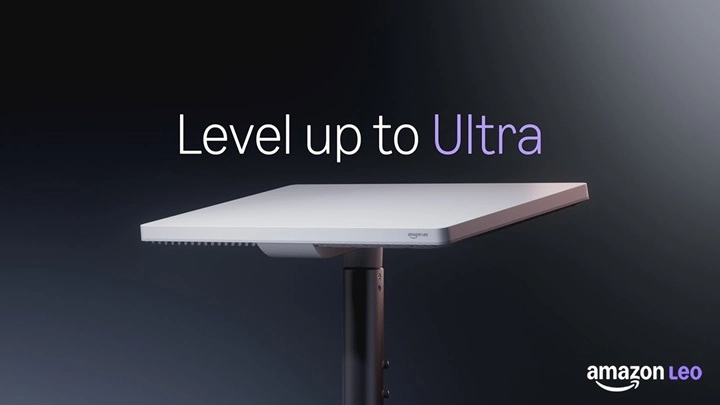
Amazon is offering speeds of up to 1 Gbps with the Leo Ultra antenna, developed specifically for businesses. Amazon Leo stands out as a serious satellite internet alternative to Starlink.

Amazon has announced its new antenna named Leo Ultra, which will rival Starlink in the satellite internet market. According to the company’s statement, this antenna is designed primarily for businesses and government agencies and will enter a special preview process before the planned commercial launch in 2026. While price and availability details have not yet been disclosed, the 20×30 inch design and technical specifications have been revealed for the first time.

Amazon, which will offer 1 Gbps download speed, describes Leo Ultra as the “fastest customer terminal in production.” The antenna can deliver simultaneous 1 Gbps download and 400 Mbps upload speeds. Additionally, it provides private networking services and direct connectivity to Amazon Web Services (AWS). Among the smaller models, the 11-inch Pro antenna offers up to 400 Mbps download speed, while the 7-inch Nano antenna can provide connectivity up to 100 Mbps.

For comparison, SpaceX’s Starlink Performance Kit currently offers a maximum download speed of 400 Mbps. This is nearly half of what Amazon’s Leo Ultra offers. Starlink’s V3 satellite will have a total download capacity of 1 Tbps and aims to bring gigabit speeds to users next year.

Amazon’s Leo Ultra antenna provides a significant advantage over older generation, pre-Starlink satellite internet systems with its additional bandwidth and private network services. Researchers at UC San Diego and the University of Maryland previously detected serious security vulnerabilities in unencrypted GEO satellite connections, reporting that VoIP calls, SMS messages, login credentials, and corporate emails could be accessed. Leo Ultra aims to offer a more secure connection to businesses by reducing such security risks.

You Might Also Like;

Follow us on TWITTER (X) and be instantly informed about the latest developments…


Source link

MEXC Launches Year-End Golden Era Showdown with 2,000g Gold Bar and BTC from 10 Million USDT Prize Pool

0
MEXC Launches Year-End Golden Era Showdown with 2,000g Gold Bar and BTC from 10 Million USDT Prize Pool


In Brief

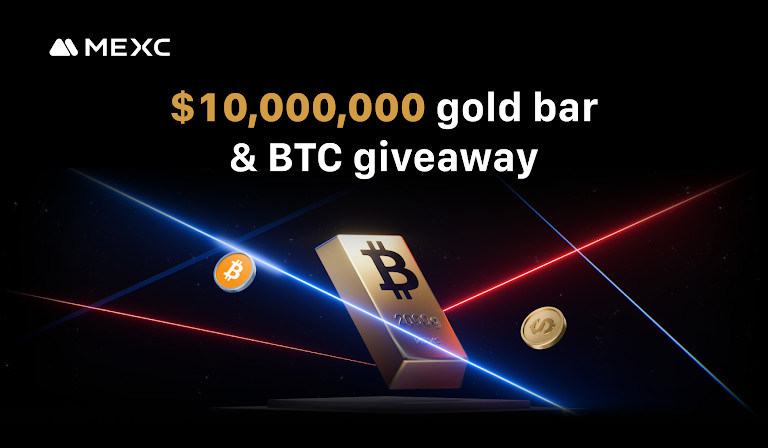
MEXC will launch its Year-End Golden Era Showdown on November 26, 2025, featuring a futures trading competition with a total prize pool of up to 10 million USDT, including a 2,000g gold bar and 6 BTC.

MEXC Launches Year-End Golden Era Showdown with 2,000g Gold Bar and BTC from 10 Million USDT Prize Pool

MEXC, a leading global cryptocurrency exchange, has announced its Year-End Golden Era Showdown will officially begin on November 26, 2025, 16:00 (UTC), a trading competition with a total prize pool of up to 10 million USDT. Prizes include a 2,000g gold bar and 6 BTC.

In June this year, MEXC hosted the first Golden Era Showdown, which attracted over 200,000 participants and unlocked the full 4 million USDT prize pool. Major prizes included a 100 oz gold bar won by a user from the Netherlands with four lottery tickets, and 1 BTC won by a user from Kazakhstan with six lottery tickets. The upcoming year-end event marks the second phase of the Golden Era Showdown, bringing an enhanced experience built upon the success of the previous edition.

Event Timeline

Early Bird Registration: Nov 24, 2025, 08:00 (UTC) – Nov 26, 2025, 15:55 (UTC)

Official Registration: Nov 24, 2025, 08:00 (UTC) – Dec 17, 2025, 08:00 (UTC)

Main Event: Nov 26, 2025, 16:00 (UTC) – Dec 17, 2025, 08:00 (UTC)

Lucky Draw: Nov 26, 2025, 16:00 (UTC) – Dec 18, 2025, 08:00 (UTC)

Participants must register on the event page and accumulate valid futures trading volume to win scratch-off cards, spin chances, and lottery tickets. The prize pool is divided into six tiers, with higher participation unlocking larger rewards.

Early Bird Rewards

Those who register by Nov 26, 2025, 15:55 (UTC) and trade at least 50,000 USDT in futures will receive a Mystery Box containing a futures bonus worth 10 to 200 USDT. A total of 50,000 USDT in Early Bird rewards is available on a first-come, first-served basis.

Daily Scratch-Off

This mechanism distributes 60% of the prize pool. Participants earn one scratch-off card for every 50,000 USDT in daily futures trading volume, with a maximum of five cards per day. Cards can be saved and used anytime before the lucky draw period ends, offering futures bonuses up to 2,025 USDT.

Weekly Spin Wheel

This mechanism distributes 25% of the prize pool. Participants receive one spin chance for every 2 million USDT in weekly futures trading volume, capped at five spins per week. Spin chances can be accumulated and used at any time before the lucky draw period concludes.

Ultimate Lottery

Participants earn one lottery ticket for every 10 million USDT in accumulated futures trading volume, with no limit on ticket acquisition. Prizes include the 2,000g gold bar worth 300,000 USDT, bitcoin rewards, and additional bonuses.

The competition ensures transparency through blockchain verification. The Ultimate Lottery employs Bitcoin blockchain technology to determine winners, with the winning number derived from the last five digits of the first BTC block hash generated after Dec 17, 2025, at 12:00 (UTC). Prizes are awarded based on consecutive digit matches from right to left, with the participant matching the most digits winning the gold bar.

For more information and to participate, please visit the official event page on MEXC.

About MEXC

Founded in 2018, MEXC is committed to being “Your Easiest Way to Crypto.” Serving over 40 million users across 170+ countries, MEXC is known for its broad selection of trending tokens, everyday airdrop opportunities, and low trading fees. Our user-friendly platform is designed to support both new traders and experienced investors, offering secure and efficient access to digital assets. MEXC prioritizes simplicity and innovation, making crypto trading more accessible and rewarding.

MEXC Official Website| X | Telegram |How to Sign Up on MEXC

For media inquiries, please contact MEXC PR team: [email protected]

Risk Disclaimer:

This content does not constitute investment advice. Given the highly volatile nature of the cryptocurrency market, investors are encouraged to carefully assess market fluctuations, project fundamentals, and potential financial risks before making any trading decisions.

Source 

Disclaimer

In line with the Trust Project guidelines, please note that the information provided on this page is not intended to be and should not be interpreted as legal, tax, investment, financial, or any other form of advice. It is important to only invest what you can afford to lose and to seek independent financial advice if you have any doubts. For further information, we suggest referring to the terms and conditions as well as the help and support pages provided by the issuer or advertiser. MetaversePost is committed to accurate, unbiased reporting, but market conditions are subject to change without notice.

About The Author


Gregory, a digital nomad hailing from Poland, is not only a financial analyst but also a valuable contributor to various online magazines. With a wealth of experience in the financial industry, his insights and expertise have earned him recognition in numerous publications. Utilising his spare time effectively, Gregory is currently dedicated to writing a book about cryptocurrency and blockchain.

More articles


Gregory, a digital nomad hailing from Poland, is not only a financial analyst but also a valuable contributor to various online magazines. With a wealth of experience in the financial industry, his insights and expertise have earned him recognition in numerous publications. Utilising his spare time effectively, Gregory is currently dedicated to writing a book about cryptocurrency and blockchain.


Source link

VeVe to Migrate to Collect Blockchain with Planned Self-Custody for Digital Collectibles | NFT News Today

0
VeVe to Migrate to Collect Blockchain with Planned Self-Custody for Digital Collectibles | NFT News Today


VeVe has announced one of the biggest upgrades in its history: the migration of all VeVe digital collectibles to Collect, a new blockchain purpose-built for fandom, provenance protection, and long-term ownership. While the VeVe app will continue to look and feel the same, the foundation underneath it is being fully rebuilt to support the future of digital collecting. A recent community AMA also provided additional clarity on how Collect is being designed and what collectors can expect once the migration begins.

Key Takeaways

VeVe is moving all collectibles to Collect, a blockchain designed specifically for digital fandom and licensed IP.

Metadata—including edition numbers, mint order, and ownership history—will be preserved during migration.

Self-custody arrives in Phase 2, allowing collectors to move VeVe NFTs into personal Web3 wallets.

Collect’s official site launches in December 2025, with full migration set for January 2026.

AMA updates indicate Collect will operate as an Ethereum-compatible Layer 2.

Why VeVe Is Moving to a Dedicated Blockchain

For years, VeVe has been at the forefront of the digital collectibles space with licensed drops from Marvel, Disney, DC, Star Wars, and more. But while mainstream blockchains were built for finance, gaming, or general NFTs, they weren’t designed around the things collectors value most: provenance, IP control, edition integrity, scarcity, and fandom culture.

General-purpose chains don’t give licensors the level of control they need to protect their assets. By contrast, Collect has been engineered specifically for:

digital collecting

licensed IP

royalties

authenticated metadata

long-term provenance

Rather than fitting VeVe into someone else’s infrastructure, Collect is being built around the actual needs of collectors and the entertainment brands they care about.

Source: Veve

What Collect Brings to the VeVe Ecosystem

VeVe emphasises that the user experience stays exactly the same. Showrooms, AR features, drops, the marketplace, and the app layout remain unchanged.

The big upgrade happens behind the scenes.

On-chain royalties and IP protection

Collect embeds creator rights and royalties directly into the protocol. Whenever a collectible is traded, artists and licensors are recognized and rewarded automatically.

A foundation built for provenance

According to VeVe, Collect ensures that key details like edition numbers, mint order, and historical metadata will remain intact—your collectible #1 will still be collectible #1.

Future-ready infrastructure

Collect gives VeVe:

stronger provenance guarantees

better metadata protection

more predictable licensing frameworks

future interoperability paths

a blockchain optimized for fandom rather than finance

The migration strengthens VeVe long-term while keeping the collector experience stable and seamless.

New Insights From the AMA

A recent community AMA offered a clearer picture of Collect’s technical direction. The team indicates that Collect will operate as an Ethereum-compatible Layer 2, giving VeVe access to the broader Ethereum ecosystem while still maintaining licensor-based restrictions on asset movement.

The AMA also revealed that Collect will introduce more durable metadata storage standards (including IPFS), improving transparency and long-term permanence for digital collectibles.

Full technical specifications, including wallet support and self-custody mechanics, will be detailed in the official Collect documentation when it launches later this year.

These insights were shared by Dr Collect (formerly Dr Profit), who hosted the community AMA exploring how the Collect blockchain is being designed.

Self-Custody Arrives After Migration

One of the most requested features since VeVe’s launch is finally coming: the ability to self-custody digital collectibles.

After the migration is complete and stable, collectors will be able to move VeVe NFTs into their own crypto wallets for true blockchain ownership. This is optional — casual fans can stay within the app, while advanced Web3 users can export assets off-platform.

This rollout is expected to support widely used Ethereum‑compatible wallets (for example, MetaMask), with exact wallet support to be confirmed in the official Collect documentation.

Why Self-Custody Matters to VeVe Collectors

Self-custody lets collectors hold their digital items in their own wallets rather than entirely inside the VeVe app. This gives people more confidence and control, knowing their collectibles stay securely in their possession and aren’t tied to a single platform.

It also opens the door to more flexibility. Once items can live outside VeVe, collectors can use them with different wallets, tools, and potentially external marketplaces as the ecosystem grows— subject to licensor approval.

Timeline

December 2025Collect website launches with full technical details.

January 2026Phase 1 completed: all VeVe collectibles migrate to Collect.

Post-migrationPhase 2 begins: self-custody and wallet support roll out.

The Road Ahead for Digital Fandom

VeVe’s move to Collect could mark the start of a new era for digital collecting, an era beyond hype. By adopting a platform purpose-built for fandom, collecting, and licensed IP, VeVe is aiming to offer collectors greater control and long-term ownership through features like self-custody and on-chain provenance.

Frequently Asked Questions

Here are some frequently asked questions about this topic:

Will my VeVe collectibles keep their original metadata after the migration?

Yes. The blog confirms all edition numbers, mint order, rarity, and metadata will carry over exactly as they are today.

Do I need to do anything during the migration to Collect?

No. VeVe states the transition will be seamless and requires no action from collectors.

When will self-custody be available?

Self-custody will roll out in Phase 2, after the NFT migration is stable.

Will I be able to use my VeVe collectibles outside the app?

Yes — self-custody will allow collectors to store VeVe NFTs in their own crypto wallets, according to the blog. External use cases will be clarified later.


Source link

Honor Watch X5 Comes with Voice Calling and GPS | Metaverse Planet

0
Honor Watch X5 Comes with Voice Calling and GPS | Metaverse Planet


The Honor Watch X5 smart watch model features specifications such as a 1.97-inch AMOLED screen, Bluetooth 5.3, microphone and speaker, and up to 14 days of usage time.

Introduced in China alongside the Honor 500 smartphone series, the Honor Watch X5 smart watch model arrives with features that will satisfy users at an average price point. The device is compatible with Android and iOS.

Honor Watch X5 Specifications and Price

Featuring a 1.97-inch AMOLED screen, the smart watch comes with a 60Hz refresh rate and an always-on display. The case holds an IP68 certification and can be used underwater up to 5ATM. It weighs 29 grams excluding the strap. Using Bluetooth 5.3 and NFC connections, the watch also houses an internal GPS chip. Thus, routes can be calculated without the need for a phone. Offering voice calling capabilities, the watch can instantly track considerable data thanks to its advanced health sensor.

Usable for up to 14 days on a single charge, the watch drops below 5 days when calls and the always-on display are activated. The Honor Watch X5 smart watch model has been put on sale in China with a $70 price tag.

Brief Overview of Honor

Honor is a leading global provider of smart devices, originally established in 2013 as a sub-brand of Huawei. In November 2020, it became an independent company after being sold to a consortium to ensure its continued growth and access to global supply chains.

This strategic split allowed Honor to regain access to critical technologies that were restricted for its former parent company, including Google Mobile Services (GMS) and 5G chipsets from partners like Qualcomm. Today, the brand is known for its focus on innovation and R&D, offering a wide portfolio that includes premium smartphones (such as the Magic Series), laptops, wearables, and AI-powered ecosystem devices.

You Might Also Like;

Follow us on TWITTER (X) and be instantly informed about the latest developments…


Source link

Meta’s Google TPU Move Shakes Nvidia | Metaverse Planet

0
Meta’s Google TPU Move Shakes Nvidia | Metaverse Planet


Meta’s talks with Google regarding a multibillion-dollar TPU agreement caused a sharp decline in Nvidia shares, while triggering a rise on the Alphabet side. As Meta negotiates a TPU deal with Google, competition in the AI chip market is being reshaped.

Nvidia’s shares fell sharply following news that Meta is discussing a deal worth billions of dollars for Google’s AI accelerators. According to the US-based The Information, Meta is considering using Google’s custom AI chips, known as TPU (Tensor Processing Unit), in its data centers by 2027. Additionally, it is stated that the company is putting the possibility of renting TPUs via Google Cloud next year on the table.

Meta Turns to Google

This development indicated that competition is accelerating in an area where Nvidia has long been the undisputed leader. Following the news, Alphabet’s shares rose by up to 2.7% in after-hours trading, while Nvidia experienced a decline of the same rate. The company, which owns Google, had previously signed an agreement to provide up to 1 million TPUs to Anthropic.

Following the news, Alphabet-linked companies in Asian markets rose rapidly. In South Korea, IsuPetasys, which provides multi-layer circuit boards to Alphabet, broke a record with an 18% increase in trading, while MediaTek shares in Taiwan gained nearly 5%.

A potential supply agreement with Meta means a significant prestige gain for Google. This is because Meta is one of the companies allocating the most resources to data center investments and AI development efforts on a global scale.

Google Finds Success with TPU

The TPU architecture, which Google first developed 10 years ago for AI workloads, is gathering increasing interest among major players outside the company. Concerns among tech giants about the risk of remaining overly dependent on Nvidia are effective in this rising interest.

While GPUs, which form the basis of Nvidia’s superiority, were originally designed for graphics processing, they provided a perfect fit for big data sets and computationally intensive AI training processes. TPUs, on the other hand, offer a more focused alternative to Nvidia’s general-purpose GPUs as ASIC-based chips designed for specific tasks.

Google has developed TPUs over the years to accelerate internal AI and machine learning models. Researchers working on the company’s DeepMind team and Gemini models directly contributed to chip design, creating a dual development cycle on both the hardware and software sides.

On the other hand, Google introduced its most powerful AI processor, Ironwood, in recent months. Opening Ironwood to general use this month, Google offers an inference processing capacity of up to 4,614 TFLOPs in its new TPU chip. These chips can communicate directly with each other via the next-generation Inter-Chip Interconnect (ICI) developed by Google. Moreover, these processors can operate in clusters of up to 9,216 units with their liquid-cooled structures. This massive structure can reach a total computing power of 42.5 Exaflops.

You Might Also Like;

Follow us on TWITTER (X) and be instantly informed about the latest developments…


Source link

Uniswap Launches $15.5M Bug Bounty Program On Cantina To Strengthen Security

0
Uniswap Launches .5M Bug Bounty Program On Cantina To Strengthen Security


In Brief

Uniswap has launched a bug bounty program with rewards up to $15.5 million to incentivize researchers to identify security vulnerabilities across its protocol, contracts, and related infrastructure.

Uniswap Launches $15.5M Bug Bounty Program On Cantina To Strengthen Security

Decentralized exchange (DEX) Uniswap announced that it has introduced a new bug bounty initiative on the Web3 security platform Cantina, offering a maximum reward of $15.5 million. 

The initiative is intended to motivate researchers to identify and submit reports on security issues within the Uniswap protocol, associated websites, backend services, mobile and extended wallets, and related infrastructure. 

Uniswap protocol operates as a peer-to-peer framework intended for exchanging value, relying on a collection of permanent and non-upgradable smart contracts that are structured to run independently without requiring intermediaries.

The program covers vulnerabilities and defects found in the most recently deployed versions of designated Uniswap contracts, including V4 Core Contracts, the Universal Router Contract Code, the Permit2 Contract Code, the V3 Contract Code, the UniswapX Contract Code, as well as other components, along with commit b619b67 of the specified undeployed v4-core contracts. 

The initiative provides compensation based on the assessed severity of each vulnerability, categorized as critical, high, medium, or low, with corresponding maximum rewards of $15.5 million, $1 million, $100,000, and $50,000.

Bug Bounty Rules Require Confidential Reporting And Compliance For Rewards

According to the program requirements, any identified vulnerability must remain undisclosed to the public or to any external party until Uniswap Labs has been informed, has resolved the issue, and has granted approval for public disclosure. 

A report must also be submitted within twenty-four hours of discovering the vulnerability. A comprehensive explanation of the issue increases the likelihood of receiving a reward and may enhance the reward amount. Reports should include detailed information about the conditions necessary to reproduce the problem, the steps required to replicate it or a proof of concept, and the possible consequences if the vulnerability were to be exploited. 

Individuals who report a unique and previously unknown vulnerability that leads to a modification of the code or a configuration change, and who maintain confidentiality until the issue has been addressed, may receive public acknowledgment for their contribution if desired.

In order to qualify for a reward under the program, participants must identify a previously unreported and non-public vulnerability that is not already known to the Uniswap Labs team and falls within the defined scope. All requested KYC and supporting documentation must be provided. Eligibility requires being the first to submit the unique vulnerability while following the program’s disclosure rules, supplying enough detail for engineers to reproduce and correct the issue, and refraining from exploiting the vulnerability for any purpose other than receiving a reward through the program. 

Participants must avoid publicizing or using the vulnerability outside of confidential reporting, avoid actions that compromise privacy, damage data, or disrupt any assets within scope, and must not submit issues that stem from the same underlying cause as one previously rewarded. Disclosing the vulnerability must not involve unlawful behavior, including coercive or threatening conduct. 

Furthermore, participants must meet the age of majority, must not be located in regions subject to U.S. trade or economic sanctions or where participation is prohibited, and must not be current or former employees, vendors, or contractors who contributed to the relevant code. Full compliance with all program rules, including restrictions on prohibited actions, is required.

Disclaimer

In line with the Trust Project guidelines, please note that the information provided on this page is not intended to be and should not be interpreted as legal, tax, investment, financial, or any other form of advice. It is important to only invest what you can afford to lose and to seek independent financial advice if you have any doubts. For further information, we suggest referring to the terms and conditions as well as the help and support pages provided by the issuer or advertiser. MetaversePost is committed to accurate, unbiased reporting, but market conditions are subject to change without notice.

About The Author


Alisa, a dedicated journalist at the MPost, specializes in cryptocurrency, zero-knowledge proofs, investments, and the expansive realm of Web3. With a keen eye for emerging trends and technologies, she delivers comprehensive coverage to inform and engage readers in the ever-evolving landscape of digital finance.

More articles


Alisa, a dedicated journalist at the MPost, specializes in cryptocurrency, zero-knowledge proofs, investments, and the expansive realm of Web3. With a keen eye for emerging trends and technologies, she delivers comprehensive coverage to inform and engage readers in the ever-evolving landscape of digital finance.


More articles


Source link

Popular Posts

My Favorites