Think about the last time you learned something complicated. You probably understood it faster when you tried it with your own hands, not when someone explained it to you. That simple difference is changing how organisations train their people.
Immersive technologies like AR, VR, and XR are making skills more tangible. They let people practice tasks as if they are real, without risking a patient, a machine, or their own safety. And leaders in learning and development are realising something important: this is not a trend. This is how modern learning needs to work when precision matters.
Let us take a look at how that plays out across different industries.
Healthcare: practice until confidence feels natural
Training in healthcare depends heavily on access—access to specialists, equipment, and real cases. Immersive learning breaks those limitations.
Surgeons rehearse complex operations repeatedly in virtual surgical theatresNurses learn device handling through AR guidance over real toolsStudents explore detailed anatomy and treatment processes in 3DPatients understand procedures through visual simulations instead of jargon
The difference is simple. Learning does not rely on chance exposure anymore. Practice becomes unlimited, mistakes are safe, and confidence grows faster.
Industrial safety: learn from hazards without facing them
Safety programs work best when risks feel real. VR makes danger visible without exposing workers to harm.
Fire and emergency simulations replicate high-risk environmentsWorkers handle virtual chemicals and see realistic failure consequencesAR highlights danger zones and improper handling on real machinery
Instead of memorising rules, teams learn through instinct. That is what prevents incidents in the first place.
Maintenance and engineering: solve problems before they exist
Faulty maintenance is expensive and disruptive. Immersive learning helps technicians get it right on the first try.
VR trains workers on complex or unavailable equipmentAR guides them step-by-step on real machines with visual overlaysField teams receive remote expert assistance through live AR instructions
The result: fewer errors, less downtime, and new hires who become productive much faster.
Hospitality: training for real people, not checklists
Great hospitality is not theoretical. It is emotional. It needs real interaction, not roleplay with a trainer pretending to be a tough customer.
Front desk teams handle realistic guest interactions in VRRestaurant teams run virtual kitchens and service floorsHousekeeping learns workflow, safety, and hygiene with AR cues in real rooms
Learners build confidence before they ever face a paying guest.
Warehousing and field service: mistakes shrink when guidance gets smarter
In fast-moving environments, accuracy is non-negotiable. Immersive training keeps the focus sharp.
AR directs workers to the right items and optimises pick pathsVR simulates forklift operations, loading, and navigationField technicians receive AR guidance from remote experts on live tasks
Training becomes faster, practical, and less wasteful.
Classroom education: from reading it to living it
Students learn best when they explore knowledge instead of memorising it. XR helps schools make learning immersive without high infrastructure costs.
Virtual labs replace hazardous or expensive setupsAR textbooks turn subjects like biology and history into interactive modelsStudents join shared virtual classrooms to learn together from anywhere
Curiosity replaces repetition. Students remember what they experience.
So, what do all these industries actually gain?
The real value of immersive learning is not the technology itself. It is the shift from topic-based teaching to real practice. When people learn in environments that feel like their actual work, they build muscle memory, not just awareness. They get to make mistakes safely, repeat until confident, and reach competence without waiting for live opportunities or expensive setups. Training stops being a lesson and starts becoming real preparation. That leads to safer environments, better decisions, and teams who are genuinely ready before they step into the field.
TILTLABS helps organisations make this transition without turning it into a complicated tech project. The focus is straightforward: build immersive learning that genuinely improves performance. With precise simulation, thoughtful learning design, and measurable outcomes, the team ensures companies train people the way they actually work, not the way manuals describe it.
Immersive learning is not just a future idea. It is already shaping how strong organisations build skills. The ones who embrace it now will lead with safer workplaces, sharper talent, and teams that are truly ready for real-world challenges.
The post Training You Can Touch: How Immersion Is Rewriting Skill Building Across Industries appeared first on TILTLABS.
Published: November 28, 2025 at 11:02 am Updated: November 28, 2025 at 11:02 am
To improve your local-language experience, sometimes we employ an auto-translation plugin. Please note auto-translation may not be accurate, so read original article for precise information.
Dubai, UAE, November 28th, 2025, Chainwire
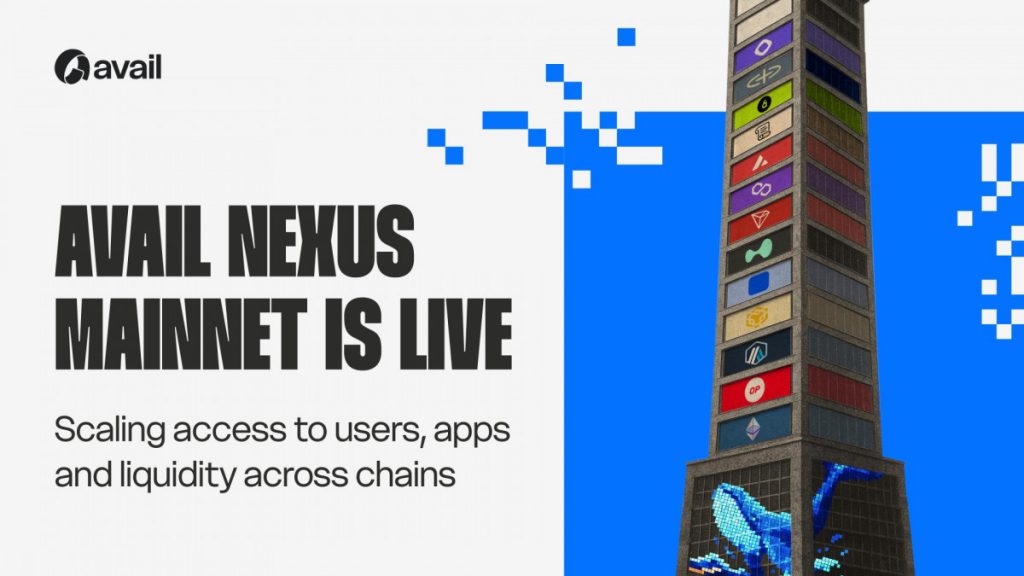
Avail Nexus goes live, connecting rollups, appchains, and dApps into one coordinated operational universe where liquidity, assets, and users move freely at scale.
Avail, a modular blockchain infrastructure provider building the foundations for the next generation of applications and appchains, announces the launch of Avail Nexus Mainnet, its breakthrough crosschain solution that unifies liquidity and user flows across major ecosystems, including Ethereum, TRON, Polygon, Base, Arbitrum, Optimism, HyperEVM, BNB, Scroll, Monad, Kaia, Solana (coming soon), and others.
The launch marks the first time Web3 has access to a coordinated, liquidity-aware crosschain network, bringing Avail’s long-stated vision of a connected onchain world into production. For users and developers, this unlocks something the industry has attempted for years but never achieved at scale: a single operational universe where applications and assets work across chains without fragmentation, friction, or duplicated effort.
A Major Shift in How the Onchain Economy Works
“The current blockchain fragmentation and siloed interactions across ecosystems have limited both the builder and user experience,” said Anurag Arjun, Co-Founder of Avail. “At Avail, we are transforming how blockchains interact. They can no longer be separate networks passing messages to each other; rather should function as integral parts of a unified, verifiable system where assets, users, and intended actions move freely. This fundamental shift, in how apps scale and modular stacks connect to the broader multichain world, is the future.”
Until now, crosschain has meant risky bridges, limited access, and fragmented liquidity across chains. Avail Nexus takes a different approach:
An Intent–solver architecture allows users to express what they want to do; Avail Nexus determines how to do it, automatically finding the optimal route, liquidity source, and execution path.
Multi-source liquidity allows a single transaction to draw funds from multiple chains simultaneously.
Exact-Out execution ensures predictable outcomes regardless of where liquidity lives.
Unified verification, coming soon, powered by Avail DA, for cross-chain actions backed by verifiable data.
This moves the blockchain environment from its current “moving messages between chains” to shared execution and shared liquidity; a fundamental upgrade in how the onchain economy functions.
User Experience Changes with Avail Nexus
Users gain for the first time
A single experience across ecosystems (no bridging UX, no gas token hassles).
Better prices and deeper liquidity through cross-chain aggregation.
Faster, predictable execution coordinated across chains.
Access to apps regardless of where they are deployed.
“This is a usability shift toward making Web3 for the real users of the next generation of consumer apps”, highlights Anurag Arjun, Co-founder of Avail.
Updates for Developers
Developers can integrate Nexus through SDKs, APIs, or lightweight Elements, enabling:
One-time integration to unlock a multichain userbase
Unified collateral pools that update across chains in real time
Intent-based trading and strategy execution
Cross-chain actions without managing bridges, routers, or complex infra.
This reduces the cost, time, and complexity of building multichain applications by an order of magnitude. And bolstered by Avail’s proven data availability expertise, the overall operational and functional experience remains robust, verifiable, and scalable. Avail DA, with its industry-defining Infinity Blocks roadmap targeting 10-GB block capacity, is soon set to enable builders to spin up independent appchains with massive throughput and finality while remaining connected to the broader ecosystem with verifiable cross-chain data. The $AVAIL token serves as the coordination asset and economic backbone for this unified onchain world.
“For builders, the complexity of cross-chain execution at scale has always been a major challenge. With Avail, that complexity disappears. Builders can focus on application logic while the infrastructure handles liquidity routing, verification, and execution under the hood, enabling truly composable and highly scalable apps and appchains. The overall result will be a smoother, more capital-efficient user experience where liquidity and execution no longer belong to individual blockchain environments; rather, they become network-wide resources”, explains Prabal Banerjee, Co-Founder of Avail.
Current Ecosystem Growth
Avail Nexus is launching with integrations live or underway across DeFi, infrastructure, SocialFi, AI, and cross-chain tooling. Ecosystem partners and projects, including Lens Protocol, Sophon, TRON, Space & Time, Lumia, Validium Network, Vanna Finance, Mace, Clober, Station X, Nexus AI, Bitte.ai, Neova, Gummee, Symbiotic, and more, are enabling powerful new use cases. Many integrations unlock use cases that were previously impossible or highly fragmented across chains, including unified collateral management for DeFi protocols, intent-based trading with execution across multiple liquidity venues, intelligent coordination layers for cross-chain data-driven actions, and multi-chain liquidity aggregation that allows assets on one chain to power opportunities on another.
Availability and Next Steps
With Nexus Mainnet now live:
Developers can integrate through the Nexus SDK.
Users will soon explore the first wave of Liquid Apps, applications going live on Avail Nexus, showcasing unified liquidity and opportunities at scale.
Additional chain integrations and ecosystem expansions will roll out progressively.
About Avail
Avail shapes a new era for the onchain economy by transforming how users, apps, and liquidity move across chains. With Avail, both users and developers can access the entire onchain economy from anywhere, without worrying which chain assets or apps live on. Simply plug-in Avail to scale and instantly reach any asset on any chain. Founded by early members of Polygon and backed by Founders Fund, Dragonfly, Cyber Fund, and more, Avail is empowering users and builders to overcome the limitations of legacy blockchain infrastructure.
Users can learn more about Avail on Discord, X, Blog.
In line with the Trust Project guidelines, please note that the information provided on this page is not intended to be and should not be interpreted as legal, tax, investment, financial, or any other form of advice. It is important to only invest what you can afford to lose and to seek independent financial advice if you have any doubts. For further information, we suggest referring to the terms and conditions as well as the help and support pages provided by the issuer or advertiser. MetaversePost is committed to accurate, unbiased reporting, but market conditions are subject to change without notice.
About The Author
Chainwire is the top blockchain and cryptocurrency newswire, distributing press releases, and maximizing crypto news coverage.
More articles
Chainwire is the top blockchain and cryptocurrency newswire, distributing press releases, and maximizing crypto news coverage.
Published: November 28, 2025 at 11:00 am Updated: November 28, 2025 at 10:47 am
by Ana
Edited and fact-checked:
November 28, 2025 at 11:00 am
To improve your local-language experience, sometimes we employ an auto-translation plugin. Please note auto-translation may not be accurate, so read original article for precise information.
In Brief
HSC Asset Management in Abu Dhabi will bring together crypto and institutional finance leaders for two days of panels, innovation discussions, and fireside chats.
Upcoming HSC Asset Management conference in Abu Dhabi is scheduled for December 9–10 and will bring together leaders from the worlds of cryptocurrency and institutional finance. The two-day event will offer a platform for companies to showcase their vision, connect with top-tier investors, and engage with founders, with a strong focus on digital asset management and investment strategies.
The conference program will feature panels and discussions addressing the most relevant trends in the cryptocurrency sector. Topics will also explore investments in sovereign funds, exchange-traded funds (ETFs), real estate, hydrogen, data centers, fintech, and the broader digital asset ecosystem.
Let’s see what’s on the agenda and who will be taking part:
On December 9th, the Main Stage will focus on global investments, ETFs, real-world assets (RWA), security, stablecoins, and AI applications. Simultaneously, the Innovation Stage will host discussions on decentralized finance (DeFi), centralized finance (CeFi), payments, Web3 investments, consumer applications, and adoption trends.
On December 10th, the Main Stage will feature the Arab-China Investment and Technology Summit, sessions on robotics, data centers, Hong Kong-listed RWA enterprises, longevity, and a special Abu Dhabi session hosted by Sihuan Pharma. Meanwhile, the Innovation Stage will cover AI applications, RWA tokenization, ecosystem and infrastructure development, transaction and custody solutions, as well as policy and regulatory frameworks shaping the digital asset landscape.
HSC Asset Management: Day One
Main Stage
VC Panel: Digital Assets Are an Asset Class, Now Act Like It
The Main Stage kicks off with a venture capital panel highlighting firms shaping blockchain and DeFi investments. Maelstrom focuses on targeted equity and token investments, supporting projects that advance trustless decentralization. Spartan Group contributes strategic expertise, having backed projects like Aave and Synthetix, with a focus on scaling DeFi adoption. Dubai Future District Fund, an evergreen VC fund, invests across technology sectors to drive innovation and the future economy in Dubai. Fabric Ventures funds early-stage blockchain and Web3 startups, while Canton Network provides privacy-enabled infrastructure for financial institutions, enabling secure and interoperable DeFi transactions.
From Hedge Funds to DATco: New Structures for Alternative Assets
This panel explores evolving frameworks for institutional and digital-asset investments. Hashed invests globally in blockchain infrastructure and crypto startups, while Aspen Digital offers institutional trading, asset management, and advisory services. ZeroStack integrates blockchain and AI capabilities into its treasury and enterprise infrastructure. AlphaTON provides institutional-grade exposure to TON and its growing ecosystem, and Manana focuses on building a compliance-ready, global stablecoin network.
Compute Is the New Reserve Asset: How AI Will Reprice Capital Markets
Panelists examine how decentralized computing power is reshaping finance. Argentum AI delivers secure cross-border enterprise compute services. Aethir aggregates underutilized GPUs to provide on-demand, enterprise-grade computing. IO.NET specializes in distributed GPU computing for AI and machine learning workloads, and Altlayer enables deployment of both optimistic and zk rollups.
Stablecoins and Cross-Border Payments: Who Controls Liquidity?
This session highlights liquidity management in the modern financial landscape. Etisalat Ventures backs early- and growth-stage tech startups, while AI360 helps businesses adopt AI through strategy, governance, and organizational transformation. Other participants explore trends in stablecoins, cross-border payments, and institutional adoption.
Real-World Assets Are Not a Buzzword — They’re a Bid
This panel explores the tokenization of tangible assets. 1inch aggregates liquidity across decentralized exchanges to optimize trading, and Goat Network enables BTC holders to earn sustainable on-chain yield. Object 1 develops modern residential and mixed-use projects in the UAE, including cryptocurrency payment options. Prop Tech Hub fosters innovation in Dubai’s real estate tech ecosystem, and Arvo uses AI to automate and secure healthcare payment and billing processes.
Tokenized Markets Are Here: How RWA Becomes the Core of Global Finance
Panelists discuss how tokenized assets are reshaping global finance. TON is a decentralized Layer 1 blockchain developed by Telegram’s founders. Tether issues USDT, the world’s most widely used stablecoin. NeosLegal provides regulatory and legal services for blockchain and Web3 projects in the UAE. Tokinvest operates a Dubai-based marketplace for tokenized real-world assets, while Securitize enables regulated issuance and trading of tokenized securities.
Fireside Chats
Attendees can also join intimate discussions on pressing topics, including “Where Does Big Global Capital Go Next” with representatives from Franklin Templeton, BlackRock, and Monroe Capital. “AI, Privacy and Trading” will be moderated by MoCo from Privex with Shahaf Bar-Geffen from COTI, and “AI Visionaries” will be moderated by Tariq Xponential with select industry representatives.
Innovation Stage
Crypto Exchanges Panel: The Future Stack of Digital Finance
The conference turns its attention to exchanges, the core infrastructure of crypto trading. Gate offers more than 3,800 cryptocurrencies along with advanced tools such as automated bots and copy trading. BitMart combines accessibility with a broad product set, including spot, margin, and futures trading with up to 100x leverage. Binance contributes its integrated ecosystem spanning trading, staking, the Binance Smart Chain, and a security-focused, high-liquidity platform.
Liquidity Without Borders: Building Cross-Chain Rails
This panel explores the infrastructure enabling cross-chain transactions. Infinex is a non-custodial, cross-chain DeFi platform that combines passkey-secured wallets, multichain swaps, and asset bridging. LayerZero provides secure, permissionless communication and value transfers across multiple blockchains. 1inch aggregates liquidity across decentralized exchanges to optimize trades, while Edge Capital brings additional expertise in bridging liquidity across markets.
PayFi, Remittances, and Real-World Usage
Speakers examine the growing adoption of digital assets for payments and remittances. Dubai Digital Asset Association connects businesses, regulators, and enthusiasts to foster the local crypto ecosystem. The Hedera Foundation supports the adoption and growth of the Hedera network. Fuze offers “Digital Assets-as-a-Service,” enabling banks and fintechs to embed regulated crypto into their platforms. Polygon scales Ethereum through its Layer 2 solution, and AMINA Bank provides Swiss-licensed cryptocurrency banking services combined with traditional financial infrastructure.
The Infrastructure Race Nobody Sees: DA, ZK, Routing, and Bitcoin L2s
Panelists dive into the technical layers behind blockchain innovation. Manta Network delivers privacy-oriented Layer-2 solutions using zero-knowledge proofs. Celestia provides a modular data-availability and consensus layer for blockchains. Bitlayer Labs builds Bitcoin-native Layer 2 protocols enabling EVM-style smart contracts and scalable DeFi. Avail offers a scalable, trust-minimized data-availability layer and cross-chain interoperability.
The Trust Layer: UX, Identity, and Secure On-Chain Interaction
This panel focuses on secure and user-friendly crypto infrastructure. Bitget Wallet is a non-custodial, multi-chain wallet supporting over 130 blockchains. DFNS offers wallet-infrastructure services for developers and institutions. Ledger provides hardware wallets and enterprise-grade security solutions, while Certik audits smart contracts and blockchain protocols using formal verification and AI-powered tools.
The End of Spray-and-Pray? What a Serious Token Portfolio Looks Like in the Next Cycle
Panelists discuss investment strategies for the next market cycle. DWF, Animoca Brands, Ceras Ventures, Foresight Ventures, and Bitscale Capital explore how to structure portfolios and deploy capital effectively in Web3, DeFi, blockchain, and AI projects.
The Builders’ Roundtable: What Will Actually Scale in 2026–2028
This session highlights projects with long-term scalability potential. PWR Chain offers Layer-0 blockchain infrastructure decoupling consensus from execution. 1inch optimizes liquidity across decentralized exchanges. The Sandbox provides a blockchain-based metaverse and gaming platform, while EasyFlow enhances privacy through cryptocurrency transaction mixing.
Fireside Chats
Attendees will also enjoy fireside conversations, including one with Cracy Chen, CEO of Bitget. Another discussion, “Digital Culture as Capital: How Ownership Reshapes Global Economies,” features Yat Siu, Founder and Chairman of Animoca Brands, exploring the intersection of digital property, culture, and global finance.
HSC Asset Management: Day Two
Main stage
On the second day, the Main Stage will feature a series of thought-provoking discussions covering key developments in digital finance and emerging technologies. Sessions will include “Stablecoins and Cross-Border Payments: Who Controls Liquidity?”, exploring the evolving role of stablecoins in global payments and liquidity management; “Compute as Collateral: Financing AI Power Assets”, examining how decentralized computing and AI infrastructure are becoming investable assets; and “The NFT Market Rebuilt: Utility, IP, and Metaverse Commerce”, focusing on how NFTs are evolving to support real-world utility, intellectual property, and metaverse commerce.
In the afternoon, panels will shift toward practical adoption and future trends, including “How to Bridge Institutions into Web3”, addressing strategies for institutional integration, compliance, and scalable adoption; “AI and Crypto in Financial Journalism: Truth vs Narrative”, exploring challenges in accuracy, narrative shaping, and reporting standards in the digital-asset space; and “The Next Cycle: AI, Crypto, and the Future of Value”, a forward-looking discussion on how AI and blockchain will redefine value creation. The day will conclude with the announcement of the next Hack Seasons edition and recognition of partnership contributions, celebrating innovation and collaboration across the Web3 ecosystem.
Innovation Stage
How Infrastructure, Compute, and Data Will Shape Global Investment Flows
This panel explores the technologies driving capital allocation and market efficiency. Sonic Labs provides optimized tools for blockchain development, while Helium powers a blockchain-based wireless network enabling IoT and mobile connectivity through user-deployed hotspots. Bitmain leads in Bitcoin mining infrastructure with its widely used Antminer ASIC rigs. RedStone delivers secure, real-time price feeds and data streams via its modular blockchain-oracle network, supporting informed investment decisions.
Stablecoins, DeFi Settlement, and the New Architecture of Real Liquidity
Panelists examine how stablecoins and DeFi are reshaping liquidity in modern markets. MetaMask enables self-custodial interactions across multiple blockchains, while GRVT offers a hybrid, zk-powered crypto exchange. Re7 Capital specializes in liquid crypto asset strategies, Wintermute provides deep liquidity and OTC trading services across centralized and decentralized exchanges, and DeBridge focuses on seamless cross-chain asset transfers.
Institutional Capital, Real Infrastructure: Structuring, Risk Management, and Market Expansion
This session highlights how institutional frameworks are evolving for digital assets. TheBlock delivers news, research, and data for digital-asset markets. Lionsoul Global provides institutional-grade investment and portfolio management. Soter Insure offers insurtech solutions tailored to crypto risks, and Laser Digital provides trading, asset management, liquidity solutions, and derivatives services for institutional clients.
Venture Allocation 2026–2028: Global Cycles, New Geographies, and Institutional Priorities
The panel focuses on strategic investment in blockchain and Web3. EAK Digital provides PR, marketing, and community services for crypto projects. Kenetic and Incepton Capital invest globally in early-stage crypto and blockchain startups. Portal Ventures focuses on early-stage Web3 projects, while Cypher Capital targets UAE-based blockchain and digital-asset investments.
RWA Meets Capital Markets: Institutional Integration, Credit Infrastructure, and On-Chain Finance
Panelists explore the tokenization of RWAs and their integration into capital markets. Ledger Enterprise delivers enterprise-grade custody, governance, staking, trading, and tokenization infrastructure. Plume builds an EVM-compatible blockchain ecosystem to bring RWAs on-chain, and Zoth develops a community-powered restaking layer for real-world assets.
Inside the Next Digital Cycle: Innovation, Regulation, and Global Expansion Playbooks
This session examines emerging trends in digital assets, regulatory evolution, and strategies for global adoption, providing actionable insights for investors, founders, and institutions navigating the next phase of blockchain growth.
Fireside Chats
The conference also features intimate discussions, including “Angel Capital in the Gulf – What Founders Must Know” with Kushal Shah, Founder of Dubai Angel Investors, and a conversation with Andrew Sobko, Founder and CEO of Argentum AI, exploring AI and blockchain intersections in enterprise and finance.
Disclaimer
In line with the Trust Project guidelines, please note that the information provided on this page is not intended to be and should not be interpreted as legal, tax, investment, financial, or any other form of advice. It is important to only invest what you can afford to lose and to seek independent financial advice if you have any doubts. For further information, we suggest referring to the terms and conditions as well as the help and support pages provided by the issuer or advertiser. MetaversePost is committed to accurate, unbiased reporting, but market conditions are subject to change without notice.
About The Author
Alisa, a dedicated journalist at the MPost, specializes in cryptocurrency, zero-knowledge proofs, investments, and the expansive realm of Web3. With a keen eye for emerging trends and technologies, she delivers comprehensive coverage to inform and engage readers in the ever-evolving landscape of digital finance.
More articles
Alisa, a dedicated journalist at the MPost, specializes in cryptocurrency, zero-knowledge proofs, investments, and the expansive realm of Web3. With a keen eye for emerging trends and technologies, she delivers comprehensive coverage to inform and engage readers in the ever-evolving landscape of digital finance.
Published: November 28, 2025 at 10:00 am Updated: November 28, 2025 at 10:42 am
by Ana
Edited and fact-checked:
November 28, 2025 at 10:00 am
To improve your local-language experience, sometimes we employ an auto-translation plugin. Please note auto-translation may not be accurate, so read original article for precise information.
In Brief
Hack Seasons Conference will host its first Asset Management edition in Abu Dhabi to explore crypto, institutional finance, and emerging technologies across panels on AI, DeFi, RWAs.
Hack Seasons Conference is set to host its first Asset Management edition in Abu Dhabi on December 9th–10th, bringing together the worlds of cryptocurrency and institutional assets.
The two-day event will provide a platform for companies to showcase their vision, connect with top-tier investors, and engage with founders, focusing on investing and digital asset management. Attendees will include family offices, Web2 and Web3 funds, and angel investors.
The conference will feature panels and discussions covering the most relevant trends in the cryptocurrency sector, including AI, decentralized finance (DeFi), real-world asset (RWA) tokenization, PayFi, infrastructure, robotics, green energy, and digital asset integration with traditional finance. Topics will explore investments in sovereign funds, exchange-traded funds (ETFs), real estate, hydrogen, data centers, fintech, and the evolving ecosystem of digital assets.
According to the schedule, the first day will open with a main-stage panel, “Digital Assets Are an Asset Class, Now Act Like It,” featuring Leeor Groen, Partner at Spartan; Akshat Vaidya, Managing Partner at Maelstrom; Mahmoud Ward, Director at Dubai Future District Fund; and Richard Muirhead, Co-Founder and Chairman of Fabric Ventures. This will be followed by a fireside chat, “Where Does Big Global Capital Go Next,” with leading industry figures.
Subsequent panels include “From Hedge Funds to DATco – New Structures for Alternative Assets” with Ryan Kim, Co-Founder & Partner of Hashed; Elliot Andrews CEO of Aspen Digital; and Daniel Reis Faria CEO of ZeroStack, and “Compute Is the New Reserve Asset: How AI Will Reprice Capital Markets,” featuring Andrew Sobko Founder and CEO of Argentum AI; Mark Rydon Co-Founder and CSO of Aethir; Raj Karan, CPO of IO.NET; and YQ, Founder of AltLayer. Additional discussions will cover stablecoins, cross-border payments, AI in trading, and the integration of tokenized markets into global finance.
In the afternoon, the panels “Stablecoins and Cross-Border Payments: Who Controls Liquidity?”, “Real-World Assets Are Not a Buzzword – They’re a Bid,” and “Tokenized Markets Are Here: How RWA Becomes the Core of Global Finance” will take place, followed by fireside chats on AI, privacy, and trading, featuring speakers from Etisalat Ventures, AI360, Goat Network, Tether, NeosLegal, TON, Tokinvest, Securitize, and other organizations.
Simultaneously, the innovation stage will host panels such as “The Future Stack of Digital Finance: Investments, Transactions, Custody, and the New Market Architecture” with Kevin Lee, CBO of Gate; Nenter Chow, global CEO of BitMart; and Yana Minaylova Head of Institutional Sales & BD, MENA at Binance. This will be followed by “Liquidity Without Borders – Building Cross-Chain Rails” and “PayFi, Remittances and Real-World Usage” featuring Dr. Sabrina Tachdjian, VP, Fintech & Payments at Hedera Foundation; Aishwary Gupta, Head of Payments at Polygon; Mo Ali Yusuf, founder of Fuze; Markus Menzl, CCO at AMINA Bank; and Saqr Ereiqat, Chairman of Dubai Digital Asset Association.
The afternoon will begin with a panel on blockchain infrastructure titled “The Infrastructure Race Nobody Sees: DA, ZK, Routing, and Bitcoin L2s Behind the Scenes,” featuring Shubham Bhandari, Head of Ecosystem at Manta; Mustafa Al-Bassam, Co-founder of Celestia; Charlie Hu, Co-founder of Bitlayer Labs; and Anurag Arjun, Co-founder of Avail. This will be followed by the fireside chat “Digital Culture as Capital: How Ownership Reshapes Global Economies,” with Yat Siu, Co-founder and Chairman of Animoca Brands.
Following this, the discussion will transition into “The Trust Layer: UX, Identity, and the Future of Secure On-Chain Interaction,” with industry leaders including Jamie Elkaleh, CMO of Bitget Wallet; Clarisse Hagège, Founder of DFNS; and Sebastien Badault, VP Enterprise at Ledger. Building on this focus on strategy and infrastructure, the next panel, “The End of Spray-and-Pray? What a Serious Token Portfolio Looks Like in the Next Cycle,” will examine investment approaches for the coming market cycle, featuring Alessia Baumgartner VP Ecosystems at DWF; Evan Auyang, Group President of Animoca Brands; and Sarah Abuagela, Partner at Ceras Ventures. The day will close with a forward-looking session, “The Builders’ Roundtable: What Will Actually Scale in 2026–2028,” where Melanie Mohr, Founder of PWR Chain, will lead a conversation featuring Anton Bukov, Co-founder of 1Inch; Sebastian Borget, Co-founder of The Sandbox; and AJ, Co-founder of EasyFlow.
Hack Seasons Conference Day Two Highlights Arab-China Summit, Robotics, DeFi, And Global Investment Strategies
The second day will focus on the Arab-China Investment and Technology Summit, robotics, data centers, longevity, RWA tokenization, ecosystem infrastructure, digital transactions, and policy and regulation.
Meanwhile, the Innovation Stage will open with “How Infrastructure, Compute, and Data Will Shape Global Investment Flows” panel, bringing together SEG, Head of AI and DevRel at Sonic; Scott Sigel, CEO of Helium; Irene Gao, President of Mining at Bitmain; and Marcin Kaźmierczak, Co-founder of RedStone. Another session, “Stablecoins, DeFi Settlement, and the New Architecture of Real Liquidity,” will feature Francesco Andreolí, Director of DevRel at MetaMask; Matthew Quek, Co-founder and COO of GRVT; Evgeny Gokhberg, Founder of Re7 Capital; Ayt Belyalov, Partnerships Director at Wintermute; and Alex Smirnov, Co-founder of Debridge. Further session “Institutional Capital, Real Infrastructure: Structuring, Risk Management and Market Expansion”, featuring Farbod Sadeghian, founder of TheBlock; Georges Mouawad, General Manager ME at Lionsoul Global; Henson Orser, Founder and CEO of Soter Insure; and Olivier Dang, Head of Ventures at Laser Digital.
In the afternoon, the panel “Venture Allocation 2026–2028 – Global Cycles, New Geographies, and Institutional Priorities” will take place, featuring Erhan Korhaliller, Founder and CEO of EAK Digital; John Fiorelli from Kenetic; David Gan, Founder and General Partner of Inception Capital; and Catrina Wang, General Partner at Portal Ventures. The conference will conclude with sessions on institutional integration of RWAs, credit infrastructure, on-chain finance, and innovation and regulatory strategies for the next digital cycle.
This lineup highlights Hack Seasons Conference as a key meeting point for investors, founders, and innovators to explore the future of digital assets, institutional finance, and emerging technologies.
Disclaimer
In line with the Trust Project guidelines, please note that the information provided on this page is not intended to be and should not be interpreted as legal, tax, investment, financial, or any other form of advice. It is important to only invest what you can afford to lose and to seek independent financial advice if you have any doubts. For further information, we suggest referring to the terms and conditions as well as the help and support pages provided by the issuer or advertiser. MetaversePost is committed to accurate, unbiased reporting, but market conditions are subject to change without notice.
About The Author
Alisa, a dedicated journalist at the MPost, specializes in cryptocurrency, zero-knowledge proofs, investments, and the expansive realm of Web3. With a keen eye for emerging trends and technologies, she delivers comprehensive coverage to inform and engage readers in the ever-evolving landscape of digital finance.
More articles
Alisa, a dedicated journalist at the MPost, specializes in cryptocurrency, zero-knowledge proofs, investments, and the expansive realm of Web3. With a keen eye for emerging trends and technologies, she delivers comprehensive coverage to inform and engage readers in the ever-evolving landscape of digital finance.
Published: November 28, 2025 at 7:00 am Updated: November 27, 2025 at 7:16 am
by Ana
Edited and fact-checked:
November 28, 2025 at 7:00 am
To improve your local-language experience, sometimes we employ an auto-translation plugin. Please note auto-translation may not be accurate, so read original article for precise information.
In Brief
AI-powered tools are transforming crypto taxes from a complex, error-prone chore into a streamlined, automated, and compliance-ready process for traders, businesses, and institutions.
Crypto taxes used to be the industry’s most dreaded chore. Between multi-chain swaps, CeFi transfers, DeFi earnings, NFT trades, staking rewards, liquidity-pool positions, wrapped tokens, and cross-border reporting rules, the average user’s transaction history reads like a thousand-piece puzzle with half the pieces upside down.
Now the real challenge isn’t the number of transactions—it’s understanding what each one means from a tax perspective.
That’s exactly where AI has become indispensable. Modern crypto tax tools no longer rely on static rules or manual tagging.
Instead, they use machine learning to identify transaction intent, detect missing data, reconcile transfers across wallets, and generate clean tax reports that reflect how regulators actually classify digital asset activity.
Below are 10 AI-powered tools that are transforming one of the most painful parts of crypto into something predictable, auditable, and—finally—manageable.
Koinly — AI-Powered Cleanup for Multi-Chain Chaos
Alt cap: The word Koinly is written in rounded, blue letters on a light grey background.
Koinly’s strength comes from its machine-learning engine that classifies thousands of transaction types across centralized exchanges, DeFi protocols, and dozens of blockchains. The tool automatically detects internal transfers, identifies missing cost basis, and flags anomalies that would normally take hours to fix.
Koinly pulls data from wallets, exchanges, and explorers, then uses AI to match transfers across chains, classify income vs. capital gains, and identify duplicate entries. It also recognizes complex events—like LP token minting or staking rewards—without requiring user input.
Its ability to reconcile activity across completely different chains makes it ideal for the trader whose wallets are scattered across MetaMask, Solana, Cosmos, and multiple CEXs. Koinly turns a fragmented portfolio into a clean, audit-friendly tax file.
CoinTracker — Speed + Smart Categorization
Alt cap: A black and white geometric logo featuring two interlocking shapes resembling diamonds or squares, with one rotated and overlapping the other, creating a sense of depth and symmetry.
CoinTracker is known for handling extremely high-volume crypto activity with surprising speed. Its machine-learning categorization engine automatically recognizes thousands of token types and intelligently infers transaction purpose even when metadata is incomplete.
CoinTracker reads and merges user transactions in real time, learning from repeated patterns to improve accuracy. Its AI also identifies opportunities for tax-loss harvesting and auto-applies those adjustments to capital gains summaries.
If you’re an active trader operating across six or more platforms, CoinTracker’s real-time syncing helps you stay compliant throughout the year instead of scrambling in April.
ZenLedger — AI for DeFi, NFTs, and Complex Activity
Alt cap: A teal circle with five white horizontal lines arranged to form the shape of the letter Z in the center.
ZenLedger specializes in the messiest parts of crypto accounting: high-volume DeFi, yield farming, cross-chain swaps, and NFT activity. Its AI engine performs “transaction disambiguation,” essentially guessing transaction purpose using historical data and network heuristics.
ZenLedger identifies mislabeled transactions (internal transfers logged as sales, for example), unlinked wallets, or staking rewards that weren’t properly recorded. It also calculates gas deductions and handles the unique accounting quirks of NFT marketplaces.
Most tax tools choke when DeFi activity gets too complex. ZenLedger is designed to clean exactly those problem areas with a level of precision that reduces the need for manual patchwork.
TokenTax — AI-Assisted Data Reconstruction
Alt cap: The TokenTax logo features a bold, stylized blue circular design with two squares in the upper right. Below the graphic, the word TokenTax appears in matching blue text. The background is light gray.
TokenTax combines a powerful AI engine with access to human CPAs, making it one of the few hybrid solutions on the market. Its model is capable of ingesting malformed CSVs, inconsistent export formats, and low-quality transaction exports from obscure exchanges.
TokenTax uses AI to cross-check imported transactions with blockchain explorers, identify missing data, reconstruct cost basis, and highlight discrepancies. When necessary, their human accounting team fills in the remaining gaps.
If you’ve been trading since 2017 and still have old exchange exports that barely function, TokenTax’s AI + human hybrid workflow is often the only reliable fix.
Alt cap: Logo for CryptoTax Calculator featuring a geometric, stylized purple and lavender graphic on the left, resembling a checkmark or tick, with the text “CryptoTax Calculator” in bold black and gray letters to the right.
CryptoTaxCalculator (CTC) stands out because of its sophisticated rules engine that interprets nuanced transaction patterns—bridges, contract interactions, LP positions, staking, and leverage—without requiring user tagging.
CTC applies AI to analyze transaction intent. For example, it distinguishes between a swap and a bridge, identifies protocol-specific wrapping logic, and auto-calculates taxable income from yield strategies.
Many tools treat all smart contract interactions the same. CTC instead examines what actually happened—what token was received, what was burned, and whether value was created—leading to more accurate tax treatment.
Blockpit— AI Clustering + Compliance Dashboards
Alt cap: A bold, white capital letter B centered on a solid black square background.
Blockpit focuses on making portfolios audit-ready. Its machine-learning clustering engine groups wallets and transactions based on behavior, helping users create clean compliance trails.
It creates a transparent chain-of-ownership map for your assets, automatically linking wallets and transfers while identifying wash trades or high-risk exposure.
Its dashboards are built for regulators as much as users—perfect for anyone who wants a tax report that clearly shows where every token came from.
Bitwave — Enterprise-Grade AI for Crypto Accounting
Alt cap: The word BITWAVE in a modern, rounded font; BIT is in blue and WAVE is in green, all letters uppercase on a light gray background.
Bitwave is built for businesses that hold crypto or run crypto-native operations. Its AI system automates bookkeeping, accounting, and compliance workflows for corporate teams.
Bitwave syncs with company ERPs (like NetSuite or QuickBooks), then reconciles blockchain data with corporate ledgers using machine-learning models to detect mismatches and missing entries.
It’s one of the few crypto accounting tools designed for CFOs and accounting departments rather than individual traders. If a business needs MiCA, FATCA, or corporate tax filings, Bitwave is a top-tier solution.
Chainalysis Kryptos — AI for Risk, Forensics, and Entity Mapping
Alt cap: A circular orange and white abstract logo featuring three curved, interlocking shapes forming a pinwheel-like design on a white background.
Chainalysis Kryptos is widely used by institutions, regulators, and compliance teams. Its AI-based risk engine identifies suspicious flows, entity relationships, and potential exposure to illicit funds.
Kryptos classifies wallet owners (exchanges, mixers, funds, OTC desks, miners), analyzes transaction flows using machine learning, and generates compliance-ready reports outlining risk levels and fund provenance.
For exchanges, funds, and regulated businesses, few tools provide Chainalysis’ level of transparency. Its datasets are trusted by enforcement agencies globally.
TaxBit — AI Automation for Exchanges and Institutions
Alt cap: The image shows the TaxBit logo, with the word taxbit in lowercase dark blue letters. A diagonal line runs through the x, separating tax and bit. The background is white.
TaxBit powers the back-end compliance infrastructure for many major exchanges. Its enterprise suite automates portfolio tracking, cost-basis calculation, 1099 production, FATCA compliance, and cross-border reporting.
TaxBit uses AI to monitor user portfolios in real time, detect misclassified transactions, validate cost basis, and auto-generate regulatory forms.
Most tax tools focus on the end user. TaxBit is built from the top down, enabling exchanges themselves to stay compliant—often automatically passing those benefits to customers.
Alt cap: Logo for Footprint Analytics, featuring colorful overlapping foot shapes forming a circular pattern on the left, with the text Footprint Analytics in bold purple letters on the right.
Footprint Analytics offers an AI compliance suite focused on anomaly detection, suspicious flow analysis, and smart alerting for DeFi projects and web3 companies.
Footprint’s algorithms scan on-chain activity for irregular patterns, sudden liquidity changes, sybil-like behavior, and address clusters that may pose compliance risks. It also auto-generates reports for internal audit teams.
It’s tailored for crypto businesses—not individuals—making it ideal for teams that need early-warning signals and automated compliance insights.
Crypto tax and compliance no longer have to be overwhelming. AI has turned what used to be a painful, manual, error-prone process into something predictable and scalable. Whether you’re a retail investor, a high-volume trader, a crypto startup, or an institution, the right tool can:
classify hard-to-interpret transactions
reconcile fragmented multi-chain wallets
detect compliance risks early
generate audit-ready tax reports
reduce stress during tax season
prevent costly mistakes
The message is clear:Crypto tax is becoming automated, intelligent, and far less painful—thanks to AI.
Disclaimer
In line with the Trust Project guidelines, please note that the information provided on this page is not intended to be and should not be interpreted as legal, tax, investment, financial, or any other form of advice. It is important to only invest what you can afford to lose and to seek independent financial advice if you have any doubts. For further information, we suggest referring to the terms and conditions as well as the help and support pages provided by the issuer or advertiser. MetaversePost is committed to accurate, unbiased reporting, but market conditions are subject to change without notice.
About The Author
Alisa, a dedicated journalist at the MPost, specializes in cryptocurrency, zero-knowledge proofs, investments, and the expansive realm of Web3. With a keen eye for emerging trends and technologies, she delivers comprehensive coverage to inform and engage readers in the ever-evolving landscape of digital finance.
More articles
Alisa, a dedicated journalist at the MPost, specializes in cryptocurrency, zero-knowledge proofs, investments, and the expansive realm of Web3. With a keen eye for emerging trends and technologies, she delivers comprehensive coverage to inform and engage readers in the ever-evolving landscape of digital finance.
Published: November 28, 2025 at 6:36 am Updated: November 28, 2025 at 6:37 am
by Ana
Edited and fact-checked:
November 28, 2025 at 6:36 am
To improve your local-language experience, sometimes we employ an auto-translation plugin. Please note auto-translation may not be accurate, so read original article for precise information.
In Brief
Concordium’s blockchain uses zero-knowledge proofs to verify age and identity privately, promising safer, seamless digital interactions.
What if you could prove your age online without ever revealing your name, birthday, or ID? In an exclusive interview, Boris Bohrer‑Bilowitzki—CEO of Concordium—explains how the company’s blockchain platform leverages zero‑knowledge proofs to embed digital identity directly at the protocol level. This innovation enables privacy‑preserving verification and programmable money, opening the door to a fundamentally new digital paradigm. Bohrer‑Bilowitzki delves into how this technology could redefine trust, streamline real‑world interactions, and deliver a safer, more seamless digital experience for everyday users.
Boris, can you please introduce yourself and Concordium?
I’m Boris Bohrer‑Bilowitzki, CEO of Concordium. We operate a layer‑1 blockchain distinguished by two core unique selling propositions. First, identity is embedded directly into the base layer. This enables users to interact within the ecosystem in a fully privacy‑preserving manner through zero‑knowledge proofs.
On the other side, we have what we call PLTs, protocol-level tokens, which allow issuance specifically geared toward stablecoins, enabling full programmability features. This delivers on the core promise of programmable money, which then integrates with the ID in what we call “verify and pay,” or the ID by itself in “verify and access.”
The goal isn’t to challenge Ethereum or Solana—or any of the established players—in a head‑on battle. That would be futile, especially in the DeFi space, where the top 70 projects largely replicate one another. Instead, we’re focused on onboarding new users by abstracting away the complexities of crypto. Our first step is privacy‑preserving age verification, which is already live across multiple industries, as our recent announcements demonstrate.
Building on top of that, with regard to the programmability features of protocol-level issuance, we abstract away all the risks that smart contracts inherently have when they fulfill a custodial function. That’s how the Ethereum and Solana ecosystems are generally built.
And I know a thing or two about custody, since I was the founding partner, and still am the founding partner, and former Chief Commercial Officer of Copper, one of the largest custodians in the world. The idea here is that issuing on a protocol level, rather than via smart contracts, allows you to program smart money for transactions you do, whether in the real world or industries like gambling, gaming, adult content, or any transaction to pay for content.
On the other hand, for more complex transactions such as trade and finance, where the time value of money is important, it gives stablecoins, currently lacking use cases in the form of tokenized money market funds or any yield-bearing stablecoin, an actual purpose. And that’s the project.
How does Concordium embed digital ID at the protocol level without compromising user privacy?
That’s the core of it all. Privacy is very important to us because, at the end of the day, you won’t get users in the crypto world if you don’t implement it at all. And if you ignore compliance-related standards with regard to ID, you won’t get regulators onboard.
Concordium’s approach is that you go through a verification process once when entering the ecosystem, done by classic identity providers, like Notabene. Notabene certifies that the document you present to onboard is valid. But here’s the magical part: Concordium at no point has access to the data; the chain doesn’t see it. What happens is that the line items of that identity are cryptographically hashed into an identity object tied to your wallet.
So, for example, typically you would see Boris Bohrer-Bilowitzki, driver’s license, birthday, etc., but when interacting in an ecosystem, you don’t want to reveal your name or exact document. If we take age verification as a simple example, the merchant only needs to know if you’re over 18. Using zero-knowledge proofs, from a wallet that only you control, you can prove this without ever showing your personal data. That’s how privacy is implemented.
If age verification could be completely invisible, how would that change the Internet for users?
The way people currently interact online, they have to go through some onboarding process everywhere, which is ridiculous. The idea should be that you don’t have to expose your name or activity just to access a service. Yes, you need compliance when proving age, and rightly so, especially for children and social media. But invisible age verification makes your life easier, keeps you private, and stays compliant.
It’s difficult to implement this, particularly with zero-knowledge proofs and ecosystem interaction, but we’ve solved that.
Could Concordium’s approach to identity verification become a global standard for privacy-first authentication?
Absolutely. It depends on how far you want to take it. Age verification is a low-hanging fruit since your birthdate is on any government-issued document. The key is doing it once, not multiple times. Interaction afterward remains private.
We’re already experimenting with more complex KYC use cases. For example, onboarding to banks requires more than a driver’s license photo. You could hash your identity to a wallet in a way that allows you to open a bank account with one click, scanning a QR code, without repeatedly submitting documents. Layers exist behind this for KYC reliance, but the foundation is there. So yes, this approach could become a standard for privacy-first authentication globally.
How do you convince regulators that privacy doesn’t mean loneliness?
Privacy is not the same as anonymity. Crypto often emphasizes complete anonymity, which regulators don’t accept, forcing services to repeat KYC checks. We bring our solutions to regulators, for example, on age verification, along with merchants and payment service providers. They’ve given us the green light, recognizing this as the best solution they’ve seen.
It’s a step-by-step process. Convincing regulators involves proving that regulations are upheld. After years of lagging behind, regulators are embracing technology that secures compliance while respecting privacy. For example, the UK Online Safety Act is strict, and Ofcom ensures it’s enforced. Concordium’s solution helps solve these problems efficiently, reducing user friction while satisfying regulatory requirements.
Could zero-knowledge proofs eventually replace traditional ID checks everywhere, from banks to bars?
My short answer is yes. Implementation is key. For example, bars and movie theaters currently check IDs manually. Banks do the same with paper records. Over-regulation often exists because there’s no technology to simplify it. Zero-knowledge proofs provide privacy while satisfying regulators, enabling trust without exposing personal information. Sovereign identity plus privacy-preserving technology is the way forward, and regulators agree that they just need assurance that regulations are being upheld.
How do you respond to critics who say blockchain-based identity is too complex for everyday users?
I’m not surprised. Current implementations in Ethereum or similar networks are risky. Complexity is often misunderstood; the blockchain itself shouldn’t be seen, it should just work. Industry participants must make tooling easier.
Explaining seed phrases or private keys to everyday users, like your aunt, is futile. That’s why people lose access to funds. Complexity can be solved. At Concordium, blockchain is invisible; users set up an ID in our app and interact with services like age verification. Other functionality follows.
The crypto ecosystem shows signs of stagnation. With monthly dApp users stuck at 6–7 million, it’s clear that blockchain’s complexity has kept most users at arm’s length. But people already use complex systems like finance without fully understanding them. Blockchain can solve these real-world problems. The key is tooling and usability. Identity solutions don’t need to be complex if the application is intuitive.
Are there any creative use cases for privacy-preserving IDs beyond age verification, like voting or social media?
Governance is one compelling example. Imagine identity‑based voting systems where privacy is preserved and an individual’s stake in the ecosystem directly influences outcomes. In social media, privacy‑preserving identity verification could enable platforms to deliver content aligned with users’ verified preferences—rather than relying on algorithmic manipulation. Beyond that, blockchain technology unlocks entirely new product categories previously deemed impossible, weaving a trustworthy foundation for innovation.
What’s the biggest trade-off between privacy and convenience in your system? How do you solve it?
There is always a trade-off. Even cypherpunks go through KYC to access stablecoins. Privacy doesn’t mean anonymity; you need to verify documents once, and the data should not be shared across the ecosystem. Our system balances convenience and privacy: users verify once, remain private, and regulators are satisfied. Overemphasizing anonymity prevents adoption and regulatory compliance. We skew toward convenience while preserving core privacy promises.
Could Concordium’s solution redefine what it means to trust an online service?
Yes, and it already does. Trust stems from proving attributes—such as age—without revealing unnecessary personal data. For instance, when you need to verify the authenticity of online content or interactions, Concordium enables trustless, privacy‑preserving proof. It continuously verifies attributes within the ecosystem, redefining how we understand trust in the digital world.
If Concordium succeeds, what tangible differences will the average internet user experience in their digital life?
Their experience will be smoother and safer. Users can interact online without unnecessarily exposing personal data. For instance, in adult content scenarios, there’s no need to worry about AI age estimation or disclosing sensitive personal information. Concordium enables trustless interactions that verify user attributes while preserving privacy, ultimately making the internet and digital life safer for everyone.
Disclaimer
In line with the Trust Project guidelines, please note that the information provided on this page is not intended to be and should not be interpreted as legal, tax, investment, financial, or any other form of advice. It is important to only invest what you can afford to lose and to seek independent financial advice if you have any doubts. For further information, we suggest referring to the terms and conditions as well as the help and support pages provided by the issuer or advertiser. MetaversePost is committed to accurate, unbiased reporting, but market conditions are subject to change without notice.
About The Author
Victoria is a writer on a variety of technology topics including Web3.0, AI and cryptocurrencies. Her extensive experience allows her to write insightful articles for the wider audience.
More articles
Victoria d’Este
Victoria is a writer on a variety of technology topics including Web3.0, AI and cryptocurrencies. Her extensive experience allows her to write insightful articles for the wider audience.
Amazon Web Services (AWS) has announced it will invest up to $50 billion to establish a new high-performance computing and artificial intelligence infrastructure tailored for the US government. The system will be utilized across a wide range of fields, from automation to intelligence.
This massive project, set to break ground in 2026, is designed to meet the specific needs of federal agencies.
Giant Investment from Amazon
The new infrastructure will provide additional capacity to AWS’s existing Top Secret, Secret, and GovCloud (US) regions, adding approximately 1.3 gigawatts of computing power in total. With this investment, the company aims to provide additional AWS services to over 11,000 federal agencies and create the first AI and high-performance computing infrastructure designed specifically for the US government.
In this context, government officials will gain access to the latest Amazon AI technologies, including:
SageMaker for model training and customization.Bedrock for agent-based AI applications.Amazon Nova and open-weight foundation models like Anthropic Claude.
According to Amazon’s vision, federal institutions will use this hardware and cloud ecosystem to develop custom AI applications, optimize big data sets, and increase the productivity of the federal workforce.
Transforming Defense and Research
Potential use cases for this infrastructure include autonomous systems, cybersecurity, energy, and health research. The $50 billion investment aligns directly with the previously announced AI Action Plan, aiming to build a new US-based AI and cloud infrastructure.
Amazon believes that Large Language Models (LLMs), agent-based AI, and other artificial intelligence technologies will transform the US government’s data processing, surveillance, and threat response processes. AWS’s new facilities are expected to revolutionize defense and intelligence workflows and support next-generation scientific modeling and digital simulations.
You Might Also Like;
Follow us on TWITTER (X) and be instantly informed about the latest developments…
Are you tired of staring at the same four walls? In 2026, you don’t need to hire an expensive interior designer or push heavy furniture around to visualize a new look. AI-powered interior design tools have revolutionized home renovation.
By simply uploading a photo of your current room, these tools can reimagine the space in seconds—changing the flooring, furniture style, and lighting. Here are the 5 best AI tools to redesign your room from a photo, complete with features, pricing, and pros/cons.
1. Interior AI
Best for: Rapid visualization of different aesthetic styles.
Interior AI is one of the pioneers in the “photo-to-render” space. It focuses on taking your existing room and applying specific design filters (like “Cyberpunk,” “Minimalist,” or “Tropical”) to show you what is possible.
Key Features:Supports over 30+ distinct design styles.“Virtual Staging” mode for empty rooms.Mixes renders to create unique hybrid styles.Pricing:Free: Limited daily renders (often with watermarks).Pro: ~$29/month for unlimited high-res renders and private workspace.Pros:Extremely fast processing.Huge variety of niche styles.Very easy to use (drag and drop).Cons:Sometimes “hallucinates” objects (e.g., turning a cat into a pillow).The free version is quite restrictive.
2. REimagineHome
Best for: Real estate agents and virtual staging.
If you are looking to sell a property or visualize an empty space, REimagineHome is a powerhouse. It uses AI not just to overlay styles, but to understand the architectural geometry of the room.
Key Features:Decluttering: The AI can remove existing furniture before adding new items.Architectural changes (changing wall colors, flooring materials, and ceiling types).Landscaping tools for exterior design.Pricing:Free Trial: Includes a set number of free images.Paid: Credit-based system (pay as you go) or monthly subscriptions starting around $19/month.Pros:Maintains the structural integrity of the room better than most.Excellent for removing clutter from messy photos.Very realistic lighting effects.Cons:Can become expensive if you need to generate hundreds of images.Less “artistic” freedom compared to Interior AI; focuses more on realism.
3. RoomGPT
Best for: Beginners and quick, casual makeovers.
RoomGPT is celebrated for its simplicity. It strips away complex settings and gives you exactly what you want: a fresh look for your room with zero learning curve.
Key Features:Theme-based rendering (Modern, Coastal, Professional, etc.).Side-by-side comparison slider (Original vs. AI).Mobile-friendly interface.Pricing:Freemium: 3-5 free generations per day.Paid: Credit packs (e.g., 30 renders for $9).Pros:Cleanest user interface of the bunch.No subscription required (pay for what you use).Great for quick inspiration.Cons:Fewer customization options (you can’t tweak specific furniture pieces).Image resolution is lower on the free tier.
4. Homestyler AI
Best for: Detailed planning and 3D modeling enthusiasts.
Homestyler is a well-known heavy hitter in the design world. While it started as a 3D floor planner, its new AI features allow you to turn rough sketches or photos into polished designs.
Key Features:Sketch-to-Image: Turn a napkin drawing into a realistic room.Full 3D editor: You can manually move furniture after the AI generates the image.Furniture library with real brands.Pricing:Basic: Free (limited rendering quality).Pro: Starts at ~$5/month for 4K rendering and removal of watermarks.Pros:Offers the most control; you aren’t just relying on AI luck.Allows you to create precise floor plans alongside the images.Very affordable entry-level pricing.Cons:Steeper learning curve than the other tools.Can feel overwhelming if you just want a quick picture.
5. Collov AI
Best for: A mix of AI generation and shopping the look.
Collov bridges the gap between dreaming and buying. It focuses on generating designs where the furniture looks like items you could actually purchase.
Key Features:Chat Designer: You can describe changes via text (e.g., “Make the sofa blue”).Style transfer: Upload a photo of a room you love, and apply that style to your room.Furniture matching technology.Pricing:Free: 5 free credits/month.Pro: Starts around $19/month.Pros:Great text-to-image capabilities for specific edits.High-quality, photorealistic output.Helps you identify furniture styles.Cons:The “shopping” feature is still evolving.Generation speed can be slower than Interior AI.
Published: November 28, 2025 at 5:00 am Updated: November 27, 2025 at 7:09 am
by Ana
Edited and fact-checked:
November 28, 2025 at 5:00 am
To improve your local-language experience, sometimes we employ an auto-translation plugin. Please note auto-translation may not be accurate, so read original article for precise information.
In Brief
Powerful trading tools help crypto traders avoid common mistakes—from emotional decisions and hidden risks to poor analysis—by providing data-driven insights, automation, and real-time alerts.
Crypto trading is notoriously tricky: emotional decisions, missed signals, excessive leverage, and hidden risk can easily derail even experienced traders. But thanks to powerful tools, many of these pitfalls are now avoidable. Below are ten tools that address the most common trading errors — how they work, what makes them different, and how they help you trade smarter, not harder.
TradingView: Fixing Poor Technical Analysis
Alt cap: A minimalist black logo on a white background featuring a vertical rectangle, a circle, and a diagonal parallelogram arranged side by side.
One of the biggest mistakes traders make is overcomplicating chart analysis or misinterpreting price action. TradingView solves this by offering industry-standard charts, custom indicators, and real-time alerting.
Its script library enables the trading community to build shared tools, meaning you’re not reinventing the wheel — you’re building on top of what thousands of others use. Many analysts argue that the strength of TradingView lies in giving traders “context, not noise,” helping you distinguish between useful signals and market chatter.
CoinGlass: Fixing Leverage Mismanagement
Alt cap: A simple white silhouette of a cartoon cow with small horns, ears, and a tail, set against a solid black background.
Leverage is a double-edged sword: it can amplify gains, but also wipe you out. CoinGlass helps you navigate this by visualizing liquidation levels, funding rates, open interest (OI), and long/short position ratios.
Its real-time heatmaps show where traders are most exposed — so you can avoid crowded liquidation zones or position yourself defensively when things get risky. That kind of clarity can make the difference between calculated risk and reckless gambling.
Glassnode: Fixing Lack of Market Awareness
Alt cap: Glassnode logo showing a lowercase white letter g centered on a solid black background.
Many traders operate entirely off charts, ignoring the invisible forces moving crypto markets. Glassnode fixes this by providing deep on-chain analytics — tracking whale accumulation, spot and futures exchange flows, and long-term holder behavior.
On-chain data doesn’t lie: as researchers and analysts often note, it provides “ground truth” behind price action, revealing when smart investors are buying or distributing in real time. That gives you a more complete picture of market sentiment than price alone.
CoinMarketCal: Fixing Ignorance of Key Events
Alt cap: A white line graph with an upward arrow shown above a circular platform on a blue background, symbolizing growth or progress.
Missing important events like protocol upgrades, token unlocks, or major listings is a frequent error. CoinMarketCal addresses this with a community-driven, verified events calendar.
Every event is categorized and rated for impact, so you know when something meaningful is coming.
Unlike generic news feeds, CoinMarketCal’s event-based alerts help you position ahead of catalysts — not react after the price has already moved.
Coinalyze: Fixing Emotional Entries & Exits
Alt cap: A black square icon with rounded corners featuring four white horizontal lines of varying lengths, resembling a text alignment or menu symbol, on a solid black background.
Impulsive trade entries and exits—often driven by fear or greed—are among the costliest errors. Coinalyze helps correct this by visualizing order flow via footprint charts, cumulative volume delta (CVD), and real-time order book heat.
This granular view shows where money is actually being placed, not just what price is doing. By interpreting this behaviour, you can avoid panic buys or fear-driven sells, and instead act on data-backed entry and exit points.
3Commas: Fixing Impulsive Manual Trading
Alt cap: A teal square icon with rounded corners featuring three white, slanted rectangles arranged horizontally in the center.
If you’re guilty of reacting emotionally rather than following a plan, 3Commas has your back. This platform provides smart trading terminals and automated bots like DCA and grid bots.
You set rules — entry, take-profit, stop-loss — and let the bot execute, removing emotional bias. With its risk-management features, 3Commas enables disciplined trading, turning impulsive trades into strategic, repeatable moves.
MetaMask + Portfolio Tracker: Fixing Wallet & Gas Mistakes
Alt cap: a geometric orange fox face (MetaMask
One wrong network selection or forgotten gas fee can be disastrous. Using MetaMask alongside a robust portfolio tracker helps avoid that.
By configuring address tracking across multiple chains and adding warnings when switching networks, you reduce the risk of sending funds to the wrong place. Portfolio trackers also give you visibility into all your holdings — ensuring you don’t lose track of assets or pay unnecessary gas because of poor planning.
DeBank / Zapper: Fixing Hidden Risk Exposure
Alt cap: A bold, dark blue letter Z is centered on a bright blue square background with rounded corners.
Many traders forget about funds they’ve staked, provided as liquidity, or locked in governance. DeBank and Zapper aggregate wallet data across chains, showing your exact exposure — including LP positions, locked tokens, and yield farms.
What makes these tools unique is their ability to provide a contract-level breakdown and risk scoring. This way, you don’t accidentally ignore vulnerability in a forgotten LP pool or underexposed position.
Nansen: Fixing Failure to Track “Smart Money”
Alt cap: Nansen logo showing a simple, abstract teal shape with four rounded, intersecting loops forming a symmetrical design on a white background.
One of the costliest mistakes is ignoring what large, well-informed investors are doing. Nansen helps rectify this via wallet-labeling and “Smart Money” dashboards, highlighting where institutions, whales, and early adopters are moving capital.
According to Nansen, these on-chain “Smart Money indicators” provide insight into accumulation phases, wallet behavior, and early breakout signals. As Nansen explains, observing when labeled wallets begin exiting or reallocating can act as “early warnings of waning confidence or upcoming downturns.”
Additionally, its Smart Alerts can notify you in real time when these big wallets make moves, helping you follow or defend against the flow.
AI-Powered Prediction & Sentiment Tools (e.g. Market-Derived Language Models)
A final, cutting-edge error traders make is underestimating sentiment-driven risk. New AI tools — such as those based on context-aware language models — analyze Twitter, news, and on-chain event data to predict near-term crypto moves.
In academic research, such models achieved nearly 90% accuracy in forecasting short-term Bitcoin price trends by learning how sentiment historically precedes market reactions.
These models act as a “sentiment oracle,” letting you quantify how likely news or chatter will affect prices, rather than trading purely on gut or headlines.
Why These Tools Matter
Every trader makes mistakes — the difference is how you guard against them. Tools don’t eliminate risk, but they can eliminate avoidable risk. By combining charting (TradingView), on-chain intel (Glassnode, Nansen), event monitoring (CoinMarketCal), flow analysis (Coinalyze), execution discipline (3Commas), and sentiment forecasting (AI), you build a multi-layered defense against emotional decisions.
Veteran traders often stress that the edge lies not just in spotting opportunities, but in avoiding bad ones. With the right toolkit, you can trade with better conviction, fewer regrets, and more resilience.
Disclaimer
In line with the Trust Project guidelines, please note that the information provided on this page is not intended to be and should not be interpreted as legal, tax, investment, financial, or any other form of advice. It is important to only invest what you can afford to lose and to seek independent financial advice if you have any doubts. For further information, we suggest referring to the terms and conditions as well as the help and support pages provided by the issuer or advertiser. MetaversePost is committed to accurate, unbiased reporting, but market conditions are subject to change without notice.
About The Author
Alisa, a dedicated journalist at the MPost, specializes in cryptocurrency, zero-knowledge proofs, investments, and the expansive realm of Web3. With a keen eye for emerging trends and technologies, she delivers comprehensive coverage to inform and engage readers in the ever-evolving landscape of digital finance.
More articles
Alisa, a dedicated journalist at the MPost, specializes in cryptocurrency, zero-knowledge proofs, investments, and the expansive realm of Web3. With a keen eye for emerging trends and technologies, she delivers comprehensive coverage to inform and engage readers in the ever-evolving landscape of digital finance.
Pi Coin has captured fresh attention across digital-asset circles in late 2025. A 20% climb over the past month, rising volume, and excitement around Pi Network’s November 28 announcement have pushed the project back into the spotlight. While market cycles shift constantly, Pi’s mobile-first mining approach, gaming integrations, and compliance-first strategy make it one of the most unusual and widely discussed crypto ecosystems today. This guide breaks down everything you need to understand Pi Coin’s current position, price drivers, upcoming milestones, and long-term outlook—based on data, expert analysis, and hands-on experience researching the project since its earliest phases.
What Is Pi Coin? A Quick Overview
Pi Coin is the native asset of Pi Network, a mobile-first project founded in 2019 by Stanford PhDs Nicolas Kokkalis and Chengdiao Fan. The team set out to make digital currency accessible through a smartphone instead of specialized mining hardware. That decision helped the network attract more than 60 million users and millions of people completing identity checks (KYC).
While Pi started as a simple “tap to mine” experiment, it has expanded into a broader ecosystem with real-world payment apps, social functions, marketplace tools, a developing DeFi stack, and now gaming integrations. The token is currently in a transitional phase as Pi moves from its “enclosed” mainnet to wider circulation.
The Latest Pi Coin Price Surge in November 2025
The current market action has surprised many analysts. Pi Coin traded around $0.2523 on November 27, 2025, up more than 6% in 24 hours and roughly 20% over 30 days—a performance that stands out during a month when Bitcoin and Ethereum corrected sharply.
Why Pi Coin Moved Higher
Several catalysts fueled the rally:
A major whale accumulated 2.4 million PI in one week.
Pi Network teased a “major surprise” for November 28.
Pi’s partnership with CiDi Games triggered strong community enthusiasm.
Exchange-side speculation increased, including rumored alignment with OKX.
Trading volume jumped more than 1,000%, reaching levels not seen since May.
Rather than a single spark, momentum built as Pi’s community highlighted regulatory progress, ecosystem upgrades, and broader utility development.
Technical Snapshot: Key Market Indicators
Many traders focus on Pi’s chart because the token has shown surprising strength even while most cryptocurrencies moved lower.
Short-Term Structure
Broke above the $0.25 psychological barrier
Formed a bullish descending triangle breakout
RSI fluctuates between 49 and 60, signaling neutral-to-bullish pressure
20-EMA supports price on 8-hour timeframes
Support and Resistance Levels
Support
$0.222–$0.225
Must hold to avoid retrace toward October lows ($0.172)
Resistance
$0.261–$0.300
Break could push toward $0.50 in Q1 2026
All-Time High
$3.00
Reached in Feb 2025 before a long correction
The technical setup now aligns with key project milestones, which makes fundamental analysis more important than ever.
Pi Network’s Big November 28 Announcement
Pi Network has hinted for months that its late-November update will mark a shift into a broader distribution phase. The community links this timing to open mainnet expansion, exchange listings, and the rollout of new tools that support apps built on Pi’s infrastructure.
What the Core Team Teased
The team posted that gaming fits the Pi ecosystem perfectly and referred to it as a “foundational layer.” While Pi rarely leans on hype, this message fueled speculation that December and Q1 2026 could bring:
Public distribution inside Europe’s 450-million-person market
DEX liquidity pools
Wider migration of existing users to mainnet
Ecosystem funding for new Pi-based apps
Potential exchange listings aligned with regulatory clearance
No one expects every feature to launch at once, though the community sees November 28 as a checkpoint in Pi’s long-term expansion plan.
Pi Network x CiDi Games: Why This Partnership Matters
The most concrete part of Pi’s recent announcements is its partnership with CiDi Games, revealed on November 26, 2025. This collaboration is the first large-scale move linking Pi’s massive user base with a dedicated Web3 gaming ecosystem.
Who Is CiDi Games?
CiDi is a gaming platform specializing in scalable browser-based games. Their team focuses on:
These traits match Pi’s global audience, which includes millions of mobile-first gamers.
What the Partnership Delivers
This shift goes far beyond a marketing partnership. The integration includes:
H5 Gaming Platform
Players can enjoy casual games that use:
Pi Integration Framework
Developers gain access to tools and APIs that let them:
Adoption Timeline
Why This Is a Big Step for Utility
Pi has long been criticized for limited real-world usage outside of local marketplaces and community shops. A gaming ecosystem can change that by creating daily demand. Instead of users hoarding Pi, players may start earning, spending, and trading the token inside game environments.
Solana’s surge earlier in 2025 mirrored a similar pattern; gaming drove rapid user adoption, transaction growth, and liquidity expansion. Pi could follow a related trajectory if CiDi delivers a polished, scalable experience.
A Deep Look at Pi Network’s Background
Few projects have maintained user loyalty like Pi Network.
Founding Vision
The creators wanted to solve two problems:
Crypto ownership felt out of reach for average users.
Mining required expensive equipment and technical knowledge.
By allowing mobile mining, Pi welcomed users who had never touched a digital currency before.
Core Technology
Pi Network relies on the Stellar Consensus Protocol, which enables:
This framework lets millions of users participate without consuming massive energy.
Key Ecosystem Elements
Pi now includes:
Instead of pushing speculation, the project emphasizes practical functionality.
Regulatory Milestones
The team has consistently prioritized compliance. Recent steps include:
Publishing a MiCA-aligned whitepaper, enabling activity inside the European Union
Progress toward ISO 20022, a global standard for financial messaging
Ongoing KYC verification with more than 60 million users
Challenges Pi Has Faced
Every long-running crypto project hits turbulence. Pi has dealt with:
A 93% drawdown from February 2025 highs
Community frustration during regulatory delays
IOU-style “pseudo-Pi” trading on exchanges (which the team rejects)
Despite these hurdles, Pi continues to attract builders, verified users, and large retail communities.
2025 Achievements
This year stands out because Pi secured several major accomplishments:
2.7 million users migrated fully to mainnet
New Node performance upgrades
The launch of Pi Network Ventures
Major ecosystem partnerships including CiDi Games
These achievements created the foundation for Pi’s next stage of circulation.
Global Consensus Value: What It Means
Many new users encounter the GCV, or Global Consensus Value, which currently sits near $314,159. It isn’t a market price. Instead, it’s derived from:
Peer-to-peer swaps
Merchant acceptance
Community transactions
The GCV acts as a way to prevent manipulation during the early growth of Pi’s economy.
Community Sentiment Across Pi Network
Social sentiment has turned sharply positive in late November.
X (Twitter) Insights
Posts related to the CiDi Games partnership have drawn:
7,000+ combined likes
Strong engagement from Pi influencers
Over 300,000 views on trending threads
Creators highlight:
Excitement for the gaming launch
Tips for wallet preparation
Interest in DEX liquidity
Long-term confidence in Pi’s compliance-heavy approach
Reddit Insights
Communities on r/PiNetwork echoed similar enthusiasm. The project saw rising engagement around Thanksgiving weekend, with users analyzing every Core Team hint and debating price paths into early 2026.
Future Outlook: Where Pi Coin Could Head Next
The upcoming months could define Pi’s next era.
Short-Term Catalysts
Medium-Term Drivers for 2026
Broader exchange listings
Growth of Pi-native apps
Rollout of CiDi’s full gaming suite
ISO 20022 alignment for global payment potential
Long-Term Vision
By 2030, many analysts expect Pi to pivot into a multi-app network supporting:
Gaming
Micro-commerce
Social rewards
App-based marketplaces
Some predictions estimate the network could surpass 100 million verified users, making it one of the largest digital-asset communities worldwide.
Price Forecasts Based on Aggregated Analyst Data
Forecasts always involve uncertainty, but analysts generally agree on a few ranges:
End of 2025
Low: $0.219
Average: $0.245
High: $0.261
2026 Forecast
Low: $0.201
Average: $0.530
High: $2.38
2030 Projection
Low: $1.50
Average: $3.00
High: $5.00+
These projections rest on Pi executing its roadmap. A successful gaming rollout, exchange listings, and full open mainnet transition could push PI much higher. Delays or regulatory changes could stall momentum and send price back toward lower support zones.
Final Thoughts
Pi Coin stands at an important turning point. Its recent surge isn’t just speculation—it reflects renewed confidence in Pi’s upcoming public distribution, its gaming partnership with CiDi, and steady progress on regulatory alignment. While trials remain, Pi’s mobile-first design, massive user base, and growing utility place it in a unique position as 2025 closes.
Projects succeed when they deliver real usage. Pi now has a credible shot at doing that through gaming, social commerce, and frictionless payments. If the team executes well through early 2026, PI could shift from an experimental asset into a widely used digital currency with significant global reach.
Frequently Asked Questions
Here are some frequently asked questions about this topic:
Is Pi Coin listed on major exchanges?
Pi Network discourages unofficial IOU trading. The project is preparing for listing during the open mainnet phase once regulatory confirmations are complete.
What happens on November 28, 2025?
The date aligns with broader distribution updates, gaming ecosystem announcements, and possible steps toward exchange accessibility.
How does Pi mining work?
Users contribute security to the network by tapping a button daily, which validates their presence and keeps the system secure through trust circles.
What separates real Pi from “pseudo-Pi”?
Pseudo-Pi is an exchange-issued placeholder. Real PI exists on Pi’s mainnet and is transferable only inside the official Pi ecosystem.
Will CiDi Games increase Pi’s utility?
Yes. Daily in-game transactions create new demand and introduce Pi to casual players who’ve never used digital currency before.