Metaverse

Home Metaverse Page 75

Play-to-Earn Meets Casino Culture – What NFT Holders Actually Receive | NFT News Today

0
Play-to-Earn Meets Casino Culture – What NFT Holders Actually Receive | NFT News Today


With its decentralized, community-led nature attracting many players, Web3 gaming has seen significant growth in recent years. The ownership of NFTs within the industry has also become an incentive for newcomers to try the next evolution of gaming.

At the same time, online casinos focused on delivering unbeatable entertainment have continued to evolve, becoming a massive global industry that attracts millions of players daily. These casinos set the tone for how play-to-earn (P2E) games should be utilized to offer entertainment and have become something of a model for P2E games within Web3 gaming.

While these NFT gaming platforms do not offer gambling, many have begun borrowing structures and features from online casinos. Most notable is the structure of their online incentives. From jackpot bonuses and tiered pools to reward multipliers, many of these incentives have found their way into blockchain projects.

Although these structures are borrowed, they offer distinct differences. Rewards through contribution, ownership, and shared governance operate very differently from systems that rely on wagers. These differences appear not only in how rewards are offered, but also in what NFT holders actually receive from these P2E games.

Same Structure, Different Results

Although P2E structures may appear to operate like online casinos, this resemblance is primarily in the excitement they create. However, NFT gaming ecosystems are fundamentally different from iGaming due to their underlying logic in three primary ways:

Jackpot Systems vs. Community Reward Pools

Potential jackpot winnings are one of the greatest incentives in iGaming. The ability to win a substantial amount of money drives players to not only play but keep playing. This same drive is used in NFT gaming ecosystems, where potential jackpots are offered to invite and encourage participation.

However, while the jackpot system may be the same in theory, the way it works varies greatly. In casino settings, progressive jackpot pools are funded by players, all of whom contribute to a central pool each time they place a wager. One player wins the pool, and the jackpot resets.

In NFT ecosystems, jackpot pools are still contributed to by all players. However, rather than staking money, these pools are built when players stake their tokens or NFTs into smart contracts. Although this still means the pool is funded by players, it holds significant differences.

Chief among these differences is transparency. Because every action is recorded on the public chain, each entry into the pool can be tracked and verified. This ensures there is no potential for skimming or manipulation and ensures everyone can see that the pool is correctly calculated.

In addition to transparency, the way players earn entries, who receives the rewards, and how these rewards are distributed also differs. While a casino jackpot is won by placing wagers and being lucky enough to get a winning combination, NFT gaming communities have completely reimagined this.

Instead, entries are earned by completing quests, gaining achievements, and participating in the game. These entries determine rewards during season drops or periodic reward offers, which distribute the pool to not just one winner but many players. Rewards granted are based on their engagement and the number of entries they hold.

Multipliers vs. Tiered Bonus Structures

Another major difference between iGaming and Web3 gaming comes from how multipliers are used. In online casinos, multipliers offer a quick, random way to boost winnings, often gatekept behind bonus rounds or special offers.

In NFT ecosystems, multipliers are not based on random offers or chance rewards. Instead, they are designed to consistently reward long-term commitment and contribution to the network. Rather than boosting wagers, NFT systems use the concept of multipliers for various equivalents.

One of the most common is staking multipliers, which boost stake yields. Others include gameplay buffs that grant access to premium loot or faster progression. Tiered systems also play a large role. Rare NFTs provide access to better benefits or boosts, while more common NFTs provide access to standard options.

Because of this, players can expect consistent rewards based on their participation rather than random boosts. They can also expect far greater transparency. This is because smart contracts power the reward logic and offer a safe, traceable, and stable way to ensure each player is rewarded fairly based on their contribution.

Operator Control vs. DAO Treasuries

The final major difference between iGaming and Web3 gaming lies in how the treasury is controlled. In casinos, the operator controls all funds received and decides how bonuses and offers are created, distributed, and funded. As such, welcome offers, even dubious ones like those with a $200 deposit bonus, are structured, funded, and fulfilled by the casino.

In contrast, NFT ecosystems use DAO (Decentralized Autonomous Organization) treasuries. These provide a framework where players can vote on how bonuses are created, offered, and delivered, and how additional funds are used. This leads to a community-led and collaborative approach compared to the singular approach offered by casinos.

Because of this, players can vote to use DAO treasuries to fund game expansions, seasonal token drops, contests, or to reward top contributors. In each case, it is the community that makes the decision, not a centralized operator.

Because of this difference, while the concept of central treasury management mirrors that of online casinos, the core mechanics are entirely different. Rewards are distributed based on contribution and ownership rather than luck or spending. Communities have a greater say in the ecosystems they help create and expand.

As with the other factors above, these systems offer total transparency due to traceable voting systems recorded on the blockchain and public access to the ledger, which confirms all transactions and rewards.

Conclusion

Although NFT ecosystems borrow heavily from online casinos to structure their rewards and incentives, what they offer is fundamentally different. Players of Web3 games can expect rewards that focus on ownership, participation, and transparency rather than the luck-based mechanics of gambling.

Through predictable in-game utility boosts, community-funded and governed pools, consistent staking rewards, and tiered systems driven by participation and contribution, NFT ecosystems have reimagined traditional iGaming structures. These systems now provide more meaningful rewards for long-term involvement and help players feel like active contributors rather than bystanders hoping for luck.



Source link

Zoo Finance Raises $8M To Transform Locked Vesting Tokens Into Tradable Digital Assets

0
Zoo Finance Raises M To Transform Locked Vesting Tokens Into Tradable Digital Assets


In Brief

Zoo Finance has raised $8 million in a strategic round to support its protocol, which converts locked vesting tokens into tradable digital assets across multiple blockchain ecosystems.

Zoo Finance Raises $8M To Transform Locked Vesting Tokens Into Tradable Digital Assets

Zoo Finance, a decentralized finance (DeFi) protocol dedicated to unlocking liquidity from locked tokens, has announced the completion of an $8 million Strategic Round of fundraising. 

The round was led by Bitrise Capital and featured participation from Signum Capital, Certik Ventures, TOP, CGV Funds, and Cryptomeria Capital. With this latest funding, the protocol’s total capital raised reaches $10 million, building on previous investments from CMS Holdings, Big Brain Holdings, DefinanceX, Pragma Ventures, HG Ventures, YBB Capital, 0xVentures, and Aquarius Financials.

Zoo Finance: Developing Innovative LVT And LNT Protocol

At the heart of Zoo Finance’s platform is its innovative Liquid Vesting Token (LVT) and Liquid Node Token (LNT) protocol, which converts locked vesting tokens into tradable digital assets by dividing them into Vesting Token (VT) and Yield Token (YT). This enables on-chain over-the-counter trading for SAFT and Node holders, supports the restaking of vesting tokens through Symbiotics and Eigencloud, and opens new possibilities for yield trading with future tokens.

“We’re addressing a critical pain point in the crypto ecosystem — the underutilization of massive amounts of capital locked in vesting tokens,” stated Marshall Chang, co-founder and CEO of Zoo Finance, to Mpost. “Our protocol transforms illiquid, locked positions into active, productive assets while maintaining the integrity of the original vesting structure,” he added.

The LVT protocol establishes the first on-chain vesting token market capable of facilitating VT and YT trading for projects across any blockchain network, marking a shift from traditional “passive locking” to a more efficient model that captures the time-value of assets. Total Value Locked (TVL) in the protocol is growing steadily with the introduction of Filecoin, Aethir, and 0G LVT and LNT Vaults, reflecting market adoption.

The latest strategic funding will enable Zoo Finance to expand across multiple blockchain ecosystems while supporting the development of additional features designed to enhance the protocol’s functionality in the evolving digital asset landscape.

Disclaimer

In line with the Trust Project guidelines, please note that the information provided on this page is not intended to be and should not be interpreted as legal, tax, investment, financial, or any other form of advice. It is important to only invest what you can afford to lose and to seek independent financial advice if you have any doubts. For further information, we suggest referring to the terms and conditions as well as the help and support pages provided by the issuer or advertiser. MetaversePost is committed to accurate, unbiased reporting, but market conditions are subject to change without notice.

About The Author


Alisa, a dedicated journalist at the MPost, specializes in cryptocurrency, zero-knowledge proofs, investments, and the expansive realm of Web3. With a keen eye for emerging trends and technologies, she delivers comprehensive coverage to inform and engage readers in the ever-evolving landscape of digital finance.

More articles


Alisa, a dedicated journalist at the MPost, specializes in cryptocurrency, zero-knowledge proofs, investments, and the expansive realm of Web3. With a keen eye for emerging trends and technologies, she delivers comprehensive coverage to inform and engage readers in the ever-evolving landscape of digital finance.


More articles


Source link

Fallout Season 2: What Will Be the True Ending of New Vegas? | Metaverse Planet

0
Fallout Season 2: What Will Be the True Ending of New Vegas? | Metaverse Planet


Fallout‘s second season returns to New Vegas. How will the game’s multiple endings be handled in the series? The show’s approach and clues are here.

The countdown for the second season of Fallout has begun. Moreover, this season will take us back to that legendary region, New Vegas. For fans of Obsidian‘s 2010 game, this return is quite remarkable; because the series takes place 15 years after the game’s finale. This naturally brings to mind the question: How did the New Vegas game officially end, and how will the series handle this?

New Vegas’s Multiple Endings and the Series’ Approach

In the game, the Courier character could seize control of Hoover Dam for Caesar’s Legion, the New California Republic (NCR), or Mr. House, or expel all factions and declare the independence of the Mojave. Which ending emerged depended entirely on the player’s decisions and relationships with different groups.

Aaron Moten, who plays Maximus, says the series will avoid declaring one of these options as the “definitive ending.”

In universes shaped by player choices, “accepting” a specific ending usually upsets fans and restricts the story. According to Moten, the show’s creators are aware of this and are adopting a more flexible approach:

“Talking to showrunner Geneva Robertson-Dworet, we realized this: In the Wasteland, history is determined by whoever writes it. Everyone has a different perspective on ‘who won, who lost.’ We see this at the very beginning of the show; Lucy and the Ghoul learn who they think won, but the Ghoul‘s perspective is completely different.”

The ‘Single Ending’ Problem in Game Adaptations

When adapting choice-based games, producers generally take care not to select a specific “canon ending.” The upcoming Mass Effect series following the same path is an example of this.

Although the game’s director Josh Sawyer gave his approval for the series to chart its own path, the producers are aware of how special New Vegas is for fans. The fact that teasers only give small hints that Mr. House might still be alive is an indication of this.

The Fate of New Vegas Will Be Revealed on December 17

Fallout‘s second season is getting ready to show how New Vegas and all the factions in the region will be handled in the series. All answers will be revealed in the new season premiering on Prime Video on December 17.

You Might Also Like;

Follow us on TWITTER (X) and be instantly informed about the latest developments…


Source link

Is Free ChatGPT Ending? OpenAI Preparing for Ads | Metaverse Planet

0
Is Free ChatGPT Ending? OpenAI Preparing for Ads | Metaverse Planet


New clues have surfaced suggesting that OpenAI is gearing up to display ads in ChatGPT. Codes found in the beta version point to significant changes in the free usage model.

Fresh signals suggest OpenAI might be making the switch to advertisements for ChatGPT. A beta version spotted by user Tibor Blaho on the X platform contains numerous lines of code related to ads within the Android app. The version 1.2025.329, which has not yet been released to the public, includes terms like “ads feature,” “search ad,” and “bazaar content.” This indicates that OpenAI could soon modify its free usage model.

It Was on the Agenda Before

This finding follows a recent report by The Information stating that OpenAI is evaluating showing ads within ChatGPT. Allegedly, these ads could be personalized based on users’ chat history or memory features.

OpenAI CEO Sam Altman had previously expressed caution regarding the ad issue. In a speech at Harvard Business School last year, he stated that merging AI and advertising was “disturbing” and that it would be a “last resort for the business model.” However, he also noted that he wasn’t entirely against it.

What Stage Are Ads At?

In the first episode of OpenAI’s podcast, Altman similarly explained that they hadn’t completely closed the door on the ad idea, but hadn’t yet decided how to integrate it.

The codes revealed in the beta version do not show exactly where the ads will appear in the app. However, predictions suggest that ads will likely be implemented in the free ChatGPT tier, which already has message and memory limitations.

You Might Also Like;

Follow us on TWITTER (X) and be instantly informed about the latest developments…


Source link

Ripple Advances Cross-Border Payment Solutions With Enhanced Regulatory Scope In Singapore

0
Ripple Advances Cross-Border Payment Solutions With Enhanced Regulatory Scope In Singapore


In Brief

Ripple has received MAS approval to expand its Major Payment Institution licence in Singapore to offer broader regulated payment services with digital payment tokens and cross-border infrastructure.

Ripple Advances Cross-Border Payment Solutions With Enhanced Regulatory Scope In Singapore

Financial‑technology firm Ripple announced that the Monetary Authority of Singapore (MAS) has approved an expanded scope of payment activities under the Major Payment Institution (MPI) licence held by its Singapore subsidiary, Ripple Markets APAC Pte. Ltd. (RMA). This enhancement allows Ripple to extend its regulated payment services and provide greater value to customers in Singapore, reinforcing its commitment to regulatory compliance, transparency, and strong partnerships.

Ripple Payments merges digital payment tokens (DPTs) and a global payout network to deliver fast, transparent, and reliable cross‑border transactions and on/off ramps for banks, crypto firms, and fintechs worldwide. Through a fully licensed, end‑to‑end infrastructure, Ripple manages the blockchain and operational complexity so businesses can launch digital payment services swiftly, without bearing the cost or burden of infrastructure development or maintenance.

By leveraging DPTs such as RLUSD and XRP, Ripple enables settlement in minutes, avoiding the expense and operational overhead associated with traditional payments infrastructure. The platform simplifies onboarding by providing a single trusted interface that supports the entire payment flow — collection, holding, token swapping, and payout — removing the need for multiple partners or complex banking relationships.

Singapore has played a central role in Ripple’s global operations since the company established its Asia‑Pacific headquarters there in 2017. MAS is regarded as a global leader in digital asset regulation, offering a forward‑looking framework for financial institutions; Singapore was among the first jurisdictions worldwide to develop a comprehensive regulatory approach to digital assets.

Ripple Accelerates Global Expansion After Securing Full Crypto‑Payments Licence In Dubai 

Ripple is a financial‑technology company offering cryptocurrency solutions to businesses. Its Ripple Payments service leverages blockchain technology to enable cross‑border payments that are faster, more transparent, and broadly accessible. Ripple Custody provides clients with a secure method to store and manage digital assets. Through Ripple Prime, the company delivers a global, multi‑asset prime brokerage service for institutional clients. Across these offerings, Ripple’s stablecoin RLUSD and the cryptocurrency XRP are used to improve the efficiency of traditional finance and to enable new methods of utilising digital assets.

The firm is expanding its global presence, supported by a series of new regulatory approvals and institutional partnerships. In March 2025, the company received a licence from the Dubai Financial Services Authority (DFSA) to offer regulated crypto‑payments and services within the Dubai International Financial Centre (DIFC), marking its first licence in the Middle East. Furthermore, in June 2025, the DFSA officially approved Ripple’s stablecoin RLUSD for use in the DIFC, allowing it to be integrated into its licensed payments platform and offered to other DFSA‑registered firms.

Disclaimer

In line with the Trust Project guidelines, please note that the information provided on this page is not intended to be and should not be interpreted as legal, tax, investment, financial, or any other form of advice. It is important to only invest what you can afford to lose and to seek independent financial advice if you have any doubts. For further information, we suggest referring to the terms and conditions as well as the help and support pages provided by the issuer or advertiser. MetaversePost is committed to accurate, unbiased reporting, but market conditions are subject to change without notice.

About The Author


Alisa, a dedicated journalist at the MPost, specializes in cryptocurrency, zero-knowledge proofs, investments, and the expansive realm of Web3. With a keen eye for emerging trends and technologies, she delivers comprehensive coverage to inform and engage readers in the ever-evolving landscape of digital finance.

More articles


Alisa, a dedicated journalist at the MPost, specializes in cryptocurrency, zero-knowledge proofs, investments, and the expansive realm of Web3. With a keen eye for emerging trends and technologies, she delivers comprehensive coverage to inform and engage readers in the ever-evolving landscape of digital finance.


More articles


Source link

What the 2025 Fusaka Upgrade Means for Ethereum Users | NFT News Today

0
What the 2025 Fusaka Upgrade Means for Ethereum Users | NFT News Today


Ethereum’s Fusaka upgrade arrives as one of the network’s most important milestones since The Merge. It lands on December 3, 2025, bundling improvements from both the execution layer (Osaka) and the consensus layer (Fulu). This combined update pushes Ethereum closer to true global-scale throughput while keeping decentralization, security, and affordability at the center of its roadmap. Developers, investors, node operators, and everyday users all stand to gain from its smarter data processing, cheaper Layer-2 activity, and smoother user experience.

Fusaka follows major steps like Dencun’s “blob” data system and Pectra’s account abstraction, expanding them into a larger growth phase for Ethereum’s roadmap. Fees drop. Performance rises. Light clients become practical again. Rollups gain far more space to grow. And the Ethereum base layer moves closer to supporting 100,000+ transactions per second across the broader ecosystem.

Why Fusaka Matters Now

Ethereum spent years maturing from an experimental smart-contract platform into a global financial and application settlement layer. The shift from Proof-of-Work to Proof-of-Stake in 2022 set the foundation. Data-blobs introduced in early 2024 made rollups dramatically cheaper. Pectra unlocked smarter wallets and account abstraction.

Fusaka takes those pieces and builds the next stage of scale. It offers:

Far more room for Layer-2 systems

Dramatically lower operating costs for rollups

Cleaner on-chain data and slimmer nodes

Faster confirmations and passkey-based onboarding

More predictable blob pricing for developers

Greater accessibility for solo validators

This combination makes Ethereum feel faster and cheaper without sacrificing decentralization—an outcome many engineers once doubted would be possible.

Development Journey and Activation Timeline

Ethereum upgrades pass through an intense stress-testing process. Fusaka followed that pattern over the course of 2025.

Key Milestones

Post-Pectra planning: Engineers agreed on goals for scaling, pruning, and fee stability.

Scope freeze (mid-2025): The list of EIPs was locked to keep development focused.

Devnet-3 (summer 2025): Early validation of PeerDAS, the headline feature that changes how nodes verify rollup data.

Testnets:

Holesky — October 1, 2025

Sepolia — October 14, 2025

Hoodi — October 28, 2025 (full PeerDAS integration confirmed smooth operation)

Mainnet lock-in — October 30, 2025: Confirmed in an All Core Devs Consensus call led by Ethereum Foundation researcher Alex Stokes.

Bug bounty: Rewards up to $2 million for critical findings.

Node operators must update their execution and consensus clients prior to the fork. ETH holders aren’t required to do anything, as Fusaka doesn’t create competing chains or contentious changes.

Understanding the Name “Fusaka”

Ethereum development teams often combine cultural references with celestial themes. Fusaka merges “Fulu”, a star in the Cassiopeia constellation, with “Osaka,” the city that hosted Devcon V. It’s a symbolic nod to Ethereum’s global community and its space-inspired naming tradition.

Twelve Ethereum Improvement Proposals (EIPs) shape the upgrade. Although each contributes something different, they work together to extend Ethereum’s scale, efficiency, and user experience.

Below are the most influential changes and why they matter.

PeerDAS (EIP-7594): The Data Availability Leap

Peer Data Availability Sampling—commonly called PeerDAS—reshapes how Ethereum handles blob data from rollups. Instead of requiring nodes to download entire datasets, validators sample small coded fragments to ensure availability.

This shift produces dramatic benefits:

Around 65% lower bandwidth consumption for nodes

Blob capacity doubling (target jumps from 3 to 6; effective capacity up to 8× by early 2026)

Much cheaper data for rollups, reducing fees by 40–90%

Support for 10×+ throughput across leading Layer-2 networks

Sampling distributes the workload fairly so that no validator shoulders an unreasonable amount of data. That keeps the network open to smaller operators, which strengthens decentralization.

Gas and Block Structure Enhancements (EIP-7825 & EIP-7934)

Fusaka introduces smarter boundaries on transaction and block sizes.

EIP-7825: Max Transaction Gas Limit

A single transaction can no longer exceed 16.78 million gas. This prevents abusive transactions that could clog blocks and disrupt performance.

EIP-7934: Max RLP Block Size

A cap of 10 MB per block (RLP-encoded) encourages cleaner block construction and improves parallel execution. As a result, the base layer’s throughput rises from roughly 15–20 TPS into the 40–60 TPS range. It’s a meaningful jump for Ethereum’s foundational layer.

Blob Market Improvements (EIP-7892 & EIP-7918)

Rollup ecosystems rely heavily on blob pricing. Fusaka sets the stage for more stable and scalable fee behavior.

EIP-7892: Blob Parameter-Only Forks

Future blob upgrades can occur with far less friction. Engineers can adjust blob capacity without introducing major fork risk.

EIP-7918: Blob Fee Adjustments

Better pricing rules help developers forecast costs and maintain stable rollup fees. More blob usage also increases ETH burn through EIP-1559, creating positive supply pressure when on-chain activity rises.

History Expiry and Data Pruning (EIP-7642)

Ethereum nodes carry a large storage burden. Many operators face multi-terabyte requirements. Fusaka cuts this dramatically.

Roughly 530 GB of old chain history is pruned.

Nodes run lighter, enabling participation on consumer hardware.

The update advances Ethereum’s goal of true lightweight clients, an essential step in the Verge and Purge phases.

A healthier node ecosystem means more decentralization and better long-term sustainability.

Verkle Trees (Partial Rollout)

Fusaka begins Ethereum’s shift from Merkle trees to Verkle trees, which reduce proof sizes and let light clients verify data with far less downloading. This transition lays groundwork for stateless clients—systems that won’t need full chain history to interact securely with Ethereum.

New Cryptography, Pre-Confirmations, and UX Enhancements

Proposer Lookahead & Pre-Confirmations

Proposers gain the ability to preview upcoming slots. Wallets and apps can deliver near-instant confirmations for simple transactions. Users will notice faster feedback and fewer delays during busy periods.

P-256 Support

Support for the secp256r1 elliptic curve (commonly used in mobile devices) unlocks:

This removes friction for newcomers, particularly those used to smartphone-based security.

EVM Performance Improvements

Several small but meaningful refinements streamline smart-contract execution. Developers gain smoother performance, lower gas for certain operations, and better support for high-frequency applications like gaming engines and DeFi strategies.

The influence of this upgrade stretches across every part of Ethereum’s modular stack.

Everyday Users: Cheaper and Faster Experiences

Rollups like Arbitrum, Optimism, Base, zkSync, Scroll, Linea, and Starknet benefit immediately from higher blob capacity and sampling-based data verification. Users will notice:

Lower transaction costs across most Layer-2 platforms

Faster transaction feedback through pre-confirmations

Simpler onboarding with passkeys instead of seed phrases

Ethereum’s base asset, ETH, gains from increased network usage as higher blob throughput raises burn levels during periods of heavy demand.

Developers and Rollup Teams: A Larger Design Space

Fusaka gives developers more reasons to build:

Up to 10,000+ TPS available for rollups

Predictable blob markets for budgeting and scaling

Cheaper calldata and lighter full-node requirements

More flexibility to build appchains or specialized execution layers

This makes Ethereum competitive with high-speed monolithic chains—while keeping the modular design that prioritizes security.

Validators and Node Operators: Lower Costs, Higher Accessibility

PeerDAS dramatically cuts bandwidth and storage needs, which helps solo stakers operate nodes without specialized hardware. That strengthens Ethereum’s decentralization by encouraging more individuals to participate.

Validators with large stakes do handle a bit more sampling load, but the system balances responsibilities to avoid concentration.

Economic and Market Outlook

Analysts see Fusaka as a turning point for Ethereum’s value. Several reports cite macro factors combined with the upgrade’s timing:

Fidelity Digital Assets notes new incentives for long-term ETH demand.

Market strategists like Tom Lee forecast ETH above $2,500–$3,000+ in 2026.

Institutions including BitMine increased exposure ahead of Fusaka.

Short-term volatility remains likely, especially with $12B+ in validator exits queued in late 2025, but the upgrade introduces smoother scaling paths that reduce long-term friction.

Discussion around Fusaka has been lively and optimistic.

On X (Twitter)

Many traders highlight expectations for a 10× capacity boost across rollups.

Developers praise PeerDAS and passkey support for improving UX.

Vitalik Buterin has emphasized the importance of decentralization benefits emerging from sampling.

Some cautious voices question whether higher blob loads could challenge node diversity, though the sampling model aims to mitigate this risk.

On Reddit

Posts focus heavily on day-to-day advantages for users. Passkey adoption and cheaper L2 fees have gained strong support as signs that Ethereum is becoming easier for newcomers.

The upgrade doesn’t mark the end of Ethereum’s scaling journey. It sets the stage for what comes next.

Upcoming milestones include:

Full Verkle tree migration

Stateless-client compatibility

Additional blob scaling through future BPO forks

Further improvements to proposer-builder separation

L3 networks and AI-powered agent ecosystems leveraging cheap L2 bandwidth

As Ethereum’s modular design expands, its role as a global settlement layer grows stronger.

Fusaka stands as a showcase of Ethereum’s maturity. It improves scale without pressuring decentralization. It cuts costs for developers and users in ways that matter today, not years from now. It lightens node requirements to bring more participants into the network. It sharpens the user experience with modern authentication and faster confirmations.

Ethereum has spent years preparing for this moment. Fusaka turns that preparation into a practical, visible shift in performance and accessibility across Layer-2 networks. Once the upgrade activates, expect activity across rollups to surge as builders explore new possibilities and adoption accelerates across finance, gaming, creative markets, and tokenized assets.

Frequently Asked Questions

Here are some frequently asked questions about this topic:

Do ETH holders need to take any action for Fusaka?

No. The upgrade doesn’t split the chain. Your assets remain safe in your current wallet.

How much will Layer-2 fees decrease after the upgrade?

Fee reductions vary, but rollups should see 40–90% lower data costs, leading to significantly cheaper transactions.

Will Ethereum itself feel faster after Fusaka?

The base layer gets moderate TPS gains, while rollups experience the largest improvements. Users on L2s will feel the most meaningful performance jump.

Does this upgrade change the ETH token?

Fusaka doesn’t modify ETH directly, though increased network activity can increase the rate of ETH burned under EIP-1559.

Is this upgrade important for long-term scalability?

Absolutely. Fusaka delivers critical infrastructure for Ethereum’s Surge, Verge, and Purge phases, all of which contribute to future growth.


Source link

Mind-Blowing Claim: Did ChatGPT Write the Police Crime Report? | Metaverse Planet

0
Mind-Blowing Claim: Did ChatGPT Write the Police Crime Report? | Metaverse Planet


A footnote in a 223-page ruling by US District Judge Sara Ellis, investigating migrant raids in Chicago, revealed that an officer received help from ChatGPT to create the narrative for a use of force report. The judge stated that this situation completely undermined the credibility of the reports.

Last week, a judge in the US issued a 223-page opinion severely criticizing the Department of Homeland Security (DHS) regarding the manner in which raids targeting undocumented immigrants in Chicago were implemented. And two sentences contained in a footnote of this opinion revealed that a member of law enforcement used ChatGPT to write a report prepared to document the use of force against an individual.

In the decision written by US District Judge Sara Ellis, the conduct of Immigration and Customs Enforcement (ICE) officials and other agencies during the operation named “Operation Midway Blitz” was criticized. In this operation, more than 3,300 people were arrested and over 600 were detained by ICE, including repeated incidents of violence with protesters and citizens. Such incidents were required to be documented by agencies in use of force reports. However, Judge Ellis noticed frequent inconsistencies between footage from officers’ body cameras and the information in written records, declaring the reports unreliable.

Furthermore, Judge Ellis said that at least one report was not even written by an officer. As noted in her footnote, body camera footage showed an officer “asking ChatGPT to generate a narrative for a report based on a short sentence regarding an encounter and a few images.” Although the officer provided extremely limited information to the artificial intelligence, he submitted the output from ChatGPT as the report; this raised the possibility that the AI filled in the remaining gaps with assumptions.

According to what Judge Ellis wrote in the footnote, “Agents’ use of ChatGPT to generate use of force reports further undermines the credibility of the reports and may explain the inaccuracies in these reports in light of body camera footage.”

Worst Case Scenario of AI Use

According to reports by the Associated Press, it is unknown whether the Department of Homeland Security (DHS) has a clear policy regarding the use of generative AI tools to generate reports. Given that generative AI will fill gaps with completely fabricated information (hallucinations) when it cannot find information in its training data, it is certain that this is not the best practice.

DHS has a dedicated page regarding AI use within the agency and has even deployed its own chatbot to help officers complete their “daily activities” after testing with commercially available chatbots including ChatGPT. However, the footnote does not indicate that the officer used the agency’s internal tool. On the contrary, it appears the person filling out the report went directly to ChatGPT and uploaded the information. It should come as no surprise that an expert described this situation to the Associated Press as the “worst case scenario” of AI use by law enforcement.

You Might Also Like;

Follow us on TWITTER (X) and be instantly informed about the latest developments…


Source link

Minority Report’s 2054 Arrived Early: Sci-Fi Tech That Became Real | Metaverse Planet

0
Minority Report’s 2054 Arrived Early: Sci-Fi Tech That Became Real | Metaverse Planet


Have you realized that the futuristic year 2054 from Steven Spielberg‘s 2002 masterpiece Minority Report has practically arrived ahead of schedule? The legendary director has always had a knack for visualizing the future, but looking back at this classic film starring Tom Cruise, it is almost scary how accurate his predictions were.

While the film focuses on a “Pre-Crime” unit where John Anderton stops murders before they happen, the background technology stole the show. While we (thankfully) don’t arrest people for crimes they haven’t committed yet—though some AI predictive policing experiments in places like New York are trying—the gadgets of Minority Report are no longer science fiction. They are our daily reality.

Here is how Spielberg’s vision turned into the technology we use today.

If you haven’t seen the movie, you can find the review here.

The Rise of Personalized Advertising

One of the film’s simplest yet most unsettling predictions was personalized advertising. In the movie, as characters walk through a mall, billboards scan their retinas and call them by name, offering products based on their history.

Does that sound familiar? Today, digital platforms, social media, and streaming services do exactly this. They track your browsing history and serve you targeted ads that feel eerily specific. As Spielberg presciently told RogerEbert.com in 2012: “The internet is watching us now… In the future, television will be watching us, and it’ll be customized to what it knows about us.” He was right; the algorithms know what we want before we do.

Autonomous Vehicles and Self-Driving Tech

We might still be waiting for the vertical highways and magnetic levitation, but the concept of autonomous vehicles is very much here. The high-speed chases in Minority Report featured cars that drove themselves, allowing passengers to work or relax.

Today, driverless cars and advanced autopilot systems are becoming increasingly common on our roads. What was once a high-speed CGI thrill ride is now a standard feature being developed by major tech and automotive companies worldwide.

The Holographic Interface and Gesture Control

Perhaps the most iconic image from the movie is Tom Cruise standing before a giant transparent screen, manipulating data with conductive gloves. He swipes, zooms, and tosses images aside with the wave of a hand.

Tom Cruise described this system as a “physical language” created by Spielberg, independent of a keyboard. Today, this is the foundation of our digital lives. Touchscreens are everywhere, but we have gone even further. With the rise of Virtual Reality (VR) and Augmented Reality (AR) headsets, we can now open multiple screens in the air and control them with hand gestures, just like in the movie. We aren’t just watching the interface anymore; we are living inside it.

The future of Minority Report is here. We have the personalized ads, the smart cars, and the gesture controls. Now, let’s just hope the mechanical spiders stay in the movies!

You Might Also Like;

Follow us on TWITTER (X) and be instantly informed about the latest developments…


Source link

South Korea’s Space Victory: Another Major Success from the Nuri Rocket | Metaverse Planet

0
South Korea’s Space Victory: Another Major Success from the Nuri Rocket | Metaverse Planet


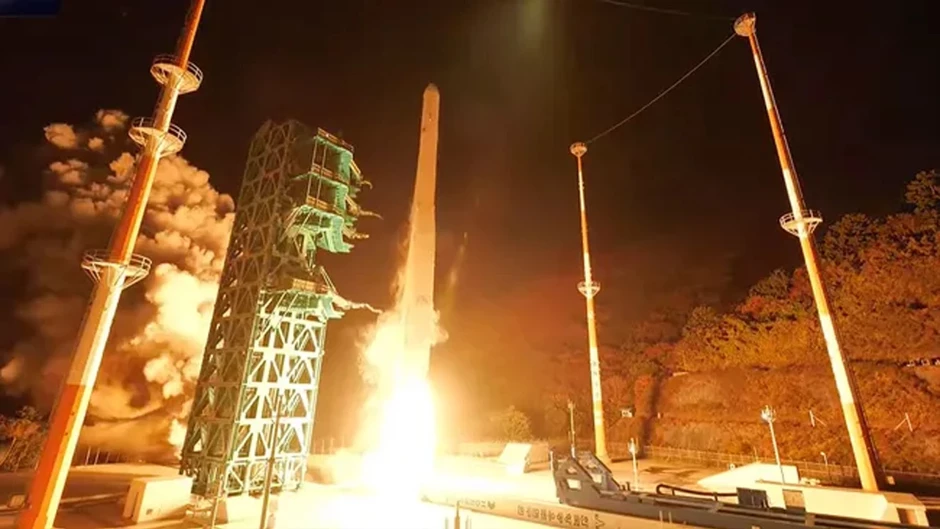
South Korea‘s fully indigenous Nuri rocket carried the CAS500-3 observation satellite and 12 cube satellites to orbit on its fourth flight. The first launch following the establishment of KASA (Korea AeroSpace Administration) also indicates Korea‘s transition to private sector integration in the space industry.

South Korea‘s Nuri rocket, developed entirely with domestic capabilities, successfully completed its flight for the fourth time. Launched from the Naro Space Center at 01:13 AM on November 27 Korean Standard Time (19:13 on November 26 Turkey time), Nuri marks an important turning point in the country’s space program.

The 47-meter tall three-stage rocket carried CAS500-3, an Earth observation satellite, and a dozen tiny cube satellites accompanying it into orbit.

If everything proceeds as planned, CAS500-3 will settle into a Sun-synchronous orbit at an altitude of 600 kilometers above Earth. When this 500-kilogram satellite begins operation, it will study the light rings surrounding our planet’s poles, namely auroras, and other atmospheric phenomena known as airglow. Additionally, according to a statement by the Korea AeroSpace Administration (KASA), established in May 2024, CAS500-3 will also measure magnetic fields and plasma. The 12 secondary cube satellites on the rocket were provided by various companies, academic institutions, and research centers and will undertake different missions in orbit.

Nuri stands out as South Korea‘s first fully indigenous orbital rocket. Although the country’s previous launcher, Naro-1, was able to reach orbit, it used a modified Russian-made Angara rocket for its first stage. While Nuri failed in its first flight in October 2021, it returned with two consecutive successful launches in June 2022 and May 2023. Today’s launch continued this success streak and carries special meaning in other respects as well.

KASA Administrator Yoon Young-bin stated, “Nuri’s fourth launch is significant as it is the first launch since the establishment of KASA and the first launch where a system integration company undertook the general production and assembly of launch vehicles and participated jointly in launch operations.” This demonstrates that South Korea has made progress not only in technology development in the space industry but also in transferring operational responsibilities to the private sector.

You Might Also Like;

Follow us on TWITTER (X) and be instantly informed about the latest developments…


Source link

What Will the World Look Like in 100 Years? 10 Shocking Predictions | Metaverse Planet

0
What Will the World Look Like in 100 Years? 10 Shocking Predictions | Metaverse Planet


Have you ever wondered what the world will look like in 100 years? Will humanity be a multi-planetary species, or will we be living entirely in a digital simulation?

Welcome to the year 2125.

The future is not just about flying cars. It is about the fundamental transformation of what it means to be human. Based on current data and technological growth rates, the next century will bring more change than the last 10,000 years combined.

At Metaverse Planet, we have analyzed the trends. Here are the 10 most shocking predictions for life in 2125.

Part 1: The Evolution of Humans

The human body is getting a major upgrade. In 2125, biology is no longer destiny; it is a choice.

1. Immortality and Reversing Aging

Death might become optional. Scientists are already working on treating aging as a “disease” rather than a natural process. By 2125, nanobots circulating in our bloodstreams could repair damaged cells instantly, effectively halting or reversing the aging process. You could celebrate your 120th birthday looking and feeling like you are 30.

2. Neuralink and The Cyborg Era

Smartphones will belong in museums. With advanced Brain-Computer Interfaces (BCI) like Neuralink, we will communicate via telepathy. Need to learn a new language or skill? You won’t go to school; you will simply download the data directly to your brain in seconds. We are merging with machines.

3. Designer Babies

Genetic engineering (CRISPR technology) will allow parents to “design” their children. Disease genes will be eliminated before birth, while intelligence, height, and physical traits can be optimized. This could lead to a new era of “superhumans.”

Part 2: The New Planet and Beyond

Earth is changing, and so is our address.

4. Life on Mars

By 2125, Mars will not just be a research station; it will be a sovereign state. With a population of over one million, the Red Planet will have its own economy, culture, and perhaps even a new species of humans adapted to lower gravity. We will officially be a multi-planetary species.

5. Climate Engineering (Geoengineering)

We won’t just predict the weather; we will control it. To combat climate change, massive carbon-capture towers and artificial shields to re-freeze the polar ice caps will be in operation. Technology will restore the planet’s ecosystem.

6. Floating Cities

As sea levels rise, humanity will adapt by building massive, self-sustaining cities that float on the oceans. These “Modern Atlantises” will run on renewable energy and provide homes for millions.

Part 3: Society and Artificial Intelligence

The way we live, work, and govern is about to face a total reset.

7. AI Government

Seoul Mayor Oh Se-hoon attends an event as an avatar in a metaverse platform, in a demonstration of the city’s plans to launch government services on a metaverse platform in 2022. (Courtesy of Seoul City Government)

Imagine a world without corrupt politicians. In 2125, complex decisions regarding the economy, resource distribution, and law could be handled by Super Artificial Intelligence. An AI “World Leader” would make decisions based on pure data and logic, ensuring perfect equality—but at what cost to our freedom?

8. The End of Work

Robots and AI will handle all physical and mental labor, from farming to coding. This will necessitate a “Universal Basic Income” (UBI), allowing humans to focus on art, philosophy, and exploration. Work will become a hobby, not a necessity.

9. Living in the Metaverse

Google_AI_Studio_2025-10-12T02_47_15.501Z

For many, the physical world will be secondary. Full-dive Virtual Reality will allow people to live, work, and socialize in the Metaverse. These simulations will be indistinguishable from reality, offering a perfect life that the real world cannot provide.

10. First Contact

With the power of Quantum AI and advanced space telescopes, the probability of detecting non-biological signals from deep space is higher than ever. By 2125, we may finally answer the ultimate question: “Are we alone?”

Conclusion: Fear or Hope?

The world of 2125 is a place of incredible potential and terrifying risks. We might become gods who conquer death and space, or we might lose our humanity to machines.

The future is coming fast. The only question is: Are you ready?

Stay tuned to Metaverse Planet for the latest updates on the technologies shaping our future

You Might Also Like;

Follow us on TWITTER (X) and be instantly informed about the latest developments…


Source link

Popular Posts

My Favorites

Ethereum Tanks, XRP Makes Wall Street Move—But BlockDAG’s $0.0031 Easter Drop

0
Ethereum is facing serious headwinds. With ETFs crashing 60% and the token sitting below $1,600, investors are jittery despite the upcoming Pectra upgrade....