Metaverse

Home Metaverse Page 67

Electric Renault Twingo Launched: Here is the Official Price | Metaverse Planet

0
Electric Renault Twingo Launched: Here is the Official Price | Metaverse Planet


The Renault Twingo, returning as a fully electric model, has officially been launched. Price tags and equipment options have been announced for the compact hatchback, which is now open for orders in France.

As you may know, Renault brought back its popular city car, the Twingo, in an entirely electric format. The new Twingo E-Tech model, which was introduced last month, opened for orders in France as of today, December 16. Renault announced the official price list through its official website.

The new Twingo retains the brand’s iconic design lines. Measuring 3.8 meters in length, the compact hatchback clearly echoes the original 1992 Twingo with its exterior appearance. It is worth noting that this nostalgic approach has been seamlessly integrated with modern details.

What Does the Electric Twingo Offer?

All 2026 Twingo models come standard with a 7-inch digital instrument cluster and a 10.1-inch touchscreen multimedia display. Thanks to sliding rear seats, the interior is designed to easily adapt to different needs. The trunk capacity can reach up to 360 liters.

The new Twingo E-Tech features an 82-horsepower electric motor and a 27.5 kWh battery. According to data released by Renault, the car offers a range of up to 263 kilometers. This value is considered sufficient for urban use. However, the most striking aspect of the model is its pricing.

Electric Twingo Price

The base Evolution version of the Renault Twingo is offered for sale in France starting at €19,490, but thanks to government incentives, the price drops as low as €14,720. This trim level includes manual air conditioning, parking sensors, cruise control, and automatic LED headlights as standard.

The price tag for the more advanced Techno version is €21,090, which drops to €16,320 with incentives. The Techno trim includes keyless entry, automatic climate control, a navigation system, a rear-view camera, and adaptive cruise control capable of operating in heavy traffic.

Furthermore, the Advanced Charge package, offered for €500, includes an 11 kW bidirectional AC charger, a 50 kW DC fast charger, and V2L (Vehicle-to-Load) and V2G (Vehicle-to-Grid) energy supply functions. With all these features, the Renault Twingo E-Tech has positioned itself as the brand’s most affordable electric car as of 2026.

You Might Also Like;


Source link

Humanoid Robot to be Sold for the Price of an iPhone 17 Pro Max: Here are the Features! | Metaverse Planet

0
Humanoid Robot to be Sold for the Price of an iPhone 17 Pro Max: Here are the Features! | Metaverse Planet


A Chinese technology company is preparing to launch the world’s cheapest humanoid robot. Scheduled for release next year, the product is set to generate significant buzz not only for its features but also for its price, which is equivalent to an iPhone 17 Pro Max. Here are the details…

China is preparing to open a brand-new chapter in the humanoid robot war with the United States. A Chinese tech startup called “Songyan Power” is set to sell humanoid robots at an extremely affordable price. The humanoid robot named “Bumi,” which will be released next year, will be the cheapest in the world, selling for roughly the price of an iPhone 17 Pro Max.

Bumi is a humanoid robot that stands 94 centimeters tall and weighs approximately 12 kilograms. It can walk, run, dance, respond to voice commands, and can be easily programmed using a drag-and-drop system on its own interface. Capable of interacting with children, the robot also has the capacity to provide training in basic coding operations. Introducing Bumi, the world’s most affordable humanoid robot!

Why Bumi Matters Globally

The reason this humanoid robot is of global importance lies in the pricing of its competitors. US-based firms like Tesla and Digit, which produce humanoid robots, set price tags in the tens of thousands of dollars. Bumi, manufactured in China to introduce ordinary people to humanoid robot technology, will be priced at only $1,400.

According to industry sources, China will facilitate the adoption of this technology through affordable humanoid robots. However, price competition in the sector may cause a slowdown in innovation.

The year 2026 appears to be a pivotal year for the humanoid robot industry. This raises the question: where does USA stand in this sector? This is exactly one of the core issues we need to discuss and focus on as a country. We shall see when technology companies in USA will bring the humanoid robot sector further into the spotlight…

You can watch the promotional video released for Bumi below:

You Might Also Like;


Source link

Best NFT Games to Earn Money | NFT News Today

0
Best NFT Games to Earn Money | NFT News Today


NFT games have opened up a whole new avenue for players to convert their gaming hours into real money. These games don’t just reward you with points or items that are usable only within a single game. Still, they provide players with ownership of digital assets that can be sold, exchanged, or even used across different platforms. Although the market has experienced fluctuations, there are still strong NFT games where your skills, strategies, and time can eventually be converted into tangible benefits.

In this article, we will cover the best NFT games that let players earn money. Also, we will tell you how they operate and help you grasp why they are different from regular games that have item ​‍​‌‍​‍‌​‍​‌‍​‍‌economies.

Ways​‍​‌‍​‍‌​‍​‌‍​‍‌ in Which NFT Games Allow Players to Make Money

NFT games use blockchain technology in their gameplay. The various in game items, such as a character, land, weapon, or card, are made into an NFT. This means a player owns these items in the most absolute sense. Usually, these tokens can be sold on an external cryptocurrency market, which can later be exchanged for regular money.

Most of the time, the money making methods include:

By the sale of rare or upgraded NFTs

Through gameplay, tokens are earned

By letting others use their assets, in exchange for some benefits, royalties

Through competing in tournaments or playing the competitive game mode

The main point is ownership. In regular games, the items are technically the publisher’s. In NFT games, tokens are the ​‍​‌‍​‍‌​‍​‌‍​‍‌players’.

NFT​‍​‌‍​‍‌​‍​‌‍​‍‌ Games vs Traditional Games With Item Markets

Being realistic about scale is very important. None of the NFT games mentioned below have a massive player base like traditional games with huge item markets such as CS2, TF2, or Rust. These games already allow real money for skins via third party marketplaces, but they have not yet shifted to an NFT based infrastructure for their items.

While vast communities and high liquidity power traditional games, NFT games emphasize player ownership and open economies. This translates to a smaller number of players, but there are also fewer limitations regarding the trading, selling, or transferring of assets to an account outside the game ​‍​‌‍​‍‌​‍​‌‍​‍‌ecosystem.

Axie​‍​‌‍​‍‌​‍​‌‍​‍‌ Infinity

Axie Infinity is still one of the top recognizable NFT games in the world. Users accumulate and fight with creatures named Axies, and every one of these is an NFT. To make money, players are given tokens as rewards for forging ahead in playing PvP or completing quests that can be exchanged on crypto exchanges.

The ability to earn is highly dependent on one’s strategy, the makeup of the team, and market timing. Although the cost of getting started is not as high as it was in the first days, players still need to understand the economy to keep earning profits.

Best for: Players of strategy games who like turn based combat and long term ​‍​‌‍​‍‌​‍​‌‍​‍‌planning.

Gods​‍​‌‍​‍‌​‍​‌‍​‍‌ Unchained

Gods Unchained resembles traditional trading card games and is a digital card game. Cards represent NFTs, so a rare or powerful card can be sold to another player. The game not only rewards spending power but also skill, which is why it attracts competitive players.

Players can earn by winning matches, participating in events, and trading valuable cards. As the game is free to play, it has a lower entry barrier than most NFT titles.

Best for: A competitive player who enjoys card strategy and ​‍​‌‍​‍‌​‍​‌‍​‍‌trading.

The​‍​‌‍​‍‌​‍​‌‍​‍‌ Sandbox

The Sandbox revolves around the concept of owning virtual land and creating user generated content. Users can acquire land NFTs, develop experiences, and make money by running events, games, or selling items. Big names and creators have already made the move to the platform; thus, it is a good bet for the future.

Most of the money can be made from increases in land value, renting land, or selling unique assets created in the game.

Best for: Creative players and investors in the virtual real estate market are the ones for whom this platform is ​‍​‌‍​‍‌​‍​‌‍​‍‌perfect.

Illuvium

Illuvium​‍​‌‍​‍‌​‍​‌‍​‍‌ is a top tier open world title that revolves around adventuring and battling. In the game, players collect Illuvials, which are NFTs that can be traded or sold. The game goes a long way toward being different from most previous NFT projects by placing a strong emphasis on the quality of its graphics and gameplay.

The earning part requires time and skills. However, rare Illuvials can gradually become valuable.

Best for: Players who are focused on production quality and exploration.

Splinterlands

Splinterlands is a card based NFT game. The matches are quick, and the game has an intense competitive scene. Cards, packs, and land are all NFTs, and players can get rewards through ranking play and tournaments.

The game features a fully functional marketplace, offering users greater convenience for buying and selling assets than most new projects.

Best for: Players who are quick matches and active ​‍​‌‍​‍‌​‍​‌‍​‍‌trading.

FAQ

Can you really make money with NFT games?

Yes, but the money is not a certainty. The players monetize their NFTs or tokens by selling them to other players. The profit depends on demand, rarity, and how you play or manage your assets.

What is the safest method to convert digital items into cash?

The main thing is to use well known, established marketplaces. In traditional skin based economies, many players have trusted platforms like Tradeit to trade and sell digital items for real value safely. Although NFT games operate on blockchain marketplaces, the same rules apply: liquidity, reputation, and security are essential.

Is a money investment necessary to start playing NFT games?

There are NFT games that can be started for free, and some that require an initial investment. Free to play games are less risky but may have slower earning ​‍​‌‍​‍‌​‍​‌‍​‍‌potential.


Source link

Binance Exploring Options to Relaunch U.S. Subsidiary Bloomberg

0
Binance Exploring Options to Relaunch U.S. Subsidiary Bloomberg


Key Highlights

Binance is exploring a reboot of its U.S. affiliate to regain a stronger foothold in the American market.

The company is considering a capital restructuring that could reduce founder Changpeng Zhao’s majority stake to satisfy state regulators.

This potential relaunch follows Zhao’s presidential pardon and a shift toward a more favorable regulatory environment in Washington.

Binance has started assessing its operating framework within the United States, including the possible reopening of its U.S. subsidiary. The development comes as former CEO Changpeng Zhao re-emerges in the industry following a pardon from U.S. President Donald Trump.

According to a report by Bloomberg, the firm is seeing possibilities of an absolute merger of Binance.US into its global operations or allowing the main global platform to immediately operate in the USA. This is especially after all those months where Binance US operated independently as if it were an exact, distinct entity under its parent company, BAM Trading Services, to adhere strictly to local Washington regulations and laws. 

Changing political tides

This change in direction is mainly because of the shift in Washington’s political and localized environment and Zhao’s re-emergence as an important part of Binance despite his non-executive position in it. Another factor is that CZ Zhao recently received a pardon from President Trump.

Binance and the US regulatory bodies have traditionally had a contentious relationship. In February 2024, the trading platform was involved in a $4.3 billion settlement deal with the Department of Justice and various other regulatory bodies over charges of money laundering and breaches of sanctions. 

As part of the deal, the company was compelled to shut down its operations in the US, and Changpeng Zhao was prohibited from holding any executive position. He also served a four-month prison term in 2024. Binance.US faced additional challenges in 2023 due to a lawsuit filed by the SEC, which resulted in the freezing of its ability to conduct USD transactions. This is because the American affiliate had operated for almost two years with restricted banking facilities and was transacting only in crypto.

Reshaping the landscape of digital assets

The potential return or reentry of Binance into the United States may end up restructuring the competitive dynamics within the digital asset space. In a re-entry, American investors may gain the opportunity to access the global platform’s liquidity and advanced trading offerings, including derivatives, currently barred from access.

It has been projected that the unified brand may end up having considerable force on local competitors such as Coinbase and Kraken. This indicates the emerging trend within the crypto space to take advantage of the more welcoming regulatory climate within the digital asset space. Binance’s foray into a potential return to the U.S. represents a defining period for the world’s biggest crypto exchange.

Despite the legal and regulatory challenges that remain, the pardon granted to Zhao and changes in the regulatory environment appear to have prompted Binance to reconsider its U.S. strategy. Either by scaling Binance.US or entering under the global brand itself, the organization’s next move will come under close regulatory and investment scrutiny.

Also Read: Binance to Explore Tokenizing $2B in Pakistan Sovereign Assets


Source link

AI Image Wars Heat Up: OpenAI Responds to Google with gpt-image-1.5 | Metaverse Planet

0
AI Image Wars Heat Up: OpenAI Responds to Google with gpt-image-1.5 | Metaverse Planet


OpenAI has introduced its new image generation model, gpt-image-1.5. Offering faster performance, superior editing, and lower costs, it arrives as a direct competitor to Google’s Nano Banana models. In March, OpenAI launched a new model that fundamentally enhanced ChatGPT’s image generation capabilities.

This update went viral almost instantly, bringing millions of new users to ChatGPT; in fact, users generated over 700 million images in just one week. By April, the same technology was made available to developers via the gpt-image-1 API.

Google’s “Nano Banana” Move

In September, Google introduced its new image generation model, codenamed Nano Banana. The model quickly gained significant traction and substantially increased the usage of the Gemini platform. Surpassing gpt-image-1 in both creation and image editing, Nano Banana was rapidly adopted by developers worldwide.

Google sustained this momentum last month with the announcement of Gemini 3 Pro Image (Nano Banana Pro). The new model aims to produce the most accurate images to date by leveraging Gemini’s advanced reasoning capabilities and real-world knowledge.

OpenAI’s Counter-Attack: gpt-image-1.5

Today, OpenAI announced gpt-image-1.5, a new image generation model designed to compete more directly with Google’s Nano Banana series. The new model stands out particularly for its visual editing precision.

Better Editing, Clearer Text

gpt-image-1.5 offers significant improvements in understanding and executing user instructions while preserving critical details such as logos and faces much more effectively. OpenAI has also enhanced the readability of text within generated images. A visible improvement has been achieved, especially in small and dense text elements.

Cheaper and More Efficient for Developers

The new model also provides advantages for developers. Compared to the previous version, gpt-image-1.5 is 20 percent cheaper in terms of image input and output costs. While costs remain manageable through quality settings, OpenAI states that a powerful performance is delivered even at lower quality levels.

Up to 4x Faster Experience for ChatGPT Users

For end-users, gpt-image-1.5 now directly powers the image generation infrastructure of ChatGPT. According to OpenAI, the new model can make accurate edits while maintaining details like lighting, composition, and personal appearance, and it operates up to 4 times faster than the previous model.

New “Images” Hub Exclusive to ChatGPT

OpenAI has also launched a new Images hub dedicated to ChatGPT. Accessible via the mobile app and chatgpt.com, this section allows for a quick start to image generation with ready-made filters and sample prompts. The company notes that these pre-set contents will be regularly updated according to current trends.

Gradual Rollout to All Users

The new image generation model and the ChatGPT Images experience are being rolled out gradually to all ChatGPT users.

You Might Also Like;


Source link

SaucerSwap Unveils Redesigned Platform and New Brand Identity for Hedera DeFi

0
SaucerSwap Unveils Redesigned Platform and New Brand Identity for Hedera DeFi


Sponsored

Stories and Reviews

December 17, 2025

SaucerSwap Unveils Redesigned Platform and New Brand Identity for Hedera DeFi

Fernandina Beach, USA/Florida, December 15th, 2025, Chainwire

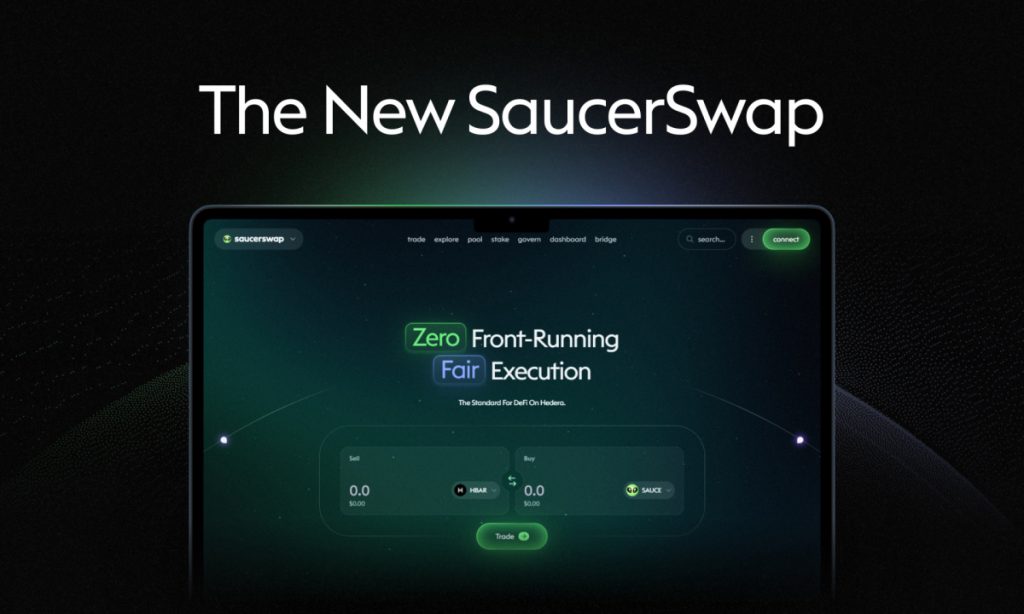
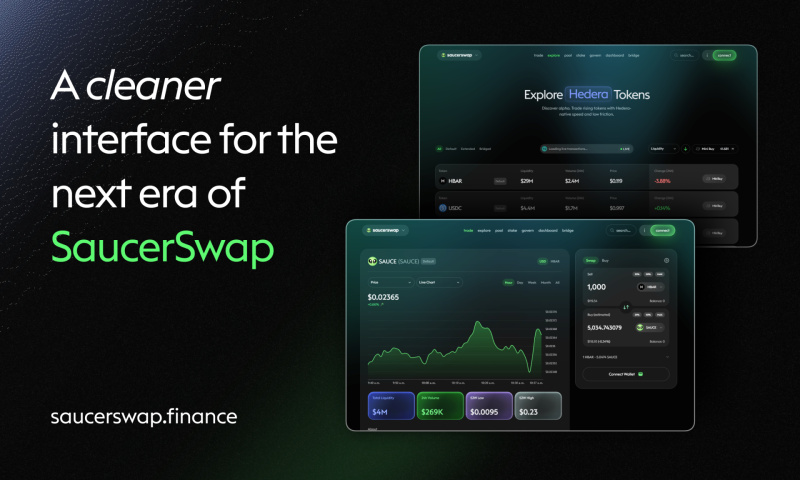
SaucerSwap Labs, the team behind Hedera’s leading decentralized exchange, today unveiled a fully redesigned platform and refreshed brand identity. The update delivers modernized navigation, integrated analytics, and a new visual design system while preserving the audited smart contracts and non-custodial architecture that users rely on.

“Whether you’re discovering Hedera DeFi for the first time or you’re a professional trader, everything has been rebuilt to feel fast, trusted, and intuitive,” said Peter Campbell, CEO and Co-founder of SaucerSwap Labs. “This is a serious workstation for capital.”

A New Era for Hedera’s Liquidity Protocol

Since launching in 2022, SaucerSwap has grown from an early-stage automated market maker into Hedera’s dominant DeFi protocol, routing the majority of on-chain liquidity and processing tens of millions of swaps. The redesigned platform brings the user experience in line with that scale, introducing clearer information architecture and analytics built directly into every workflow.

The launch also introduces a refreshed visual identity for SaucerSwap, including an updated logo, new color palette, and a modern design system that reflects the protocol’s evolution from startup to infrastructure.

Navigation Built Around Real Workflows

The platform is now organized into clear, action-driven sections. Trading, token discovery, liquidity provisioning, staking, governance, and portfolio monitoring each have dedicated views. Users can move from a token swap to providing liquidity, staking SAUCE, or voting on a governance proposal in seconds.

A bridge modal connects Hedera to external networks including Base and BNB Chain, making it easier to move capital in and out of the ecosystem.

The redesign standardizes how information is displayed across the platform: pair and pool charts, liquidity depth, fee APYs, LP position analytics, historical performance, and protocol health metrics all follow consistent visual patterns. These components are designed to scale with SaucerSwap’s roadmap, including the planned V3 protocol upgrade, perpetuals, limit orders, dollar cost averaging, and ETF-style products.

“The interface was designed so that complex features feel simple,” said Markus Bergvinson, Chief Strategy Officer at SaucerSwap Labs. “Whether it’s swaps today or advanced derivatives tomorrow, it all lives inside one consistent experience.”

Built for Every Type of User

The platform is tuned for different audiences. Retail users and newcomers get clear copy and guided flows that feel similar to modern banking apps. Advanced users and liquidity providers gain faster access to deeper analytics and more powerful LP tools. Builders and token projects can rely on the interface for token launches and liquidity programs. Professional partners can bridge assets from other networks and interact with a protocol that matches their expectations for security and longevity.

Protocol Unchanged, Experience Upgraded

The redesign does not change SaucerSwap’s audited smart contracts, non-custodial architecture, on-chain governance via SAUCE and xSAUCE, or any existing LP positions, stakes, or rewards. Everything users have built on SaucerSwap remains intact.

This launch marks the beginning of SaucerSwap’s next chapter: new design, new brand, and new capabilities, with the same mission of being the most efficient, accessible, and secure liquidity protocol on Hedera.

About SaucerSwap

SaucerSwap is Hedera’s leading decentralized exchange and liquidity protocol, enabling fast, low-cost token swaps with integrated analytics. Governed by the SaucerSwap DAO through SAUCE and xSAUCE, the protocol powers Hedera-native and cross-chain liquidity for retail users, builders, and institutional partners.

For more information, users can visit the SaucerSwap Docs and explore the new SaucerSwap platform.

Contact

CEOPeter CampbellSaucerSwap Labs LLC[email protected]

Disclaimer

In line with the Trust Project guidelines, please note that the information provided on this page is not intended to be and should not be interpreted as legal, tax, investment, financial, or any other form of advice. It is important to only invest what you can afford to lose and to seek independent financial advice if you have any doubts. For further information, we suggest referring to the terms and conditions as well as the help and support pages provided by the issuer or advertiser. MetaversePost is committed to accurate, unbiased reporting, but market conditions are subject to change without notice.

About The Author

Chainwire is the top blockchain and cryptocurrency newswire, distributing press releases, and maximizing crypto news coverage.

More articles

Chainwire is the top blockchain and cryptocurrency newswire, distributing press releases, and maximizing crypto news coverage.


Source link

Cross River Joins Highnote to Pilot Visa Stablecoin Settlements

0
Cross River Joins Highnote to Pilot Visa Stablecoin Settlements


Key Highlights

Cross River Bank and Highnote have launched a stablecoin settlement capability to modernize fund movements between merchants and banks.

The partnership uses the Solana blockchain and USDC to enable continuous, seven-day-a-week transaction processing.

The initiative reduces liquidity constraints by allowing businesses to access their funds in near-real time.

Cross River Bank and card-issuing platform Highnote announced a collaboration on Tuesday to introduce a stablecoin settlement function. The initiative aims to enable faster payments between merchants and financial institutions like Visa.

The functionality would use blockchain technology to provide a faster, more affordable, and efficient way to settle payments, contrary to traditional methods. This new service enables companies to make payments in real-time or near-real-time using digital assets instead of waiting several days for transactions to go through on conventional banking networks.

According to the official release, the collaboration combines Highnote’s card issuance infrastructure with Cross River’s expertise in core banking and payment processing. The development will enable merchants to receive their funds in the form of stable cryptocurrencies after card transactions.

The solution is designed to address the complexities involved in the process of regulatory supervision while harnessing the power of blockchain technology. This may prove beneficial to small and mid-sized businesses that currently have to wait several days for their credit card transactions to be processed and credited into their accounts. 

Bridging regulatory compliance and decentralized finance

Luca Cosentino, Head of Crypto at Cross River, commented on the function, stating, “For stablecoins to realize their full potential they must operate within unified systems. Cross River’s infrastructure is built to bring onchain settlement safely into mainstream financial services.”

“Our participation in the Visa stablecoin settlement pilot and collaboration with Highnote will enable card issuers to settle network activity seven days a week, demonstrating how this innovation can be implemented effectively in real-world environments,” he added. 

The launch of the Cross River and Highnote settlement capability is the practical culmination of a rapidly maturing digital asset ecosystem. This development builds upon Cross River’s November rollout of a compliant stablecoin payment suite.

It established the necessary regulatory and technical infrastructure to bridge fiat and on-chain finance. The integration of this technology into real-world card programs is further validated by Visa’s December launch of its Global Stablecoins Advisory Practice. 

Together, these developments indicate a shift from experimental pilots to institutional-grade operations, where major payment networks and infrastructure banks are now guiding financial institutions on how to replace legacy multi-day clearing cycles with 24/7 blockchain-based settlement.

Evolving from crypto-native to mainstream banking

The initiative comes after several years of step-by-step integration between decentralized finance (DeFi) and the traditional banking industry. Cross River has managed to emerge as one of the key infrastructure partners for most of the major fintech companies across the globe. Meanwhile, Highnote has concentrated its efforts on designing highly customizable payment programs.

The use of stablecoins for making payments was previously limited to companies that operated within the crypto space. With the enhancement of regulations and an increasing demand for instant liquidity within the traditional financial service provider industry, there is an increasing quest to adopt blockchain solutions into their normal offerings.

Through the use of stablecoins that simplify the process of settlement, these two firms are exemplifying solutions that have long been sought after by the financial industry for inefficiencies inherent within the financial system.

Also Read: Tether Invests $8M in Speed for Lightning-Native Stablecoin Tech


Source link

How Traditional Studios Are Approaching Blockchain Gaming | NFT News Today

0
How Traditional Studios Are Approaching Blockchain Gaming | NFT News Today


Traditional game studios used to treat blockchain like a noisy side quest. Then live-service economies got harder, creator marketplaces got bigger, and every publisher started asking the same quiet question: can a game support player-owned items without becoming a public mess? Most big studios now answer with caution. They move slowly, keep legal close, and build a way out before they build a way in.

The conversation has also matured. It is less about flashy collectibles and more about boring problems that still matter: receipts, ownership history, fraud, account recovery, regional rules, and how to pay creators without acting like a bank.

Why big studios are looking again

For a traditional studio, blockchain is rarely the product. It sits behind something the studio already wants: better control over digital items, cleaner creator payouts, and less chaos around unofficial trading. If a system cannot handle disputes, refunds, and recovery, it will not survive a mainstream launch. That is why many experiments keep gameplay off-chain and use the chain for recordkeeping, where it adds real value.

The strongest studio pitch also avoids the fantasy of “true ownership” with no strings attached. Big publishers still need limits. They need to stop fraud rings, enforce bans, and roll back obvious exploits. A chain can track history, but it cannot replace rules.

The trust problem that shapes every decision

Casinos with no identity checks are described as platforms that let people sign up with an email and password, skip ID uploads, and rely on crypto payments for privacy and faster withdrawals. The same guide also explains why KYC exists: identity checks help reduce fraud and money laundering risk, and they support age verification and regulator requirements. That tension is familiar to studios, because blockchain features sit right on the line between low-friction onboarding and the compliance expectations that come with anything tied to money.

All of the players are already aware of how this ends up. Some people want the most comfortable on-ramp at all times. As soon as they hear the word “token,” others smell a scam before the trailer is over. As a result of the fact that a mainstream publisher is required to build for both groups, blockchain features are typically made optional, while standard accounts are responsible for the majority of the lifting.

What blockchain looks like inside a traditional studio

At big studios, the internal conversation often starts with a practical question: what problem does this solve that a normal database cannot? Good answers tend to involve marketplace control, creator payments, and audit trails. Weak answers involve hype, vague roadmaps, and phrases that make community managers reach for aspirin.

That practical mindset drives small, controlled use cases. Common patterns include closed marketplaces, limited item types, and a strict separation between game balance and anything tradeable. Wallet experiences also get “de-scary” on purpose. Custodial wallets tied to existing accounts are common, because customer support and recovery cannot be an afterthought.

Guardrails that show up again and again include:

Keep competitive gameplay separate from tradeable assets.

Make blockchain features opt-in, with a normal experience available.

Avoid pricing items in volatile tokens inside the game client.

Set clear creator rules, including what can be resold and what cannot.

Write customer support and account recovery procedures before launch.

For a steady pulse check on how these experiments are evolving, our news tracks plenty of updates in its Web3 section.

Distribution and compliance decide what ships

A prototype can live in a lab forever. Shipping is where the real constraints show up. Stores, platforms, and regulators all have a vote, even when nobody calls it that.

Steam is the blunt example. Valve has blocked games that issue or allow exchange of cryptocurrencies and NFTs, which changes how many blockchain-first titles can reach that storefront. That pushes publishers toward alternative distribution or toward designs that keep blockchain out of the client experience.

Fraud risk adds another layer. Crypto scams are now mainstream news, and studios do not want a new feature to look like an investment product. That is part of why many publisher plans avoid talk of profit, price appreciation, or “earning.” A clean, high-authority data point sits in the FBI annual Internet Crime Report press release, which highlights large losses tied to cryptocurrency-related investment fraud.

Even the language in announcements reflects this caution. Press statements get careful about wording, partnerships, and compliance posture. We collect many of these corporate updates, so feel free to check them out.

Where traditional studios are most likely to land next

The near-term future looks less like fully on-chain games and more like hybrid systems that borrow the useful parts of existing economies. Consider improved item provenance, creator royalties that avoid complex payment processes, and marketplaces that are not reliant on untrustworthy third parties.

Macro events also matter more than studios admit. When crypto prices swing on headlines, budgets, and partner interest swing too; that is why mainstream readers keep an eye on pieces like this one on how the end of the U.S. government shutdown could boost crypto prices.

The safest wins also feel unglamorous:

A provable ownership record for cosmetic collectibles.

Creator tooling that pays royalties without reinventing payment rails.

Cross-title entitlements that keep value inside one publisher catalog.

Player-to-player trading inside clear limits, with fraud controls and dispute paths.

Conclusion

Blockchain technology is not being adopted by traditional studios as a means of identity change. In the same way that they test anti-cheat, cross-play, or new payment options, they are testing it as an infrastructure. In most cases, this entails the implementation of opt-in features, quiet pilots, and meticulously managed marketplaces.

The true signal will be boring: a major studio will release a feature that players will hardly notice, and then they will continue to use it for another few years. At that point, blockchain begins to function as plumbing and ceases to be a topic of headlines.


Source link

AI Diaries: This Week in the World of AI (December 16, 2025) | Metaverse Planet

0
AI Diaries: This Week in the World of AI (December 16, 2025) | Metaverse Planet


What happened this week in the AI world; What new things were introduced? In our “AI Diaries” series, we continue to record weekly what is happening in this rapidly growing field.

Artificial intelligence technologies, which have begun to be used much more widely in daily life recently, continue to develop rapidly. While a remarkable development occurs in this field almost every day, significant thresholds are being crossed one by one. In our “AI Diaries” series, we continue to regularly record the development of this technological revolution, which has the potential to significantly change life on earth in the coming period.

What Happened This Week in the AI World?

The most talked-about company in the AI world this week was OpenAI. While releasing GPT-5.2, its most advanced model to date, the company also continued to take steps to make ChatGPT more popular. On the other hand, the effects of AI on humans were opened to debate again this week. Parallel to these, as every week, new AI tools entered our lives this week. Here are the prominent developments of this week in the AI world:

OpenAI Released GPT-5.2

Its Most Advanced Model to Date OpenAI announced GPT-5.2, its most advanced artificial intelligence model to date. The company says the new model is its best product yet for daily professional use. According to OpenAI’s statement, GPT-5.2 performs better than previous models in spreadsheet creation, presentation preparation, visual perception, coding, and understanding long contexts.

GPT-5.2 has started to be offered in ChatGPT‘s paid plans (Plus, Pro, Go, Business, and Enterprise). However, the company says the release will be distributed gradually to ensure the user experience remains smooth and stable.

The Proliferation of AI Changes Human Behavior

Research published this week by the Center for Adaptive Rationality at the Max Planck Institute for Human Development revealed that the way people speak and write has begun to resemble the language produced by large language models. The research points out a noticeable increase in the use of certain words such as “bolster,” “comprehend,” “meticulous,” and “swift” in the speeches of YouTube users in the 18 months following the launch of ChatGPT. Moreover, this situation is not just a phenomenon revealed by data analysis; it is stated that this change has become palpable in internet communities, the rhetoric of public figures, and even in ordinary daily life. The study offers quantitative evidence showing that as individuals come into contact with large language models, their vocabulary choices change, meaning they become “ChatGPT-ized.”

An article published in the New York Times this week revealed that as video-generating AI tools like Sora and Veo3 develop, the disinformation crisis on social media grows even larger. People are struggling to distinguish between real videos and AI productions. This situation also shakes trust in real videos. The article emphasizes that AI and internet companies are not taking sufficient measures to prevent this disinformation.

Adobe Applications Integrated into ChatGPT

Adobe has made Photoshop, Acrobat, and Adobe Express available within ChatGPT. Now, ChatGPT users will be able to edit images, personalize designs, and manage documents via the chatbot interface. Adobe states that it wants to make its tools more accessible with this integration. After connecting the applications to ChatGPT from the Settings – Apps and Connections section, you can find the apps by clicking the plus sign next to the chat area and selecting “More.” To try the new features, simply type the name of the Adobe app followed by the action you want. For example, when you want to edit the background of a picture, entering the command “Adobe Photoshop, help me blur the background of this picture” is sufficient.

Copyright Fight Turns into Licensing Agreements: OpenAI Strikes Deal with Disney

The unauthorized use of copyrighted works and characters by AI companies has turned into a legal struggle between creators and AI companies today. However, events this week show that this copyright fight might give way to licensing agreements. Indeed, this is exactly what happened between OpenAI and Disney. Disney, which normally pursued OpenAI for copyright infringement, reached an agreement with OpenAI this week, allowing Disney characters to be used by ChatGPT and Sora. In return, Disney invested $1 billion in OpenAI, becoming one of the investors in the rapidly growing company.

World’s Smallest “Supercomputer” Unveiled

Tiiny AI introduced the Tiiny AI Pocket Lab, which it defines as the world’s smallest AI supercomputer. Measuring only 14.2 × 8 × 2.53 cm and weighing approximately 300 grams, the device is stated to be able to run 120 billion parameter LLM models completely locally within such a small body. Supported models include widespread solutions like GPT-OSS, Llama, Qwen, DeepSeek, Mistral, and Phi.

The 12-core processor with ARMv9.2 architecture at the heart of the device is supported by a special heterogeneous structure (SoC + discrete dNPU) designed to accelerate AI loads. This structure offers a total computing power of 190 TOPS. One of the critical elements in the device’s performance, 80 GB LPDDR5X memory and 1 TB SSD storage, is also noteworthy. This capacity makes it possible to run massive models smoothly thanks to aggressive quantization techniques.

First Earbuds Capable of Recording with AI Help Unveiled: TicNote Pods

TicNote Pods holds the title of being the world’s first 4G AI-supported note-taking earbuds. Designed by Mobvoi, these earbuds can do much more than play music or make phone calls. With the built-in 4G eSIM and customized Shadow AI system, TicNote Pods can record, synchronize, and transcribe conversations completely on their own.

TicNote Pods are designed for use in both personal and professional environments. When worn, they can clearly record in-ear conversations, online meetings, Zoom calls, phone calls, interviews, or lectures at school. The earbuds’ charging case can also be used as a standalone recording device. You can record conversations in the environment just by placing it on the table.

Amazon Alexa+ Will Automatically Buy Price-Dropped Products

Amazon is turning its AI-powered assistant into a more aggressive shopping engine by activating new shopping-focused capabilities for Alexa+. The updates announced by the company directly target both deal hunters and frequent orderers. The most notable innovation is Alexa+‘s ability to automatically purchase a specific product the moment it drops to a price set by the user. The user only states the desired product and the amount they are willing to pay; when the product enters a campaign, the assistant automatically places the order using the default payment method and delivery address.

Alternative AI Browser from Google to Chrome: Disco

Google‘s Chrome team recently developed a new browser. This experimental browser automatically opens many related tabs when it receives a question or command and then creates a mini-application specific to the task the user wants to do. For example, if someone asks for travel suggestions, it creates a trip planner; if they ask for study help, it creates a study card system. In short, it offers an experience between searching on Google and intuitive coding (vibe coding). This concept is called GenTabs, and the browser itself is called Disco. Google is testing whether these have a place in the future of the web by launching them experimentally under Search Labs.

AI Tools Released This Week

AutoGLM, developed by Chinese AI company Z.ai, is one of the most remarkable examples of an AI agent we have seen so far. AutoGLM can perform many tasks autonomously by using the phone screen almost like a human. At least, the demos shared so far show this.The AI tool named Wan-Move, published by Alibaba, allows users to determine which direction characters and objects in videos will move. It is sufficient for the user to draw the direction of movement.OneStory, published by Meta, can produce multiple visually consistent clips based on a single written command or image.RealGen, introduced this week, stands out as one of the best open models on the market for producing photorealistic images.EgoEdit, developed by the company behind Snapchat (Snap), can edit videos in real-time and make various manipulations on them. This tool is thought to be particularly useful for content creators and VR content.

Shorts from the AI World

OpenAI announced that ChatGPT‘s adult mode will be released in early 2026.The US approved the conditional export of Nvidia‘s H200 chips to China. The US also reported that companies like AMD and Intel would be allowed and that companies would take a 25 percent share of sales. Despite this development, China plans to use domestic chips.Meta is developing a new and closed-source AI model codenamed “Avocado.” The model, expected to be released in the first quarter of 2026, implies that the company will move away from its open-source approach.The European Union launched an investigation against Google, scrutinizing allegations that it used publishers’ content and YouTube videos in AI models without permission and with insufficient copyright.Spotify is testing a feature for Premium users that allows them to control the algorithm and the general listening experience on the platform. This feature, called “Prompted Playlist,” will make it easier to find exactly the music you are looking for with AI support.According to information reported by Axios, OpenAI management thinks that their most advanced models, which they have not yet released, could cause greater cybersecurity problems.Unconventional, an AI company founded two months ago, reached a valuation of $4.5 billion. The company’s main focus is to develop innovative technologies and hardware that will reduce the increasing energy consumption and computing costs of AI models.Intel is moving to a new strategy focused on developing local AI and customer-specific ASIC chips, instead of direct GPU competition with NVIDIA and AMD in AI.According to a new study, AI models with reasoning capabilities consume an average of 100 times more energy than standard models without this function.Google brought Gemini AI integration to Chrome on iPhone and iPad. Users will now be able to perform page summarization, content explanation, and topic-based queries directly through the browser.

You Might Also Like;


Source link

How Web3 Is Reshaping Online Casinos: From Wallet Logins to Telegram-Based Gaming | NFT News Today

0
How Web3 Is Reshaping Online Casinos: From Wallet Logins to Telegram-Based Gaming | NFT News Today


The online casino industry has always been quick to adopt emerging technology. From early desktop platforms to mobile-first casinos and live-dealer games, innovation is core to how the sector evolves. However, the next transformation, driven by Web3, may be the biggest yet.

Web3 introduces a new framework for trust, ownership, anonymity, and connectivity. Instead of logging in with emails and passwords, players authenticate through crypto wallets. Instead of traditional deposits, assets move instantly via blockchain rails. And instead of browser-based casinos, many players now interact directly inside messaging apps like Telegram.

Let’s explore how the shift from Web2 systems to Web3-powered gaming is unfolding, what advantages it brings, and the risks you should understand before engaging.

From Email Logins to Wallet Logins: The Web3 Identity Shift

In traditional online casinos, players share personal data, including their name, address, email and phone number, before they can even spin a slot. Web3 casinos flip this system entirely.

With wallet-based login, your public address becomes your identity. No databases, no passwords, no vulnerable account information. Platforms can verify ownership of assets without needing to know who you are.

Why Players Prefer Wallet Authentication

Enhanced privacy – You don’t need to provide private data.

Instant onboarding – No forms, no documents, no waiting.

Interoperability – One Web3 wallet can connect you to hundreds of crypto casinos.

Better security – Wallets protect access with biometric locks or secure hardware devices.

This shift has become one of the main reasons players are exploring decentralized gambling options. When combined with the ability to check Telegram casino bonus codes directly inside messaging channels, onboarding becomes faster and more frictionless than ever.

Deposits, Withdrawals, and the Rise of On-Chain Transparency

One of the biggest pain points in traditional gambling is payment speed. Bank transfers may take days. E-wallets can delay processing. And identity verification often slows withdrawals.

Web3 solves these issues using decentralized payment rails. Here’s how the new model compares:

Feature

Traditional Online Casino Payments

Web3 / Crypto Casino Payments

Speed

1–72 hours

Instant

Privacy

Requires personal data

No personal info needed

Fees

Medium to high

Low or variable by network

Transparency

Opaque

Fully visible on blockchain

Custody

Casino holds funds

Player maintains wallet ownership

Because blockchain transactions are public, deposit confirmations, payouts, and betting outcomes can be tracked openly. This reduces disputes and increases trust, something that the traditional industry has struggled with historically.

Telegram-Based Gaming: The New Social Casino Hub

One of the most surprising side effects of the Web3 boom is the move toward casino gaming inside Telegram. Telegram is already one of the most used messaging apps in the crypto community, and its bot system makes it perfect for casino-style interactions.

Why Telegram Casinos Are Taking Off

Fast, lightweight gameplay

Crypto-friendly ecosystem

Anonymous accounts

Instant notifications for wins and bonuses

Community-driven environment

Players don’t even need a browser; just a Telegram bot that handles bets, payouts, and bonus activation. Accessing deals like check Telegram casino bonus codes becomes a seamless part of the chat interface.

This is fundamentally different from traditional online casinos, which rely on heavy web applications, mandatory signups, and email verification.

Decentralisation and Provably Fair Gaming

Perhaps the most revolutionary Web3 innovation is provably fair gaming, a system that allows players to verify the randomness and fairness of every spin, dice roll, or card shuffle.

This is achieved using cryptographic algorithms that let both the casino and the player contribute to the seed used to generate a result. The entire process is transparent and verifiable.

Why Provably Fair Matters

It eliminates blind trust in casinos.

It prevents manipulation of outcomes.

It guarantees that results can’t be changed retrospectively.

It aligns with blockchain’s transparency-first ethos.

Traditional casinos rely on RNG certifications from authorities like the Malta Gaming Authority (MGA) for fairness validation. While trustworthy, these systems are still opaque compared to the mathematical certainty Web3 systems provide.

The Economic Model of Web3 Casinos

Web3 casinos operate differently behind the scenes. Instead of relying solely on centralized revenue, many platforms use:

Tokenomics

Staking pools

Community liquidity

Governance voting

Some even reward players with tokens for wagering or interacting with the platform.

Why This Appeals to Modern Players

A feeling of ownership

Financial rewards tied to platform growth

Participation in governance decisions

A more “open-market” casino environment

Web3 casinos feel more like decentralized ecosystems than traditional gambling sites. Players aren’t just customers; they’re participants.

Security Benefits and Risks of Web3 Gambling

Web3 casinos remove many Web2 risks but introduce new ones.

Web3 Security Advantages

No centralized storage of personal data

No passwords to steal

Funds remain in user wallets until the moment of play

Transparent transaction history

But The Risks Are Real

Smart contract vulnerabilities

Phishing attacks targeting wallets

Layer-1 network congestion is impacting gameplay

Unregulated platforms with no consumer protection

As Alina Anisimova, Banking Expert at Mr. Gamble, explains: “Web3 casinos introduce unmatched privacy and speed, but players should remember that their wallet becomes their responsibility. There’s no password recovery or bank back-up in decentralized gambling, so security awareness is essential.”

Interoperability: One Wallet, Unlimited Casinos

Web3 allows players to use one wallet to access dozens, even hundreds, of gaming platforms.

This is dramatically different from traditional casinos, which require separate accounts, multiple deposit methods, and repeated identity checks.

How Interoperability Changes the Experience

Players can move funds instantly between sites.

Bonuses accumulate across platforms.

Casinos don’t “lock in” players as easily as competition improves.

Wallets become universal gaming passports.

This is a fundamental shift in player autonomy.

How Regulation Will Evolve with Web3 Casinos

Regulation is always slow compared to innovation. But global gaming authorities are already paying attention to decentralized gambling ecosystems.

Key regulatory focus areas include:

Anti-money-laundering (AML) controls

Wallet verification methods

Consumer protection frameworks

Smart contract auditing standards

Transparent dispute resolution

Because traditional licensing models are built on identity verification and custody of player funds, regulators will need to rethink how to handle casinos that never collect personal data and never store deposits.

The Future of Online Casinos May Not Be Websites at All

Web3 is not simply an upgrade to online gambling—it’s a reimagining of the entire structure. From wallet-based logins and instant decentralized payments to provably fair RNG and Telegram-integrated gaming, players are experiencing more control, more privacy, and more transparency than ever before.

Casinos will continue to adopt Web3 features because players expect fast payouts, anonymity, and interoperability. And as blockchain networks become more scalable, on-chain gaming may evolve from niche to mainstream.

In the end, the future of online casinos might not look like today’s polished websites at all. It could be a blend of chat-based gaming, smart contracts, wallet-driven identities, and decentralized ecosystems that place the player, not the platform, at the center of the experience.



Source link

Popular Posts

My Favorites

How Google DeepMind’s GNoME Just Fast-Forwarded History by 800 Years |...

0
Imagine waking up to find that humanity has suddenly skipped ahead 800 years in scientific progress. That is essentially what just happened in...