Metaverse

Home Metaverse Page 57

Senate Prepares for Crypto Bill Vote Amid Stablecoin, Bank Tensions

Senate Prepares for Crypto Bill Vote Amid Stablecoin, Bank Tensions


Key Highlights

The U.S. Senate is preparing to vote on a crypto bill that will decide how crypto, stablecoins, and DeFi work in the U.S.

There is a debate over stablecoin rewards, with Coinbase’s official saying rewards help users and banning them could hurt innovation and the U.S. dollar.

The outcome could define how crypto companies compete with banks and how people use digital money.

The U.S. Senate is preparing to advance a crypto market structure bill that will set rules for cryptocurrencies, including stablecoins and decentralized finance (DeFi), with a markup scheduled for January 15, 2026.

Discussions are taking place in the Senate Banking Committee in Washington, D.C., and aim to define how digital assets are classified and how crypto companies operate alongside banks.

Senators from both parties are negotiating on key points, like whether crypto companies can offer stablecoin rewards and if they should prevent government officials from making money from digital assets.

Why stablecoin rewards are at center of debate

In a post on X on Wednesday, Coinbase Chief Policy Officer Faryar Shirzad highlighted the stakes. He said that the GENIUS Act, which Congress passed previously, already addressed stablecoin rewards. Reopening the discussion now, he said, “only creates uncertainty and risks the future of the U.S. Dollar as commerce moves onchain.” 

He continued that allowing stablecoin rewards benefits consumers directly by giving them lower costs and better competition in the payments system. According to him, stablecoin rewards do not harm community banks but instead help everyday Americans by encouraging financial services that are fair and accessible. He said that if Congress blocks these rewards, it could slow innovation and allow other countries, like China, to gain an advantage in digital currencies.

Lawmakers push competing visions for crypto rules

Senate Republicans, led by Chair Tim Scott (R-S.C.) and senators Cynthia Lummis, Bill Hagerty, and Bernie Moreno, have sent Democrats a “closing offer” with over 30 proposed revisions to Title I of the bill, which governs the legal classification of digital assets. 

The proposal includes new titles focused on investor protections and combating illicit finance. Senator John Kennedy (R-La.) said the committee is targeting January 15 for a markup but would likely release an updated draft beforehand.

Democratic negotiators are pressing for ethics rules to prevent government officials from profiting from crypto, including guarantees for leadership roles at the SEC and CFTC, and limits on crypto yield that could compete with banks.

What the bill could mean for crypto space

The House of Representatives has already passed its Digital Asset Market Clarity Act, which adds pressure on the Senate to act. There is also a January 30 federal spending deadline to prevent a government shutdown.

If stablecoin rewards are allowed, crypto companies can compete with banks and potentially offer better services, which could attract more users. However, blocking rewards could limit innovation and slow growth in the industry while giving traditional banks an advantage. The bill will also set clear rules for DeFi platforms.

In short, the outcome of this bill will decide whether crypto companies can continue offering stablecoin rewards and clarify how crypto and banks would compete in the industry.

Also Read: Poland Revives Crypto Bill, Sends Disputed MiCA Law to Senate


Source link

Bitcoin Price Outlook Turns Bullish, Analysts Target New Highs In 2026

Bitcoin Price Outlook Turns Bullish, Analysts Target New Highs In 2026


In Brief

Bitcoin started 2026 above $93,000, with analysts and industry leaders projecting year-end prices between $172,000 and $315,000, driven by regulatory clarity, institutional adoption, and macroeconomic factors.

Bitcoin Price Outlook Turns Bullish, Analysts Target New Highs In 2026

Bitcoin opened the first week of 2026 above $93,000, amid a new burst of long-term price projections among market analysts, institutional researchers, and industry executives. Multiple personalities in the mainstream industry are now projecting the top price to hit new all-time highs by the end of the year, between $172,000 and up to $315,000.

The renewed optimism is a result of the recovery of Bitcoin after a turbulent second half of 2025 and is accompanied by mounting hopes of regulatory clarity, more relaxed monetary policy, and heightened institutional involvement. According to analysts, the macroeconomic changes, the development of legislators in the United States, and the growing interest of corporations are the factors that determine the next significant step of Bitcoin.

Analysts Outline Aggressive Long-Term Bitcoin Scenarios

Market analyst Mike Alfred has positive expectations of the future, indicating a possible Bitcoin price of $315,000 in 2026. Alfred sees that a setting that would result in a valuation of ASST projected at the valuation of 16.50 in the case that Bitcoin gets to that value.

Bitcoin Price Outlook Turns Bullish, Analysts Target New Highs In 2026

His words come at a time when Bitcoin remains appealing to both speculative and strategic capital. This is despite the unstable conditions in the international markets.

Grayscale Research Sees New Highs in First Half of 2026

Grayscale Head of Research Zach Pandl believes that by the first half of 2026, Bitcoin will hit a new all-time high, due to regulatory and macroeconomic tailwinds. Pandl dismissed the old four-year bitcoin cycle theory and said that the digital asset market has also grown to be too mature to expect future boom-and-bust cycles. Pandl does not believe that we will have a large cyclical top here.

Bitcoin soared to a high of 126,000 on October 6, which has become a benchmark that analysts currently use to estimate the possible upsurge levels in the next few months.

Pandl called a lot of his optimism attributed to the changing regulations in the United States. Within the last year, the spot crypto exchange-traded fund approval and the enactment of the GENIUS Act have reduced the gap between digital and traditional finance.

The next important milestone, however, was identified as the legislation of a bipartisan market structure by Pandl. He hopes the bill could make progress at the beginning of the year after delays due to political gridlock and a government shutdown that will be facing the bill in 2025.

Pandl claims that the well-defined framework would enable companies of any size to issue tokens based on blockchains as a part of their capital base, along with equities and debt instruments. According to him, such changes would open up huge demand in the field of digital assets, such as Bitcoin.

In addition to legislation, Pandl has referred to macroeconomic forces. He is projecting 2026 to be characterized by dollar weakness, a reduction in Federal Reserve rates, and the endurance of other alternative stores of value like gold, silver, and major cryptocurrencies.

Ripple CEO Projects $180,000 Bitcoin by Year-End

There have also been non-traditional asset management industry executives who have weighed on the case. Ripple CEO Brad Garlinghouse, in remarks at Binance Blockchain Week in Dubai, said Bitcoin would reach $180,000 by the end of 2026.

The forecast made by Garlinghouse is in line with the perspectives that the supply nature of Bitcoin, coupled with a growing institutional and sovereign interest, may reinforce a perpetual upside flow.

This is said as Ripple keeps putting itself in a pro-regulatory script, especially with the policymakers in the debate over more defined digital asset categories across borders.

Conventional financial institutions have started to change their perspective as well. A recent report by analysts at JPMorgan estimated a possible price of Bitcoin of $172,000, which is bolstering the opinion that big banks are becoming more comfortable making crypto predictions in the future.

Bitcoin Price Outlook Turns Bullish, Analysts Target New Highs In 2026

The rise to a height of approximately 93,000 in the first five days of 2026 gave Bitcoin early affirmation of the bullish nature of expectations. Market participants continued to navigate geopolitical uncertainty and mixed equity performance, but the market went on to record a rally, indicating strong demand.

Corporate Treasuries Remain a Structural Driver

The problem of corporate accumulation is also one of the main themes that defines the long-term trajectory of Bitcoin. Strategy, under the leadership of Michael Saylor, still manages one of the biggest Bitcoin treasury strategies in the public markets.

The firm currently possesses about $58 billion worth of Bitcoin, and the additional purchase of $980 million in December was made at an average price of close to $92,000 per coin. The leaders of strategy are optimistic that 2026 may initiate another frenzy in buying Bitcoin due to more risky behavior and wider bank and nation-state participation.

The strategy chief executive Phong Le termed Bitcoin as a generational technological and macroeconomic innovation, which makes it a different asset category in the capital market.

When looking at 2026, Le said he was quite excited, as there was a projection of risk-on behavior during the U.S. mid-term election cycle.

Market Pressure Tests Treasury Models

Strategy has been under continuous market scrutiny even though it has been acquiring aggressively. The value of the stock has gone down nearly 63% since the point in July and is now worth less than the value of the Bitcoin it possesses. Other companies in the digital asset treasury sector have been subject to the same pressure, casting doubt on leverage and balance-sheet strength.

Bitcoin itself has spent the majority of December with a trade value ranging between 85,000 and 95,000, approximately 30% lower than the one in October. The latter period of consolidation was associated with a wider drawdown of crypto across the market at 1.4 trillion.

In its turn, Strategy also prepared a cash safety net in the form of a $1.4 billion safety net earlier in December, in case of forced asset sales in the case of downturns. The reserve shall be created to meet a minimum of 21 months’ coverage of dividend and interest payments to lower the liquidation risks in volatile times.

With Bitcoin heading to 2026, it is becoming more common among analysts that the previous stories are becoming obsolete. Pandl wrote that with the maturation of the crypto market, some of the old assumptions, such as inflexible cycle theories, might not hold.

Alternatively, the price behavior of Bitcoin can become more indicative of macroeconomic factors, regulatory developments, and institutional money movements, and no longer retail-based speculation.

The broader use of crypto-linked ETFs will be beneficial to the faster access by traditional investors, and the clearer the rules of the issuance of tokens, the bigger the application of the blockchain beyond financial speculation.

Early 2026 Sets the Tone

The performance of Bitcoin in the first days of 2026 has already established a positive tone.The asset is trading at a higher mark of above $93,000 and seems to have stabilized after experiencing volatility in the previous year, although analysts do warn that the asset may tend to pull back in the short term.

Nonetheless, the unanimity of predictions by asset managers, bank analysts, corporate executives, and independent researchers signifies that there is a common agreement that the next significant action by Bitcoin could be an increase instead of a fall.

Bitcoin will reach $180,000 or more, or even $172,000 or more, or perhaps even $315,000 or more in 2026, but the anticipations are now based on structural rather than speculative grounds.

Disclaimer

In line with the Trust Project guidelines, please note that the information provided on this page is not intended to be and should not be interpreted as legal, tax, investment, financial, or any other form of advice. It is important to only invest what you can afford to lose and to seek independent financial advice if you have any doubts. For further information, we suggest referring to the terms and conditions as well as the help and support pages provided by the issuer or advertiser. MetaversePost is committed to accurate, unbiased reporting, but market conditions are subject to change without notice.

About The Author

Alisa, a dedicated journalist at the MPost, specializes in cryptocurrency, zero-knowledge proofs, investments, and the expansive realm of Web3. With a keen eye for emerging trends and technologies, she delivers comprehensive coverage to inform and engage readers in the ever-evolving landscape of digital finance.

More articles

Alisa, a dedicated journalist at the MPost, specializes in cryptocurrency, zero-knowledge proofs, investments, and the expansive realm of Web3. With a keen eye for emerging trends and technologies, she delivers comprehensive coverage to inform and engage readers in the ever-evolving landscape of digital finance.

More articles


Source link

Humanoid Robots Are Finally on Sale: Prices, Models, and the LG CLOiD Revolution | Metaverse Planet

Humanoid Robots Are Finally on Sale: Prices, Models, and the LG CLOiD Revolution | Metaverse Planet


For years, we’ve all been glued to YouTube, watching Boston Dynamics robots do parkour or dance to pop music. But let’s be honest, we all had the same question in the back of our minds: “That’s cool, but when is that metal tin can coming to clean my messy kitchen?”

Well, it looks like that day has finally arrived.

CES 2026 has turned from a technology showcase into a full-blown “robot marketplace.” This year, companies aren’t just showing off concepts behind glass walls; they are stepping onto the stage with price tags and pre-order forms. Are we about to spend car money or smartphone money on these things? Let’s take a close look at the world of humanoid robots now on sale, led by LG’s new star CLOiD, and the potentially expensive future waiting for our wallets.

LG CLOiD: Meet the New “Butler”

Let’s start with the heavy hitter of the fair. LG has combined years of R&D into a humanoid robot they call CLOiD. What I love most about this robot is its honesty; it doesn’t fly, it doesn’t fight—it just focuses on the chores we hate the most: Housework.

Part of LG’s “Zero Labor Home” vision, CLOiD moves on a wheeled platform. If you’re asking, “Why no legs?” well, for now, wheels are the safest and most stable solution for carrying hot coffee. But the real magic is in the arms.

What Can CLOiD Actually Do?

LG’s claims are bold. This isn’t just another one of those flat discs that vacuums the floor.

Human-Like Arms: It features arms with 7 degrees of freedom and 5-fingered hands. This means it can hold a glass without crushing it.Kitchen & Laundry: It can grab milk from the fridge, slide a tray into the oven, and hold your breath… it can fold laundry. (I might buy it just for this feature alone).The ThinQ Brain: The robot is connected to LG’s ThinQ platform. It talks to the fridge and the washing machine, acting like an orchestra conductor for your smart home.

LG hasn’t dropped a price yet, but looking at what it can do, it definitely won’t be a cheap toy.

From Display to Cart: How Much for a Robot?

While LG is keeping the price close to its chest, other manufacturers have laid their cards on the table. Here is the bill you’ll face if you say “I want a robot” as of CES 2026:

1. The High-End Choice: 1X Technologies NEO

Price: $20,000 (Or a $499/month subscription).The Promise: A 1.70m tall, full humanoid. It cleans, organizes, and handles chores.My Take (Critical Warning): This part is crucial. NEO connects to “human operators” for complex tasks. So, while you are walking around in your pajamas, an operator on the other side of the world could theoretically be looking through the robot’s eyes to help it out. This “Human-in-the-loop” system might be great for safety, but I’d be lying if I said it didn’t give me major privacy goosebumps.

2. The Roommate: Zeroth Robotics M1

Price: $2,899.The Promise: This little buddy (38 cm) wants to be a companion rather than a servant. It uses Google’s Gemini AI. It handles fall detection, reminders, and home monitoring.Who is it for? An accessible option for elderly care or those who just don’t want to be home alone. On sale in April.

3. The “Accessible” Butler: SwitchBot Onero H1

Price: Not finalized yet, but claimed to be the “most accessible.”The Promise: Making coffee, cleaning windows. It runs on a vision-language-action model called OmniSense.Reality Check: It looks amazing in the demo videos, but I’ll believe it when I see it carrying a full cup of coffee over my messy living room floor without spilling it.

Why Now? And Are We Ready?

The message from CES 2026 is crystal clear: Humanoid robots have graduated from “R&D Projects” to the “Consumer Electronics” category.

However, as I dug deeper, I found myself wrestling with some serious questions:

Security: As with the NEO example, what are the risks of hacking or remote surveillance with a camera-equipped device walking around our bedrooms?Expectation vs. Reality: Can robots that fold laundry in sterile lab environments handle my chaotic laundry basket in real life?Cost: Would you pay $20,000 (the price of a car) for a robot? Or would you pay $499 a month for rent?

The Verdict: We Are at a Turning Point

Sophisticated machines like the LG CLOiD and commercial ventures like NEO show that this is the year robots stop crawling and start walking. We might not be at The Jetsons level yet, but at least we are finally talking about price tags.

Personally, I can’t say “no” to a robot that folds my laundry, but the possibility of another human being behind that robot’s camera makes me hesitate.

What about you? Would you hand over your house keys (and chores) to one of these robots, or are you sticking with your good old vacuum cleaner for now?

You Might Also Like;


Source link

WeFi CEO Maksym Sakharov On How Crypto Payments Are Redefining Global Finance

WeFi CEO Maksym Sakharov On How Crypto Payments Are Redefining Global Finance


In Brief

This interview explores how crypto payments and remittances are becoming essential for faster, cheaper, and borderless financial transactions, and how WeFi is building accessible, compliant infrastructure to make crypto practical and scalable for everyday use worldwide.

WeFi CEO Maksym Sakharov On How Crypto Payments Are Redefining Global Finance

Cryptocurrency payments are gaining prominence in the financial ecosystem as they provide faster, lower-cost, and more inclusive methods for transferring value both across borders and in daily transactions, addressing the limitations of traditional financial systems and broadening access to global payment networks.

Industry forecasts indicate that global payments revenue is expected to exceed USD 3 trillion by 2028, with non-cash transactions projected to grow at a compound annual growth rate of over 10%, approaching three trillion transactions by that year.

In an interview with Mpost, Maksym Sakharov, co-founder and group CEO of WeFi, the world’s first decentralized on-chain banking platform, offered insights into the evolving landscape of cryptocurrency payments, remittances, and real-world use cases driving the next phase of adoption. He discussed how WeFi is developing user-friendly, compliant infrastructure to make cryptocurrency practical, accessible, and scalable for everyday financial activities worldwide.

In today’s environment of inflation, capital controls, and geopolitical instability, why are cryptocurrency payments becoming more important than ever?

Traditional financial systems have borders and gatekeepers, and in case things become unstable, those gates can close or cost way too much to keep open. However, crypto offers a different way to send money around the world without needing anyone’s permission, and this is a hedge and a lifeline, especially for people in economies with high inflation. 

It is also an alternative rail for businesses that have to deal with sanctions or currency controls, since it’s not so much about ideology as it is about practical resilience. When the traditional system is under stress, it isn’t just nice to have options; it is necessary.

How are cryptocurrency solutions improving cross-border payments and remittances compared to traditional financial systems?

The most obvious improvements have to do with cost, speed, and access. Traditional systems, which use several middle banks, often take three to six business days and can cost between 5% and 10%. For a small portion of that price, a cryptocurrency-based transfer, particularly one utilizing stablecoins, can settle in a matter of minutes, if not seconds. 

Additionally, it eliminates the requirement that a recipient must have a particular bank account in a particular nation; all that is required is a smartphone and an internet connection, meaning, just like data, value is being moved instantly and globally.

WeFi aims to make cryptocurrency payments feel familiar and low-risk. What design and technical choices help bridge the gap between Web2 finance and Web3 systems?

We start by tucking away the technical overhead. A user doesn’t have to understand blockchain to benefit from it, so we just made sure our interface looks and feels cleaner than a modern banking app, while the complexity stays behind the scenes. 

Furthermore, we allow for distributed custody, so customers aren’t solely responsible for their digital assets, and we provide seamless stablecoin on/off ramps to protect them from volatility. 

Compliance is also a key part of the WeFi platform, and it is built into the system rather than added later. The goal is to give people the benefits of Web3, including speed, global reach, and control, through a Web2-level experience, which many are still more comfortable with.

Where do tokenization and DeFi fit into the future of global payments?

Tokenization makes assets into financial tools that can be used instead of just being static holdings. On the other hand, DeFi makes money programmable, so it can be used for payments, savings, and credit all at once. WeFi has accounts that allow for this flexibility while remaining easy to use, even for people who aren’t tech-savvy.

What does “building real infrastructure” mean in practical terms for WeFi, and which components of your platform are most critical to scaling cryptocurrency payments?

It means paying attention to the key details that users need every day, like accounts, cards, settlements, compliance, and uptime. Payments can only scale when they work all the time and not just in demos. 

That’s why stablecoin rails, programmable accounts, and payment integrations that work across borders without any problems are our top priorities.

WeFi now has more than 150,000 users in more than 80 countries, and WFI’s market cap is over $200 million. What made that happen?

That growth has come from utility, not hype. People signed up to the platform because they needed what it offered, which is access to efficient, borderless financial tools, including payments, savings, and other everyday money matters. So, the token’s value is based on how many people use it for fees, rewards, and access in that ecosystem, not on how much it is traded.

How do you balance the need for speed and transparency that cryptocurrency users have with the need to follow the rules?

We see compliance as a part of the product. Blockchain systems make the process possible because they offer levels of transparency and automation that traditional finance can’t match.

We also make sure to get the right licenses and registrations in every place we do business because we know that users feel safe when the rules are clear.

Over the next 5 years, what needs to happen for cryptocurrency payments to reach true mainstream adoption?

Three things need to come together. First, regulations have to be clear all over the world so that builders can work safely and users can trust them. 

Second, the user experience must become invisible, meaning the technology should stay behind simple interfaces.

Lastly, there must be a significant number of acceptable use cases. I’m not talking only about crypto-native stores — we’ll need to see everyday bills, payroll, and subscriptions paid using digital assets. 

Essentially, mainstream adoption means crypto getting to the point where it can be used for the boring yet important parts of people’s financial lives without them thinking too much about it, and we’re working toward that reality.

Disclaimer

In line with the Trust Project guidelines, please note that the information provided on this page is not intended to be and should not be interpreted as legal, tax, investment, financial, or any other form of advice. It is important to only invest what you can afford to lose and to seek independent financial advice if you have any doubts. For further information, we suggest referring to the terms and conditions as well as the help and support pages provided by the issuer or advertiser. MetaversePost is committed to accurate, unbiased reporting, but market conditions are subject to change without notice.

About The Author

Alisa, a dedicated journalist at the MPost, specializes in cryptocurrency, zero-knowledge proofs, investments, and the expansive realm of Web3. With a keen eye for emerging trends and technologies, she delivers comprehensive coverage to inform and engage readers in the ever-evolving landscape of digital finance.

More articles

Alisa, a dedicated journalist at the MPost, specializes in cryptocurrency, zero-knowledge proofs, investments, and the expansive realm of Web3. With a keen eye for emerging trends and technologies, she delivers comprehensive coverage to inform and engage readers in the ever-evolving landscape of digital finance.

More articles


Source link

Onyxcoin Price Jump Nearly 175% in First Week of January 2026

Onyxcoin Price Jump Nearly 175% in First Week of January 2026


Key Highlights

Onyxcoin (XCN) surged over 110% in the first week of January 2026 after briefly posting a near 175% rally before pulling back.

The price jump follows renewed interest after Robinhood listing and continued focus on the Goliath mainnet and AI integration roadmap.

Analysts are watching whether XCN can hold above the key $0.0087 support level amid ongoing market volatility.

Onyxcoin (XCN) has begun the year with a sharp price action, attracting the attention of the market after recording one of the best weekly returns among the mid-cap crypto tokens. 

The spike follows a lengthy phase of volatility, and the early-January rally of XCN is significant to traders and analysts interested in trend reversals in digital assets.

In the first week of January, XCN surged almost 175% at its peak indicating renewed speculative interest. By Jan. 6, Onyxcoin was trading at about $0.00910, and it has gained approximately 110% in the last seven days. The token briefly hit a weekly high of about $0.01224 and thereafter reversed indicating that the rapid rise had been followed by profit-taking.

XCN is currently trading at an approximate of $0.009194, which is 5.31% higher than in the previous 24 hours and its trading volume is approximately $205.7 million, with a market capitalization of approximately $337.36 million.

Why Onyxcoin is back in focus

The recent rally is after a complicated price history. Having peaked at around $0.1726 in 2022, XCN went into a long-term decline. The token gradually declined until 2023 and 2024, reaching an all-time low of around $0.00072.

This drop was indicative of the general market downturn and the lack of on-chain activity in the crypto bear market. The momentum started to rebound in early 2025.

Last January, XCN surged up sharply, and in two weeks, the company rose by approximately 0.0026 to 0.0364. This was followed by another spike in April 2025, when the token increased over 67% in a day and the trading volume increased over 1300%. 

This action was accompanied by the release of the Onyxcoin Goliath mainnet that was intended to enhance network performance and increase the number of use cases.

The profits were however short lived. XCN was trading in a fluctuating downward trend most of 2025 but experienced a revival in December following its debut on the Robinhood trading platform. The said listing enhanced accessibility to retail traders and preconditioned the present January rally.

Analysts now attribute the recent breakout of XCN to a combination of technical elements and roadmap anticipations. Market observers cite ongoing progress in the Goliath project and the intended incorporation of the Onyx AI Agent as the defining factors in the sentiment. 

These programs indicate that the ecosystem is active, but analysts are skeptical due to the history of the token making sharp turns. Technically, traders are keenly observing whether XCN can sustain itself above the level of $0.0087 which was a major resistance before the rally. 

Any inability to keep that level may result in further consolidation, particularly with the introduction of U.S. market hours with increased liquidity and intraday volatility.

The implication of this to the market

The performance of XCN at the beginning of 2026 shows the rapid change of sentiment in the crypto market, especially in the case of tokens that have had significant fluctuations previously. 

Although the recent gains are an indication of renewed interest, analysts emphasize that sustainability will be pegged on follow-through volume, wider market conditions as well as further advancements on the roadmap of the project. 

In the meantime, the Onyxcoin breakout is another piece of data to the market that is feeling its way at the beginning of the new year.

Also Read: Midnight Network (NIGHT) Price 83% Crash Post-Launch


Source link

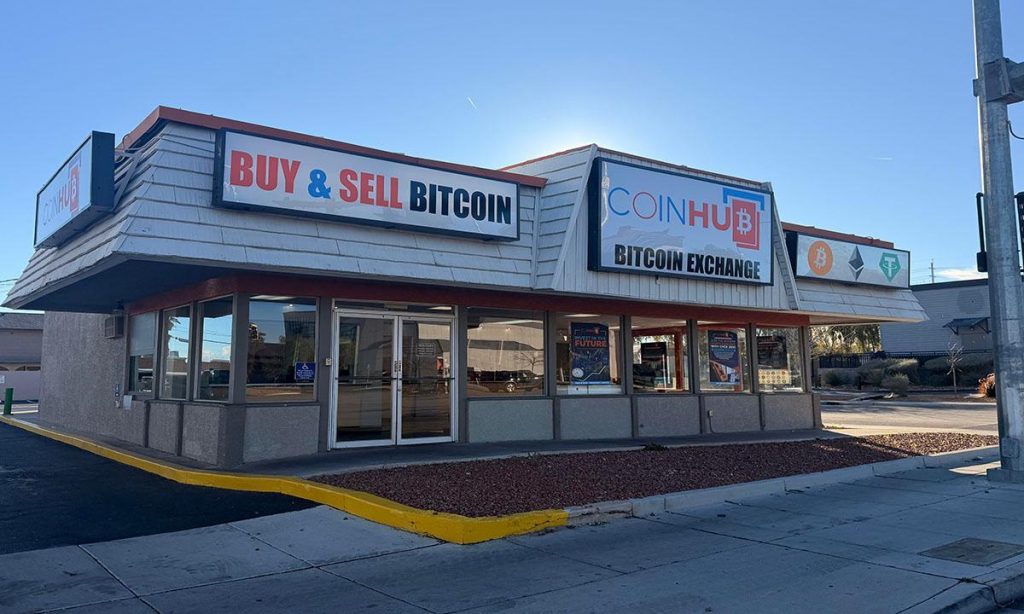
Coinhub Exchange Brings a Bank-Like Crypto Experience to Las Vegas and Phoenix

Coinhub Exchange Brings a Bank-Like Crypto Experience to Las Vegas and Phoenix


Sponsored

Stories and Reviews

January 06, 2026

Coinhub Exchange Brings a Bank-Like Crypto Experience to Las Vegas and Phoenix

Las Vegas, NV, USA, January 6th, 2026, Chainwire

Coinhub Exchange, a modern online crypto exchange, announced the grand opening of two new branch locations in Las Vegas, Nevada, and Phoenix, Arizona. The new branches are designed to make crypto easier for everyday customers and active traders by combining online trading with real, in-person support—plus convenient cash access through Coinhub’s nationwide Bitcoin ATM network.

With Coinhub Exchange, customers can buy crypto, sell crypto, store crypto, and convert crypto online—then visit a branch when they want face-to-face help with account setup, funding, and placing their first trade. Customers can also use Coinhub’s connected network to find a Bitcoin ATM near me across 2,000+ Coinhub-connected locations nationwide.

In-person Crypto Support—built for Beginners and Advanced Traders

The Las Vegas and Phoenix branches will provide in-person support for:

Account setup and verification guidance
Funding assistance (crypto deposits and bank wires)
Education on buying and selling crypto, including product walkthroughs
Support for advanced trading and larger orders

Bitcoin Cash Transactions Available With In-Branch Support

Both branches will also offer an in-person cash buy/sell experience, supported by human tellers and Coinhub ATMs located in the lobby—ideal for customers who want a guided alternative to traditional Bitcoin ATMs.

Customers can expect:

Up to $150,000 daily cash limits for eligible customers
Lower fees than many Bitcoin ATMs, with transparent pricing
A faster process (no need to feed bills one at a time)
On-site support for a more comfortable customer experience

This in-branch service complements Coinhub’s online platform and helps customers move between cash and crypto with more flexibility.

Multiple Trading Options Available on Coinhub Exchange

Coinhub Exchange offers 5 trading options for every level:

Quick Trading — simple buy/sell for beginners (no confusing charts)
Pro Trader — advanced charting and order types for active traders seeking lower fees
OTC — for larger orders with live quotes and competitive execution
Credit Card — simply buy any crypto online with a credit or debit card
Cash — Via Branch Teller or any of our 2000+ Bitcoin ATM locations

New Branch Locations

Coinhub Exchange will host the official grand opening for both new branch locations on January 7, 2026. More information about branch locations can be found here.

Las Vegas, NV Branch – 3209 W Sahara Ave. Las Vegas, NV 89102

Phoenix, AZ Branch – 2415 E Thomas Rd. Suite 3 Phoenix, AZ 85016

About Coinhub Exchange

Coinhub Exchange is a modern, member-only crypto exchange built to help customers buy, sell, store, and convert crypto online or in-person. With physical branches and 2,000+ Coinhub locations nationwide, Coinhub Exchange combines digital convenience with real human support—helping customers trade with confidence and clarity.

Contact

Marketing DirectorScott ThompsonCoinhub Exchange[email protected]

Disclaimer

In line with the Trust Project guidelines, please note that the information provided on this page is not intended to be and should not be interpreted as legal, tax, investment, financial, or any other form of advice. It is important to only invest what you can afford to lose and to seek independent financial advice if you have any doubts. For further information, we suggest referring to the terms and conditions as well as the help and support pages provided by the issuer or advertiser. MetaversePost is committed to accurate, unbiased reporting, but market conditions are subject to change without notice.

About The Author

Chainwire is the top blockchain and cryptocurrency newswire, distributing press releases, and maximizing crypto news coverage.

More articles

Chainwire is the top blockchain and cryptocurrency newswire, distributing press releases, and maximizing crypto news coverage.


Source link

Memecoin Resurgence and Altcoin Outperformance in Early 2026 | NFT News Today

Memecoin Resurgence and Altcoin Outperformance in Early 2026 | NFT News Today


The memecoin resurgence in early 2026 has given crypto markets an energetic start to the year. After a grinding and confidence-testing 2025, speculative appetite has returned, and it’s showing up first in meme-driven assets rather than traditional large-cap altcoins.

This early rotation says a lot about trader psychology. Bitcoin’s stability has restored risk tolerance, retail participation is picking up again, and capital is moving quickly into assets that thrive on momentum and community conviction.

The result feels familiar. It’s fast, emotional, and very much driven by sentiment.

A Market Reset Sets the Stage

Crypto entered January 2026 in a healthier position than it ended the previous year.

Total market capitalization sits around $3.1–$3.2 trillion. Bitcoin holding above $90,000 has contributed to stabilizing expectations without absorbing all available liquidity.

That balance matters. When Bitcoin stops dominating flows, capital looks elsewhere. This time, traders didn’t ease into conservative altcoin exposure. They moved straight into higher-beta territory.

Memecoins, which had fallen to historically low dominance levels by December 2025, were positioned perfectly for a rebound.

Why Memecoins Are Leading the Rotation

Several short-term factors aligned at once.

January often brings renewed buying pressure after tax-loss selling fades. Crypto’s lack of wash-sale rules tends to exaggerate that effect. At the same time, social engagement rebounds after the holidays, and narratives spread quickly.

The memecoin sector gained roughly 25–30% in the opening days of the year. Aggregate market capitalization climbed into the high-$40-billion range, commonly cited around $47–48 billion across major trackers. Trading volume jumped meaningfully, with daily turnover pushing well above recent December averages.

That combination—fresh liquidity plus renewed attention—is usually enough to reignite speculative assets.

Key Memecoins Driving Early-2026 Momentum

PEPE: A High-Beta Leader, With More Measured Gains

PEPE quickly emerged as one of the most active meme tokens. Price appreciation in early January generally fell in the 20–25% range, depending on the exact lookback window, rather than the more extreme figures circulating on social media.

Market-cap expansion over the period appears closer to a few hundred million dollars, not multi-billion single-day jumps. Even so, trading activity surged. Derivatives open interest climbed sharply, and spot volumes consistently ranked near the top of the memecoin category.

Bold valuation calls from well-known traders amplified attention. Those projections didn’t drive fundamentals, but they did fuel momentum—something meme assets rely on heavily.

Source: CoinMarketCap

DOGE and SHIB: Sentiment Anchors Return

Dogecoin posted steady gains in early January, generally in the low-to-mid-teens on a weekly basis. On-chain data showed renewed whale accumulation, which helped reinforce bullish sentiment. Online chatter tied to figures like Elon Musk is still a factor in short-term interest, even if price action no longer reacts as explosively as it once did.

Shiba Inu followed a more controlled path. Gains were modest compared with smaller meme tokens, but consistency mattered. Concentrated ownership is still a defining feature, which can support price during rallies while increasing downside risk during pullbacks.

These legacy memecoins now trade less like novelty assets and more like sentiment indicators for retail risk appetite.

These two legacy memecoins now act as sentiment barometers—less explosive, more indicative of wider retail risk behavior. This sets the stage to grasp the wider meme ecosystem’s behavior.

Source: CoinMarketCap

BONK, FLOKI, and Meme Microcaps

BONK benefited from strength across the Solana ecosystem. Weekly gains in the 40–50% range were widely reported, supported by increased on-chain activity and ecosystem liquidity.

FLOKI also attracted attention, posting strong double-digit advances as speculative capital moved further out on the risk curve.

Continuing the momentum theme, smaller memecoins such as POPCAT, BRETT, and other micro-caps also rallied. Their performance shows less about fundamentals and more about the rising tide of retail participation.

This long-tail participation is typical once a meme rotation gains traction.

What the Memecoin Rally Reveals About Sentiment

This revival isn’t just about wit or branding. It shows a meaningful shift in trader behavior.

Memecoin dominance had reached multi-year lows in late 2025. The rebound shows how quickly sentiment can flip once downside pressure eases. Retail traders, in particular, tend to re-enter markets through familiar, high-volatility assets.

Social engagement supports that interpretation. Mentions of “meme season” increased across X and trading forums, often coinciding with spikes in volume and funding rates.

Attention, once again, became a market catalyst.

Altcoin Outperformance Beyond Memes: XRP Stands Out

While memecoins dominated headlines, XRP quietly delivered one of the strongest performances among large-cap altcoins.

In early January, XRP gained roughly 7–8% across key sessions, pushing its market capitalization into the low-$120-billion range. For a brief period, it edged past BNB in rankings, reshuffling the upper tier of non-stablecoin assets.

This move wasn’t driven by hype cycles. Accumulation trends had been building for weeks. Exchange-traded product inflows since late 2025 are commonly cited at just over $1 billion, with figures clustering around the $1.1–1.15 billion range rather than a sharply defined upper bound.

Investors appear increasingly comfortable with assets tied to established use cases. Cross-border settlement remains central the Ripple network’s narrative, and improved regulatory clarity has strengthened confidence.

XRP’s relative strength contrasted with more subdued movement from ETH and SOL, highlighting selective rotation rather than broad-based altcoin expansion.

Capital Rotation Defines the Early-2026 Market

The current market shows a clear split.

Memecoins reflect speculative energy, social momentum, and short-term trading psychology. Select altcoins benefit from longer-term narratives tied to utility, regulation, and institutional participation. Bitcoin anchors both by supplying liquidity without absorbing all inflows.

This kind of rotation often appears during transitional phases on a wider scale bull cycles. Risk appetite expands first. Discernment follows later.

Ignoring either side gives an incomplete view of market structure.

Risks That Haven’t Gone Away

Despite the optimism, vulnerabilities remain.

Memecoins still depend heavily on sentiment. Ownership concentration, leverage, and thin liquidity can increase both gains and losses. Corrections tend to arrive quickly when volume fades.

Even stronger altcoins encounter uncertainty. ETF inflows can slow. Regulatory stories can shift. Macro liquidity still influences crypto markets more than many traders admit.

On-chain data offers early signals. Changes in funding rates, open interest, and social interaction frequently precede price reversals.

Momentum matters—but sustainability matters more.

What Early 2026 Is Signaling

The opening weeks of 2026 have made one thing clear. Speculative appetite didn’t disappear during last year’s downturn. It paused.

Memecoins reclaimed leadership as soon as conditions allowed. Select altcoins, particularly XRP, advanced on different strengths. Bitcoin provided stability without crowding out risk assets.

Volatility remains elevated. Opportunity is real. Discipline is essential.

Markets reward attention and punish complacency. Early 2026 is already proving that lesson once again.



Source link

Goodbye, Gaming Monitors? The World’s First 240Hz Micro-OLED AR Glasses Are Here | Metaverse Planet

Goodbye, Gaming Monitors? The World’s First 240Hz Micro-OLED AR Glasses Are Here | Metaverse Planet


I remember the first time I played a game on a 144Hz monitor. It felt like my eyes had received a software update. The smoothness was addictive. Once you see it, you can’t go back to 60Hz.

But for years, Augmented Reality (AR) glasses have been stuck in the slow lane. We had great resolution, sure, but the refresh rates were usually capped at 60Hz or maybe 90Hz. It was “good enough” for watching movies, but for hardcore gaming? No way.

Well, rip up the rulebook.

At CES 2026, the barrier was finally broken. We have just witnessed the reveal of the world’s first AR gaming glasses featuring a blistering 240Hz Micro-OLED display. This isn’t just an upgrade; it’s a declaration of war against traditional desktop monitors.

Here is why this specific combination of tech is going to change how we play.

Why 240Hz on Micro-OLED is a Big Deal

Let’s geek out for a second. Usually, you have to pick one: speed or quality.

IPS Panels: Fast, but gray blacks.OLED: Beautiful colors, but usually expensive and harder to drive at super-high speeds in small form factors.

These new glasses are doing both. The Micro-OLED panels mean you are getting true blacks (infinite contrast). If you are playing a horror game like Resident Evil, the shadows will be pitch black, not “glowing gray.”

But the 240Hz refresh rate is the star here. This means the screen refreshes 240 times every second.

For Competitive Gamers: In games like Valorant or Call of Duty, this reduces motion blur to almost zero.For AR Comfort: This is crucial—higher refresh rates drastically reduce “motion sickness.” The digital world feels more “glued” to reality because there is no lag between your head moving and the image updating.

The “Private Cinema” Experience

The pitch here is simple but powerful: Why buy a 65-inch TV or a generic monitor when you can carry a 200-inch screen in your pocket?

I’ve been testing AR glasses for years, and the biggest complaint was always the “ghosting” effect during fast motion. With 240Hz, that problem evaporates.

Imagine sitting on a plane, a train, or just your small apartment sofa, putting these on, and suddenly having a massive, buttery-smooth esports monitor floating in front of you. You connect it to your Steam Deck, your ROG Ally, or your high-end PC, and you are gone.

Key Specs Revealed:

Display Type: Micro-OLED (Sony or BOE panel technology likely).Refresh Rate: 240Hz (The world’s first in this form factor).Contrast Ratio: 100,000:1 (Colors that pop).Brightness: High enough to combat daylight (essential for AR).

The “Ugu” Reality Check: Is It Perfect?

You know me—I don’t just read the press release; I look for the catch. While I am incredibly hyped about this, there are questions we need to ask before pre-ordering:

Battery Drain: Driving two Micro-OLED screens at 240Hz is going to drink power like a thirsty camel. If this device draws power from your phone or handheld console, expect your battery life to tank.Heat: High refresh rates generate heat. Will these glasses get uncomfortable on the bridge of the nose after a 2-hour Apex Legends session?The Cable: To push 240Hz signal, you almost certainly need a wired connection (USB-C). Wireless technology just isn’t fast enough for uncompressed 240Hz AR yet. So, you are still tethered.

A New Era for Portable Gaming

Despite my skepticism about battery life, I believe this is the future. We are moving away from “fixed screens” (TVs on walls, monitors on desks) toward “wearable screens.”

For the last few years, AR glasses were cool gadgets for watching Netflix. With this 240Hz upgrade, they have officially graduated to performance hardware.

If the price is right, I might finally retire my desktop monitor. And that is a sentence I never thought I’d write in 2026.

I want to hear from you: Could you see yourself playing competitive games with glasses on? or do you prefer the safety of a traditional monitor?

Let’s discuss in the comments!

You Might Also Like;


Source link

LIT Token Price Surges 18% on Market Buzz Over Token Buybacks

LIT Token Price Surges 18% on Market Buzz Over Token Buybacks


Key Highlights

LIT token jumps 18.52% to $3.13 amid buyback speculation and rising treasury holdings.

Justin Sun purchases 13.25M LIT, representing 5.32% of circulating supply, using LLP funds.

Lighter reports $200B December trading volume and maintains transparency via on-chain treasury data.

Decentralized perpetuals exchange Lighter saw its native token LIT jump more than 18% on Monday, driven by speculation that the platform may have started a token buyback program. 

According to real-time market data, LIT was trading at around $3.13, with a 24-hour trading volume of $356,863,48 at the time of writing, with a live market cap of $78,33,47,548, marking a significant gain in a single day.

The surge comes as the crypto community closely tracks Lighter’s treasury account. On Monday evening, on-chain data showed the treasury held 180,750 LIT tokens, worth roughly $548,987. 

Although the platform has not confirmed a buyback officially, it mentioned its treasury account on X where fees and buybacks could be observed publicly. Lighter has already mentioned that revenues would be distributed between ecosystem expansion and token buybacks based on the market conditions.

Strategic LIT purchases of Justin Sun

The price surge comes after Tron Founder Justin Sun’s acquisition of LIT in significant amounts in the last week. Sun purchased about $33 million LIT tokens with the money of Lighter Liquidity Protocol (LLP), which is more than 5% of the supply in circulation. 

In early December, he withdrew $5.2 million USDC to purchase 1.66 million LIT as well, which added up to $38 million LLP withdrawals. The crypto community was highly interested in these purchases. 

Analysts indicate that such massive token buys as such may affect the perception of the market and may create a price momentum in support of LIT. 

These huge transactions were made possible by the huge liquidity that Sun had already injected into the LLP through a previous deposit of $200 million, which did not cause significant slippage.

History and marketplace

Lighter released its public mainnet in October and became one of the top perpetuals exchanges which are decentralized. It recorded a monthly trading volume of more than $200 billion in December, which was higher than other competitors such as Aster $177.5 billion and Hyperliquid $169.3 billion. 

In its last round of funding, the platform attracted Founders Fund and Ribbit Capital as the lead investors in a round that raised $68 million at a valuation of $1.5 billion, according to Fortune.

Last week LIT token was launched, and the supply of the token, and there is a promise to distribute half of it to the development of the ecosystem. The team stressed that any value created by the products and services of Lighter would be beneficial to LIT holders.

Although the buybacks were not officially verified, the presence of the treasury movements and the high-profile purchases of the token by the investors such as Sun have contributed to the speculation and interest in the market.

Why this matters

The token activity of Lighter emphasizes the increased tendency toward exchanges with the help of treasury management and buybacks to underpin the value of the tokens. Onchain data, liquidity flows, and investor activity can give insights to investors and market observers on the possible price dynamics. 

Although the buyback is not yet verified, the apparent growth of treasury and the strategic acquisitions indicate that efforts are being undertaken to help the token in the market.

Also Read: Jump Trading Nets $24M on Lighter Airdrop with Only One Month Activity


Source link

The Era of Synthetic Humans: Are We Living in a Blade Runner Reality? | Metaverse Planet

The Era of Synthetic Humans: Are We Living in a Blade Runner Reality? | Metaverse Planet


Honestly, I have to confess something. For years, I covered robotics news with a sense of childlike wonder. “Look at that robot do a backflip!” or “Wow, it can hold an egg without breaking it!” It was cool, it was mechanical, and—most importantly—it was clearly not human.

But recently, while watching the latest demonstration of a humanoid robot powered by a Generative AI brain, that feeling of wonder shifted into something else. It was a slight chill down my spine.

We are no longer just building helpful machines to carry boxes in a warehouse. We are sprinting toward the creation of synthetic clones. When I look at the current trajectory, I can’t help but ask: Are we physically building the cast of a Blade Runner movie, not for a sci-fi blockbuster, but for our actual streets?

In this article, I want to dive deep into the “Visual Turing Test,” why the “Uncanny Valley” is disappearing, and what it really means for us when we can’t tell who is “real” anymore.

From Clunky Metal to “Synthetic Souls”

Remember when robots were just giant arms in car factories? Those days are ancient history. What we are seeing now with companies like Boston Dynamics, Tesla (Optimus), and Figure is a fundamental shift in design philosophy.

The goal isn’t just utility anymore; it’s mimicry.

When I look at the fluid movements of the latest humanoids, two things stand out to me that scream “the future is here”:

Micro-Movements: It’s not the walking that impresses me; it’s the fidgeting. A robot that stands perfectly still looks like a machine. A robot that shifts its weight, blinks randomly, or tilts its head while “thinking” looks frighteningly alive.The Skin Texture: We are moving past white plastic shells. Researchers are developing synthetic skin that mimics the warmth, elasticity, and even the imperfections of human skin.

Why does this matter? Because once you combine realistic skin with fluid, imperfect movement, you stop seeing a tool. You start seeing a being.

The Visual Turing Test: A New Threshold

We all know the classic Turing Test: Can a machine fool a human into thinking it’s human through text? Thanks to LLMs (Large Language Models), we’ve basically passed that.

But now, we are facing the Visual Turing Test.

Imagine this scenario: It’s the year 2035. You are sitting in a coffee shop. The person at the table next to you is reading a book. They sip their coffee, they look out the window, they sigh.

Are they biological? Or are they synthetic?

If we reach a point where you need to physically touch them—or worse, see them bleed—to know the answer, society changes overnight. I believe we are much closer to this reality than most people are willing to admit. The hardware is catching up to the software at a terrifying pace.

The “Uncanny Valley” is Being Filled

For decades, roboticists feared the “Uncanny Valley”—that creepy feeling we get when something looks almost human but is slightly off (like a zombie or a bad wax figure).

However, looking at the latest iterations of robots like Ameca, I think we are climbing out of that valley. When a robot can furrow its brow in confusion or smile with genuine warmth (even if programmed), our brains are hacked. We are hardwired to empathize with things that look like us.

The Brain Behind the Face

Of course, a realistic body is just a mannequin without a brain. This is where the integration of advanced AI models changes everything.

I’ve played around with plenty of chatbots, but giving those bots a physical body creates a completely different dynamic.

Spatial Awareness: These robots aren’t just reciting Wikipedia; they are learning to understand the physical world. They know that a glass is fragile and a rock is not.Contextual Memory: Imagine a robot butler that remembers you had a bad day yesterday and asks you about it today with a sympathetic tone.

It sounds helpful, right? But it also raises a massive philosophical flag for me. If a machine looks like a human, acts like a human, and “remembers” like a human… at what point do we stop treating it as an appliance?

Are We Ready for the Social Impact?

This isn’t just about cool tech; it’s about how we live. I often think about the economic and social shockwaves this will cause.

The Trust Deficit: In a world of deepfakes, we already struggle to trust what we see on screens. Soon, we might struggle to trust what we see on the street.The Loneliness Epidemic: It’s a dark thought, but if synthetic humans are perfect companions—never arguing, always listening, perfectly beautiful—will humans stop dating each other? Why deal with the messiness of human relationships when you can have a custom-tailored synthetic partner?Labor Shift: It’s not just blue-collar jobs. Service roles, receptionists, care workers for the elderly… if a robot can do it with a smile and never get tired, the job market is going to look radically different.

Conclusion: Evolution or Replacement?

I don’t write this to scare you. I write this because I am fascinated and, frankly, a little overwhelmed by the speed of it all.

We are not just coding software; we are coding our own reflection. The line between “born” and “made” is about to get very blurry. Whether this leads to a utopia where robots do all the work, or a crisis of identity for the human race, depends on the choices we make now.

But one thing is certain: The sci-fi future we watched in movies isn’t 100 years away. It’s knocking on the door.

I really want to hear your perspective on this: If you couldn’t tell the difference between a human and a robot on the street, would it bother you? Or do you think it doesn’t matter as long as they are nice?

Let’s discuss in the comments below.

You Might Also Like;


Source link

Popular Posts

My Favorites

Shiba Inu Whale Moves 800B SHIB, Sparks Market Focus Shift –...

In the past 24 hours, a whale holding approximately 16–17% of the Shiba Inu (SHIB) supply moved about 800 billion SHIB tokens (equivalent...