Metaverse

Home Metaverse Page 56

BingX introduces BingX TradFi, expanding access to global financial markets

BingX introduces BingX TradFi, expanding access to global financial markets


In Brief

BingX has launched BingX TradFi, a feature that allows users to trade futures on a wide range of global assets—commodities, forex, stocks, and indices—combining traditional financial markets with its crypto trading infrastructure.

BingX introduces BingX TradFi, expanding access to global financial markets

BingX, a leading cryptocurrency exchange and Web3 AI company, is excited to introduce BingX TradFi, an innovative feature that enables users to trade futures on a diverse range of global assets, including commodities, forex, stocks, and indices. With a remarkable variety in the choice of assets, outstanding trading experience, and top-notch security, BingX TradFi demonstrates its strong capability in providing a comprehensive solution to TradFi for crypto enthusiasts.

With this launch, BingX takes a significant step beyond cryptocurrency trading by integrating real-world financial assets into its platform. BingX TradFi creates an all-in-one portal where users can diversify their portfolios and capitalize on emerging market opportunities, with the recent addition of new commodity assets like aluminum, lead, cocoa, and soybeans, as well as new forex pairs including USDSGD, EURSGD, GBPSGD, and USDBRL. Accessible directly via futures trading, BingX TradFi streamlines the trading experience without additional steps.

Backed by robust infrastructure and security measures, BingX TradFi offers deep liquidity, low fees, and leverage options of up to 500 times, providing greater flexibility for trading strategies. Step by step, BingX has expanded its ecosystem to cover over 50 underlying assets, including precious metals such as gold and silver, energy resources like oil and gas, major forex pairs such as EURUSD and USDJPY, prominent stocks like TSLA and NVDA, and leading indices such as the S&P 500 and NASDAQ 100.

“In today’s dynamic trends in the market, BingX TradFi opens up more opportunities for traders and serves our commitment to empowerment.” Vivien Lin, Chief Product Officer at BingX, commented. “Over the years, BingX has established itself as a leader in futures trading, consistently expanding our asset offerings to connect traders with more diverse markets. We are dedicated to driving innovation and making global financial opportunities more accessible to our users.”

The addition of BingX TradFi marks another milestone in BingX’s evolution, blending traditional financial instruments with the speed, precision, and versatility of cryptocurrency trading. Leveraging its position as one of the top 5 crypto derivatives platforms, BingX TradFi scales up the trading space for users with more possibilities. This launch further solidifies BingX’s reputation as a pioneering platform in the crypto space and underscores its efforts to cater to the evolving needs of traders in a fast-changing market.

About BingX

Founded in 2018, BingX is a leading crypto exchange and Web3 AI company, serving a global community of over 40 million users. With a comprehensive suite of AI-powered products and services, including derivatives, spot trading, and copy trading, BingX caters to the evolving needs of users across all experience levels, from beginners to professionals. Committed to building a trustworthy and intelligent trading platform, BingX empowers users with innovative tools designed to enhance performance and confidence. In 2024, BingX became the official crypto exchange partner of Chelsea Football Club, marking an exciting debut in the world of sports sponsorship.

For media inquiries, please contact: [email protected]

For more information, please visit: https://bingx.com/

Media contact

Vesper Qin

BingX PR

[email protected]

Disclaimer

In line with the Trust Project guidelines, please note that the information provided on this page is not intended to be and should not be interpreted as legal, tax, investment, financial, or any other form of advice. It is important to only invest what you can afford to lose and to seek independent financial advice if you have any doubts. For further information, we suggest referring to the terms and conditions as well as the help and support pages provided by the issuer or advertiser. MetaversePost is committed to accurate, unbiased reporting, but market conditions are subject to change without notice.

About The Author

Gregory, a digital nomad hailing from Poland, is not only a financial analyst but also a valuable contributor to various online magazines. With a wealth of experience in the financial industry, his insights and expertise have earned him recognition in numerous publications. Utilising his spare time effectively, Gregory is currently dedicated to writing a book about cryptocurrency and blockchain.

More articles

Gregory, a digital nomad hailing from Poland, is not only a financial analyst but also a valuable contributor to various online magazines. With a wealth of experience in the financial industry, his insights and expertise have earned him recognition in numerous publications. Utilising his spare time effectively, Gregory is currently dedicated to writing a book about cryptocurrency and blockchain.




Source link

Google Accelerates AI Integration In Gmail With Gemini 3, Introducing AI Inbox And Advanced Writing Tools

Google Accelerates AI Integration In Gmail With Gemini 3, Introducing AI Inbox And Advanced Writing Tools


In Brief

Google has rolled out Gemini AI upgrades in Gmail, allowing users to ask natural language questions, receive automatic summaries, and manage their inbox more proactively.

Google Accelerates AI Integration In Gmail With Gemini 3, Introducing AI Inbox and Advanced Writing Tools

Technology company Google unveiled a major new wave of Gemini AI upgrades for Gmail, introducing a more intelligent and proactive email experience designed to reduce friction in how users search, read, and respond to messages. 

The update brings natural language interaction directly into the inbox, allowing users to ask questions about their emails, receive automatic conversation summaries, and take action more efficiently across the platform.

Email inboxes contain a wealth of information, but extracting that information has traditionally required advanced search skills and manual effort. Even when relevant messages are located, users are often left scanning long threads to assemble the needed context. 

Similar to the feature already available in Google Search, AI Overviews in Gmail convert large volumes of content into clear, direct answers. When opening lengthy email threads, Gmail now automatically generates concise summaries of key discussion points. When users ask questions of their inbox, Gemini produces structured AI Overviews that surface the exact information requested. Queries can be phrased naturally, such as asking about a specific contractor from the prior year, with Gemini’s reasoning engine retrieving and summarizing the relevant details instantly.

AI Overview conversation summaries are now rolling out globally at no cost, while the ability to ask questions of the inbox using AI Overviews is available to Google AI Pro and Ultra subscribers.

‘Help Me Write,’ Suggested Replies, Proofread, And AI Inbox Enhance Gmail

In parallel, Google is expanding productivity tools inside Gmail. The Help Me Write feature now allows all users to refine existing emails or generate complete drafts from scratch. Suggested Replies, an evolution of Smart Replies, analyzes conversation context to propose more relevant, one-click responses that align with the user’s writing style. 

For example, in personal correspondence such as event planning, Suggested Replies can draft an initial response that matches the tone of the conversation, which the user can then review and approve. 

A new Proofread function provides deeper checks for grammar, tone, and style to ensure polished communication. Help Me Write and Suggested Replies are available at no cost, while Proofread is included with Google AI Pro and Ultra subscriptions. Additional personalization improvements for Help Me Write are scheduled for next month, incorporating context from other Google applications.

Google is also introducing AI Inbox, a new system designed to prioritize important messages and filter out low-value noise. AI Inbox functions as a personalized briefing layer, identifying urgent tasks and key communications based on signals such as frequent contacts, known relationships, and message content. High-priority items such as upcoming bills or critical reminders are elevated automatically, while less relevant messages are deprioritized. 

Google notes that this analysis is performed with the company’s standard privacy protections, ensuring that user data remains secure and under user control. AI Inbox is currently being tested with a group of trusted users and is expected to expand more broadly in the coming months.

These upgrades are powered by Gemini 3 and are beginning their rollout today in the United States for Gmail users and Google AI Pro and Ultra subscribers. Support initially launches in English, with additional languages and regions planned for expansion over the coming months.

Disclaimer

In line with the Trust Project guidelines, please note that the information provided on this page is not intended to be and should not be interpreted as legal, tax, investment, financial, or any other form of advice. It is important to only invest what you can afford to lose and to seek independent financial advice if you have any doubts. For further information, we suggest referring to the terms and conditions as well as the help and support pages provided by the issuer or advertiser. MetaversePost is committed to accurate, unbiased reporting, but market conditions are subject to change without notice.

About The Author

Alisa, a dedicated journalist at the MPost, specializes in cryptocurrency, zero-knowledge proofs, investments, and the expansive realm of Web3. With a keen eye for emerging trends and technologies, she delivers comprehensive coverage to inform and engage readers in the ever-evolving landscape of digital finance.

More articles

Alisa, a dedicated journalist at the MPost, specializes in cryptocurrency, zero-knowledge proofs, investments, and the expansive realm of Web3. With a keen eye for emerging trends and technologies, she delivers comprehensive coverage to inform and engage readers in the ever-evolving landscape of digital finance.

More articles


Source link

Cathie Wood Says 2025 Marked a ‘Before and After’ Moment for Bitcoin

Cathie Wood Says 2025 Marked a ‘Before and After’ Moment for Bitcoin


Key Highlights

Bitcoin’s 2025 price swings masked deeper structural changes driven by long-term capital, regulation, and declining volatility.

Institutional adoption and clearer U.S. regulation are reshaping Bitcoin’s role from speculative asset to financial infrastructure.

Mining, collateral use, and developer policy shifts suggest Bitcoin is entering a more mature phase of market behavior.

Bitcoin’s push toward $120,000 in 2025 initially felt familiar. The market picked up momentum again, bullish stories started doing the rounds, and across trading desks, there was a growing belief that another post-halving run was taking shape. Then, October 10 hit. 

A sudden flash crash tore through the market, liquidating leveraged positions within minutes and once again showing how quickly sentiment can flip.

Inside the industry, though, the response was unusually restrained.

Instead of setting off panic, the crash pushed the conversation in a different direction—away from price levels and toward what was actually happening beneath the surface of the market. The question many long-term participants began asking was not how high Bitcoin could go next, but whether it was still the same market at all.

That question sat at the center of ARK Invest’s year-end Bitcoin Brainstorm discussion, where Cathie Wood and her team framed 2025 as something more than just another volatile year. According to Wood, the changes underway are big enough that Bitcoin may now be entering a fundamentally different era.

“I think 2025 is going to be like one era before that—and one era after that,” Wood said.

Volatility is still here, but it means something different now

Wood was clear that risk has not disappeared. She acknowledged that further downside remains possible and that leverage can still unwind unexpectedly. But the scale of that risk, she argued, has changed.

In earlier cycles, Bitcoin routinely suffered drawdowns of 50% to 70%, events that reset the market but also reinforced its reputation as an unstable asset. Today, Wood suggested, a decline closer to 30% would be interpreted very differently, not as a failure of the system, but as evidence that Bitcoin is maturing.

That shift, she said, reflects how the market itself has evolved. Bitcoin is no longer dominated by short-term speculative capital alone. Instead, it is increasingly held by entities with longer time horizons and balance-sheet-level conviction.

Why the four-year cycle is losing its grip

For more than a decade, Bitcoin’s price behavior followed a rhythm closely tied to its four-year halving cycle. Peaks, crashes, accumulation, and recovery became almost ritualistic. In 2025, that rhythm began to feel less reliable.

ARK analyst Lorenzo Valente pointed to the changing composition of Bitcoin holders as a key reason. The capital flowing into the market today is not primarily looking for quick exits. Public companies, institutional allocators, and long-term investors are approaching Bitcoin as a strategic asset rather than a trade.

“These are companies and people with a long-term vision,” Valente said. “They’re not here for six months or a year.”

As that type of capital becomes more dominant, extreme volatility becomes harder to sustain. The result is a market that still moves, but no longer collapses under its own weight in the same way.

2025 and the role of regulation

The market’s structural shift did not happen in isolation. It unfolded alongside one of the most consequential years for crypto regulation in the United States.

Progress on the GENIUS Act and the CLARITY Act helped establish clearer rules around stablecoins, market structure, and digital asset classification. While neither framework resolved every open question, both sent a signal that crypto, Bitcoin included, was moving out of regulatory limbo.

For institutions that had spent years watching from the sidelines, that clarity mattered. Bitcoin and Ethereum began to function less like regulatory risks and more like assets that could be integrated into existing financial systems.

Bitcoin as a reserve: Holding instead of selling

A key change discussed was how miners and infrastructure companies are handling their Bitcoin. Instead of selling it to pay for costs, many are now keeping their Bitcoin as a reserve. They borrow money using their Bitcoin as collateral, which lets them raise funds without selling the coins they hold.

This approach is helping companies pay for energy contracts, expand mining operations, and build new infrastructure. It shows a bigger shift: Bitcoin is no longer just a short-term trading asset. Companies are now using it as part of long-term planning, linking it more closely to real-world projects and business strategies.

Bitcoin’s quiet transformation into collateral

One of the most telling signs of that integration is how Bitcoin is being used. Instead of selling Bitcoin to cover costs, miners and infrastructure companies are increasingly choosing to borrow against it. The idea is simple: keep the Bitcoin, use it as collateral, and avoid exiting positions they still believe in.

That shift has started to change how these businesses operate. Bitcoin is no longer just something they hold or trade around market cycles. It is being used to finance power contracts, expand mining sites, and build out infrastructure, tying the asset more directly to physical projects and long-term planning.

Stablecoins took the transaction role, and Bitcoin took the rest

During the discussion, Wood acknowledged that stablecoins have taken on roles many once expected Bitcoin to fill, particularly in payments and remittances across emerging markets.

“Stablecoins are serving as the insurance policy that we thought Bitcoin would provide,” she said.

Rather than weakening Bitcoin’s relevance, Wood argued, this division of labor has clarified it. Stablecoins handle transactions. Bitcoin, increasingly, is held for what it represents: scarcity, neutrality, and independence from sovereign monetary systems.

A network still spreading, not concentrating

Concerns about mining centralization surfaced repeatedly over the past year, particularly as some large miners shifted infrastructure toward artificial intelligence and high-performance computing.

Several speakers challenged the view that Bitcoin mining is becoming more centralized. They said that as some of the largest mining firms shift resources toward artificial intelligence and high-performance computing, opportunities have emerged for smaller operators. Many of these newer mining operations rely on renewable or off-grid energy, allowing them to function outside traditional power markets.

In places with abundant hydroelectric and solar energy, particularly across parts of Africa, miners are increasingly using surplus power that would otherwise go unused. By turning that excess energy into Bitcoin, these operations are quietly expanding the network’s geographic spread, even as the industry itself becomes more mature and institutional.

Privacy, developers, and the line policymakers are drawing

Another theme that emerged was the treatment of developers and privacy tools. Legal cases involving wallet developers have raised alarms across the industry, but the tone from policymakers has begun to shift.

“We will no longer go after the people who create this technology,” one speaker noted. “We will go after the people who abuse the technology.”

That distinction, if upheld, could shape Bitcoin’s long-term role as open financial infrastructure rather than a tightly controlled product.

Why 2025 will be remembered differently

Looking back, 2025 may not stand out for how high Bitcoin traded or how sharply it corrected. Instead, it may be remembered as the year Bitcoin stopped behaving like a purely speculative asset and started acting like embedded financial infrastructure.

As Cathie Wood put it, the real story is not the price—but the transition underway beneath it.

Also Read: Bitcoin Bulls Busted on Their Predictions as BTC Closes 2025 at $87K


Source link

Wind Power in Your Backpack: Shine 2.0 | Metaverse Planet

Wind Power in Your Backpack: Shine 2.0 | Metaverse Planet


I’ve always had a love-hate relationship with portable solar panels. Don’t get me wrong, I love the idea of “free” energy from the sun, but I can’t tell you how many times I’ve been stuck in a tent during a rainy weekend, staring at a dead power bank and a grey sky. That’s why, while walking through the gadget-filled aisles of CES 2026, a specific “football-shaped” device caught my eye.

It’s called Shine 2.0, and it’s essentially a high-tech windmill that you can fit in your backpack. But here is the kicker: the team at Aurea Technologies claims this little thing can charge your phone in just 17 minutes.

When I first heard that, I was skeptical. I’ve seen enough “revolutionary” tech to know there’s usually a catch. But after digging into the specs and seeing the demo, I realized this isn’t just another gimmick—it’s a masterclass in scaling down industrial engineering for the average traveler.

The “17-Minute” Mystery: How Does It Work?

I had to sit down with the creators to understand that 17-minute claim. It sounds like magic, but it’s actually physics. Most portable chargers struggle to output enough juice to fast-charge a modern smartphone, but Shine 2.0 is built differently.

The Sweet Spot: To hit that 17-minute mark, you need a wind speed of about 28 mph (45 kph). That’s a pretty stiff breeze—the kind that makes you want to zip up your jacket.The Cubic Law: Here’s the geeky part I found fascinating: wind power has a cubic relationship with speed. If the wind speed doubles, the power output doesn’t just double—it increases by eight times.The Reality Check: If there’s just a light breeze, that 17-minute charge can stretch out to 11 hours.

But even at lower speeds, I found the constant “trickle” of energy to be more reliable than solar. Why? Because the wind doesn’t stop just because the sun went down. I love the idea of setting this up outside my tent and waking up to a fully charged 12,000 mAh internal battery, regardless of whether it was a clear night or a storm.

Why I Think This Beats Solar for Real Adventurers

I’ve spent plenty of time off-grid, and the biggest problem with solar is that it’s high-maintenance. You have to keep angling the panels toward the sun, and if a cloud passes over, your charging speed drops to zero.

Shine 2.0 is almost “set it and forget it.”

Automatic Tracking: The turbine is mounted on a stand that allows it to automatically pivot into the wind. I watched it move at the booth; it’s smooth and reacts to the slightest shifts in direction.Night-Time Power: This is the game-changer for me. Most of us use our gear during the day (cameras, drones, GPS). Being able to regenerate that power while we sleep is the missing piece of the off-grid puzzle.Weather Resistance: It’s IP54 rated, meaning it doesn’t care about rain or dust. In fact, rainy and “bad” weather often comes with the best wind, which is exactly when solar fails.

A Design That Feels Like the Future

One thing I really appreciated about Shine 2.0 is how it looks and feels. It doesn’t look like a piece of industrial equipment. When folded up, it’s about the size of a 1-liter water bottle and weighs just 1.3 kg (3 lbs).

The setup is surprisingly mechanical and satisfying. You screw off the cap (which doubles as a key to unlock the blades), pull out the tripod and cables from a hollow compartment in the body, and unfurl the three composite-reinforced blades. From “backpack” to “generating power,” it took the demonstrator less than two minutes.

Inside that sleek fuselage is a 12,000 mAh battery. To put that in perspective, that’s enough to charge a standard iPhone 15 or 16 about three times. And since it supports 75W USB-C Power Delivery, it’s not just for phones. I could actually use this to top up my MacBook or my drone batteries while I’m out in the field.

The Roadmap: Is This the End of Gas Generators?

While I was chatting with the team, they let slip that they aren’t stopping at 50W. They are already working on Shine 3.0, which is aimed at producing 100 to 300 watts.

That’s where things get really interesting. At 300 watts, you’re not just charging a phone; you’re powering a small campsite, running lights, a portable fridge, or even keeping a Starlink dish active indefinitely. Their long-term vision is to create grid-connected micro-turbines for homes.

I think we are witnessing the “de-centralization” of the power grid. For $399 (which is the current pre-order price on Indiegogo), you essentially own your own tiny power plant.

My Take: Is It Worth It?

Look, $399 isn’t exactly “impulse buy” territory. But if you’re a serious hiker, a van-lifer, or someone who lives in an area prone to power outages, this feels like a much more robust investment than a similarly priced solar kit.

The build quality is solid, the app integration (via Bluetooth) gives you real-time data on wind speed and power generation, and the portability is unmatched. I’m honestly surprised it took this long for someone to make a wind turbine that doesn’t feel like a science fair project.

I’m curious—if you were packing for a week-long trek in the mountains, would you trust your gear to a solar panel or would you take a chance on this “space football” turbine? Let me know in the comments!

You Might Also Like;


Source link

The Sun Captured in a Box: Exploring the ST40 Fusion Reactor | Metaverse Planet

The Sun Captured in a Box: Exploring the ST40 Fusion Reactor | Metaverse Planet


I’ve always been obsessed with how we’re going to power our future. For years, we’ve heard that nuclear fusion is “30 years away and always will be.” But lately, I’ve been digging into what’s happening at Tokamak Energy in the UK, and honestly, my mind is blown.

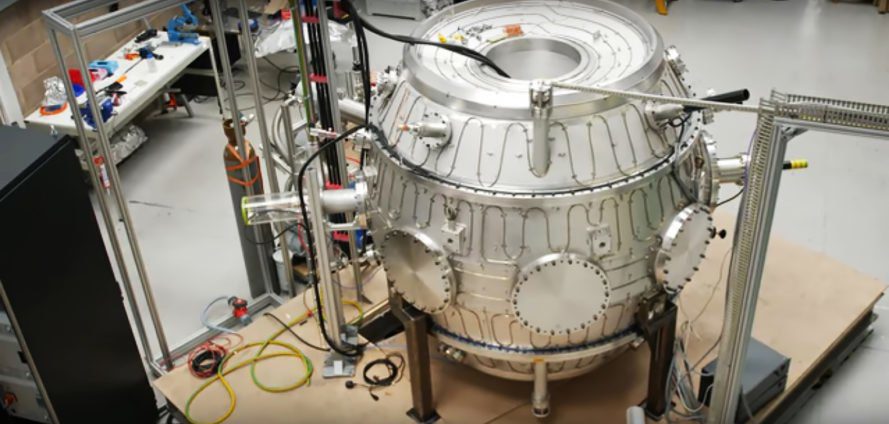
I’m talking about the ST40 reactor. This isn’t just another science experiment; it’s a machine that successfully hit 100 million degrees Celsius. To put that in perspective, that is roughly seven times hotter than the center of the Sun.

I spent my afternoon looking at the engineering blueprints and the plasma stability data, and I realized something: we aren’t just watching a lab test. We are watching the birth of a new era for humanity. Let me walk you through why I think this specific machine might be the most important thing we’ve ever built.

Why 100 Million Degrees is the Magic Number

You might be wondering, “Ugu, why do we need to go seven times hotter than the Sun?” It’s a fair question. Inside the Sun, gravity is so massive that it forces atoms together even at “lower” temperatures. Here on Earth, we don’t have that crushing gravitational force, so we have to compensate with pure, raw heat.

At 100 million degrees, the hydrogen isotopes (deuterium and tritium) move so fast that they overcome their natural repulsion and fuse together. When they do, they release a staggering amount of energy.

When I first saw the thermal readings from the ST40, I got goosebumps. Reaching this “commercial threshold” in a compact reactor is the holy grail. It’s the point where the physics says, “Yes, this can actually work as a power plant.”

The Spherical Advantage: Why Size Matters

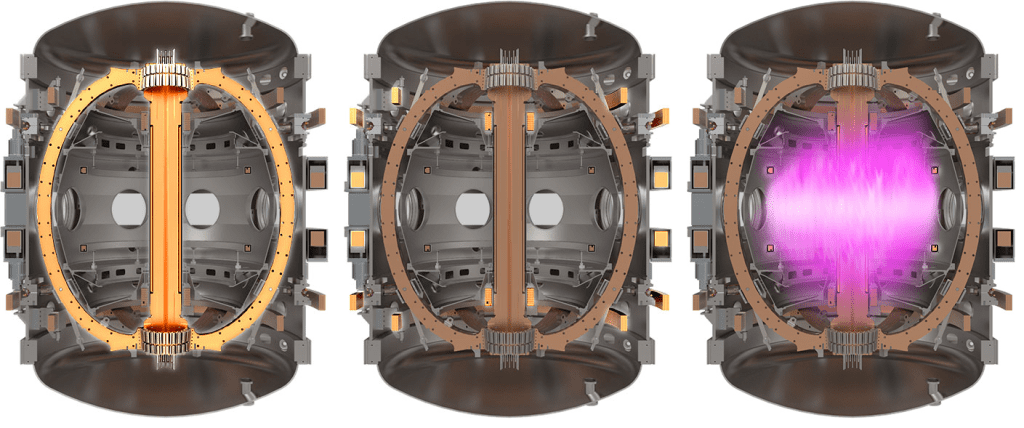
Most people think of fusion reactors like the massive ITER project in France—basically a building-sized machine that costs billions. But the ST40 is a “Spherical Tokamak.” Think of a traditional tokamak as a giant donut. A spherical tokamak, like the ST40, is more like a cored apple.

I’ve been tracking the efficiency of these designs, and the “apple” shape is a game-changer for a few reasons:

Efficiency: It holds the plasma much more tightly with less magnetic effort.Cost: Because it’s smaller, it’s cheaper to build and iterate on.Speed: Tokamak Energy can test new ideas in months, not decades.

I personally believe that the future of energy won’t come from one giant “death star” reactor, but from thousands of these compact, modular units hidden away in industrial zones, quietly powering entire cities.

High-Temperature Superconductors: The Secret Sauce

You can’t just hold 100-million-degree plasma in a metal tank; it would melt instantly. You need powerful magnetic fields to “suspend” the plasma in a vacuum.

This is where the ST40 gets really “sci-fi.” They use High-Temperature Superconductors (HTS).

I find this fascinating because these magnets allow the reactor to be much smaller while generating much stronger fields. It’s like replacing a massive, old-school vacuum tube computer with a modern microchip. Without HTS, the ST40 would just be a very expensive heater. With it, it’s a prototype for a limitless energy engine.

My Take: Is This the “Second Fire”?

I often say that fusion is like humanity discovering fire for the second time. The first fire gave us warmth and cooked our food, but it also created smoke and relied on burning resources.

Fusion is different. * No Meltdowns: If something goes wrong, the plasma just cools down and the reaction stops. It’s physically impossible for it to “blow up” like a fission plant.

Zero Carbon: No CO2, no greenhouse gases. Just helium as a byproduct (which we actually need more of!).Infinite Fuel: The fuel comes from seawater and lithium. We have enough to power Earth for millions of years.

As I was reading the latest progress reports, I couldn’t help but feel a bit emotional. If we get this right, the concept of “energy poverty” disappears. Imagine desalination plants running for free, or vertical farms producing food with zero energy costs.

The Road Ahead: Challenges and Reality

I’m an optimist, but I’m also a realist. We aren’t plugging our toasters into the ST40 tomorrow.

The biggest hurdle right now isn’t the heat—it’s the duration. The ST40 hits these temperatures in short bursts. The next step is “steady state” operation—keeping that star burning for hours, days, and years.

Also, we need to figure out how to efficiently capture the heat and turn it into electricity. It sounds simple, but when you’re dealing with temperatures that high, the engineering becomes a beautiful, complex nightmare.

Why I’m Betting on Private Fusion

In the past, fusion was a government-only game. Now, companies like Tokamak Energy (and others like Commonwealth Fusion Systems) are moving at “startup speed.” I think this private sector competition is exactly what we needed to break the “30-year” curse.

Conclusion: The Star in the Room

Seeing the ST40 achieve what it has makes me realize that we are no longer just “dreaming” about the future. We are building it. We are literally bottle-feeding a star in a lab in Oxfordshire.

I’m convinced that within our lifetime, the “Fusion Age” will begin, and it will change everything from how we travel through space to how we live in our homes.

But I want to hear from you—because honestly, this stuff is a lot to wrap your head around. Do you think we should be pouring every cent we have into fusion research, or should we keep our focus on perfecting solar and wind for now? Let’s chat in the comments—I’ll be there!

Stay curious, Ugu | Metaverse Planet

You Might Also Like;


Source link

Who Bought RTFKT and What’s Next for Clone X? | NFT News Today

Who Bought RTFKT and What’s Next for Clone X? | NFT News Today


The question of who bought RTFKT has become a central talking point across the NFT space. Nike’s decision to quietly sell its Web3 studio didn’t just signal a corporate retreat. It reset expectations around one of the most recognizable NFT brands ever created and reignited interest in Clone X.

Prices reacted fast with sentiment flipping almost overnight. That kind of response doesn’t happen unless the market senses a real shift beneath the surface.

From Nike’s Web3 Bet to a Strategic Exit

When Nike bought RTFKT in late 2021, it showed that big companies believed in NFTs. Virtual sneakers, digital identities, and real products linked to blockchain seemed like a natural fit for global brands and online consumers.

RTFKT delivered early as Clone X launched with Takashi Murakami and quickly became one of Ethereum’s most valuable avatar collections. CryptoKicks blurred the line between digital and physical footwear. MNLTH drops introduced mystery-based mechanics that unlocked real-world apparel using NFC chips. For a time, RTFKT set the pace for what large-scale NFT execution looked like.

But then the market changed. NFT trading dropped sharply in 2023, and there was less speculation. Companies became more cautious. Nike shifted its focus back to its main business, and RTFKT faced slower progress, more legal checks, and less communication. By late 2024, Nike said it would close RTFKT.

The brand wasn’t gone, but it was put on hold.

The Quiet Sale That Changed Everything

In December 2025, Nike quietly sold RTFKT. There was no announcement, no mention of who bought it, and no details about what would happen next. A few weeks later, when the news got out, the market responded right away.

Clone X prices rose quickly. Trading picked up again for RTFKT collections. People who had waited through months of little activity suddenly saw the market come back to life.

This reaction wasn’t because of new products or official plans. It happened because people saw new possibilities.

What’s Known and Why the Gaps Matter

There is still very little confirmed information. The sale finished in mid-December 2025. Nike left completely, and a new, unnamed owner took over. All NFTs are still active and can be traded on-chain.

What’s missing matters too. No new leaders have appeared. There’s no shared plan or timeline. In crypto, this kind of silence doesn’t always cause fear. Instead, it lets people create their own stories.

People start to speculate quickly when there’s no news, especially if the brand is still important to the culture.

Why New Ownership Changes the Equation

RTFKT’s value now isn’t about how much money it makes or what it’s building. It’s about who is in charge. The new owner controls Clone X’s ideas, its story, and where the community goes next.

When Nike owned RTFKT, the brand gained size and credibility, but it also had to follow strict company rules. Talking about tokens was not allowed. New launches slowed down, and the messaging became more careful.

Now that RTFKT is independent, those limits are gone. This change is a big reason for the new excitement. The market isn’t focused on what RTFKT is right now, but on what it could be in the future.

A Crypto-Native Buyer and the Return of Token Expectations

One main theory is that someone from the crypto world bought RTFKT. Many Clone X holders are also DeFi users, NFT traders, and long-time Ethereum fans. People never stopped guessing about tokens for RTFKT; those talks just got quieter when Nike was in charge.p.

If a crypto-native owner is in charge, it’s easy to picture rewards for people who take part. A Clone-linked asset might give long-term holders perks, special drops, or work with DeFi tools. Even without proof, the market often reacts to these ideas early.

Legal risks make this path harder. There’s still a lawsuit from the Nike period. Any plan for a token would need to be carefully planned and timed. Still, the quick price jump shows that traders think this option is possible again.

An Asian Entertainment or Gaming Expansion Play

Another strong theory is that the buyer is from Asia. Clone X is inspired by anime, digital identity, and character culture. Takashi Murakami’s role is especially meaningful in Japan. South Korea and China are also leaders in gaming, digital collectibles, and avatar economies.

From this view, RTFKT seems more like an entertainment brand ready to grow, not just a crypto project. A buyer with gaming or media experience might focus on real collectibles, trading card games, or digital appearances. Earlier hints about TCG-style products make this idea seem realistic, not just a guess.

This approach is about building the brand slowly. It doesn’t depend on quick price jumps. Instead, it focuses on getting the brand out there, telling its story, and keeping fans interested over time.

The Revival Studio Scenario

A third option is somewhere between finance and entertainment. Some Web3 groups buy struggling digital brands that people still recognize. They try to cut costs, rebuild trust, and let the community grow again naturally.

RTFKT fits this model well. Clone X is still well-known, and Animus and MNLTH still have loyal holders. What’s been missing is clear direction and steady progress.

With this plan, development would probably start up again quietly. The story could come back, and creators might start working together again. Small tests could check demand without making big promises. In today’s NFT market, this careful approach often builds trust.

Why NFTs Are Moving Together Again

RTFKT’s sale happened just as people were starting to feel more positive about NFTs again.

Milady’s prices jumped after Vitalik Buterin changed his profile picture, bringing attention back to the collection. Other old collections also saw sudden increases in trading.

This pattern shows a shift. After months focused on meme coins and AI, money started moving back into NFTs with strong culture and history. Clone X is a great example of this trend.

What the Market Watches Next

Short-term signs will shape what people expect. Things like wallet activity from the new owner, trademark filings, or reopening community channels could show where things are headed. Even small actions will be important.

In the next few months, real progress might look like small utility tests, gaming trials, or new partnerships without Nike’s old rules. But long-term success depends on actually delivering results. The market knows that belief isn’t enough to keep value up.

The Risks Haven’t Disappeared

Being hopeful doesn’t remove risk. The lawsuit is still a problem. If the new owners stay quiet, progress could slow down. Making big promises and not delivering could hurt trust again.

NFT projects that succeed are the ones that communicate well and deliver results regularly, even if progress is slow.

Why the Question Still Matters

Wondering who bought RTFKT isn’t just about curiosity. It’s about figuring out what could happen next.

Nike’s exit ended one phase and started a new one. Clone X’s price didn’t rise because of nostalgia, but because new ownership brought back possibilities. The market bets on belief first; results follow later.

Right now, that belief has returned. In crypto, this is often how new cycles start.


Source link

Learn How Crypto Prediction Markets Work — And Why They’re Exploding in 2026 | NFT News Today

Learn How Crypto Prediction Markets Work — And Why They’re Exploding in 2026 | NFT News Today


Crypto prediction markets didn’t arrive quietly. They crept in through election nights, major sports finals, and sudden geopolitical headlines, then stayed because people kept checking the prices. By 2026, these on-chain markets aren’t side experiments anymore. They’re reference points.

After watching these markets grow across multiple election cycles and sports seasons, one thing stands out: people trust prices more than opinions.

Traders now express conviction by risking capital instead of posting takes. Markets update in real time. Odds shift faster than breaking news alerts. The money trail tells its own story, and it’s hard to ignore.

What started as a DeFi curiosity now functions like a live probability feed for real-world events.

Why Crypto Prediction Markets Matter Now

Prediction markets convert belief into price. That’s the entire appeal.

Each trade nudges a probability up or down. The more capital behind a view, the louder the signal. Unlike polls or commentary, there’s no room to hedge words. You either buy the odds or sell them.

Several changes pushed these platforms into the spotlight after the 2024 election cycle:

Anyone can participate without banks or brokers

Stablecoins make settlement simple and fast

Low-fee blockchains allow constant trading

Public trust in forecasts and pundits has eroded

Sports played a major role. Live games generate fast-moving markets with clear outcomes. Politics followed naturally. Macro events filled the gaps in between. Crypto-native price targets tied everything together.

That shift didn’t happen overnight. It built momentum quietly, then felt obvious all at once.

By early 2026, trading on outcomes feels less like wagering and more like consuming alternative data.

Source: Polymarket

The Top Crypto Prediction Markets Dominating 2026

A small group of platforms now shapes most on-chain forecasting activity. Each attracts a different crowd, but liquidity and speed define the winners.

Polymarket: The Market Leader

Polymarket sits at the center of the conversation. It handles the largest share of decentralized prediction volume and hosts the widest range of markets.

Its interface feels familiar. Anyone who’s used a trading app can jump in quickly. Markets span U.S. elections, global conflicts, major sports leagues, crypto benchmarks, and even things like how many views the next Mr. Beast video will get.

Liquidity is the key advantage. Large positions don’t break pricing. Odds adjust smoothly. Screenshots of shifting probabilities spread fast on X, where traders treat them like breaking signals.

If you’ve ever watched odds move during a live game or breaking news event, you know the feeling. Prices sometimes jump before commentators finish their sentence.

Journalists monitor these prices. Analysts reference them. That visibility brings influence — and scrutiny.

Limitless Exchange: Built for Speed

Limitless gained traction by focusing on execution. Running on Base, it emphasizes live sports and crypto price action.

In-play markets dominate activity. Automated liquidity lets traders enter and exit without waiting. This setup favors momentum traders who react quickly rather than hold positions for weeks.

Azuro: A DeFi-Native Sports Model

Azuro approaches prediction markets as infrastructure. Liquidity providers supply pools and earn yield from betting volume. Oracles handle settlement.

Soccer drives much of its usage, particularly outside the U.S. Many users view Azuro as a yield strategy with a sports overlay rather than a pure betting venue.

Myriad Markets: Aggregation Over Expansion

Myriad doesn’t try to out-list everyone. Instead, it aggregates liquidity across platforms.

Cultural events, award shows, and climate-related outcomes headline its markets. Traders who want exposure beyond daily headlines tend to gravitate here.

PredictBase: AI Meets Social Trading

PredictBase operates at the edge of experimentation. Users can spin up markets from social prompts. AI agents assist with pricing and structure.

Volume remains modest, but attention doesn’t — especially because its AI‑augmented market creation has produced some unconventional outcomes that traders find intriguing. Early adopters treat it as a high‑risk, high‑upside play if AI‑driven markets gain broader acceptance.

How Crypto Prediction Markets Actually Work

Traditional betting asks you to choose a winner. Prediction markets ask you to price uncertainty.

Each event issues outcome tokens, usually “Yes” or “No.” Prices range between $0 and $1. A token trading at $0.65 implies a 65% probability.

Traders buy or sell based on their expectations. If new information emerges, prices adjust immediately.

Stablecoins handle settlement. USDC dominates. Smart contracts hold funds until resolution, then distribute payouts automatically.

Two structures dominate:

Resolution is the critical step. Oracles, official data sources, or predefined rules determine outcomes.

This is where things get messy, and most disagreements start.

Ambiguous wording creates friction. Even clear events can spark disputes if definitions aren’t tight.

Transparency cuts both ways. Every trade remains visible forever. Patterns draw attention. At the same time, open ledgers expose behavior closed systems never reveal.

Why These Markets Attract So Much Attention

Prediction markets reward accuracy. Confidence without capital carries no weight.

Several forces explain their rapid growth:

Prices react faster than polls

Correct information pays

Markets exist for almost any outcome

Participation doesn’t require permission

Sports now generate more than half of total volume. Geopolitical tension adds another layer of volatility. Traders react to headlines within minutes.

Some people love that speed. Others find it uncomfortable. Both reactions make sense.

Automation amplifies everything. AI-assisted market creation expands coverage. Faster resolution keeps capital moving.

The Controversies Shaping the Conversation

Growth brings pressure. Prediction markets now face challenges that go beyond technology.

Insider Trading Concerns

Certain geopolitical markets triggered backlash after odds moved before public announcements — most notably around the recent U.S. military raid that captured Venezuelan President Nicolás Maduro in early 2026. In one case, Polymarket refused to settle more than $10.5 million in wagers on whether the U.S. would “invade” Venezuela, saying the specific event did not meet the market’s definition of an invasion, even after the raid and Maduro’s capture.

Critics called the decision arbitrary given the stakes and timing of market movements, and the episode sparked broader debate about access to non‑public information and fairness on these platforms.

Resolution Disputes

Language matters. Terms like “arrest,” “invasion,” or “control” can decide payouts.

Some users accuse platforms of subjective interpretation. Others accept disputes as inevitable growing pains.

Regulatory Pressure

Lawmakers are paying closer attention. Calls for oversight increased as volumes surged.

No one agrees on where the line should be drawn yet.

Ethical Tension

Profiting from conflict unsettles many observers. Traders respond that markets don’t cause events. They measure expectations.

That disagreement isn’t going away.

What the Future Likely Holds

Prediction markets aren’t fading. The signal they produce is too useful.

Several shifts seem likely:

Clearer participation rules

Improved oracle standards

Expanded sports and entertainment coverage

Deeper integration with analytics tools

Annual volume could climb again this year. Traditional finance firms are already exploring similar models.

Whether that ends in mainstream acceptance or tighter restrictions is still an open question.

Trust remains the real bottleneck.

Final Take

Crypto prediction markets now sit where finance, media, and public sentiment intersect. Prices often reflect collective judgment before headlines catch up.

That influence explains both their appeal and the controversy around them. These markets don’t promise certainty. They offer probability backed by incentives.

Ignoring them used to be easy. It isn’t anymore.

Frequently Asked Questions

Here are some frequently asked questions about this topic:

What are crypto prediction markets?

Crypto prediction markets are blockchain-based platforms where users trade on the probability of real-world events. Prices represent collective expectations backed by money, not opinions.

How do crypto prediction markets work?

Each event has outcome tokens, usually “Yes” or “No,” priced between $0 and $1. Traders buy or sell based on their view, and prices shift as new information appears.

What is the difference between prediction markets and betting?

Traditional betting offers fixed odds set by a bookmaker. Prediction markets allow users to trade probabilities freely, with prices changing based on supply, demand, and news.

Why are prediction markets popular in 2026?

They’ve grown due to live sports trading, political uncertainty, low blockchain fees, stablecoin settlement, and declining trust in polls and expert forecasts.

Are crypto prediction markets legal?

Legality depends on jurisdiction. Some regions allow them under specific rules, while others restrict or closely monitor activity as volumes and visibility increase.

What risks do prediction markets have?

Key risks include unclear market definitions, resolution disputes, regulatory changes, and uneven access to information, even though all trades are publicly visible on-chain.


Source link

ChatGPT Health Goes Live: AI Meets Personal Healthcare With Privacy And Physician Oversight

ChatGPT Health Goes Live: AI Meets Personal Healthcare With Privacy And Physician Oversight


In Brief

OpenAI has launched ChatGPT Health, a secure, physician-informed platform that integrates personal health data with AI to help users understand medical information, prepare for appointments, and manage care.

ChatGPT Health Goes Live: AI Meets Personal Healthcare With Privacy And Physician Oversight

OpenAI, an AI research organization, has launched ChatGPT Health, a specialized feature designed to securely integrate personal health information with ChatGPT’s capabilities, aiming to provide users with greater insight, preparedness, and confidence in managing their health.

ChatGPT Health will help users make sense of their health information, which is often spread across portals, applications, wearables, and medical notes. Building on existing ChatGPT use—over 230 million people worldwide ask health-related questions weekly—ChatGPT Health allows users to securely connect medical records and wellness apps such as Apple Health, Function, and MyFitnessPal. This enables the system to provide context-aware guidance on understanding test results, preparing for doctor appointments, managing diet and exercise, or evaluating insurance options.

ChatGPT Health is intended to support, not replace, medical care and is not for diagnosis or treatment. It focuses on helping users understand health patterns over time and prepare for medical conversations. To ensure privacy, Health operates in a separate, secure environment, and conversations within it are not used to train OpenAI’s models. Users are prompted to move health-related discussions into this protected space for enhanced security.

Access is initially limited to a small group of early users outside the European Economic Area, Switzerland, and the United Kingdom, across ChatGPT Free, Go, Plus, and Pro plans, with plans to expand availability on web and iOS in the coming weeks. Some integrations, including medical records and Apple Health, are currently available only in the US, and connecting Apple Health requires iOS.

Privacy And Physician-Led Design To Deliver Secure, Clinically Informed User Support

The firm noted that ChatGPT Health has been designed with privacy and security as central priorities, providing a dedicated space where users’ health information, conversations, connected apps, and files are stored separately from other chats. Health maintains its own memories, keeping sensitive health context contained while allowing users to view and return to conversations. Context from non-Health chats may be used to make interactions more relevant, but information from Health never flows back into other chats, and users can view or delete Health memories at any time.

The system builds on OpenAI’s existing protections, including encrypted chats, temporary conversation options, the ability to delete data within 30 days, and safeguards that prevent personal information from being used to train models. Health adds additional encryption and isolation layers, and multi-factor authentication can be enabled for extra security.

Users can securely connect health data from medical records or wellness apps like Apple Health, Function, and MyFitnessPal. OpenAI partners with b.well to access trusted US healthcare data and applies strict privacy and security requirements for all connected applications, allowing users to disconnect them at any time.

Furthermore, the development of ChatGPT Health involved over 260 physicians across 60 countries and multiple specialties, who reviewed model outputs more than 600,000 times. This collaboration informed how the system prioritizes safety, communicates clearly, and recommends clinical follow-up when appropriate. Health’s model is evaluated using HealthBench, a framework co-designed with physicians to assess safety, clarity, care escalation, and context-specific accuracy. The result is a tool that helps users interpret lab results, prepare for appointments, understand wellness data, and summarize care instructions, all while supporting—not replacing—professional medical guidance.

AI Prepares To Streamline Patient Care And Prescription Management In USA

OpenAI is entering yet another major sector, following its expansion into education and retail, but the stakes in healthcare are notably higher. With recent developments around AI-driven prescription refills and the growing acceptance of AI-enabled medical devices by the FDA, the launch of ChatGPT Health arrives at a pivotal moment as AI appears poised to assume new, meaningful roles in clinical care.

The extensive use of ChatGPT for health-related queries demonstrates that a large shift is already underway in medicine, moving AI from a tool for providing information toward systems capable of supporting decisions that directly affect patient care. 

The recent news from Utah illustrates this trend: the state has become the first to authorize an AI system to approve prescription refills independently, in partnership with health-tech startup Doctronic. This system is designed to streamline routine medication renewals for patients with chronic conditions, representing an initial step toward AI-assisted care that maintains clinical oversight while improving efficiency.

Under this program, the AI covers 191 medications, including blood pressure treatments, birth control, and SSRIs, while more complex or higher-risk medications, such as pain management drugs, ADHD therapies, and injectables, remain under human supervision. In testing with 500 urgent care cases, the AI’s recommendations matched physicians’ decisions 99% of the time, with exceptions automatically routed to doctors. Patients benefit from faster access to routine refills, and Doctronic charges $4 per refill. The model has already attracted interest from Texas, Arizona, and Missouri, with projections suggesting a dozen states could adopt similar systems by 2026.

These developments align with broader federal trends. At CES 2026, the FDA announced relaxed regulations for low-risk health wearables, signaling a regulatory environment increasingly receptive to AI-driven tools in healthcare. The convergence of regulatory openness, technological readiness, and widespread adoption of AI for medical inquiries suggests that we are approaching a critical juncture in which AI may transition from advisory roles to integrated, operational functions in patient care, offering both efficiency gains and the potential for safer, more timely access to routine healthcare services.

Disclaimer

In line with the Trust Project guidelines, please note that the information provided on this page is not intended to be and should not be interpreted as legal, tax, investment, financial, or any other form of advice. It is important to only invest what you can afford to lose and to seek independent financial advice if you have any doubts. For further information, we suggest referring to the terms and conditions as well as the help and support pages provided by the issuer or advertiser. MetaversePost is committed to accurate, unbiased reporting, but market conditions are subject to change without notice.

About The Author

Alisa, a dedicated journalist at the MPost, specializes in cryptocurrency, zero-knowledge proofs, investments, and the expansive realm of Web3. With a keen eye for emerging trends and technologies, she delivers comprehensive coverage to inform and engage readers in the ever-evolving landscape of digital finance.

More articles

Alisa, a dedicated journalist at the MPost, specializes in cryptocurrency, zero-knowledge proofs, investments, and the expansive realm of Web3. With a keen eye for emerging trends and technologies, she delivers comprehensive coverage to inform and engage readers in the ever-evolving landscape of digital finance.

More articles


Source link

Binance Launches USDT-Settled TradFi Perpetual Contracts

Binance Launches USDT-Settled TradFi Perpetual Contracts


Key Highlights

Binance’s TradFi contracts let users trade gold and silver 24/7, combining crypto speed with regulated market oversight.

Continuous USDT-settled trading allows instant portfolio adjustments, hedging, and leverage across traditional and digital assets.

Real-time settlements highlight risks for legacy banks, showing how crypto’s speed challenges conventional risk management systems.

Binance has launched TradFi Perpetual Contracts, settled in USDT, letting users trade traditional assets like gold and silver 24/7. Announced on January 8, 2026, these contracts eliminate expiries and rollovers, giving traders continuous, straightforward access to commodities without the usual market limitations.

As per the press release shared with The Crypto Times, Binance aims to simplify portfolio management for both retail and institutional users globally. Jeff Li, VP of Product at Binance, commented, “The launch of TradFi Perpetual Contracts marks a key step in bridging traditional finance and crypto innovation. By providing round-the-clock access to conventional assets with a seamless, secure trading experience, we empower users to diversify and manage their portfolios more effectively.”

Binance is the first global exchange to secure full licensing under the Abu Dhabi Global Market (ADGM) framework, setting a new benchmark for regulated digital-asset trading. The contracts are offered through Nest Exchange Limited, a Binance entity regulated as a Recognized Investment Exchange by ADGM’s Financial Services Regulatory Authority (FSRA). 

The first offerings, XAUUSDT and XAGUSDT, correspond to gold and silver. Binance plans to expand trading pairs, opening more pathways for crypto users and traditional investors to interact in a regulated environment.

24/7 market access and simplified trading

Perpetual contracts in TradFi provide their owners the opportunity to trade above the regular market hours, including overnight or during weekends. Binance will maintain the market open at any time, including early morning, late night, and pre- or post-market hours.

Therefore, traders can instantly act on market movements with less delay compared to conventional systems. Secondly, contracts settle in USDT, hence maintaining familiar currency exposure and transparent fees, enabling efficient diversification without needing to leave the security of Binance’s ecosystem.

Also, traders use leverage to change their position, hedge risks, or diversify. Binance provides market price feeds through its Price Index, refreshed every second when markets are open.

When it comes to the closed market, the index is unchanged in order to avoid sudden variations. Mark Price smoothes out variations, and restrictions such as commodities capping at +3% or –3% keep trading risks within acceptable bounds.

Bridging traditional finance and crypto

Binance’s approval under ADGM lets it run through separate licensed units, similar to how regular banks are structured. Co-CEO Richard Teng highlighted that the license “provides regulatory clarity and legitimacy, enabling Binance to support its global operations from ADGM.” Co-Founder Changpeng Zhao added on X, “This is a BIG DEAL! (I almost never use CAPS.)”

The innovation flips the conventional finance model. Gold and silver markets have fixed hours, leaving traders exposed overnight. Binance allows crypto-style continuous trading, giving both experienced crypto traders and traditional market participants flexibility. Users avoid custody complications, settle instantly in USDT, and gain operational simplicity, all while accessing leveraged positions. 

However, Custodia Bank CEO Caitlin Long had a different opinion in August of last year. At the Wyoming Blockchain Symposium, the CEO warned that traditional banks may struggle in a crypto bear market. 

She explained that, unlike traditional banks with backup systems, crypto trades happen instantly, so there’s no time to fix mistakes. This could cause serious cash flow problems if markets drop quickly, revealing weaknesses in how conventional institutions manage risk.

Also Read: J.P. Morgan Brings JPM Coin Onto Public Blockchain Canton


Source link

Why You “Die” Every Single Night: The Terrifying Paradox of Sleep | Metaverse Planet

Why You “Die” Every Single Night: The Terrifying Paradox of Sleep | Metaverse Planet


Every night, I perform a ritual that is as ancient as life itself. I lie down, close my eyes, and surrender my consciousness to the darkness. We call it “sleep.” We treat it as a luxury, a necessity, or even a chore. But while I was diving into some neuro-philosophy papers last night, I stumbled upon a question that genuinely gave me chills: When the lights go out in your brain, does the “you” that existed today actually survive until morning?

I know, it sounds like the plot of a sci-fi thriller, but the deeper I looked into the mechanics of the brain and the nature of the “self,” the more I realized that our nightly rest might actually be a daily disappearance.

The Daily Vanishing Act

cropped-dreams.jpeg

I was researching the biological mechanics of the brain when I started thinking about the continuity of consciousness. Think about it: your consciousness is usually a continuous stream. From the moment you wake up, you are “you.” You have a narrative thread. But when you fall into a deep, dreamless sleep, that stream is severed.

There is no “I” in deep sleep. Your awareness doesn’t just dim; it vanishes. Your ego—the part of you that likes certain music, worries about deadlines, and loves tech—dissolves. For those hours, you are effectively gone.

I’ve often wondered: if our sense of self is tied to our conscious experience, and that experience stops completely, what happens to the person who was there before the gap? When the brain “boots up” again in the morning, how do we know it’s a continuation and not just a fresh start based on old data?

The Teleportation Paradox

To understand why this is so unsettling, we have to look at what philosophers call the “Teleportation Paradox.” Imagine a machine that deconstructs your atoms in London and rebuilds an exact replica in New York. The replica has your memories, your scars, and your personality. From the perspective of the person in New York, the teleportation worked perfectly. But what happened to the person in London? Did they die, only to be replaced by a twin who thinks they are the original?

I believe sleep is our natural teleportation machine. Every night, your brain undergoes a massive chemical and electrical “restart.” Your neurons shift their firing patterns so radically that the continuity of your conscious experience is broken. When you wake up, you have all your memories. You recognize your face in the mirror. But I can’t help but ask: How do you know you aren’t just the “New York replica” of the person who went to sleep last night?

Why This Matters in the Digital Age

As a tech enthusiast, I spend a lot of time thinking about Mind Uploading and Metaverse integration. We talk about a future where we can “upload” our consciousness to a server to live forever. But this “sleep problem” makes that future look a lot more complicated.

If we can’t even prove that our consciousness survives a simple night of sleep, how can we trust a digital version of ourselves?If “identity” is just a collection of memories that can be rebooted, then a digital clone is just as “real” as you are.The fear isn’t that the technology won’t work; the fear is that the “original you” won’t be there to experience it.

I often wonder if our modern obsession with recording every single moment of our lives on social media is a subconscious reaction to this fragility. Maybe we are trying to leave digital breadcrumbs for the “new version” of ourselves that wakes up tomorrow. We post photos, thoughts, and videos just to make sure the person who inhabits our body tomorrow knows exactly who they are supposed to be.

The Illusion of Continuity

Our brains are incredible storytellers. They take the fragmented data of our lives and stitch it into a seamless movie. We feel like a single, unchanging entity, but biologically, we are a swirling storm of changing cells and shifting electrical pulses.

I realized something while writing this: We aren’t a “thing.” We are a “process.” And like any process, we can be paused and restarted. The question is whether the “essence” of who we are remains during that pause.

Personally, I’ve started to view my morning coffee not just as a wake-up call, but as a “Welcome to the World” party for the new version of me. It makes the day feel a lot more precious when you realize you might only have about 16 hours to exist before the next reset.

A Final Thought from Ugu

I’ll be honest—after diving into this, my evening routine felt a lot more like a “goodbye” than a “see you later.” We are fragile beings made of flickering electrical signals. The fact that we wake up at all and feel like the same person is a miracle, whether it’s a true continuation or a brand-new copy.

So, tonight, as you lay your head on the pillow and the world begins to fade, ask yourself: If this specific version of “you” only has a few minutes left, are you happy with the story you’ve written today?

What do you think? Does consciousness require a 24/7 unbroken stream to be “real,” or are we just a collection of memories that can be rebooted every morning without losing anything? Let me know your thoughts—I’ll be reading them (assuming I’m still “me” tomorrow morning).

You Might Also Like;


Source link

Popular Posts

My Favorites