Metaverse

Home Metaverse Page 58

The Era of Synthetic Humans: Are We Living in a Blade Runner Reality? | Metaverse Planet

The Era of Synthetic Humans: Are We Living in a Blade Runner Reality? | Metaverse Planet


Honestly, I have to confess something. For years, I covered robotics news with a sense of childlike wonder. “Look at that robot do a backflip!” or “Wow, it can hold an egg without breaking it!” It was cool, it was mechanical, and—most importantly—it was clearly not human.

But recently, while watching the latest demonstration of a humanoid robot powered by a Generative AI brain, that feeling of wonder shifted into something else. It was a slight chill down my spine.

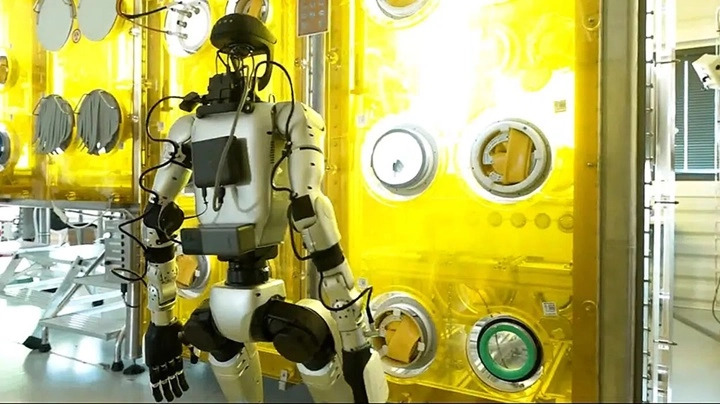
We are no longer just building helpful machines to carry boxes in a warehouse. We are sprinting toward the creation of synthetic clones. When I look at the current trajectory, I can’t help but ask: Are we physically building the cast of a Blade Runner movie, not for a sci-fi blockbuster, but for our actual streets?

In this article, I want to dive deep into the “Visual Turing Test,” why the “Uncanny Valley” is disappearing, and what it really means for us when we can’t tell who is “real” anymore.

From Clunky Metal to “Synthetic Souls”

Remember when robots were just giant arms in car factories? Those days are ancient history. What we are seeing now with companies like Boston Dynamics, Tesla (Optimus), and Figure is a fundamental shift in design philosophy.

The goal isn’t just utility anymore; it’s mimicry.

When I look at the fluid movements of the latest humanoids, two things stand out to me that scream “the future is here”:

Micro-Movements: It’s not the walking that impresses me; it’s the fidgeting. A robot that stands perfectly still looks like a machine. A robot that shifts its weight, blinks randomly, or tilts its head while “thinking” looks frighteningly alive.The Skin Texture: We are moving past white plastic shells. Researchers are developing synthetic skin that mimics the warmth, elasticity, and even the imperfections of human skin.

Why does this matter? Because once you combine realistic skin with fluid, imperfect movement, you stop seeing a tool. You start seeing a being.

The Visual Turing Test: A New Threshold

We all know the classic Turing Test: Can a machine fool a human into thinking it’s human through text? Thanks to LLMs (Large Language Models), we’ve basically passed that.

But now, we are facing the Visual Turing Test.

Imagine this scenario: It’s the year 2035. You are sitting in a coffee shop. The person at the table next to you is reading a book. They sip their coffee, they look out the window, they sigh.

Are they biological? Or are they synthetic?

If we reach a point where you need to physically touch them—or worse, see them bleed—to know the answer, society changes overnight. I believe we are much closer to this reality than most people are willing to admit. The hardware is catching up to the software at a terrifying pace.

The “Uncanny Valley” is Being Filled

For decades, roboticists feared the “Uncanny Valley”—that creepy feeling we get when something looks almost human but is slightly off (like a zombie or a bad wax figure).

However, looking at the latest iterations of robots like Ameca, I think we are climbing out of that valley. When a robot can furrow its brow in confusion or smile with genuine warmth (even if programmed), our brains are hacked. We are hardwired to empathize with things that look like us.

The Brain Behind the Face

Of course, a realistic body is just a mannequin without a brain. This is where the integration of advanced AI models changes everything.

I’ve played around with plenty of chatbots, but giving those bots a physical body creates a completely different dynamic.

Spatial Awareness: These robots aren’t just reciting Wikipedia; they are learning to understand the physical world. They know that a glass is fragile and a rock is not.Contextual Memory: Imagine a robot butler that remembers you had a bad day yesterday and asks you about it today with a sympathetic tone.

It sounds helpful, right? But it also raises a massive philosophical flag for me. If a machine looks like a human, acts like a human, and “remembers” like a human… at what point do we stop treating it as an appliance?

Are We Ready for the Social Impact?

This isn’t just about cool tech; it’s about how we live. I often think about the economic and social shockwaves this will cause.

The Trust Deficit: In a world of deepfakes, we already struggle to trust what we see on screens. Soon, we might struggle to trust what we see on the street.The Loneliness Epidemic: It’s a dark thought, but if synthetic humans are perfect companions—never arguing, always listening, perfectly beautiful—will humans stop dating each other? Why deal with the messiness of human relationships when you can have a custom-tailored synthetic partner?Labor Shift: It’s not just blue-collar jobs. Service roles, receptionists, care workers for the elderly… if a robot can do it with a smile and never get tired, the job market is going to look radically different.

Conclusion: Evolution or Replacement?

I don’t write this to scare you. I write this because I am fascinated and, frankly, a little overwhelmed by the speed of it all.

We are not just coding software; we are coding our own reflection. The line between “born” and “made” is about to get very blurry. Whether this leads to a utopia where robots do all the work, or a crisis of identity for the human race, depends on the choices we make now.

But one thing is certain: The sci-fi future we watched in movies isn’t 100 years away. It’s knocking on the door.

I really want to hear your perspective on this: If you couldn’t tell the difference between a human and a robot on the street, would it bother you? Or do you think it doesn’t matter as long as they are nice?

Let’s discuss in the comments below.

You Might Also Like;


Source link

Dogecoin ETFs Lead Early Gains in 2026 as Prices Surge

Dogecoin ETFs Lead Early Gains in 2026 as Prices Surge


Key Highlights

Dogecoin ETFs have emerged among the top-performing investments so far in 2026.

The TXXD US semiconductor fund leads the market with an immediate year-to-date return of over 38%.

Market demand has shifted from broad spot Bitcoin exposure in 2025 toward high-risk, single-asset products.

As 2026 begins, a new wave of high-leverage investment products has taken the lead in performance charts so far. Specialized exchange-traded funds (ETFs), particularly those offering double daily exposure to Dogecoin, have risen to the top in year-to-date returns. 

The TXXD US ETF leads the list, offering 2x leveraged exposure to a specific semiconductor play and has recorded a year-to-date return of 38.73%. NVTX US follows with a 35.01% return. This trend shows a move toward aggressive retail products as investors aim to take advantage of volatility in the digital asset sector.

Dogecoin-linked leveraged products, like those in the SMU and SMUP series, have also shown gains close to 30% in the early days of the year. Although the total assets under management for these funds are still relatively small, ranging from about 0.69 million to 282 million USD, their price action has outperformed broader market indices and traditional equity ETFs.

Comparison with major ETFs

Early 2026 market performance shows a shift in investor behavior. On December 31, 2025, the market closed with caution as spot Ethereum ETFs recorded a net outflow of $72 million, while broader crypto markets struggled with year-end pullbacks.

By January 2, sentiment rebounded sharply with Bitcoin and Ethereum ETFs collectively recording net inflows of $645.6 million on the first full trading day of the year. This recovery in traditional spot products occurred alongside the explosive rise of the 2x Dogecoin ETFs, which have consistently outperformed major indices in year-to-date returns.

While the iShares Bitcoin Trust continues to lead about 70% of trading volume in the crypto ETF sector, the performance of leveraged tools like the TXXD and SMUP series indicates that traders are increasingly favoring high-volatility, single assets over the stable spot exposure seen in 2025.

Dogecoin market update

At the time of writing, Dogecoin is trading at $0.15, with a 24-hour increase of $0.23. Its market cap stands at $25.51 billion, with a 24-hour trading volume of $2.08 billion. The circulating supply is around 168.19 billion coins with an infinite maximum supply. 

The future of niche ETFs

While these funds can bring high rewards, their daily rebalancing mechanism makes them vulnerable to quick losses in volatile markets.

The start of 2026 is marked by the strong performance of leveraged ETFs. Although the total assets in these funds represent only a small portion of the trillions held in diversified index funds, their annualized growth rates are capturing the attention of traders. 

Whether these gains can continue as the year goes on will heavily rely on the ongoing momentum and the volatility of the cryptocurrency market.

Also Read: XRP Breaks $2 Amid ETF Inflows and Shifting Regulatory Focus


Source link

Taisu Ventures and Keio FinTEK Center Launch Keio ChainHack 2026 Focused on Web3 Innovation

Taisu Ventures and Keio FinTEK Center Launch Keio ChainHack 2026 Focused on Web3 Innovation


Sponsored

Stories and Reviews

January 05, 2026

Taisu Ventures and Keio FinTEK Center Launch Keio ChainHack 2026 Focused on Web3 Innovation

Singapore, Singapore, January 5th, 2026, Chainwire

Taisu Ventures, a global Web3 venture capital firm, today announced Keio ChainHack 2026, a one-day pitch and hackathon co-hosted with the Keio FinTEK Center. The event forms part of Taisu Ventures’ broader initiative to support early-stage builders working at the intersection of blockchain infrastructure, regulation, and real-world adoption.

Keio ChainHack 2026 will bring together students, founders, academics, and investors to explore practical applications of blockchain technology and on-chain economic systems. Participation and attendance details are available at https://luma.com/e0pbv2og.

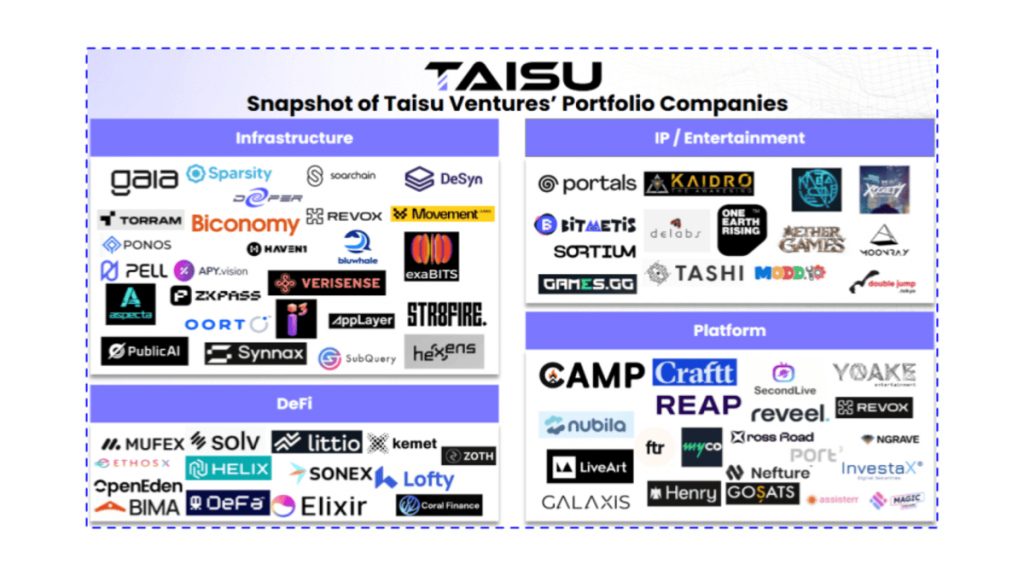
Alongside the event announcement, Taisu Ventures highlighted several portfolio companies that reflect a broader industry trend toward rebuilding real industries on-chain by addressing structural gaps that traditional systems have not solved.

Helix: Building Institutional RWA and Stablecoin Infrastructure

Helix was founded to address a core challenge facing financial institutions exploring blockchain adoption: while demand for tokenized assets and on-chain money flows exists, the institutional infrastructure required to support compliant issuance, custody, reporting, and distribution has historically been fragmented.

Through partnerships with banks, fintechs, and regulated originators, Helix has evolved into a unified orchestration layer spanning structuring, issuance, tokenization, and distribution of real-world assets (RWAs). The platform has been validated through initiatives such as a Malaysia tokenization whitepaper with Kenanga and Saison Capital, Shariah-compliant invoice financing with SILQFi, and a LATAM private credit pipeline via AmFi.

“Taisu doesn’t just invest; they show up, think with us, and connect us with partners who matter,” the Helix team said. “Their support has been essential to our momentum, and to making our pivot possible.”

Lofty: Expanding Access to Real Estate Ownership

Lofty was founded on the insight that real estate investors often face barriers to access rather than a lack of information. After initially developing an AI-driven analytics platform, the company pivoted toward building a blockchain-based real estate exchange that enables fractional ownership and continuous trading of properties.

To deliver this model, Lofty has integrated multiple parts of the real estate value chain, including sourcing, underwriting, transaction execution, and property management. The company is now focused on enabling on-platform leverage through fractional property-backed lending, with the goal of replicating mortgage-driven economics in an on-chain environment.

“Taisu proactively reaches out, asks how they can help, and connects us with the right partners,” said Lofty CEO Jerry Chu. “It’s the kind of support most investors promise, but very few actually deliver.”

Pruv: Unlocking a Licensed RWA Pathway in Indonesia

Pruv emerged from founder Chung Ying Lai’s experience building digital asset infrastructure during the early growth of Southeast Asia’s crypto markets. After multiple market cycles, the team identified the lack of yield-bearing, regulated assets as a key source of instability.

Indonesia offered a unique opportunity, with regulators developing a digital-asset-specific framework separate from traditional securities law. After more than two years of regulatory engagement, Pruv has received formal approval to operate as Indonesia’s first licensed platform for permissionless real-world asset (RWA) issuance. The company now utilizes a hybrid blockchain architecture and facilitates cross-chain asset integration in collaboration with regulated asset managers.

“Taisu has been one of the most engaged partners we work with, consistently proactive, accessible, and willing to support us in ways that go far beyond capital,” said Chung Ying Lai.

Strengthening the Builder Ecosystem

According to Taisu Ventures, Keio ChainHack 2026 reflects the firm’s broader strategy of supporting founders beyond capital by fostering early experimentation, talent development, and collaboration between academia and industry through specialized research and innovation centers such as the Keio FinTEK Center.

About Taisu Ventures

Taisu Ventures is a global Web3 venture capital firm with over 120 early-stage investments across Infrastructure, DeFi, AI/DePIN, IP & Entertainment, and User Platforms. The firm partners with founders building technically complex and regulated blockchain systems and actively supports the ecosystem through events, founder forums, and academic-industry collaborations, including Keio ChainHack 2026, co-hosted with the Keio FinTEK Center (https://luma.com/e0pbv2og).

Founders and builders interested in engaging with Taisu Ventures or submitting projects for investment consideration can find additional information and submit details via the firm’s project submission form here (https://docs.google.com/forms/d/e/1FAIpQLSekoWOZJwUq-bmKc9j1Gs6FtdTsrIo4zS7rqrl7NeXsgAZWxQ/viewform)

Contact

Raphael Ng[email protected]

Disclaimer

In line with the Trust Project guidelines, please note that the information provided on this page is not intended to be and should not be interpreted as legal, tax, investment, financial, or any other form of advice. It is important to only invest what you can afford to lose and to seek independent financial advice if you have any doubts. For further information, we suggest referring to the terms and conditions as well as the help and support pages provided by the issuer or advertiser. MetaversePost is committed to accurate, unbiased reporting, but market conditions are subject to change without notice.

About The Author

Chainwire is the top blockchain and cryptocurrency newswire, distributing press releases, and maximizing crypto news coverage.

More articles

Chainwire is the top blockchain and cryptocurrency newswire, distributing press releases, and maximizing crypto news coverage.


Source link

Bitget Opens TradFi Trading To All Users Following Record-Breaking Beta Participation

Bitget Opens TradFi Trading To All Users Following Record-Breaking Beta Participation


In Brief

Bitget has officially launched its TradFi trading suite to all users, integrating crypto, commodities, forex, and global assets into a single platform following a highly successful beta.

Bitget Opens TradFi Trading To All Users Following Record-Breaking Beta Participation

Cryptocurrency exchange Bitget, the world’s largest Universal Exchange (UEX), officially opened its TradFi trading suite to all users, following a private beta that drew overwhelming interest and delivered standout trading activity across gold, forex, and global macro assets.

The public launch marks a key milestone in Bitget’s evolution into UEX. After opening beta access in December, more than 80,000 users joined the waitlist to explore trading beyond cryptocurrencies, validating strong demand for a single platform that connects digital assets with traditional markets. Activity during the test phase exceeded expectations, highlighted by XAU/USD recording over $100 million in single-day trading volume, one of the strongest performances seen during the beta period.

With the beta insights now baked into the product, Bitget TradFi is entering full public availability with a broader lineup and refined execution. Users can trade 79 instruments spanning metals, forex, indices, and commodities, all settled in USDT and accessed directly from their existing Bitget accounts. The experience is designed to feel familiar to crypto-native traders while opening the door to macro-driven strategies without the need to switch platforms.

Bitget Advances Exchange Model With Unified Access To Crypto, Commodities, And Forex

This launch also reinforces Bitget’s UEX vision, where trading is no longer segmented by asset class. By bringing gold, forex, and commodities into the same ecosystem as crypto, Bitget is positioning itself as a platform built for how modern traders actually think about risk, diversification, and opportunity. Deep liquidity, tight spreads, and flexible leverage options were refined during the beta based on real user feedback, ensuring the product is ready to scale.

“Traders want the flexibility to choose between assets in a unified ecosystem,” said Gracy Chen, CEO of Bitget in a written statement. “They want the freedom to move between crypto and traditional markets as conditions change. TradFi going public is about giving them that accessibility in one place, without friction,” she added.

With TradFi now fully live, Bitget continues to expand what a cryptocurrency exchange can be. The move signals a broader shift in how exchanges are evolving, not just as venues for speculation, but as comprehensive gateways to global markets under a single, unified trading experience.

Disclaimer

In line with the Trust Project guidelines, please note that the information provided on this page is not intended to be and should not be interpreted as legal, tax, investment, financial, or any other form of advice. It is important to only invest what you can afford to lose and to seek independent financial advice if you have any doubts. For further information, we suggest referring to the terms and conditions as well as the help and support pages provided by the issuer or advertiser. MetaversePost is committed to accurate, unbiased reporting, but market conditions are subject to change without notice.

About The Author

Alisa, a dedicated journalist at the MPost, specializes in cryptocurrency, zero-knowledge proofs, investments, and the expansive realm of Web3. With a keen eye for emerging trends and technologies, she delivers comprehensive coverage to inform and engage readers in the ever-evolving landscape of digital finance.

More articles

Alisa, a dedicated journalist at the MPost, specializes in cryptocurrency, zero-knowledge proofs, investments, and the expansive realm of Web3. With a keen eye for emerging trends and technologies, she delivers comprehensive coverage to inform and engage readers in the ever-evolving landscape of digital finance.

More articles


Source link

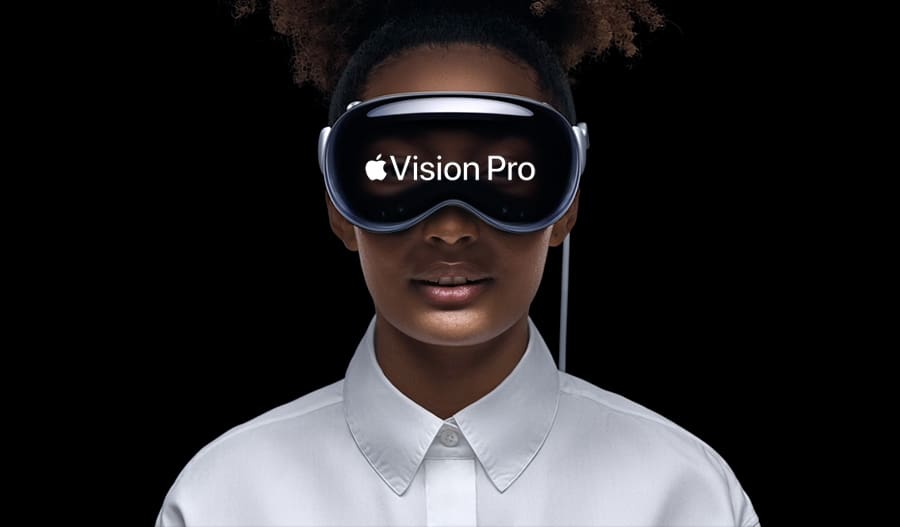
Apple Vision Pro: The $3,500 Dream That Hit a Wall | Metaverse Planet

Apple Vision Pro: The ,500 Dream That Hit a Wall | Metaverse Planet


I remember the launch in 2024. The hype was real. We thought this was the “iPhone moment” for mixed reality. But looking at the data from the holiday season of 2025, the picture is bleak.

According to IDC, Apple sold only about 45,000 units in the last quarter of 2025. For a company that usually counts sales in millions, this is barely a rounding error. Reports suggest that manufacturing partner Luxshare has all but halted production, and Apple has slashed digital ad spending in major markets like the US and UK.

So, what went wrong? Why did the “future” fail to sell?

1. The M5 Update: Too Little, Too Expensive

Let’s be real. When Apple refreshed the headset in October 2025 with the M5 chip, better battery life, and a more comfortable headband, I expected a price drop.

Instead, they kept the $3,500 price tag.

That was the breaking point. Even for a tech enthusiast like me, dropping $3,500 on a device that isolates you from the world is a hard sell. That’s the price of a high-end MacBook Pro and an iPhone combined. The M5 chip is a beast, sure, but raw power doesn’t fix the fact that it’s a luxury item in a tightening economy.

2. The “Ghost Town” App Store

Hardware is nothing without software. Apple boasts about 3,000 native apps for the Vision Pro. That sounds okay until you compare it to the iPhone or even the iPad in their early years.

We are facing a classic “Chicken and Egg” problem:

Developers aren’t building apps because there aren’t enough users.Users aren’t buying the device because there aren’t enough “killer apps.”

I’ve browsed the store; aside from some cool 3D movies and dinosaur demos, there is very little that makes me say, “I need this for my daily life.” It lacks the social glue that makes the Metaverse work.

3. It’s Not a Toy, It’s a Tool (And That’s the Problem)

There is a silver lining, though. The Vision Pro found a home, just not in our living rooms. It’s being used successfully in pilot training and complex surgeries.

It turns out, when you are a surgeon practicing a heart transplant, a $3,500 headset is a bargain. But for you and me? It remains a heavy, tethered, expensive piece of glass. It didn’t become the “mainstream consumer product” Apple hoped for; it became a niche enterprise tool.

My Perspective: The “Newton” Moment

I don’t think Apple is giving up on AR/VR. I think the Vision Pro is their “Apple Newton” moment. (For the younger readers: The Newton was a failed tablet Apple made in the 90s that paved the way for the iPhone).

The technology is incredible. The eye-tracking is magical. But the form factor and price are wrong for 2026. This failure might actually be a good thing. It forces Apple to go back to the drawing board and focus on what matters: lightweight glasses and affordability.

The dream of Spatial Computing isn’t dead, but the era of the $3,500 ski goggles is definitely ending.

If Apple released a “Vision Air” tomorrow for $1,500 but with less power, would you finally buy one, or has the hype train left the station for you?

You Might Also Like;


Source link

Top Gaming Blockchains to Watch in 2026 | NFT News Today

Top Gaming Blockchains to Watch in 2026 | NFT News Today


The top gaming blockchains to watch in 2026 are finally being defined by real usage, something the industry struggled with for years. When the 2025 correction ended speculative play-to-earn models, only networks with active players, stable economies, and strong developer tools remained. This reset changed how studios build games and how players get involved.

NFT gaming has changed a lot since its early days. Now, digital assets are used as tools for progress, access, and identity instead of just being lottery tickets. Players focus less on prices and more on whether an item makes the game better or opens up new experiences. This change has pushed the technology to improve quickly.

2026 is a turning point. More people are joining, mobile is the main way players start, and traditional game studios are adding blockchain features without making a big deal about it. The most successful blockchains are the ones that work smoothly in the background.

Why 2026 Matters for Blockchain Gaming

In 2024 and 2025, unsustainable reward systems failed, and user numbers dropped on most blockchains. Now, the focus is on keeping players around and building long-term engagement.

Mobile gaming is now at the center. About two-thirds of blockchain gamers start on their phones instead of using desktop wallets. Because of this, blockchains have to focus on speed, predictable costs, and easy onboarding. People won’t wait thirty seconds for a transaction on their phones.

Big studios are also trying new things again. Rather than launching fully crypto-based games, they are quietly adding NFTs. Skins, passes, and progression systems are on-chain, but the gameplay feels the same. When Epic Games started hosting blockchain-enabled titles, it signaled a big change that is still happening in 2026.

Artificial intelligence brings even more possibilities. AI-powered characters, changing difficulty, and evolving items all need fast updates. Blockchains that can’t handle quick or multiple transactions at once have trouble supporting these features.

How These Gaming Blockchains Were Chosen

The selection here is based on real results, not just marketing. Each blockchain listed shows ongoing activity that lasts beyond a single launch period.

Player activity is the most important factor. Daily active wallets, repeat use, and steady transactions tell us more than just total value locked. A blockchain with fewer but loyal players often does better than one boosted by short-term rewards.

NFTs also needed to be tied directly to gameplay. Collections that are only cosmetic and have no in-game use are less important. The focus was on assets that affect how players progress, compete, or work together.

Each network also has a clear plan for 2026. This could mean protocol upgrades, growing their ecosystem, or building partnerships that fit real game launches.

Immutable

Immutable chose early on to focus only on gaming, not general-purpose blockchain ideas. This clear focus shapes every part of its technology.

Gas-free transactions make things easier for players who don’t want to think about wallets or fees. Developers are building tools that feel more like regular game backends than crypto systems. This makes it easier for studios moving from Web2 to blockchain.

Games Driving Activity on Immutable

Illuvium is a key part of the ecosystem, with valuable NFT trading linked to exploration and combat. Land, characters, and items are traded regularly instead of just during the launch period.

Gods Unchained shows that lasting appeal is important. Its competitive scene stays strong because owning cards affects strategy but doesn’t outweigh player skill.

Guild of Guardians stands out for its mobile-first design. Guild teamwork, item crafting, and progression all feel like a natural part of the game.

Why Immutable Holds an Edge in 2026

The zkEVM stack lets Immutable scale up while staying compatible with Ethereum. Studios get strong security without losing speed. After the merger, higher throughput supports complex economies, and publisher partnerships keep growing quietly.

If Web2 studios want to expand into blockchain, Immutable is already set up to work with them.

Ronin

The main strength of Ronin is its tight-knit community. Players stay involved and organize together.

Guilds influence how players act throughout the ecosystem. Social teamwork keeps players interested even after reward cycles end. This approach works especially well in Asia, where cooperative play is popular.

Core Games Anchoring Ronin

Axie Infinity: Atia’s Legacy changed its systems to focus on strategy, and long-term ownership. This led to lower inflation and higher player engagement.

Pixels keeps things simple. Farming, quests, and rewards for time spent matter more than speculation.

Games such as Fableborne and Cambria try out risk-based systems, where what players do is more important than how many tokens they earn.

Why Ronin Keeps Growing

Low fees and steady performance are important for mobile gaming. Moving to Ethereum Layer 2 boosts security and compatibility without making games slower.

Ronin succeeds by seeing players as communities, not just wallets.

Solana

Fast-paced games need instant feedback, and Solana is great when every millisecond counts.

Transactions on Solana are so fast they feel invisible. This is important for competitive games, real-time economies, and AI-powered systems.

Games That Show Solana’s Strength

Star Atlas focuses on large-scale teamwork and ongoing game worlds.

STEPN shows that NFTs linked to lifestyle features can stay popular even after the initial excitement is over.

Photo Finish LIVE proves that real-time betting and ownership can work together smoothly, without lag.

What Changes in 2026

Upgrades such as Firedancer aim to improve reliability and speed. As latency drops, games with lots of AI features become more practical.

If Solana keeps getting more stable, its role in gaming will grow quickly.

Avalanche

Avalanche attracts teams that want more control over how their games perform and run.

Subnets keep traffic separate, so outside apps don’t cause slowdowns. This is important for studios running live games, where downtime can mean lost revenue.

Notable Titles on Avalanche

Off the Grid mixes fast-paced battle royale action with asset ownership. By working with traditional platforms, it adds blockchain features without making things too complicated for players.

EV2 looks at ongoing sci-fi worlds where items change and grow as players interact with them.

Why Avalanche Attracts Big Studios

Steady performance, strong tools, and flexible options fit well with big studio development. In 2026, cross-chain upgrades make it easier to connect without losing the benefits of being separate.

Sui

Sui sees assets as changeable objects, not just fixed tokens. This design opens up new ways to play.

Items can gain new traits, wear out, or change over time. Developers can create systems that feel more like real progress instead of just owning a snapshot.

Games Building on Sui

Xociety shows how shooter gameplay and changing NFT gear can work together.

Token Tails adds casual gaming to the ecosystem, showing that being easy to access is important.

Why Sui Gains Attention

Parallel processing allows for quick changes in the game. Interest from big organizations adds long-term trust. Upgrades such as Mysticeti make the system more efficient.

If dynamic NFTs become common, Sui’s design will be a natural fit.

Polygon

Polygon is familiar to developers, which makes it easier for studios to try blockchain features without having to rebuild everything.

Most of Polygon’s gaming use comes from mobile adoption.

Polygon’s Gaming Focus

Pikamoon aims for mainstream players by using familiar game mechanics and slowly adding NFTs.

Smaller GameFi projects keep working on ways to keep players coming back, instead of just trying to boost short-term numbers.

What to Watch in 2026

Polygon 2.0 changes the ecosystem to use zk-based scaling. The POL token upgrade helps align incentives across different chains and keeps fees steady.

Polygon will benefit most if lots of people start using it through mobile apps, even if it happens quietly.

Key Risks Across Gaming Blockchains

Token unlocks are still a challenge. Rules and regulations differ by region. Relying too much on one main game is still risky.

Ecosystems with a variety of games and steady user activity bounce back faster during tough times.

Final Thoughts on Gaming Blockchains in 2026

The next stage of blockchain gaming values careful growth over flashy launches.

Immutable and Ronin lead in retention. Solana and Sui push technical boundaries. Avalanche supports studio-grade deployment. Polygon keeps onboarding accessible.

The best gaming blockchains in 2026 succeed by letting players focus on what really matters: the game.

Frequently Asked Questions

Here are some frequently asked questions about this topic:

What are gaming blockchains?

Gaming blockchains are blockchain networks designed to support video games by handling in-game assets, transactions, and player ownership. They focus on fast performance, low fees, and tools that integrate smoothly with game engines.

Why is 2026 important for blockchain gaming?

2026 marks a shift from speculative play-to-earn models to sustainable, player-focused games. Mobile adoption, better infrastructure, and quiet integration by traditional studios are driving real usage.

How are gaming blockchains different from regular blockchains?

Gaming blockchains prioritize speed, predictable costs, and user experience. Many remove gas fees for players, support high transaction volumes, and offer developer tools tailored for live games.

Are NFTs still important in blockchain gaming?

Yes, but their role has changed. NFTs are now used for gameplay progression, access, identity, and evolving items rather than speculation or short-term profits.

Which factors matter most when choosing a gaming blockchain?

Key factors include daily active players, long-term retention, mobile performance, transaction speed, developer tools, and how closely NFTs are tied to gameplay.

Is mobile gaming really driving blockchain adoption?

Yes. Most new blockchain gamers start on mobile devices, which is why networks must support fast transactions, simple onboarding, and minimal friction.

Do players need crypto wallets to play blockchain games?

Many modern games hide wallets in the background or use custodial solutions. Players can often start playing without knowing they’re using blockchain technology.

Are traditional game studios using blockchain in 2026?

Yes. Many studios now integrate blockchain quietly, using it for skins, passes, or progression systems without changing how the game feels to players.

What risks still exist in blockchain gaming?

Major risks include token unlocks, regulatory uncertainty, reliance on a single flagship game, and unstable in-game economies.

Will blockchain gaming replace traditional gaming?

No. Blockchain is becoming an invisible layer that enhances ownership and progression, not a replacement for traditional game design.


Source link

The Invisible Price of AI: Why We Are Rushing Back to Nuclear | Metaverse Planet

The Invisible Price of AI: Why We Are Rushing Back to Nuclear | Metaverse Planet


You know that feeling when you solve one problem, but create two bigger ones? That’s exactly how I feel about the current state of Artificial Intelligence.

We are all mesmerized by what AI can do. It writes code, creates art, and organizes our lives. But recently, I started looking at the bills—not the subscription fees, but the ecological bills. And frankly? It scared me.

While we are busy debating if robots will gain consciousness, a much more physical threat is growing in our backyard. The servers running these AI models are thirsty. Extremely thirsty. And they are hungry for power on a scale we weren’t prepared for.

The “Water” Issue No One Talks About

Minsk, Belarus – 04-02-2023. A person uses an artifical chatbot system assistant on a laptop. Work and communication at computer with artificial intelligence technology OpenAI and ChatGPT chat bot.

Let’s put it in simple terms. Every time you ask ChatGPT a question, it consumes roughly 10 times more electricity than a standard Google search.

But electricity is just half the story. The real shocker is water.

Data centers—the physical brains of AI—get incredibly hot. To keep them from melting, they need massive cooling systems.

The Stat: It is estimated that a simple conversation with an AI model (20-50 questions) consumes about a 500ml bottle of water for cooling.The Scale: Multiply that by billions of users. We are talking about draining local water reserves in communities that are already facing droughts.

I read a report recently that Microsoft’s water consumption spiked by 34% in a single year. Why? Because of their heavy investment in AI. That is not sustainable.

The Surprise Comeback: Nuclear Energy

Here is where your observation was spot on, and it’s arguably the most “Cyberpunk” turn of events I’ve seen in years.

Renewable energy (Solar/Wind) is great, but it’s inconsistent. The sun doesn’t always shine. But AI needs 24/7, uninterrupted, massive power.

So, what did the tech giants do? They went shopping for Nuclear Power.

Microsoft: They literally paid to restart the Three Mile Island nuclear plant. Yes, the site of the most famous nuclear accident in US history. That’s how desperate they are for power.Google & Amazon: They aren’t just buying power; they are investing in SMRs (Small Modular Reactors). These are mini-nuclear plants that can be built faster and placed closer to data centers.

Is the Cure Worse Than the Disease?

This is the part that keeps me up at night.

We are rushing back to nuclear energy not because it’s the “safest” option, but because it’s the only option that can feed the insatiable hunger of AI. Private companies—not just governments—are now becoming nuclear players.

The Irony: We are afraid that AI will launch nuclear codes in a sci-fi movie scenario. But in reality, AI is the reason we are building more nuclear plants.

Are we trading the risk of a “rogue AI” for the risk of nuclear waste and local water scarcity?

Forget the Math, Just Visualize This

I’m not going to bore you with Gigawatts or complex engineering jargon. Let’s break this down with some “napkin math” so you can see just how scary this really is.

Most of us plug in our phones and think, “Eh, how much power could this possibly use?” But in the world of AI, the rules are completely different.

At the current rate, the annual electricity consumption of these systems (ChatGPT, Gemini, etc.) will soon equal the entire yearly power usage of countries like Ireland or Argentina. You read that right. I’m talking about massive nations with millions of people, factories running, and lights staying on.

We are essentially unplugging an entire country and plugging it into a server farm, just so we can ask a chatbot to “tell us a funny joke.”

But what about water? That part is even more terrifying.

According to reports, Microsoft’s water consumption spiked so drastically due to AI investments that the extra water used could fill more than 2,500 Olympic-sized swimming pools.

Want a simpler, more “New York” style example? Think about it this way:

With the water wasted just to keep these AI models cool, we could meet the entire drinking water needs of a massive metropolis like New York for days. Instead, we are literally evaporating it into thin air just to keep the servers from melting down.

This is exactly why governments are panic-building nuclear plants and why tech giants are quietly forgetting their “green energy” pledges to restart old reactors. We aren’t dealing with “a little extra” consumption here; we are dealing with a digital monster that is draining the planet’s resources.

My Verdict

I love technology. I live for it. But we need to be honest about the cost. If the price of having a smarter chatbot is drying up our rivers and piling up nuclear waste, maybe we need to hit the brakes and rethink the efficiency of these models.

We are building a digital god, but we are burning the physical world to fuel it.

What is your biggest fear now? Is it the AI taking your job, or the nuclear reactor being built down the road to power it?

Let’s discuss this uncomfortable truth in the comments.

You Might Also Like;


Source link

Trust Wallet Warns 36K Users Over Compromised Browser Wallets

Trust Wallet Warns 36K Users Over Compromised Browser Wallets


Key Highlights

Trust Wallet confirmed that about 36,000 users are still using wallets affected by a security issue linked to Browser Extension version 2.68 from December 24–26, 2025.

Affected users were notified through extension banners and mobile app alerts and told to create a new wallet and move funds immediately.

The issue does not affect mobile app users or other extension versions, and early findings suggest around $7 million may have been impacted.

Trust Wallet has issued a warning that about 36,000 users are still using compromised wallets after a security issue affected its Browser Extension version 2.68. The company said this impacts roughly 0.016% of its users.

The issue happened between December 24 and December 26, 2025. Trust Wallet sent messages to these users through a banner on the Browser Extension, and through a push message or a pop-up for users who also have the mobile app.

Steps to stay safe

Trust Wallet outlined the steps clearly for users to follow. First, they must update their Browser Extension to version 2.69 or later. They added, “If you have been notified, please abandon the old compromised wallet, create a new wallet and move your funds immediately to ensure your assets remain safe.”

Users should then create a new wallet either on the browser extension or mobile app. Finally, they need to transfer all funds from the old wallet to the new one. Trust Wallet also reminded users to back up their secret phrase, sometimes called a recovery phrase, to improve wallet security.

Who is affected, and how much is impacted

Trust Wallet said users who did not receive a notification are not affected. The affected wallets include only those who opened and logged into the Browser Extension v2.68 during the period between December 24 and December 26. Mobile app users or anyone using other extension versions are not impacted.

Preliminary estimate shows that about $7 million may have been affected, but the investigation is still ongoing. Trust Wallet has shared pictures and guides showing how to update the extension, create a new wallet, and move funds safely.

Users who think they lost money are asked to contact Trust Wallet support using a special form. The company said each case will be reviewed carefully, and they may ask for more information to confirm ownership before helping recover any lost funds. Users are also asked to act quickly if they see a notification.

Also Read: Trust Wallet Chrome Extension Hack Drains Over $6.7M from Users: ZachXBT


Source link

Drake Named in Lawsuit Tied to Crypto Casino Stake

Drake Named in Lawsuit Tied to Crypto Casino Stake


Key Highlights

Drake is named in a U.S. class action lawsuit tied to promotions for crypto casino Stake.

Plaintiffs allege illegal gambling access and misuse of funds to boost streaming numbers.

Defendants, including Drake and Stake, have declined public comment so far.

A new federal lawsuit has accused Drake of promoting an allegedly illegal crypto-based gambling platform and using related proceeds to inflate his streaming numbers. This marks the latest legal challenge tied to the rapper’s high-profile partnership with online casino operator Stake.

The class action lawsuit, filed this week in a U.S. federal court in Virginia, names Drake alongside streamer Adin Ross, Australian national George Nguyen, and entities linked to Stake, a crypto-focused online gambling platform founded in 2017. The complaint alleges violations of the Racketeer Influenced and Corrupt Organizations (RICO) Act and seeks at least $5 million in damages.

According to the lawsuit, plaintiffs LaShawnna Ridley and Tiffany Hines allege that Drake’s paid promos, livestreamed bets, and giveaways drew them to Stake. The filing claims the content sold the platform as safe and legit, even though online casino gambling is illegal in Virginia.

While Stake is officially based outside the U.S., the complaint alleges that its U.S.-facing platform, Stake.us, operates by exploiting a disputed legal loophole that allows access in jurisdictions where online casinos are prohibited.

Drake signed a widely publicized endorsement deal with Stake in 2022, reportedly worth $100 million, making him one of the platform’s most visible ambassadors.

Claims of streaming manipulation

Beyond gambling allegations, the lawsuit claims that funds routed through Stake were used to finance online bot farms and “amplification campaigns” designed to artificially inflate Drake’s streaming numbers on platforms such as Spotify.

The filing offers no technical evidence of manipulation but argues that gambling proceeds were repurposed to boost visibility and engagement. Representatives for Drake, Stake, Ross, and Nguyen have declined to comment on the case, according to NME.

This is not the first lawsuit to challenge Drake’s association with Stake. In October, a separate case filed in Missouri accused Drake and Ross of misleading users by portraying Stake.us as a “social casino” rather than an allegedly illegal gambling platform. That case was later moved to federal court.

Stake has also faced other setbacks. These include branding disputes in Australia and a $41 million crypto hack in 2023 that emptied hot wallets across Ethereum, Polygon, and BNB Chain. The site kept running, but the regulatory heat never really cooled.

Gambling, visibility, and risk

Drake has been open about his gambling activity. In June, he disclosed losing more than $8 million after placing roughly $125 million in bets in a single month, reinforcing the long-running pop culture narrative known as the “Drake curse.”

As the Virginia case moves ahead, it sharpens a familiar question: where does hype end and responsibility begin when celebrities sell crypto gambling? The claims aren’t proven, but the warning shot is clear: fame is no longer a shield when crypto and betting collide.

Also read: Medical Specialist Loses RM529,200 in Fake Crypto Investment Scheme


Source link

CZ Draws Fresh Backlash as Memecoin Losses Resurface

CZ Draws Fresh Backlash as Memecoin Losses Resurface


Key Highlights

A viral X post accuses CZ of fueling sharp memecoin crashes without regulatory action.

There is no evidence of investigations or formal complaints tied to the claims so far.

The episode highlights ongoing tension between social media narratives and market reality.

Changpeng Zhao (CZ), the founder and former CEO of Binance, is once again at the center of a heated crypto debate, this time driven by viral social media accusations rather than regulators or courts.

In an X post on Saturday, user NoLimitGains accused CZ of orchestrating a series of “pump-and-dump” schemes tied to small, illiquid tokens that later collapsed sharply. The claims, which quickly gained traction, pointed to several memecoins that reportedly lost between 80% and 98% of their value shortly after being listed on Binance Alpha or related platforms.

The post laid out a familiar accusation: big early buys, a listing catalyst, a fast price surge, and then a sharp sell-off. Beyond screenshots and price charts, no concrete evidence was presented. Binance and CZ have not responded publicly, leaving the claims circulating without verification.

Context matters: volatility, not verdicts

The allegations land in a memecoin market already defined by thin liquidity and sharp, exaggerated swings. According to CoinGecko data, the memecoin market cap rose 10.5% to $48.3 billion and reached a trading volume of $7.3 billion, both in the last 24 hours.

Market participants note that sharp collapses are common in this segment, particularly after speculative rallies fade. Importantly, there is no indication from regulators or law enforcement that CZ is under investigation related to these claims. As of now, the accusations remain online commentary rather than legal findings.

CZ has largely stepped back from day-to-day exchange operations since his 2024 legal settlement in the United States, where he pleaded guilty to violations related to anti-money laundering controls at Binance.

In 2024, CZ served a four-month sentence in the U.S. after pleading guilty to lapses in Binance’s AML controls. The court stated there was no evidence that he knowingly enabled criminal activity, and his cooperation weighed heavily in limiting the sentence.

He was released in October and quickly signaled a pivot away from exchange operations toward long-term bets in blockchain infrastructure, AI, and biotech.

Market influence without formal power

Even without an executive title, CZ still has gravity. A whisper of a Binance listing, an Alpha tag, or a loose ecosystem tie is often enough to spark a rush into thinly traded tokens.

That influence is a double-edged sword. When prices rise, no one complains. When they crater, fingers point fast, especially in a market still allergic to credibility gaps after years of blowups.

What this episode really highlights is crypto’s old fault line: oversized figures, fragile liquidity, and a social media court that hands down judgments long before evidence shows up. Whether the noise dies down or turns into something bigger won’t hinge on tweets, but on whether regulators or investigators decide to step in.

Also read: Kyrgyzstan Launches First Nation-Backed Stablecoin KGST on Binance


Source link

Popular Posts

My Favorites

Productivity Software Publishing Global Market Report 2025: Exponential Growth and Key...

0
Productivity Software Publishing Market Size Driven by tech advances and enterprise integration, the global productivity software publishing market is posted for strong growth...