Metaverse

Home Metaverse Page 37

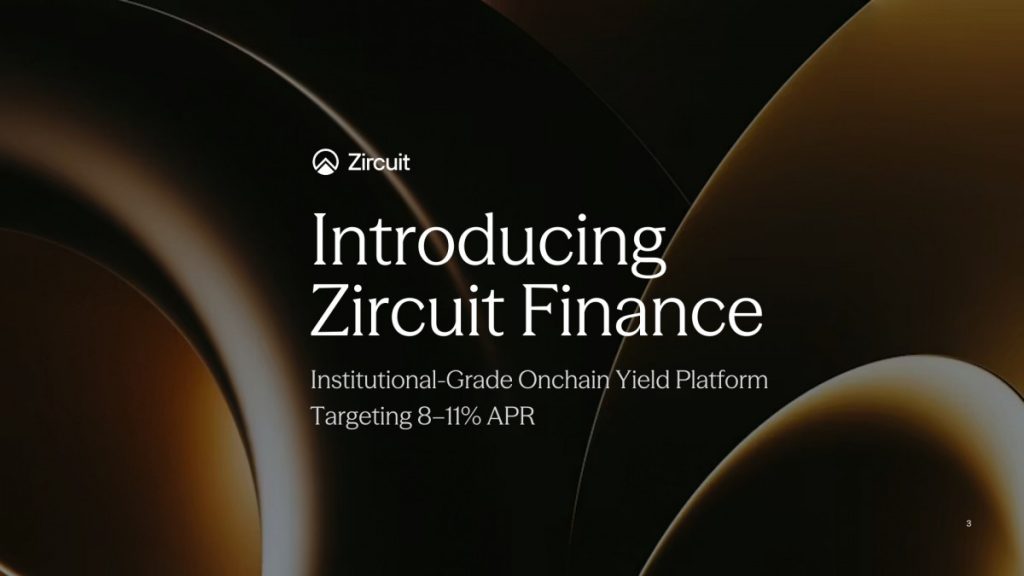
Zircuit Finance Launches Institutional-Grade Onchain Yield Platform Targeting 8–11% APR

0
Zircuit Finance Launches Institutional-Grade Onchain Yield Platform Targeting 8–11% APR


Sponsored

Stories and Reviews

February 17, 2026

Zircuit Finance Launches Institutional-Grade Onchain Yield Platform Targeting 8–11% APR

George Town, Cayman Islands, February 17th, 2026, Chainwire

Zircuit, a security-first digital asset company backed by YZiLabs, Dragonfly, and Pantera, today announced the launch of Zircuit Finance. Incubated by a team from Quantstamp, Zircuit Finance is a secure platform for institutional-grade strategies, a stablecoin vault designed to generate yield on USDC and USDT, with a stated target range of 8–11% APR, subject to market conditions and variability.

Historically, access to professional asset managers and institutional strategies required significant minimum investments and long lockups. Zircuit Finance removes those barriers with a simplified, cross-chain interface that provides access to institutional-grade yield strategies through a single interface, enabling deposits and withdrawals across multiple chains while supporting diversified exposure.

“The future of DeFi isn’t about chasing the highest yields, it’s about building the most secure foundation for capital to grow,” said Dr. Martin Derka, Co-Founder of Zircuit. “Zircuit’s vault is part of a broader shift to create a more stable, transparent, and trusted on-chain economy where users can move large sums of capital efficiently and safely.”

Zircuit Finance vaults allocate a portion of assets to Monarq Asset Management, which manages regulated institutional-grade arbitrage and delta-neutral strategies. Monarq has a proven track record managing the Monarq Digital Asset Opportunities Fund, and the team includes professionals from Tower Research, LedgerPrime, BlockTower, UBS, and Bank of America.

Zircuit Finance also integrates Fidelity’s tokenized money market fund, Aave, and Morpho for diversified exposure across both regulated and decentralized venues.

Complementing this institutional framework, Zircuit Finance is partnering with Forteus, an FCA-regulated asset management division of the Numeus Group, which is headquartered in Zug, Switzerland, with offices in London and New York. The partnership develops digital asset investment portfolios focused on generating risk adjusted returns on Ethereum and Bitcoin, leveraging Forteus’ investment strategies and institutional risk management capabilities.

Zircuit Finance will also integrate with FalconX as its prime broker and infrastructure provider, enabling institutional-grade execution, custody, and risk management. FalconX, a digital assets prime brokerage, provides a globally recognized institutional platform trusted by leading hedge funds and asset managers. Its infrastructure supports efficient capital deployment and compliance-aligned operations across multiple venues.

The core features of Zircuit Finance include:

Targeting 8–11% APR on USDC and USDT, with multi-chain deposits and withdrawals. The vault maintains a portion of capital for fast withdrawals (often within 24 hours for smaller requests) while deploying the rest to generate yield. Larger requests may take up to 14 days as capital is being withdrawn from deployed strategies.
Cross-chain messaging infrastructure provided by LayerZero technology. This architecture enables secure, omnichain access to vaults and partner strategies across multiple chains, all from a single interface.

“As liquidity flows into DeFi at scale, the platforms that will lead are those delivering both performance and safety while bringing institutional-grade strategies accessible on-chain. Our collaboration with Zircuit Finance reflects Monarq’s commitment to powering that next phase of growth, anchored in deep liquidity, disciplined risk, and operational transparency,” said Shiliang Tang, Managing Partner of Monarq Asset Management.

Zircuit Finance is built by cybersecurity veterans who secured more than $200 billion in assets and conducted over 1,100 audits. The team behind Zircuit Finance brings unmatched security expertise to DeFi, with $3 billion in TVL previously staked through the Zircuit Staking program.

Zircuit Finance is now open for deposits. Additional information on depositing USDC and USDT is available at finance.zircuit.com.

ABOUT ZIRCUIT

Zircuit is a security-first digital asset company founded in 2022 by experts from Quantstamp. Zircuit builds secure onchain products designed to help users deploy capital safely and efficiently. Backed by deep cybersecurity expertise, the team has secured over $200 billion in assets and conducted more than 1,100 audits. Zircuit Finance is the company’s institutional-grade platform offering yield on stablecoins and major digital assets.  

Users can visit zircuit.com and follow @Zircuit on X.

Disclosure: Zircuit Finance vaults are not bank accounts or insured deposits. Yields are variable and not guaranteed. Participation may be subject to digital asset risk, including smart contract and market volatility. Users should conduct their own due diligence before investing. Past performance is not indicative of future results.

Contact

Head of CommunicationsJennifer ZhengZircuit[email protected]

Disclaimer

In line with the Trust Project guidelines, please note that the information provided on this page is not intended to be and should not be interpreted as legal, tax, investment, financial, or any other form of advice. It is important to only invest what you can afford to lose and to seek independent financial advice if you have any doubts. For further information, we suggest referring to the terms and conditions as well as the help and support pages provided by the issuer or advertiser. MetaversePost is committed to accurate, unbiased reporting, but market conditions are subject to change without notice.

About The Author

Chainwire is the top blockchain and cryptocurrency newswire, distributing press releases, and maximizing crypto news coverage.

More articles
Chainwire is the top blockchain and cryptocurrency newswire, distributing press releases, and maximizing crypto news coverage.


Source link

BTC Supply in Profit Dips to 55%, Nearing the Historic Bottom Signal

0
BTC Supply in Profit Dips to 55%, Nearing the Historic Bottom Signal


The downtrend in Bitcoin price is currently approaching a critical level, with a number of signals suggesting it may have hit a bottom. Its on-chain metrics are flashing familiar warning signs as the market grinds lower in mid-February 2026. 

Latest data from Glassnode shows that the percentage of BTC circulating supply in profit has dipped to around 55-56%, with roughly 10 million BTC now held at unrealized losses. This marks its lowest level since the depths of the 2022 bear market when prices bottomed near $16,000 before the long recovery. 

At the time of publishing, Bitcoin trades in a choppy range between $69,000 to $67,000 after shedding 46% from its all-time high. 

This sharp compression in profitable BTC holders, down from nearly all supply being green at last year’s highs, mirrors past cycle lows where heavy paper losses forced weak hands out and set the stage for reversals.  

Within the crypto landscape, it is regarded that the true bottom often arrives when supply in profit falls closer to 45-50% and realized losses spike harder than seen so far this drawdown. 

Historically, it has been proven that every major cycle has seen this profit-supply trendline act as a floor before explosive upside.During this time of period, long-term holders mostly remain intact and avoid the deep capitulation of prior bears. 

Whether this marks exhaustion selling or just another leg down remains the open question hanging over traders. Patience is wearing thin, but the setup echoes those that preceded big turns. 

Also read: Bitcoin’s 46% Slump Shakes Traders with Open Interest Dropping to $21B

Disclaimer: The information researched and reported by The Crypto Times is for informational purposes only and is not a substitute for professional financial advice. Investing in crypto assets involves significant risk due to market volatility. Always Do Your Own Research (DYOR) and consult with a qualified Financial Advisor before making any investment decisions.


Source link

Blue Sunsets and Giant Peaks: Why Mars Is Way Weirder Than You Think | Metaverse Planet

0
Blue Sunsets and Giant Peaks: Why Mars Is Way Weirder Than You Think | Metaverse Planet


I’ve always been obsessed with the idea of standing on another world, but the more I look into Mars, the more I realize it’s not just a “Red Planet”—it’s a land of total contradictions. When I was digging through the latest atmospheric data for this piece, one specific detail actually stopped me in my tracks: the color of the sunset.

We spend our lives chasing golden hours here on Earth, but on Mars? Everything flips. Let’s dive into why our neighbor is much more than just a dusty rock.

The Sunset Flip: Why Blue is the New Red

This is the part that honestly broke my brain a little. On Earth, we have a blue sky and red sunsets. On Mars, the atmosphere is so thin and filled with fine dust that it scatters light differently.

The Science: While Earth’s atmosphere scatters blue light (making the sky blue), the Martian dust scatters red light throughout the day.The Result: When the sun goes down on the horizon, the blue light penetrates the dust more efficiently.The Vibe: If you were standing in the Gale Crater, you’d see a pale, cool blue glow around the sun. It’s hauntingly beautiful and feels like something straight out of a high-budget sci-fi flick.

Living Large (Literally) on the Red Planet

If I ever get the chance to visit, the first thing I’m doing is heading to Olympus Mons. I used to think Mt. Everest was the peak of planetary ambition, but Olympus Mons makes it look like a backyard hill.

1. The Volcano That Touches Space

Olympus Mons is a shield volcano about the size of Arizona. It stands nearly 22 km (13.6 miles) high. To put that in perspective, it’s nearly three times the height of Everest. Because it’s so wide, the slope is actually quite gentle—if you were standing on it, you wouldn’t even know you were on a mountain because the curve of the planet would hide the base.

2. The Ultimate Weight Loss Program

I’m not a fan of the gym, so Martian gravity sounds like a dream to me. Mars has about 38% of Earth’s gravity.

If you weigh 100 kg here, you’d step on a scale there and see 38 kg.You could jump higher, carry heavier gear, and feel like an elite athlete just by stepping off the lander.

Is a One-Way Ticket Worth It?

I often find myself wondering if I’d actually go. Sure, the blue sunsets are mesmerizing and the low gravity sounds fun, but we’re talking about a world where the average temperature is -62°C (-80°F). It’s a harsh, unforgiving desert that requires us to bring our own air.

However, when I look at the high-res images coming back from the Perseverance Rover, I see a landscape that feels strangely familiar. It’s a silent witness to the history of our solar system. The “secret blue side” of Mars reminds us that nature doesn’t always follow the rules we’re used to.

I’ve always believed that the Metaverse will be our first real bridge to Mars. Before we physically land there, we’ll be walking these blue-tinted craters in 1:1 digital twins, feeling the scale of Olympus Mons from the safety of our homes.

Why This Matters for Our Future

We aren’t just looking at Mars because it’s “cool.” We’re looking at it because it’s the ultimate “Plan B.” Every stat we learn—from the atmospheric pressure to the chemical makeup of the soil—is a piece of a puzzle we’re solving in real-time. I find it incredible that in our lifetime, “Martian” might go from being a sci-fi trope to a legitimate job description.

I have to ask: If SpaceX or NASA offered you a one-way ticket to Mars tomorrow, knowing you’d be the first to see that blue horizon in person but could never come back to Earth, would you take it?

You Might Also Like;


Source link

Bitcoin Mid-February Outlook: Funding Negative, Spot Demand Missing

0
Bitcoin Mid-February Outlook: Funding Negative, Spot Demand Missing


In Brief

Bitcoin’s been doing that annoying thing it does after a violent flush: it stops being a “trend” and turns into a problem you have to sit with.

Bitcoin Mid-February Outlook: Funding Negative, Spot Demand Missing

Bitcoin’s been doing that annoying thing it does after a violent flush: it stops being a “trend” and turns into a problem you have to sit with. The chart basically tells the whole story in one glance. We had the air-pocket from the high 80s down into the low 60s, a nasty wicky rebound, and then… nothing clean. Just this boxed-in chop, roughly mid-60s to low-70s, with price repeatedly walking up to the range ceiling, getting slapped, and drifting back into the middle. Right now we’re dangling around ~68–69, which is psychologically comforting because it’s “not 60,” but structurally it’s still the lower third of the bigger dump.

Bitcoin Chart, Trading, Coinbase

If you’re thinking “immediate-term structure looks a bit better,” I’m with you, but only conditionally. Inside the blue box, the market is at least trying to stop bleeding. Dips are getting met faster, bounces are less panicky, and the sell candles don’t have that same freefall follow-through. That’s the kind of micro-behavior you get when forced sellers have mostly finished and the remaining supply is more discretionary. But zooming out one level, it’s still a post-crash range at the bottom of a major impulse down. In other words: short-term bullishness can exist inside a broader “this might just be basing before the next leg” context. Both can be true, and that’s exactly why this zone feels unresolved — because it is.

So what actually moved this week, and why did it feel so… mechanically stressed?

Weekly crypto ETP flow data shows sustained outflows across major assets as Bitcoin trades below 70K, reinforcing a relief-rally rather than fresh-demand environment.

A big part of the story is that flows have been ugly and confidence has been fragile. We’ve got reports of crypto funds logging yet another week of outflows while BTC dipped below $70K, which matters because it frames rallies as “relief” rather than “new demand.” When the default flow regime is money leaving the room, upside tends to get sold into quickly, not because everyone is a genius bear, but because managers are managing risk and reducing exposure. Layer on top the chatter about spot ETF outflows and the general “is TradFi backing away?” narrative (open interest falling, futures positioning cautious), and you get a market that can bounce, but struggles to stick the landing above resistance.

Bitcoin’s daily funding rate chart shows persistent negative funding, indicating crowded short positioning and squeeze potential within the post-crash range.

Derivatives data adds another twist: negative funding and “overcrowded shorts” talk. That’s the gasoline for sharp upside jolts — not a warm bullish trend, more like a trapdoor under bears. When funding sits negative for multiple days, you can get these sudden squeezes that feel bullish in the moment, but they’re often just position-cleaning events unless spot demand shows up to keep the move alive. That’s how you end up with the vibe we’re seeing: fast pops toward the top of the range, then a fade when the squeeze fuel is spent.

Alt text: Anthony Pompliano discusses macro conditions and Bitcoin’s role as a high-beta risk asset during a fragile rate-cut and inflation backdrop.

Macro didn’t exactly deliver a clean signal either. There was a moment where softer inflation data helped BTC push up toward the high-60s / ~69K area, but at the same time the broader message stayed “rate-cut odds still low.” Markets like Bitcoin hate being a high-beta risk asset without the tailwind. So you get these reactive moves to prints and headlines, but not the kind of sustained bid that turns a range into an uptrend.

Now, the devastating plunge itself is still echoing through sentiment — and you can see that in the way the news cycle is behaving. A lot of the loudest narratives right now aren’t about adoption euphoria; they’re about stress, plumbing, and existential risk. 

The quantum thread is a perfect example of this. You’ve got high-profile voices warning that quantum risk is starting to get priced, plus the spicier angle that institutions could get fed up and try to pressure Bitcoin development if they feel protocol risk threatens their treasury strategy. Whether you buy the thesis or not, the point is: during fragile regimes, markets grab onto “structural threat” stories because everyone’s already on edge. That’s not the kind of backdrop where buyers chase breakouts confidently. It’s the kind where rallies are treated like opportunities to de-risk.

Market commentary highlights growing discussion of quantum computing risks to Bitcoin’s cryptographic security, adding structural uncertainty during a fragile consolidation phase.

And while that’s happening, the institutional “crypto is becoming finance” drumbeat keeps getting louder — just in a very different tone than 2021. Instead of monkey JPEGs, the headlines are all infrastructure and regulated rails. BlackRock pushing tokenized T-bills into DeFi via Uniswap is a pretty big signal in terms of direction of travel: not “DeFi is replacing banks tomorrow,” but “big balance sheets are willing to touch onchain venues if the wrapper looks right.” 

BlackRock expands tokenized U.S. Treasury exposure into DeFi infrastructure, signaling deeper institutional integration with onchain financial rails.

Same with Franklin Templeton working with Binance around tokenized money market funds as collateral, Apollo entering crypto lending through a Morpho tie-up, and Anchorage/Kamino building ways for institutions to borrow against staked SOL without moving custody. This is the quiet buildout of credit and collateral systems — which is bullish long-term, but short-term it can coincide with brutal repricing because the market is transitioning from vibes to balance-sheet math.

Franklin Templeton collaborates with Binance to explore tokenized money market funds as collateral, reflecting institutional experimentation with blockchain-based credit systems.

On the corporate and public-market side, the tone is also “stress + opportunism.” Coinbase missing earnings and posting a big quarterly loss is the kind of thing that reinforces the “crypto trades like a risk tech complex” narrative, not digital gold. 

Coinbase reports quarterly losses and weaker earnings, underscoring crypto’s correlation with high-beta technology equities during market stress.

At the same time, you’ve got ARK flipping back to buying Coinbase stock, which is basically Cathie doing what she does: leaning into volatility when the tape looks washed. And of course Saylor signaling yet another Bitcoin buy amid the rout keeps the “there is a structural bid somewhere” story alive — but note the subtext in some of those pieces: even the most committed buyers are thinking in terms of surviving huge drawdowns and financing structure, not just “up only.”

So where does that leave the chart read, practically?

If you want to argue for near-term bullishness, the case is basically: capitulation down to ~60, sentiment hitting extremes, shorts leaning in, and price holding a mid-60s floor while repeatedly probing up toward the low-70s. That’s a recipe for a squeeze that finally breaks the range top — if spot demand shows up and if the breakout holds instead of immediately wicking back into the box. It’s not crazy.

If you want to stay cynical (and honestly, the tape has earned cynicism), the case is: we’re still in a distribution/consolidation pocket after a macro downtrend impulse, ETF and fund flows have been leaking, and the market hasn’t convincingly reclaimed the levels that would turn the bigger structure back up. In that framing, the chop is just the market building liquidity for the next move, and until it proves otherwise, the path of least resistance can still be “retest the low end of the range,” with the nasty version being a revisit of ~60 if support fails.

Disclaimer

In line with the Trust Project guidelines, please note that the information provided on this page is not intended to be and should not be interpreted as legal, tax, investment, financial, or any other form of advice. It is important to only invest what you can afford to lose and to seek independent financial advice if you have any doubts. For further information, we suggest referring to the terms and conditions as well as the help and support pages provided by the issuer or advertiser. MetaversePost is committed to accurate, unbiased reporting, but market conditions are subject to change without notice.

About The Author

Alisa, a dedicated journalist at the MPost, specializes in cryptocurrency, zero-knowledge proofs, investments, and the expansive realm of Web3. With a keen eye for emerging trends and technologies, she delivers comprehensive coverage to inform and engage readers in the ever-evolving landscape of digital finance.

More articles

Alisa, a dedicated journalist at the MPost, specializes in cryptocurrency, zero-knowledge proofs, investments, and the expansive realm of Web3. With a keen eye for emerging trends and technologies, she delivers comprehensive coverage to inform and engage readers in the ever-evolving landscape of digital finance.

More articles


Source link

Stablecoins at Scale: From Crypto Trading Tool to the New Global Financial Rail | NFT News Today

0
Stablecoins at Scale: From Crypto Trading Tool to the New Global Financial Rail | NFT News Today


Stablecoins are now part of the financial mainstream. By February 2026, their market cap was close to $307 billion. In 2025, they processed over $33 trillion in transactions, a 72% increase from the previous year. This even surpassed Visa’s volume for the same period.

Stablecoins began as a way to avoid crypto price swings. Traders wanted a stable unit of account without returning funds to banks. Now, stablecoins are used for remittances, payroll, treasury management, and settlements worldwide. The GENIUS Act, signed in July 2025, set clear federal rules for issuers. Banks and public companies acted quickly in response.

Stablecoins often provide faster settlement, lower costs, and wider access. However, these benefits come with ongoing risks like fraud, limited ability to reverse transactions, complex tax rules, and potential for illegal use.

This article covers how stablecoins have changed, what happens as they grow, and what the future may hold.

The Origins: A Tool for Crypto Traders

Stablecoins emerged in the mid-2010s to solve crypto’s volatility problem. Bitcoin swung wildly. Traders needed stability without leaving blockchain networks.

Tether launched in 2014. USD Coin followed in 2018. Both became core trading pairs across exchanges.

Most activity stayed inside crypto through 2022. Users relied on stablecoins for arbitrage, DeFi lending, and fast swaps. Then TerraUSD collapsed. Confidence fell. Market capitalization dropped sharply during the bear cycle. Regulators viewed stablecoins as speculative tools tied to crypto markets.

That perception no longer holds. By 2026, stablecoins sit at the center of payment infrastructure discussions.

The Turning Point: Clear Rules and Institutional Capital (2024–2026)

Regulation was the turning point.

The GENIUS Act established a federal framework for payment stablecoins. Issuers must hold 1:1 reserves in cash or short-term Treasuries. Public disclosures are mandatory. Federal supervisors oversee compliance. Lawmakers excluded compliant stablecoins from securities classification. Yield distribution faces tight limits to avoid direct competition with bank deposits.

Parallel frameworks elsewhere—such as the EU’s Markets in Crypto-Assets Regulation (fully applicable by mid-2026), Japan’s refined Payment Services Act with bank-centric issuance, and Hong Kong’s 2025 licensing regime—have similarly reduced uncertainty and spurred global institutional adoption.

As rules became clearer, more institutions got involved.

Banks began piloting custody and tokenized deposit models. Visa and Mastercard integrated settlement features. Stripe acquired Bridge to expand stablecoin infrastructure. Asset managers experimented with tokenized funds settling in USDC.

Clearer rules brought in more capital and deeper liquidity. Use cases grew, but regulators are now watching the sector more closely as it expands.

What Changes Once Stablecoins Go Mainstream

Traditional payment systems use many middlemen. Settlements can take days, and fees add up at each stage. Limited operating hours also slow things down.

Stablecoin payment systems work in a different way.

Settlement

Hours to days

Seconds (network-dependent)

Cost

$10–50+

Often under $0.01 (variable by chain)

Availability

Business hours

24/7/365

Intermediaries

Multiple banks

Direct transfer on-chain

Programmability

Minimal

Smart contract automation

Transparency

Opaque records

Public blockchain ledger

Blockchains such as Ethereum and Solana enable rapid finality and automated execution. Code replaces manual reconciliation. Settlement becomes atomic in many use cases, though congestion and compliance checks can affect speed.

Industry observers describe this shift as a new phase of financial infrastructure—shared digital money rails instead of siloed banking networks.

Real-World Use Cases in 2026

Adoption is rising in the Philippines, Mexico, and Nigeria. Stablecoins now represent 5–10% of certain remittance corridors. Fees often fall below 1%. Traditional averages exceed 6%. Settlement can happen in seconds rather than days, though off-ramps still depend on local banking systems.

Enterprises use stablecoins to keep capital moving around the clock. Prefunding requirements shrink. Liquidity becomes dynamic instead of trapped across jurisdictions. Some payment networks now process billions in stablecoin settlement annually.

Real-world assets have surpassed $20 billion on-chain. Funds settle quickly. Stablecoins act as collateral in trading and derivatives markets. Banks experiment with tokenized deposits that interact directly with stablecoins.

Stablecoin-linked cards generated roughly $18 billion in annual volume. Freelancers receive cross-border payments without wire delays. Aid organizations distribute funds transparently. Islamic finance providers explore compliant digital structures.

Stablecoins are now used for more than just crypto trading, but everyday use by consumers still varies by region.

Broader Impact and Open Risks

Stablecoins increase demand for U.S. Treasuries through their reserves, which may strengthen the dollar’s role. However, regional differences, like euro-pegged tokens under MiCA, could lead to more variety in currency pegs over time.

Many people without traditional bank accounts now have better access. Businesses can lower their transaction costs. Money can move more easily across borders.

A few stablecoins, mainly USDT and USDC, still make up most of the market. Fraud and scams are common. Blockchain analytics firms like Chainalysis and TRM Labs estimate that stablecoins were used in a large share of illegal transactions in 2025. On-chain transfers are hard to reverse, making it difficult for victims to recover funds. U.S. tax rules often treat stablecoins as property, which adds extra reporting and compliance work for users.

Emerging markets face another issue. Fast adoption of stablecoins tied to the dollar can put pressure on local currencies and speed up capital leaving the country.

As stablecoins grow, they raise bigger questions for the whole system. Oversight needs to keep up with this growth.

Looking Ahead to 2030

Analysts expect the stablecoin market to reach between $1.9 trillion and $4 trillion by 2030. Annual transaction volumes could be in the hundreds of trillions. Stablecoins might make up 5–10% of global payments, depending on how well regulations and systems work together.

Tokenized bank deposits might compete with or connect directly to stablecoins. Connections between different blockchains are likely to get better. Central bank digital currencies could also work with stablecoin networks.

Projects led by the Bank for International Settlements show that traditional finance is also evolving.

Stablecoins have moved from being an experiment to becoming part of the financial infrastructure. With a $307 billion market and $33 trillion in yearly transactions, this marks a major change. Companies that start testing early will better understand the tradeoffs. Policymakers need to balance protecting users from fraud and systemic risks with supporting innovation.

Stablecoins allow for almost instant transfers in many cases, but network and compliance issues can cause delays. They have not replaced the financial system, but they are changing parts of it. Both benefits and risks are emerging together.


Source link

Ledger and Trezor Users Are Being Tricked Into Giving Away Millions

0
Ledger and Trezor Users Are Being Tricked Into Giving Away Millions


Key Highlights

Scammers are sending fake Trezor and Ledger letters, tricking users into giving up recovery phrases and risking their crypto funds.

Mac users face phishing attacks with malware hidden in Word and PDF files, putting system credentials at risk.

Crypto Ponzi scams persist: PGI CEO stole $201M, showing the need for caution with promises of guaranteed returns.

Crypto wallet users are facing a new kind of scam that feels more personal and more dangerous than typical phishing attacks. Scammers are sending real-looking letters pretending to be from Trezor and Ledger. The letters tell people to do an “Authentication” or “Transaction Check” to keep their wallets working.

The letters are made to make people panic and act quickly, often asking them to scan QR codes that take them to fake websites. Experts say it’s a trick to steal wallet recovery phrases, giving scammers full access to your crypto.

People who received the letters say they look very official, with Trezor and Ledger letterheads. Some even include deadlines, like February 15, 2026, for Trezor users or October 15, 2025, for Ledger users. Scammers are using old data breaches to make sure the letters get to real customers.

For instance, cybersecurity expert Dmitry Smilyanets received a letter stating, “To avoid any disruption to your Trezor Suite access, please scan the QR code with your mobile device and follow the instructions on our website to enable Authentication Check by February 15th, 2026.”

How the scam works

When users scan the QR codes, they’re taken to fake websites that look just like Trezor or Ledger’s official setup pages. The Trezor site tells users to complete an authentication check unless they bought their device after November 30, 2025. 

It then shows scary warnings about wallet errors or limited access. Finally, it asks users to enter their 12-, 20-, or 24-word recovery phrase. Once entered, scammers can take control of the wallet and steal all the funds.

Phishing emails like this happen a lot, but receiving fake letters in the mail is still rare. In the past, scammers even sent modified Ledger devices through the mail to steal recovery phrases during setup. That’s why hardware wallet users must stay alert. Never type your recovery phrase on a website, phone, or computer. Trezor and Ledger both warn that recovery phrases should only ever be used directly on the hardware wallet.

Mac users also at risk

Apart from the hardware wallet scams, macOS users are under the threat of advanced phishing attacks that target system credentials. Blockchain security company SlowMist found that the attackers used emails that appeared to be compliance notifications or audit results. 

The emails contained Word or PDF documents that carried AppleScript malware. When the documents were opened, it enabled the attackers to steal information from the users’ memories.

Ponzi scams persist

Moreover, crypto scams are also ongoing worldwide. Recently, Ramil Ventura Palafox, the CEO of Praetorian Group International (PGI), was given a 20-year prison sentence. He scammed more than 90,000 investors out of over $201 million, including $171 million in bitcoin. Palafox promised his investors a daily return of 0.5% to 3%, as he claimed that PGI traded bitcoin on a large scale. 

However, his actual business was using payments from new investors to fund his purchases of luxury cars, houses, and designer items, with some victims losing more than $62 million.

These scams show just how careful crypto users need to be. Always double-check messages, don’t scan QR codes from strangers, and never share your wallet recovery phrase.

Also Read: Binance Co-CEO Teng Slams ‘Misleading’ Sanctions Violations Report

Disclaimer: The information researched and reported by The Crypto Times is for informational purposes only and is not a substitute for professional financial advice. Investing in crypto assets involves significant risk due to market volatility. Always Do Your Own Research (DYOR) and consult with a qualified Financial Advisor before making any investment decisions.


Source link

Why x402 Could Be the Missing Payment Layer for Blockchain Games | NFT News Today

0
Why x402 Could Be the Missing Payment Layer for Blockchain Games | NFT News Today


For almost ten years, blockchain gaming has offered something different from traditional games. There’s been progress with ownership and open economies, but payments have always felt incomplete. Players could own and trade items, and sometimes move assets between platforms, but paying for things in-game was usually slow and awkward. It often pulled players out of the experience. Every time a wallet prompt or gas fee appeared, it was a reminder they were dealing with technology instead of just playing a game.

This is where x402 steps in, and its impact might be bigger than it appears at first.

Coinbase first launched x402 in 2025, and now the independent x402 Foundation, along with partners like Cloudflare, supports it. x402 revives an old part of the internet: HTTP 402. This code was meant for websites to request payments, but it was never used because the internet lacked a built-in payment system. With blockchain and stablecoins, that’s changed. Now, x402 lets apps and games request and receive instant crypto payments during regular internet use, without sending users to separate checkouts or needing manual approval each time.

Now, payments can happen almost instantly and in the background, often settling in just milliseconds on modern blockchains. This changes how games work at a basic level.

For years, payments in blockchain games felt separate from gameplay. Even buying an item or unlocking a feature could take several steps, come with unpredictable fees, and cause delays. Credit cards weren’t much better, since they have high fees and aren’t great for small purchases. Because of this, developers often relied on large purchases or speculative tokens rather than letting players spend naturally in the game.

With x402, this problem goes away because games can request very small payments and receive them instantly without interrupting the player’s experience.

This gives developers new options, like charging a few cents to enter a special dungeon, unlocking story content for a small fee, or letting players rent items for a short time instead of buying them. Because payments are fast and smooth, players stay immersed, and blockchain games start to feel as seamless as people expect.

At the same time, developers can earn steady revenue based on real player activity, instead of depending on big upfront sales or speculation.

One of the biggest changes with x402 is how it works with artificial intelligence. The protocol enables software agents to make payments on their own, which wasn’t possible before.

In a game, this could mean an AI companion pays to upgrade its abilities, a non-player character buys new inventory based on supply and demand, or autonomous agents use outside services to improve. Since these transactions are instant and automatic, game characters don’t have to be static or fully controlled by developers. They can act more like independent players in a real economy.

This change might seem small, but it makes game worlds feel very different. Economic activity can keep going even when players aren’t active, making the environment feel more dynamic, unpredictable, and alive.

Some early projects are already trying out these ideas. AI-driven characters are managing resources, trading assets, and interacting with other agents in ways that look more like real economic systems than traditional scripted gameplay.

NFTs have always been important in blockchain gaming, but they were often just collectibles or speculative assets, not active parts of gameplay. Players could own and trade them, but these assets rarely did anything by themselves.

x402 changes this by letting NFTs make payments on their own. This means they can evolve, upgrade, or unlock new features automatically, based on activity or set rules. For example, an NFT character could pay to unlock new abilities after reaching milestones, a virtual pet could spend resources to grow stronger, or digital land could fund events or unlock upgrades that increase its value. This makes ownership more meaningful, since assets can change and develop based on use instead of staying the same.same.

This helps players feel more connected to their digital property and gives developers greater freedom to design progression systems that feel natural rather than forced.

Usability has always been a big barrier for mainstream blockchain gaming. Most players don’t want to manage crypto wallets or worry about transaction fees while playing.

By letting payments happen automatically in the background, x402 helps remove that friction. The experience starts to feel like traditional gaming, even though blockchain systems are still handling ownership and settlement behind the scenes.

Players can focus on gameplay while the technical systems handle the financial side without constant interruptions. This balance could make blockchain games much more appealing to more people.

Developers are adding payment tools right into game engines, so purchases feel instant and natural instead of slow and complicated.

x402 doesn’t just improve the player experience. It also changes how developers earn money, allowing them to monetise in ways that match real player activity.

Instead of relying on token launches or big asset sales, developers can earn revenue gradually as players use their games. Creators can also earn by offering content, services, or upgrades that players and agents use when they want. This creates better incentives, since success depends more on making engaging games than on speculation.

That stability could help the industry move past the boom-and-bust cycles it saw in its early days. Over time, this could lead to more diverse and sustainable game economies, where value moves naturally between players, creators, and systems.s.

x402 is still new, but adoption is growing quickly. Developers in different blockchain ecosystems are already testing integrations and new economic models.

Networks like Base, Solana, and Cronos already have early gaming use cases. Infrastructure providers like Cloudflare are supporting deployment, showing growing confidence in the technology’s potential.

Transaction volume has already reached millions across different apps, and interest keeps growing as more developers explore how instant payments can improve their games. These early signs don’t guarantee success, but they do show that the industry sees real value in what x402 brings.

Blockchain gaming has always aimed high, but ambition alone wasn’t enough to create the seamless, player-driven economies many hoped for. Ownership worked, interoperability improved, and AI advanced quickly, but payments stayed a weak spot that limited what games could do.

By making instant, automatic transactions possible at internet scale, x402 helps connect these pieces into a more complete system. This could let developers build experiences that feel both immersive and economically meaningful.

If adoption keeps growing, players might never think about x402 directly, but they’ll notice its effects whenever a game feels smoother, more responsive, and more alive than before. This way, x402 might not just improve blockchain gaming—it could help it finally become what it was always meant to be.


Source link

Weekly Wrap: Bithumb’s 10% BTC Flash Crash, SBF’s DOJ Claims, & Bear Market Divide

0
Weekly Wrap: Bithumb’s 10% BTC Flash Crash, SBF’s DOJ Claims, & Bear Market Divide


Key Highlights

Bitcoin volatility surged as exchange errors and liquidity gaps triggered forced selling, wiping out billions in holder value.

Institutions quietly accumulated Bitcoin while retail sentiment weakened, highlighting a growing market divide.

Stablecoins, exchanges, and DeFi faced renewed political, regulatory, and security pressure amid ongoing infrastructure expansion.

It was another uncomfortable week for crypto markets. Bitcoin slipped deeper into instability, exchange issues rattled traders, and political pressure crept further into stablecoins and centralized platforms. 

At the same time, institutions did what they often do in downturns — buy quietly. Between market errors, courtroom claims, regulatory shifts, and infrastructure launches, this week made one thing clear: crypto is still moving forward, just not quietly.

Top Headlines

Bitcoin Volatility Dominates the Conversation

Bitcoin once again dictated market mood this week, as thin liquidity amplified price movements. A series of disruptions exposed how quickly localized issues can spill into global sentiment when traders are already on edge.

Price Disruptions Shake Confidence

Bitcoin had a rough week, with sharp swings hitting a market that was already low on liquidity. As trading depth slowly disappeared, even small shocks started to generate bigger price movements than usual.

The most striking example was in South Korea, where, due to a sudden pricing mishap on a major exchange, Bitcoin was briefly pulled down well under global levels.

Causes Forced Selling

On Bithumb, a crediting mistake from the inside led to Bitcoin being traded almost 10% cheaper than the rest of the world.

Such a price difference triggered forced liquidations and panic selling, which made the sentiment even more negative in a situation where traders were already worried.

Moreover, the sell-off that had already started had also overflowed into the general market even after the problem was solved.

Exchange Guarantees 110% Refund

Bithumb issued a statement promising that they would compensate the users who had been affected at 110% of their losses in response to the incident.

In fact, the intention behind the measure was to bring back the trust of the public but at the same time, it was pointing out the bigger issue that during volatile markets, confidence can be lost very rapidly, and it takes more than a mere technical fix to regain it.

Billions Vanish as Holders Capitulate

As prices slid, estimates suggested close to $500 billion in Bitcoin holder value has been wiped out in recent weeks. Long-term holders remained largely intact, but short-term traders showed clear signs of capitulation.

“This Is a Bear Market,” Scaramucci Says

Investor Anthony Scaramucci didn’t sugarcoat it, openly calling the current environment a bear market — though he also suggested the end phase may be closer than many expect.

Institutions Buy While Retail Steps Back

As volatility discouraged retail participation, institutional behavior moved in the opposite direction. Accumulation continued quietly, reinforcing the growing divide between short-term fear and long-term positioning.

Strategy Adds More Bitcoin

While prices struggled, Strategy quietly added 1,142 more BTC to its balance sheet. Executive chairman Michael Saylor repeated his familiar message: long-term conviction matters more than short-term noise.

Bhutan Keeps Selling Bitcoins

Bhutan sold another 100 BTC, continuing their plan to gradually reduce their holdings. This seems like they’re managing their money, not just giving up on Bitcoin.

Infini Hacker is Back

Strangely, the Infini hacker is back, buying Ethereum near its lowest price in nine months using old wallets. This shows that everyone, even those with a bad reputation, looks for chances when the market attention returned to Binance as new questions emerged around market influence, transparency, and political exposure, placing the exchange back under the spotlight. The market is down.

Binance Faces Scrutiny Again

Reports show Binance holds about 87% of the Trump-related USD1 stablecoin. This raises worries about who controls it, how open it is, and if it’s too connected to politics.

CZ Denies Manipulation

Binance’s founder, Changpeng Zhao (CZ), strongly denied claims that Binance gained from big Bitcoin positions or protected itself through BitMEX during market problems. He said the accusations don’t make sense and aren’t backed up.

Exchange Says It Wasn’t Behind Crash

Binance also said they weren’t responsible for the market crash on October 10, going against stories that say centralized exchanges caused the sell-off.

Stablecoin Issues Heat Up

Stablecoins moved back into political focus as banks, regulators, and crypto firms debated yields, incentives, and systemic risk.

Banks and Crypto Fight Over Interest

Stablecoins are back in the political spotlight as banks try to limit interest earned on stablecoins, saying they’re a threat to regular bank deposits. Crypto firms pushed back, especially after White House talks hinted at possible compromises.

Vitalik Defends Algorithmic Stablecoins

Ethereum co-founder Vitalik Buterin weighed in, arguing that algorithmic stablecoins can still represent “true DeFi” if designed responsibly — a statement that reopened debate after past failures in the sector.

Malaysia Moves Toward Tokenised Finance

Malaysia announced plans for a wholesale ringgit-backed stablecoin alongside tokenised deposits, showing how governments are choosing controlled adoption over outright bans.

Exchanges and Infrastructure Keep Evolving

Despite market pressure, development across trading platforms and regulated hubs continued at a steady pace.

Robinhood Launches Ethereum Layer 2

Robinhood launched its own Ethereum Layer 2 network, though its Q4 results painted a more cautious picture of retail demand than the product launch alone suggested.

Hong Kong Expands Crypto Market Access

Hong Kong confirmed it will allow perpetual contracts and crypto-backed financing, reinforcing its position as one of the most crypto-forward regulated markets in Asia.

Arkham Shuts Down Its Exchange

Arkham Intelligence announced it is shutting down its exchange arm, highlighting how difficult it has become to sustain trading venues under tighter conditions.

Wall Street Doesn’t Step Back

Traditional finance continued building crypto exposure, even as volatility dominated headlines.

Franklin Templeton Joins Binance

Asset manager Franklin Templeton partnered with Binance for institutional crypto trading, another sign that large firms continue building infrastructure regardless of market cycles.

Tom Lee Backs BitMine Over ETH

Strategist Tom Lee said BitMine could offer more upside than holding Ethereum outright, arguing that equity-linked exposure gives investors a different — and potentially more leveraged — way to play an ETH recovery.

ETH Upside Tied to Bitcoin’s Long Game

Lee added that Ethereum could still deliver a sharp move higher, suggesting gains of more than 80% if Bitcoin eventually reaches the $250,000 mark. His point was simple: ETH’s long-term trajectory remains closely tied to how far Bitcoin ultimately runs.

Courtroom developments and regulatory scrutiny continued to shape sentiment around major industry figures.

SBF Claims FTX Was Never Bankrupt

Sam Bankman-Fried has claimed that FTX was never actually bankrupt, saying he never personally filed for bankruptcy and that lawyers pushed through the filing to gain control of the company. 

He alleges the legal team’s decision to seek bankruptcy was unnecessary and obscured evidence that the exchange could have covered its obligations.

“Weaponized DOJ” Allegations Surface

Bankman-Fried also accused the U.S. Department of Justice (DOJ) of pressuring witnesses during his trial, a claim that adds yet another layer of controversy to an already messy legal battle.

DeFi, Prediction Markets, and New Launches

Polymarket Shortens the Clock

Polymarket introduced five-minute crypto trades powered by Chainlink, pushing prediction markets closer to fast-paced trading environments.

Hoskinson Sets Midnight Timeline

Cardano founder Charles Hoskinson said the Midnight mainnet is on track to launch by the end of March, marking a major step forward for Cardano’s privacy-focused roadmap.

Security Risks Extend Beyond Crypto

AI Supply Chain Attacks Hit ClawHub Skills

ClawHub Skills revealed it was affected by AI-driven supply chain attacks, underscoring how artificial intelligence is increasingly being used to exploit weaknesses even outside core crypto infrastructure.

News You Might Have Missed

Cash App removed fees on Bitcoin purchases over $2,000 to push higher-value adoption.

X confirmed crypto trading features are coming, while warning users about elevated risk.

Vitalik Buterin reiterated that decentralization should not be diluted for convenience.

Exchange errors reignited debates around self-custody versus centralized platforms.

What to Expect Next Week

The market’s focus will remain on Bitcoin stability after repeated exchange-driven shocks, while attention turns to whether institutional buying can offset retail fatigue. 

Stablecoin policy discussions are likely to intensify following White House talks, and infrastructure launches in Hong Kong, Ethereum, and Cardano may influence sentiment. Volatility remains high, but signs of long-term positioning are becoming harder to ignore.

Disclaimer: The information researched and reported by The Crypto Times is for informational purposes only and is not a substitute for professional financial advice. Investing in crypto assets involves significant risk due to market volatility. Always Do Your Own Research (DYOR) and consult with a qualified Financial Advisor before making any investment decisions.


Source link

OpenSim users up, but land area down on OSgrid cleanup – Hypergrid Business

0
OpenSim users up, but land area down on OSgrid cleanup – Hypergrid Business


OpenSim’s public grids gained 3,151 active users this month, with 15 grids reporting increases of more than 100 actives.

However, land area and registered user numbers were both town.

Most of the loss in land area was due to a major cleanup on OSgrid. The grid reported a drop of more than 800,000 standard region equivalents. Most of that was due to the shutdown of a geographic simulation project, but there was also a loss of other regions, most likely due to a database cleanup.

OSgrid allows anyone to connect regions, including people who run regions on home computers that are not up all the time. To keep other people from grabbing a region’s map location each time a region owner’s computer is shut off, OSgrid maintains the map reservations. If the region owner doesn’t use that spot for awhile, it’s considered abandoned, and the reservation reverts — and the region is no longer counted in the grid’s stats. At least, until the next time the region owner connects to the grid and picks a new map location.

Otherwise, grids grew in size — 39 grids reported an increase in the number of regions, 26 reported a drop, and 129 grids reported no changes in land area.

And the drop in registered users is due to the OpenSimulator Community Conference grid not reporting its stats this month. Last month, it had 2,646 registered users.

The bottom line? OpenSim’s public grids reported 148,135 standard region equivalents this month, a drop of 14,636 from last month. The grids reported 493,734 registered users, a drop of 205 — and  48,018 active users, an increase of 3,151.

OpenSim land area for Feb.. 2026. (Hypergrid Business data.)

The following grids were added to our database this month: Homelandz, Kara Islands Estate, Paralax Life, Russian Grid, Spartans Keep, Virtual Travelers, Willow Lake, and XTAL.

The following seven grids were marked suspended this month: Alpha Grid, Bridger, Ghost Area, Joe’s Place, Lost World, Meta Worldrix, and U4ria Grid.

Our stats do not include most of the grids running on DreamGrid, a free easy-to-use version OpenSim, since these tend to be private grids.

OpenSim is a free, open-source, virtual world platform, that’s similar to Second Life and allows people with no technical skills to quickly and cheaply create virtual worlds and teleport to other virtual worlds. Those with technical skills can run OpenSim worlds on their servers for free using either DreamGrid, the official OpenSim installer for those who are more technically inclined, or any other distribution, while commercial hosting starts at less than $5 a region.

A list of OpenSim hosting providers is here. If you offer region rentals and are not on this list, email me!

You can download the recommended Firestorm viewer here and find out where to get content for your OpenSim world or region here.

Hypergrid Business newsletter is now available

Every month on the 15th — right after the stats report comes out — we will be sending out a newsletter with all the OpenSim news from the previous month. You can subscribe here or fill out the form below.

span { width: 5px; height: 5px; background-color: #5b5b5b; }#mailpoet_form_3{border-radius: 3px;background: #27282e;text-align: left;}#mailpoet_form_3 form.mailpoet_form {padding: 15px;}#mailpoet_form_3{width: 300px;}#mailpoet_form_3 .mailpoet_message {margin: 0; padding: 0 20px;}
#mailpoet_form_3 .mailpoet_validate_success {color: #00d084}
#mailpoet_form_3 input.parsley-success {color: #00d084}
#mailpoet_form_3 select.parsley-success {color: #00d084}
#mailpoet_form_3 textarea.parsley-success {color: #00d084}

#mailpoet_form_3 .mailpoet_validate_error {color: #cf2e2e}
#mailpoet_form_3 input.parsley-error {color: #cf2e2e}
#mailpoet_form_3 select.parsley-error {color: #cf2e2e}
#mailpoet_form_3 textarea.textarea.parsley-error {color: #cf2e2e}
#mailpoet_form_3 .parsley-errors-list {color: #cf2e2e}
#mailpoet_form_3 .parsley-required {color: #cf2e2e}
#mailpoet_form_3 .parsley-custom-error-message {color: #cf2e2e}
#mailpoet_form_3 .mailpoet_paragraph.last {margin-bottom: 0} @media (max-width: 500px) {#mailpoet_form_3 {background: #27282e;}} @media (min-width: 500px) {#mailpoet_form_3 .last .mailpoet_paragraph:last-child {margin-bottom: 0}} @media (max-width: 500px) {#mailpoet_form_3 .mailpoet_form_column:last-child .mailpoet_paragraph:last-child {margin-bottom: 0}}
]]>

Top 25 grids by active users

When it comes to general-purpose social grids, especially closed grids, the rule of thumb is the busier the better. People looking to make new friends look for grids that already have the most users. Merchants looking to sell content will go to the grids with the most potential customers. Event organizers looking for the biggest audience — you get the idea.

Top 25 most popular grids this month:Top 25 most popular grids this month:

Wolf Territories Grid: 11,896 active users
OSgrid: 4,122 active users
GBG World: 2,415 active users
Alternate Metaverse: 2,221 active users
DigiWorldz: 2,189 active users
WaterSplash: 1,686 active users
Darkheart’s Playground: 1,547 active users
Groovy Verse: 1,383 active users
Sciattisi Grid: 1,317 active users
Neverworld: 1,042 active users
Sanctum Astra: 966 active users
AvatarLife: 918 active users
Trianon World: 914 active users
Craft World: 869 active users
Littlefield: 804 active users
Party Destination Grid: 758 active users
AviWorlds: 741 active users
BloodMoon: 736 active users
New Life Italy: 713 active users
Gentle Fire Grid: 526 active users
Astralia: 487 active users
SpaceGrid: 481 active users
Eureka World: 480 active users
Vivo Sim: 428 active users
ZetaWorlds: 426 active users

Online marketplaces for OpenSim content

There are currently 21,183 product listings in Kitely Market, containing 41,964 product variations, of which 36,683 are exportable, according to Kitely CEO Ilan Tochner.

Kitely Market has delivered orders to 673 OpenSim grids to date.

Historically, all the Kitely Market growth has been in exportable content. This means that buyers can have their purchases delivered directly to avatar inventories on other grids, and that they can travel to other grids with the content.

In the early days of OpenSim, many creators considered this to be a security risk, and non-exportable content dominated. But creators quickly realized that most copybotted content actually comes from Second Life, where everything is non-exportable. And, in general, copybot tools and content thieves don’t bother to check item permissions before committing their thefts. Instead, allowing people to purchase exported content legally, conveniently, and at reasonable prices destroys the copybot economy entirely, leaving only a handful of freebie stores on grids that haven’t yet noticed that they exist and taken them down.

Another source of legitimate content on OpenSim is Linda Kellie’s products, and those of other creators that give them away for free under Creative Commons and similar licenses. Many official freebie stores on OpenSim grids offer these products.

This is similar to how Netflix and other low-cost and free streaming services dramatically reduced online movie piracy.

The Kitely Market is the largest collection of commercial legal content available in OpenSim. It is accessible to both hypergrid-enabled and closed, private grids. The instructions for how to configure the Kitely Market for closed grids are here.

Top 40 grids by land area

All region counts on this list are, whenever available, in terms of standard region equivalents. Active user counts include hypergrid visitors whenever possible.

There were a total of 256 active grids this month, 205 of which published statistics.  I’m currently tracking a total of 2,596 grids.

Many school, company, or personal grids do not publish their numbers.

The raw data for this month’s report is here. A list of all active grids is here. And here is a list of all the hypergrid-enabled grids and their hypergrid addresses, sorted by popularity. This is very useful if you are creating a hyperport.

You can see all the historical OpenSim statistics here, including polls and surveys, dating all the way back to 2009.

Wolf Territories Grid: 33,497 regions
OSgrid: 23,956 regions
Kitely: 17,840 regions
ZetaWorlds: 17,001 regions
Groovy Verse: 14,889 regions
Alternate Metaverse: 11,288 regions
DigiWorldz: 3,186 regions
Neverworld: 2,632 regions
GBG World: 1,929 regions
Discovery Grid: 1,614 regions
Tag Grid: 1,545 regions
Friends Grid: 1,417 regions
ArtDestiny: 1,156 regions
Sub-Version Space: 1,065 regions
Craft World: 950 regions
Virtual Worlds Grid: 910 regions
AviWorlds: 809 regions
Exotic Realities: 733 regions
Kinky Haven: 689 regions
AvatarLife: 636 regions
New Life Italy: 591 regions
Virtual Worlds Zone: 558 regions
Littlefield: 533 regions
Darkheart’s Playground: 433 regions
Furry World: 358 regions
BloodMoon: 320 regions
EdMondo: 310 regions
Migrating Coconuts: 247 regions
Open Virtual Worlds: 241 regions
OliGrid: 214 regions
MisFitz Grid: 213 regions
Virtual Vista Metaverse: 199 regions
Japan Open Grid: 199 regions
Adreans-World: 171 regions
Kater and Friends: 164 regions
Maze of The Mind: 154 regions
I Love You Grid: 150 regions
GerGrid: 141 regions
Utopia Skye: 139 regions
Logicamp: 136 regions

Do you know of any other grids that are open to the public but that we don’t have in our database? Email me at [email protected].

Maria Korolov
Hypergrid Business editor and publisher Maria Korolov is a science fiction novelist. During the day, Maria Korolov is an award-winning freelance technology journalist who covers artificial intelligence, cybersecurity and enterprise virtual reality. See her Amazon author page here and follow her on Twitter, Facebook, or LinkedIn, and check out her latest videos on the Maria Korolov YouTube channel. Email her at [email protected]. Her first virtual world novella, Krim Times, made the Amazon best-seller list in its category. Her second novella, The Lost King of Krim, is out now. She is also the publisher of MetaStellar, a new online magazine of speculative fiction.
Maria Korolov
Latest posts by Maria Korolov (see all)


Source link

X is Adding Crypto Trading, but with One Big Warning

0
X is Adding Crypto Trading, but with One Big Warning


Key Highlights

X plans to launch Smart Cashtags within weeks, enabling in-feed trading of crypto and stocks.

Product chief Nikita Bier said apps that incentivize spam, raids, or harassment will be blocked under new API rules.

The rollout signals X wants crypto adoption without turning the platform into a fee-farming or spam economy.

X is preparing to roll out native crypto and stock trading features to its global user base, with Smart Cashtags set to allow users to trade assets directly from their timelines within weeks, according to the platform’s head of product.

The move marks one of the clearest steps yet by the Elon Musk-owned platform to integrate financial activity into its core social experience, while drawing firm boundaries around spam-driven crypto applications.

Nikita Bier, X’s head of product, confirmed on Saturday that Smart Cashtags are under active development and will soon let users trade stocks and crypto assets without leaving the app.

“And yes, we are launching a number of features in a couple of weeks, including Smart Cashtags that will enable you to trade stocks and crypto directly from the timeline,” Bier said.

He framed the feature as part of X’s effort to support crypto adoption in a way that does not damage the platform’s social dynamics.

“I genuinely want crypto to proliferate on X, but applications that create incentives to spam, raid, and harass random users is not the way,” Bier added. “It meaningfully degrades the experience for millions of people — only to enrich a few people.”

Debate Over Crypto Fees and Spam Apps

The comments followed a heated exchange sparked by Argentine tech entrepreneur Santiago Siri, who weighed in on an interview with Peter Steinberger, the creator of Clawdbot, now known as OpenClaw.

Siri said Steinberger had claimed to be losing between $10,000 and $20,000 per month maintaining OpenClaw, while simultaneously criticizing crypto enthusiasts for attempting to tokenize his projects.

“There’s probably at least $100k in fees waiting for you on these token networks, if not way more,” Siri wrote. “Open your eyes my man.”

X Pushes Back on “Claim Your Fees” Models

Bier sharply rejected that argument, calling it “the most dishonest perspective” he had seen on fee-based crypto applications.

“Everyone knows that the moment he does it, it will haunt him for the rest of his tenure on this app,” Bier said. “Every reply will be about making the price goes up.”

He added that X plans to update its API rules to block applications that create fee pools for users who have not explicitly opted in.

“We intend to update our API policies to block apps that create fee pools for non-consenting users,” Bier said.

Siri responded by arguing that the core issue is not spam, but consent and discoverability.

“The issue isn’t ‘claim your fees spam,’ it’s consent and discoverability,” Siri wrote, suggesting that opt-in systems and transparent fee pools could reduce asymmetry rather than exploit users.

He warned that blocking entire categories of applications could stifle innovation at a critical moment for programmable finance.

“Blocking entire classes of applications because some actors are noisy risks freezing experimentation,” Siri said.

In a postscript, he claimed he is earning “380x” his X subscription subsidy through crypto fees, arguing that such models could materially improve creator economics.

X Draws a Line as Financial Features Expand

Bier responded by reiterating X’s position that crypto innovation must not come at the expense of user experience.

“I genuinely want crypto to proliferate on X,” he said again, emphasizing that harassment-driven growth models would not be tolerated.

With Smart Cashtags set to launch in the coming weeks, X appears to be positioning itself as a tightly controlled gateway for crypto and financial trading, allowing native participation while cracking down on external applications that rely on aggressive monetization tactics.

The rollout could expose crypto trading to more than a billion users globally, while signaling that X intends to decide how, and on whose terms, crypto operates inside its ecosystem.

Also Read: Polymarket Launches 5-Minute Crypto Trades via Chainlink

Disclaimer: The information researched and reported by The Crypto Times is for informational purposes only and is not a substitute for professional financial advice. Investing in crypto assets involves significant risk due to market volatility. Always Do Your Own Research (DYOR) and consult with a qualified Financial Advisor before making any investment decisions.


Source link

Popular Posts

My Favorites