X plans to launch Smart Cashtags within weeks, enabling in-feed trading of crypto and stocks.
Product chief Nikita Bier said apps that incentivize spam, raids, or harassment will be blocked under new API rules.
The rollout signals X wants crypto adoption without turning the platform into a fee-farming or spam economy.
X is preparing to roll out native crypto and stock trading features to its global user base, with Smart Cashtags set to allow users to trade assets directly from their timelines within weeks, according to the platform’s head of product.
The move marks one of the clearest steps yet by the Elon Musk-owned platform to integrate financial activity into its core social experience, while drawing firm boundaries around spam-driven crypto applications.
Nikita Bier, X’s head of product, confirmed on Saturday that Smart Cashtags are under active development and will soon let users trade stocks and crypto assets without leaving the app.
“And yes, we are launching a number of features in a couple of weeks, including Smart Cashtags that will enable you to trade stocks and crypto directly from the timeline,” Bier said.
He framed the feature as part of X’s effort to support crypto adoption in a way that does not damage the platform’s social dynamics.
“I genuinely want crypto to proliferate on X, but applications that create incentives to spam, raid, and harass random users is not the way,” Bier added. “It meaningfully degrades the experience for millions of people — only to enrich a few people.”
Debate Over Crypto Fees and Spam Apps
The comments followed a heated exchange sparked by Argentine tech entrepreneur Santiago Siri, who weighed in on an interview with Peter Steinberger, the creator of Clawdbot, now known as OpenClaw.
Siri said Steinberger had claimed to be losing between $10,000 and $20,000 per month maintaining OpenClaw, while simultaneously criticizing crypto enthusiasts for attempting to tokenize his projects.
“There’s probably at least $100k in fees waiting for you on these token networks, if not way more,” Siri wrote. “Open your eyes my man.”
X Pushes Back on “Claim Your Fees” Models
Bier sharply rejected that argument, calling it “the most dishonest perspective” he had seen on fee-based crypto applications.
“Everyone knows that the moment he does it, it will haunt him for the rest of his tenure on this app,” Bier said. “Every reply will be about making the price goes up.”
He added that X plans to update its API rules to block applications that create fee pools for users who have not explicitly opted in.
“We intend to update our API policies to block apps that create fee pools for non-consenting users,” Bier said.
Consent Versus Control
Siri responded by arguing that the core issue is not spam, but consent and discoverability.
“The issue isn’t ‘claim your fees spam,’ it’s consent and discoverability,” Siri wrote, suggesting that opt-in systems and transparent fee pools could reduce asymmetry rather than exploit users.
He warned that blocking entire categories of applications could stifle innovation at a critical moment for programmable finance.
“Blocking entire classes of applications because some actors are noisy risks freezing experimentation,” Siri said.
In a postscript, he claimed he is earning “380x” his X subscription subsidy through crypto fees, arguing that such models could materially improve creator economics.
X Draws a Line as Financial Features Expand
Bier responded by reiterating X’s position that crypto innovation must not come at the expense of user experience.
“I genuinely want crypto to proliferate on X,” he said again, emphasizing that harassment-driven growth models would not be tolerated.
With Smart Cashtags set to launch in the coming weeks, X appears to be positioning itself as a tightly controlled gateway for crypto and financial trading, allowing native participation while cracking down on external applications that rely on aggressive monetization tactics.
The rollout could expose crypto trading to more than a billion users globally, while signaling that X intends to decide how, and on whose terms, crypto operates inside its ecosystem.
Also Read: Polymarket Launches 5-Minute Crypto Trades via Chainlink
Disclaimer: The information researched and reported by The Crypto Times is for informational purposes only and is not a substitute for professional financial advice. Investing in crypto assets involves significant risk due to market volatility. Always Do Your Own Research (DYOR) and consult with a qualified Financial Advisor before making any investment decisions.
Kaźmierczak admits RWA growth has been slower than expected, with the market sitting at $23B despite more ambitious forecasts.
Investors are migrating from 4% T-Bills to complex private credit which offer 8-10% APY, significantly increasing risk.
Blockchain has no undo button. A single bad data feed could permanently wipe out billions in collateral.
As the crypto industry attempts to bridge the gap with traditional finance through Real World Assets (RWAs), the underlying infrastructure is facing increasing pressure. Marcin Kaźmierczak, CEO of RedStone Oracles, recently discussed the state of the sector, acknowledging that despite the hype, the adoption of tokenized assets has been slower than anticipated.
In an exclusive insight with The Crypto Times, Kaźmierczak provided a straightforward assessment of the market, the technical risks facing oracle providers, and the shift from government treasuries to private credit.
A reality check on RWA adoption
When asked which RWA category had surprised him with its scaling over the last year, Kaźmierczak’s answer was blunt: “None of them.”
He noted that the sector has not grown as fast as he anticipated, currently sitting at approximately $23 billion in tokenized assets, a figure he initially expected to be much higher. While he maintains a forecast of reaching $200 billion by the end of 2026, he highlights a shift in demand.
While US Treasury bills currently dominate the space offering ~4% yields, Kaźmierczak observes a migration toward private credit. This sector, often involving large asset managers like Apollo, offers higher potential yields, about 8-10%, but introduces more complexity than simple government debt.
The no reversal element
As the second-largest oracle provider securing roughly $8 billion in assets, RedStone’s role highlights a critical vulnerability in the blockchain stack. Oracles serve as the bridge feeding off-chain data such as stock prices or commodity values to on-chain smart contracts.
Kaźmierczak emphasized the systemic risk this creates. Unlike traditional finance, where errors can often be reversed, blockchain transactions are final. If an oracle feeds incorrect data, whether due to a technical glitch or a hack, it can trigger irreversible liquidations and bad debt for protocols. He shared, “So if an oracle delivers a bad price, as I mentioned, for example, 50% discount towards the reality, the liquidation cascade is just going to happen and then the whole milk is spilt and you have a big problem.”
“If we explode tomorrow, over $8 billion would be at risk,” he stated, describing the binary nature of oracle security.
AI security and trust layers
To address these risks, Kaźmierczak detailed RedStone’s reliance on automated monitoring, describing the present world where “AI fights AI.” The firm uses AI models to detect price anomalies and potential manipulation attempts before they impact the feed.
However, he stressed that technology alone isn’t enough; the firm maintains a “human-in-the-loop” approach with engineering teams on standby to intervene if automated systems flag critical issues. He shared, “We can actually like take a look, monitor and then either deliver the data on-chain, if that’s true, or backstop that before actually something very bad happens.”
Moving beyond the pilot phase
Despite the slow start, Kaźmierczak is optimistic that the industry is moving past the “pilot” phase. He pointed to recent moves by the Depository Trust and Clearing Company and the NYSE to explore tokenization as evidence of institutional buy-in. He also predicted that consumer fintech apps will eventually abstract the complexity of these assets entirely, offering tokenized yields to users who may be unaware they are interacting with blockchain technology.
However, for that future to materialize, the underlying data layer must remain error-free. As Kaźmierczak noted, in a system without chargebacks or reversals, the accuracy of the oracle is the only thing standing between a functioning market and systemic failure.
Also Read: Nansen CEO Says the Future of Trading is Agentic
Disclaimer: The information researched and reported by The Crypto Times is for informational purposes only and is not a substitute for professional financial advice. Investing in crypto assets involves significant risk due to market volatility. Always Do Your Own Research (DYOR) and consult with a qualified Financial Advisor before making any investment decisions.
I have always had a complicated relationship with off-grid living. On one hand, there is nothing quite like the silence of the mountains or the fresh air of a remote camping spot. On the other hand, there is the panic that sets in when my camera battery blinks red or my phone—my only connection to safety maps—dies.
For years, the solution has been solar. I’ve strapped panels to my backpack, laid them out on rocks, and chased the sun like a sunflower. But let’s be honest: solar has a major flaw. It doesn’t work at night, it hates clouds, and in deep forests, it’s practically useless.
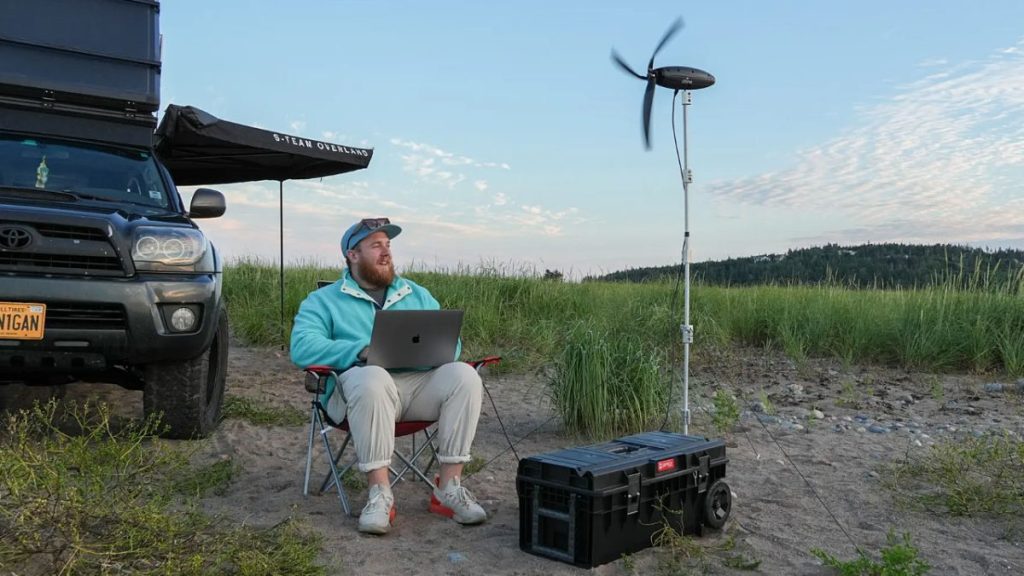
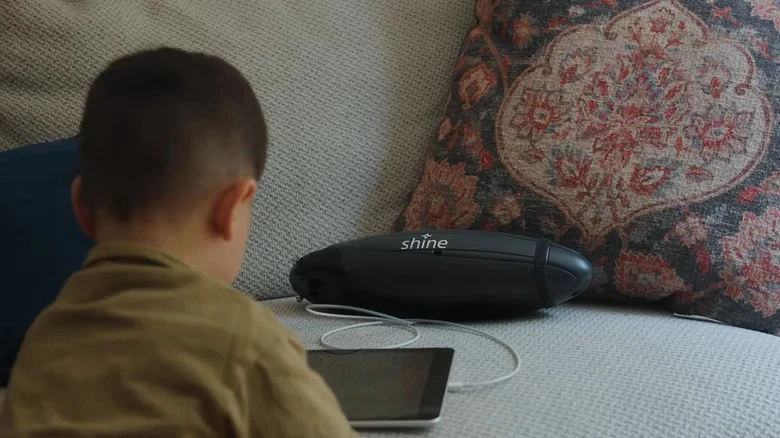
That is why, when I saw the Shine 2.0 from Canada, I stopped scrolling. This isn’t just another gadget; it is a fundamental shift in how we think about portable energy. We are talking about a wind turbine that folds down to the size of a water bottle.
As a tech enthusiast who loves the outdoors, I’ve dug deep into what this device offers, and I believe we might be looking at the missing link in our portable energy kits.
The End of “Sun Anxiety”
We have all been there. You are camping, it is 6:00 PM, the sun is setting, and your power bank is empty. Your solar panel is now just a heavy placemat.
This is where the Shine 2.0, developed by Aurea Technologies in Nova Scotia, changes the game. The concept is brilliant in its simplicity: Wind doesn’t sleep.
Nighttime Charging: While you sleep in your tent, the wind is often picking up.Storm Resilience: Bad weather usually means no sun, but it almost always means more wind.
I find it fascinating that we have ignored wind energy for personal use for so long, mostly because turbines were huge, loud, and dangerous. Shine 2.0 seems to have solved the physics problem of shrinking a power plant into a backpack-friendly cylinder.
Engineering Magic: From Bottle to Turbine
The first thing that struck me was the form factor. When packed away, it looks like a standard 1-liter water bottle. It weighs about 1.3 kilograms (roughly 3 lbs). For anyone who counts grams when packing a rucksack, this is a very acceptable weight for an infinite power source.
How It Works in the Wild
Setting this thing up reportedly takes less than five minutes, which is crucial. If a storm is rolling in, I don’t want to be fumbling with screws.
Mount: You secure the mount (using guy wires/pegs).Expand: The blades unfold.Elevate: You place the body on the mount.
Here is the feature that really impressed me: Automatic Yawing. Unlike a solar panel that you have to manually turn to face the sun every hour, the Shine 2.0 automatically swivels to face the wind. You set it and forget it.
The Specs: Does It Actually Have Power?
It is easy to make a cool-looking gadget, but does it deliver the juice? I looked at the numbers, and they are surprisingly robust for something this small.
Output Power: It generates 75 Watts. To put that in perspective, that is enough to fast-charge a laptop, a drone, or multiple phones simultaneously.Internal Battery: It’s not just a generator; it’s a storage device. It houses a 12,000 mAh Li-Ion battery. This means even if the wind stops, you have a full bank of power ready to go.Wind Requirements: It starts generating at 13 km/h (8 mph) and handles up to 45 km/h (28 mph).
My Take: The 13 km/h starting point is key. You don’t need a hurricane. A stiff breeze is enough to start the electrons flowing.
The Charging Speed
The manufacturer claims that under optimal wind conditions, it can charge a smartphone in just 17 minutes. That is faster than most wall chargers! Even if real-world conditions double that time, getting a full charge in under 40 minutes from thin air is incredible.
Durability and Experience
One of my biggest fears with moving parts in the wild is breakage. A solar panel has no moving parts (unless you count me moving it). A turbine spins.
However, Aurea Technologies seems to have anticipated this. The body is made of aircraft-grade aluminum. It is built to take a beating. They also addressed the noise factor. Large turbines sound like jet engines; the Shine 2.0 reportedly produces a sound no louder than moderate rainfall. This is essential. I go to nature for peace, not to listen to a whirring machine.
The App Ecosystem
Of course, it’s 2026 (almost), so there is an app. You can connect via Bluetooth to see:
Current wind speed.Power generation wattage.Battery status.
I admit, there is a certain “geeky” satisfaction in sitting in your tent, looking at your phone, and seeing exactly how many watts the storm outside is gifting you.
A Critical Look: Is It Perfect?
I want to be realistic here. I am excited, but I am not blind. There are limitations we need to consider before throwing away our solar panels.
Moving Parts Wear Out: The device has a rated lifespan of about five years. Solar panels often last 20+ years. You are trading longevity for versatility.The Wind Variable: Just as solar needs sun, this needs wind. In a dense, low-altitude forest with zero airflow, this device is just a 1.3kg paperweight.Stability: While the guy-wire system looks solid, I would be nervous leaving it unattended in extremely high gusts.
However, as a complementary device? It is unbeatable. If I am packing for a long expedition, I am taking both. Solar for the calm, sunny days; Shine 2.0 for the windy nights and overcast days.
Conclusion: The New Standard for Nomads
The Shine 2.0 is launching to users around April 2026, building on the success of its 2021 predecessor. It represents a maturity in the “off-grid” tech market. We are moving past cheap plastic gadgets into serious, survival-grade engineering.
For digital nomads, van-lifers, and serious trekkers, energy independence is the ultimate luxury. This device brings us one step closer to cutting the cord completely.
I am planning to get my hands on one as soon as possible to test it in the mountains. The idea of brewing my morning coffee using power generated by the wind that shook my tent all night? That is the kind of future I want to live in.
I’d love to hear your strategy: When you are out in the wild, do you trust technology to keep you powered, or do you prefer to disconnect completely?
Published: February 13, 2026 at 10:00 am Updated: February 13, 2026 at 9:31 am
by Victor Dey
Edited and fact-checked:
February 13, 2026 at 10:00 am
To improve your local-language experience, sometimes we employ an auto-translation plugin. Please note auto-translation may not be accurate, so read original article for precise information.
In Brief
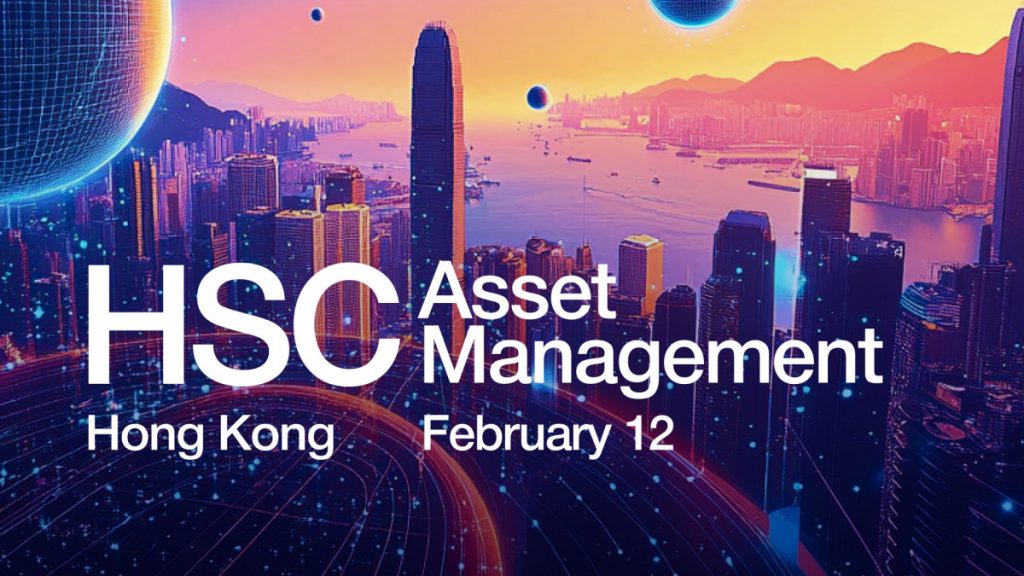
HSC Asset Management concluded in Hong Kong with over 50 industry leaders and 2,000+ attendees gathering for high‑impact discussions on institutional finance, digital assets, and emerging tech.
HSC Asset Management, a premier conference dedicated to bridging cryptocurrency and institutional finance, concluded in Hong Kong with resounding success. Held at the Hopewell Hotel, it brought together over 50 decision‑makers—including institutional investors, hedge funds, Web2 and crypto‑focused asset managers, and family offices—to examine the latest trends and opportunities shaping the institutional digital asset landscape.
As one of the foremost gatherings focused on investment in emerging technologies, the conference explored how capital is being allocated across the digital asset sector and highlighted the developments shaping its evolution.
Spanning two dedicated stages covering institutional trends and technological innovation, this edition featured panel discussions, fireside chats, and keynotes on digital payments, RWA tokenization, stablecoin infrastructure, public blockchain development, and the intersection of AI and DePIN.
Attendees gained actionable insights into key themes such as:
Allocating Capital Under Uncertainty
Why Most Blockchains Will Never Be Trusted With Real Money
The Next Phase of Digital Payments
RWA Is Investable Or It Is Not
Where the Money Goes in Crypto
Public Chains Are Infrastructure Now
DePIN & AI Are Infrastructure, Not a Narrative
The Builders’ Roundtable: What Will Actually Scale in 2026–2028
The opening panel, “Capital Is Selective Again,” explored the pivotal moment facing the current landscape of institutional capital allocation, featuring insights from leading figures:
Dr. Asaf Nadler, Co‑Founder & COO, Addressable
Charles Edwards, Founder & CIO, Capriole Investments
Chetan Karkhanis, Senior Vice President, Franklin Templeton
John Cahill, COO Asia, Galaxy Digital
Stanley Ho, Partner, Head of Asia, Hivemind Capital
Among the standout sessions was “From Digital Property to Autonomous Minds: The Next Evolution of the Internet,” which brought together Yat Siu, co‑founder of Animoca Brands, and Ben Goertzel, CEO of SingularityNET, for a forward‑looking discussion on how Web3 is evolving beyond digital ownership toward new forms of intelligence, coordination, and value creation.
Another notable conversation, “From Onchain Access to Institutional Allocation,” featured Paul Brody, Global Blockchain Leader at EY, and Evan Cheng, CEO and Co‑Founder of Mysten Labs. Moderated by Vadim Krekotin, Managing Partner of HSC Asset Group, it explored how digital assets are transitioning from open on‑chain participation to institutional‑scale allocation frameworks.
HSC Asset Management maintained strong momentum with a speaker lineup featuring many of the world’s leading financial institutions, investment firms, and digital asset industry’s most influential figures.
Participating companies included Franklin Templeton, Capriole Investments, Galaxy Digital, Hivemind Capital, EY, World Liberty Financial, Maximum Frequency Ventures, Offchain Labs, Animoca Brands, Mysten Labs, human.tech, Mastercard, TON Foundation, BridgePort, HashKey Tokenisation, Plume Network, Soter Insure, Canton Network, Zivoe, AMINA Bank, The Spartan Group, C² Ventures, Cypher Capital, Invesco, Bitmart, StarkWare, TRON DAO, SingularityNET, Re7, DWF Labs, Filecoin, DoubleZero, Base, and others.
Over 2,000 Attendees Converge In Hong Kong, Fueling International Expansion To Four New Cities
The conference also introduced a VIP lounge, offering exclusive networking opportunities for institutional participants.
Drawing strong attention across the city and attracting more than 2,000 attendees, the event reinforced its position as a flagship platform for core business objectives. Its curated networking zone enabled participants to connect with aligned global and regional capital, explore high‑conviction curated projects, identify potential regional partners and market‑entry pathways, and strengthen institutional‑grade brand credibility.
HSC Asset Management’s Hong Kong edition marked the twelfth milestone in a global series of successful events intended to connect leading investors with digital‑native companies. Having welcomed more than 70,000 visitors over three years the platform continues to expand its international footprint, with upcoming editions scheduled for Cannes, Dubai, Singapore, and Miami in 2026.
For those eager to revisit the highlights, the event photo and video materials will be released soon — offering a closer look at how it unfolded.
Disclaimer
In line with the Trust Project guidelines, please note that the information provided on this page is not intended to be and should not be interpreted as legal, tax, investment, financial, or any other form of advice. It is important to only invest what you can afford to lose and to seek independent financial advice if you have any doubts. For further information, we suggest referring to the terms and conditions as well as the help and support pages provided by the issuer or advertiser. MetaversePost is committed to accurate, unbiased reporting, but market conditions are subject to change without notice.
About The Author
Alisa, a dedicated journalist at the MPost, specializes in cryptocurrency, zero-knowledge proofs, investments, and the expansive realm of Web3. With a keen eye for emerging trends and technologies, she delivers comprehensive coverage to inform and engage readers in the ever-evolving landscape of digital finance.
More articles
Alisa, a dedicated journalist at the MPost, specializes in cryptocurrency, zero-knowledge proofs, investments, and the expansive realm of Web3. With a keen eye for emerging trends and technologies, she delivers comprehensive coverage to inform and engage readers in the ever-evolving landscape of digital finance.
Published: February 13, 2026 at 9:35 am Updated: February 13, 2026 at 9:28 am
by Ana
Edited and fact-checked:
February 13, 2026 at 9:35 am
To improve your local-language experience, sometimes we employ an auto-translation plugin. Please note auto-translation may not be accurate, so read original article for precise information.
In Brief
CertiK’s recognition at the SiGMA AIBC Eurasia Awards underscored its growing role in delivering institutional‑grade Web3 security and supporting regulatory‑aligned digital asset infrastructure across the Middle East.
Web3 security services provider CertiK announced that it received the award for “Best Security & Compliance Solution 2026” at the SiGMA AIBC Eurasia Awards held on February 10th, 2026.
The recognition highlights CertiK’s technological innovation capabilities and underscores its role in supporting the crypto industry’s progression toward compliance and institutional standards, with the award regarded as one of the most credible distinctions in the Eurasian market.
The SiGMA AIBC Eurasia Awards, jointly organized by SiGMA and AIBC, are considered a leading honor for the digital technology and innovation sectors in the region, focusing on areas such as AI, blockchain, Web3, and compliance security, and are known for rigorous evaluation criteria and an international judging panel. This year’s winners also included well‑known Web3 companies such as Crypto.com, OKX Wallet, Avalanche, and Cointelegraph.
During the ceremony, attention centered on CertiK’s expanding presence in the Middle East. Since establishing its Abu Dhabi branch in 2025, the company has undertaken localized recruitment to meet rising demand for high‑standard security services across regional markets. CertiK’s strategic focus in the region has shifted toward delivering “institutional‑grade” security services designed to provide banks, sovereign wealth funds, and multinational corporations with foundational security measures aligned with traditional financial requirements through advanced engineering capabilities and a comprehensive defense framework.
CertiK has developed multi‑layered cooperation with Abu Dhabi regulators, participated in roundtable discussions on virtual asset regulatory frameworks within the Abu Dhabi Global Market (ADGM), and supplied regulators with real‑time risk monitoring and compliance analysis through its enterprise‑grade platform Skynet Enterprise. These tools assist authorities in evaluating the potential impact of abnormal events on corporate entities and the broader financial system, supporting the parallel advancement of compliance and innovation in the digital economy.
CertiK Strengthens Position As The Largest Web3 Security Firm, Safeguarding Over $600B In Digital Assets
CertiK is recognized as the largest Web3 security services provider, applying formal verification technology to safeguard and monitor blockchain protocols and smart contracts. Founded in December 2017 by professors from Yale University and Columbia University, the company brings academic research into enterprise environments to support the secure scaling of mission‑critical applications.
CertiK has worked with more than 5,000 enterprise clients, secured over $600 billion in digital assets, and identified more than 180,000 vulnerabilities in blockchain code. Its client base includes major industry projects such as Binance, Ethereum Foundation, BNB Chain, Aptos, Ripple, Sandbox, Polygon, and TON.
Since its founding, CertiK has received investment from 12 major funds, including Sequoia, Coatue, Goldman Sachs, Shunwei Capital, and Insight Partners, and holds a valuation exceeding $2 billion.
Disclaimer
In line with the Trust Project guidelines, please note that the information provided on this page is not intended to be and should not be interpreted as legal, tax, investment, financial, or any other form of advice. It is important to only invest what you can afford to lose and to seek independent financial advice if you have any doubts. For further information, we suggest referring to the terms and conditions as well as the help and support pages provided by the issuer or advertiser. MetaversePost is committed to accurate, unbiased reporting, but market conditions are subject to change without notice.
About The Author
Alisa, a dedicated journalist at the MPost, specializes in cryptocurrency, zero-knowledge proofs, investments, and the expansive realm of Web3. With a keen eye for emerging trends and technologies, she delivers comprehensive coverage to inform and engage readers in the ever-evolving landscape of digital finance.
More articles
Alisa, a dedicated journalist at the MPost, specializes in cryptocurrency, zero-knowledge proofs, investments, and the expansive realm of Web3. With a keen eye for emerging trends and technologies, she delivers comprehensive coverage to inform and engage readers in the ever-evolving landscape of digital finance.
Published: February 13, 2026 at 9:24 am Updated: February 13, 2026 at 9:24 am
To improve your local-language experience, sometimes we employ an auto-translation plugin. Please note auto-translation may not be accurate, so read original article for precise information.
In Brief
The Open AGI Summit, a leading open source AI conference, will convene in Denver on February 19, 2025, for a full day of programming addressing one of technology’s defining questions: should Artificial General Intelligence be controlled by a handful of corporations, or built openly by the researchers, engineers, and communities who believe intelligence should be accessible to everyone?
The Open AGI Summit, a leading open source AI conference, will convene in Denver on February 19, 2025, for a full day of programming addressing one of technology’s defining questions: should Artificial General Intelligence be controlled by a handful of corporations, or built openly by the researchers, engineers, and communities who believe intelligence should be accessible to everyone?
Presented by Sentient, the summit will bring together researchers, founders, and builders working across AI and crypto to explore how decentralized intelligence can be developed transparently, ethically, and without centralized control.
The explosive rise of autonomous AI agents, from OpenClaw’s 150,000+ GitHub stars to fully onchain agents executing transactions and governance, has made one thing clear: the future of AI is agentic, and it’s being built in the open. This year’s summit will explore why Web3 infrastructure, including decentralized compute, tokenized incentives, verifiable execution, and open-source frameworks, is not just complementary but essential to building AI agents that are trustworthy, composable, and owned by their communities rather than corporations.
“Closed AI represents the greatest heist of public knowledge in all of human history. As AGI becomes more powerful, the risk is that a handful of corporations, countries or even individuals control the intelligence that shapes our economies, our institutions, and our daily lives. The Open AGI Summit brings together the researchers, engineers, and builders who believe there is another path, one where intelligence is built in the open, governed transparently, and aligned with the public interest rather than concentrated power.”— Himanshu Tyagi, Co Founder, Sentient
The Seventh Edition
The Denver event marks the seventh Open AGI Summit. Since launching in Denver in 2024, the summit has grown into a global series with editions in Brussels, Bangkok, Cannes, and Buenos Aires. This seventh edition represents the third time the community has gathered in Denver, returning to where the movement began.
The summit will serve as a meeting point for those shaping the future of AI, blockchain, and open infrastructure, with programming designed to encourage collaboration across ecosystems.
Program Highlights
The event will feature presentations and panels from leaders at Coinbase, Consensys, MetaMask, Base, Billions, Ethereum Foundation, Zama, and Aztec, alongside keynotes from Prisma X, Gensyn, and Sentient Labs. Sessions will cover AI agents, DeFi AI, privacy-preserving systems, open source model training, and governance at scale.
Previous editions have featured Vitalik Buterin, co-founder of the Ethereum Foundation, and Balaji Srinivasan, former CTO at Coinbase and GP at a16z.
A Global Movement for Open AGI
The Open AGI Summit is part of a broader movement committed to ensuring AGI remains open, accessible, and aligned with public interest rather than concentrated corporate power. As the debate over AI governance intensifies and regulatory frameworks take shape worldwide, the summit provides a forum for those building alternatives to closed, corporate-controlled AI development.
Event Details
Date: Thursday, February 19, 2026Time: 2:00 PM – 8:00 PM MST Location: Upper Larimer, 3034 Larimer St, Denver, CO 80205 Registration: Complimentary tickets available at luma.com/6khv7iq9 (application required)
For more information, visit openagi.xyz
About the Open AGI Summit
The Open AGI Summit is a leading open source AI conference that brings together researchers, developers, and communities united by the shared conviction that AGI must remain open and accessible to everyone.
Media Contact: [email protected]
Disclaimer
In line with the Trust Project guidelines, please note that the information provided on this page is not intended to be and should not be interpreted as legal, tax, investment, financial, or any other form of advice. It is important to only invest what you can afford to lose and to seek independent financial advice if you have any doubts. For further information, we suggest referring to the terms and conditions as well as the help and support pages provided by the issuer or advertiser. MetaversePost is committed to accurate, unbiased reporting, but market conditions are subject to change without notice.
About The Author
Gregory, a digital nomad hailing from Poland, is not only a financial analyst but also a valuable contributor to various online magazines. With a wealth of experience in the financial industry, his insights and expertise have earned him recognition in numerous publications. Utilising his spare time effectively, Gregory is currently dedicated to writing a book about cryptocurrency and blockchain.
More articles
Gregory, a digital nomad hailing from Poland, is not only a financial analyst but also a valuable contributor to various online magazines. With a wealth of experience in the financial industry, his insights and expertise have earned him recognition in numerous publications. Utilising his spare time effectively, Gregory is currently dedicated to writing a book about cryptocurrency and blockchain.
Published: February 13, 2026 at 8:00 am Updated: February 13, 2026 at 9:21 am
by Ana
Edited and fact-checked:
February 13, 2026 at 8:00 am
To improve your local-language experience, sometimes we employ an auto-translation plugin. Please note auto-translation may not be accurate, so read original article for precise information.
In Brief
A series of major partnerships across exchanges, banks, custodians, DeFi platforms, and AI‑driven fintech signaled accelerating integration of digital asset infrastructure into global financial systems during the second week of February.
The second week of February delivered a wave of infrastructure-level partnerships shaping how institutions access, secure, and deploy digital assets. From tokenized collateral and onchain fund distribution to embedded banking, custody, and AI-driven payments, these collaborations signal a clear shift toward integrating crypto directly into global financial and operational systems.
Binance and Franklin Templeton Create Institutional Collateral Program
Binance has partnered with global asset manager Franklin Templeton to introduce an institutional off-exchange collateral program, allowing qualified clients to use tokenized money market fund shares as collateral for crypto trading without transferring assets onto the exchange. Announced on February 11, 2026, the initiative targets one of the key friction points for institutional participants: balancing capital efficiency with asset security.
The program is built on Franklin Templeton’s Benji Technology Platform, which tokenizes shares of its Franklin OnChain U.S. Government Money Fund (FOBXX). This blockchain-native mutual fund, with approximately $420 million in assets under management, issues BENJI tokens representing ownership. These tokenized shares can be pledged as collateral while remaining in regulated custody, with Ceffu serving as the designated institutional custodian. Binance mirrors the collateral value within its trading infrastructure, allowing institutions to deploy capital without relinquishing asset control.
The structure enables firms to use yield-bearing instruments such as U.S. government money market funds to support leveraged crypto positions, reducing the need to hold idle stablecoins or fiat on exchange. By allowing assets to remain off-exchange, the framework also mitigates counterparty risk, a persistent concern among institutional investors since the failures of several centralized platforms in previous cycles.
The launch reflects the accelerating adoption of tokenized real-world assets in institutional crypto markets, positioning tokenized Treasuries and money market funds as foundational collateral in digital asset trading infrastructure.
Standard Chartered and B2C2 Connect Banking Infrastructure With Institutional Crypto Liquidity
Standard Chartered has entered a strategic partnership with digital asset liquidity provider B2C2 to improve institutional access to crypto markets by integrating regulated banking services with institutional-grade trading infrastructure. The collaboration connects Standard Chartered’s global banking and settlement network with B2C2’s deep liquidity across spot and options markets, creating a more seamless framework for institutional participation.
The agreement enables B2C2 to provide its banking services through Standard Chartered to its entire client base, which includes asset managers and hedge funds and corporates and family offices.
The system allows users to make fiat payments more efficiently while transferring funds between accounts and maintaining dependable operations between traditional financial systems and crypto markets. The partnership solves two main obstacles which have prevented institutions from adopting new technologies by making settlement processes simpler and reducing the number of required counterparties.
The move builds on Standard Chartered’s broader digital asset expansion which includes its establishment of regulated Bitcoin spot trading services through UK operations and its ongoing development of digital asset infrastructure. B2C2 uses the integration to enhance its capacity to deliver regulated banking access to institutional clients together with its existing liquidity solutions.
The partnership shows how global banks and crypto-native companies are creating integrated financial systems which particularly serve Asian markets where institutional interest in compliant digital asset access is rapidly growing.
Ripple Expands Institutional Custody Stack Through Securosys and Figment Partnerships
Ripple has established several strategic partnerships which will help financial institutions to adopt its digital asset custody services at a faster pace. The project aims to simplify the technical requirements and reduce procurement challenges which banks and regulated businesses face when they want to enter the cryptocurrency custody market.
Through a collaboration with Swiss-based hardware security specialist Securosys, Ripple is enabling institutions to deploy hardware security module (HSM)-based custody infrastructure without lengthy integration cycles or high upfront costs. The setup gives banks and custodians direct control over cryptographic key management, a critical requirement for regulated digital asset operations.
Ripple has also established a partnership with Figment which provides staking infrastructure services by adding staking capabilities to Ripple Custody. The new feature enables institutions to provide staking services for major Proof-of-Stake networks which include Ethereum and Solana without needing to manage their own validator nodes. This system enables organizations to generate revenue while ensuring they follow institutional compliance standards and maintain operational control.
The custody expansion project adds to Ripple’s institutional service package which includes Ripple Prime as its multi-asset prime brokerage platform and its XRP and RLUSD U.S. dollar-pegged stablecoin integration.
Ripple has made this move following important regulatory developments which include UK FCA approvals and preliminary EMI authorization in Luxembourg. These developments support Ripple’s development of complete regulated digital asset systems which will serve global financial institutions.
Bybit and Mercuryo Roll Out Limited-Time Zero-Fee Crypto Purchases in Select Markets
Bybit has partnered with payments infrastructure provider Mercuryo to offer zero transaction fees on qualifying crypto purchases in selected markets, as exchanges continue competing on onboarding efficiency and retail incentives. The promotion runs from February 4 to February 18, 2026, and applies to transactions between €100 and €500, or the equivalent in supported fiat currencies.
Eligible users can access the offer through Bybit’s One-Click Buy feature by selecting Mercuryo as the payment provider and purchasing USDT or USDC. The company allows customers to convert their entire payment amount into stablecoins because it has suspended standard transaction fees throughout the campaign period.
The integration utilizes Mercuryo’s fiat-to-crypto system which enables users to exchange multiple currencies through different payment methods. Mercuryo already provides on-ramp services for major Web3 players including Ledger, MetaMask, and Trust Wallet, positioning it as a key intermediary between traditional payment systems and blockchain networks.
Bybit uses this initiative to support its goal of creating smoother fiat onboarding processes through its efforts to boost digital asset accessibility in fast-growing markets. Fee-free promotions tied to stablecoin purchases also align with growing demand for dollar-denominated digital assets, which increasingly serve as entry points for trading, payments, and decentralized finance participation.
BitGo and InvestiFi Bring Embedded Crypto Trading to Community Banks and Credit Unions
The partnership between BitGo and InvestiFi enables community banks and credit unions to offer crypto trading services through their existing banking operations which allows customers to access digital assets. The partnership unites InvestiFi’s digital investment platform with BitGo’s CaaS system which includes custody and trading and settlement functions.
Through the integration, customers at participating financial institutions will be able to buy and sell cryptocurrencies directly from their existing deposit accounts, which removes the requirement to move money to outside exchanges. Smaller institutions can provide crypto services through BitGo’s regulated custody system which includes backend infrastructure because they do not need to handle technical and operational challenges themselves.
Financial institutions that provide traditional services increasingly incorporate digital asset functions into their systems to keep customers engaged and to compete with cryptocurrency companies. Community banks especially believe that embedded investing tools will help them secure younger customers who use digital platforms while stopping customers from moving deposits to independent cryptocurrency platforms.
For BitGo, the move expands its role as a core infrastructure provider to regulated financial institutions, leveraging its trust bank status to bridge compliance requirements and crypto markets. The integration also signals continued convergence between digital asset infrastructure and traditional retail banking, particularly at the regional and community level.
Uniswap and Securitize Bring BlackRock’s $2.4B BUIDL Fund to UniswapX
Uniswap has partnered with Securitize Markets to integrate BlackRock’s $2.4 billion USD Institutional Digital Liquidity Fund (BUIDL) into UniswapX, enabling onchain trading of tokenized fund shares through the protocol’s RFQ framework. The move expands access to one of the largest tokenized money market funds and marks a significant step in bringing traditional asset management products into decentralized trading environments.
Through the integration, eligible, whitelisted investors can trade BUIDL shares 24/7 on UniswapX, blending traditional fund structures with decentralized liquidity rails. Securitize, which serves as the tokenization and transfer agent platform for BUIDL, facilitates compliant access while leveraging Uniswap’s execution infrastructure to improve liquidity and settlement efficiency.
The announcement triggered a sharp market reaction, with UNI rising roughly 30% within 24 hours following the news. The partnership arrives amid accelerating growth in tokenized real-world assets, an area BlackRock has actively expanded across multiple blockchains, including Ethereum, Polygon, Solana, and others.
By bringing BUIDL onchain within a decentralized trading venue, the collaboration signals growing convergence between asset managers and DeFi infrastructure. It also reinforces Ethereum’s dominant role in tokenization, as institutional funds increasingly adopt blockchain-based rails for issuance, transfer, and secondary market activity.
Danal Fintech and Sahara AI Partner to Build AI-Powered Stablecoins and Payment Infrastructure
Danal Fintech has established a strategic partnership with Sahara AI through their memorandum of understanding. The two organizations will create advanced digital finance solutions which combine payment systems with stablecoins and self-operating artificial intelligence technologies. The partnership unites Danal’s authorized payment system with Sahara’s decentralized artificial intelligence platform and blockchain infrastructure.
The partnership will develop AI technologies for use in financial operations through three main functions: intelligent payment systems, AI-controlled stablecoin operations, and self-sustaining financial solutions. The companies aim to create systems which use AI technologies for payment processing to handle automatic transactions, provide continuous risk assessment, and deliver financial services which function independently of human control.
Danal provides its authorized payment infrastructure together with its financial gateway solutions and its national network of participating businesses. Sahara AI supplies its decentralized artificial intelligence systems together with its forecasting tools and its blockchain-based data security mechanisms. The integration enables organizations to develop financial products which meet their regulations while maintaining operational capacity in both traditional and decentralized financial frameworks.
The initiative reflects broader industry trends toward programmable money and AI-native financial infrastructure, as fintech firms explore how artificial intelligence can enhance payments, fraud detection, and asset management. The partnership enables both companies to create intelligent automated financial services through their combined regulated fintech infrastructure and decentralized artificial intelligence systems.
Disclaimer
In line with the Trust Project guidelines, please note that the information provided on this page is not intended to be and should not be interpreted as legal, tax, investment, financial, or any other form of advice. It is important to only invest what you can afford to lose and to seek independent financial advice if you have any doubts. For further information, we suggest referring to the terms and conditions as well as the help and support pages provided by the issuer or advertiser. MetaversePost is committed to accurate, unbiased reporting, but market conditions are subject to change without notice.
About The Author
Alisa, a dedicated journalist at the MPost, specializes in cryptocurrency, zero-knowledge proofs, investments, and the expansive realm of Web3. With a keen eye for emerging trends and technologies, she delivers comprehensive coverage to inform and engage readers in the ever-evolving landscape of digital finance.
More articles
Alisa, a dedicated journalist at the MPost, specializes in cryptocurrency, zero-knowledge proofs, investments, and the expansive realm of Web3. With a keen eye for emerging trends and technologies, she delivers comprehensive coverage to inform and engage readers in the ever-evolving landscape of digital finance.
Alex Svanevik forecasts AI agents will ultimately replace traditional trading dashboards.
Svanevik suggests a “Trust Ladder” model for gradual AI trading autonomy instead of jumping to autonomous finance directly.
According to him, AI and crypto are inevitable in the real world.
According to Alex Svanevik, CEO of blockchain analytics firm Nansen, the future of finance is not about clicking buttons, but will be based on having a conversation. Svanevik outlined a bold vision where trading becomes “agentic.” By 2030, he forecasts that the primary interface for investors will not be a dashboard filled with charts, but an AI agent capable of understanding and executing trades on-chain.
In an exclusive interview with The Crypto Times, Svanevik stated that while AI models like GPT-5 or Opus 4.5 are impressive, they lack the primary context that would be useful to traders on their own since they lack real-time blockchain data. “If you ask it ‘What token is smart money buying?’, ChatGPT will not know,” Svanevik explained.
Giving AI eyes on-chain
Nansen’s solution is to give these models “eyes on-chain.” By integrating their proprietary analytics infrastructure with top-tier LLMs, Svanevik claims Nansen’s agents have achieved an 85% quality score in “Expert” mode, compared to a mere 20% for other models.
This integration lets users move easily from discovery to execution, where the agent interfaces with aggregators like Jupiter and OKX to finalize the trade.
However, Svanevik highlighted that to get to fully autonomous finance, the model should be that of the “Trust Ladder.” Comparing the current state of AI trading to self-driving cars, he shared, “That would be like sitting into a Tesla for the first time ever and just going in the back seat and letting it drive, which I think most people, if you’ve never seen it, would be uncomfortable.”
He added, “So similarly in trading, we have to take the approach of climbing a trust ladder. And it starts with having the human in the loop on tapping approve on the trades.” As trust gradually builds, the system can move to “smart trades.” This is where the AI actively identifies and suggests opportunities for the user to review.
Only after these stages have been covered and properly assessed, Svanevik suggested a move toward full autopilot. He warned that jumping straight to autonomy today would be a “really bad idea” due to regulatory hurdles and systemic AI risks.
The era of vibe coding
During the conversation, Svanevik also spoke about “vibe coding,” where investors bet on the creators of AI agents rather than just tokens. While acknowledging that this sector is currently rife with speculation and “bad incentives,” he shared that he sees it as part of a broader narrative shift.
Svanevik reflected on the broader trajectory of the industry, suggesting that the integration of AI and crypto in the real world is now an inevitability.
Ultimately, Nansen’s pivot from a neutral data provider to an active execution layer signals a massive change in the market. As Svanevik put it, the complex tools of today will eventually disappear, replaced by agents that allow anyone to trade with the sophistication of a hedge fund, simply by asking.
Also Read: Coinbase Launches Agentic Wallets for Autonomous AI Transactions
Disclaimer: The information researched and reported by The Crypto Times is for informational purposes only and is not a substitute for professional financial advice. Investing in crypto assets involves significant risk due to market volatility. Always Do Your Own Research (DYOR) and consult with a qualified Financial Advisor before making any investment decisions.
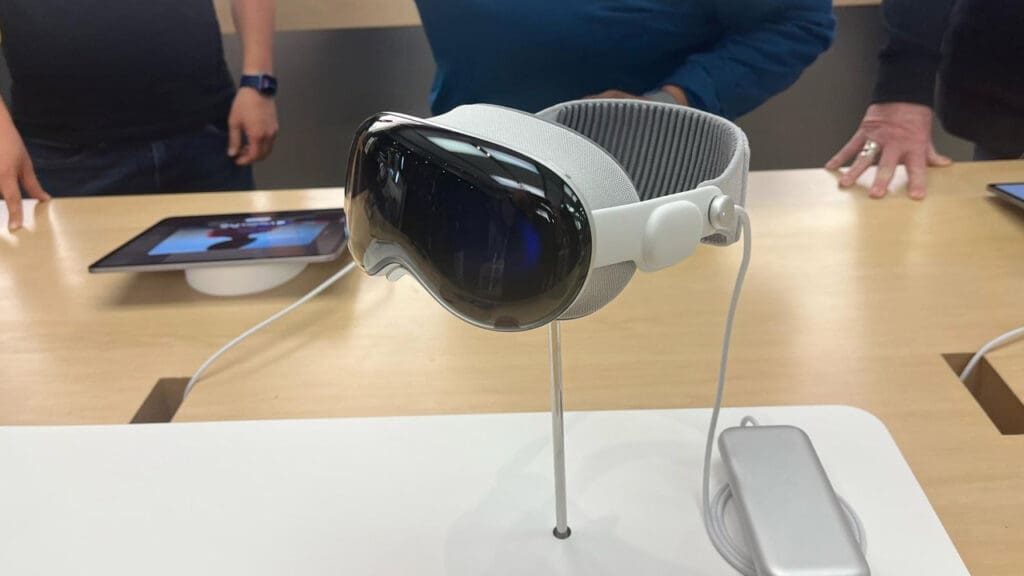
I still clearly remember the sheer frustration of unboxing the original Apple Vision Pro. I was holding what was arguably the most advanced piece of consumer technology ever created—a spatial computing marvel with micro-OLED displays that felt like magic. Yet, when I wanted to kick back and watch a high-res video, I hit a bizarre wall: there was no native YouTube app. For a device heavily marketed around media consumption and immersive video, this absence felt like buying a luxury sports car only to realize it didn’t come with a radio. For two entire years, early adopters and even buyers of the second-generation Vision Pro have been forced to jump through hoops just to watch their favorite creators.
Well, I am thrilled to report that the standoff is finally over. Google has officially launched the native YouTube app on the visionOS App Store. I immediately downloaded it, spent hours testing the interface, and I have to say—this isn’t just a lazy port. Google actually did their homework. Let’s dive into what this means for the Vision Pro ecosystem, why it took so long, and what this signals for the future of spatial computing.
Why Did It Take Two Years? The Third-Party Drama
To understand why this release is such a big deal, we have to look back at the messy two-year history between Google and Apple’s headset.
When the Vision Pro first launched in February 2024, YouTube publicly stated that a visionOS app was “on their roadmap,” but offered no timeline. Instead, they told users to simply use the Safari web browser.
If you have ever tried navigating a complex video platform using eye-tracking on a web browser built for a 2D screen, you know exactly how clunky it was. You couldn’t properly engage with 360-degree videos, the interface was rigid, and the overall experience felt completely disjointed from the seamless magic of visionOS.
The Rise and Fall of Juno
Nature abhors a vacuum, and so do software developers. In the absence of an official app, indie developers stepped up. The most famous example was Juno, a beautifully designed third-party app that gave Vision Pro users the YouTube experience they craved.
But of course, the corporate hammer eventually fell. Google aggressively enforced its API policies, resulting in Juno being pulled from the App Store. While a few other workarounds popped up, none offered the stability and full feature set of an official client. We were left waiting in the dark—until today.
Not Just an iPad Port: A True Spatial Experience
My biggest fear when I saw the download button was that Google had simply checked a box allowing the existing iPad version of YouTube to run on visionOS. (Looking at you, Instagram). Thankfully, I was wrong.
Google has built an interface specifically tailored for spatial computing.
The Interface Design
When you launch the app, you aren’t just looking at a flat window. The UI is constructed using spatial panels that float elegantly in your physical space.
Depth and Shadows: The menus have a sense of depth, casting subtle shadows on the video player behind them.Eye-Tracking Optimization: The thumbnails and navigation buttons are properly sized and spaced, meaning your eyes can easily lock onto a video without accidentally highlighting the wrong element.
Native 3D, 180°, and 360° Video Support
This is the absolute game-changer. For two years, Vision Pro users were locked out of YouTube’s massive library of immersive content.
With the native app, 3D, 180-degree, and full 360-degree VR videos are completely supported. I tested a 360-degree scuba diving video, and the transition from a floating 2D window to a fully wrapped, immersive environment was flawless. The Vision Pro’s displays finally have a platform massive enough to feed them high-quality spatial content. If you are a VR content creator, your audience just got a massive upgrade in viewing quality.
Full Ecosystem Integration
A great VR player is useless if you can’t actually find your content. Google didn’t hold back on the account integration.
Once you log in, you get the exact same powerful algorithm and feature set you are used to on your phone or smart TV:
Seamless Sync: Your watch history, liked videos, and subscriptions are all perfectly synced.Personalized Recommendations: The home feed is instantly populated with your specific algorithm.YouTube Shorts Integration: Yes, the doom-scroll has officially entered the spatial era. Google created a dedicated, vertically-oriented interface for Shorts. It is surprisingly comfortable to pull up a massive, life-sized Short and swipe through using simple finger pinches.
The Bigger Picture: Google’s XR Strategy
So, why now? Why did Google suddenly decide to drop a highly polished spatial app after two years of total silence?
While Google hasn’t released a formal statement detailing their strategic timeline, I have my theories.
We know that Google has been aggressively expanding its own Extended Reality (XR) ambitions. With their ongoing partnerships in the Android XR space (specifically with Samsung to build a competing headset platform), Google cannot afford to have its flagship media platform look hostile to spatial computing.
By building a top-tier app for visionOS, Google is essentially warming up its spatial design muscles. They are proving that YouTube is ready for the next generation of computing, regardless of whether that hardware is made by Apple, Samsung, or anyone else. They are claiming the territory of “default video player” for the entire XR industry.
The Elephant in the Room: Where is Netflix?
This brings us to the inevitable next question. Now that YouTube has surrendered to the reality of the Vision Pro, all eyes are glaring directly at Netflix.
Just like YouTube, Netflix refused to build a native app for the Vision Pro at launch, forcing users to rely on the web browser. And unlike YouTube, Netflix doesn’t even have a massive library of 360-degree user-generated content to worry about—they just need to build a great 2D spatial theater!
Yet, as of writing this, there is zero official word from Netflix regarding a visionOS app. With YouTube now offering a premium spatial experience, and Disney+ having offered incredible 3D environments since day one, Netflix’s stubbornness is starting to look less like a protest and more like a massive missed opportunity.
I am incredibly relieved that I can finally watch my favorite tech reviewers, video essays, and 360-degree travel vlogs natively on my headset. The Vision Pro finally feels a little more complete.
But I have to ask you: Now that Google has caved, how long do you think it will take for Netflix to swallow their pride and release a Vision Pro app? Or do you think they will hold out forever? Let me know your predictions in the comments below!
If you ride a bicycle in any major city, you know exactly what I am talking about: that sudden, stomach-dropping anxiety when you hear a heavy engine revving uncomfortably close to your rear tire. You instinctively glance over your shoulder, wobble slightly, and pray the driver is paying attention to the road and not their smartphone.
I love cycling, but the sheer unpredictability of urban traffic has always been the biggest barrier to enjoying the ride. For years, automotive technology has leaped forward with blind-spot monitoring, lane-assist, and auto-braking. Meanwhile, cyclists have been stuck relying on cheap plastic mirrors or, well, just turning their heads.
That is finally changing. I recently spent some time digging into a new piece of tech from Dublin-based Luna Systems, and it genuinely feels like a turning point for micro-mobility safety. They have developed an AI-powered rearview camera called the Luna Oculus, and it is essentially bringing modern, car-grade collision warning systems directly to your bicycle’s seat post.
Here is my deep dive into how it works, why it matters, and whether the subscription price tag is actually worth it.
What Exactly is the Luna Oculus?
At first glance, the Luna Oculus doesn’t look like a piece of cutting-edge artificial intelligence. It shares the form factor of a standard, slightly bulky rear bike light. But underneath that unassuming exterior is a serious piece of hardware.
Inside the casing, you will find a 1080p high-definition camera paired with a battery capable of delivering up to six hours of continuous use on a single USB-C charge. For a daily commuter, that easily covers a full week of riding to and from the office.
But the camera isn’t just recording footage for your next YouTube vlog. It is actively running sophisticated AI models designed to detect specific threats on the road.
What Can It See?
The system is trained to instantly recognize:
Cars and SUVsHeavy duty trucks and busesOther cyclists or e-scooters
The live video feed is transmitted directly to your smartphone, which you mount on your handlebars. This effectively turns your phone screen into a highly intelligent, real-time rearview mirror.
Edge AI: Why “No Cloud” is the Best Feature
When I first read about this device, my immediate thought was about lag. If a bus is approaching me at 50 km/h, a half-second delay in receiving an alert is the difference between swerving to safety and a catastrophic accident.
This is where Luna Systems made their smartest engineering decision: all the AI processing happens directly on the device.
The Luna Oculus is built on a new category of low-power AI chips designed specifically for Edge Computing. This means the camera does not need to send video to a cloud server, wait for the server to analyze it, and send a warning back to your phone.
Zero Cloud Reliance: By processing the data locally on the camera’s internal chip, the system drastically reduces latency.Split-Second Reactions: In scenarios where a vehicle is approaching rapidly from behind, those saved milliseconds are literally life-saving.
Customizable Warnings (Because Nobody Likes a Nagging Gadget)
We have all been in a modern car that beeps hysterically every time you get within five feet of a parked vehicle. It’s annoying, and eventually, you just tune it out.
Luna avoided this trap by making their alert mechanism highly customizable. Based on the calculated risk level, the system provides staggered warnings. As the rider, you have total control over how the device communicates with you:
You can choose visual notifications on your screen.You can opt for audible alarms.You can set the specific distance at which the alarm triggers.
This personalization ensures the device enhances your situational awareness without becoming a distracting nuisance.
The Real Game Changer: Mapping the “Danger Zones”
While the real-time alerts are fantastic, the feature that truly blew my mind is the automatic incident recording and mapping.
The Luna Oculus doesn’t just beep; it remembers. If a vehicle passes you within 1.5 meters (often legally defined as a dangerous close pass), or if a driver makes an aggressive maneuver or tailgates you, the system automatically tags and records the event.
Building a Heatmap of City Streets
After your ride, all of these geotagged “close calls” are visualized on a post-ride map.
This is massive. Competitors in the market, like the Beam RS 1000, offer AI-supported warnings and auto-recording, but they lack this comprehensive mapping feature. By aggregating this data, Luna allows you to actually see which parts of your daily commute are statistically the most dangerous.
My Take: Imagine if thousands of cyclists in a city were using this. We wouldn’t have to wait for an accident to happen to know an intersection is dangerous. City planners could use this aggregated, anonymized data to see exactly where bike lanes are failing and fix them before someone gets hurt. It transforms the cyclist from a vulnerable target into a mobile data-gathering hub for safer cities.
Coping with the Elements: Night Riding and Rain
Of course, a camera-based system is only as good as its lens. Anyone who has tried to use a reverse camera on their car during a rainstorm knows the struggle.
Luna claims they have implemented advanced pre-processing and motion detection algorithms to maintain object recognition during dawn, dusk, and well-lit night conditions.
Pitch Black Riding: In totally dark environments, the AI relies on the approaching vehicle’s headlights to detect them.The Limitations: The company honestly notes that detecting unlit objects, like pedestrians walking in the dark or cyclists without lights, remains a challenge in low-light conditions.Self-Diagnosing Lens: The physical design accounts for rain and mud. If the lens becomes too dirty to function safely, the system will send an alert to your phone telling you to wipe it down.
The Price Tag: Let’s Talk About the Subscription
Now, we have to talk about the elephant in the room: the cost.
The Luna Oculus is expected to retail at €199. Honestly, for a high-quality camera with an onboard edge-AI chip, that is a very competitive hardware price.
However, that €199 only includes 12 months of free access to the companion app. After the first year, users will be expected to pay a subscription fee of €72 per year to keep using the service.
Is it Worth the Recurring Fee?
I have to admit, I suffer from subscription fatigue. Paying monthly for Netflix is one thing; paying yearly for my bike light to keep working is another.
That being said, AI models require constant training, updating, and server maintenance for the mapping features. If Luna Systems continuously pushes over-the-air updates that make the camera smarter, recognize new types of vehicles, and provide better route analytics, the €72 might be justifiable for a daily commuter.
They are also hinting at expanding this technology into the aftermarket motorcycle sector, which shows they are thinking big about two-wheeled safety.
Final Thoughts
The Luna Oculus represents exactly the kind of practical, real-world application of artificial intelligence that I love writing about. It isn’t generating funny pictures; it is calculating physics in real-time to prevent a two-ton metal box from hitting a human being.
By combining edge computing with customizable UI and post-ride analytics, Luna Systems isn’t just making a smarter camera; they are attempting to systematically reduce the stress of urban riding.
But I want to know what you think. Are you comfortable paying a €72 annual subscription for an AI safety device on your bicycle, or would you rather stick to a traditional mirror and a standard camera? Drop your thoughts in the comments below, I read every single one!
In brief
XRP Ledger received a security score of 41 out of 100—the lowest among 15 major blockchains—in Kaiko's Blockchain Ecosystem report released in...