Lenovo has unveiled its new smart home assistant, AI Buddy, which stands out for its friendly and engaging interactions.
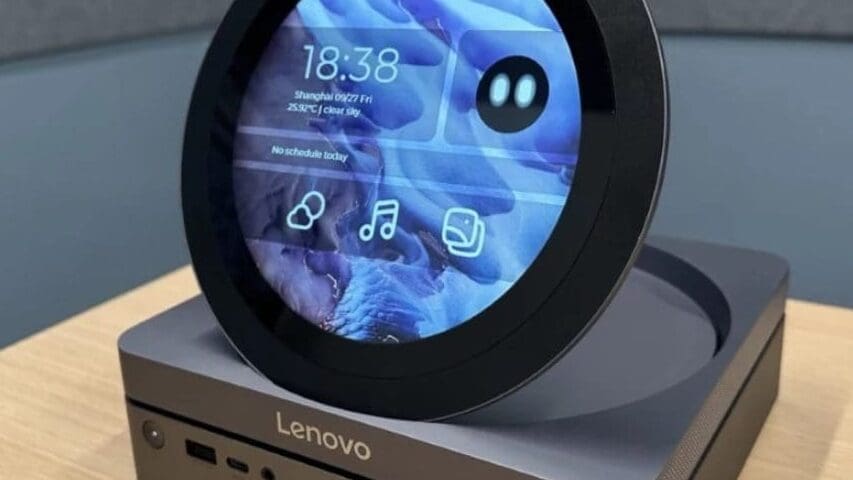
AI Buddy was introduced at the 2024 Lenovo Innovation Technologies Conference and is designed to provide a more personable experience for users. It features a foldable design with a circular screen on top that displays animated eyes in the form of emojis, allowing users to form an emotional connection with the device.
Personalized service from AI Buddy
AI Buddy also consolidates essential information such as the display of time, weather updates, music options, and personal photos. Additionally, it offers enhanced connectivity with USB-A and USB-C ports, as well as a headphone jack on the base, allowing more flexible integration with other smart home devices.
One of AI Buddy’s standout features is its rotating screen, which enables it to follow the user and adjust to their position, making interactions more personalized. Lenovo CEO Yang Yuanqing noted that AI Buddy is integrated with Meta’s AI Now technology, which tailors responses based on the user’s emotional state. This allows AI Buddy to adapt to individual preferences when handling tasks such as scheduling and reminders.
Lenovo has also emphasized its strong commitment to data security, ensuring that all user interactions with AI Buddy remain confidential.
You may also like this content
Follow us on TWITTER (X) and be instantly informed about the latest developments…
Published: October 22, 2024 at 3:09 am Updated: October 22, 2024 at 3:09 am
by Ana
Edited and fact-checked:
October 22, 2024 at 3:09 am
To improve your local-language experience, sometimes we employ an auto-translation plugin. Please note auto-translation may not be accurate, so read original article for precise information.
In Brief
The Grass Foundation revealed the details of GRASS token Airdrop One, aiming to reward early node runners and community members.
Organization responsible for overseeing the development of the Grass ecosystem, the Grass Foundation, revealed the specifics of the GRASS token Airdrop One. According to the project, this initial airdrop will be one of the most broadly distributed events of its kind and marks a milestone in creating the first user-owned map of the Internet.
The Grass token plays a key role in this decentralized network, designed to give users more control over their Internet bandwidth and allow them to both access and contribute to the network’s functionality. Holders of GRASS will have the ability to engage with the Grass network by participating in governance, staking, earning rewards, and accessing bandwidth.
Token holders will have the opportunity to contribute to the development of the Grass network. This includes proposing and voting on network improvements, deciding which organizations to collaborate with, and shaping incentive mechanisms for all participants involved. Additionally, GRASS can be staked to routers, helping to facilitate web traffic across the network. By doing so, participants contribute to the network’s security and, in return, earn rewards. Once the network becomes fully decentralized, GRASS will also serve as a means of payment for transactions, enabling decentralized scraping of public web data.
Grass To Allocate 10% Of Total Supply To Early Node Runners And Community Members
Airdrop One distributes 100 million tokens, representing 10% of the total supply, to early node runners and community members. Of this, 9% is designated for users who earned Grass Points during Stage 1 or the Network Snapshot. Additionally, 0.5% will go to GigaBuds non-fungible token (NFT) holders and another 0.5% to those who installed the Desktop Node or the Saga Application. The Network Snapshot includes users who accumulated more than 500 Grass Points within a specific epoch.
The allocations for each epoch are organized into nine tiers, which are determined by the Grass Points earned through network uptime and referrals. Participants with more Grass Points are placed in higher tiers. While all eligible users will receive rewards for their Grass Points, the specific method and timing of distribution may vary depending on their jurisdiction.
A total of 4,996,015 GRASS tokens will be evenly distributed among all GigaBuds NFTs as of the snapshot block, with the exception of NFTs that were listed for sale at the time of the snapshot. Each eligible wallet will receive 515 GRASS per GigaBud NFT. Moreover, in order to incentivize the adoption of new Grass distribution channels, 5 million GRASS tokens are equally distributed to all accounts that installed the Desktop Node or Saga Application and accumulated 500 or more Grass Points during any epoch before 05:00 UTC on October 11th.
Grass connects over 2 million participants who earn rewards by helping AI developers access internet data. The project’s goal is to combat the centralization of AI by empowering everyday individuals to contribute and benefit from AI’s progress.
Disclaimer
In line with the Trust Project guidelines, please note that the information provided on this page is not intended to be and should not be interpreted as legal, tax, investment, financial, or any other form of advice. It is important to only invest what you can afford to lose and to seek independent financial advice if you have any doubts. For further information, we suggest referring to the terms and conditions as well as the help and support pages provided by the issuer or advertiser. MetaversePost is committed to accurate, unbiased reporting, but market conditions are subject to change without notice.
About The Author
Alisa, a dedicated journalist at the MPost, specializes in cryptocurrency, zero-knowledge proofs, investments, and the expansive realm of Web3. With a keen eye for emerging trends and technologies, she delivers comprehensive coverage to inform and engage readers in the ever-evolving landscape of digital finance.
More articles
Alisa Davidson
Alisa, a dedicated journalist at the MPost, specializes in cryptocurrency, zero-knowledge proofs, investments, and the expansive realm of Web3. With a keen eye for emerging trends and technologies, she delivers comprehensive coverage to inform and engage readers in the ever-evolving landscape of digital finance.
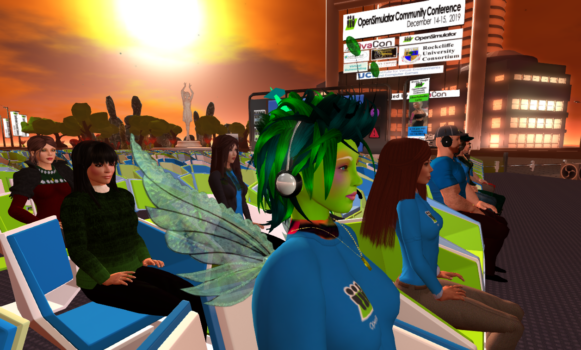
Olivetree Ghaelen Elli Buffy Beale Petlove and Marcus Llewellyn. (Image courtesy OpenSim Community Conference.)
The clock is ticking for virtual world enthusiasts and creators looking to share their innovations at this year’s OpenSimulator Community Conference. Potential presenters have until October 29, 2024 to submit their proposals for the twelfth annual gathering of the OpenSim community.
“We hope that you can join us for our twelfth year celebrating the current and future use of open source virtual worlds through creativity, technology, artistry, and education,” said conference co-chair Cynthia Calongne, also known as “Lyr Lobo” in-world.
The two-day event will take place on December 7 and 8, featuring presentations about creative, educational, technical, and experiential topics related to OpenSimulator and the open metaverse.
“We’re interested in your wonderful content, insights, and accomplishments,” Calongne told Hypergrid Business.
Core Developers of OpenSim. (Image courtesy OpenSim Community Conference.)
Organizers are particularly interested in presentations that showcase innovative content, significant accomplishments in the OpenSim ecosystem, future visions for open source virtual worlds, and creative applications of OpenSimulator technology.
Each speaker session will be 20 minutes long. The conference will also feature community-sponsored tours, an Expo, content giveaways, and hypergrid exploration.
Proposal acceptance emails will be sent out on October 31. Accepted speakers must register for the conference by November 7 to secure their spot in the program.
The conference will kick off on December 6 with music and art events, followed by the main program on December 7 and 8.
Visit the OSCC’s Call for Proposals page to submit a presentation idea.
Hypergrid Business editor and publisher Maria Korolov is a science fiction novelist. During the day, Maria Korolov is an award-winning freelance technology journalist who covers artificial intelligence, cybersecurity and enterprise virtual reality. See her Amazon author page here and follow her on Twitter, Facebook, or LinkedIn, and check out her latest videos on the Maria Korolov YouTube channel. Email her at maria@hypergridbusiness.com. Her first virtual world novella, Krim Times, made the Amazon best-seller list in its category. Her second novella, The Lost King of Krim, is out now. She is also the publisher of MetaStellar, a new online magazine of speculative fiction.
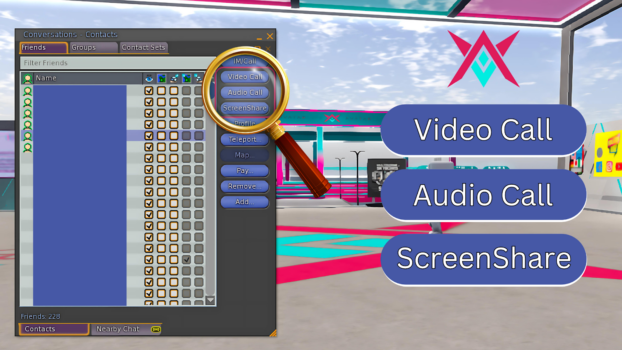
The AvatarLife Viewer now supports video conferencing for up to 5 participants, audio conferencing, screen sharing without video, and six-language support.
“We believe in empowering our users with the tools they need to communicate and collaborate seamlessly. Whether it’s for a small group chat, a business meeting, or sharing work on screen, our new features make AvatarLife the ultimate virtual platform for staying connected,” AvatarLife CEO and co-founder Sushant Chandrasekar told Hypergrid Business.
These new features are available at no additional cost for both Mac and Windows users.
AvatarLife Viewer. (Image courtesy AvatarLife.)
Video conferencing allows real-time video calls with up to five participants directly through the viewer, perfect for small meetings, virtual hangouts, or group discussions.
For those who prefer voice-only communication, the audio conferencing feature enables crystal-clear voice conversations for private chats or group meetings without the need for external apps.
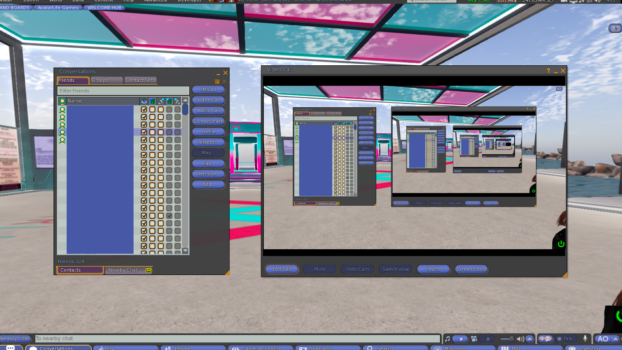
The screen sharing feature allows users to share their screens without video, ensuring those who wish to stay behind the scenes can still actively participate. It’s ideal for presentations or project collaborations while keeping personal visuals private.
Language support has been expanded to include Spanish, German, Italian, French, Portuguese, and Russian. Users can easily switch between supported languages for a smoother experience.
To access these new features, users can download the latest version of the AvatarLife Viewer for Mac or Windows here.
Hypergrid Business editor and publisher Maria Korolov is a science fiction novelist. During the day, Maria Korolov is an award-winning freelance technology journalist who covers artificial intelligence, cybersecurity and enterprise virtual reality. See her Amazon author page here and follow her on Twitter, Facebook, or LinkedIn, and check out her latest videos on the Maria Korolov YouTube channel. Email her at maria@hypergridbusiness.com. Her first virtual world novella, Krim Times, made the Amazon best-seller list in its category. Her second novella, The Lost King of Krim, is out now. She is also the publisher of MetaStellar, a new online magazine of speculative fiction.
Published: October 18, 2024 at 1:00 pm Updated: October 18, 2024 at 1:00 pm
by Ana
Edited and fact-checked:
October 18, 2024 at 1:00 pm
To improve your local-language experience, sometimes we employ an auto-translation plugin. Please note auto-translation may not be accurate, so read original article for precise information.
In Brief
According to Ganesh Swami, co-founder of Covalent, Ethereum, once hailed as the “World Computer,” now finds itself at a critical crossroads.
According to Ganesh Swami, co-founder of Covalent, a modular data infrastructure layer aimed at addressing key challenges in blockchain and AI, Ethereum, once hailed as the World Computer, now faces a critical crossroads.
Ganesh Swami suggests that Ethereum’s original vision is under threat. The network has become sidetracked by chasing trends like faster execution speeds and the “ultra-sound money” narrative while losing focus on what made it revolutionary. The question of whether Ethereum has lost its way as the ecosystem contends with slow progress and increasing competition from blockchains like Solana and Bitcoin.
Even Ethereum Team Lead Péter Szilágyi has expressed concern, stating that “Ethereum is losing the plot.” With rising inflation and the token price still below its 2021 peak, it is clear that Ethereum needs to re-evaluate its direction. The pressing question now is: what should Ethereum’s path forward be?
Ganesh Swami About Refocusing On Infrastructure As A Key Solution
The Covalent co-founder notes that there is a potential solution. Ethereum’s core strength has always been its infrastructure, which allows developers to build decentralized applications (dApps). Yet, the network’s long-term vision has been overshadowed by short-term dApp hype, stagnant user growth, and the siloed activity within Layer 2 networks.
With major upcoming upgrades like Pectra and The Purge coming in late 2024, Ethereum will become leaner by purging old historical data. However, this process carries the risk of centralizing that data, which could conflict with Ethereum’s broader goal of maintaining decentralization across the network.
Ethereum Wayback Machine (EWM), introduced by Covalent, is designed to preserve Ethereum’s historical data, ensuring it remains decentralized and accessible even as Ethereum moves forward with purging older data. To further support this initiative, Covalent has launched the EWM Light Client Testnet, a critical tool aimed at maintaining the network’s decentralization.
Now live, the Light Client Testnet allows participants to contribute to safeguarding Ethereum’s long-term data availability. By doing so, they play a key role in protecting Ethereum’s decentralization, ensuring the network stays aligned with its original mission of being the “World Computer.”
Covalent‘s large reservoir of structured, verifiable data enhances decentralized AI training and inference, reducing the likelihood of manipulated or biased AI models. The EWM also ensures secure and decentralized access to Ethereum’s transaction history. Trusted by more than 3,000 leading organizations, Covalent currently supports AI, decentralized finance (DeFi), game finance (GameFi), and other sectors by providing unrestricted access to on-chain data from over 200 blockchains.
Disclaimer
In line with the Trust Project guidelines, please note that the information provided on this page is not intended to be and should not be interpreted as legal, tax, investment, financial, or any other form of advice. It is important to only invest what you can afford to lose and to seek independent financial advice if you have any doubts. For further information, we suggest referring to the terms and conditions as well as the help and support pages provided by the issuer or advertiser. MetaversePost is committed to accurate, unbiased reporting, but market conditions are subject to change without notice.
About The Author
Alisa, a dedicated journalist at the MPost, specializes in cryptocurrency, zero-knowledge proofs, investments, and the expansive realm of Web3. With a keen eye for emerging trends and technologies, she delivers comprehensive coverage to inform and engage readers in the ever-evolving landscape of digital finance.
More articles
Alisa Davidson
Alisa, a dedicated journalist at the MPost, specializes in cryptocurrency, zero-knowledge proofs, investments, and the expansive realm of Web3. With a keen eye for emerging trends and technologies, she delivers comprehensive coverage to inform and engage readers in the ever-evolving landscape of digital finance.
Published: October 18, 2024 at 12:40 pm Updated: October 18, 2024 at 12:40 pm
by Ana
Edited and fact-checked:
October 18, 2024 at 12:40 pm
To improve your local-language experience, sometimes we employ an auto-translation plugin. Please note auto-translation may not be accurate, so read original article for precise information.
In Brief
ParallelAI has formed a strategic alliance with io.net, a decentralized GPU computing rival, to enhance its platform’s functionality and user engagement.
ParallelAI, celebrated for its groundbreaking advancements in optimizing parallel processing for artificial intelligence developers, has unveiled a strategic alliance with io.net, a prominent rival in the decentralized GPU computing sector. This partnership represents a notable leap forward in technology, facilitating the smooth incorporation of io.net’s decentralized GPU computing features into ParallelAI’s powerful platform, which is poised to improve its comprehensive functionality and enhance user engagement.
With A100 GPUs, which are accessible via IO Cloud, ParallelAI is going to be able to greatly increase its GPU processing power thanks to the work of these two companies. By doing this, ParallelAI will be able to increase the platform’s functionality and meet the growing processing needs of AI developers working on a range of projects, including massive language model training, inference on models, and distributed deep learning.
ParallelAI and io.net have agreed to collaborate on research and development as part of this strategic alliance. The two businesses want to advance GPU cloud computing technologies by pooling their own strengths and areas of expertise. It is anticipated that their joint efforts would produce creative answers that will raise the bar for effectiveness and performance in the industry.
Allowing developers to write high-level code while the company’s technology handles the complexities of parallel processing across numerous GPUs and CPUs is how ParallelAI plans to accelerate AI innovation. With the ability to cut computing time by up to 20 times and drastically reduce related expenses, this approach has shown itself to be successful.
The partnership will provide ParallelAI with immediate access to decentralized GPU clusters via IO Cloud, facilitating a robust infrastructure that can adapt to dynamic market demands. Through this collaboration, ParallelAI will be able to scale its operations efficiently without encountering issues such as delays or service interruptions.
Consequently, customers of ParallelAI can be assured of having reliable access to the processing power needed to successfully complete challenging AI projects. It’s crucial to keep in mind that IO Cloud offers AI application processing capabilities at a cost up to 90% lower than that of standard cloud services, making it a compelling choice for developers.
This partnership presents ParallelAI with a unique opportunity to increase its market share in the AI/ML developer space while simultaneously lowering the requirement for significant infrastructure management and hardware expenditures.
Furthermore, through the creation of joint technologies between io.net and ParallelAI, this collaboration is also anticipated to spur innovation in the decentralized AI area. The cooperative efforts of these two forward-thinking companies may well power the next generation of innovative AI solutions, paving the way for a transformative future in artificial intelligence.
Disclaimer
In line with the Trust Project guidelines, please note that the information provided on this page is not intended to be and should not be interpreted as legal, tax, investment, financial, or any other form of advice. It is important to only invest what you can afford to lose and to seek independent financial advice if you have any doubts. For further information, we suggest referring to the terms and conditions as well as the help and support pages provided by the issuer or advertiser. MetaversePost is committed to accurate, unbiased reporting, but market conditions are subject to change without notice.
About The Author
Victoria is a writer on a variety of technology topics including Web3.0, AI and cryptocurrencies. Her extensive experience allows her to write insightful articles for the wider audience.
More articles
Victoria d’Este
Victoria is a writer on a variety of technology topics including Web3.0, AI and cryptocurrencies. Her extensive experience allows her to write insightful articles for the wider audience.
Published: October 16, 2024 at 10:00 am Updated: October 16, 2024 at 9:15 am
by Ana
Edited and fact-checked:
October 16, 2024 at 10:00 am
To improve your local-language experience, sometimes we employ an auto-translation plugin. Please note auto-translation may not be accurate, so read original article for precise information.
In Brief
Gaia and Vana’s partnership aims to create a diverse, egalitarian, and privacy-aware AI environment, enabling developers and users to design, manage, and profit from AI models.
The partnership between Gaia and Vana paves the way for an AI environment that is more diverse, egalitarian, and privacy-aware. This cooperation is redefining the connection between AI, data, and user ownership by enabling developers and users to design, manage, and profit from AI models using open and collaborative frameworks.
Decentralization and Open-Source Frameworks
Gaia has advocated for decentralized AI systems for a long time. With its open-source platform, developers may design and implement AI agents without being constrained by centralized control. In the past, big, centralized companies with access to enormous datasets have developed and maintained AI systems. This gives rise to concerns over data ownership, privacy, and unequal distribution of AI’s advantages.
Vana’s contribution to this collaboration enhances Gaia’s decentralization initiatives by incorporating user data in a way that upholds privacy and ownership. Users may contribute data to Vana’s distributed network, maintain control over its usage, and even make money off of it. This stands in sharp contrast to traditional approaches, where consumers’ data is frequently gathered without their knowledge or consent and utilized for uncontrollable objectives.
Providing User-Owned Data to Developers
Developers are no longer dependent on huge, centralized data sources thanks to user-contributed data. Alternatively, they can use private datasets from those who own and control the data using Vana’s network to train and implement AI agents. This creates opportunities for creating highly customized and specialized AI agents that fit the unique requirements and tastes of users.
Additionally, this method promotes the development of AI in a more moral manner. The collaboration guarantees the protection of people’s rights and privacy by empowering users to own and manage their data. In addition to being more individualized, developers may create AI models that respect user permission and data security. This lessens the possibility of personal data being exploited and misused by fostering a more open interaction between AI developers and data producers.
Converting Data into Useful AI Resources
The conversion of user-contributed data into useful digital assets is one of the most important results of the Gaia-Vana collaboration. Data is now an active and liquid asset that users can manage, control, and even profit from thanks to this partnership, rather than only being a passive resource gathered for business purposes.
These user-owned datasets may now be used to fuel AI agents created on Gaia’s platform. It gives them more intelligence as well as contextual awareness and relevance. For example, user-contributed data that is unique to each person’s situation may be used to fine-tune AI models intended to provide personalized services, like financial planning or healthcare advise. As a result, a new class of AI agents is produced that are closely linked to the user’s personal information and expertise, providing more accurate and useful insights.
A more incentive-driven AI environment, as envisioned by Gaia and Vana, is likewise compatible with the capacity to transform data into a monetizable commodity. Users may now be paid for the value their data adds to AI systems, making them active participants rather than passive providers.
Control, Ownership, and Privacy in the Development of AI
Respecting user privacy and data ownership is one of the main issues facing AI development today. Large volumes of user data are frequently collected by centralized AI systems, raising worries about data abuse, privacy violations, and a loss of control over personal data. Gaia and Vana’s collaboration tackles these problems head-on by offering a decentralized platform that gives people authority over their data.
Vana’s distributed data network gives consumers non-custodial control over their data. In this way, customers have complete control over their data, even when it is being used to train AI models. They have control over the usage, access, and monetization of their data. This method helps create sophisticated AI systems while guaranteeing that user data security and privacy are given top priority.
On the other hand, Gaia’s AI infrastructure is made to work in unison with Vana’s data governance tools, allowing for the development of AI agents that provide insightful, useful information while protecting user privacy.
Encouraging User Input into AI Networks
The Gaia-Vana alliance is based on an economic strategy that focuses on providing incentives for people to provide their data. Users frequently have little to no control over how their data is utilized in traditional AI systems, and they are not paid for the value that their data produces. Widespread worries over the morality of data collecting and the disparity in power between data suppliers and AI developers have resulted from this.
In order to allay these worries, Gaia and Vana are working to create a new, more just economic framework for AI research. Users are encouraged to provide their data under this approach by offering them direct payment or other benefits in exchange. In addition to guaranteeing that users receive just compensation for their efforts, this promotes a more cooperative approach to AI research, allowing for a wider distribution of the advantages of AI.
The foundation for a new generation of AI agents based on the values of equity, openness, and user empowerment is being laid by Gaia and Vana using this incentive-aligned paradigm. The collaboration seeks to establish a more inclusive AI ecosystem that benefits all players, not just a chosen few, by enabling users to take an active role in AI networks.
Building a Developer-Centric Future
In addition to empowering consumers, the Gaia-Vana alliance aims to enable developers to create the upcoming wave of AI apps. Gaia and Vana are enabling developers to construct more intelligent, context-aware, and customized AI agents by making user-contributed data accessible.
The modular and adaptable architecture of Gaia’s decentralized AI platform enables developers to create unique AI solutions that can easily interface with a variety of data sources and knowledge bases. Developers may access user-owned datasets that are customized for certain use cases thanks to Vana’s distributed data network, which offers an additional degree of customization.
Gaia and Vana are also funding other community projects to help developers create these new AI applications. This includes developer gatherings, virtual hackathons, and instructional materials meant to provide developers with practical experience with the merged technology. Gaia and Vana want to promote the use of decentralized AI and establish a flourishing ecosystem of AI-powered apps that benefit consumers and developers alike by cultivating a worldwide community of AI developers.
Disclaimer
In line with the Trust Project guidelines, please note that the information provided on this page is not intended to be and should not be interpreted as legal, tax, investment, financial, or any other form of advice. It is important to only invest what you can afford to lose and to seek independent financial advice if you have any doubts. For further information, we suggest referring to the terms and conditions as well as the help and support pages provided by the issuer or advertiser. MetaversePost is committed to accurate, unbiased reporting, but market conditions are subject to change without notice.
About The Author
Victoria is a writer on a variety of technology topics including Web3.0, AI and cryptocurrencies. Her extensive experience allows her to write insightful articles for the wider audience.
More articles
Victoria d’Este
Victoria is a writer on a variety of technology topics including Web3.0, AI and cryptocurrencies. Her extensive experience allows her to write insightful articles for the wider audience.
Have you already tried one of the latest features to Microsoft 365 Copilot: Copilot Pages? These are dynamic, persistent canvases designed specifically for multiplayer AI collaboration ( = working together with others in the same Page in real time). This feature can be used to make spontaneous, AI-generated content durable, editable, and shareable. That’s what Copilot Pages offer and they matter because they turn fleeting Copilot responses into reusable and workable assets. Used via Copilot BizChat, these pages allow users to transform Copilot responses into something more permanent. You can then continue editing the result just like a Loop page. And as a matter of fact, Copilot Pages are Loop Pages.
Think of it as upgrading from a notepad (only you work on your text) to a collaborative workspace where everyone you choose can see and build on each other’s ideas in real-time. This is not just a new tool—it’s a new way of working, blending human and AI interactions into a seamless workflow, if you want to say it in a fancy way. If you have already been using Microsoft Loop, then this way of working is nothing new to you. But if you haven’t: welcome to the future of work happening today.
How to Use Copilot Pages Details for IT Admins Upcoming Features (Q4 CY2024):
How to Use Copilot Pages
Using Copilot Pages is simple and intuitive. Here’s a quick guide to get you started. Remember that you need to have Microsoft 365 Copilot license, to be able to use Copilot Pages today.
Use BizChat (Business Chat, Microsoft 365 Copilot Chat) via Microsoft 365 portal ( https://m365.cloud.microsoft/chat ) or using Copilot inside Microsoft Teams. Copilot Pages are only available at Work-side at the moment.
Interact with Copilot as you normally would. When you receive a response you’d like to keep, click ‘Edit in Pages.’
This will create a page and open it side-by-side with the chat, with the response already copied and formatted.
You can continue your conversation in chat, and each subsequent response can be added to the page by clicking ‘Edit in Pages’ again.
Remember, that these are Loop Pages! You can use a many of rich features what Loop has to offer. Copilot doesn’t seem to work when using Copilot Pages via BizChat, but when you open these pages in the Loop App, you can also use Copilot to summarize, rewrite etc the content on the page.
Note: the name of the page will be the beginning of the prompt you used for the response you chose to Edit in Pages. So.. I warmly recommend you to change the name of the page, so it makes sense to you and others later 😊
You can make it multiplayer, by sharing your page with others. This allows collaborators to view and edit the page, but they won’t have access to your Copilot session. This sharing can be done by clicking the share icon on top right are of your Page.
From there you can choose to share a Page link or Copy component. When pasting the Page to Teams chat (or Outlook, Whiteboard, etc) , use Copy component, but if you want receiver to open the page in Loop App, share a link to that page.
Tip: easy way to share Copilot Page to your colleague by using @-mention and giving permissions to that Page.
This way William will have a notification in his Loop app and can open that page right away.
At this point both Emma and William can edit the content simultaneously in real-time, just like in ordinary Loop pages and components.
You can return to your page by clicking Edit in Pages in the chat where you first created it.
There is also a small page-icon on the top right area of the Page. It indicates that this chat has a page attached to it, and you can open (or close ) the Page by clicking it.
In the near future you can find the Pages tab in Microsoft365.com, where all your previously created pages are stored.
As a best practice, I recommend that relevant Copilot Pages are added to Loop Workspaces ( for example this one would be in a ForestSilk Webpage workspace), so they can be discovered more easily later by you and the team.
I am also looking forward to rest of the features, that were visible in Microsoft’s Copilot Pages videos I have seen.
Details for IT Admins
Copilot Pages are Loop Pages, and thus they already have controls and compliance features:
Storage and Management: Copilot Pages are stored as .loop files in a user-owned SharePoint Embedded container, counting against the tenant’s SharePoint quota. They support all SharePoint file system features, including governance and compliance processes.
Configuration and Control: Admins can control Copilot Pages using Loop admin switches in Cloud Policies (https://config.office.com/ – Customization / Policy Management ). Notably, disabling Loop in the tenant does not disable Copilot Pages, but a specific switch has been added for Pages management which needs to be used. By default Copilot Pages are on.
Copilot Pages are Loop Pages and thus support the capabilities listed in the Summary of governance, lifecycle, and compliance capabilities for Loop. In summary, that includes admin toggles, GDPR and EUDB compliance, Intune device management, Conditional Access policies, Information Barriers, Customer Lockbox, individual file recycle bin, version history, audit logs, eDiscovery, export, legal hold, retention policies, sensitivity labels, and data loss prevention.
Read more admin details from Microsoft’s post. Note that at the time of writing this, they are still talking about Copilot Chat and not BizChat. Name changes do take time..
Upcoming Features (Q4 CY2024):
Retention labels at the file level.
Programmatic API access to content in SharePoint Embedded containers, enabling third-party governance, management, and compliance tools.
Guest/external access via Entra B2B configuration for tenants with sensitivity labels.
SharePoint Admin Center columns to identify user-owned containers.
Sharing is Caring! #CommunityRocks
Aiheeseen liittyy
Published by Vesa Nopanen
Vesa “Vesku” Nopanen, Principal Consultant and Microsoft MVP (M365 and AI Platform) working on Future Work at Sulava.
I work, blog and speak about Future Work : AI, Microsoft 365, Copilot, Microsoft Mesh, Metaverse, and other services & platforms in the cloud connecting digital and physical and people together.
I have about 30 years of experience in IT business on multiple industries, domains, and roles.
View all posts by Vesa Nopanen
It’s the spooky season here in the United States, with Halloween coming up soon and all sorts of creepy scary stuff happening, and cooler weather outside. Also — we’ve got the elections. So, three reasons for people not to want to leave their house and spend time in OpenSim as well.
Or maybe there’s another reason why active user numbers went up. Who knows? Whatever the cause, the public OpenSim grids gained nearly 3,000 new active users compared to this time last month. However, with grid outages and stats changes, total registered users dropped slightly — and land area went down by the equivalent of 24,000 standard regions.
But the drop in land area is easily explained. Simation Grid, which reported 25,408 regions last month is now down to 1,024. Simation is a tiny grid — well, not in size, but in users — with just 3 actives this month. So the land area was most likely a test of server capacity. That happens. People try to see how many regions they can cram into a server, play around with it for a while, then eventually shut it down. After wall, why keep servers running for regions nobody is using?
We are now tracking a total of 2,675 public grids, of which an even 300 were active this month and 232 published their statistics. If you have a stats page that we’re not tracking, please email me at maria@hypergridbusiness.com — that way, your grid will be mentioned in this report every month, for additional visibility with both search engines and users.
This month, OSgrid was the largest grid by land area, with 34,103 standard region equivalents, while Wolf Territories Grid was the most active, with 6,950 unique logins over the past 30 days.
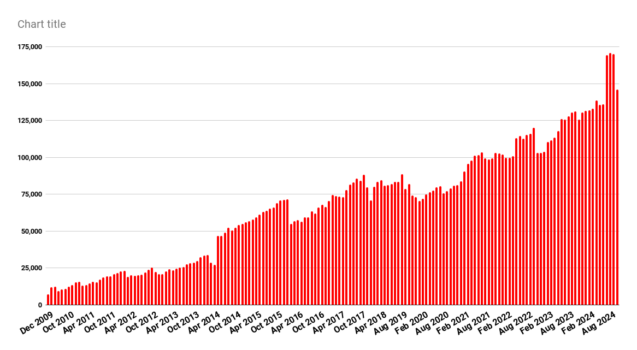
OpenSim land area for Oct. 2024. (Hypergrid Business data.).
As you can see from the chart above, the Simation regions created a spike in land area this summer, but the land growth is now back to normal levels.
Our stats do not include most of the grids running on DreamGrid, a free easy-to-use version OpenSim, since these tend to be private grids.
OpenSim is a free, open-source, virtual world platform, that’s similar to Second Life and allows people with no technical skills to quickly and cheaply create virtual worlds and teleport to other virtual worlds. Those with technical skills can run OpenSim worlds on their servers for free using either DreamGrid, the official OpenSim installer for those who are more technically inclined, or any other distribution, while commercial hosting starts at less than $5 a region.
A list of OpenSim hosting providers is here. Download the recommended Firestorm viewer here and find out where to get content for your OpenSim world or region here.
Hypergrid Business newsletter is now available
Every month on the 15th — right after the stats report comes out — we will be sending out a newsletter with all the OpenSim news from the previous month. You can subscribe here or fill out the form below.
When it comes to general-purpose social grids, especially closed grids, the rule of thumb is the busier the better. People looking to make new friends look for grids that already have the most users. Merchants looking to sell content will go to the grids with the most potential customers. Event organizers looking for the biggest audience — you get the idea.
Top 25 most popular grids this month:
Wolf Territories Grid: 7,122 active users
OSgrid: 4,910 active users
GBG World: 2,435 active users
Darkheart’s Playground: 2,206 active users
DigiWorldz: 2,186 active users
Alternate Metaverse: 1,980 active users
WaterSplash: 1,593 active users
AviWorlds: 1,081 active users
AviVerse AlterEgo: 1,020 active users
Neverworld: 965 active users
Trianon World: 963 active users
Astralia: 943 active users
Moonrose: 916 active users
Littlefield: 862 active users
Party Destination Grid: 807 active users
AvatarLife: 735 active users
SunEden Resort: 692 active users
Great Canadian Grid: 675 active users
Craft World: 673 active users
Groovy Verse: 597 active users
Herederos Grid: 566 active users
Kitely: 523 active users
Gentle Fire Grid: 499 active users
OpenSim Fest: 432 active users
Eureka World: 427 active users
Online marketplaces for OpenSim content
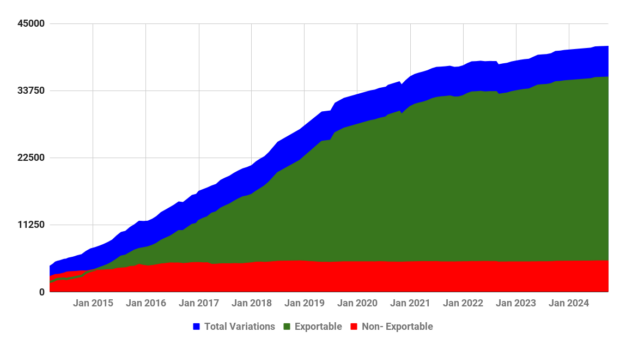
There are currently 21,048 product listings in Kitely Market containing 41,164 product variations, 35,920 of which are exportable.
Kitely Market has delivered orders to 632 OpenSim grids to date.
(Data courtesy Kitely.)
As you can see in the above chart, nearly all the growth in Kitely Market has been in content that can be exported to other grids — that is the green area on the graph. The red area, of non-exportable content, has stayed level for the past eight years.
The Kitely Market is the largest collection of legal content available in OpenSim. It is accessible to both hypergrid-enabled and closed, private grids. The instructions for how to configure the Kitely Market for closed grids are here.
New grids
I didn’t add any new grids to the database this month.
If you know of any public grid that we’re missing, please email me at maria@hypergridbusiness.com.
Suspended grids
The following 13 grids were marked as suspended this month: Angel Souls, Free Life, Insight Concepts, New Life Italy, Nordlicht Grid, OB, Phantom Rose, Pineapple, Planet, ProxyNet, TinkerLand, Trans Sidera, and TUIS Open Grid.
If they don’t reappear online again soon, they will be marked as closed in future reports.
Sometimes, a grid changes its login URI or website address — if that’s the case, email me and let me know and I’ll update my database.
Top 40 grids by land area
All region counts on this list are, whenever available, in terms of standard region equivalents. Active user counts include hypergrid visitors whenever possible.
Many school, company, or personal grids do not publish their numbers.
The raw data for this month’s report is here. A list of all active grids is here. And here is a list of all the hypergrid-enabled grids and their hypergrid addresses, sorted by popularity. This is very useful if you are creating a hyperport.
You can see all the historical OpenSim statistics here, including polls and surveys, dating all the way back to 2009.
OSgrid: 34,973 regions
Wolf Territories Grid: 29,566 regions
Kitely: 18,165 regions
ZetaWorlds: 13,023 regions
Alternate Metaverse: 10,513 regions
Groovy Verse: 8,459 regions
DigiWorldz: 3,501 regions
Virtual Vista Metaverse: 3,259 regions
CandM World: 2,094 regions
Discovery Grid: 2,056 regions
Tag Grid: 1,465 regions
Shoalwater Bay: 1,104 regions
Friends Grid: 1,040 regions
Simation Grid: 1,024 regions
ArtDestiny: 961 regions
GBG World: 960 regions
Virtual Worlds Grid: 914 regions
AviWorlds: 838 regions
Craft World: 696 regions
Kinky Haven: 677 regions
AvatarLife: 597 regions
Littlefield: 514 regions
GorGrid: 429 regions
Furry World: 373 regions
Virtual Worlds Zone: 364 regions
Neverworld: 336 regions
Darkheart’s Playground: 312 regions
Nemesis 3D: 305 regions
EdMondo: 300 regions
WestWorld Grid: 270 regions
Open Virtual Worlds: 229 regions
MisFitz Grid: 213 regions
Japan Open Grid: 196 regions
Counter Earth: 196 regions
Kater and Friends: 185 regions
Adreans-World: 161 regions
Utopia Skye: 145 regions
GerGrid: 141 regions
XTalent: 140 regions
Outworldz: 127 regions
Do you know of any other grids that are open to the public but that we don’t have in our database? Email me at maria@hypergridbusiness.com.
Hypergrid Business editor and publisher Maria Korolov is a science fiction novelist. During the day, Maria Korolov is an award-winning freelance technology journalist who covers artificial intelligence, cybersecurity and enterprise virtual reality. See her Amazon author page here and follow her on Twitter, Facebook, or LinkedIn, and check out her latest videos on the Maria Korolov YouTube channel. Email her at maria@hypergridbusiness.com. Her first virtual world novella, Krim Times, made the Amazon best-seller list in its category. Her second novella, The Lost King of Krim, is out now. She is also the publisher of MetaStellar, a new online magazine of speculative fiction.
As the metaverse concept gains popularity, more and more cryptocurrency investors are taking notice and exploring the best investment opportunities in the sector. Metaverse cryptocurrencies are the digital assets that underlie virtual worlds, games, and other online environments where users can engage in various activities.
The metaverse is a term used to describe a fully immersive and interactive virtual world where users can engage with a wide range of digital experiences, including gaming, socializing, and even working or learning. The concept of the metaverse has been popularized in science fiction. Still, it is quickly becoming a reality due to advancements in virtual and augmented reality technologies, blockchain, and other digital innovations. The metaverse is a fully-realized version of the internet, where users can move through digital environments in a more immersive way than on a traditional 2D screen. Any single entity does not own the metaverse; instead, it is a decentralized network of interconnected virtual worlds and experiences.
A defining feature of the metaverse is a fully immersive virtual world that allows users to interact with each other in real-time using virtual reality (VR) or augmented reality (AR) technology. The metaverse is envisioned as a shared universe of virtual environments that can be accessed by anyone from anywhere in the world, creating a seamless and continuous online experience. The metaverse allows for the creation of new types of social interactions, economies, and experiences that are impossible in the physical world.
Join us in shaping the future of digital experiences. Together, we can unlock the full potential of the metaverse and create innovative solutions that revolutionize industries and enhance human interaction.
Vegavid Metaverse development company services
Metaverse technology is a term used to describe a collection of emerging technologies that enable the creation and operation of virtual worlds and immersive online experiences. The metaverse concept is a fully-realized virtual space accessible to anyone, anywhere in the world. Metaverse technology includes blockchain, virtual and augmented reality, artificial intelligence, and other related technologies. These technologies create immersive environments that allow users to interact with digital content and other users in real-time. Metaverse technology has the potential to revolutionize the way we work, play, and socialize. It is increasingly becoming a focus of interest for many industries, including gaming, entertainment, and education.
To enter the metaverse, you’ll need a few things. Firstly, you’ll need a device that can access the internet, like a computer, tablet, or smartphone. You’ll also need to create an account on a metaverse platform, like Decentraland or The Sandbox, requiring you to download or access their application through a web browser. Once you’ve created an account, you can create your avatar and explore the virtual world. Sometimes, you may need to purchase virtual land or items using cryptocurrency, which you can acquire through cryptocurrency exchanges. You may also need to connect with other players to access certain areas or experiences in the metaverse.
To invest in the metaverse, you can start by identifying cryptocurrencies and blockchain platforms that power metaverse apps and virtual environments. Some of the top metaverse crypto exchanges include ApeCoin (APE), Internet Computer (ICP), Theta Network (THETA), Axie Infinity (AXS), The Sandbox (SAND), and Decentraland (MANA). To invest, you can create an account on a cryptocurrency exchange and purchase these tokens using fiat or other cryptocurrencies. Researching and understanding the risks associated with investing in cryptocurrencies is essential before investing.
Metaverse crypto refers to cryptocurrencies designed to be used in virtual environments known as the metaverse. These blockchain-based platforms allow users to create and participate in immersive and interactive virtual worlds. Metaverse cryptocurrencies are used to power in-game transactions, reward users for participating in the platform, and provide governance over the network.
Accessing the metaverse depends on the specific platform being used. Some metaverse platforms require a virtual reality (VR) headset or other hardware, while others can be accessed through a web browser or mobile application. Users must create an account and download the necessary software or application to access a specific metaverse. The specific requirements will vary depending on the platform, so reviewing the platform’s documentation or seeking assistance from the community is recommended.
To use the metaverse, you must have a compatible device or platform supporting virtual and augmented reality experiences. Some popular metaverse platforms include Second Life, The Sandbox, and Decentraland. Once you can access a metaverse platform, you can create an avatar or virtual identity, explore the virtual environment, interact with other users, and participate in various activities and experiences. Some metaverse platforms allow users to create content and experiences using blockchain technology and NFTs. To fully experience the metaverse, you may also need to invest in specialized hardware, such as VR headsets and controllers, to provide a more immersive experience.
The term metaverse refers to a virtual world or universe created by converging various digital technologies, such as virtual reality, augmented reality, blockchain, and the internet. The metaverse is a fully immersive and interactive space where users can engage with each other, access digital content, and participate in various activities. The metaverse concept has gained popularity due to the growth of virtual reality and the increasing use of digital technologies in everyday life. The metaverse is expected to be a critical element in the future of digital entertainment, social networking, and e-commerce, providing users with new and exciting ways to interact with each other and the world around them.
The cryptocurrencies discussed in this blog have enormous potential over the next year as greater adoption of metaverse technologies occurs. Projects are actively working to enhance their platforms, attract more users, and develop new partnerships. With continued innovation and execution of their long-term roadmaps, there is a strong expectation for further appreciation in value.
By 2024, metaverse-related use cases are projected to grow significantly. Many predict that year will mark the start of an era where hundreds of millions of people regularly interact, socialize, work and play in immersive virtual worlds. As the metaverse becomes more mainstream, demand will rise for platforms that facilitate digital interactions, transactions, and experiences. The potential market is in the many billions of dollars.
The cryptocurrencies featured are well-positioned to leverage increasing interest. Their respective networks are establishing the foundations on which metaverse applications can be built. Providing resources like processing power, data storage, connectivity, and digital payments infrastructure will create ongoing demand for the underlying tokens. Success in 2024 at delivering key product milestones, and gaining traction with users and use cases boosts expectations they maintain strong financial performances in 2024 as well.
Continued tech breakthroughs are also anticipated to further advance visualization, mobility, and interoperability across virtual systems. Coins working on these types of enabling layer one metaverse technologies have a strategic role to play in the maturation of the wider market. If development stays on track through next year, they could cement leadership roles within their categories that translate long-term to sustained value creation for early investors and adopters.
The metaverse meaning is based on creating an immersive and interconnected digital world where people can interact with each other and the virtual environment. With the increasing demand for metaverse-based projects, several cryptocurrencies have emerged. This article will look closely at some of the best metaverse 2024 cryptocurrencies to buy.
1. ApeCoin (APE)
ApeCoin (APE) is a decentralized finance (DeFi) cryptocurrency that was created to fund the development of ApeSwap, a decentralized exchange (DEX) built on the Binance Smart Chain (BSC). ApeSwap is a yield-farming platform that allows users to earn rewards in APE tokens by staking their cryptocurrency assets in liquidity pools. ApeCoin is also used to pay transaction fees on the ApeSwap exchange. The ApeSwap platform has gained significant popularity in DeFi due to its low transaction fees and high-yield farming rewards. APE has a limited supply of 227,712,862 tokens, with a significant portion allocated to community development and marketing efforts.
The ApeSwap team has also been working on partnerships with other DeFi projects, which has helped to increase the adoption of APE. As the metaverse concept continues gaining popularity, ApeCoin could benefit from its integration into virtual environments, resulting in increased demand and value for the cryptocurrency.
2. Internet Computer (ICP)
Internet Computer (ICP) is a cryptocurrency that powers a decentralized cloud computing platform of the same name. The Internet Computer platform aims to create a decentralized version of the internet, where users can run and host websites, applications, and other services without relying on centralized servers. The platform allows developers to build and deploy decentralized applications (dApps) on the blockchain using programming languages like Rust and Motoko.
The ICP token is used to pay for computation and storage on the Internet Computer network and to govern the platform through a decentralized governance system. One of the unique features of the Internet Computer platform is its ability to scale horizontally, allowing for unlimited expansion of its computational capacity. This feature enables the platform to handle large-scale applications and services that are not feasible on other blockchain networks. As the concept of metaverse gains popularity,
3. Theta Network (THETA)
Theta Network (THETA) is a decentralized video streaming platform that uses blockchain technology to enable users to share bandwidth, computing resources, and content. Theta Network is built on a proof-of-stake consensus mechanism and is powered by the THETA token. The platform allows users to earn THETA tokens by sharing their bandwidth and computing resources to relay video streams to other users in the network. Users can also earn tokens by creating and sharing their video content on the platform.
Theta Network has gained significant traction due to its ability to handle high-quality video streams at scale, which is critical for the metaverse concept. The platform has partnered with several major media companies, including Google and Samsung, to improve video delivery and create new business models for the digital media industry.
4. Axie Infinity (AXS)
Axie Infinity (AXS) is a metaverse cryptocurrency that powers the Axie Infinity ecosystem, which is a blockchain-based game that allows players to collect, breed, and battle fantasy creatures called Axies. Axie Infinity is built on the Ethereum blockchain and is one of the most popular metaverse technologies. The game has gained a massive following due to its unique gameplay and play-to-earn model, which allows players to earn cryptocurrency by participating.
The AXS token governs the Axie Infinity ecosystem and rewards players for participating in the game. As the metaverse concept continues to gain traction, the demand for metaverse crypto like AXS will likely grow, resulting in increased adoption and value for the cryptocurrency.
5. The Sandbox (SAND)
The Sandbox (SAND) is a blockchain-based platform that allows users to create, share and monetize their metaverse app using its metaverse technology. The Sandbox offers a 3D virtual world where players can create, build, and share their experiences. The platform uses non-fungible tokens (NFTs) as in-game assets, allowing creators to monetize their content and enabling players to buy, sell, and trade virtual land and items.
SAND is the platform’s native token, used for transactions, including buying and selling assets, paying for in-game transactions, and staking for governance rights. The Sandbox has gained significant popularity in the blockchain gaming industry and has been used to create several successful metaverse app. The Sandbox has also partnered with major entertainment companies, including Atari and Square Enix, to create new gaming experiences on the platform. As the concept of metaverse continues to gain traction,
Conclusion
The metaverse is a rapidly growing industry expected to change how we interact with digital content and each other. This blog has provided a list of investible cryptocurrencies and the meaning of the metaverse. As this industry continues to grow, cryptocurrencies such as ApeCoin, Internet Computer, Theta Network, Axie Infinity, The Sandbox, and Decentraland have emerged as some of the most promising investments. These tokens power decentralized platforms that offer unique and innovative metaverse technologies, such as blockchain-based gaming, virtual worlds, and decentralized video streaming. Investing in these metaverse cryptocurrencies is not only an opportunity to benefit from the growth of this industry but also a chance to be a part of a new and exciting era of digital innovation.