Metaverse

Home Metaverse Page 26

NFTs as Programmable Ownership Layers | Web3 Infrastructure Explained | NFT News Today

NFTs as Programmable Ownership Layers | Web3 Infrastructure Explained | NFT News Today


Non-fungible tokens (NFTs) first became popular for collectibles and digital art. Since 2022, new technology has turned NFTs into programmable ownership layers. These blockchain-based assets now include property rights that are enforceable, transferable, and customizable, all written directly into smart contract code.

With this new approach, ownership is not just a record but something that can be executed as code. As a result, developers, researchers, and legal experts now see programmable NFTs as a key part of the infrastructure needed to address the limits of older Web2 digital property systems.

From Custodial Access to Executable Ownership

Before blockchain systems such as Ethereum gained adoption, digital assets existed within centralized databases. Users depended on platforms for:

Asset custody

Transfer approval

Monetization permissions

Data persistence

In these systems, users had access only under certain conditions and did not have full control over their assets.

NFTs introduced three architectural shifts:

Immutable Ledger-Based OwnershipEach transfer is recorded on a decentralized ledger. After confirmation, the transaction history cannot be changed unless the whole network agrees. This creates a permanent record of ownership.

Smart Contract–Defined RightsThe rules for ownership are built right into the contract. Things like transfer limits, royalty payments, and permissions are handled automatically.

Permissionless VerificationAnyone can check who owns an asset without needing to use platform APIs or private databases.

Together, these features make digital property programmable and manageable like infrastructure.

Technical Architecture

Token Standards and Interoperability

Standardization ensures NFTs interact consistently across wallets, marketplaces, and decentralized applications.

On Ethereum:

ERC-721Defines unique token identifiers. Each token ID maps to a single owner. Widely adopted for art, collectibles, and identity tokens.

ERC-1155Supports batch transfers and hybrid token models. Frequently used in gaming environments where fungible and non-fungible assets coexist.

ERC-998Introduces composability. NFTs can own other NFTs or fungible tokens, enabling hierarchical asset structures.

On Solana:

NFTs are built using SPL token infrastructure combined with metadata programs.

Programmable NFTs (pNFTs) rely on Metaplex, which enforces rule-based authorization layers for every token action.

Standards provide the base, with programmability built on top.

Mechanisms of Programmability (Expanded)

1. Automated Royalties and Revenue Routing

The introduction of EIP-2981 allowed NFT contracts to publish royalty parameters directly within metadata.

Technical implications include:

Secondary sale detection at the contract level

Automatic percentage calculations

On-chain revenue routing to multiple addresses

Support for split royalty structures (e.g., artist + collaborator)

Some advanced systems use escrow contracts or special transfer rules to prevent unauthorized sales on marketplaces that do not follow the standards.

There are still some limits. Enforcing royalties only works if everyone in the ecosystem follows the rules, and some marketplaces let users choose whether to pay royalties. Even so, the technology for ongoing creator payments is now available.

2. Dynamic NFTs (dNFTs): Stateful Assets

Dynamic NFTs rely on metadata mutability controlled by smart contracts.

State changes occur via:

On-chain triggers:Contract events such as staking duration, governance votes, or gameplay milestones.

Oracle-fed data:External inputs (weather data, sports scores, asset prices) transmitted through decentralized oracle networks.

Time-based logic:Epoch-based transitions or vesting milestones.

Technically, metadata may be stored:

Fully on-chain (expensive but immutable)

Off-chain via IPFS/Arweave with hash verification

Hybrid structures combining static and dynamic fields

Security considerations include oracle integrity, update permissions, and replay protection.

With dynamic NFTs, ownership is not just about holding an asset. The asset can change and evolve based on actions or events.

3. Granular Delegation and Authorization Layers

Programmable NFTs implemented through Metaplex introduce rule sets that mediate every token instruction.

Advanced rule configurations can:

Require proof-of-payment before transfer finalization

Restrict transfers to whitelisted addresses

Allow temporary staking without permanent custody change

Assign limited-use delegates (e.g., sale-only authority)

Enable revocable usage rights

This architecture separates:

Title ownership

Operational permissions

Monetization rights

This kind of separation is similar to ideas in traditional property law, such as usufruct, leasing, and sub-licensing.

4. Composability and Nested Asset Structures

With ERC-998, NFTs may contain subordinate assets.

Applications include:

Game avatars holding equipment NFTs

Digital real estate parcels containing subdivided lots

Intellectual property bundles with licensing tokens

This setup lets people manage rights in layers and transfer groups of assets in one step.

In DeFi contexts, composable NFTs can serve as collateral containers holding multiple tokens under unified ownership.

5. Interoperability Across Protocols

Programmable NFTs interact with:

Because NFTs follow open standards, they can be referenced by other smart contracts without centralized integration agreements.

For example:

A lending protocol may accept an NFT as collateral.

A DAO may grant voting weight based on NFT ownership.

A gated platform may verify wallet ownership before granting access.

Because features can be combined, it is easier to move assets between applications.

Expanded Use Cases

Gaming Economies

In blockchain-native games:

Asset ownership persists independently of centralized servers.

Characters and items may accumulate permanent on-chain attributes.

Interoperability enables asset migration across compatible titles.

Game studios are now testing hybrid systems. These use centralized servers for gameplay but rely on decentralized layers for asset ownership.

Real-World Asset (RWA) Tokenization

NFTs serve as digital representations of physical or financial assets, including:

Smart contracts can automate:

Institutional pilots have demonstrated tokenized bond issuance and property fractionalization using NFT frameworks.

Regulations vary by country, and legal enforcement depends on off-chain agreements that recognize these tokenized assets.

Digital Identity and Reputation Systems

NFT-based identity systems encode:

With dynamic updates, a person’s reputation can change over time depending on their actions.

Unlike fixed credentials, on-chain identity NFTs allow people to prove who they are across different decentralized platforms.

AI Agents and Machine Economies

In emerging architectures, AI agents operate blockchain wallets linked to NFT-based identity containers.

An NFT may:

Define operational boundaries

Hold delegated permissions

Store governance roles

Anchor economic activity logs

For machine-to-machine interactions like automated trading, DAO participation, and service exchange, it is important to have ownership structures that can be verified. NFTs provide this kind of programmable container.

Security and Governance Considerations

Programmable ownership makes systems more flexible, but it also introduces new risks to how they are designed.

Key considerations include:

Oracle reliability: Compromised data feeds can corrupt dynamic states.

Upgradeability controls: Proxy contracts require governance safeguards to prevent malicious updates.

Delegation revocation logic: Improperly structured permissions may create exploit vectors.

Marketplace standard divergence: Inconsistent royalty enforcement impacts economic predictability.

Large projects now regularly use security audits and formal checks.

Current Trajectory (2025–2026)

The speculative surge of 2021 gave way to infrastructure-focused development.

Current NFT deployments emphasize:

Utility and access control

Compliance-aware tokenization

Programmable financial instruments

Identity-layer integration

AI-compatible ownership containers

More investment is now going to infrastructure providers instead of companies issuing collectibles.

Structural Significance

Programmable NFTs mark a change in how digital property works.

Ownership now includes:

People often compare NFTs to the basic protocols of the internet. Just as TCP/IP made data transfer standard, programmable NFTs aim to make digital property rights standard and easy to verify. The era of collectibles made NFTs popular. Now, the focus is on building strong, lasting systems.

As decentralized finance expands, more real-world assets are being tokenized, and autonomous agents are starting to operate independently. Programmable NFTs are likely to become the main way to manage ownership in these systems.


Source link

Jim Cramer Says XRP Will Hit $10: Fact Check

Jim Cramer Says XRP Will Hit : Fact Check


Key Highlights

Viral claim said claimed that Jim Cramer said XRP will hit $10He has been critical of cryptocurrencies for years, calling XRP, Solana, and Dogecoin “cons.”Cramer sold all his crypto after the FTX collapse, stating, “I wouldn’t touch crypto in a million years.”

A viral claim that Jim Cramer, the bestselling author and host of CNBC’s Mad Money, said XRP, the native token Ripple would hit $10 is circulating online. 

The false claim spread online when a user named “Amonyx” shared a tweet saying, “XRP to $10 is confirmed by Jim Cramer,” along with a screenshot. But the screenshot actually showed the opposite.

In it, Cramer said, “I see this new crypto $XRP, I don’t think it can hit $10.”  While this half backed rumour is spreading Cramer’s official X, account has no post saying XRP will reach $10.

Cramer’s history with crypto 

Cramer has been critical of cryptocurrencies for a long time. During an interview with CNBC in 2020, he said, “XRP, Solana, & Dogecoin…those are all cons. Why don’t we put up like a bunch of stocks that are valued at the same size.” 

At that time, XRP’s price was very low, around $0.3837. But as of today, the token now trades for $1.40, which is over 615% growth since when Cramer made his comment.

Cramer sold all his crypto 

Cramer has also mentioned earlier that does not have any crypto in his portfolio. This was after the fallout of the FTX exchange collapse in 2022. The bankruptcy of FTX, and the arrest of its founder Sam Bankman-Fried, triggered a “Crypto Winter,” dragging Bitcoin down to around $16,000. 

Cramer appeared on CNBC on December 23, 2022, and said, “I sold all my crypto. I announced everything on TV, what I did with crypto. I wouldn’t touch crypto in a million years.” He warned people against putting money into unregulated platforms, saying, “If you have your money in any of those, look, I’m not calling you an idiot. I’m just saying you’re using a lot of blind faith.”

At the time, Bitcoin traded at $16,796. Four years later, the token now trades for $69,439, gaining 416%. This created the so-called “Inverse Cramer Theory,” a joking reference to the idea that markets sometimes move opposite to his cautious advice.

In short, he thinks cryptocurrencies can be risky, especially when people invest without enough knowledge or protection. Looking at his history there might also be a possibility that Amonyx is using his inverse theory to build a narrative for XRP to hit $10.

However important thing to note is that Jim Crammer did not mention anything on XRP and certainly not that its price will hit $10.

Also Read: Fact Check: Is Jeffrey Epstein Satoshi Nakamoto, The Bitcoin Founder?

Disclaimer: The information researched and reported by The Crypto Times is for informational purposes only and is not a substitute for professional financial advice. Investing in crypto assets involves significant risk due to market volatility. Always Do Your Own Research (DYOR) and consult with a qualified Financial Advisor before making any investment decisions.


Source link

Magic Eden Pivots: Sunsetting Bitcoin and EVM Support to Focus on Solana and iGaming | NFT News Today

Magic Eden Pivots: Sunsetting Bitcoin and EVM Support to Focus on Solana and iGaming | NFT News Today


Magic Eden is scaling back its multi-chain ambitions and refocusing on its original Solana base. The NFT marketplace announced it will discontinue support for Bitcoin (Ordinals and Runes), Ethereum Virtual Machine (EVM)-compatible marketplaces, and its multi-chain wallet. Going forward, the company will concentrate on its core Solana ecosystem while shifting significant resources toward Dicey, its on-chain casino and sportsbook product.

Historical Context and Magic Eden’s Evolution

Magic Eden quickly established itself as a dominant player in the Solana ecosystem due to its low fees, fast transactions, and intuitive interface. During the 2023–2024 surge in Bitcoin Ordinals, the platform expanded aggressively into Bitcoin and EVM chains (including Ethereum, Polygon, and Base), briefly capturing substantial trading volume across ecosystems. This multi-chain approach helped popularize Ordinals and broadened its user base.

However, as NFT trading volumes fell sharply from their 2021–2022 highs, supporting multiple chains became increasingly costly. The company is now scaling back that expansion to streamline operations and refocus on Solana while pursuing new growth opportunities.

Timeline of Changes

Magic Eden shared a step-by-step plan for winding down support:

March 9, 2026: Closure of the EVM marketplace and Bitcoin (Ordinals and Runes) marketplace.

March 27, 2026: Discontinuation of the Bitcoin API.

April 1, 2026: Magic Eden will fully shut down its multi-chain wallet. Starting March 13th, the wallet will only allow exports, and features like swaps will be turned off before then.

Trading Solana NFTs, collectibles, and Packs (mystery-box products) will continue as usual.

If you have assets in the Magic Eden wallet, it’s important to export your private keys soon and move to a compatible wallet like Phantom for Solana. Magic Eden has posted detailed guides in its help center to help with the move.

Strategic Rationale

CEO Jack Lu said the decision was driven by cost inefficiency. In a follow-up post, he stated that the discontinued marketplaces accounted for “about 80% of our costs” while contributing “negligibly” to revenue. With NFT trading volumes significantly lower than prior peaks, he indicated the multi-chain approach was no longer sustainable in the current market climate.

By contrast, Dicey — currently in closed beta — has shown early traction. According to Lu, roughly 200 users have wagered more than $15 million during its first two months. He described iGaming, or crypto-enabled online gambling, as a “massive opportunity” as finance and entertainment increasingly converge within the crypto ecosystem.

Dicey: The New Growth Focus

Dicey is a decentralized casino on the blockchain, with a sportsbook coming soon. It is similar to platforms like Stake. Users can place bets, join games, and even host their own events in an open environment. Solana’s fast network allows for quick settlements. Dicey’s early beta saw over $15 million in bets from a small group of users, showing strong demand as blockchain and entertainment come together.

Lu sees Dicey as part of a bigger trend where fast games and quick price changes attract more users. Most of Magic Eden’s resources are now focused on Dicey, and more updates are expected soon.

The $ME token will remain central to both Magic Eden and Dicey ecosystems. While specifics on integration (such as revenue sharing, staking benefits, or other utility) are forthcoming, the token is expected to play a key role in user engagement as the product suite evolves.

Broader Context and Market Implications

This change shows the challenges in the NFT market, where trading volumes are down and costs are high. Many platforms are looking for better ways to make money. By leaving lower-profit NFT trading and moving to higher-profit iGaming, which brings users back more often, Magic Eden hopes for more stable and lasting success. Still, there are risks, like gambling regulations and strong competition.

The community has had mixed reactions. Solana fans are happy about the renewed focus on their chain, but people involved with Bitcoin Ordinals and EVM are disappointed, especially since Magic Eden had supported those areas before.

Recommendations for Users

Bitcoin Ordinals/Runes holders: Migrate to alternatives such as UniSat, Gamma, or Satflow.

EVM NFT participants: Transition to platforms like OpenSea or Blur.

Solana ecosystem users: Anticipate seamless continuity in trading and features.

$ME token holders: Watch for upcoming Dicey announcements regarding enhanced utility.

This restructuring positions Magic Eden to pursue focused growth in its core Solana environment and emerging crypto entertainment verticals. As Lu stated, the platform’s future will be “simpler, faster, and fueled by our original home on Solana and the success of Dicey.”


Source link

The Era of Doing, Not Just Talking: Microsoft Copilot Tasks | Metaverse Planet

The Era of Doing, Not Just Talking: Microsoft Copilot Tasks | Metaverse Planet


I remember the first time I used a generative AI chatbot. It felt like magic, but it also felt like I’d just hired a very talented intern who needed constant supervision. I’d spend ten minutes explaining a task, then another five minutes correcting the output. It was helpful, sure, but I was still the one doing the heavy lifting. I’ve been waiting for the moment when AI stops being a digital typewriter and starts being a digital employee.

That moment seems to have arrived. Microsoft just pulled the curtain back on Copilot Tasks, and if it lives up to the promise, it’s going to fundamentally change how I—and probably you—interact with a computer. We are officially moving past the “Chatbot Era” and entering the “Agent Era.”

Here is my breakdown of why this announcement is a massive shift in the AI landscape and what it actually means for your daily workflow.

What Exactly is an AI Agent?

Before we dive into the specifics of Copilot Tasks, I want to clarify something I see a lot of people getting confused about. There is a big difference between an AI Chatbot and an AI Agent.

The Chatbot: You ask it a question, it gives you an answer. It’s reactive.The Agent: You give it a goal, and it figures out the steps to achieve it. It’s proactive.

Copilot Tasks is Microsoft’s official entry into the agentic space. Instead of you manually opening Excel, formatting a table, and emailing it to your boss, you simply tell Copilot: “Hey, take my last three invoices, put them into a summary sheet, and send it to the accounting department.” Then, you walk away and grab a coffee while it handles the “doing.”

How Copilot Tasks Actually Works

I’ve been digging into the technical side of this announcement, and what I find most impressive is how Microsoft is balancing autonomy with control. None of us want an AI that goes rogue and accidentally deletes a database because it misunderstood a command.

Here is the workflow Microsoft has mapped out:

Natural Language Onboarding: You talk to it like a human. No complex coding or “prompt engineering” required. It will ask you clarifying questions to make sure it understands the “why” and “how” of the task.Background Operation: This is the game-changer for me. Once the task is set, the agent works in the background. You don’t have to keep the window open or watch it work. You can go back to your creative work while the “busy work” is handled behind the scenes.The “Human-in-the-Loop” Check: Microsoft has integrated a permission system. If the agent hits a crossroads or a sensitive step (like making a payment or sending a final document), it will pause and ask for your approval. I personally find this safety net essential for building trust with an agent.

For the Individual and the Enterprise

One thing I really appreciate about Microsoft’s strategy here is that they aren’t gatekeeping this for just the big corporate players. They’ve made it clear that Copilot Tasks is for everyone.

For Personal Use: Imagine scheduling your recurring grocery orders based on a meal plan you discussed on Monday, or having the AI automatically organize your messy “Downloads” folder every Friday at 5 PM.For Businesses: This is where the ROI (Return on Investment) gets crazy. Automating repetitive data entry, scheduling complex multi-person meetings, or monitoring project deadlines across different apps—these are the “productivity vampires” that eat our day.

One feature that particularly caught my eye is the ability to set scheduled and recurring tasks. I’m already dreaming of setting an agent to scan my industry news feeds every morning, summarize the top three stories, and have them waiting in my inbox before I even wake up.

Why This Matters for the Future of Work

I’ve often wondered if we’re reaching “AI fatigue.” There are so many tools, so many prompts, and so much noise. But Copilot Tasks feels different because it’s about reclaiming time.

In my view, the most successful technology is the kind that eventually becomes invisible. If I don’t have to think about how to use Copilot because it’s just quietly finishing my tasks in the background, then Microsoft has won. It turns the computer back into a tool of agency rather than a source of distraction.

However, I do have some lingering questions. How well will it play with non-Microsoft apps? How much transparency will we have into how it’s performing these tasks? These are the things I’ll be looking for as the rollout progresses.

My Final Verdict

Microsoft is clearly trying to beat OpenAI and Google to the punch by integrating agentic AI directly into the operating system and the apps we already use every day. If Copilot Tasks works as advertised, the “Search and Click” era of computing might be coming to an end, replaced by the “Delegate and Review” era.

I’m personally excited to see if I can finally outsource my most boring administrative chores to an AI that doesn’t get tired or bored.

But what about you? If you could hand over just one repetitive task to an AI agent right now—something you hate doing every single week—what would it be? I’d love to hear your “automation wish list” in the comments!

You Might Also Like;


Source link

Bitget Wallet Launches Beta AI Agent Suite To Integrate Large Language Models With Multi-Chain Blockchain Data And Trading Systems

Bitget Wallet Launches Beta AI Agent Suite To Integrate Large Language Models With Multi-Chain Blockchain Data And Trading Systems


In Brief

Bitget Wallet has launched a beta AI agent suite, including Bitget Wallet Skill, to enable large language models to access multi-chain blockchain data, manage trades, and support automated, user-controlled portfolio and transaction workflows.

Bitget Wallet Expands AI Functionality With Launch Of Skill Beta Suite

Cryptocurrency wallet Bitget Wallet launched a beta suite of AI agents aimed at linking large language models and automation tools directly with blockchain data and trading systems. The rollout focuses on Bitget Wallet Skill, which allows AI agents to access on-chain market information through natural language queries. The development highlights an increasing trend toward agent-driven finance, where AI functions as both analytical and operational interfaces for digital asset markets.

Developed in collaboration with OpenClaw, Bitget Wallet Skill integrates AI agent platforms with Bitget Wallet’s enterprise API, providing natural language access to blockchain data and swap preparation. The tool facilitates queries on token information, candlestick-based market metrics, transaction statistics, gainers and losers rankings, liquidity pool measurements, contract security assessments, and optimal swap routing quotes. It operates across multiple networks, including BNB Chain, Base, Solana, Ethereum, Arbitrum, TON, Tron, Sui, and Optimism, enabling AI systems to evaluate multi-chain markets in real time and support portfolio management and live monitoring.

Execution Stage, Transaction Routing, And User Control In AI-Driven Blockchain Trading

During execution, the agent generates an optimal trading route along with unsigned transaction data, while users retain full control by reviewing and signing all transactions. Bitget Wallet Skill has been tested across agent platforms such as OpenClaw, Manus, and Claude-based systems, making it suitable for individual traders as well as teams integrating AI-driven workflows into market analysis and automation. The suite leverages the infrastructure behind the Bitget Wallet API, which aggregates liquidity from over 110 decentralized protocols and enables trading across major blockchains. Extending this infrastructure to AI agents allows the trading engine to operate within agent-based environments beyond the consumer application.

“AI models are increasingly being used to interpret market data and assist with trading decisions, but they still operate largely outside of onchain execution infrastructure,” said Alvin Kan, COO of Bitget Wallet, in a written statement. “As liquidity fragments across chains and trading workflows become more data-driven, there is growing demand for systems that can connect AI directly to reliable blockchain data and routing. Extending our API to agent-based environments is a natural step in that evolution, while keeping custody and transaction approval firmly with the user,” he added.

Alongside the Skill, Bitget Wallet unveiled a Model Context Protocol (MCP) server that allows LLM-based tools to call API endpoints within development environments. A Command-Line Interface (CLI) is also provided for scripting and automation, positioning the API stack as programmable infrastructure for AI platforms and developers. Together, these tools reflect Bitget Wallet’s efforts to integrate blockchain infrastructure into the broader AI development ecosystem.

Disclaimer

In line with the Trust Project guidelines, please note that the information provided on this page is not intended to be and should not be interpreted as legal, tax, investment, financial, or any other form of advice. It is important to only invest what you can afford to lose and to seek independent financial advice if you have any doubts. For further information, we suggest referring to the terms and conditions as well as the help and support pages provided by the issuer or advertiser. MetaversePost is committed to accurate, unbiased reporting, but market conditions are subject to change without notice.

About The Author

Alisa, a dedicated journalist at the MPost, specializes in cryptocurrency, zero-knowledge proofs, investments, and the expansive realm of Web3. With a keen eye for emerging trends and technologies, she delivers comprehensive coverage to inform and engage readers in the ever-evolving landscape of digital finance.

More articles

Alisa, a dedicated journalist at the MPost, specializes in cryptocurrency, zero-knowledge proofs, investments, and the expansive realm of Web3. With a keen eye for emerging trends and technologies, she delivers comprehensive coverage to inform and engage readers in the ever-evolving landscape of digital finance.

More articles


Source link

Social Engineering in Web3 Gaming: How Scammers Target Discord and DMs | NFT News Today

Social Engineering in Web3 Gaming: How Scammers Target Discord and DMs | NFT News Today


Web3 games move fast, and scammers love that pace. They know players chase early access, allowlists, rare drops, and quick trades. So they show up where gamers already live, including Discord servers, Telegram chats, and direct messages. The tricks are rarely technical; they are emotional, urgent, and personal. Read on to spot the most common social engineering plays, and shut them down before you click.

‘1 Support’ DM that feels official

Impersonation is the default move. A scammer copies an admin name, uses a similar avatar, and sends a polite direct message about ‘verifying’ your wallet or ‘fixing’ a missing role. The link looks clean, the tone feels helpful, and the countdown pressure lands hard. If you need a reputable starting point for XRP basics, you can securely buy XRP on Kraken and avoid random ‘support’ links entirely. You should also:

Turn off DMs from server members by default

Ask support questions only in public help channels

Verify staff via the server’s roles list, not the message

2. Exclusive invite that steals your identity

In this type of scam, you get a DM with a private tournament, alpha access, or a partner whitelist. The hook is status, plus urgency. They ask you to connect a wallet, sign a message, or confirm with a token. Sometimes it is not about draining funds; it is about harvesting your accounts. Once they take your Discord, they can scam your friends with your name.

Treat invites like phishing emails. Verify on the public server, and check the announcement channel. You should also ask in a general chat and tag a known moderator, not the person in your DMs.

3. ‘Safe trade’ middleman who rewrites the deal

Item trading, land sales, and guild lending create perfect conditions for social engineering. Scammers offer a middleman service, or they join a deal as a ‘trusted escrow.’ Then they swap addresses, change terms, or send a fake transaction screenshot. They rely on your desire to be polite and fast.

Use a checklist before any transfer, even for small amounts. Compare wallet addresses character by character and confirm terms in a public thread. If the platform offers an in-app trading feature, use that instead of sending assets directly to someone’s wallet.

4. ‘Security check’ that drains approvals later

This scam feels harmless at first. The link does not empty your wallet right away. It asks you to connect, confirm, or run a quick security scan. What you are really doing is granting permissions or signing a message you did not fully read.

Days later, the drain happens. It can hit when you are asleep, busy, or distracted by a new event. Keep your risk low with simple habits. Use a separate wallet for games and avoid approving unlimited spending. Be sure to also revoke old approvals after mints or marketplaces. If the permissions do not match the action, exit fast.

Endnote

In Web3 gaming, your weakest link is rarely your wallet app. It is your attention, your fear of missing out, and your trust in a friendly DM. Build a habit loop: pause, verify, then act.


Source link

Weekly Wrap: Iran–Israel Crisis Shakes Crypto, $500M Liquidated as Bitcoin, Binance Hit

Weekly Wrap: Iran–Israel Crisis Shakes Crypto, 0M Liquidated as Bitcoin, Binance Hit


Key Highlights

Escalation between Iran and Israel triggered a sharp crypto sell-off, with Bitcoin and altcoins reacting first to global risk-off sentiment.Security concerns returned as exploits hit bridges and protocols, reinforcing Vitalik Buterin’s warning that crypto security can never be perfect.Despite volatility, institutions kept adjusting rather than exiting, while regulators tightened oversight on stablecoins and exchanges globally.

It was a rough and emotionally charged week for crypto markets as geopolitical shock, regulatory pressure, and long-running legal battles collided with already fragile sentiment. Prices slid sharply following a fresh escalation in the Iran–Israel conflict, triggering liquidations across major tokens. 

Yet beneath the volatility, activity did not dry up. Institutions reshuffled exposure, exchanges expanded and retrenched at the same time, regulators pushed forward on oversight, and builders continued shipping products despite the drawdown.

Retail investors largely avoided panic selling, but warnings of a deeper bear phase grew louder as security failures and compliance issues resurfaced. The result was a week that felt less like capitulation and more like stress under sustained pressure.

Top Headlines

This week looked more like an adjustment than a relief. War fears drove a sudden risk-off move. Security issues again reminded markets that many structural risks remain unresolved. 

Stablecoins and exchanges came under tighter watch, while new ETFs went live, licenses were issued, and long-term players quietly adjusted positions. Even with prices under pressure, the machinery behind crypto kept moving.

Iran–Israel conflict triggers market-wide crypto sell-off

Geopolitics delivered the sharpest shock of the week.

According to CryptoTimes, crypto prices slid hard after confirmation that tensions between Iran and Israel had escalated. Fears of a wider regional conflict spilled quickly into risk assets. 

Bitcoin fell from the mid-$65,000 range down toward the low $60,000s at the height of the move, while Ethereum dropped from around $3,500 to below $3,200. Major altcoins, including Solana and XRP, slipped sharply alongside broader risk assets.

Traders cut exposure amid the turmoil, setting off more than $500 million in liquidations across derivatives markets, with short- and long-position liquidations accelerating as support levels broke. As usual, crypto reacted first, reflecting its always-on liquidity and sensitivity to global headlines.

The sell-off also revived a familiar debate around Bitcoin’s role during geopolitical stress. Rather than acting as insulation from global turmoil, price action once again showed that crypto remains tightly linked to broader risk sentiment during moments of heightened uncertainty.

Security risks return to the forefront

Security was not just a talking point this week; it was an active concern.

Vitalik Buterin said bluntly that crypto security can never be perfect. He pointed to system complexity, misaligned incentives, and plain human error as reasons vulnerabilities will always exist. His comments emphasized resilience and recovery over the illusion of total safety.

Those warnings played out quickly. IoTeX confirmed a $4.3 million exploit on its ioTube bridge after a validator key was compromised, allowing an attacker to mint and move assets. 

While the core network itself remained unaffected and most of the stolen funds were frozen, the incident once again exposed the structural risks that continue to surround cross-chain bridges.

FOOMCASH later reported they lost $2.26 million because of a copycat attack using zkSNARK. This shows that attackers are still using techniques instead of coming up with new ones.

Separately, people got upset with Ploutos Money. They said Ploutos Money did an exit scam with 188 ETH. This made people worry that projects like this might not be trustworthy, especially when the market is not doing well.

Stablecoins face global scrutiny

Stablecoins are under a lot of pressure now. Regulators in countries are being stricter.

In South Korea, the Bank of Korea wants lawmakers to only let banks issue stablecoins. They say this because of problems with Bithumb that cost $40 billion. This shows that people are worried about stablecoins issued by companies causing big financial problems.

In the U.S., the Office of the Comptroller of the Currency (OCC) wants rules for stablecoin issuers. The White House is also talking about this. They are focusing on how stablecoin issuers should keep their money safe and who should be in charge of making sure they follow the rules. They are not really talking about stablecoins that earn interest anymore.

At the same time, Tether said it has frozen $4.2 billion worth of USDT linked to illicit activity since 2023 and confirmed plans to discontinue its offshore yuan-backed CNH₮ stablecoin due to limited adoption. World Liberty Financial also drew attention after reports of an attack on its USD1 stablecoin raised brief depegging concerns.

Binance pushes compliance narrative amid ongoing scrutiny

Binance claimed its exposure to sanctions-related risk has fallen by 97% following internal compliance upgrades. CEO Richard Teng pushed back publicly against a Wall Street Journal report that claimed Binance-linked flows were connected to Iranian entities. 

He rejected the allegations outright, saying they misrepresented the exchange’s controls and transaction monitoring.

Even with those statements, Binance remains under close regulatory supervision. The episode showed that while compliance reforms may reduce risk inside a company, they have not fully eased scrutiny.

ZachXBT disclosures spark insider trading concerns

Staff at Axiom were found using internal monitoring tools to track trader activity, raising fresh questions around fairness and internal controls. At the same time, wallets linked to insiders reportedly made over $1 million betting on outcomes tied to disclosures by blockchain investigator ZachXBT, blurring the line between insight and advantage. 

Together, the episodes have reignited concerns over insider access, market integrity, and whether existing safeguards are strong enough to prevent abuse.

Bitcoin sentiment turns defensive

Market expectations around Bitcoin are still cautious.

On Polymarket, traders think a downside scenario is more likely. They are pricing in a chance of Bitcoin going down to $45,000 than going back up to $100,000 anytime soon. 

This is because of geopolitical tension, uncertainty in the macro environment, and unresolved issues within crypto itself.

Institutions rebalance, not retreat

Institutional behavior looked more like adjustment than abandonment.

Strategy completed its 100th Bitcoin purchase, a milestone Michael Saylor labeled “The Orange Century.” The move reinforced the firm’s long-term accumulation thesis, even as broader market sentiment remained defensive.

Meanwhile, global trading firm Jane Street increased its stake in Strategy by 473% to $144 million, even as it faced a $566 million penalty in India and renewed scrutiny over its involvement in the $40 billion Terraform Labs collapse.

TradFi and Crypto Continue to Converge

Traditional finance continued its gradual move onto blockchain rails.

The SEC approved blockchain-based intraday trading for a money market fund managed by WisdomTree, marking another small but significant step toward tokenized cash products entering regulated finance. 

Coinbase also pushed further into TradFi, rolling out stock and ETF trading as it continues to blur the line between crypto platforms and traditional brokerages.

Outside the U.S., Brazil’s Banco Braza introduced its real-backed BBRL stablecoin on Polygon. In Europe, OKX secured a Malta license that opens the door to crypto payment services across the EU. In the Middle East, Animoca Brands received a VASP license from Dubai’s VARA, strengthening its regional base.

Exchanges cut back as others push forward

Gemini reduced its workforce by approximately 25% and withdrew from the UK, EU, and Australia, citing prolonged market weakness. The move stood in sharp contrast to ongoing expansion elsewhere, underscoring how exchanges are responding very differently as the downturn drags on.

FTX and SBF back in focus

The FTX saga returned to the headlines.

Sam Bankman-Fried argued that FTX’s collapse was driven by a liquidity crunch rather than insolvency, claiming internal records showed the exchange held more assets than customer liabilities. 

He said the widely cited $8 billion gap was mischaracterized and pointed to ongoing bankruptcy payouts, which are expected to return more than 100% of November 2022 claim values, as support for his appeal.

He accused the presiding judge of bias and said key evidence was excluded, leaning on recent appellate rulings as part of his appeal.

Token failures and select big wins

Market weakness continued to expose fragile projects. Roughly 85% of tokens launched in 2025 are now trading below their issue price, weighed down by oversupply and fading demand.

At the same time, a venture firm linked to Jake and Logan Paul recorded a 165x return on an early investment in Polymarket, as prediction-market activity surged around political and macro events.

News you might have missed

Telegram’s TON Wallet launched Bitcoin, Ethereum, and USDT yield products offering returns of up to 18%.South Korea moved to regulate crypto influencers, proposing penalties for undisclosed holdings.Dragonfly founders engaged in a public dispute over the origins of their venture fund.The U.S. seized $580 million in crypto linked to Southeast Asian scam networks.CME announced plans to move crypto futures trading on Globex to a 24/7 schedule.The Office of the Comptroller of the Currency (OCC) proposed new guardrails for U.S. stablecoin issuers, focusing on reserve safety, governance, and oversight.Vitalik Buterin unveiled plans for Ethereum’s next upgrade, with changes aimed at block structure and gas efficiency.Debate resurfaced around the TRUMP and MELANIA meme coins after estimates showed investors lost a combined $4.3 billion.World Liberty Financial (WLFI) faced scrutiny after reports of an attack on its USD1 stablecoin briefly raised depegging concerns.

What to expect next week

Next week is likely to be about confirmation rather than direction. Markets will watch whether geopolitical tension continues to drive volatility, whether Bitcoin holds key support levels, and how institutions respond if prices remain under pressure. 

Regulatory progress, security incidents, and legal developments tied to Binance and FTX remain headline risks, keeping sentiment cautious even as activity across the ecosystem continues.

Disclaimer: The information researched and reported by The Crypto Times is for informational purposes only and is not a substitute for professional financial advice. Investing in crypto assets involves significant risk due to market volatility. Always Do Your Own Research (DYOR) and consult with a qualified Financial Advisor before making any investment decisions.


Source link

Making Money Online Using Google’s Secret AI Ecosystem | Metaverse Planet

Making Money Online Using Google’s Secret AI Ecosystem | Metaverse Planet


I spend hours testing AI tools every week, and I keep seeing the same frustrating pattern. People want to make money online, so they buy a dozen different random AI subscriptions, throw some disjointed content on social media, and then give up when they don’t see a dime. The truth is, making money on the internet isn’t about working harder or finding one “magic” app; it’s about building a sustainable, automated system.

What most creators haven’t realized yet is that Google has quietly assembled an absolute powerhouse of an AI production line. When you connect these tools properly, you aren’t just making posts—you are building a faceless content engine. I’ve watched users leverage this exact pipeline to generate anywhere from $3,000 to $5,000 a month completely anonymously.

Let’s break down this massive ecosystem piece by piece. I’ll show you exactly what each of Google’s AI tools does, and more importantly, how you can stack them to build an unstoppable, money-making digital empire.

The Command Centers: Setting Up Your Workspace

Before we get into generating flashy visuals that drive clicks, we need to talk about where the actual heavy lifting happens. These are the foundational tools where I brainstorm, research, and automate my daily workflows to save time (and time is money).

Google AI Studio

Think of Google AI Studio as your backstage pass to the future of technology. It is the central hub providing early access to Google DeepMind’s most advanced models.

Instead of paying for five different platforms for text, image, audio, and video generation, AI Studio brings everything under one roof. You can access the raw power of models like Nano Banana, Imagen 3, Veo, and Lumiere directly from this dashboard. For someone trying to build a profitable channel, this means pure speed and high-volume production without the friction of switching tabs.

Google Opal

If you have ever had a brilliant idea for an automated workflow but lack the coding skills to build it, Google Opal is going to blow your mind. It allows you to create functional, no-code mini AI applications in seconds just by typing a text prompt.

Want an app that takes a trending news topic and instantly outputs a formatted Twitter thread with image prompts? You can build that in Opal. It is designed for rapid prototyping, letting you test out profitable content ideas instantly.

NotebookLM

Researching profitable niches and scripting content used to take me days. NotebookLM completely flipped that script.

You can upload dense PDFs, long research articles, YouTube videos, or audio files. Within seconds, it can transform that raw data into a highly engaging, two-person, podcast-style audio dialogue. It can also generate detailed mind maps and executive summaries. When I need to break down a complex, high-paying niche (like finance or tech) into an easy-to-digest YouTube script, this is my starting line.

The Visual Factory: Crafting Stunning Imagery

Visuals are the hook that stops the scroll. If people don’t stop scrolling, you don’t get paid. Google has fragmented its visual generation into highly specialized models, giving you the exact right tool to maximize your click-through rates.

Nano Banana

If I had to pick one visual tool to use every single day for social media growth, it would be Nano Banana. It is a state-of-the-art model capable of mind-blowing text-to-image and complex image editing.

What makes it a literal cash-printing machine for creators is its versatility:

High-Fidelity Text Rendering: It actually spells words correctly! You can generate viral YouTube thumbnails or Instagram infographics with perfect typography built directly into the image.Iterative Refinement: You can chat with the model to tweak specific elements, like changing a character’s shirt color, without starting over.Multi-Image Composition: It handles style transfers and complex compositions flawlessly, keeping your brand looking incredibly professional.

Google Whisk

Google Whisk solves one of the biggest headaches in AI art: blending different concepts together seamlessly to create unique, copyright-free assets.

It allows you to take up to three completely different images—a character, a specific artistic style, and a background environment—and merge them into one cohesive scene. The final output looks like a single, genuine photograph. If you are running a faceless channel, Whisk ensures your visual branding always looks unified and expensive.

Google Imagen 3

When a high-paying sponsorship or a commercial project demands absolute perfection, I turn to Google Imagen 3.

While Nano Banana is incredibly fast and great for creative work, Imagen 3 is Google’s heavy-hitter for hyper-realism. It generates images with an astonishing level of detail and photographic quality. If you are creating commercial assets or high-end product mockups to sell online, this is the engine you use.

Motion and Automation: Bringing Ideas to Life

Static images are great for Instagram, but video is what truly drives algorithmic growth and massive ad revenue on YouTube and TikTok.

Veo

Veo is Google’s state-of-the-art model for generating high-fidelity videos, and its capabilities are staggering for anyone looking to monetize video content.

It doesn’t just animate an image; it creates cinematic videos complete with natively generated audio. You can provide text prompts with specific audio cues, and Veo will generate the scene and the sound simultaneously. Need to make a YouTube Short longer? Veo can seamlessly extend existing clips. You can even give it a first frame and a last frame, and it will perfectly generate the video sequence in between. It gives you Hollywood-level control from your laptop.

Google Lumiere

While Veo focuses on cinematic control and audio, Google Lumiere is designed for extreme fluidity and natural movement.

Whether you are generating video from a text prompt or animating a static image, Lumiere excels at making the motion feel organic. For short-form content that needs to look incredibly natural to keep viewers hooked (and boost your retention rates), Lumiere is your go-to.

The Brains of the Operation: Managing the Workflow

Gemini Gems

Finally, to tie this whole money-making ecosystem together, you need a manager. That is where Gemini Gems come in.

Gems are custom, highly tailored AI agents that you build yourself. I use Gems as my unpaid digital employees. I have one Gem specifically trained to write SEO-optimized video descriptions, another to analyze trending keywords, and another to draft my email newsletters to sell digital products. They take the raw outputs from all the other tools and package them perfectly for maximum profit.

When you stop looking at these as separate apps and start treating them as a highly optimized, interconnected production line, your entire approach to making money online changes. You stop being a tired content creator and become a digital media CEO.

I’m really curious about where you are in your journey. Are you currently trying to monetize a faceless channel, and if so, which part of the production process is eating up most of your time? Let’s strategize in the comments!

You Might Also Like;


Source link

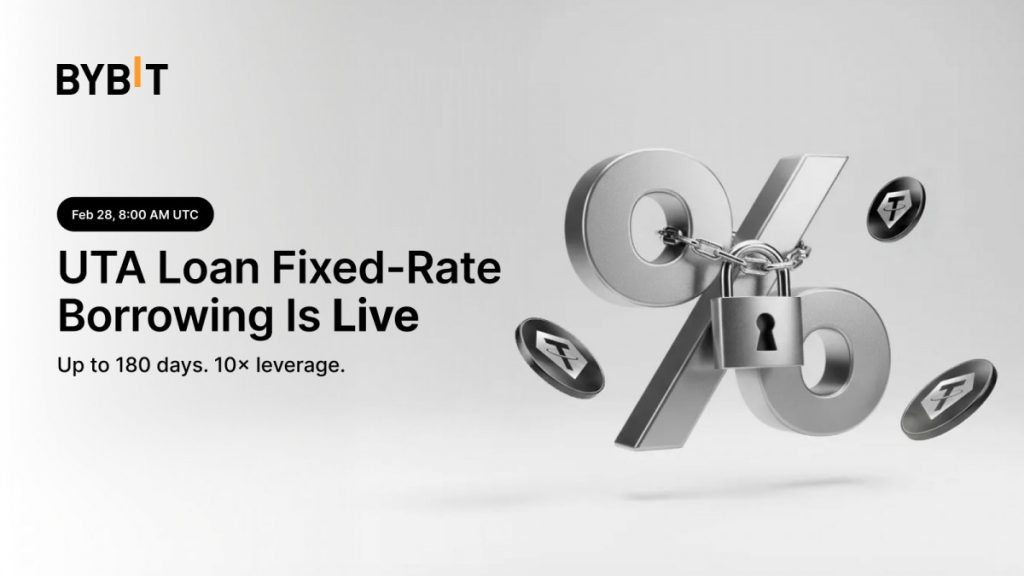
Bybit Introduces Fixed-Rate UTA Loans Offering Up to 10x Leverage and Up to 180-Day Borrowing

0
Bybit Introduces Fixed-Rate UTA Loans Offering Up to 10x Leverage and Up to 180-Day Borrowing


Sponsored

Stories and Reviews

February 28, 2026

Bybit Introduces Fixed-Rate UTA Loans Offering Up to 10x Leverage and Up to 180-Day Borrowing

Dubai, UAE, February 28th, 2026, Chainwire

Bybit, the world’s second-largest cryptocurrency exchange by trading volume, has introduced a fixed-rate borrowing option under its Unified Trading Account (UTA) Loan product, bringing together leverage of up to 10 times and fixed borrowing periods of up to 180 days within a single unified account — a combination that remains rare in the digital asset market.

Bybit’s Unified Trading Account is designed to allow users to manage spot trading, derivatives trading, and borrowing activities within a single account structure using shared collateral and integrated margin management. Through UTA Loan, users can borrow assets via Auto Borrow, triggered automatically by trading activity, or Manual Borrow, initiated in advance. With the introduction of fixed-rate borrowing, users can now choose between floating-rate flexibility and fixed-rate cost certainty, while maintaining access to up to 10x leverage for eligible trading activities.

The new fixed-rate option represents a significant expansion of UTA Loan, which previously focused on floating-rate borrowing with interest calculated on an hourly basis and without predefined loan maturities, a structure primarily suited for short-term funding needs. By contrast, the new fixed-rate option allows users to lock in both interest rate and loan duration in advance, enabling longer-term planning while maintaining access to higher leverage of up to 10x under UTA.

Effective Feb. 28, 2026, at 8 a.m. UTC, users can access fixed-rate borrowing through Manual Borrow in UTA, with predefined loan tenors ranging from short-term durations to extended borrowing periods of up to 180 days. Users can access fixed-rate borrowing by navigating to Assets → Unified Trading Account → Borrow. Once approved, borrowing quotas are reserved for the selected term, providing clearer expectations around funding availability and cost over the life of the loan.

By pairing longer-dated fixed-rate borrowing (up to 180 days) with leverage available for eligible activities under UTA — including spot margin trading with leverage of up to 10x — Bybit enables users to deploy leveraged strategies over longer horizons with greater visibility into financing costs. In the broader crypto market, fixed-rate loans are typically limited to shorter durations or offered separately from leveraged trading frameworks, making this integrated structure within UTA notably uncommon.

Under the fixed-rate model, both the interest rate and maturity date are confirmed at the time of borrowing and remain unchanged throughout the loan term. This structure is designed for users who prioritize cost predictability when managing leveraged positions beyond short-term market movements.

The fixed-rate UTA Loan also supports continued borrowing within the original loan period. If a loan is repaid before maturity, users may re-borrow during the remaining term without additional interest, while the original maturity date remains unchanged, improving capital efficiency within the same borrowing window.

With the addition of fixed-rate borrowing, extended loan durations of up to 180 days, and access to higher leverage within UTA, Bybit continues to expand its unified account framework to support more structured and long-term capital management in the digital asset market.

While the maximum fixed-rate loan term is 180 days, users may also choose shorter loan durations to align with different trading strategies and funding needs. 

#Bybit / #CryptoArk 

About Bybit

Bybit is the world’s second-largest cryptocurrency exchange by trading volume, serving a global community of over 80 million users. Founded in 2018, Bybit is redefining openness in the decentralized world by creating a simpler, open and equal ecosystem for everyone. With a strong focus on Web3, Bybit partners strategically with leading blockchain protocols to provide robust infrastructure and drive on-chain innovation. Renowned for its secure custody, diverse marketplaces, intuitive user experience, and advanced blockchain tools, Bybit bridges the gap between TradFi and DeFi, empowering builders, creators, and enthusiasts to unlock the full potential of Web3. Discover the future of decentralized finance at Bybit.com.

For more details about Bybit, please visit Bybit Press 

For media inquiries, please contact: [email protected]

For updates, please follow: Bybit’s Communities and Social Media

Contact

Head of PRTony AuBybit[email protected]

Disclaimer

In line with the Trust Project guidelines, please note that the information provided on this page is not intended to be and should not be interpreted as legal, tax, investment, financial, or any other form of advice. It is important to only invest what you can afford to lose and to seek independent financial advice if you have any doubts. For further information, we suggest referring to the terms and conditions as well as the help and support pages provided by the issuer or advertiser. MetaversePost is committed to accurate, unbiased reporting, but market conditions are subject to change without notice.

About The Author

Chainwire is the top blockchain and cryptocurrency newswire, distributing press releases, and maximizing crypto news coverage.

More articles

Chainwire is the top blockchain and cryptocurrency newswire, distributing press releases, and maximizing crypto news coverage.


Source link

Iran-Israel War Escalates, Triggers Crypto Market Drops

0
Iran-Israel War Escalates, Triggers Crypto Market Drops


The crypto market remained under pressure on Friday after Israel said it launched a pre-emptive strike on Iran, adding a fresh geopolitical shock to already fragile risk sentiment across global markets. The escalation pushed investors toward traditional defensive assets and away from higher-beta trades such as cryptocurrencies.

Bitcoin, Ethereum, Solana and XRP are down

Hourly price action gathered from CoinMarketCap data showed Bitcoin down 3.31% in the last hour against the dollar, while Ethereum was down 3.00% in the last hour. Solana also dropped 4.00%, while XRP is down 2.51% at the time of writing.

The hourly declines in BTC, ETH, and other altcoins indicate that traders are responding quickly to the worsening geopolitical backdrop rather than only digesting older macro concerns.

$500 Million Liquidated

At the broader market level, CoinGlass said around 151,935 traders were liquidated in the past 24 hours, with total liquidations reaching roughly $502.11 million. That makes the current decline look less like orderly profit-taking and more like a leverage flush driven by a sudden deterioration in macro and geopolitical confidence.

Crypto Liquidations After Iran-Isreal War Escalation | Coinglass

Moreover, CoinGlass data showed Bitcoin trading near $63,585, down about 6.05% over 24 hours, with roughly $192.4 million in BTC futures liquidations and open interest at around $43.4 billion. Spot volume stood near $7.02 billion, while futures volume surged to roughly $68.27 billion, suggesting the sell-off was being amplified in derivatives markets rather than driven by spot alone.

Ethereum also saw heavy deleveraging. CoinGlass showed ETH trading around $1,866, down roughly 5.53% in 24 hours, with about $149.14 million in futures liquidations and open interest near $23.6 billion. Ethereum’s spot volume was about $3.59 billion, compared with more than $51.8 billion in futures volume, reinforcing that leverage remained a major driver of the move.

Among large-cap altcoins, XRP and Solana also reflected clear stress. CoinGlass data showed XRP spot volume at about $1.16 billion against futures volume of roughly $4.46 billion, with around $11.78 million in liquidations and open interest near $2.14 billion. Solana, meanwhile, recorded about $914.4 million in spot volume versus $11.7 billion in futures volume, with nearly $27.93 million in liquidations and open interest around $4.78 billion.

Analysts called the ‘perfect storm’

In its February 23 market note, QCP said Bitcoin’s break below $65,000 came amid a “perfect storm” of renewed tariff pressure and a potential U.S.-Iran conflict, with roughly $230 million in long liquidations during the move. That read-through remains relevant now that Israel has struck Iran directly: geopolitical stress is acting as an accelerant on a market that was already vulnerable to macro shocks.

The latest derivatives readings also weaken the idea that Bitcoin is behaving like a near-term war hedge. Instead, the combination of falling prices, elevated futures turnover, and large liquidation totals suggests traders are treating crypto more like a liquidity-sensitive risk asset, at least in this phase of the conflict. As long as Iran-Israel tensions remain elevated, crypto may stay exposed to further downside, especially if oil rises further and broader market volatility intensifies.

The risk-off reaction was visible across both traditional and digital markets. Reuters reported that oil prices have added a geopolitical risk premium as traders weigh the possibility of supply disruption tied to Iran, while gold hovered near a one-month high on safe-haven demand. Barclays said Brent could reach $80 per barrel if tensions cause meaningful supply losses, underscoring why markets are reacting so sharply to the latest developments.

Also Read: Bitcoin Bottom or Just a Pause? Key Metrics Show Risk Still Elevated

Disclaimer: The information researched and reported by The Crypto Times is for informational purposes only and is not a substitute for professional financial advice. Investing in crypto assets involves significant risk due to market volatility. Always Do Your Own Research (DYOR) and consult with a qualified Financial Advisor before making any investment decisions.

Google News Banner


Source link

Popular Posts

My Favorites

Why Black Ops 4’s The Order May Return in Black Ops...

0
Call of Duty: Black Ops 6 appears to be bringing back The Order in its Zombies storyline – a villainous organization first seen...