Published: February 13, 2025 at 8:00 pm Updated: February 13, 2025 at 7:24 am
To improve your local-language experience, sometimes we employ an auto-translation plugin. Please note auto-translation may not be accurate, so read original article for precise information.
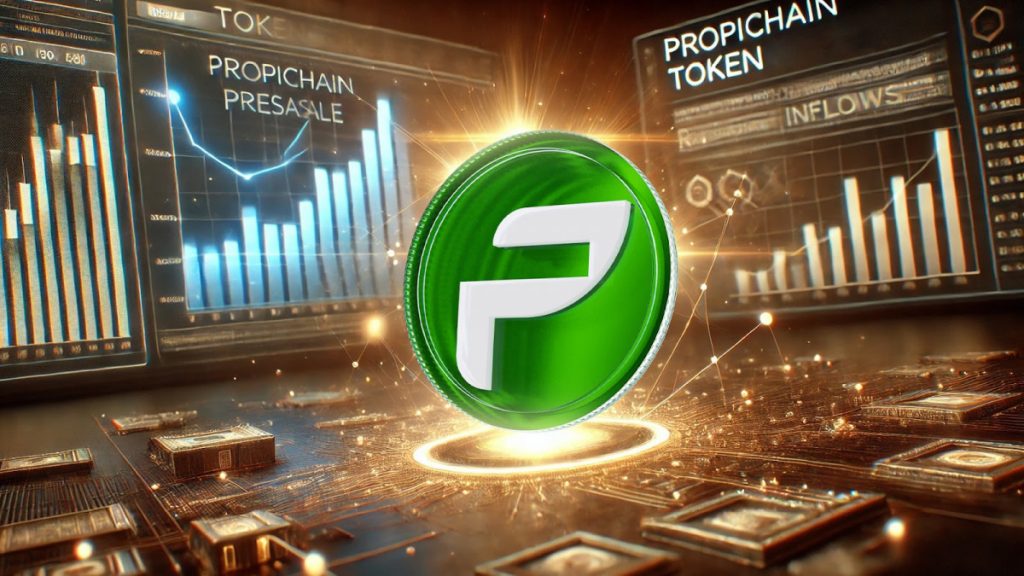
The real estate industry, long plagued by inefficiencies and high entry barriers, is undergoing a major transformation through blockchain and artificial intelligence. PropiChain (PCHAIN) token presale is at the forefront of this revolution, leveraging AI-powered real estate investments and tokenized property ownership.
This token presale has been gaining significant momentum as investors recognize its potential to disrupt the property management sector.
PropiChain (PCHAIN) Creates an AI-Powered Real Estate Investment
PropiChain’s AI-driven approach is redefining how real estate transactions are conducted. Unlike traditional property investments that require extensive paperwork and intermediaries, PropiChain uses AI to streamline processes, enhance accuracy, and boost market efficiency.
The platform’s AI engine analyzes global real estate trends, assesses property values, and automates transactions, reducing the risks of human error and speculative investments. This unique system allows investors to make data-backed decisions, ensuring they capitalize on market trends before they materialize.
PropiChain’s predictive analytics also provide investors with real-time insights, using historical data and economic indicators to forecast movements. These advanced AI capabilities are continuously improved through funds raised in the ongoing token presale, ensuring the platform remains a leader in real estate intelligence.
Another compelling aspect of PropiChain’s model is its use of smart contracts, which automate property transactions based on predefined investor conditions. Whether it’s setting price triggers or rental agreements, smart contracts execute transactions efficiently without third-party involvement.
Beyond simplifying transactions, PropiChain integrates with the metaverse through its ‘Propiverse’, allowing users to explore properties virtually. Investors can tour real estate assets, assess layouts, and interact with other buyers and sellers in a digital, immersive environment.
This AI-enhanced virtual real estate experience further strengthens PropiChain’s position as a next-generation investment platform.
PropiChain’s token presale surge is largely fueled by its fractional ownership model, which makes real estate investments accessible to a broader audience. Traditionally, real estate investments require significant capital, but PropiChain removes these barriers by allowing investors to purchase fractional ownership of properties.
Through blockchain-based property tokenization, physical assets are transformed into digital securities that can be easily traded. Investors benefit from increased liquidity, bypassing the illiquidity issues of traditional real estate investments.
PropiChain also ensures transparency and security in property transactions. The platform has undergone rigorous smart contract audits by BlockAudit, a leading blockchain security firm. This has shunned the idea of the project being illegitimate, boosting its credibility among investors.
Additionally, its listing on CoinMarketCap reinforces investor confidence and signals the project’s long-term viability. Since the listing, bullish sentiments have grown significantly, now standing at 89%.
PropiChain’s Token Presale Sees Massive Inflows
With increasing investor interest, PropiChain’s token presale has now raised over $3 million. Currently in its second token presale stage, the altcoin is priced at $0.011, which is expected to increase in the next phase to $0.023.
Investors who get in early stand to gain significantly, with the listing price set at $0.032, offering a potential ROI of over 700%.
Market analysts predict that PCHAIN could see a price surge beyond $4, mirroring previous exponential gains from tokens like Dogecoin. This projection suggests a staggering 10,500% return for early investors, earning an investment of $600 an ROI of up to $63,000.
At the heart of PropiChain’s ecosystem, the PCHAIN token powers all transactions. It facilitates property purchases, access to AI analytics, smart contract automation, and engagement in the metaverse real estate marketplace.
Additionally, token holders can participate in governance decisions, stake their assets for rewards up to 225%, and benefit from DeFi integrations.
As PropiChain continues to attract savvy investors, its AI-driven real estate model, and tokenized ownership structure position it as a game-changer in the market. With its token presale surging, this is shaping to be one of the most promising blockchain projects in the real estate sector.
For more information about Propichain Presale
Visit Propichain Presale
Join The Propichain Community
Disclaimer
In line with the Trust Project guidelines, please note that the information provided on this page is not intended to be and should not be interpreted as legal, tax, investment, financial, or any other form of advice. It is important to only invest what you can afford to lose and to seek independent financial advice if you have any doubts. For further information, we suggest referring to the terms and conditions as well as the help and support pages provided by the issuer or advertiser. MetaversePost is committed to accurate, unbiased reporting, but market conditions are subject to change without notice.
About The Author
Gregory, a digital nomad hailing from Poland, is not only a financial analyst but also a valuable contributor to various online magazines. With a wealth of experience in the financial industry, his insights and expertise have earned him recognition in numerous publications. Utilising his spare time effectively, Gregory is currently dedicated to writing a book about cryptocurrency and blockchain.
More articles
Gregory, a digital nomad hailing from Poland, is not only a financial analyst but also a valuable contributor to various online magazines. With a wealth of experience in the financial industry, his insights and expertise have earned him recognition in numerous publications. Utilising his spare time effectively, Gregory is currently dedicated to writing a book about cryptocurrency and blockchain.
Published: February 13, 2025 at 10:40 am Updated: February 13, 2025 at 10:40 am
by Ana
Edited and fact-checked:
February 13, 2025 at 10:40 am
To improve your local-language experience, sometimes we employ an auto-translation plugin. Please note auto-translation may not be accurate, so read original article for precise information.
In Brief
Ozean has introduced Port, an on-chain vault infrastructure aimed at enhancing liquidity, accessibility, and diversification for yield-bearing RWAs.
Decentralized finance (DeFi) credit protocol specializing in Real-World Asset (RWA) lending, Clearpool announced that its first RWA yield blockchain, Ozean, has introduced Port, an on-chain vault infrastructure designed to improve liquidity, accessibility, and diversification for yield-bearing RWAs.
Many current RWA vaults and products rely on centralized decision-making processes, limited transparency, and concentrated risk, which can make it challenging for investors to manage their exposure effectively.
Port is the first RWA Exchange-Traded Pool (ETP) created to address these issues by combining illiquid RWAs with liquid, yield-generating assets such as U.S. Treasury bills. ETPs function similarly to Exchange-Traded Funds (ETFs) but are designed for the DeFi space. This ETF-like structure aims to offer increased liquidity and a diversified portfolio of income-generating assets for investors.
🚢 Introducing Port: The First RWA Exchange-Traded Pool by Ozean 🌊
Liquidity. Accessibility. Diversification.
Port is the first on-chain vault infrastructure designed to solve the biggest challenges in RWAs.
By pooling illiquid RWAs with liquid, yield-bearing assets like U.S.… pic.twitter.com/XKYOJjSB19
— Clearpool (launching Ozean🌊) (@ClearpoolFin) February 13, 2025
A standout feature of Port is its governance-driven asset selection process. Unlike conventional financial products that typically rely on centralized management, Port uses decentralized governance, allowing CPOOL token holders to vote on asset composition and weighting. This structure ensures the investment strategy reflects the collective preferences of the community while upholding transparency and decentralization.
Port offers users access to a diverse range of RWAs, each with different liquidity profiles, that are sourced and distributed by approved issuers. This approach reduces counterparty risk and enhances liquidity at the portfolio level, while still maintaining relatively high returns.
Additionally, Port has partnered with Hex Trust, a fully licensed custodian that manages over $5 billion in assets. This collaboration ensures that the assets are handled with institutional-grade security, boosting credibility and trust among participants. Furthermore, third-party risk assessments are conducted in real-time by Synnax and the Credora Network, providing ongoing monitoring and evaluation of the yield-bearing assets and reinforcing the integrity of the vault.
Port: Addressing The Key Challenges Of On-Chain RWAs
Port introduces a strategy that includes a partial allocation to cash and treasury bills, allowing for quicker redemptions and ensuring that investors can access liquidity as needed. This feature also facilitates permissionless access to RWAs, enabling both retail and institutional investors to participate. This approach aligns with the DeFi principles of creating open and inclusive financial markets.
Additionally, Port addresses the risk typically faced by investors seeking exposure to RWAs, as many available products focus on a single asset class or sector. By offering access to a diversified mix of assets—including private credit, bonds, real estate, and tokenized yield strategies—Port helps to spread risk across various sectors. The platform further enhances its security by integrating risk assessment services from trusted third-party partners, ensuring continuous monitoring and transparent reporting of asset performance.
Disclaimer
In line with the Trust Project guidelines, please note that the information provided on this page is not intended to be and should not be interpreted as legal, tax, investment, financial, or any other form of advice. It is important to only invest what you can afford to lose and to seek independent financial advice if you have any doubts. For further information, we suggest referring to the terms and conditions as well as the help and support pages provided by the issuer or advertiser. MetaversePost is committed to accurate, unbiased reporting, but market conditions are subject to change without notice.
About The Author
Alisa, a dedicated journalist at the MPost, specializes in cryptocurrency, zero-knowledge proofs, investments, and the expansive realm of Web3. With a keen eye for emerging trends and technologies, she delivers comprehensive coverage to inform and engage readers in the ever-evolving landscape of digital finance.
More articles
Alisa Davidson
Alisa, a dedicated journalist at the MPost, specializes in cryptocurrency, zero-knowledge proofs, investments, and the expansive realm of Web3. With a keen eye for emerging trends and technologies, she delivers comprehensive coverage to inform and engage readers in the ever-evolving landscape of digital finance.
Cryptocurrency mining is one of the most common methods of producing a cryptocurrency. In many blockchains that use the Proof-of-Work (PoW) consensus mechanism, such as Bitcoin (BTC) and Ethereum (ETH), miners who verify transactions and secure the network are rewarded with the cryptocurrency of the respective blockchain.
These rewards are called “block rewards.” Cryptocurrencies that are given as a block reward and produced by crypto mining are mineable cryptocurrencies. However, there are also cryptocurrencies that cannot be mined, meaning they are not produced by cryptocurrency mining.
Cryptocurrencies That Cannot Be Mined
Non-mineable cryptocurrencies, as the name suggests, refer to cryptocurrencies that are not produced through mining. Cryptocurrency mining involves miners verifying transactions using computational power to obtain new block rewards, thereby putting new coins into circulation.
The majority of non-mineable cryptocurrencies are usually already in circulation or will be offered by the company. Users can obtain them by purchasing these cryptocurrencies that are already available. Non-mineable cryptocurrencies that are offered for the first time can be purchased through an Initial Coin Offering (ICO).
Types of Cryptocurrencies That Cannot Be Mined
There are basically two types of non-mineable cryptocurrencies:
Cryptocurrencies that have reached their maximum supply
Cryptocurrencies that have not yet reached their maximum supply
Unmineable cryptocurrencies that have reached their maximum supply enter the market fully issued. All of these cryptocurrencies are typically offered for sale through an ICO. Users can buy these cryptocurrencies through an ICO or later on cryptocurrency exchanges.
Cryptocurrencies that have not reached their maximum supply and cannot be mined are not fully issued from the beginning. These are usually cryptocurrencies that use the Proof-of-Stake (PoS) consensus mechanism. In this mechanism, transactions are verified by validator nodes and added to the blockchain. To become a validator on the network, it is necessary to stake the cryptocurrency of the respective blockchain. Cryptocurrencies that have not yet been issued are given to validators as block rewards in exchange for staking.
What Are the Cryptocurrencies That Cannot Be Mined?
There are many non-mineable cryptocurrencies in the blockchain and cryptocurrency industry. Some of the most well-known include:
Ripple (XRP)
Solana (SOL)
Terra (LUNA)
Cardano (ADA)
Polkadot (DOT)
Avalanche (AVAX)
You May Also Like
Follow us on TWITTER (X) and be instantly informed about the latest developments…
The first month of 2025 has been very active for both the technology world and the cryptocurrency market. While OpenAI has long been the company most associated with artificial intelligence, it now faces serious competition from a Chinese firm: DeepSeek.
The AI industry has grown at a phenomenal pace over the past few years, driven by large language models (LLMs) and chatbots based on them. In particular, the ChatGPT chatbot released by OpenAI has revolutionized the field and reached hundreds of millions of users. Some studies indicate that ChatGPT processes more than 1 billion queries every day.
The OpenAI o1, which was demonstrated in September and fully released in December, stands out as the most powerful LLM to date. Although it operates slower than its predecessors, OpenAI o1 can solve much more complex problems and even exhibits the ability to “reason.” However, it now has a key competitor: the DeepSeek R1 model from the Chinese artificial intelligence company DeepSeek, which offers similar capabilities at much lower costs.
Thanks to its efficiency, DeepSeek-R1 has already established itself among the top AI projects. In this article, we will explore questions such as: What is DeepSeek? Is DeepSeek-R1 more powerful than ChatGPT and OpenAI o1? And is DeepSeek safe?
What is DeepSeek?
DeepSeek is a China-based artificial intelligence company founded in 2023 by Liang Wenfeng. Wenfeng previously headed the AI-powered hedge fund High-Flyer. He then founded DeepSeek to develop open-source and accessible general-purpose artificial intelligence (AGI) applications. He took with him many scientists, engineers, and financiers who were experienced in this field.
Unlike most AI companies in China, DeepSeek operates independently of tech giants such as Baidu and Alibaba. The interesting thing is that, although it does not have the support of technology giants, it is even challenging the U.S. company OpenAI, let alone competing at the top of China’s artificial intelligence industry! DeepSeek’s newest LLM, the R1, works more efficiently than OpenAI’s o1, according to many third-party chip tests. While DeepSeek-R1 requires a much lower GPU to train than OpenAI o1, this increased efficiency also reduces the cost for the end user. Not just reducing it—but eliminating it entirely! DeepSeek-R1 is available for free, at least for now. That’s why it has the potential to become the biggest competitor to OpenAI and other U.S. AI applications.
What is DeepSeek-R1? It’s worth taking a closer look…
What is DeepSeek-R1?
DeepSeek launched its first LLM chatbot in 2023, shortly after it was founded. In May 2024, DeepSeek-V2 was released, and the company suddenly became the center of China’s artificial intelligence industry because it was much lower in cost than other companies’ LLMs. This sparked a price-cutting war among Chinese companies. Other tech companies such as ByteDance, Tencent, Baidu, and Alibaba began lowering the prices of their own AI models to compete with DeepSeek. DeepSeek, on the other hand, has managed to remain profitable despite its low price.
Six months later, in December 2024, DeepSeek-V3 was released. This model cost about $6 million to train. However, tests showed that it performed head-to-head with GPT-4o and Claude 3.5 Sonnet, which were created at much higher costs. DeepSeek-V3 even outperformed Llama 3.1 and Qwen 2.5.
However, the real sensation was DeepSeek-R1, which was released on January 20, 2025. DeepSeek-R1 was introduced as a competitor to OpenAI’s latest model, o1. What distinguished the o1 model from other LLMs was that it was trained with the reinforcement learning (RL) technique and had reasoning skills. A reasoning LLM can follow a train of thought before responding to the user, making logical inferences and arriving at very accurate conclusions.
DeepSeek-R1 stands out as an artificial intelligence model that is trained with the RL technique and can reason, just like o1. Users can access R1 for free after creating a DeepSeek account. R1 also shares in detail the reasoning process, allowing users to understand how it arrives at an answer before responding to their input.
DeepSeek-R1 vs. OpenAI o1
DeepSeek-R1 has made a huge impact in the world of technology and finance. So much so that the U.S. stock market opened today (January 27, 2025) with a sharp decline in the share values of technology giants, especially Nvidia shares. The success of DeepSeek in terms of price/performance and the fact that it can offer a service similar to OpenAI’s—which normally comes at a very high fee—for free has been interpreted as the transfer of competition between China and the U.S. into the artificial intelligence field.
Moreover, it suggests that DeepSeek-R1 has outperformed o1 in prestigious tests such as the American Invitational Mathematics Examination (AIME) and MATH. The performance of the two models in successfully solving complex problems can yield different results across different tests. However, it appears that both models perform close to each other. A study that analyzes leading tests with the support of artificial intelligence, the results of which you can see below, clearly reveals this.
Again, this study shows that DeepSeek-R1 and its variants promise much lower costs than o1 and its variants, even if their performance is equal. This provides a significant advantage for DeepSeek in terms of sustainability and efficiency. For the end user, DeepSeek makes a difference as a free alternative.
Benchmark Tests
Since its release, DeepSeek-R1 has been benchmarked against o1 in different disciplines. Let’s take a closer look at the results of these tests.
In math tasks, DeepSeek-R1 performs strongly. In the AIME 2024 test, which evaluates advanced multi-step mathematical reasoning, DeepSeek-R1 scored 79.8%, narrowly outpacing OpenAI o1-1217, which scored 79.2%. On the MATH-500, which tests LLMs with high school-level math problems, DeepSeek-R1 achieves an impressive score of 97.3%, while OpenAI o1-1217 remains at 96.4%.
There is also fierce competition between the two leading LLMs in coding tasks. In the Codeforces test, OpenAI o1-1217 comes out on top with 96.6%, while DeepSeek-R1 takes second place with only a small margin, scoring 96.3%. In the SWE-bench Verified test, which evaluates reasoning skills in software engineering tasks, DeepSeek-R1, which received 49.2%, outperforms OpenAI o1-1217, which received 48.9%.
When it comes to general knowledge, the two models are closely matched, but OpenAI holds the leadership position. GPQA Diamond, which measures the ability to answer general knowledge questions through factual reasoning, gives DeepSeek-R1 a score of 71.5%. OpenAI o1-1217, on the other hand, is the clear winner of this test with a score of 75.7%. In the MMLU, which measures multidisciplinary skills, OpenAI o1-1217 scores 91.8%, surpassing DeepSeek-R1, which scores 90.8%.
Is DeepSeek Safe?
DeepSeek quickly climbed to the top among AI companies and became OpenAI’s most important competitor. However, users and tech security experts have different opinions on DeepSeek’s data privacy and security policies. The answer to the question of whether DeepSeek is safe is actually directly related to the users’ approach to data security. Today, when subscribing to many AI tools, we allow them to use our inputs and data. Therefore, users who are concerned about their personal data should review DeepSeek’s privacy policy.
In this privacy policy, which you can access by clicking here, DeepSeek states:“When you use our Services, we automatically collect certain information from you, including your IP address, unique device identifiers, and internet or other network activity information, such as cookies.”
It also collects user information entered when creating an account, such as date of birth, email address, username, and chatbot inputs.
If you don’t mind sharing such data, you can consider DeepSeek a safe AI tool.
What is Artificial Intelligence?
Artificial intelligence is a concept that refers to machines and software trained to mimic human intelligence. Any machine that exhibits characteristics associated with the human mind, such as learning, reasoning, and problem-solving, can be considered to have artificial intelligence.
There are also many artificial intelligence projects in the cryptocurrency market. AI projects that take advantage of blockchain technology, such as decentralization, security, and transparency, often issue and sell their own tokens to raise funding. These tokens, known as “AI coins,” which you can buy and sell on Bitlo, offer several benefits to their investors and make them part of an AI ecosystem.
You May Also Like
Follow us on TWITTER (X) and be instantly informed about the latest developments…
Nobel Prize-winning economist Eugene Fama, known as the father of modern finance, made a bombshell statement about Bitcoin (BTC) and cryptocurrencies.
According to Fama, Bitcoin will eventually become completely worthless—transforming what is currently one of the largest crypto assets (often associated with values around 100 thousand dollars) into garbage.
Speaking on a podcast, Fama argued that Bitcoin and altcoins lack intrinsic value. He pointed out that this view contradicts traditional monetary theory, suggesting that if cryptocurrencies are to retain their value, monetary theory itself will need to be rewritten. This, he believes, is precisely why BTC is destined to become worthless.
So when will Bitcoin (BTC) be trashed? According to Fama, this could happen within the next 10 years—although he acknowledges that this is just a possibility.
His comments come at a time when the cryptocurrency market is experiencing one of its biggest declines in history, adding significant weight to his prediction. Only time will tell whether Eugene Fama or his critics will ultimately be proven right.
You May Also Like
Follow us on TWITTER (X) and be instantly informed about the latest developments…
Cryptocurrencies based on artificial intelligence tools have lost up to 90% of their value since 2024. The recent massive surge in their units has also affected tokens tied to artificial intelligence tools. However, according to reports, these cryptocurrencies have fallen significantly since their highs in 2024.
According to CoinGecko data, artificial intelligence cryptocurrencies have lost up to 90% of their value compared to last year. This monstrous decline resulted from the downward trend across the market that began in January, leading to an incredible drop in market value.
AI Rig Complex (ARC), ElizaOS (AI16Z), and Virtuals (VIRTUAL)—among the most prominent AI platforms—have lost between 75% and 90% of their market value since January. It is worth noting that during this period, the overall crypto market declined by about 16%.
Another artificial intelligence cryptocurrency, Fartcoin, was one of the most curious tokens in 2024. However, it has dropped by approximately 65% in the last 30 days, and its market capitalization has fallen to $450 million. Overall, the market capitalization of tokens based on AI tools fell by 40%, from over $10 billion to $6 billion.
Meanwhile, Bitcoin is trading around $97,318 at the time of writing, suggesting that the market is beginning to recover, albeit slowly. However, it remains uncertain whether artificial intelligence cryptocurrencies will ever return to their former levels. At the moment, this seems unlikely, though the long-term outlook may change.
You May Also Like
Follow us on TWITTER (X) and be instantly informed about the latest developments…
The European Union has announced that it will invest 200 billion euros in the field of artificial intelligence. It aims to become the leader in the global AI race.
The European Union has unveiled a major investment plan to influence global competition in artificial intelligence. According to the announcement, a total of 200 billion euros has been allocated for AI investments across Europe, with 50 billion euros of this budget designated as new investments. Here are the details of the European Union‘s plans for the field of artificial intelligence!
How does the EU aim to lead the race for artificial intelligence?
Speaking at the Artificial Intelligence Action Summit in Paris, European Commission President Ursula von der Leyen announced that she does not agree with the view that Europe is lagging behind in the artificial intelligence race. She stated that she does not accept the idea that either China or the United States has already won this race, emphasizing that Europe can still play a significant role. Highlighting that the development of artificial intelligence technology is ongoing, Von der Leyen asserted that Europe can lead this race by leveraging applications in industry and other critical areas. She also mentioned that the planned investments will be directed toward developing large-scale artificial intelligence models and strengthening supercomputer infrastructures.
The European Union will focus on three key pillars to advance artificial intelligence: investing in science and technology, developing advanced AI applications using industrial production data, and uniting talent from various countries. At the same time, the strategy aims to expand the use of artificial intelligence in sectors such as industry, security, and public health.
Both France and the United States have accelerated their investments in artificial intelligence. French President Emmanuel Macron has announced that his country will attract 109 billion euros in private investment in the AI sector over the coming years. Meanwhile, the United States plans to implement global measures to prevent authoritarian regimes from exploiting artificial intelligence for military intelligence and propaganda purposes.
You May Also Like
Follow us on TWITTER (X) and be instantly informed about the latest developments…
Published: February 12, 2025 at 6:00 pm Updated: February 12, 2025 at 5:57 am
To improve your local-language experience, sometimes we employ an auto-translation plugin. Please note auto-translation may not be accurate, so read original article for precise information.
Shiba Inu price experts are confident that its recovery in the past 7 days could be a sign of a larger rally to come. However, many investors are unconvinced, saying that RCO Finance’s innovative trading ecosystem holds stronger potential for high returns.
Read on to see why analysts say RCO Finance will outshine the next Shiba Inu price rally to become the best altcoin investment of 2025.
Meme coin Holders Express Hope Following the 7-day Shiba Inu Price Recovery
Meme coin investors look forward to a strong recovery after the Shiba Inu price increase over the past week. As was the case for other meme tokens, the Shiba Inu price declined in early February 2025.
Many had expected the Shiba Inu price decline to continue. However, SHIB has grown by 7.33% over the past week, now trading at $0.00001583.
Amid talks of a Shiba Inu price recovery, investors are still turning to the altcoin sector in search of high-growth opportunities.
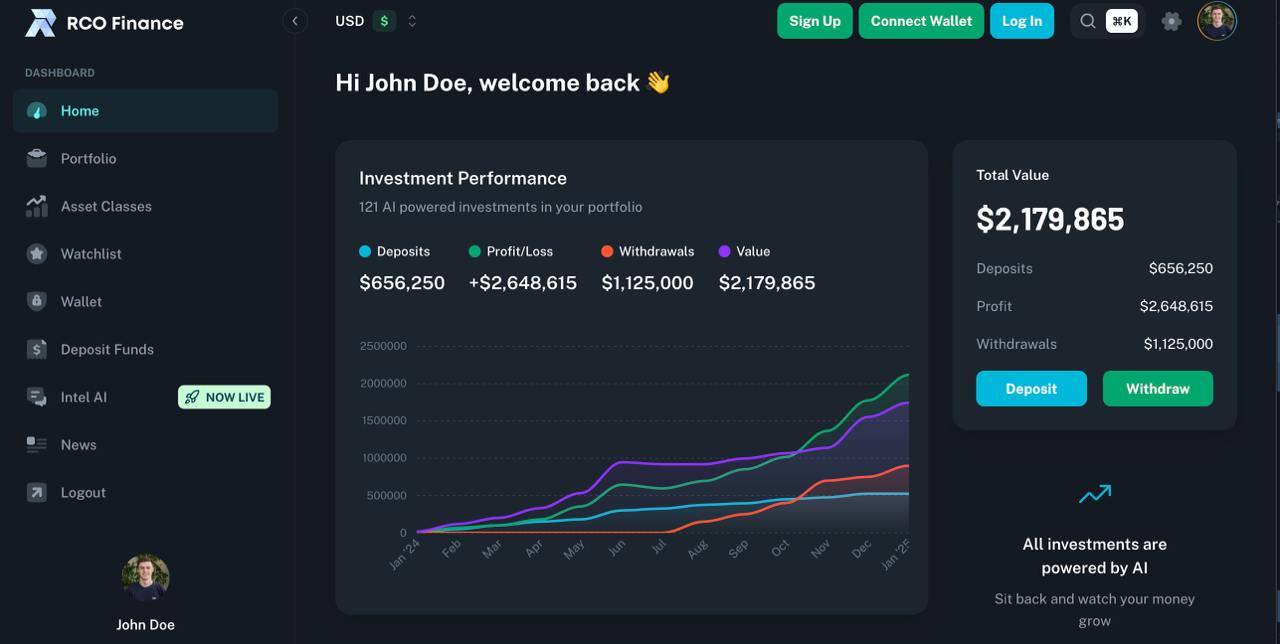
Among these opportunities, RCO Finance has emerged as a preferred choice, attracting traders with its AI-powered ecosystem designed to optimize returns from the investment ecosystem.
RCO Finance: Removing Bottlenecks in the Financial Landscape with Artificial Intelligence
RCO Finance is a unique ecosystem that offers access to over 120,000 assets, allowing investors to now amplify their returns across both traditional and decentralized finance markets.
Investors in this ecosystem can trade everything from stocks, bonds, mutual funds, ETFs, commodities, cryptocurrencies, to tokenized real estate. They can also explore diversification by building a portfolio with the right balance of risky and stable assets.
This helps them to keep losses minimal while maximizing returns. Coupled with RCO Finance’s staggering 1000x leverage feature, you can amplify your market exposure and capitalize on rapid price movements across traditional and decentralized markets.
Beyond broad investing options, RCO Finance provides access to Robo Advisor, a highly automated system that uses artificial intelligence and machine learning to handle portfolio management on behalf of users.
Firstly, it can help you spot investing opportunities that align with your overall financial ambitions. Robo Advisor keeps an eye on the market by collecting data feeds from reliable outlets like Bloomberg.
This allows the trading bot to spot emerging investment opportunities while providing institutional-grade trading strategies that can help maximize gains.
To illustrate this in action, picture a novice meme coin investor with access to Robo Advisor. Rather than struggle with reading market charts or predicting market movements, they can rely on signals from Robo Advisor.
The trading bot will notify them of opportunities like the memecoin boom that took Dogecoin to a 3-year high in Q4 2024.
Aside from equipping you with high-level trading strategies, RCO Finance’s trading bot can also rebalance your portfolio automatically, helping you to reduce losses during bear markets while increasing gains during bullish times.
Take, for instance, when the release of Deep Seek triggered a market crash that wiped off $600 billion from Nvidia’s valuation.
In such a scenario, Robo Advisor instantly sifts through live data, looking for opportunities to strategically shift your investments from volatile sectors to more stable areas like government securities. This ensures that whether you’re new to investing or a seasoned trader, your portfolio is always optimized for growth and protection.
While Robo Advisor focuses on active trading, RCO Finance also empowers users to earn passive income by staking their RCOF tokens, adding an extra layer of growth potential to their investment strategies.
By staking your RCOF tokens, you help contribute to liquidity pools that enable seamless trading in its ecosystem, earning up to 86% APY as rewards. Additionally, holding RCO tokens helps investors earn reduced trading fees and compound their overall gains.
Even better, by incentivizing token holding, RCO Finance helps to keep RCOF’s value stable. They can also receive extra tokens as part of cashback and loyalty rewards for being an active member of the RCO Finance community.
Aside from yield earning mechanisms, RCO Finance also provides security and privacy by doing away with intrusive KYC procedures. With robust smart contracts that have been audited by SolidProof, the platform provides a secure, reliable trading environment.
RCO Finance Completes an Outstanding Milestone with its Beta Launch
RCO Finance has shown its commitment to transforming the investment sector with its recent beta launch. You can now dive into the future of investing by checking out pioneering tools like the Robo Advisor.
In the meantime, the team behind the project is working on further upgrades for Robo Advisor and the trading platform ahead of its coming alpha launch.
Best Crypto to Buy Now: RCO Finance Vs the Expected Shiba Inu Price Recovery
Analysts have applauded RCO Finance’s approach to using artificial intelligence to solve the common problems many investors face. Over 10,000 investors have joined RCO Finance’s presale, buying over $12 million worth of tokens.
Now in stage 5, RCOF tokens are priced at $0.100, but they will increase to $0.130 in stage 6. RCOF also has a projected listing between $0.4 and $0.6.
With forecasts hinting at a 10,000x surge, your $1,000 investment could soar to $150,000 by December. Take advantage of RCO Finance’s presale opportunity—buy RCOF tokens now at a discounted price before the upcoming price surge.
For more information about the RCO Finance (RCOF) Presale:
Visit RCO Finance Presale
Join The RCO Finance Community
Disclaimer
In line with the Trust Project guidelines, please note that the information provided on this page is not intended to be and should not be interpreted as legal, tax, investment, financial, or any other form of advice. It is important to only invest what you can afford to lose and to seek independent financial advice if you have any doubts. For further information, we suggest referring to the terms and conditions as well as the help and support pages provided by the issuer or advertiser. MetaversePost is committed to accurate, unbiased reporting, but market conditions are subject to change without notice.
About The Author
Gregory, a digital nomad hailing from Poland, is not only a financial analyst but also a valuable contributor to various online magazines. With a wealth of experience in the financial industry, his insights and expertise have earned him recognition in numerous publications. Utilising his spare time effectively, Gregory is currently dedicated to writing a book about cryptocurrency and blockchain.
More articles
Gregory, a digital nomad hailing from Poland, is not only a financial analyst but also a valuable contributor to various online magazines. With a wealth of experience in the financial industry, his insights and expertise have earned him recognition in numerous publications. Utilising his spare time effectively, Gregory is currently dedicated to writing a book about cryptocurrency and blockchain.
AI agents are becoming a key enabler for businesses looking to streamline processes, automate repetitive tasks, and empower their employees to work more efficiently. In Microsoft 365 Copilot, we’ve already seen a lot of solutions that focus on improving productivity for individuals. Yet, the potential for AI-driven automation goes much further when you can connect intelligent , natural language, agents directly to your own business data and processes—enter Azure AI Agent Service in Azure AI Foundry.
In this post, you read about why AI Agents are valuable, and how Azure AI Agent Service makes it easy to build and customize these agents. I also did some testing and share those experiences, including the Code Interpreter feature for data analysis. Finally, in the end you can read through some quick tips on how you can get started.
What Are AI Agents and Why Should Businesses Care?Stories of Transforming Business ProcessesAI AgentsAzure AI Agent Service is now in Public PreviewMy Testing Experience with Code Interpreter and Knowledge SourcesCode InterpreterExternal Knowledge & RAG TestingAgent Configuration Made SimpleModel Tuning Options and Limitations Getting Started: The Quickstart PrerequisitesCreating and Testing Your AgentExpand with SDK or Additional ToolsConclusionRead more from these sources:About writing this article
At its simplest, an AI agent is a self-contained “microservice” powered by a large language model (LLM) or similar AI model. It’s designed to answer questions, perform actions, and ultimately automate or augment specific tasks. Let’s take a look at some examples first.
Stories of Transforming Business Processes
A Fictional Look at a Multi-Agent Sales EcosystemImagine a large electronics retailer that operates in dozens of countries. They have separate specialized AI agents for different aspects of the sales cycle. One AI agent handles lead qualification by scanning incoming inquiries and extracting key information about prospective clients. Simultaneously, another agent is responsible for product recommendations based on real-time pricing and inventory data. Once a lead is qualified, a scheduling agent sets up demos with sales reps and automatically books a meeting in Microsoft Teams, complete with relevant documents attached.
These agents can also collaborate, passing information to one another about lead status or the best product bundles for a particular region. Thanks to this multi-agent approach, a sales rep can jump in only when human interaction is truly needed, rather than juggling repetitive tasks like re-checking stock or manually coordinating meetings. The entire process is a well-orchestrated system that frees employees from repetitive admin and data entry. The result: more personalized interactions with customers, higher sales velocity, and a drastically reduced chance of human error.
Fujitsu: RAG and Sales Efficiency in the Real WorldWhile the above scenario is hypothetical, real-life businesses already leverage Azure AI Agent Service to revolutionize their sales processes. For example, Fujitsu leveraged Azure AI Agent Service and Semantic Kernel to build an AI-powered automation solution to streamline proposal creation, enabling sales teams to focus on high-value customer engagement. The AI agent dynamically retrieves and synthesizes data from dispersed sources, ensuring accuracy and relevance while integrating seamlessly into Fujitsu’s existing Microsoft ecosystem. “We are using Microsoft’s Semantic Kernel and Azure AI Agent Service to orchestrate multiple specialized AI agents and an orchestrator AI to coordinate them to answer questions as a team,”
Cineplex: Transforming Customer Service Through AutomationCineplex, a leading Canadian media and entertainment company, has transformed its customer service operations using AI-powered automation. One of its biggest challenges was handling refund requests, a time-consuming process that took 5–15 minutes per request. To solve this, Cineplex implemented an AI Copilot agent using Microsoft Power Platform and Azure AI. Now, guest service agents simply input a booking ID and date, and the AI handles the rest—retrieving data, validating the request, and completing the refund in about 30 seconds This highlights how AI agents can optimize routine tasks, boost efficiency, and enhance customer service—without replacing human interaction. For businesses looking to scale support operations, AI-powered automation can be a game-changer.
AI Agents
Unlike basic chatbots, AI agents can incorporate context from historical conversations and connect to external systems, allowing them to:
Search your company’s knowledge base or the web.
Process and interpret files or real-time data.
Make calculations, generate reports, even run code.
Perform complex tasks that save employees time and effort.
Integrate with other systems, internal and external
Engage other agents in the process: multi-agent systems
Cope a lot better with various situations better than traditional automation. This is due to LLM in their “core” giving understanding of the goal and what is needed. AI Agents are flexible and can adapt to situations – and also know when to ask help from an another agent or a real person.
In other words, AI agents can complement human workers by taking on repetitive or time-consuming jobs. That might mean a customer support agent that automatically retrieves answers from a knowledge base, an internal finance agent that crunches budget data from spreadsheets, or a sales agent that triggers email workflows.
From a business standpoint, AI agents have tangible benefits:
Accelerated decision-making: Dynamic, context-aware AI reduces manual research.
Scalability: Agents can work around the clock, handling tasks for multiple teams simultaneously.
Consistency: They apply knowledge and logic in a uniform way—fewer mistakes due to human error. Today is the time when we experiment with agents, and it needs to be realized agents can also make mistakes – sometimes even plenty.. The goal is in the consistency and coming up with new ideas where AI can transform the process, and these won’t be reached without experimenting, coming up with challenging use cases and courage to try out something new.
Azure AI Agent Service, now available as public preview in the Azure AI Foundry portal, provides a managed environment to build, debug, and deploy these AI agents. It’s designed so that developers and tech-savvy business users can quickly shape an agent’s capabilities without having to assemble all the underlying code or infrastructure themselves. This speeds up pro-code agent development and is yet an another example of fusion teams where business and developers work together.
Key capabilities include:
Ready-to-Go Tools & Integrations:
Code Interpreter: Allows agents to execute Python code within a secure sandbox—great for number-crunching, data analysis, or generating graphs.
Bing Search & Azure AI Search: Agents can pull in external knowledge from the web or your own data, adding relevant context to tasks.
Azure Functions Support (SDK-based): Developers can expose custom business logic or external APIs to the agent, letting it trigger real-world actions.
Conversational Memory:Agents can maintain a thread of conversation, remember details, and continue where you (or the agent itself) left off. This is handled securely on the server side.
Multiple Model Options:Although Microsoft’s GPT-4o is a popular choice, you can also deploy other partner models like Cohere or Mistral in the Azure AI Foundry. (Note: Mistral-large-2407 is becoming legacy and may not be available much longer.)
Basic vs. Standard Setup:
Basic Setup (supported in the Azure AI Foundry portal today): You rely on Microsoft-managed resources for storage and search. Quick to start, minimal overhead, but it offers less control.
Standard Setup (Bicep template–only): You bring your own resources (like Azure Storage and Azure AI Search) for complete visibility and cost management.
I’ve spent some time exploring the new Agents UI in Azure AI Foundry, putting these features to the test. Here’s what stood out for me:
Code Interpreter
A fun (though fictional) scenario was exploring the terminal velocity of a laptop falling from an airplane. With the agent’s Code Interpreter tool enabled, I could ask the agent to run physics-related calculations. It can generate quick math scripts in Python—and this is just a simple example about the Code Interpreter.
I uploaded an Excel file for the 2023 budget of the city of Vantaa (available as open data) to the Code Interpreter. The agent then read and interpreted the file, making it straightforward to analyze budget figures, gather insights, and visualize the data.
External Knowledge & RAG Testing
I also tested a scenario using basic RAG (retrieval augmented generation). By uploading some demo documents, the agent was able to pull targeted facts from my own content, weaving them into its answers. The RAG with AI isn’t anything new anymore, but the Assistants API working behind the hood isn’t an everyday tool yet. So it made sense to play around to see how it performs – and it was just like I expected.
Agent Configuration Made Simple
The visual flow in the Azure AI Foundry UI is deceptively simple: define your agent’s name, add Knowledge sources (files or indexes), and specify which Actions (tools) the agent may use.
Currently, the only action available from the UI is Code Interpreter. If you want to integrate your own, such as Azure Functions, you can do more via the SDK.
Model Tuning Options and Limitations
Basic tuning for Temperature and Top P is easily accessible in the UI, so you can adjust how creative or deterministic your agent’s answers should be.
In the UI, only Code Interpreter is displayed as an “action,” but the underlying Assistants API definition is flexible—new actions or custom tools can be added once they are enabled.
I experimented with GPT-4o, which worked seamlessly. The service also promises support for non-OpenAI models like Cohere and Mistral, though my free Azure subscription didn’t allow me to deploy them.
Overall, these tests highlight how quickly you can piece together a specialized AI agent that’s unique to your brand, team, or project. With a few lines of code or a few clicks in the UI, you can transform a simple chat model into a mini-assistant with real business value.
Want to try it yourself? Here’s a short guide based on the official quickstart.
Prerequisites
An Azure subscription (create a free trial if needed).
The Azure AI Developer role assigned. This gives you the right permissions to create and manage AI agents.
Basic Setup via the Azure AI Foundry Portal: Because the Foundry portal only supports the “basic setup,” you’ll be using Microsoft-managed storage and search behind the scenes. This gets you getting started fast.
Creating and Testing Your Agent
Navigate to Agents in the Azure AI Foundry portal and select “New agent.”
Provide a name and add instructions (e.g., “You are a business analyst specializing in forecasting.”).A tip: use Chat Playground’s Generate prompt feature to build instructions for the agent.
Under “Knowledge & Action,” add Code Interpreter if you want the agent to handle data analysis or code execution. You can also attach up to 20 files that your agent can read and use for generating outputs.
After configuring your agent, switch to the “Playground” to begin chatting.
You can revise instructions, tweak model parameters (Temperature, Top P), or add new knowledge files and tools.
Confirm that your agent is responding as expected and refine your instructions or data sources if needed.
To incorporate your own Azure Functions or external APIs, you’ll need to define them as tools via the Azure AI Foundry SDK or the Azure OpenAI SDK. This is particularly helpful for more complex automations where the agent might, for instance, update a CRM record or send an email on your behalf.
Azure AI Agent Service is a promising step forward in automating diverse business processes—from data analysis and RAG queries to more action-oriented tasks like connecting to external APIs. The combination of large language models, integrated tools, and simple setup in the Azure AI Foundry UI makes it a compelling choice for trying out a variety of automation scenarios. In the future (near, I hope) we can also add multi-agent systems to this.
For business decision makers, one key factor is how quickly and securely it is possible achieve operational benefits (and ROI). Whether you’re in finance, manufacturing, retail, or beyond, AI agents offer a new way to tap into supercharging business processes. Think scaling processes that traditionally depend on human intervention, to agent-driven that improve productivity, reduce manual errors, and freeing tedious work (and precious) time from humans. When I talk with customers about Microsoft 365 Copilot, it already helps many to complete more tasks faster than before. For many of them, that means less long days turning evenings – or that pile of to do tasks stays in control.
If you’re curious, I recommend checking the quickstart, spinning up a basic agent, and giving Azure AI Service UI and especially the Code Interpreter with Assistants API a try. From data crunching to helping your sales or support teams, you can see how fast you can build an pro-code agent core capable of meaningful work.
Read more from these sources:
Yes, I used again the Azure OpenAI Service reasoning model o1 to help me out with this. I provided the model a long prompt, that included my goal, insights, information of what I did and what I wanted to express in the post. Along with the background information from Microsoft Learn and articles. After that I used some prompts to refine the result and added example use cases. Finally I coped the text to the blog and went through this – applying changes, deleting parts and adding new insights, and of course pictures. This speeded up the actual blog writing process quite a lot, but it still took a few of hours in total.
Perhaps for one blog post I will create a Teams meeting, that I record and transcribe, when I testing out new feature. Using that could provide quite an unique base for the post draft, that I generate with the help of o1. That would not be so structured as writing my selected insights, but would definitely be a different way. Will it be faster? That I can find out by testing it out.
Published: February 12, 2025 at 9:19 am Updated: February 12, 2025 at 9:21 am
by Ana
Edited and fact-checked:
February 12, 2025 at 9:19 am
To improve your local-language experience, sometimes we employ an auto-translation plugin. Please note auto-translation may not be accurate, so read original article for precise information.
In Brief
SlowMist has identified a critical vulnerability at the core of the recent zkLend attack, attributing the issue to the implementation of the SafeMath library within the market contract.
Blockchain security firm SlowMist has disclosed that its security team identified a critical vulnerability at the core of the recent attack on zkLend, a Layer 2 money market protocol built on Starknet. The firm attributes the issue to the implementation of the safeMath library within the market contract.
According to SlowMist, the vulnerability arises from the way division calculations are handled. The contract performs direct division operations, leading to a rounding-down vulnerability when determining the precise amount of zTokens that must be burned during withdrawal operation. This flaw creates an opportunity for attackers to exploit the discrepancy and gain unauthorized benefits.
In response to the findings, SlowMist has advised zkLend users to remain vigilant about the security of their assets. The firm recommends temporarily refraining from conducting deposit-related transactions on the platform to mitigate the risk of potential financial losses.
🚨SlowMist Security Alert🚨
The lending project @zkLend on the Starknet chain was attacked today, with more than $9 million in assets lost!
The SlowMist security team found that the core reason for this attack lies in the safeMath library adopted by the market contract. When… https://t.co/YmvzVXxmiD pic.twitter.com/S3P73E4uxu
— SlowMist (@SlowMist_Team) February 12, 2025
zkLend experienced a $9.5 million exploit on the Starknet network earlier today. In response, withdrawals on the protocol have been paused, and zkLend reached out to the hacker, offering them a “white hat” reward of 10% of the stolen funds while requesting the return of the remaining 90%, which amounts to 3,300 ETH, approximately $8.4 million.
In a statement shared on social media platform X, zkLend said, “Upon receiving the transfer, we agree to release you from any and all liability regarding the attack. We are working with security firms and law enforcement at this stage. If we do not hear from you by 00:00 UTC, 14th Feb 2025, we will proceed with the next steps to track and prosecute you.”
To the hacker:
We understand that you are responsible for today’s attack on zkLend. You may keep 10% of the funds as a whitehat bounty, and send back the remaining 90%, or 3,300 ETH to be exact, to this Ethereum address: 0xCf31e1b97790afD681723fA1398c5eAd9f69B98C.
Upon… pic.twitter.com/piEVPDHZd4
— zkLend (@zkLend) February 12, 2025
Real-time security alert platform Cyvers Alerts reported that the stolen funds were bridged to Ethereum and laundered through the privacy-focused protocol Railgun.
What Is zkLend?
zkLend aims to provide a user-friendly, secure, and efficient money-market platform tailored to meet users’ liquidity needs. The protocol is a permissionless lending market designed primarily for retail users, allowing them to deposit and borrow digital assets directly through their wallets at any time. Depositors can earn yields based on the interest paid by borrowers who utilize the deposited assets. Additionally, users can leverage their deposited assets as collateral to borrow other digital assets.
The project raised $5 million in a seed funding round in 2022, with Delphi Digital leading the investment and Three Arrows Capital and StarkWare also participating.
Disclaimer
In line with the Trust Project guidelines, please note that the information provided on this page is not intended to be and should not be interpreted as legal, tax, investment, financial, or any other form of advice. It is important to only invest what you can afford to lose and to seek independent financial advice if you have any doubts. For further information, we suggest referring to the terms and conditions as well as the help and support pages provided by the issuer or advertiser. MetaversePost is committed to accurate, unbiased reporting, but market conditions are subject to change without notice.
About The Author
Alisa, a dedicated journalist at the MPost, specializes in cryptocurrency, zero-knowledge proofs, investments, and the expansive realm of Web3. With a keen eye for emerging trends and technologies, she delivers comprehensive coverage to inform and engage readers in the ever-evolving landscape of digital finance.
More articles
Alisa Davidson
Alisa, a dedicated journalist at the MPost, specializes in cryptocurrency, zero-knowledge proofs, investments, and the expansive realm of Web3. With a keen eye for emerging trends and technologies, she delivers comprehensive coverage to inform and engage readers in the ever-evolving landscape of digital finance.
On April 14, Jeff Bezos's fiancée, Lauren Sanchez, pop star Katy Perry, broadcaster Gayle King, NASA rock scientist Aisha Bowe, civil rights activist...