Metaverse

Home Metaverse Page 191

Arcium Joins NVIDIA’s Inception Program To Advance Private AI Adoption

Arcium Joins NVIDIA’s Inception Program To Advance Private AI Adoption


In Brief

Arcium has been accepted into the NVIDIA Inception Program, which helps startups accelerate technical innovation and business growth.
Arcium Joins NVIDIA’s Inception Program To Advance Private AI Adoption

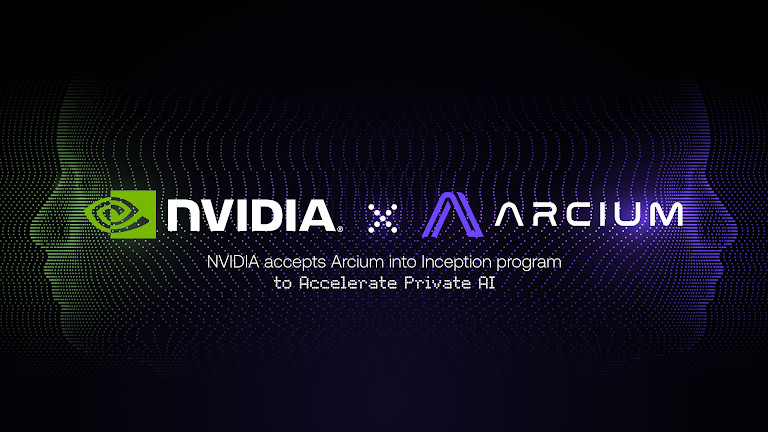
Arcium, the encrypted supercomputer, has been accepted into the NVIDIA Inception Program, which helps startups accelerate technical innovation and business growth. Arcium can now leverage the industry-leading tools and resources provided by NVIDIA to power the next generation of privacy-preserving Artificial Intelligence (AI) and Machine Learning (ML) applications, championing Private AI. 

Arcium’s acceptance into the Inception Program comes after the firm’s acquisition of Web2 competitor Inpher, one of the world’s most renowned confidential computing and Private AI providers. Operating for over a decade, Inpher received $25 million in funding from industry titans JP Morgan and Amazon in November 2024. Arcium acquired Inpher’s core technology and over 30+ patents to support Private AI infrastructure.

As more industries adopt AI for day-to-day services, Private AI tooling is needed to protect intellectual property, mitigate data breach risks, and comply with privacy regulations. Arcium’s encrypted supercomputer enables the secure processing of information in a fully encrypted state. 

Yannik Schrade, Co-Founder and CEO of Arcium, said, “Institutions leveraging AI for trading require privacy to prevent the exposure of their strategies; healthcare organizations need encryption to safeguard sensitive patient information; and AI systems need confidentiality to protect proprietary algorithms and user data. With the ability to leverage state-of-the-art resources from NVIDIA, Arcium is positioned to become the most advanced tech stack supporting Private AI applications.” 

Schrade concluded, “A new paradigm in computing is coming. With NVIDIA’s Inception Program, Arcium will lead the charge in making private AI a reality. This move further enhances the Arcium technology stack ahead of our mainnet launcht. Backed by this program, we will accelerate our mission to bring Private AI to all industries and build a world where data security concerns no longer hinder progress.”

Interested parties can visit Arcium’s website for more information about the Inception Program and Arcium’s upcoming Public Testnet.

Disclaimer: “This crypto-asset marketing communication has not been reviewed or ap-

proved by any competent authority in any Member State of the European Union. The offeror of the crypto-asset is solely responsible for the content of this crypto-asset marketing communication.”

About Arcium:

Arcium, is an encrypted supercomputer that brings a trustless, verifiable, and efficient framework to run encrypted computations. Founded in 2022, Arcium provides developers, applications and entire industries with a trustless, verifiable, and efficient framework to run encrypted computations. With Arcium, the internet can use data to its full extent in an entirely encrypted state. Backed by investors such as Greenfield Capital, Coinbase Ventures, Heartcore Capital, Longhash VC, L2 Iterative Ventures and Anagram Arcium’s goal is to allow the entire internet to run on encryption.

For media queries, please contact: [email protected] 

Disclaimer

In line with the Trust Project guidelines, please note that the information provided on this page is not intended to be and should not be interpreted as legal, tax, investment, financial, or any other form of advice. It is important to only invest what you can afford to lose and to seek independent financial advice if you have any doubts. For further information, we suggest referring to the terms and conditions as well as the help and support pages provided by the issuer or advertiser. MetaversePost is committed to accurate, unbiased reporting, but market conditions are subject to change without notice.

About The Author


Gregory, a digital nomad hailing from Poland, is not only a financial analyst but also a valuable contributor to various online magazines. With a wealth of experience in the financial industry, his insights and expertise have earned him recognition in numerous publications. Utilising his spare time effectively, Gregory is currently dedicated to writing a book about cryptocurrency and blockchain.

More articles


Gregory, a digital nomad hailing from Poland, is not only a financial analyst but also a valuable contributor to various online magazines. With a wealth of experience in the financial industry, his insights and expertise have earned him recognition in numerous publications. Utilising his spare time effectively, Gregory is currently dedicated to writing a book about cryptocurrency and blockchain.


Source link

DeepSeek Takes the World by Storm with Major Update to V3 – Metaverseplanet.net

DeepSeek Takes the World by Storm with Major Update to V3 – Metaverseplanet.net


DeepSeek, which has recently seen a significant surge in popularity, has just received a major update to its V3 model. This latest upgrade enhances the model’s logical reasoning and programming capabilities. Known for its cost-effective approach since the release of its R1 model, DeepSeek has rapidly become one of the strongest competitors to OpenAI’s ChatGPT. The company continues to innovate by consistently releasing new features across its AI models — and now, it’s V3’s turn to shine.

Quietly announced without much fanfare, this new update elevates the V3 model to a whole new level, positioning DeepSeek as an even more formidable player in the AI race.

Enhanced Programming and Reasoning Skills

The core focus of the update is on coding performance. With the improvements, the V3 model now demonstrates significantly better programming skills. It has also been reported that its logical reasoning abilities have been upgraded, allowing it to perform much more effectively in real-world challenges.

Comparative tests show that the new version clearly outperforms the previous model. Interestingly, it has even surpassed ChatGPT’s o3-mini model in both programming and logic-based tasks.

While V3 is technically an older model and the R1 version continues to attract the most attention, DeepSeek proves that even its earlier versions can deliver impressive results. Despite being more affordable, they compete head-to-head with models developed by American tech giants who have invested billions in their AI systems.

You May Also Like

Follow us on TWITTER (X) and be instantly informed about the latest developments…

Copy URL


Source link

The Future of Gambling: How Casino Sites Are Leveraging Web3 | NFT News Today

The Future of Gambling: How Casino Sites Are Leveraging Web3 | NFT News Today


Web3 is redefining how players interact with online gambling platforms. This shift from centralized to decentralized technologies introduces blockchain-backed transparency, true digital ownership, and direct control over funds. With tools like NFTs, smart contracts, and crypto wallets becoming integrated into gambling platforms, the casino landscape is moving toward a more secure, customizable, and user-first experience. Regulated sites are exploring these innovations without abandoning compliance or safety, striking a fine balance between trust and transformation.

Blockchain Infrastructure for Fairness

Web3 casinos are now integrating blockchain protocols to log and verify every gaming transaction publicly. This shift ensures that no outcome can be manipulated post-play, as the entire ledger is immutable and accessible. Unlike traditional online casinos that rely on internal random number generators hidden from users, blockchain allows provably fair systems. Every roll, spin, or draw can be tracked, verified, and audited in real-time. Ethereum and Polygon networks are among the most used in this space, enabling decentralized logic and smart contracts.

Instead of trusting a single server, players can see game outcomes tied to specific block hashes or chain IDs. The removal of centralized game control helps build trust, especially among users skeptical of online household advantage or fraud. When blockchain underpins the platform, players no longer rely on faith—they rely on code.

Smart Contracts Automating Gameplay Logic

Smart contracts replace traditional backend infrastructure in Web3 casinos, automating bet resolutions, payouts, and bonus triggers. These autonomous scripts eliminate the need for third-party verification or operator delays.

Smart contracts deployed on chains like Binance Smart Chain or Avalanche execute outcomes instantly, without human involvement. This prevents payout disputes and provides instant crediting for wins. By locking terms in code, both the player and operator agree to transparent, enforceable rules that cannot be changed on the fly.

NFT Integration and Digital Asset Utility

NFTs are being used beyond artwork or collectibles. These platforms now leverage NFTs as membership tokens, loyalty rewards, and even unique game assets. Some brands assign utility to NFTs for unlocking exclusive games or earning higher yield percentages in staking protocols.

Users owning platform-issued NFTs gain benefits not seen in legacy systems—like exclusive slot access or participation in NFT-only poker rooms. These assets can be traded, held, or used across multi-chain networks, increasing the sense of ownership and community.

Crypto Wallets for Secure, Self-Custodied Banking

Digital wallets such as MetaMask, Trust Wallet, or Phantom are replacing traditional login and banking systems on Web3. Players no longer need to share sensitive personal or financial information with the platform.

By using a self-custodied wallet, players connect via wallet signatures instead of email-password logins. Withdrawals happen directly from contract to wallet without intermediaries or processing times. This also significantly reduces fraud risks. For many users seeking speed and anonymity, this evolution is an game-changer among the best casino sites adopting Web3 practices.

Regulatory Compliance in Web3 Gambling

Despite the decentralized nature of Web3, major platforms still ensure that they meet the regulatory standards of regions where they operate. Jurisdictions such as Malta, Curacao, and the Isle of Man are adapting licensing models to accommodate smart contract and crypto-based casinos.

These platforms often implement geofencing, KYC triggers large withdrawals, and AML checks while still offering decentralized tech. The balance between permissionless play and compliance is crucial to long-term growth and user trust.

Tokenization of Casino Economies

Many Web3 issue native utility tokens that fuel the ecosystem—used for placing bets, earning rewards, or governing the platform. Players can stake these tokens for interest, vote on future developments, or trade them on decentralized exchanges.

Instead of traditional loyalty points, users earn tradable assets. DAOs (Decentralized Autonomous Organizations) are being tested for community-based casino governance. Token holders can propose changes, approve new game contracts, and even vote on house edge adjustments—something unthinkable in legacy casino models.

Interoperability and Cross-Platform Functionality

One of Web3’s most exciting aspects is interoperability. Players can use the same NFTs or tokens across multiple platforms or games developed by different providers.

Rather than being locked into a single brand, players can take their rewards and assets across various Web3 platforms. This interoperability empowers users, enabling a connected experience beyond borders or corporate silos.

Decentralized Support and Dispute Resolution

Customer support systems in Web3 platforms are evolving toward on-chain dispute resolution models. This allows transparency in how issues are handled and removes the need for private email threads.

Support tickets, escalations, and resolutions can be recorded on-chain. Some platforms are piloting decentralized arbitration boards composed of token holders to rule on disputes—paving the way for community-driven fairness.

Reduced Operational Costs, Higher Payouts

By eliminating intermediaries like banks, payment processors, and licensing aggregators, Web3 casinos operate leaner. This efficiency translates into better RTPs (Return to Player percentages) and promotional offers.

Lower overhead allows these businesses to boost jackpots, offer better odds, and deliver more lucrative affiliate programs. Traditional operators are also taking notice and gradually adapting similar models through hybrid integrations.

Future Challenges: Scalability and Adoption

While the benefits of Web3 gambling are extensive, the space still faces challenges around blockchain congestion, high gas fees, and user onboarding complexity. Layer-2 solutions like Optimism and Arbitrum are helping reduce costs and improve speed.

The next wave of adoption will rely on bridging tools that simplify wallet creation and smart contract interaction. Projects offering non-custodial accounts with social logins or fiat onramps are leading the charge in making Web3 gambling more mainstream.

A Transparent and Empowered Gambling Era

Casino platforms embracing Web3 are not replacing traditional systems—they are reimagining them. By merging security with transparency, and player control with innovation, the gambling industry is entering a transformative phase. From NFTs to self-custodied wallets, and from DAOs to smart contracts, users are no longer just gamblers—they’re stakeholders in a decentralized economy. The shift is already happening, and the future is being built block by block.


Source link

$205.5M in the Bank, 10 CEX Listings Coming Soon—BlockDAG’s Breakout Inevitable? LTC’s Price Declines & PEPE Recovers

5.5M in the Bank, 10 CEX Listings Coming Soon—BlockDAG’s Breakout Inevitable? LTC’s Price Declines & PEPE Recovers


In Brief

See why BlockDAG’s breakout looks inevitable as presale surges to $205.5M, now on its way to $600M. Analyze the 12% LTC’s price decline as PEPE’s price shows signs of recovery.

5.5M in the Bank, 10 CEX Listings Coming Soon—BlockDAG’s Breakout Inevitable? LTC’s Price Declines & PEPE Recovers

The recent Litecoin (LTC) price decline continues to raise concerns, dropping 12% in the past week, leaving investors wondering if the altcoin can keep up in a world of faster, more scalable competitors. Meanwhile, the Pepe (PEPE) price has rebounded,  leading the memecoin pack as traders pile into speculative plays after upbeat macro news.

In presale news, BlockDAG (BDAG) is quickly becoming the next crypto to explode, already racking up $205.5 million and drawing in a massive developer army of 10,000+. Plus, with 10 CEX listings and a mainnet launch coming soon, analysts now consider BDAG as the next crypto to explode!

Major Litcoin Price Decline Casts Doubts on LTC’s Relevance

The recent Litecoin (LTC) price decline has been a major concern, with the asset dropping 12% in the last week. Once considered a reliable payment-focused cryptocurrency, Litecoin now faces challenges in retaining relevance. This LTC price decline is linked to reduced network activity and competition from other Layer-2 solutions that offer similar benefits, but with broader adoption. 

Some investors had hoped that Litecoin’s halving event earlier this year would provide support, but instead, it led to further selling pressure. Regulatory concerns and macroeconomic uncertainty have added to the selling trend. Unless Litecoin finds a way to regain traction in the broader crypto space, this ongoing Litecoin price could escalate to full-blown price bloodshed, prompting investors to explore newer projects with stronger utility.

Pepe Price Surge Draws Trader Interest as Market Rebounds

Pepe price has been making headlines after outperforming other top-tier memecoins during the latest market recovery. The recent surge saw Pepe’s price reach $0.00007, fueled by renewed interest in speculative assets following favorable US inflation data. Traders have been drawn to memecoins, with Pepe’s price showing the highest percentage gain among its peers. 

Analysts suggest that if Pepe’s price maintains support above $0.00000707, a push toward $0.00000800 could be possible. However, resistance at $0.00000760 remains a hurdle. Whether Pepe’s price continues upward or faces a pullback will depend on broader market sentiment and trading volume.

Mainnet & CEX Listings Incoming: Is BlockDAG the Next Crypto to Explode?

BlockDAG (BDAG) is proving to be an unstoppable force in the crypto space, consistently outperforming expectations and showing no signs of slowing down. With its presale numbers soaring, major partnerships fueling development, and a highly anticipated mainnet launch coming later this year, BDAG is gearing up for a whirlwind breakout.

The project’s crypto presale success has been nothing short of remarkable, already securing over $205.5 million, selling a staggering 18.8 billion BDAG, and bringing 170K+ unique holders on board. Early coin buyers have seen a 2,380% ROI, a figure that continues to climb as trader interest surges. Currently priced at $0.0248 in batch 27, BDAG remains in high demand as it moves steadily toward its ambitious $600 million presale goal. And this is all before its mainnet has even gone live.

Beyond its financial milestones, BlockDAG is attracting significant developer interest, a crucial factor in its long-term success. More than 10,000 developers are onboarding, working on over 200 decentralized applications (dApps) under BlockDAG’s collaboration with HackerEarth. That kind of talent surge doesn’t happen by accident—it’s a sign that BlockDAG is here for the long haul.

And if that wasn’t enough, 10 upcoming CEX listings are about to take liquidity and accessibility to the next level. Unlike projects that experience short-lived hype only to fade into obscurity, BlockDAG just keeps stacking wins. The bottom line is this: BlockDAG’s momentum is real, and the window to get in before its inevitable breakout is closing fast. New traders are already rushing in so they don’t miss a once-in-a-lifetime opportunity!

Which Is the Next Crypto to Explode?

To sum up, the market continues to send mixed signals—some assets are struggling, while others are making a comeback. The Litecoin price decline of 12% has raised concerns about its relevance in an increasingly competitive space. On the other hand, Pepe’s next surge relies on its ability to maintain support above $0.00000707.

While older projects fight to stay relevant, new players are taking center stage. BlockDAG is shaping up to be the next crypto to explode, having already raised $205.5 million in presale with serious developer firepower behind it. As the project moves toward its $600 million goal, early backers are taking their positions before BDAG’s 2025 breakout arrives.

Presale: https://purchase.blockdag.network

Website: https://blockdag.network

Telegram: https://t.me/blockDAGnetworkOfficial’

Discord: https://discord.gg/Q7BxghMVyu

Disclaimer

In line with the Trust Project guidelines, please note that the information provided on this page is not intended to be and should not be interpreted as legal, tax, investment, financial, or any other form of advice. It is important to only invest what you can afford to lose and to seek independent financial advice if you have any doubts. For further information, we suggest referring to the terms and conditions as well as the help and support pages provided by the issuer or advertiser. MetaversePost is committed to accurate, unbiased reporting, but market conditions are subject to change without notice.

About The Author


Gregory, a digital nomad hailing from Poland, is not only a financial analyst but also a valuable contributor to various online magazines. With a wealth of experience in the financial industry, his insights and expertise have earned him recognition in numerous publications. Utilising his spare time effectively, Gregory is currently dedicated to writing a book about cryptocurrency and blockchain.

More articles


Gregory, a digital nomad hailing from Poland, is not only a financial analyst but also a valuable contributor to various online magazines. With a wealth of experience in the financial industry, his insights and expertise have earned him recognition in numerous publications. Utilising his spare time effectively, Gregory is currently dedicated to writing a book about cryptocurrency and blockchain.


Source link

What Is ZetaChain? A Complete Guide to the Universal Blockchain | NFT News Today

What Is ZetaChain? A Complete Guide to the Universal Blockchain | NFT News Today


The Web3 landscape spans countless blockchains, tokens, and ecosystems. Amid all this complexity, ZetaChain offers a universal platform that aims to simplify cross-chain transactions and development.

By positioning itself as a “Universal Blockchain,” ZetaChain removes often cumbersome steps and sidesteps third-party trust, letting you move assets across networks like Bitcoin, Ethereum, and Solana. Whether you are a dev looking to build next-generation dApps or a crypto user looking for an easier way to engage with more than one blockchain, ZetaChain is set to be a one-stop shop.

Understanding the “Universal Blockchain” Idea

Blockchains like Bitcoin or Ethereum serve different purposes, but they typically don’t work together all that well. You might have tried to send tokens from one chain to another and ended up navigating multiple steps and platforms.

With a universal blockchain, these frustrations go away. The goal is to remove the roadblocks between networks so you can send assets and data in a more direct, secure way.

Cross-chain compatibility – Rather than limiting you to a single chain, universal blockchains let you move assets anywhere they’re supported.

Native asset representation – Instead of wrapping tokens or swapping them for placeholders, assets show up on the destination chain as if they truly belong there.

Improved security – Because there’s no reliance on traditional “bridges,” it can be harder for bad actors to exploit cross-chain transactions.

Easier user experience – You can transact without needing to understand complicated bridging systems or manage multiple token standards.

What Makes ZetaChain Different?

Launched in 2023, ZetaChain aims to solve one of crypto’s biggest challenges: interoperability. Over the years, we’ve seen major networks rise in popularity—Ethereum for smart contracts, Bitcoin for secure value storage, Solana for high-speed transactions, and so forth. But connecting these networks usually requires jumping through hoops. ZetaChain tackles that head-on by acting as a universal Layer-1 (L1) platform.

ZetaChain has already surpassed 4 million unique wallet connections and processed over 170 million transactions (over 1.3 million cross-chain transactions) across 290 integrated dApps.

Source Zeta Scan

A Quick Breakdown of ZetaChain’s Key Advantages

Omnichain Smart Contracts

If you’re a developer, picture writing one set of smart contracts that works across different networks all at once—even on blockchains like Bitcoin that aren’t typically smart-contract enabled. That’s what ZetaChain lets you do so that you can tap into the power of multiple blockchains from one place.

No Wrapping or Bridging

Since assets move in their native form, you won’t have to hassle with external bridges or deal with “wrapped” tokens. This not only makes cross-chain transactions smoother and quicker, but it also lowers the risk of hacks or exploits associated with traditional bridging methods.

ZetaCore

Think of the ZetaCore as the “brain” behind ZetaChain. It orchestrates all the message passing and transaction logic among the various blockchains hooked into the network. In plain terms, one piece of code can connect to multiple blockchains simultaneously—cutting out a lot of the complexity for developers and giving users a smoother overall experience.

Digging Deeper: Architecture and Security

Security is often the biggest concern when it comes to cross-chain transfers. ZetaChain takes a unique approach by combining a Proof-of-Stake (PoS) system with a network of “observers.” These observers watch transactions on different chains so that ZetaChain contracts can read and write data directly to those networks.

Validators: They stake the network’s native token, ZETA, to validate transactions and produce new blocks on ZetaChain.

Observers: These nodes monitor external chains (like Ethereum, Bitcoin, Solana) to relay accurate data back to the ZetaCore Module.

Because there isn’t a separate “bridge” you have to trust, the entire cross-chain experience feels more like a single environment rather than a patchwork of connected platforms.

The ZETA Token

Blockchains have native tokens, and in ZetaChain’s case, it’s ZETA. While it works as a way to pay gas fees, it also serves a few other roles:

Staking: Validators stake ZETA to secure the network and earn rewards.

Cross-Chain Transactions: ZETA is used to facilitate asset transfers and swaps in ZetaChain’s ecosystem.

Chain Governance: As ZetaChain evolves, ZETA holders may have a say in governance decisions.

Major Milestones & Collaborations

Alibaba Cloud as a Validator

One of the biggest news stories for ZetaChain was the inclusion of Alibaba Cloud as a validator. Not only does this inclusion provide a firm layer of credibility, but it also speaks to the global nature of ZetaChain’s quest. Alibaba Cloud joins an already impressive list of validators, such as Coinbase, Google Cloud, and NTT Digital, in contributing to the security and growth of the network.

Universal Chain Expansion

ZetaChain has actively integrated with several other ecosystems:

Solana Mainnet Support: Solana’s high-speed transactions and large user base now connect to ZetaChain.

Sui Localnet Integration: ZetaChain extends its capabilities to Move-based blockchains, opening up new doors for developers.

Avalanche Testnet Support: Avalanche developers can now leverage ZetaChain to easily interact with Bitcoin, Ethereum, and more.

Arbitrum Testnet Integration: As a popular Layer-2 for Ethereum, Arbitrum benefits from direct interoperability through ZetaChain.

Google Cloud Collaboration

Google Cloud is also a validator on both ZetaChain’s mainnet and testnet aiming to bolster network security and help bring more Web3 innovation to a broader audience. By having major tech companies serve as validators, ZetaChain demonstrates that it values a strong distributed network.

Real-World Uses for ZetaChain

Although the term “universal blockchain” might sound abstract, the applications for ZetaChain are very tangible. Here are just a few:

Cross-Chain DEXs: A DEX could allow you to swap Ethereum, BNB Chain, Solana, or Bitcoin assets in a single interface. No more jumping between platforms or wrapping tokens.

Unified NFT Marketplaces: Collectors could buy and sell NFTs across multiple blockchains all in one place. An NFT minted on Solana could be sold to an Ethereum user, for example, without the usual hoops.

Multichain Identity Systems: ZetaChain could manage identity data pulled from various chains. Imagine a scenario where your entire digital life—DeFi transactions and NFT holdings—is verified across multiple networks.

Looking Ahead

ZetaChain presents a compelling solution for anyone looking to streamline the way they interact with multiple blockchains. By removing the usual hassles—like bridging risks, token wrapping, and multiple wallet setups—it sets a new standard for what cross-chain technology can achieve.

With major corporate players like Alibaba Cloud and Google Cloud supporting its validator ecosystem, ZetaChain seems well-positioned to become a cornerstone in the evolving world of cross-chain interoperability.

For Users: ZetaChain lowers barriers, making the often-complicated process of moving assets around feel more natural.

For Developers: ZetaChain’s omnichain smart contracts open up creative possibilities not feasible on single-chain platforms.

For Institutions: Having major tech companies on board as validators lends confidence to the platform’s stability and longevity.

In a landscape where every blockchain aims to stand out, ZetaChain stands apart by aiming to bring them all together.


Source link

Zoth Exploit Exposes Major Security Flaws in DeFi

Zoth Exploit Exposes Major Security Flaws in DeFi


In Brief

Zoth, a real-world asset restaking protocol, was exploited in the decentralized finance ecosystem, resulting in over $8.4 million in losses and highlighting ongoing security threats.

Zoth Exploit Exposes Major Security Flaws in DeFi

The decentralized finance ecosystem saw another security problem when the real-world asset restaking protocol Zoth was exploited, resulting in losses of more than $8.4 million. Following the hacking, Zoth put its website on maintenance mode while it investigated the situation. This occurrence shows continuous security dangers in the DeFi ecosystem, including weaknesses in smart contracts and administrative controls.

On March 21, the blockchain security firm Cyvers discovered a suspicious transaction involving Zoth. The company announced that the protocol’s deployer wallet had been hacked, resulting in an unlawful withdrawal of more than $8.4 million in cryptocurrency assets. The attacker proceeded quickly, changing the stolen funds into DAI stablecoins and transferring them to a new address in minutes.

In response to the attack, Zoth confirmed the security breach and stated that it was working to rectify the situation. The team worked with its partners to limit the harm and secure the platform’s recovery. Once the investigation is completed, a thorough report is going to be prepared. While consumers await further information, the event has already sparked worries about DeFi security and the weaknesses that criminal actors continue to exploit.

Tracing the Movement of Stolen Funds

Following the attack, PeckShield, a blockchain analytics startup, traced the movements of stolen assets. According to their findings, the attackers converted the stolen funds to Ethereum (ETH). This is a common strategy among hackers attempting to obfuscate the transaction trail, as ETH offers liquidity and can be further funneled into various anonymizing services to evade detection.

The quick flow of cash indicates that the assailant was well-prepared. Once converted, ETH may be transferred to decentralized exchanges or mixing services, making it impossible to trace and recover stolen funds. This technique emphasizes the necessity of real-time transaction monitoring and blockchain analytics in detecting and perhaps intercepting unlawful transactions.

Possible Cause – Admin Privilege Leak

Security experts believe the attack was created by a breach of administrative privileges. According to Cyvers Alerts senior SOC lead Hakan Unal, around 30 minutes before the attack, a Zoth contract was updated to a malicious version and delivered via a suspicious address. This update allowed the attacker to bypass security measures and take complete control over user funds immediately.

Unlike standard DeFi attacks, which target flaws in smart contract code, this approach allowed the hacker to change the protocol’s contract by gaining administrative authority. The attacker did not need to identify a flaw in the smart contract logic; instead, they exploited a backdoor generated during an unlawful contract upgrade. The attack’s rapidity and the immediate conversion of assets into stablecoins point to a well-planned operation.

Preventive Measures and Security Recommendations

Implementing multisignature (multisig) authentication for contract updates would keep a single compromised key from gaining complete control of the system. Multiple signatures are required for large protocol modifications, ensuring that no single point of failure may damage the system.

Adding timelocks to updates would give extra oversight, allowing the community or security teams to discover and act before changes are implemented. This would act as a buffer, making it more difficult for attackers to perform immediate takeovers.

Real-time warnings for admin role changes might lead to faster reactions to unwanted access. Such alerts would tell security teams whenever an administrative function was changed, giving them a key opportunity to examine and maybe block suspected activity before it caused damage.

Improved key management methods are also required to avoid unwanted access. Given that admin key breaches are still a danger with DeFi, security experts emphasize the significance of decentralized upgrading processes. Without these measures, attackers will continue to target privileged roles in DeFi protocols.

The Growing Concern of Admin Key Exploits in DeFi

The Zoth exploit is another illustration of the dangers of centralized admin access in DeFi protocols. Similar assaults have occurred in the past, with hackers exploiting single points of failure to steal funds from projects that lacked proper security. The situation emphasizes the need for better governance systems that limit reliance on a single entity to manage crucial components of a protocol.

Although DeFi is based on the notion of decentralization, many protocols still rely on centralized administration rights, which can be used as attack vectors. The industry must adopt governance frameworks in which important protocol changes require community consensus or automated measures to avoid illegal changes.

Impact on Zoth and the DeFi Ecosystem

Zoth’s immediate goal is to resolve the security issue, restore platform functioning, and recover user confidence. Incidents like these can have a long-term impact on a project’s reputation, reducing user confidence and liquidity involvement. The way Zoth addresses this situation—through openness, security enhancements, and compensation plans—will determine its capacity to recover.

Managing security vulnerabilities necessitates a multifaceted strategy. Continuous smart contract audits, decentralized governance models, and proactive monitoring systems must become standard practice. Protocols should include real-time threat detection technologies that can detect suspicious behavior before funds are compromised.

Disclaimer

In line with the Trust Project guidelines, please note that the information provided on this page is not intended to be and should not be interpreted as legal, tax, investment, financial, or any other form of advice. It is important to only invest what you can afford to lose and to seek independent financial advice if you have any doubts. For further information, we suggest referring to the terms and conditions as well as the help and support pages provided by the issuer or advertiser. MetaversePost is committed to accurate, unbiased reporting, but market conditions are subject to change without notice.

About The Author


Victoria is a writer on a variety of technology topics including Web3.0, AI and cryptocurrencies. Her extensive experience allows her to write insightful articles for the wider audience.

More articles


Victoria d’Este


Victoria is a writer on a variety of technology topics including Web3.0, AI and cryptocurrencies. Her extensive experience allows her to write insightful articles for the wider audience.


Source link

The Future of VAR: What Technologies Are Next? | NFT News Today

The Future of VAR: What Technologies Are Next? | NFT News Today


The technology of VAR is not new anymore, but its introduction to the football sport was a game changer. It eliminated the ineffectiveness of making rough match calls. With that being said, there is still more than enough room for improvement. Technology errors, disputes, and delays still annoy the fans and players. What will take VAR to the next level? The use of AI analysis and 3D maps will create a transformation in VAR technology. Let’s take a look at the facts and answer the important question of where VAR technology is heading in the near future.

Current Limitations of VAR

While VAR provides improvement for decision-making, it is enormously lacking in several areas. The time taken for reviewing is usually too much and interrupts the flow of the game. Inconsistencies in handball and offside calls have made fans of the game very irritable. In addition, camera angles do not account for the entire arena. Therefore, even by reviewing, some decisions are still left questionable.

Transparency is another important issue. Rarely do fans and players become enlightened about how a decision was made. Hence their frustration and mistrust. After all, everyone who is involved in sports betting NZ wants to be sure that everything is fair. And they can be understood. The bets of millions of players can depend on one decision. This is crazy money. The solution to these problems lies not only in upgrading technologies. There should also be better communication and integration in the flow of the game.

Upcoming Innovations for VAR

Brand-new technologies are already being tested for the roadblocks VAR faces. A massive part of AI in the near future will be to speed up the process of decision-making. In contrast to human operators going through the footage, the AI algorithms would automatically detect offsides, fouls, and handballs and thus be put into action within the shortest possible time.

Another game-changing innovation would be a 3D map in real-time. Advanced sensors will make it possible to trace the movements and trajectories of players with ball replay incidents in virtual reality. Thus, it will put an end to arguments about camera angles. Additionally, wearable technology could be developed so that players can provide accurate data regarding physical contact and fouls when making decisions.

Key Technologies That Will Shape VAR’s Future

Here are four technologies likely to change VAR:

AI Decision-Making: Instant analysis of incidents through machine learning.

Reconstruction Tools: Plays that were done during a match are accurately recreated for better understanding.

Player-Wearable Sensors: Physical impact data used to confirm fouls and penalties.

Enhanced Broadcast Enrichment: Real-time replay and analysis at the venue or at home.

The end product is sure to promise VAR, which is faster, fairer, and more transparent for all.

Fan and Player Experience with Next-Gen VAR

The future of VAR’s advanced features includes even more strategic game enjoyment for both professionals and fans. With the growing popularity of NRL betting, scrutinizing the accuracy and fairness of officiating is now more important than ever. Instead of indecipherable calls, fans will be given immediate visuals, and faster reviews will guarantee stoppages don’t break the flow of the game. This will increase the appeal of online football betting, as impartiality strengthens trust in outcome predictability. For players, increased precision means that debates will be reduced, lowering on-field tensions and vexation.

Allowing fans to view the data live as it happens can change the stadium experience for the better, reducing the number of spectators who chose not to attend games in person. In relation toe the VAR system, these changes can make it less of a stop in the action and more of a display that enhances the sporting experience, using it as a chance to create thrill.

Challenges Ahead for VAR’s Future

Yet, with the excellent innovations that may give everyone hope, that light is overshadowed by the remaining challenges. Among these obstacles is the cost of introducing new technology, which smaller leagues may find difficult to bear. Technology, moreover, might lead to over-reliance that could take the human side out of the game. All efforts should converge on finding the balance between technology and traditional officiating.

Another area is global uniformity. At present, different leagues and competitions implement VAR in different ways. It is mandatory to propagate great measures for the implementation of VAR at an international level in order to ensure fairness throughout the sport.

A Vision for Perfect VAR

Think of a time when every decision is not debated but taken accurately on time instantly. That time does not look far away when the fusion of VAR technology and the spirit of the game will make every football match fair without any controversies. Football modified with VAR technology does not possess problems. Rather, it enhances the experience. VAR these days is not just developing but is changing the game we all watch and love. Are you ready for the next era of football?


Source link

Google’s AI Tool Gemini Can Now “See” the World Using Your Phone Camera – Metaverseplanet.net

Google’s AI Tool Gemini Can Now “See” the World Using Your Phone Camera – Metaverseplanet.net


Google’s generative AI model, Gemini, has now gained camera and screen recognition capabilities. However, this feature is exclusive to paid subscribers only.

The US-based tech giant has made a significant move with its Gemini AI model, allowing it to perceive the world visually—just like humans do. But how exactly is this possible?

According to a statement from Google spokesperson Alex Joseph, Gemini now supports camera and screen interaction through the Live feature. This means that while using Gemini Live, users can activate their phone’s camera, show their surroundings to the AI, and receive assistance on virtually any topic.

Available Only to Google One AI Premium Subscribers

Google clarified that the ability of Gemini to process visual input through the camera and screen is currently restricted to Google One AI Premium subscribers.

At the moment, this feature appears to be in the gradual rollout phase. Posts on Reddit indicate that while some users can already access it, others have yet to receive the update. This suggests that many users will need to wait a little longer before unlocking Gemini’s visual capabilities.

A New Dimension for Generative AI

By integrating real-world visual perception, Gemini takes a significant step forward in how generative AI interacts with users. This update allows for context-aware support, enabling users to show the AI their environment and ask questions related to what it sees—such as identifying objects, reading signs, or understanding screen content.

You May Also Like

Follow us on TWITTER (X) and be instantly informed about the latest developments…

Copy URL


Source link

Blockchain and Artificial Intelligence – Metaverseplanet.net

Blockchain and Artificial Intelligence – Metaverseplanet.net


Blockchain and artificial intelligence (AI) are two of the most groundbreaking and rapidly evolving technologies of our time. While their origins differ greatly, the convergence of these technologies opens up entirely new possibilities for users. In fact, many emerging projects are now being developed where blockchain, cryptocurrencies, and AI work together in harmony.

In this article, we’ll explore the connection between blockchain and artificial intelligence, their common use cases, and the opportunities that arise from their integration.

What Is Blockchain?

Popular platforms such as Bitcoin (BTC), Ethereum (ETH), and Avalanche (AVAX) are all examples of blockchains. These platforms support the operation of cryptocurrencies, smart contracts, and decentralized applications (dApps). But what exactly does the term blockchain mean?

A blockchain is a distributed digital ledger that is shared across a network of computers (nodes). It stores information in an encrypted format and ensures data integrity, transparency, and security without requiring a central authority. This is one of the key innovations of blockchain technology.

Unlike traditional databases that store data in tables, blockchains group data into blocks. Each block has a limited storage capacity. Once full, the block is sealed and linked to the previous block, forming a chain—hence the name “blockchain.” New information is added in subsequent blocks, creating an unalterable timeline of data entries. This structure makes tampering with the data virtually impossible.

Bitcoin stands as a prime example of blockchain’s security and resilience. The system has never been hacked, proving its ability to prevent fraud, ensure transparency, and reduce reliance on third parties.

Artificial intelligence involves using machines, data, and algorithms to mimic the problem-solving and decision-making abilities of the human mind. It includes subfields such as machine learning (ML) and deep learning, which use large datasets and algorithms to make predictions and classifications.

The benefits of AI include automating decision-making processes, handling repetitive tasks, and minimizing human error. Moreover, AI plays a pivotal role in enhancing technologies such as big data, the Internet of Things (IoT), and robotics.

The Relationship Between Blockchain and Artificial Intelligence

When AI and blockchain are combined, they create a powerful synergy that transforms nearly every industry they touch. From supply chain logistics and healthcare data sharing to media rights, cybersecurity, and financial services, the integration of these technologies is reshaping our world.

Blockchain provides a secure, verifiable infrastructure, while AI enhances the system’s ability to process and analyze large volumes of data. For example, AI can detect patterns and create predictions, while blockchain can validate and store this data in a tamper-proof manner. This collaboration ensures both security and efficiency.

Let’s take a closer look at the key benefits of combining blockchain and artificial intelligence:

1. Transparent Data Source

AI models require vast amounts of high-quality data for training. Blockchain provides a transparent and verifiable source of data. Because every transaction on a blockchain is traceable and immutable, it becomes easier to verify the authenticity of training data—enhancing the accuracy and reliability of AI systems.

2. Autonomous Systems

Through decentralized ledger technology (DLT), blockchain enables AI applications to operate without a central server. This decentralization promotes self-governing autonomous systems, where AI can train and make decisions independently—leading to more robust and scalable solutions.

3. Enhanced Privacy Protection

Blockchain’s cryptographic techniques help protect data privacy, which is especially critical in AI training environments. With a secure system in place, organizations can confidently develop competitive and complex AI models without risking sensitive data exposure.

4. Distributed Computing Power

Training advanced AI algorithms requires significant computing power. Blockchain networks distribute this load across numerous nodes, reducing the need for centralized, high-cost infrastructure. This helps minimize costs related to hardware, storage, and maintenance, while maximizing computational efficiency.

5. Security Enhancement

Although smart contracts are a revolutionary feature of blockchains, they are not always immune to exploitation. When vulnerabilities exist, they can be exploited, harming decentralized applications. Here, AI can play a crucial role by auditing and optimizing smart contracts, reducing risk and enhancing their security.

6. Data Authenticity

With blockchain, it is possible to trace the origin and integrity of the data used by AI systems. This assurance of data authenticity ensures that AI models are trained using legitimate, untampered datasets—boosting overall reliability and trust in AI outcomes.

7. Process Automation

By combining automation, AI, and blockchain, businesses can streamline multi-party processes—making them faster, more efficient, and cost-effective. For instance, AI-driven smart contracts can help resolve disputes or automatically select eco-friendly shipping methods based on real-time data.

Recent research highlights the undeniable synergy between blockchain and artificial intelligence. While these technologies have traditionally developed independently, they are now merging at an increasing pace. One key reason is the exponential growth of big data, largely driven by AI systems.

Efficient data management is becoming a top priority for businesses. When the power of AI is combined with the security and transparency of blockchain, data handling becomes significantly more secure and streamlined.

With no central authority, blockchains provide a resilient and distributed network where data remains safe. If you’re aiming for a system that ensures privacy, automation, and data integrity, integrating artificial intelligence with blockchain technology may be the ideal solution.

Follow us on TWITTER (X) and be instantly informed about the latest developments…

Copy URL


Source link

Quantum Teleportation Achieved Over Standard Internet Cable – Metaverseplanet.net

Quantum Teleportation Achieved Over Standard Internet Cable – Metaverseplanet.net


Engineers at Northwestern University have made history by successfully achieving quantum teleportation over a fiber-optic cable that also carries regular internet traffic. Professor Prem Kumar, who led the research, stated, “No one believed this could be done. Our work opens the door to taking quantum communications to the next level.”

The engineering team has made a major breakthrough in the field of quantum teleportation, demonstrating for the first time that quantum information can be transmitted alongside classical internet data through the same physical infrastructure. As research progresses, this could mark the beginning of a new era where quantum and classical networks operate side-by-side, offering unprecedented levels of speed and security in communications.

Quantum Teleportation via Standard Internet Cables

The researchers successfully conducted quantum teleportation using a fiber-optic cable that already handles standard internet traffic. The details of the experiment were published in the journal Optica, revealing new opportunities to merge quantum communication with existing internet infrastructure. This advancement also holds significant potential for quantum sensing and quantum computing applications.

Quantum teleportation leverages the power of quantum entanglement to allow ultra-fast and secure information transfer between distant users. Unlike traditional communication methods, it doesn’t involve the physical transfer of particles. Instead, it enables information to be shared between entangled particles across long distances.

“No One Thought It Was Possible”

Professor Prem Kumar emphasized that the idea was widely doubted: “Our research provides a path for quantum and classical networks to coexist on a shared fiber-optic infrastructure. Fundamentally, this paves the way for the future of next-level quantum communication.”

Previously, many researchers were skeptical about the feasibility of quantum teleportation over cables already carrying classical communication. The main concern was that entangled photons would be drowned out by millions of other light particles traveling through the fiber-optic cables.

However, Kumar and his team found a solution. By conducting in-depth studies on light scattering within fiber-optic lines, they identified a less crowded wavelength to transmit their photons. They also applied specialized filters to reduce noise caused by regular internet traffic.

Kumar explained that the team performed a meticulous analysis of scattering patterns and strategically placed the photons at a critical point where interference was minimal. This approach made it possible for quantum signals to survive and function effectively, even within a noisy classical communication channel.

You May Also Like

Follow us on TWITTER (X) and be instantly informed about the latest developments…

Copy URL


Source link

Popular Posts

My Favorites

How to Mine Litecoin: The Beginner’s Guide

0
For diehard cryptocurrency miners, Litecoin mining is a ‘silver medal’ exercise compared to Bitcoin’s ‘gold’ due to its speed and accessibility. If you’re...