Metaverse

Home Metaverse Page 190

The Seven Deadly Sins NFT Collection Hits OpenSea | NFT News Today

The Seven Deadly Sins NFT Collection Hits OpenSea | NFT News Today


The popular anime franchise Seven Deadly Sins has made a jump from Netflix screens to the blockchain world with an NFT collaboration between OpenSea and YOAKE. This partnership is another convergence of mainstream entertainment and digital collectibles, with scenes from the beloved series becoming available as digital assets on Sony’s Soneium chain.

Key Takeaways:

Anime Meets Blockchain: The Seven Deadly Sins NFT Collection

In a move that has fans buzzing, OpenSea has partnered with YOAKE to release YOAKE & The Seven Deadly Sins Anime Series NFTs. The collection features iconic scenes from Netflix’s The Seven Deadly Sins: Cursed by Light movie and the wildly popular anime series. Minting kicked off on March 25, 2025, with unlimited NFTs available during a 72-hour window at an accessible price point of 0.002 ETH, roughly $4.12.

The artwork prominently showcases fan-favourite characters Meliodas and Zeldris from Cursed by Light, capturing the dynamic relationship between the demon brothers. This blockchain anime collaboration represents a new frontier for digital collectibles tied to major entertainment franchises.

OpenSea’s Comeback in the NFT Space

While new marketplaces have challenged its position in recent years, OpenSea has staged a resurgence in 2025. OpenSea dominated the NFT market last week, capturing 40.1% of total trading volume and a massive 78.8% of all trades, according to Dune analytics.

OpenSea’s announcement of the upcoming launch of its SEA token and partnerships like the Seven Deadly Sins collaboration have fueled its return to dominance.

Seven Deadly Sins on OpenSea

From Manga to Global Netflix Phenomenon

The Seven Deadly Sins has transformed from a popular manga into a global entertainment powerhouse. Available in 190 countries via Netflix, the anime was a huge success in its 2020 debut, becoming one of the Top 10 titles among all series in over 70 countries since its launch. The franchise has sold over 55 million manga copies worldwide, cementing its status as a cultural phenomenon.

Netflix has continued to invest in the franchise, adding the sequel Four Knights of the Apocalypse in 2025. The streaming giant now offers 124 episodes and four movies globally, with Cursed by Light (2021) and various spinoffs remaining Netflix exclusives. This widespread availability has created the perfect foundation for the franchise’s expansion into NFTs.

YOAKE’s Approach to Fan Engagement

YOAKE has positioned itself as more than just an NFT creator—it’s a fan engagement protocol that merges Japanese pop culture with blockchain technology. By minting the Seven Deadly Sins NFTs on Soneium, Sony’s Ethereum Layer 2 chain, YOAKE leverages scalability benefits while maintaining security.

This model aligns perfectly with Web3 community-building goals, representing an evolution beyond traditional anime merchandise. Rather than physical collectibles with limited reach, blockchain-based digital assets offer fans worldwide the opportunity to own authentic pieces of their favorite franchise.

Collectors will gain access to exclusive benefits and community engagement opportunities. YOAKE has hinted at an extensive roadmap for future anime collaborations, suggesting early adopters may receive preferential access to upcoming releases.


Source link

Crypto Adoption Surges in Africa While Global Growth Faces Hurdles

Crypto Adoption Surges in Africa While Global Growth Faces Hurdles


In Brief

Crypto adoption surges in Africa and Southeast Asia, while global growth faces challenges from security concerns, high transaction costs, and limited merchant acceptance.

Crypto Adoption Surges in Africa While Global Growth Faces Hurdles

Cryptocurrency use is accelerating in some places, but security concerns and limited merchant acceptance restrain global mainstream adoption. Bitget Wallet’s newest Onchain Report offers insights into the geographical dynamics affecting the future of digital asset transactions.

According to a poll of 4,599 users, Africa (52%) and Southeast Asia (51%) dominate in cryptocurrency payment usage, while North America, Oceania, and Western Europe fall behind owing to regulatory uncertainty and privacy concerns. Despite huge demand for cross-border transactions, Latin America has transaction cost problems. These statistics highlight the many variables impacting crypto acceptance in different markets.

Africa and Southeast Asia Drive Adoption

Africa has emerged as the global leader in crypto payment use, with 52% of respondents using cryptocurrency for transactions. Limited access to traditional banking infrastructure and enormous remittance fees have made digital assets a feasible option. Mobile-based financial solutions and peer-to-peer networks help to boost crypto’s influence in the region.

Southeast Asia follows closely, with 51% of respondents reporting using cryptocurrency for payments. Many individuals and organizations use cryptocurrencies to avoid currency conversion fees and reduce the expenses associated with overseas transactions. The region’s digital-first economy, along with a young populace familiar with blockchain technology, promotes quick adoption.

Latin America Faces High Transaction Fees

Latin America has a significant need for cryptocurrency payments, with 41% acceptance, but high transaction costs remain a significant barrier. The usage of cryptocurrencies for cross-border transfers is common, as many people seek alternatives to established remittance methods. However, expenses associated with blockchain transactions, particularly on highly congested networks, discourage widespread use.

Despite these limitations, stablecoins have gained popularity as a solution to avoid local currency fluctuation. The dependence on digital assets in Latin America is projected to grow as options for lowering transaction costs become more widely available.

Privacy and Seamless Transactions in Developed Markets

In North America and Oceania, 36% of respondents choose cryptocurrency for smooth worldwide transactions. This need derives from a desire for more financial independence and efficiency. Businesses that operate globally benefit from cryptocurrency’s capacity to conduct quick and cost-effective cross-border transactions.

Western Europe, with 35% adoption, and the Middle East, with 38%, have differing adoption goals. Western European users are concerned about privacy, but Middle Eastern consumers utilize cryptocurrency to hedge against economic volatility. The regulatory landscape in these regions continues to influence adoption patterns as policymakers evaluate frameworks that balance innovation and consumer protection.

Security Risks and Limited Merchant Acceptance as Barriers

Despite localized success, security concerns remain a major barrier to worldwide crypto acceptance. According to the poll, 37% of respondents view security concerns as a main barrier. Hacking, fraud, and scam incidents all contribute to potential adopters’ hesitation. To establish confidence in the ecosystem, robust security solutions like multi-signature wallets, smart contract audits, and regulatory compliance are required.

Limited merchant acceptance acts as a barrier, with 31% of respondents claiming that the inability to utilize cryptocurrency for everyday transactions limits greater adoption. While some companies accept crypto payments, widespread adoption needs further infrastructure support. Payment processors and point-of-sale systems that simplify cryptocurrency transactions are critical to eliminating this obstacle.

Future Outlook for Crypto Payments

The findings indicate that regional adoption patterns will continue changing in response to local economic situations, legislative reforms, and technical breakthroughs. Africa and Southeast Asia are primed to continue their leadership in crypto transactions due to their reliance on digital assets for financial inclusion. Meanwhile, developed markets may see growth as privacy-focused technologies and stronger security standards gain popularity.

The role of corporations and governments in promoting adoption is critical. Increased collaboration between traditional financial institutions and cryptocurrency service providers might close existing gaps, making digital assets more accessible for routine transactions. As security issues are resolved and merchant use grows, the worldwide landscape of cryptocurrency payments is expected to evolve, opening the path for wider acceptance.

Disclaimer

In line with the Trust Project guidelines, please note that the information provided on this page is not intended to be and should not be interpreted as legal, tax, investment, financial, or any other form of advice. It is important to only invest what you can afford to lose and to seek independent financial advice if you have any doubts. For further information, we suggest referring to the terms and conditions as well as the help and support pages provided by the issuer or advertiser. MetaversePost is committed to accurate, unbiased reporting, but market conditions are subject to change without notice.

About The Author


Victoria is a writer on a variety of technology topics including Web3.0, AI and cryptocurrencies. Her extensive experience allows her to write insightful articles for the wider audience.

More articles


Victoria d’Este


Victoria is a writer on a variety of technology topics including Web3.0, AI and cryptocurrencies. Her extensive experience allows her to write insightful articles for the wider audience.


Source link

Starknet Upgrades To V0.13.5, Improving Transaction Costs And Developer Experience

Starknet Upgrades To V0.13.5, Improving Transaction Costs And Developer Experience


In Brief

Starknet has released the v0.13.5 upgrade on mainnet, ensuring it maintains cost-efficiency even as demand for Ethereum blobs grows by optimizing blob usage through state diff compression.

Starknet Upgrades To v0.13.5, Enhancing Transaction Costs And Developer Experience

Ethereum Layer 2 network, Starknet has announced the release of its v0.13.5 upgrade on mainnet, bringing improvements to transaction costs and the developer experience (DevX). This upgrade ensures Starknet maintains its cost-efficiency even as demand for Ethereum blobs grows, by optimizing blob usage through state diff compression. Additionally, the upgrade introduces the concept of Layer 2 gas, laying the foundation for future fee markets.

The v0.13.5 upgrade continues Starknet’s focus on keeping fees low by enhancing the way data is submitted to Ethereum. Through the optimization of blob usage, the impact of rising blob costs is reduced, making transactions more affordable. This update builds on the stateless compression introduced in v0.13.3, incorporating stateful compression, which improves the efficiency of storage key encoding over time by minimizing redundancy in state updates.

Stateful compression tracks and optimizes the appearance of storage keys across multiple updates. Instead of repeatedly writing the full storage key in the state diff, Starknet now references it with an “alias” (a small integer), allowing more diffs to be packed into each Ethereum blob and reducing Layer 1 costs. 

With this upgrade, Starknet ensures that its transactions remain cost-effective, even amid increasing Ethereum data costs, reinforcing its position as a long-term, scalable solution for cost-efficient Ethereum scaling.

Starknet v0.13.5: Introducing Layer 2 Gas And Error Handling For Improved Developer Experience

Additionally, this upgrade sets the stage for future developments. One key addition is Layer 2 gas, a new resource model introduced in v0.13.5, which will form the core of Starknet’s upcoming fee market in v0.14.0. This shift is aimed at making fees more predictable, scalable, and sustainable, helping reduce volatility over time and paving the way for a more efficient and stable fee market.

Beyond fee optimizations, v0.13.5 brings an improvement for developers in terms of contract execution: error handling. Smart contracts can now catch errors, preventing immediate execution halts.

This capability to handle and respond to execution errors provides a more flexible and robust developer experience. It gives developers greater control over execution flow, allowing them to write more resilient applications that can address unexpected issues, rather than merely reverting transactions.

This change is part of Starknet’s broader goal to improve its developer ecosystem by making it more intuitive and user-friendly. Alongside error handling, v0.13.5 introduces a new Wallet-Dapp application programming interface (API), which simplifies interactions between wallets and decentralized applications (dApps). By eliminating strict dependencies on specific versions of Starknet.js, this update ensures a unified standard across the ecosystem and facilitates smoother integrations between dApps and wallets.

While v0.13.5 introduces key improvements, it also lays the groundwork for even more important developments in the future. One of the most notable upcoming features is Cairo-native execution, which enhances performance by allowing contracts to run as native machine code rather than being processed by the Cairo VM. Although this optimization is still in the testing phase and hasn’t yet been activated on the mainnet, it marks a clear step in Starknet’s direction towards increased throughput, faster execution, and a network that can scale more easily.

With the upcoming v0.14.0 release, Starknet plans to introduce 2-second blocks, a fee market, and additional efficiency upgrades. Each successive update brings Starknet closer to its goal of becoming a scalable, cost-efficient, developer-friendly blockchain network built for long-term sustainability.

Disclaimer

In line with the Trust Project guidelines, please note that the information provided on this page is not intended to be and should not be interpreted as legal, tax, investment, financial, or any other form of advice. It is important to only invest what you can afford to lose and to seek independent financial advice if you have any doubts. For further information, we suggest referring to the terms and conditions as well as the help and support pages provided by the issuer or advertiser. MetaversePost is committed to accurate, unbiased reporting, but market conditions are subject to change without notice.

About The Author


Alisa, a dedicated journalist at the MPost, specializes in cryptocurrency, zero-knowledge proofs, investments, and the expansive realm of Web3. With a keen eye for emerging trends and technologies, she delivers comprehensive coverage to inform and engage readers in the ever-evolving landscape of digital finance.

More articles


Alisa Davidson


Alisa, a dedicated journalist at the MPost, specializes in cryptocurrency, zero-knowledge proofs, investments, and the expansive realm of Web3. With a keen eye for emerging trends and technologies, she delivers comprehensive coverage to inform and engage readers in the ever-evolving landscape of digital finance.


More articles


Source link

Microsoft Unveils Windows 11 VR on Meta Quest 3 & 3S at Ignite – Metaverseplanet.net

Microsoft Unveils Windows 11 VR on Meta Quest 3 & 3S at Ignite – Metaverseplanet.net


Microsoft announced: Windows 11 VR is now a reality! In a groundbreaking partnership, Microsoft and Meta are bringing Windows 11 to VR headsets, specifically the Meta Quest 3 and Meta Quest 3S. Revealed at the Microsoft Ignite 2024 event, the new feature will debut in a preview release next month, enabling users to access their Windows 11 computers directly from a virtual reality environment.

Transforming VR into a Productivity Hub

a brain with many squares and lines

The integration between Windows 11 and Meta Quest headsets will turn these devices into portable, multi-monitor workstations. According to Microsoft’s announcement, users will be able to create and customize virtual desktops, greatly enhancing productivity and multitasking. The system will support both local Windows 11 installations and the cloud-based Windows 365, ensuring flexible access regardless of location.

Bringing the Metaverse to Meetings

In addition to expanding desktop capabilities, Microsoft aims to revolutionize virtual meetings by integrating Microsoft Teams into the VR environment. This move aligns with previous efforts to transition Teams meetings into VR using Microsoft Mesh and to offer Microsoft Office applications on the Quest platform, further solidifying the company’s shift in its VR strategy.

A Strategic Shift in VR Focus

After discontinuing HoloLens 2, Microsoft appears to be prioritizing software integration and strategic partnerships over developing its own VR hardware. By leveraging the capabilities of the Quest platform, Microsoft is poised to extend its Windows ecosystem to a broader VR audience, marking a significant step forward in the convergence of traditional computing and virtual reality.

This innovative collaboration not only enhances the functionality of VR devices but also signals a new era where the metaverse and everyday productivity tools merge seamlessly.

You May Also Like

Follow us on TWITTER (X) and be instantly informed about the latest developments…

Copy URL


Source link

Arbitrum vs. Optimism: Which Ethereum Layer 2 Solution is Better? | NFT News Today

Arbitrum vs. Optimism: Which Ethereum Layer 2 Solution is Better? | NFT News Today


One of the most significant inventions of the 21st century is the creation of decentralized applications (dApps) and smart contracts, courtesy of Ethereum. Unfortunately, greater use of Ethereum leads to problems such as network congestion and high transaction fees. To resolve these issues, Layer 2 scaling solutions like Arbitrum and Optimism offer faster and cheaper transactions. In this article, we will try to figure out the advantages and disadvantages of the two platforms so we can determine which Arbitrum or Optimism will be advantageous for you.

What is Arbitrum and Optimism Layer 2 Scaling Solutions?

The first difference to cover in the Arbitrum vs Optimism debate is what Layer 2 Solutions is. In layman’s terms, it refers to protocols designed to be superimposed on Ethereum’s base protocol (Layer 1), with the aim of increasing its capacity for processing data. Layer 2 solutions ease congestion, enhance fee efficiency, secure the mainnet, and stamp the transactions on Ethereum. One primary advantage of these platforms is that their transaction timestamps are captured on the Ethereum mainnet.

Arbitrum: Everything Important You Should Know

Using optimistic rollups, which assume but can challenge the validity of transactions, Arbitrum launched in August 2021. One of the most prominent features is the multi-round fraud-proof system, which is complex but inexpensive to resolve disputes. Moreover, Arbitrum has its own Arbitrum Virtual Machine (AVM), which is Ethereum compatible and enables developers to migrate their dApps with ease. Currently leading Layer 2 solutions in total value locked (TVL) and transaction volume, as of 2025, Arbitrum has a strong and active user base. 

Beyond optimizing Ethereum Layer 2 solutions, zkSync Era RPC provides other alternatives. Adjusting the RPC configurations allows for seamless integration of the zkSync Era into your wallet.

Initiation of Optimism As A Case Study

In December 2021, Optimism emerged using optimistic rollups to further enhance Ethereum’s scalability. It was designed with simplicity in mind, ensuring close resemblance with the Ethereum Virtual Machine (EVM), meaning developers could easily transfer their existing dApps on Ethereum to Optimism with minimal modifications. Because of this simplicity, many projects started moving towards Optimism for greater scalability without extensive coding changes. By the start of 2025, Optimism was the eighth largest blockchain by total value locked (TVL), showcasing its dominance in the Layer 2 ecosystem.

Liquid RON is also a new development in the Ethereum ecosystem which improves DeFi efficacy with the use of ERC-4626 vaults and rewards auto staking.

Difference Between Arbitrum and Optimism 

Although the two platforms have the same purpose of scaling Ethereum, they have many differences. 

Fraud-Proof Mechanisms: Optimism operates using a single round simpler system which is less costly in disputes, while Arbitrum leverages a multi-round system which can lead to lower overall costs but higher complexity during disputes.

Virtual Machine Compatibility: With the inclusion of Parallel processing ArbOS, Arbritrum’s AVM has the potential for increased throttle and decreased costs, both of which provide advantages. For ease of movement for Ethereum developers, Optimism’s OVM is a direct copy of EVM.

Developer Experience: Unlike Arbitrum, which has a unique design that may be more difficult for some developers to pick up, Optimism’s Ethereum developer experience is easier thanks to its EVM alignment.

Performance Metrics

Analyzing performance remains one of the most important aspects of considering Layer 2 solutions. 

Transaction Throughput: Optimism lags in comparison to Arbitrum due to Arbitrum’s theoretical TPS being severely higher.

Block Time: With Arbitrum optimizing for shorter block time relative to Optimism, transactions stand to be confirmed much faster.

Ecosystem Development & Community Engagement

Both frameworks have developed associated lively ecosystems and communities.

Arbitrum: Positioning itself as a frontrunner due to having higher TVL and transactional volume, Arbitrum is saturated with users making it easier for projects with wider targeting to thrive.

Optimism: While having lesser share, the active and strong community drives engagement, making it easier for projects focusing on user engagement to build.

Moreover, expanding the horizon of blockchain technology, Plume Blockchain is actively working towards putting real world assets on-chain.

Which Suits You The Most? 

The decision comes around considering the specifics of the project you’re working with.

Choose Arbitrum if:

Select Optimism if: 

You want to have low-hanging fruit when it comes to development and require a solution that complements Ethereum’s infrastructure.

Your project focuses on easy transaction flow and uncomplicated resolution of conflicts.

Conclusion

Both Arbitrum and Optimism offer unique approaches to solving Ethereum’s scalability problem, optimally based on distinct advantages and disadvantages. Understanding their differences in fraud-proof systems, developer engagement, community participation, and overall experience enables a better decision aligned with project objectives. With the continuous growth of the Ethereum ecosystem, these Layer 2 solutions help expose the value of decentralized applications which serves as a focal point for developers.


Source link

Kelp DAO Rolls Out KERNEL First Season Airdrop Eligibility Checker, TGE Scheduled For Early April

Kelp DAO Rolls Out KERNEL First Season Airdrop Eligibility Checker, TGE Scheduled For Early April


In Brief

KelpDAO announced the launch of the KERNEL Airdrop early eligibility checker, allowing Season 1 participants and users who accumulated points/miles to receive 10% of the total KERNEL supply.

Kelp DAO Rolls Out KERNEL First Season Airdrop Eligibility Checker, TGE Scheduled For Early April

Ethereum staking and EigenLayer native restaking solution, KelpDAO announced the launch of the KERNEL Airdrop early eligibility checker.

Season 1 ended on December 31st, and users who accumulated points/miles by that date are eligible to receive 10% of the total KERNEL supply, which is allocated as rewards for Season 1.

KERNEL is a governance token and also  plays an active role in securing the ecosystem. Users can stake KERNEL to help secure applications within the KernelDAO ecosystem, ensuring the protection and reliability of the network. Staked KERNEL also acts as financial collateral against slashing risks, providing a safeguard to minimize potential losses from penalties. Additionally, KERNEL holders can participate in voting on important decisions across Kernel, Kelp, and Gain, such as protocol upgrades, fees, and other key matters, allowing users to influence the platform’s future direction.

Prioritising fairness in the distribution, Kernel DAO has partnered with human.tech by Holonym to conduct thorough Sybil analysis. This collaboration helps identify and exclude Sybil accounts, ensuring that only legitimate participants receive rewards. Those who earned at least 150 Kernel Points/Kelp Grand Miles (with approximately 0.04 ETH or around $100 USD worth of ETH restaked during Season 1) will be eligible for a minimum of 100 KERNEL tokens for each qualifying wallet. Wallets that did not meet the 150 Kernel Points/Kelp Grand Miles requirement for Season 1 will have their points carried over to Season 2, contributing to future airdrop opportunities.

In order to check eligibility for the token distribution, users should visit the Airdrop Checker, connect their wallet (the one used during Season 1), sign a message from the wallet for verification, and review their eligibility status along with the reward details.

The Season 1 airdrop marks the start of KernelDAO’s token distribution strategy. As the Token Generation Event (TGE) approaches, scheduled for early April 2025, additional opportunities to earn rewards will be announced.

Kernel: Pioneering Restaking On BNB Chain With $2B In Assets, Enhancing Security And Rewards For Decentralized Apps

Kernel is a restaking protocol on the BNB Chain that allows users to restake BNB and liquid staking tokens, which in turn helps strengthen the security of various decentralized applications. This process provides users with additional rewards while contributing to the overall security of the network.

Over the past year, Kernel has developed a strong ecosystem with multiple products, which together manage approximately $2 billion in assets. These include Kelp, which has over $1.2 billion in total value locked (TVL) from rsETH, and supports more than 300,000 restakers; Gain, with over $120 million in TVL across tokenized vaults; and Kernel itself, holding more than $660 million in TVL, making it the largest shared security layer on the BNB Chain.

Disclaimer

In line with the Trust Project guidelines, please note that the information provided on this page is not intended to be and should not be interpreted as legal, tax, investment, financial, or any other form of advice. It is important to only invest what you can afford to lose and to seek independent financial advice if you have any doubts. For further information, we suggest referring to the terms and conditions as well as the help and support pages provided by the issuer or advertiser. MetaversePost is committed to accurate, unbiased reporting, but market conditions are subject to change without notice.

About The Author


Alisa, a dedicated journalist at the MPost, specializes in cryptocurrency, zero-knowledge proofs, investments, and the expansive realm of Web3. With a keen eye for emerging trends and technologies, she delivers comprehensive coverage to inform and engage readers in the ever-evolving landscape of digital finance.

More articles


Alisa Davidson


Alisa, a dedicated journalist at the MPost, specializes in cryptocurrency, zero-knowledge proofs, investments, and the expansive realm of Web3. With a keen eye for emerging trends and technologies, she delivers comprehensive coverage to inform and engage readers in the ever-evolving landscape of digital finance.


More articles


Source link

Top Trending NFT Projects of Q1 2025 | NFT News Today

Top Trending NFT Projects of Q1 2025 | NFT News Today


Q1 2025 has seen the NFT landscape change dramatically with valuations of $608.6m and volumes of $30 billion. Despite the average revenue per user down from $162.10 to $59 this is actually a positive trend towards broader market accessibility with 11.64m global NFT users in the space.

Key Takeaways

Blue-chip NFTs like BAYC and Pudgy Penguins continue to dominate the market through expanded utility and tokenomics

Gaming and sports collections account for over 70% of NFT activity in Q1 2025, big growth

New releases like Bacialenga and Patron of Wildlife are gaining traction by incorporating ESG elements and real-world utility

Multi-chain expansion beyond Ethereum to platforms like Solana and Arbitrum is reducing entry barriers for new collectors

The integration of AI-generated content with utility functions is transforming how NFTs deliver value to holders

NFT Market in Q1 2025: The Big Picture

2025 has seen the NFT market continue to move forward despite the crypto market fluctuations. With a global valuation of $608.6m and Q1 trading already at $30bn we’re seeing a maturing market not just hype.

Ethereum still dominates with 85% market share but other chains are making inroads. Solana is particularly popular in the gaming NFT space with faster transactions and lower fees for frequent traders.

The most telling stat is the drop in average revenue per user from $162.10 in 2024 to $59 in 2025. Far from being a sign of market weakness this is a sign of greater accessibility and participation across different demographics. The projected 11.64m global NFT users in 2025 is huge growth in the overall user base.

Blue-Chip NFTs: Still Dominating the Market

Despite the influx of new projects, established collections continue to command premium valuations and drive significant trading volume. Bored Ape Yacht Club (BAYC) maintains its prestige status through a combination of exclusive metaverse perks and ongoing cultural relevance. Their upcoming launch of an Ethereum L3 blockchain aims to enhance utility and user experience for holders.

Pudgy Penguins has experienced a remarkable resurgence through the launch of their $PENGU token and a strategic focus on IP licensing and physical merchandise. This model of extending digital assets into tangible products has become a blueprint for other collections seeking long-term sustainability.

Azuki Elementals continues to leverage its anime-inspired art with fashion and gaming partnerships specifically targeting Gen Z audiences. Meanwhile, Bitcoin Puppets has positioned itself perfectly to capitalize on Bitcoin’s price surge, now ranking among the top 5 NFT collections globally.

Gaming & Sports: The Fastest-Growing NFT Categories

Gaming NFTs were the top seller in 2024 and still are in Q1 2025 and will be 70% of the activity. NFTs integrated into gameplay with aesthetic and functional benefits have created sustainable economies in virtual worlds.

Sports NFTs are growing equally as fast with a 26% CAGR and a market size of $8 billion by 2031. Here are the reasons why:

Exclusive collectibles tied to big sporting events

Digital trading cards with dynamic stats

Fan engagement tokens with real world perks

Fantasy sports integrations

New projects like Based Monstas are launching with gamified rewards on Ethereum (Feb 12-18 2025) and existing collections like Loaded Lions are expanding to Kronos, Solana and Arbitrum to reach a wider audience.

New Releases Making Waves in Q1 2025

Q1 2025 has already seen several standout new releases that have captured collector attention. Bacialenga’s February 2025 drop of luxury fashion NFTs inspired by Balenciaga created immediate market impact, with its limited 6,000 unit collection quickly reaching a floor price of 1.2 ETH post-launch.

Conservation and socially-conscious themes are gaining significant traction, as demonstrated by these upcoming releases:

Patron of Wildlife: Conservation-themed NFTs with philanthropic partnerships (February 2025)

Piercing Gaze: 50 pop-art NFTs exploring feminist themes (Feb 22-28, 2025)

Cosmic Eyes: Graffiti-inspired art collection (Feb 11-17, 2025)

Projects incorporating ESG (environmental, social, governance) elements are experiencing particularly strong demand, aligning with broader investment trends toward social responsibility and sustainability.

AI & Technology: Transforming the NFT Landscape

AI-generated content and hybrid NFTs have emerged as major technological trends in the first quarter of 2025. Projects blending generative art with utility functionalities are redefining what collectors expect from digital assets. Rather than static images, many new collections incorporate dynamic elements that evolve based on specific triggers or conditions.

DeFi integration has become almost standard for top-tier projects, with staking and governance mechanisms providing ongoing utility. Both Memeland and BAYC have developed L2/L3 blockchains specifically to enhance these capabilities for their communities.

Increased interoperability across chains is driving broader user adoption by reducing the technical barriers to participation. This technological evolution is making the NFT ecosystem more accessible to mainstream users who may have previously been intimidated by blockchain complexity.

Utility-Focused NFTs: Beyond Digital Art

The market has decisively shifted from purely art-based NFTs to those granting access to events, DeFi protocols, and real-world assets (RWAs). This evolution toward practical utility represents the maturation of the space beyond speculation.

Buddhaland Genesis exemplifies this trend by offering meditation sessions and workshops exclusively for token holders, creating tangible value beyond the digital asset itself. Similarly, BAYC and Pudgy Penguins have demonstrated utility through ecosystem expansion, with their tokens serving as access passes to a growing range of benefits.

Physical-digital hybrid offerings are increasing perceived value by bridging the gap between virtual ownership and tangible experiences. This approach has proven particularly effective at bringing traditional collectors into the NFT space who may have previously been skeptical of purely digital assets.

Multi-Chain Expansion: Breaking Platform Barriers

Projects going multi-chain has been the biggest trend of Q1 2025. Loaded Lions led the pack, launching on Kronos, Solana, and Arbitrum to reach new users and reduce gas fees.

The benefits of going multi-chain includes:

Lower gas fees and transaction times

Access to different collector communities

Interoperability across ecosystems

Cross-chain marketplaces are making it easier to trade by allowing users to browse and buy NFTs across multiple chains in one place. This has been a major draw for new participants in the space.

Investment Outlook: What to Watch in Coming Months

Blue-chip collections are still driving a big chunk of the $30B Q1 volume but we’re seeing more diversity in investment strategies across the market. Conservation and socially conscious NFTs are positioning themselves alongside ESG investing and are appealing to both collectors and institutions.

Bitcoin Ordinals are getting huge momentum, thanks to the Bitcoin price and bringing new attention to the oldest chain.Meanwhile, utility NFTs and tokenized real-world assets are showing the strongest growth potential as investors seek assets with fundamental value beyond speculation.

Fashion and luxury brands continue to enter the space with limited collections, creating high-demand drops that attract premium valuations. This trend of established brands leveraging NFTs for exclusive digital products shows no signs of slowing through 2025.

Sources

[nftnewstoday.com – NFT Collectibles Market 2025: Future Trends, Expert Predictions and Investment Insights]

(https://nftnewstoday.com/2025/02/06/nft-collectibles-market-2025-future-trends-expert-predictions-and-investment-insights)

[blockchainappfactory.com – NFT Marketing Trends 2025](https://www.blockchainappfactory.com/blog/nft-marketing-trends-2025/)

[coolest-gadgets.com – NFT Statistics](https://www.coolest-gadgets.com/nft-statistics/)

[coinstats.app – Top-5-Crypto-NFT-Projects-of-2025](https://coinstats.app/news/64ff075e7f0c1b1d74a7d37cc3944f3f9ca0f5c2f50c70bdff005730151f6ff7_Top-5-Crypto-NFT-Projects-of-2025-Key-Players-and-Market-Shifts)

[hackernoon.com – The Crypto Bull Market Could Hit Its First Peak in Q1 2025](https://hackernoon.com/the-crypto-bull-market-could-hit-its-first-peak-in-q1-2025)



Source link

ADA Holds Support, SUI Eyes a Bounce, & BlockDAG’s Final Testnet Drops March 28 with 60% Supply Sold!

ADA Holds Support, SUI Eyes a Bounce, & BlockDAG’s Final Testnet Drops March 28 with 60% Supply Sold!


In Brief

ADA price tests key support while the SUI price fights for a recovery. Get the scoop on BlockDAG’s final testnet launching March 28—and how retail traders can still get in!

ADA Holds Support, SUI Eyes a Bounce, & BlockDAG’s Final Testnet Drops March 28 with 60% Supply Sold!

The crypto market is heating up! The Cardano coin price is holding its ground at a crucial support level, leaving traders guessing—will ADA make a move up, or is another drop around the corner? Meanwhile, the SUI price is battling back after its latest dip, with eyes on whether momentum will shift in its favor.

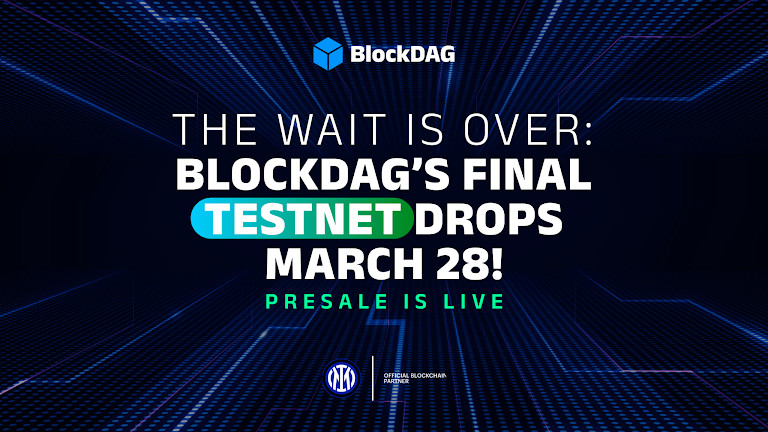
But while ADA and SUI work through their price action, BlockDAG (BDAG) is on fire. Its final testnet is dropping on March 28, and excitement is reaching a fever pitch. Over 60% of BDAG’s supply has already been snapped up, and with mainnet drawing closer, many are asking—could this be the next crypto to explode? Traders are scrambling to decide before the market leaves them behind.

Cardano Coin Price Holds at a Critical Level—Is a Breakout Coming?

The Cardano coin price is hanging right around its 200-week moving average—a line in the sand that often signals where the market’s headed next. After the SEC extended its review of Grayscale’s Cardano ETF, the community is buzzing about what this could mean for ADA’s next move.

At $0.72, the Cardano coin price is sitting in a tight zone. Some traders are calling this a golden opportunity to buy in before a potential breakout above $0.74. Others are being cautious, watching closely in case ADA slips through support and heads lower. Either way, all eyes are on how Cardano reacts to the latest macro headlines and inflation data. Big moves could be right around the corner!

SUI Price Fights to Recover After Recent Pullback

After a stellar run in late 2024, the SUI price has cooled off—but could that be about to change? Recently finding support near $2.00, traders are wondering if SUI is ready for its next leg up.

Right now, SUI price is hovering at $2.20. Analysts think a bounce could be in play if SUI can climb back over its ascending trendline. If that happens, we could see buyers jump back in, sending the SUI price climbing fast. A recovery could be closer than many expect, making this an asset to watch in the weeks ahead.

BlockDAG’s Final Testnet Drops March 28—Will It Be the Next Crypto to Explode?

The countdown has started! BlockDAG’s final testnet launches on March 28, marking one of the last milestones before its long-anticipated mainnet goes live. If past cycles are any guide, final testnets often lead to full launches in a matter of weeks. That’s why many are calling BDAG the next crypto to explode!

BlockDAG’s presale has already hit batch 27, with 60% of the total BDAG coins sold. Since day one, $206 million has been raised, and 18.8 billion coins have been scooped up. BDAG’s current price of $0.0248 has rewarded early adopters with a massive 2,380% return. With over 170,000 holders, demand hasn’t slowed one bit!

And now? Institutions are circling. In past bull runs, this is when the big players dive in, snapping up what’s left of the supply—and leaving retail buyers chasing the scraps. If BDAG follows the same path, a supply crunch could hit before the mainnet even launches.

With momentum building and mainnet potentially just weeks away, the window for getting in early is shrinking fast. March 28 is coming up quick—and this could be the breakout moment everyone’s waiting for!

Final Word

The crypto market feels like it’s on the edge of something big. The Cardano coin price is hanging on at a key level, giving both bulls and bears plenty to think about. SUI price is fighting for a comeback, with traders watching closely for a reversal.

But BlockDAG is stealing the spotlight. With its final testnet launching March 28 and the mainnet creeping closer, over 60% of its presale supply is already gone. $206 million has been raised and 18.8 billion BDAG coins have been snapped up by eager early adopters.

Once the testnet is live, institutions could jump in and wipe out what’s left of the supply. If you’re waiting for the next crypto to explode, this might be your last chance to catch BlockDAG before things really take off!

Presale: https://purchase.blockdag.network

Website: https://blockdag.network

Telegram: https://t.me/blockDAGnetworkOfficial

Discord: https://discord.gg/Q7BxghMVyu

Disclaimer

In line with the Trust Project guidelines, please note that the information provided on this page is not intended to be and should not be interpreted as legal, tax, investment, financial, or any other form of advice. It is important to only invest what you can afford to lose and to seek independent financial advice if you have any doubts. For further information, we suggest referring to the terms and conditions as well as the help and support pages provided by the issuer or advertiser. MetaversePost is committed to accurate, unbiased reporting, but market conditions are subject to change without notice.

About The Author


Gregory, a digital nomad hailing from Poland, is not only a financial analyst but also a valuable contributor to various online magazines. With a wealth of experience in the financial industry, his insights and expertise have earned him recognition in numerous publications. Utilising his spare time effectively, Gregory is currently dedicated to writing a book about cryptocurrency and blockchain.

More articles


Gregory, a digital nomad hailing from Poland, is not only a financial analyst but also a valuable contributor to various online magazines. With a wealth of experience in the financial industry, his insights and expertise have earned him recognition in numerous publications. Utilising his spare time effectively, Gregory is currently dedicated to writing a book about cryptocurrency and blockchain.


Source link

Arbitrum and Karrat to Launch Studio Chain for Web3 Gaming | NFT News Today

Arbitrum and Karrat to Launch Studio Chain for Web3 Gaming | NFT News Today


Arbitrum Foundation and Karrat Foundation have announced the launch of Studio Chain, a new blockchain aimed at helping entertainment creators develop interactive experiences. This initiative will use Arbitrum’s Layer-2 network alongside the Karrat Foundation’s token-based model (called $KARRAT) to attract both large and small teams that want to build Web3 games, AI-driven tools, and other creative applications.

Studio Chain Goals

Although there is no official launch date yet, Studio Chain is being set up to reduce transaction delays and fees affecting earlier blockchain environments. The new chain could deliver quick and affordable interactions by relying on Arbitrum’s approach (which runs on top of Ethereum).

At the same time, $KARRAT will act as a central asset for rewards, on-chain purchases, and voting. This structure could allow developers to explore different economic models without being locked into higher transaction costs.

My Pet Hooligan as a Flagship Title

My Pet Hooligan, a third-person shooter, is planned as the leading game on Studio Chain. The title is available for early access on the Epic Games Store, where it has passed 500,000 downloads.

Set in the vibrant Hooliland City, the game includes quirky weapons and lighthearted conflicts with a character called Metazuckbot. The game has various modes of combat, both PvE and PvP, alongside melee and ranged weapons, skateboard mechanics, destructible settings, city exploration, and competition-focused arenas.

Source My Pet Hooligan

Plans for expansion include releases on Xbox and Steam, with an Early Access stage on Steam that might last at least six months. The team is currently aiming for a full release by December 2025.

According to statements shared on Steam, the My Pet Hooligan team emphasizes a user-centred development process, using Discord as a focal point for discussions, feedback, and suggestions.

AMGI Studio’s Involvement

AMGI Studios brings a background in blockchain, gaming, and AI, along with partnerships that include NVIDIA, Epic Games, and other tech companies. This means AMGI Studios has access to a broader set of technical resources and might bring more interoperable features to My Pet Hooligan or other upcoming projects.

Notable individuals such as Tony Robbins, Paris Hilton, and members of Coldplay are reportedly part of AMGI’s early support network.

Potential Effects for Gaming and Media

Studio Chain aims to help developers and companies that want to adopt decentralized models. Further plans include the ability to tokenize assets, introduce new forms of funding, and allow fans to gain digital stakes in projects.

Still, there are ongoing questions about how quickly a broader audience will accept these systems, given that blockchain gaming has seen varying rates of adoption.

Conclusion

Studio Chain and My Pet Hooligan’s progression onto new platforms could serve as a useful test of this approach in a live gaming environment. The extent of Studio Chain’s success may hinge on its ability to remain dependable while introducing new ways to build and share digital content. Many will be watching to see whether these goals can be met in practice, especially as developers weigh the benefits of this technology for their projects.


Source link

According to the NVIDIA CEO, Humanoid Robots Will Take Over Our Lives Much Sooner Than Expected – Metaverseplanet.net

According to the NVIDIA CEO, Humanoid Robots Will Take Over Our Lives Much Sooner Than Expected – Metaverseplanet.net


NVIDIA CEO Jensen Huang believes that the humanoid robot revolution is much closer than we think. In fact, he predicts that these robots will start being widely adopted in less than five years.

Following recent advancements in artificial intelligence, many tech companies have begun shifting their focus toward humanoid robotics—and NVIDIA is no exception. Just last week, the company introduced a new model designed to enable robots to behave more like humans.

Now, Jensen Huang has made further remarks regarding this emerging technology. According to him, humanoid robots will be broadly used in manufacturing facilities within the next few years, marking the beginning of a full-scale robotic revolution.

While he noted that the initial applications will be in factories due to the robots’ specific functions, Huang also emphasized that they will eventually become accessible to everyday users as well.

This prediction isn’t all that surprising. We’ve all witnessed how rapidly AI has evolved in just a few short years—today, nearly everyone utilizes some form of AI-powered tool. If companies succeed in applying this technology effectively to humanoid robots, it’s entirely possible we’ll see them become a part of daily life too.

By the time we reach 2030, a world filled with robots that rival those in science fiction movies might no longer be fantasy—it could be reality.

You May Also Like

Follow us on TWITTER (X) and be instantly informed about the latest developments…

Copy URL


Source link

Popular Posts

My Favorites