The internet as we know it has undergone significant transformations over the past decades, evolving from dial-up connections to fiber-optic speeds that allow for real-time communication across the globe. However, even with these advancements, traditional internet has its limitations in speed, security, and efficiency. Enter Quantum Internet, a revolutionary concept that promises instantaneous data transfer, absolute security, and unparalleled computational capabilities. But when will it actually become a reality?
Understanding Quantum Internet
Quantum Internet leverages quantum mechanics to transmit information using qubits (quantum bits) rather than traditional binary bits. It relies on phenomena such as quantum entanglement, superposition, and quantum teleportation to enable ultra-secure and lightning-fast communication.
Key Advantages of Quantum Internet
Zero Latency: Quantum entanglement allows for instantaneous data transfer over any distance.
Unhackable Security: Quantum Key Distribution (QKD) ensures that any interception attempts will alter the quantum state, making hacking impossible.
Ultra-Fast Processing: Complex computations that take supercomputers weeks could be done in seconds with quantum networks.
Stages of Quantum Internet Development
Quantum Internet is not an overnight innovation; it is being developed in stages, each overcoming significant technological challenges. Here’s a look at where we stand today:
Several governments and research institutions have already begun building small-scale quantum networks. The most notable advancements include:
China’s Quantum Satellite (Micius): Demonstrated quantum entanglement-based communication between continents.
Europe’s Quantum Internet Initiative: Aims to establish quantum-secured communication across key European cities.
U.S. Quantum Network Prototypes: Companies like Google, IBM, and DARPA are working on establishing early quantum networks.
Phase 2: Early Adoption and Limited Use Cases (2025 – 2035)
In this phase, quantum internet is expected to become available for government and military applications, financial institutions, and high-security industries. Quantum-secured communication may first appear in:
Banking & Finance: Secure transactions immune to cyber threats.
Healthcare: Secure patient data exchange between hospitals.
Defense & Cybersecurity: Fully protected communication channels.
Phase 3: Widespread Public Availability (2035 – 2050)
By mid-century, quantum internet may become commercially viable for businesses and general consumers. However, widespread adoption will depend on:
Infrastructure readiness: Establishing large-scale quantum networks across continents.
Affordability: Making quantum communication cost-effective.
User-friendly applications: Quantum-based services integrated into everyday life.
How Will Quantum Internet Change Daily Life?
To illustrate the impact of Quantum Internet, let’s compare it with traditional internet in real-world scenarios:
1. Gaming and Streaming
Traditional Internet: Loading a massive online game like Call of Duty Warzone (150GB) takes 1-2 hours. Quantum Internet: The game would be instantly downloaded.
Traditional Internet: A 4K movie might buffer for a few seconds before playing. Quantum Internet: The movie would start instantly, no buffering.
2. Online Shopping and Banking
Traditional Internet: Online transactions can take seconds to minutes due to encryption and verification delays. Quantum Internet: Transactions will be instant and completely secure.
3. Scientific Research and AI
Traditional Internet: Processing a large DNA dataset could take days. Quantum Internet: AI-driven models could analyze DNA within minutes.
Challenges and Future Prospects
Despite its potential, Quantum Internet still faces hurdles:
Hardware limitations: Quantum processors are still in early stages of development.
Distance constraints: Currently, entangled qubits degrade over long distances.
Energy efficiency: Maintaining quantum states requires extreme cooling and precise conditions.
Quantum Internet is not a question of if, but when. The next two decades will see rapid advancements, with the first practical applications appearing in high-security sectors by 2030. By 2040-2050, we may witness a fully functioning Quantum Internet accessible to everyone.
Just as fiber-optic technology revolutionized communication, Quantum Internet will reshape the digital world, unlocking possibilities that seem like science fiction today. The countdown to this quantum leap has already begun!
You May Also Like
Follow us on TWITTER (X) and be instantly informed about the latest developments…
A newly discovered piece of malware is specifically targeting crypto wallet extensions installed on users’ computers. This malicious software has been found to affect over 20 popular cryptocurrency wallets used around the world.
Cybersecurity experts have uncovered this threat, which poses a serious risk to crypto investors. The malware has been detected on Google Chrome and is designed to attack wallet extensions already installed on a victim’s device, with the intent of draining cryptocurrency funds.
The malware, dubbed “StilachiRAT”, was identified by security analysts working under Microsoft. It focuses on users who have stored their wallet passwords in the Chrome browser. Although the exact number of affected users remains unknown, the malware is capable of targeting more than 20 well-known crypto wallets.
Major Wallets at Risk
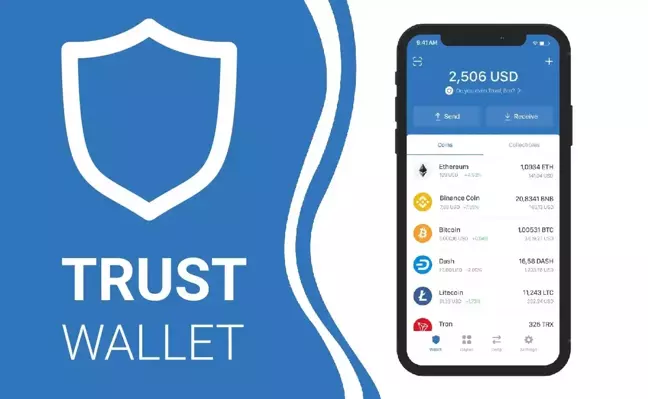
According to reports, StilachiRAT is capable of compromising major wallets such as Trust Wallet, MetaMask, BNB Chain Wallet, OKX Wallet, Bitget Wallet, TokenPocket, TronLink, Leap Cosmos, Coinbase Wallet, StarkNet, Keplr, Phantom, ConfluxPortal, and Plug, among many others. This highlights the high level of risk currently facing the crypto community.
If you’re a cryptocurrency investor and use any of the wallets listed above, it’s crucial to be more cautious than ever. To stay safe, avoid clicking on unknown links, refrain from downloading suspicious files, and do not save sensitive credentials in Chrome. For additional security, consider switching to a cold wallet, which could significantly reduce exposure to threats like StilachiRAT.
You May Also Like
Follow us on TWITTER (X) and be instantly informed about the latest developments…
Dutch entrepreneur Pieter Levels has achieved a remarkable milestone by creating a $1 million business in just 17 days — using nothing but artificial intelligence to write all the code.
With the rapid rise of AI technologies, more and more people are either automating their workflows through AI or becoming pioneers in brand-new industries powered by it.
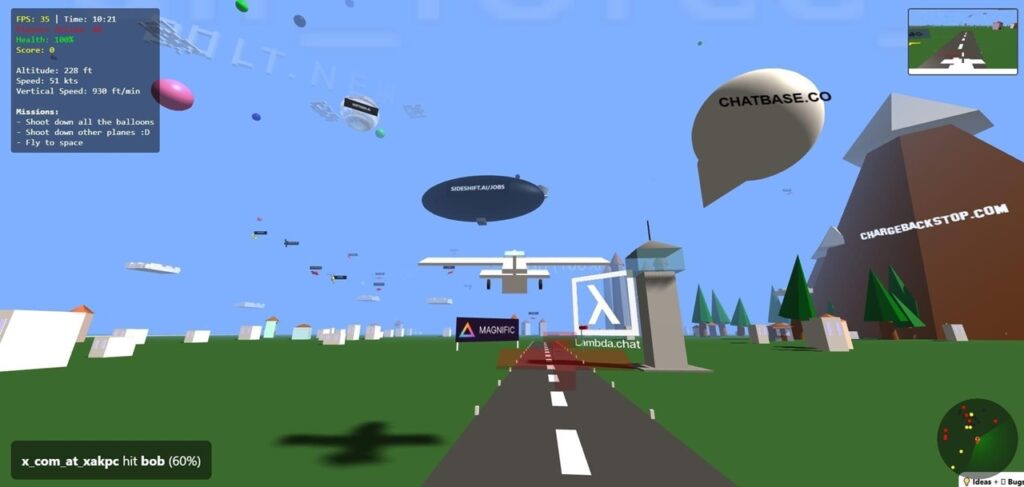
At 38 years old, Pieter Levels, known for launching successful platforms such as Nomad List, Remote OK, and Rebase, has now developed a browser-based flight simulator called fly.pieter.com — entirely using AI-assisted tools. Impressively, he claims to have built the first version of the simulator in just three hours.
By leveraging tools like Three.js and Cursor, Levels created a game that offers users an instant flight experience — without any long loading screens or large updates. The simulator features a variety of aircraft, including F-16 fighter jets, allowing for an immersive and diverse flight experience.
Monthly Revenue Surpasses $87,000
Levels states that the game now earns over $87,000 per month, with annual revenue exceeding $1 million. He also anticipates monthly income to soon cross the $100,000 mark.
This achievement is a clear example of how artificial intelligence is not just about automation — when used strategically, it can empower entrepreneurs to build innovative, high-revenue ventures in record time.
You May Also Like
Follow us on TWITTER (X) and be instantly informed about the latest developments…
Treeverse combines MMORPG with innovative Web3 elements in a vast fantasy world centered around the mystical World Tree. This open-world game has real-time combat, exploration and cooperative play combined with NFTs and cryptocurrency in a way that enhances the gaming experience not dominates it.
Key Takeaways
Treeverse features a free-to-play model that doesn’t require a wallet to begin playing
The game uses an energy-based combat system that encourages weapon swapping and strategic fighting
Players progress through a classless Knowledge Tree system that allows for customized character development
NFTs like Timeless Characters and Nftrees provide in-game benefits beyond mere collection value
Treeverse’s economy combines traditional gaming currencies with the $ROOT cryptocurrency for a sustainable economy
Getting Started in Treeverse
Treeverse begins in the city of Elderwall, protected by the massive World Tree at its center. You don’t need cryptocurrency or NFTs to start playing—the game offers a genuine free-to-play experience. Currently, the alpha version is available on Android for NFT holders, with Windows versions in development.
Your journey starts in Lorwick Town where you’ll receive basic gathering tools—an axe and pickaxe—along with 4 starter coins. These essential items allow you to collect your first resources: Logs from trees and Pebbles from rocks found near town.
To progress efficiently, I recommend these initial steps:
Gather Logs and Pebbles around Lorwick Town
Go to the blacksmith to craft your first sword and shield (requires 2 Logs + 2 Pebbles + 4 coins)
Find Mira near the campfire in the top-left section of Lorwick Town for early quests
Take multiple NPC quests with overlapping objectives to maximize efficiency
Combat and Progression Systems
Treeverse has an energy-based combat system different from other MMORPGs. Your health and energy don’t regenerate automatically during combat. Instead you refill energy by hitting enemies.
This mechanic encourages an active weapon-swapping strategy mid-fight—you might open with a powerful but slow two-handed weapon, then switch to faster dual weapons to rebuild energy. Kiting enemies (attacking while moving away) is crucial for survival, especially in early gameplay.
Rather than fixed character classes, Treeverse has a Knowledge Tree system where you can customise your character stats:
Strength increases melee damage and carrying capacity
Agility improves ranged combat and movement speed
Intelligence boosts magical abilities and crafting success
Weapon progression is through the Infusion system where monster cores from dungeon enemies are used to upgrade your gear. These cores replace the traditional leveling system and are used in approximately 75% of weapon upgrades.
Resource Management and Crafting
Efficient resource gathering is key to progression in Treeverse. I recommend creating farming routes that combine resource gathering with quest objectives to make the most of your time.
When exploring dungeons, prioritize opening treasure chests which contain valuable potions and crafting materials needed for higher-tier recipes. These materials are required for crafting higher-tier weapons like the Mythril Sword which requires specific dungeon loot.
Joining a guild provides significant advantages for resource management:
Shared resource pools
Group bonuses during raids
Knowledge sharing from experienced players
Coordinated gathering expeditions
Planning your crafting progression is key—focus first on weapons and armor that provide immediate combat benefits before investing in cosmetic or specialized equipment.
NFT Integration and Benefits
While Treeverse can be played without NFTs, these digital assets give meaningful gameplay benefits not just collectible status. The game has several NFT categories:
Timeless Characters are NFT characters with anime-style art that affect in-game lore through events. They have unique dialogue options and quest interactions.
Nftrees are 421 unique 8-bit trees that produce special fruits when consumed that give temporary buffs. They have appreciated a lot since launch with a current floor price of around 13.8 ETH.
Nftrees, 421 unique 8-bit trees, produce special fruits that grant temporary buffs when consumed. These NFTs have seen significant appreciation, with a current floor price of approximately 13.8 ETH, so the community is invested in the ecosystem.
Land Plots allow players to build homes or resource hubs in specific game areas. These can be customized and developed over time for both utility and social status.
NFT ownership also grants alpha access to new game versions and features before they hit the general player base.
Treeverse’s Economy and Tokenomics
Treeverse has a multi-layered economy designed for stability and player engagement:
Gold Saps: In-game currency for crafting, trading with NPCs and basic upgrades
Prime Emeralds: Premium currency for cosmetics and land customization
$ROOT Token: Cross-game cryptocurrency for governance, premium features and NFT transactions
The $ROOT token is particularly noteworthy as it functions across the entire Endless Clouds game ecosystem, not just within Treeverse. This creates cross-game utility that potentially stabilizes its value.
Lead developer Loopify has implemented anti-inflationary mechanics inspired by traditional game economies. These include controlled currency issuance, item sinks (ways to remove items from circulation), and developer-controlled parameters to prevent currency devaluation.
Social Features and Advanced Gameplay
Treeverse is awesome for social gameplay which encourages cooperation and community building:
The dynamic quest system combines NPC-driven story missions with procedurally generated encounters so even long-term players will see new content. These quests often require group coordination especially at higher levels.
The guild system goes beyond simple chat functionality, offering tangible benefits like shared resources, raid bonuses, and coordinated territory control. Guilds can establish themselves in the social hierarchy through competitive activities and resource dominance.
Player housing allows for the personalization of your game experience and also acts as a resource hub. Houses can be upgraded to have crafting stations and storage.
Co-op boss raids require teamwork and strategy, different roles are needed to succeed. These are high risk high reward activities that make up most of the endgame.
What Sets Treeverse Apart
Compared to other Web3 games, Treeverse offers several distinctive advantages:
Traverse isn’t turn-based or strategy-based like many other blockchain games. We have real-time combat with an energy system that rewards active play and quick decisions. This makes for a more engaging experience from moment to moment.
The NFTs in Treeverse provide actual gameplay utility through buffs and in-game advantages, rather than functioning merely as collectibles with no practical benefit.
The economy combines traditional gaming currencies with cryptocurrency making it more stable than a single token economy that can be vulnerable to speculation.
Perhaps most importantly, Treeverse offers free-to-play access without requiring a wallet or NFT ownership. This significantly lowers the barrier to entry compared to many competitors that demand upfront investment.
The classless progression system allows for flexible character development, letting players adapt their playstyle as they discover what aspects of the game they enjoy most.
Logitech has introduced the Zone 305 headset, positioned as an affordable solution designed especially for business users. But how does it stack up against higher-end models like the excellent Zone Wireless 2, and to who exactly is the Zone 305 suited for? I have written a Logitech Zone Wireless 2 in review article before, and it is quite logical to compare these two headsets together. Thank you Logitech for providing me Zone 305 for testing and honest review.
What is Logitech Zone 305?Key Specifications:Who is the Zone 305 for?My hands-on impressions: Pros and ConsPros:Cons:Logitech Zone 305 vs. Zone Wireless 2Feature Comparison Zone 305 vs Zone Wireless 2:Should You Buy the Logitech Zone 305?
What is Logitech Zone 305?
Logitech Zone 305 is a lightweight, inexpensive wireless business headset optimized specifically for daily office use, calls, and meetings and priced for mass deployment. 305 is certified for Microsoft Teams, ensuring seamless compatibility and easy integration into your Teams workflow. Logitech describes it as a practical, no-nonsense headset for hybrid or open-office scenarios, emphasizing clarity, affordability, and user-friendliness.You can manage Zone 305 with Logi Tune and with Logitech Sync as it is designed for businesses for mass deployment. I also like how much of materials is either recycled materials and overall how Logitech is keeping the sustainability in mind with both products and packaging (easy to recycle carbon).
Key Specifications:
FeatureSpecificationConnectivityWireless (Dongle required for Teams Certification & Teams-button functionalities)MicrophoneBeamforming, Noise-cancellingBattery LifeUp to 16 hours (Talk), 24 hours (Listening)ChargingUSB-CCompatibilityMicrosoft Teams certified, Zoom, Google MeetEar Cushion TypeOn-earMicrophone PositionFixed (Left side)Weight4.30 oz (122 g)Price (List)$99.99
Check detailed specs here
Who is the Zone 305 for?
Zone 305 is aimed at professionals who need a reliable, budget-friendly headset without the frills of premium features like Active Noise Cancellation (ANC). If you’re in a quiet home office or prefer simplicity over feature overload, the 305 is a good candidate. Logitech has designed 305 for organizations buying headsets in bulk, keeping budgets tight without compromising call quality.
However, if your workplace is noisy or you spend extended hours wearing your headset, this might not be your ideal choice.
My hands-on impressions: Pros and Cons
Pros:
Lightweight: Weighing less than heavier models, it doesn’t feel cumbersome initially.
Audio Quality: Despite its affordable price, audio playback is surprisingly good. Music sounds clear and enjoyable—impressive for a business-oriented headset.
Microphone Quality: The mic is excellent, featuring noise-canceling via beamforming mics, significantly reducing ambient noise for those on the other end of the call.
Microsoft Teams Certified: Seamless integration makes daily meeting setups hassle-free.
Budget-friendly: At a list price of just $99.99, the value proposition is strong.
Cons:
Slight Comfort Issues: Despite its lightweight build, Zone 305 presses firmly onto the ears. Mind you, I am not a fan of on-ear headsets as they generally aren’t comfortable when used for several hours without a break. After an hour, 305 starts to become uncomfortable and press my ears. After two hours, I need a break.
No ANC: Ambient noise can quickly become distracting. If your office is busy or noisy, this headset may not sufficiently isolate you.
Dongle Required for Teams Certification (at the moment): Returning to a dongle after experiencing dongle-free connectivity (like with the latest Zone Wireless 2 update) feels disappointing. This adds inconvenience and occupies one of my two USB-C ports. The headset can be used without a dongle, but it then loses Teams Certification and Teams-button functionalities.
Build Quality: The headset feels plasticky compared to the Zone Wireless 2, lacking that premium touch.
Volume Issue: It defaults volume to 100% on Windows 11 when initially connecting, which can be a slightly unpleasant surprise.
Fixed Microphone Position: Unlike the Zone Wireless 2, the microphone is fixed on the left side and cannot be swapped.
Zone 305 is undergoing certification for Microsoft Teams over native Bluetooth, which means it will be dongle-free soon / in the future. See this Logitech info page for details about models getting native Bluetooth support.
Logitech Zone 305 vs. Zone Wireless 2
Comparing the Zone 305 directly to my recent favorite, the Zone Wireless 2 (read more about Zone Wireless 2), highlights key trade-offs. The Wireless 2 feels superior in almost every respect—better comfort, premium build, ANC, and flexibility (e.g., microphone can be flipped from side to side). Zone Wireless 2 also recently got a fantastic dongle-free upgrade (check my post here), making it even more appealing. The advantages of Zone 305 over Wireless 2 are affordability, lighter and it has a newer Bluetooth support.
Feature Comparison Zone 305 vs Zone Wireless 2:
FeatureZone 305Zone Wireless 2ConnectivityDongle required for Teams certification ( at the moment). Bluetooth 5.3.Teams Certification over native Bluetooth, Bluetooth 5.2Microphone FlexibilityFixed (Left side only)Flip microphone to use it left or right sideActive Noise CancellationNoYesComfort (my experience)Moderate (short-term)Better (medium-term)Build QualityPlastic feelPremiumWeight4.30 oz (122 g)8.11 oz (230 g)Battery Life (Talk)Up to 16 hoursUp to 15 hours (ANC on), 18 hours (ANC off)Battery Life (Listening)Up to 24 hoursUp to 22 hours (ANC on), 40 hours (ANC off)Microsoft Teams CertifiedYes, with dongleYesList price$99.99$249.99Zone Wireless 2 “gently cushions your ears with a silicone headband and breathable materials that are soft to the touch and designed to apply pressure evenly.” Quote and picture from Logitech Wireless 2 site.
If the budget isn’t your primary concern, Zone Wireless 2 is clearly the superior headset, especially if you frequently spend long hours on calls. Having a need for mass deployment, the price is clearly on 305’s side.
Should You Buy the Logitech Zone 305?
The Zone 305 is a solid headset choice if you’re budget-conscious and don’t have too much requirements. It excels in voice, microphone quality, and simplicity. However, the lack of ANC, comfort issues during prolonged use (my personal experience, but head sizes and details vary), and the necessity of a dongle (at the moment of writing this article) may be significant downsides for some.
Overall, the Zone 305 delivers precisely what it promises: a practical, reliable, and affordable headset for mass deployment. No surprises. Keep in the mind: 305 isn’t trying to be the best headset for individuals, it wants to be the best headset for mass purchases where you are equipping your workforce with quality devices, while keeping the cost of a single device low enough and you can ensure the management and updates of these devices centrally.
Individually I would always want to pick Zone Wireless 2, but when there are budget limits it might be better to have quality headsets for all of the workforce, instead of getting a premium-quality headset for just one-third of people. But if you have the budget, and you know everyone can be more efficient with Wireless 2 (you want to make sure they have best tools available and ANC can boost their focus by reducing distracting noise) then it is a better choice for sure.
Which one would you pick? Logitech Zone 305 or Wireless 2? How about if you are getting 500 or 5000 headsets to your workforce?
Sharing is Caring! #CommunityRocks
Aiheeseen liittyy
Published by Vesa Nopanen
Vesa “Vesku” Nopanen, Principal Consultant and Microsoft MVP (M365 and AI Platform) working on Future Work at Sulava.
I work, blog and speak about Future Work : AI, Microsoft 365, Copilot, Microsoft Mesh, Metaverse, and other services & platforms in the cloud connecting digital and physical and people together.
I have about 30 years of experience in IT business on multiple industries, domains, and roles.
View all posts by Vesa Nopanen
Published: March 21, 2025 at 12:37 pm Updated: March 21, 2025 at 12:38 pm
by Ana
Edited and fact-checked:
March 21, 2025 at 12:37 pm
To improve your local-language experience, sometimes we employ an auto-translation plugin. Please note auto-translation may not be accurate, so read original article for precise information.
In Brief
Gear.exe is revolutionizing Web3 scalability and efficiency by offering a decentralized compute network that enhances Ethereum’s performance, eliminates fragmentation, and introduces a unique reverse gas model to improve adoption.
Scaling and efficiency are major challenges in Web3, and Gear.exe is tackling them head-on. To learn more, we spoke with Luis Ramírez, Head of DevRel at Gear Foundation, about how their decentralized compute network is improving Ethereum’s performance while avoiding fragmentation.
In this interview, Luis explains how Gear.exe enables seamless scalability and discusses its unique reverse gas model. He also touches on the future of blockchain, AI, and what’s next for Gear.exe.
Can you share your journey to Web3?
I’m currently the head of the World Wide Web Foundation, and my background is primarily technical. I have been working in IT for 20 years. I started as a developer and founded my own company 10 years ago to create various products. Like almost everyone, I began in Web2 because Web3 is still relatively new.
During my journey with my company, I integrated different technologies. In 2013, I started accepting Bitcoin as payment for my development services, but nothing significant happened back then since it wasn’t the best time for Bitcoin. Later, in 2017, I began developing smart contracts on Ethereum. From that point on, I transitioned to blockchain technology.
In 2019, a Russian friend introduced me to Rust and blockchain, and later, he invited me to be part of Gear. I have now been working with Gear for three and a half years. My background is mostly focused on development, growing developer communities, and strategic initiatives across different regions where the Gear Foundation has an official presence. Currently, we have teams in the US, Mexico, Spain, India, China, and other parts of the world.
Ethereum has been facing growing challenges, such as high latency and limited computational power. How does Gear.exe address these issues? How does it compare to Layer 2 solutions?
Gear.exe is a decentralized compute network, and we focus on solving Ethereum’s computational challenges. We’re using technology already proven in Vara, such as WebAssembly, the Actor Model, and Persistent Memory. These technologies allow us to scale applications in the Web3 space securely while utilizing frameworks and programming languages like Rust.
We transferred this technology to Gear.exe to solve Ethereum’s scalability issues. However, Gear.exe is not a blockchain—it’s a decentralized compute network. This distinction is important because while Layer 2 solutions solve scalability issues, they also introduce fragmentation. Users often need to create new accounts, which fragments TVL and token balances. Gear.exe prevents this by allowing developers to interact with our network via an API while maintaining compatibility with Ethereum infrastructure.
Fragmentation of liquidity and data has been a persistent issue for Ethereum. Gear.exe claims to eliminate fragmentation. How does it achieve this while maintaining scalability?
Even though Gear.exe is not a blockchain, we use some blockchain-based technologies. For example, we validate data, but we don’t store user accounts. This means no additional user data is created, no new accounts are required, and liquidity remains entirely within Ethereum.
Our system only processes computational requests and returns the results to Ethereum within the same block. Other technologies can achieve similar results, but often in different blocks, which introduces delays. Depending on the computation required, we ensure high scalability. Our platform is compatible with WebAssembly, and smart contracts are interpreted by a WebAssembly virtual machine within our nodes. This makes our solution both fast and secure.
Gear.exe uses a reverse gas model, allowing apps to cover user fees. How does this work in practice?
In traditional Web3 applications, users interact with a frontend but need a wallet and tokens to communicate with the blockchain. This requirement can be a major barrier for adoption.
Gear.exe solves this with a reverse gas model. Instead of requiring users to hold tokens for transactions, developers can prepay transaction fees using a system called vouchers. These vouchers are stored in the smart contract, and any user interacting with the contract doesn’t have to worry about providing tokens or covering gas fees. This is a powerful feature that enhances usability and adoption.
Have you conducted performance benchmarks comparing Gear.exe-enabled dApps to traditional Ethereum or roll-up-based dApps? If so, what are the results?
Yes, absolutely. We have published videos and articles detailing our benchmarking results. We compared Gear.exe to Ethereum and Layer 2 solutions like Arbitrum, both its EVM and WebAssembly versions.
Compared to Ethereum, Gear.exe is approximately 1,000 times faster and significantly cheaper. Compared to Arbitrum, Gear.exe is about 200 times more cost-efficient. Even Arbitrum’s WebAssembly-compatible implementation—arguably the best Layer 2 option for Ethereum—cannot match our performance, as we use Rust instead of Solidity and have our own smart contract platform.
Given the ongoing challenges of high fees, network congestion, and centralization risks in Layer 2 solutions, do you believe Ethereum will remain the dominant smart contract platform, or will alternative architectures take the lead?
Other platforms like Solana are gaining traction, particularly among developers. However, many of the most well-known use cases revolve around meme coins, since Web3 users primarily focus on financial gains. While technology is crucial, user behavior also plays a key role in adoption.
That said, Ethereum still has the largest developer community. We aim to attract developers through Gear.exe while remaining blockchain-agnostic. Currently, Gear.exe is integrated with Ethereum’s Holesky testnet, but in the future, we plan to expand support for additional networks.
Gear.exe leverages WebAssembly for efficiency. Do you see WebAssembly-based execution environments becoming the industry standard for next-generation blockchain platforms?
Yes, WebAssembly has significantly improved virtual machine performance. Early smart contract platforms relied on Ethereum’s EVM, but the transition to WebAssembly started with Gavin Wood when he was developing Polkadot. Our CEO, Nikolay, was involved in that shift from EVM to WebAssembly.
Today, WebAssembly has proven itself in terms of both efficiency and security. Several blockchain platforms, including Near and some Ethereum Layer 2 solutions like Arbitrum, are adopting WebAssembly. This indicates a growing trend towards WebAssembly-based execution environments.
With the increasing overlap between blockchain and AI, do you see Ethereum’s future tied to AI-driven smart contracts and decentralized compute networks?
Absolutely. Even though Ethereum is facing internal challenges within its community, it remains the largest ecosystem for developers. The intersection of AI and blockchain is already being explored, with several solutions built on Ethereum.
Currently, AI computations are not performed directly on Ethereum due to high costs. Instead, many solutions rely on off-chain processing. With Gear.exe, decentralized AI execution becomes feasible, making AI-driven smart contracts more practical. AI agents are gaining traction, and this trend will continue growing.
Will innovations like Gear.exe’s reverse gas model be enough to make Web3 as seamless as Web2, or are bigger infrastructural changes needed?
I believe it’s not enough on its own. The reverse gas model is an important step in making Web3 more accessible, especially for Web2 developers. However, the Web3 ecosystem also needs new business models that bridge Web2 and Web3. Adoption isn’t just about infrastructure—it’s also about creating viable business incentives.
Can you share the roadmap for Gear.exe?
Currently, Gear.exe is running on the Holesky testnet. The team is working on improvements to enhance compatibility, particularly with the Vara network’s smart contracts.
Our goal is to enable seamless migration of Vara smart contracts to Gear.exe without any modifications. This is a key part of our roadmap. Once this is complete, we plan to launch Gear.exe on the mainnet in the coming months.
Before the mainnet launch, we will introduce a bridge between Gear.exe, Ethereum, and Vara, allowing seamless communication and token swaps between these networks.
Disclaimer
In line with the Trust Project guidelines, please note that the information provided on this page is not intended to be and should not be interpreted as legal, tax, investment, financial, or any other form of advice. It is important to only invest what you can afford to lose and to seek independent financial advice if you have any doubts. For further information, we suggest referring to the terms and conditions as well as the help and support pages provided by the issuer or advertiser. MetaversePost is committed to accurate, unbiased reporting, but market conditions are subject to change without notice.
About The Author
Victoria is a writer on a variety of technology topics including Web3.0, AI and cryptocurrencies. Her extensive experience allows her to write insightful articles for the wider audience.
More articles
Victoria d’Este
Victoria is a writer on a variety of technology topics including Web3.0, AI and cryptocurrencies. Her extensive experience allows her to write insightful articles for the wider audience.
Published: March 21, 2025 at 11:41 am Updated: March 21, 2025 at 11:41 am
To improve your local-language experience, sometimes we employ an auto-translation plugin. Please note auto-translation may not be accurate, so read original article for precise information.
In Brief
Mira announces unprecedented growth with 2.5 million users and two billion tokens processed daily across its ecosystem applications.
Mira, the pioneer in decentralized AI verification technology, announces unprecedented growth with 2.5 million users and two billion tokens processed daily across its ecosystem applications.
The milestone demonstrates growing market demand for AI that can operate autonomously without human oversight. Processing two billion tokens daily is equivalent to approximately half of Wikipedia’s content, generating 7.9 million images, or processing over 2,100 hours of video content per day.
“This growth confirms we’re addressing the critical barrier to AI’s transformative potential,” said Karan Sirdesai, Co-founder and CEO of Mira. “Today’s AI remains constrained by the need for human verification—we’re removing that bottleneck to enable truly autonomous intelligence capable of operating independently in high-stakes scenarios.”
Enabling the Shift from ‘Baby AI’ to Autonomous Intelligence
Current AI systems excel at generating content and solving problems, but their probabilistic nature makes them fundamentally unreliable. This creates a paradox: the more powerful AI becomes, the more human hours are required to verify its output, severely limiting AI’s potential.
Mira is addressing this challenge through decentralized verification that enables AI systems to operate autonomously in consequential domains. By transforming the verification process from a human bottleneck to a scalable, trustless system, Mira is paving the way for AI’s next evolutionary leap.
Applications Demonstrating the Vision
This vision is coming to life through several applications built on Mira’s verification infrastructure:
Klok — A multi-LLM chat application providing access to leading AI models including DeepSeek-R1, GPT-4o mini, and Llama 3.3 70B Instruct within a unified interface. Klok treats each AI model as a trustless independent node, with verification features set to roll out in coming weeks.
WikiSentry — An AI agent that autonomously fact-checks Wikipedia articles against verified sources, identifying hallucinations, biases, and misinformation—a task previously requiring extensive human oversight.
Astro — A guidance platform helping users navigate life’s important decisions through personalized, AI-powered insights that leverage verified information for reliable advice.
Amor — A supportive AI companion offering conversation and emotional connection for those seeking meaningful interaction, with verification ensuring consistent and trustworthy responses.
Public Testnet Enables Developer Innovation
Mira has today launched its Public Testnet, enabling developers, enterprises, and users to explore its blockchain-based verification network at explorer.mira.network, where all AI inferences are recorded as transparent, verifiable events. Read more here.
Strategic Partnerships Expanding the Ecosystem
Mira has integrated with leading agent frameworks including Eliza, SendAI, Arc, ZerePy, and FereAI, while establishing partnerships with blockchain networks like Monad and Plume Network. Infrastructure collaborations with io.net, Aethir, Hyperbolic, Exabits, and Spheron, along with industry partnerships with KernelDAO and Delphi Digital, further strengthen Mira’s ecosystem.
Backed by $9 million in funding from Framework, Accel, Mechanism, and Bitkraft, with angel investors including Balaji Srinivasan and Sandeep Nailwal, Mira is positioned to transform how AI systems operate at scale.
About Mira
Mira is building the foundational verification layer that enables trustless AI systems through advanced consensus mechanisms. The network combines sophisticated claim transformation and distributed verification protocols to achieve reliable AI execution at scale. By solving the fundamental challenge of error rates in AI, Mira is establishing new standards for reliability—paving the way for autonomous intelligence that can operate without human oversight, unlocking AI’s transformative potential across society.
Follow Mira on X and join their Discord for real-time updates.
Disclaimer
In line with the Trust Project guidelines, please note that the information provided on this page is not intended to be and should not be interpreted as legal, tax, investment, financial, or any other form of advice. It is important to only invest what you can afford to lose and to seek independent financial advice if you have any doubts. For further information, we suggest referring to the terms and conditions as well as the help and support pages provided by the issuer or advertiser. MetaversePost is committed to accurate, unbiased reporting, but market conditions are subject to change without notice.
About The Author
Gregory, a digital nomad hailing from Poland, is not only a financial analyst but also a valuable contributor to various online magazines. With a wealth of experience in the financial industry, his insights and expertise have earned him recognition in numerous publications. Utilising his spare time effectively, Gregory is currently dedicated to writing a book about cryptocurrency and blockchain.
More articles
Gregory, a digital nomad hailing from Poland, is not only a financial analyst but also a valuable contributor to various online magazines. With a wealth of experience in the financial industry, his insights and expertise have earned him recognition in numerous publications. Utilising his spare time effectively, Gregory is currently dedicated to writing a book about cryptocurrency and blockchain.
The Ronin Network has a new feature called Liquid RON for those who hold RON tokens, proposing a more flexible approach to staking. By allowing individuals to deposit RON and receive tradeable tokens in return, Liquid RON (LRON) makes it possible to stake while keeping assets liquid. Here is a closer look at how it works and how to get started.
What Is Liquid RON?
Liquid RON is a vault system based on the ERC-4626 token standard. This standard essentially governs how “tokenized” vaults operate, allowing people to deposit one type of token and receive another token representing their stake in a larger pool.
In this particular case, individuals deposit RON into a specialized vault, and in return, they receive what are known as “Liquid RON” tokens. These newly issued tokens signify the user’s share in the Ronin Network’s validation process.
Liquid RON stakes the deposited RON and takes care of harvesting and compounding rewards without manual interference. As a result, users can reap the benefits of staking while still maintaining the freedom to move and use their tokens.
Moreover, the vault automatically harvests rewards each day, boosting its total RON balance. As a result, your Liquid RON tokens—representing your share of the vault—gain value over time.
How Does Liquid RON Work?
Deposit RON: First, users transfer RON tokens into the Liquid RON vault. This can be done through the deposit function or standard ERC-4626 methods.
Receive Liquid RON: After depositing RON, the user receives Liquid RON tokens, confirming participation in the Ronin Network’s validation process.
Stake and Harvest: Behind the scenes, the vault automatically stakes the deposited RON, then gathers and compounds rewards regularly.
Transfer and Use: With Liquid RON in hand, a user is not bound by the usual lock-up periods. These tokens remain fully transferable and can be deployed in other DeFi protocols on the Ronin Network.
The Liquid RON protocol has undergone an audit through Code4rena, ensuring its security and reliability.
Source Liquid RON
Why Liquid RON Stands Out
Liquidity: Unlike traditional staking programs that lock tokens away, Liquid RON supplies tokens that can be freely moved. If someone wants to trade or transfer them, they can do so without losing staking rewards.
Automation: The vault takes care of essential tasks like harvesting, compounding, and distributing rewards removing the hassle of constantly monitoring and manually claiming returns.
Compatibility: By embracing the ERC-4626 standard, Liquid RON can ensure smooth interaction with other DeFi platforms on the Ronin network.
Efficient Capital Use: Individuals can keep enjoying staking rewards while potentially earning more from other DeFi opportunities that accept Liquid RON tokens.
The Liquid RON vault keeps its fees straightforward. There’s a deposit fee designed to prevent people from rushing in solely to grab rewards right before they are distributed. There is also a performance fee where 6.5% goes to the treasury when the vaults claim rewards according to the Liquid RON website.
Once you have Liquid RON, there are several ways to put it to work. You can simply hold it in your Ronin wallet to earn staking rewards automatically or trade it on decentralized exchanges like Katana to convert your position into other tokens or currencies.
Another option is to participate in DeFi by providing liquidity to LRON/RON or LRON/other token pools, opening up opportunities to earn extra yield from trading fees and rewards. And if you ever want to send your tokens elsewhere, you can transfer LRON to any other wallet without waiting for the usual staking unlock period.
Getting Started With Liquid RON
Acquire RON Tokens: Before using Liquid RON, you need to have RON tokens. These can be bought on various cryptocurrency exchanges, such as Binance, Coinbase, or KuCoin.
Connect a Ronin Wallet: Once the tokens are in a wallet, the next step is to visit the Liquid RON platform and connect that wallet.
Deposit the RON: Using either the deposit command or other ERC-4626 functions, the user sends RON tokens into the vault.
Receive Liquid RON: Immediately afterward, the user will see Liquid RON tokens appear in their wallet.
Because Liquid RON tokens reflect a stake in the network, their value tends to appreciate over time. When individuals eventually redeem Liquid RON tokens, they can typically withdraw more RON than they initially deposited, assuming the vault has accrued staking rewards during that period.
Published: March 21, 2025 at 11:14 am Updated: March 21, 2025 at 11:14 am
by Ana
Edited and fact-checked:
March 21, 2025 at 11:14 am
To improve your local-language experience, sometimes we employ an auto-translation plugin. Please note auto-translation may not be accurate, so read original article for precise information.
In Brief
NVIDIA has unveiled Newton, an open-source and extensible physics engine developed in collaboration with Google DeepMind and Disney Research, aimed at enhancing robot learning and development.
Technology company NVIDIA has unveiled Newton, an open-source and extensible physics engine developed in collaboration with Google DeepMind and Disney Research, aimed at enhancing robot learning and development.
Based on NVIDIA Warp, which allows robots to learn complex tasks with improved accuracy, Newton is designed to work seamlessly with learning frameworks like MuJoCo Playground and NVIDIA Isaac Lab, an open-source platform for unified robot learning.
Physical AI models allow robots to autonomously understand, analyze, reason, and engage with their surroundings. The advancement of robotics heavily relies on accelerated computing and simulations to develop the next generation of robotic systems.
Physics is essential in robotic simulation, as it forms the basis for creating accurate virtual models that represent how robots behave and interact in real-world environments. Through these simulators, researchers and engineers are able to train, design, test, and validate control algorithms and prototypes in a secure, efficient, and cost-effective way.
Newton is designed to support the entire robotics community, allowing roboticists to freely use, distribute, and contribute to its development with research. Built on NVIDIA Warp, a CUDA-X acceleration library, it offers developers an efficient way to create GPU-accelerated, kernel-based programs for simulation, AI, robotics, and machine learning (ML). This framework provides high-performance capabilities for running physics-based simulations, utilizing the parallel processing power of NVIDIA GPUs.
A notable feature of Newton is its compatibility with Multi-Joint dynamics with Contact (MuJoCo), an established open-source physics engine used in robotics research for modeling complex dynamics and contact-rich environments. This compatibility allows developers to reuse existing models and code, reducing the time and resources required to adapt applications for different physics engines.
Additionally, Google DeepMind has introduced MuJoCo-Warp, an open-source robotics simulator accelerated by NVIDIA Warp, which delivers performance improvements, achieving more than a 70x speedup for humanoid simulations and a 100x speedup for in-hand manipulation tasks. MuJoCo-Warp will be integrated as a primary physics engine in Newton, offering developers enhanced performance and flexibility for their robotics applications.
More Key Features Of Newton: Differentiable Physics, Extensibility, And OpenUSD Integration
Furthermore, its ability to propagate gradients through simulation introduces new opportunities for robotics simulation and learning. Differentiable simulators are capable of generating forward-mode results while also calculating reverse-mode gradients of simulation outcomes, which can then be used for back-propagation to optimize system parameters.
As the field of robotics evolves, so does the complexity and variety of scenarios that need to be simulated. Newton is designed to be highly adaptable, supporting rich multiphysics simulations where robots interact with a range of materials, including food, cloth, and other deformable objects. This flexibility is enabled by custom solvers, integrators, and numerical methods. Newton also supports coupling different types of solvers, as demonstrated in the integration of a material point method (MPM) solver with rigid body dynamics for simulating interactions with sand.
Moreover, Newton leverages the OpenUSD framework, which offers a versatile data model and composition engine that aggregates the necessary data to describe robots and their environments. Custom solvers and runtimes can be specialized for specific robotic capabilities and environments. Furthermore, alongside Disney Research, Google DeepMind, Intrinsic, and NVIDIA, Newton is helping to define an OpenUSD asset structure for robotics. This structure aims to standardize robotic workflows by adopting best practices within OpenUSD, creating a unified data pipeline that provides a common language for all data sources in robotics.
Disclaimer
In line with the Trust Project guidelines, please note that the information provided on this page is not intended to be and should not be interpreted as legal, tax, investment, financial, or any other form of advice. It is important to only invest what you can afford to lose and to seek independent financial advice if you have any doubts. For further information, we suggest referring to the terms and conditions as well as the help and support pages provided by the issuer or advertiser. MetaversePost is committed to accurate, unbiased reporting, but market conditions are subject to change without notice.
About The Author
Alisa, a dedicated journalist at the MPost, specializes in cryptocurrency, zero-knowledge proofs, investments, and the expansive realm of Web3. With a keen eye for emerging trends and technologies, she delivers comprehensive coverage to inform and engage readers in the ever-evolving landscape of digital finance.
More articles
Alisa Davidson
Alisa, a dedicated journalist at the MPost, specializes in cryptocurrency, zero-knowledge proofs, investments, and the expansive realm of Web3. With a keen eye for emerging trends and technologies, she delivers comprehensive coverage to inform and engage readers in the ever-evolving landscape of digital finance.
Meta’s generative artificial intelligence model, Meta AI, is finally making its way to the European region. According to the company, users will be able to start using Meta AI within a few weeks.
The tech giant behind some of the world’s largest social media platforms, Meta, has made an exciting announcement regarding its AI-powered assistant. Integrated into services like WhatsApp and Instagram, Meta AI will soon be available for users across Europe.
Originally launched in 2023, Meta AI has so far only been accessible to users in the United States and Canada. Strict regulations imposed by the European Union were among the primary reasons for the delay in its European rollout. However, Meta’s latest statement confirms that all regulatory hurdles have now been overcome.
This move marks a significant step forward in bringing generative AI technology to a broader global audience, especially across EU countries.
You May Also Like
Follow us on TWITTER (X) and be instantly informed about the latest developments…