Published: May 13, 2025 at 6:44 am Updated: May 13, 2025 at 6:44 am
by Ana
Edited and fact-checked:
May 13, 2025 at 6:44 am
To improve your local-language experience, sometimes we employ an auto-translation plugin. Please note auto-translation may not be accurate, so read original article for precise information.
In Brief
Curve Finance reported that the curve[.]fi domain was compromised at the DNS level, but the breach did not affect any smart contracts or internal systems, and the protocol remains fully operational and secure.
Decentralized exchange and automated market maker Curve Finance shared a technical summary of a recent security incident involving its domain. The team reported that the curve[.]fi domain experienced a compromise at the DNS level, which led to traffic being rerouted to an unauthorized IP address unrelated to Curve Finance. Importantly, the breach did not impact any smart contracts or internal systems, and the protocol continues to function securely and without disruption.
Curve Finance emphasized that user funds remain unaffected and the platform’s smart contracts are still secure. The event was confined solely to the DNS layer and did not extend to the core protocol infrastructure. Upon identifying the issue, the team promptly initiated an investigation, collaborated with its domain registrar and cybersecurity partners, and implemented reinforced operational security measures. Work is ongoing to fully resolve the domain issue and restore normal service functionality.
Late last night, the curve [.] fi domain was compromised at the DNS level. This exploit redirected traffic to a malicious IP not associated with Curve Finance. No smart contracts or internal systems were breached—the protocol itself remains fully operational and secure.
User…
— Curve Finance (@CurveFinance) May 13, 2025
Curve Finance Affirms Protocol Security And Reinforces Industry-Standard Protections
This event is not associated with any compromise of internal systems. Curve Finance operates under a comprehensive and industry-standard security framework that includes protective measures such as password security and two-factor authentication (2FA), all of which were in place prior to the incident and were not circumvented.
The DNS-related issue affecting the curve[.]fi domain is part of a broader trend. In recent weeks, the cryptocurrency sector has experienced a rise in infrastructure-targeted attacks across multiple projects. These developments highlight the need for a consistent and proactive security approach throughout the industry. Curve Finance is actively implementing the necessary steps to protect user assets and reestablish full service functionality.
As a precautionary measure, users are advised not to interact with the curve[.]fi domain until official communication is provided via Curve Finance’s verified channels.
The project has acknowledged the seriousness of the situation and remains focused on transparency. Ensuring user protection and upholding confidence in Curve as a foundational component of decentralized finance (DeFi) remain core priorities.
Curve Finance DEX operates on Ethereum Virtual Machine-compatible sidechains and Layer 2 networks. The platform is designed to facilitate optimized trading of both stablecoins and volatile cryptocurrency assets. In addition to liquidity services, Curve has launched crvUSD, an over-collateralized stablecoin supported by a distinct liquidation mechanism. The protocol also provides application programming interfaces (APIs) for accessing detailed pool data and allows for the permissionless creation of new liquidity pools.
Disclaimer
In line with the Trust Project guidelines, please note that the information provided on this page is not intended to be and should not be interpreted as legal, tax, investment, financial, or any other form of advice. It is important to only invest what you can afford to lose and to seek independent financial advice if you have any doubts. For further information, we suggest referring to the terms and conditions as well as the help and support pages provided by the issuer or advertiser. MetaversePost is committed to accurate, unbiased reporting, but market conditions are subject to change without notice.
About The Author
Alisa, a dedicated journalist at the MPost, specializes in cryptocurrency, zero-knowledge proofs, investments, and the expansive realm of Web3. With a keen eye for emerging trends and technologies, she delivers comprehensive coverage to inform and engage readers in the ever-evolving landscape of digital finance.
More articles
Alisa Davidson
Alisa, a dedicated journalist at the MPost, specializes in cryptocurrency, zero-knowledge proofs, investments, and the expansive realm of Web3. With a keen eye for emerging trends and technologies, she delivers comprehensive coverage to inform and engage readers in the ever-evolving landscape of digital finance.
Soneium has been generating a lot of buzz in the crypto space and people are speculating about a potential token giveaway to early adopters. This article covers official information, rumoured eligibility criteria and tips to help you position yourself for a future Soneium airdrop.
Key Takeaways
Soneium currently operates without an official native token, relying on ETH for gas.
Community rumours point to a possible Soneium Airdrop snapshot around May 2025.
Activities like bridging, testnet participation, and joining community channels are believed to help qualify.
SONUS is a key ecosystem token on Soneium, offering insights into how tokens might be distributed.
Sony Block Solutions Labs has not confirmed any airdrop plans, so reliable updates come from official sources.
What Is the Soneium Airdrop?
The term “Soneium Airdrop” refers to a widely discussed but unconfirmed distribution of a hypothetical Soneium token. According to official documentation, Soneium has no native cryptocurrency beyond ETH for transaction fees, yet significant speculation persists in various crypto forums and news outlets.
Many believe that a new token could be introduced in the future, partly influenced by Soneium’s rapid growth and collaboration with Sony’s existing services. Sources indicate that an eligibility snapshot might occur in May 2025, causing increased community engagement. Although Sony Block Solutions Labs has not verified these details, the conversation continues in social channels and speculative articles.
Steps to Qualify for a Rumored Soneium Airdrop
Here is a concise overview of activities that enthusiasts often cite as potential ways to get involved with Soneium in anticipation of an airdrop:
Use the Soneium Testnet
Many guides suggest interacting with testnet features to build a track record on the network. This might include deploying smart contracts or conducting small transactions.
Bridge Assets to Soneium
Bridging tokens from other networks to Soneium demonstrates early ecosystem engagement. Several bridging protocols support Soneium, and cross-chain activity is a common eligibility criterion in past airdrops for various projects.
Join Soneium Community Channels
Becoming an active participant in the Soneium Discord or other social media platforms is believed to contribute to potential airdrop considerations. Regularly sharing feedback, reporting bugs, and completing special “quests” can highlight genuine interest.
Provide Liquidity or Stake
Liquidity incentives are frequently tied to future rewards. Engaging with decentralized exchanges that run on Soneium, such as Sonus Exchange, may align with typical airdrop criteria seen across the cryptocurrency space.
Document Your Activities
Keeping track of transaction hashes, screenshots, and progress logs helps you verify your early contributions. This tangible proof might prove useful if any official snapshot or retroactive reward is confirmed later.
Each of these points is based on patterns observed in prior airdrops and on unverified tips from the community. There is no guarantee, but these actions often align with how projects recognize and reward active supporters.
Real-World Examples and Community Insights
Several tokens within the Soneium network give us a glimpse into how future distributions could work. SONUS for example has a detailed allocation plan with vote-escrow mechanisms, so Soneium-based projects consider long-term participation when distributing tokens.
Early adopters of SONUS got rewarded for testnet usage and liquidity provision, which is a common way to reward engaged community members.
Community channels also showcase anecdotal accounts. Some participants have reported bridging assets to Soneium and actively following quests posted by third-party sites. This suggests that repeated interaction with Soneium tools, from the testnet phase onward, can potentially influence future eligibility criteria if an airdrop materializes.
Frequently Asked Questions
Q: Is there an official announcement about a Soneium Airdrop?
A: Currently, no. Sony Block Solutions Labs states there are no plans for a native Soneium token, yet rumors persist within the crypto community.
Q: What is the rumored snapshot date for eligibility?
A: Multiple sources mention a possible May 2025 snapshot, but there is no confirmation. Rely on official channels for any genuine announcements.
Q: Do I need to hold SONUS or ASTR to qualify?
A: SONUS and ASTR are distinct ecosystem tokens with their own distributions. Holding them could demonstrate Soneium usage, but there is no certainty this affects eligibility for a rumored Soneium Airdrop.
Q: Is bridging assets safe?
A: Bridging involves smart contract transactions which can be risky. Always verify the bridge’s credibility, double check contract addresses and apply basic security measures before sending funds.
Q: Where can I learn more about the Soneium ecosystem?
A: Official documentation at docs.soneium.org covers technical resources while social media and community forums often share updates on new features or token news.
Summary
Soneium’s official stance is that ETH is the gas token with no native cryptocurrency on the roadmap. But community is talking about Soneium Airdrop and it’s driven by past experiences and patterns in similar blockchain projects. Engage early—via testnet, bridging assets and social channels—so you can be ready for any distribution. Since none of these rumors have been confirmed, it is wise to follow official updates from Sony Block Solutions Labs while taking part in community-led initiatives that may demonstrate authentic user involvement.
By balancing proactive engagement with reliable information, you can prepare for any future developments surrounding Soneium. Though the outcome remains unverified, the ecosystem’s growth and the experiences shared by involved participants underscore the importance of staying informed and active.
Published: May 12, 2025 at 10:40 am Updated: May 12, 2025 at 10:18 am
by Ana
Edited and fact-checked:
May 12, 2025 at 10:40 am
To improve your local-language experience, sometimes we employ an auto-translation plugin. Please note auto-translation may not be accurate, so read original article for precise information.
In Brief
Bitget initiated humanitarian support in Myanmar following a 7.7 magnitude earthquake that struck the Sagaing region on March 28th.
Cryptocurrency exchange and Web3 firm Bitget initiated humanitarian support in Myanmar following a 7.7 magnitude earthquake that struck the Sagaing region on March 28th.
The quake, which was felt as far as Bangkok, intensified the challenges faced by a region already affected by ongoing conflict and economic hardship.
In collaboration with local organizations, Bitget facilitated the distribution of 150 Emergency Resilience Kits to families considered to be at heightened risk. These households included individuals displaced from their homes, those caring for dependents such as infants or elderly persons, and recipients of limited aid.
The kits were designed to address multiple needs, containing hygiene products, bedding, cooking supplies, water filtration tools, and essential medications. The operation was not without its challenges. Navigating security risks, logistical hurdles, and the potential for aid diversion in a conflict zone required thorough planning and deep community trust. Bitget’s partners on the ground leveraged their local expertise to ensure equitable distribution, reaching families whose needs might otherwise have been invisible in the chaos of crisis response.
“True humanitarian action isn’t just about meeting urgent needs — it’s about seeing the unseen,” said Bitget CEO Gracy Chen in a written statement.
“As the second-largest crypto exchange ecosystem, we believe that real growth in our industry must be matched by real responsibility. Crypto was built on the ideals of empowerment and global connection. In times of crisis, these ideals must be translated into action. Our support for Myanmar’s affected communities is a reminder that innovation must go hand in hand with human impact. As we help build the future of finance, we are equally committed to building a future where no one is left behind,” she added.
Localized Relief Efforts Ease Pressure On Displaced Families In Sagaing Region
The initiative had effects beyond the immediate provision of supplies. For families displaced by the disaster and residing in overcrowded temporary shelters, the aid kits helped ease strain on limited communal resources. In many cases, the assistance provided the first sense of stability since the earthquake, serving as a sign that affected individuals had not been overlooked.
As ongoing recovery continues in the Sagaing region, this response illustrates how localized coordination and timely delivery can support communities in crisis. A combination of operational agility and contextual awareness contributed to reaching those in urgent need amid challenging conditions.
Disclaimer
In line with the Trust Project guidelines, please note that the information provided on this page is not intended to be and should not be interpreted as legal, tax, investment, financial, or any other form of advice. It is important to only invest what you can afford to lose and to seek independent financial advice if you have any doubts. For further information, we suggest referring to the terms and conditions as well as the help and support pages provided by the issuer or advertiser. MetaversePost is committed to accurate, unbiased reporting, but market conditions are subject to change without notice.
About The Author
Alisa, a dedicated journalist at the MPost, specializes in cryptocurrency, zero-knowledge proofs, investments, and the expansive realm of Web3. With a keen eye for emerging trends and technologies, she delivers comprehensive coverage to inform and engage readers in the ever-evolving landscape of digital finance.
More articles
Alisa Davidson
Alisa, a dedicated journalist at the MPost, specializes in cryptocurrency, zero-knowledge proofs, investments, and the expansive realm of Web3. With a keen eye for emerging trends and technologies, she delivers comprehensive coverage to inform and engage readers in the ever-evolving landscape of digital finance.
The way we manage intellectual property hasn’t changed much in decades—and creators have paid the price. Murky licensing, unclear rights, and lost royalties have long been the norm. However, Web3 and smart contracts are rewriting the rules. Story Protocol offers a new model: a blockchain-native system where IP is transparent, traceable, and remixable by design—and where your creative work is protected, programmable, and profitable from day one.
Key Takeaways
Story Protocol allows rights and licensing terms to be embedded directly into blockchain-based assets, eliminating the need for manual rights management.
ERC-6551 token-bound accounts give each IP asset its own dynamic smart account capable of enforcing rules and executing transactions.
An open IP repository records the full lifecycle of creative works, from creation and remixing to monetization.
Smart contracts automate licensing and royalty splits, reducing legal friction and eliminating intermediaries.
Story Protocol’s mainnet launched in February 2025, following strong adoption during its testnet phase and over $134 million in venture backing from firms like a16z and Hashed.
What is Story Protocol?
Story Protocol is a purpose-built blockchain network developed by Seung Yoon Lee, Jason Zhao, and Jason Levy in 2022 to transform how intellectual property is handled in the digital age. It addresses licensing, rights disputes, and opaque royalty flows inefficiencies by introducing a programmable, decentralized IP layer.
At its core, Story Protocol turns any creative asset—text, video, music, code, or even AI models—into a composable and traceable on-chain entity. Ownership, usage permissions, and revenue sharing are all enforced via smart contracts.
Source Story Protocol
Key Features
Story Protocol includes several foundational components that work together to support decentralized, flexible, and automated IP management.
Smart Licensing Automation
Instead of relying on legal paperwork, creators define usage rules through embedded smart contracts—this streamlines licensing, monetization, and collaborative reuse—especially for derivative or community-generated content.
ERC-6551 Token-Bound Accounts
Each IP asset is minted as an NFT tied to a token-bound smart account. These ERC-6551 accounts—an Ethereum standard—enable assets to own other tokens, execute logic, and interact with decentralized applications.
Open IP Repository
Much like Git tracks software changes, Story Protocol logs every contribution to an IP asset—enhancing provenance and attribution. Users can track the full lifecycle of works, from creation to monetized remixing.
Modular Architecture
With modular plug-ins for licensing, remixing, or royalty enforcement, creators can customize their IP stack without relying on centralized gatekeepers.
Programmable IP License (PIL)
Story Protocol’s Programmable IP License (PIL) bridges blockchain rules with real-world enforceability, giving creators and enterprises legal certainty in both digital and traditional jurisdictions.
Benefits for Creators, Developers, and Enterprises
Creators can publish work, define licensing, and earn automatic royalties on derivative creations.
Developers can build apps that tap into the IP registry for storytelling tools, NFT games, or generative AI.
Enterprises gain access to legally licensed, verifiable IP data for training models or launching branded content, using a decentralized IP system that integrates digital rights management with smart contracts.
Use Cases in Action
Artists register characters or settings and allow spin-offs, while preserving credit and earnings.
AI developers can train models on IP-safe datasets, avoiding copyright violations.
Gaming platforms can track layered contributions and reward UGC creators dynamically.
During its testnet phase, Story Protocol recorded approximately 5 million daily transactions and gathered over 19 million active wallets. Since its February 2025 mainnet launch, its native IP token ($IP) has been listed on major exchanges and is used for governance, transaction fees, and creator rewards.
Frequently Asked Questions
How does Story Protocol differ from traditional IP systems?
Traditional IP systems require centralized oversight and legal contracts. Story Protocol automates licensing, enforcement, and attribution using smart contracts.
Can I remix or build on someone else’s work?
Yes—if the original creator allows it. Remix permissions and royalty splits are encoded on-chain, ensuring contributors are credited and compensated.
Is it legally binding?
Yes. Through the PIL framework, on-chain licensing terms are linked to real-world legal standards, ensuring enforceability across jurisdictions.
What types of assets can be registered?
Story Protocol supports text, video, music, images, software, and AI models—any form of digital content.
Final Thoughts
Story Protocol introduces new possibilities for a decentralized, transparent, and collaborative digital rights ecosystem. By combining programmable smart contracts, real-world legal alignment, and open participation, it lays the groundwork for a new era of Web3 content licensing, digital rights management, and decentralized IP infrastructure.
Cryptocurrency and other crypto assets, like NFTs, are becoming increasingly commonplace in the online casino world. In particular, cryptocurrencies are popular because they offer fast, inexpensive, borderless transactions.
NFTs are seeing some use in platform gamification, where they are given as rewards to regular players, and some online gambling platforms enable NFT staking.
In the future, these assets could be transferred between casinos and platforms, and even bought or sold at NFT platforms, although they are unlikely to become a standard method of payment.
Online Gambling And Blockchain
Blockchain technology has found many uses. The digital ledger can be used to hold records and store data, while cryptocurrencies like Bitcoin and Ethereum have become popular with some businesses and e-commerce stores.
iGaming sites have started accepting crypto deposits, enabling them to offer instant withdrawals and deposits as well as provably fair gaming. According to online betting expert Brett Curtis, the low costs associated with cryptocurrency payments also enable crypto casinos to offer some of the most generous bonuses and rewards.
While they do offer benefits over traditional online casinos, cryptocurrency casinos also offer some unique challenges to players. Users need to use crypto wallets as well as crypto exchanges, and for those players who accept NFTs as prizes or loyalty rewards, and want to sell them, they will need to use dedicated NFT marketplaces.
How Are NFTs Used in iGaming?
NFTs are digital assets stored on the blockchain. Every NFT is unique, and it usually represents digital artwork, audio, or another digital file. Initially, NFTs were used primarily to trade digital collectibles. Artists would create an NFT and then sell it. Collectors and speculative investors purchased the NFTs, hoping they would increase in value over time.
Over time, though, companies and individuals have found increasingly unique ways to use NFTs. NFT trading games, which operate similarly to physical trading card games like Pokémon and Magic: The Gathering, have become popular.
Companies, sports teams, and even celebrities and individuals have also launched their own series of NFTs that can include additional privileges such as voting rights or discounted products and services.
Rewards
One way that online casinos use NFTs is as a form of reward for their players. Typically, these are given out as part of loyalty programs or to high rollers who regularly engage with the games on the site. Rewards like this are used to attract players back to the site so they keep playing.
The NFTs may also come with additional benefits, such as quicker deposits, access to exclusive games, or potentially even invitations to physical tournaments and other events. NFTs are a convenient alternative to traditional rewards. They feel more prestigious than a simple email or QR code link, and they can be stored in a compatible NFT wallet that the user can carry to any physical location, such as an associated retail casino.
NFT Trading
NFTs can be traded on open marketplaces. If a player receives a reward they don’t want or won’t use, they could potentially sell the associated NFTs on relevant marketplaces. This transfers the crypto key to the new recipient, and they effectively become the holder and owner of the token.
For the selling player, this would enable them to convert their digital reward into cryptocurrency. The buyer not only receives the NFT but also any bonus or other feature that accompanies that token.
Collectibles
WSOP poker bracelets are awarded to the world’s best poker players when they win World Series of Poker games. The bracelets are highly cherished, and the number of bracelets a player has won is used as an indication of that player’s success at the table.
Although there isn’t really anything similar to that for other online casino games, there is the potential for casinos to introduce them. Players who win slot jackpots, call house at an online bingo game, or hold their nerve to cash out a 100x multiplier at crash games could be rewarded with a digital bracelet.
Because NFTs are developed on the blockchain, rather than on the casino software, these could be transferable between casinos, making them highly coveted collectibles.
NFT Staking
NFT gambling is still a relatively niche area of iGaming, but it does exist. NFT gambling games work in much the same way as any other gambling game. Players stake their NFTs in games of skill or luck, and the gambling site or other players match the stake.
Once a fair price has been agreed upon by all parties, the game commences, and the winner stands to collect NFTs, cryptocurrency, or other blockchain-based assets. For the NFT collector, this can represent a fun way to expand their collection. For speculative investors, it could present a way of getting hold of highly sought-after collectibles.
Other Crypto iGaming Uses
While NFTs continue to gather pace in the cryptocurrency world and are finding purpose as collectibles and rewards at online casinos, they are unlikely to prove as popular as iGaming cryptocurrencies.
Cryptocurrency payments can be completed in a matter of seconds, especially with coins like Solana, which has been ranked the quickest blockchain for transactions, rather than the several working days it takes for traditional payments to complete. As well as being faster, they are also cheaper, with some cryptocurrencies offering trades at less than one cent per trade, on average.
Because blockchain transactions are immutable, the use of cryptocurrencies can also help combat fraud while providing casinos and their players with verifiably fair gaming practices. All of these same benefits are attributable to NFTs, which is why blockchain and crypto assets are considered the future of iGaming.
Conclusion
NFTs have been implemented in some online casinos. In particular, they are used as a method of rewarding loyal players, with the tokens including additional benefits like unique bonuses or access to exclusive games and events. In the future, NFTs may be transferable between casino platforms and even with other types of platforms to further expand their uses and benefits.
If you’re tired of paying monthly for ChatGPT, there’s good news—OpenAI may soon launch a lifetime subscription plan.
New Subscription Options Discovered in Code
According to recent findings, the latest test version of the app contains code lines hinting at new subscription options. While pricing details have not yet been confirmed, one line mentions a special discount for annual subscribers. There’s also a possibility of a weekly subscription option for users who prefer shorter-term access.
Currently, annual subscriptions are only available under the “Team” and “Enterprise” plans designed for businesses. If this leak becomes a reality, the introduction of an affordable annual plan for individual users would be a significant advantage, especially for those who use ChatGPT regularly. Assuming monthly pricing remains the same, the annual subscription could be priced around $240, though a 15% discount may lower that to approximately $200.
How Much Would a Lifetime Subscription Cost?
A lifetime subscription is a more complex and uncertain matter. Typically, “lifetime” subscriptions are calculated over a period of 10 years. That would suggest a cost between $2,000 and $3,000 for ChatGPT Plus, and potentially between $20,000 and $30,000 for the Pro plan.
However, it’s important to remember that these are only speculations. OpenAI may simply be testing these options and evaluating their financial impact. Until an official announcement is made, it’s best to wait for confirmation from the company.
We Asked ChatGPT About the Lifetime Subscription Rumors — Here’s What It Said
Yes, this news does have some truth to it. Evidence suggesting that OpenAI is working on weekly and lifetime subscription plans for ChatGPT was discovered through an APK teardown of the app’s latest version. These new subscription options may eventually be integrated into the ChatGPT Plus plan.
However, no official announcement has been made regarding the pricing or release date of these plans yet. Therefore, the most reliable approach is to wait for an official confirmation from OpenAI.
You Might Also Like;
Follow us on TWITTER (X) and be instantly informed about the latest developments…
Recent data collected in the United States shows that Bitcoin mining is no longer profitable for many small and medium-sized businesses. The cost of mining a single Bitcoin has now exceeded its market value. On one hand, global energy consumption policies and rising electricity prices, and on the other hand, the decline in the crypto market, have made it increasingly difficult for small and medium-sized miners to stay profitable. In fact, in many countries, Bitcoin mining no longer even covers its own costs.
Back in 2009, when Bitcoin mining first began to spread, those involved could earn far more than the energy they consumed. However, it was clear from the start that this wouldn’t last forever. The number of Bitcoins was capped at 21 million, and it was known that as this cap was approached, the block rewards would decrease. In 2009, the block reward was 50 BTC, but by 2024, it had dropped to 3.125 BTC. This significantly reduced the income of miners. While large corporations that have invested millions of dollars in the business can still make money, it is becoming increasingly difficult for small and medium-sized enterprises to earn a profit.
The Cost of Mining One Bitcoin for Small Businesses Has Risen to $137,000
According to data gathered by Gizmodo in the U.S., the energy cost of mining a single Bitcoin for small-scale operations has risen to as much as $137,000. Meanwhile, the current market value of Bitcoin hovers around $90,000, meaning these businesses are now operating at a loss. For large-scale companies with more powerful GPU networks, the cost of mining one Bitcoin is approximately $82,000.
Of course, in markets where energy costs are lower or where the local currency is weaker than the U.S. dollar, the equation might still favor Bitcoin profitability. However, given the ongoing decline in rewards, it’s likely that even in these markets, costs will soon exceed earnings.
The data from the U.S. is valuable in showing how quickly energy costs have increased. In September 2024, the cost to mine a Bitcoin was about $56,000, while now, even the most optimized systems require $82,000—a clear indicator of how fast electricity expenses have surged.
You Might Also Like;
Follow us on TWITTER (X) and be instantly informed about the latest developments…
In 2025 Web3 gaming infrastructure has become the top priority for investors and is set to shape the future of blockchain based entertainment. They are investing in scalable platforms and simpler onboarding and redefining how participants connect with decentralized games.
Key Takeaways
Web3 gaming projects raised $91 million in Q1 2025, a 71% drop from the previous quarter.
Most of the funding shifted to infrastructure rather than consumer-facing titles.
Deal counts climbed by 35%, indicating broader support for early-stage ventures.
Companies like MARBLEX and Immutable launched a $20+ million fund for new Web3 games.
Onboarding accessibility is pivotal for expanding user adoption and platform resilience.
Explaining Web3 Gaming
Web3 gaming offers interactive experiences built on decentralized networks where participants truly own their digital assets. Instead of relying on traditional servers and middlemen, these games use blockchain-based infrastructures and smart contracts to ensure transparent ownership and reward distribution.
By adding decentralized elements, Web3 gaming enables user-driven communities and open markets. Players can trade in-game collectables; developers can implement fair rules that run through verifiable code. This is what investors are looking to tap into new revenue streams. They are looking to invest in new revenue models that align with user sovereignty.
Practical Steps for Building Scalable Infrastructure
Below are some methods developers and startups follow to support high user volumes and enhance game performance:
Layer-2 Solutions
Rollups or sidechains help offload transactions from mainchains, resulting in lower fees and faster confirmations.
Cloud-Based Node Services
Outsourcing node management to providers cuts downtime and infrastructure overhead, letting developers focus on gameplay features instead of server maintenance.
Cross-Chain Compatibility
Using cross-chain protocols and bridges enables smooth asset transfers between different blockchains, opens up market access.
User-Centric Onboarding
Designing straightforward sign-up flows, wallet integrations, and intuitive tutorials helps newcomers engage without confusion, laying the groundwork for long-term growth.
Implications of Investing in Web3 Gaming Infrastructure
Redirecting capital to Web3 gaming infrastructure carries far-reaching consequences for the blockchain ecosystem and investors:
Long-Term Ecosystem Stability
Infrastructure projects form the backbone of any decentralized platform. By funding foundational technologies, investors nurture an environment where future gaming ventures can launch with fewer performance issues and stronger security features.
Enhanced Innovation
Solid infrastructure allows developers to prototype and roll out new ideas at scale. This attracts a wide range of game creators who can experiment without worrying about network limitations or high gas fees.
Strategic Positioning
Through infrastructure investments, stakeholders are forming key partnerships that can influence industry standards. Being early in protocols or scaling solutions gives a competitive advantage, later entrants have to adapt to existing infrastructures.
Reduced Volatility Risks
Infrastructure has broader use cases beyond a single title or hype cycle. So, these investments are more resilient and protect investors from market swings tied to individual game launches.
Addressing the Bottleneck of User Onboarding
Despite ongoing progress, user onboarding remains one of the biggest hurdles for Web3 gaming:
User Friction in Setup
Many players find it hard to create wallets, manage private keys and convert fiat to tokens. If it feels complicated, users will give up.
Security Concerns
Individuals worry about scams, hacks, or losing access to assets. Concise education modules and built-in safety features can help dispel anxiety.
Complex Payment Flows
Without streamlined on-ramps, buying cryptocurrencies can be an extra step that puts off mainstream audiences. Partnerships with trusted payment providers can simplify transactions and break down barriers.
Companies are realizing that welcoming new users should be as easy as downloading a traditional game. Infrastructure efforts now focus on simplifying logins, non-custodial or semi-custodial wallets and device compatibility. This attracts new users and keeps existing users engaged by reducing friction.
Real-World Investment Examples
Investors are pouring more capital into foundational systems to fuel future growth. Recent activity shows this trend:
MARBLEX and Immutable
Collaborating on a fund exceeding $20 million, these industry players support projects that streamline publishing and distribution of Web3 titles. This move highlights a focus on infrastructure that can manage large-scale user bases.
The Game Company
$10m has been invested in the Dubai-backed startup to create a cloud gaming platform on the blockchain, allowing users to play any game on any device. Investors see cross-device compatibility as key to scalability and low latency.
Q1 2025 saw an overall $91m raised for Web3 gaming. However, that was a 71% drop from the previous quarter. In retrospect, the total number of investments was up 35%, though, so many investors spread smaller checks across early-stage teams to refine the base layers of Web3 gaming.
Frequently Asked Questions (FAQ)
1. Why did Web3 gaming investments drop sharply in Q1 2025?
Investors are cautious and reallocated capital to AI and real-world assets. That’s why the total amount raised went down despite the increase in deal count.
2. Which areas within Web3 gaming show the most promise for growth?
Infrastructure remains the leading focus. Scalable blockchains, efficient payment rails, and simpler onboarding systems stand out as core pillars for attracting mainstream audiences.
3. How can better onboarding boost Web3 gaming adoption?
Straightforward wallet setup, familiar user interfaces, and transparent tutorials make newcomers comfortable. Simplifying complex blockchain elements encourages more people to try decentralized games and stay engaged.
4. What types of infrastructure solutions are attracting the most capital?
Layer-2 networks, interoperable protocols and node service providers are top priorities for investors. These help deliver smoother, faster and cheaper experiences for players.
5. Is traditional gaming at odds with Web3 gaming?
They can coexist. Many existing studios are exploring blockchain-based elements, and hybrid models blend both, harnessing decentralized ownership while retaining classic gameplay appeal.
Summary
Scalable infrastructure has become the standout priority for investors in Web3 gaming. Even though total funding in Q1 2025 dipped, the decisive move toward base-layer developments signals ongoing optimism about blockchain-based titles. Projects that focus on improving user onboarding and efficient systems show the greatest potential for shaping the future of interactive entertainment. By investing in infrastructure, investors are positioning themselves at the forefront of a technology that will attract new and old players alike and set the industry up for wider adoption and long-term success.
Published: May 10, 2025 at 11:20 am Updated: May 09, 2025 at 11:23 am
To improve your local-language experience, sometimes we employ an auto-translation plugin. Please note auto-translation may not be accurate, so read original article for precise information.
In Brief
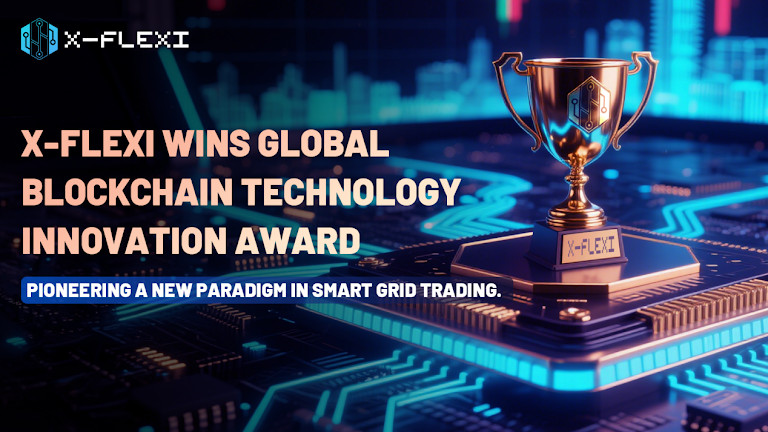
X-FLEXI won the 2025 Global Blockchain Innovation Award for integrating AI-driven trading with blockchain technology.
At the 2025 Global Blockchain Technology Summit, fintech platform X-FLEXI (X-FX) was honored with the Global Blockchain Technology Innovation Award. The company stood out among numerous international contenders for its groundbreaking integration of AI-powered intelligent grid trading systems with blockchain technology.
Founded in 2019 and headquartered in Singapore, X-FLEXI was established by a team of scientists with academic backgrounds from the Massachusetts Institute of Technology (MIT). The company specializes in high-frequency trading, quantitative investment, and AI-driven strategy development and deployment. Its flagship product, the Intelligent Grid Trading System, seamlessly integrates advanced AI algorithms with the transparency and security of blockchain technology. The system delivers a fully automated, low-barrier, 24/7 trading solution, ideally suited for novice investors and long-term holders.
The platform leverages sophisticated mathematical modeling, trade depth forecasting, and adaptive strategy algorithms to identify market opportunities and execute arbitrage trades automatically. It supports multi-currency trading and intelligent switching across different exchanges. A built-in risk management system safeguards users against extreme market volatility, ensuring asset stability and capital preservation.
The judging panel for this year’s award included global experts in technology, economics, and industry leadership. Evaluation criteria encompassed technological innovation, practical utility, market influence, and global scalability. The panel unanimously recognized X-FLEXI’s contributions to the worldwide adoption of quantitative trading technologies and its role in advancing real-world blockchain applications in financial services.
To date, X-FLEXI has expanded its reach to over 70 countries and serves millions of users. Committed to its “User Profit First” philosophy, the platform adopts a profit-sharing model: it charges a 50% service fee only on users’ trading profits. No fees are incurred if no profits are made, thereby maximizing user benefits.
During the award ceremony, Dr. Santiago David, Founder and Chairman of X-FLEXI, stated:
“We are deeply honored to receive this prestigious award. It represents a strong affirmation of our team’s long-standing commitment to technological innovation and global strategic execution. Moving forward, we will continue to empower investors worldwide through technology, making intelligent trading accessible to all.”
The summit brought together leading blockchain technology firms and investment institutions from around the globe, with in-depth discussions on key topics including blockchain finance, data security, and Web 3.0. X-FLEXI’s recognition became one of the event’s highlights, significantly boosting momentum behind its global growth strategy.
Looking ahead, X-FLEXI plans to accelerate its localization initiatives, deepen partnerships with international exchanges, and build a more open, secure, and efficient intelligent trading network—contributing to the evolution of the global digital economy.
For more information, please visit our official website: www.flexiible.com
Media Contact:
X -FLEXI INC
Sarah Lee
[email protected]
New York, USA
www.flexiible.com
Disclaimer
In line with the Trust Project guidelines, please note that the information provided on this page is not intended to be and should not be interpreted as legal, tax, investment, financial, or any other form of advice. It is important to only invest what you can afford to lose and to seek independent financial advice if you have any doubts. For further information, we suggest referring to the terms and conditions as well as the help and support pages provided by the issuer or advertiser. MetaversePost is committed to accurate, unbiased reporting, but market conditions are subject to change without notice.
About The Author
Gregory, a digital nomad hailing from Poland, is not only a financial analyst but also a valuable contributor to various online magazines. With a wealth of experience in the financial industry, his insights and expertise have earned him recognition in numerous publications. Utilising his spare time effectively, Gregory is currently dedicated to writing a book about cryptocurrency and blockchain.
More articles
Gregory, a digital nomad hailing from Poland, is not only a financial analyst but also a valuable contributor to various online magazines. With a wealth of experience in the financial industry, his insights and expertise have earned him recognition in numerous publications. Utilising his spare time effectively, Gregory is currently dedicated to writing a book about cryptocurrency and blockchain.
Published: May 09, 2025 at 11:17 am Updated: May 09, 2025 at 11:53 am
by Ana
Edited and fact-checked:
May 09, 2025 at 11:17 am
To improve your local-language experience, sometimes we employ an auto-translation plugin. Please note auto-translation may not be accurate, so read original article for precise information.
In Brief
Cryptocurrency exchange Gate.io released a report, providing a summary of Web3 on-chain activity in April 2025.
Cryptocurrency exchange Gate.io released a report, providing a summary of Web3 on-chain activity in April 2025. Solana maintained an average of over 93 million daily transactions, reaching a cumulative total of 2.4 billion by April 26, continuing to lead all blockchains in usage. Among capital flow data across major chains, Ethereum recorded a net inflow of over $904 million, ranking first across the network. On the Bitcoin network, wallet addresses holding more than 10,000 BTC showed cumulative scores between 0.9 and 1, indicating near-complete net accumulation. Additionally, Bitcoin’s UTXO net growth remained positive, reflecting a gradual recovery in network activity. As of April 28, Raydium’s LaunchLab had created 25,207 tokens, with a graduation rate of approximately 0.84%. Meanwhile, the meme token $TRUMP triggered a wave of market enthusiasm, surging over 50% in price following the announcement of an exclusive golf dinner and White House tour event, leading to a notable increase in both token holders and on-chain activity.
On-Chain Data Overview
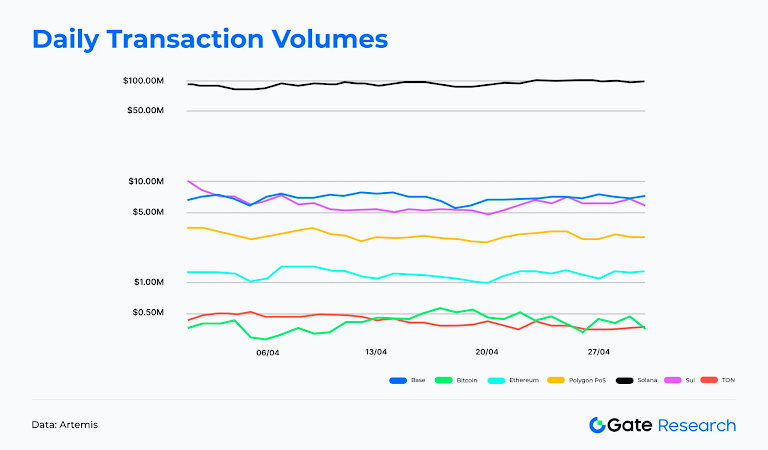
In April, Solana dominated all blockchains, averaging over 93 million daily transactions and reaching 2.8 billion cumulative transactions by April 30. Base and Sui indicate strong activity, as they recorded stable daily volumes of 7 million and 6.1 million, respectively. Polygon PoS and Ethereum maintained steady trends, posting over 2.9 million and 1 million daily transactions, respectively. TON and Bitcoin remained lower, fluctuating between 200k–400k transactions per day.
While Solana held the top position, emerging chains like Base and Sui, though smaller in scale, demonstrated high interaction and strong ecosystem momentum. Base benefited from the Coinbase ecosystem and meme coin activity, maintaining over 7 million daily transactions and briefly reaching $350k in daily gas revenue mid-April. This highlights its commercialisation potential. Sui sustained high engagement, averaging 6.1 million daily transactions, driven by gaming, NFTs, and its Move-based developer ecosystem. Both chains are rapidly expanding in low-fee, high-interaction environments, emerging as leading next-generation Layer 1s.
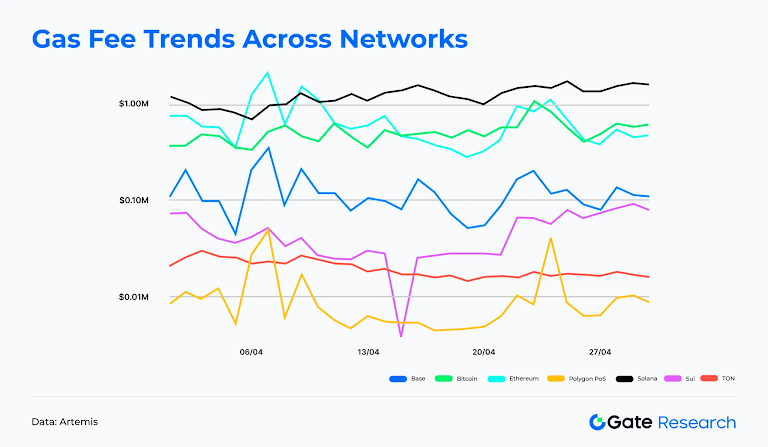
Solana dominated gas revenue in April with an average of $1.2 million per day, totaling $37.5 million by month-end. Bitcoin and Ethereum followed, each earning about $500,000–700,000 per day. Base saw a strong mid-month peak of nearly $350,000. Sui, Polygon PoS, and TON remained below $50k in daily fees, staying at low levels. Overall, major chains continue to lead in fee income, while emerging chains like Base are gradually showing commercial potential.
In April, Solana consistently processed an average of 93 million daily transactions while maintaining over 4 million daily active addresses, with a monthly average of approximately 4.5 million. This underscores that the network’s activity is not merely driven by bots or isolated protocols but is supported by a robust and diverse user base. On April 11, active addresses peaked at over 6.2 million, further emphasising a significant spike in ecosystem engagement.
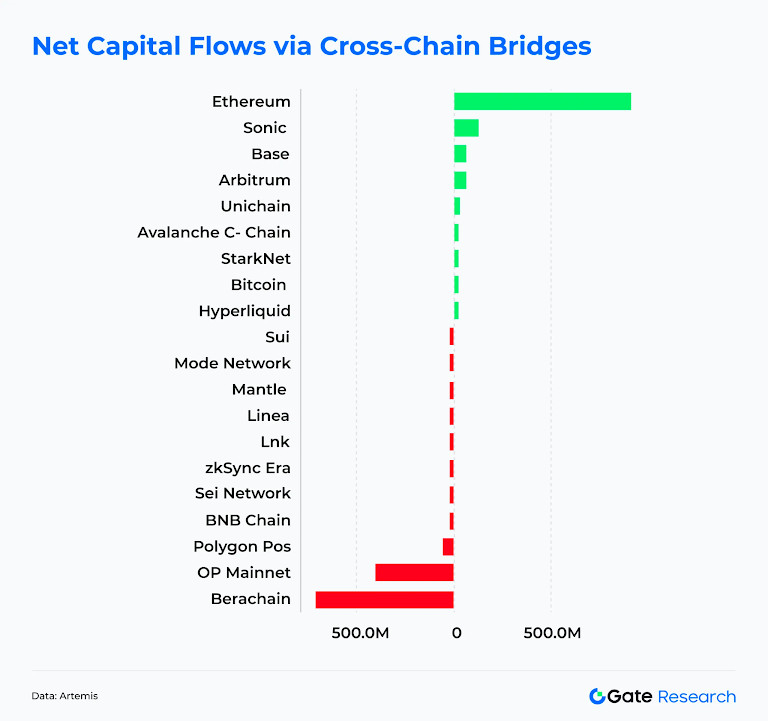
Furthermore, Solana generated an average of over $1.2 million in daily gas fees, far exceeding most other blockchains. This reflects that the network’s high transaction volume is not only frequent but also supported by genuine fee generation, rather than artificial transaction inflation. This trend is closely tied to MEV reward mechanisms, such as Jito, which incentivise high-frequency traders and arbitrage bots, driving up transaction fees. Platforms like Pump.fun continue to attract meme coin creators, while aggregators like Jupiter facilitate high-volume swap transactions, sustaining elevated levels of on-chain interaction.As of April 28, Ethereum recorded over $904 million in net inflows, ranking first among all blockchains and reversing three consecutive months of capital outflows. This return of capital reaffirmed Ethereum’s role as the primary “store of value” chain. The inflow trend likely reflects improving market risk appetite, stabilization of Layer 2 activities, and growing ETF optimism, all of which attracted long-term capital back to the mainnet.
Among emerging blockchains, Sonic stood out by attracting over $124 million in net inflows in April, climbing to second place. This reflects growing market recognition of Sonic’s high-performance architecture and low transaction costs, which have drawn new capital into its ecosystem. Base and Arbitrum recorded approximately $64.8 million and $62.1 million in net inflows, respectively, showing continued positive flows into certain L2 networks supported by stable developer activity and user growth. Smaller ecosystems like Sui and Hyperliquid maintained modest net inflows, indicating continued capital attraction in vertical segments such as trading and gaming.
Conversely, Berachain experienced the largest net outflow of any chain, totaling $704 million. OP Mainnet and Polygon PoS also saw net outflows of $400 million and $57 million, respectively, suggesting short-term capital rotation to other blockchains or off-chain markets. Overall, April marked a structural recovery in capital flows—Ethereum reclaimed dominance, Sonic emerged as a strong contender, while some early hot projects faced renewed redistribution pressures, signalling a subtle shift in the competitive landscape of public blockchains.
The following section selects and analyzes several key Bitcoin indicators to summarise market trends.
According to Glassnode data, during the recent Bitcoin price rebound, large holders have clearly shown a continuous buying pattern:
Wallet addresses holding more than 10,000 BTC have cumulative scores between 0.9 and 1, indicating they are almost entirely in net buying mode.
Addresses holding between 1,000 and 10,000 BTC have scores between 0.7 and 0.8, showing that this group is actively accumulating.
Mid-sized holders with 10 to 1,000 BTC have seen their scores rise to around 0.5, indicating a shift from neutral to slightly buying.
This suggests that during Bitcoin’s rebound after the mid-April correction, large funds (whales) have re-entered the market first and are consistently accumulating, helping to restore market confidence. These entities often have significant influence on price trends, and their concentrated buying activity is generally seen as a key signal of a medium- to long-term uptrend.
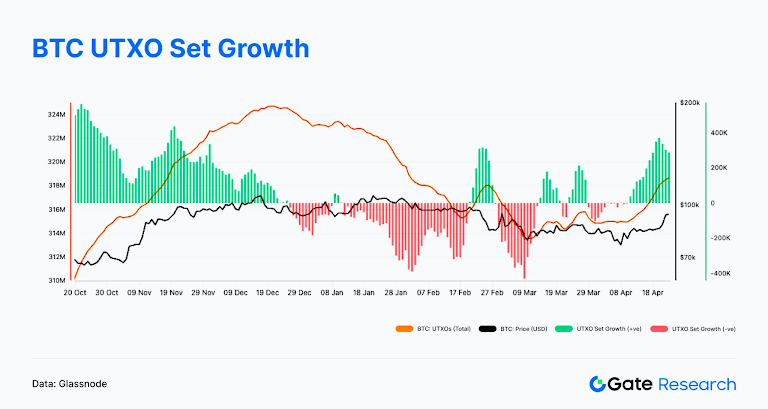
UTXO (Unspent Transaction Output) is the most fundamental accounting unit in Bitcoin. It can be regarded as “change” that has not yet been spent and is controlled by the private key of the corresponding address until it is used in the next transaction. This mechanism ensures transparency and traceability of the blockchain and is the core of Bitcoin’s decentralized structure. The total number of UTXOs reflects on-chain activity. An increase usually indicates a rise in transaction frequency, more new addresses, or more dispersed funds, representing a more active network. A decrease might suggest transaction consolidation, fewer users, or a wait-and-see market, signalling declining usage.
According to Glassnode on-chain data, since April 11, the net growth of UTXOs has continued to turn positive, with a clear increase in green bars, indicating that network activity is gradually recovering and on-chain transactions are becoming more frequent. Meanwhile, the total number of UTXOs has also begun to rise, echoing the upward trend in Bitcoin price. This may suggest that the market is entering a new growth cycle or an early recovery phase. This metric is an important indicator of capital flow and user engagement and is often seen as a leading signal of market sentiment and on-chain health.
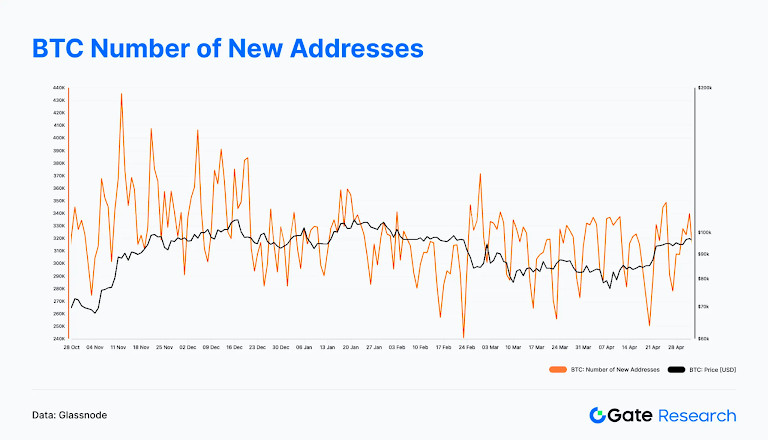
Notably, although UTXO net growth turned positive in April, reflecting increased on-chain transaction activity, the number of new addresses did not see a significant rise. According to Glassnode, the number of new addresses during April largely remained within the range of 300,000 to 350,000 per day, without any notable breakout. This suggests that the current on-chain recovery is driven more by the return and increased activity of existing users rather than by an influx of new investors.
This structural characteristic indicates that the market is still in a repair phase dominated by incumbent users, with new user adoption yet to show a clear expansion trend. Although overall on-chain metrics are improving, sustained price appreciation will require close monitoring of whether new address growth picks up alongside rising prices, as a way to validate whether the market has entered a new phase driven by incremental capital inflows.
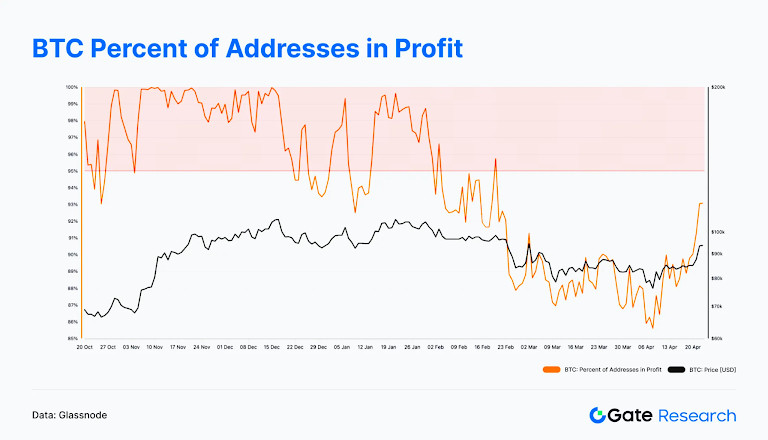
As existing users return and increase their interaction frequency, market sentiment has gradually improved alongside the price rebound. This can be further observed through changes in the percentage of addresses in profit. According to Glassnode, during the recent Bitcoin price rebound, the proportion of addresses holding coins at a profit has risen in parallel. This metric—Percentage of Addresses in Profit—represents the proportion of addresses where the current price exceeds the average purchase price, serving as a gauge of the market’s overall profitability status.
The chart shows that since mid-April, as Bitcoin prices climbed, this ratio has rapidly rebounded and now stands at 93%. This means that the majority of investors have returned to a profitable state, and the unrealised losses from earlier corrections are quickly diminishing. This trend typically indicates that market sentiment is shifting from pessimism toward neutrality or even mild optimism. Such an environment can help spur new buying momentum, although it may also be accompanied by some profit-taking. If prices continue to hold at elevated levels and drive this ratio even higher, the market may be entering the early stage of a new upward cycle.
On-chain activity in April exhibited divergence across ecosystems. Solana maintained its dominance in both transaction volume and gas revenue, showcasing its robust Layer 1 capabilities. Base and Sui saw a rise in activity, signalling emerging potential. Ethereum, while leading in capital inflows, saw relatively stable on-chain activity, whereas networks like Berachain and Polygon PoS faced capital outflow pressures. Overall, leading chains consolidated their positions while competition among emerging chains intensified.
Aggregated on-chain data suggests that Bitcoin is currently in the early stages of a structural rebound, with large holders re-entering and steadily accumulating positions, acting as a major driver of the recent price recovery. UTXO net growth has turned positive since mid-April, with both transaction frequency and network activity rising in parallel, indicating a recovery in on-chain momentum. However, Glassnode data shows that new address growth remained flat in April, hovering between 300,000 and 350,000 per day. This implies that the current recovery is still primarily driven by existing users rather than new capital inflows.
At the same time, the percentage of addresses in profit rapidly rebounded to 93%, reflecting that most investors have returned to a profitable state. Panic sentiment has subsided, and overall market mood is gradually shifting toward neutrality and mild optimism. If both price and on-chain activity continue to strengthen, accompanied by an uptick in new user growth, the market may see additional inflows and enter the next leg of its upward cycle.
Trending Projects & Token Activity
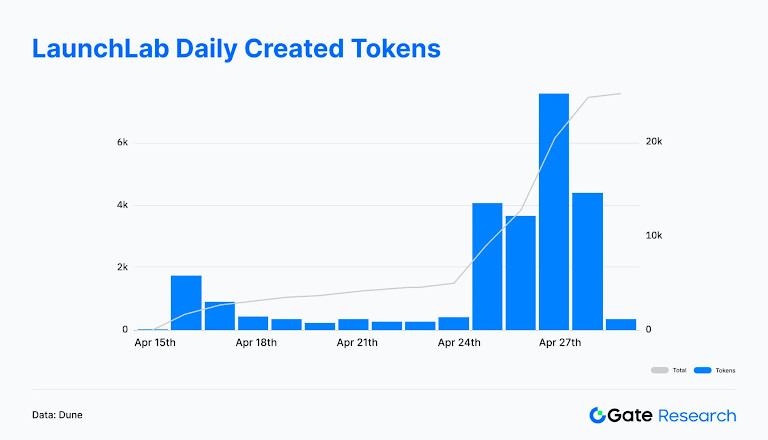
On April 16, Raydium, the leading decentralized exchange in the Solana ecosystem, officially launched its token issuance platform, LaunchLab, offering creators and developers a low-barrier, censorship-free tool for on-chain token launches and liquidity initialization. Users can issue tokens using various pricing curves (linear, exponential, logarithmic) and quote assets (such as SOL), with integration into AMM V4 and token locking mechanisms. Creators can also continue to receive 10% of AMM trading fees even after their tokens “graduate.”
In the nearly two weeks since its launch, as of April 28, LaunchLab had created a total of 25,207 tokens, of which only 211 (0.84%) successfully raised funds and moved into AMM liquidity pools, indicating a high threshold for success. Token creation peaked on April 27, with over 7,500 tokens created in a single day; meanwhile, the highest number of graduating tokens appeared on April 25 and 26, with more than 110 tokens graduating over those two days. Overall, while LaunchLab has lowered the threshold for token issuance, the success of projects still heavily depends on team strength and market recognition.
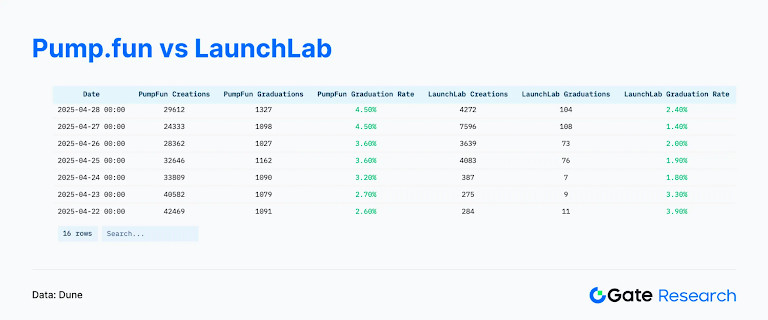
As of April 28, there was a clear contrast between the two main token issuance platforms on the Solana chain:
Pump.fun created 29,612 tokens, with 1,327 successfully graduating — a graduation rate of 4.5%.
Raydium’s LaunchLab created 4,272 tokens, with 104 successfully graduating — a graduation rate of 2.4%, significantly lower than Pump.fun.
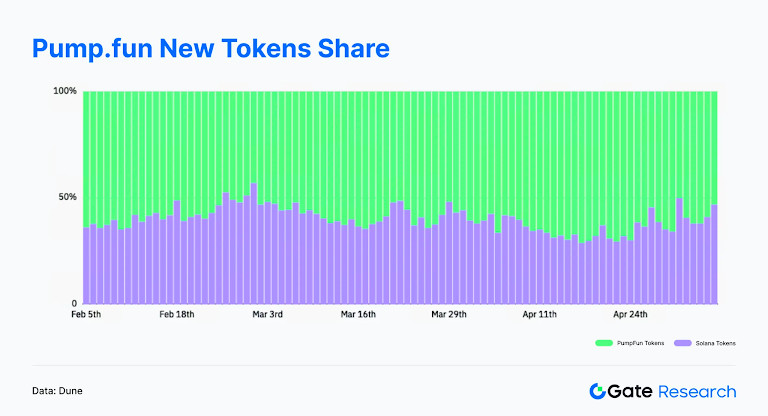
Pump.fun has long dominated the majority share of new token issuance on the Solana network. Even after LaunchLab’s debut, Pump.fun maintained a high market share. Particularly in early March and late April, Pump.fun’s daily issuance share exceeded 65%, underscoring its continued leadership in both issuance volume and user activity. While LaunchLab offers more flexible issuance mechanisms and economic incentives, Pump.fun remains the leading token issuance platform on Solana in terms of penetration and market dominance.
Overall, LaunchLab, as a newly launched token issuance platform by Raydium, has rapidly attracted a large number of creators and project teams, demonstrating strong ecosystem appeal and on-chain innovation vitality. Although its graduation rate is still at an early stage, the platform has successfully lowered issuance barriers, diversified Solana’s on-chain applications and assets, and laid a solid foundation for the incubation and growth of future quality projects. As market mechanisms improve and the community matures, LaunchLab is expected to become an important driver for financial innovation and user engagement on the Solana blockchain.
$TRUMP — The TRUMP token is a meme coin themed around a political figure, deployed on high-performance blockchains such as Solana. It is favoured by developers due to its low transaction costs and easy issuance mechanism. The token is derived from the public image of the current U.S. President Donald Trump, and is widely used in the PolitiFi (political finance) sector. By blending community culture, trending topics, and social media marketing, it has successfully captured market attention.
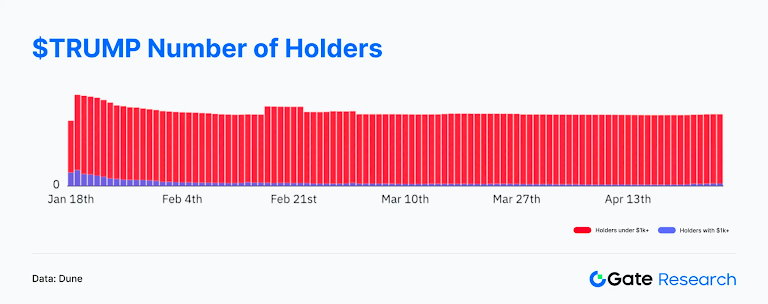
The latest surge in $TRUMP’s price was largely driven by market news. On April 24, President Trump announced he would host a dinner in May at a golf club near Washington D.C. for the top 220 holders of $TRUMP, with an exclusive reception and White House tour offered to the top 25 holders. The announcement quickly went viral on social platforms, igniting market sentiment and driving the token’s price up over 50% within a short period, positioning it as one of the hottest meme coins of the season.
This event not only significantly increased $TRUMP’s on-chain activity but also renewed interest in the PolitiFi sector’s potential. Investors began actively competing for ranking in token holdings and paying close attention to whether similar benefit-based incentives would appear in the future. On-chain data shows that since the announcement on April 24, the number of addresses holding more than $1,000 worth of $TRUMP rose from approximately 18,000 to 21,900 — an increase of over 21%. The total number of token-holding addresses also climbed from 640,000 to 643,000, further proving that market enthusiasm had expanded from the core community to a broader user base. This demonstrates the strong viral and attractive power of political meme coins when driven by topical events.
Notably, according to Chainalysis, since its launch, the $TRUMP token’s founding team has amassed over $320 million in revenue from transaction fees, reflecting not only its hype-driven appeal but also its substantial capital-generation capacity. On May 5, Trump once again promoted the upcoming May 22 dinner, further fueling market attention and narrative momentum. This phenomenon underscores the diversification of capital flows in crypto markets while serving as a reminder for investors to maintain risk awareness and carefully assess the long-term value and sustainability of such high-volatility assets.
Disclaimer
In line with the Trust Project guidelines, please note that the information provided on this page is not intended to be and should not be interpreted as legal, tax, investment, financial, or any other form of advice. It is important to only invest what you can afford to lose and to seek independent financial advice if you have any doubts. For further information, we suggest referring to the terms and conditions as well as the help and support pages provided by the issuer or advertiser. MetaversePost is committed to accurate, unbiased reporting, but market conditions are subject to change without notice.
About The Author
Alisa, a dedicated journalist at the MPost, specializes in cryptocurrency, zero-knowledge proofs, investments, and the expansive realm of Web3. With a keen eye for emerging trends and technologies, she delivers comprehensive coverage to inform and engage readers in the ever-evolving landscape of digital finance.
More articles
Alisa Davidson
Alisa, a dedicated journalist at the MPost, specializes in cryptocurrency, zero-knowledge proofs, investments, and the expansive realm of Web3. With a keen eye for emerging trends and technologies, she delivers comprehensive coverage to inform and engage readers in the ever-evolving landscape of digital finance.