Metaverse

Home Metaverse Page 166

Exploring AI Revolution In Web3: Decentralized AI, Data Ownership, And The Road Ahead

Exploring AI Revolution In Web3: Decentralized AI, Data Ownership, And The Road Ahead


In Brief

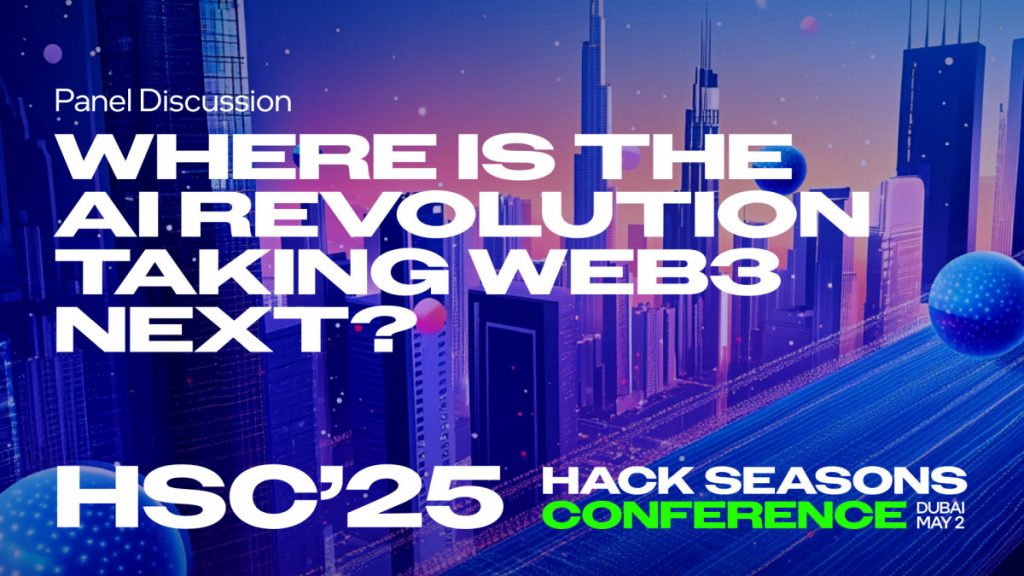
One of the discussions at the Hack Seasons Conference in Dubai explored how the AI wave is reshaping blockchain development and user interaction, with a focus on the rise of autonomous agents, AI-powered dApps, and advancements in security and data analysis.
Exploring AI Revolution In Web3: Decentralized AI, Data Ownership, And The Road Ahead

On May 2nd, Dubai hosted the Hack Seasons Conference, where leading experts gathered to explore how the AI wave is reshaping blockchain development and user interaction. Led by Tomer Sharoni, Co-Founder and CEO of Addressable, the panel featured industry leaders including Evgeny Ponomarev from Fluence Network, Mark Rydon from Aethir, Ramkumar from Openledger, and Michael Heinrich from 0G Labs. The discussion covered the rise of autonomous agents, AI-powered decentralized applications (dApps), and advancements in security and data analysis, highlighting how AI is transforming Web3 infrastructure and governance, and examining the future frontiers of this convergence.

One of the central questions was the current dominance of centralized AI models, which rely on closed data, closed compute resources, and restricted incentives. Speakers identified decentralization as a means to overcome these limitations. 

Identifying key issues in AI today, they highlighted that Web3 can contribute to AI development by enabling more inclusive data collection and labeling processes. The ability to collect many resources and enable people to use what they need is another problem requiring attention. Verifiability across AI components also brings challenges, as well as lack of rewarding people for the data they provide. Crypto-native incentives in this case serve as the potential opportunity to reward contributors transparently. Meanwhile, a key infrastructure challenge is limited access to GPUs, the critical engines of AI, which emphasises the urgency of democratizing compute access to ensure broader participation.

Decentralized Infrastructure As Path To Transparent, Verifiable, And Trustworthy AI Systems

Restoring trust in AI systems is another essential problem, particularly in a landscape where decisions are increasingly opaque. Decentralization therefore brings visibility to both data and model behavior. 

Decentralized storage layers, for example, can establish data provenance from the moment information enters the system, allowing users to trace its origin and modifications. On the operational side, real-time model alignment through blockchain-based incentive and penalty mechanisms—such as slashing—offers a path to dynamic governance of AI behavior, creating systems that are both verifiable and adaptable.

Unlocking AI’s Next Frontier: Ownership In Decentralized AI Models

Another major point of discussion was data attribution and quality assurance. While most large language models (LLMs) today are trained on publicly scraped data, panelists emphasized that the most valuable datasets are held by individuals and enterprises with domain-specific knowledge.

Openledger, for example, aims to enable individuals and organizations to build tailored models for sectors like healthcare and e-commerce by tapping into these specialized datasets. Their framework allows contributors to retain ownership over their data while receiving attribution and rewards. Notably, Openledger provides a mechanism to trace which data contributed to specific AI outputs, a level of transparency not available in most current LLMs.

From Automating On-Chain Transactions To Powering Crypto-Native Economies: What Lies Ahead?

When asked about the most interesting ideas in the AI space expected to materialize in the near future, speakers highlighted the potential of using AI agents to perform a wide range of human tasks. One example discussed was AI alignment nodes, which are capable of acting as a natural police force by detecting data poisoning and backdoor attacks. Furthermore, panelists emphasized the role of AI in abstracting humans from routine work and enhancing efficiency.

Speakers projected that within the next three to five years, a large share of on-chain transactions could be executed by autonomous AI agents—an especially relevant development for the cryptocurrency space, which is characterized by fast speculation and trading.

Another notable idea is that AI could be used to optimize everything from software development to decentralized finance (DeFi) strategies. As AI continues to evolve, there is increasing potential for entirely new crypto-native organizations and financial models, powered by algorithms written and optimized by AI itself. In this emerging paradigm, cryptocurrencies may serve not only as tools for speculation but also as native capital for the AI-driven economy.

Disclaimer

In line with the Trust Project guidelines, please note that the information provided on this page is not intended to be and should not be interpreted as legal, tax, investment, financial, or any other form of advice. It is important to only invest what you can afford to lose and to seek independent financial advice if you have any doubts. For further information, we suggest referring to the terms and conditions as well as the help and support pages provided by the issuer or advertiser. MetaversePost is committed to accurate, unbiased reporting, but market conditions are subject to change without notice.

About The Author


Alisa, a dedicated journalist at the MPost, specializes in cryptocurrency, zero-knowledge proofs, investments, and the expansive realm of Web3. With a keen eye for emerging trends and technologies, she delivers comprehensive coverage to inform and engage readers in the ever-evolving landscape of digital finance.

More articles


Alisa Davidson


Alisa, a dedicated journalist at the MPost, specializes in cryptocurrency, zero-knowledge proofs, investments, and the expansive realm of Web3. With a keen eye for emerging trends and technologies, she delivers comprehensive coverage to inform and engage readers in the ever-evolving landscape of digital finance.


More articles


Source link

How the Maldives Is Building a $9 Billion Blockchain Hub to Transform Its Economy | NFT News Today

How the Maldives Is Building a  Billion Blockchain Hub to Transform Its Economy | NFT News Today


Malé, the capital of the Maldives, is launching a $9 billion initiative to become one of the world’s Web3 cities. Spearheaded by the Maldives International Financial Centre (MIFC), the project aims to diversify the nation’s economy and develop expertise in blockchain technology.

Key Insights

The Maldives plans to invest $9 billion in transforming Malé into a Web3 city by 2030—exceeding the country’s current GDP.

Core elements include creating digital asset platforms, founding blockchain research centres, and launching a native stablecoin, “Maldtoken.”

Regulatory oversight will be provided by the Maldives International Financial Services Authority (MIFSA).

The initiative is hoped to boost the national economy and create over 16,000 jobs, though claims like “tripling GDP” remain speculative.

Thanks to its strategic location, the Maldives could serve crypto markets in Asia, the Middle East, and Africa.

What Is the Maldives Web3 Initiative?

The Maldives Web3 Initiative is a government-led economic diversification strategy aiming to establish Malé as a blockchain-focused financial centre. Through the MIFC, policymakers plan to integrate digital finance, decentralised applications, and token-based services into the country’s economic framework.

Funding and Governance

The majority of the $9 billion investment comes from MBS Global Investments, a Dubai-based family office led by Qatari royal Sheikh Nayef bin Eid Al Thani, in partnership with the government of the Maldives. This forms a joint venture designed to combine foreign capital with local oversight.

Core Components

Developing a digital asset trading infrastructure.

Creating blockchain research and innovation facilities.

Introducing “Maldtoken,” a stablecoin for real estate transactions and daily use.

Planning a car-free, climate-resilient urban layout powered by renewable energy.

By prioritising emerging Web3 technologies, the Maldives hopes to reduce its reliance on tourism and nurture a sustainable digital economy.

How the Web3 City Will Be Implemented

According to the MIFC, transforming Malé into a Web3 city will include:

Multi-Currency Financial Services: Banks prepared to handle both fiat currency and cryptocurrencies.

Startup Incubators: Support structures for blockchain-focused entrepreneurs and companies.

Investor Protection Frameworks: MIFSA-led regulations and sandboxes to encourage responsible investment.

Smart Infrastructure: Systems for digital identification, token-based governance, and environmentally conscious building practices.

Because the budget surpasses the Maldives’ current annual GDP, officials view this project as a major undertaking for economic and technological growth.

Opportunities and Competitive Positioning

The Maldives’ location—linking South Asia, the Middle East, and East Africa—could enable access to growing crypto markets in these regions. In addition, by allowing crypto payments, the country may attract visitors looking for digital finance options. Plans for an international school focused on blockchain aim to cultivate a local pool of tech professionals.

Officials hope the initiative will lead to 16,000 new jobs, potentially fostering a more diverse and technology-driven workforce.

However, Malé will contend with cities like Dubai, Singapore, and Hong Kong, all of which already host established fintech industries. To succeed, the Maldives will need to provide attractive regulatory conditions and unique offerings that draw in global investors and innovators.

Global Context

The Maldives joins a global trend of integrating blockchain at a local or city level:

Ljubljana, Slovenia: Often called “Bitcoin City” due to widespread cryptocurrency adoption.

San Francisco and New York City: Key hubs for blockchain startups and venture capital funding.

Singapore: Known for transparent crypto regulations and a well-developed tech infrastructure.

Malé’s plans draw insights from these examples while adapting to the island nation’s limited land area and vulnerability to climate risks. Discussing concepts like “token-based governance” and regulatory “sandboxes” underscores the need for effective public outreach and education.

Frequently Asked Questions

What is Maldtoken?

Maldtoken is a stablecoin planned for release by 2030, intended for real estate transactions and everyday purchases within Malé’s blockchain ecosystem.

Who is funding the Maldives Web3 project?

Funding primarily comes from MBS Global Investments, a Dubai-based enterprise led by Qatari royal Sheikh Nayef bin Eid Al Thani, with support from the Maldivian government.

When will the Web3 city be completed?

The main build-out is scheduled for completion by 2030, with infrastructure and digital services introduced in stages.

How will the Maldives benefit?

Leaders anticipate growth in GDP, decreased dependency on tourism, foreign investment influx, and the creation of over 16,000 jobs. However, these outcomes will rely on solid execution, supportive regulations, and ongoing investment interest.

Is there a regulatory framework in place?

Yes. The Maldives International Financial Services Authority (MIFSA) oversees compliance, investor protection, and regulatory innovations like sandboxes.

Final Thoughts

The Maldives Web3 Initiative presents an ambitious approach to economic diversification via emerging technologies. Whether Malé can carve out a lasting role in digital finance will depend on effective policy implementation, market stability, and continued engagement with both domestic and international stakeholders.

Main Image Source: Unsplash


Source link

Vana Introduces Vana Academy To Support Data Capital Business And Advance AI Data Economy

Vana Introduces Vana Academy To Support Data Capital Business And Advance AI Data Economy


In Brief

Vana has launched Vana Academy, a nine-week program designed to support the development of projects in the emerging AI data economy by guiding participants through the process of building data-centric businesses.

Vana Introduces Vana Academy To Support Data Capital Business Advancing AI Data Economy

Decentralized network for user-owned data, Vana announced the launch of Vana Academy—a nine-week program intended to support the development of projects within the emerging AI data economy. The initiative aims to guide participants through the process of creating data-centric businesses, with applications open until May 26th.

The program targets individuals interested in reimagining data markets through foundational principles, including those with backgrounds in entrepreneurship, research, and protocol design. 

Vana Academy is structured to provide strategic guidance on sourcing and managing high-quality datasets owned by users, addressing the challenges associated with turning these assets into viable business models.

The curriculum includes instruction on identifying valuable data opportunities, designing incentive and governance mechanisms, enabling user participation, and formulating go-to-market strategies.

Participants accepted into the program will explore how principles of data sovereignty can unlock new avenues for data-driven enterprises. They will gain insight into sourcing and commercializing high-value, user-owned datasets, and receive mentorship and technical guidance from engineers and contributors within the Vana ecosystem. The program culminates with project presentations to potential investors and network stakeholders. Additionally, participants may qualify for milestone-based incentives and potential future funding opportunities.

Vana is accepting applications from individuals and teams working in areas such as tokenized user data through DataDAOs, monetization models for datasets, privacy-focused AI development, and collective value creation rooted in data ownership. 

The program is structured across distinct phases. The initial Learning Phase introduces participants to the Vana tech stack, DataDAO design, Proof of Contribution mechanisms, and tokenomics strategies. In the Proof Phase, participants submit MVP drafts for evaluation, with eligible teams receiving up to $5,000 in performance-based rewards. The GTM (go-to-market) Phase focuses on scaling user participation, refining token design, and aligning contributor incentives. The program concludes with a final pitch session, where selected teams will present their projects to investors and ecosystem stakeholders and may be eligible for further grants and ongoing support. 

Applications close on May 26th, with notifications sent by May 28th. The program is scheduled to begin on June 2nd. This is the first cohort in a planned series of future offerings.

Vana: What Is It?

Vana is an Ethereum-compatible, decentralized Layer 1 blockchain developed to support user control and ownership over personal data, particularly in relation to artificial intelligence applications. The network provides mechanisms for individuals to contribute personal data—such as digital behavior or biometric information—into encrypted environments while retaining ownership rights.

Participants can opt to make their data available for AI model training and receive compensation based on the value and relevance of their contributions. This structure offers an alternative to centralized models where user data is typically monetized without direct benefit to the data provider.

In order to enable collective participation and efficient data utilization, Vana employs Data Liquidity Pools, which serve as secure repositories where users can contribute their data. These pools are governed by decentralized autonomous organizations known as DataDAOs. These entities are responsible for validating data, managing access permissions, and distributing rewards. Contributors receive tokenized representations of their participation, which entitles them to a share of any rewards generated when their data is utilized in AI systems.

Disclaimer

In line with the Trust Project guidelines, please note that the information provided on this page is not intended to be and should not be interpreted as legal, tax, investment, financial, or any other form of advice. It is important to only invest what you can afford to lose and to seek independent financial advice if you have any doubts. For further information, we suggest referring to the terms and conditions as well as the help and support pages provided by the issuer or advertiser. MetaversePost is committed to accurate, unbiased reporting, but market conditions are subject to change without notice.

About The Author


Alisa, a dedicated journalist at the MPost, specializes in cryptocurrency, zero-knowledge proofs, investments, and the expansive realm of Web3. With a keen eye for emerging trends and technologies, she delivers comprehensive coverage to inform and engage readers in the ever-evolving landscape of digital finance.

More articles


Alisa Davidson


Alisa, a dedicated journalist at the MPost, specializes in cryptocurrency, zero-knowledge proofs, investments, and the expansive realm of Web3. With a keen eye for emerging trends and technologies, she delivers comprehensive coverage to inform and engage readers in the ever-evolving landscape of digital finance.


More articles


Source link

How to Build a Web3 dApp: Step-by-Step Guide | NFT News Today

How to Build a Web3 dApp: Step-by-Step Guide | NFT News Today


Learn how to build your first Web3 dApp and gain a better understanding of decentralized technology while at the same time giving users transparent and secure interactions. This quick guide covers everything from planning your app to connecting a finished frontend.

Key Takeaways

Identifying your dApp’s core purpose and audience helps shape a clear development path.

Popular choices like Node.js, Hardhat, and Solidity streamline the coding workflow.

Writing, compiling, and testing smart contracts ensures reliable on-chain functionality.

A React or similar frontend framework links user actions to blockchain interactions.

Deployment on testnets before mainnet helps iron out any issues.

What Is a Web3 dApp?

A Web3 decentralized application (dApp) is built on blockchain technology, allowing direct interaction between users and smart contracts without the need for centralized intermediaries. By leveraging these distributed networks, a dApp offers a transparent and tamper-resistant approach to digital services, from financial tools to gaming ecosystems.

Step 1: Plan Your dApp

Begin by outlining the main features of your dApp and identifying its target audience. Highlight specific features like token issuance, NFT functionality or other blockchain-enabled components. Outline the core value proposition and how your dApp will use decentralization to provide a unique experience.

Step 2: Choose Tools and Frameworks

Choosing the right stack is key to a smooth development process. Here are some common tools to consider:

Node.js and NPM: Manage project dependencies and scripts.

Hardhat or Truffle: Smart contract development, deployment and testing.

Solidity: The go-to programming language for Ethereum smart contracts.

MetaMask: Popular wallet integration for user authentication and transactions.

React.js or Similar: Build a responsive and interactive frontend interface.

These tools work together to make coding easier and blockchain interactions simpler.

Step 3: Set Up the Development Environment

After picking your toolkit, initialize your project and install the necessary dependencies. Below is an example using Node.js and Hardhat:

mkdir

If you prefer Truffle, install it globally:

npm install -g truffle

Once the setup is complete, you’ll have a directory structure ready for coding and deployment.

Step 4: Write and Compile a Smart Contract

Smart contracts form the backbone of any blockchain-based application. Here’s a simple Solidity example:

Compile your contract with Hardhat:

npx hardhat compile

If using Truffle, you can run:

truffle compile

This step validates your code and prepares the artifacts needed for deployment.

Step 5: Deploy the Smart Contract

Launch a local development blockchain, such as the Hardhat built-in network:

npx hardhat node

Create and run a deployment script:

npx hardhat run scripts/deploy.js –network localhost

For real-world testing, deploy to a testnet (e.g., Ropsten, Rinkeby, or Goerli) through a provider like Alchemy or Infura. This way you can test transactions, interactions and performance before moving to the Ethereum mainnet.

Step 6: Build the Frontend

A user-friendly interface is vital. Choose a library or framework, such as React.js, to organize your UI components. Install a JavaScript library like Ethers.js or Web3.js to interact with your deployed contracts:

<

Use your contract’s ABI and address to instantiate a contract instance. This enables functions like increment() to be called directly from your dApp’s user interface.

Step 7: Test and Iterate

Run thorough checks on both the contract logic and the frontend user journey. Start with your local network, then move on to a public testnet. Monitor transactions and confirm wallet interactions. After that, you should verify the results on a block explorer. Finally, adjust contract functions and UI elements to ensure a seamless experience.

Step 8: Launch

Once you’re confident in your dApp, deploy your smart contract to the Ethereum mainnet. Host your frontend using services like GitHub Pages or a cloud provider. Remember to keep your contract’s address and ABI accessible, so any updates to the frontend can be synced quickly.

Real-World Use Cases

Many successful dApps demonstrate how to build a Web3 dApp for a range of scenarios:

DeFi Platforms: Enable lending, borrowing, and yield-farming on decentralized networks.

NFT Marketplaces: Allow users to mint, buy, and sell digital art and collectibles.

Blockchain Gaming: Introduce NFTs for in-game assets and unique player items.

DAO Governance: Facilitate transparent voting systems and collective decision-making.

These examples underscore the versatility of dApps in delivering trust and ownership.

Frequently Asked Questions

Q: Do I need coding experience to develop a dApp?

A: Basic programming knowledge is helpful, especially in JavaScript and Solidity. Tutorials, documentation and online forums can help beginners.

Q: Which blockchain should I use for my first dApp?

A: Ethereum is a popular choice because of the large developer community and tooling support. But alternatives like Polygon, Binance Smart Chain or Avalanche can also be considered.

Q: How can I manage deployment costs?

A: Testing on local and public test networks helps to optimize gas usage. Gas optimization strategies like refining contract logic can further reduce costs on mainnet.

Q: What wallet options are best for users?

A: MetaMask is widely accepted but alternatives like WalletConnect, Coinbase Wallet and others that offer easy integration.

Q: Can I modify my smart contract after deployment?

A: Traditional smart contracts are immutable. If upgradability is needed, look into proxy contracts or frameworks like OpenZeppelin for upgradeable contract patterns.

Conclusion

By following these steps and best practices, you’ll be able to build a Web3 dApp with confidence. From drafting your project blueprint to refining the user interface, every step is crucial to create a truly decentralized, reliable and user-driven solution. Enjoy the growth of blockchain innovation as you continue to learn and improve.


Source link

Doodles’ $DOOD Token Launches on Solana: Tokenomics, Airdrop, and Vision Explained | NFT News Today

Doodles’ $DOOD Token Launches on Solana: Tokenomics, Airdrop, and Vision Explained | NFT News Today


The Doodles DOOD token launch on Solana goes live on May 9, 2025, introducing a 10 billion fixed-supply token designed to power storytelling, governance, and digital creativity across Doodles’ expanding ecosystem. With a strong focus on community rewards and ecosystem growth, $DOOD aims to blend NFT ownership with real digital utility.

Key Takeaways

The Doodles DOOD token launch occurs on Solana for scalability, with plans to bridge to Ethereum’s Layer 2 Base network.

A fixed supply of 10 billion $DOOD will be distributed, with 68% allocated to community and ecosystem use.

Doodles NFT holders and new Solana-native users are eligible for a major airdrop totalling 43% of all tokens (30% for NFT holders, 13% for “New Blood” users).

$DOOD will power avatar customization, governance, content access, and interactive world-building, primarily on the DreamNet platform deployed on Base.

Binance, Bybit and OKX will support $DOOD from launch, with Binance offering up to 50x leverage futures trading.

Doodles has also partnered with OKX, giving OKX Wallet users exclusive early access to $DOOD tokens through an official allowlist campaign.

What Is the Doodles DOOD Token?

The Doodles DOOD token is the central digital currency for the Doodles ecosystem, debuting May 9, 2025.

It powers DreamNet—a platform for collaborative storytelling, AI-driven content creation, and interactive user experiences—as well as the broader Doodles universe.

Unlike many NFT-linked tokens, $DOOD goes beyond governance. It acts as creative infrastructure for fans, players, and creators.

This token marks Doodles’ evolution—from a static NFT collection to an interactive Web3 platform that blends digital art, music, and gaming.

It supports multiple features: avatar upgrades in Doodles 2, premium content access, and creative collaboration through DreamNet.

Official launch and distribution details are available in the Doodles documentation.

Source Doodles

Why Solana for the DOOD Token Launch?

Solana was chosen as the launch platform for its high throughput, low transaction costs, and scalability—qualities necessary for interactive, real-time user experiences. This move aligns with Doodles’ focus on dynamic participation and fast-paced storytelling within DreamNet.

After launch, $DOOD will bridge to Base, an Ethereum Layer 2 network, allowing interoperability between Solana-native and Ethereum-native communities. This cross-chain approach is core to the project’s vision of expanding its reach while maintaining performance.

Tokenomics and Distribution: Breaking Down the Numbers

Doodles has committed to a non-inflationary supply of 10 billion $DOOD tokens, meaning no additional tokens will be minted in the future. Here’s how the allocation breaks down:

30% – Airdropped to Doodles NFT holders (community reward)

25% – Reserved for the ecosystem fund (development, incentives)

17% – Allocated to the Doodles core team

13% – Set aside for “New Blood” users (onboarding new communities)

10% – For liquidity providers ensuring market health

5% – Retained by Doodles Inc. for operational stability

In total, 68% of the token supply directly supports community and ecosystem growth, underscoring Doodles’ long-term decentralization goals.

How the DOOD Airdrop Works

Doodles NFT holders can claim their $DOOD allocation through a pre-registration process. Meanwhile, 13% of the total supply will be automatically airdropped to “New Blood” users—primarily Solana-native communities—to onboard new participants into the Doodles ecosystem. These communities include BonkBot, Bonk, DRiP, Solana Mobile, and more.

Binance will distribute DOOD tokens to eligible users through its Alpha platform and Futures trading, bypassing its usual Alpha Points consumption model for this launch (effective May 13). Bybit will also list the token, offering global exposure and liquidity.

$DOOD Token Utility and DreamNet Integration

$DOOD will serve as the utility backbone of the Doodles platform, powering several high-engagement features:

Avatar customization in Doodles 2, allowing for unique identity expression.

Governance and voting, enabling token holders to influence ecosystem decisions.

Access to premium content, rewards, and creator tools.

Economic coordination via DreamNet, including programmable assets, AI-generated characters, and reference fees for collaborative builds.

This design turns passive NFT ownership into active engagement, with $DOOD fueling an economy of creativity.

Doodles’ Vision: A Community-Owned Entertainment Platform

Doodles is shifting from a collection of static Ethereum NFTs to a vibrant, creator-first entertainment hub. Through the launch of $DOOD, Doodles is embedding utility and value into every layer of user interaction—from gaming and art to governance and rewards.

By incentivizing participation and decentralizing creative power, Doodles aims to build a platform where value flows to those who build, contribute, and create—not just the platform itself.

Frequently Asked Questions

When does the Doodles DOOD token launch?

The DOOD token launches on May 9, 2025, initially on Solana.

How many $DOOD tokens are there?

The total supply is capped at 10 billion tokens, with no future inflation.

Who is eligible for the $DOOD airdrop?

Doodles NFT holders (via pre-registration) and Solana-native users (“New Blood”) are eligible to receive airdropped tokens.

Which exchanges will support $DOOD?

Binance, Bybit, and OKX will list $DOOD on launch day. Binance will offer up to 50x leveraged futures trading.

What is DreamNet?

DreamNet is Doodles’ interactive platform that supports collaborative storytelling, programmable assets, and AI-driven creative content, all powered by $DOOD. It will initially be deployed on the Base network.

Conclusion

The Doodles DOOD token launch on Solana signals a bold new chapter for one of Web3’s most recognized NFT projects. With its focus on creative empowerment, cross-chain accessibility, and deep community integration, $DOOD lays the groundwork for a vibrant, participatory entertainment ecosystem. As Doodles bridges art, technology, and storytelling, $DOOD will be the fuel that drives it all.


Source link

Sui to Launch Gaming Stablecoin to Power Transactions on SuiPlay0X1 | NFT News Today

Sui to Launch Gaming Stablecoin to Power Transactions on SuiPlay0X1 | NFT News Today


Playtron has confirmed plans for a Sui Gaming Stablecoin that will drive transactions on SuiPlay0X1 starting Q4 2025. By combining stability with blockchain innovation, this milestone could reshape digital economies across multiple gaming platforms.

Key Takeaways

Game Dollar is backed by short-term U.S. Treasury securities.

It harnesses transaction parallelization on the Sui blockchain.

Integration with GameOS merges PC, console, and handheld gaming.

SuiPlay0X1 console will feature built-in support for stablecoin payments.

Behavior-based rewards incentivize player engagement across multiple platforms.

What Is the Sui Gaming Stablecoin?

The Sui Gaming Stablecoin, called Game Dollar, is a specialized payment token on the Sui blockchain. Unlike general purpose stablecoins, it was designed for transactions, rewards and subscriptions in gaming ecosystems. Playtron, M0, and Bridge have collaborated to launch this financial instrument, which is set to debut in Q4 2025 and integrate seamlessly with SuiPlay0X1 hardware.

Why Sui Blockchain Matters

Sui stands out as one of the fastest-growing blockchain networks, securing over $2.45 billion in locked assets and surpassing several established competitors. Its Layer 1 architecture supports faster transaction speeds through “transaction parallelization,” allowing multiple transactions to occur simultaneously rather than one at a time. This approach particularly benefits gaming, where rapid response times are crucial for a smooth user experience.

Key Sui innovations include:

Move Programming Language: A specialized language built for secure and efficient smart contract development.

Byzantine Fault-tolerant Proof-of-Stake: Safeguards the network even if some validators act dishonestly.

Programmable Transaction Blocks: Enables flexible structuring and execution of transactions across various use cases.

How Game Dollar Works

Game Dollar is backed by short term U.S. Treasury securities through the M0 infrastructure platform. This backing helps maintain a stable value which is essential for predictable in-game economies. The reserves also generate yield, making it possible for developers to fund rewards, loyalty programs, and other incentives. By relying on well-known financial instruments, Game Dollar merges aspects of traditional finance with the speed and programmability of blockchain gaming.

Playtron, the main driver of Game Dollar’s gaming integration, provides the GameOS platform and hardware solutions. M0 handles the stablecoin’s issuance and reserves, while Bridge focuses on payment APIs that connect marketplaces, publishers and gamers. This collective expertise will simplify and unify digital transactions across a broad range of gaming environments.

Practical Applications

Before finalizing Game Dollar as the go-to currency for gaming, the developers identified several real world scenarios where a stable, programmable digital asset can add value:

In-Game Purchases and Marketplaces

Gamers can use Game Dollar to buy virtual goods, downloadable content and character upgrades. This consistent payment method can simplify cross platform purchasing.

Subscription Services

Monthly or annual subscriptions for gaming platforms can become easier to manage. Game Dollar’s stable pricing will help players avoid surprise fees or volatility in recurring payments.

Player Rewards and Incentives

Achievements, community contributions and content creation can be incentivized through a stable token, encouraging higher participation across multiple games.

Cross-Platform Economy

A universal in-game currency can link different gaming ecosystems, allowing players to carry value and rewards from one title to another without friction.

SuiPlay0X1: A New Era for Handheld Gaming

Playtron’s SuiPlay0X1 handheld console will spotlight Game Dollar as its core payment solution. Priced at $599, the device includes an AMD Ryzen™ 7 7840U CPU, an AMD 780M GPU, and 512GB of SSD storage. It is compatible with both traditional PC titles and blockchain-enabled games.

Users can expect:

Integrated support for Game Dollar-based transactions

Access to GameOS, which unifies Steam, Epic Games, GOG, and more into a single portal

A portable form factor with an anticipated late 2025 shipping date

Pre-orders have already sold out, signalling high demand for a handheld console that fuses mainstream gaming libraries with blockchain capabilities.

Frequently Asked Questions (FAQ)

Is Game Dollar exclusive to SuiPlay0X1?

Yes. Game Dollar will launch on Sui blockchain and initially integrate with SuiPlay0X1. Developers plan to expand to additional gaming platforms and marketplaces over time.

How is Game Dollar different from other stablecoins?

It is specifically designed for gaming transactions. Backed by short-term U.S. Treasury securities, Game Dollar provides both stability and yield-generating potential that supports player incentives and in-game rewards.

Can I use my existing game library with Playtron’s ecosystem?

Absolutely. GameOS allows users to import libraries from Steam, Epic Games, GOG, and other services, streamlining access to multiple titles under one interface.

Will SuiPlay0X1 support traditional PC games?

Yes. In addition to blockchain-based games, the console can run many existing PC titles, making it accessible to both crypto-savvy users and traditional gamers.

What is the benefit of transaction parallelization on Sui?

Transaction parallelization does multiple things at once, removes common bottlenecks. This means smoother gameplay and faster in-game transactions.

Conclusion

The upcoming Game Dollar on Sui blockchain marks a new era of blockchain in gaming. By combining stable financial infrastructure with advanced transaction capabilities, Sui Gaming Stablecoin will change how players buy, sell and earn across multiple platforms. If this works, it will bring blockchain to mainstream games and unify digital economies in new and efficient ways.


Source link

The Ultimate Guide to Xociety: What You Must Know Before You Play | NFT News Today

The Ultimate Guide to Xociety: What You Must Know Before You Play | NFT News Today


Xociety merges third-person shooter action, RPG progression, and blockchain into an experience that puts players in command. In The Ultimate Guide to Xociety: What You Must Know Before You Play, you’ll uncover gameplay highlights, economic insights, and the upcoming playtest details.

Key Takeaways

Xociety blends PvP and PvE gameplay with real economic influence on the Sui blockchain.

Players collect and extract Motus in squad-based modes for rewards and progression.

Upcoming playtest offers incentives, including NFTs and $XO token packs.

Adidas partnership introduces exclusive ALTS digital avatars on Sui.

Long-term vision involves shifting from core gameplay to a larger metaverse phase.

What is Xociety?

Xociety is a third-person “POP Shooter” with RPG elements that encourages both competitive and cooperative play. Built on Unreal Engine 5 and launched on the Sui blockchain, it centers on fast-paced combat with genuine economic stakes. The tagline “Shoot, Earn, Pioneer: Now We Live in XOCIETY” highlights its commitment to letting players shape the in-game market through their actions.

Players are active participants; their decisions influence the environment, market economy and strategic outcome. Player agency is what sets Xociety apart from other shooters, every match affects the bigger picture.

Gameplay Features

Xociety combines the intensity of third-person shooter action with a deep progression system:

Squad Match: Three man teams compete to gather and extract a resource called Motus. 10 squads in each match, working together and using tactical combat to get rewards.

Character Progression: The RPG component allows you to customize headgear, footwear, and more, which cultivates a sense of personal identity in-game.

Immersive Mechanics: Built with Unreal Engine 5, gameplay feels fluid, visually rich, and accessible. Quick matches keep the adrenaline high while still allowing strategic planning.

Blockchain Integration and Economic Model

Xociety’s use of the Sui blockchain opens up genuine item ownership and economic participation:

Dynamic NFTs: Dynamic NFTs put the power in players’ hands. They really own their characters and items—and can trade or upgrade them as they see fit.

zkLogin for Easy Access: Sui offers a streamlined login system that lets newcomers sign up through familiar online credentials, reducing typical hurdles in blockchain-based games.

In-Game Corporations: Five major corporations (ARENA STAR, FusioEdge Finance, GLOBAL MERCH DISTRIBUTORS, MEDI FUTURE HEALTH, and SURGENCE) run significant parts of Xociety’s economy. Ownership of these corporations (via NFTs) generates dividends in $MCT tokens.

Tokens in Xociety

$MCT: Used as an entry fee for certain matches and can be earned through gameplay. Approximately 40–50% of players are expected to come out ahead on $MCT when participating in these modes.

$XO: Paired with XO-Points, it supports various in-game transactions. Earning XO-Points by ranking high or completing missions grants seasonal rights to acquire shares in Xociety’s corporations.

Latest Developments

Epic Games Store Playtest

In March 2025, Xociety appeared on the Epic Games Store. As of May 2025, players can sign up for its biggest playtest yet, supported by a reward pool of up to $100,000 through xCBT.io. Although exact dates have not been confirmed, those who pre-register can join online missions that award in-game items, NFTs, and $XO token packs.

Adidas Partnership

On May 6, 2025, Xociety partnered with Adidas to release exclusive digital gear. Adidas will drop 2,600 NFTs on Sui, featuring black hoodies and neon tracksuits with official branding. These NFTs will be in mystery boxes and come in different rarity tiers to add a new layer of customization to character appearances.

Development History and Funding

Xociety is produced by NDUS Interactive, a team with credentials from established gaming studios. After a successful beta phase with 3,000 users spread across 76 countries—resulting in over 11,000 hours of play—the project secured $7.5 million in pre-Series A funding. Major backers include The Spartan Group, Hashed Fund, Big Brain Holdings, Sui Foundation, Neoclassic Capital, and Krafton. NDUS founder Jeffry Kim emphasizes the importance of moving past short-lived blockchain earnings toward a stable, engaging model for players.

How to Participate in the Upcoming Playtest

Anyone interested in trying Xociety’s next playtest can follow these steps:

Pre-Register Through Xociety’s dApp: Connect your Epic Games account to confirm eligibility.

Link Your Wallet: A Sui Wallet is required, with the option to link an Ethereum-compatible wallet as well.

Complete Online Missions: Tasks may include following social media channels or sharing content about pre-registration.

Earn Points and Rewards: Points from these tasks place participants on a global leaderboard. Hitting milestones can lead to NFT drops and $XO token packs.

These are part of a three phase strategy: pre-test tasks, the actual playtest and Early Access. By wishlisting Xociety on Epic Games Store and completing pre-registration tasks, you’ll be rewarded with unique goodies when the playtest starts.

Frequently Asked Questions

Q: What sets Xociety apart from typical shooter games?

A: Xociety gives players genuine influence over the in-game economy and environment. Unlike standard shooters, your tactical choices and market decisions can affect everything from resource flow to corporation success.

Q: How do I acquire $MCT and $XO tokens?

A: You can gain $MCT by joining special matches with an entry fee. Victory or strong performance often brings a return on that fee. $XO, along with XO-Points, is awarded through ranking on leaderboards or finishing missions.

Q: Are there any major partnerships I should know about?

A: Yes. The adidas collaboration brings exclusive NFTs to the game, allowing players to equip digital apparel and showcase unique looks during matches.

Q: Do I need a blockchain wallet to start?

A: Yes, a Sui Wallet is mandatory to engage with Xociety’s on-chain features, though the zkLogin option simplifies the usual setup process.

Q: Where can I find official updates on the playtest date?

A: The official Xociety dApp page and social channels will share the latest announcements, including the start date for the upcoming playtest.

Future Outlook and Vision

Xociety will move from its “Game Phase” into a larger “Metaverse Phase” where players can claim and trade areas. This forward thinking approach will keep the player community alive and expand the gameplay beyond matches.

The team backed by big funding and industry expertise will combine proven gaming mechanics with blockchain ownership. Society wants to avoid the pitfalls of shorter-lived blockchain games.

Conclusion

Xociety is a third-person shooter with economy-based decisions and real asset ownership. With a solid roadmap, big partnerships and a motivated community it’s still hot in the Web3 gaming space. Whether you’re intrigued by its adrenaline-fueled combat or the chance to shape an entire in-game economy, Xociety promises a dynamic experience for those ready to jump in.


Source link

Pectra Upgrade Goes Live as P2P.org Calls It a Game Changer for Ethereum

Pectra Upgrade Goes Live as P2P.org Calls It a Game Changer for Ethereum


In Brief

Ethereum, the second-largest blockchain and home to smart contracts, successfully deployed its “Pectra” upgrade to the mainnet on May 7, 2025.

Pectra Upgrade Goes Live as P2P.org Calls It a Game Changer for Ethereum

Ethereum, the second-largest blockchain by market capitalization and the original home of smart contracts, has reached a new milestone. On May 7, 2025, at epoch 364032, Ethereum successfully deployed its long-anticipated “Pectra” upgrade to the mainnet. 

The Pectra upgrade includes Ethereum Improvement Proposals (EIPs) 7702, 7251, 7691, and 6110. These changes affect everything from validator limits to account abstraction and scalability. While many in the ecosystem have welcomed the improvements, they also come with nuanced impacts, especially for stakeholders across the spectrum, from solo stakers to institutional players.

To understand the implications of Pectra more fully, we spoke with Alex Loktev, CRO at P2P.org, the world’s largest non-custodial Ethereum staking platform.

Staking – From Restriction to Flexibility

One of the most headline-grabbing aspects of the Pectra upgrade is EIP-7251. This proposal increases the staking limit per validator from 32 ETH to 2,048 ETH. According to P2P.org, this change isn’t just technical—it alters the fundamentals of staking itself.

“Pectra isn’t a simple upgrade—it’s a complete game-changer for Ethereum staking,” Alex explained. “A single validator can now take on what used to be the work of 64 separate ones.”

This shift dramatically simplifies operations for large validators. Previously, staking at scale meant managing thousands of independent validators, each with a 32 ETH cap. Now, large staking operations can consolidate, reducing complexity and optimizing infrastructure.

But the benefits extend beyond operational ease. With the upgrade, Ethereum’s protocol natively supports auto-compounding. This feature allows stakers to automatically reinvest their rewards without waiting to accumulate an additional 32 ETH.

“We’ve run the numbers,” said Alex. “The difference between compounded and non-compounded returns over five years is significant.”

Reducing Risk: A Slashing Breakthrough

Slashing—a penalty mechanism that punishes validators for misconduct—has long been a concern for both institutional and individual stakers. Prior to Pectra, a misstep could result in a penalty of up to 3% of a validator’s stake. With EIP-7251’s implementation, this penalty now drops by a factor of 128 in its initial phase.

“That’s not a typo,” Alex noted. “Instead of losing 3%, you’re looking at less than 0.2%. This change alone makes staking more appealing to a broader base of users.”

For those hesitant to participate due to slashing risk, Pectra represents a critical moment. Ethereum’s security model remains intact, but the financial punishment is now more proportional—an adjustment that lowers barriers to entry.

Pectra and Decentralization

The debate about Ethereum’s decentralization resurfaces with every major update. Pectra is no exception. On one hand, the new validator limit encourages consolidation—seemingly a win for large institutions. On the other, protocol-level features like auto-compounding and reduced slashing bring new tools to the solo staker.

“It’s more nuanced than people think,” said Alex. “Solo stakers benefit massively—they can now stake odd amounts like 40 ETH and compound without hitting a rigid 32 ETH ceiling. That’s a fundamental quality-of-life improvement.”

For institutions, especially those operating at massive scale, validator consolidation is attractive. Yet Alex explained that for mid-sized operators, the math isn’t as favorable.

“We’ve found that for smaller operations, merging validators increases exposure to slashing. Only very large operators can safely consolidate and still maintain low risk.”

In this way, Pectra redraws Ethereum’s staking map. Mega-operators consolidate. Solo stakers enjoy increased utility. Mid-sized players may find themselves needing to adapt or risk diminishing returns. The long-term effect, Alex believes, is a net increase in decentralization—more people can safely stake, with better tools and lower risk.

EIP-7702 and Account Abstraction

EIP-7702 introduces another major innovation: account abstraction. This long-discussed concept allows Ethereum externally owned accounts (EOAs) to behave like smart contracts. Users can now pay for gas using any token, not just ETH, and delegate transaction signing.

The implications are wide-ranging. For developers, it simplifies application design and reduces the need for complex wallet logic. For users, it moves Ethereum closer to a Web2-like experience—fewer prompts, cleaner interfaces, and automated permission systems.

Institutional Staking: New Exit Mechanics

EIP-7002, though not as widely publicized, streamlines a critical step in the institutional staking lifecycle: the exit process. Previously, exiting a validator position required a signed message from a staking provider, and it could only be generated 13 hours after the staking began.

Pectra reduces this delay to around 13 minutes. For institutional clients managing time-sensitive operations or navigating regulatory constraints, this change is substantial.

“It makes institutional staking easier to integrate without increasing risk,” said P2P.org’s institutional lead, Artemiy Parshakov.

Faster exits don’t just improve liquidity—they also allow for more dynamic staking strategies. This level of flexibility had previously been limited to custodial or pooled solutions.

Execution-Layer Integration

Lastly, EIP-6110 updates the validator onboarding process. Previously, validator deposits were stored on the consensus layer, and manual voting was required to be recognized. Now, the execution-layer block directly includes new validator data.

This reduces latency and potential synchronization issues between Ethereum’s execution and consensus layers. It also makes deposit processing more predictable and transparent, lowering the odds of bugs like those that disrupted the Holesky and Sepolia testnets in 2024.

“Client bugs are always a risk,” said Parshakov. “But we trust that the Ethereum Foundation and core teams have learned from past incidents.”

Infrastructure and Strategy Post-Pectra at P2P.org

Running a large-scale staking platform is never simple, and Pectra adds new dimensions of complexity. P2P.org, which oversees billions in staked assets, has been preparing for this transition for over six months.

“We’ve had to rebuild major parts of our infrastructure,” their spokesperson explained. “The validator merge process is especially complex—we had to design batch workflows that are seamless for users.”

Rather than maxing out at 2,048 ETH per validator, P2P.org is capping at 1,920. The strategy allows around two years of uninterrupted auto-compounding before reaching the validator size limit. According to them, these small efficiency tweaks add up to significant performance gains.

“These are the kinds of changes that let us maintain our #1 performance ranking,” they added.

For staking platforms, Pectra brings new responsibilities and new opportunities to differentiate and deliver value.

What to Expect Further?

Pectra follows a series of upgrades that have steadily transformed Ethereum—from Proof of Work to Proof of Stake, from execution bottlenecks to scalable rollups, and now from fragmented validator systems to a more flexible staking ecosystem.

Vitalik Buterin has suggested that Ethereum’s long-term goal is to be “as simple as Bitcoin” while preserving its programmable power. Pectra takes a meaningful step in that direction, offering improved security, reduced risk, and easier onboarding, all while reinforcing Ethereum’s commitment to decentralization.

The Ethereum ecosystem now faces the challenge of fully embracing these tools without compromising the principles that brought the network to prominence in the first place.

Disclaimer

In line with the Trust Project guidelines, please note that the information provided on this page is not intended to be and should not be interpreted as legal, tax, investment, financial, or any other form of advice. It is important to only invest what you can afford to lose and to seek independent financial advice if you have any doubts. For further information, we suggest referring to the terms and conditions as well as the help and support pages provided by the issuer or advertiser. MetaversePost is committed to accurate, unbiased reporting, but market conditions are subject to change without notice.

About The Author


Victoria is a writer on a variety of technology topics including Web3.0, AI and cryptocurrencies. Her extensive experience allows her to write insightful articles for the wider audience.

More articles


Victoria d’Este


Victoria is a writer on a variety of technology topics including Web3.0, AI and cryptocurrencies. Her extensive experience allows her to write insightful articles for the wider audience.


Source link

The Walking Dead NFT Game to End After 3 Years—What Players Should Know | NFT News Today

The Walking Dead NFT Game to End After 3 Years—What Players Should Know | NFT News Today


Over its three-year run, The Walking Dead: Empires built a solid player base and became a familiar name in blockchain gaming. But on July 31, 2025, that journey ends. This official announcement from Gala Games marks a turning point for the web3 community, prompting everyone from die-hard fans to casual observers to wonder what lies ahead.

Key Points

Shutdown Date: The Walking Dead: Empires will no longer be playable after July 31, 2025.

Web3 Challenges: This move reflects the larger difficulties in keeping blockchain gaming appealing over time.

NFT Investments: Some Ethereum-based NFTs for this game have fetched anywhere from a few hundred to tens of thousands of dollars.

Compensation: Gala Games vows to issue replacement NFTs for current owners.

Community Reaction: Fans are torn, worrying about how valuable these new digital assets will be.

What Was The Walking Dead NFT Game?

Built on the Ethereum blockchain, The Walking Dead: Empires was an MMORPG that wove classic gameplay—base-building, crafting, and resource management—into a Web3 framework. Players could purchase NFT characters, land parcels, and specialized gear.

Not everyone needed to invest in NFTs to play, but owners got a few extra perks. The game debuted in open beta after two years, drawing in fans of the iconic zombie franchise as well as blockchain enthusiasts curious about real digital ownership.

The title was well received for its ability to blend classic MMORPG survival mechanics with the tension and mood of The Walking Dead universe. Its combat, base-building, and progression systems were often highlighted as strengths.

Why Did Gala Games Pull the Plug?

Gala Games explained that they made this choice after a lot of thought and a fair amount of disappointment in reaching certain “ambitious goals.” In a statement shared with the public, the company said:

This decision was not made lightly. “The Walking Dead: Empires” has been in open beta for over a year, following two years of development. From the start, we pursued ambitious goals and explored exciting possibilities for the game. While this marks the end of ‘The Walking Dead: Empires,’ we remain committed to delivering engaging experiences across the Gala ecosystem.”

Even major brands and well-known IPs can flounder in the fast-changing world of crypto and NFTs. The decision also aligns with a broader trend in the blockchain gaming industry, where companies are shifting focus from high-risk ventures to more sustainable models that prioritize long-term viability and more straightforward utility.

What Happens to Your NFTs?

If you own any Walking Dead: Empires NFTs, Gala Games has promised to make it right. Here’s what you can expect:

Equivalent NFTs: You’ll receive new tokens in other Gala Games titles, mirroring the functions of your old ones.

Redemption System: A special process is on the way to swap or redeem your existing NFTs.

Skepticism: Some players aren’t quite convinced their new assets will have the same market value or practical use.

A lot of folks also feel burned by the emotional and monetary investment they poured into the original version, especially now that its end is in sight.

Bigger Picture: The Future of Web3 Gaming

While it’s disappointing for fans of the game, this closure really underscores how delicate blockchain games can be. Projects on popular NFT marketplaces, like OpenSea, have also faced market drops or sudden strategy changes. It’s clear the industry is still figuring out which approaches resonate best with gamers.

That said, Gala Games isn’t washing its hands of Web3. In 2025, it joined forces with the White House Easter Egg Roll to launch “The Digital White House Egg Hunt Game”.

Conclusion

While the web3 space continues to wrestle with volatility and shifting player interest, studios like Gala Games remain focused on evolving their ecosystems and preserving value for their communities.

Other entertainment brands are also exploring Web3’s potential. The hit TV series Peaky Blinders is being adapted into a blockchain-based video game and broader Web3 ecosystem.

The spotlight now turns to how well Gala and other developers can fulfil their promises to players, and whether blockchain games can deliver sustainable experiences that truly resonate with mainstream audiences.

FAQ

Is the game really shutting down?

Yes. The servers are scheduled to go dark on July 31, 2025.

Will my NFTs be useless?

They won’t be supported in The Walking Dead: Empires, but Gala says it will issue new NFTs in other titles.

How do I claim replacements?

A new system is on the way; we’ll have to wait for more details.

Can I still play?

Absolutely, until the official shutdown date arrives.

Main Image Source: Gala Games


Source link

Top 7 Crypto Newsletters You Should Subscribe to in May 2025

Top 7 Crypto Newsletters You Should Subscribe to in May 2025


In the fast-moving world of cryptocurrencies, major updates can easily get lost in the noise. Having a reliable set of crypto newsletters helps investors and enthusiasts stay informed, even when daily tracking isn’t possible. These curated reports summarize the week’s or month’s top crypto news, providing both insight and convenience.

Below are seven top-tier newsletters that blend institutional-level research with independent perspectives. Whether you’re a beginner or a seasoned trader, these newsletters can sharpen your market awareness.

1. Metaverse Planet Blog – Weekly Crypto News Digest

Metaverse Planet delivers a sharp, curated look at the latest crypto news, trends, and ecosystem developments. Their blog provides weekly updates covering everything from blockchain innovations to regulatory shifts, NFT markets, and Web3 insights. With its easy-to-read format and global coverage, this is a must-have resource for anyone interested in metaverse and crypto convergence.

2. Kraken Intelligence Reports

Kraken, one of the most trusted US-based exchanges, publishes in-depth monthly reports filled with analytical insights and market commentary. These newsletters are ideal for those who want more than just headlines.

📅 Frequency: Monthly

✅ Auto-enrollment for Kraken users

🔗 https://www.kraken.com

3. Ledn.io – Bitcoin Economic Calendar

Ledn’s weekly newsletter provides macro and micro perspectives that may affect Bitcoin adoption and pricing. Its track record and survival through volatile markets make it a trusted source.

📅 Frequency: Weekly (Tuesdays)

🔗 https://www.ledn.io

4. CoinMarketCap Newsletter

The go-to source for crypto data and token rankings, CoinMarketCap shares bi-weekly updates on airdrops, project launches, and market analysis.

📅 Frequency: Twice a week (Mondays & Fridays)

🔗 https://www.coinmarketcap.com

5. TL;DR Crypto

For those with limited time, TL;DR Crypto distills the day’s biggest stories into bite-sized summaries, often with added market context and quick insights.

📅 Frequency: Daily

https://tldrcrypto.com

6. Pantera Capital Updates

An early player in the crypto space, Pantera Capital provides institutional-grade insights into blockchain investments and digital asset trends.

📅 Frequency: Monthly

🔗 https://www.panteracapital.com

7. Coinbase Bytes

Simple, trustworthy, and perfect for beginners, Coinbase Bytes delivers essential crypto news, including updates on NFTs, DeFi, and Bitcoin—all from a reliable source.

📅 Frequency: Weekly (Wednesdays)

🔗 https://www.coinbase.com

Whether you’re tracking Bitcoin price trends, exploring NFT projects, or just trying to keep up with crypto regulations, these newsletters offer the best way to stay ahead in May 2025. Make sure to add a few to your inbox and stay informed in this ever-evolving industry.

You Might Also Like;

Follow us on TWITTER (X) and be instantly informed about the latest developments…

Copy URL


Source link

Popular Posts

My Favorites