Neuralink’s First ALS Patient Creates and Shares Video on YouTube Entirely with Brain Signals. Neuralink’s first ALS subject, Bradford Smith, shared a video explaining that he can speak again with a clone of his own voice thanks to artificial intelligence and control devices with brain signals. Smith also created and shared the video with brain signals.
Elon Musk’s brain-computer interface (BCI) company, Neuralink, hosted a significant development in its human trials, which included new participants. The company’s third patient, who is also the first non-speaking subject and an ALS (Amyotrophic Lateral Sclerosis) patient, was Bradford G. Smith. In the video, which Smith prepared by writing with brain signals and edited again with brain signals, he announced that he could now speak again with his artificial intelligence-supported voice.
In the approximately 10-minute video he shared on YouTube, Smith stated that BCI is much more user-friendly compared to eye-tracking technology. Smith, who could only communicate in low light before, explained that he can now easily use his computer even outdoors in daylight, and even attended his child’s robotic award ceremony and communicated there. “I am writing and editing this video with my brain,” Smith said, adding that he can now communicate with the outside world much more independently. Bradford Smith’s video, created solely with brain signals: Elon Musk makes ALS TALK AGAIN || Nonverbal ALS Patient Uses Neuralink to Create & Narrate Video
Another notable element in the video is Smith speaking with his original voice, which was recreated by artificial intelligence. Thanks to this technology, Smith can communicate just by thinking. Images showing how he moves the cursor on the computer screen and how he interacts with devices offer a concrete example of how BCI technology can transform individuals’ quality of life.
Neuralink recently released a worldwide registration form for patient candidates, launching the application process for two different studies called PRIME and CONVOY. Continuing its clinical trials in two separate centers, the company aims to reach more than 1000 users by the end of 2026. Amidst these developments, Neuralink is also nearing completion of its new campus built near Austin.
You Might Also Like;
Follow us on TWITTER (X) and be instantly informed about the latest developments…
Published: June 18, 2025 at 10:20 am Updated: June 18, 2025 at 10:00 am
by Ana
Edited and fact-checked:
June 18, 2025 at 10:20 am
To improve your local-language experience, sometimes we employ an auto-translation plugin. Please note auto-translation may not be accurate, so read original article for precise information.
In Brief
TAC has raised $11.5 million, including a $5 million strategic round led by Hack VC, to advance blockchain integration and support Ethereum-compatible dApps within the TON and Telegram ecosystems.
Blockchain infrastructure designed to support Ethereum Virtual Machine (EVM) decentralized applications (dApps) within the TON and Telegram ecosystems, TAC has secured a cumulative $11.5 million in funding through its seed and strategic investment rounds.
The recently completed $5 million strategic round, led by Hack VC, reflects growing institutional confidence in TAC’s objective to advance blockchain integration within Telegram, a platform recognized for its substantial user base in the digital asset space.
“This strategic round accelerates our mission and will be used to advance developer tooling and onboard leading EVM dApps on TON and Telegram,” said Pavel Altukhov, Co-Founder and CEO of TAC, to Mpost. “We’re executing on our vision with the strategic backing of our lead investors who share our belief in bringing blue-chip projects to Telegram’s global user base,” he added.
TAC Advances Toward Mainnet Launch With $700M Liquidity Bootstrapping Initiative And Early DeFi Integration
TAC is approaching the launch of its mainnet, currently progressing through a phased rollout. During the DevMainnet stage, prominent decentralized finance (DeFi) projects such as Curve, Morpho, and Euler have begun deployment, with more than 20 top-tier applications preparing for full Mainnet integration. This initial activity is expected to provide the ecosystem with substantial liquidity, established DeFi foundations, and immediate functionality within Telegram once the public launch occurs.
The pre-mainnet liquidity bootstrapping initiative, called The Summoning, has attracted notable participation from major funds, liquidity providers, and infrastructure stakeholders in the industry. With over $700 million in total value locked prior to the public Mainnet release, this level of institutional support demonstrates strong confidence in TAC’s position as a DeFi layer on TON. This liquidity will be essential in powering key DeFi services from the outset, facilitating real yield generation and effective market operations at launch.
Curve, Morpho, and Euler have developed dedicated Telegram Mini Apps (TMAs), enabling native access to their products within Telegram. Simultaneously, widely used consumer TMAs are starting to incorporate DeFi features on their backend, providing yield generation and financial services to users who may not be familiar with cryptocurrencies. TAC views this integration within the Telegram superapp as a key driver toward achieving widespread adoption.
Disclaimer
In line with the Trust Project guidelines, please note that the information provided on this page is not intended to be and should not be interpreted as legal, tax, investment, financial, or any other form of advice. It is important to only invest what you can afford to lose and to seek independent financial advice if you have any doubts. For further information, we suggest referring to the terms and conditions as well as the help and support pages provided by the issuer or advertiser. MetaversePost is committed to accurate, unbiased reporting, but market conditions are subject to change without notice.
About The Author
Alisa, a dedicated journalist at the MPost, specializes in cryptocurrency, zero-knowledge proofs, investments, and the expansive realm of Web3. With a keen eye for emerging trends and technologies, she delivers comprehensive coverage to inform and engage readers in the ever-evolving landscape of digital finance.
More articles
Alisa Davidson
Alisa, a dedicated journalist at the MPost, specializes in cryptocurrency, zero-knowledge proofs, investments, and the expansive realm of Web3. With a keen eye for emerging trends and technologies, she delivers comprehensive coverage to inform and engage readers in the ever-evolving landscape of digital finance.
Published: June 18, 2025 at 9:17 am Updated: June 18, 2025 at 9:17 am
by Ana
Edited and fact-checked:
June 18, 2025 at 9:17 am
To improve your local-language experience, sometimes we employ an auto-translation plugin. Please note auto-translation may not be accurate, so read original article for precise information.
In Brief
MiniMax has launched its Hailuo 02 video model, offering advanced 1080p video generation, extreme physics handling, and highly efficient multimodal AI performance.
Chinese AI company MiniMax introduced a new video generation model named Hailuo 02. The latest release features native 1080p video output, advanced instruction adherence, and improved handling of extreme physical scenarios.
According to collaborators involved in early experimental testing, the model demonstrates a unique ability to render intricate physical movements—such as those seen in gymnastics—with a level of detail that is not currently matched by other available models. The company has encouraged broader exploration of its capabilities by the creative community.
Day 2/5 of #MiniMaxWeek: Introducing Hailuo 02, World-Class Quality, Record-Breaking Cost Efficiency 🎥
– Best-in-class instruction following – Handles extreme physics (yes, it does acrobatics 🤹)– Native 1080p pic.twitter.com/OQgNt17rDF
— MiniMax (official) (@MiniMax__AI) June 17, 2025
MiniMax began development in August of the previous year by launching a demo version of its initial video generation model on a web-based platform. The prototype drew attention from global creators, prompting the development of the Hailuo Video product, which has since been used to generate more than 370 million videos.
Guided by a commitment to accessibility, MiniMax developed a new architecture, Noise-aware Compute Redistribution (NCR), to increase model efficiency without increasing costs. At similar parameter scales, this design has improved training and inference efficiency by a factor of 2.5. The increased efficiency has enabled deployment of a model with three times more parameters than its predecessor, without raising usage costs.
The model is presently positioned in second place on the Artificial Analysis leaderboard, surpassing Veo 3, and is noted for producing 1080p resolution outputs while demonstrating strong capabilities in simulating complex physical dynamics.
This expanded model capacity allows for deeper learning from data, supported by a training dataset that is four times larger and more diverse than the previous version. Combined with structural and data improvements, Hailuo 02 shows marked advancements in prompt interpretation, instruction execution, and physical simulation.
The result is a more capable and scalable model, delivering native 1080p video generation with enhanced responsiveness to complex inputs. MiniMax positions this update as a step forward in enabling broader, cost-effective access to high-quality video creation tools.
The latest improvements to the model have been fully deployed across the Hailuo Video web interface, mobile application, and open platform. Three video generation formats are currently available: 768p for 6 seconds, 768p for 10 seconds, and 1080p for 6 seconds. Due to architectural advancements, these services are offered at pricing levels that remain among the most competitive in the market, both within China and compared to global providers, including established technology firms and newer entrants.
MiniMax Emerges As AI Powerhouse With New M1 Model, Backed By Tencent And Alibaba
MiniMax is a Shanghai-based AI startup founded in December 2021, recognized as a leading “AI tiger” in China. It develops large-scale multimodal AI models—including text, voice, image, and notably video generation (like Hailuo—and generates billions of tokens and millions of video clips—all supported by major investors like Alibaba, Tencent, and IDG. The firm, backed by Tencent Holdings and Alibaba Group, is part of an elite group of domestic AI startups known as the Little Dragons, which have raised billions of dollars in venture funding over the past year.
Earlier this week, MiniMax introduced a new large language model (LLM), MiniMax-M1, which it claims is more efficient than closed-source competitors in China and outperforms DeepSeek’s latest R1-0528 model in several benchmarks. The M1 model supports a context length of one million tokens—eight times that of DeepSeek R1—and requires only about 30% of the resources DeepSeek needs under certain conditions.
Disclaimer
In line with the Trust Project guidelines, please note that the information provided on this page is not intended to be and should not be interpreted as legal, tax, investment, financial, or any other form of advice. It is important to only invest what you can afford to lose and to seek independent financial advice if you have any doubts. For further information, we suggest referring to the terms and conditions as well as the help and support pages provided by the issuer or advertiser. MetaversePost is committed to accurate, unbiased reporting, but market conditions are subject to change without notice.
About The Author
Alisa, a dedicated journalist at the MPost, specializes in cryptocurrency, zero-knowledge proofs, investments, and the expansive realm of Web3. With a keen eye for emerging trends and technologies, she delivers comprehensive coverage to inform and engage readers in the ever-evolving landscape of digital finance.
More articles
Alisa Davidson
Alisa, a dedicated journalist at the MPost, specializes in cryptocurrency, zero-knowledge proofs, investments, and the expansive realm of Web3. With a keen eye for emerging trends and technologies, she delivers comprehensive coverage to inform and engage readers in the ever-evolving landscape of digital finance.
Amazon’s new robot, developed for use in its warehouses, can prepare orders and feel objects it touches.
Amazon has introduced Vulcan, its new AI-powered warehouse robot with a sense of touch. The company states that Vulcan is revolutionizing Amazon’s warehouse operations by taking over many tasks previously performed by humans.
Aaron Parness, Amazon’s Director of Applied Science, described Vulcan as a “fundamental leap in robotics.” This robot, which can “feel” its environment beyond just seeing, is far more sensitive and capable than any robot Amazon has used to date. It is particularly adept at picking and placing items, especially in compact and fabric-lined storage bins.
Get to Know Amazon’s New Robot, Vulcan:
Vulcan’s hardware includes two arms. One is equipped with force sensors and can calculate when to make contact with an object and how much speed and force to apply. The other has a suction cup gripper and, thanks to an integrated AI-powered camera, avoids accidentally picking up multiple items.
The artificial intelligence also enables Vulcan to learn through physical feedback. Over time, it improves itself by analyzing how the objects it touches behave. Amazon believes that Vulcan will become more efficient with each passing day thanks to these features.
Currently active in warehouses in Spokane, Washington, and Hamburg, Germany, Vulcan has successfully prepared over half a million orders to date. It’s primarily used for picking items that are either very high or very low, saving human employees from having to bend down or climb ladders. Amazon believes this will increase job safety and reduce injuries.
So, do you think worker robots will become even more widespread in the future? Feel free to share your thoughts in the comments section below.
You Might Also Like;
Follow us on TWITTER (X) and be instantly informed about the latest developments…
Published: June 17, 2025 at 12:50 pm Updated: June 17, 2025 at 12:50 pm
by Ana
Edited and fact-checked:
June 17, 2025 at 12:50 pm
To improve your local-language experience, sometimes we employ an auto-translation plugin. Please note auto-translation may not be accurate, so read original article for precise information.
In Brief
Memecoins have become a fast-growing but highly speculative segment of the crypto market, attracting both legitimate projects and increasingly sophisticated scams fueled by social media hype and investor FOMO.
Memecoins have developed into a notable subset of the broader cryptocurrency market, although they continue to be characterized by speculative dynamics. Their momentum is largely influenced by online virality and active community engagement. This blend of social energy and price volatility has made them attractive to a diverse group of market participants, ranging from seasoned traders to individuals new to digital assets.
High-profile examples such as Dogecoin and Shiba Inu have demonstrated fast valuation surges over relatively short periods, drawing attention from risk-tolerant investors and short-term market participants. The social aspect, including the strong digital communities associated with these tokens, is also a contributing factor to their appeal. The following are several memecoins that market observers consider to hold elevated potential as of June.
ZEUS Gains Traction With KuCoin Listing And Formal IP Backing
ZEUS is centered on a lesser-known character from Matt Furie’s Boy’s Club comics, the same universe that originated Pepe the Frog. The token’s listing on KuCoin on June 9, following previous listings on Poloniex and LBank, expanded its availability to a broader user base exceeding 30 million accounts. Over the course of 24 hours, ZEUS recorded a 41.6% increase in value. This was influenced by favorable market sentiment, increased exchange-driven liquidity, and broader positive trends in the memecoin sector. While the KuCoin listing occurred one week prior, ongoing inflows and enhanced ticker visibility have contributed to recent price movement.
The project holds intellectual property rights through a formal partnership involving the original Zeus illustrator, ND Haus, and Jon Eyrick, the real-life dog owner on which the character is based. Trademark registration was granted to Zeus CC8 INC on June 6, 2025, formally assigning all rights related to the Zeus brand and associated imagery to the platform. This legal framework introduces a level of formal recognition that is not commonly observed within the memecoin landscape.
The platform is positioned to expand its presence both within Web3 and traditional sectors by leveraging the IP to develop merchandise, animation, and physical collectibles. Among projects linked to Matt Furie, ZEUS stands out as the only endorsed initiative aside from PEPE. The brand exhibits a cohesive strategic identity, underpinned by collaboration with original contributors, and shows signs of accelerated market growth supported by a structured development approach.
Dogecoin Maintains Top-Tier Market Position Supported By Unique Blockchain Architecture And Strong Technical Outlook
Dogecoin, widely regarded as the first memecoin, continues to benefit from long-standing public mentions by Elon Musk and has established a stable position within the top ten cryptocurrencies by market capitalization. In contrast to many tokens that operate on Ethereum or Solana, Dogecoin runs on its own dedicated blockchain infrastructure. It is not categorized as an ERC-20 token and is not derived from a preexisting smart contract network.
The consensus mechanism employed by Dogecoin is Proof-of-Work, similar to Litecoin, from which it was indirectly forked via Luckycoin. This architecture provides a higher level of security relative to centralized financial intermediaries. Low transaction costs make Dogecoin an economically efficient method for transferring digital assets. It processes new blocks approximately every 90 seconds, making it one of the faster cryptocurrencies in circulation.
Since launch, Dogecoin has demonstrated notable price performance, including a 350% increase during 2022. Although it has retraced a portion of those gains in 2025, the token retains broad recognition. As of June 17, 2025, it is consolidating near the $0.175 level, resting above a key ascending trendline. The current technical formation, marked by a series of higher lows, may indicate the potential for an upward move toward resistance levels in the $0.205 to $0.21 range.
PEPE Surges To $4.76B Market Cap Backed By Community Support And Positive Technical Indicators
PEPE was introduced in April 2023 and achieved a market capitalization of $1.6 billion within its first month without relying on mechanisms such as presales, airdrops, or initial coin offerings. As of June 2025, its market capitalization stands at approximately $4.76 billion, positioning it among the thirty most valuable digital assets.
The project benefits from substantial community support and is listed across multiple major exchanges, contributing to its liquidity and overall accessibility. A strong presence on platforms such as X, Reddit, and Telegram has played a key role in maintaining active engagement and supporting price momentum.
Macroeconomic developments have also influenced market sentiment. Following the release of U.S. Consumer Price Index data on June 11—which showed a 2.4% year-over-year increase in headline inflation—PEPE exhibited signs of price reacceleration. After a brief correction, the token completed a bearish pattern and then reversed, breaking out from a falling wedge formation. On June 16, it rebounded from a higher low, supported by technical indicators such as a rising Stochastic RSI and consistent buy-side volume. These developments suggest the possibility of continued upward movement, with June 2025 presenting potential entry opportunities.
BONK Emerges As Leading Dog-Themed Memecoin On Solana With Strong Community Roots And Ecosystem Integration
BONK is recognized as the first dog-themed memecoin launched on the Solana blockchain. At inception, half of its token supply was distributed through an airdrop to the Solana user community. BONK operates on Solana’s hybrid consensus system, which combines Proof-of-Stake and Proof-of-History to enhance scalability and transaction throughput.
Solana itself supports high-speed transactions and is maintained by over 200 independent validator nodes, with capacity for up to 50,000 transactions per second. BONK’s integration with non-fungible tokens and blockchain-based gaming environments gives it added potential for ecosystem expansion. Since its launch, the token has experienced a considerable market growth, reinforcing its role as a notable player in the memecoin sector.
Shiba Inu has outlined a development roadmap focused on expanding its ecosystem through continued advancements in DeFi, gaming, and infrastructure, with key initiatives extending into and beyond 2025. A central element of this expansion is Shibarium, its Layer 2 blockchain, which has recently been optimized in conjunction with Ethereum’s Pectra upgrade. The result is a reduction in gas fees and an improvement in overall transaction speed.
Noteworthy platform enhancements include the Shiba Hub application, a central interface integrating Shibarium’s functionality with forums, resource libraries, and governance tools. The launch of the SHIB Metaverse allows users to acquire and customize virtual land assets using SHIB tokens. Meanwhile, ShibaSwap 2.0 introduced major updates to its decentralized exchange, improving both liquidity provision and analytical capabilities for DeFi participants.
Together, these developments have elevated SHIB’s functional utility, which in turn may influence its valuation trajectory. As of June 2025, these infrastructure upgrades and integrations suggest a potentially favorable period for token accumulation.
Artemis: Memecoin Scams Grow More Sophisticated As Market Outperforms Broader Crypto Sector
Market insights platform Artemis revealed that memecoins had achieved a 103% average return from October to November 2024, outpacing the broader cryptocurrency market’s return of 16.1% in that period. These tokens tend to outperform the broader market with a surge in open interest and strong trading volume. However, one should only invest in legitimate and established coins.
Memecoin scams are becoming increasingly sophisticated, targeting victims with unrealistic promises, excessive hype, and FOMO. Pump-and-dump schemes and rug pulls remain the most prevalent scams. A rug pull occurs when developers drain the liquidity pool and withdraw the funds, leaving investors with worthless tokens. Solana-based memecoin QUANT attracted a great deal of attention after a teenager launched it on Pump.fun, livestreamed the rug pull, and sold tokens worth 128 SOL (equivalent to $30,000 in November 2024). Social media hype drove the memecoin’s market cap to $1 million despite the obvious scam. The underage trader’s returns were more than 2,000x, turning an initial investment of 2 SOL ($460) into $988,000 in a few hours.
January 2025 saw a $30 million pump-and-dump scheme involving CUBA, a memecoin running on the Solana blockchain. It quickly gained momentum after launch, only to be pulled abruptly. Two subsequent tokens, CUBA 2.0 and JUSTICE FOR CUBA, had the same fate.
The hype surrounding memecoins makes this cryptocurrency submarket more susceptible to scams than any other. They tend to go viral at the speed of right, propelled by high-profile endorsements and social media buzz. When Donald Trump was inaugurated, the memecoin OFFICIAL TRUMP (TRUMP) launched by World Liberty Finance gained 300% in hours and reached an $8 billion market cap, now down to $4.7 billion. TRUMP is still the 4th biggest memecoin by market cap.
While that particular coin is legitimate, massive surges are the perfect breeding ground for scams as unsuspecting traders rush in without conducting due diligence. The appeal of quick profits blinds many to the risks, which are absent in legitimate memecoins like ZEUS, whose platforms hold the intellectual property rights to the project.
Disclaimer
In line with the Trust Project guidelines, please note that the information provided on this page is not intended to be and should not be interpreted as legal, tax, investment, financial, or any other form of advice. It is important to only invest what you can afford to lose and to seek independent financial advice if you have any doubts. For further information, we suggest referring to the terms and conditions as well as the help and support pages provided by the issuer or advertiser. MetaversePost is committed to accurate, unbiased reporting, but market conditions are subject to change without notice.
About The Author
Alisa, a dedicated journalist at the MPost, specializes in cryptocurrency, zero-knowledge proofs, investments, and the expansive realm of Web3. With a keen eye for emerging trends and technologies, she delivers comprehensive coverage to inform and engage readers in the ever-evolving landscape of digital finance.
More articles
Alisa Davidson
Alisa, a dedicated journalist at the MPost, specializes in cryptocurrency, zero-knowledge proofs, investments, and the expansive realm of Web3. With a keen eye for emerging trends and technologies, she delivers comprehensive coverage to inform and engage readers in the ever-evolving landscape of digital finance.
My Neighbor Alice, the popular blockchain-based farming and builder game, has officially launched “Chapter One: A New Adventure,” marking its first full release after several alpha seasons. Built on the Chromia blockchain, the update introduces frictionless browser-based gameplay, wallet-optional access, and integrated token and NFT features—bringing the entire experience to players for the first time.
Key Highlights: My Neighbor Alice Chapter One Launch
First public release after multiple alpha seasons
Playable instantly in-browser—no downloads, wallets, or tokens needed
Powered by Chromia’s gasless infrastructure and on-chain relational architecture
ALICE token now live on Chromia mainnet with in-game use
Pudgy Penguins NFT collaboration brings 40,000 companions into the game
Instant Browser-Based Access for Web3 Gaming
Players can now explore My Neighbor Alice directly in their browser, with no need to download software or connect a crypto wallet. Plus, a new mode enables users to begin playing immediately, and they can create a wallet at any time within the game to mint assets or save progress. This approach removes traditional onboarding friction and opens the game to a broader audience.
“This launch is more than just a game update. It is a proof point that Web3 can deliver the same user-friendly experience as Web2: no downloads, no wallets, just pure gameplay,” said Steve Haßenpflug, VP of Games at My Neighbor Alice. “With Chapter One, we are showcasing the future of gaming. Open, accessible, and built for the community.”
Source: My Neighbor Alice
Powered by Chromia’s On-Chain Architecture for Games
The full release uses Chromia, a Layer-1 relational blockchain platform with a modular framework for decentralized applications. Thanks to Chromia’s gasless interaction model, players avoid paying transaction fees when engaging with blockchain features.
All core game data, such as world state and player progress, is stored on-chain using Chromia’s relational architecture. That means the game reduces reliance on external servers and goes beyond the asset-only models common in many Web3 games, enabling a more persistent and decentralized experience.
“This launch is a major milestone, not only for My Neighbor Alice but for Chromia as a platform,” said Henrik Hjelte, Co-Founder of Chromia. “It shows how our architecture can power complex, persistent virtual worlds while keeping the experience smooth and intuitive.”
ALICE Token Integration and NFT Ecosystem Expansion
With the public release, the game now supports the ALICE token on the Chromia mainnet, enabling native functionality directly within gameplay. While ALICE isn’t required to play, it unlocks extra features and lets players engage more deeply with the in-game economy.
Players can buy, sell, and trade NFTs through the in-game marketplace, creating a dynamic, player-driven economy where they can also earn rewards and monetize their creations.
On top of that, My Neighbor Alice has introduced a collaboration with Pudgy Penguins, bringing all 40,000 NFTs from the collection into the game as fully animated 3D companions.
This expands the social layer of the game and shows its ability to integrate outside assets, boosting its broader community appeal.
The launch of Chapter One: A New Adventure moves My Neighbor Alice out of its testing phase and into full availability. By making the experience more accessible and lowering the barrier to entry, the game hopes to set an example for how Web3 titles can reach and retain mainstream audiences.
Minting NFTs on Ethereum has become synonymous with creativity—and high costs. As the network’s popularity has surged, so have its gas fees, sometimes making it prohibitively expensive for independent artists, small studios, or developers testing new projects. But that’s changing.
Thanks to the evolution of Layer 2 solutions, smarter smart contract standards, and growing platform support for gas-saving features, creators in 2025 now have a toolkit to reduce Ethereum gas fees. Whether you’re launching a 10,000-piece collection or a one-off art drop, these advanced techniques will help you mint more efficiently, strategically, and affordably.
Here are seven battle-tested gas hacks to optimize your NFT minting on Ethereum.
Key Takeaways
Layer 2 networks, such as Polygon and Arbitrum, offer near-zero gas fees for NFT minting.
Batch minting using standards like ERC721A can cut costs by over 80%.
Lazy minting defers fees to buyers, saving upfront gas.
Off-peak scheduling reduces Ethereum gas fees by up to 60%.
Gas fees are payments made to Ethereum validators for processing transactions. These fees, denominated in Gwei, vary depending on network congestion. Minting an NFT, which triggers smart contract execution, can cost anywhere from a few dollars to hundreds — making efficiency crucial for creators.
1. Use Layer 2 Solutions
Ethereum’s congestion has driven gas fees sky-high, but Layer 2 (L2) solutions offer an elegant fix. Networks like Polygon, zkSync, Arbitrum, and Optimism offload transaction execution and settle on the Ethereum mainnet in batches. This reduces gas costs dramatically—often to fractions of a cent.
To begin:
Bridge ETH to your chosen L2 using tools like the Arbitrum Bridge or zkSync Portal.
Connect your wallet to the new network.
Mint your NFTs on supported platforms like OpenSea (Polygon), Immutable X, or Zora.
Pros
Cons
2. Batch Minting with ERC721A or ERC1155
Minting NFTs one by one is inefficient. Standards like ERC721A and ERC1155 allow you to batch mint NFTs, compressing multiple mints into a single transaction—a game-changer for cost savings.
Here’s how to use it:
Use a minting platform like Manifold Studio, or deploy a custom contract that supports ERC721A.
Upload your metadata and assets.
Mint in bulk using built-in batch functions.
This is one of the most effective methods for reducing Ethereum gas fees in high-volume projects.
Pros
Cons
Azuki cut collector gas costs by over 60% using ERC721A.
3. Lazy Minting (Mint-on-Demand)
With lazy minting NFTs, creators upload content off-chain and defer blockchain confirmation until the asset is purchased. This means you avoid paying gas unless there’s a sale.
How it works:
Choose a platform like OpenSea, Rarible, or Mintable.
Upload your NFT metadata—the file remains off-chain until sold.
When someone buys it, the NFT is minted and logged on-chain.
Pros
Cons
4. Time Your Mints During Off-Peak Hours
Gas prices fluctuate wildly throughout the day. By timing your mint during low network activity, you can significantly reduce costs—sometimes by 60% or more.
To optimize timing:
Use trackers like Etherscan Gas Tracker or Blocknative’s estimator
Identify low-traffic windows (typically 1–6 AM UTC or weekends)
Plan your drops or contract interactions accordingly
Pros
Cons
5. Optimize Smart Contract Code
Well-written smart contracts don’t just perform better—they cost less. By minimizing expensive operations, you reduce the amount of gas required for minting and other interactions.
To get started:
Use libraries like OpenZeppelin, which offer gas-efficient contract templates
Run audits with tools such as Slither or MythX
Avoid storage-heavy loops and unoptimized logic
This is a long-term investment that helps consistently reduce Ethereum gas fees for both creators and collectors interacting with your contracts.
Pros
Cons
6. Set Custom Gas Prices and Limits
Most wallets allow you to adjust gas settings manually. During low congestion, lowering the Gwei price can result in meaningful savings without sacrificing reliability.
Here’s how:
In MetaMask or Rabby, click “Edit” before confirming a transaction
Choose “Low” or enter a custom Gwei value (e.g., 8 Gwei during quiet times)
Confirm the transaction and monitor its progress
Pros
Cons
7. Use Gas Abstraction Tools or Gasless Minting
Gas abstraction shifts the gas payment from the user to a third-party relayer. Some platforms even subsidize these fees as part of promotional campaigns or UX design.
To try it:
Sign up with platforms like Mintology, Biconomy, or Gelato
Create your NFT and authorize a transaction—no ETH needed
A relayer processes the minting on-chain, sometimes absorbing the cost entirely
Pros
Cons
Risks to Consider
While these hacks can drastically reduce gas fees, they’re not without trade-offs:
Off-chain or abstracted transactions may depend on third-party uptime and integrity
Lazy minting delays on-chain provenance
Optimized contracts require upfront dev work or audit costs
Bonus: Consider Cheaper Blockchains
Ethereum isn’t the only game in town. Chains like Polygon, Tezos, and Solana offer minting for pennies or less—ideal for large or experimental projects.
Cross-chain platforms like OpenSea and Magic Eden now support multi-network minting, allowing you to maintain reach while dramatically reducing cost.
Conclusion
Ethereum gas fees remain one of the biggest hurdles for NFT creators—but they don’t have to be. As the Ethereum ecosystem evolves, the tools to reduce Ethereum gas fees are becoming increasingly powerful, accessible, and creator-friendly.
From leveraging Layer 2s and batch minting NFTs to strategic timing and lazy minting NFTs, there are actionable ways to mint smarter.
Whether you’re launching your first NFT collection or scaling your fifth, the techniques in this guide can help you stay competitive and sustainable in a cost-sensitive Web3 economy.
Frequently Asked Questions
Here are some frequently asked questions about this topic:
What is the best time to mint NFTs on Ethereum?
Between 1–6 AM UTC or weekends when the network is less congested.
Is lazy minting secure?
Yes, if done via reputable platforms. Security comes from the platform’s smart contract infrastructure.
Which Layer 2 is best for NFT minting?
Polygon is the most widely adopted, but zkSync and Base offer strong alternatives.
Can I mint NFTs without paying ETH gas at all?
Yes, via gasless platforms or relayer-powered minting solutions.
What’s the easiest way to batch-mint NFTs?
Use Manifold Studio or ERC721A-based contracts to mint multiple tokens in one go.
Samsung is rolling up its sleeves for rocket launch facilities and satellite technologies. The initial steps have been taken in South Korea, and the R&D process has already begun. The company is collaborating with universities to prepare for production and testing. In fact, it plans to test its newly developed semiconductors in the intense radiation environment of space.
South Korean tech giant Samsung is now venturing into space-related businesses. The company aims to establish a permanent presence in areas such as rocket launch pads and satellite technologies.
Samsung C&T is working on a new project called “space facilities,” which includes rocket launch facilities. As part of this, the establishment of a joint R&D center with Seoul National University is on the agenda. The project has gained momentum after Samsung began hiring in the space sector.
Samsung’s Semiconductors to Be Tested in Space
Furthermore, Samsung Electronics recently signed an agreement with the Korea Astronomy and Space Science Institute to develop a CubeSat satellite. This mini-satellite, named K-Rad Cube, will be carried as a backup payload on NASA’s Artemis II test flight. During this mission, Samsung plans to test the semiconductors it has developed under the high-radiation conditions of space.
South Korea aims to play a greater role in the growing space markets. According to experts, the country can leverage its experience in areas such as semiconductor manufacturing, offshore structures, and nuclear energy to build space infrastructure. Officials argue that instead of expensive deep-space missions, the focus should be on rocket launch pad installation and satellite component development. In January, Samsung Venture Investment participated in the investment round of US-based satellite startup Loft Orbital. This company, which serves clients such as Microsoft, NASA, and the European Space Agency, plans to launch multiple satellite constellations this year.
Investments in rocket launch facilities are not limited to South Korea. Countries like Taiwan, the United Kingdom, Sweden, and Norway are also increasing their infrastructure investments in this field. Experts believe that South Korea, with its engineering expertise, could surpass its competitors in this area.
Follow us on TWITTER (X) and be instantly informed about the latest developments…
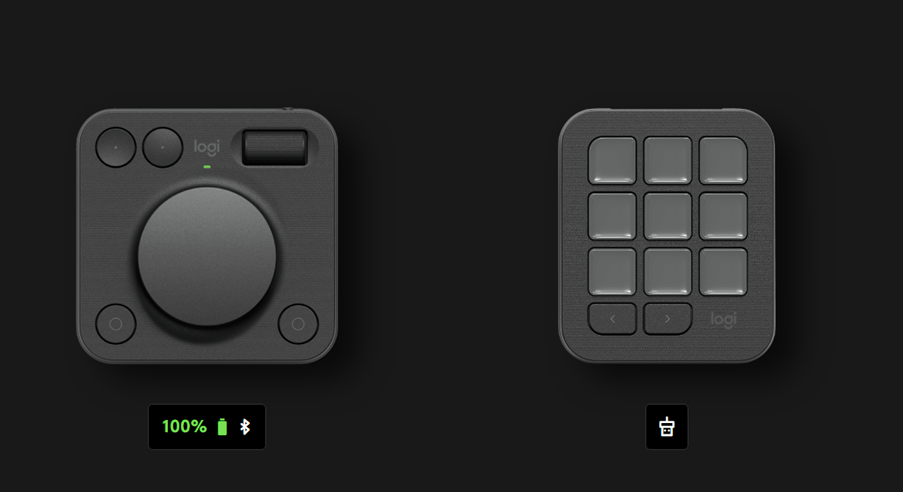
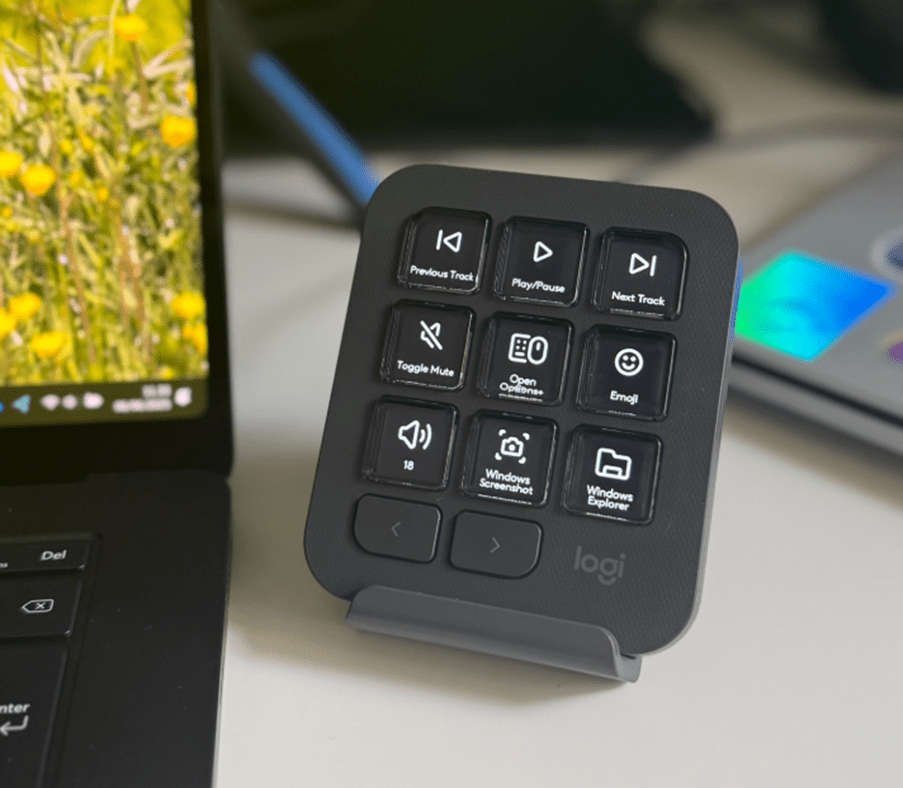
Logitech’s new device on productivity desktop tools is the MX Creative Console: a modular two-piece setup consisting of a nine-key LCD Keypad and a wireless Dialpad. It is designed to keep you “in flow” by detecting the active application and showing only the controls that matter. Unlike single-purpose devices, this console tries to be equal parts productivity booster and creative instrument. Logitech also leans on its MX heritage—high-quality materials, gadget-nerd attention to detail, and a sustainability.
Logitech kindly provided me the MX Creative Console for testing. The thoughts in this article capture my genuine impressions after using it.
In short, the MX Creative Console is Logitech’s new device to anyone who has outgrown the binary on/off feel of hotkeys and wants context-aware control (some even without cluttering the desk). In my case, this meant one more device more to the desk – I already had Stream Deck, so I have included some comparison between these two. Will I get rid of one of these later? Yes and no. I have 2-3 computers on my desk, so I will probably just connect Stream Deck to another one. Creative console does Dialpad has option to switch to different devices easily (just like MX mouse can be connected to several computers) but the Keypad would require reattaching the USB.
Unboxing & First TouchQuick SetupApplication Aware ProfilesCreative Console vs. Elgato Stream Deck vs Surface DialCustomizing EverythingConclusionWhere does it fall short today?Overall
Unboxing & First Touch
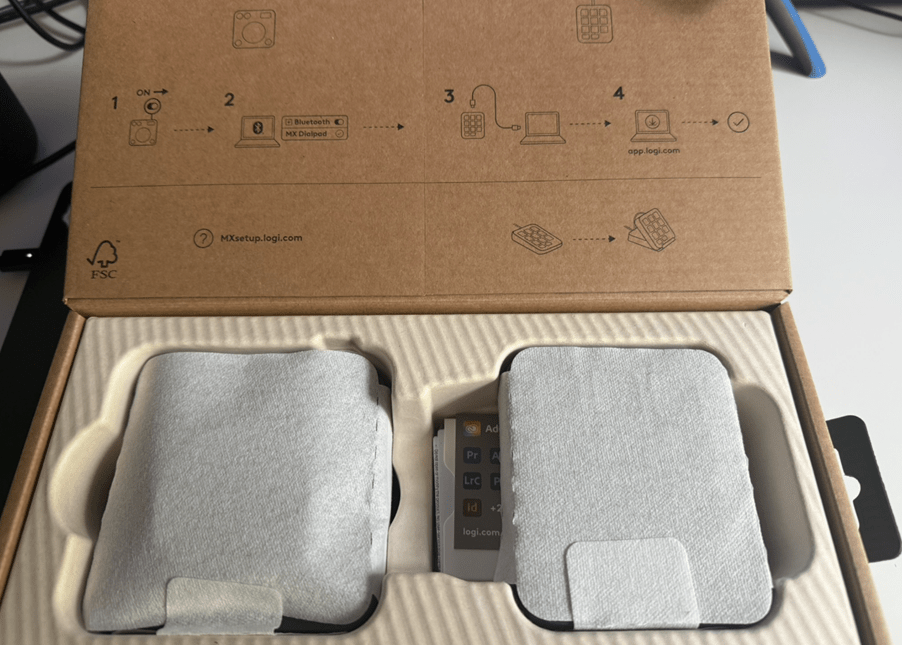
The box meets Logitech’s sustainability claims: cardboard instead of plastique. Inside, the Keypad and Dialpad sit in separate paper trays, each wrapped in a thin tissue-like sleeve that feels more like gift wrapping than e-waste. I like how Logitech is putting effort for sustainability, and resulting in a way that it feels very natural and also very stylish telling about the upper quality. The price-tag for Creative Console is $199 USD, which is significantly higher than Stream Deck Mk 2, but as you read on only common things these two has are keys and marketplace. Console is much more, which is a good thing as it opens more options where and how to use it.
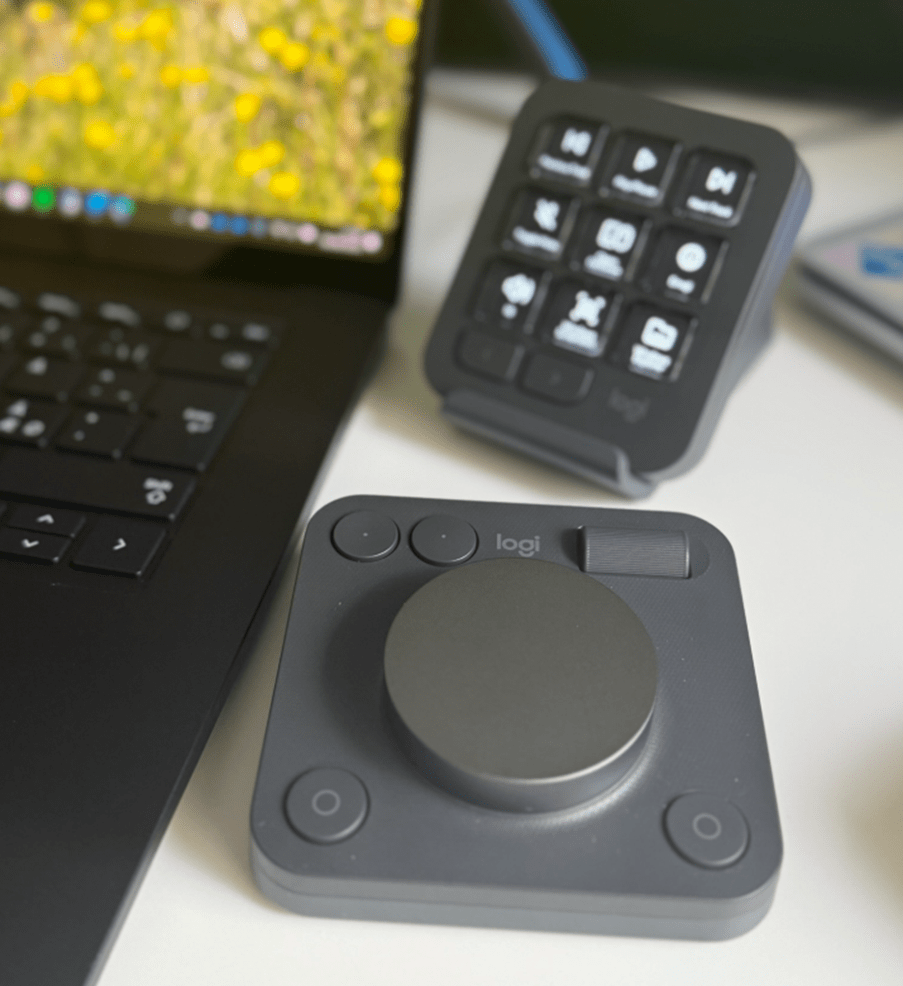
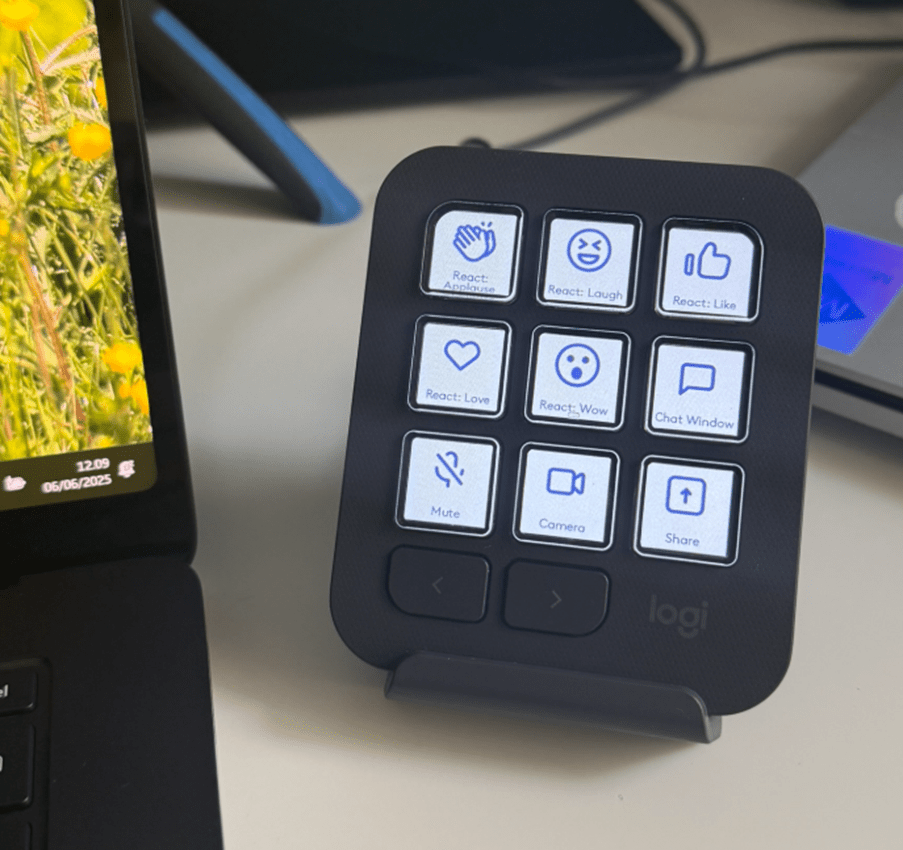
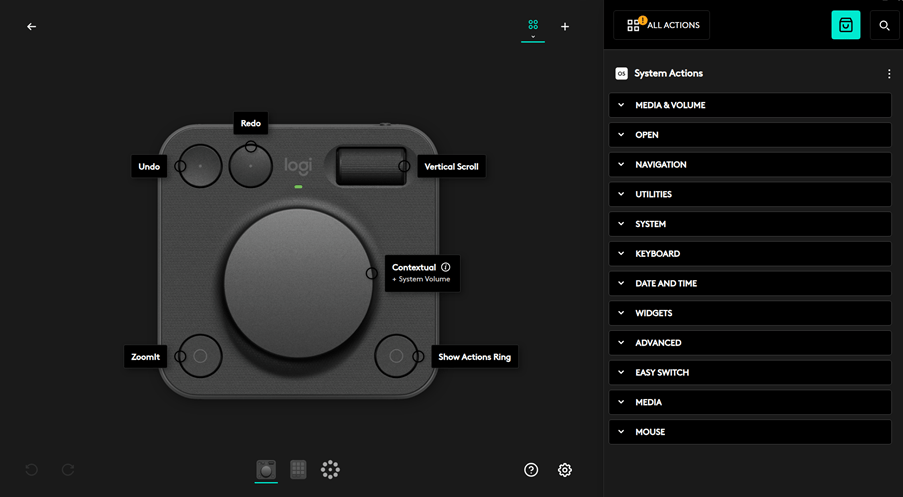
First contact with the hardware is reassuring. The build and materials are good. The keys themselves are vivid and crisp; icons are easy to read. The Dialpad dial has a silky-smooth rotation. On top of the dial sits a roller wheel for vertical scrolling, and the Dialpad has four buttons.
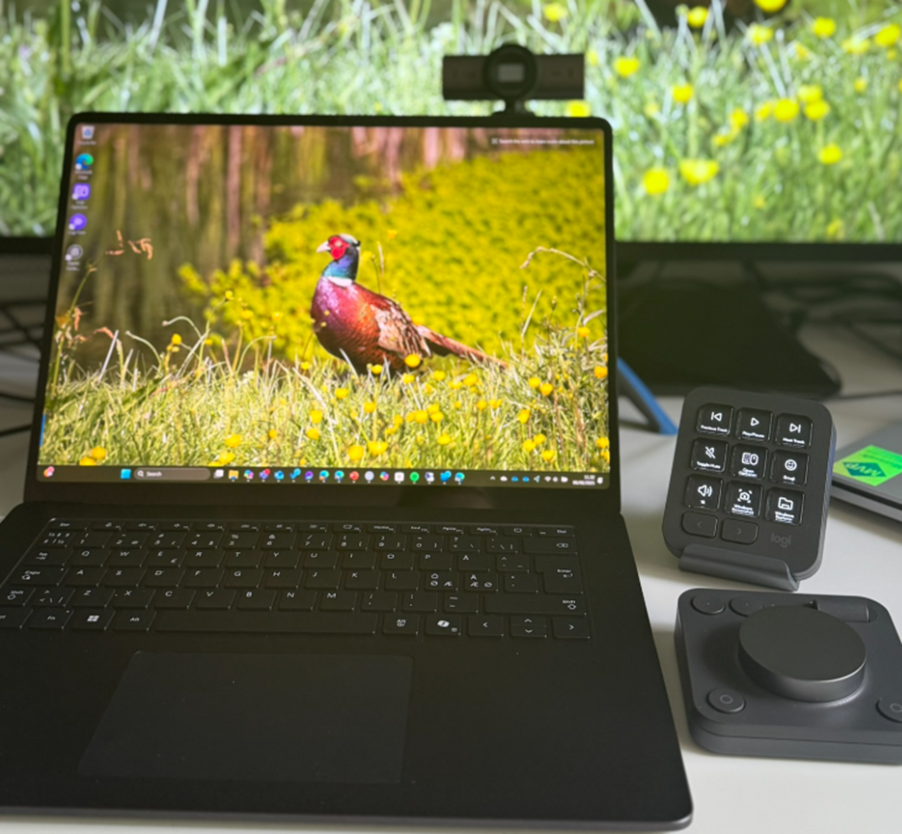
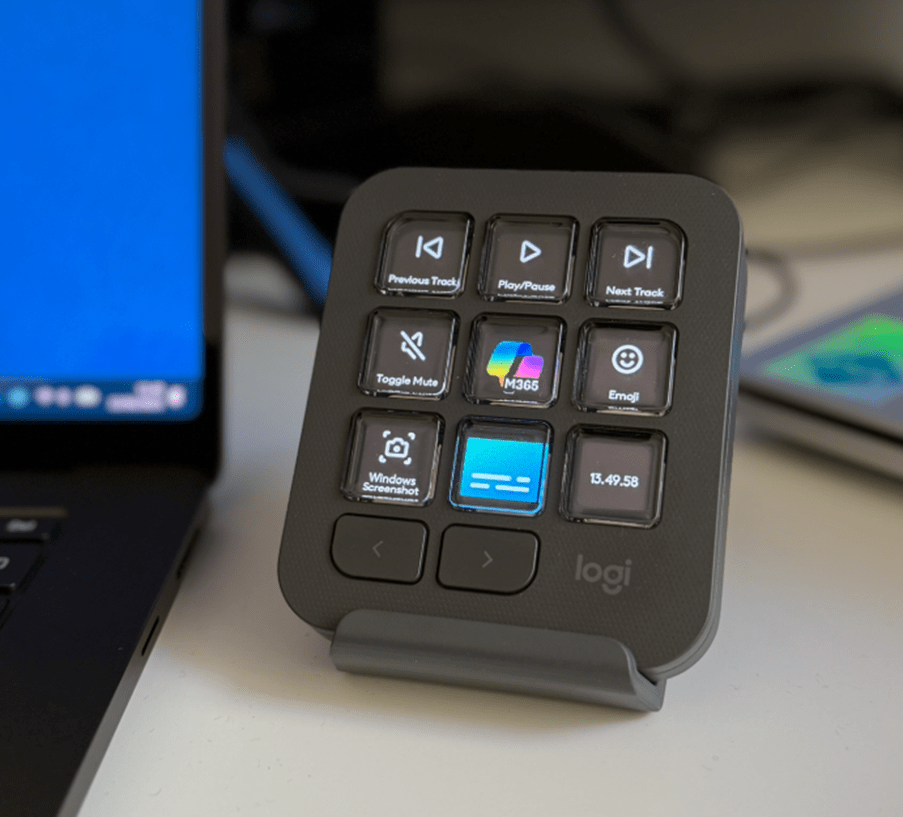
I did raise an eyebrow at Logitech’s decision to split the console in two. Would it be harder to have two devices, instead of one larger one? In practice, the separation feels natural: my right hand stays on the Keypad (mirroring where a Stream Deck used to sit) while my left hand rests casually on the Dialpad ready to nudge, twist the dial, or punch buttons as needed. In the image the Dialpad is still on the right, but I moved it to the left side quite quickly after taking the picture. The combined footprint is lightly larger than my Stream Deck but as the Dialpad is Bluetooth without wires it can be placed on the desk just like a wireless mouse.
You can discover tech specs and more info about the device from Logitech’s website.
Quick Setup
Getting started was refreshingly painless:
Keypad: Plug the included USB-C cable into a spare port (like Microsoft Audio Dock or directly hook up to the laptop). Windows 11 recognises the device instantly.
Dialpad: It wouldn’t be easier. Turn on the Dialpad and Windows will ask to connect to the device.
Software: Download and install Logi Options+. The app displays both units on the home screen and you can use it to manage profiles and configure all buttons to your liking.
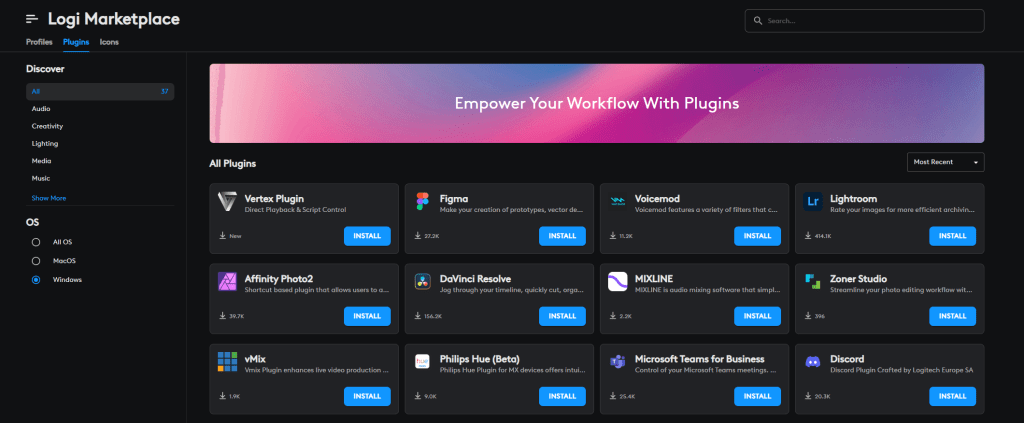
There is also the Microsoft Teams plugin in the Logi Marketplace. After installing and configuring the Teams plugin, it was the moment I realized the Console’s promise: my controls follow me, I do not chase menus nor switch pages manually in the keypad.
You can configure the Dialpad also to profiles in different apps – or just stick to a general one. But if and when you have more apps that will use dial differently, it makes sense to have dial function be app specific.
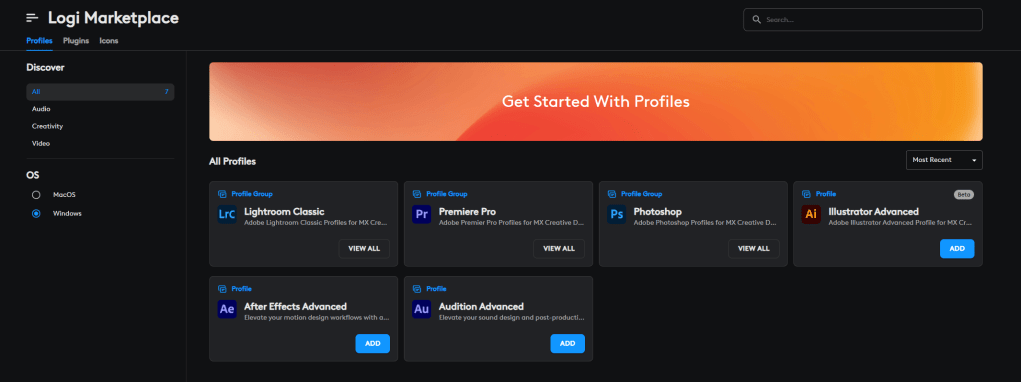
You can get some profiles directly from the marketplace, to get a head start for each app.
Application Aware Profiles
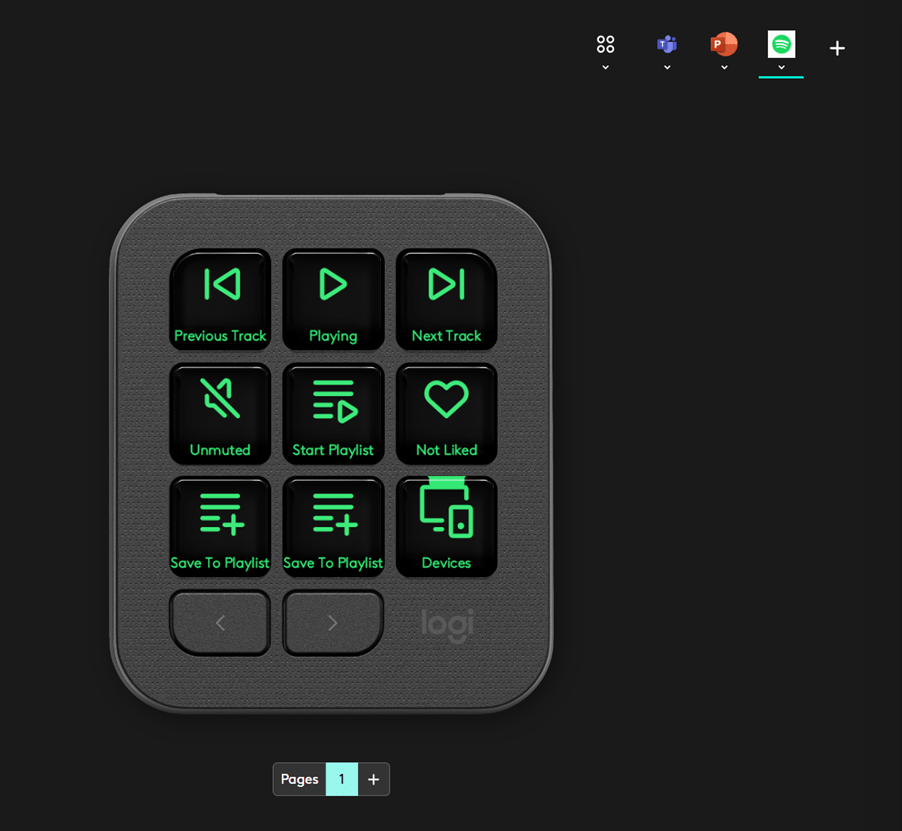
Application-aware profiles are not new, yet Logitech’s implementation feels especially fluid. When I switch from Browser to Teams, the Keypad icons change according to profile set for Teams.
I like how there are physical buttons for page switching. On Stream Deck I had to reserve two buttons for next and previous page. It is up to debate which is better: keys you can configure, or physical buttons. Both have pros and cons, but as physical buttons are smaller than keys, it would either require the device to be larger (to fit more configurable keys) or assigning next and previous page functions to locations reducing the number of usable keys.
A surprise hit: the Spotify plugin. You can download Spotify plugin and create a profile for Spotify app, thus when you switch to Spotify that profile should become active. I say should, as it doesn’t happen to me. Perhaps it is a bug that will go away, I hope so. Otherwise, it will make the console less useful if it doesn’t switch to app specific profile when you are in the app. So, while the plugin is there it is no use for me at the moment – but the console has generic media buttons for play, next and previous which I put to the main page.
Creative Console vs. Elgato Stream Deck vs Surface Dial
DeviceKeys / DialsConnectivityNotable ExtrasMX Creative Console9 LCD keys + aluminium dial + roller + 4 buttonsKeypad USB-C (wired); Dialpad Bluetooth3-month Adobe CC, 72 % recycled plasticElgato Stream Deck15 LCD keys (depending on Stream Deck model)USB-A (wired)Massive plugin library and lots of support from different apps.Microsoft Surface DialSingle rotational dial, press-and-hold menu, and press to selectBluetoothApplication specific tools, select tool (like volume or zoom) from the radial menu and use dial to control it
I’ve had Surface Dial since 2019, but I admit it didn’t get as much usage as I though. It’s dial is larger than Creative Console’s dial but it doesn’t have a base, so the result is taking less space on the desk – but is much limited in other ways. Using Stream Deck and Surface Dial together would bring similar, but not the same, user experience than Creative Console alone.
Customizing Everything
Logi Options+ offers per-key, per-app, per-page customization for the console. You can assign shortcuts, media controls, system commands, text snippets, or many other actions to the device. This can be done to both Keypad and Dialpad.
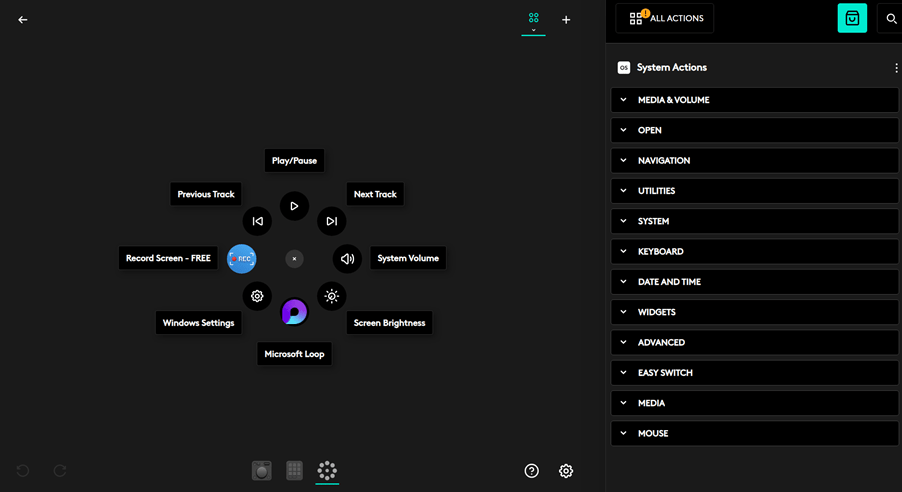
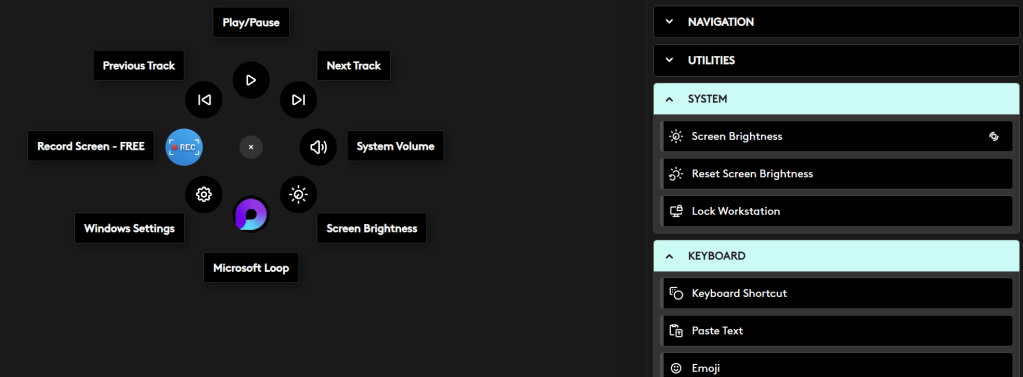
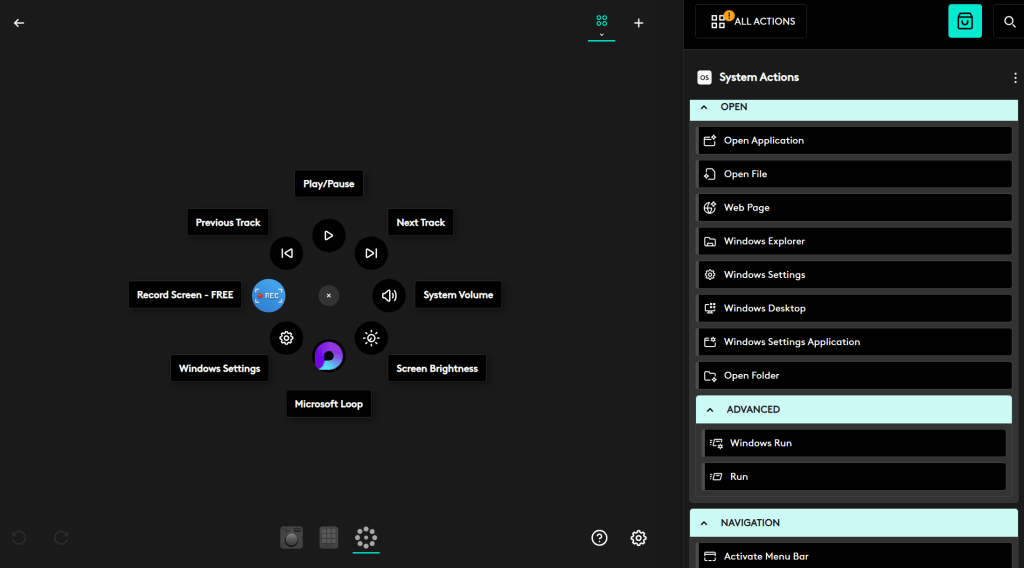
In addition to dials and buttons, you configure the Actions Ring. What I didn’t discover yet, will it be possible to make this work like Surface Dial: Selecting the ring and then using the wheel to select the action. Currently, I am using this in a way that I open the Actions Ring and then use mouse or finger ( touch screen) to select the feature I want to use.
The Actions Ring works just like an extra set of buttons, but I haven’t dived deep to Action Ring yet – what it could do.
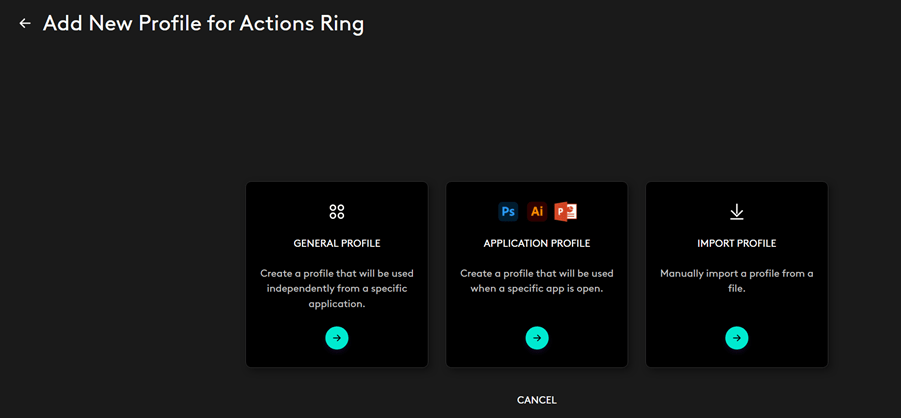
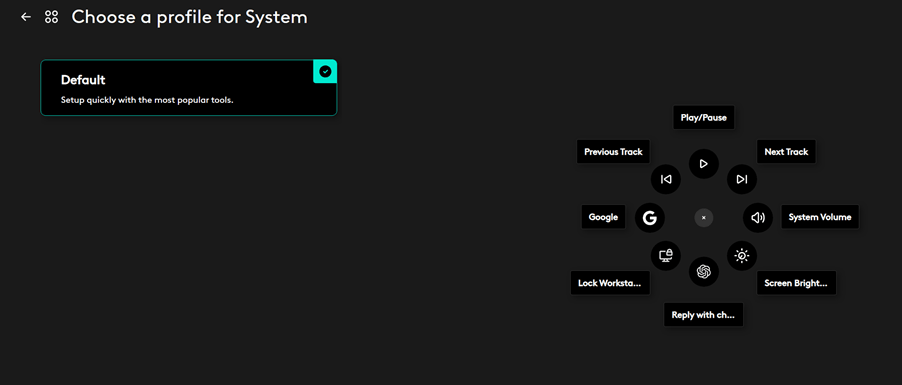
When creating a new General Profile for Actions Ring you can select it to have default features and tune it from there.
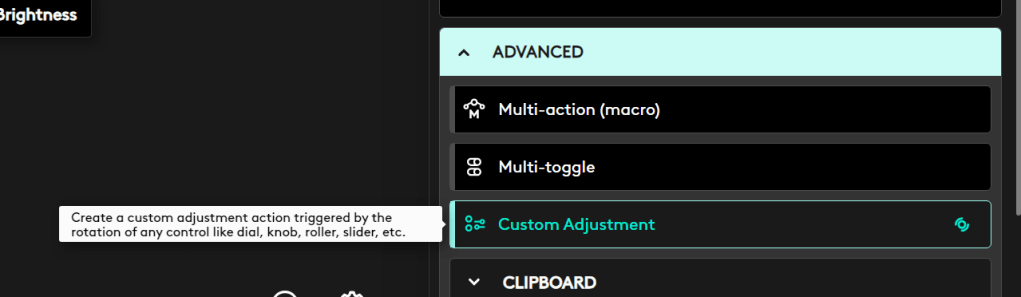
And customization options won’t stop there. You can create app specific profiles for different apps to all parts: Dialpad, Keypad and the Action Ring. There is a list of actions available, including multi-actions, multi-toggles and custom adjustments. It is easy to spend too much time customizing Creative Console to meet your all needs – I suggest to start with simple ones and then add more as you discover new needs on the way.
Conclusion
After a short but intensive trial, I find myself reaching for the MX Creative Console more than I did to Stream Deck. The separated layout let me tweak audio with the dial using my left hand while firing actions with the right. Logitech’s Marketplace is still a toddler compared to Elgato’s plugin galaxy, but I think it will grow over time.
I know I will mostly use only the first screen of each profile, so I packed some controls there that could be useful – like media controls, muting the audio, Microsoft 365 Copilot, subtitles (perks of Copilot+AI PC) and of course the time.
The power of Creative Console lies in the customizations – there are already a large number of options for that, and when the Marketplace grows then there will be more and more options available for further customization.
Where does it fall short today?
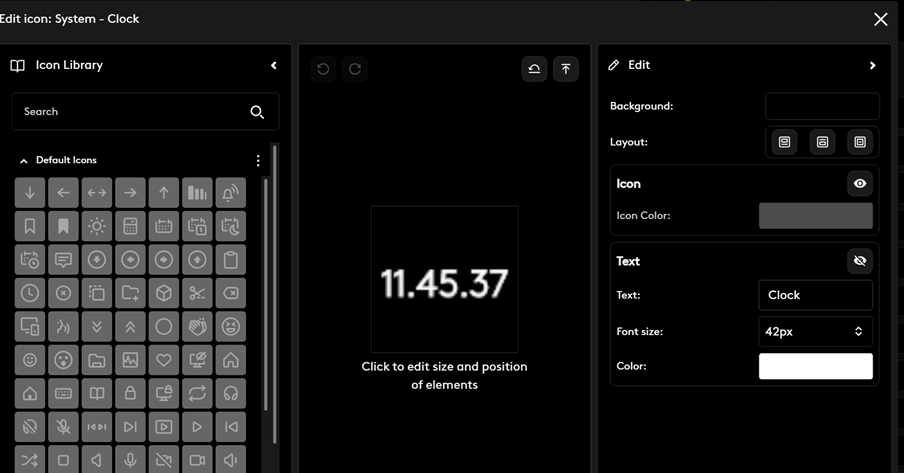
Some bugs, like it doesn’t switch to Spotify profile when Spotify is selected and not getting the time larger despite it is possible to edit it in the configuration. It just doesn’t reflect to the device – no matter if I make the time smaller or larger in profile editing.
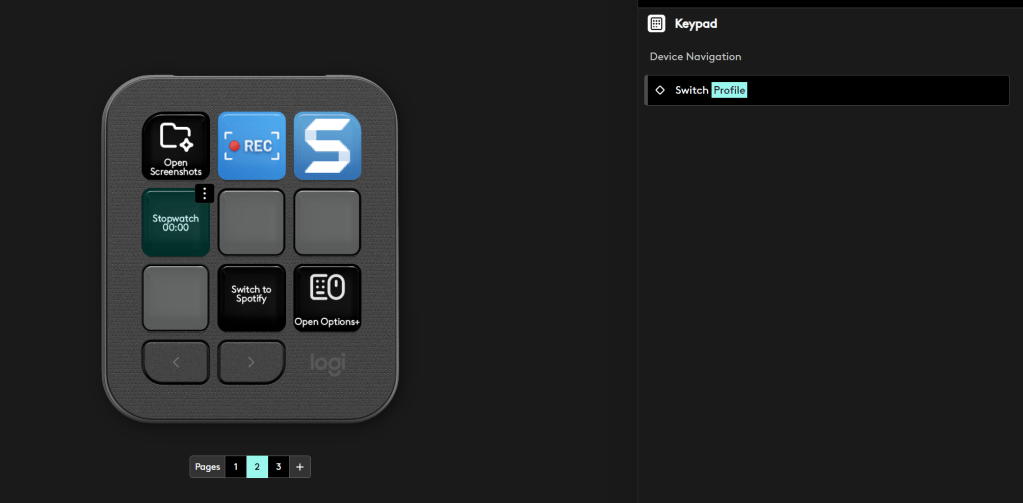
There is an option to switch profile manually too – by assigning it a key.. But it doesn’t work with Spotify profile (there must be something odd about that). Using this action to manually to switch to Teams profile – no problem, works as it should be. So either Spotify plugin is still work in progress and has a bug, or something is just not working on mine.
Nine keys occasionally feel tight ( Adding all Teams controls requires two pages – but you can have several pages per app profile), and I still have not cracked the code for controlling my Elgato Key Lights. Hue plugin is available, but unfortunately I have configured my Hues to another network. These are not deal breakers, as I have had issues with the Stream Deck controlling lights so it has been mostly unusable unless I restart Stream Deck app or Control Center..
The Dial Wheel could benefit from having the press-feature like Surface Dial has, so I would just open the Actions Ring with it and then select the action without having to use mouse separately. But even being able to select the button using the wheel after pressing the Action Ring button would be a plus.
Overall
Logitech MX Creative Console looks like a great alternative to Stream Deck—and it’s still only version 1 and on its first steps. I will spend more time on use experiences and discovering what else console will offer to me. Compared to Surface Dial Creative Console outperforms it in many ways – unless you just want a dial that doesn’t take much space on the desk and you don’t need extra buttons. But for those who want more physical devices to control things, using both Creative Console and Surface Dial together, with different wheel actions, can add new options to work without using mouse for everything. I will probably try the combo together for a while but end up using just Creative Console on my primary computer and then use Surface Dial with Stream Deck on another computer.
Sharing is Caring! #CommunityRocks
Aiheeseen liittyy
Published by Vesa Nopanen
Vesa “Vesku” Nopanen, Principal Consultant and Microsoft MVP (M365 and AI Platform) working on Future Work at Sulava.
I work, blog and speak about Future Work : AI, Microsoft 365, Copilot, Loop, Azure, and other services & platforms in the cloud connecting digital and physical and people together.
I have 30 years of experience in IT business on multiple industries, domains, and roles.
View all posts by Vesa Nopanen
Published: June 16, 2025 at 10:25 am Updated: June 16, 2025 at 10:25 am
by Ana
Edited and fact-checked:
June 16, 2025 at 10:25 am
To improve your local-language experience, sometimes we employ an auto-translation plugin. Please note auto-translation may not be accurate, so read original article for precise information.
In Brief
SoSoValue has launched the testnet for its new on-chain trading platform SoDEX and opened whitelist registration for a rewards-based incentive program offering 1 million SOSO tokens to participants.
Cryptocurrency data and research provider, SoSoValue announced the activation of the testnet for its new SoDEX trading chain, inviting users to join the whitelist for early access.
SoDEX is designed to facilitate on-chain order book trading across both spot and derivatives markets and is developed on ValueChain, SoSoValue’s proprietary Layer 1 blockchain. The platform aims to deliver a streamlined trading experience suited to professional market makers and users with traditional trading experience, while remaining accessible to individuals new to decentralized finance.
SoDEX integrates trading and research into a unified interface, aiming to eliminate the barriers between liquidity and market insights. It features an intuitive order book user interface designed to assist first-time users. The platform prioritizes asset security through alignment with current regulatory frameworks and partnerships with institutional-grade custodians. As a fully on-chain solution, SoDEX offers transparent, decentralized, and cross-border trading powered by blockchain technology.
Positioned as a demand-driven solution, SoDEX is promoted as more than just a high-performance trading platform; it is presented as a foundational application intended to broaden access to next-generation financial infrastructure. The underlying ValueChain is optimized for financial-grade applications and is engineered with capabilities such as high throughput, compatibility with multiple blockchain networks, and modular scalability. It is composed of an EVM-compatible system chain and high-performance application chains, which together support a secure, efficient, and scalable infrastructure tailored to meet the needs of decentralized trading platforms like SoDEX.
SoSoValue Launches SoDEX Testnet Incentive Program With 1M SOSO Tokens For Whitelisted Participants
A total of 1,000,000 SOSO tokens will be allocated to participants in the testnet phase. Participation in the testnet is limited to individuals who have been approved through the whitelist process. Rewards will be distributed based on a points system, which tracks user activity throughout the testing phase.
Points can be accumulated through various means, including the completion of assigned test tasks and the submission of valid bug reports. Additionally, users who demonstrate higher trading volumes and positive profit and loss (PnL) metrics will be eligible to increase their point totals.
Rewards are scheduled to be distributed upon the conclusion of the testing phase. To be considered for whitelist approval, prospective participants are advised to join the designated official Telegram group for applicants. Within the group, individuals will need to complete and submit the whitelist application form, which is available as a pinned message.
During the testing phase, participants will be required to complete several onboarding and trading-related steps. These include connecting a compatible cryptocurrency wallet and configuring it to support the ValueChain network in accordance with the provided setup instructions. Test tokens can then be claimed through the designated faucet mechanism. Once the tokens are received, users must transfer them from their Funding Account to their Spot Account.
In order to begin accumulating points, users must engage in trading activity involving a minimum of ten different spot trading pairs, with the total transaction volume exceeding the equivalent of 100,000 USDC. Identifying and reporting bugs via the official submission form is also encouraged, as it contributes to point accumulation. Rankings on the leaderboard will be determined based on both trading volume and realized profit and loss performance throughout the test period.
Disclaimer
In line with the Trust Project guidelines, please note that the information provided on this page is not intended to be and should not be interpreted as legal, tax, investment, financial, or any other form of advice. It is important to only invest what you can afford to lose and to seek independent financial advice if you have any doubts. For further information, we suggest referring to the terms and conditions as well as the help and support pages provided by the issuer or advertiser. MetaversePost is committed to accurate, unbiased reporting, but market conditions are subject to change without notice.
About The Author
Alisa, a dedicated journalist at the MPost, specializes in cryptocurrency, zero-knowledge proofs, investments, and the expansive realm of Web3. With a keen eye for emerging trends and technologies, she delivers comprehensive coverage to inform and engage readers in the ever-evolving landscape of digital finance.
More articles
Alisa Davidson
Alisa, a dedicated journalist at the MPost, specializes in cryptocurrency, zero-knowledge proofs, investments, and the expansive realm of Web3. With a keen eye for emerging trends and technologies, she delivers comprehensive coverage to inform and engage readers in the ever-evolving landscape of digital finance.
WEEX is a popular crypto exchange that offers a comprehensive suite of trading services, including spot trading, futures trading with high leverage up...