Metaverse

Home Metaverse Page 135

Bridging Blockchain With AI: Challenges And Opportunities In Privacy, Security, And The Future Of AGI

Bridging Blockchain With AI: Challenges And Opportunities In Privacy, Security, And The Future Of AGI


In Brief

At Hack Seasons in Cannes, experts from Near AI, Automata, SuperNet, Venice, and the Ethereum Foundation explored private AI development—highlighting local AI on consumer devices, cryptographic security, and the need for frictionless privacy in sectors like healthcare and finance.

Bridging Blockchain With AI: Challenges And Opportunities In Privacy, Security, And The Future of AGI

At the beginning of July, Cannes hosted the cutting-edge Hack Seasons Conference, bringing together leading technologists, investors, and builders to examine the evolving intersection of blockchain and AI. One of the main sessions at the Tech Track, moderated by Jay Z, Product Lead at Near AI, convened experts including Deil Gong (Automata), Juan Bruce (SuperNet), Teana Baker-Taylor (Venice), and Devansh Mehta (Ethereum Foundation), to discuss the safe and secure development of private AI.

The panel opened by addressing lesser-known but practically important  insights at the intersection of blockchain and AI. One key point was that modern consumer devices are now powerful enough to run open AI models locally, enabling private and decentralized AI services without the need to share data externally. As hardware continues to evolve, these capabilities are expected to become even more accessible. Panelists also emphasized a common misconception: conflating AI with large language models (LLMs). AI, they noted, is most effective when operating within a clearly defined context and perspective. Another notable insight was that AI represents the first widely adopted form of non-deterministic computing—unlike traditional software, it does not consistently produce the same output given the same input. This unpredictability complicates standard benchmarking, which is why some decentralized information markets (InfoFi) rely on AI systems instead.

The panel also examined technical approaches to secure AI, specifically comparing zero-knowledge (ZK) proofs and trusted execution environments (TEE). Some speakers argued these technologies can be complementary—while TEE offers real-time hardware-based security, it does not inherently guarantee privacy. ZK proofs may become more useful in the long term, but currently lack sufficient performance for some real-time applications. Both approaches ultimately rely on hardware development, and panelists stressed the importance of collaboration with hardware manufacturers to support next-generation cryptographic and AI systems. They also addressed a growing concern: whether in the context of artificial general intelligence (AGI), private keys will remain secure, or if AI will eventually learn to extract them. This question lies at the heart of where AI and cryptography intersect.

Another focal point of conversation was the growing gap between stated user preferences for privacy and actual behavior. Panelists noted that most users currently show limited concern for privacy, often sharing sensitive information like location and payments on social media. As LLMs gain access to such data, they can infer more about users than users consciously know about themselves. While privacy remains a critical topic, panelists agreed it must be built into systems in a frictionless way to achieve meaningful adoption. Regulation was seen as a potentially helpful force, particularly if it limits unchecked data collection or unauthorized AI training by large platforms.

The conversation turned to sectors most likely to benefit first from private, secure AI technologies. Industries like medicine, insurance, e-commerce, law, and capital allocation were highlighted as early candidates due to their high sensitivity to data privacy and security standards.

Panelists also discussed how new projects are being built using AI. With advances in “vibe coding” and AI-assisted development, teams can now move quickly from ideas to implementation. Developers increasingly rely on on-chain AI applications that can verify computation automatically. This makes verifiable AI a core focus area—shifting emphasis from building entire toolchains manually to deploying usable, secure applications.

The panel concluded with a provocative question: Will AGI choose Bitcoin? Opinions were divided. Some argued AGI would likely favor stablecoins for transactional stability, while others suggested AGI might compete with Bitcoin for computing resources—potentially reallocating mining energy to other computational needs. There was also recognition that AGI may ultimately benefit from Bitcoin’s innovations, as the broader cryptocurrency sector continues to mature in parallel with AI.

Don’t miss the full panel video — see all the insights and ideas in one place. 

Disclaimer

In line with the Trust Project guidelines, please note that the information provided on this page is not intended to be and should not be interpreted as legal, tax, investment, financial, or any other form of advice. It is important to only invest what you can afford to lose and to seek independent financial advice if you have any doubts. For further information, we suggest referring to the terms and conditions as well as the help and support pages provided by the issuer or advertiser. MetaversePost is committed to accurate, unbiased reporting, but market conditions are subject to change without notice.

About The Author


Alisa, a dedicated journalist at the MPost, specializes in cryptocurrency, zero-knowledge proofs, investments, and the expansive realm of Web3. With a keen eye for emerging trends and technologies, she delivers comprehensive coverage to inform and engage readers in the ever-evolving landscape of digital finance.

More articles


Alisa Davidson


Alisa, a dedicated journalist at the MPost, specializes in cryptocurrency, zero-knowledge proofs, investments, and the expansive realm of Web3. With a keen eye for emerging trends and technologies, she delivers comprehensive coverage to inform and engage readers in the ever-evolving landscape of digital finance.


More articles


Source link

Taking Back Identity: How MocaChain Decentralizes Digital Power | NFT News Today

Taking Back Identity: How MocaChain Decentralizes Digital Power | NFT News Today


Each time we log in with a social media account or email provider, we hand over more than just credentials—we give up a bit of ourselves. Most users don’t think twice about it. Still, behind the scenes, centralized platforms are tracking behavior, locking data in silos, and quietly shaping digital identity into a product to be packaged and sold.

As a developer, I’ve seen how these systems complicate everything from onboarding to compliance. It’s not just frustrating—it’s limiting. MocaChain introduces a different vision: one where individuals, apps, and even AI agents manage identity directly, with no middlemen. The promise isn’t just better privacy; it’s a new foundation for how identity can work.

Key Takeaways

A decentralized identity protocol that returns control to users

Privacy-preserving verification through zero-knowledge proofs

Modular tools for developers to build fast, secure integrations

Use cases across sectors like healthcare, finance, gaming, education, and wellness

Simple onboarding through tools like AIR Kit and Moca ID

Reimagining Identity from the Ground Up

Centralized identity systems were never built with the user in mind. They’re optimized for control, not flexibility—and certainly not for privacy. That leaves everyday people exposed to data breaches and algorithmic profiling while giving platforms unchecked leverage over identity.

MocaChain, a flagship project of Animoca Brands, flips this dynamic. It’s a purpose-built Layer 1 blockchain that places identity in the hands of the individual. Credentials are self-owned and verified without needing a third party. Thanks to zero-knowledge proofs, people can prove something is true—like their age or income—without revealing sensitive details.

The network is EVM-compatible and designed for interoperability. That means credentials aren’t trapped in one app or chain. They’re portable, programmable, and future-proof.

Tools Built for Builders

For developers, identity is often a liability—something you’d rather outsource or avoid. MocaChain changes that by offering ready-to-integrate modules that make privacy the default, not an afterthought.

Some of the tools in the stack include:

Decentralized data storage for self-custodied credentials

An identity oracle that works across chains

zkTLS, which converts common Web2 events into verifiable Web3 claims

AIR Kit SDK for on-chain credential issuance from real-world data

Moca ID for decentralized single sign-on across apps and ecosystems

Taken together, these tools make it easier to build without taking on the risk of storing sensitive data or navigating a maze of compliance requirements.

Where It Can Make a Difference

The most exciting part of this technology isn’t in theory—it’s in the kinds of problems it’s designed to solve. Here are just a few areas where MocaChain is especially well-positioned to make a meaningful impact:

Finance

Instead of submitting piles of documents, users may soon be able to verify income or asset ownership through private, verifiable proofs. This could open up credit access to people who are underserved by traditional systems—while reducing risk for lenders and keeping personal data out of third-party hands.

Healthcare

Sharing health information shouldn’t mean handing over your entire medical history. MocaChain seeks to enable patients to present verified credentials—such as prescriptions or eligibility proofs—while keeping their records private.

Education

Degrees and certifications don’t need to live on paper or behind university portals. With MocaChain, students and professionals could carry verified credentials in their digital wallets, instantly shareable with employers or institutions—no delays, no middlemen.

Gaming

What if your in-game reputation followed you across titles? With decentralized identity, achievements and purchases can become part of a persistent player profile, unlocking new content and fostering healthier online communities.

Wellness

Fitness and lifestyle data is valuable—but it doesn’t need to be handed over in raw form. MocaChain makes it possible to prove engagement in healthy habits without compromising personal information, helping users earn perks or incentives from insurers and brands.

Why This Matters

At its core, identity isn’t just a feature. It’s infrastructure. And when that infrastructure is centralized, it becomes a single point of failure—putting user data, access, and autonomy at risk.

Yat Siu, co-founder and executive chairman of Animoca Brands, describes the problem clearly: single sign-on (SSO) systems may be convenient, but they hand operators the “keys to a user’s data, services, and digital lives.” In his words, SSO “represents a centralized point of failure that compromises security while also allowing operators to aggressively extract value from users’ digital selves.”

MocaChain is designed to address exactly this issue. As Siu puts it, the platform “seeks to solve this problem by giving users decentralized true ownership of their data, ensuring the sovereignty of users’ digital identity without a single point of failure.”

It’s a shift away from platforms that monetize identity by default, toward a model where privacy and ownership are built in. Developers get a better building block. Users regain sovereignty. And companies gain a future-proof foundation that doesn’t compromise ethics for scale.

What’s Next

MocaChain is currently in its final stages of development. A public testnet is scheduled for Q3 2025, allowing developers and early adopters to begin interacting with the network.

The full mainnet launch is expected in Q4 2025, which will mark the transition to live production, ecosystem onboarding, and real-world integration.

Final Thoughts

The idea that we should own our identities online isn’t new—but until now, it’s mostly been an aspiration. With MocaChain, it feels within reach. The tech is real, the tooling is here, and the need has never been greater.

I’ve worked with systems that treat identity as a checkbox or an afterthought. MocaChain treats it as the core of a more secure, flexible, and user-respecting internet.

This isn’t just about authentication. It’s about ownership. And that changes everything.

Frequently Asked Questions

Here are some frequently asked questions about this topic:

What is MocaChain?

MocaChain is a decentralized Layer 1 blockchain protocol designed to give individuals, applications, and AI agents full control over their digital identity. It enables secure, privacy-preserving credentialing and cross-platform interoperability.

How does MocaChain protect user privacy?

It uses zero-knowledge proofs (ZKPs) to verify facts—like age or employment—without revealing sensitive information. This means users can prove eligibility without sharing personal data.

What makes MocaChain different from traditional identity systems?

Unlike centralized systems that store and monetize user data, MocaChain puts identity under user control. Credentials are self-custodied and verified without third-party intermediaries.

When will MocaChain launch?

A public testnet is planned for Q3 2025. The mainnet launch is scheduled for Q4 2025, enabling ecosystem onboarding and real-world integrations.

Is MocaChain compatible with other blockchains?

Yes. It’s fully EVM-compatible and designed for interoperability across chains and applications.


Source link

Web3 Meets the Stadium: The Rise of Competitive Ownership | NFT News Today

Web3 Meets the Stadium: The Rise of Competitive Ownership | NFT News Today


Millions of players in China lost access to popular games like World of Warcraft as Blizzard Entertainment’s Chinese servers went offline after 20 years. This marked the end of an epoch for fans of the epic title, after Blizzard’s licensing agreement with their local partner NetEase expired and no new one was reached. That agreement had also covered titles such as Hearthstone and Diablo III since 2008.

Hundreds of thousands were devastated. Some lamented that they had grown up with the game, and others called WoW “my first love,” reflecting the all-pervasive sense of loss in the Chinese gaming community. Fans of games like Fortnite, Call of Duty, and League of Legends, all stellar Web2 titles, would feel the same if the decision were made to pull the plug, for whatever reason.

Another issue with Web2 games is ownership. Players can buy skins, characters, and other virtual assets, but these items have no utility outside the developer-controlled ecosystem and cannot be transferred. Their use is confined to the respective title.

A landmark shift from observation to true ownership

The transition to Web3 marks a shift from players being mere observers at the mercy of developers or corporations to active participants in rich gaming ecosystems. Blockchain technology has given rise to decentralized platforms that enable ownership of in-game items, which keeps participants competing and playing longer. A survey by Immutable found that almost half of Web3 gamers played for more than 10 hours a week, while Web2 gamers played for about 7.5 hours.

Ownership is one factor that makes players more invested in the games they play, and Mythical Games is among the pioneers of this shift. NFL Rivals, launched in an official partnership with the NFL, allows players to manage NFL teams and trade unique NFTs. The game’s dynamic and casual nature quickly caught NFL fans’ attention. NFL Rivals is Mythical Games’ flagship crypto-based mobile game, and has been downloaded on iOS and Android more than 7 million times.

Mythical has raised almost $300 million from investors like Andreessen Horowitz, ARK Invest, Animoca Brands, and Michael Jordan since 2018. In 2021, Andreessen Horowitz led a $150 million Series C round, reaching a $1.25 billion valuation. Company CEO John Linden has had leadership roles at Activision Blizzard, including Call of Duty and Skylanders franchises. His experience with Web2 led him to initiate the transition, of which cofounding Mythical Games has been a key part.

The gamer-centric approach of Web3 translates to ownership of asset collections without in-depth blockchain knowledge. Mythical’s in-game blockchain marketplace allows gamers to buy, sell, and trade digital assets across platform titles. Players use MYTH tokens for transactions on the marketplace and governance, and developers can use the Mythical platform to plug blockchain features and NFTs into their games. That said, users can play NFL Rivals without understanding NFTs; it’s only necessary for those who want to engage with ownership.

The game was downloaded almost a million times within a month of launching and ranked #1 in sports and action categories on the App Store. Overall revenue increased by 10-15% after the platform added secondary trading to NFL Rivals, reflecting players’ conviction that Web3 assets are valuable. Players can merge or burn assets and then trade new ones.

A win-win for players, developers, and the economy through in-game asset trading

Mythical launched Quick Trades, where players agree to an asset trade without any money changing hands, and cleared them with Apple and Google, as a result of which they are available directly in the mobile game. The deals are priced in the marketplace in real time. According to Linden, the NFL Rivals’ secondary market increased from 100 to 7,000 transactions a day soon after Quick Trades became available.

Essentially, Mythical buys a card from a seller and then sells it to a buyer in real time. Multiple parties can be involved in a single transaction, but it’s an even trade to the gamer. Game developers also benefit as they generate transaction fees on these trades, driving a lot of value to the economy.

Smart contracts handle and secure transactions across Web3 titles

Smart contracts underpin, process, and secure asset transactions in Web3 games. These self-executing blockchain programs do this by writing the terms of the respective agreement into lines of code. They automate transaction management, ensure each transaction’s authenticity, enforce rules, manage prize pools, and can even automate dispute resolution.

Characters, skins, and weapons are stored as NFTs or cryptocurrencies on a decentralized ledger, and players link blockchain wallets to the game. Wallets serve as gateways for collecting rewards, managing in-game assets, and performing trades, and can hold assets earned in the game. Blockchains enable verifiable statistics and transparent leaderboards, ensuring trustless exchanges and transparent ownership.

The innovative technology facilitates a higher quality of games coming to market. It’s a fact that the number of blockchain game companies has declined because going mainstream is harder and takes longer than many expect. Yet, games from successful developers that have been in the works for years eventually arrive. One of them is Pudgy Party, a Fall Guys-type game that will be available on Android and iOS. Players will use clothes, hats, glasses, and other accessories, and holders of Pudgy Penguins NFTs might be able to use them in the game.

Decentralized sports, powered by the people

DAOs are changing sports by giving power to the community instead of investors. A DAO enables fans to govern a sports team and decide on budgeting, hiring, marketing, and sponsorship. It can build a decentralized sports league where teams compete based on fair and transparent incentives and rules.

DAOs can also organize and fund championships, tournaments, or charity matches involving multiple sponsors and stakeholders, ultimately fostering a diverse and vibrant sports community. This is a nice alternative to supporting a sports team while not being able to make any decisions affecting it and standing on the sidelines as major stakeholders sell star players and drain funds from the club.

While players have always supported ownership, their focus has shifted from short-term profit to long-term engagement. The once-successful play-to-earn model has declined, with player interest dropping and Web3 game funding falling by over 70% in the first quarter of 2025. The model made the mistake of tying rewards to token prices, making gameplay dependent on unstable markets.

Verified digital collectibles let fans own the moment

Digital sports collectibles represent ownership of player highlights, digital trading cards, and other unique sports-related assets, verified using blockchain technology. The thrill of rarity is behind the appeal of both physical and digital sports memorabilia. However, unique versions and limited editions associated with specific achievements or milestones took this concept a step further.

Each digital asset’s unique code guarantees a limit, making it highly desirable for collectors. Unlike traditional memorabilia, which are vulnerable to forgery, blockchain verifies digital collectibles’ scarcity and authenticity, and they can be displayed without physical storage concerns.

Bringing games to mobile widens global access to competitive sports

The ubiquity of mobile devices has made participating in Web3 gaming easier for a wider range of players. Soccer has billions of fans worldwide. Mythical Games brought a Web3 twist to the sport with FIFA Rivals, attracting a larger, mainstream audience not necessarily familiar with blockchain gaming.

Mobile gaming is the largest market segment by player count and revenue, and launching a high-profile Web3 game on mobile significantly lowers entry barriers compared to console or PC-only titles. FIFA Rivals, which has been approved and licensed by FIFA, allows participants to collect player cards and build a fantasy team, engage in active or simulated matches against other players or AI, and train, upgrade, or strategize with the players they have collected.

Interconnected worlds are the next frontier for athletes, players, and developers

The prospects for the latest generation of Web3 games are inspiring. Cross-game athlete NFTs are emerging as a novel application in gaming and sports. These NFTs would allow athletes to represent themselves across different virtual worlds and potentially integrate into various games. A holder of a rare NFT in one game might use it as a collectible in another, increasing the number of games and activities they participate in.

Cross-game NFTs may open up new marketing opportunities for game developers, as they will collaborate with other platforms and titles to feature them, building an interlinked ecosystem that promotes multiple games at the same time. Such integrations would create a more expansive metaverse, where experiences and assets can flow freely instead of being confined to a single game, enhancing the efficiency of marketing efforts.


Source link

Driving Real-World Impact: Metaverse Standards Forum Launches Forum Labs Initiative for Pre- and Post-Standardization Collaboration

Driving Real-World Impact: Metaverse Standards Forum Launches Forum Labs Initiative for Pre- and Post-Standardization Collaboration


p-NET Welcomed as the Inaugural Forum Principal Lab

The Metaverse Standards Forum is proud to announce the launch of its Forum Labs Initiative — a major new program designed to accelerate open cooperation and interoperability through grounded, high-impact Collaborative Projects.As the metaverse ecosystem evolves, so does the need for real-world testing and validation of emerging standards. The Forum Labs Initiative empowers qualified member organizations to lead and participate in Collaborative Projects that span both pre-standardization exploration and post-standardization deployment — ensuring that standards development is shaped by practical experience and ready for real-world adoption.

What Is a Forum Principal Lab?

A Forum Principal Lab is a designated Principal Member with the expertise, infrastructure, and commitment to support and execute Collaborative Projects in close collaboration with Forum Working Groups. These labs play a critical role in bridging the gap between concept and deployment, providing hands-on insight and technical depth.

What Can Collaborative Projects Include?

Collaborative Projects under the Forum Labs Initiative are designed to deliver tangible, ecosystem-wide impact. Example activities include:

Defining and testing use cases and technical requirements
Running interoperability testbeds and plugfests
Co-hosting webinars, workshops, and symposia
Collaborating on grant-funded R&D proposals
Developing and validating open tooling and resources

By enabling both early-stage exploration and testing of real-world implementations, the program helps keep metaverse standards development practical and grounded in deployment experience.

Why It Matters

For the Ecosystem: The program strengthens the foundation of the open metaverse by enabling standards to be tested, refined, and adopted in real-world conditions — increasing reliability, reducing fragmentation, and accelerating time to impact.

For Labs: Forum Principal Labs gain unique opportunities to demonstrate leadership, enhance visibility, collaborate with key stakeholders, and contribute to shaping the future of metaverse interoperability.

For the Forum: The program expands the Forum’s capacity to turn strategic goals into operational momentum — helping fulfill its mission to catalyze open and inclusive metaverse standards.

p-NET Designated as First Forum Principal Lab

p-NET has been designated as the first Forum Principal Lab under the Forum’s new initiative. Established in 2022 through a collaboration between the University of Patras, private and public sector partners, and Greece’s General Secretariat for Research and Innovation, p-NET focuses on advancing 5G/6G innovation and exploring their applications in immersive technologies.

As the inaugural Forum Principal Lab, p-NET will leverage its state-of-the-art infrastructure and research capabilities to Collaborative Projects that test and validate metaverse interoperability in real-world scenarios. Forum members and global participants will gain access to p-NET’s advanced 5G testbeds and tools — helping bridge standards development with practical, measurable outcomes.

“We foster innovation, entrepreneurship, and technological progress in smart network technologies while promoting digital transformation and sustainability across sectors such as culture and tourism, smart cities, education, media, and public-sector services,” said [NAME, TITLE, ORGANIZATION]. “We’re eager to study how interoperability requirements and emerging standards affect user experience and value chains in controlled environments — and to help quantify the benefits of standards adoption.”

Join the Movement

Forum Principal Labs will be recognized on the Forum’s website, granted the use of an official designation, and encouraged to propose and co-lead impactful projects with the Forum and its members. Each project will be guided by a transparent agreement that defines roles, deliverables, and open outcomes — with a strong focus on collaboration, real-world impact, and publicly available results that advance the open metaverse ecosystem.

This program marks a significant step forward in turning interoperability goals into collaborative, measurable progress.

Learn more about the Metaverse Standards Forum and how your organization can become a Forum Principal Lab.


Source link

The Practical Guide To Building Sustainable Tokens With The Right Team

The Practical Guide To Building Sustainable Tokens With The Right Team


In Brief

A practical guide to sustainable token building highlights how businesses can leverage tokens for fundraising, access, and asset representation—while emphasizing the critical role of market makers like Kairon Labs in ensuring liquidity, price stability, and long-term ecosystem health.

The Practical Guide To Building Sustainable Tokens With The Right Team

Companies use cryptocurrency tokens as a fundraising method, avoiding debt and retaining equity ownership. They also support anonymous investments. Some businesses offer their investors rewards in cryptocurrencies for their support during their early days as startups. Token giveaways or airdrops are an effective PR strategy for businesses, as they increase awareness of their market presence.

Tokens grant access to exclusive communities, services, or content, making them suitable for membership or subscription models. They are transforming how businesses and organizations manage access, offering a more dynamic and flexible alternative to conventional methods.

In some cases, crypto tokens represent a real-world asset like real estate or art and can be purchased, sold, and traded on blockchain platforms like the assets themselves. The difference is that they are broken down into small units, increasing access to traditionally illiquid assets and opening the door to a wider range of investors.

The blueprint for a successful market launch

Deciding to launch a token is only the first step. One must consider tokenomics, the blockchain on which to launch the token, and the software to execute and manage the post-launch process, ensuring the token’s long-term success. The launch partner, a trusted market maker, plays a pivotal role in determining the prospects of any token project. Kairon Labs is a premium market maker that utilizes proprietary trading software meticulously integrated into a network of more than 100 centralized and decentralized exchanges, providing liquidity for tokens launched with their assistance.

Creating and marketing a token involves at least a dozen steps, including establishing the bonding curve, launching the token on cryptocurrency exchanges, analyzing performance, and providing liquidity. Kairon Labs has facilitated the launch of over 400 successful token projects, and its team of traders and quants consistently improves the software, utilizing deep analytics to stay ahead.

Ensuring a token’s stability requires a combination of software tools across governance, liquidity management, analytics, compliance, and community engagement. Kairon Labs’ trading software algorithms are designed with effective risk management in mind. The software instantly adapts to market shifts, maintaining liquidity and providing a holistic view that includes depth and price charts, as well as the ability to track community engagement, trading volume, and user adoption – the essence of precision market mastery. The focus on continuous adaptation allows the market maker to stay ahead of the competition, and its ethical approach is a core element of its vision.

The project never ends with the launch. Entities like Chainlink oracles serve to stabilize prices and mitigate risk by providing real-time price feeds, preventing manipulation or the risk of exploits. Circuit breakers and volatility controls can be built into smart contracts or managed through on-chain automation platforms. The market maker can assist with the post-launch tech stack, which depends on the type of token being launched.

Token types and the market maker’s role in ensuring market health

There are utility tokens, meme coins, asset-backed tokens, liquidity provider tokens, and other types of tokens. Utility tokens serve a specific purpose within a blockchain ecosystem. They are not immune to speculation, although they are primarily functional, and their value may fluctuate depending on the value of the utility the blockchain ecosystem provides.

Common utilities include governance of a blockchain protocol, securing a blockchain network, accessing products or services, paying transaction processing fees, taking part in decentralized finance activities, and more. Utility is not the only factor affecting value; elements such as transaction volumes, ecosystem growth, and macroeconomic trends also play a role. Market makers support the healthy functioning of the ecosystem tied to the token’s use case by ensuring consistent bid-ask spreads and trade execution.

Meme coins usually derive their value from humorous memes. They typically have no utility, aren’t backed by other assets, and lack stablecoins’ price predictability, making them the riskiest token type. Market makers often collaborate closely with memecoin projects to promote community-driven price stability and organic liquidity. They can help create the perception of demand and liquidity, which is critical for attracting retail interest and sustaining hype-driven momentum.

The supply and demand drivers for the asset being tokenized have a direct bearing on an asset-backed token’s price. For example, the price of gold would be directly linked to the value of the token backed by gold. Market makers help ensure that tokens trade in line with their underlying value, correcting discrepancies through arbitrage and maintaining market trust.

Liquidity provider tokens provide liquidity to a decentralized finance platform, hence their name. LP tokens are proof that one has contributed liquidity to the DeFi pool, and that person can withdraw that liquidity in the future. The value of these tokens may fluctuate, with the rules set for the pool typically governing pricing dynamics. LP token values either correlate with the value of the liquidity in the pool or increase over time, as trading fee allocation is proportional to the liquidity provided.

Holding LP tokens comes with the risk of impermanent loss, which the market maker plays a key role in preventing. Market makers also enhance secondary market activity and support the LP token’s tradability. More specifically, they create buy and sell interest for LP tokens on secondary markets, which can be crucial when users want to exit positions quickly without waiting for pool withdrawal or facing slippage. Such support is invaluable in less liquid or newer protocols.

Market makers can help establish a fair market price and reduce volatility for projects that offer incentivized LP tokens, e.g., governance rights or farming rewards, making the tokens more appealing and usable across the broader DeFi ecosystem.

What differentiates Kairon Labs is its hybrid approach, which integrates AI-powered market insights, algorithmic trading, and deep relationships with exchanges. While larger firms focus on high-frequency trading, the team prioritizes ethical market-making practices, customized liquidity strategies, and direct support for each client to ensure long-term growth.         

Disclaimer

In line with the Trust Project guidelines, please note that the information provided on this page is not intended to be and should not be interpreted as legal, tax, investment, financial, or any other form of advice. It is important to only invest what you can afford to lose and to seek independent financial advice if you have any doubts. For further information, we suggest referring to the terms and conditions as well as the help and support pages provided by the issuer or advertiser. MetaversePost is committed to accurate, unbiased reporting, but market conditions are subject to change without notice.

About The Author


Alisa, a dedicated journalist at the MPost, specializes in cryptocurrency, zero-knowledge proofs, investments, and the expansive realm of Web3. With a keen eye for emerging trends and technologies, she delivers comprehensive coverage to inform and engage readers in the ever-evolving landscape of digital finance.

More articles


Alisa Davidson


Alisa, a dedicated journalist at the MPost, specializes in cryptocurrency, zero-knowledge proofs, investments, and the expansive realm of Web3. With a keen eye for emerging trends and technologies, she delivers comprehensive coverage to inform and engage readers in the ever-evolving landscape of digital finance.


More articles


Source link

Bitget Hits Tracks At MotoGP Germany With Interactive Fan Booth And New Online Activations

Bitget Hits Tracks At MotoGP Germany With Interactive Fan Booth And New Online Activations


Bitget Hits Tracks At MotoGP Germany With Interactive Fan Booth And New Online Activations

Cryptocurrency exchange Bitget expanded its international visibility during the MotoGP of Germany at Sachsenring Track, held from July 11th to 13th, through a branded initiative combining motorsport engagement with digital asset trading themes. This event represented Bitget’s second activation tied to its MotoGP collaboration, aiming to integrate Web3 concepts into mainstream entertainment, reaching an audience of over 50 million viewers. 

A key feature of the activation was Bitget’s interactive fan zone booth, which attracted substantial foot traffic from MotoGP attendees. Visitors participated in the official MotoGP bike simulator and received co-branded merchandise, contributing to an experiential setup designed to reflect the company’s positioning at the intersection of high-speed performance and digital trading innovation.

“Our presence at MotoGP Germany is about bringing crypto closer to people who seek the finer adventures of life,” said Gracy Chen, CEO of Bitget, in a written statement. “From on-track adrenaline to on-chain innovation, we’re helping users explore how trading can be as thrilling and rewarding as a world-class race,” she added.

Bitget Launches MotoGP Campaign Page And Interactive Mini-Game To Deepen Fan Engagement

As part of its broader brand engagement efforts, Bitget introduced a dedicated MotoGP campaign page that provides ongoing access to race schedules, promotional activities, and continuous giveaways. These include MotoGP event tickets, exclusive branded merchandise, and trading-related rewards through the Bitget platform. An upcoming interactive mini-game titled the Smarter Speed Challenge will offer users a digital racing experience with the opportunity to climb a leaderboard and earn additional prizes, expanding audience interaction beyond the live racing environment.

With MotoGP’s digital fan base exceeding 50 million across various social channels and strong visibility in regions aligned with cryptocurrency market growth, Bitget is utilizing this collaboration to connect with wider demographics and introduce new users to the Web3 space. The German Grand Prix served as a case study in how high-profile sports sponsorships can strengthen brand exposure and foster meaningful engagement.

This activation forms a segment of Bitget’s larger initiative linked to its MotoGP sponsorship, which will continue across the season through targeted local events, gamified campaigns, and themed digital content. The effort aims to support broader user participation and align digital finance tools with mainstream cultural experiences.

Disclaimer

In line with the Trust Project guidelines, please note that the information provided on this page is not intended to be and should not be interpreted as legal, tax, investment, financial, or any other form of advice. It is important to only invest what you can afford to lose and to seek independent financial advice if you have any doubts. For further information, we suggest referring to the terms and conditions as well as the help and support pages provided by the issuer or advertiser. MetaversePost is committed to accurate, unbiased reporting, but market conditions are subject to change without notice.

About The Author


Alisa, a dedicated journalist at the MPost, specializes in cryptocurrency, zero-knowledge proofs, investments, and the expansive realm of Web3. With a keen eye for emerging trends and technologies, she delivers comprehensive coverage to inform and engage readers in the ever-evolving landscape of digital finance.

More articles


Alisa Davidson


Alisa, a dedicated journalist at the MPost, specializes in cryptocurrency, zero-knowledge proofs, investments, and the expansive realm of Web3. With a keen eye for emerging trends and technologies, she delivers comprehensive coverage to inform and engage readers in the ever-evolving landscape of digital finance.


More articles


Source link

2025 Best 6 Cloud Mining Platforms Recommended: Easily Earn Daily Crypto Profits

2025 Best 6 Cloud Mining Platforms Recommended: Easily Earn Daily Crypto Profits


In Brief

Cloud mining has become a popular and accessible way for millions worldwide to earn passive income from cryptocurrencies without owning or managing hardware, with platforms like Cryptosolo, Binance, and others offering secure, transparent, and user-friendly mining contracts to simplify digital asset acquisition and growth.

2025 Best 6 Cloud Mining Platforms Recommended: Easily Earn Daily Crypto Profits

Cryptocurrencies are profoundly transforming the global financial landscape, and cloud mining has become an efficient way for ordinary people to easily acquire digital assets. Today, millions of investors worldwide have chosen cloud mining platforms to achieve stable passive income, without the need to purchase expensive equipment or master complex technology.

Why Choose Cloud Mining?

Cloud mining allows users to participate in cryptocurrency mining remotely by simply purchasing a mining contract, without the need to buy or maintain hardware. This approach significantly lowers the barrier to entry, enabling anyone to join the world of digital assets and enjoy the benefits of mining.

1:Top Cloud Mining Platforms in 2025

Among the six major cloud mining platforms, Cryptosolo has become a favorite among investors with its convenient mining solutions for Bitcoin and various altcoins. Other well-known and reliable platforms include Binance, IQ Mining, VNBTC, ECOS, and Hashing24, all of which are recognized for their high transparency, strong security, and user-friendly experience.

Cryptosolo features affordable, efficient, and secure short-term contracts, with a minimum investment of just $200. Users can earn stable daily mining rewards, helping them accumulate wealth in the long term. New users can also receive a $15 registration bonus, making it easy to start crypto mining with zero threshold.

Strict Compliance and Security Assurance

As a regulated cloud mining platform, Cryptosolo strictly adheres to financial industry standards, implementing Anti-Money Laundering (AML) and Know Your Customer (KYC) policies to prevent illegal activities. The platform also provides educational resources to help users identify and avoid mining scams, ensuring the safety of investments.

In terms of security, Cryptosolo uses multiple encryption protocols, secure wallets, and 24/7 expert monitoring to fully protect user funds and data.

Transparent and Predictable Mining Returns

All contracts on Cryptosolo have clearly defined terms and rates of return, allowing investors to accurately anticipate their earnings and make informed, strategic decisions.

Smart Technology Optimizes Returns

The platform utilizes intelligent algorithms, dynamic hash rate allocation, and automated processes to maximize mining efficiency and returns. A professional team provides 24/7 maintenance to ensure stable system operation and uninterrupted user earnings.

Cryptosolo is committed to providing a streamlined mining experience for beginners. The registration and operation process is straightforward, and flexible contracts allow users to start earning at any time.

Sample Mining Contracts

Contract NameContract AmountDurationDaily EarningsTotal ReturnTrial Contract$2001 day$7$207Antminer S17$6002 days$18$636Antminer S19$1,2003 days$42$1,326ANTSPACE MD5$3,6005 days$144$4,320Avalon 1166$8,0006 days$360$10,160ETC Miner E11$30,0003 days$2,040$36,120PandaMiner B3$60,0002 days$5,280$65,280

How to Quickly Start Your Cryptosolo Cloud Mining Journey

Simply visit www.cryptosolo.com to register an account and instantly receive a $15 bonus. You can choose the free 1-day trial plan or select from a variety of mining contracts according to your needs. Once the contract is activated, the system will automatically complete all mining processes, and your daily earnings will be credited directly to your wallet. No matter where you are in the world, you can withdraw or reinvest your funds at any time, with flexible and convenient fund management.

2. Binance — The Ultimate in Easy Cloud Mining

Binance Cloud Mining offers users an extremely convenient Bitcoin mining solution, with exclusive 90-day contracts and an activation process that takes less than a minute. All you need is a Binance account to easily start your mining journey. While Binance is known for its daily returns and simple operation, investors should be aware of its minimum investment requirements and the fact that estimated returns are displayed only in Bitcoin, which may add some complexity to investment decisions.

Founded in 2017, Ecos is renowned for its compliant operations and is the first cloud mining platform to receive official licensing. With over 250,000 users, Ecos allows you to mine various mainstream cryptocurrencies securely without any specialized equipment. Its legal standing and reliable services make Ecos a trusted entry point for many beginners.

4. Hashing24 — A Decade of Expertise in Bitcoin Mining

Hashing24 has been deeply involved in cloud mining for over ten years, focusing exclusively on Bitcoin mining. Its mining farms are located in Canada, Georgia, Norway, and Iceland, ensuring global operational capability. All contract terms are priced in USD or EUR, making it easy for users to evaluate potential returns and greatly enhancing transparency and decision-making efficiency.

5. F2Hash — Flexible and Customized Mining Solutions

Since its launch in 2021, F2Hash has quickly become an industry leader, offering tailored mining solutions for investors of all sizes. Whether you’re a business or an individual, F2Hash provides contract options that suit different risk appetites and financial strengths, helping users build their portfolios with flexibility.

6. BitFuFu — Global Reach and Smart Convenience

BitFuFu operates more than 17 mining farms worldwide and serves millions of users. The platform features one-click ordering and a variety of customizable contracts. Users can tailor their plans to their needs, though some technical analysis is still required to achieve the best returns.

Cloud Mining: The Real Engine of Passive Crypto Income?

The answer is yes. The core value of cloud mining lies in enabling investors to achieve “income while you sleep”—simply purchase a contract, and the platform handles the rest automatically. There’s no need to maintain equipment or worry about technical details, and your funds can generate returns consistently. Among the many platforms, Cryptosolo stands out as the ideal choice for achieving this goal with its security, transparency, and efficiency. Join Cryptosolo now to start your journey to passive crypto income and witness rapid wealth growth in 2025! For more information, visit the official website: https://cryptosolo.com/.

Disclaimer

In line with the Trust Project guidelines, please note that the information provided on this page is not intended to be and should not be interpreted as legal, tax, investment, financial, or any other form of advice. It is important to only invest what you can afford to lose and to seek independent financial advice if you have any doubts. For further information, we suggest referring to the terms and conditions as well as the help and support pages provided by the issuer or advertiser. MetaversePost is committed to accurate, unbiased reporting, but market conditions are subject to change without notice.

About The Author


Gregory, a digital nomad hailing from Poland, is not only a financial analyst but also a valuable contributor to various online magazines. With a wealth of experience in the financial industry, his insights and expertise have earned him recognition in numerous publications. Utilising his spare time effectively, Gregory is currently dedicated to writing a book about cryptocurrency and blockchain.

More articles


Gregory, a digital nomad hailing from Poland, is not only a financial analyst but also a valuable contributor to various online magazines. With a wealth of experience in the financial industry, his insights and expertise have earned him recognition in numerous publications. Utilising his spare time effectively, Gregory is currently dedicated to writing a book about cryptocurrency and blockchain.


Source link

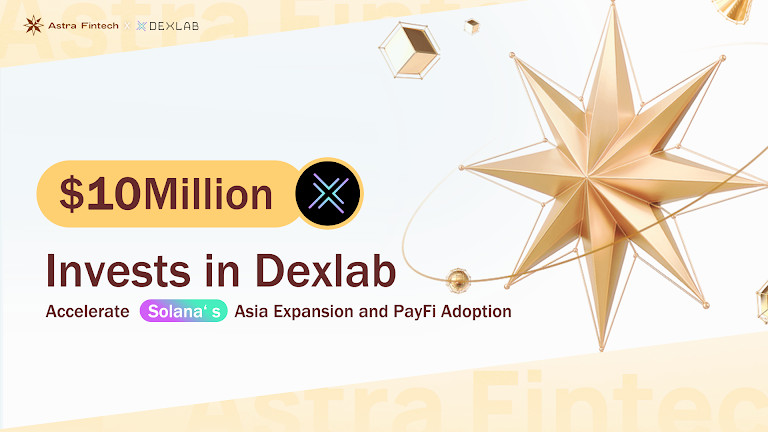
Canada FinFra Astra Fintech Invests $10M in Dexlab to Accelerate Solana‘s Asia Expansion and PayFi Adoption

Canada FinFra Astra Fintech Invests M in Dexlab to Accelerate Solana‘s Asia Expansion and PayFi Adoption


In Brief

Astra Fintech has acquired Solana-native platform Dexlab for $10 million to accelerate PayFi adoption and strengthen its strategic presence in the Asian blockchain ecosystem.

Canada FinFra Astra Fintech Invests M in Dexlab to Accelerate Solana‘s Asia Expansion and PayFi Adoption

Canada-based and Solana-focused FinFra leader Astra Fintech today reinforced its commitment to the Solana ecosystem by announcing a $10M strategic acquisition of Dexlab, a pioneering Solana-native token launching and tooling platform. Backed by Astra’s recently launched $100 million Solana ecosystem fund, this deal marks a bold step in the company’s mission to accelerate PayFi adoption across Asia and beyond.

Why Dexlab? The Investment Thesis

From an investment standpoint, Astra Fintech understands that Solana’s technical advantages – its industry-leading scalability and cost efficiency – ultimately derive their value from the quality of Dapps and infrastructures developed on its blockchain. Dexlab stands out as a cornerstone asset for three key reasons:

Launched in 2020 as Solana’s first meme coin creation platform, Dexlab enables anyone to create and list a token without writing code. This no-code, permissionless model kickstarted a wave of on-chain experimentation, making Dexlab a cultural and technical foundation of the Solana ecosystem.

95% of Solana’s iconic meme coins — including Bonk, Slerf, Ponke, and numerous Trump and Biden-themed tokens — were originally created on Dexlab. With 189K tokens minted, DexLab generates $532M in trading volume.

Full Token Lifecycle Solutions 

Over time, Dexlab evolved into a full-stack token management platform — providing everything from token minting to liquidity pool generation, staking, and decentralized trading. “Dexlab isn’t just a DEX; it’s the Shopify for token economies,” noted Astra Head of Partnership Jamie, “It lowers the barrier to launch and scale tokens — from memes to serious fintech.”

With Astra’s Asia HQ now operational and DexLab’s recent launch of its APAC subsidiary Calab, the strategic alignment between both entities has created unprecedented momentum for regional blockchain adoption. DexLab will combine its established global infrastructure with Calab’s localized expertise to deliver tailored fintech solutions across Asian markets. This synergistic approach enables Hyper-localized product deployment and PayFi Acceleration across Asia.

Strategic Synergy behind the Acquisitions

This acquisition exemplifies Astra’s comprehensive investment thesis – combining financial resources with deep technical expertise to drive ecosystem development. The integration delivers immediate value to Dexlab through:

Access to Astra’s $100M Solana fund, multicoin-backed resources, and cross-border PayFi integrations.

Strategic talent infusion with Astra deploying seasoned North American executives across product, marketing, and operations roles.

Token rebranding to $XLAB to signify a new chapter under Astra’s leadership

Enterprise-level upgrades to support next-gen token management tools for institutions and creators alike.

“This isn’t just an acquisition, it’s more like a catalyst for Solana’s next ecosystem growth wave,” Jamie added, “Dexlab will be our foundation for onboarding the next 100 million users to Web3, starting in Asia.”

The Bigger Picture: Solana as the Foundation

The Dexlab deal underscores Astra’s conviction in Solana’s role as the backbone of next-gen fintech. With Korea as its hub, Astra plans to:

Deploy capital from its $100M fund to Solana-based Finfra, PayFi, and AI projects.

Integrate Dexlab’s token rails with Banana Pay, Astra’s blockchain payment solution, to merge decentralized and traditional finance.

Host hackathons and developer grants, building on its Seoulana success to nurture grassroots innovation.

“Crypto’s future hinges on usable infrastructure,” said Jamie. “By investing in Dexlab, we’re betting on Solana and on builders who share our vision for a borderless financial stack.”

About Astra Fintech

Astra Fintech is a Canada-based blockchain finance leader revolutionizing FinFra by bridging traditional and decentralized payments. As a strategic Solana ecosystem partner backed by Multicoin LPs, we deliver secure, borderless PayFi solutions while driving innovation through investments in next-gen financial infrastructure.

About DexLab

As Solana’s pioneering meme launchpad behind iconic tokens including Bonk, Slerf, and Ponke – along with Trump&Biden-themed assets – DexLab originally facilitated 95% of the network’s early token launches, generating $532M in trading volume. Today, DexLab has matured into a complete institutional-grade token management solution, offering end-to-end lifecycle tools built natively on Solana.

Disclaimer

In line with the Trust Project guidelines, please note that the information provided on this page is not intended to be and should not be interpreted as legal, tax, investment, financial, or any other form of advice. It is important to only invest what you can afford to lose and to seek independent financial advice if you have any doubts. For further information, we suggest referring to the terms and conditions as well as the help and support pages provided by the issuer or advertiser. MetaversePost is committed to accurate, unbiased reporting, but market conditions are subject to change without notice.

About The Author


Gregory, a digital nomad hailing from Poland, is not only a financial analyst but also a valuable contributor to various online magazines. With a wealth of experience in the financial industry, his insights and expertise have earned him recognition in numerous publications. Utilising his spare time effectively, Gregory is currently dedicated to writing a book about cryptocurrency and blockchain.

More articles


Gregory, a digital nomad hailing from Poland, is not only a financial analyst but also a valuable contributor to various online magazines. With a wealth of experience in the financial industry, his insights and expertise have earned him recognition in numerous publications. Utilising his spare time effectively, Gregory is currently dedicated to writing a book about cryptocurrency and blockchain.


Source link

Can Snoop Dogg’s Telegram Drop Revive a Slumping NFT Market? | NFT News Today

Can Snoop Dogg’s Telegram Drop Revive a Slumping NFT Market? | NFT News Today


Snoop Dogg’s July 2025 NFT drop on Telegram didn’t just sell out in minutes, it sparked one of the strongest waves of engagement the digital collectibles space has seen all year. While much of the NFT market limps through a brutal cooldown, his $12 million sellout shows there’s still serious demand when the right mix of utility, access, and culture hits.

Key Takeaways

Snoop Dogg’s drop sold nearly 1 million NFTs in 30 minutes during a weak market.

The integration with Telegram and TON blockchain created real utility through stickers, Stars, and tradable assets.

Celebrity-driven projects still dominate, but they also raise questions about sustainability and access.

I’ve seen both hype and disappointment firsthand, and this drop walks a fine line between the two.

Future NFT adoption depends more on integration into everyday platforms than speculation on marketplaces.

Snoop Dogg’s NFT Drop on Telegram

On July 9, Snoop Dogg dropped “Telegram Gifts”, nearly 996,000 animated NFTs through Telegram’s new collectibles platform. They weren’t expensive, with tiers starting at $3 and topping out at $150. Items like digital lowriders, dogs, and cannabis swag echoed his long-established persona, and they moved fast. The highest-tier NFT, the “Westside Sign,” sold out in under two minutes.

As someone who has been collecting NFTs since late 2017, I have seen both spectacular launches and complete duds. This drop was smooth, quick, and honestly, a bit surprising, especially during this downturn. The drop used Telegram’s TON blockchain, and the NFTs offered actual function: they can be used as profile stickers, exchanged for Telegram’s in-app Stars currency, and soon, they’ll hit secondary markets.

Snoop’s Ongoing Commitment to Digital Ownership

This isn’t Snoop’s first NFT rodeo. Back in 2021, he launched collections through OpenSea, bought a piece of virtual real estate in The Sandbox, collaborated with BAYC and was rumored to be behind the Twitter handle “Cozomo de’ Medici,” a vocal NFT collector. He’s consistently used his fame to push digital ownership forward, but with a twist. His projects rarely chase trends; they lean into his brand identity.

What struck me here is how calculated this latest drop was. Not flashy. No convoluted roadmaps. Just accessibility, volume, and Telegram integration. That’s what drew in casual buyers, not just NFT veterans.

What This Means for NFT Investors

The hype is real, but so are the red flags. I’ve bought into too many celebrity collections that launched hot and crashed even faster. The early success doesn’t guarantee long-term value. Most buyers probably grabbed these for the novelty, not for flipping. Still, that’s kind of the point, NFTs with immediate utility and cultural tie-ins can bypass speculative pressure.

For Telegram, this was a stress test. And it passed. Millions of users got a taste of NFTs without needing a MetaMask wallet or crypto background. That’s where I see the future heading: NFTs that blend into tools people already use. Whether you’re a creator or investor, building with that context in mind will separate you from those still chasing old playbooks.

My Take as a Long-Term NFT Collector

I’ve wasted ETH on cumbersome projects that made big promises but failed to deliver. However, Snoop’s drop was different: it was easy to purchase, enjoyable to use, and relevant to the way people communicate. It reminded me why I initially got interested in NFTs, digital identity and self-expression. That said, don’t expect every big name to achieve this level of success.

Hype provides a quick boost, while utility offers sustained growth. The next phase of NFTs won’t focus on flipping JPEGs; instead, it will revolve around integrating into the platforms we already use. If Telegram continues to develop this model, I can envision a positive direction, even during this challenging cycle. However, we will need more than just celebrity endorsements to achieve this. We require tools, standards, and, frankly, a sense of restraint.

Frequently Asked Questions

Here are some frequently asked questions about this topic:

What are Telegram Gifts by Snoop Dogg?

Telegram Gifts are a collection of nearly 1 million animated NFTs inspired by Snoop Dogg’s brand, launched on July 9, 2025, via the Telegram app. 

What blockchain powers the collection?

The NFTs are powered by the TON (The Open Network) blockchain, which integrates directly with Telegram for fast, low-cost transactions.

What can I do with these NFTs?

You can use them as Telegram profile stickers, convert them into Telegram’s Stars currency, trade them with other users, or mint them on-chain after three weeks.

How much did the NFTs cost?

They ranged from about $3 to $150 across five tiers, with the highest-tier item—the “Westside Sign”—selling out in under two minutes.

Is this a sign of a broader NFT comeback?

It could be. While the market overall is still slow, this drop shows that NFTs with real utility and cultural backing can still drive strong engagement and sales.


Source link

7 Best AI Anime Character Online Creators in 2025 (Updated)

7 Best AI Anime Character Online Creators in 2025 (Updated)


In Brief

Anime’s global appeal influences digital art and AI creativity. AI-powered anime character creators, using machine learning and GANs, unlock creative potential for artists, gamers, and content creators.

7 Best AI Anime Character Online Creators in 2025 (Updated)

Anime’s global appeal continues to skyrocket, influencing not just entertainment but digital art and AI creativity. 

In 2025, AI-powered anime character creators have become indispensable tools for artists, gamers, and content creators alike. These platforms harness the latest advances in machine learning, GANs, and neural rendering to generate stunning anime-style characters quickly, effortlessly, and with immense customization. 

Whether you’re designing avatars for the metaverse, crafting original art, or simply exploring anime aesthetics, the right AI generator can unlock new creative potential. 

Here’s an updated list of the 7 best AI anime character creators available today, featuring both established leaders and emerging innovators.

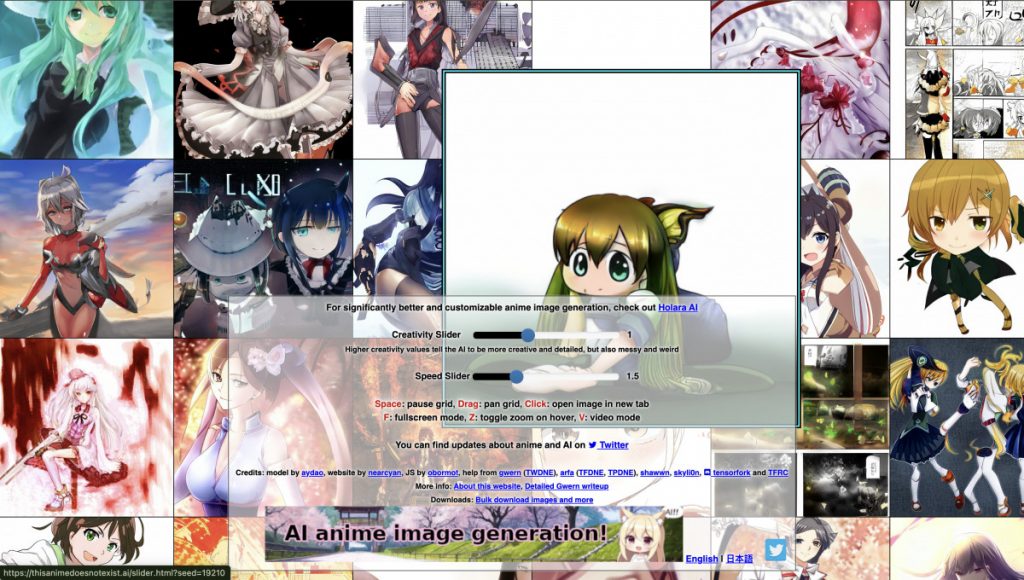
This Anime Does Not Exist

AI-generated anime character portrait from This Anime Does Not Exist, showcasing a unique GAN-created anime face with no user input required. Includes digital anime art, random anime avatar, AI-generated waifu, AI face synthesis, and anime image generator.

This Anime Does Not Exist remains a fascinating AI-driven website that generates unique anime-style character portraits using GANs (Generative Adversarial Networks). 

It creates entirely new, never-before-seen characters by blending features learned from vast anime image datasets. 

Perfect for quick inspiration or background characters, the site requires no login or input—simply refresh to see a new face. Although it lacks customization options, its ease of use and impressive variety keep it popular for artists, writers, and fans seeking fresh anime aesthetics in 2025.

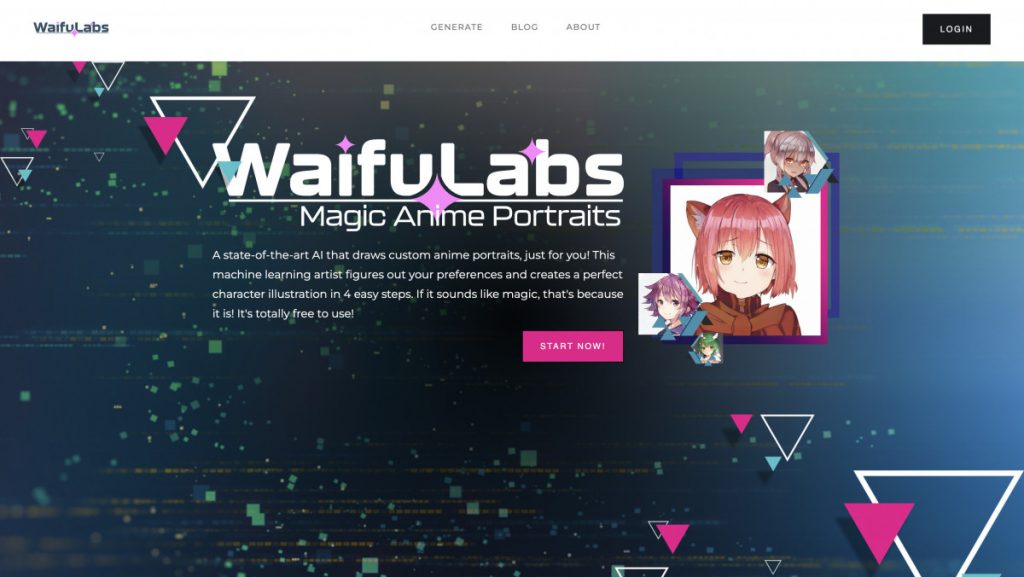
WaifuLabs

Customizable anime girl avatar created using WaifuLabs, illustrating four-step AI generation from sketch to full-color portrait. Features custom anime design, waifu avatar creator, high-resolution AI art, anime girl generator, and machine learning anime illustration.

WaifuLabs is still among the top AI anime character generators in 2025, famed for producing fully customizable, high-quality anime portraits. 

This AI tool uses machine learning to progressively generate characters in four steps, from rough sketches to polished illustrations, based on your style preferences. 

Its user-friendly interface and ability to export high-res images make it invaluable for creators who want tailored, unique anime avatars or concept art. WaifuLabs continues to evolve, incorporating community feedback for better style variety and realism, securing its place as a favorite in the anime AI creator space. 

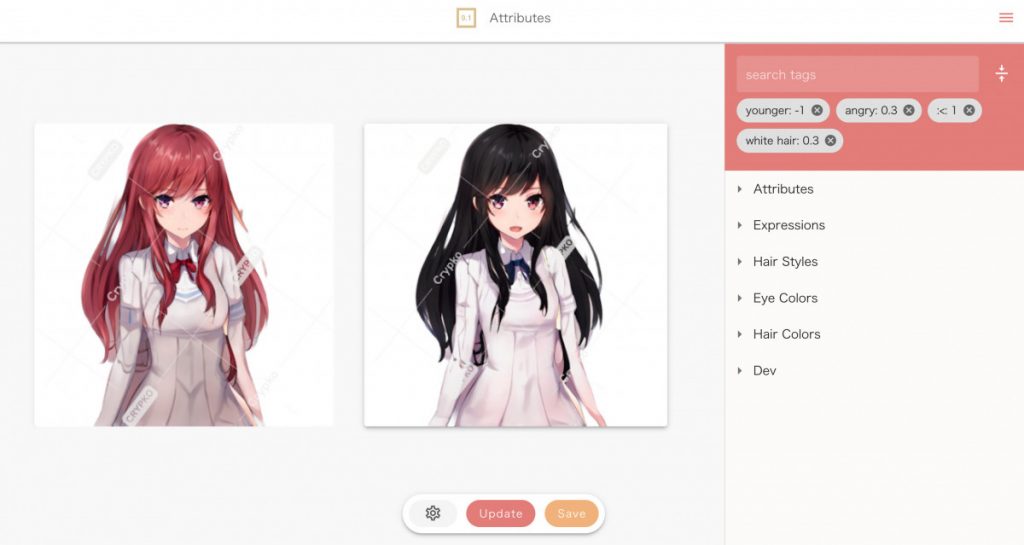
Crypko.AI

7 Best AI Anime Character Online Creators in 2025 (Updated)

Crypko.AI remains a powerful AI waifu generator leveraging advanced GAN models to produce detailed, waist-up anime character portraits. Unlike simpler generators, Crypko’s strength lies in its expansive latent space, allowing for nuanced character adjustments and vivid expressions. 

Its subscription model provides users with unlimited generations and commercial rights, making it a go-to for professional artists and game developers. The platform also supports character “morphing,” enabling smooth transitions between styles, enhancing creativity. 

Crypko’s continuous updates in 2025 keep it relevant as one of the more versatile AI anime character creators available.

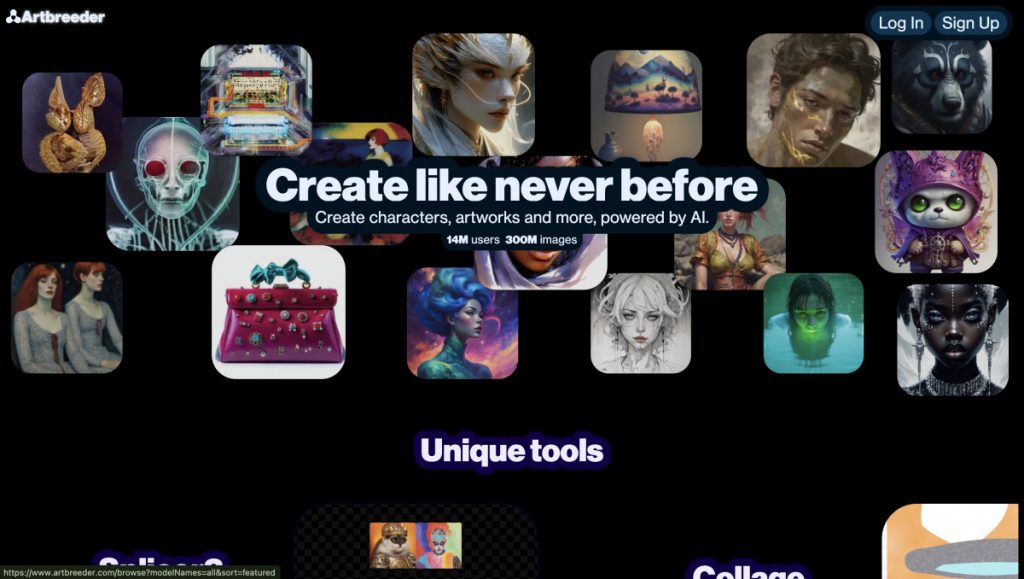
Artbreeder

Collaborative anime-style character designed on Artbreeder, combining gene-based customization and AI image evolution tools. Features morphable anime face, AI drawing mixer, generative anime design, genetic anime editor, and customizable anime portrait creator.

Artbreeder has grown beyond just portraits to become a versatile AI creativity platform, and in 2025 it remains a top choice for anime character creation. Using a blend of GANs and genetic algorithms, users can mix and evolve images by adjusting “genes” controlling facial features, colors, and styles. 

This collaborative, interactive approach offers immense creative freedom, perfect for artists wanting to experiment or refine character designs. Artbreeder also supports high-resolution downloads and community sharing, making it a hub for both inspiration and production. Its ongoing development keeps it fresh and relevant for anime art creation today. 

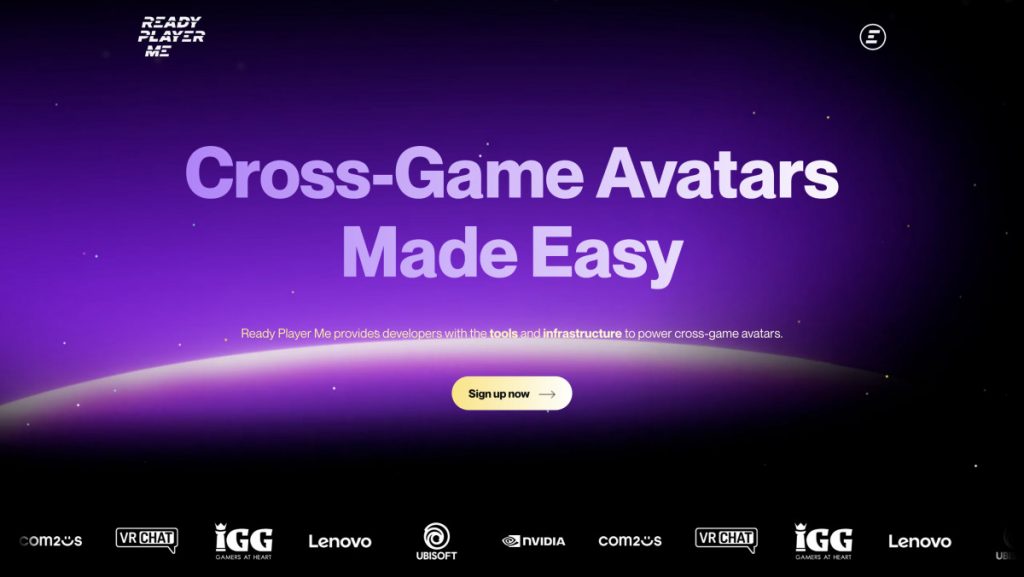
Ready Player Me

3D anime-style avatar created on Ready Player Me platform, compatible with metaverse apps and VR environments. Includes VR anime avatar builder, 3D anime character maker, metaverse-compatible anime style, rigged anime avatar, and cross-platform character generator.

Ready Player Me isn’t solely an anime character creator but has emerged as a powerful avatar generation platform supporting anime styles in 2025. It allows users to create personalized 3D anime-inspired avatars compatible with VR, gaming, and metaverse applications. 

By uploading a selfie or customizing features manually, you get a fully rigged, animatable avatar ready for cross-platform use. Its integration with popular virtual worlds and apps makes it highly valuable for creators seeking an anime look in immersive digital environments, blending AI-driven customization with practical application.

AnimeGANv2

Real photo transformed into anime-style art using AnimeGANv2, demonstrating neural style transfer and artistic AI rendering. Includes AI anime filter, photo to anime conversion, anime stylization tool, deep learning anime effect, and anime face transformation.

AnimeGANv2 is an open-source AI project that excels at converting real photos into anime-style illustrations with impressive accuracy. 

Updated through 2025, it’s widely used by developers and artists who want to stylize images or video frames with anime aesthetics. 

Unlike generators that create characters from scratch, AnimeGANv2 uses neural style transfer techniques to transform existing images while preserving key features. 

Its flexibility and open availability make it popular in both hobbyist and professional circles, especially for content creators seeking anime effects in photography or animation pipelines.

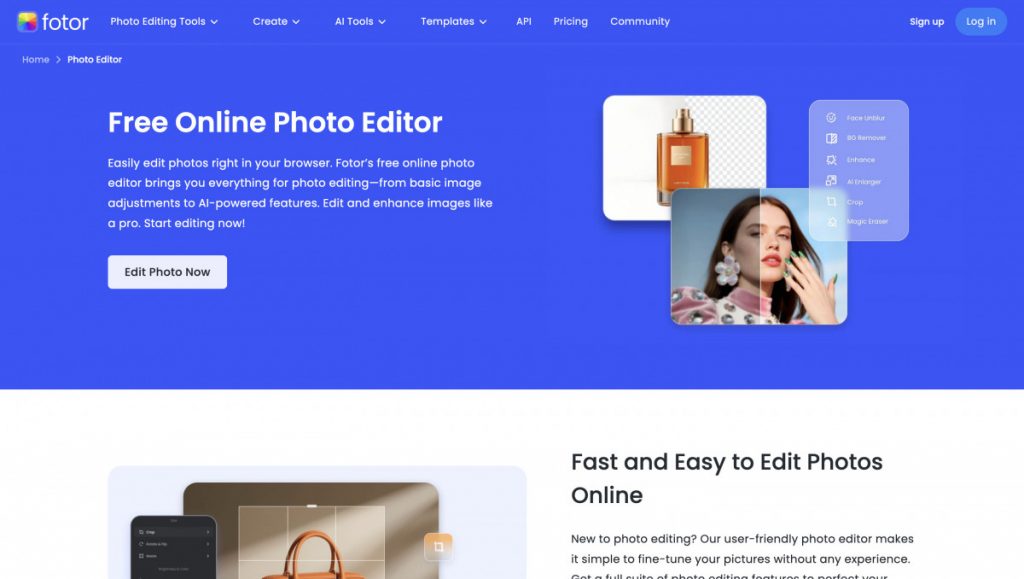
Fotor’s Anime Character Generator

Anime character avatar made using Fotor’s AI anime generator, offering quick creation with feature customization. Features easy anime avatar creator, casual anime art tool, anime profile picture generator, AI cartoon effect, and anime-style illustration maker.

Fotor’s AI-powered anime character generator has gained traction in 2025 due to its easy interface and reliable output. 

As part of Fotor’s broader AI toolkit, it allows users to create custom anime avatars quickly by selecting styles and tweaking features. 

While not as complex as some GAN-based tools, it shines with fast processing times and integration with Fotor’s editing suite, perfect for social media profile pics, marketing, or casual creators wanting anime aesthetics. 

It reflects the trend of mainstream AI platforms incorporating anime generators for broader audience appeal.

FAQs

What makes AI anime character generators different from traditional drawing tools?AI generators use machine learning models trained on vast datasets of anime art, enabling automatic creation or transformation of images with minimal input. This allows for rapid iteration and novel styles, which traditional tools require hours of manual work to achieve.

Are these AI tools free to use?Many AI anime character generators offer free tiers or trials, but full features, high-resolution downloads, or commercial licenses often require paid subscriptions. Some platforms are entirely open-source and free, while others are proprietary.

Can I use AI-generated anime characters for commercial projects?Usage rights vary by platform. Always check the licensing terms — some tools grant full commercial rights, while others restrict usage to personal projects. Platforms like Artbreeder and Ready Player Me provide clear commercial licenses.

How customizable are these AI-generated characters?Most leading platforms allow extensive customization, from facial features and hairstyles to clothing and expressions. Tools like Artbreeder and WaifuLabs let you fine-tune details, while others offer style transfer or full 3D avatar creation.

Will AI replace traditional anime artists?AI is a powerful creative assistant but not a replacement for human creativity. It helps with inspiration, prototyping, and automating repetitive tasks, freeing artists to focus on storytelling and unique artistic expression.

Bottom Line

AI anime character generators have transformed the way artists and creators approach anime-style design.In 2025, these tools combine ease of use, creative flexibility, and impressive output quality to suit beginners and professionals alike. 

Whether you want to generate quick concept art, build immersive avatars for virtual worlds, or experiment with novel styles, the platforms featured here represent the current best in the field. 

As AI continues evolving, these tools will only grow more sophisticated, becoming vital collaborators in the creative process. Embracing AI-driven anime creation unlocks exciting new possibilities without replacing the artist’s unique vision.

Disclaimer

In line with the Trust Project guidelines, please note that the information provided on this page is not intended to be and should not be interpreted as legal, tax, investment, financial, or any other form of advice. It is important to only invest what you can afford to lose and to seek independent financial advice if you have any doubts. For further information, we suggest referring to the terms and conditions as well as the help and support pages provided by the issuer or advertiser. MetaversePost is committed to accurate, unbiased reporting, but market conditions are subject to change without notice.

About The Author


Victoria is a writer on a variety of technology topics including Web3.0, AI and cryptocurrencies. Her extensive experience allows her to write insightful articles for the wider audience.

More articles


Victoria d’Este


Victoria is a writer on a variety of technology topics including Web3.0, AI and cryptocurrencies. Her extensive experience allows her to write insightful articles for the wider audience.


Source link

Popular Posts

My Favorites