Metaverse

Home Metaverse Page 12

Why Ready Player One Scares Me | Metaverse Planet

Why Ready Player One Scares Me | Metaverse Planet


I genuinely shivered when I watched Ready Player One again last night. It wasn’t a fun, popcorn-flicking shiver; it was a deep, unsettling feeling that settled right in my bones. I didn’t see a fun action movie about video games. I saw a documentary about our potential future that hasn’t happened yet. And it scared me.

I love technology. I live for it. But this film made me question everything about where we are heading. It wasn’t just about cool VR headsets and 80s pop culture references. It was about a core philosophy that is terrifyingly relevant today: Are we building a digital paradise because we’ve fundamentally given up on fixing the real world?

Escapism as a Service: The OASIS vs. The Stacks

The contrast in the movie is brutal. On one side, you have Columbus, Ohio in 2045. It’s a dystopian wasteland. People live in “The Stacks,” which are exactly what they sound like: mobile homes piled ridiculously high on shaky metal scaffolds. It’s a visual representation of poverty and societal collapse. The air is filthy, the streets are dangerous, and there is absolutely no hope.

But then, they put on their headsets.

They enter the OASIS. It’s vibrant, it’s endless, and you can be whatever you want to be. The colors are sharper, the music is better, and the sense of possibility is intoxicating. This isn’t just a game; it’s the place where people live, work, and dream. This is where the warning begins.

The Real Danger of Digital Utopia

The movie isn’t warning us that VR will be “addictive.” We already know that. It’s warning us that when our digital lives become objectively better than our physical lives, we lose the motivation to fix the physical world. Why try to clean the air or demand better housing when you can just plug in and fly through a nebula? The OASIS isn’t an escape; it’s an anesthetic.

The Sorrento Syndrome: Who Really Runs Your Reality?

Sorrento, the villain, represents IOI, the massive corporate behemoth trying to seize control of the OASIS. His goal isn’t just profit; it’s total saturation. He wants to monetize every pixel. He famously brags about being able to cover 80% of a user’s visual field with advertisements before causing seizures.

I look around today, and I see Sorrento everywhere.

We are watching real-life tech giants racing to build the actual OASIS. Meta (Facebook), Apple, Epic Games, Roblox—they all want to be the foundation.

Meta is throwing billions at the Quest hardware, essentially building the goggles.Epic Games has Unreal Engine, creating the visuals that make digital worlds indistinguishable from reality.Apple just released the Vision Pro, merging digital interfaces with physical space.

They aren’t doing this out of the goodness of their hearts. They want to own the digital world that we might someday depend on. The battle in Ready Player One isn’t fictional; the real-life version is happening right now in boardroom meetings. If we aren’t careful, the real future OASIS won’t be run by a quirky genius like Halliday; it will be run by a committee of Sorrentos.

When Reality Completely Collapses: Are We Just Distracting Ourselves?

The movie forces us to face a difficult philosophical truth, which is summarized brilliantly near the end: “Reality is the only thing that’s real.”

This is the core of Ugu’s fear. Are we just building a digital paradise to ignore the fact that the real world is collapsing? Think about the money and resources flooding into VR and AI development. Now think about the money and resources dedicated to solving climate change, fixing housing crises, or addressing economic inequality. The imbalance is striking.

We have the technology to make VR seem more real than reality, but do we have the will to make our physical reality livable? If we are dedicating our best minds to creating digital escapes, we are essentially giving up on the real world. We are choosing to medicate the symptom (unhappiness) rather than curing the disease (a collapsing societal structure).

The Ultimate Decision: Hack or Dream?

I think Ready Player One is a warning, not just a sci-fi movie. It’s a mirror reflecting our current course back at us, amplified and exaggerated so we can’t ignore it. It challenges us to decide what we truly value.

The ultimate question posed by the film is this: If reality completely collapses, would a VR headset be your only escape? I really wonder what you think about this. It’s not an abstract question anymore. We are facing the earliest versions of this dilemma today.

Which Side Are You On?

We are approaching a crossroads. Which side are you on? Would you hack the system, like Wade and his friends, to save the core essence of reality and humanity? Or would you surrender to the sweet, endless, customized digital dream, accepting the slow decay of the physical world because the digital one is just too perfect to leave?

Let me know in the comments! I genuinely want to know where you stand on this. I can’t be the only one shivering.

You Might Also Like;


Source link

BlackRock’s Onchain Strategy: BUIDL, Bitcoin, and Tokenized Funds Explained | NFT News Today

BlackRock’s Onchain Strategy: BUIDL, Bitcoin, and Tokenized Funds Explained | NFT News Today


For most of crypto’s history, tokenization has lived in an odd spot. It has been one of the sector’s most repeated promises, yet for years it remained more of a talking point than a serious product line for the largest firms in finance. BlackRock has started to change that.

The company has already launched BUIDL, its tokenized U.S. Treasury fund on a public blockchain. It has also introduced DLT Shares for its Treasury Trust Fund, a move that points to something larger than a one-off crypto product. Read together, these steps suggest BlackRock is thinking seriously about how fund ownership, transfer, settlement, and servicing may work in the years ahead.

That matters because BlackRock is not experimenting from the margins. It is the largest asset manager in the world. At the end of 2025, the firm reported roughly $14 trillion in assets under management. When a company of that size decides tokenization is worth building around, people notice. Regulators notice. Competitors notice. Institutional allocators notice.

And Larry Fink, BlackRock’s chairman and CEO, has not been subtle about where he thinks this is going. In his 2025 annual letter, he wrote: “Every stock, every bond, every fund—every asset—can be tokenized.” That line has been quoted widely, but it is worth pausing on. It is a striking statement from the head of the world’s largest asset manager, especially from someone who once sounded deeply skeptical of crypto.

The key point is this: BlackRock is no longer treating tokenization as a thought exercise. It is treating it as a serious part of market infrastructure.

BlackRock’s plan, in practical terms

The easiest way to understand BlackRock’s tokenization strategy is to start with what it has chosen to tokenize first.

So far, the firm has focused on the most institutionally legible corner of the market: cash management, short-duration U.S. government exposure, and blockchain-linked fund-share recordkeeping. That is a sensible place to begin. Treasury products are already used across liquidity programs, collateral workflows, and treasury operations. They are familiar, heavily used, and relatively low risk compared with more speculative assets.

That is what makes BUIDL and DLT Shares so revealing. BlackRock is not opening with private equity, venture exposure, or illiquid collectibles. It is beginning with the plumbing of finance: yield-bearing cash equivalents, Treasury-backed products, and the mechanics of ownership and transfer.

That choice tells you a lot about how the company sees the opportunity. BlackRock is not chasing tokenization because it sounds futuristic. It is starting where the product-market fit is easiest to explain to institutions.

Why BlackRock matters more than most firms in this conversation

BlackRock is not simply a giant fund manager. It sits across ETFs, fixed income, cash management, retirement investing, alternatives, and market technology through Aladdin. That broad footprint gives it unusual reach.

This matters because tokenization is not just a product story. It is also a distribution story, a servicing story, and a market-structure story. A smaller firm can launch a tokenized fund. BlackRock can do something more consequential: it can connect tokenization to mainstream distribution, client relationships, and operating infrastructure.

It also has meaningful reach in public-policy discussions. BlackRock says on its public policy page that it engages on issues it believes affect clients’ long-term interests. That does not mean the firm sets the rules. It does mean BlackRock is better positioned than many crypto-native firms to take part in the conversations that will shape tokenized securities, digital identity, transfer controls, and custody standards.

That combination of scale, market access, and policy visibility is a big reason BlackRock’s moves carry more weight than the average blockchain launch.

How far BlackRock’s stance has shifted

Part of what makes this story so interesting is that BlackRock was not an early crypto true believer.

Back in 2017, Larry Fink’s public view of Bitcoin was openly dismissive. Reuters quoted him calling it “a very speculative instrument” and “an instrument that people use for money laundering” in its coverage at the time. That was not the language of a company preparing to move aggressively into digital assets.

By 2021, the tone had started to soften. Reuters reported that BlackRock was studying cryptocurrencies to assess whether they might offer countercyclical benefits. That was a meaningful change, even if it was still cautious language.

Then came the next phase: regulated exposure. BlackRock later launched IBIT, its spot Bitcoin ETF product, offering access through a wrapper institutions and advisers already understood. In his 2025 letter, Fink said BlackRock’s Bitcoin ETP had expanded the firm’s investor base and brought in many first-time iShares buyers.

That progression matters. BlackRock did not leap from skepticism to full-throated crypto enthusiasm. It moved in stages: from rejection, to study, to regulated exposure, and then into tokenized fund structures. That is the pattern of a large institution slowly gaining confidence in a new market once the right wrapper, partners, and compliance rails are in place.

What changed inside BlackRock’s thinking

Several things seem to have changed at once.

First, the infrastructure got better. By the time BlackRock launched BUIDL in 2024, it could do so with Securitize handling tokenization-related functions and BNY Mellon acting as custodian and administrator. That is the kind of operating stack institutions recognize. It looks much less like an experiment built for crypto insiders and much more like a product built to sit alongside traditional financial operations.

Second, regulated wrappers proved there was demand. BlackRock’s success with IBIT showed that investors were willing to access digital assets through familiar structures rather than purely crypto-native channels.

Third, tokenization itself started to look less like a speculative theme and more like a practical improvement to financial infrastructure. In his 2025 annual letter, and later in an Economist op-ed co-authored with BlackRock COO Rob Goldstein, Fink framed tokenization around lower friction, faster transfers, and broader access over time.

He also wrote in that letter: “Decentralized finance is an extraordinary innovation. It makes markets faster, cheaper, and more transparent.” That is a remarkable line coming from the same executive who once attacked Bitcoin in public.

BUIDL: BlackRock’s first serious tokenization product

BlackRock’s first serious tokenization product is BUIDL, the BlackRock USD Institutional Digital Liquidity Fund. It launched in March 2024 on Ethereum and was built to give eligible investors onchain exposure to cash, U.S. Treasury bills, and repurchase agreements, while maintaining a stable $1 per token target.

That matters for reasons that go beyond symbolism.

In traditional finance, short-term government instruments already sit at the center of liquidity management and collateral practices. BUIDL takes that same underlying exposure and places it inside a tokenized wrapper that can move more easily within digital-asset infrastructure. That is where the product becomes interesting. The value is not just that a fund can be represented by tokens. The value is that a familiar low-risk asset can become more portable and potentially more useful inside a new financial environment.

BlackRock said the fund would pay daily accrued dividends and support peer-to-peer transfers among eligible investors. It also built BUIDL with institutional partners that make the structure easier for larger market participants to understand: Securitize on the tokenization side and BNY Mellon on custody and administration.

The next phase of BUIDL’s story made the product more important. In 2025, Securitize announced that BUIDL would be accepted as collateral on Crypto.com and Deribit. That is where tokenization starts to move from concept to function. A Treasury-backed product that can be used as collateral while continuing to represent short-duration government exposure is a much more meaningful financial object than a tokenized fund that simply sits in a wallet.

DLT Shares may say even more about where BlackRock is headed

BUIDL got the early attention, but DLT Shares may prove just as important.

In its SEC filing, BlackRock described a blockchain-recorded share class for its Treasury Trust Fund, with operations beginning on June 27, 2025. By the company’s February 2026 factsheet, that share class had reached roughly $173.4 billion in net assets and carried a $3 million minimum initial investment.

It is easy to miss why that is a big deal.

BUIDL can be understood as a tokenized product built to work with digital-asset markets. DLT Shares point to something broader: BlackRock may also be exploring how blockchain-linked issuance and recordkeeping can fit inside more mainstream fund operations. If that is the right reading, the company is not simply creating onchain products. It is testing whether parts of the ownership layer and the back office can be updated as well.

That is a bigger ambition than a single tokenized Treasury fund.

What BlackRock is tokenizing right now

The concrete answer today is fairly straightforward. BlackRock is already tokenizing or blockchain-recording exposure tied to short-term U.S. government instruments and cash-management products through BUIDL and DLT Shares.

That focus makes sense. Treasuries and cash-equivalent products already play a central role in collateral systems, treasury operations, and institutional liquidity programs. BlackRock is beginning with assets that already have deep demand and clear utility. It is improving the wrapper before it tries to reinvent the entire market.

What BlackRock is likely to tokenize next

BlackRock has not published a full public roadmap laying out every future tokenized asset class, so it is important to separate fact from informed expectation.

Based on the products already in market and the way Fink has discussed tokenization in his 2025 letter, the most plausible near-term candidates are additional cash products, short-duration fixed-income funds, and other structures where transferability and collateral use matter more than broad retail distribution.

Further out, private markets are worth watching. Fink has spent a lot of time positioning private markets as a growth area for BlackRock, and tokenization could eventually help with access, transfer mechanics, and operational efficiency there as well. That is still an informed expectation rather than a confirmed product timetable, but it is one of the more logical directions from here.

Why tokenization benefits BlackRock

There are several reasons this strategy makes economic sense for BlackRock.

The first is distribution efficiency. Tokenized wrappers can create new channels for institutions that already use cash-management products but want quicker settlement, cleaner transfers, or easier movement inside digital-asset venues.

The second is operational efficiency. In their Economist op-ed, Fink and Goldstein argued that tokenization can reduce cost and simplify ownership transfer. For a firm operating at BlackRock’s scale, even modest improvements in transfer, reconciliation, or servicing can matter.

The third is collateral utility. Once a tokenized Treasury product can be posted on venues such as Crypto.com and Deribit, it stops being just a passive holding. It becomes part of the operating machinery of the market.

And then there is the strategic angle. BlackRock does not need every corner of finance to move onchain immediately. It needs to be one of the firms institutions trust if tokenized fund structures become a more normal part of capital markets. Getting there early matters.

The ecosystem BlackRock is building around tokenization

Another important detail is that BlackRock is not trying to do all of this alone.

For BUIDL, it worked with Securitize and BNY Mellon, effectively creating a bridge between blockchain-based issuance and traditional fund servicing. That tells you something about BlackRock’s approach. It is building with regulated partners, known intermediaries, and operational structures institutions already recognize.

That may sound less exciting than the more radical version of crypto’s future, but it is probably the version that large financial firms are most likely to adopt.

BlackRock’s main competitors

BlackRock may be the most visible entrant, but it is not alone.

Franklin Templeton is one of the clearest comparables because it brought a blockchain-based money market fundto market years earlier through Benji.

J.P. Morgan’s Kinexys matters for a different reason. Its focus is less about fund distribution and more about tokenized collateral, payments, and settlement infrastructure.

Apollo and Securitize are worth watching because they hint at where tokenization may go next, especially in private credit and alternatives.

So while BlackRock has the strongest headline presence, the broader race is already underway.

The real constraints

The positive case for tokenization is easy to see. The harder question is what slows adoption down.

BlackRock itself has been fairly direct on that point. In his 2025 annual letter, Fink pointed to identity verification as a major obstacle. That is not a small technical issue. For regulated securities, identity checks, transfer restrictions, and jurisdiction-specific compliance rules are often what determine whether a product is genuinely usable at scale.

There is another issue too: tokenization does not automatically create liquidity. An asset can be turned into a token and still remain difficult to trade. That is one reason BlackRock’s initial focus on Treasuries and cash products looks so sensible. Demand already exists. The tokenization layer is improving transfer and usability rather than trying to manufacture a market that is not there.

Regulation is another limiting factor. BUIDL and DLT Shares show that tokenization can be brought inside regulated channels, but that process remains slow, rule-heavy, and highly dependent on product structure.

What comes next

The most likely next step is more expansion in areas BlackRock already understands well: Treasury products, cash management, and institutional liquidity tools.

BUIDL is already live. DLT Shares are already live. BUIDL is already being used in collateral workflows through venues such as Crypto.com and Deribit. Those are signs of active buildout, not a passive pilot.

Over a longer time horizon, BlackRock may expand into additional fund categories and, eventually, selected private-market structures if compliance, identity standards, and interoperability continue to improve. That direction looks plausible. A precise timetable is still much harder to call.

How soon will we see more BlackRock tokenized assets?

In one sense, we already have them. BUIDL launched in March 2024, and DLT Shares began operating in June 2025. So the live question is not whether BlackRock tokenized assets exist. It is how quickly BlackRock expands beyond the current set of products.

A reasonable base case is that the next 12 to 24 months bring more tokenized or blockchain-recorded Treasury and liquidity products, along with broader institutional integrations around collateral and settlement. The 2- to 5-year window is where broader fund categories or selected private-market exposures begin to look more realistic, assuming identity and compliance standards continue to improve. That is still an informed projection, not a formal roadmap from the company.

Final thoughts

BlackRock’s tokenization strategy makes the most sense when you view it as a market-structure project rather than a crypto branding exercise.

The firm is starting with assets institutions already trust, placing them inside blockchain-based wrappers and recordkeeping systems, and then testing where those structures create real practical advantages. That is a measured approach. It is also a very BlackRock approach.

And that is why the company matters so much in this story. BlackRock is not trying to prove that tokenized finance is exciting. It is trying to prove that tokenized fund structures can be useful inside real portfolios, real collateral systems, and real regulated channels. If that effort keeps gaining momentum, BlackRock will do more than participate in tokenization. It will help define what institutional tokenization looks like.



Source link

BNB Chain Hits 322M Token Holders to Outpace Ethereum, Solana

BNB Chain Hits 322M Token Holders to Outpace Ethereum, Solana


Key Highlights

BNB Chain tops the list of projects by token holders with 322 million holders.

The top 5 positions other than BNB are held by Ethereum, Tron, Solana, and TON.

The increasing traction in Solana and Tron could challenge BNB Chain’s dominance.

Token Terminal, a blockchain data provider, reveals that BNB Chain is currently leading the list of top projects by token holders, underscoring its growing user base and increasing on-chain activity. 

According to the latest metrics shared by the platform, BNB Chain has secured the top position with 322.2 million in total token holders, surpassing other major blockchain networks. This shows a gradual increase in the number of unique wallet addresses holding BNB tokens, a major indicator of adoption and network participation.

After BNB, the top five positions are held by Ethereum (305.4M), Tron (169.5M), Solana (166.9M), and TON (148.8M). The data keeps track of non-zero balance addresses, providing a clearer picture of active engagement over ecosystems. 

Intensifying competition among blockchains 

The dominance of BNB Chain comes amid intensifying competition among leading blockchains. Networks like Solana, Ethereum, and Tron feature in the rankings in different metrics, indicating a broader trend of rising user adoption over multiple ecosystems. 

Solana has recorded an all-time high with 166.9M in the total number of monthly token holders. It has also surpassed the 10 billion mark in total transactions in Q1 2026, indicating its increased adoption. 

Ethereum and Tron, on the other hand, are competing for the leading position in the global stablecoin ecosystem. In the longer frame, Ethereum leads the overall token supply, but the case is completely reversed in the shorter frame. 

What do the metrics indicate 

An increased number of holders normally indicates wider distribution of assets and decreased concentration risk. In the BNB Chain case, the growth can be attributed to its low transaction costs, high throughput, and a well-established ecosystem of decentralized applications (dApps), including DeFi platforms and NFT marketplaces.

The data also highlights the increasing significance of user-centric metrics in measuring blockchain performance. As total value locked (TVL) and transaction volume remain prominent indicators, token holder growth offers additional insight into long-term sustainability and grassroots adoption.

Broader outlook

The insights from Token Terminal highlight BNB Chain’s leadership in user adoption, as indicated by its top ranking in token holders. However, the competition is intensifying. While the network’s fundamentals and ecosystem continue to attract users, it remains one of the prominent players in the blockchain ecosystem. 

At the same time, blockchains such as Solana and Tron have also been prepared to give tough competition to BNB and can flip the script in the future. 

Also Read: Enjin Price Jumps 50% as ENJ Volume Surges 877% in 24 Hours


Disclaimer: The information researched and reported by The Crypto Times is for informational purposes only and is not a substitute for professional financial advice. Investing in crypto assets involves significant risk due to market volatility. Always Do Your Own Research (DYOR) and consult with a qualified Financial Advisor before making any investment decisions.


Source link

White House Economic Advisers Release Study On Stablecoin Yield And Its Impact On Bank Lending

White House Economic Advisers Release Study On Stablecoin Yield And Its Impact On Bank Lending


In Brief

White House CEA finds banning stablecoin yield would barely boost bank lending, while limiting consumer access to competitive returns, highlighting regulatory trade-offs in stablecoin policy.

White House Economic Advisers Release Study On Stablecoin Yield And Its Impact On Bank Lending

The White House Council of Economic Advisers has published its long-awaited study on the potential effects of stablecoin yield on bank deposits and lending. The report examines the longstanding claim from banking trade groups that yield-bearing stablecoins could drain deposits from traditional banks and reduce lending capacity, particularly at smaller community institutions. 

According to the study, eliminating yield from stablecoins would increase bank lending by only $2.1 billion, with a net welfare cost of $800 million. This represents a negligible increase in total lending—just 0.02%—while the cost-benefit ratio of 6.6 suggests that every dollar gained in lending would result in more than six dollars lost in consumer benefit.

The study further demonstrates that large banks would account for roughly 76% of this additional lending, leaving community banks—those with assets below $10 billion—to contribute only 24%, or approximately $500 million in incremental loans. Even under the report’s most extreme, worst-case assumptions, which include a sixfold expansion of the stablecoin market relative to deposits, reserves fully held in cash rather than Treasuries, and a complete departure from the Federal Reserve’s existing monetary framework, total bank lending would rise by only $531 billion, equivalent to 4.4% of aggregate loans. Under those same implausible conditions, community bank lending would increase by just $129 billion, or 6.7%. The study concludes that the consumer benefits of stablecoin yield—access to competitive returns—would be largely sacrificed for negligible gains in traditional bank lending.

Regulatory and Legislative Context

The release of the report comes as regulators continue implementing provisions under the GENIUS Act, signed into law in July 2025. The legislation requires stablecoin issuers to maintain one-to-one reserves in specified assets, including U.S. dollars, federal reserve notes, funds held at regulated depository institutions, short-term Treasuries, Treasury-backed reverse repurchase agreements, and certain money market funds. The law also prohibits issuers from offering yield directly to stablecoin holders, though it does not explicitly ban affiliate or third-party arrangements that might provide interest-bearing products—a loophole that some variants of the proposed Clarity Act seek to close.

The Clarity Act, which would either restrict or formally authorize third-party yield mechanisms, has been stalled in Congress for several months amid intense lobbying from both the banking and crypto sectors. Companies like Coinbase, which currently offers an annual yield of 3.5% on USDC balances for select customers, have urged regulators to provide clarity, while traditional banks have pushed for stricter limitations. The White House has actively facilitated negotiations in recent months as the financial industry remains divided over the role of stablecoins and yield-bearing products. Banking trade groups argue that unrestricted yield threatens their deposit base and could reduce lending capacity, particularly for smaller institutions serving rural communities.

The stablecoin yield debate has also gained attention as crypto firms increasingly compete with traditional banking services. Senator Cynthia Lummis has encouraged banks to “embrace” stablecoins amid the ongoing legislative stalemate. Lawmakers have indicated that votes on crypto market structure legislation are approaching, with key decisions expected in April and a statutory deadline in May. Meanwhile, traditional banks are expanding into crypto custody services while lobbying against yield-bearing stablecoin offerings, reflecting a dual approach of participating in digital finance while attempting to limit competitive pressure.

Implications for Market Access and Consumer Benefits

The debate over stablecoin yield ultimately reflects a broader question of market access, innovation, and the balance of consumer interests. While prohibiting yield may protect a minimal increase in bank lending, it would also restrict access to competitive returns available through digital assets. Yield-bearing stablecoins provide households, particularly those underserved by traditional financial institutions, with the opportunity to earn returns on digital holdings, effectively democratizing financial access. Eliminating such products in order to protect a small marginal increase in lending highlights the competing interests at play, raising questions about whose priorities are being served in the regulatory process.

As policymakers move forward, they face a choice between supporting established banking institutions and enabling wider access to innovative financial products. The CEA report offers a data-driven perspective, demonstrating that the macroeconomic threat posed by yield-bearing stablecoins is minimal, while the potential benefits to consumers are significant. How Congress and regulators weigh these trade-offs will determine the future role of stablecoins within the U.S. financial system.

Disclaimer

In line with the Trust Project guidelines, please note that the information provided on this page is not intended to be and should not be interpreted as legal, tax, investment, financial, or any other form of advice. It is important to only invest what you can afford to lose and to seek independent financial advice if you have any doubts. For further information, we suggest referring to the terms and conditions as well as the help and support pages provided by the issuer or advertiser. MetaversePost is committed to accurate, unbiased reporting, but market conditions are subject to change without notice.

About The Author


Alisa, a dedicated journalist at the MPost, specializes in cryptocurrency, zero-knowledge proofs, investments, and the expansive realm of Web3. With a keen eye for emerging trends and technologies, she delivers comprehensive coverage to inform and engage readers in the ever-evolving landscape of digital finance.

More articles


Alisa, a dedicated journalist at the MPost, specializes in cryptocurrency, zero-knowledge proofs, investments, and the expansive realm of Web3. With a keen eye for emerging trends and technologies, she delivers comprehensive coverage to inform and engage readers in the ever-evolving landscape of digital finance.


More articles


Source link

Morph Report Predicts Stablecoin Market To Reach $312B By 2025, Fueling Global Financial Infrastructure

Morph Report Predicts Stablecoin Market To Reach 2B By 2025, Fueling Global Financial Infrastructure


In Brief

Morph’s report highlights the fast growth of stablecoins, predicting a $50 trillion settlement volume by 2026, driven by institutional adoption and real-economy use cases like B2B payments.

Morph Report Predicts Stablecoin Market To Reach $312B By 2025, Fueling Global Financial Infrastructure

Morph, a high-performance settlement layer designed to scale real-world financial applications, has published a comprehensive report highlighting the evolution of the stablecoin market. According to the report, stablecoins have shifted from being a niche speculative tool to becoming a cornerstone of global financial infrastructure. By the end of 2025, the stablecoin market is projected to reach a market capitalization of $312 billion, marking a 60-fold increase since 2020. Stablecoins are now facilitating $33 trillion in annual transaction volume, surpassing the combined throughput of Visa and Mastercard.

The data challenges the common misconception that stablecoins are mainly used for cryptocurrency trading. While trading remains a significant use case, the report emphasizes that the fastest-growing applications of stablecoins are in the “real economy.” Specifically, B2B stablecoin payments have surged from under $100 million per month in early 2023 to over $6 billion per month by mid-2025, according to data from Artemis, a crypto analytics platform.

The report also highlights several key findings: In August 2025, monthly transaction volume for stablecoins surpassed $1.25 trillion, and the number of active wallets grew by 53%, reaching over 30 million. B2B stablecoin transactions now represent approximately $226 billion, or about 60% of identifiable stablecoin activity in the real economy, with a total of $390 billion annually. Additionally, stablecoin transfers are proving to be far more cost-efficient than traditional money transfer methods, making smaller, frequent transactions economically viable for the first time. Moreover, 41% of corporate users report saving at least 10% in transaction costs, and 77% of corporate adopters use stablecoins primarily for supplier payments.

Stablecoin Market Predicted To Exceed $50T In Settlement Volume By 2026

“The data is clear: we are no longer in a pilot phase. Stablecoins are now a structural necessity for modern treasury and procurement,” says Colin Goltra, CEO of Morph in a written statement. “Organizations building stablecoin capabilities by 2026 will hold a structural cost and speed advantage over those tethered to legacy systems,” he added. 

Looking ahead, the report outlines several predictions for the future of stablecoins. It forecasts that annual stablecoin settlement volume will exceed $50 trillion by the end of 2026, driven largely by growing institutional adoption. By 2027, AI agents are expected to become the largest initiators of stablecoin transactions, and SWIFT may be compelled to launch its own stablecoin settlement layer. The report also projects that by 2030, stablecoin market capitalization will exceed $1.9 trillion, representing 5% to 10% of global cross-border payments.

In response to the increasing demand for stablecoin solutions, Morph has launched the Morph Payment Accelerator, a $150 million initiative backed by the Bitget ecosystem. The accelerator aims to assist companies scaling high-volume payment applications by offering production-grade infrastructure, technical integration, and performance-based incentives. With 54% of organizations planning to deploy stablecoin solutions within the next 12 months, the initiative is poised to bridge the gap between traditional finance and on-chain efficiency.

Disclaimer

In line with the Trust Project guidelines, please note that the information provided on this page is not intended to be and should not be interpreted as legal, tax, investment, financial, or any other form of advice. It is important to only invest what you can afford to lose and to seek independent financial advice if you have any doubts. For further information, we suggest referring to the terms and conditions as well as the help and support pages provided by the issuer or advertiser. MetaversePost is committed to accurate, unbiased reporting, but market conditions are subject to change without notice.

About The Author


Alisa, a dedicated journalist at the MPost, specializes in cryptocurrency, zero-knowledge proofs, investments, and the expansive realm of Web3. With a keen eye for emerging trends and technologies, she delivers comprehensive coverage to inform and engage readers in the ever-evolving landscape of digital finance.

More articles


Alisa, a dedicated journalist at the MPost, specializes in cryptocurrency, zero-knowledge proofs, investments, and the expansive realm of Web3. With a keen eye for emerging trends and technologies, she delivers comprehensive coverage to inform and engage readers in the ever-evolving landscape of digital finance.


More articles


Source link

Humanity’s Farthest Reach: The Historic Triumphs of the Artemis 2 Mission | Metaverse Planet

Humanity’s Farthest Reach: The Historic Triumphs of the Artemis 2 Mission | Metaverse Planet


I have spent the last few days completely glued to the live NASA updates, and I am still struggling to wrap my head around the sheer scale of what we are witnessing right now. It is incredibly rare to wake up and realize you are living through a definitive moment in human history, but that is exactly what the Artemis 2 crew has delivered this week.

For the first time since 1972, human beings have traveled beyond the immediate orbit of the Moon. But they didn’t just go back; they pushed further into the dark void of space than our species has ever gone before.

As I write this, the Integrity capsule is speeding back toward a planned splashdown off the coast of San Diego in just two days. Before they return to solid ground, I need to break down exactly what this crew just accomplished, the breathtaking phenomena they witnessed, and why this mission completely changes the trajectory of our future in space.

Smashing a 56-Year-Old Record

Since 1970, the Apollo 13 mission held a bittersweet record. Due to their emergency trajectory, that crew swung further away from Earth than any humans in history—400,171 kilometers, to be exact. It was a record born out of a near-tragedy.

On the morning of April 6, the Artemis 2 crew—Reid Wiseman, Victor Glover, Christina Koch, and Jeremy Hansen—rewrote that history book on purpose. Driving the Orion capsule, named Integrity, they reached an astounding distance of 406,771 kilometers from Earth.

Listening to the audio feeds from the capsule gave me goosebumps. Commander Reid Wiseman perfectly captured the overwhelming nature of the view, stating, “No matter how long we look, our brains cannot process the image in front of us. It is absolutely magnificent, surreal.” It really makes you think about the psychological limits of the human mind. How do you process seeing the entirety of your home planet as a tiny, fragile marble floating in absolute nothingness?

Human Eyes on the Far Side of the Moon

moon flag

One of the most critical aspects of this mission was the close flyby of the Moon’s far side—a region that has never been observed directly by human eyes until now. The Integrity capsule skimmed the lunar surface from a distance of just 6,545 kilometers.

You might be asking, “Don’t we already have satellites mapping the Moon?” Yes, we do. But there is a massive difference between robotic sensors and the human optic nerve.

The Power of Human Perception: Human eyes can detect subtle variations in color, depth, and texture that robotic camera lenses often miss or misinterpret.The Orientale Basin: The crew used 32 different camera systems, alongside their own direct observations, to map previously unseen territories like the massive 965-kilometer-wide Orientale Basin.Lunar “Snow”: The astronauts reported that the three concentric mountain rings surrounding the basin looked as though they were dusted in snow or fine, bright powder.

This isn’t just space tourism. The visual data and geological mapping the crew performed during this flyby will be the literal roadmap for where we build future lunar bases.

The 53-Minute Eclipse: Basking in “Earthshine”

For me, the absolute highlight of this mission—the moment that sounded like pure science fiction—was the solar eclipse they experienced while flying behind the Moon.

Because of their unique vantage point and trajectory, the crew witnessed a total solar eclipse that lasted for an incredible 53 minutes. Back on Earth, we are lucky if an eclipse lasts a few minutes.

But it gets even crazier. During this hour of darkness, the Moon wasn’t just pitch black. It was illuminated by “Earthshine”—the sunlight reflecting off the oceans and clouds of Earth, bouncing across the void, and softly lighting up the lunar surface.

Victor Glover’s description of this event is something I’ll never forget. He described the sun dipping behind the Moon, leaving only a brilliant halo of the solar corona visible. Behind them, the Earth was blazing bright, casting a ghostly glow on the dark sphere of the Moon hanging right in front of their window. They gathered data on the sun’s corona during this event that scientists back home will be analyzing for years.

An Emotional Tribute in the Void

Space exploration is a triumph of cold, hard mathematics and engineering, but it is ultimately driven by the human heart.

During the mission, the capsule intentionally lost communication with Earth for about 40 minutes as they passed behind the Moon. It was a planned blackout, but I can’t imagine the isolation they must have felt in that silence.

When they re-emerged, they didn’t just read out telemetry data. The crew officially requested to name a newly observed lunar crater. They proposed two names: Integrity, after their capsule, and Carroll, in honor of Commander Wiseman’s late wife, who passed away from cancer in 2020.

Mission Control immediately approved the request. Seeing the video feed of the entire crew tearing up and embracing each other in zero gravity was a powerful reminder that we don’t leave our humanity behind when we leave the atmosphere; we bring it with us to the stars.

The Road Ahead: What Happens Next?

Right now, the crew is bracing for their fiery reentry. If everything goes according to plan, they will splash down in the Pacific Ocean on April 10. But the end of Artemis 2 is just the starting gun for the real challenge.

Here is the timeline we are looking at next:

Artemis 3 (Targeted 2027): This will be the critical test for orbital rendezvous and docking procedures, essentially practicing the maneuvers needed to land.Artemis 4 (Targeted Late 2028): This is the big one. If all goes well, this mission will finally put human boots back on the lunar dust, specifically near the Moon’s resource-rich South Pole.

Watching this mission unfold has honestly reignited my passion for space exploration. We aren’t just reading about history anymore; we are watching it stream live in 4K.

I’d love to hear your perspective on this. If you were offered a seat on the Orion capsule, knowing you would have to endure the 40-minute total communication blackout on the dark side of the Moon, would you take the trip? Let me know in the comments!

You Might Also Like;


Source link

Solana Monthly Token Holders Hit Record With 167M in April 2026

Solana Monthly Token Holders Hit Record With 167M in April 2026


Key Highlights

Solana has reached a new all-time high with 167 million monthly token holders.

The network recently surpassed the 10 billion total transactions in Q1 2026.

The activity possessed by Solana indicated increased user engagement and trust.

Solana has recorded an all-time high of 167 million in the total number of monthly token holders in early April 2026. The data was shared by Tokens on Solana on X on Tuesday and sourced from the analytics platform Token Terminal.

The data highlights the network’s continued growth and adoption despite recent market volatility and security concerns in the DeFi ecosystem. Steady growth has been witnessed since mid-2023, starting from around 70 million in July 2023. The figure consistently surged through 2024 and 2025 before attaining the peak. 

On-chain metrics

As per the data shared by Token Terminal, Solana records 33.9 million monthly active addresses, representing a 12.1% decline from the previous period. However, it still positions Solana among the leading blockchains in terms of user engagement. 

The price of Solana hovers at $80.71, having a fully diluted market cap of $45.9 billion. Token trading volume in the past 30 days attained $106.1 billion, with protocol fees being at $17.3 million. 

The new record of token holders underscores a surge in interest in the Solana ecosystem. The network has drawn benefits from high transaction speeds, low fees, and explosive growth in sectors like meme coins, stablecoins, and tokenized assets.

The improved activity 

Solana also performed strongly in Q1 2026, with total transactions surpassing the 10 billion mark for the first time. The growth indicates increased adoption of decentralized finance and institutional use cases. 

On the other hand, Solana is continuously attracting activity in real-world assets. Last month, it surpassed Ethereum in RWA holders for the first time, reaching record levels in RWA lending deposits. 

According to the data from SolanaFloor, the platform currently hosts roughly 5% of the global on-chain tokenized assets market, having significant settlement volume in U.S. Treasuries and other government debt on chains like BNB Chain partnerships, though Solana remains a major player.

The holder base surge is also attributed to retail participation, new token launches, and current infrastructure improvements.

What it means

As Solana shows its efforts in developments in sectors including AI agents, decentralized finance, and payments, it indicates a positive long-term signal for adoption.

However, maintaining this growth will rely on addressing security concerns, improving user retention beyond speculative trading, and delivering consistent utility. As Solana navigates April’s market conditions, the record holder count provides a foundation for optimism. 

Further updates from Token Terminal and on-chain data will be closely watched to see if active usage rebounds alongside the expanding holder base.

Also Read:SBI Ripple Asia Unveils XRP Ledger Token Platform


Disclaimer: The information researched and reported by The Crypto Times is for informational purposes only and is not a substitute for professional financial advice. Investing in crypto assets involves significant risk due to market volatility. Always Do Your Own Research (DYOR) and consult with a qualified Financial Advisor before making any investment decisions.


Source link

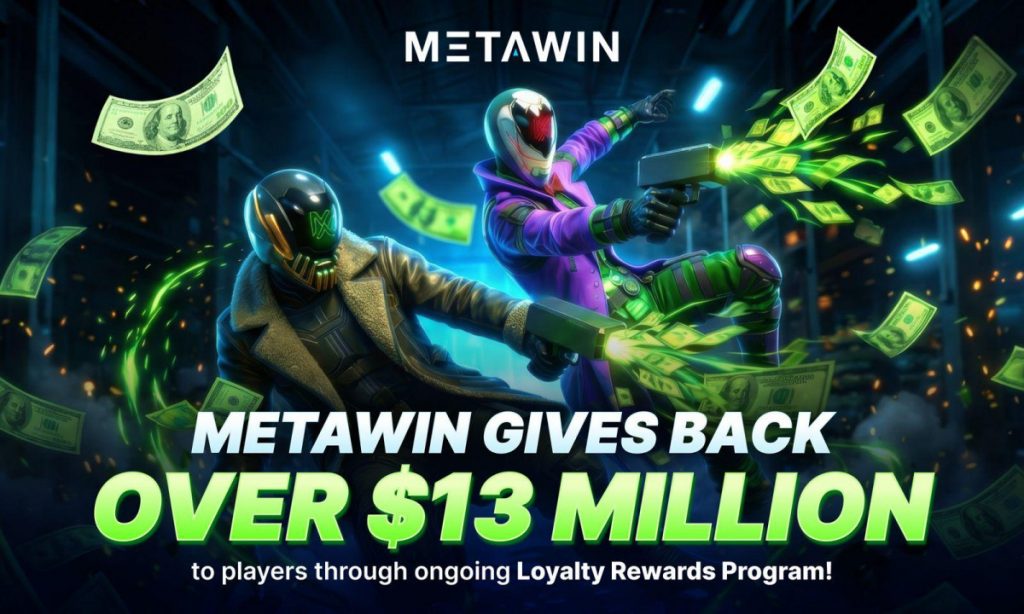
MetaWin Gives Back Over $13 Million to Players Through Ongoing Loyalty Rewards Program

MetaWin Gives Back Over  Million to Players Through Ongoing Loyalty Rewards Program


Sponsored

Stories and Reviews


April 07, 2026

MetaWin Gives Back Over $13 Million to Players Through Ongoing Loyalty Rewards Program

Miami, Florida, April 7th, 2026, Chainwire

MetaWin confirms more than $13 million in player rewards across Cashdrops, competitions, races and exclusive member benefits

Online casino MetaWin has announced that it will return more than $13 million to players through its ongoing loyalty rewards program, as a show of appreciation for the loyalty and support of the community that has helped build the platform over time.

The program includes direct Cashdrops, weekly competitions, monthly races and NFT holder-only benefits, and forms part of MetaWin’s broader commitment to rewarding loyal players with meaningful value.

Interested users can play now to qualify for $3 Million in July’s Cashdrop

How the $13 Million Is Being Distributed

The reward rollout includes:

$1.1 million already paid in the first Cashdrop
A further $4 million single-day Cashdrop to eligible users before April 15
$150,000 per week in Friday Fire prizes
$1 million monthly race leaderboards across April, May and June
$2,000 per day, five days a week, in NFT holder-only competitions
A further $3 million single-day Cashdrop in July for active players

Together, these initiatives bring the total value being returned to players to more than $13 million.

“MetaWin has always believed that loyalty should be rewarded properly. This program is about giving back to the players who have supported the platform, played with us and been part of the journey.

We are proud to be returning more than $13 million through Cashdrops, competitions, races and holder rewards. This is a meaningful show of appreciation to the community and part of the long-term rewards culture we are building at MetaWin.” says Sebastian Zinke, MD at MetaWin.

Loyalty at the Core of MetaWin’s Player-First Philosophy

MetaWin said the latest rollout reflects its player-first approach and its belief that long-term loyalty should be recognised in a meaningful and substantial way.

The company has built a large global community through its mix of online casino gaming, prize-winning experiences, rewards and Web3 integrations, and says this latest rewards program is designed to continue that momentum while reinforcing the value of participation across the platform.

Zinke added:

“This is about rewarding loyalty at real scale. Our players have played a major role in MetaWin’s growth, and we want that loyalty to be recognised in a way that is clear, significant and immediate.”

Users can join MetaWin toay to qualify for their share of $13 Million in rewards.

About MetaWin

MetaWin is an online casino and prize-winning platform combining gaming, community, digital ownership and player incentives. Through a mix of on-platform rewards, promotions and loyalty initiatives, MetaWin has built a global player base centred around engagement, entertainment and long-term value.

Contact

MetaWin PRMetaWin[email protected]

Disclaimer

In line with the Trust Project guidelines, please note that the information provided on this page is not intended to be and should not be interpreted as legal, tax, investment, financial, or any other form of advice. It is important to only invest what you can afford to lose and to seek independent financial advice if you have any doubts. For further information, we suggest referring to the terms and conditions as well as the help and support pages provided by the issuer or advertiser. MetaversePost is committed to accurate, unbiased reporting, but market conditions are subject to change without notice.

About The Author


Chainwire is the top blockchain and cryptocurrency newswire, distributing press releases, and maximizing crypto news coverage.

More articles


Chainwire is the top blockchain and cryptocurrency newswire, distributing press releases, and maximizing crypto news coverage.


Source link

BTC Holds $67K as Hormuz Tensions Shake Markets Fast: Wintermute

BTC Holds K as Hormuz Tensions Shake Markets Fast: Wintermute


Key Highlights

Bitcoin holds around $67K as geopolitical tensions around the Strait of Hormuz keep global markets on edge.

Institutional flows remain mixed, with ETF shifts and whale activity signaling a transition from buying to caution.

Despite volatility, BTC stability is driven by lingering institutional demand and risk-off sentiment across markets.

Bitcoin (BTC) is under pressure as tensions near the Strait of Hormuz rise, putting markets on edge. Despite this, BTC has held steady around $67K, according to market maker Wintermute. 

As of writing, according to CoinMarketCap, the top cryptocurrency was trading at $68,391.98, down 1.81% in the past 24 hours.

Last week saw sharp swings: Iran suggested it could end the conflict with security guarantees, sending the S&P 500 up 3.4% and briefly pushing oil down from $111 to $105 per barrel. But Trump’s primetime address, warning of further strikes on Iran, quickly reversed the moves, lifting WTI by 11% and Brent above $112.

The situation escalated Friday after U.S. combat aircraft were lost and Iran struck Gulf refineries. A 45-day ceasefire plan has emerged, but uncertainty remains. Wintermute analysts warned, “If Tuesday’s ‘Power Plant Day’ threat happens and Iran retaliates, the oil risk premium rebuilds immediately.” Markets are now reacting sharply to every headline, pricing in extreme outcomes.

Institutional flows support BTC amid market stress

Digital assets showed mixed performance last week. Bitcoin ($BTC) rose 2%, while Ethereum ($ETH) gained 4.2%, showing solid stability. The Fear & Greed Index sits at 34 as of writing, signaling extreme fear, and social sentiment remains very negative. 

Institutional demand continues to support Bitcoin: ETFs bought about 50,000 BTC in March, Strategy added 44,000 BTC, and Morgan Stanley got NYSE approval for a spot BTC ETF, giving 16,000 advisors direct access.

Recent data shows a change. The last week of March saw $414 million in ETF outflows, exchange whale ratios jumped, and corporate treasury buying slowed. 

Wintermute’s OTC data suggests institutions are moving from buying to neutral, edging toward net selling as geopolitical risks linger. Despite this shift, institutional demand remains the main factor keeping BTC in its current range.

Ethereum (ETH) grew popular because staking was becoming an attractive strategy amid high interest rates. The price of Solana (SOL) fell below $80 after the $285 million Drift Protocol hack, the biggest DeFi hack this year so far. In general, altcoins underperformed, declining by 0.3%, indicating that people are investing in BTC and ETH.

As for the technical situation, Bitcoin continues trading in a range, and Ethereum trades under the 200-week moving average. This means there is some support for both cryptos, but Ethereum seems promising due to positive developments in shorter timeframes.

Also Read: Dormant Bitcoin Whale Dumps 300 BTC at Loss as Market Moves Sideways


Disclaimer: The information researched and reported by The Crypto Times is for informational purposes only and is not a substitute for professional financial advice. Investing in crypto assets involves significant risk due to market volatility. Always Do Your Own Research (DYOR) and consult with a qualified Financial Advisor before making any investment decisions.


Source link

The Silent Collapse of the Metaverse: Why We Refused to Plug In | Metaverse Planet

The Silent Collapse of the Metaverse: Why We Refused to Plug In | Metaverse Planet


I still remember the absolute frenzy a few years ago. You couldn’t open an app, read an article, or attend a tech conference without someone preaching about how we were all going to live, work, and socialize in a digital utopia. The hype was so intoxicating that one of the biggest tech giants on earth actually changed its name to reflect this new reality.

Fast forward to today, and the silence is deafening.

Whenever I bring up the metaverse now, people usually roll their eyes or chuckle, dismissing it as a pandemic-era fever dream. But how did we get from “the inevitable future of human interaction” to a punchline so quickly? Let’s dive into what actually happened behind the scenes, why we collectively rejected the virtual world, and why I believe the story is far from over.

The $70 Billion Reality Check

Let’s look at the raw numbers, because they paint a brutal picture. Meta‘s pivot was historic, but the financial toll has been staggering. Between 2021 and the end of 2025, the company wrote off over $70 billion in losses chasing this dream.

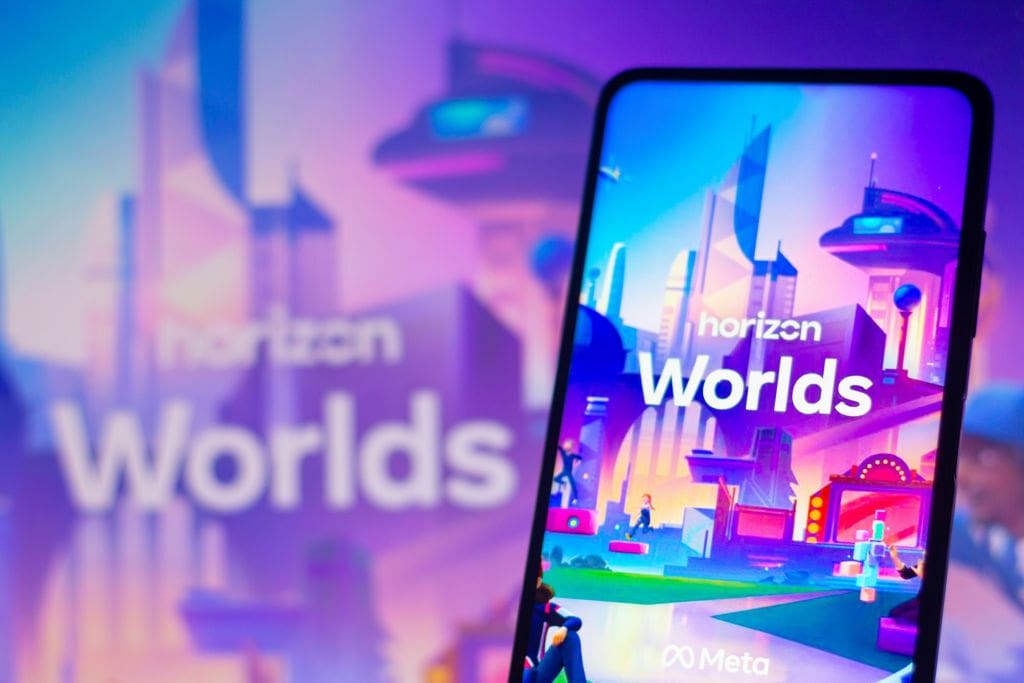
I’ve been watching their Reality Labs division closely, and you can see the panic setting in. Budgets are facing massive cuts. Just recently, we saw an incredibly revealing moment of corporate indecision: the company announced they were going to shut down their flagship social platform, Horizon Worlds, in 2026, only to immediately backpedal and say it would survive strictly on Quest devices.

When the biggest cheerleader of the metaverse is showing this level of hesitation, it’s clear that things haven’t gone according to plan.

We’ve Been Chasing This Ghost for Decades

Mark-Zuckerberg-Starts-AI-Work-Crucial-for-the-Metaverse-2

One of the biggest misconceptions I see is that Mark Zuckerberg invented the metaverse concept in 2021. The truth is, this idea is older than most of the internet.

Science fiction writers were dreaming up digital realms back in the 1960s. We saw clunky, headache-inducing VR arcades in the 90s. And if you were online in 2003, you probably remember Second Life. For a brief moment, Second Life felt like the future—but it was ultimately held back by severe technical limitations and a steep learning curve.

When the pandemic hit in 2020, the timing felt perfect for a revival. We were all trapped inside, living through our screens, working remotely, and desperate for connection. The pitch was simple: Stop staring at flat screens and step inside them. But the execution? That was a different story.

The “Why Bother?” Problem

Whisk_301ea1e84639f0ba5c64372f2149815fdr

The metaverse was sold to us with massive, world-changing promises. We were going to have immersive virtual meetings, attend digital concerts, and build whole new economies.

In reality, most of us took one look at the virtual office and thought: “I can already do this on Zoom and Slack, and I don’t need a headset to do it.”

The friction was simply too high. To join a virtual meeting, you had to:

Charge your headset.

Strap a heavy piece of plastic to your face.

Fiddle with your avatar.

Try to ignore the isolating feeling of being blocked off from your physical surroundings.

And the reward for all that effort? A clunky, legless cartoon version of your boss giving a presentation. The technology failed to answer the most fundamental consumer question: “Why is this better than what I already have?”

The Hardware Headache (Literally)

Google_AI_Studio_2025-08-31T04_44_46.074Z

I love trying out new gadgets, but I have to be honest—spending an hour in a VR headset is exhausting.

The hardware remains one of the biggest roadblocks. Despite immense progress, VR goggles are still relatively bulky, heavy, and uncomfortable for extended use. But the real issue is biological.

Your brain and your eyes are fundamentally disagreeing. Your eyes are focused on a tiny screen inches from your face, but the software is tricking your brain into thinking you are looking at objects miles away. Add physical movement into the mix, and it’s a recipe for instant nausea and headaches.

The technology works, but the human body is actively rejecting the experience.

Digital Fatigue and the Ghost Town Effect

The-Impact-of-the-Metaverse-on-Businesses-2

We are tired. We are already staring at phones, monitors, and TVs for 12 hours a day. When companies pitched the metaverse, they failed to account for profound technology fatigue.

Telling an exhausted remote worker to put a screen directly over their eyes to relax was never going to work. People crave simplicity. Why would I navigate a clunky virtual shopping mall when I can just scroll through Instagram and buy something with one tap?

I saw this play out perfectly with a major brand recently. They spent months and a small fortune building a beautifully designed virtual storefront.

Week 1: 200 curious visitors logged in.

Month 1: Traffic dropped to single digits.

It was a ghost town because the brand built something cool, but completely ignored human behavior.

Plot Twist: AI Might Be the Metaverse’s Savior

Now, here is the part that genuinely excites me. Everyone says Artificial Intelligence killed the metaverse by stealing all the investment and media hype. But AI might actually be the exact tool needed to bring it back from the dead.

Building virtual worlds used to be agonizingly slow and expensive. Every tree, every building, and every digital jacket had to be manually coded and designed by humans. The worlds felt empty because filling them was too costly.

Generative AI changes everything:

Instant World-Building: Instead of coding a virtual city, developers can use AI prompts to generate massive, detailed environments in seconds.

Smart NPCs: Remember those empty virtual rooms? AI can populate them with intelligent, conversational characters that actually feel alive.

Endless Content: AI can auto-generate quests, events, and interactions, making these digital spaces dynamic rather than static.

AI is providing the heavy machinery needed to finally build the metaverse we were promised.

The Hype is Dead, But the Future Isn’t

When I look at the landscape right now, I don’t see a dead technology. I see a technology that arrived too early.

Think about the early smartphones in the early 2000s—they were slow, frustrating, and mostly used by business executives. It took years of quiet refinement before the iPhone changed the world. The metaverse is in that exact same “trough of disillusionment.”

The flashy announcements and ridiculous valuations are gone. What’s left are the engineers and developers quietly doing the real work. Gaming is still pushing boundaries, Augmented Reality (AR) is slowly integrating into our daily lives, and spatial computing is becoming more refined.

The metaverse isn’t dead; it just put its head down to get back to work.

I’m curious about your breaking point. What would it actually take—lighter glasses, better games, or a specific app—for you to willingly wear a headset every single day? Let me know in the comments below, I read every single one!

You Might Also Like;

The Silent Collapse of the Metaverse: Why We Refused to Plug In
Revolutionizing Rooftops: The Rise of Curved Perovskite Solar Tiles
HoverAir X1 Self-Flying Camera Review: Specs, Pros & Cons

This content was originally published on %The Silent Collapse of the Metaverse: Why We Refused to Plug In% by YourSiteName.


Source link

Popular Posts

My Favorites

How to Make Pastéis de Nata in Disney Dreamlight Valley

Pastéis de Nata is a 4-star dessert meal that players can make early/mid-game. Players can make the Pastéis de Nata meal for consumption...