Metaverse

Home Metaverse Page 115

Provably Fair Explained: From Crypto Casinos to Digital Trust | NFT News Today

0
Provably Fair Explained: From Crypto Casinos to Digital Trust | NFT News Today


Talk to anyone who gambles online and you’ll hear the same old concern: can I really trust the game? For years, casinos simply asked players to take their word for it. Then Bitcoin arrived, and with it came a new idea that flipped the script — Provably Fair.

It sounds like a slogan, but behind the phrase is a clever bit of cryptography. And while online casinos were the first to run with it, the technology isn’t limited to spinning wheels and card decks. Gambling just happened to be the first arena willing, and desperate enough, to test it.

A Concept Born in Cryptography

Provably Fair didn’t appear out of thin air. It grew out of decades of work by cryptographers searching for ways to prove something true without giving away secrets. Think of techniques like hashing or zero-knowledge proofs.

The basic trick is straightforward: generate a random outcome, lock it with a hash, and reveal the original only after the player acts. Since a hash is impossible to fake without breaking the math, the player can check for themselves that nothing was rigged.

For the first time, randomness stopped being a black box. Instead of trusting a casino’s claim that dice were fair, you could look at the numbers yourself. That sense of independence, of being able to hold the house accountable, was revolutionary for players who had only known blind trust before.

Source

Why Gambling Got There First

Casinos didn’t adopt this because they were unusually generous. They needed it to survive.

In the early Bitcoin era, anyone could spin up a gambling site in a weekend. There were no regulators, no auditors, no licenses. Players had no reason to believe the games weren’t scams. Trust was thin, and the whole market risked collapsing before it began.

Provably Fair gave operators a way out. By giving players the chance to check each roll and shuffle for themselves, casinos managed to carve out a bit of trust in a space with no real oversight. It wasn’t flawless, yet it kept the industry alive and the games moving.

Even today, platforms like 1wincryptocasino.net lean on this promise. For many players, it’s the deciding factor between making a deposit or closing the tab. It’s no exaggeration to say that without this innovation, early crypto gambling might never have grown into a global industry.

How It Actually Works

Imagine a coin toss. A normal online casino just shows you “heads” or “tails” and expects you to believe it. A Provably Fair system takes a few extra steps:

It sounds nerdy, but most platforms handle the math automatically. Players only need to click “verify” to see that nothing was tampered with. The point is empowerment — fairness isn’t just promised, but checkable.

Gambling as a Testing Ground

Casinos made sense as the first laboratory. Outcomes are constant and easy to measure. If a system fails even once, players notice immediately. The pressure is relentless, which makes for a perfect stress test.

That high-frequency environment pushed the concept further and faster than it might have grown elsewhere. In effect, gamblers became the first beta-testers of transparent randomness.

Beyond Roulette Wheels

What started in blackjack rooms has far wider potential. At heart, Provably Fair tackles a universal problem: how do strangers agree that something happened honestly?

Picture online voting where every ballot can be confirmed without exposing the voter’s identity. Or global supply chains, where each handoff can be checked for authenticity. Even lotteries or online raffles could prove their draws weren’t tampered with.

Casinos simply got there first because their business depended on trust, and they had no regulators to lean on. Once the principle proved itself there, it became harder to accept opaque systems elsewhere. The more people saw fairness in action, the more they demanded it in areas beyond entertainment.

Enter the Blockchain

The rise of blockchain only amplified the idea. A blockchain record makes once-and-for-all logs that can’t be rewritten. Marry that to Provably Fair randomness, and you get a double lock: results that can be verified in the moment and preserved forever on a ledger.

That combination has turned what was once a niche casino gimmick into a model for digital fairness more broadly.

Why It Resonates with People

The technology matters, but what really explains its appeal is psychological. Players don’t want blind faith; they want proof. With Provably Fair, the power shifts. The casino doesn’t say “trust us.” Instead, it says, “check for yourself.”

That shift doesn’t just change gambling, it changes expectations everywhere. Once you’ve experienced verifiable fairness, it’s hard to go back to hidden processes. It sparks a cultural change: transparency becomes the baseline, not a luxury.

Conclusion

Provably Fair began as a survival tactic for early crypto casinos, but it quickly grew into something bigger. It showed that transparency could be coded, not just promised. By combining cryptography with blockchain, it turned an untrustworthy environment into a proving ground for digital honesty.

Today, whether it’s a roulette spin or a vote in an online election, the same logic applies: fairness doesn’t need faith anymore. It has receipts.


Source link

Can Humans Reproduce on Mars? The Science Behind Life Beyond Earth

0
Can Humans Reproduce on Mars? The Science Behind Life Beyond Earth


The idea of building human colonies on Mars often focuses on food, water, oxygen, and shelter. But there’s a bigger, more personal question: could humans actually have children on Mars? If humanity wants to create a permanent settlement on the Red Planet, reproduction is not just important — it’s essential.

Gravity: The First Challenge

On Earth, gravity plays a huge role in how our bodies develop, from circulation to bone growth. Mars has only about 38% of Earth’s gravity. Scientists worry that this weaker pull could affect everything from sperm and egg development to the growth of a fetus. In microgravity experiments on the International Space Station (ISS), researchers found that some aspects of reproduction can still happen, but development becomes more complex.

Radiation: A Hidden Danger

Mars lacks a strong magnetic field and thick atmosphere like Earth’s, which means radiation exposure is far higher. Cosmic rays and solar radiation could damage DNA, leading to fertility issues, birth defects, or complications in pregnancy. Shielded habitats and underground living spaces might reduce the risk, but radiation remains one of the biggest obstacles to safe reproduction in space.

Biology and Adaptation

Even if conception happens, pregnancy and childbirth might look very different on Mars. Lower gravity could impact blood circulation, muscle contractions, and even how a baby’s bones and organs develop. Some scientists speculate that humans born on Mars might adapt differently — growing taller, having weaker bones, or evolving new traits over generations.

Current Research

NASA and other space agencies are actively studying how space environments affect reproduction. Animal studies in microgravity have shown mixed results — some mammals can conceive in space, but fetal development often struggles. While no human pregnancies have been attempted in space, it’s an area of growing interest as Mars missions become more realistic.

The Future of Life on Mars

If humans want to thrive on Mars, solving the challenges of reproduction will be just as important as building rockets or growing food. With advancements in genetics, radiation shielding, and artificial gravity, scientists believe it might one day be possible for humans not just to live on Mars — but to raise the first generation of Martian-born children.

So, here’s the big question: Would the first child born on Mars still be “human”… or the beginning of a new branch of humanity?

You Might Also Like;

Follow us on TWITTER (X) and be instantly informed about the latest developments…

Copy URL


Source link

How to Earn Ethereum Rewards with Football.fun Fantasy Football Game | NFT News Today

0
How to Earn Ethereum Rewards with Football.fun Fantasy Football Game | NFT News Today


Football.fun brings together the thrill of European football and the benefits of blockchain rewards. When you trade player shares and join tournaments, you can earn Ethereum prizes.

Key Takeaways

Football.fun rewards users with Ethereum-linked earnings through fantasy gameplay.

Two modes exist: Free-to-Play and Pro (crypto-enabled) for different audiences.

Player shares act as blockchain assets tied to real-world football performance.

Tournaments, trading, referrals, and events are the main ways to maximize rewards.

Rewards are converted to Ethereum via integrated exchanges on the Base network.

Fantasy.ball rewards: Why Football.fun Stands Out

Football.fun is more than just another fantasy football app. Built on Ethereum’s Base layer, every player share is a tokenized blockchain asset. Each footballer has 25 million shares, and those shares can be bought, sold, or earned through packs. Because share value reflects real-world performance, every assist, clean sheet, or goal can directly boost potential earnings.

The game supports both Free-to-Play and Pro modes. Free play allows strategies to be tested without spending crypto, while Pro requires USDC in a Base wallet, linking rewards directly to Ethereum. This dual setup creates a bridge for newcomers and experienced players alike.

Core Gameplay and Features

The structure of Football.fun revolves around three key elements: player shares, squad building, and tournaments.

Player Shares: Footballer shares can be acquired from randomized packs or bought on the in-game decentralized marketplace. Each share carries contracts for matches, which need renewing at about 1% of the share price per match.

Squad Building: Players are promoted with Skill Points to create squads that automatically compete in biweekly tournaments. Points reflect real-life match data like goals, assists, and mistakes.

Tournaments: These run every two weeks, ranking the top five outfield positions and top three goalkeepers. Higher performance means better Tournament Point and GOLD rewards.

This gameplay loop blends strategy with live football stats, ensuring outcomes depend on knowledge and timing rather than speculation.

In-Game Economy and Marketplace

Football.fun operates on a multi-currency economy:

GOLD: Pegged to stablecoins, used in Pro play and for marketplace transactions.

Tournament Points (TP): Earned through contests, which can unlock new players and packs.

Skill Points (SP): Progression tokens to activate players for tournaments.

The marketplace is where trading comes alive. Prices rise and fall with real player performance and demand. While trades carry fees between 5% and 20%, 95% of fees are rebated to players in USDC, keeping the system fair and community-driven.

Ways to Earn Ethereum

There are multiple avenues to generate returns while playing Football.fun:

Trading Shares – Acquire undervalued players before key matches and sell when demand rises.

Competing in Tournaments – Biweekly events award TP and GOLD that can be converted to Ethereum.

Referral Program – Bringing in new players can earn up to 40% of platform fees.

Airdrops and Events – Special campaigns distribute free shares and GOLD to active users.

Since everything is built on the Ethereum Base layer, GOLD and player shares can be converted into ETH through supported wallets and exchanges.

Risks and Limitations

Like any crypto-powered game, Football.fun carries certain risks:

Platform demand can disrupt trading during peak events.

Shares are only tradable within Football.fun’s market, limiting liquidity.

Some regions restrict Pro play due to local regulations.

The bottom 25% of tournament participants earn no Skill Points, slowing progression for casual players.

Awareness of these factors ensures more balanced expectations.

Growth and Community

By September 2025, Football.fun had 13,383 wallets, $39.7 million in marketplace volume, and $10.5 million locked in the platform. Popular players like Lamine Yamal and Kylian Mbappé drive a lot of activity. The developers keep improving leaderboards, tournaments, and progression based on feedback from fans, making the game more focused on players.

Final Thoughts

Football.fun offers a new way to enjoy football and earn blockchain rewards. By trading shares, joining tournaments every two weeks, and inviting friends, you can earn returns that turn into Ethereum. The platform gives you both fun and real earning potential.


Source link

Public Companies’ Bitcoin Holdings Exceed 1 Million BTC

0
Public Companies’ Bitcoin Holdings Exceed 1 Million BTC


Publicly traded companies have reached a historic milestone by accumulating over 1 million Bitcoin in their reserves, a total value of more than $111 billion. According to data from BitcoinTreasuries.NET, these companies currently hold a combined 1,000,698 BTC. This surge in institutional interest is a key factor behind Bitcoin’s new record high of $124,450.

While mining company MARA Holdings initially started large-scale Bitcoin accumulation, Michael Saylor’s MicroStrategy was the most notable player to pave the way for corporate adoption. In 2020, MicroStrategy became the first publicly traded company to adopt Bitcoin as its primary treasury reserve asset and is now the largest corporate holder with 636,505 BTC.

New Players and Rapid Growth

A Bitcoin miner received a block reward on his own $180,000!

Following MicroStrategy, other companies have joined the trend. MARA Holdings holds the second-largest reserve with 52,477 BTC. Newer entrants like XXI, founded by Jack Mallers, and The Bitcoin Standard Treasury Company also hold significant amounts, with 43,514 BTC and 30,021 BTC, respectively. Other notable companies on the list include crypto exchange Bullish (24,000 BTC) and Japanese firm Metaplanet (20,000 BTC). Companies like Riot Platforms, Trump Media & Technology Group, CleanSpark, and Coinbase also hold substantial Bitcoin reserves.

The growing demand, particularly through exchanges and Bitcoin ETF products, has created a “supply shock” due to Bitcoin’s limited circulating supply. With only 5.2% of the total supply yet to be mined, many companies are now adopting Bitcoin as a treasury strategy. Firms like Metaplanet and Semler Scientific reportedly have plans to significantly increase their reserves by 2027.

Global Expansion and Challenges

This wave of corporate adoption is expanding globally, beyond just major technology companies. In addition to 64 U.S.-based companies, firms in Canada, the UK, Hong Kong, Mexico, South Africa, and Bahrain are also holding Bitcoin. Companies are using various financial mechanisms like equity issuance and debt to acquire more Bitcoin and increase their Bitcoin-per-share value.

However, these corporate strategies have faced criticism, especially during the 2022 bear market, when many miners were forced to liquidate their Bitcoin holdings. In contrast, companies like MicroStrategy held on to their reserves, pioneering the way for new investors as the market recovered. Firms such as Metaplanet and Semler Scientific are turning to Bitcoin to overcome long-term stagnation.

Who Are the Largest Bitcoin Holders?

While publicly traded companies hold over 1 million BTC, they are not the largest holders. Crypto exchanges and ETF issuers are the top institutional holders with a combined 1.62 million BTC. In addition, governments officially hold 517,296 BTC, while private companies possess 295,015 BTC. The amount of Bitcoin held in crypto protocols is 242,866 BTC. Still, the vast majority of the total supply, around 16.2 million BTC, remains under the direct control of individual users, a key element that preserves Bitcoin’s decentralized nature.

You Might Also Like;

Follow us on TWITTER (X) and be instantly informed about the latest developments…

Copy URL


Source link

AI That Turns Photos into 3D Worlds: Tencent Voyager

0
AI That Turns Photos into 3D Worlds: Tencent Voyager


Tencent has introduced Voyager, an impressive new AI model that can transform a single photograph into a three-dimensional scene. The model simultaneously generates both an RGB video and depth information, offering a powerful approach to 3D reconstruction without the need for traditional modeling techniques. However, it requires a significant amount of hardware to run effectively.

How Voyager Works

The HunyuanWorld-Voyager model takes a single image and a user-defined camera path—such as a pan, tilt, or dolly-in motion—to generate a short video. It produces both the video and a simultaneous depth map, ensuring that the spatial relationships of objects in the scene remain consistent. The system maintains geometric coherence by comparing each new frame with the previous content using 3D point clouds. However, distortions can still occur with long or complex camera movements, particularly with 360-degree rotations.

Tencent‘s technical report highlights an additional component called the “world cache,” which stores data from each new frame. This allows for data reuse in subsequent frames, significantly preserving geometric consistency over videos that are several minutes long.

Training and Requirements

Voyager was trained on a massive dataset of over 100,000 real and synthetic video clips, including scenes from Unreal Engine environments. This extensive training helped the model understand various camera movements. The training process used an automated depth estimation method, eliminating the need for manual labeling.

While technologically powerful, Voyager has high hardware requirements. Running the model at a 540p resolution requires 60 GB of GPU memory, and optimal results need 80 GB. The system supports multi-GPU scaling, with an 8-GPU setup running approximately 6.7 times faster than a single GPU. The model weights have been made available to researchers on Hugging Face.

Voyager vs. Other AI Models

Voyager’s approach sets it apart from existing video generation models. Unlike OpenAI’s Sora, which focuses on visual realism, Voyager prioritizes geometric consistency between frames. This focus helped it achieve a top score of 77.62 on Stanford’s WorldScore benchmark, outperforming competitors like WonderWorld and CogVideoX-I2V. However, it still has some limitations in precise camera control.

Additionally, there are some licensing restrictions for Voyager. Its use is prohibited in the European Union, the United Kingdom, and South Korea. Commercial applications serving over 100 million active users require an additional agreement.

You Might Also Like;

Follow us on TWITTER (X) and be instantly informed about the latest developments…

Copy URL


Source link

SpaceX to More Than Double Falcon 9 Launches in Florida

0
SpaceX to More Than Double Falcon 9 Launches in Florida


SpaceX has received approval to significantly increase its Falcon 9 launch cadence from Cape Canaveral Space Force Station in Florida. U.S. regulators have completed a crucial environmental review, allowing the company to boost its yearly launch count from 50 to up to 120.

The Federal Aviation Administration’s (FAA) environmental assessment also approved a new landing zone, which will be able to handle up to 34 rocket stage landings annually. The Falcon 9 is only partially reusable, with the rocket’s first stage returning to Earth. The new landing zone will reduce the company’s reliance on drone ships at sea, which will help shorten the turnaround time between flights.

While the FAA has completed its environmental review, this is just the first step. SpaceX will still need additional environmental permits for its new facilities to ensure the protection of local wildlife. The U.S. Department of the Air Force must also approve the changes since the launch platform belongs to the Space Force.

This approval is a major step forward for SpaceX as it continues to increase its launch frequency. The company’s launch numbers have already jumped from 60 in 2022 to 132 in 2024, yet its schedule remains tight due to a high demand from commercial clients, the Department of Defense, and the company’s own Starlink satellite constellation.

The increase in launches at Cape Canaveral is part of a broader strategy to expand capacity across multiple facilities. SpaceX also plans to increase its Falcon launches from Vandenberg Space Force Base in California to 100 per year. Regulators are also reviewing proposals to increase the launch frequency for the larger Starship rockets from sites in Texas and Florida.

You Might Also Like;

Follow us on TWITTER (X) and be instantly informed about the latest developments…

Copy URL


Source link

Huawei FreeBuds 7i Officially Announced with Advanced Features

0
Huawei FreeBuds 7i Officially Announced with Advanced Features


Huawei has officially launched the FreeBuds 7i in China, positioning the new wireless earbuds in the mid-range market. The device stands out with its advanced noise cancellation and spatial audio support.

The FreeBuds 7i incorporates Huawei‘s enhanced Intelligent Dynamic Noise Cancellation (ANC) 4.0 technology. Using a three-microphone system and a wide 8 mm² air duct design, the earbuds can effectively suppress ambient sounds. Huawei states that the system can reduce noise by up to 28 dB, with an improved latency of up to 50%. The ANC technology can also adapt to environmental changes in less than 0.5 seconds.

For clearer calls, the earbuds use a traditional microphone array along with a bone conduction microphone. The AI-powered call noise cancellation technology can suppress background noise up to 90 dB and reduce wind interference, ensuring clear voice transmission even in noisy environments.

Audio is handled by 11 mm four-magnet dynamic drivers, designed to produce clear vocals and detailed sounds. Users can customize their listening experience with a 10-band EQ setting and preset sound profiles. Additionally, the spatial audio support with head-tracking creates a 360-degree surround effect. On-device audio processing ensures compatibility with various devices and video platforms.

The FreeBuds 7i supports controls via Huawei’s Xiaoyi voice assistant, and features gesture-based controls like nodding to answer or reject calls. Touch controls are also available for adjusting volume, changing ANC modes, and managing music. The earbuds come with Bluetooth 5.4 connectivity and support SBC, AAC, LDAC, and L2HC 2.0 codecs, though they lack LHDC and aptX support. Quick pop-up pairing is available for devices running EMUI 10.1 and above, while multi-device connection is supported on devices with HarmonyOS 3.0 and later.

In terms of battery life, the earbuds offer up to 8 hours of continuous music playback with ANC off, and 5 hours with ANC on. The charging case extends this to a total of 35 hours with ANC off and 20 hours with ANC on. Fast charging provides up to 4 hours of use with just a 10-minute charge.

Each earbud weighs approximately 5.4 grams, with the charging case weighing 36.5 grams. The earbuds are also IP54-certified for dust and light splash resistance. The FreeBuds 7i is priced at around $84 in China.

You Might Also Like;

Follow us on TWITTER (X) and be instantly informed about the latest developments…

Copy URL


Source link

The Rise of Crypto Innovation in the Heart of Dubai

0
The Rise of Crypto Innovation in the Heart of Dubai


In Brief

Dubai is emerging as the global hub for cryptocurrency, blockchain innovation, and Web3 adoption, as seen in the recent Match Systems film, transforming the crypto world.

If you believed that the crypto world was limited to online forums and speculative trading, reconsider. Dubai is currently establishing itself as the global center for cryptocurrency, blockchain innovation, and Web3 adoption. The recent Match Systems film, ‘Bitcoin Price $1M? Dubai Becomes the Crypto Capital of the World vividly documents this transformation.

Dubai’s Shift from Desert to Cryptocurrency Hub

Fifty years ago, Dubai was mostly desert and oil. Now, it’s a city that combines ambition, regulation, and technology, fostering a vibrant environment for startups, crypto ventures, and international investments. 

The film takes you through the city’s vitality, from legislative frameworks like VARA and ADGM to the worldwide community that gathers at events like Dubai Tech Tuesdays, which now attracts thousands of people each week. For anybody serious about starting a cryptocurrency project or integrating into the Web3 ecosystem, Dubai is the epicenter right now.

The New Rules of Crypto Adoption

The video not only features a city but also delves into the psychology behind crypto. Bitcoin, often called “digital gold,” is presented as a decentralized store of value driven by math rather than human decisions, serving as a hedge against inflation and a key component for future financial systems. The film points out that global crypto adoption remains below 1%, mostly used for speculation, but stresses that ongoing improvements in education, accessibility, and infrastructure are accelerating change. 

Another key theme is the connection between crypto and technology. Blockchain acts as a contracting tool, a mechanism for collaboration, and a transparent system for payments, while AI is becoming the perfect complement, enabling ordinary users to interact with crypto in ways that are faster, cheaper, and more efficient than traditional banking. The film shows how innovative solutions, from payroll systems that pay employees in crypto to platforms that make merchant payments seamless, are already shaping the day-to-day reality of the ecosystem.

Investment, Innovation, and the Bull Run Ahead

Investment opportunities are examined with a practical perspective. ETFs offer simple access to assets such as Solana, XRP, and Litecoin, whereas Bitcoin continues to serve as the standard for long-term growth. The emphasis is on discipline rather than hype: genuine wealth in crypto comes from building and holding assets, not from chasing fleeting trends or short-term profits. Investors may not only resist but also thrive in the face of market volatility by picking ventures with genuine adoption, revenue, and impact.

Finally, the film does not hesitate to make daring predictions. Bitcoin is on track for a major bull market, with forecasts reaching $120,000, $150,000, or even $250,000 by year’s end, and a long-term goal of $1 million by 2028. Factors such as Dubai’s leadership, international events, and increasing adoption act as driving forces. 

The film’s message is clear: the future of cryptocurrency is global. Dubai is leading this effort, and Bitcoin, along with disruptive blockchain technology, is at the vanguard of a financial revolution that is just getting started. There are several prospects for investors, builders, and ordinary users, and the time to act is now.

The film has been produced by a team of blockchain experts: Anna Tutova, CEO of crypto media group Coinstelegram, Alexander Belov co-founder Coinstelegram & Forbes journalist.

The film features exclusive insights from industry titans like Eric Trump(Executive Vice President of the Trump Organization), Paolo Ardoino (CEO Tether), Arthur Hayes(Co-Founder BitMEX, CIO Maelstrom), Max Crown(CEO TON Foundation, co-Founder Moonpay), Eric Balchunas(Senior ETF analyst for Bloomberg), Kain Warwick(Founder Synthetix, Infinex), Justin Waldron(co-Founder Zynga, Founder Open Game Protocol), Jordi Alexander(Founder Selini Capital), Bilal Bin Saqib MBE(Pakistan’s Minister of State for Crypto&Blockchain), Gordon Einstein(Founding Partner CryptoLaw Partners, co-Founder Tech Tuesdays Dubai), Mariangel Garcia(TEDx Speaker, ex Binance), Nicolas Bertrand(Chairman, Young Platform and Member of the Board, One Trading), Alex Guseff(Founder and CEO of Tectum), Dmitry Gerasimov(Founder&CEO Cellframe), Tory Green(Co-Founder IO.net, Chairman of the IOG Foundation), who warn of banks’ impending extinction and predict Bitcoin soaring to $1 million by 2028—ushering in a decentralized era where Dubai emerges as the global epicenter of Web3 innovation.

Famous influencers, such as: Ran Neuner(Founder CryptoBanter), Andreas Meneses(Founder CryptoOGs), Sjuul(Founder AltCryptoTalk)  also participated in the film sharing their vision on the future of digital economy. 

The film is supported by IO.net, Young Platform, Cellframe, Tectum.

This is the fourth documentary in the series of Web-3 documentaries of the producers, which have been in production since 2021. You can watch their previous film here: short Bitcoin documentary with CZ(Founder Binance), Sandeep Nailwal(Polygon), Justin Sun(Tron), Charles Hoskinson(Cardano), Sebastien Borget(The Sandbox); El Salvador Bitcoin documentary. Full documentary with Vitalik Buterin(creator Ethereum), Paolo Ardoino(CEO Tether), Arthur Hayes(co-Founder BitMEX), Yat Siu(Chairman Animoca Brands).

Disclaimer

In line with the Trust Project guidelines, please note that the information provided on this page is not intended to be and should not be interpreted as legal, tax, investment, financial, or any other form of advice. It is important to only invest what you can afford to lose and to seek independent financial advice if you have any doubts. For further information, we suggest referring to the terms and conditions as well as the help and support pages provided by the issuer or advertiser. MetaversePost is committed to accurate, unbiased reporting, but market conditions are subject to change without notice.

About The Author


Victoria is a writer on a variety of technology topics including Web3.0, AI and cryptocurrencies. Her extensive experience allows her to write insightful articles for the wider audience.

More articles


Victoria d’Este


Victoria is a writer on a variety of technology topics including Web3.0, AI and cryptocurrencies. Her extensive experience allows her to write insightful articles for the wider audience.


Source link

The Cruel World of Crypto Recovery Scams

0
The Cruel World of Crypto Recovery Scams


In Brief

Match Systems investigation reveals the cruelty of recovery scams targeting vulnerable individuals, offering only faint hope before taking what remains.

The Cruel World of Crypto Recovery Scams

Losing crypto is deeply upsetting, but the cruelty of recovery scams is hard to explain unless you’ve witnessed it. These scams target individuals who are already hurt, desperate, and vulnerable. They offer only faint hope, then take whatever is left. That is the subject of the recent Match Systems investigation, SCAMMED TWICE: We Baited a Recovery Scammer, which shows exactly how these predators manipulate, deceive, and exploit their victims.

The Playbook of Desperation

The process is straightforward but deeply unsettling. Scammers monitor social media, Telegram groups, and forums for mentions of lost crypto, then quickly intervene with promises of miraculous recovery. They may pretend to be hacker teams, private agents, lawyers, or regulators, claiming they can reverse transactions, hack wallets, or set up complex smart contracts to recover missing funds. 

In the video, the Match Systems team baited several scammers by posting about a lost 0.25 BTC. Within an hour, many responses appeared. Some scammers acted as credible and capable, promising a quick recovery in exchange for a small deposit. Others played the “bad cop,” pressuring victims to work only with them and criticizing other scammers as untrustworthy. 

Despite these various personas, the playbook remained consistent: to confuse, intimidate, and extract money through the use of technical jargon and emotional tactics. Terms such as “server nodes,” “smart contracts,” and “encrypted states” appeared on the screen, fostering an illusion of complexity that cloaked the reality that no real action was taking place.

When Professionalism Is Just a Mask

Even scams that appear more professional are still elaborate illusions. Some impersonate genuine companies or legal entities, using AI-generated videos, fake client testimonials, and “contracts” that look official but lack legal validity.

Match Systems cites real-world examples like the notorious Payback scam, where victims were charged tens of thousands of dollars for non-existent tracing reports and were promised full recovery of assets, only to be defrauded again. These sophisticated operations exploit the human desire to fix mistakes, recover losses, and trust that someone is watching out for them, especially when their guard is down.

The reason people fall for this a second time is painfully obvious: these scammers sell hope, not results. Every sentence is a psychological hook, designed to trigger panic or urgency: “We’ll recover every coin for you,” “Pay the fee now or it’s lost forever,” “You only pay after success.” Fear and hope combine to override judgment, leaving victims vulnerable to yet another devastating loss.

Protecting Yourself from the Second Blow

Match Systems provides a straightforward yet effective set of guidelines to avoid scams: first, verify that any recovery specialist operates through a registered legal entity; second, recognize that no one can guarantee 100% recovery, especially immediately; third, approach technical jargon with extreme skepticism, if it’s unclear, it’s probably a trap; and fourth, never pay fees upfront. Legitimate investigators bill for their work, not for promises of asset recovery or “magic’ tools.

The core principle is simple: if you’ve been scammed once, don’t let anyone exploit your vulnerability again. Steer clear of gas fees, avoid connecting your wallet to unknown apps, and never trust miraculous recovery tools. Recovery scams involve more than financial loss, they are manipulative, preying on fear and hope in moments of vulnerability.

What makes Match Systems’ investigation particularly valuable is that it doesn’t just talk about these scams. They expose them in action, showing the lengths to which scammers will go to appear credible while revealing the tricks they use in plain view. Watching it, you realize that in the world of crypto, surviving the first scam is only part of the battle; surviving the second, and learning to recognize the emotional traps, is where real safety lies.

Disclaimer

In line with the Trust Project guidelines, please note that the information provided on this page is not intended to be and should not be interpreted as legal, tax, investment, financial, or any other form of advice. It is important to only invest what you can afford to lose and to seek independent financial advice if you have any doubts. For further information, we suggest referring to the terms and conditions as well as the help and support pages provided by the issuer or advertiser. MetaversePost is committed to accurate, unbiased reporting, but market conditions are subject to change without notice.

About The Author


Victoria is a writer on a variety of technology topics including Web3.0, AI and cryptocurrencies. Her extensive experience allows her to write insightful articles for the wider audience.

More articles


Victoria d’Este


Victoria is a writer on a variety of technology topics including Web3.0, AI and cryptocurrencies. Her extensive experience allows her to write insightful articles for the wider audience.


Source link

Bitget Hosts CRYPTO EXPERIENCE MONTH 2025 In Ho Chi Minh City, Offering Youth An Immersive Introduction To Crypto

0
Bitget Hosts CRYPTO EXPERIENCE MONTH 2025 In Ho Chi Minh City, Offering Youth An Immersive Introduction To Crypto


In Brief

Bitget hosted CRYPTO EXPERIENCE MONTH 2025 in Ho Chi Minh City, providing Vietnamese youth with a hands-on, educational introduction to cryptocurrency, blockchain, and Web3.

Bitget Hosts CRYPTO EXPERIENCE MONTH 2025 In Ho Chi Minh City, Offering Youth An Immersive Introduction To Crypto

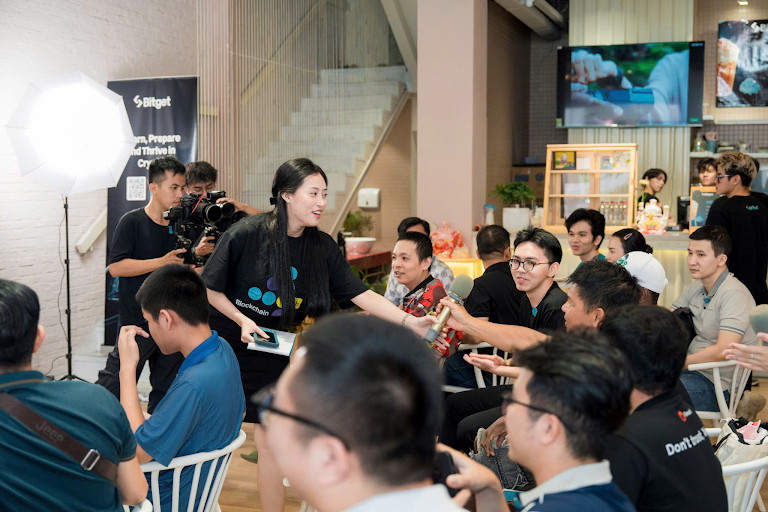
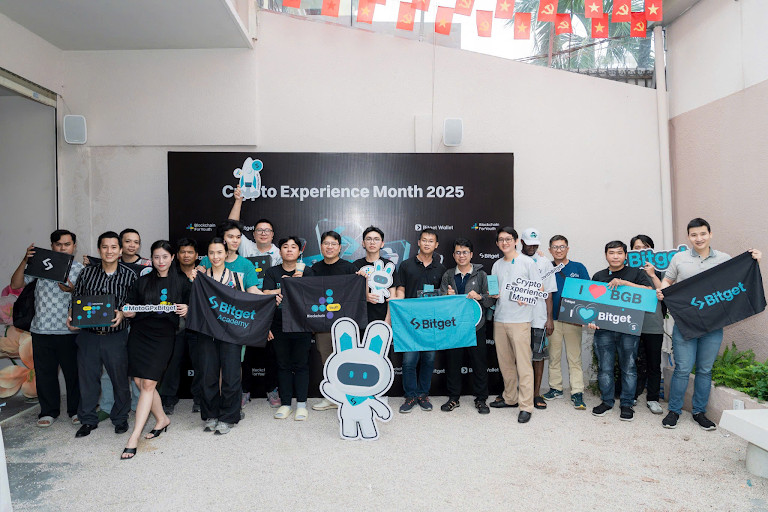
Cryptocurrency exchange Bitget announced that on August 26th, in Ho Chi Minh City, it hosted CRYPTO EXPERIENCE MONTH 2025, an event designed to give young people an engaging and hands-on introduction to cryptocurrency, blockchain, and Web3. 

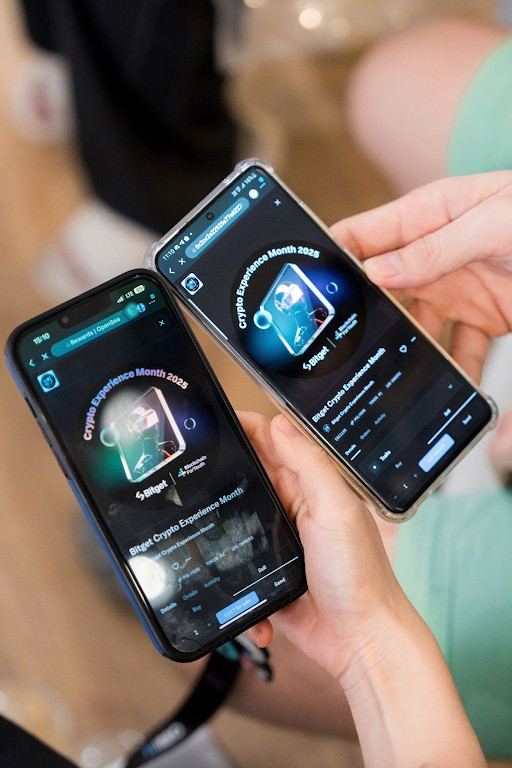
The initiative aimed to move beyond abstract concepts, allowing participants to interact with cryptocurrencies in real-world scenarios and see how it can integrate into everyday life. Attendees experienced digital assets through activities such as payments, gaming, and content creation, making blockchain technology tangible and accessible. The program included interactive features like the Bitget Knowledge Quiz, which tested participants’ understanding of basic and advanced blockchain concepts; the Bitget Wallet Experience, offering practical training in creating wallets, sending and receiving tokens, and managing digital assets; and an exclusive non-fungible token (NFT) drop, where participants could receive a commemorative token by submitting their ERC-20 wallet addresses. 

Together, these activities transformed the event into an immersive and educational environment that connected participants directly with the practical applications of cryptocurrency.

Bitget Hosts CRYPTO EXPERIENCE MONTH 2025 In Ho Chi Minh City, Offering Youth An Immersive Introduction To Crypto

Bitget Hosts CRYPTO EXPERIENCE MONTH 2025 In Ho Chi Minh City, Offering Youth An Immersive Introduction To Crypto

CRYPTO EXPERIENCE MONTH 2025 also included expert-led sessions covering key areas such as Web3 applications, decentralized finance (DeFi), the growing NFT market, and GameFi, providing participants with a deeper understanding of current blockchain trends. Through workshops, interactive games, and networking opportunities, attendees were able to gain practical knowledge while connecting with peers and engaging with the broader blockchain community.

A central feature of the event was fostering connection and creativity, as participants shared their experiences, ideas, and insights on social media using hashtags like #EventwithBitget, #CEM2025, and #Blockchain4Youth, while tagging @Bitgetglobal and @Bitgetvietnam. The most innovative and widely shared posts were recognized with exclusive B4Y gift boxes, highlighting the importance of community engagement. By hosting this event, Bitget reinforced its commitment to supporting the next generation in exploring and adopting blockchain technology, making the world of cryptocurrency more accessible, engaging, and inspiring for young people in Vietnam.

Bitget Hosts CRYPTO EXPERIENCE MONTH 2025 In Ho Chi Minh City, Offering Youth An Immersive Introduction To Crypto

Disclaimer

In line with the Trust Project guidelines, please note that the information provided on this page is not intended to be and should not be interpreted as legal, tax, investment, financial, or any other form of advice. It is important to only invest what you can afford to lose and to seek independent financial advice if you have any doubts. For further information, we suggest referring to the terms and conditions as well as the help and support pages provided by the issuer or advertiser. MetaversePost is committed to accurate, unbiased reporting, but market conditions are subject to change without notice.

About The Author


Alisa, a dedicated journalist at the MPost, specializes in cryptocurrency, zero-knowledge proofs, investments, and the expansive realm of Web3. With a keen eye for emerging trends and technologies, she delivers comprehensive coverage to inform and engage readers in the ever-evolving landscape of digital finance.

More articles


Alisa Davidson


Alisa, a dedicated journalist at the MPost, specializes in cryptocurrency, zero-knowledge proofs, investments, and the expansive realm of Web3. With a keen eye for emerging trends and technologies, she delivers comprehensive coverage to inform and engage readers in the ever-evolving landscape of digital finance.


More articles


Source link

Popular Posts

My Favorites

The Ultimate Luxury Valentine’s Day Gift Guide – The Luxury Closet

0
Make this Valentine’s Day unforgettable with an expertly curated selection of luxury gifts from The Luxury Closet. From timeless classics to contemporary must-haves,...