Metaverse

Home Metaverse Page 114

Top 5 3D Illustration Agencies in 2025 | NFT News Today

0
Top 5 3D Illustration Agencies in 2025 | NFT News Today


“3D illustration” no longer means just making pretty visuals. Today, it defines industries. Games, films, advertising, and even education rely on teams of artists who can take a single idea and build entire worlds around it. The demand for 3D illustration services has grown so much that agencies have turned into cultural powerhouses, shaping how we see products, brands, and even stories.

But how do you know which studio is right for your project? Some excel at highly polished game worlds, others at cinematic visuals, others at connecting brands with accessible art pipelines. Let’s take a closer look at the agencies leading the field in 2025.

Kevuru Games: Masters of Game Worlds

Image source: Kevuru Games portfolio

Kevuru Games is often the first name that comes up in conversations about a 3D game dev studio. The reason is simple: they specialize in 3D game art services and have built a reputation for being a reliable partner for global publishers. Their artists are equally skilled at stylized character design and photorealistic environments, which makes them a perfect fit for projects of the highest level, including AAA titles.

This is also one of the rare cases where a game design agency has proven it can both scale up for blockbuster releases and stay nimble for indie productions. For anyone looking to outsource complex game visuals, Kevuru is the go-to partner.

The Mill: Where Cinematics Become Iconic

Image from The Mill portfolio

Not every project is about in-game graphics. Sometimes you need a trailer that makes players drop everything and pay attention. That’s where The Mill shines. Their work sits at the intersection of advertising, film, and interactive media.

As one of the world’s most recognized 3D illustration agencies, The Mill is trusted by major entertainment brands to create campaigns that don’t just sell — they stay in memory. Their strength lies in seamlessly blending live action with CGI, creating cinematic experiences that elevate a product to pop culture status.

TurboSquid: The Marketplace of Assets

Image from TurboSquid portfolio

TurboSquid is a different kind of player. Rather than operating like a classic game design agency, it serves as the world’s largest marketplace for 3D assets. Thousands of creators upload models every day, and businesses use them to accelerate production.

Why does this matter? Because not every studio can afford to build everything from scratch. If you need ready-made assets here and now, TurboSquid becomes indispensable.

Designity: Creative Networks for Modern Brands

Image from Designity website

Designity doesn’t follow the blueprint of a traditional studio. Instead, it positions itself as a managed network of creatives. Think of it as a bridge between brands and talented designers — a subscription-based model that makes access to specialists simple and scalable.

This approach works especially well for startups and mid-sized businesses that need consistent design work but aren’t ready to commit to a single agency. Designity’s strength lies in flexibility and cost-effective 3D illustration services across multiple industries.

Concept Art House: Innovators in New Frontiers

Image from Concept Art House website

Concept Art House has been at the forefront of art for gaming and Web3 for years. In 2025, they remain one of the most adaptable studios in the industry. From NFTs and digital collectibles to concept development for AAA franchises, their work spans both cutting-edge and traditional media.

What makes them stand out is their willingness to embrace new markets without losing artistic credibility. For clients entering uncharted territory, Concept Art House is a partner that understands how to balance innovation with professional execution.

Game Design Solutions for Every Project

When looking for game design solutions, the truth is there’s no “one-size-fits-all” studio. Kevuru Games is ideal for deep game production, The Mill for unforgettable trailers, TurboSquid for rapid access to assets, Designity for flexible brand-focused work, and Concept Art House for pioneering digital frontiers.

Each of these agencies excels in a different arena. Together, they illustrate the sheer diversity of today’s 3D illustration services — services that are no longer limited to entertainment, but are shaping culture, commerce, and technology itself.




Source link

Crypto’s Comeback: NFT ETFs Enter the Financial Spotlight | NFT News Today

0
Crypto’s Comeback: NFT ETFs Enter the Financial Spotlight | NFT News Today


The world of digital assets is entering uncharted financial territory. In June 2025, Canary Capital filed a groundbreaking ETF proposal focused entirely on non-fungible tokens (NFTs), aiming to reshape how investors interact with unique digital assets. The proposed ETF allocates most of its holdings to PENGU tokens and Pudgy Penguin NFTs, with minor allocations to SOL and ETH to support liquidity and transaction execution. This move places NFTs squarely within the spotlight of mainstream financial markets, sparking debates about their investability, valuation structures, regulatory frameworks, and potential to evolve into financial-grade holdings.

Overview of Canary Capital’s NFT ETF Proposal

The proposal from Canary Capital represents a paradigm shift for blockchain-based assets. This ETF would allocate over 80% of its exposure to PENGU tokens—a governance-driven utility token underpinning Pudgy Penguins’ expanding metaverse ecosystem. Around 10-15% would be invested in Pudgy Penguin NFTs, granting indirect exposure to highly sought-after blue-chip collectibles, while SOL and ETH are used in smaller allocations to facilitate cross-chain settlements and transaction liquidity. By creating a regulated instrument around illiquid NFTs, Canary aims to bridge retail investors, institutions, and decentralized ecosystems into one financial vehicle.

Unlike traditional ETFs built around fungible commodities or equity indexes, this ETF introduces NFT-backed exposure on a large institutional scale. The proposed structure would allow investors to indirectly access ownership stakes in scarce, verifiable digital collectibles, something previously restricted to on-chain wallets and crypto-native participants. If approved, it would become the first U.S.-regulated ETF fully focused on NFTs.

Regulatory Challenges for NFTs as Financial Assets

The Securities and Exchange Commission (SEC) will play a decisive role in determining whether Canary Capital’s ETF gains approval. NFTs blur the line between collectible assets and investment securities, raising compliance concerns over the Howey Test and regulatory classification. Ensuring full custodial transparency, anti-money laundering safeguards, and investor protection measures will be critical.

Without consistent legal definitions and valuation frameworks, institutional players remain cautious. ETF approval would require disclosures about NFT pricing methodologies, storage solutions, and tax implications—introducing new compliance hurdles for both issuers and investors.

Valuation Challenges in NFT-Backed Funds

Unlike Bitcoin or Ethereum, NFTs lack universal pricing mechanisms, making their integration into ETFs inherently complex. Prices are highly dependent on floor values, rarity traits, and secondary market dynamics, which introduces heightened volatility risks. For example, Pudgy Penguins’ average NFT valuation fluctuated between 3.2 ETH and 21.68 ETH in less than 12 months, complicating reliable net asset value (NAV) calculations.

Because NAV in this ETF would partially depend on thinly traded NFT collections, price discovery mechanisms become vulnerable to manipulation and flash crashes. This makes Canary’s ETF a bold experiment in adapting traditional finance models to volatile Web3 economies.

Tokenizing Unique Digital Items

Bringing NFTs into financial-grade holdings introduces tokenization challenges unseen in traditional asset classes. Unlike fungible cryptocurrencies, each NFT carries distinct metadata, making fractionalization and index-weighting inherently more complicated. Canary’s proposal uses PENGU as a proxy token to standardize exposure across a fragmented NFT landscape, easing the burden of pricing and custody.

Allocations to SOL and ETH provide the ETF with cross-chain flexibility and transactional liquidity, enabling settlements without exposing investors directly to NFT transfer complexities. This hybrid structure balances the ETF between unique scarcity and fungible settlement rails.

Perspectives from NFT Proponents

Supporters of Canary’s ETF argue it represents the natural evolution of digital assets. By enabling regulated exposure to high-demand NFTs, the ETF opens the door for pension funds, hedge funds, and retail portfolios seeking diversification through scarce digital collectibles. Advocates view Pudgy Penguins’ cultural impact, coupled with PENGU’s utility within gamified metaverses, as a foundational driver of Web3 adoption. When NFTs move into mainstream finance, savvy investors evaluate not only token values but also the incentive structures surrounding them—similar to how a Hard Rock Bet promo highlights transparent rewards designed to build trust and engagement.

If approved, Canary’s ETF would be a gateway for trillions in dormant institutional capital to flow into NFTs without requiring direct on-chain interaction—mitigating risks while accelerating mainstream visibility.

Perspectives from Skeptics

Critics remain wary about NFT-backed ETFs, citing illiquidity risks and the extreme volatility of collections like Pudgy Penguins. Some analysts question whether allocating institutional portfolios to meme-driven assets undermines fiduciary duties and risk management frameworks.

Skeptics highlight parallels between current NFT valuations and historical speculative bubbles. Without robust trading volumes, they argue ETFs may become vulnerable to NAV dislocations and mass liquidations during bearish cycles.

Institutional Adoption Potential

The ETF’s filing signals growing interest from asset managers exploring Web3 integrations. If approved, it would become a blueprint for NFT-based structured products, paving the way for derivatives, options, and collateralized lending around non-fungible assets.

Over time, ETFs like Canary’s could transform NFTs from niche speculative plays into mainstream portfolio components, driving increased custodial innovation and compliance frameworks to support institutional scaling.

Market Volatility Risks

While NFTs promise scarcity-driven value, their markets remain highly sensitive to sentiment cycles. For example, in early 2025, Pudgy Penguins’ floor price dropped 27% in less than two weeks after widespread leveraged liquidations, highlighting systemic fragility.

Canary’s ETF attempts to mitigate these risks by balancing NFT allocations with PENGU tokens and fungible settlement rails. However, exposure to volatility remains unavoidable for investors entering this emerging asset class.

Historical Context and Records

NFT-backed ETFs did not emerge in a vacuum. Pudgy Penguins, one of the ETF’s core holdings, set record-breaking secondary sales exceeding $150 million in aggregate volume by late 2024. These historical benchmarks provide proof of cultural stickiness but also underscore pricing unpredictability across cycles.

If Canary Capital succeeds, it could rewrite the legacy of NFTs by framing them as regulated, investable commodities, comparable to early Bitcoin ETFs approved in 2023.

Outlook for NFT ETFs

The ETF’s ultimate approval could catalyze a new phase of NFT adoption while introducing structural volatility challenges into regulated finance. Investors will need to assess risk-return dynamics, custodial safeguards, and the long-term sustainability of NFT valuations.

By combining tokenized scarcity with regulated market rails, NFTs stand poised to evolve into a distinct investable class—but only if transparency, valuation, and liquidity concerns are addressed.


Source link

Paybis Report Reveals Rising Institutional Crypto Activity In Latvia, Cyprus, UAE, And Lithuania

0
Paybis Report Reveals Rising Institutional Crypto Activity In Latvia, Cyprus, UAE, And Lithuania


In Brief

Paybis reports that institutional adoption is driving the majority of transactions, with smaller markets like Latvia, Cyprus, the UAE, and Lithuania emerging as key hubs, while its platform provides fully integrated solutions to help institutions navigate regulatory and operational barriers.

Paybis Report Reveals Rising Institutional Crypto Activity In Latvia, Cyprus, UAE, And Lithuania

Global cryptocurrency exchange Paybis reported that in the first half of 2025, business clients accounted for 82% of all successful transactions on its platform. The data also points to a notable geographic shift in digital asset activity, with smaller markets such as Latvia, Cyprus, the UAE, and Lithuania emerging as leading centers for high-value transactions.

Cyprus, despite its size, now represents 37% of global cryptocurrency activity volume, followed by Latvia at 28%. Collectively with other Eastern European countries, these markets contribute to 45% of Europe’s corporate digital wallet activity, signaling growing institutional engagement in the region. 

Transaction data reinforces this trend: Cyprus manages 19% of global cryptocurrency transactions and 18% of total transaction value, Latvia handles 14% with comparable value, and Lithuania records 15% with strong user engagement. In comparison, the United States accounts for 6% of transactions while holding 13% of global value. 

This raises the question of whether the traditional market leaders, often in the spotlight, are becoming saturated and increasingly constrained by regulation.

“In these markets, institutions move with a speed that surprises even us,” said Innokenty Isers, Founder and CEO of Paybis, in a written statement. “They have the rules in place, the demand, and the freedom to work with partners like Paybis. We give them the tools, liquidity, and compliance they need so they can act on opportunities immediately, instead of spending years building from scratch. That’s why adoption here accelerates so quickly,” he added.

Lithuania has emerged as a leader in licensing by combining efficient authorization procedures with forward-looking regulatory oversight. Its “Test and Learn” framework enables fintech projects to enter the market more quickly, fostering innovation. 

Latvia attracts firms seeking Electronic Money Institution and Payment Service Provider licenses through streamlined approval processes. 

Outside Europe, the UAE has extended the reach of Dubai-licensed companies across all Emirates, creating a cohesive regulatory environment. This proactive approach contrasts sharply with more established markets, where only eight of twenty-five major jurisdictions have implemented comprehensive frameworks.

Paybis Delivers Turnkey Crypto Solutions To Accelerate Institutional Adoption And Streamline Compliance

Over the past year, digital asset adoption has grown by more than 30%, bringing the global user base to over 560 million. Despite this growth, many regional financial institutions still lack the authorization to process digital asset transactions directly, effectively preventing traditional fintechs from exchanging or managing these assets.

Bridging this gap requires institutions to navigate multiple regulatory approvals, implement reliable compliance systems, and secure liquidity partners, a process that can take years and require substantial investment before any transactions can occur.

Paybis addresses these challenges by offering institutions without cryptocurrency licenses or facing regulatory restrictions a fully integrated solution. This includes user interfaces, Anti-Money Laundering (AML) and compliance tools, cryptocurrency and fiat rails, and dedicated support from a 150-person team.

Built on regulatory approvals in the USA, Canada, Europe, and other jurisdictions, the platform allows clients to typically launch within 24 hours, enabling fast response to new market opportunities. White-label integration further ensures that institutions maintain full control over their brand while providing a complete, turnkey service to customers. 

Disclaimer

In line with the Trust Project guidelines, please note that the information provided on this page is not intended to be and should not be interpreted as legal, tax, investment, financial, or any other form of advice. It is important to only invest what you can afford to lose and to seek independent financial advice if you have any doubts. For further information, we suggest referring to the terms and conditions as well as the help and support pages provided by the issuer or advertiser. MetaversePost is committed to accurate, unbiased reporting, but market conditions are subject to change without notice.

About The Author


Alisa, a dedicated journalist at the MPost, specializes in cryptocurrency, zero-knowledge proofs, investments, and the expansive realm of Web3. With a keen eye for emerging trends and technologies, she delivers comprehensive coverage to inform and engage readers in the ever-evolving landscape of digital finance.

More articles


Alisa, a dedicated journalist at the MPost, specializes in cryptocurrency, zero-knowledge proofs, investments, and the expansive realm of Web3. With a keen eye for emerging trends and technologies, she delivers comprehensive coverage to inform and engage readers in the ever-evolving landscape of digital finance.


More articles


Source link

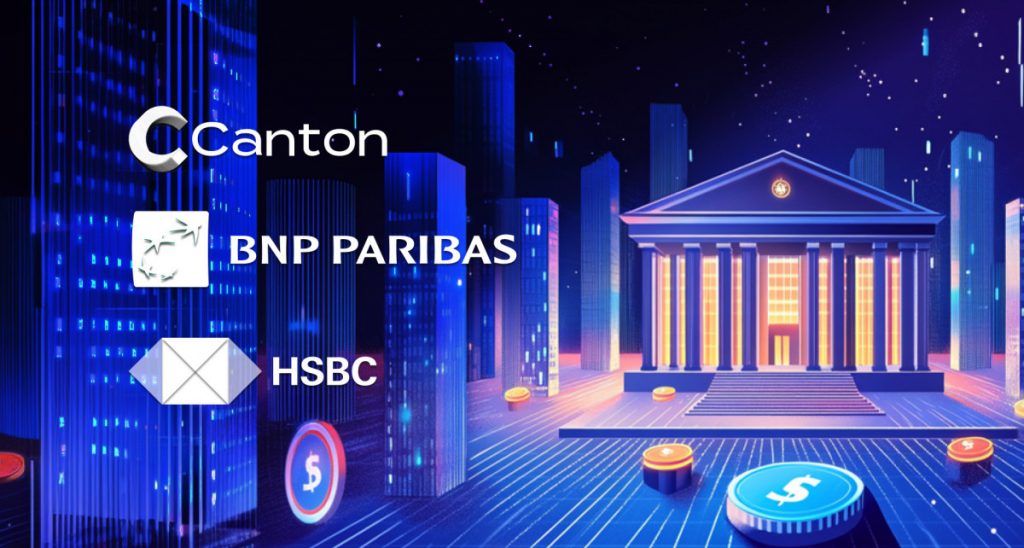
Leading Banks Join Canton Network, Signaling Growing Institutional Commitment To DeFi

0
Leading Banks Join Canton Network, Signaling Growing Institutional Commitment To DeFi


In Brief

BNP Paribas and HSBC have joined the Canton Foundation, marking a key step in strengthening institutional collaboration and advancing the Canton Network’s decentralized infrastructure for global capital markets.

Leading Banks Join Canton Network, Signaling Growing Institutional Commitment To DeFi

Organization focused on advancing the development and expansion of the Global Synchronizer within the Canton Network, the Canton Foundation announced that BNP Paribas and HSBC have joined as new members. This follows recent additions including Goldman Sachs, Hong Kong FMI Services Limited (HKFMI), and Moody’s Ratings in March, underscoring increasing institutional confidence and the strategic relevance of the Canton Network in the evolution of global financial infrastructure.

The inclusion of these members reflects the financial sector’s broader commitment to adopting decentralized technologies that emphasize data privacy, operational control, and scalable interoperability. 

As tokenized finance continues to grow, the participation of BNP Paribas and HSBC represents a significant milestone in the Canton Network’s ongoing efforts to synchronize global capital markets.

Melvis Langyintuo, executive director of the Canton Foundation, expressed excitement at welcoming BNP Paribas and HSBC to the Foundation, stating that their involvement would strengthen the governance and strategic direction of the Canton Network while supporting the establishment of an open, neutral, and reliable blockchain foundation for regulated markets.

Joining the Canton Foundation reflects the bank’s ongoing commitment to digital transformation and the adoption of distributed ledger technology to meet evolving client needs, emphasised Hubert de Lambilly, Head of Global Markets Continental Europe, Middle East, and Africa at BNP Paribas. He added that participating in the initiative provides a valuable opportunity to collaborate with key industry players and advance the long-term role of blockchain technologies in regulated finance.

Meanwhile, John O’Neill, Group Head of Digital Assets & Currencies at HSBC, highlighted that driving liquidity in digital asset markets requires ecosystems with strong connectivity and market access, noting that joining the Canton Foundation would enable HSBC to contribute to the development of infrastructure capable of supporting complex, multi-asset transactions with trust and transparency.

The Global Synchronizer: Core Infrastructure For Coordinating Digital Assets Across Permissioned Blockchains In Canton Network

The Global Synchronizer serves as essential infrastructure for coordinating digital assets across permissioned blockchains within the Canton Network. Oversight is provided by a community of industry stakeholders, including fintechs, service providers, and major global banks, with the Canton Foundation ensuring decentralized and neutral governance of this key system.

BNP Paribas and HSBC join a growing membership of more than 30 institutions, such as Broadridge, Tradeweb, and Digital Asset, along with recent additions including Goldman Sachs, HKFMI, and Moody’s Ratings. Collectively, these organizations are contributing to the development of a decentralized ecosystem that supports real-world financial applications while maintaining rigorous regulatory and operational standards.

Disclaimer

In line with the Trust Project guidelines, please note that the information provided on this page is not intended to be and should not be interpreted as legal, tax, investment, financial, or any other form of advice. It is important to only invest what you can afford to lose and to seek independent financial advice if you have any doubts. For further information, we suggest referring to the terms and conditions as well as the help and support pages provided by the issuer or advertiser. MetaversePost is committed to accurate, unbiased reporting, but market conditions are subject to change without notice.

About The Author


Alisa, a dedicated journalist at the MPost, specializes in cryptocurrency, zero-knowledge proofs, investments, and the expansive realm of Web3. With a keen eye for emerging trends and technologies, she delivers comprehensive coverage to inform and engage readers in the ever-evolving landscape of digital finance.

More articles


Alisa, a dedicated journalist at the MPost, specializes in cryptocurrency, zero-knowledge proofs, investments, and the expansive realm of Web3. With a keen eye for emerging trends and technologies, she delivers comprehensive coverage to inform and engage readers in the ever-evolving landscape of digital finance.


More articles


Source link

The Mercedes-Benz EQS achieved a range of 1,205 km with a solid-state battery.

0
The Mercedes-Benz EQS achieved a range of 1,205 km with a solid-state battery.


A modified Mercedes-Benz EQS equipped with a solid-state battery has achieved a range of 1,205 km on a single charge. The journey, which went from Stuttgart to Malmö, left the car with an additional 137 km of range remaining.

Mercedes-Benz conducted a significant test that sheds light on the future of electric mobility. A modified EQS, fitted with a solid-state battery, completed the 1,205-kilometer trip from Stuttgart to Malmö on a single charge. This drive, which took place at the end of August, proved that the new battery technology can work reliably not just in a laboratory setting, but also under real-world road conditions.

The era of solid-state batteries is very near.

The result surpassed the brand’s previous record. The 1,202-kilometer distance covered by the Vision EQXX from Stuttgart to Silverstone was beaten by three kilometers. Upon arriving in Malmö, the EQS still had 137 kilometers of range left, which means the total potential range was 1,432 kilometers.

Mercedes-Benz had planned this journey as part of a comprehensive testing program announced in February. The EQS departed from Stuttgart and traveled through German and Danish highways to reach Sweden. The electric navigation system factored in road gradients, traffic, temperature, and heating/cooling needs when determining the route.

The company, which aims to test the performance of solid-state battery technology in various climates and on long routes, continues its validation work in daily-use scenarios, in addition to laboratory and simulation tests.

The battery system was developed in collaboration with Mercedes-AMG High Performance Powertrains (HPP) and the American cell manufacturer Factorial Energy. The cells used are based on a technology the company calls FEST (Factorial Electrolyte System Technology).

In this new system, pneumatic actuators are used to compensate for the typical volume changes that the battery experiences during charging and discharging. This keeps the cells under the necessary pressure, ensuring performance stability. Furthermore, while the battery capacity has been increased by 25%, its size and weight remain almost the same as a standard EQS battery. Additionally, passive airflow cooling contributes to its energy efficiency.

You Might Also Like;

Follow us on TWITTER (X) and be instantly informed about the latest developments…

Copy URL


Source link

The Final Phase Before $SEA: OpenSea’s Final Rewards Push and Cultural NFT Play | NFT News Today

0
The Final Phase Before $SEA: OpenSea’s Final Rewards Push and Cultural NFT Play | NFT News Today


With its $SEA token launch approaching, OpenSea is rolling out one last set of rewards for users and introducing a new NFT collection focused on cultural value. These moves point to a broader effort to involve the community more directly in how the platform evolves.

Key Takeaways

OpenSea’s final rewards phase starts September 15, with 50% of platform fees going into a prize vault.

The vault launches with $1M in $OP and $ARB already added.

Users can earn and upgrade Treasure Chests through trading, quests, and surprise drops.

$SEA will support governance, reduce fees, and back long-term platform goals.

The Flagship Collection begins with CryptoPunk #5273 and highlights NFTs as digital history.

What $SEA Means for OpenSea Users

$SEA is designed to give users a say in how OpenSea operates, while also rewarding activity with fee discounts and community-driven incentives. By linking both historical and current participation to $SEA allocations, OpenSea is acknowledging its early adopters while keeping today’s traders engaged.

According to OpenSea CMO Adam Hollander in a recent X post, the full details of $SEA’s tokenomics will be shared in October. Still, the intent is already clear: governance, loyalty, and sustainability are at the heart of it.

This mirrors a broader shift in the NFT space, where platforms are moving beyond pure speculation and toward infrastructure that supports community-driven growth and stability.

The Rewards Vault: Final Push Before TGE

The September 15 launch of the rewards vault marks the last phase of OpenSea’s pre-token launch campaign. Half of the platform’s fees—1% on NFT sales and 0.85% on token trades—will go into this prize pool. An initial $1 million worth of $OP and $ARB is also included to kick things off.

Every user will receive a Starter Treasure Chest via the Rewards Portal. These chests can be upgraded by trading across 22 blockchains, completing daily Voyages, or collecting surprise Shipments. The higher the chest tier, the larger the share of the vault’s contents.

Importantly, these Treasure Chests are distinct from the separate $SEA allocations that will be distributed based on historical platform activity. Both are part of the broader rewards ecosystem, but operate independently.

It’s not just about prizes, though. These Treasures also tie into how $SEA will be distributed, making them a key part of the bigger picture.

The Flagship Collection: NFTs as Cultural Artifacts

OpenSea’s new Flagship Collection isn’t just about showcasing high-value NFTs—it’s part of a broader effort to document and preserve Web3’s cultural history. The initiative starts with a $282,000 purchase of CryptoPunk #5273, one of several planned acquisitions aimed at highlighting both legacy projects and emerging artists.

Unlike speculative buying, OpenSea says these NFTs won’t be sold for profit. Instead, they’ll serve as part of a permanent collection intended to reflect the evolution of digital art. A committee made up of OpenSea team members and external advisors is helping to guide selections, with details on each acquisition—including why it was chosen—shared publicly to add transparency.

What Comes Next

The upcoming launch of $SEA is more than just a milestone for OpenSea—it’s a chance to reset expectations around what a token can actually do for a marketplace. After years of dominating NFT trading, OpenSea now faces a fragmented landscape and a more skeptical user base. This rollout isn’t about hype; it’s a test of whether the platform can offer real utility, credible governance, and long-term value without losing sight of its original community.

If the execution matches the ambition, $SEA could signal a shift in how NFT platforms engage users—not just with incentives, but with actual influence.

Main Image Source: OpenSea


Source link

OpenSea Unveils Mobile Trading App, Flagship Collection, And Expanded User Rewards

0
OpenSea Unveils Mobile Trading App, Flagship Collection, And Expanded User Rewards


In Brief

OpenSea announced SEA token TGE details for October, launched an AI-integrated mobile trading app, unveiled the Flagship NFT Collection, and expanded user rewards starting September 15th.

OpenSea Unveils Mobile Trading App, Flagship Collection, And Expanded User Rewards

Chief Marketing Officer of the non-fungible token (NFT) marketplace OpenSea, Adam Hollander, announced that the OpenSea Foundation will provide information about the SEA token TGE in early October. 

In addition, OpenSea introduced OpenSea Mobile, a redesigned native trading platform with integrated AI features. The platform also unveiled the Flagship Collection, a seven-figure initiative focused on historic and emerging NFTs that celebrate the cultural heritage of Web3. Beginning September 15th, 50% of all platform fees will be directed toward user rewards, supporting millions in distributed incentives.

The marketplace announced that with OS2, the platform was fully redesigned, including its mobile experience. The new mobile application aims to provide a seamless trading experience while integrating artificial intelligence natively. 

It consolidates wallets, chains, tokens, and NFTs in one interface, eliminating the need to switch accounts or worry about chain compatibility. 

AI features, powered by the MCP server infrastructure, enable smarter, faster trading by analyzing an entire portfolio across chains in real time. 

Unlike traditional wallets, OpenSea ensures a unified experience across mobile and web, making Web3 more accessible and efficient. A beta for the mobile app and AI-powered trading tools will be available via waitlist in the coming weeks.

Furthermore, as a cultural hub for Web3, OpenSea is launching the Flagship Collection, dedicating over one million dollars to acquiring historic NFTs and works from emerging artists. The collection begins with CryptoPunk #5273 and aims to highlight both foundational pieces and new talent. Each acquisition will include context explaining its inclusion, offering visibility for creators. Selections are managed by a committee of OpenSea employees and external digital art advisors, with integrity measures outlined in the platform’s Learn Center.

OpenSea Launches Final Pre-TGE Rewards Phase With Token And NFT Prize Vault

Apart from that, OpenSea is launching the final pre-TGE rewards phase, creating a large prize vault funded by millions in tokens and NFTs. Starting September 15th, 50% of all platform fees, including 1% from NFT sales and 0.85% from token trades, will support this program. The vault already contains $1 million in OP and ARB. 

Users logging into the Rewards Portal will receive a Starter Treasure Chest, which can be upgraded over time to increase the share of rewards, with grand prizes visible to all participants. Chests can be leveled by trading across 22 chains, completing daily activities, and collecting surprise items, with higher-level chests yielding more valuable treasures. Treasures will also play a role when the OpenSea Foundation releases TGE details. Separately, historical platform activity will receive its own allocation of SEA at TGE.

Current Voyages participants will have their XP permanently recorded in a new Treasure, ranked from tier 1 to 12, which will be distributed on September 15th. This Treasure reflects activity from the past three months and will be taken into account by the Foundation.

Disclaimer

In line with the Trust Project guidelines, please note that the information provided on this page is not intended to be and should not be interpreted as legal, tax, investment, financial, or any other form of advice. It is important to only invest what you can afford to lose and to seek independent financial advice if you have any doubts. For further information, we suggest referring to the terms and conditions as well as the help and support pages provided by the issuer or advertiser. MetaversePost is committed to accurate, unbiased reporting, but market conditions are subject to change without notice.

About The Author


Alisa, a dedicated journalist at the MPost, specializes in cryptocurrency, zero-knowledge proofs, investments, and the expansive realm of Web3. With a keen eye for emerging trends and technologies, she delivers comprehensive coverage to inform and engage readers in the ever-evolving landscape of digital finance.

More articles


Alisa Davidson


Alisa, a dedicated journalist at the MPost, specializes in cryptocurrency, zero-knowledge proofs, investments, and the expansive realm of Web3. With a keen eye for emerging trends and technologies, she delivers comprehensive coverage to inform and engage readers in the ever-evolving landscape of digital finance.


More articles


Source link

How to Make Money in Web3 in 2026: A Complete Guide

0
How to Make Money in Web3 in 2026: A Complete Guide


The Web3 ecosystem has grown rapidly over the past few years, transforming how people earn, invest, and build online. In 2026, opportunities to make money in decentralized networks are more accessible than ever, thanks to improved blockchain scalability, the rise of AI-driven smart contracts, and mainstream adoption of digital assets. Whether you are a beginner or an advanced user, here are the most effective ways to earn in Web3 today.

1. Staking and Yield Farming

One of the simplest methods to generate passive income is through staking cryptocurrencies. By locking tokens into a proof-of-stake blockchain, users help secure the network and earn staking rewards. Meanwhile, yield farming allows investors to provide liquidity in DeFi platforms, earning interest and governance tokens. In 2026, many DeFi protocols now offer risk-adjusted yield strategies powered by AI to minimize losses.

2. Play-to-Earn (P2E) Games and Metaverse Economies

Play-to-Earn games and metaverse platforms remain strong revenue sources. Players earn NFT assets and in-game tokens that can be traded for real money. Unlike early P2E models, modern 2026 games focus on sustainability, ensuring tokenomics are designed for long-term value. Virtual land sales, digital fashion, and metaverse job opportunities (such as hosting events or building 3D environments) also bring income streams.

3. NFT Creation and Royalties

Artists, musicians, and creators continue to benefit from NFT marketplaces. By minting NFT collections, creators can earn upfront sales plus royalty fees each time their work is resold. With NFT 2.0 technology in 2026, creators can embed dynamic utilities—such as access to private clubs, live events, or evolving artwork—making their assets more valuable.

4. Decentralized Autonomous Organizations (DAOs)

Becoming part of a DAO can be both profitable and influential. Members often receive governance tokens, which can appreciate in value. Additionally, DAOs pay contributors for development, marketing, and community-building roles. Many DAOs in 2026 function like decentralized startups, offering token-based salaries and profit-sharing mechanisms.

5. Decentralized Freelancing and Work Platforms

cropped-Discover-Web3-Domain-Future-of-Digital-Identity-7.jpg

The Web3 gig economy is booming. Instead of relying on centralized platforms, professionals can now work through decentralized freelancing marketplaces powered by smart contracts. Payments are instant, transparent, and censorship-resistant. Skills in blockchain development, smart contract auditing, AI + Web3 integration, and community management are in high demand.

6. Tokenized Real-World Assets (RWAs)

A major 2026 trend is the tokenization of real-world assets like real estate, commodities, and even intellectual property. By owning fractionalized tokens, investors can gain exposure to high-value markets without needing millions of dollars. This new class of digital assets opens the door for passive income streams, such as real estate rent distributed via blockchain.

7. Content Creation and SocialFi

SocialFi platforms allow creators to monetize content directly, without middlemen. Users can issue creator tokens, offer subscription-based access, and earn from fan engagement. Unlike traditional social media, creators fully own their audience relationships. This trend is expected to dominate Web3 in 2026, especially with integrated AI recommendation systems that help users grow faster.

Final Thoughts

Making money in Web3 in 2026 is no longer limited to tech-savvy crypto enthusiasts. From staking to NFTs, from DAOs to tokenized assets, opportunities are more diverse and sustainable than ever before. The key is to understand risk, diversify across different Web3 income streams, and stay updated on emerging blockchain innovations.

The future of earning online is decentralized—and it’s already here.

You Might Also Like;

Follow us on TWITTER (X) and be instantly informed about the latest developments…

Copy URL


Source link

Rimac Unveils Next-Generation Solid-State Battery with Ultra-Fast Charging

0
Rimac Unveils Next-Generation Solid-State Battery with Ultra-Fast Charging


Rimac Technology, renowned for its electric hypercars, showcased a new lineup of products at the IAA Mobility show in Munich. The centerpiece of their presentation was a groundbreaking solid-state battery platform that can charge from 10% to 80% in just 6.5 minutes.

While Rimac gained fame with cars like the Nevera, it has long been a key technology partner for prestigious brands such as Koenigsegg and Aston Martin, supplying them with battery and powertrain systems. Following an investment from Porsche and a merger with Bugatti in 2021, Rimac has cemented its position as a leading Tier 1 supplier and development partner for OEMs in the high-performance electric vehicle sector.

Let’s take a closer look at the key new products Rimac unveiled in Munich:

Solid-State Battery Platform: Developed in collaboration with ProLogium and Mitsubishi Chemical Group, this next-gen battery is touted as being lighter, safer, and more energy-dense than current lithium-ion packs. With a cell-level energy density of 260 Wh/kg, a 100 kWh pack weighing 470 kg with standard lithium-ion cells could be reduced to just 384 kg with the new solid-state technology. The company also claims the battery retains over 95% of its energy at temperatures as low as -20°C and is free from fire or explosion risks at the cell level.E-Axle Technology: The new “SINTEG 300 & 550” single-motor integrated axles offer impressive power densities of over 8 kW/kg and torque densities of 90 Nm/kg, with rotor speeds up to 25,000 rpm. With power outputs from 150-360 kW and torque from 2,500-6,250 Nm, these axles are suitable for everything from small sports hatchbacks to large SUVs.XXL High-Torque Axle: The dual-motor “EDU 550” is scheduled for series production in 2026 for a global manufacturer. It boasts an efficiency of over 95% and an axle torque output of more than 11,000 Nm.Electronics: Rimac has developed new ECUs based on the NXP S32E2 platform for functions like torque vectoring, high-voltage battery control, and over-the-air (OTA) software updates.Production Capacity: Rimac is aiming to produce tens of thousands of units per month from its 95,000 m² campus in Croatia, a €200 million investment. In the last year, Rimac has collaborated with major automotive brands including the BMW Group, CEER Motors, and Porsche.

Rimac Goes Solid-State

Solid-state batteries have long been viewed as the next-generation solution for energy storage, promising longer range, faster charging, and greater durability. Rimac’s new Next-Gen battery package is designed to accelerate this transition. By combining ProLogium’s solid-state cells, materials from Mitsubishi Chemical Group, and innovative housing methods, Rimac has created a solution that enhances both energy density and safety.

The battery pack operates in a voltage range of 540 to 907 volts and uses a cell-to-pack architecture with pouch-type cells. The cathode contains 90% nickel, 5% manganese, and 5% cobalt, while the anode is 100% silicon. Unlike conventional battery packs that use water and glycol, this system is cooled with a refrigerant fluid and housed in a thermoplastic composite casing.

The most impressive claim is the charging time: the solid-state battery can go from 10% to 80% in just 6.5 minutes. This technology will debut in a high-performance model in the fourth quarter of 2027.

You Might Also Like;

Follow us on TWITTER (X) and be instantly informed about the latest developments…

Copy URL


Source link

Top Crypto to Buy Today: Why BlockDAG’s Nearing $400M Frenzy Leaves Nexchain, Coldware, and SUBBD Behind

0
Top Crypto to Buy Today: Why BlockDAG’s Nearing 0M Frenzy Leaves Nexchain, Coldware, and SUBBD Behind


In Brief

Discover the top crypto to buy today! BlockDAG’s presale nearing $400M outpaces Nexchain, Coldware, and SUBBD, leading the market surge.

Top Crypto to Buy Today: Why BlockDAG’s Nearing 0M Frenzy Leaves Nexchain, Coldware, and SUBBD Behind

In the world of crypto, presales are often where the biggest stories begin. Some of the top winners in past cycles built their momentum in these early stages, long before the wider market caught on. With coins still at their lowest entry points, the right presale can act as a launchpad for explosive growth.

Right now, several projects are drawing attention, but one name has shifted the entire conversation. BlockDAG has already raised nearly $400M and sold more than 25.7 billion coins. Its mix of whale participation, adoption strength, and measurable traction has made it the project everyone is watching.

Other players like Nexchain, Coldware, and SUBBD are working hard to carve out their space too, with stories that touch on AI, hardware, and creator-driven platforms. But when you compare their traction and momentum, it becomes clear why BlockDAG is the top crypto to buy today. Let’s break down what’s happening.

1. BlockDAG: The Presale That Feels Like a Movement

BlockDAG has quickly become the most talked-about name in presales, and the numbers make it clear why. Now priced at a flat $0.0013, the project has already neared $400M in funding. Early participants who entered at $0.001 are sitting on paper gains of 2,900%, while even new buyers have strong upside with long-term targets reaching as high as $1. Add to that the recent whale entries of $4.4M and $4.3M, and it’s clear that serious capital is moving in.

But BlockDAG isn’t just about financial momentum; it’s about visibility. BlockDAG is stepping onto the stage as a Platinum Partner. A 72 sqm custom booth, giant branding across the venue, and floor-to-ceiling exposure outside the main stage put it directly in front of 25,000 attendees and thousands of institutions. That kind of presence isn’t just marketing, it’s positioning.

What seals the deal for many is BlockDAG’s fair flat-rate pricing of $0.0013, replacing confusing bonus tiers and giving all buyers equal opportunity. This simple structure makes the presale even harder to ignore.

Add in more than 3 million people mining on the X1 app and thousands of X10 mining rigs already shipping worldwide, and the narrative shifts. This isn’t another presale with promises; it’s one with infrastructure already working. That’s why, for many, BlockDAG (BDAG) is the top crypto to buy today.

2. Nexchain: Building Speed With AI and Security

Nexchain is one of the more polished projects in the presale market. Now in Stage 26 with coins priced between $0.10 and $0.104, it has already raised more than $9.5 million. The expected listing price is around $0.30, giving it the potential for a 3x move.

The project is promoting its hybrid approach, combining sharding, DAG architecture, and Proof-of-Stake to hit up to 400,000 TPS with ultra-low fees of $0.001. A CertiK audit, anomaly detection systems, and post-quantum cryptography add credibility, while a $5M airdrop campaign has helped it expand its community. Nexchain’s plan to share revenue from gas fees adds another layer of appeal for holders.

While Nexchain’s tech story is compelling, its presale scale still pales in comparison to BlockDAG’s haul nearing $400M. Nexchain may deliver long-term value in the AI blockchain space, but when it comes to momentum and adoption, it’s still playing catch-up.

3. Coldware: Ambitious Hardware Vision, But Where’s the Traction?

Coldware is aiming to stand out by merging blockchain with hardware, introducing devices like the Larna 2400 smartphone alongside dApps, secure wallets, and a full ecosystem. On paper, the vision is ambitious. In practice, the presale has yet to gain real traction, with reported fundraising progress sitting near zero and coin prices listed at $0.00 on the site.

The project has also faced community skepticism. Building hardware, software, and blockchain infrastructure simultaneously is a massive challenge, and many traders remain cautious until products roll out at scale. If Coldware can deliver, it may find a niche market among users looking for blockchain-native hardware. But for now, the lack of adoption makes it tough to compare with BlockDAG’s established momentum.

4. SUBBD: Tapping Into the Creator Economy

SUBBD is targeting a different audience entirely. Focused on the $85 billion creator economy, the project has pitched itself as a Web3 platform designed for influencers and fans. Its presale raised between $220K and $1M, with coins priced around $0.055 to $0.056. SUBBD claims partnerships with 2,000 creators who collectively have access to 250 million followers.

The coin offers holders perks like 20% APY staking, beta access, discounts, and VIP creator content. Analysts see potential for up to 8x–11x growth by late 2025, which makes it interesting as a niche play. Still, the presale’s scale is small, and while SUBBD might have long-term relevance in creator-focused markets, it cannot yet compete with the scale and visibility of BlockDAG.

The Takeaway: Why BlockDAG Is the Clear Standout

Each of these projects tells a story worth noting. Nexchain is making a push with high-speed AI-powered infrastructure, Coldware is blending crypto with hardware, and SUBBD is opening new doors in the creator economy. They all add diversity to the presale scene, and early participants may see rewards if their roadmaps are delivered.

But when traders ask which project is the top crypto to buy today, the answer is becoming clearer each week. BlockDAG has raised nearly $400M, shipped thousands of hardware miners, and built a mining community of over 3 million users. Whales are stacking multimillion-dollar positions, making its presale one of the most compelling stories in recent history.

Momentum, adoption, and visibility matter most in this market, and BlockDAG is the one project combining all three. For buyers who don’t want to be on the sidelines when the next major launch happens, this presale is the one setting the pace.

Disclaimer

In line with the Trust Project guidelines, please note that the information provided on this page is not intended to be and should not be interpreted as legal, tax, investment, financial, or any other form of advice. It is important to only invest what you can afford to lose and to seek independent financial advice if you have any doubts. For further information, we suggest referring to the terms and conditions as well as the help and support pages provided by the issuer or advertiser. MetaversePost is committed to accurate, unbiased reporting, but market conditions are subject to change without notice.

About The Author


Gregory, a digital nomad hailing from Poland, is not only a financial analyst but also a valuable contributor to various online magazines. With a wealth of experience in the financial industry, his insights and expertise have earned him recognition in numerous publications. Utilising his spare time effectively, Gregory is currently dedicated to writing a book about cryptocurrency and blockchain.

More articles


Gregory, a digital nomad hailing from Poland, is not only a financial analyst but also a valuable contributor to various online magazines. With a wealth of experience in the financial industry, his insights and expertise have earned him recognition in numerous publications. Utilising his spare time effectively, Gregory is currently dedicated to writing a book about cryptocurrency and blockchain.


Source link

Popular Posts

My Favorites