Metaverse

Home Metaverse Page 116

Top 10 AI And Blockchain Collaborations That Could Transform The World

0
Top 10 AI And Blockchain Collaborations That Could Transform The World


In Brief

AI and blockchain, projected to exceed a combined $3 trillion market by 2030, are increasingly viewed as complementary technologies with the potential to transform industries from finance to logistics through synergies such as smart trading, fraud prevention, adaptive contracts, and decentralized intelligence networks.

Top 10 AI and Blockchain Collaborations That Could Transform the World

Artificial Intelligence and blockchain are regularly said to be two of the most disruptive technologies of the 21st century. Each technology is already making waves across industries ranging from healthcare to finance and, together, there is a chance that they will unlock completely unknown potential.

Market projections are showing this shift: the global blockchain market is projected to surpass $1.2 trillion by 2030, with the AI market projected at $1.8 trillion by the same timeframe. Many analysts suggest that wherever these technologies meet they have the potential to reshape how we trade things, create things, govern things, and even how we live. b

Tech investors like Cathie Wood have said that AI and crypto together are the “building blocks of the future digital economy” and point to the fact that the convergence of these technologies is likely to happen as both technology and their ecosystems mature. From smarter trading options to decentralized intelligence networks, here are ten synergies that have the potential to change our world today.

#1 Smarter Trading Algorithms

Cryptocurrency markets are often quite chaotic, moving too fast for human traders to keep up with it. This is what AI-based trading algorithms are used for. Machine learning models can analyze thousands of individual data points — market sentiment, transaction flows, global news events, etc. — in a matter of seconds. 

Some studies show that AI-based strategy accounts for 60–70 percent of stock market volume in traditional finance, and the cryptocurrency market is going the same way. Balaji Srinivasan, a venture capitalist, considers AI’s potential to discover underlying patterns in on-chain data; this data lets traders make better predictions and provides them with the ability to track and automate their decision-making.

#2 Fraud Detection & Security

Crypto scams are still a serious problem, with Chainalysis reporting that over $1.7 billion was lost to fraud in 2023 alone. AI could be a powerful line of defense. By scanning blockchain transactions in real time, machine learning tools can flag suspicious wallet behaviors and stop scams before they escalate.

Chainalysis’ analysts contend that AI is a superior crime detection tool due to its ability to observe millions of wallet addresses at the same time. As the industry develops in maturity, security paradigms will leverage AI-assisted fraud detection to provide fraud risk knowledge to build trust in retail and institutional investors.

#3 Smart Contracts & AI

Smart contracts have already changed the way contracts are carried out on blockchains. However, the technology is currently static: once the smart contract has been executed, it can no longer be changed to account for new information. AI could open up the potential for adaptive smart contracts, capable of updating terms in accordance with real-world data.

For example, an insurance contract could use AI risk models to auto-adjust payout amounts based on data such as weather, or personal health data. Vitalik Buterin, one of the co-founders of Ethereum, has suggested the possibility of AI acting as a “judge” which can interpret and enforce the complex obligations of contracts by converting human inputs into rules on-chain as terms of the contracts.

4. Personalized DeFi Solutions

According to DeFiLlama, decentralized finance (DeFi) has attracted billions of dollars in liquidity and had a total value locked (TVL) of $123 billion by mid-2025. However, the majority of DeFi platforms are one-size-fits-all solutions, providing the same lending, staking, and yield farming products for everyone.

AI has the potential to change this by delivering DeFi strategies that cater to individual risk profiles. Think about an AI system that reviews a user’s trading history, portfolio size, and risk tolerance, allowing it to suggest personalized yield strategies or lending conditions. The DeFi research community has proposed that adding AI-powered personalization would democratize decentralized finance and help ensure the adoption of DeFi at the mainstream level and its long-term stability.

5. Energy Optimization in Mining & Validation

The environmental impact of cryptocurrency mining continues to be a controversial topic. The Cambridge Bitcoin Electricity Index estimates Bitcoin consumes 0.80% of the world’s electricity, more than some countries. AI could potentially help decrease that footprint through optimizing mining operations and validator networks.

Environmental economists have noted that AI can reduce energy waste as much as 20 – 30% with predictive maintenance, improved cooling processes, and better load balancing. In proof-of-stake networks specifically, AI could improve validator performance, reducing hardware needs, and increasing efficiency.

6. AI–Generated NFTs & Digital Art Economies

The NFT market boomed in 2021, generating $16 billion in sales in 2022, before cooling. Many analysts hypothesize that NFTs will reemerge as a market once they move past profile pictures and digital collectibles. One of the most interesting frontiers is AI-generated art, authenticated and monetized via blockchain.

Artists like Beeple showed how AI and crypto could combine creativity with verified ownership so that collectors could purchase an AI-driven art piece and know it is unique, while creators can always be transparent about provenance. The same synergies could exist for music, gaming, and film, too, possibly changing the digital economies and creative industries.

7. Decentralized AI Marketplaces

Currently, access to high-powered AI models is limited to a few of the biggest tech companies.  Blockchain could resolve this through decentralized AI marketplaces where anyone can rent computing power, data, or algorithms for crypto.

Projects like SingularityNET and Fetch.ai are already exploring this particular area. Ben Goertzel (founder of SingularityNET) has argued that blockchain is instrumental for AI development because it ensures that the development of AI is not centralized and monopolized, but managed and developed across decentralized networks. 

These types of marketplaces could also promote equity that grants developers, researchers, and even small businesses access to AI tools.

8. Supply Chain & Logistics Transparency

Counterfeit goods cost the global economy an estimated $467 billion annually, according to the OECD. Combining AI with blockchain could bring much-needed transparency to global trade.

AI systems can analyze shipping data, check for discrepancies, and help forecast delays, while blockchain will ensure that the authenticity of products can be verified at each point in the supply chain. IBM’s blockchain team has noted that AI and crypto could create immutable and intelligent logistics networks where we are protecting both businesses and customers. 

9. Privacy-Preserving AI Models

Data privacy remains a top concern for consumers, with PwC reporting that 80% of people consider it a factor in trust. AI thrives on large datasets, but centralizing sensitive information like health or financial data raises ethical issues.

Blockchain could offer a solution through decentralized data storage and federated learning. Instead of sending data to a central server, AI models could train locally on user devices, while the blockchain secures transactions and ensures transparency. AI expert Andrew Ng has underscored the importance of building secure environments for AI, and blockchain could provide exactly that.

10. AI in DAO Governance

DAO is an incredible tool for collective decision-making that has skyrocketed in popularity. In February 2024, The DAOs Treasury surpassed $30 billion (DeepDAO). Unfortunately, governance continues to struggle with poor engagement and voter fatigue, low participation, and inefficiency. 

AI has the potential to positively impact DAO governance, by evaluating proposals, predicting results, and potentially recommending votes. Chris Dixon, a venture capitalist, has noted that AI could provide “co-pilot” capabilities for DAOs, so members can make informed decisions without compromising decentralization.

Challenges & Risks

While there is a great deal of promise, coupling AI with crypto is not without risks. AI models can carry biases that could result in inequitable financial decisions or governance outcomes. Plus, overreliance on automated systems in financial markets could maximize shocks, not smooth them.

The regulatory side also has its advocates, watchdogs, like SEC chairman Paul Atkins, are overly concerned about innovation outracing consumer protections. Similarly, EU policy makers have been clear about the need to respect ethical boundaries anywhere AI and crypto intersect. Moving forward, balance will be key.

Future Outlook

AI–crypto synergies may have the potential to revolutionize financial markets, but also healthcare, logistics, entertainment and governance–by 2030, AI in combination with blockchain has the capability to revolutionize and generate new work processes. 

McKinsey predicts that AI will alone add $15.7 trillion to global GDP by the end of the decade.. Analysts expect blockchain to serve as the backbone of this growth by enabling trust, transparency, and secure asset/ value exchange.

According to leaders in the industry, we may be on the verge of a new digital age, where AI provides intelligence and blockchain provides integrity. If the two continue to grow side-by-side, they could develop a similar impact to the internet’s emergence in the 1990s.

Disclaimer

In line with the Trust Project guidelines, please note that the information provided on this page is not intended to be and should not be interpreted as legal, tax, investment, financial, or any other form of advice. It is important to only invest what you can afford to lose and to seek independent financial advice if you have any doubts. For further information, we suggest referring to the terms and conditions as well as the help and support pages provided by the issuer or advertiser. MetaversePost is committed to accurate, unbiased reporting, but market conditions are subject to change without notice.

About The Author


Alisa, a dedicated journalist at the MPost, specializes in cryptocurrency, zero-knowledge proofs, investments, and the expansive realm of Web3. With a keen eye for emerging trends and technologies, she delivers comprehensive coverage to inform and engage readers in the ever-evolving landscape of digital finance.

More articles


Alisa Davidson


Alisa, a dedicated journalist at the MPost, specializes in cryptocurrency, zero-knowledge proofs, investments, and the expansive realm of Web3. With a keen eye for emerging trends and technologies, she delivers comprehensive coverage to inform and engage readers in the ever-evolving landscape of digital finance.


More articles


Source link

September’s First Week: Bybit In Brazil, Circle In Banking, And BONK On Nasdaq

0
September’s First Week: Bybit In Brazil, Circle In Banking, And BONK On Nasdaq


In Brief

Early September saw a surge of crypto partnerships spanning emerging markets, traditional finance, and mainstream culture, with major initiatives from Bybit, Tether, Circle, BONK, Frax, Underdog, and OKX accelerating global adoption.

September’s First Week: Bybit In Brazil, Circle In Banking, And BONK On Nasdaq

The first week of September brought a wave of crypto partnerships bridging emerging markets, traditional finance, and mainstream culture. From Bybit and Tether expanding access in Brazil and Indonesia, to Circle integrating stablecoins with banks, BONK breaking into Nasdaq, and OKX luring fans with McLaren F1—adoption is accelerating everywhere.

Bybit and Tether Drive Adoption in Brazil and Indonesia

Bybit and Tether are taking a long-term approach to crypto adoption in emerging markets, focusing on Brazil and Indonesia. Their partnership highlights the importance of regulation, education, and infrastructure in building sustainable ecosystems, rather than chasing “speculative hype.”

In Brazil, the two companies have launched campaigns that link participation directly to adoption. Bybit co-sponsored Blockchain Rio with Tether, offering USDT bonuses to incentivize new users. The partnership is also exploring tourism-related incentives with Visit Rio, integrating crypto rewards into travel experiences. 

Education plays a central role, with “Learn to Earn” campaigns, workshops, and university seminars designed to demystify blockchain. With more than 20% of Brazilians unbanked, these initiatives aim to position digital assets as tools of financial empowerment. Localized payment solutions such as Bybit Pay and the Bybit Card further bridge fiat and crypto, with Tether’s USD₮ offering stability in a volatile market.

Indonesia’s crypto market surged by more than 300% in 2024, supported by clear regulations. The Financial Services Authority reclassified crypto as digital financial assets, attracting more than 20 million investors. Bybit expanded into equities trading paired with USDT, while also working on institutional-grade custody solutions. Bybit’s CEO described Indonesia as “dynamic and promising,” underscoring its role as a model for balancing innovation with financial stability.

Circle Brings Stablecoins to Mainstream Finance

Circle, the issuer of USD Coin ($USDC), has taken major steps to bring stablecoins into the heart of traditional finance through new partnerships with Finastra and Mastercard. The move signals what observers see as “a dawn of stablecoin-powered payments” across banking and commerce.

Finastra, a leading financial software provider, is integrating $USDC into its Global PAYplus platform, which serves more than 8,000 banks and processes over $5 trillion in daily cross-border transactions. By enabling settlements in $USDC, banks can bypass the inefficiencies of correspondent banking networks, reducing costs and speeding up payments without replacing existing infrastructure. Analysts have noted that this makes blockchain-based settlements “practical for mainstream finance.”

Circle has also deepened its collaboration with Mastercard, enabling merchants and payment providers across Europe, the Middle East, and Africa to settle transactions in $USDC and Euro Coin ($EURC). Industry voices highlight that this positions $USDC as a critical layer for global payments infrastructure.

Circle’s broader strategy includes pursuing regulatory clarity and partnerships in Asia, with ongoing talks in South Korea and collaborations with SBI Group and Ripple in Japan. Meanwhile, user-focused projects like Best Wallet and its $BEST token show how grassroots innovation complements institutional adoption, reinforcing stablecoins’ growing role in the digital economy.

Underdog, the fastest-growing U.S. sports gaming operator, has teamed up with Crypto.com. Derivatives North America (CDNA) is to roll out the first federally compliant prediction market exchange within a major sports app. The partnership integrates CDNA’s sports event contracts directly into the Underdog platform, giving fans a seamless way to make predictions on outcomes across professional and college sports.

Underdog CEO Jeremy Levine described prediction markets as “one of the most exciting developments” in sports engagement, adding that their future will be closely tied to athletics, where Underdog already leads. With this launch, customers can trade event contracts on leagues including the NFL, NBA, MLB, and college football. Real-time price updates will allow fans to instantly express opinions on in-game developments.

Travis McGhee, Global Head of Capital Markets at Crypto.com, emphasized that the collaboration expands CDNA’s pioneering sports event contracts through Underdog’s user-friendly technology. He noted the ability to trade directly in the app enhances access to “innovative offerings” for fans nationwide.

By combining fantasy sports, sports betting, and prediction markets in a single platform, Underdog positions itself as the only operator to unify these experiences. Backed by nationwide gaming licenses and advanced responsible gaming safeguards, the company says it will extend its “industry-leading protections” to prediction markets as adoption scales.

Frax, the DeFi-focused fintech company behind stablecoins and liquid staking products, has chosen Crypto.com Custody to provide secure storage and liquidity solutions for its assets. The move enhances institutional access to Frax’s ecosystem through a regulated, end-to-end custody framework.

As part of the deal, Frax’s native FRAX token—used for gas fees and validator staking on the Fraxtal blockchain—will now be supported by Crypto.com Custody. This integration allows institutions and high-net-worth clients to securely custody FRAX while benefiting from liquidity services. Both companies also signaled plans to expand coverage to Frax’s broader suite of assets.

Crypto.com President and COO Eric Anziani said the partnership shows a “shared commitment to expanding secure, institutional access.” Frax founder Sam Kazemian noted that trusted custody is essential, calling Crypto.com a long-term partner in building the “stablecoin future.”

BONK and Safety Shot Sign $25M Strategic Agreement

BONK has entered into a $25 million partnership with Nasdaq-listed Safety Shot, under which the company will purchase roughly $115 million worth of BONK tokens by year-end—about 5% of the total supply. The deal transfers Safety Shot’s board control to BONK leadership, with BONK core contributor Nom appointed as strategic advisor.

Safety Shot will allocate $15 million from reserves to boost BONK holdings to $40 million and raise an additional $100 million to further expand exposure. The firm also intends to change its Nasdaq ticker from SHOT to BNKK, and eventually to BONK, pending regulatory approval.

Analysts see the move as a landmark moment for meme coins, signaling recognition within regulated financial structures. By reducing circulating supply, BONK aims to stabilize pricing and open access to both institutional and retail investors through brokerage channels.

Separately, BONK.fun was named the official USD1 launch platform for Trump World Freedom Finance, cementing its role in onboarding Web2 companies to blockchain and adding new liquidity and visibility to BONK’s ecosystem.

OKX x McLaren: Crypto Meets F1 With Guaranteed Rewards

OKX has teamed up with McLaren F1 to launch a campaign across Europe that turns crypto onboarding into a tangible experience. New users who make their first trade—or refer a friend—can claim an official McLaren F1 Team cap, while three participants will secure VIP hospitality at the Netherlands Grand Prix in Zandvoort.

The Zandvoort circuit, famed for its steeply banked corners and the “Orange Army” atmosphere, ranks among the sport’s most intense venues. The VIP package grants access to practice, qualifying, or race day, letting winners immerse themselves in one of F1’s most electrifying weekends.

Founded in 2017, OKX has grown into one of the world’s largest exchanges, serving both beginners and advanced traders. Executives stress its focus on “security and transparency,” with proof-of-reserves audits, cold storage, and strict compliance under Europe’s MiCA framework. Beyond trading, OKX offers derivatives, staking, a Web3 wallet, and a launchpad.

Nearly 1,000 caps have already been shipped to participants, with the campaign running until September 14. Analysts note that partnerships with trusted brands like McLaren and PayPal “reduce entry friction” and boost crypto’s mainstream legitimacy—turning hesitant newcomers into confident adopters.

Disclaimer

In line with the Trust Project guidelines, please note that the information provided on this page is not intended to be and should not be interpreted as legal, tax, investment, financial, or any other form of advice. It is important to only invest what you can afford to lose and to seek independent financial advice if you have any doubts. For further information, we suggest referring to the terms and conditions as well as the help and support pages provided by the issuer or advertiser. MetaversePost is committed to accurate, unbiased reporting, but market conditions are subject to change without notice.

About The Author


Alisa, a dedicated journalist at the MPost, specializes in cryptocurrency, zero-knowledge proofs, investments, and the expansive realm of Web3. With a keen eye for emerging trends and technologies, she delivers comprehensive coverage to inform and engage readers in the ever-evolving landscape of digital finance.

More articles

Alisa Davidson


Alisa, a dedicated journalist at the MPost, specializes in cryptocurrency, zero-knowledge proofs, investments, and the expansive realm of Web3. With a keen eye for emerging trends and technologies, she delivers comprehensive coverage to inform and engage readers in the ever-evolving landscape of digital finance.


More articles


Source link

DePIN Day Singapore 2025 Set To Showcase Innovations In Decentralized Physical Infrastructure Networks

0
DePIN Day Singapore 2025 Set To Showcase Innovations In Decentralized Physical Infrastructure Networks


In Brief

DePIN Day Singapore 2025 will bring together global leaders and innovators to explore the development and real-world impact of Decentralized Physical Infrastructure Networks.

DePIN Day Singapore 2025 Set To Showcase Innovations In Decentralized Physical Infrastructure Networks

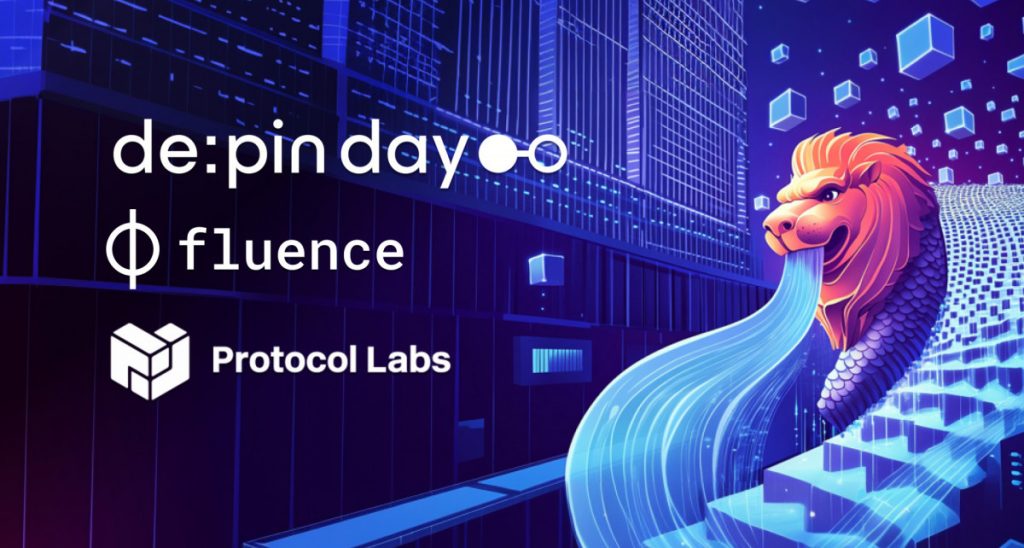
Global conference series DePIN Day, which focuses on the development of Decentralized Physical Infrastructure Networks (DePINs), announced that its next event will take place in Singapore this October. The gathering will bring together innovators and networks advancing physical infrastructure through decentralized technologies.

Fluence will co-host DePIN Day Singapore alongside Protocol Labs, a prominent ecosystem in Web3, aiming to connect the international DePIN community with Asia’s largest cryptocurrency stage. Key partners XYO, Mawari, and Impossible Cloud Network are supporting the event, which will highlight trends and future directions in decentralized infrastructure.

Scheduled during TOKEN2049, DePIN Day will feature leading experts working on real-world Web3 applications, including wireless networks, computing, mobility, and storage. The Singapore edition will include speakers such as Tom Trowbridge and Evgeny Ponomarev (Fluence), Sam Williams (Arweave), Theo Messerer (Silencio), Neil Chatterjee (DAWN), Joy Sim (Outlier Ventures), and Luis Ramirez (Mawari), with additional speakers to be announced.

Following earlier editions in Denver, Hong Kong, and Dubai, which welcomed over 1,500 participants, DePIN Day continues to expand as a hub for collaboration and networking across the global DePIN ecosystem. With more than 1,000 active projects worldwide, the need for in-person forums where builders and thinkers can connect has grown. The Singapore program will offer a full day of community-led talks, technical panels, and discussions designed to advance the industry.

DePINs Drive Transformation In Crypto Infrastructure: Insights From The DePIN Token Economics Report And DePIN Day Dubai

Over the past year, DePINs have become one of the most influential areas within the cryptocurrency sector, with more than 1,000 active projects and millions of individual contributors transforming infrastructure across cloud computing, wireless networks, mapping, energy, and storage. In March 2025, Fluence co-founder Tom Trowbridge published the DePIN Token Economics Report, providing a thorough analysis of network design and incentive structures. The report examines token models, reward mechanisms, staking processes, governance frameworks, revenue-sharing structures, early-stage incentives, and market-specific dynamics, offering the most detailed study of the DePIN economic model to date.

As adoption continues to grow, DePIN Day Dubai has become a key forum for industry thought leadership, highlighting the practical implementation of these networks. DePIN Day is a global conference series focused on the development of Decentralized Physical Infrastructure Networks, bringing together leaders across wireless, sensor, energy, computing, and storage sectors to explore how crypto-based incentive systems are reshaping infrastructure worldwide.

Disclaimer

In line with the Trust Project guidelines, please note that the information provided on this page is not intended to be and should not be interpreted as legal, tax, investment, financial, or any other form of advice. It is important to only invest what you can afford to lose and to seek independent financial advice if you have any doubts. For further information, we suggest referring to the terms and conditions as well as the help and support pages provided by the issuer or advertiser. MetaversePost is committed to accurate, unbiased reporting, but market conditions are subject to change without notice.

About The Author


Alisa, a dedicated journalist at the MPost, specializes in cryptocurrency, zero-knowledge proofs, investments, and the expansive realm of Web3. With a keen eye for emerging trends and technologies, she delivers comprehensive coverage to inform and engage readers in the ever-evolving landscape of digital finance.

More articles


Alisa Davidson


Alisa, a dedicated journalist at the MPost, specializes in cryptocurrency, zero-knowledge proofs, investments, and the expansive realm of Web3. With a keen eye for emerging trends and technologies, she delivers comprehensive coverage to inform and engage readers in the ever-evolving landscape of digital finance.


More articles


Source link

BTCC Hits $1.5B With Jaren Jackson Jr. Partnership | NFT News Today

0
BTCC Hits .5B With Jaren Jackson Jr. Partnership | NFT News Today


BTCC’s $500,000 trading competition reached over $1.5 billion in trading volume just two weeks after it started, thanks in part to its partnership with NBA All-Star Jaren Jackson Jr. This shows how sports sponsorships are helping crypto exchanges find new ways to grow.

Key Takeaways

BTCC trading competition surpassed $1.5B in cumulative volume in two weeks.

NBA All-Star Jaren Jackson Jr. serves as BTCC’s brand ambassador.

The campaign offers 500,000 USDT in prizes through global participation.

Sports-led marketing is driving stronger engagement in retail crypto.

BTCC emphasizes both cultural relevance and long-standing security.

BTCC Trading Competition Gains Global Momentum

The BTCC trading competition started on August 21 and quickly drew participants from around the world. With a 500,000 USDT prize pool, traders can join as individuals, teams, or simply by taking part. This setup attracts both serious traders and newcomers, leading to steady daily sign-ups.

By crossing $1.5 billion in trading volume within two weeks, the event demonstrates how a blend of incentives and visibility can create excitement in digital finance. It also shows that traders value competitions that combine significant rewards with a strong community element.

Why the Jaren Jackson Jr. Partnership Matters

BTCC chose Jaren Jackson Jr. as its first official brand ambassador, marking its entry into sports sponsorship. Jackson is not only a well-known NBA player, but also respected for his discipline, consistency, and leadership as the 2023 Defensive Player of the Year.

For BTCC, partnering with an athlete of Jackson’s stature has a clear purpose:

Expand its global user base by tapping into basketball’s wide following.

Connect with new audiences who may not have considered crypto before.

Reinforce values of trust, professionalism, and long-term thinking.

This partnership shows how sports and crypto can come together, making it easier for more people to get involved by connecting with popular culture.

Bridging Sports and Digital Finance

BTCC’s strategy goes beyond just hitting trading volume goals. By connecting professional sports with digital assets, the company reaches people who might not usually follow trading. These efforts help show how crypto fits into today’s culture.

The competition puts this strategy into practice. It makes trading feel like a community event and draws a clear link between Jackson’s strong defense in basketball and BTCC’s focus on safety. Since 2011, BTCC has operated for 14 years without any security breaches, which helps build trust with users.

Looking Ahead

The BTCC trading competition runs until September 21, when the final rankings and prizes will be announced. Its success so far is about more than just big numbers; it shows that combining sports sponsorship with digital finance works well.

As more people start using crypto, partnerships like this show how exchanges can connect with wider audiences in ways that matter to them. With Jaren Jackson Jr. on board, BTCC has shown that defense, discipline, and consistency are important both in basketball and in crypto.


Source link

Uniswap Bears Cap Price at $9.95, ADA Eyes $1.20 Rally While BlockDAG Deployment and $396M Presale Capture Spotlight

0
Uniswap Bears Cap Price at .95, ADA Eyes .20 Rally While BlockDAG Deployment and 6M Presale Capture Spotlight


In Brief

Cardano eyes a breakout toward $1.20, Uniswap struggles under $9.95 resistance, and BlockDAG’s $396M presale at $0.0013 during its Singapore Deployment event positions it as the best crypto to buy now.

Uniswap Bears Cap Price at .95, ADA Eyes .20 Rally While BlockDAG Deployment and 6M Presale Capture Spotlight

The crypto market is setting up a tense week with Uniswap and Cardano moving in opposite directions while BlockDAG commands the spotlight with its ongoing presale. Uniswap (UNI) has been unable to reclaim its $9.95–$10.20 resistance, keeping traders cautious after repeated rejections. Cardano (ADA), however, is showing strong technical signals that point toward a rally to $1.20 if $0.88 resistance clears. 

Yet both tokens are finding themselves overshadowed by BlockDAG’s Deployment Event in Singapore and the introduction of its flat $0.0013 presale price. With over $396 million already raised, this phase is the last major entry point for investors before the project officially goes live.

Uniswap Struggles as $9.95 Resistance Caps Recovery

Uniswap trades at $9.52 after repeated rejections from the $9.95–$10.20 resistance zone, leaving it stuck below all major EMAs. The RSI reading of 42.9 underscores weak demand, while inflows to exchanges in late August confirm that short-term holders are distributing. If the $9.50 support fails, UNI risks sliding toward $9.00, where prior accumulation zones could provide relief.

Despite these challenges, UNI’s fundamentals continue to show promise. August saw record transaction volume of $143 billion on Uniswap’s DEX, while governance proposals like the Ronin integration and fee switch could unlock as much as $90 million in monthly protocol revenue. Whales and smart money still hold significant UNI allocations, suggesting measured confidence even in the face of technical weakness.

For now, traders are watching whether UNI can reclaim $9.95–$10.20, which would signal the start of a recovery toward $11.30. Until then, downside risk remains elevated, but longer-term holders view UNI’s ecosystem growth as a reason to stay invested.

Cardano Targets $1.20 With 16–24% Upside

Cardano continues to trade near $0.82, respecting the $0.80 support and pressing toward the $0.88 breakout zone that analysts highlight as the key pivot for September. A confirmed move above this barrier could unlock targets of $0.95 to $1.20, translating to potential gains of 16–24% in the short term.

Momentum has been supported by ecosystem growth. Charles Hoskinson recently confirmed that XRP functionality will be added to Cardano’s Lace wallet before the end of 2025, a development that boosts cross-chain utility and reinforces ADA’s role in DeFi. On the technical side, the RSI sits at 47, leaving room for upward expansion, while the MACD shows short-term divergence that often precedes stronger moves when support holds.

Resistance remains heavy at $0.96, but ADA’s sustained defense of $0.80 shows that buyers are in control of the lower range. If the breakout above $0.88 materializes, ADA could move quickly toward $1.20 and retake investor attention.

BlockDAG Deployment Event and $396 Presale Define the Moment

BlockDAG is entering its most decisive phase with the announcement of its Deployment Event in Singapore, a move that positions the project at the center of global attention. After stepping away from Token2049 due to restrictions on presale promotions, BlockDAG has taken full control of its narrative by launching its own flagship showcase. Partnering with Coinstore, the team will use the event to present its hybrid blockchain-DAG technology, X-Series mining devices, and growing global community. This isn’t just a reveal, it’s a signal that BlockDAG is ready to transition from presale hype to operational deployment.

At the same time, BlockDAG has simplified its presale model with a flat, final price of $0.0013 per BDAG coin for the 30 days leading to deployment. This shift away from complicated bonus tiers creates fairness across the board, giving every investor equal access regardless of entry timing. The urgency is clear: this is the last presale window before launch, and with $396 million already raised, liquidity and exchange readiness are firmly in place.

BlockDAG’s momentum also rests on its ecosystem. With more than 3 million X1 mobile app miners, over 19,000 X-Series devices shipped, and 312,000+ holders confirmed, the project combines adoption metrics with tangible infrastructure. Security audits by CertiK and Halborn further reinforce investor trust.

As the countdown to deployment shortens, BlockDAG’s combination of transparency, delivery, and flat-rate pricing makes it one of the most compelling entries in today’s crypto market. For those seeking the best crypto for 2025, the opportunity is now.

Closing Thoughts for Investors

The contrast between Uniswap and Cardano highlights how uneven market sentiment remains. ADA is gearing up for a potential rally toward $1.20, while UNI continues to wrestle with resistance at $9.95. Yet both stories are increasingly overshadowed by BlockDAG’s confident presale and upcoming Deployment Event in Singapore.

By fixing its presale price at $0.0013 and raising $396 million, BlockDAG has created one of the most compelling opportunities of 2025. Its fair entry model, coupled with a fast-growing community of over 3 million miners, positions it uniquely in a market still searching for the next big launch. With the presale in its final days, urgency to buy before deployment is higher than ever, making BlockDAG the clear contender for investors eyeing the future.

Presale: https://purchase.blockdag.network

Website: https://blockdag.network

Telegram: https://t.me/blockDAGnetworkOfficial

Discord: https://discord.gg/Q7BxghMVyu

Disclaimer

In line with the Trust Project guidelines, please note that the information provided on this page is not intended to be and should not be interpreted as legal, tax, investment, financial, or any other form of advice. It is important to only invest what you can afford to lose and to seek independent financial advice if you have any doubts. For further information, we suggest referring to the terms and conditions as well as the help and support pages provided by the issuer or advertiser. MetaversePost is committed to accurate, unbiased reporting, but market conditions are subject to change without notice.

About The Author


Gregory, a digital nomad hailing from Poland, is not only a financial analyst but also a valuable contributor to various online magazines. With a wealth of experience in the financial industry, his insights and expertise have earned him recognition in numerous publications. Utilising his spare time effectively, Gregory is currently dedicated to writing a book about cryptocurrency and blockchain.

More articles


Gregory, a digital nomad hailing from Poland, is not only a financial analyst but also a valuable contributor to various online magazines. With a wealth of experience in the financial industry, his insights and expertise have earned him recognition in numerous publications. Utilising his spare time effectively, Gregory is currently dedicated to writing a book about cryptocurrency and blockchain.


Source link

World’s First Ammonia-Powered Ship Engine Unveiled

0
World’s First Ammonia-Powered Ship Engine Unveiled


The world’s first commercial ship engine powered by ammonia has been unveiled in Japan. The engine, which will enter service in 2026, is set to revolutionize maritime transport by reducing greenhouse gas emissions by over 90%.

Japan has introduced the first commercial ammonia engine that is poised to revolutionize maritime transport. Developed by Japan Engine Corporation (J-ENG), the engine will be used in a cargo ship scheduled to enter service in 2026.

A Dual-Fuel Revolution

On August 30, Kobe-based Japan Engine Corporation (J-ENG) announced the world’s first commercial-scale, ammonia-powered ship engine. The engine, coded 7UEC50LSJA-HPSCR, is a notable dual-fuel design, capable of running on both ammonia and heavy fuel oil (HFO). This feature is intended to facilitate the transition from fossil fuels to renewable energy.

The engine has a 50-centimeter diameter, seven cylinders, and a high-pressure Selective Catalytic Reduction (SCR) system. This system uses catalysts and ammonia-based reducing agents, such as urea, to reduce nitrogen emissions.

Set to Sail in 2026

According to J-ENG, the engine was tested under the supervision of leading industry companies like NYK Line, Nihon Shipyard, and Japan Marine United Corporation. ClassNK, the world’s largest maritime classification society, officially certified the engine for both its environmental performance and operational safety.

The engine will be shipped in October 2025 and installed in a medium-sized ammonia-fueled gas carrier (AFMGC) currently under construction at the JMU Ariake Shipyard. When the vessel begins its commercial voyages in 2026, it will be the world’s first full-scale commercial ship with an ammonia engine.

Prior to this achievement, the company conducted over 1,000 hours of single-cylinder ammonia prototype testing at the Mitsubishi Heavy Industries R&D center in Nagasaki between 2023 and 2024. Full-scale engine tests were carried out this year.

Test results showed that even when running on a high percentage of ammonia, the engine achieved near-zero emission levels. Greenhouse gas emissions were reduced by over 90%, while nitrogen oxide emissions were cut by half compared to conventional engines. Unburned ammonia was almost completely eliminated, and thermal efficiency was equivalent to, and in some cases even higher than, heavy fuel oil systems. J-ENG also plans to develop a new 60 cm diameter ammonia engine to meet growing demand, with a target service date of 2028.

You Might Also Like;

Follow us on TWITTER (X) and be instantly informed about the latest developments…

Copy URL


Source link

AIverse Launches iNFT Marketplace on 0G Testnet, Offers Early Access to One Gravity Holders | NFT News Today

0
AIverse Launches iNFT Marketplace on 0G Testnet, Offers Early Access to One Gravity Holders | NFT News Today


AIverse is opening its iNFT marketplace on testnet, with One Gravity holders getting the first look. Built on 0G’s decentralized AI protocol, the platform lets users mint, trade, and explore intelligent NFTs that are central to the growing AI agent economy.

Key Takeaways

AIverse testnet goes live on September 4, 2025, on 0G’s Galileo testnet.

One Gravity NFT holders (1,888 total) are the first to access and mint iNFTs.

iNFTs minted on testnet will be tradable and exchangeable for mainnet equivalents at launch.

A snapshot taken on September 1 determines eligible wallets for early access.

The launch marks a major step for 0G’s decentralized AI ecosystem ahead of its mainnet.

AIverse: The “OpenSea for iNFTs”

Dubbed “The OpenSea for iNFTs,” AIverse is designed as the go-to marketplace for tokenized intelligence. The platform enables minting, trading, and collecting of iNFTs, setting the stage for what 0G calls the “agent economy.”

The marketplace is powered by 0G, a modular and infinitely scalable Layer 1 blockchain built for decentralized AI. Its integration of compute, storage, and data availability makes it an ideal foundation for applications that merge Web3 and AI.

Source: 0G

Exclusive Access for One Gravity Holders

One Gravity, which launched in March, is more than just another NFT collection—it’s the gateway to 0G’s broader decentralized AI ecosystem. Its 1,888 holders now get a front-row seat to AIverse, with their NFTs serving as access passes to mint some of the very first iNFTs on the Galileo testnet.

All iNFTs will be tradable within AIverse using testnet tokens that carry no monetary value. This provision allows participants to explore the marketplace’s core features, experiment with intelligent NFTs, and position themselves for potential rewards and ecosystem incentives once 0G’s mainnet officially goes live.

First-Mover Advantage in the iNFT Economy

The first iNFT minted on AIverse during the testnet phase will also be exchangeable for a mainnet version once 0G officially launches. This provides One Gravity holders with a strong first-mover advantage in shaping the AI-driven agent economy.

Michael Heinrich, CEO of 0G Labs, said:

“AIverse is going to power 0G’s agent economy and it’s only right that the One Gravity community should be first in line to onboard, mint an exclusive iNFT and reap the rewards that come from being early.”

Why This Matters for Web3 and AI

The launch of AIverse highlights a growing trend where AI and blockchain merge to create new forms of digital ownership. Unlike static NFTs, iNFTs embody dynamic, intelligent agents that can evolve, interact, and generate value within decentralized systems.

Minting and trading iNFTs gives users a way to engage directly with AI onchain, moving beyond static digital collectibles. Communities can test how intelligent NFTs function in practice and explore their potential role in emerging markets.

For 0G, the launch of AIverse is a practical step toward its broader goal of running AI workloads in a decentralized way, rather than leaving control in the hands of centralized providers.


Source link

Quantum Doomsday: Could Supercomputers Break the World?

0
Quantum Doomsday: Could Supercomputers Break the World?


The rise of quantum computing has been one of the most exciting developments in modern technology. Unlike traditional computers, which process information in binary (0s and 1s), quantum computers use qubits that can exist in multiple states simultaneously thanks to quantum phenomena like superposition and entanglement. This allows them to perform certain calculations exponentially faster than today’s most powerful supercomputers.

But with this incredible power comes a dark side — a potential scenario experts call “Quantum Doomsday.”

Why Is Quantum Doomsday a Threat?

Most of today’s digital world is protected by encryption systems such as RSA and ECC. These mathematical codes are practically unbreakable with classical computers, often requiring billions of years to crack. However, a sufficiently advanced quantum computer could break these codes in minutes or even seconds.

This could lead to catastrophic consequences:

💸 Bitcoin & Cryptocurrencies – Private keys could be exposed, draining wallets instantly.🏦 Banking Systems – Financial transactions and personal accounts could be hacked.🛰️ National Security – Military communications and even nuclear launch codes could be compromised.🌐 Internet Security – Passwords, emails, and private data could become accessible to anyone with quantum power.

Are We Close to Quantum Doomsday?

Fortunately, we’re not there yet. Building a quantum computer with enough stable qubits to break RSA encryption (estimates suggest around 4,000 fault-tolerant qubits) is still a massive engineering challenge. Companies like Google, IBM, and IonQ, as well as government labs in the U.S., China, and Europe, are racing to achieve “quantum supremacy,” but large-scale, stable quantum computers are likely still a decade or more away.

The Quantum Solution: Post-Quantum Cryptography

While the risks are real, researchers are not standing still. A whole new field called post-quantum cryptography (PQC) is developing quantum-resistant encryption algorithms. Organizations like NIST (National Institute of Standards and Technology) are already standardizing new methods to secure data against future quantum attacks.

At the same time, quantum communication and quantum key distribution (QKD) offer a potential path to truly unbreakable encryption, using the laws of physics rather than mathematics to guarantee security.

The Future: Threat or Opportunity?

The idea of a Quantum Doomsday is both thrilling and terrifying. On one hand, quantum computers could dismantle the security infrastructure of the entire digital world. On the other, they hold the promise of solving humanity’s greatest challenges — from simulating molecules for drug discovery to optimizing global supply chains and enabling a new quantum internet.

The real question is: Will humanity prepare in time?

✅ Final Thought: Quantum computing is not just another step in tech — it’s a leap. If we adapt our security systems before it’s too late, the “Quantum Doomsday” might never arrive. But if we don’t, the day the first truly powerful quantum computer comes online could change the world forever.

You Might Also Like;

Follow us on TWITTER (X) and be instantly informed about the latest developments…

Copy URL


Source link

25B Coins Sold, $395M Raised: Why BlockDAG Is Outpacing Cardano and XRP in 2025

0
25B Coins Sold, 5M Raised: Why BlockDAG Is Outpacing Cardano and XRP in 2025


In Brief

Cardano (ADA) ETF approval gains traction, XRP (XRP) price support holds, but BlockDAG’s presale, Buyer Battles, and 3M+ miners make it the most popular cryptocurrency for ROI-driven investors.

25B Coins Sold, 5M Raised: Why BlockDAG Is Outpacing Cardano and XRP in 2025

The cryptocurrency market is witnessing shifts in investor attention as adoption, regulation, and community traction guide decisions. Cardano (ADA) ETF approval odds are rising, suggesting institutional recognition could follow. At the same time, XRP (XRP) price support is proving resilient after a period of heavy derivative speculation. These developments have created renewed debate about which asset deserves focus in the long run.

Despite these milestones, BlockDAG has positioned itself as the most popular cryptocurrency for ROI-focused investors. Its presale structure, transparent growth, and rapidly expanding user base provide a clearer path compared to assets reliant on regulatory timing or derivative-driven moves. With over 25 billion tokens sold and funds raised totaling $395 million, BlockDAG is steadily earning trust among global investors.

Cardano ETF Approval Momentum Draws Market Confidence

Cardano (ADA) has become a focal point after renewed optimism surrounding its ETF prospects. Recent filings show an 87% probability of Cardano (ADA) ETF approval, up from 75% the week prior. This momentum has sparked stronger institutional sentiment, with ADA showing improved weekly returns and positioning itself as a potential institutional-grade asset. For investors, these developments raise hopes that Cardano could attract long-term capital.

Still, questions remain about whether Cardano can translate this approval into sustainable adoption. Trading volumes remain lower compared to other large-cap assets, limiting near-term growth. While investor sentiment is improving, many are evaluating whether ADA can compete with projects that emphasize measurable traction. BlockDAG, now viewed as the most popular cryptocurrency among presale buyers, presents an alternative growth story that does not depend solely on regulatory approval.

The SEC has extended its final decision on Cardano’s ETF to late October 2025. While this delay allows more time for filings, it introduces short-term uncertainty. For investors seeking immediate clarity, BlockDAG’s ongoing presale provides a defined timeline, reinforcing its role as a direct competitor to ADA’s uncertain ETF path.

XRP Price Support Holds as Derivatives Cool Down

XRP (XRP) price support has held near the $2.8 level following a period of heightened derivatives trading that pushed open interest past $3.5 billion. Despite a subsequent decline in activity, XRP’s ability to maintain support levels has been interpreted as a sign of market confidence. For many traders, this stability signals a consolidation phase before the next potential breakout.

Analysts suggest the cooling derivatives market is a healthy reset rather than a bearish turn. XRP’s resilience during this phase underscores its role as a long-standing player in the market. Yet its reliance on derivatives-driven flows raises concerns about long-term sustainability. Investors comparing opportunities increasingly weigh utility-focused projects. In this comparison, BlockDAG stands apart as the most popular cryptocurrency thanks to adoption metrics and hardware-backed mining tools.

Looking ahead, XRP could target a move toward $3.5 if activity resumes. However, its performance remains closely tied to speculative flows. Investors searching for a balance of growth and transparency may find BlockDAG’s measurable results more attractive than assets reliant on derivatives.

BlockDAG’s Buyer Battles, X1 App, and Presale Power Define Its Rise

BlockDAG has rapidly emerged as the most popular cryptocurrency for investors seeking long-term value. Its presale has reached Batch 30, with tokens priced at $0.03. To date, over 25 billion coins have been sold, raising $395 million. With a projected ROI of 2900%, BlockDAG provides a clear growth path that contrasts with the uncertainty around Cardano (ADA) ETF approval and XRP (XRP) price support.

One defining feature is Buyer Battles, a gamified presale model where daily unsold tokens are awarded to the top contributor. This creates urgency and rewards participation, strengthening presale momentum. It adds a competitive layer that engages both large and smaller buyers alike, making BlockDAG accessible yet dynamic.

Additionally, BlockDAG has opted to host its own Deployment Event in Singapore after withdrawing from Token2049 due to restrictions on presale promotions. This exclusive event will highlight its technology, Coinstore collaboration, and plans for global expansion, marking the beginning of a new growth phase. In preparation, BlockDAG has introduced a flat presale price of $0.0013 per BDAG for the final 30 days, replacing bonus tiers to ensure equal and transparent access for all investors.

Another growth driver is the X1 mobile miner app, which has already attracted over 3 million users. By enabling mining through simple daily activity, BlockDAG expands access to global participants without requiring advanced hardware or technical knowledge. This level of adoption reinforces why it is considered the most popular cryptocurrency at this stage.

Finally, BlockDAG has secured listings with 20 centralized exchanges, including MEXC, BitMart, and LBank. This ensures liquidity upon launch, building trust that presale gains will translate into immediate usability. For investors choosing between speculative stories and measurable traction, BlockDAG’s model represents a stronger and more transparent opportunity.

Conclusion

Cardano (ADA) ETF approval momentum and XRP (XRP) price support highlight the importance of these established assets. Both provide narratives that attract attention, but their paths depend heavily on external factors like regulation and derivatives markets.

In contrast, BlockDAG combines utility, adoption, and investor confidence. With $395 million raised, over 25 billion tokens sold, and presale innovations like Buyer Battles, it is proving to be the most popular cryptocurrency for ROI-focused investors. Compared to assets that rely on uncertain catalysts, BlockDAG offers a measurable and structured growth story, making it the stronger long-term choice.

Presale: https://purchase.blockdag.network

Website: https://blockdag.network

Telegram: https://t.me/blockDAGnetworkOfficial

Discord: https://discord.gg/Q7BxghMVyu

Disclaimer

In line with the Trust Project guidelines, please note that the information provided on this page is not intended to be and should not be interpreted as legal, tax, investment, financial, or any other form of advice. It is important to only invest what you can afford to lose and to seek independent financial advice if you have any doubts. For further information, we suggest referring to the terms and conditions as well as the help and support pages provided by the issuer or advertiser. MetaversePost is committed to accurate, unbiased reporting, but market conditions are subject to change without notice.

About The Author


Gregory, a digital nomad hailing from Poland, is not only a financial analyst but also a valuable contributor to various online magazines. With a wealth of experience in the financial industry, his insights and expertise have earned him recognition in numerous publications. Utilising his spare time effectively, Gregory is currently dedicated to writing a book about cryptocurrency and blockchain.

More articles


Gregory, a digital nomad hailing from Poland, is not only a financial analyst but also a valuable contributor to various online magazines. With a wealth of experience in the financial industry, his insights and expertise have earned him recognition in numerous publications. Utilising his spare time effectively, Gregory is currently dedicated to writing a book about cryptocurrency and blockchain.


Source link

Mercedes Deploys Robot Dogs and Drones at Düsseldorf Plant

0
Mercedes Deploys Robot Dogs and Drones at Düsseldorf Plant


Mercedes-Benz has started using robot dog Aris and an autonomous drone at its Düsseldorf facility to reduce energy loss and increase efficiency. The systems are digitizing maintenance and inspection processes.

Mercedes-Benz’s light commercial vehicles unit has taken a significant step toward digitizing its production processes by deploying autonomous robot and drone technologies at its Düsseldorf plant. The 325,000-square-meter facility produces panel van versions of the Sprinter and eSprinter.

A robot dog named “Aris” helps prevent malfunctions and reduce energy loss by detecting compressed air leaks and unusual sounds on the production line. According to the company, Aris can also automatically perform routine checks of analog gauges. The collected data can be easily analyzed, leading to cost savings in the six-figure range annually.

Thanks to its ability to climb stairs, Aris can move completely autonomously within the plant. In the future, it is planned to take on tasks such as checking emergency exits and contributing to digital twin models.

The autonomous drone operating within the facility automates container counts. With AI software, the system can recognize and count load carriers by their size and shape, taking over routine tasks and allowing employees to focus on more value-added work.

Both systems are integrated into cloud-based applications. This allows them to communicate with each other and provides the infrastructure to work with different facilities in the future.

You Might Also Like;

Follow us on TWITTER (X) and be instantly informed about the latest developments…

Copy URL


Source link

Popular Posts

My Favorites

How To Complete The Karate Kid Challenge in BitLife – ISK...

0
The newest weekly challenge is up and running in BitLife, and that means a new guide for your ribbon fiends out there. During...