Published: September 12, 2025 at 1:11 pm Updated: September 12, 2025 at 1:53 pm
To improve your local-language experience, sometimes we employ an auto-translation plugin. Please note auto-translation may not be accurate, so read original article for precise information.
In Brief
QuickSwap’s latest podcast episode explored whether DeFi incentives are broken, discussing the evolution of high-yield rewards, sustainable protocols, and the role of AI in improving user experience and accessibility across decentralized finance.
Decentralized exchange (DEX) QuickSwap, built on the Polygon network, released a new episode of its popular podcast series “The Aggregated” on platform X, focusing on the topic “Are Incentives Broken in DeFi?” to explore whether the reward structures and economic motivations within decentralized finance (DeFi) are functioning as intended.
The episode, hosted by Roc Zacharias, co-founder of QuickSwap, and Aztec Amaya, CSO of Lunar Digital Assets and founder of LitVM, featured a panel of leading industry experts.
The discussion began with brief introductions of the speakers, who represented a range of projects and perspectives within the DeFi ecosystem. Participants included Danny, a content creator from RUNEBond, a platform connecting users and node operators; Boba, a senior business development lead, representing ApeBond, a decentralized platform for token purchases with vesting schedules; Varun Satyam, product lead at Hyperbola, a data layer that aggregates distributed information; Timmy, a member of Polygon’s marketing team; and Tom, a leading advocate for Polygon and AggLayer, among others.
The conversation quickly turned to the question of whether incentives in DeFi are broken. Specifically, the panel debated whether high APYs are a necessary tool for growth or a risky overextension. Speakers noted that in the early days of Tor chain, high APYs were used strategically to bootstrap the network. While this approach exposed the protocol to bugs initially, it ultimately helped establish a strong foundation. Today, such high yields are no longer necessary once protocols reach maturity, and incentives can shift to more sustainable structures.
Several panelists agreed that relying solely on APYs to attract capital can create instability, with projects competing destructively for liquidity. Sustainable growth requires diverse assets and carefully designed incentives to ensure long-term viability. One approach highlighted was the method used by newer layer-2 chains, such as Katana, which leverages Morpho to stake assets and return yield safely to the chain through additional contracts. By minimizing risk and providing deep liquidity alongside attractive yields, these protocols create a more stable environment for users.
Bootstrapping mechanisms were also discussed. Some projects temporarily reduce or eliminate fees, a strategy observed both in traditional finance and emerging DeFi protocols, to attract initial participation. Panelists emphasized that the community’s mentality has evolved, with an increasing focus on incentivizing participants responsibly. Quickswap, for instance, transitioned from simple staking rewards to more sustainable strategies, including token buybacks to manage surplus and maintain long-term health.
The conversation also touched on regulatory sentiment. After a period of uncertainty, participants expressed optimism about the current environment, describing it as a “green light” to innovate without constant concern over compliance hurdles. This, they argued, is a unique opportunity to address foundational issues in DeFi, refine incentive structures, and build systems that not only manage money efficiently but also create meaningful opportunities for users.
The conversation offered a forward-looking perspective: fixing the underlying financial mechanisms and improving the systems built on them could impact the broader DeFi ecosystem, driving more sustainable growth and opening new avenues for participation.
Evolving Incentives In A Maturing DeFi Landscape
The conversation turned to how incentives should evolve as the DeFi industry matures. Early-stage projects rely heavily on incentives to attract users, but as platforms grow, other factors—such as improved user interfaces, lower fees, and better overall usability—become more important.
Speakers noted that regulatory shifts and market fluctuations have historically impacted incentives, sometimes creating price squeezes as new projects and institutional players enter the space. In response, some protocols now use alternative strategies to attract users, such as point-based systems or aggregators, rather than relying solely on token emissions.
Initially, user interest in DeFi was largely driven by financial gain, but as the market matures, usability and value propositions are becoming key drivers of adoption. Incentives are shifting toward “real yield” approaches that support healthy liquidity pools and provide tangible benefits to communities.
Cross-chain and institutional strategies are also emerging, allowing more sophisticated participants to engage while improving on-chain experimentation. Speakers emphasized that as the industry evolves, user experience will continue to improve, paving the way for a seamless, accessible DeFi ecosystem that balances rewards with functionality.
Improving DeFi User Experience With AI
Speakers acknowledged that despite progress in speed and lower fees, the DeFi user experience remains challenging. Simple tasks, such as bridging liquidity or unwinding positions, are still overly complex for newcomers. One participant recounted spending four hours to unwind a position, noting that while improvements have been made since four years ago, usability is still a major hurdle.
In order to address this, one-click strategies and AI-powered tools are emerging. Platforms are creating bots that automate complex actions, enabling features like stop-loss orders, cross-chain executions, and options previously limited to centralized exchanges. The focus is on abstracting complexity so users can interact with protocols seamlessly, without deep technical knowledge.
AI agents, according to Adam from CircuitAI, are poised to further transform the space. While fully autonomous agents are still rare, current systems can execute protocol-specific tasks or navigate multiple markets with minimal user input. Over time, these agents are expected to provide guidance, act as sidekicks for retail users, and evolve into broader financial advisors handling cryptocurrency, stocks, and other assets.
Speakers agreed that AI will enhance decision-making and efficiency rather than replace human judgment. By combining improved interfaces with intelligent agents, the next generation of DeFi aims to deliver a more accessible, intuitive, and fully integrated Web3 experience.
The discussion attracted a lot of attention, with over 1100 listeners engaging and posing questions.
The full podcast recording is available through the provided link for those interested in exploring the topic of incentives in DeFi further.
‘The Aggregated’: A Premier Podcast Showcasing Top Experts And In-Depth Web3 Insights
“The Aggregated” is a well-known Web3 podcast that airs every Friday at 3 pm UTC on Twitter. It is recognized for the engaging and complementary style of its hosts, which combines informative discussion with an entertaining approach that resonates with listeners.
The show features participants from both emerging projects and established ecosystems, including industry leaders and key influencers, fostering connections and bridging different segments of the Web3 community. Its diverse content keeps it central to industry conversations, making it a valuable resource for anyone following blockchain and cryptocurrency developments. Over the past year, the event has hosted guests from sectors such as blockchain, finance, technology, politics, entertainment, and more.
This is not the first time Mpost has joined “The Aggregated” as a listener to gain insights from leading industry voices and explore their perspectives.
At the end of August, the podcast featured a discussion on “On-Chain Betting, Gambling, Predictions, and Related Activities on Web3 Platforms.” The conversation examined the role of Web3 prediction markets as forecasting versus gambling tools, transparency and staking incentives, risks of manipulation and insider trading, regulatory and KYC considerations, the balance between anonymity and accountability, and other aspects of this widely discussed topic.
Disclaimer
In line with the Trust Project guidelines, please note that the information provided on this page is not intended to be and should not be interpreted as legal, tax, investment, financial, or any other form of advice. It is important to only invest what you can afford to lose and to seek independent financial advice if you have any doubts. For further information, we suggest referring to the terms and conditions as well as the help and support pages provided by the issuer or advertiser. MetaversePost is committed to accurate, unbiased reporting, but market conditions are subject to change without notice.
About The Author
Alisa, a dedicated journalist at the MPost, specializes in cryptocurrency, zero-knowledge proofs, investments, and the expansive realm of Web3. With a keen eye for emerging trends and technologies, she delivers comprehensive coverage to inform and engage readers in the ever-evolving landscape of digital finance.
More articles
Alisa, a dedicated journalist at the MPost, specializes in cryptocurrency, zero-knowledge proofs, investments, and the expansive realm of Web3. With a keen eye for emerging trends and technologies, she delivers comprehensive coverage to inform and engage readers in the ever-evolving landscape of digital finance.
Published: September 12, 2025 at 10:51 am Updated: September 12, 2025 at 10:51 am
by Ana
Edited and fact-checked:
September 12, 2025 at 10:51 am
To improve your local-language experience, sometimes we employ an auto-translation plugin. Please note auto-translation may not be accurate, so read original article for precise information.
In Brief
Bitcoin is consolidating between $110k and $116k, with fading ETF inflows and profit-taking curbing momentum while derivatives help stabilize the market.
Digital asset data, analytics, and research platform Glassnode released the latest cryptocurrency market analysis highlighting that Bitcoin continues to trade between $110,000 and $116,000, with fading exchange-traded fund (ETF) inflows and profit-taking dampening momentum, while derivatives activity plays an outsized role in maintaining balance. The report notes that holding above $114,000 would signal strength, whereas a decline below $108,000 could trigger deeper stress.
Following the mid-August peak, momentum has steadily weakened, pushing Bitcoin back into the $110,000–$116,000 zone as supply redistributes. On-chain data indicates that the rebound from $108,000 was supported by buying pressure, creating a stabilization structure, but the market remains split between consolidation and the risk of contraction.
Analysis of cost basis clusters shows three investor groups anchoring the range: recent top-buyers near $113,800, dip-buyers around $112,800, and short-term holders closer to $108,300. Sustained gains above $113,800 would return many investors to profit, while a drop under $108,300 could trigger renewed selling and expose lower support levels near $93,000.
The report highlights that recent rebounds have been met with heavy profit-taking by mid-term holders and loss realization by newer buyers, creating headwinds similar to earlier stress periods. For recovery, fresh demand must absorb this pressure, with confirmation likely if Bitcoin stabilizes above $114,000.
Liquidity conditions remain relatively constructive as long as the price stays above $108,000, but a deeper breakdown could undermine inflows and delay further rallies.
ETF Outflows Shift Bitcoin Market Dynamics As Derivatives And Options Take Greater Role
Beyond on-chain activity, external demand from spot ETFs remains a critical driver of this cycle. Since early August, US spot ETF net flows have fallen sharply, averaging around ±500 BTC per day on a 14-day basis, well below the levels that fueled earlier rallies. This decline reflects waning participation from traditional finance investors, adding fragility to market momentum.
With spot inflows weakening, derivatives markets have taken on a greater role in shaping price action. Indicators suggest futures traders absorbed much of the recent selling during the rebound from $108,000, with the three-month futures basis holding below 10% and perpetual volume staying muted. These conditions point to steady rather than speculative positioning, more aligned with accumulation than overheated leverage.
Options markets are also playing a larger role as institutions use strategies such as protective puts and covered calls to manage risk. Open interest has reached record highs, while implied volatility continues to trend lower, reflecting a more mature structure. The tilt toward calls over puts signals a cautiously bullish outlook, with overall positioning suggesting a healthier, risk-managed market less prone to sharp euphoric or capitulatory swings.
At the time of reporting, Bitcoin is trading at $115,090, reflecting a 0.83% gain over the past 24 hours, with a daily low of $113,504 and a high of $116,287.
The global cryptocurrency market capitalization stands at $4.01 trillion, marking a 1.31% rise in the same period, while total market volume has declined by 7.36% to $148.49 billion. Bitcoin’s market dominance is recorded at 57.22%, representing a 0.21% decrease, according to CoinMarketCap.
Disclaimer
In line with the Trust Project guidelines, please note that the information provided on this page is not intended to be and should not be interpreted as legal, tax, investment, financial, or any other form of advice. It is important to only invest what you can afford to lose and to seek independent financial advice if you have any doubts. For further information, we suggest referring to the terms and conditions as well as the help and support pages provided by the issuer or advertiser. MetaversePost is committed to accurate, unbiased reporting, but market conditions are subject to change without notice.
About The Author
Alisa, a dedicated journalist at the MPost, specializes in cryptocurrency, zero-knowledge proofs, investments, and the expansive realm of Web3. With a keen eye for emerging trends and technologies, she delivers comprehensive coverage to inform and engage readers in the ever-evolving landscape of digital finance.
More articles
Alisa, a dedicated journalist at the MPost, specializes in cryptocurrency, zero-knowledge proofs, investments, and the expansive realm of Web3. With a keen eye for emerging trends and technologies, she delivers comprehensive coverage to inform and engage readers in the ever-evolving landscape of digital finance.
Published: September 12, 2025 at 10:00 am Updated: September 12, 2025 at 6:16 am
by Ana
Edited and fact-checked:
September 12, 2025 at 10:00 am
To improve your local-language experience, sometimes we employ an auto-translation plugin. Please note auto-translation may not be accurate, so read original article for precise information.
In Brief
Cysic and zkVerify have partnered to accelerate scalable, cost-efficient zero-knowledge proof verification across digital ecosystems.
Full-stack computing network designed for AI, zero-knowledge (ZK), and mining applications Cysic announced that it is enhancing the speed of proof generation on zkVerify.
zkVerify functions as a universal verification framework for a wide range of digital ecosystems, delivering highly efficient and broadly compatible proof validation. By focusing verification on a specialized and optimized blockchain, zkVerify enables scalable trust across blockchains, AI systems, and the broader digital data economy.
“As more governments, companies, and communities begin using zero-knowledge, the focus must be on ensuring the technology can scale to real-time use,” said Leo Fan, co-founder of Cysic, in a written statement. “Our work with zkVerify is about making proving faster, cheaper, and more reliable so that developers and users can trust the technology at scale,” he added.
New Partnership To Advance Scalable ZK-Proof Infrastructure Across AI, Finance, And Digital Identity
ZK technology is increasingly adopted across institutional and governmental contexts due to its privacy and security advantages. The need for efficient proving continues to grow, as demonstrated by EY’s blockchain employing ZK-rollups for enhanced protection, and the adoption of ZK-proofs in platforms such as Google Wallet and the Buenos Aires city application for privacy-focused identity verification.
The collaboration between zkVerify and Cysic addresses this demand by combining scalable proving capacity with cost efficiency. zkVerify has already processed more than 2.1 million proofs and seeks to reduce verification costs by as much as 91 percent, while Cysic contributes hardware acceleration through its C1 chip, capable of executing 1.31 million Keccak functions per second. In its most recent and final testnet phase, Cysic reached 1.35 million users, marking a 240% increase compared to the prior stage and highlighting its expanding presence in the ZK ecosystem.
The partnership with zkVerify further enhances the verification layer, laying the groundwork for scalable, trusted systems across AI, identity solutions, traditional finance, machine learning, cryptocurrency, and other fields.
Cysic is positioned as the first full-stack computing network designed specifically for artificial intelligence, ZK, and mining applications. Its vertical integration from hardware to blockchain provides heightened control over scalability, efficiency, and performance, establishing it as a core infrastructure element for Web3 and large-scale decentralized computing.
Recently, Cysic announced its integration with the Succinct Prover Network to advance the speed and scalability of proof generation for real-time applications. As part of this initiative, Cysic will function as a multi-node prover, deploying a GPU-based cluster tailored to support high-volume production workloads.
Disclaimer
In line with the Trust Project guidelines, please note that the information provided on this page is not intended to be and should not be interpreted as legal, tax, investment, financial, or any other form of advice. It is important to only invest what you can afford to lose and to seek independent financial advice if you have any doubts. For further information, we suggest referring to the terms and conditions as well as the help and support pages provided by the issuer or advertiser. MetaversePost is committed to accurate, unbiased reporting, but market conditions are subject to change without notice.
About The Author
Alisa, a dedicated journalist at the MPost, specializes in cryptocurrency, zero-knowledge proofs, investments, and the expansive realm of Web3. With a keen eye for emerging trends and technologies, she delivers comprehensive coverage to inform and engage readers in the ever-evolving landscape of digital finance.
More articles
Alisa, a dedicated journalist at the MPost, specializes in cryptocurrency, zero-knowledge proofs, investments, and the expansive realm of Web3. With a keen eye for emerging trends and technologies, she delivers comprehensive coverage to inform and engage readers in the ever-evolving landscape of digital finance.
Published: September 12, 2025 at 9:49 am Updated: September 12, 2025 at 9:49 am
To improve your local-language experience, sometimes we employ an auto-translation plugin. Please note auto-translation may not be accurate, so read original article for precise information.
In Brief
The top AI-focused crypto projects in 2025 are leveraging blockchain to provide decentralized infrastructure, secure data, and scalable compute power, offering investors exposure to the rapidly growing intersection of AI and crypto.
AI has taken on a new dimension in most areas of life in recent years. Its acceleration has been particularly marked with tools like ChatGPT, Gemini, and others that have become part of everyday life for the general public.
Crypto projects are also riding this wave—but they’re going even further: their infrastructures enable the training and development of decentralized AI models, revolutionizing their sectors.
It’s clear that AI-related crypto projects are worth keeping a close eye on—and perhaps investing in. To help guide you, here’s a spotlight on the 7 most promising AI crypto projects of the moment that shouldn’t be overlooked.
Why is AI aligning with blockchain?
Over the past decade, AI has undergone a revolution: from “classical” AI (rule-based, statistical models), we moved to deep learning, and now to generative AI (capable of producing text, images, and video almost like a human).
But generative AI, particularly using LLMs, needs three critical things:
These models are disrupting sectors like healthcare, e-commerce, education, and finance by delivering new experiences and solutions to a much broader audience. When coupled with blockchain, these AI models gain even more traction—thanks to the transparency, traceability, and decentralization of blockchain tech, as well as governance frameworks like DAOs. This combination makes it possible to develop, train, and monetize AI in an ethical way.
This young alliance already powers real-world use cases such as:
• Healthcare: secure sharing of sensitive data for research progress
• DeFi: automating trading strategies and optimizing risk management The AI x blockchain alliance fosters computing, information sharing, research funding, and model distribution—all in a transparent and decentralized way.
1. Render Network ($RNDR)
Render Network is a decentralized network that offers access to powerful GPUs for 3D rendering and creative tasks enhanced by AI—at low cost and globally. Users can rent out their unused GPU power to artists, developers, and creatives through a peer-to-peer marketplace.The $RNDR token is used to pay for GPU usage and reward providers. Some tokens are burned with every fiat purchase of rendering credits, creating a deflationary effect. Token demand is directly linked to the volume of AI rendering and is tied to the Solana blockchain.
2. Galeon ($GALEON)
Galeon is disrupting healthcare with AI-powered innovation. It offers EHR software for hospitals, organizing and securing sensitive medical data with AI and blockchain. Its proprietary Blockchain Swarm Learning® allows decentralized training of AI models on anonymized medical data shared between hospitals. It also operates a gamified platform called Atlantis, bringing together 18 hospitals and over 40,000 “Pioneers” to support DeSci (Decentralized Science) and fund nonprofit research through its DAO. The $GALEON token redistributes value among hospitals and DAO members. It supports hospital deployment and research funding. Each hospital deployment triggers token buybacks and burns. It runs on Ethereum and BNB Chain.
3. Artificial Superintelligence Alliance ($ASI)
ASI is a merger of 3 AI crypto giants:
• SingularityNET ($AGIX): funds AI developers and lets them monetize their models via a decentralized AI marketplace
• Fetch.ai ($FET): specializes in automating logistics, energy, and transport services with smart agents
• Ocean Protocol ($OCEAN): offers tools to monetize data and preserve privacy by transforming data into digital assets These three now form the ASI token, unifying agents, data exchanges, and tools into a single open-source stack and token. ASI also developed ASI-1 Mini, the first native Web3 LLM built for autonomous workflows. The $ASI token (formerly $FET, $AGIX, $OCEAN) serves as the economic key to this alliance, unlocking access to datasets, AI services, and agents.
4. Bittensor ($TAO)
Bittensor is a network that creates competition between AI models (text, vision, etc.) to solve complex problems. Models are ranked by quality, and top performers are rewarded—constantly pushing innovation forward. The community is highly technical and active in building sub-networks and writing guides. $TAO grants access to network features and rewards contributors based on sub- network performance. Its demand grows with network activity.
Perfect for those who value measurable network performance.
5. Cortex($CTXC)
Cortex is a decentralized autonomous AI system enabling AI models to run on its blockchain via smart contracts. Developers are rewarded for uploading AI models. DApp creators can then choose the best-performing model globally to integrate into their app. Ideal for AI-enhanced DeFi protocols, the $CTXC token enables smart contract execution and governance.
6. Akash Network ($AKT)
Akash Network is a decentralized, secure community cloud designed like an Airbnb for computing power. It allows users to rent or offer GPU and CPU resources via reverse auctions—at up to 80% cheaper than traditional cloud providers. Great for LLMs and data-heavy AI workloads, it runs on the $AKT token for transactions and governance. Open-source and interoperable, Akash breaks centralized cloud monopolies.
7. io.net ($IO)
io.net is a decentralized AI cloud platform that turns idle GPUs into a global marketplace of affordable computing power. Built on Solana, users can rent or lease GPU power at highly competitive rates. The $IO token is used for payments, GPU provider rewards, and governance. With solid backing and tech infrastructure, io.net is rapidly expanding and access to AI compute.
In Summary
The AI era is now—but to truly benefit, you must anticipate and stay alert. This could be the right moment to switch up your crypto investment strategy and think visionary. These AI projects are growing fast and forming new ways of working and living: decentralized, secure, fast, and accessible
Disclaimer
In line with the Trust Project guidelines, please note that the information provided on this page is not intended to be and should not be interpreted as legal, tax, investment, financial, or any other form of advice. It is important to only invest what you can afford to lose and to seek independent financial advice if you have any doubts. For further information, we suggest referring to the terms and conditions as well as the help and support pages provided by the issuer or advertiser. MetaversePost is committed to accurate, unbiased reporting, but market conditions are subject to change without notice.
About The Author
Gregory, a digital nomad hailing from Poland, is not only a financial analyst but also a valuable contributor to various online magazines. With a wealth of experience in the financial industry, his insights and expertise have earned him recognition in numerous publications. Utilising his spare time effectively, Gregory is currently dedicated to writing a book about cryptocurrency and blockchain.
More articles
Gregory, a digital nomad hailing from Poland, is not only a financial analyst but also a valuable contributor to various online magazines. With a wealth of experience in the financial industry, his insights and expertise have earned him recognition in numerous publications. Utilising his spare time effectively, Gregory is currently dedicated to writing a book about cryptocurrency and blockchain.
Published: September 12, 2025 at 9:38 am Updated: September 12, 2025 at 9:38 am
by Ana
Edited and fact-checked:
September 12, 2025 at 9:38 am
To improve your local-language experience, sometimes we employ an auto-translation plugin. Please note auto-translation may not be accurate, so read original article for precise information.
In Brief
Polygon Labs has partnered with Cypher Capital to expand institutional access to POL, offering professional investors opportunities to gain exposure, generate yield, and engage with Polygon’s growing blockchain infrastructure.
Primary development team behind the Polygon ecosystem, Polygon Labs announced a partnership with Cypher Capital, a global investment firm focused on digital assets and Web3 innovation, to broaden institutional access to POL, Polygon’s native token.
Following Cypher Capital’s recent acquisition of a substantial POL holding, the firms will collaborate on structured strategies that allow institutional investors to gain exposure, generate yield, and support the network’s growth and security.
As part of this initiative, Polygon Labs and Cypher Capital plan to host institutional roundtables and exclusive events aimed at increasing awareness of POL among major financial institutions and family offices. As digital assets continue to evolve into investable categories with tangible outcomes, POL provides institutions with direct participation in a network that powers a wide range of Web3 applications, aligning long-term capital with protocol value.
Polygon Labs x @cypher_capital
We’re teaming up to expand institutional access to POL across the Middle East.
The initiative channels long-term capital into the ecosystem, giving institutional investors exposure to POL while generating yield, growth and network security. pic.twitter.com/ZQE6KZ7cVr
— Polygon (@0xPolygon) September 12, 2025
POL Emerges As Institutional-Grade Opportunity As Cypher Capital Expands Access And Liquidity For Professional Investors
Recognized increasingly as foundational blockchain infrastructure, POL is being positioned as an institutional-grade opportunity, offering allocators potential yield through active engagement with Polygon’s economic framework.
Cypher Capital plans to direct institutional capital into POL-focused strategies, enhance liquidity across major trading platforms, and streamline token access for limited partners and asset managers, prioritizing efficiency, ease of use, and alignment with long-term objectives.
Aishwary Gupta, Global Head of Payments, Exchanges & RWA at Polygon Labs, commented in a written statement that they were seeing sustained demand from institutional investors for yield-generating digital assets backed by real network activity and added that Cypher Capital understood how to navigate both the traditional and decentralized finance (DeFi) landscapes, noting that their role would be instrumental in expanding institutional participation in POL.
The initiative reflected their belief that infrastructure-level assets like POL are becoming increasingly relevant to institutional portfolios, highlighted Harsh Agarwal, Investment Director at Cypher Capital in a written statement.
The initiative aligns with Polygon Labs’ broader objective of increasing accessibility to professional capital. Upgrades to core technologies, including Polygon PoS and Agglayer, are facilitating new applications for stablecoins, RWAs, and cross-chain operations. Planned infrastructure improvements, such as the gigagas upgrade, are anticipated to achieve transaction finality in under five seconds and expand throughput beyond existing capabilities.
Disclaimer
In line with the Trust Project guidelines, please note that the information provided on this page is not intended to be and should not be interpreted as legal, tax, investment, financial, or any other form of advice. It is important to only invest what you can afford to lose and to seek independent financial advice if you have any doubts. For further information, we suggest referring to the terms and conditions as well as the help and support pages provided by the issuer or advertiser. MetaversePost is committed to accurate, unbiased reporting, but market conditions are subject to change without notice.
About The Author
Alisa, a dedicated journalist at the MPost, specializes in cryptocurrency, zero-knowledge proofs, investments, and the expansive realm of Web3. With a keen eye for emerging trends and technologies, she delivers comprehensive coverage to inform and engage readers in the ever-evolving landscape of digital finance.
More articles
Alisa, a dedicated journalist at the MPost, specializes in cryptocurrency, zero-knowledge proofs, investments, and the expansive realm of Web3. With a keen eye for emerging trends and technologies, she delivers comprehensive coverage to inform and engage readers in the ever-evolving landscape of digital finance.
Published: September 11, 2025 at 11:28 pm Updated: September 11, 2025 at 11:29 pm
To improve your local-language experience, sometimes we employ an auto-translation plugin. Please note auto-translation may not be accurate, so read original article for precise information.
In Brief
Rain’s alpha launch, which follows its recent token listing on MEXC and other top exchanges, provides anyone, anywhere, the opportunity to participate in decentralized prediction markets with incentive-driven mechanisms.
Rain, a decentralized automated options protocol, introduces the alpha version of its platform, democratizing access to forecasting markets. Rain’s platform enables users to create and participate in outcome-based markets at any scale, from global events to niche scenarios. Rain utilizes an AI-based oracle for public event outcomes, and a built-in dispute mechanism to ensure outcome verification is accurate, trusted, and resistant to manipulation.
Current prediction markets, whether centralized or semi-centralized, suffer from a narrow scope and rigid design. They tend to focus only on major global events, such as elections or major sporting events, while ignoring smaller-scale scenarios significant to wider audiences. This lack of accessibility leaves potential participants without relevant prediction pools in which to engage.
Rain’s protocol offers a universally adaptable outcomes marketplace for creating custom options markets of varying sizes and topics. It allows users to create both public and private markets, on almost any topic, in any language. It uses an automated market maker (AMM) system to dynamically adjust price sharing based on funding allocation.
To ensure initial outcome verification of public markets is accurate and trustworthy, Rain leverages Delphi, a consensus-driven AI oracle developed by Olympus AI. Delphi uses multiple independent “explorer” agents and a final “extractor” judge to generate reliable data that smart contracts can act on. A 15-minute dispute window allows for challenges, ensuring fast, precise, and manipulation-resistant results, without the need for centralized intermediaries.
Built on Arbitrum, with plans to expand to more networks, Rain’s token was recently listed on MEXC, Gems Trade, and BingX following a successful presale on Gems Launchpad earlier this year. The native $RAIN token, which is expected to be listed on additional leading exchanges, supports DAO governance and transparency, with broader utility planned to be announced. Market participation doesn’t require $RAIN, as prediction pools run on USDT, but the token is designed to strengthen the ecosystem’s long-term sustainability. Rain’s tokenomics combine a deflationary buy-and-burn model, allocating 2.5 percent of pools’ trading volume, with an inflationary issuance that supports growth and rewards contributors, aiming to align incentives while keeping the economics balanced.
About Rain:
Rain introduces an innovative platform that lets anyone create and trade custom options on almost anything. By leveraging blockchain technology, Rain ensures transparency, reduces counterparty risks, and opens global access without geographic restrictions. For more information, visit: https://www.rain.one/
Disclaimer
In line with the Trust Project guidelines, please note that the information provided on this page is not intended to be and should not be interpreted as legal, tax, investment, financial, or any other form of advice. It is important to only invest what you can afford to lose and to seek independent financial advice if you have any doubts. For further information, we suggest referring to the terms and conditions as well as the help and support pages provided by the issuer or advertiser. MetaversePost is committed to accurate, unbiased reporting, but market conditions are subject to change without notice.
About The Author
Gregory, a digital nomad hailing from Poland, is not only a financial analyst but also a valuable contributor to various online magazines. With a wealth of experience in the financial industry, his insights and expertise have earned him recognition in numerous publications. Utilising his spare time effectively, Gregory is currently dedicated to writing a book about cryptocurrency and blockchain.
More articles
Gregory, a digital nomad hailing from Poland, is not only a financial analyst but also a valuable contributor to various online magazines. With a wealth of experience in the financial industry, his insights and expertise have earned him recognition in numerous publications. Utilising his spare time effectively, Gregory is currently dedicated to writing a book about cryptocurrency and blockchain.
The CyberKongz community has introduced the KONG token, replacing the long-standing $BANANA token. With this change, the ecosystem now offers new features like staking, governance, and cross-chain use, giving benefits to both loyal holders and active NFT traders.
Key Takeaways
KONG token launched on September 10, 2025, replacing $BANANA as CyberKongz’s main token.
Trading began on KuCoin and MEXC Global with KONG/USDT pairs.
Total supply is capped at 1 billion, with 282 million in circulation at launch.
Eligible OpenSea users and NFT holders received airdrops starting the same day.
KONG supports governance, staking rewards, event access, and multi-chain DeFi integration.
The history of CyberKongz and $BANANA
CyberKongz began as a pixel-art NFT project but grew into a recognized brand in NFTs and Web3. For years, the $BANANA token was used for breeding, upgrades, and in-community rewards. Over time, its limited scope became a bottleneck for growth.
Replacing $BANANA with KONG token provides a stronger structure for new utilities and broader integration into gaming, governance, and DeFi.
Why the KONG token was introduced
The KONG token officially launched on September 10, 2025, at 1:00 PM UTC through a Token Generation Event. The shift goes beyond a simple rebrand, as KONG introduces several new functions:
Governance: Token holders will help decide the project’s direction.
Staking rewards: Opportunities for passive income and participation benefits.
Event access: Entry to CyberKongz community events and Wall Street Kongz.
Metaverse currency: A medium of exchange in CyberKongz-related games and virtual experiences.
DeFi bridge: Transfers across Ethereum, Ronin, and other networks via CCIP and bridge protocols (AInvest, CyberKongz).
Tokenomics and supply breakdown
Built on Ethereum as an ERC-20, the KONG token has a fixed supply of 1 billion (CyberKongz Whitepaper).
Key details include:
Initial circulating supply: 282 million, mostly converted from $BANANA.
Airdrops: 2% distributed to active NFT traders on Ethereum and OpenSea.
Future allocations: Quarterly distributions to Genesis Kongz, Baby Kongz, and KONG stakers via Kongz Hub.
Burn mechanisms: Tokens removed from supply to create scarcity.
Exchange listings and trading pairs
On launch day, KONG was listed on KuCoin and MEXC Global, with pairs such as KONG/USDT opening at 13:00 UTC (KuCoin, MEXC Global). Deposits and withdrawals were enabled the same day.
These listings helped provide liquidity and accessibility, signaling CyberKongz’s intent to position KONG alongside other NFT-focused tokens.
Airdrops and BANANA conversion
The swap from $BANANA to KONG was straightforward. Holders could convert their tokens through the official CyberKongz website at a 1:25 ratio (CyberKongz Whitepaper).
OpenSea traders who were active from 2023 on could get KONG airdrops, with bigger rewards for those who traded more. This method rewarded active community members and helped more people get involved.
The future of the KONG token
Looking ahead, CyberKongz plans to continue with quarterly token distributions, gaming expansions tied to Genkai NFTs, and deeper integration with the Ronin network. Partnerships with DeFi platforms like Uniswap and SushiSwap are expected to expand liquidity.
Governance tools will also expand, giving token holders a stronger role in decision-making. Meanwhile, the Wall Street Kongz platform will use KONG for educational access and community-driven financial discussions (CyberKongz).
Why KONG token matters
The KONG token marks a major upgrade for the CyberKongz ecosystem. By taking over from $BANANA, it brings in features like governance, staking, metaverse use, and cross-chain options that support the project’s long-term goals.
As with any digital asset, there are risks. KONG could appeal to NFT fans and Web3 users, but its value and popularity will depend on community activity and the wider market.
Disclaimer
This article is for informational purposes only and should not be taken as financial advice. Always conduct your own research before making investment decisions.
Published: September 11, 2025 at 10:52 am Updated: September 11, 2025 at 10:53 am
by Victor Dey
Edited and fact-checked:
September 11, 2025 at 10:52 am
To improve your local-language experience, sometimes we employ an auto-translation plugin. Please note auto-translation may not be accurate, so read original article for precise information.
In Brief
TON’s presence at Southeast Asian conferences has accelerated developer outreach, community building, and ecosystem growth, setting the stage for its next chapter in the region.
From headline keynotes in Manila to strategic side events in Kuala Lumpur, TON’s presence at recent Southeast Asian conferences has been both visible and intentional. In our conversation, Alena, Director of Ecosystem Success, and Josephine, Head of SSEA Hub, reflected on how these gatherings have accelerated developer outreach, community building, and ecosystem growth, setting the stage for TON’s next chapter in the region.
How would you assess TON’s overall experience at Philippine Blockchain Week 2025 and other recent events like Malaysia Blockchain Week? What key objectives were achieved at these conferences?
Philippine Blockchain Week 2025 – Key Takeaways
Experience Assessment:
TON was prominently featured on stage — both in a panel discussion with Kaia, Polkadot, and Tether, and a solo keynote introducing our TON Hub and the focus areas for TON in 2025.
Additional exposure came via an educational session hosted by Cryptology Academy, engaging blockchain students and developers.
Objectives Achieved:
Developer Outreach: Held conversations with major developer communities (Bitskwela, Web3Bulacan, Mr. Meric, etc.) to plan dev onboarding initiatives.
Ecosystem Promotion: Presented TON-native use cases like Aliniex (local on-ramp), Storm Trade (major perp DEX), and NFT Telegram gifts and Stickers as the key narrative.
KOL Engagement: Connected with dozens of local content creators and KOLs.
Regulatory Insights: Discussed market constraints with Tether’s local team, which was useful in shaping how we position TON in the Philippines.
Malaysia Blockchain Week – Key Takeaways
Experience Assessment:
TON secured a keynote speaking slot and media exposure via MYBW’s official channel.
Actively engaged in high-value side events (Pudgy Penguin, etc.) and held strategic 1:1 meetings with investors, incubators, media, and student orgs.
Objectives Achieved:
Project Pipeline: Connected with multiple promising teams (GameFi, DeFi, sticker apps) and shared TON onboarding resources.
Strategic Relationships: Built relationships with major players like Plutus VC, Outlier Ventures, CH90, APU BCC, and Lydian Labs (who will promote TON to incubated projects).
Student Dev Access: Initiated collaboration with APU Blockchain Club, a key gateway to university devs in Malaysia.
We achieved strong speaker visibility on both the main stages and side events, ensuring consistent exposure throughout. Across both markets, we engaged with dozens of developers and communities, while also building out local KOL and influencer networks, particularly around NFTs and Mini Apps. In addition, we strengthened our relationships with top regional VCs, incubators, and media outlets. Finally, the events provided valuable market insights, including developer ratios, the evolving regulatory climate, and the influence of content creators.
Which TON initiatives or products generated the most interest among attendees and participants?
Telegram Assets (NFTs, Gifts, Mini Apps)
TON Gifts and NFT-related use cases (e.g. Tonnel, Getgems) drew strong attention, especially from content creators, trading communities, and NFT influencers.
At both events, Mini App Games were a recurring point of excitement — several KOLs and projects expressed interest in building or promoting Telegram-integrated games and sticker apps on TON.
DeFi on TON
Products like StormTrade and discussions around DeFi verticals were well-received, particularly in Malaysia, where DeFi protocols and traders dominated the event landscape.
Attendees at DeFi-focused side events (like Bagel Finance’s meetup) showed interest in TON’s growing DeFi ecosystem and its Telegram-native UX advantage.
TON Payments & On/Off-Ramps
Solutions like Aliniex (PH) and AquaNow (MY) sparked deeper conversations around payments, on-chain usability, and local fiat ramps.
The discussion with Tether’s Philippines team highlighted both the need and opportunity for compliant, seamless payment rails on TON in emerging markets.
What would you say about TON’s core mission today, and how is it different from the early days?
In 2025, TON’s deep integration with Telegram is enabling a new kind of digital experience where payments, apps, digital assets, and AI are seamlessly woven into everyday chats. By embedding wallets, mini apps, and digital ownership directly into conversations, TON makes it possible for users to access financial services, utilities, and opportunities all in one place: Telegram.
In the early days, the foundation was laid with core infrastructure: wallets like @wallet, Tonkeeper, MyTonWallet, and protocols such as DeDust, STON.fi, Tonstakers, and EVAA, along with the first wave of games. This was followed by a surge of mass adoption in 2024 with the rise of Tap2Earn apps like Notcoin, DOGS, and Catizen — each surpassing 20M users, many of whom came on-chain for the first time.
This year, our focus is more targeted: we’re doubling down on five key areas — Payments, Simple Finance, Games, Telegram-native assets (Gifts and Stickers), and Smart Agents. To support this vision, we’ve introduced a more strategic ecosystem support model, offering hands-on help in marketing, fundraising, product partnerships, and beyond to teams building sustainable, high-impact apps on TON.
Looking back, what are TON’s biggest achievements in Southeast Asia so far, and how have these shaped your strategy for 2025?
Builder-Focused Ecosystem Growth
We launched two editions of IdeaTON, TON’s flagship hackathon in Southeast Asia, which attracted over 70 project submissions and hundreds of developer participants. Beyond the hackathons, we hosted online workshops, coding sessions, and builder calls across Vietnam, the Philippines, Malaysia, and India—laying the foundation for a strong local builder community.
Our presence extended to major offline events as well, with speaking engagements at Philippines Blockchain Week, Malaysia Blockchain Week, and GM Vietnam. In collaboration with Phenikaa University, Tether, and OKX, we also co-hosted an offline event in Vietnam that brought together 800 students.
Deep Community & KOL Engagement
Built grassroots momentum via AMA sessions, offline meetups in 4 countries, and localized content efforts.
Cultivated strong ties with SEA-based KOLs, especially in Vietnam and the Philippines—ensuring TON-native narratives reach the right audiences.
Bootcamps
Have 3 Hacker League Bootcamp in 3 cities:
We achieved strong speaker visibility on both the main stages and side events, ensuring consistent exposure throughout. Across both markets, we engaged with dozens of developers and communities, while also building out local KOL and influencer networks — particularly around NFTs and Mini Apps. In addition, we strengthened our relationships with top regional VCs, incubators, and media outlets. Finally, the events provided valuable market insights, including developer ratios, the evolving regulatory climate, and the influence of content creators.
What are the most promising areas in the TON ecosystem right now — DeFi, games, social apps, identity?
We have quite a clear focus now: Payments, Simple Finance, Games, Telegram assets (Gifts, stickers), and Smart agents.
Payments
TON is quickly becoming a global payments layer built directly into Telegram, where sending money is as simple as sending a message: through @wallet in Telegram and the whole array of other ecosystem mini apps.
Beyond peer-to-peer transfers, we’re seeing real traction across diverse use cases: cross-border remittances (Anzo), local on/off-ramps (Aliniex, Bitso), stablecoin payments for online services, crypto cards for spending anywhere (Holders, RedotPay), marketplaces with cashback and loyalty rewards (TONCash), and even real-world services like booking travel (EntravelX, TON Travel) or ride hailing (Linkroad). These use cases are already live and solving real problems for everyday users.
Simple Finance
Traditionally, DeFi in Web3 has centered around attracting institutional and whale liquidity. TON has made strong progress in this arena—TVL recently hit all-time highs, driven by growing institutional interest and integrations with custody providers, cross-chain bridges, and institutional-grade infrastructure. But TON’s real edge lies in its integration into Telegram and access to its +1 billion retail users. This creates a rare opportunity to build a mass-market DeFi layer, focused not on complexity but on simplicity.
TON’s DeFi stack has been growing steadily since day one. Core protocols like STON.fi and DeDust (DEXs), Tonstakers (liquid staking), and EVAA (lending) laid the groundwork. They’ve since been joined by next-generation players like Torch (stable swaps and yield-bearing stablecoin tgUSD), TONCO (concentrated liquidity market maker), and Fiva (yield tokenization). These protocols are now evolving to meet the needs of everyday users by launching Mini Apps with simplified, mobile-first interfaces.
We’re also seeing early DeFi players like Tradoor and Storm Trade — perpetual DEXs — optimizing their interfaces for mainstream, mobile-native users. This is the direction we believe in: practical, yield-generating products delivered through consumer-grade UX.
To support this, we’re embedding real assets into these experiences: Ethena (up to 18% APY, live), Tether Gold (live), Telegram bonds tokenized by Libre (upcoming), tgBTC (decentralized Bitcoin on TON, upcoming), and several new stablecoins will soon be available. For users, it means unlocking financial opportunity—not on a separate platform, but right inside the messenger they use every day.
Games
Telegram-native games took off in 2024, proving the power of chat-based distribution and social virality. Titles like Catizen, Bombie, and Cattea — originally launched on WeChat and now ported to Telegram — collectively reached 54M users, generated $49M in revenue, and brought 2.5M users on-chain, with 1.1M paying players and ARPPU as high as $100.
As Tap2Earn formats saturate, we’re shifting focus to the next wave: social, hybrid, and mid-core games designed for sustainability, strong monetization, and long-term retention.
Telegram-native assets like stickers and gifts are also becoming powerful tools for user engagement and in-game monetization, creating new value loops between chat, content, and crypto. With no downloads, seamless chat integration, and native on-chain mechanics, the Telegram + TON stack offers an unprecedented distribution and monetization model for game developers.
IP & Digital assets
We’re turning Telegram into the home of the global fan economy by onboarding major IPs and transforming collectibles into full-fledged brand ecosystems. It starts with Telegram-native assets like gifts and stickers, which can now become NFTs with enforced royalties and in-app utility. From there, IPs can scale into games and eventually tokens. This model — proven by ecosystems like Pudgy Penguins and LINE — lets brands build sticky, monetizable fandoms directly on TON.
We’ve already seen early success: Pudgy Penguins launched multiple sticker packs and a mini game; BAYC, Doodles, and Pucca debuted collectible sticker sets; and Snoop Dogg introduced a Telegram Gift collection ($12M in sales over <1h) — with many more IP drops coming soon. New sticker marketplaces are also launching, unlocking secondary sales and additional revenue streams for creators and brands. With Telegram’s unmatched reach, TON’s composability, and community-led execution, we’re giving global IPs the easiest, most rewarding way to activate digital fandom — starting with collectibles and scaling toward brand-owned economies.
Smart agents
AI becomes far more powerful when embedded directly into chat. Telegram is the perfect environment: it’s where users already talk, transact, and launch apps — making it a natural home for smart agents. We’re seeing a new class of AI-powered bots that help users invest, shop, or automate tasks — all backed by TON’s crypto rails. AI isn’t replacing interfaces here; it’s enhancing them, offering a frictionless layer of utility that supercharges engagement across the ecosystem.
Could you give us a sneak peek at any major product launches, strategic partnerships, or ecosystem expansions that TON has planned for 2025?
TON has an exciting roadmap for 2025, spanning DeFi, security, interoperability, and branded digital assets.
On the DeFi front, we’re expanding the range of accessible, yield-generating assets integrated into Telegram. Ethena is already live across major TON wallets, offering up to 18% APY. Tether Gold has launched as an asset which appeals to and is comprehensible for a web2 investor. Coming soon: Telegram bonds tokenized by Libre, tgBTC (TON’s decentralized Bitcoin), and new stablecoins, including yield-bearing ones – all designed to plug seamlessly into simple, Telegram-native investment apps.
We’re also doubling down on security, working closely with top audit firms like Trail of Bits and Zellic to strengthen the safety and reliability of core infrastructure and DeFi protocols across the ecosystem.
On interoperability, we’ll be announcing major developments soon that will make it even easier to connect TON with other networks and ecosystems.
In the IP and digital collectibles space, we’re welcoming some of the world’s most iconic brands. Pudgy Penguins have already launched sticker packs and a mini game on Telegram. Other major names like BAYC, Doodles, and Pucca have released sticker collections on Sticker Pack — major sticker store on Telegram, while Snoop Dogg’s Telegram Gift collection is live — with more celebrity and IP drops on the way. We’re also seeing the emergence of new Telegram sticker marketplaces, unlocking creator monetization and collectible trading at scale.
This is the year when TON moved from foundational infrastructure to full-fledged consumer adoption across verticals.
Why is Southeast Asia such a key region for TON? What makes it strategically important in your view?
Telegram-Native Population
SEA is one of the most active Telegram regions globally, with millions of users relying on it daily for social, business, and crypto communication.
This aligns perfectly with TON’s mission to become the blockchain layer of Telegram — bringing native wallet, payments, and apps directly to users where they already are.
Mobile-First, Social-Driven Behavior
Users in SEA are mobile-first and socially engaged, making them ideal adopters for click-to-earn, Mini Apps, and socialFi products built on TON.
The virality and community dynamics here support fast adoption of new apps—especially meme coins, games, and gamified experiences.
Rapid Crypto Adoption & Grassroots Growth
Countries like Vietnam, the Philippines, and Indonesia are consistently among the top in global crypto adoption indexes.
The user base is young, curious, and open to experimentation—especially when financial tools are embedded inside familiar platforms like Telegram.
Strong Developer & Builder Base
SEA has a rising wave of blockchain developers, many already building on Ethereum, Solana, or BNB Chain.
TON’s Mini App framework offers these devs a new frontier to tap into Telegram’s 1B+ users, making SEA ideal for bootstrapping the ecosystem.
Regulatory Diversity & Strategic Flexibility
Unlike regions with heavy crypto restrictions, SEA offers a mix of progressive and adaptive regulatory environments — enabling testing and scaling of new apps.
Southeast Asia represents more than just a fast-growing region — it is the ideal product-market fit for TON. The area combines high Telegram usage, rapid adoption curves, and strong builder energy with a cultural affinity for memes, games, and community-first projects. TON views Southeast Asia as the launchpad for mainstream Web3 adoption within Telegram and is directing resources, events, and partnerships to accelerate this vision.
With Vietnam emerging as the next major stop for TON, what can we expect in terms of upcoming events, activations, or community growth there?
1. Major On-Ground Activations
City-based Roadshows: Mini-events in Hanoi, Ho Chi Minh City, and possibly Da Nang, focused on local dev groups, student communities, and Web3 startups.
2. Developer & Builder Programs
IdeaTON Vietnam Track: A dedicated local edition of the TON hackathon, with Vietnamese devs competing, learning Mini App development, and joining the TON ecosystem.
University & Guild Outreach: Partnerships with tech universities, coding clubs, and dev guilds to run workshops and boot camps, as well as sponsor blockchain courses with TON integration.
3. Gaming, Meme, and SocialFi Focus
Tapping into Vietnam’s strong meme coin culture and gaming appetite, expect localized campaigns around TON Mini App games, meme coin launches, and NFT/TON Gift integrations.
Support for local teams to build viral click-to-earn games inside Telegram using TON SDKs.
Expansion of the SSEA Hub, offering rewards, content creation bounties, and hosting AMAs to activate local users.
Closer collaboration with top Vietnamese KOLs, especially those in trading, gaming, and Telegram-native niches.
Why Vietnam Matters
Vietnam combines one of the world’s highest crypto adoption rates with a thriving young developer community and deep integration into Telegram culture. Its meme-loving, gaming-driven audience makes the country an ideal launchpad for TON’s “Telegram x Web3” strategy in Asia.
How is user behavior or crypto adoption different in SEA compared to other markets, and how are you adapting to that?
How SEA Differs from Other Markets
1. Telegram = Primary Channel
In SEA, Telegram is not just a chat app—it’s where users discover projects, trade tips, join communities, and interact with bots/games. In contrast, Western markets rely more on X (Twitter), Discord, or Web3-native frontends.
2. Mobile-First, Fast-Adopting
SEA users are mobile-native and more open to trying new trends (e.g., click-to-earn games, meme tokens, gamified DeFi). Speed of adoption is high—driven by social virality, KOL influence, and community dynamics.
Users in SEA care more about rewards, accessibility, and fun, less about technical specs like TPS or consensus models. Projects that feel relatable and interactive (meme coins, prediction games, mini apps) grow faster than infra or tooling-focused ones.
4. Retail-Dominant & Grassroots
SEA is bottom-up: driven by traders, KOLs, and tight-knit Telegram groups—not institutions or big VC narratives. Memes, trends, and peer influence are more powerful than roadmap milestones.
How TON Is Adapting to SEA Behavior
Building Inside Telegram
Launching and supporting Mini Apps, wallets, and games directly inside Telegram—where SEA users already live.
Meme & Game-Friendly Strategy
Prioritizing meme coin tools, viral games, and TON-native NFTs/Gifts that speak to SEA culture.Localized Community Building
Activating local guilds, ambassadors, and KOLs in Vietnam, the Philippines, Indonesia, and Malaysia. Running workshops, builder calls, and AMAs in local languages and time zones.
Reward-Based OnboardingFocusing on “earn to onboard” experiences (clickers, airdrops, referral bonuses) that resonate with the incentive-first behavior in SEA.
Are there specific countries in SEA — such as Vietnam, the Philippines, or Malaysia — where you plan to double down in 2025? What drives those choices?
Vietnam, the Philippines, Indonesia, and Malaysia have been strategically chosen as focus markets due to a combination of high Telegram usage, strong grassroots crypto adoption, and growing meme, gaming, and developer communities. Vietnam consistently ranks among the top countries for crypto adoption, with a highly Telegram-native and meme-friendly culture, a strong developer talent pool, and an active hackathon scene.
Planned initiatives include large-scale offline events, university outreach, an IdeaTON track, and partnerships with local dev guilds to launch meme and gaming campaigns. The Philippines stands out as an early adopter of play-to-earn and Web3 mobile games, with Telegram being a central communication and gaming platform.
The market is highly retail-driven, supported by educational orgs like Bitskwela and Web3Bulacan. Post-PBW 2025, there will be a focus on onboarding more builders, promoting localized meme coins and TON Gifts, and activating KOLs through Mini App games.
Indonesia offers one of the largest mobile-first, Gen Z user bases in Southeast Asia, with high crypto curiosity and strong organic growth through Telegram and TikTok. Local projects are beginning to explore TON integrations, and planned efforts include developer and community meetups, localized campaigns, KOL partnerships, and educational gaming content.
Meanwhile, Malaysia is emerging as a regulatory-friendly hub for Web3 startups, with a developer community that’s fluent in English and connected to both SEA and broader APAC ecosystems. Key plans include strategic ecosystem partnerships, integration into universities and workshops, and hosting hybrid Web3 x Telegram events.
Across all four markets, the driving factors for focus include high Telegram density, maturity of meme and dev cultures, strong retail crypto adoption, successful event traction in 2024–2025, and a regulatory environment that allows for innovation in wallets, NFTs, DeFi, and TON Gifts.
What tech or crypto trend do you think is way overrated, and what’s something underrated that TON is betting on instead?
One trend we believe is overrated is the obsession with over-engineered, complex crypto experiences — whether that’s hyper-financialized DeFi protocols, speculative gaming economies, or multi-step onboarding flows that only appeal to power users. These models often chase short-term hype but fail to convert real users or deliver lasting value.
At TON, we’re betting on what’s still underrated in the broader crypto space: radical simplicity and native integration into everyday user behavior. Instead of building around friction, we’re embedding real utility directly inside Telegram—where people already spend their time. That means seamless payments, 1-click DeFi, chat-native mini apps, and exclusive Telegram gifts and stickers that unlock entirely new digital experiences and monetization models. These aren’t just gimmicks — they’re laying the foundation for a more intuitive and accessible internet powered by crypto, for hundreds of millions of people.
If you had to define success for TON over the next 3–5 years, what would that look like, beyond user numbers and TVL?
Success for TON isn’t just about hitting big user numbers or TVL milestones — it’s about becoming invisible infrastructure for everyday digital life. If in 3–5 years, 2 out of 3 friends are wearing an NFT gift on their Telegram profile, sending money as easily as a message, or playing a game that’s fully on-chain without even realizing it — then we’ve done our job.
Our north star is simple: to make crypto as simple as sending a message. It should just work — natively, seamlessly, and socially — inside the platforms people already love, like Telegram. When users interact with TON-powered apps not because they’re Web3, but because they’re better, more fun, or more rewarding — that’s real success.
Disclaimer
In line with the Trust Project guidelines, please note that the information provided on this page is not intended to be and should not be interpreted as legal, tax, investment, financial, or any other form of advice. It is important to only invest what you can afford to lose and to seek independent financial advice if you have any doubts. For further information, we suggest referring to the terms and conditions as well as the help and support pages provided by the issuer or advertiser. MetaversePost is committed to accurate, unbiased reporting, but market conditions are subject to change without notice.
About The Author
Victoria is a writer on a variety of technology topics including Web3.0, AI and cryptocurrencies. Her extensive experience allows her to write insightful articles for the wider audience.
More articles
Victoria d’Este
Victoria is a writer on a variety of technology topics including Web3.0, AI and cryptocurrencies. Her extensive experience allows her to write insightful articles for the wider audience.
Dalarnia Legends, a Web3 strategy game built on the DAR Open Network, is preparing for its first Dalarnia Legends Grand Masters Final—a global competition that will bring together 64 players in October. At stake is a 250,000 $D prize pool, setting the stage for one of the game’s biggest events to date.
Key Takeaways
The Dalarnia Legends Grand Masters Final takes place on October 11.
64 finalists will compete across six rounds.
The prize pool totals 250,000 $D, with half going to the winner.
Qualifiers began on August 26 and include leaderboard and wildcard slots.
The event combines esports formats with blockchain-based rewards.
A Tournament-Style Approach
Dalarnia Legends, a strategy card battler built on the DAR Open Network, is positioning the Grand Masters as its flagship competitive event. Qualifiers began on August 26, with the top players from the leaderboard rankings and a few wildcard entries advancing to the final on October 11.
The structure follows a familiar esports model. Sixty-four players will face off across six rounds, with the eventual champion taking home half of the 250,000 $D prize pool.
The format draws from traditional esports tournament structures while integrating blockchain-native incentives.
Source: DAR Open Network
Blending Competition and Community
Organizers see the Grand Masters as more than a one-off contest. Manfred Pack, Project Lead at DAR Open Network, called the tournament “a new milestone for Dalarnia Legends,” adding: “By blending esports competition with Web3 rewards, we’re creating a stage where our most dedicated players can showcase their skill and be rewarded for it.”
Game Director David Otero highlighted the creative side of competition: “The Grand Masters isn’t just a tournament – it’s the stage where players’ dedication and creativity can shine. Every deck and every win tells a story of strategy and passion.”
That combination of storytelling and rewards elevates the tournament beyond raw competition.
The Role of the $D Token
The $D token anchors both the tournament and the wider DAR Open Network. Beyond payouts, $D fuels governance, staking, in-game economies, and marketplaces. The DAR Open Network itself provides shared infrastructure for Web3 apps, with Dalarnia Legends acting as one of its showcase projects.
By linking competitive play with token-based rewards, the tournament reflects how blockchain can add new dimensions to gaming without straying too far from esports traditions.
The October 11 Dalarnia Legends Grand Masters Final marks the beginning of a new era for blockchain esports—one where skill, creativity, and community converge. For Dalarnia Legends, it’s an opportunity to prove that a Web3 card battler can hold its own on the competitive stage.
Published: September 11, 2025 at 7:31 am Updated: September 11, 2025 at 7:32 am
To improve your local-language experience, sometimes we employ an auto-translation plugin. Please note auto-translation may not be accurate, so read original article for precise information.
In Brief
SkinsLuck is a gamified betting and unboxing platform where users can win CS2, CS:GO, Rust, and DOTA skins through loot boxes, gambling games, and social live events, offering both cash rewards and daily bonuses.
SkinsLuck is an online betting platform designed specifically for video game lovers aiming to get their hands on CS2/CS:GO skins while also enjoying a loot box experience with a touch of gambling perks.
The platform is unique, its UI is simple, and it is designed to offer users a host of perks whether they are newcomers or avid gamers who visit the platform repeatedly in search of new things. This SkinsLuck review will focus on all the core perks of the ecosystem, demystifying the attributes that make it a strong pick among gamers.
SkinsLuck: An Overview
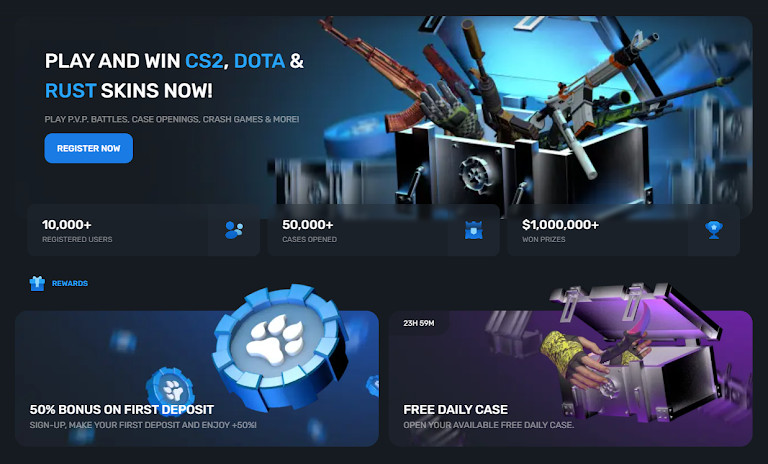
Upon visiting the website, users will see a platform not unlike the standard gambling center. There are rewards highlighted on the homepage, and a menu to navigate between different games and perks on the left.
What’s different, however, is the social attribute. SkinsLuck is always running a live event where each unboxing and win is recorded, showing people the action as it happens.
Unlike the traditional unboxing platform, SkinsLuck has taken a more gambling-based approach, which means there are actual games that offer cash rewards and access to boxes for users to try out.
The platform highlights that it has over 10K registered users so far and over 50K cases have been opened already, giving away over $1 million in prizes. The focus of this platform is to allow users to win CS2, CSGO, Rust, and DOTA skins, but in a more gamified manner.
SkinsLuck Bonuses
At SkinsLuck, there are two types of bonus perks users can access. One is the 50% bonus on the first deposit. Beyond that, daily users will receive a new case to open each day. The nature of these cases can range from basic to rare, and all of them are packed with unique goodies.
Gambling on SkinsLuck
There is a modest list of gambling games on SkinsLuck, designed to modify the standard unboxing experience. All of them are part of the “Originals” category. These are games specifically designed for the website, which means all of them come with a unique flavor.
Case Opening and Case Battle
The basic offerings of the platform are the first to be highlighted, and they are Case Opening and Case Battle.
With Case Opening, users get access to CSGO and CS2 cases, and there are multiple types available. These include weapons cases, glove cases, agent patch cases, sticker cases, limited edition cases, budget cases, and even premium cases.
According to the website, all of them follow a provably fair model.
Case Battle is a utility that adds a gamified flair to the act of unboxing. The game features multiple players going against each other in a bid to get the best box and win the biggest prize. It is a multi-round game, featuring up to 5 players in each round. At any point, there are over 27 battles taking place with thousands of dollars worth of articles being traded.
Crash Game
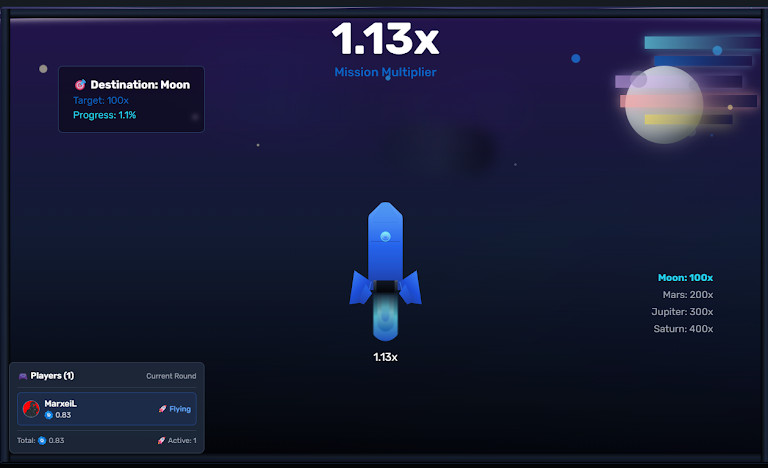
SkinsLuck offers a simpler variant of a crash game featuring a rocket going straight up and aiming for a 300x multiplier. Betting requires at least 100 coins, and once it begins, users have a chance to generate big wins. Volatility can be set before placing the bet, making it a suitable pick for most players.
Roulette
A very standard, yet effective, version of roulette has been featured on SkinsLuck. There are no numbers here. Instead, the focus is on symbols. Getting the desired one yields rewards. Gameplay is fast-paced, blending the “spin the wheel” experience with standard roulette play.
Blackjack
There is a simple version of Blackjack also available on this platform featuring a single table with standard cards. While the gameplay is “by the numbers,” the outcome is fair thanks to all the games being provably fair.
Plinko and Coinflip
For those looking for a simpler gambling experience with games that do not require much before starting, Plinko is a good addition. It offers a simplified experience, but has a robust look and weight to it.
PVP Games
While many of the games on the platform can be played in single-player mode (except for Case Battles), there are additional PVP games to look forward to. This includes Coinflip and Jackpot.
Jackpot is an upcoming game. Coinflip, however, is already active.
It is as simple of a game as players would expect. Two players go against each other, calling the outcome of the coin toss, and the winner is based on which symbol comes up. It also contains multiple rounds for additional excitement.
In addition to standard PVP games, there is also a leaderboard offering massive perks to those who accumulate the most points.
Payment Method on SkinsLuck
Users can deposit on SkinsLuck using an array of payment methods. There are fiat options available. However, there are more options for cryptocurrencies, including Bitcoin, Ethereum, Litecoin, and Tether.
CS2, DOTA2, RUST, and ROBLOX have also been added to the payment methods, which indicates that the credits earned in these games can be used on the platform.
The Verdict: Simple and Effective Unboxing Ecosystem
SkinsLuck presents to users a simple and gamified unboxing ecosystem. While the gambling elements are standard, the fact that they are integrated with the unboxing mechanic makes them exciting.
Disclaimer
In line with the Trust Project guidelines, please note that the information provided on this page is not intended to be and should not be interpreted as legal, tax, investment, financial, or any other form of advice. It is important to only invest what you can afford to lose and to seek independent financial advice if you have any doubts. For further information, we suggest referring to the terms and conditions as well as the help and support pages provided by the issuer or advertiser. MetaversePost is committed to accurate, unbiased reporting, but market conditions are subject to change without notice.
About The Author
Gregory, a digital nomad hailing from Poland, is not only a financial analyst but also a valuable contributor to various online magazines. With a wealth of experience in the financial industry, his insights and expertise have earned him recognition in numerous publications. Utilising his spare time effectively, Gregory is currently dedicated to writing a book about cryptocurrency and blockchain.
More articles
Gregory, a digital nomad hailing from Poland, is not only a financial analyst but also a valuable contributor to various online magazines. With a wealth of experience in the financial industry, his insights and expertise have earned him recognition in numerous publications. Utilising his spare time effectively, Gregory is currently dedicated to writing a book about cryptocurrency and blockchain.