It’s safe to say that Aery has become a familiar name for Xbox players over the years. With a long line of relaxing flight adventures already under its wings, Aery – The King’s Messenger now arrives on Xbox Series X|S, once again inviting players to slow down, take to the skies and explore a peaceful fantasy world from above.
Priced at £9.99, the latest entry from EpiXR Games continues the series’ signature formula: tranquil exploration, colourful environments and a story told through scattered memories.
At A Glance
Game: Aery – The King’s Messenger
Developer: EpiXR Games
Publisher: EpiXR Games
Platforms: Xbox Series X|S
Price: £9.99
Genre: Relaxing Exploration / Flight Adventure
A Peaceful Flight Through A Fantasy World
As with previous Aery titles, Aery – The King’s Messenger places players in control of a small bird soaring freely through beautifully stylised environments.
The adventure begins in a vibrant fantasy landscape near a quiet village. From there, the world opens up as you glide through the skies, exploring forests, structures and mysterious locations scattered across each level.
Movement is simple and fluid, with the focus placed firmly on enjoying the sensation of flight while uncovering the secrets hidden across the world.
Collect Memory Shards And Uncover The Story
Your main goal is to locate and collect memory shards scattered throughout each area.
These glowing fragments contain pieces of a larger narrative, gradually revealing the journey of the small bird and its mission to help restore the king’s kingdom. Gather enough shards and new locations unlock, allowing players to continue the story across different themed environments.
Each stage features its own visual identity, atmosphere and tone, creating a variety of worlds that range from colourful landscapes to more abstract, symbolic settings.
A Familiar Experience For Aery Fans
If you’ve played previous entries in the series, the core structure here will feel instantly recognisable.
EpiXR Games has released dozens of Aery titles on Xbox, each built around calm exploration rather than challenge or combat. Games like the original Aery – Little Bird Adventure, or those of Aery – Midnight Hour and Aery – Calm Mind have all delivered similar relaxing experiences focused on gentle movement and scenic discovery.
Take Flight Once Again
Aery – The King’s Messenger is available now on Xbox Series X|S for £9.99, bringing another relaxing flight adventure to the long-running series.
If you’ve enjoyed previous Aery games, or you’re simply looking for something peaceful to play between bigger releases, this latest journey through the skies may be worth taking.
After a couple of delays, a plagiarism lawsuit, and at least one internal reboot, Bungie’s next big game has officially launched. Marathon, the extraction shooter from the studio behind Destiny, has managed to find a decent, if a little small of an audience.
The game’s player numbers on Steam are being compared to its recent free, open weekend, and not in a favourable manner.
To see this content please enable targeting cookies.
Manage cookie settings
Prior to Marathon’s launch, Bungie held a multi-day Server Slam, which offered anyone interested in playing the game a chance to try out almost all of its classes, two of its maps, as well as many of its gameplay and progression systems.
The open test was largely well-received, and players actually showed up for it. It peaked at a very respectable 143,621 concurrent players on Steam, which put it within striking distance of the peak concurrent of its chief competitor, Arc Raiders – at least when you compare both of their pre-launch Server Slam events.
In Arc Raiders’ case, those figures were far outpaced at the game’s actual launch, and the Embark shooter continues to command a very active player base to this day. A paid product garnering far more players than the same product’s own free sampler is never not a good sign, so many hoped something similar would happen with Marathon.
Image credit: Bungie
Marathon has now officially launched, and it doesn’t look like it managed to pull an Arc Raiders – at least so far. At its peak, the Bungie shooter attracted 88,337 concurrent players on Steam (via SteamDB), which is a little over half of its Server Slam’s 143,621 peak concurrent.
Numbers have, of course, dropped since then, which is normal, as players log off for the night. This is obviously not the end of the road for Marathon. Friday, and the weekend, may well push numbers closer to the Server Slam heights.
Indeed, word of mouth is quite positive, with the game currently sitting at a Very Positive user review rating on Steam, based on over 4,600 reviews. As has been proven time and time again in recent years, nothing catapults a game like players emphatically advocating for it to their friends, so it could simply be that mainstream players are cautious.
It will become clear where things settle over the weekend.
Slay the Spire 2 has officially launched into Early Access giving us a taste of the latest deck-builder that can be played solo or online with up to 4 players. It launches with Native Linux support, and it’s playable on the Steam Deck although Valve have yet to give it a rating.
You can see the launch trailer below:
They’re currently estimating 1-2 years of Early Access to add in more overall content, a proper ending, various game modes, fancier visual effects and more languages. So even though it’s here now, there’s a lot more planned to come for the game.
It’s not just exciting because it’s a sequel to one of the best deck-builders ever, it’s also because this one is built with open source as it’s using Godot. And this really could turn into one of the biggest if the original is anything to go by. I do expect this to be quite the hit and early indicators are quite amazing with it seeing a 110,927 concurrent player peak at time of publishing.
Since Bungie’s Marathon also released at the same time, together they seemed to really break the Steam checkout for a while but it seems to have calmed down now thankfully. It took me nearly an hour to get the checkout to actually work.
Pictured – Slay the Spire 2 on Linux
The Linux version as far as I can tell is running very nicely though.
Note: if you own the first game on Steam, you can get the sequel cheaper as part of the Slay the Spire Collection Bundle. A nice feature of Steam is that it will tell you at checkout if there’s a bundle that makes it cheaper.
Pokémon Pokopia offers a lot of classic Pokémon that players can unlock by finding traces of them on the desolate island. As players fulfill the requirements of each Pokémon, they will get to unlock it. One such classical Pokémon that players can unlock earlier in the game is Scyther. Scyther is an essential Pokémon as it teaches Ditto (main character) how to cut the trees to get logs. In this guide, we will tell you how to unlock Scyther in Pokémon Pokopia.
New to the game? You can grab your copy of Pokémon Pokopia on Amazon and start building your island paradise today!
How to Unlock Scyther in Pokémon Pokopia
As players continue to rehabilitate a ruined island, they will come across a habitat of Tall Grass. Look around the area for an apple tree with a few blocks of tall grass. Go near it and inspect it to get a trace of a new Pokémon. Finding this particular Pokémon requires you to fulfill a “Tree-shaded tall grass” requirement.
How to Complete the Tree-Shaded Tall Grass Requirement
To complete the Tree-shaded tall grass requirement, you have to place grass around the tree, covering at least 2×2 blocks. After that, water the grass to hydrate it. For planting the grass, switch to the Leafage move and press the ZR button to place the grass. Once done, switch to the Water Gun move and press the ZR button to water the grass.
Meet Scyther at the Tree-Shaded Tall Grass
After fulfilling the Tree-shaded tall grass requirement, you will have to wait a bit for a Pokémon to stop by. Now, wait until you get the “inspect” option at the grass. Inspect the grass, and Scyther will jump out of the grass. Speak with Scyther and go through the dialogues to unlock Scyther.
Similar to other Pokémon, you can fulfill Scyther’s initial request to learn a new move. The initial request will require you to get 2x wood. Upon giving wood to Scyther, your character will learn the “Cut” move. You can use the Cut move on the tree logs to collect logs.
The charming and cosy Pokélife sim Pokémon Pokopia is out today for Nintendo Switch 2, and just like that, The Nintendo Company has announced the first limited-time in-game event.
“More Spores for Hoppip” is the first special event in Pokopia, and it will run from Monday, 9th March at 1:00 PM PDT to Tuesday 24th March 12:59 PM PDT. If these are globally synced, then that’s 8PM UK time on Monday 9th March, until 6:59AM UK time on Wednesday 25th March, but that’s the rough timing.
During the event window, three additional Pokémon will appear for you to befriend: Hoppip, the Cottonweed Pokémon, as well as Skiploom and Jumpluff.
You’ll naturally have to construct their habitats to draw them to you game world, and that will entail collecting cotton spores that will float around during this time, exchanging them for picnic-themed furniture, and then creating the habitats that this trio like.
These Pokémon are full exclusive to this event, so make sure that you take part if you’re a keen Pokédex filler, or you’ll have to cross your fingers that it will repeat next year (or that you can fudge the rules by changing the system clock Animal Crossing-style!)
Importantly, you will need to have a rebuilt Pokémon Center for this event to take place in your town, and it will not be available on Cloud Islands, which are the server-based instances for multiplayer.
Source: Pokémon
More Pokémon Pokopia Guides and Features
Check out these other guides and features for Pokémon Pokopia:
March is in full bloom, and that means a fresh wave of games heading to the cloud. 15 new titles are joining the GeForce NOW library this month.
Leading the March lineup is Pearl Abyss’ Crimson Desert, an open‑world action‑adventure set in a war‑torn fantasy land, alongside plenty of other games to explore. Whether looking to shake off the winter blues or jump into some bracket‑worthy gaming action, there’s something for everyone in the cloud.
March into the cloud and see what’s new — and keep an eye on GFN Thursdays all month for more updates. This week kicks off the month with eight new games.
March Gaming Madness
In LORT we trust.
LORT dials chaos up to 11 and snaps the knob clean off. Big Distraction’s off‑the‑rails adventure hurls players into a world where every corner hides a bad idea waiting to become a great story, powered by wild weapons, weirder characters and “Did that just happen?” moments. Catch every glorious disaster in full fidelity and play it on GeForce NOW, available this week.
Here’s are this week’s eight new additions:
Kingdom Come: Deliverance II (New release on Xbox, available on Game Pass, March 3, GeForce RTX 5080-ready)
Legacy of Kain: Defiance Remastered (New release on Steam, available March 3)
Esoteric Ebb (New release on Steam, available March 3)
The Legend of Khiimori (New release on Steam, available March 3, GeForce RTX 5080-ready)
Slay the Spire 2 (New release on Steam, available March 5)
Docked (New release on Steam, available March 5)
Death Stranding Director’s Cut (Steam, GeForce RTX 5080-ready)
LORT (Steam)
And look forward to the games coming throughout the rest of the month:
John Carpenter’s Toxic Commando (New release on Steam, March 12, GeForce RTX 5080-ready)
Everwind (New release on Steam, March 17)
Crimson Desert (New release on Steam, March 19)
Screamer (New release on Steam, March 23)
Nova Roma (New release on Steam and Xbox, available on Game Pass, March 26)
Legacy of Kain: Ascendance (New release on Steam, March 31)
Subliminal (New release on Steam, March 31)
February in the Books
In addition to the 24 games announced last month, 18 more joined the GeForce NOW library:
Anno: Mutationem (Xbox, available on Game Pass)
Blizzard Arcade Collection (Ubisoft Connect)
Capcom Beat ‘Em Up Bundle (Steam)
Capcom Fighting Collection (Steam)
Diablo (Ubisoft Connect)
Diablo + Hellfire Expansion (Ubisoft Connect)
Diablo II: Resurrected (Ubisoft Connect)
Galactic Civilizations 3 (Xbox, available on the Microsoft Store)
KILLER INN (Steam)
Mega Man 11 (Steam)
MotoGP22 (Xbox, available on the Microsoft Store)
Spellcasters Chronicles (Steam, GeForce RTX 5080-ready)
STALCRAFT: X (Epic Games Store)
Street Fighter 30th Anniversary Collection (Steam)
Torment: Tides of Numenera (Steam and Xbox, available on Game Pass)
TCG Card Shop Simulator (Xbox, available on Game Pass)
Trine Enchanted Edition (Epic Games Store)
Trine 2: Complete Story (Epic Games Store)
What are you planning to play this weekend? Let us know on X or in the comments below, then see what Blue Thunder Gaming thinks of GeForce NOW.
If you’ve had enough of blasting away enemies, jumping from platform to platform, or dealing with difficult puzzlers then come and check out Super Slalom by Bisboch for the Commodore 64. A new sports down hill skiing game, which is based on the original SLALOM game by COMMODORE ELEC. LTD & HAL LABORATORY, JAPAN. To coincide with this new game which also includes an editor, Saberman has provided some gameplay footage.
Here’s the details. “The Winter Olympics may have ended, but the pleasures of skiing continue on the COMMODORE 64 with SUPER SLALOM, a revamped edition of the legendary Commodore/Hal game originally created for the Japan-only MAX MACHINE. This time you’re in for remade colourful graphics, a new OST full of diverse tracks, enhanced gameplay and six different slopes (compared to the repeated couple of slopes of the original) created from scratch. And, to be true to this “SKI FOREVER” motto, SUPER SLALOM also includes a full fledged LEVEL EDITOR! “
In some alternate universe, there’s probably a simpler, more straightforward version of Maggie Gyllenhaal’s Frankenstein spin-off movie The Bride! that’s currently getting called a must-see crowd-pleaser romance. You can see the bones of that movie in our universe’s version of the film. Stripped down to its core elements, The Bride! has all the makings of a dark, spooky, feel-good Bonnie and Clyde road movie, where Frankenstein’s lonely, hideous monster gets the companion of his dreams, and they try to survive together in an unfriendly world that’s all too eager to slap the “monster” label on outsiders, rebels, and anyone who resists the status quo.
Gyllenhaal has much more complicated aims. Her version of The Bride! is much harder to parse, and much harder to swallow. It’s a provocation and a challenge — a movie designed to prickle and puzzle the brain more than warm the heart. At times, the story’s layers get in the way of its more gut-level pleasures, but it’s clear that’s intentional. It isn’t always obvious what Gyllenhaal wants viewers to get out of The Bride!, but it’s obvious she’s comfortable making them work for it.
Jessie Buckley — who also co-starred in Gyllenhaal’s one previous directorial project, 2021’s Oscar-nominated drama The Lost Daughter — stars here as Ida, a woman first seen partying with gangsters in 1936 Chicago. Ida has an agenda that doesn’t become clear until the end of the movie, and it’s particularly unclear in The Bride!’s early going because, before the audience learns anything about her, she’s seemingly possessed by the spirit of Frankenstein author Mary Wollstonecraft Shelley (also played by Buckley). Mary speaks directly to the audience from limbo and claims she wants to write a much scarier sequel to Frankenstein, a story she wasn’t allowed to tell. She also speaks and acts through Ida, driving her to provocative, frightening behavior that rapidly gets her killed.
Ida soon reappears in the laboratory of mad scientist Dr. Euphronius (Annette Bening), who exhumes her corpse and revives her as a mate for Frankenstein’s monster, mostly referred to as “Frank” and played by Christian Bale under a ton of disturbing stitched-together-corpse makeup. In this setting, Frank’s creator, Victor Frankenstein, was a pioneer in the art of dead-tissue revival; Dr. Euphronius studied, admired, and emulated his work. When Frank comes to her complaining of his loneliness and requesting a companion, Dr. Euphronius only puts up token resistance before agreeing to dig up a corpse and zap it back to life.
Some of what follows is a bit too familiar from Yorgos Lanthimos’ recent movie Poor Things, an adaptation of Alasdair Gray’s wild fantasy novel about a different mad scientist who revives a different dead woman he seemingly hopes will be a tractable, attractive companion. Like Bella Baxter (Emma Stone) in Lanthimos’ movie, the revived Ida is more interested in pursuing her own pleasures than in settling in as Frank’s made-to-order wife. While Ida doesn’t remember her past, she still has some of her old drives toward nightclubs, parties, and dancing. Her immediate pursuit of hedonism ends in disaster and puts her on the run with Frank, who hopes she’ll come to love him.
Image: Warner Bros. Entertainment
Both versions of Poor Things (though it’s even more pronounced in the book) come with a strong, clear message about women’s agency, particularly in scenarios where men expect them not to have any. The Bride! takes up some of that message, but immediately complicates it with weird events and a twisty series of reversals, as Ida’s personality ricochets around from scene to scene. Mary continues to possess her on and off, generally to unclear ends. She seems to want to drive the story to dramatic places, but her interference is erratic, random, and puckish more than driven. As The Bride! morphs into a dark love-on-the-run story, it becomes increasingly unclear where an author literally in limbo fits into the mix.
Some of these ideas come directly from James Whale’s 1935 movie Bride of Frankenstein, the sequel to his 1931 film Frankenstein, which gave American cinema most of its ideas about how Frankenstein’s monster (played by Boris Karloff) should look and sound. Bride of Frankenstein is also framed by a scene where Mary Shelley promises a sequel to her novel, and it also eventually leads to a newly made bride for the titular monster rejecting him in horror. That film’s influence is clearly seen here in the character designs as well, particularly in Buckley’s fright-wig hair and dramatic makeup.
But Mary Shelley opens Bride of Frankenstein by explaining to her husband Percy Bysshe Shelley and their friend Lord Byron that Frankenstein is a moral fable about how mere mortals shouldn’t play God. The Bride! never finds that level of clarity.
Frank, in particular, never fully comes into focus as anything but a lovelorn foil to Ida, in spite of all the details the movie packs onto him. He isn’t the powerful, intellectual outcast of Shelley’s real-life novel, the guttural Boris Karloff monster of Whale’s films, or the more complicated creature that creators like Guillermo del Toro have made him. Bale plays him as a socially awkward dummy desperate for touch and recognition. He capable of mildly sophisticated conversation when he’s pleading his case to Dr. Euphronius, but reduced to fumbling incoherence and jealous rages around Ida. It rarely seems like he has anything much to offer a partner, except dumb, dogged dedication and an animal viciousness toward anyone who threatens her.
Buckley sells Ida’s soulfulness and appeal more handily, but the character’s memory lapses, periodic possession, and emotional instability make her so erratic, it’s hard to find the character at her heart, or feel a clear rooting sense of interest in any one impulse that directs her. On her revivification, Ida coughs up black goo that stains her lips, cheek, and body, giving her a distinctive look. Later, as her aggressive iconoclasm makes waves across the country, other women emulate that look and she becomes a kind of societally disruptive monster fashion icon in Lady Gaga mode. That’s a strong idea that Gyllenhaal expresses through memorable visuals and moments — but it’s a small, thin thread compared to Ida and Frank’s on-again-off-again love story and cross-country crime spree.
Image: Warner Bros. Entertainment
Other storylines further complicate The Bride!, including detective Jake Wiles (Peter Sarsgaard) and his far smarter secretary Myrna (Penélope Cruz) chasing Frank and Ida around the country. These two seem dropped in from their own procedural series: Myrna makes it clear she’s been solving crimes that Jake takes credit for because he’s a man. Their push-and-pull relationship as she tries to get respect and recognition for her skills is a loose parallel to Frank and Ida’s relationship, as Ida tries to find or create her own identity.
And then there’s an entire sideline in Frank’s obsession with cinematic superstar Ronnie Reed (Gyllenhaal’s brother Jake, in a small but crucial role that makes the most of his charisma). Frank’s obsession with cinema repeatedly takes The Bride! into theaters, where he and Ida either watch Ronnie sing, dance, and play out sleek love stories, or project themselves onto the screen to experience those things for themselves. That plotline leads to a particularly wild musical sequence where Gyllenhaal openly references Mel Brooks’ Young Frankenstein. At the same time, she gives The Bride! a level of surreal, manic glitz that elevates it into a fantasy realm, where all the other elements fit together just a little more smoothly.
Still, it’s hard to shake the sensation that there are too many moving pieces grinding and clashing against each other in The Bride! to let any one aspect fully stand out. The most obvious linking factor is the sense of a chaotic, frustrated, rage-driven commentary about the predatory challenges women face. Ida’s fierce resistance against being packaged as Frankie’s wife, the gangster plotline that leads to her original death, the two different incidents of sexual violence she faces throughout the film, and her recognition as an aspirational figure all speak to how often women are pushed into roles as prey, patsies, or possessions — and then demonized when they resist those roles. Myrna’s attempts to get her skills rather than her sex recognized speak to that theme too.
Image: Warner Bros. Entertainment
But Ida and Frank’s sometimes-weird, sometimes-sweet, sometimes-violent romance never fully jibes with those ideas, and rarely has enough consistency or energy of its own to stand as a thread either linking them, or in opposition to them. Neither does Mary Shelley’s presence throughout the film. This movie is its own kind of Frankenstein’s monster, stitched together from a thousand different parts and lurching into disturbing life. The Bride! seems like it was meant to be discussed, analyzed, and unpacked at length, with different fans seizing on different elements as the key to the whole shambling creature. But like so many of the Frankensteinian creatures that preceded it onto the screen, it’s a bit of an unwieldy monster.
All callsigns on this frequency, standby for Il-2 news. As spring rolls over and the snow starts to melt, 1CGS has unveiled its roadmap for 2026, and it is good news for Il-2 Sturmovik owners.
The year is naturally dominated by the upcoming release of Il-2 Korea, scheduled for Q2 2026, but the roadmap makes it clear that the World War 2 flight sim, Il-2 Sturmovik, still has plenty of room to grow over a decade after its release.
From 1941 to 1945
According to the 1CGS roadmap, the year should have at least three new aircraft and the full release of the Siege and Liberation package.
Released into early access last year, Siege of Liberation covers World War 2 in Odessa and Leningrad (modern-day St. Petersburg). Pilot careers are an integral part of this, as with previous expansions, and this year promises to consolidate that.
The year is naturally dominated by the upcoming release of Il-2 Korea, scheduled for Q2 2026
This year should see the expansion of the early war campaigns for both maps and the addition of an all-new late war career for the Leningrad map. The new career periods are as follows:
Defense of Odessa: June 22nd to October 16th, 1941
Leningrad Blockade: September 6th, 1941, to April 30th, 1942
Odessa 1944: April 5th to August 24th, 1944
Leningrad 1944 (all-new): January 14th to September 4th, 1944
The initial deployment of the extended campaigns should come in Q2, with the final release planned for Q3.
On top of that, there are three new aircraft releases planned as DLC.
P-39Q Airacobra
Arguably, the most historically important addition for the latest Il-2 Sturmovik expansion is the P-39Q. This is the definitive version of the Airacobra fighter, which earned a stellar reputation in Soviet hands despite an abortive start with American and British air forces.
The P-39Q came to replace most earlier models in frontline Soviet service in 1944, and featured prominently in both the Leningrad and Odessa fronts in 1944. This variant replaced the four .30 machine guns with two podded .50 machine guns, for a total of four. These were frequently removed in Soviet service to reduce drag.
P-47M Thunderbolt
For the late war on the Western Front, the USAAF will gain access to the P-47M. This was the last variant of the Jug to make its debut in Europe, with deliveries starting in late 1944.
Related
Tokyo Game Show Seals The Nastiest Flight Simulator Divorce
As DCS World stagnates, MicroProse might offer RAZBAM and the genre altogether a lifeline.
Albeit externally similar to late P-47D models, the P-47M stands out for being the only Allied aircraft that could reliably keep up with the German Me-262 jet fighter. The combination of an upgraded version of the R-2800 engine, a new wide-blade prop, and an improved supercharger, the P-47M could hit 500 mph in level flight.
B-26 Marauder
For those who like to take it slow, the roadmap mentions new flyable bombers, but it falls short of calling them by name. The photos don’t lie, however: we are talking about the B-26 Marauder.
While the much larger B-17 and B-24 got all the glory, the B-26 was the most accurate bomber in the US inventory at the time. The Marauder banked on its speed and survivability to strike from medium altitudes, meaning a much smaller force could match or even surpass the effects on target obtained by your usual massed strategic raid.
Exploring The 38th Parallel
As history taught us, after World War 2 comes Korea. The first simulator in decades to be set in the Forgotten War is scheduled to release in Q2 2026.
The simulator’s Steam page has finally gone live, though pre-orders are still only available on the site.
1CGS has also teased an expansion for Korea, though the full details will be disclosed around the game’s early access launch.
According to producer Daniil Tuseev, the first DLC is scheduled to hit early access in Q3 2026, reaching full release by the year’s end. The DLC will be available for purchase separately or as part of the Founders Edition, and is set to contain five additional aircraft, plus undisclosed gameplay features.
If I were a betting man, I’d say this sounds like carrier aircraft are on the way, considering how big a role naval aviation played in the Korean War. While we wait for clarification, this is your friendly reminder to go watch The Bridges at Toko-Ri for some gorgeous aviation footage.
Next
8 Most Realistic Flight Simulators
From bush flying to Mach 2 fighters, these sims do it best.
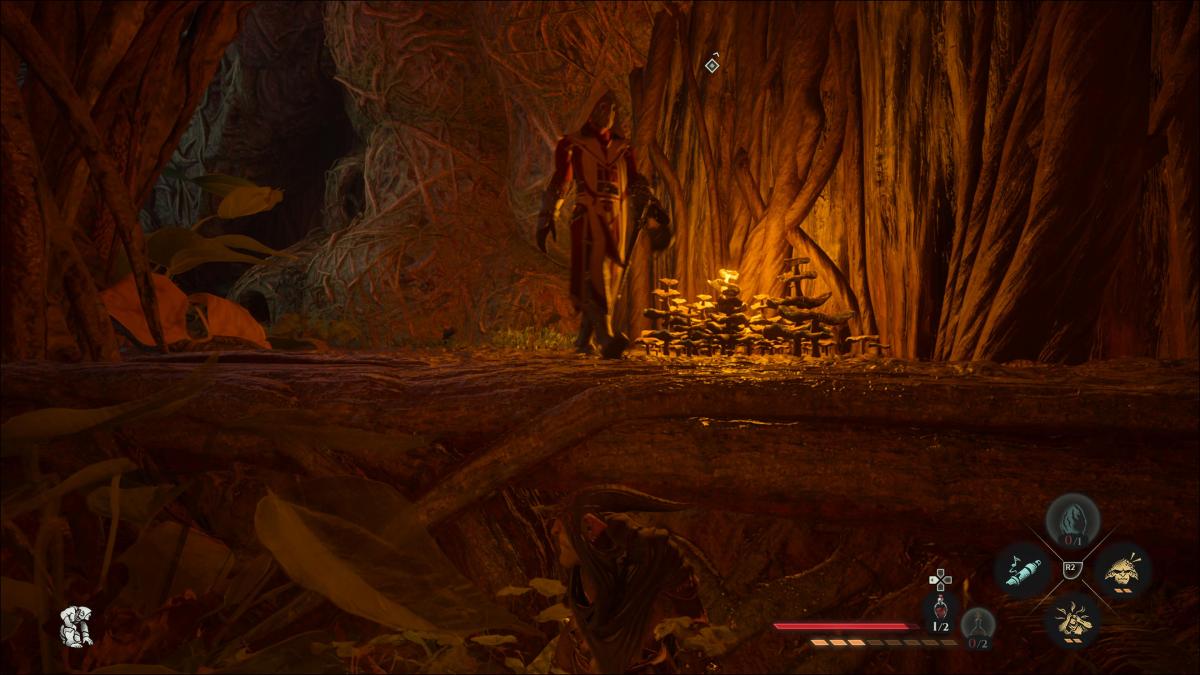
Styx, the foul-mouthed goblin assassin/thief, has finally returned after a lengthy nine-year break for a new adventure. It’s a surprising comeback for a niche stealth series, and while it’s undeniably good to see the grumpy goblin back in action, Styx: Blades of Greed feels more like a cautious reintroduction than a triumphant return. It’s a more forgiving, slightly more aggressive take on the formula — solid and enjoyable in the moment — but one that plays things frustratingly safe in both structure and storytelling.
Available On: Xbox, PlayStation, PCReviewed On: PS5Developed By: Cyanide StudioPublished By: Nacon
Review copy provided by the publisher.
Surprisingly, the game picks up directly from the previous entry’s cliff-hanger ending. That’s a bit confusing when you don’t actually remember what happened in the last game, so firing up Blades of Greed felt like being thrown into an exam halfway through that I had not studied for. Why am I on a crashing zeppelin? Who the hell is this elf dude? It was almost a decade ago, and I can’t remember what I had for lunch yesterday. Help an old codger out, yeah?
One YouTube recap later and I was caught up — but it turns out I didn’t really need to be. For the most part, you can muddle through without much knowledge of the franchise, mostly because the characters are so bland that whatever came before barely even matters.
The general plot sees Styx, alongside Helledryn and Djarak, attempting to keep a powerful new resource called Quartz out of the Inquisition’s hands. Your companions have their own motivations for sticking together, even if the game doesn’t do much to explore them, while Styx once again occupies the anti-hero role. He can absorb Quartz’s power and it’s addictive as hell, so naturally he just wants the next fix. The fact that it keeps yacking to him everytime he absorbs is a problem he happily ignores until it smacks him upside the head.
On paper, Styx’s companions should be the most interesting part of the story. After all, he’s a loner. Pairing him with an Orc shaman, a Dwarf engineer and a Dark Elf feels like fertile ground for conflict and character development. Instead, this rich narrative soil is left largely unplanted. They mostly just… get along. There’s little friction until much later, and when the minor tension does arrive, it lacks impact because the characters themselves are underdeveloped. There’s a faint hint of the dysfunctional found-family trope here, but it never truly blossoms, either. They don’t like each other, they don’t hate each other – why are they together?
Outside of Styx himself, the voice acting doesn’t help matters. Minor NPCs — especially guards you eavesdrop on for information — deliver their lines with an awkward stiffness. The dialogue often feels deliberately hokey, but the performances land squarely in hokey-in-a-bad-way territory. Even the main companions aren’t much better. Flat delivery is the biggest issue, particularly with Djarak, and Wren’s voice never quite fits the character’s design. Overall, the narrative never delivers that precision knife to the ribs. It’s fine. It exists. But everything ultimately comes down to the sneaking.
And thankfully, the sneaking is still enjoyable.
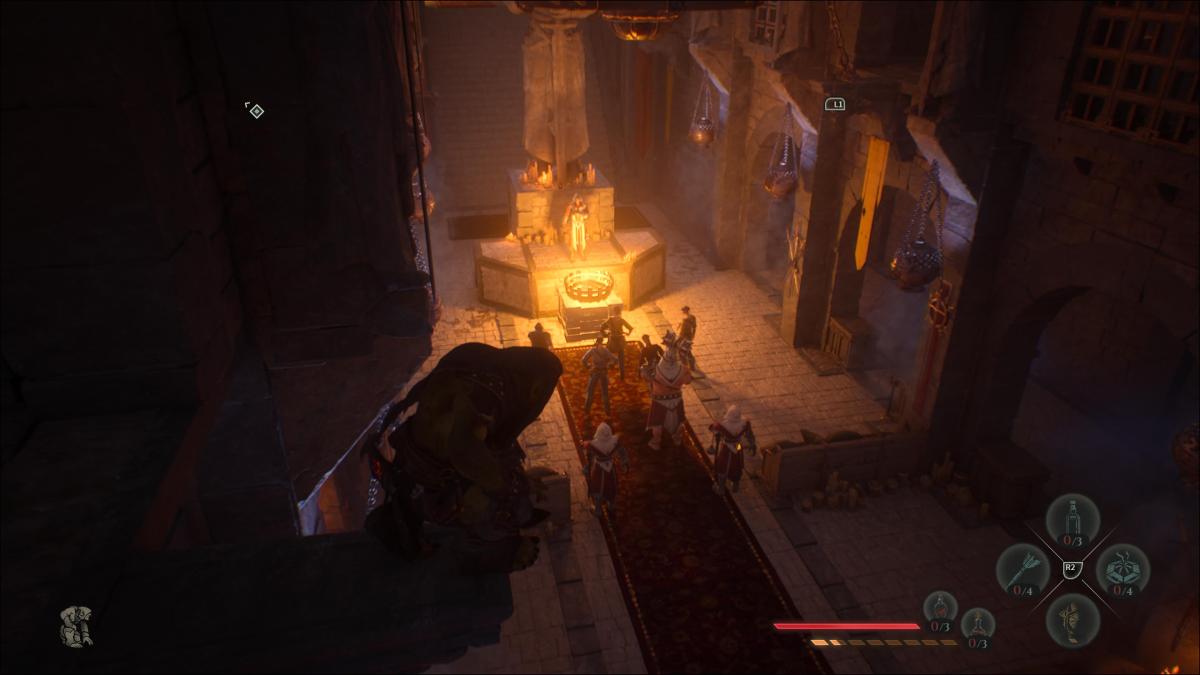
This is a faster-paced rendition of Styx. Previous entries demanded careful study of patrol routes and meticulous planning — including deciding the perfect moment to yack in someone’s food so they die a horrible death. Here, Styx is more agile from the outset. There’s a double jump available almost immediately, letting you bounce around dense environments with ease. You can get away with more, recover from mistakes more easily, and generally play a little looser.
Aside from that, it’s business as usual: hide in shadows, duck into lockers, dangle from rooftops, and wait for that perfect moment to either slip past unseen or perform an emergency spinal tap via dagger. Kills can be brutal and noisy or slower and quieter, depending on your preference. It’s always satisfying to murder your way through an entire section, or move through it perfectly undetected like navigating your way through the awkward family BBQ to the burgers without getting spotted.
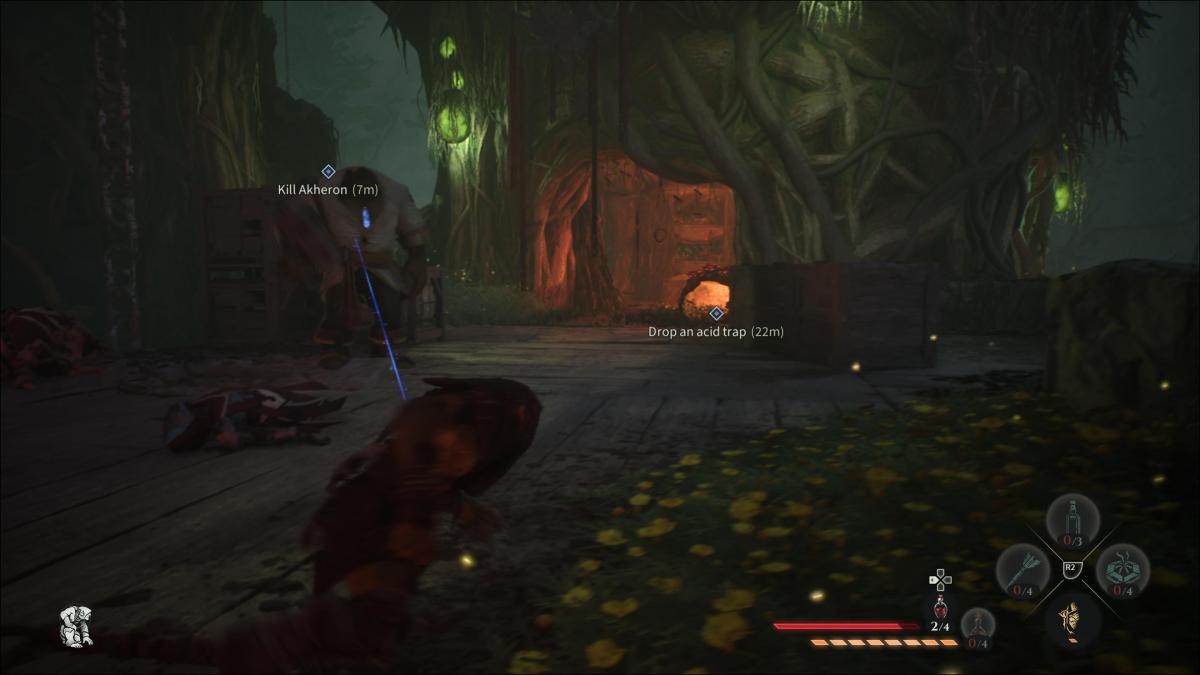
The enemy AI is fairly standard stealth fare. If you’re spotted, guards investigate, shuffle about suspiciously for a while, and eventually wander back to their patrol routes. There’s little dynamic escalation or adaptation. And it’s always hilarious to how quickly they will accept the random deaths of their colleagues via dropped chandelier or poisoning as a freak accident before leaving the corpse there and going back to work. It works, but it rarely surprises. Heavier enemies and armoured brutes at least require a bit more creativity. You can’t just dart in for a quick stab, so you’re encouraged to drop chandeliers on their heads, poison nearby food, or use Styx’s powers to strip their armour before finishing them off. It’s a welcome wrinkle, even if it doesn’t evolve much beyond that.
Tension overall is noticeably lower this time around. Styx’s expanded agility and more aggressive toolkit make both murdering and escaping easier. Getting spotted isn’t catastrophic. Ironically, it’s the clunky combat that pushes you back toward stealth. One-on-one fights are manageable thanks to the lock-on system, but the animations are stiff and awkward enough that you’ll usually decide discretion is the better part of goblin valor. Mostly become goblin valor says stabbing from behind is the better part.
Styx can still create clones of himself, but there’s been a key change. You no longer directly control them unless you specifically activate his mind-control ability as well. Instead, clones are deployed more tactically — thrown onto enemies, tucked into hiding spots for ambushes, or even hurled at chandelier chains to trigger environmental kills. You lose some fine control, but in exchange you gain the ability to coordinate more fluidly with your own duplicate. I don’t think it’s either better or worse – just different.
Other powers are more of a mixed bag. Mind control is handy for clearing a path, especially once upgraded to allow you to force enemies into fatal drops. A blast ability that pushes foes away is serviceable, though combat is so clunky you’ll rarely want to rely on it. Slowing time proves more consistently useful, whether slipping past patrols or quickly dismantling a brute’s defences. In general, powers this time around skew more aggressive compared to previous games, which leaned more heavily into pure avoidance.
Once again, your powers and tools are limited in their use thanks to Amber and resources, both of which are surprisingly hard to find. On the one hand, I do admire the idea that this makes you play smarter and use your abilities only when needed. And yet, it also means you get to have less fun, and find yourself in situations where you don’t use your powers because you’re saving them for that one time you really need them. Except that time never comes. It’s like hoarding all the bloody potions in an RPG.
Upgrades are handled through skill trees enhancing Amber and Quartz abilities alongside more mundane tools like acid traps and throwing darts. Completing main missions is the primary way to grow stronger, though collectible emblems scattered through the levels offer bonus XP, giving you a reason to explore a little. It’s functional progression, if not particularly exciting.
One change that doesn’t work as well is the quick-access wheel system. Each wheel lets you assign up to four abilities, but additional wheels are locked behind optional fetch quests. As you unlock new powers, you’ll either be constantly pausing to reshuffle abilities or begrudgingly tackling dull side objectives just to expand your loadout.
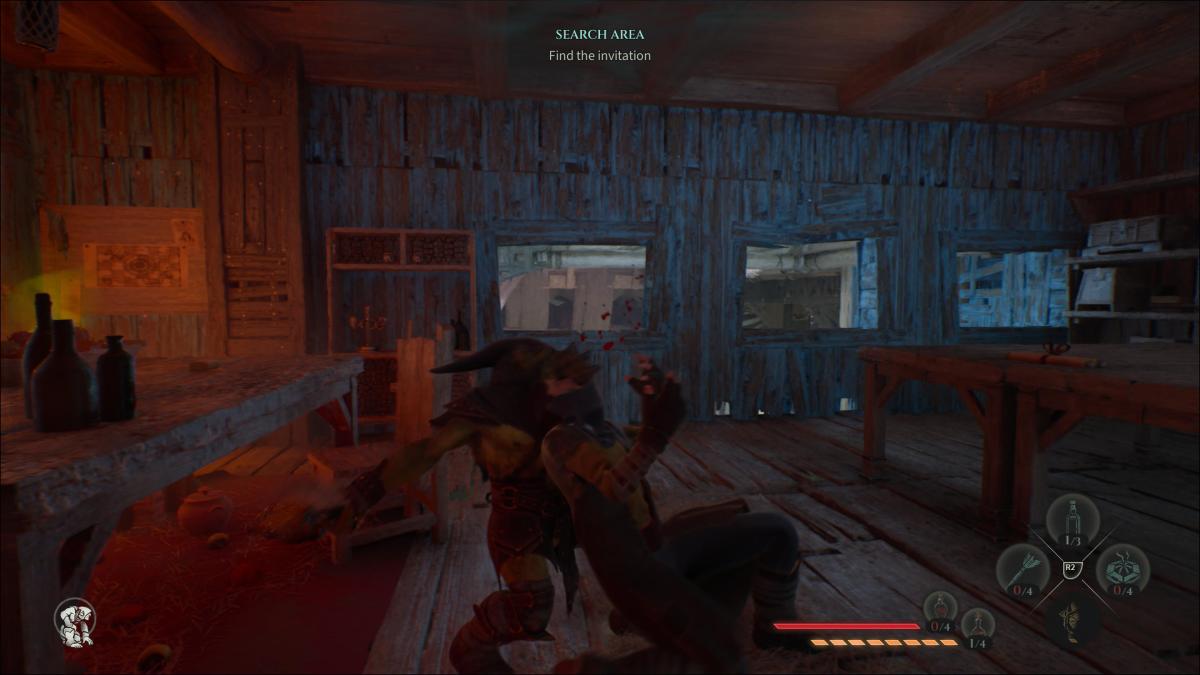
The fetch quests themselves don’t help matters. Mission instructions are often obtuse, pointing you toward a vague location only for the item to actually be somewhere adjacent that you would never have guessed. It feels unnecessarily fiddly.
That criticism extends to the broader structure of the game. Much of Blades of Greed revolves around gathering chunks of Quartz from three main open zones, returning to the zeppelin for a cutscene, completing a linear mission, and then repeating the process. It’s a loop that becomes predictable fairly quickly.
Now, to be fair, you can reduce almost any game objective to a fetch quest if you try hard enough. Even Lord of the Rings is technically just a fetch quest in reverse. The difference is that many games disguise that structure with more variety or narrative momentum. Here, the seams show.
The three main zones themselves are large and open, encouraging exploration and multiple routes to objectives. Interestingly, enemies you eliminate remain dead across missions within those areas, at least until the next chapter starts. That persistence removes any long-term downside to wholesale slaughter, since clearing a zone makes future visits dramatically easier. New enemies spawn for specific missions, but they’ll casually wander around the corpses of their colleagues as if waiting for management to finally hire a clean-up crew.
There are multiple ways to approach objectives, though they rarely feel dramatically distinct. It’s usually a choice between climbing a different wall, slipping through a different vent, or entering through another doorway. The freedom is welcome in the moment, but replay value feels somewhat limited unless you impose your own self-restrictions.
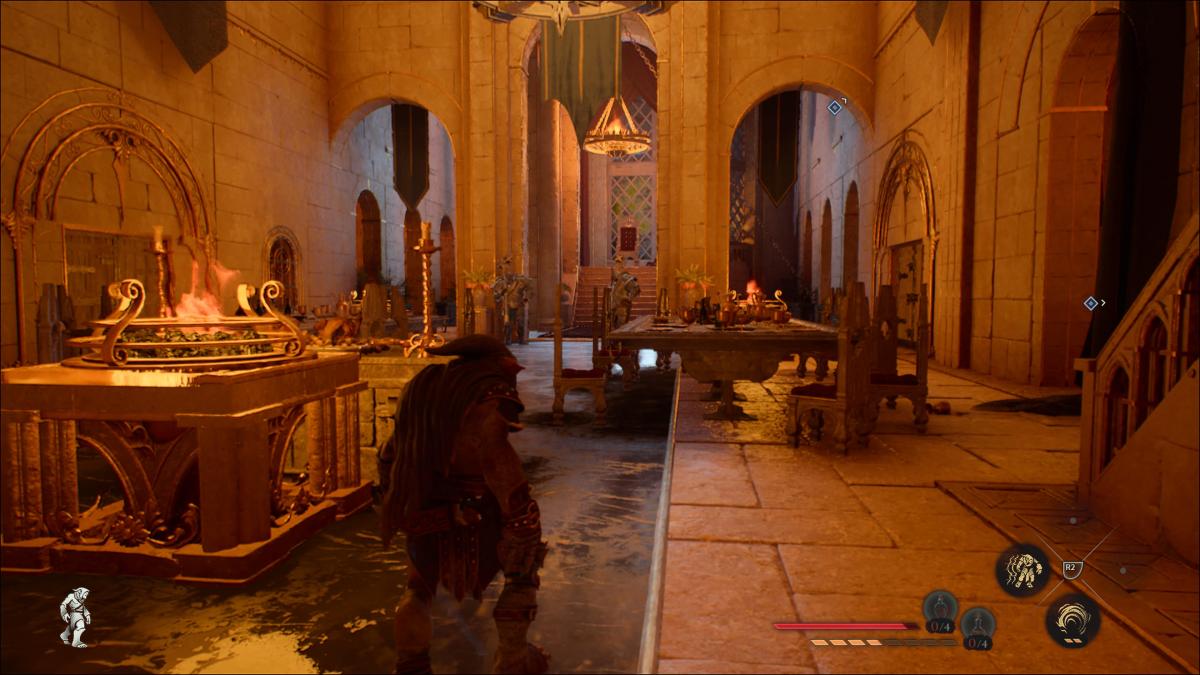
Visually, the areas are distinct enough to avoid fatigue. A ramshackle lower city gradually gives way to pristine upper districts, a jungle teems with literal bugs and orcs, and the ruins of Akanash loom as a reminder of past events. It’s not breathtaking, but it’s varied.
Technically, the game sits firmly in that single-A-to-double-A space. There’s a faint layer of jank to animations and presentation — nothing catastrophic, but noticeable. A few minor bugs crop up, such as guards failing to properly resume patrol routes and pacing endlessly instead. Framerate is generally stable during normal gameplay, though it dips noticeably when using the fast-travel balloon between zones.
For all its flaws, I did enjoy the verticality this time around. There’s ample room to climb, leap, and lurk in rafters. The level designers clearly understand that stealth games live and die by spatial layering, and in that respect Blades of Greed succeeds. As you go through the story you gradually get handed new tools that open up more areas to explore, adding a tiny dash of metroidvania to all the murdering and plotting.
In Conclusion…
⭐⭐⭐⭐
Rating: 3.5 out of 5.
After nine years in the shadows, it’s undeniably good to have Styx back. Blades of Greed delivers solid stealth, satisfying verticality, and just enough mechanical evolution to keep things interesting. But it also plays things frustratingly safe. The story lacks bite, the structure leans heavily on uninspired repetition, and the presentation never quite escapes its rough edges.
There’s fun to be had here — especially if your preferred stealth philosophy involves leaving no witnesses — but after so long away this isn’t the big comeback Styx could of had. Instead, it’s a competent return that sneaks back onto the scene rather than kicking the door down.