Gaming

Home Gaming Page 210

Crafting Luxury: Exclusive Brand Growth Online

Crafting Luxury: Exclusive Brand Growth Online

In recent years, the luxury market has undergone a transformative shift, driven by the increasing importance of digital platforms. As consumers become more tech-savvy and demand personalized experiences, luxury brands are compelled to reimagine their strategies to maintain their exclusivity while reaching a broader audience. This article explores the rise of luxury brands in the digital era, the strategies they employ to amplify their online presence, and the challenges they face in the luxury e-commerce space.

The Rise of Luxury Brands in the Digital Era

Luxury brands have traditionally thrived on exclusivity, scarcity, and a rich heritage. However, the digital era has introduced new dynamics, compelling these brands to adapt to an online-first approach. The rise of social media, e-commerce platforms, and digital marketing has made it imperative for luxury brands to establish a robust online presence. This shift has allowed brands to reach a global audience, transcending geographical boundaries and cultural barriers.

The digital era has also democratized access to luxury brands, allowing consumers from various demographics to engage with high-end products. Online platforms provide a space where luxury can be showcased and experienced virtually, offering a new dimension to brand storytelling. This shift not only enhances brand visibility but also fosters a deeper connection with consumers, who are increasingly seeking authenticity and transparency from the brands they choose to support.

Another significant factor contributing to the rise of luxury brands online is the evolution of consumer behavior. Today’s consumers are more informed and discerning, often conducting extensive research before making a purchase. They seek brands that align with their values and offer unique, personalized experiences. Luxury brands, in response, are leveraging digital tools to provide tailored content and interactive experiences that cater to individual preferences.

Moreover, the integration of technology in luxury retail has paved the way for innovative shopping experiences. Virtual reality (VR) and augmented reality (AR) are being employed to create immersive experiences that replicate the allure of physical stores. These technologies allow consumers to explore products in detail, fostering a sense of exclusivity and enhancing the overall shopping experience.

Luxury brands are also leveraging data analytics to understand consumer behavior and preferences better. This data-driven approach enables them to tailor their offerings and marketing strategies to meet the evolving needs of their target audience. By embracing digital transformation, luxury brands can maintain their relevance and continue to grow in an increasingly competitive market.

Finally, collaborations and partnerships with digital influencers and celebrities have become a cornerstone of luxury brand strategies. These collaborations not only boost brand visibility but also enhance credibility and appeal to a younger, digital-native audience. By aligning with influential personalities, luxury brands can tap into new markets and expand their reach in the digital landscape.

Strategies for Amplifying Online Brand Presence

To thrive in the digital landscape, luxury brands must develop comprehensive strategies that amplify their online presence while preserving their exclusivity. One effective strategy is the creation of visually stunning and engaging content that resonates with the target audience. By investing in high-quality visuals and compelling storytelling, luxury brands can capture the attention of consumers and differentiate themselves from competitors.

Social media platforms play a crucial role in amplifying a brand’s online presence. Luxury brands are leveraging platforms like Instagram, Facebook, and TikTok to showcase their products and connect with consumers on a personal level. By curating visually appealing feeds and engaging with followers through interactive content, brands can foster a sense of community and loyalty among their audience.

Another strategy is the use of influencer marketing to reach a wider audience. By collaborating with influencers who align with the brand’s values and aesthetics, luxury brands can tap into new markets and build credibility. Influencers offer a unique perspective and can create authentic content that resonates with their followers, ultimately driving brand awareness and engagement.

E-commerce platforms are essential for luxury brands looking to expand their online presence. By optimizing their websites for user experience and implementing seamless payment and delivery options, brands can provide a convenient and enjoyable shopping experience for consumers. Additionally, the integration of AI-powered chatbots and virtual assistants can enhance customer service and provide personalized recommendations, further elevating the online shopping experience.

Email marketing remains a powerful tool for luxury brands to engage with their audience. By crafting personalized and visually appealing newsletters, brands can keep consumers informed about new products, exclusive offers, and upcoming events. This direct line of communication allows brands to nurture relationships with their audience and drive customer loyalty.

Lastly, luxury brands are exploring the potential of emerging technologies such as blockchain and NFTs to enhance their online presence. These technologies offer innovative ways to authenticate products, create limited-edition digital assets, and engage with consumers in unique ways. By staying at the forefront of technological advancements, luxury brands can continue to captivate and engage their audience in the digital age.

Navigating Challenges in the Luxury E-commerce Space

While the digital era presents numerous opportunities for luxury brands, it also poses several challenges that require careful navigation. One of the primary challenges is maintaining the brand’s exclusivity and prestige in an online environment. The democratization of luxury through digital platforms can dilute the perception of exclusivity, making it essential for brands to find a balance between accessibility and maintaining their high-end image.

Counterfeit products are another significant challenge in the luxury e-commerce space. The rise of online shopping has led to an increase in counterfeit goods, which can damage a brand’s reputation and erode consumer trust. Luxury brands must invest in robust anti-counterfeiting measures, such as blockchain technology and product authentication, to protect their brand integrity and ensure that consumers receive genuine products.

Data privacy and security are also critical concerns for luxury brands operating online. With the increasing reliance on data analytics and personalized marketing, brands must prioritize the protection of consumer data and comply with stringent privacy regulations. Building trust with consumers through transparent data practices is essential for maintaining brand credibility and fostering long-term relationships.

The rapid pace of technological advancements can be both an opportunity and a challenge for luxury brands. Keeping up with the latest digital trends and technologies requires significant investment and expertise. Brands must continuously innovate and adapt to stay relevant in a highly competitive market, while also ensuring that their digital strategies align with their overall brand identity and values.

Logistics and supply chain management present additional challenges for luxury brands in the e-commerce space. Ensuring timely and efficient delivery of products while maintaining the highest quality standards can be complex and costly. Brands must optimize their supply chain operations and leverage technology to streamline processes and enhance the customer experience.

Finally, luxury brands must navigate the cultural nuances and preferences of a global audience. While digital platforms provide access to a diverse consumer base, brands must tailor their marketing strategies to resonate with different cultural contexts. Understanding local preferences and adapting messaging accordingly is crucial for building meaningful connections with consumers worldwide.

The digital era has reshaped the luxury market, offering both opportunities and challenges for brands seeking to grow their online presence. By embracing innovative strategies and technologies, luxury brands can amplify their reach, engage with a global audience, and maintain their exclusivity in the digital landscape. However, navigating the complexities of the luxury e-commerce space requires a delicate balance between innovation and tradition, ensuring that brands continue to captivate and inspire consumers in an ever-evolving market.

Exploring the World of Digital Design Creators

In the rapidly evolving digital age, the world of design has undergone a transformative shift. Digital design creators are at the forefront of this movement, blending technology with creativity to produce visually compelling and functional designs. This article delves into the realm of digital design, exploring the landscape, key tools, techniques, and the challenges faced by designers in their creative journeys.

Unveiling the Digital Design Landscape

The digital design landscape is a dynamic and expansive field that encompasses various forms of visual communication. From web design and user interface (UI) design to digital illustration and motion graphics, the scope of digital design is vast and continually growing. This diversity allows for a plethora of creative expressions, each catering to different audiences and purposes.

One of the defining characteristics of digital design is its accessibility. With the proliferation of digital devices and internet connectivity, designers have unprecedented access to global platforms. This connectivity enables them to share their work with a wider audience, gain inspiration from diverse cultures, and collaborate with other creatives across the globe.

The evolution of technology has played a significant role in shaping the digital design landscape. Advancements in software and hardware have empowered designers to push the boundaries of creativity. High-performance computers, tablets, and smartphones equipped with advanced graphics capabilities have become essential tools for modern designers.

Moreover, the rise of social media and digital marketing has further propelled the demand for digital design. Brands and businesses are increasingly reliant on digital designers to create compelling visual content that captures attention and drives engagement. As a result, digital design has become an integral part of brand strategy and identity.

Despite its many advantages, the digital design landscape is not without its challenges. The rapid pace of technological change requires designers to constantly update their skills and adapt to new tools and trends. This ongoing learning process can be both exciting and daunting for digital design creators.

In summary, the digital design landscape is a vibrant and ever-changing domain that offers limitless possibilities for creativity and innovation. As technology continues to advance, digital designers will play a crucial role in shaping the visual experiences of the future.

Key Tools and Techniques for Designers

Digital design creators rely on an array of tools and techniques to bring their creative visions to life. Software programs such as Adobe Creative Suite, Sketch, and Figma are fundamental to the design process, offering a range of functionalities from vector graphics and photo editing to prototyping and collaboration.

Adobe Photoshop and Illustrator remain staples in the digital designer’s toolkit. Photoshop is renowned for its robust photo-editing capabilities, allowing designers to manipulate images with precision. Illustrator, on the other hand, is favored for creating scalable vector graphics, making it ideal for logo design and illustrations.

Sketch and Figma have gained popularity among UI/UX designers due to their user-friendly interfaces and collaborative features. These tools facilitate the design of interactive prototypes and wireframes, enabling designers to visualize and test user experiences before development.

Beyond software, digital design creators employ various techniques to enhance their work. Typography, color theory, and composition are fundamental principles that guide the design process. Mastery of these elements is crucial for creating visually appealing and effective designs.

The use of grids and layout systems is another essential technique in digital design. Grids help designers maintain consistency and alignment across different elements, contributing to a harmonious and balanced composition. This technique is particularly important in web and app design, where user interface consistency is key.

In addition to traditional techniques, digital designers are increasingly incorporating emerging technologies into their workflows. Augmented reality (AR) and virtual reality (VR) are opening new avenues for immersive design experiences, allowing creators to explore three-dimensional spaces and interactions.

Navigating Creative Challenges and Solutions

Digital design creators often face a myriad of creative challenges in their work. One common challenge is the pressure to stay relevant in an industry that is constantly evolving. Designers must keep abreast of the latest trends and technologies to ensure their skills remain competitive.

Another significant challenge is balancing creativity with functionality. While aesthetics are important, digital designs must also be practical and user-friendly. Achieving this balance requires a deep understanding of user behavior and the ability to empathize with the target audience.

Time constraints and tight deadlines can also pose challenges for digital designers. The fast-paced nature of the industry often demands quick turnarounds, leaving little room for extensive experimentation and refinement. Effective time management and prioritization are essential skills for navigating these pressures.

Collaboration is another area where digital design creators may encounter challenges. Working with clients, developers, and other stakeholders requires clear communication and negotiation skills. Misunderstandings or conflicting visions can hinder the design process and impact the final outcome.

To address these challenges, digital designers often rely on a variety of solutions. Continuous learning and professional development are key strategies for staying updated with industry trends and tools. Online courses, workshops, and design communities offer valuable opportunities for skill enhancement and networking.

Embracing feedback and iteration is another effective solution for overcoming creative challenges. Constructive criticism from peers and clients can provide fresh perspectives and insights, leading to improved designs. Iterative design processes allow for gradual refinement and optimization of creative concepts.

In conclusion, digital design creators are navigating a landscape rich with opportunities and challenges. Armed with a diverse set of tools and techniques, they craft compelling visual narratives that captivate audiences and drive engagement. Despite the hurdles they face, their ability to adapt, innovate, and collaborate ensures that digital design remains a vital and dynamic field. As technology continues to advance, the role of digital designers will only become more integral in shaping the future of visual communication.

Kingdom Come Deliverance 2 player count skyrockets ahead of its predecessor’s peak in awesome launch 

0
Kingdom Come Deliverance 2 player count skyrockets ahead of its predecessor’s peak in awesome launch 


You can trust VideoGamer. Our team of gaming experts spend hours testing and reviewing the latest games, to ensure you’re reading the most comprehensive guide possible. Rest assured, all imagery and advice is unique and original. Check out how we test and review games here

Warhorse Studios’ Kingdom Come Deliverance 2 player count is already a sight to behold. Just a day after launch, the new medieval RPG has skyrocketed to massive concurrent player counts, kicking off a new era for the Czech game studio. 

With almost universally glowing reviews — including our own review — Kingdom Come Deliverance 2 is expected to have long legs, just like its predecessor. As DLC is already in the works, the game’s high player count should rest easy knowing that a tonne of additional content is already on the way. 

Kingdom Come Deliverance 2 player count revealed 

Via SteamCharts, the player count for Kingdom Come Deliverance 2 has started off strong. On Steam alone, the game has hit a peak of 1225,730 players at the time of writing, and the game is only climbing. 

🚀 Save Up to $1,200 on the Samsung Galaxy S25!

Pre-order now and save big with trade-in and Samsung credit. Limited time only!

*Includes trade-in value + $300 Samsung credit.

For comparison, the original game in the series was already a major success, but was substantially lower in peak player numbers. Across the game’s lifespan, the original game saw an all-time high of 95,863 players concurrently exploring at the same time. 

Of course, these numbers are even higher once console versions of the game are taken into account. However, since Xbox and PlayStation typically don’t release peak concurrent player numbers for any title outside of their own, we shouldn’t expect to get any concrete data. 

🎮 Must-Listen: Publishing Manor Lords w/ Joe Robinson 🎙️

Nevertheless, it goes to show that gaming as a medium is still continuing to grow. While publishers want new games like GTA 6 to raise prices to $100 to keep up with costs, there are more gamers than ever buying titles and higher player numbers than ever as well. Isn’t that interesting? 

For more Kingdom Come Deliverance 2 coverage, read about how to haggle in the dense, realistic RPG, check out the game’s entire mission list or maybe tips and tricks to surviving the game’s harsh difficulty. 


Source link

Get ready for a smashing time as Wreckfest 2 comes to Early Access in March

0
Get ready for a smashing time as Wreckfest 2 comes to Early Access in March


Bugbear and THQ Nordic have announced that the chaotic racer Wreckfest 2 is set for an Early Access release on March 20th. The first game is great fun and it’s Steam Deck Verified, hopefully the sequel will run well with Proton too.

You’re in for a smashing time on this one, as it’s full-contact racing. No shiny super cars, just lots of dented vehicles with crazy drivers. As they said: “As Early Access progresses, you’ll be able to build the banger of your dreams and transform your battered ride into a wrecking machine! New cars and other vehicles will be added as the game evolves”. A much less serious game compared to a lot of other racers and I’m all for it. This is the type of game where you can really just blow off some steam.

Check out the trailer below:

Features:


Unmatched racing experience – Brace yourself for the most phenomenal full-contact racing action with no rules, just jaw dropping moments of chaos and destruction, powered by the overhauled physics engine. Race in intense head-to-head fights on courses featuring high-speed circuits, crazy courses with obstacles & jumps, intersections and oncoming traffic, or go for demolition domination in derby mode.
– More and more tracks & arenas will be added during the Early Access phase -
Awesome & customizable cars – Forget pristine supercars: Our cars are old, dented and patched together. Each of them tells a story, and you can tell your own by customizing your ride. Over the course of early access, more and more customization options will be added to the game. They will not only unlock your creative desires, but also contain new armor and component types that support certain playstyles.
– Later during Early Access, you can also share your designs with other racers and wreckers! -
Fully revamped game modes – Launching into early access with the base game modes of Racing, Derby and multiplayer mode. During the Early Access phase, we will add a completely revamped career mode that adapts to your individual playstyle and guides you on your journey to become a true champion! For online racers there will be new skill-based matchmaking system and server queues coming as well!
Challenges – Another highlight during the Early Access phase will be special challenges, putting you behind the steering wheel of unconventional vehicles that were definitely never supposed to end up on a racetrack! Various bite-sized scenarios will keep you hooked as you battle for the highest scores.
Tournaments – Players can also look forward to tournaments that will be implemented during the Early Access phase. Here you can earn unique rewards in special events – events which test more than just your driving skills!
Mod Support – During the Early Access phase, mod support will be added so you can really mess with this game by installing various mods from the Steam Workshop.

Wreckfest 2 | Release Date: 20th March 2025

Official links:

Article taken from GamingOnLinux.com.


Source link

The next ID@Xbox Showcase is coming on 24th February | TheSixthAxis

0
The next ID@Xbox Showcase is coming on 24th February | TheSixthAxis


The next ID@Xbox Showcase is streaming on 24th February at 10am PT / 1pm ET / 6pm GMT as part of IGN Fan Fest.

There’s a big bunch of developers set to take part, but one of the few revealed highlights will be a new collaboration for addictive poker-like roguelite Balatro.

Here’s some of the studios that will be turning up with new trailers and reveals:

11 Bit
BigFan
Critical Reflex
Daedalic
Game Source Entertainment
No More Robots
Panic
Playstack
Raw Fury
Thunder Lotus
Cult Games
Team17
Curve
Akapura
Don’t Nod

There’s plenty that we might guess could appear through this showcase, with 11 Bit having released Frostpunk 2 on PC last year and might have a console port to announce, or acting as publisher to the upcoming soulslike deck builder Death Howl. Panic, meanwhile, has a bunch of games they’re publishing, including Time Flies, Blippo+ and more. Akapura also has an intriguing title they’re publishing, the 2D role playing game Cabernet, where you play as a 19th century vampire lady. That sounds like it sucks… but in a good way!

So plenty of possibilities, for what is sure to be a busy showcase!


Source link

Exploring the Rise and Impact of Digital Fashion

In an era where technology continues to redefine the boundaries of creativity and commerce, digital fashion emerges as a groundbreaking trend. This novel intersection of fashion and technology is not only reshaping the industry but also challenging our perceptions of clothing and self-expression. As we delve into the rise and impact of digital fashion, we explore its emergence, the technological advancements driving it, and the transformative effects of virtual clothing markets on the global fashion landscape.

The Emergence of Digital Fashion Trends

The advent of digital fashion marks a significant shift in how we perceive and engage with clothing. Unlike traditional fashion, digital fashion exists purely in the virtual realm, allowing designers to experiment without the constraints of fabric and physical production. This freedom fuels creativity, resulting in avant-garde designs that push the boundaries of imagination. As a result, digital fashion trends are characterized by bold colors, intricate patterns, and futuristic aesthetics that captivate a global audience.

The rise of digital fashion can be attributed to the increasing influence of social media and digital platforms. Influencers, fashion enthusiasts, and brands are leveraging these channels to showcase digital collections, reaching audiences worldwide without the limitations of physical showrooms. Platforms like Instagram and TikTok have become vital in popularizing digital fashion, allowing consumers to engage with these trends through virtual try-ons and augmented reality experiences.

Another driving force behind digital fashion is the growing awareness of sustainability issues within the industry. As consumers become more environmentally conscious, the demand for sustainable alternatives increases. Digital fashion offers a solution by eliminating waste associated with traditional garment production. Virtual clothing collections can be created and consumed without the environmental impact, appealing to eco-conscious consumers and brands.

Collaboration between fashion designers and tech companies is also fostering the growth of digital fashion. By combining artistic vision with technological expertise, these partnerships are producing innovative digital garments that blur the lines between reality and virtuality. This synergy is not only enhancing the quality of digital fashion but also expanding its scope and accessibility.

Digital fashion is also gaining traction due to its potential for personalization and customization. Unlike traditional clothing, which often requires mass production, digital garments can be tailored to individual preferences with ease. This capability allows consumers to express their unique style and identity in ways that were previously unimaginable, driving the popularity of digital fashion among younger, tech-savvy demographics.

Lastly, the emergence of digital fashion is closely linked to the evolution of gaming and virtual reality. As these industries continue to grow, the demand for virtual clothing and accessories within digital environments increases. Gamers and virtual world inhabitants seek unique digital attire to enhance their avatars and online personas, further fueling the digital fashion trend.

How Technology Shapes the Fashion Industry

Technology is a pivotal force reshaping the fashion industry, bridging the gap between the physical and digital worlds. One of the most significant technological advancements is the development of 3D modeling and design software, which enables designers to create intricate digital garments with precision and efficiency. These tools allow for rapid prototyping and experimentation, reducing the time and cost associated with traditional fashion design processes.

Augmented reality (AR) and virtual reality (VR) technologies are revolutionizing how consumers interact with fashion. AR applications enable virtual try-ons, allowing customers to visualize how garments will look and fit without physically wearing them. This innovation enhances the online shopping experience, reducing the uncertainty associated with purchasing clothing without trying it on first and decreasing return rates.

Blockchain technology is also making waves in the fashion industry by providing a secure and transparent method for verifying the authenticity and provenance of digital fashion items. Through blockchain, consumers can be assured of the uniqueness and ownership of their digital garments, addressing concerns about counterfeiting and intellectual property theft. This technology is particularly valuable in virtual clothing markets where exclusivity and rarity add value to digital fashion pieces.

The integration of artificial intelligence (AI) is transforming fashion design and production. AI algorithms analyze consumer data to predict trends, enabling designers to create collections that resonate with target audiences. Additionally, AI-powered tools automate various aspects of the design process, such as pattern creation and color selection, streamlining operations and boosting productivity.

Technology is also facilitating greater inclusivity within the fashion industry. Virtual fashion shows and digital platforms democratize access to fashion, allowing independent designers and small brands to showcase their work alongside established names. This inclusivity fosters diversity and innovation, enriching the fashion landscape with fresh perspectives and ideas.

Finally, wearable technology is merging fashion with functionality, creating garments that not only look stylish but also offer practical benefits. From smart fabrics that monitor health metrics to clothing that adapts to environmental conditions, the fusion of fashion and technology is leading to the development of multifunctional apparel that enhances the wearer’s lifestyle.

Analyzing the Effects of Virtual Clothing Markets

The advent of virtual clothing markets is revolutionizing the way consumers purchase and interact with fashion. These platforms provide a space for buying, selling, and trading digital garments, offering a new dimension of commerce that transcends physical limitations. Virtual clothing markets are particularly appealing to the digital-native generation, who value unique and customizable fashion experiences.

One of the most significant effects of virtual clothing markets is the democratization of fashion. These platforms allow independent designers and small brands to reach a global audience without the need for physical retail space. By eliminating traditional barriers to entry, virtual clothing markets foster creativity and innovation, enabling a diverse array of styles and aesthetics to flourish.

Virtual clothing markets also contribute to the sustainability of the fashion industry. By focusing on digital garments, these platforms reduce the need for physical production, minimizing waste and environmental impact. Furthermore, consumers can experiment with different styles and trends without the repercussions of fast fashion, promoting a more sustainable approach to fashion consumption.

The rise of virtual clothing markets is changing consumer behavior and expectations. As digital fashion becomes more prevalent, consumers are increasingly seeking personalized and immersive shopping experiences. Virtual try-ons, customizable avatars, and interactive environments are becoming standard features of these platforms, enhancing user engagement and satisfaction.

The economic impact of virtual clothing markets is substantial, with significant revenue potential for both creators and platforms. Digital fashion items are often sold as limited editions or exclusive releases, creating a sense of scarcity and driving demand. This model not only generates income for designers but also opens up new revenue streams for brands and retailers.

Finally, virtual clothing markets are influencing the cultural perception of fashion. As digital garments gain popularity, the definition of fashion is expanding to include virtual expressions of style. This shift challenges traditional notions of clothing and identity, encouraging a more fluid and dynamic understanding of fashion in the digital age.

The rise of digital fashion is a testament to the transformative power of technology and innovation within the fashion industry. As digital garments and virtual clothing markets continue to evolve, they offer exciting possibilities for creativity, sustainability, and inclusivity. While challenges remain, such as intellectual property concerns and the need for technological literacy, the impact of digital fashion is undeniable. As we move forward, embracing this digital frontier will not only redefine fashion but also shape the way we express ourselves in an increasingly interconnected world.

A recent sale for Rockstar’s Red Dead Redemption 2 results in a record-breaking player count on Steam

0
A recent sale for Rockstar’s Red Dead Redemption 2 results in a record-breaking player count on Steam


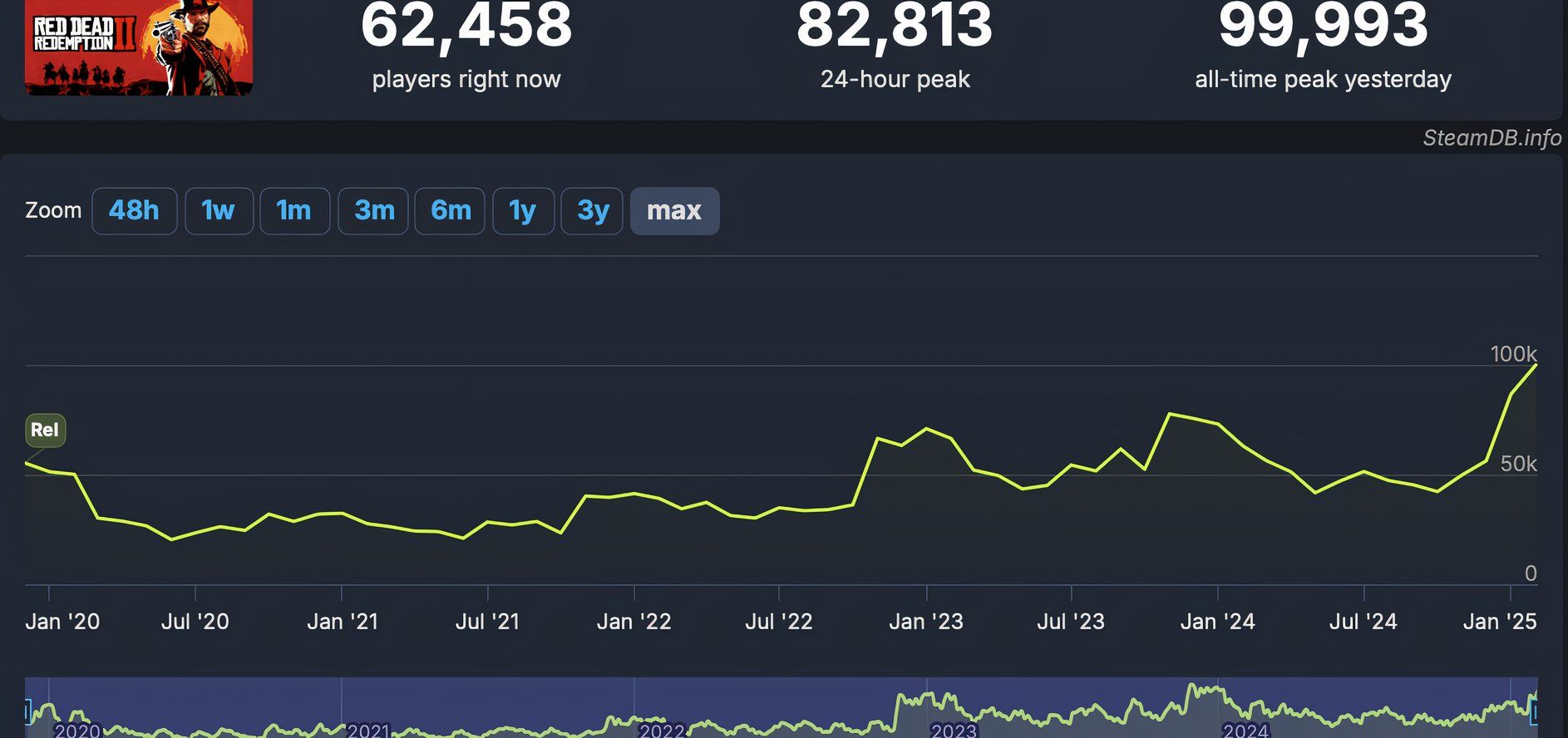
Red Dead Redemption 2, Rockstar Games’ much lauded and most recent entry in the Red Dead series, saw a record-breaking jump for concurrent players on Steam thanks to a recent sale on the platform.

For context, Red Dead Redemption 2 (RDR2) originally launched on consoles on October 26, 2018.

Rockstar’s Western-themed action-adventure game didn’t even release on Steam until over a year later on December 5th, 2019, when it hit a peak concurrent player count of 55,269.

Rockstar Games has not officially announced another title in the series, nor is there a current television or film adaptation of the games to suddenly draw such impressive numbers of players back to the game by the wagon.

The reason for the sudden influx of players can be attributed to a recent Steam sale that saw Red Dead Redemption 2 attain a 75% discount, making the storied title reach its lowest-ever price point of $14.99 USD for the base edition on the sale-friendly PC platform.

At the time of writing, Red Dead Redemption 2 is the 9th highest-rated video game on Metacritic, and according to tracking site Howlongtobeat.com, players, on average, spend about 78 hours on the game across all listed playstyles.

5 Years After Its Launch on Steam, Red Dead Redemption 2’s Recent Peak Player Count Impresses

There is a precedent for this sort of thing, as generous sales and deep discounts have been noted to help even badly received and critically panned games reach unforeseen heights.

The recent sale that saw RDR2’s player count shoot up to nearly 100,000 peak concurrent players is part of a general sale on Rockstar Games on the Steam games platform.

Screenshot of Steamdb detailing Red Dead Redemption 2's recent player counts

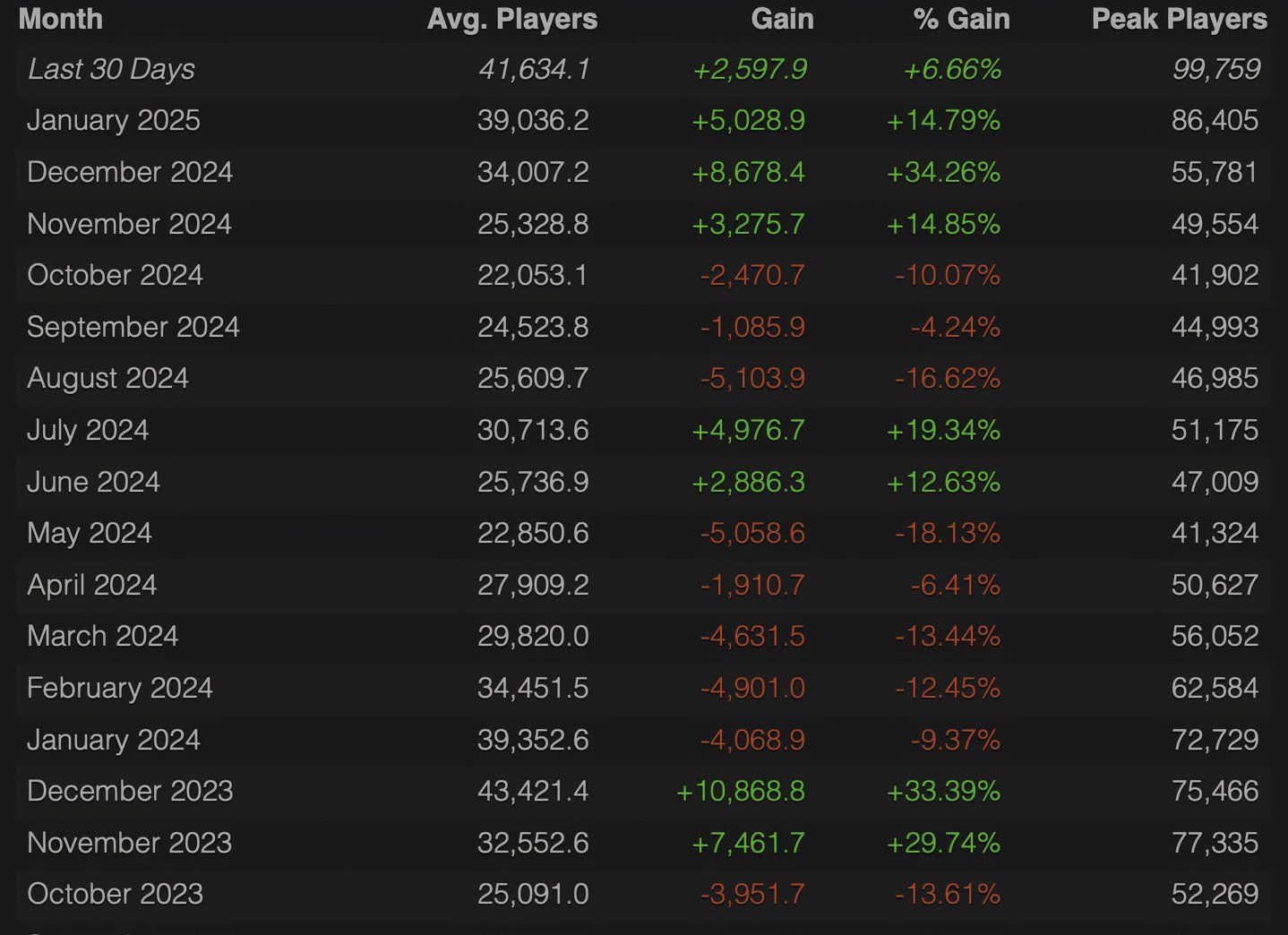
According to these tracking websites, the game’s previous peak occurred in November 2023, when the record was 77,655 concurrent players.

Last week, when the Rockstar Games sales on Steam began, the 2023 record had already been topped with a peak of 86,717 concurrent players.

Screenshot 2025-02-03 at 2.07.14 PM Cropped

With so many players either saddling up as Arthur Morgan for the first time, or joining Dutch’s colorful crew once again, time will tell if this new record will be broken or if it will stand the test of time until Rockstar Games’ next entry in the series eventually gallops along to shatter it.

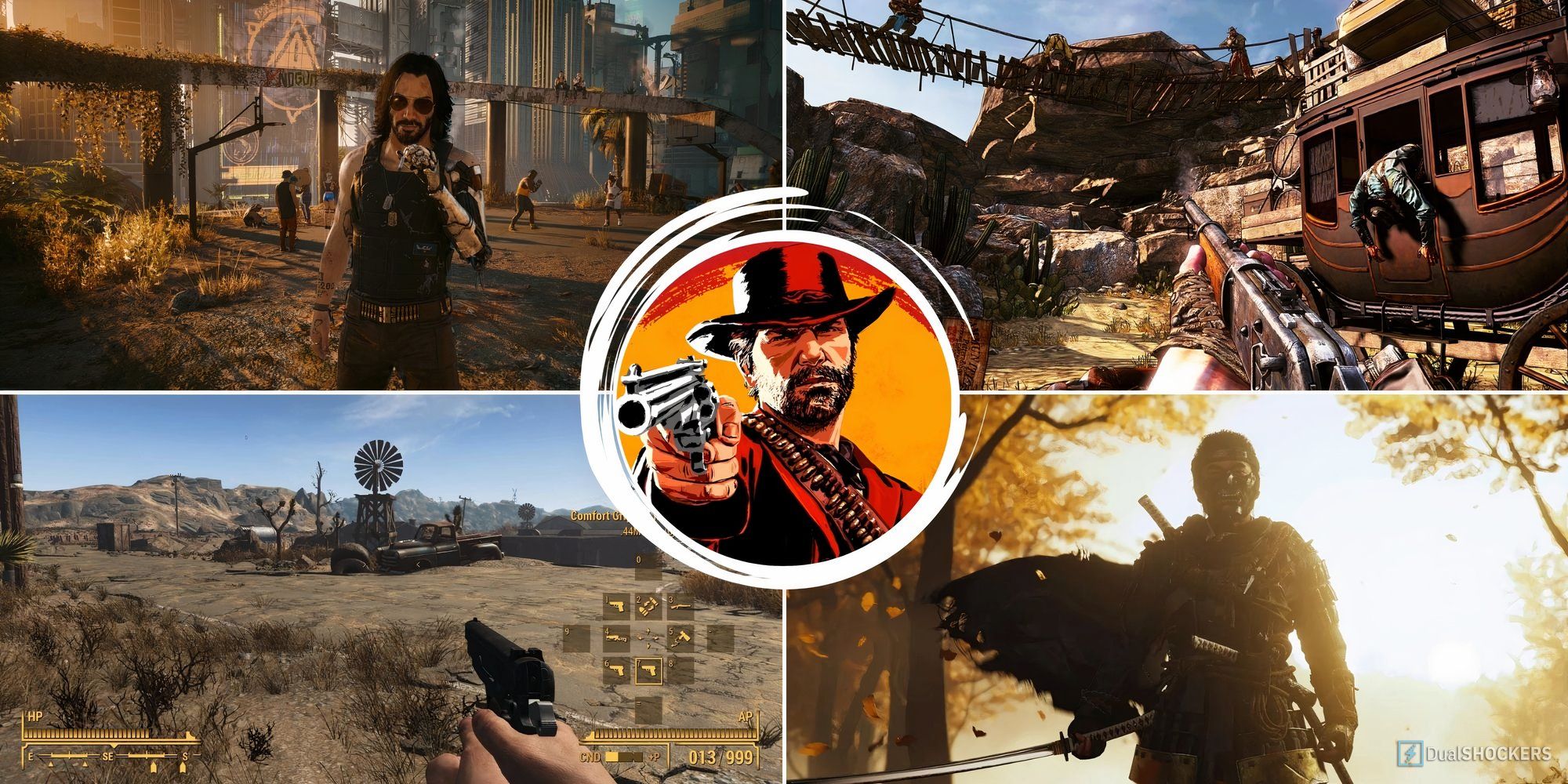
10 Best Games Like Red Dead Redemption 2

Equally immersive and story-rich as Red Dead 2.


Source link

Doomlings MSX – Killing Lemmings for fun… Again!

0
Doomlings MSX – Killing Lemmings for fun… Again!


Ask anyone about Lemmings, and their first memories, would probably be about a bunch of blue and green haired Lemmings that could be blown up, ripped apart and dropped from the highest of points before they even hope to reach that exit. So why is that great game getting another mention on Indie Retro News? Well as of today if you have an MSX, you can download the latest release of Doomlings by Totta. A game that isn’t about saving Lemmings unlike the original game, but you are tasked with killing as many as possible per level.

And here’s what the MSXdev competition page says about the game. “In Doomlings, your goal is to get a specific number of the mindless creatures killed, but where Lemmings will mindlessly walk into all sort of dangers, Doomlings will try to survive and reach the exit… because it would have been too easy otherwise. Across many levels, you have to make sure that the required amount of Doomlings do get killed. As in Lemmings, there are several tools at your disposal, which change on each level. You can use them to interact with the environment and make sure this doomed souls actually meet their maker”.

“This action puzzle game will push your quick thinking and evil instincts to the limit as levels get more complex and your toolbox expands. While the Doomlings want to reach safety, it is your job to make sure that they don’t.”

Links :1) Source 


Source link

Amazon’s fantastic Fire TV Stick 4K Max is 42% off

0
Amazon’s fantastic Fire TV Stick 4K Max is 42% off


The best streaming device in my living room used to be my PlayStation 5. But it has become a hindrance recently, inexplicably buffering all the time and loading shows at low quality. I swapped it for Amazon’s Fire TV Stick 4K Max and wasn’t expecting much, but, well, it’s now been a few weeks since I last used my PS5. This capable streaming gadget is currently available for almost half off from Amazon, costing $34.99 when you use the offer code 4KFTVGAME at checkout.

It wasn’t particularly important to me why the Fire TV Stick 4K Max is running circles around my PS5, just that it is. However, I think I know the answers. First off, Amazon’s stick can connect to Wi-Fi 6E routers (like the PS5 Pro, but not the standard PS5), giving it plenty of 6 GHz bandwidth to stream without other devices in the crowded 5 GHz band interfering. The Fire TV Stick 4K Max is Amazon’s fastest streaming device in the stick form factor, and its upgraded processor over the cheaper model likely gives it a leg up when it comes to quickly loading content. Either way, I’m smitten.

If you’re looking for other reasons to buy one, trying out the Xbox app isn’t a bad reason. If you have a great internet connection and a Game Pass Ultimate subscription, you can play dozens of Xbox games with only a controller paired up to the streaming device. It’s impressive, but don’t confuse it with gaming on a console when it comes to picture quality and input latency.


Source link

Splittown (2025) – Game details | Adventure Gamers

0
Splittown (2025) – Game details | Adventure Gamers


Cold War has split the world in two, both figuratively and literally. The Great Divide spans across the globe with an impenetrable mess of concrete and barbed wire sandwiched between the two blocs. You are Leonard Nimby; a stone-faced former top agent of IM5, hot on the trail of a shrink gun stolen from you by a villainous mayoral candidate on the eve of a fateful election.

Splittown is a point-and-click adventure game inspired by 90s classics such as Day of the Tentacle and Sam & Max Hit The Road. You’ll crack confounding puzzles, stuff improbable amounts of items in your pockets, and engage in humorous dialogue with a colorful cast of characters on an adventure that will push your wits to the limit.


Source link

Popular Posts

My Favorites

Southern Charm Shocker: Who is Out Ahead of Season 10?!?

0
We hope you’re sitting down, Bravo viewers. Jarrett “JT” Thomas has an announcement to make. Ahead of Southern Charm kicking off Season 10 on December...