New York Fashion Week is more than a series of shows; it’s a city-wide extravaganza of style, power, and energy. While the runways feature next season’s trends, the city’s most iconic establishments become the unofficial stages for the real show—where editors, designers, models, and influencers converge to see, be seen, and seal deals over impeccable meals and crafted cocktails. Here is your curated guide to where to dine, drink, and be seen:
The Power Lunch & Dinner Destinations
Perched atop the iconic Saks flagship, L’Avenue is the undisputed queen of fashion-week dining. With its sprawling terrace offering breathtaking views of Fifth Avenue and St. Patrick’s Cathedral, this is where front-row faces gather for a long, luxurious lunch, bespoke cocktails and intimate dinners. The scene is as meticulously curated as the menu—a blend of classic French brasserie and modern flair.
A perennial favorite for those who prefer their power dining with a side of Grecian elegance. Avra is the perfect retreat from the frantic pace of the shows, offering a transportive experience with its high ceilings, pristine seafood displays, and air of relaxed sophistication. Whether you’re at the original East 48th Street location, the chic Madison Avenue spot near Central Park, or the magnificent new Rockefeller Center outpost with its outdoor Mediterranean courtyard, you are guaranteed the finest, freshest fish flown in daily. It’s the ideal destination for a stylish midday bite to recharge or an elegant, extended dinner to dissect the day’s collections.
Just blocks from the fictional Runway magazine office, this grand Parisian brasserie is channeling serious Miranda Priestly energy for NYFW 2025. They are offering a Editor-in-Chef Menu—a three-course prix-fixe priced at $80—curated to suit her exacting taste (and temper). The experience is paired with The Cocktail Wears Prada Menu, featuring witty libations like the smooth “It’s Cerulean,” the groundbreaking “Florals for Spring,” and “Glacial Pace.” No need to claw your way to the top, this is the most deliciously fashionable ticket in town.
The legendary Parisian bistro has found a home at the Hotel Barrière Fouquet’s New York in Tribeca. Its old-world glamour and classic French cuisine make it a magnet for the international fashion jet set. Dining here feels both timeless and of-the-moment, a place where deals are made over steak tartare and champagne. It’s a cross-Atlantic touch of pure, unadulterated chic.
Hidden behind an unassuming blue door marked on West Fifty-Second Street is So & So’s Neighborhood Piano Bar, Romer Hell’s Kitchen. The dimly lit, moody subterranean retreat is certainly an IYKYK destination for NYFW (A$AP Rocky recently chose it to host an impromptu birthday celebration). The gorgeous space boasts red upholstered walls, custom-designed lighting an air of mystery and exclusivity.
For the ultimate reset, slip away from the crowds into the serene, minimalist sanctuary of Fifteen East. Located steps from Union Square, this Michelin-Starred omakase experience is legendary for a reason. Masterful Chef Tasuku Murakami presents an exquisite parade of the day’s best fish in a quiet, sophisticated setting. This isn’t a scene; it’s a culinary journey. It’s the perfect dinner choice for a small group of industry insiders looking for an unparalleled gastronomic experience away from the buzz.
The Cocktail Hour & Late-Night Scenes
Rosewood Carlyle Hotel
A timeless classic for a reason. While Bemelmans Bar is the star attraction with its iconic Ludwig Bemelmans murals and live jazz, The Carlyle exudes an air of discreet, old-money glamour throughout. It’s a place to sip a perfect martini and feel New York’s intricate history. You’re just as likely to rub shoulders with a legendary designer as you are with a visiting dignitaries is this opulent destination.
Baccarat Hotel – The Bar at Baccarat
For a more crystalline, modern take on luxury, the Baccarat Hotel’s Grand Salon is unparalleled. The atmosphere is a seductive blend of French sophistication and contemporary cool, all amidst thousands of pieces of iconic Baccarat crystal. It’s a visually stunning backdrop for a pre-dinner glass of rosé champagne or a late-night nightcap. The crowd is impeccably dressed, and the ambiance is pure, shimmering fantasy.
Temple Bar
The resurgence of this iconic, speakeasy-style lounge proves that some moods are forever. Slip through the unmarked door and be transported to a dimly lit, velvet-draped den of cool. The cocktails are masterful, the vibe is intimate and conversational, and the crowd is a mix of downtown creatives and in-the-know industry veterans. It’s the antithesis of the bright, noisy scene—a perfect spot for a clandestine meeting or to end the night on a note of mystery.
For those who venture to Union Square after the shows, La Dong offers a vibrant, high-energy scene. This isn’t your typical spot Asian spot- it’s a sleek, modern destination for creative Vietnamese cuisine like Vietnamese Beef Carpaccio and Duck Tamarind. Don’t miss the inventive Vietnamese cocktails, like the Mắm Tôm Margarita, made with pineapple, lemongrass, coconut, and chili-shrimp paste-washed mezcal. The vibe is electric, the design is sharp, and it’s become a favorite for a fun, stylish dinners for those that appreciate taste and style.
BECOME A PURSUITIST VIP!
Sign up for our Free Insider Enewsletter. Get exclusive access. No ads, ever!Rated ⭐⭐⭐⭐⭐ from Forbes, The New York Times & The Wall Street Journal.
Kimberly Fisher
Kimberly Fisher is a Pursuitist contributor, freelance writer and luxury expert that has been published in over 50 publications including Huffington Post, Just Luxe, Sherman’s Travel, Ocean View, Luxury Lifestyles UK, USA Today and more.
For years, the fashion industry has grappled with a quiet crisis behind the scenes. Sample rooms in the world’s style capitals churn out countless prototypes, draining budgets and clogging landfills. Every luxury accessory, avant-garde jacket, or ready-to-wear shift dress starts as a costly physical sample, hand-crafted only to be photographed and discarded – an indulgence even established brands struggle to justify. Milan’s creative class, long frustrated by this waste, now turns its gaze to a digital shift redefining how fashion collections come to life.
Zakeke is powering a new generation of digital showcases, built on stunning, photorealistic 3D that elevates product discovery and captures every texture, pleat, and reflection with breathtaking detail. Whether it’s a sculptural heel or a hand-stitched evening bag, fashion brands can now present hundreds of product variants online with no physical stock, no endless photoshoots, and no slow-loading assets. High-resolution 3D models are optimized for the web and instantly shareable via simple links or QR codes across e-commerce, social, and even physical retail.
From One Sample to Infinite Variants, All in 3D
Traditionally, showcasing every material or color required a physical prototype. But for high-priced items, the economics – and the sustainability impact – no longer add up. With Zakeke, brands can digitally present limitless customizations and product variants, eliminating the need for costly sampling and photoshoots. Consumers don’t just explore, they create. Whether it’s choosing a sole, switching metals, or combining leathers, shoppers can configure made-to-order products directly online, in real-time 3D.
This marks a major evolution for luxury and high-end fashion. Instead of producing 15 physical versions of a single handbag or sneaker, brands can offer every possible variation digitally, on demand. Customers receive a hyper-realistic preview of their exact design before purchase, while brands benefit from full visibility into demand. The result? 100% sell-out potential by producing only what customers design and order – cutting waste, maximizing margins, and bringing made-to-order into the digital age. Zakeke customers report reducing sample and photoshoot costs by up to 70%, while transforming their product catalogs into immersive experiences that convert.
A Single Platform for Full 3D Catalog Management
What happens when a brand offers hundreds of SKUs, each with multiple finishes, colors, or materials? Managing those 3D assets used to require complex workflows across agencies, folders, and disconnected tools. Zakeke solves that with a centralized platform that makes 3D asset management as intuitive as organizing a lookbook.
Design teams can upload and organize entire digital catalogs, make bulk updates, collaborate internally, and publish content across all sales channels from one place. Whether it’s a limited-edition sneaker drop or a seasonless accessories line, Zakeke enables fashion houses to maintain consistency, speed up go-to-market, and align teams around a unified 3D strategy.
And the deployment? Because Zakeke’s 3D models are lightweight and optimized, even the most intricate designs load instantly and beautifully across mobile and desktop. From digital runways to QR-powered in-store try-ons, brands can meet customers where they are, with no code, no dev time, and no compromise on quality.
Sustainability, Access, and a New Standard for Creativity
Beyond profit margins, Zakeke’s digital leap answers the fashion industry’s loudest call: sustainability. Instead of burning resources, auctioning off dead samples, or sending unsold pieces to waste, brands deploy digital models that generate no physical byproducts.
Environmental impact shrinks, budgets breathe, and designers finally enjoy the creative freedom to experiment with materials and cuts, without fearing ruin if a collection never gets produced.
Angelo Coletta, CEO at Zakeke, captures the mindset shift: “Don’t think about 3D as a difficult thing to implement.” The message resonates in creative studios and e-commerce backrooms everywhere, as brands large and small claim their space on a new kind of runway.
Fashion e-commerce, long haunted by the cost and carbon toll of sampling, discovers hope in the digital dimension. With Zakeke, every collection, couture or casual, radiates through luminous 3D showcases, proving the future is both sustainable and exquisitely detailed, right where customers live and shop.
Wednesday, August 27th 2025Tags: Suitsferdinando caracenifinamoreIsaianapoli su misurasolitoTommy e Giulio Caraceni
Share
Share this post
Subscribe
106 Comments
||- Begin Content -||
Our regular reader Andrew has contributed to many PS discussions over the years about bespoke, and given valuable advice to readers on both cloth and tailors. So I asked him to rewind a little and describe his whole experience from start to finish, with all the advice he could think of for other readers in the same situation.
By Andrew Borda.
I have been commissioning made-to-measure and bespoke tailoring since 2007. During this period I went through three discernable phases in the types of tailors I used, made a lot of mistakes, and have now found a tailor and other makers that I am very satisfied with.
I hope sharing my experiences and what I have learned along the way can be helpful for other readers, whether they are just starting in bespoke, are seasoned pros, or are perhaps looking for a new tailor.
The first phase of my journey was MTM, which lasted for around five years. My choices in this phase were mainly driven by the necessity of dressing for the office (I run an investment firm based in Zurich) and overall it was very satisfying since I was fortunate to find a good MTM option in Isaia that was cost effective and fulfilled what I then needed from a tailor.
This was followed by my Neapolitan bespoke phase, which lasted another five years. This was less satisfying, as I lost the reliability of my MTM experience without a major improvement in the fit, quality or style of the clothes I was wearing.
The current phase is my bespoke Caraceni phase, which has been going since around 2017 and which is once again very satisfying, as I think best reflects my vision of how I want to present myself to the world.
Andrew in Ferdinando Caraceni
Tasteful grandmothers
I have been interested in clothes since I was young, which I think must have been influenced by my grandmothers. Both were elegant women and were always nicely dressed, and my maternal grandmother was very interested in decorative arts.
Considering none of the men in my family were particularly interested in clothes, and that growing up in the mid-west of the United States I was far from any bespoke tailor, I can only guess that my interest in clothes and art in general came from observing my grandmothers.
Like many people, my first foray into tailoring was driven by a need to buy some suits that I could wear to the office for my new consulting job. I had owned a copy of Bernard Roetzel’s Gentleman for at least 15 years at that point, but most of the makers listed were either too expensive for a recent graduate or impractical for me to visit, so I took to the internet to figure out where I should get my new suits.
There, I discovered the late oughties world of Style Forum and A Suitable Wardrobe, both of which I read religiously. I also started reading a new upstart blog called Permanent Style just as it was getting started, and I think I have read every article since then.
The Chirulli boutique
MTM is often the best way to go
My wife is from the Puglia region of Italy, and as PS readers will know, many reasonably sized towns in Italy have at least one good independent menswear shop. Luck would have it that Martina Franca, the town where we went suit shopping, has two and there I started the first bespoke phase, which was actually MTM.
Ivano Chirulli, owner of the very nice boutique Chirulli, stocked Isaia suits and Finamore shirts, both brands that made the cut on Style Forum, which was of course a very important criteria for me.
At this time, Isaia had not yet expanded to its current extent and prices were lower. Taking advantage of the arbitrage between Swiss salaries and Southern Italian “mates’ rates”, I ordered a blue and a grey single-breasted suit and some blue and white shirts, guided by Ivano’s good advice to start with the basics.
Ivano used the standard Isaia and Finamore blocks, to which he made slight modifications based on my measurements. Overall, the fit was good, the prices were reasonable and the orders were delivered on time. Back then I didn’t have any plan or idea about building a bespoke wardrobe, and MTM fulfilled exactly what I needed.
To this day, I still think that for most customers who don’t have easy access to a bespoke tailor, or who have not found one they are happy with, MTM is a great option.
Isaia, in London
Be wary of globetrotting tailors
I stuck with Isaia and Finamore MTM for around five years, ordering one new suit a year and a few shirts. Despite my satisfaction, curiosity got the better of me and I decided that I needed to try “real” bespoke.
A Suitable Wardrobe was writing very positively about Napoli Su Misura (NSM) and considering the style seemed pretty similar to my MTM suits (Neapolitan, but with some structure in the shoulders and not too short or tight) I decided to give it a try the next time they did a trunk show nearby.
I am not sure if NSM is still going, but for the benefit of readers who are not familiar with them, NSM was a bespoke Neapolitan outfit that was very popular on the forums in the early 2010s at the peak of the Neapolitan #menswear craze, and did trunk shows almost anywhere imaginable. Their prices were at the low end of the spectrum of Neapolitan tailors, which contributed to their popularity.
My relationship with NSM didn’t last long, as I quickly got frustrated by quality control issues (eg trousers with stitching that came undone) and frequently delayed delivery times. This is the source of one of my major lessons in bespoke, which is general hesitance to use tailors who travel frequently.
I do not have a problem with travelling tailors and trunk shows per se and some large houses have been doing it successfully for decades. But for this to work I believe that the tailor’s “machine” needs to be well-oiled.
In my limited experience, in smaller houses where there is no division between front-of-house and cutters, the more time the owner/cutter spends outside of the workshop, the greater scope there is for quality control problems and delayed orders.
As a result, I would advise anyone who is considering using a travelling tailor to take some time to understand how much experience they have with overseas trunk shows and how they ensure quality and delivery.
Gennaro and Luigi Solito
You must like the tailor’s style
Following my unsatisfactory experience with NSM, I jumped to Solito. I had read a positive review on PS and they came frequently to London, where I was then living.
At the start, Luigi Solito’s father Gennaro was also travelling to London for trunk shows and they are both lovely people. I was immediately reassured by their experience, and I happily did not have any quality control issues or delays.
However, my experience was unsatisfactory for reasons that were entirely of my own making. On the spectrum of Neapolitan tailoring, Solito’s jacket (especially Luigi’s) tends to be less structured, shorter and tighter than tailors like Ciardi or Ciro Zizolfi. This style was not compatible with my vision for myself and how I wanted to dress, and I constantly felt like I was wearing somebody else’s clothes.
This is not at all Solito’s fault; rather, it was my mistake in choosing the wrong tailor. This leads me to my second main lesson of bespoke, which is not to ask a tailor to deviate from their house style. Tailors are good at making their house style because they do it all the time, and usually struggle to do anything different.
Therefore when choosing a tailor, it is important that the customer has a clear picture of the style they want for themselves and chooses a tailor who is compatible with that style. For example, if you want to dress like an Italian industrialist, go to a tailor in Rome or Milan that has that clientele. A tailor in Naples or London will rarely succeed in replicating something that is not their house style, even if they agree to try.
Nicoletta Caraceni
Ferdinando Caraceni clears the low bar
After five years of frustrating bespoke experiences, I was considering going back to MTM as I continued to wear my Isaia suits even after I sold or gifted what I ordered from NSM and Solito. Before doing so, I decided to give bespoke one last try.
I had started to travel to Milan frequently for business and I decided to make an appointment at Ferdinando Caraceni. As I commented in PS’s recent review of Tommy & Giulio Caraceni, I have always been most attracted to Central Italian tailoring, of which Ferdinando Caraceni was an offshoot.
(For those that are interested, Simon has written on the A Caraceni article about the history of the various Caracenis.)
Despite being my preference all along, I didn’t go to the Caracenis earlier because I rarely travelled to Milan or Rome, none of them do regular trunk shows, and because I could not afford them.
I decided to shoot straight down the middle of the fairway with my first order, selecting two classic business suits: a navy herringbone DB and a medium-grey birdseye SB. I needed them for the office and I figured that, considering their clientele, if Nicoletta Caraceni couldn’t do those well there was no hope of prolonging our relationship.
From the first fitting onwards, it was clear that the tailoring stars had finally aligned, which for me is a combination of: a style that fits how I wanted to look in my mind’s eye, convenience, reliable quality, and on-time delivery. It sounds like a very low bar to clear, but as Simon can attest, mainly tailors do not achieve even this seemingly low threshold.
Tommy & Giulio Caraceni, Rome
Relationship; convenience; quality
Nicoletta sadly decided to close at the end of 2023, and I found myself once again in search of a tailor. I asked her for advice on where to go, and the only name she immediately suggested Tommy & Giulio Caraceni in Rome. As luck would have it, I started to visit Rome frequently, so going there also worked logistically.
I won’t write extensively on my experience with Tommy & Giulio because it was extensively covered by Simon in an article last year, but I will summarise by saying that my experience with them has been even more positive than Ferdinando Caraceni. The factors I commented on above are all fulfilled, but on top of this I prefer T&G’s house style (a little longer and less boxy than Ferdinando) and I like the fact that Andrea Caraceni is close to my age and hopefully has many years ahead of him in running the business.
This current phase of my bespoke experience feels like one that will last for many years, and I really hope it does because I am very satisfied and don’t have the energy to start building a relationship with a new tailor.
This leads me to my final two lessons from my bespoke journey. The first is that as I become more experienced, factors such as my relationship with the tailor, convenience, and quality control matter as much to me as style.
This should not come as a surprise to regular PS readers, as Simon has written similarly over the last few years. I am a 44-year old business owner with three young children, so time is a very precious commodity. (The same age and position as Simon in fact, though his children are older.)
For any relationship with a tailor to work, they have to be easy for me to visit and commissions need to be delivered on-time without problems. This was a major reason for me to stop patronising tailors in the past and it is even more important to me now. Fortunately, Tommy & Giulio Caraceni fulfill these criteria well.
Andrea Caraceni
Bespoke requires a big investment of time
The final lesson is that building a relationship with a bespoke tailor is a significant investment of time and energy if you want to get the best results.
At their best, a tailor is stylist for men in addition to a specialised artisan who cuts and sews clothes. To give the best advice and guide the customer to make the right choices, he or she needs to understand the customers’ life, work, preferences, style and ultimately culture.
This requires that the customer invests time in talking to and building a relationship with the tailor over a long period of time. If a customer is not willing to make that investment or looks at a commission as a one-off, I would advise that they think twice about whether it makes sense to go bespoke and to consider MTM instead, which is a somewhat more transactional purchase.
I have deliberately focused here on my experience in each of those phases of my bespoke journey, what has and hasn’t gone well, and lessons learned rather than elements of style. Style has been extensively written about in my reader profile and other articles on PS. I enjoy replying to comments and try to do so promptly, so if readers have questions on style or on anything else, I am happy to answer them.
Andrew’s T&G Caraceni coat
Related posts
Tommy & Giulio Caraceni bespoke tailoring: Review
February 12th 2025 – 116 Comments
Read More
Tommy & Giulio Caraceni: Modernising the Roman tailor
September 16th 2022 – 35 Comments
Read More
The (17) made-to-measure tailors I have known
July 12th 2021 – 215 Comments
Read More
<!–
Subscribe to this post
You can follow the discussion on Andrew: My journey in bespoke tailoring by entering your email address in the box below. You will then receive an email every time a new comment is added. These will also contain a link to a page where you can stop the alerts, and remove all of your related data from the site.
While Malaysian fashion designers can (at times) be overlooked by the nation’s regional neighbours, the recent showcase at Kuala Lumpur Fashion Week highlighted just how much potential there is within the local fashion industry. From seasoned stalwarts with decades-long legacies to a younger generation experimenting with form, identity and sustainability, Malaysia’s creative scene is ambitious and increasingly influential. Here, LUXUO spotlights eight noteworthy designers — divided between the Old Guards and the New Generation — whose work continues to shape the nation’s fashion narrative.
The Old Guards:
These designers and brands have established Malaysia’s fashion identity internationally and continue to evolve the notion of what it means to be a Malaysian luxury label. Designers like Dato Sri Bernard Chandran, Rizman Ruzaini, motoguo and FIZIWOO exemplify this enduring influence — each combining technical mastery with a distinct creative voice and demonstrating how thoughtful design can resonate across generations.
Dato Sri Bernard Chandran
Often referred to as Malaysia’s King of Fashion, Dato Sri Bernard Chandran has been shaping Malaysia’s industry for more than three decades. Born in Kuala Lumpur to Indian and Chinese parents, he initially trained in accounting before pursuing design at Kuala Lumpur’s International Fashion Training College in 1988. His talent quickly gained international recognition, becoming the first non-European to win both the Silk Cut Young Designers Award and the Open European Contest for Look of the Year in Paris in 1991.
Returning home in the early ’90s, Chandran established his namesake label, reinterpreting traditional Malay dress with bold embellishments and unconventional fabrics. Chandran’s influence has extended well beyond Malaysia. He debuted at London Fashion Week in 2000, opened flagship stores in Kuala Lumpur and Paris and was commissioned to design the official attire for Malaysian athletes at the 2012 London Olympics. His work has dressed Malaysian high society as well as global icons such as Dato’ Michelle Yeoh and Lady Gaga. Honours such as his “Dato” title in 2006 and the Malaysia Fashion Awards’ Designer of the Year in 2017 recognise his contributions to both culture and industry. Today, Chandran continues to champion diversity and build on his legacy through exhibitions and digital platforms, solidifying his role as one of Malaysia’s most significant fashion figures.
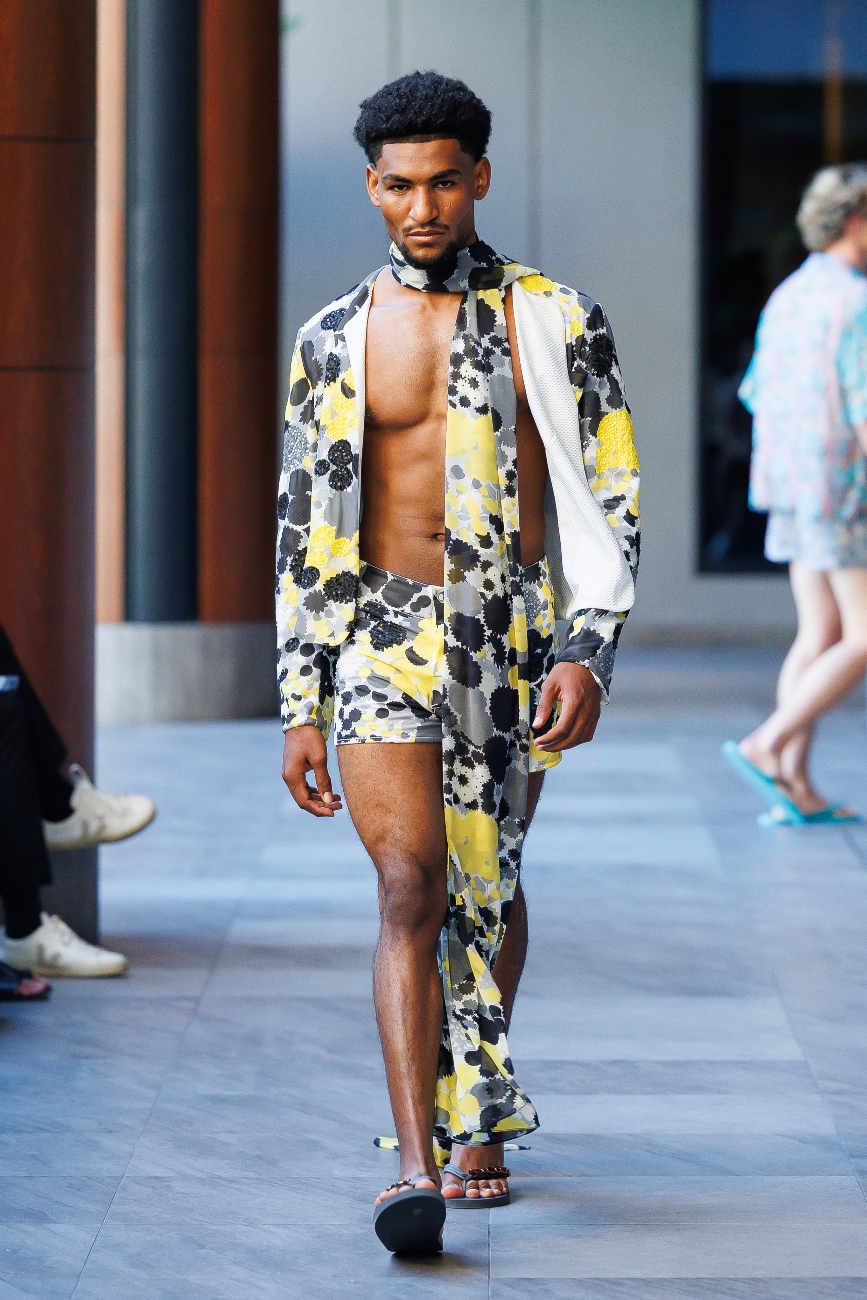
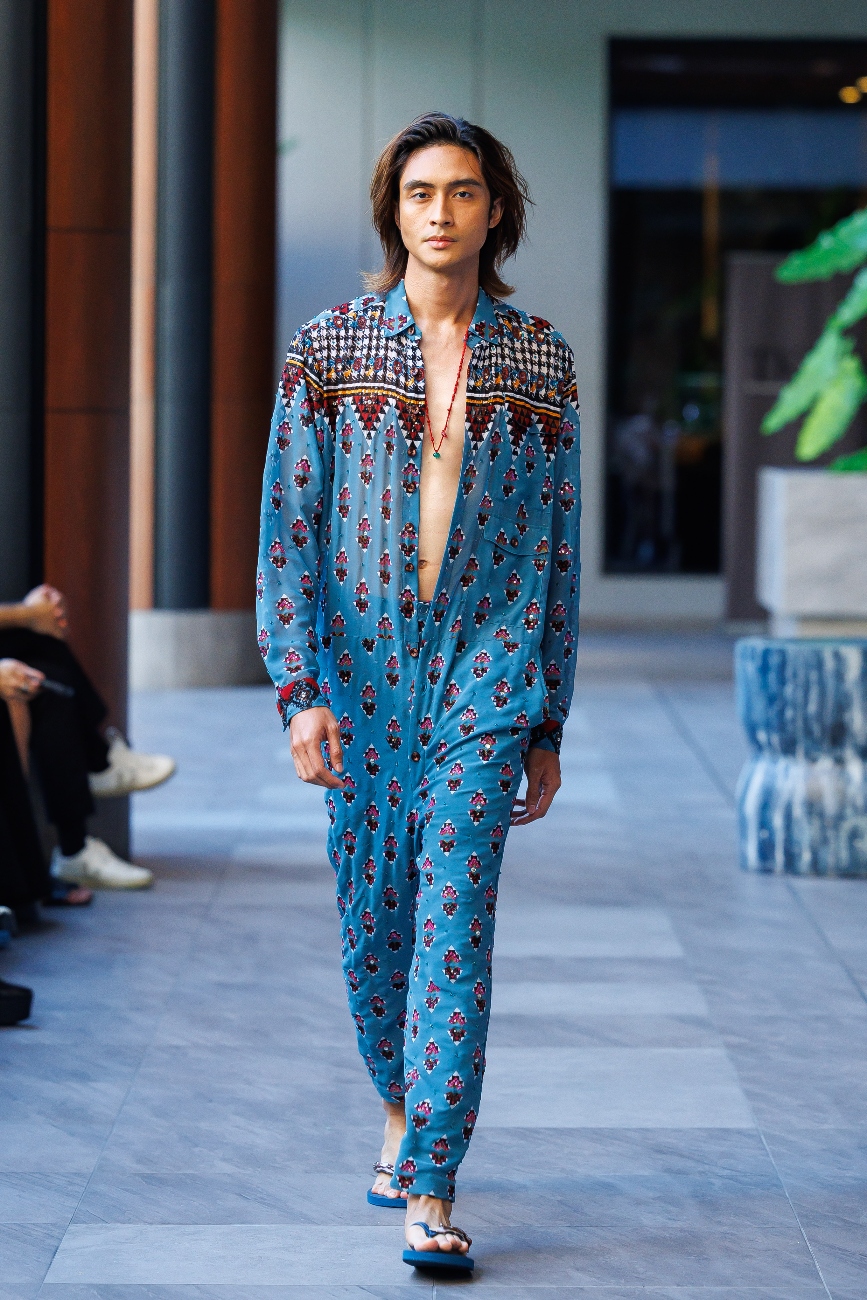
His BC Beach Culture collection reaffirms Bernard Chandran’s long-standing legacy as Malaysia’s “King of Fashion”. By reworking kaftans, Cuban shirts and beachwear staples with lace, crystals and couture-level finishing, BC Beach Culture extends his long-standing narrative of transforming everyday garments into objects of luxury. By transforming remnant fabrics into resort-ready luxury, Chandran not only continues his ethos of sustainability but also reinforces his reputation for pushing boundaries while keeping heritage at the heart of his design language.
Visit Dato Sri Bernard Chandran’s official website here.
Rizman Ruzaini
Rizman Nordin and Ruzaini Jamil first crossed paths as fashion students more than two decades ago, quickly recognising in each other a shared ambition and eye for glamour. By 2005, the duo had launched their namesake label, which would grow into one of Malaysia’s most recognisable fashion houses. Known for their sharp silhouettes, intricate detailing and couture-level finish, Rizman Ruzaini became synonymous with red-carpet dressing and has designed for many of Malaysia’s most prominent public figures.
Over the years, the brand has balanced prestige with accessibility. While its couture creations remain the benchmark, the launch of RR by Rizman Ruzaini during the pandemic introduced a ready-to-wear line that brought their aesthetic to a wider audience. Today, the label operates at both ends of the luxury spectrum: creating bespoke, hand-finished gowns while also offering more attainable pieces that retain the brand’s signature sophistication.
Marking their 20th anniversary in 2025, Rizman Ruzaini unveiled a special Raya Capsule RTW Collection, revisiting some of their most celebrated silhouettes. Today, with couture and ready-to-wear coexisting under their umbrella, Rizman Ruzaini continues to balance aspirational artistry with business savvy — reinforcing their role as pillars of Malaysian fashion.
Visit Rizman Ruzaini’s official website here.
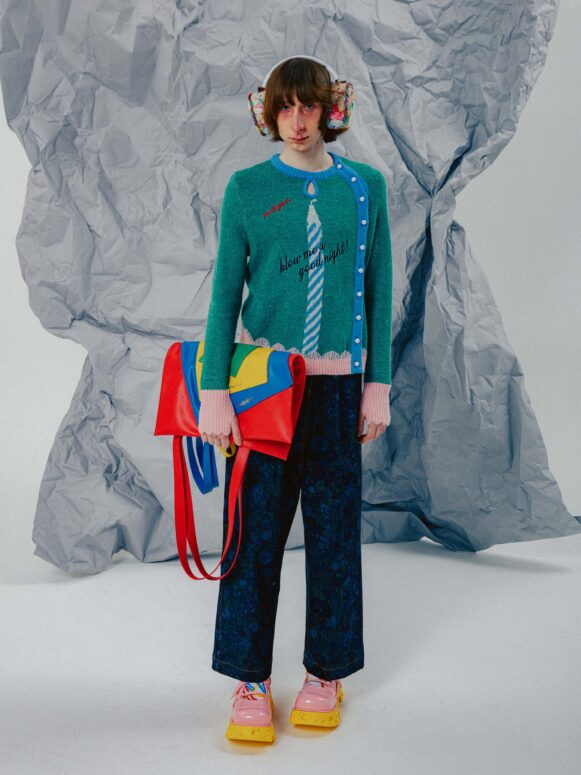
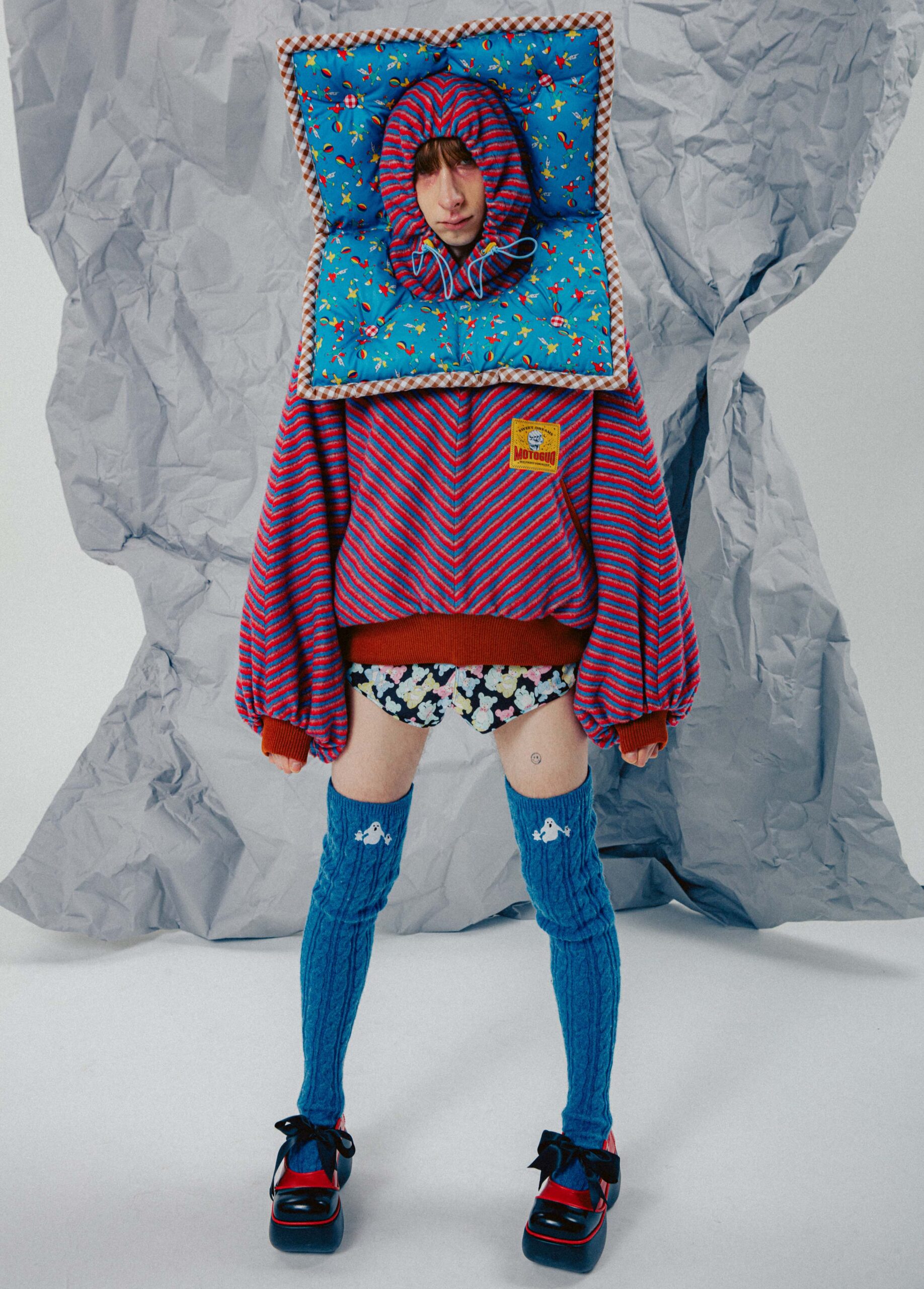
motoguo
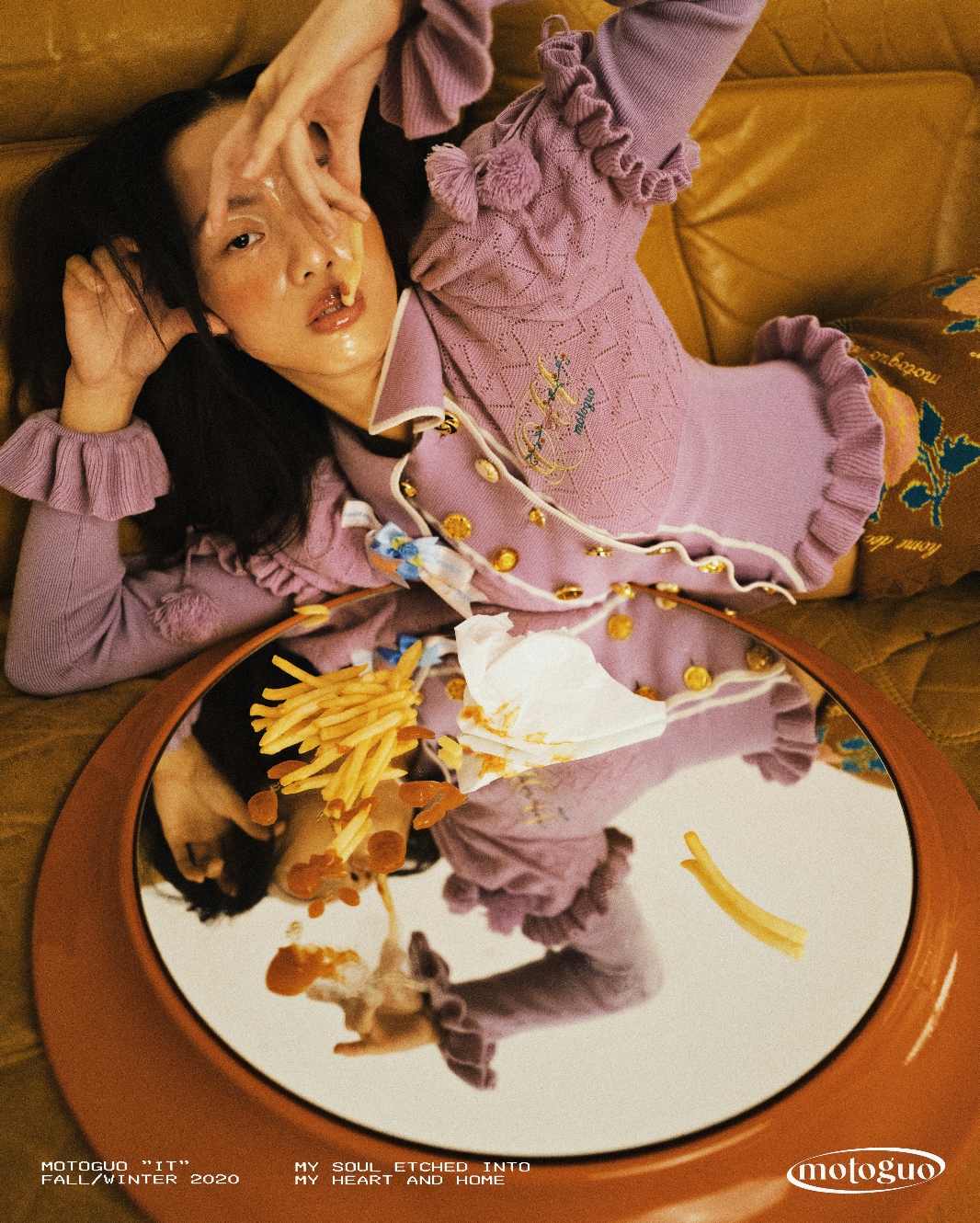
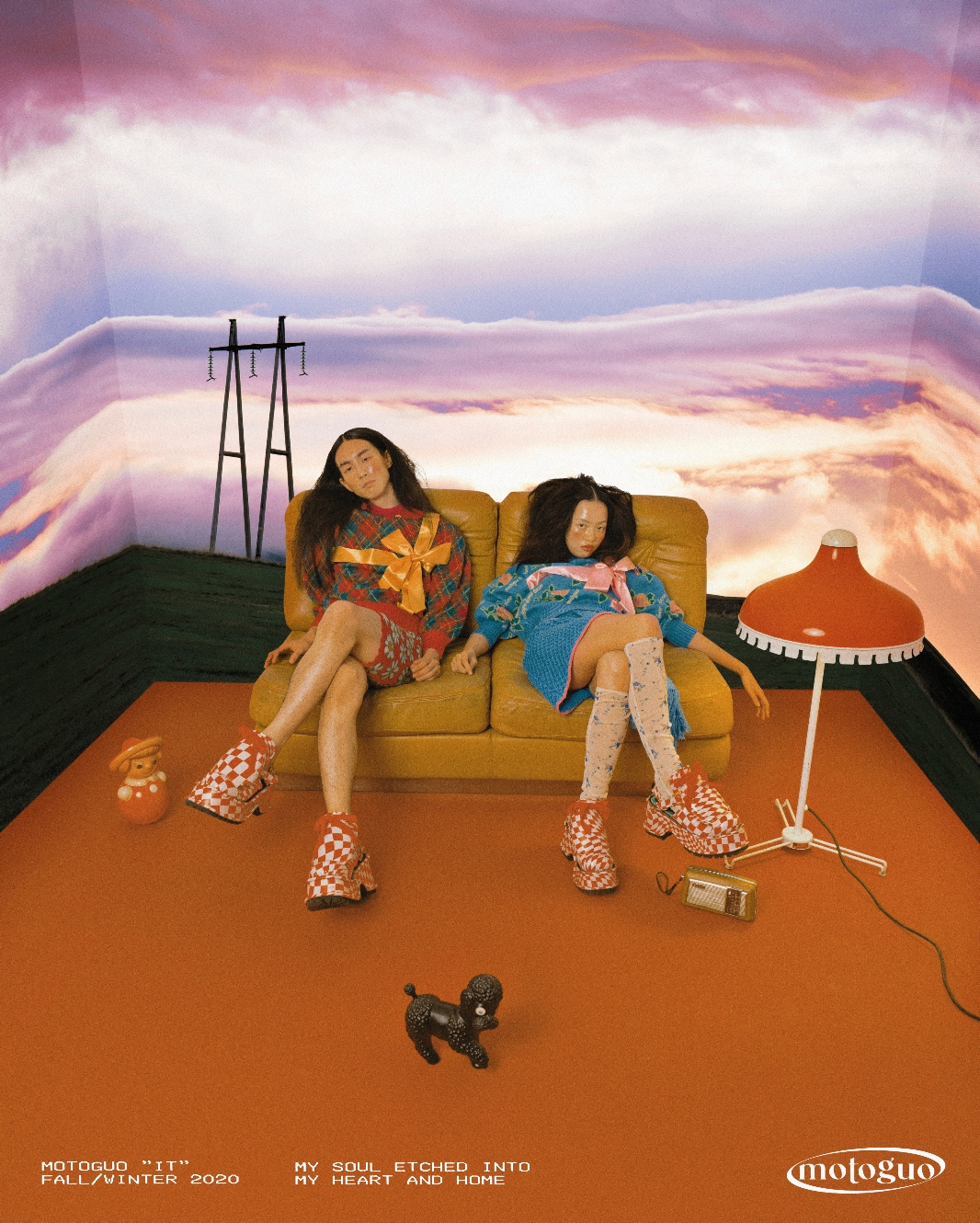
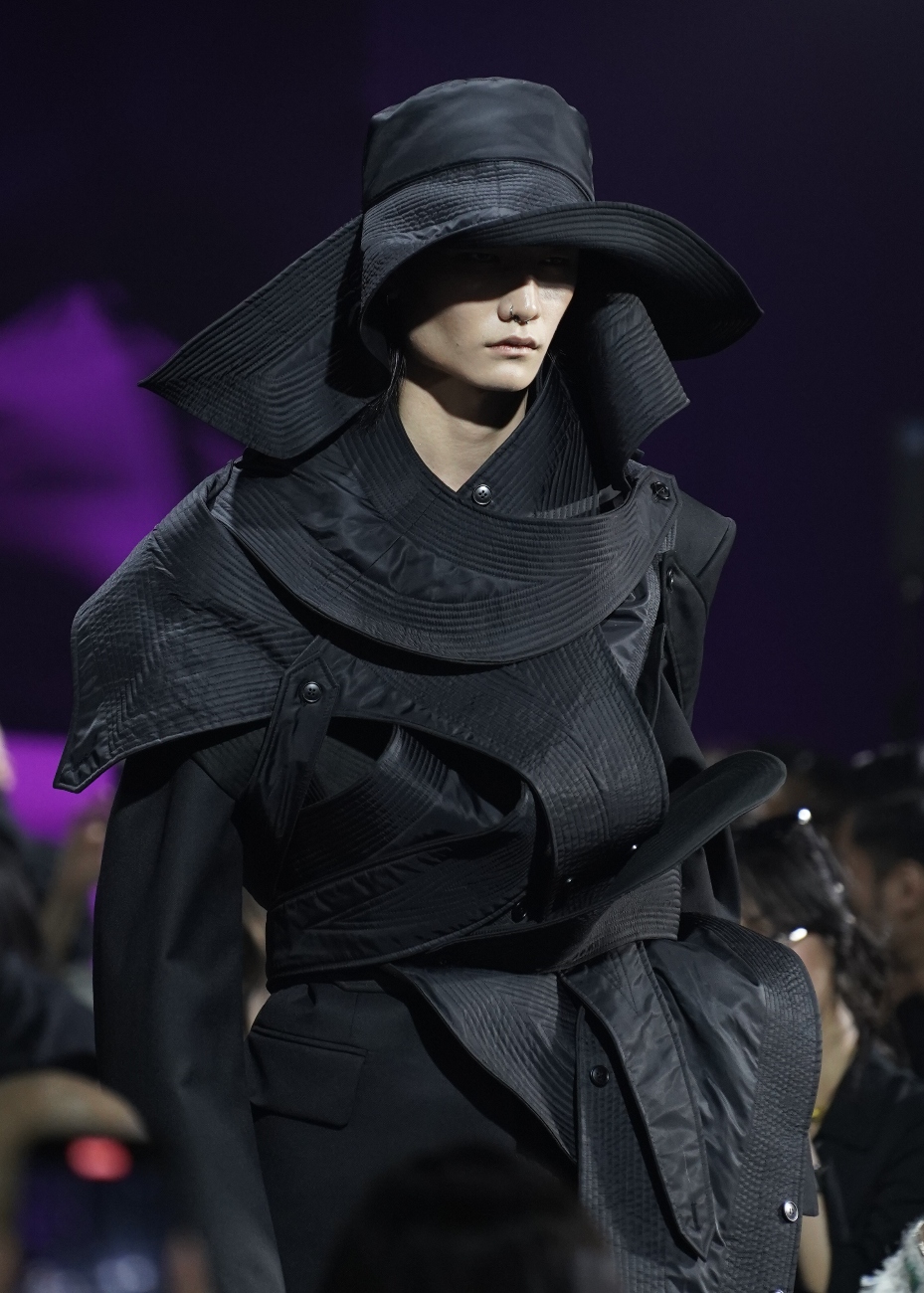
Founded in 2015 by Moto Guo, Kinder Eng and Jay Perry Ang, motoguo has become one of Malaysia’s most distinctive fashion exports. Originally launched as a menswear label, the brand quickly evolved into a genderless platform, known for pushing sartorial boundaries and conventional notions of identity and presentation. motoguo collections are recognisable for their offbeat storytelling, blending the romanticism of childhood nostalgia with satire to deliver bold, often unconventional design choices. Playfulness and cynicism sit side by side in their work, challenging conventional ideas of beauty and taste while cultivating a cult-like following across Asia and beyond.
Both creative directors bring complementary perspectives: Moto Guo’s penchant for dark humor and precision detail is balanced by Kinder Eng’s softer, more romantic sensibilities. Together, they have crafted a brand language that is unmistakably their own. Today, motoguo is stocked internationally and has shown at global fashion weeks, positioning the label as part of a new generation of Southeast Asian designers making an impact on the global stage.
Visit motoguo‘s official website here.
FIZIWOO
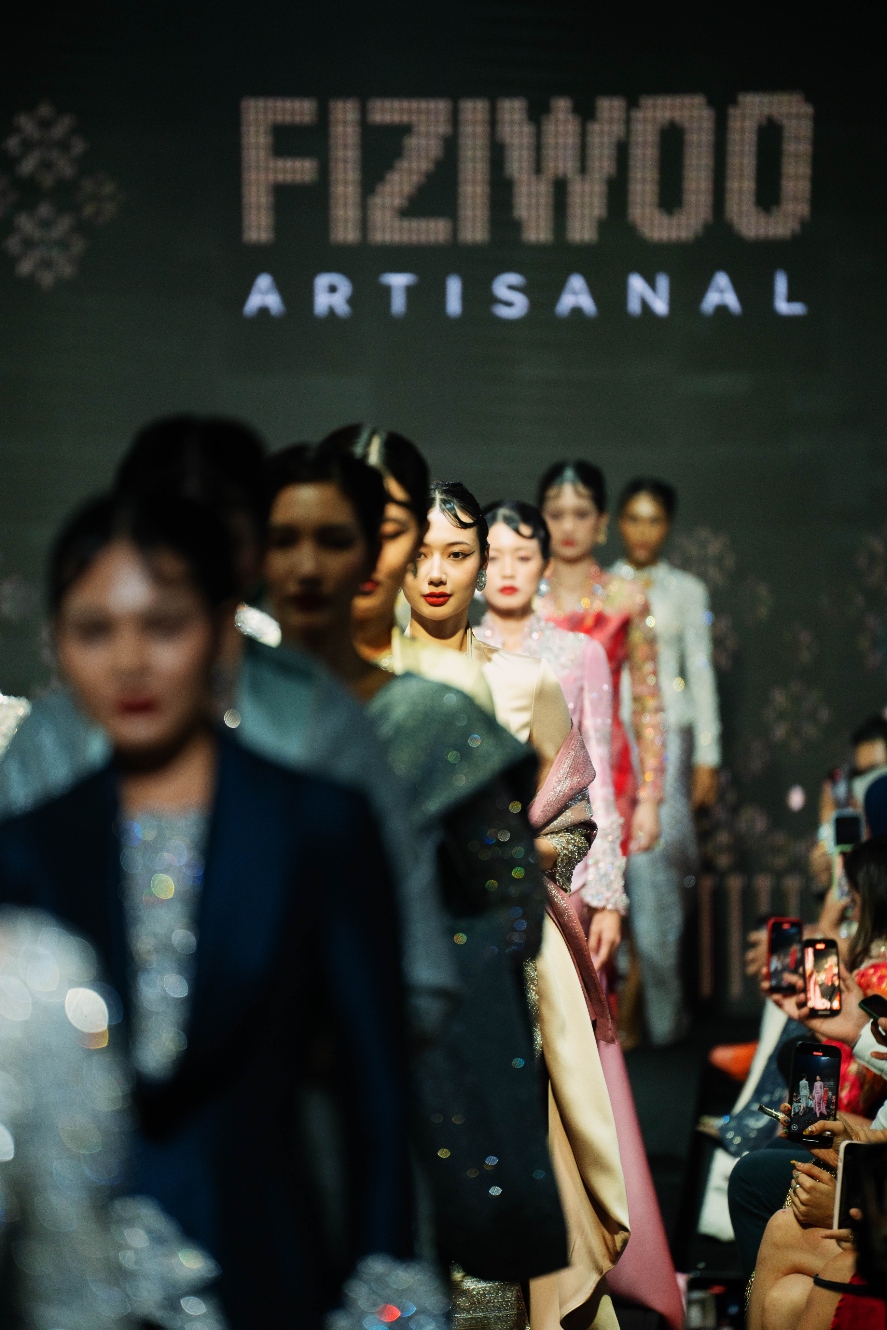
Founded in 2009 by Hafizi Radzi Woo — with Izree Kai Haffiz joining in 2011 — FIZIWOO has become one of Malaysia’s most prominent fashion labels. Hafizi’s early exposure in his mother’s tailor shop laid the groundwork for his precision — which combined with Kai’s architectural sensibility — shaped the brand’s strong emphasis on proportion and structure. FIZIWOO’s design signature — dramatic peplums, sculpted volume and meticulous construction — reflects a seamless fusion of engineering and romance. Their pieces are not only visually distinctive but technically ambitious.
Each year, their Raya collections underscore the brand’s inventive spirit. The “Riviera Raya” line, for instance, drew on Mediterranean motifs with soft pastels, guipure lace and jacquard textures — marking their 10th anniversary in festive fashion. The 2025 “Journey” collection took that further: inspired by Arabic souks and spiritual renewal, it revisited iconic silhouettes from the brand’s past decade and introduced its first Raya RTW Baju Melayu, merging modern tailoring with traditional Malay heritage. FIZIWOO’s ability to combine craftsmanship with cultural nuance — notably in festive dressing — continues to shape Malaysia’s fashion landscape.
Visit Fiziwoo‘s official website here.
The New Gen:
Emerging talent in Malaysia is pushing boundaries in sustainability, gender fluidity and experiential fashion. Designers like Kit Woo, Hatta Dolmat, HUNTILANAK and ShazNash are exploring new narratives, from conceptual tailoring and eco-conscious production to sculptural wearable art and bold runway statements. Their work is defined by an awareness of culture and community signalling a confident, forward-looking chapter for Malaysian fashion.
Kit Woo
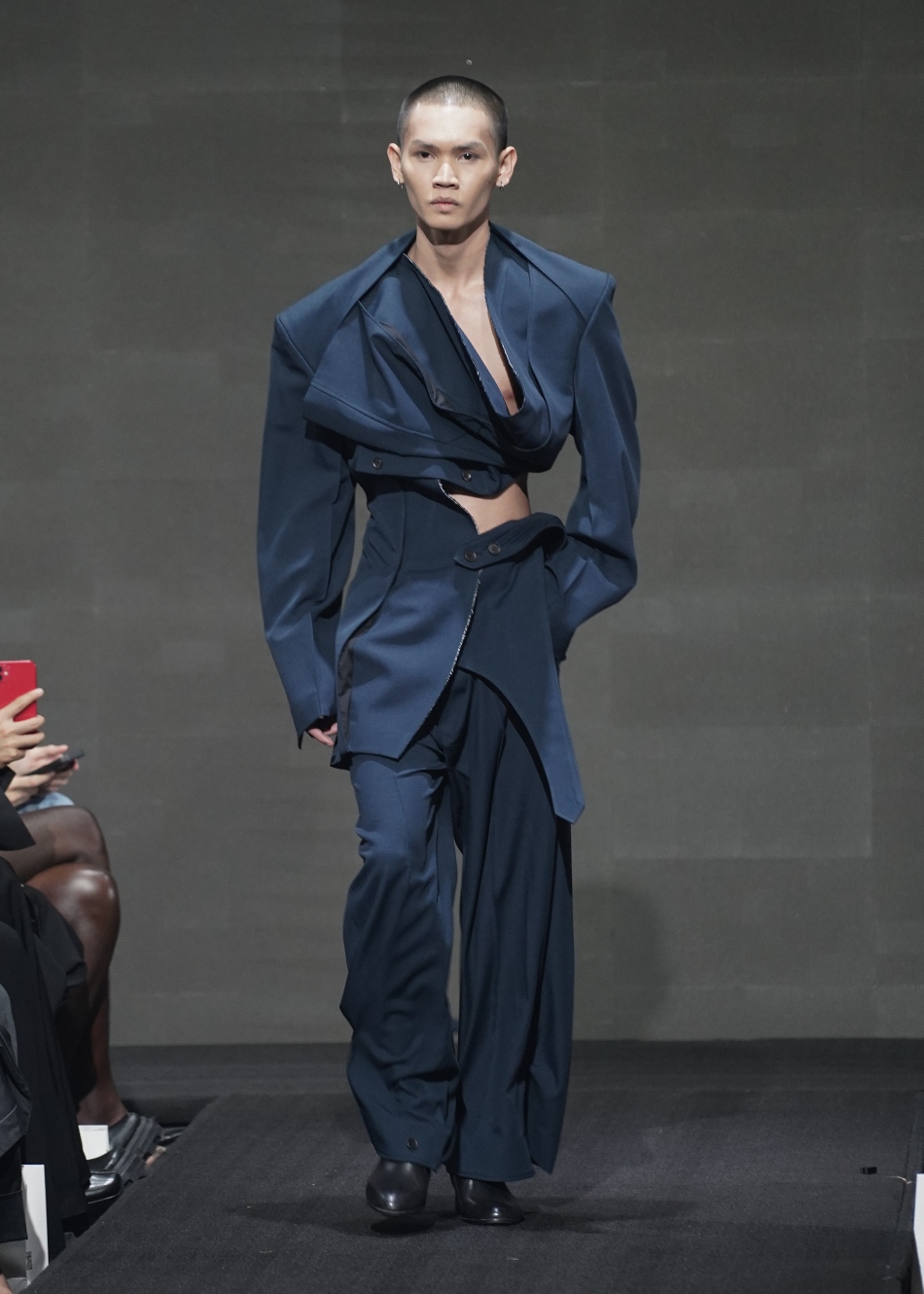
Since launching his eponymous label in 2016, Kit Woo has established himself as one of Malaysia’s most cerebral designers — renowned for deconstruction, sharp tailoring and a gender-fluid approach that pushes the boundaries of form and function. Trained at Raffles College of Higher Education in Kuala Lumpur and later in New York, Woo honed a design vocabulary rooted in technical experimentation and an almost architectural interrogation of clothing.
Each collection serves as both research and provocation. Woo often treats tailoring as a medium of inquiry, dismantling and reassembling familiar garments to question silhouette, proportion and perception. His work has been described as “fashion as critique” — intellectually driven yet grounded in impeccable construction.
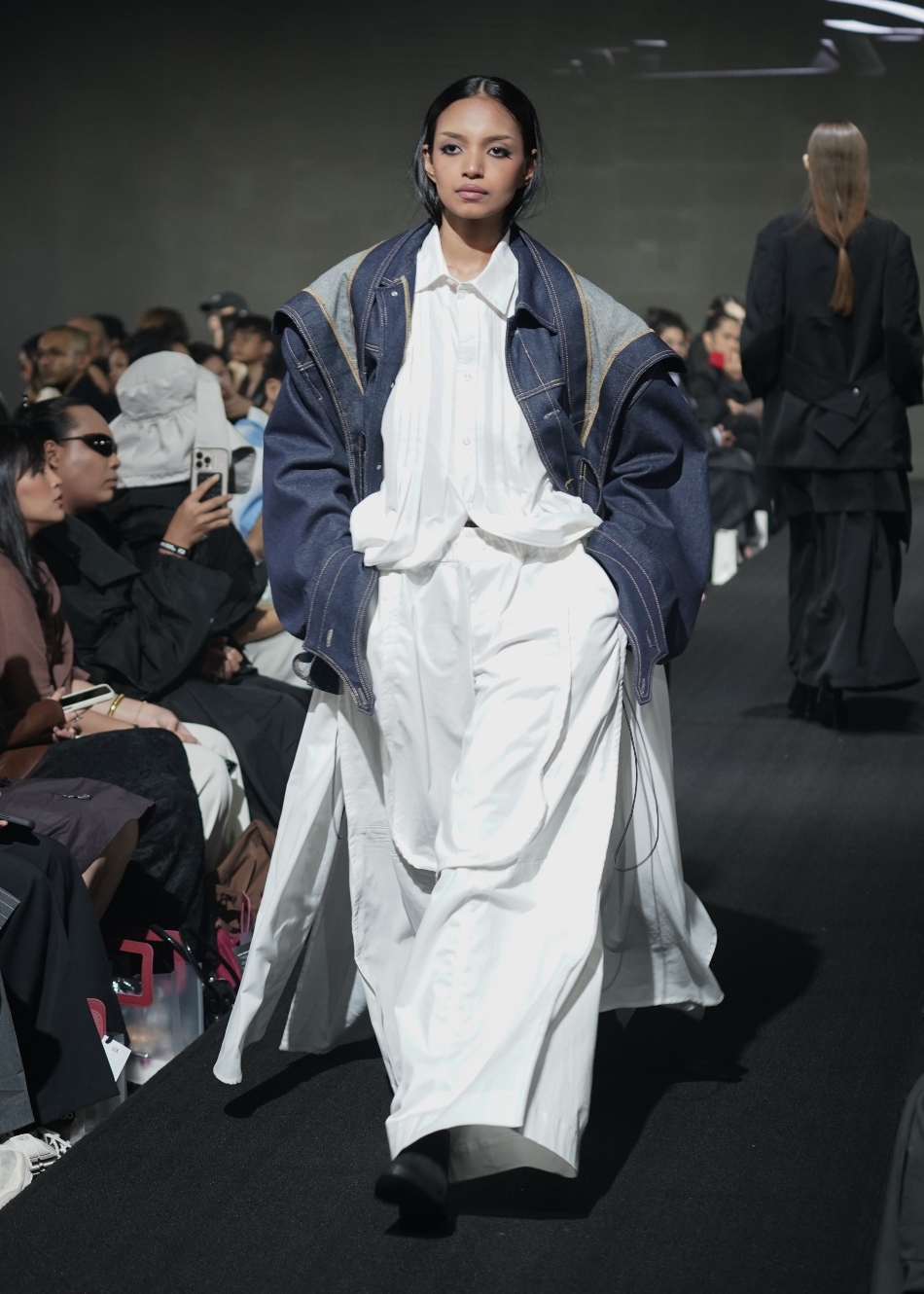
For his Ready-to-Wear 2025–26 collection — “The Earth is Flat” — Woo sharpened this vision further. The 23-look lineup explored the tension between flatness and volume, deliberately presenting garments that appeared two-dimensional from the front but revealed sculptural depth in profile. Key details included a hunchback drape that distorted blazer lines, a boomerang panel construction across trousers and skirts that created looping silhouettes and a re-engineered “bar jacket” — subverted into a masculine “armour” through set-in panels and bonded fabrics.
Despite his reputation for monochrome severity, Woo introduced teal and khaki this season, expanding his palette while maintaining the stark, architectural feel of his work. Oversized slant shirts and streamlined skirts offered more accessible entry points into the collection, though always within the uncompromising framework of his design language. Positioned within Malaysia’s fashion scene, Kit Woo remains distinct: less concerned with mainstream commerciality than with cultivating an avant-garde perspective.
Visit Kit Woo’s official website here.
Hatta Dolmat
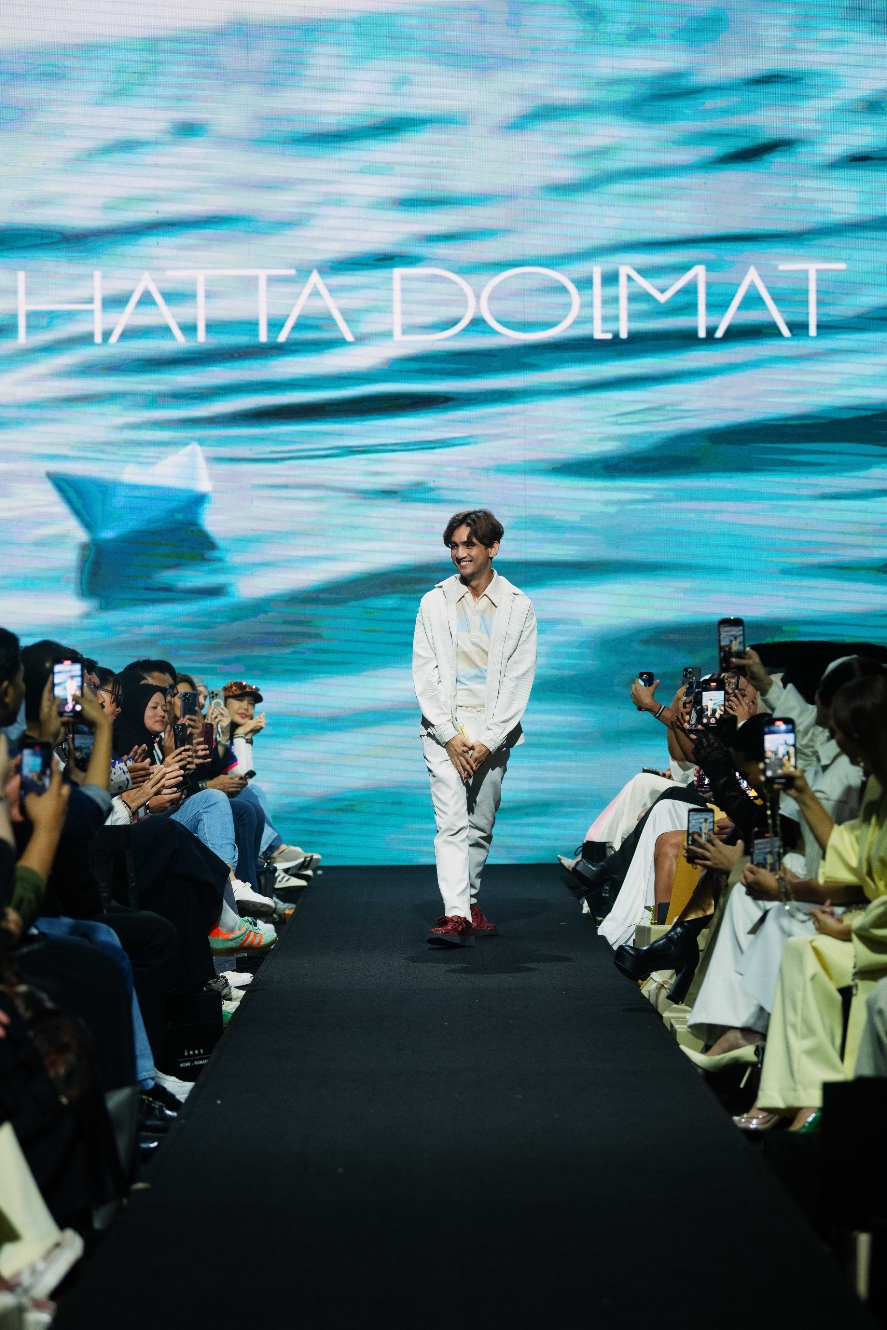
Hatta Dolmat takes a bow after returning with his brand new collection titled “Perahu Kertas”.
Hatta Dolmat has emerged as a leading voice in Malaysia’s sustainable fashion movement. Recognised as the country’s first fully sustainable fashion designer, he made history with a collection officially documented by the Malaysia Book of Records, setting a benchmark for environmentally conscious clothing production. At the recent Kuala Lumpur Fashion Week 2025, Hatta presented his latest collection — “Perahu Kertas” — marking a decade-long journey with the platform. Drawing inspiration from the delicate, weightless form of a paper boat, the collection reflects resilience and the personal evolution of the designer. Breathable fabrics such as cotton, linen and denim anchor the pieces in practicality, while origami-inspired silhouettes and subtle details infuse the collection with a sense of memory and craftsmanship.
Beyond clothing, “Perahu Kertas” also featured a collaboration with Opai to launch the fragrance “HOPE”, merging scent and design into an intimate, multisensory runway experience. Through this project, Hatta underscores his commitment to sustainability, thoughtful storytelling and cross-disciplinary creativity, positioning himself as a standout figure in Malaysia’s next generation of fashion innovators.
Visit Hatta Dolmat‘s official social media here.
HUNTILANAK
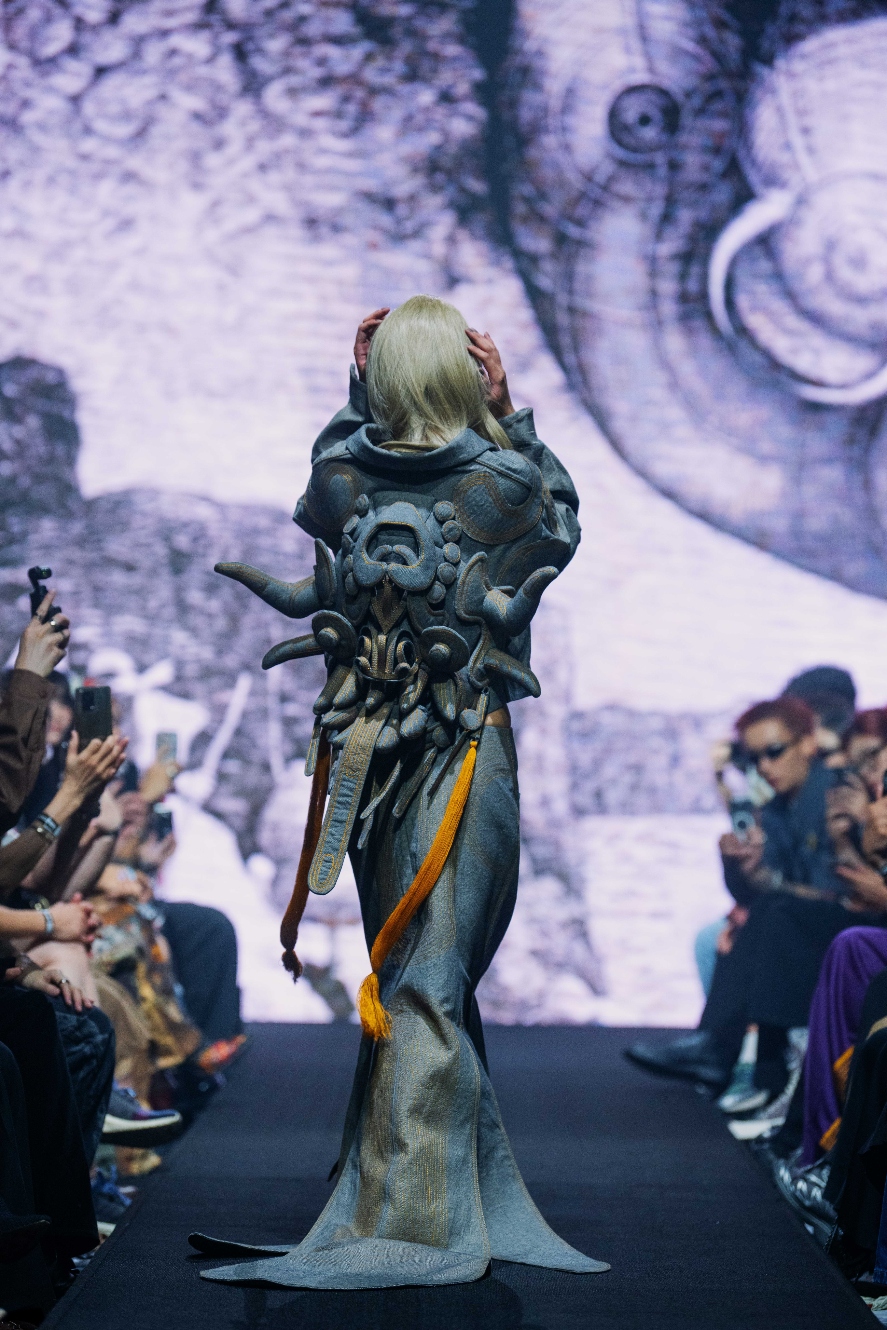
Founded by Kuala Lumpur-born designer Ryan, HUNTILANAK is a Malaysian label that transforms traditional motifs and personal experimentation into wearable art. The brand is best known for its “Monster Jackets,” denim pieces featuring 3-D recreations of Asian masks, complete with protruding horns, jagged teeth and expressive eyes. Each garment merges craft and concept, often hand-sewn and incorporating unconventional textures inspired by Southeast Asian culture and Ryan’s personal archive of abstract material explorations.
Ryan’s design approach is deliberately sculptural and performative. Functionality takes a backseat to artistic expression, with garments conceived as statements rather than utilitarian clothing. The creative process often involves repurposing past experiments — from fossilised materials to childhood discoveries — translating them into three-dimensional, tactile forms that bring the label’s imaginative universe to life.
HUNTILANAK has gained recognition across global fashion platforms, including Highsnobiety, The Vanilla Issue and vast social media coverage from major fashion weeks — marking Ryan as one of Malaysia’s most compelling up-and-coming voices in contemporary fashion. The brand continues to evolve as Ryan works toward expanding his Monster-inspired collection, positioning HUNTILANAK as a bridge between local cultural heritage and conceptual fashion experimentation.
Visit HUNTILANAK’s social media here.
ShazNash
ShazNash unveiled their “Under The Weather” collection, featuring silver embellishments and complementary black and blue tones.
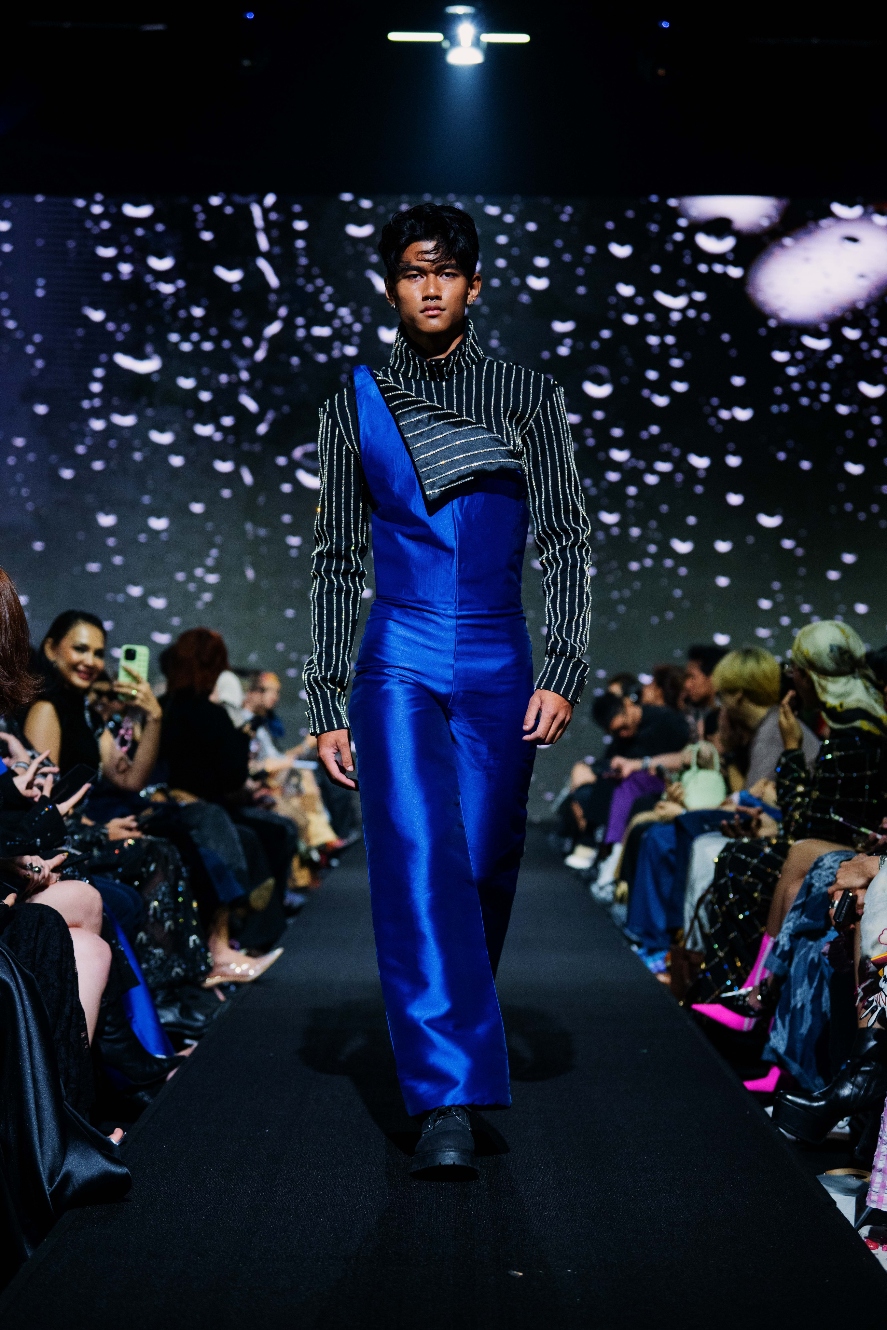
ShazNash made a striking debut at Kuala Lumpur Fashion Week (KLFW) 2025, showcasing a collection that captivated audiences with its intricate detailing and bold design choices. The brand’s presentation featured a blend of textures and embellishments, including feathers, stripes and teardrop jewels — creating a visual feast that illuminated the runway. In the realm of menswear, ShazNash introduced power suits crafted from creamy velvet, adorned with corsetry elements and oversized brooches. These designs not only highlighted the brand’s commitment to craftsmanship but also underscored its ability to merge traditional tailoring with contemporary flair.
The debut at KLFW 2025 marked a significant milestone for ShazNash, positioning the brand as a promising new voice in Malaysia’s fashion landscape. With a keen eye for detail and a bold approach to design, ShazNash is poised to make a lasting impact in the industry.
Visit Shaznash‘s official social media here.
For more on the latest in luxury fashion and style reads, click here.
One of the exciting conversations is Fendi versus Louis Vuitton. Both are lavish powerhouses that have influenced and commanded the direction of global fashion for many decades now. With a distinguished long history, wonderful craftsmanship heritage, and some of the most notable designs to date, these great fashion houses are now practically household names. But are they equal in quality, value for money, and classic appeal?
This exhaustive guide will take you into the heritage, material selection, making process, pricing, popularity, resale value, and worth of investment to help you know which is the better investment buy for you: Fendi or Louis Vuitton.
1. A Brief History of Fendi and Louis Vuitton
Fendi: The Roman Fashion House
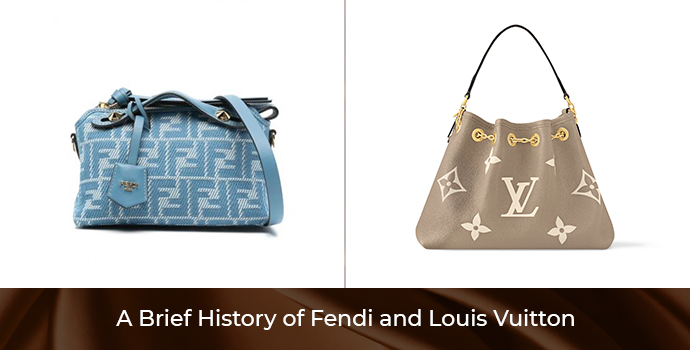
Fendi was founded in Rome back in 1925 by Adele and Edoardo Fendi. In the beginning, it was a tiny family business selling luxury leather and fur goods. With Karl Lagerfeld’s entry as a creative director in 1965, Fendi grew to be a true stalwart of fashion on the global scale. It was under his direction that the double “FF” logo came into existence, standing for “Fun Fur” and marking the dawn of Fendi’s bold and experimental era.
Today, Fendi has come to represent modern craftsmanship and avant-garde design. Their playful attitude and funky designs have become synonymous with Italian luxury and Fendi is a cult favorite among culture creators, dealers and influencers.
Louis Vuitton: The French Legacy
Establishment was in Paris in 1854 by Louis Vuitton himself. Carrying trunks in nature, the luggage, then were of classes. Flat-top stackable trunks were introduced in place of the bulky and ornate ones the 19th-century rich were used to. By 1896, LV’s monogram canvas had saved their business from bankruptcy, and it is now one of the most famous patterns in the world.
A timeless marker of sophistication, and a globally accepted status symbol, Louis Vuitton has product categories from bags to accessories; ready to wear to fine jewelry. Based on performance, exclusivity and excessively high craftsmanship, Louis Vuitton is still on top of the high-fashion pyramid.
Takeway: Fendi offers Italian creativity and inspiration, while Louis Vuitton serves French traditions and timeless luxury.
2. Craftsmanship and Quality
The comparison between Fendi and Louis Vuitton revolves again around the idea of craftsmanship – because the quality of luxury items comes down to the diligence and commitment applied to the making.
Fendi’s Artisanal Approach
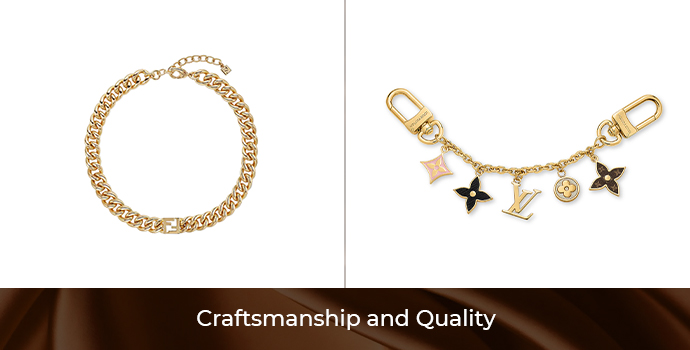
All Fendi objects are made in Italy at a workshop, using the finest artisans that have been honing their skills for generations.Fendi is known for its imaginative variation, and often combines materials and embellishment phenomenally well.Selleria stitching, accomplished purely by hand, is what makes their leather goods an absolute standout.The philosophy of its craftsmanship tends to lean toward rather creative and out of the way, making everything unique and artistic.
Louis Vuitton’s Consistency and Precision
Louis Vuitton is made in France, Spain, Italy, and the U.S.Known for its stringent controls on quality, LV ensures that each item is uniform.The canvas is made to endure and is both lightweight, fairly resistant to scratches, and also great for water-resistance.Louis Vuitton pursues timeless perfection, maintaining that your handbag should appear just as perfect after a few years of heavy use as it did on the first day.
Verdict: If you want bold creativity and unique artistry, Fendi wins, whereas if you largely value longevity, durability, and consistency, Louis Vuitton wins.
3. Materials: Luxury vs Practicality
Fendi
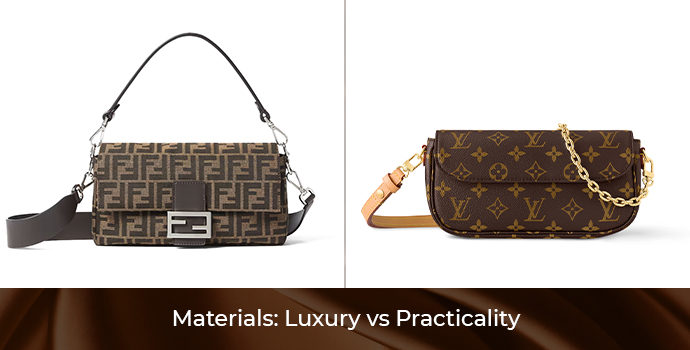
Fendi uses exceptionally beautiful and soft leathers, such as calfskin, lambskin, and Selleria leather, which are often combined with exotic skins and hand-painted finishes. They are also regularly trying out new color combinations, embellishments, and textures, making each collection visually distinct.
Louis Vuitton
The distinctive coated monogram canvas from Louis Vuitton stops dust and water like a guard at a castle come rain or shine— a lightweight shield the size of a handbag that shrugs off everyday scuffs. Epi and Taurillon leathers are selected for presence and age-resisting toughness; the Vachetta that trims them will develop a patina, not a blemish, almost celebrating the day-to-day journey.
Conclusion: While Fendi celebrates high style with collector-worthy sculptural bags, Louis Vuitton builds luggage for the life season with chic armor— the poster child for function that refuses to skip on opulence.
4. Iconic Bags: Fendi vs Louis Vuitton
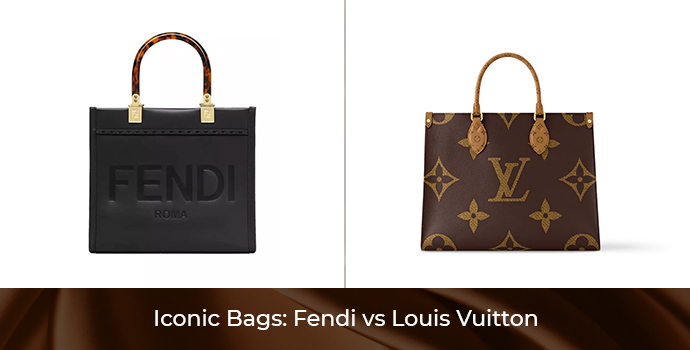
Things heat up further with the brands’ signature bags. Fendi— instigator of arm-candy conversation— primes the floor. The small Baguette, barely a messenger, went from costume prop to dream object after Carrie Bradshaw cooed over it. Baguette is merchandised non-stop— limited-colored leathers and counted sequins— a chatter catalyst. Every story after pays homage to its siblings, the minimal yet fiercely structured Peekaboo and the travel-smart, gingerly straightforward sunshine tote.
LV resists the bold laboratory; it works museum ropes. The Neverfull is the understated tour guide: its canvas straps prove it experienced Louis, yet its orderly shape resists trends. The Speedy zipped into memory almost the day it hatched, clutch-to-chain switched on and off like a car engine. The Capucines— with cautious engineered veiling— pretends to modern identity yet is essentially a moonlit Alma. Each LV classic, like a classic literature paper, survives intact another semester.
Summary:
Fendi bags cater to individuals who appreciate boldness and artistry.Louis Vuitton bags appeal to people looking for timeless icons that last.
5. Ready-to-Wear Collections
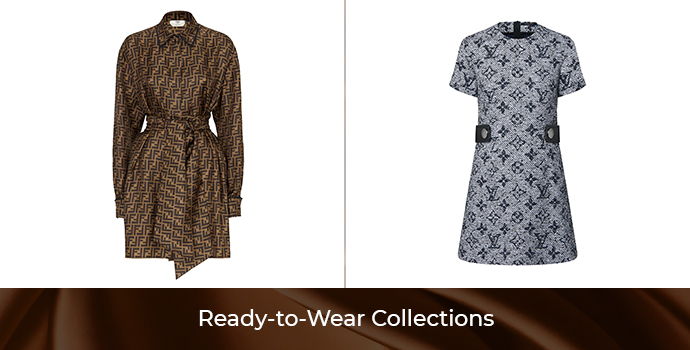
Fendi’s products are edgy Italian glamour with fun prints, large silhouettes, and innovative fabric choices. The Fendi styles are appealing to the runway set and those influenced by the latest trends in fashion.Louis Vuitton is classic sophistication – structured tailoring, minimalism, and minimal monogram. Their focus is on luxury and everyday designs that animate both types of fashion.
Verdict: Fendi is for bold and artistic fashion, Louis Vuitton is for polished, wearable fashion.
6. Pricing: Which Brand Costs More?
While both brands are luxury brands, Louis Vuitton is comparatively expensive.
Fendi bags typically start at $2,000 and can reach above $7,000 with limited edition releases.Louis Vuitton bags start around $1,800, but can reach $8,000+ for highly desirable styles like the Capucines.
Although Fendi has slightly more affordable entry-level pricing, Louis Vuitton also has high resale value and was worth being better known globally than fashion house Fendi.
7. Celebrity Endorsements and Cultural Influence
Fendi vs Louis Vuitton is much more than craftsmanship. It also has cultural significance.
Fendi gained a cult following in the fashion universe when its signature Baguette Bag made an indelible mark in the profession when it’s featured on Sex and the City which forever linked Fendi fashion and accessories with high-end glam and individual audacity. As for Fendi, there has never been a shortage of a-la-mode ideas from celebrities like Jennifer Lopez, Rihanna and Bella Hadid, which clearly always brings plenty of added prestige to the brand and the playful aesthetic of the high-fashion brand.
Whereas Louis Vuitton has an evergreen appeal to a more universal crowd. Louis Vuitton has brand fans across the generations from women like Angelina Jolie and Emma Stone, to Kanye West, BTS and Zendaya, to name a few. Louis Vuitton parades some of the most exclusive runway experiences in the fashion industry, and continues to collaborate with leading cultural forces in today’s world, like Virgil Abloh, Yayoi Kusama, and Pharrell Williams. Louis Vuitton sits squarely between Streetwear and Haute Couture. If, as described earlier, Fendi is about creativity and experimentation, Louis Vuitton rises to the top as saying prestige and global reach as a brand.
8. Resale Value and Investment Potential
One major aspect of the Fendi vs. Louis Vuitton discussion is resale value. Fendi may create extraordinary contemporary, new-age pieces, but they also put a massive emphasis on experimenting with colors and shapes, and therefore not everything carries long-term value. Certain items of Fendi’s (the Fendi Baguette and Peekaboo) have generally decent resale price points, but many seasonal, harder to get Fendi items tend to devalue rather heavily.
Louis Vuitton is widely considered one of the safer investments in luxury fashion. The signature monogram canvas pieces hold value well, especially the classic pieces like the Speedy, Neverfull, and Alma. Some limited-edition Louis Vuitton collaborations were even appreciated over time, making them collectors’ favorites. If your goal is long-term value retention, Louis Vuitton clearly has the upper hand.
9. Fendi vs Louis Vuitton Collaborations
Both brands are separated by their distinctive limits in exclusivity through collaboration:
Fendi: greatly wove the gap with Fendace (Fendi x Versance) and FSC (Fendi Studios Collection), marrying extravagant opulence with a bold commitment to creativity.Louis Vuitton: collaborations with Supreme, Yayoi Kusama, and Nike transcended the conventional nature of collaboration; these products created cultural movement virtually overnight, sold out across the world, and quickly attained cult resale status.
As it stands Louis Vuitton is king in this classification, as the brand is much more visible and has cross-appeal.
10. Brand Aesthetic and Identity
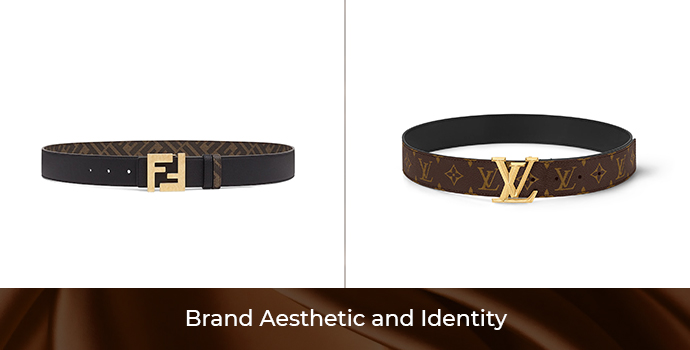
When it comes down to Fendi vs Louis Vuitton, it is simply a personal style choice. Fendi offers a fun, daring, and avant-garde story and uses its bold FF logos, print mixing, fun brights, and unusual silhouettes to create a connection with others that want to make a statement. If you are looking for something that is eye-catching from the moment you open the package, and you see it worn as reflective of it is your own personal style and personality, Fendi is going to be a better choice.
Returning to Louis Vuitton, we have a classic luxury, with a timeless quality. While the brand modernizes every season past iterations, it does it in regards to classic shapes, affordable colors, and elegantly structured designs making the product easy to wear, versatile, and practical over decades of wear. If you gravitate towards a more polished, streamlined and minimalist aesthetic, and most define your style, Louis Vuitton is more aligned with your style.
11. Customer Experience and Exclusivity
Luxury is not just about the item, it is also the experience. Fendi is very boutique for personalized experiences, drops limited collections, has private previews, and custom pieces. With their customer base being a little bit smaller than that of Louis Vuitton, Fendi naturally feels a lot more exclusive.
Louis Vuitton has a strong global presence with hundreds of locations worldwide. While this makes it easier for their consumer to access products, it makes the shopping experience less personal in some cases than that of Fendi. However, with their VIP offer (personal stylists, exclusive invites, new collection previews, invitations to their fashion shows and events) they are doing the best they can to ensure that their loyal customers have an ultimate experience.
12. Sustainability and Innovation
As consumer consciousness increases, sustainability is becoming a major issue in the Fendi vs Louis Vuitton discussion. Fendi made strides toward responsible sourcing by using eco-leathers and investing into traceable supply chains. Fendi has also utilized leftover materials by repurposing waste with their Fendi Roma Capsule Collections, creating a plan that’s thoughtful about waste management.
Louis Vuitton is a part of the LVMH Group, and has developed formal programs and pledges for responsible sourcing of material under its “Life 360” program. They focus on sustainable content and materials, ethical sourcing, and reduction of that carbon footprint as much as possible. Their LV Canvas is already significantly more sustainable as opposed to an all-leather bag. While the brand is continuing to make extensive green investments and innovation, they are also being careful that their brand is not noticeably affected in the luxury space.
13. Verdict: Fendi vs Louis Vuitton
When comparing Fendi vs Louis Vuitton, both brands are great but for different reasons.
Choose Fendi if:
You love bold, artistic designs.You want something unique and not everyone will have.You like Italian work and craftsmanship and innovative designs.
Choose Louis Vuitton if:
You want timeless pieces that are going to hold their value.You want practicality, durability, versatility.You are looking for a long-term luxury investment.
To sum it up, Fendi speaks to a fashion-forward trendsetter and Louis Vuitton speaks to a timeless luxury investor.
Final Thoughts
The Fendi and Louis Vuitton decision will ultimately be made based on personal choice, personal preference, and basically what is most important to you; meaning if you love bright, eye-catching, bold pieces, and love things made in Italy, you can never go wrong with Fendi and could say that Fendi’s innovative designs, playful styling, and one-of-kind craftsmanship truly offers a great option for anyone that wants to take fashion chances and let their personality lead!
Conversely, if you value timeless elegance, durability and strong resale value, Louis Vuitton is hard to beat. Louis Vuitton is consistently beating the competition with its iconic design, practical materials, and consistent and strong current popularity for an extremely long time, Louis Vuitton provides consistent and long-term value.
Both brands represent the best of luxury fashion and regardless of which one you choose, you will have a piece of heritage, craftsmanship, and prestige.
When it comes to luxury watch brands, the Longines vs Rolex debate has been around for decades. Longines and Rolex are both Swiss companies but target very different segments of the watch market. Rolex is a sign of success and status, it represents prestige in the form of timeless craftsmanship, while Longines mixes tradition with innovation at a fair quality for the price.
But which brand is better? That depends on what really matters to you— heritage, investment potential, design, technology or price. In our thorough guide, we will cover everything you should know about Longines vs Rolex.
1. Brand Heritage and History
The Longines vs Rolex story begins with two very different timelines.
Longines has been making timepieces since 1832 in Saint-Imier, Switzerland, & is one of the oldest Swiss watchmakers in the world. With the good fortune of not facing any serious disruption in watchmaking in nearly two hundred years, it built its name most notably —and especially —an obsession with precision, elegance and sporting innovation. As watchmaking would unfold, most importantly for Longines, the high-quality perception of the company came from becoming a global name in aviation and sport timekeeping. Eventually, and understandably, the credibility gained with elite athletes, aviators, and professionals would lead to the brand being worn around the world.
Because it was relatively younger than Longines when it was founded in 1905 by Hans Wilsord back in London, Rolex had a slightly different trajectory. Rolex was able to capture global fame and attention largely because they quickly overturned the watch making industry altogether. The brand has introduced milestones like the world’s first waterproof wristwatch, known as the Oyster, in 1926 and they introduced an automatic date-changing mechanism, in 1945. Rolex has always defined itself as luxury and success and that remains true today, even with more budget-friendly alternatives flooding the luxury watch market.
In summary, Longines is focused on heritage & versatility and Rolex’s focus is the prestige & exclusivity it provides, with some degree of innovation.
2. Pricing and Accessibility
Pricing is one of the most prevalent differences in the Longines vs Rolex conversation.
Longines watches typically start around $1,000 and rarely go above $5,000 even for high-end automatic collections. This makes Longines a fantastic entry point into Swiss luxury.Rolex has a starting price of $6,000 and can also exceed $50,000 for popular models like the Daytona, Submariner and Day-Date. Short run limited editions and rare pieces regularly receive six-figure offerings at auctions.
For first time luxury buyers who want reasonable prices, Longines is clearly more accessible. However, if you are looking for a watch that is an investment as much as it is a watch to wear, then Rolex absolutely dominates the high-end market.
3. Craftsmanship and Movement Quality
With respect to comparing Longines vs Rolex, quality of craftsmanship is another important factor.
Rolex makes all of its movements in house, and is known for unbelievable precision. Every Rolex movement is COSC-certified, and the brand goes a step further with its own “superlative chronometer” testing where accuracy is rated -2/+2 per day.Longines uses excellent Swiss ETA mechanical movements that they modify for their specific collections. They offer fine reliability and precision on any of their mechanical automatic timepieces but on a general perspective, they are not as technically sophisticated nor finished to the same level as Rolex movements.
Longines has made significant progress in this product category over recent years by providing balance springs made of silicon and improving automatic calibers in Spirit and Master series collections. Rolex has the advantage here with mechanical innovations but Longines provides excellent value for offerings in its price point.
4. Design and Aesthetic Appeal
Both offer wonderful designs but appeal to different markets:
Rolex watches are timeless, iconic, and of world-wide recognition. Once their collections are established like the Submariner, Datejust, GMT-Master II and Daytona – they don’t change or grow old and represent classic status symbols.Longines is more about elegance – plus variety. Their collections – HydroConquest, Master Collection, Spirit, and Conquest – cover the fields from sporty to dressy and attract those looking for diversity and affordability.
If you want a label that screams luxury and recognition – Rolex wins the game. If you value various watches with subtle elegance – then you can’t beat Longines delivery in a very reasonable price point.
5. Innovation and Technology
When it comes to technological milestones, Rolex leads the way.
Rolex innovations include:
The first waterproof watch case (Oyster, 1926)The first automatic date mechanism (Datejust, 1945)The first watch to visit the summit of Mount Everest (Rolex Explorer, 1953 PDO) – 77 watches survived on that journey.The proprietary materials like Cerachrom bezels, Oystersteel materials and Parachrom hairsprings.
Longines, while not as radical in its innovation, has done a respectable job at precision timekeeping. Longines invented high frequency quartz timekeeping, and high frequency mechanical movements, and has a long history of being the official timekeeper for sporting events, such as the Olympics. The modern Hydro Conquest V.H.P (Very High Precision) quartz movements retain accuracy to within ±5 seconds a year, providing one of the most precision non-digital watches available today.
6. Brand Prestige and Recognition
Prestige is where Rolex dominates in the Longines vs Rolex debate.
Rolex is the most recognizable luxury watch brand globally. Even people unfamiliar with horology know that Rolex equals success and exclusivity. Wearing a Rolex makes a bold statement.Longines has respect in enthusiast circles and a following, but it is in a different segment of luxury. Longines can be thought of as elegant and steeped in heritage. But it does not share the universal prestige of Rolex.
If brand image and status are the most important factors, Rolex wins hands down.
7. Investment Value and Resale Potential
Many people consider resale value when buying a luxury watch, and in this comparison, Rolex is miles ahead.
Rolex watches hold their value extraordinarily well and often even appreciate over time, especially popular models like the Submariner, Daytona, or GMT-Master II.Longines, while offering great quality, doesn’t have the same resale demand. Typically, most models depreciate the moment they leave a store unless they are limited edition or vintage outliers.
So, you want a watch that can serve as an investment – Rolex is the way to go. But if you are simply wanting to own a beautiful, well-crafted timepiece with no regard for resale value, Longines is better value.
8. Versatility and Collections
One of the biggest advantages of Longines is the variety of collections. Whether you want a diver, dress watch or aviation-inspired, Longines has it all. Collections like:
Hydro Conquest – Dive-focused, robust, and affordableSpirit Collection – Aviation-inspired, sporty eleganceMaster Collection – Elegant dress watches with complicationsConquest – Versatile watches for everyday wear
Rolex, in contrast, has fewer collections but each is iconic:
Submariner – The ultimate diver’s watchDaytona – A racing chronograph legendGMT-Master II – Designed for travelers and pilotsDatejust & Day-Date – Timeless, elegant classics
Longines wins for variety, but Rolex dominates in icon status.
9. Celebrity Endorsements and Popularity
For the world of elite celebrities, sportsmen, and personalities, Rolex has enjoyed an unrivaled presence. If they say so, Rolex culture has granted Paul Newman, Federer, James Bond, and Tom Cruise with exclusivity. The Royal Name gave them all a very high celebrity reach.
Kate Winslet, Jennifer Lawrence, and Aishwarya Rai have associations with Longines, a world where elegance and heritage are cast first and foremost, leaving behind status-based alliances. Both brands use celebrity endorsements, although the cultural impact of Rolex is far-reaching.
10. After-Sales Service and Warranty
Another key aspect of Longines vs Rolex is after-sales support:
Rolex offers a five-year warranty on the entire international line and, worldwide service network.Longines offers a two-year warranty, which is standard in its class, but not as long as Rolex.
Rolex also invests heavily in its authorized service centres to promote long-lasting durability and a premium customer experience.
11. Which Brand Is Right for You?
Ultimately, it is a matter of personal preference whether one prefers Longines over Rolex.
If you want prestige, investment value, and that one additional timeless icon out of the same groups of Patek and Audemars, Rolex is your better bet.If one wants affordable luxury, versatile designs, and a great value for Swiss-made, Longines fills that niche.
Final Thoughts
Untying the debate, Longines and Rolex is not an effort to impose a winner; it simply sets your watches in the context of your lifestyle and objectives.
If it is important to you to own an iconic status-defining timepiece that has excellent resale value, Rolex remains the only option on the market. It’s not just a watch, but a statement.
If you appreciate heritage, elegance, and affordability without compromising quality, Longines offers incredible value and timeless Swiss craftsmanship.
In short:
Rolex = prestige, investment, and statusLongines = elegance, heritage, and value
No matter which brand you choose, both stand as proud representatives of Swiss watchmaking excellence.
Monday, August 25th 2025Tags: ShoesCanonsfoster and son
Share
Share this post
Subscribe
80 Comments
||- Begin Content -||
I covered the English bespoke shoemaker Canons a while ago, explaining their evolution from the team that was Foster & Son on Jermyn Street, and promising to review the brown-suede oxfords they made for me.
Well they’re ready, I’ve been wearing them for a couple of months, and they are the most comfortable bespoke shoes I’ve ever had.
At first, I was a little worried they would be too big. My feet were being held well in the back of the shoe (the first key to good fit) and my toes weren’t swimming at the front, yet they almost felt impossibly roomy.
I think that first impression was due to two things: a well-executed fit in a soft suede, and 15 years of experience with bespoke shoes being made too tight.
In fact, when I took the shoes in recently to check the fit with Simon Bolzoni and the team – after two months and perhaps 15 wears – we could see this contrast because Simon had my old Foster’s shoes there. These were made 10 years ago, and they were very tight by comparison. My toes felt crunched against the sides when I walked, and the bottom of the heel was noticeably smaller.
Now your feet do tend to relax and spread a bit as you get older, but not to this extent. The shoes were just too tight – and interestingly, it’s something that happened with nearly all of the bespoke I had made back then, whether from Cleverley, Stefano Bemer or Gaziano & Girling.
“I think it was something of a trend, unfortunately,” says Simon. “When blogs and forums really focused on bespoke shoemaking again, there was this emphasis on making shoes close-fitting in the same way as there was emphasis on tiny points of making, such as stitches per inch.
“I suppose it might have happened because close-fitting shoes felt more bespoke – you could feel the difference from a ready-made shoe. And of course people wanted all the finely turned points of bespoke making that they were reading about – bevelled waists, pitched heels – and those tended to everything being slim and close too.”
It’s an interesting point, particularly given it mirrors the fashion for tight-fitting tailoring at the time as well. I always assumed the main reason my bespoke shoes were too tight was that I didn’t have enough bespoke experience (as well as courage) to say when I wanted something bigger. Then when in doubt, the shoemaker tended to a close fit in order to make the shoe look better. Perhaps it was a mixture.
“Close-fitting shoes like this can really damage your foot,” says Simon (above). “Not just in the obvious places like around your toes, but if the base of the heel is made too small, your heel basically sits on part of the upper leather, which is not supportive. Your nerves there will get numbed, deadened, and then after a while you’ll start to get shooting pains.”
My new Canons shoes have a wider heel base, but the heel itself still manages to be elegant – even if it’s not as pitched as I had initially suggested. My idea had been to add some dressy elements to a fairly conservative style and colour of shoe, but it proved to be the right decision not to do that – to keep everything simple and beautifully executed.
My one concession to refining the style was to switch the laces for flat, slim ones. I like this look, but unlike the other choices it’s something that can easily be reversed if I change my mind in the future.
Another area where Canons really nailed the fit was the foot bed. This is something that doesn’t get much attention compared to other parts of the shoe, but if the bottom of the last is shaped well to the bottom of the foot, you really sit more easily in the shoe.
“This might be the one area where bespoke has the biggest advantage over ready-made,” says Simon. “You just can’t shape the bottom of a last with ready-to-wear, so you can make a big difference with bespoke.”
I went for a suede oxford because an oxford is a nice thing to have bespoke – the make and the fit really elevate that type of smart shoe – and because I already have calf-leather shoes from Yohei Fukuda that I love in brown and black.
I’ve enjoyed wearing the Canons shoes so far with tailored trousers and sports jackets – a mid-grey high-twist trouser and light-brown jacket for example – as well as with tailored linen trousers and lightweight knits or polos. I generally wear loafers more with those combinations, certainly in summer, but the oxfords make the outfit a touch smarter. I’ll also default to them more when it’s colder.
Canons are one of the few bespoke shoemakers who are happy to make a loafer as a first shoe for a customer, by the way. I opted not to do that, but perhaps it’s what I’d go for in the future, given how much I wear them and my lack of luck with bespoke loafers in the past.
Returning to ideas of fit, I was interested in Simon’s historical perspective on the subject, as it’s not something I’d heard before:
“Right now, I think the shoemaking world is actually in a very good place when it comes to fit,” he said. “We know more, we have more informed and demanding clients, and we’re improving all the time.
“People tend to think that in the past, the first half of the twentieth century and before, fit was good because most shoes were made bespoke. But while the craft was certainly at a high level, the fit wasn’t necessarily. A lot of the time it was quite basic, not much different to sized shoes today. So that’s one area where I think we’re getting a lot better.”
It is nice to think that one area of bespoke is better than it was in the past, and perhaps still improving. Usually it’s the opposite – quality, style and skills all seem to be dwindling, and all we can do is try and arrest the decline. It’s something I’d like to believe, and my Canons shoes certainly bear some testament as to how good it can be.
Related posts
Canons bespoke: How Foster’s has been reimagined and rewired
June 11th 2025 – 85 Comments
Read More
The (17) bespoke shoemakers I have known
March 10th 2021 – 194 Comments
Read More
Building a wardrobe: Bespoke shoes
February 15th 2017 – 246 Comments
Read More
<!–
Subscribe to this post
You can follow the discussion on Canons bespoke oxfords: Review by entering your email address in the box below. You will then receive an email every time a new comment is added. These will also contain a link to a page where you can stop the alerts, and remove all of your related data from the site.
Click to view our lesson preview of Drafting a Knit Halter with a Racerback (Image credit: UniversityofFashion.com)
Our newest lesson is, Drafting a Knit Halter with a Racerback. In this lesson you will learn how to interpret a sketch, an important first step when drafting patterns. Referring to the racerback tank illustration, we will demo how to determine certain key measurements, for example, the shoulder width, the front neck drop, the style lines and the width of the racerback. Using the stable knit fitted sloper that you drafted in our lesson, Drafting a Women’s Fitted Stable Knit T-Shirt from Measurements, you will learn how to plan the style lines on your draft. We also share a variety of finishing techniques and tools to help as you sew your racerback tank top.
Determining key measurements for University of Fashion’s new lesson on Drafting a Knit Halter Tank with a Racerback (UniversityofFashion.com)
Our Cut & Sew Knit Series
Working in knit fabric can be challenging. Things such as stretch ratio and whether a particular knit fabric has one-way stretch, two-way stretch or four-way stretch are only some of the things you need to know before you enter into the world of designing with knit fabrics. That’s why we highly encourage first-timers to view our knit lectures, Introduction to Knit Fabrics and Knit Fabric Principles.
Click to see a trailer of University of Fashion lessons: Introduction to Knit Fabrics and Knit Fabric Principles (Image credit: UniversityofFashion.com)
With over 35 lessons in our knit series, you will be able to choose the right knit fabric for your particular knit design, draft knit slopers from measurements and then use those slopers to create a multitude of designs. We are your one-stop shop for learning how to work with knit fabrics.
Our knit sewing series covers, various types of machines to sew your knit garments, as well as lessons on how to sew knit seams, knit necklines and knit hems.
University is one of the more thrilling times in life. It is a blending of academics, self-development, and socialization. And, of course, personal style begins to emerge. For many students (mainly the ones who love fashion), choosing the perfect accessories is an opportunity to help communicate their identity and confidence. Out of all the accessories, the designer tote bag for university is one of the most distinguished essentials.
Why? Because tote bags give an element of luxury while staying practical. Tote bags have enough room to fit a laptop, books, bottles of water, and potentially a snack or two, while also serving as a polished statement piece to your daily campus style. A tote bag is an easy and convenient piece, unlike state-of-the-art monstrosity backpacks, that will keep your perfectly curated look together – making the transition from classes, to coffee shops, to internships, social gatherings, etc., a more seamless and refined process.
The Evolution of Tote Bags into University Essentials
Once called the carry-all bag, a simple design mostly used to easily transport things like groceries and books, the tote bag represents many years and generations of evolution. Tote means “to carry.” In the early 20th century, tote bags were simply another type of useful and practical bag to carry around for running errands. However, the fashion industry figured out the tote bag was quite versatile and by the mid-1900s to late 1900s, designers began to construct totes in luxurious materials like leather, suede, and canvas.
The tote has flat-out become a cultural icon. You see celebrities floating around airports with their designer totes, fashion influencers flaunting their totes on Instagram, and students all around the world quickly started swapping backpacks for totes as a fresh alternative! With the rise of luxury branding in our everyday lives, the emphasis of the designer giraffe tote bag for university became a sign of sophistication, ambition, and individuality!
Why Choose a Designer Tote Bag for University?
Before we jump into specific suggestions, let’s look into some of the reasons why these tote bags are ideal for campus life:
Capacity: University life is hard – you need space, and lots of it – for textbooks, and computers, gym kits, everything! A well-designed tote bag is designed to carry all of these items and not look cumbersome.Durability: Fast-fashion tote bags are designed to be worn out by the end of the semester. A designer tote bag is built using quality materials such as saffiano leather, coated canvas, or durable nylons, which should mean you will have a bag that lasts beyond your time at university.Versatile: A designer tote bag does not serve just one function. It is for lectures, internships, study sessions with friends, on the weekend, as well as when you want to do a short trip away.Fashion Forward: Going to university is a time when you define your own personal sense of style. A tote from Louis Vuitton, Gucci, or Prada instantly elevates your status on campus.Value for money: While designer tote bags are expensive, they as many brands have resale value, not to mention being classic and timeless, buying a designer tote is an investment, not just a purchase.
Key Features to Look For
When it comes to picking the best designer tote bag for university, here is what you should look for:
Size: big enough to store a 13-16 inch laptop and some books.Weight: light enough that carrying it full does over strain your shoulders.Material: Leather, coated canvas, durable nylons are the best for durability.Compartments: Look for at least one zippered pocket for your valuables like your phone keys or wallet.Straps: Straps should be durable and comfortable, but wide enough that they do not dig into shoulders while walking for long distances.Closure: The security of a closure is important to keep your items secure (zipper or magnetic snap).Style versatility: A neutral color such as black, brown, beige, or navy should better match multiple outfits.
Best Designer Tote Bags for University Students
This is our list of the best stylish designer tote bags for university with a description of both features and style factors of why they are usable for students.
1. Louis Vuitton Neverfull MM
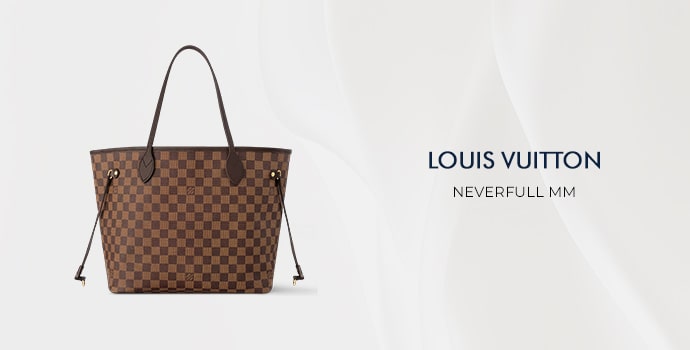
The Neverfull MM is arguably the most popular designer tote bag when it comes to university. As the name implies, it can be hard to fill to full capacity, which students or future students will appreciate.
Dimensions: 12.6″ x 11.4″ x 6.7″Why it’s great: Its open design and spacious interior will easily fit laptops, books, and even you can fit a sweater for your chilly lecture hall. The detachable zippered pouch is convenient when organizing your smaller essentials.Style factor: You can have timelessness in both the classic LV Monogram and Damier Ebene (CHECK) options.Durability: It’s made with coated canvas and leather trim so you won’t have to worry about it losing shape from getting scratched, or even from normal wear and tear.
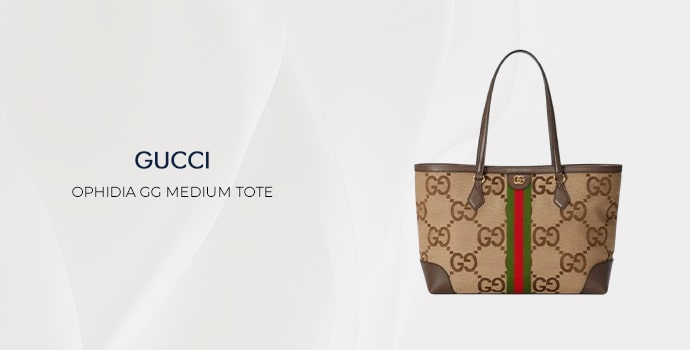
2. Gucci Ophidia GG Medium Tote
For those who appreciate the heritage, but are also looking for a contemporary take, there is the Ophidia Tote from Gucci that comes with a brand that suits.
Dimensions: 15″ x 11″ x 5″Why it’s great: Spacious enough for large notebooks and laptops. Lightweight compared to many leather totes.Style factor: GG Supreme canvas with the iconic red and green web stripe.Durability: Coated canvas ensures longevity.
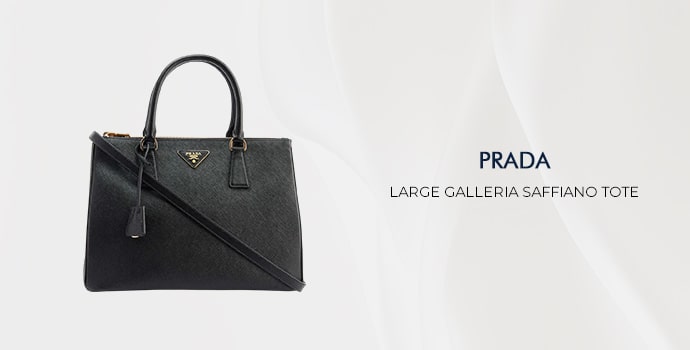
3. Prada Large Galleria Saffiano Tote
Prada’s Galleria is another hallmark of minimal elegance.
Dimensions: 13″ x 9.8″ x 6″Why it’s good: Features an overabundance of compartments to help you organize. Perfect for students carrying gadgets and textbooks.The stylish: clean lines that remain understated. Durability: Saffiano leather is scratch, stain, and spill resistant.
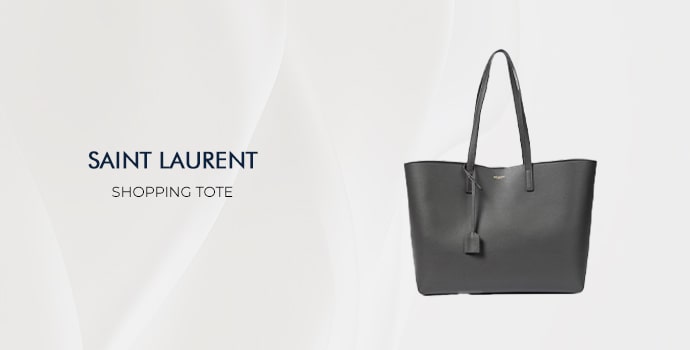
4. Saint Laurent Shopping Tote
If you are more on the understated chic side of style, then the Saint Laurent Shopping Tote is a great fit for you.
Dimensions: 14″ x 11″ x 5″Why it’s great: Its open design and roomy interior will happily accommodate laptops, textbooks, and even you can stuff a sweater for your cold lecture hall. The zippered removable pouch is a nice touch when it comes to sorting through your little essentials.Style factor: You have the subtle gold/silver YSL exclamation of style or chic.Durability: Soft leather that lasts forever and gains character with time.
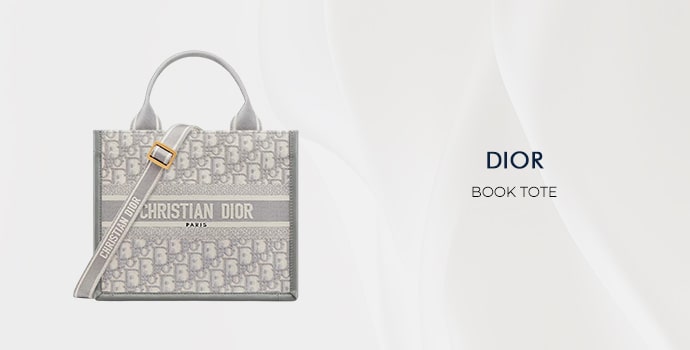
5. Dior Book Tote
The Dior Book Tote is also a favorite among television and movie celebrities or fashion icons.
Dimensions: 16.5″ x 14″ x 7″Why it’s great: Since this tote was designed as a carryall, it can work for all your daily academic needs.Style factor: Embroidered canvas with the signature Dior Oblique.Durability: Be careful with this tote, but it still remains one of the most iconic luxe totes around.
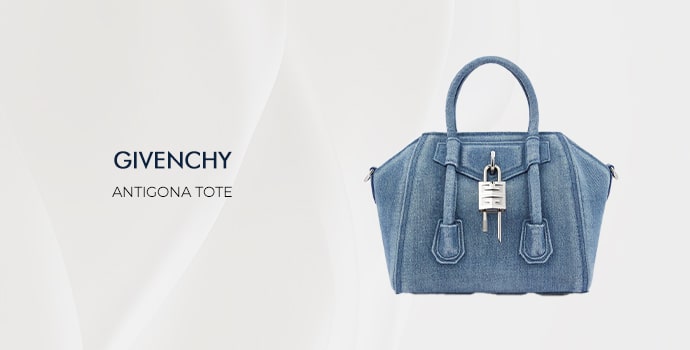
6. Givenchy Antigona Tote
If you value structure in your bag, then the Givenchy Antigona Tote will give you structure while also being a good looking functional tool.
Dimensions: 14″ x 11″ x 6″Why it’s great: Structured, but still has space for essential storage without bulking up.Style factor: The Antigona tote keeps you stylishly modern and edgy simultaneously and pairs well with chic or casual looks.Durability: The grained leather of the tote allows for daily wear and tear through constant use.
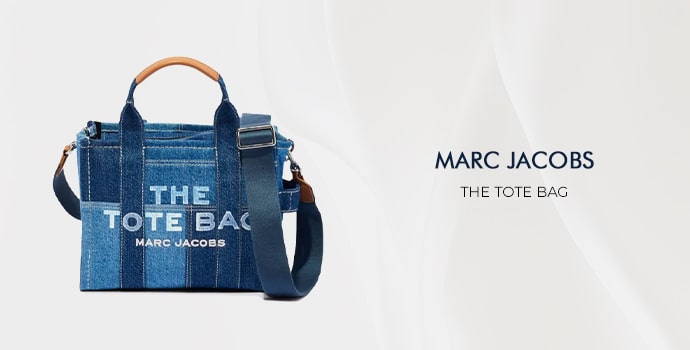
7. Marc Jacobs The Tote Bag
Marc Jacobs has seized the student market with a mix of fun and function in their newest tote:
Dimensions: 17″ x 13″ x 6″ (large)Why it’s great: Offered in several sizes and fabrics (canvas, leather), and still not too expensive compared to the most elite level of luxury.Style factor: Bold typography design with an almost youthful feel.Durability: Canvas is a strong material for everyday life on campus. Perfect for a student who needs to be organized.
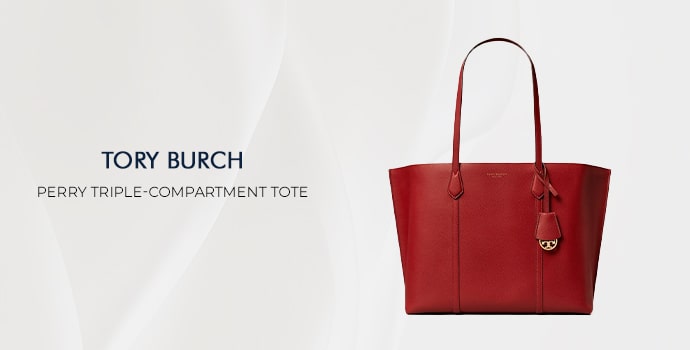
8. Tory Burch Perry Triple-Compartment Tote
Perfect for students who love organization.
Dimensions: 14″ x 11″ x 6″Why it’s great: Three compartments to separate everything and store everything nicely. Laptop fits perfectly in the padded compartment.Style factor: Clean and minimal style.Durability: Pebbled leather makes it both durable and still lightweight.
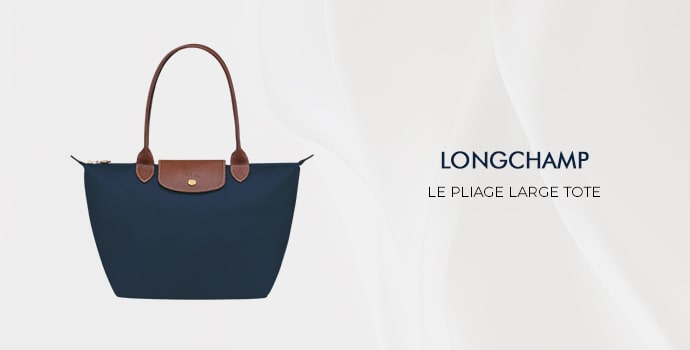
9. Longchamp Le Pliage Large Tote
A cult classic for students of all ages worldwide.
Dimensions: 12″ x 12″ x 7″Why it’s great: Very light nylon, easy to carry around all day and neatly fold up when not in use.Style factor: French chic meets leather handles.Durability: It is water-resistant against sudden changes in weather.
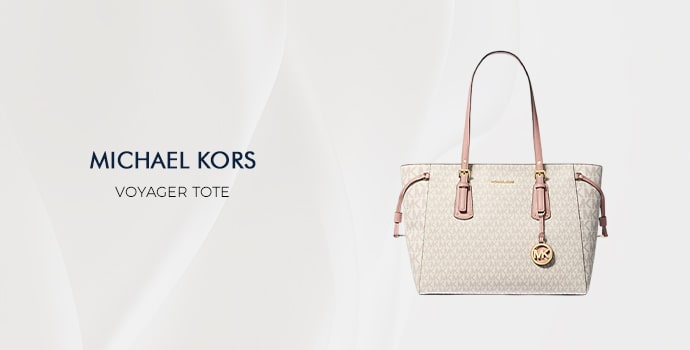
10. Michael Kors Voyager Tote
Michael Kors offers a luxury bag at a slightly lower cost.
Dimensions: 15″ x 11″ x 6″Why it’s great: All manner of different compartments, zip-top closure, and a front padded laptop compartment.Style factor: Sleek style with available colors.Durability: Saffiano leather is the most durable one, scratch-resistant, and very practical.
11. Celine Cabas Tote
Silent luxury is the specialty of Celine, and the Cabas tote is the epitome of minimalism.
Dimensions: 15″ x 12″ x 6″Why it’s awesome for college: Extremely light yet large enough to hold all the stuff a college student needs, like laptops and texts.Style factor: Subdued and low-key with no obtrusive graphics (for the style-conscious student who likes understated beauty).Durability: Stiff calfskin leather that resists warping.
12. Balenciaga Everyday Tote
Balenciaga brings a modern take to totes with the Everyday Tote.
Dimensions: 16″ x 13″ x 7″Why it’s fantastic for university: Not only is it just a little more organized than tote bags (you can stuff everything from binders to electronics), but a tote which you can wash! Style factor: Crisp design with the Balenciaga logo embossed across the front.Durability: The leather has a slightly grained texture, so each element of your bag will hold up to daily wear, even filled to capacity.
13. Chanel Deauville Tote
Your opportunity (and option) to be decadent, while making a statement on campus.
Dimensions: 15″ x 13″ x 7″Why It’s great for university: Spreads wide compartments, big inside and pretty rope handles that’s perfect for everything and anything from school assignments to lunch.Style factor: The classic Chanel CC logo, available in tweed, canvas or leather.Durability: The tweed isn’t very durable, but the canvas and leather are certainly made to last.
14. Fendi Sunshine Shopper
A tote you can wear – the ultimate in any way shine!
Dimensions: 18″ x 14″ x 8″Why it’s fantastic for university: The extra-large design is ideal for those students who detest having to switch bags.Style factor: The bold FENDI Roma logo is unapologetically luxurious.Durability: Durable leather construction with tortoiseshell resin handles.
15. Kate Spade All Day Tote
Kate Spade is the estimate in-between for those who go the fast-and-furious.
Dimensions: 14″ x 11″ x 6″Why it would be wonderful on the campus: Small but slim and can double as a pouch for whatever you’d like to remain organized.Style factor: It is available in neutral shades as shown, as well as playful seasonal prints.Durability: Made from leather and coated canvas for all day use, everyday use.
16. Bottega Veneta Arco Tote
If you like unique and thoughtful workmanship, the Arco Tote makes the grade.
Dimensions: 16″ x 12″ x 7″Why it’s great for university: It is large enough for a laptop and folders and the soft leather allows the bag to morph to your packed items.Style factor: The Blue Canvas woven design gives the bag additional texture and uniqueness.Durability: Thick, soft, and lasting leather.
17. Stella McCartney Falabella Tote
If sustainability is your option, then Stella McCartney is your best bet.
Dimensions: 14″ x 12″ x 5″Why it’s great for university: The lightweight and roomy option uses leather alternatives that are made from vegan materials.Style factor: Adds almost edgy details with chain trim.Durability: Size-able, easy to maintain and the materials last a long time and are scuff-proof.
18. Coach Field Tote
It is not surprising that Coach brand is a campus favorite for well-rounded tote bags that could easily be mistaken for an accessory.
Dimensions: 15″ x 12″ x 6″Why it’s great for university: So practical! A variety of organizational options and a well-positioned front pocket.Style factor: Features signature canvas with leather trim.Durability: Coated canvas allows for durability and ease of cleaning.
19. Mansur Gavriel Large Tote
Mansur Gavriel tote is functional, minimal, modern, and really popular among students.
Dimensions: 16″ x 13″ x 6″Why it is great for university: It is very functional and super roomy, plain with a removable pouch.Style factor: Classic, minimalist design found in huge variety of color options.Durability: Vegetable tanned leather will form stunning patina over wear.
20. Loewe Anagram Tote
Loewe’s Anagram Tote gets the balance perfectly between artisan craftsmanship and design cache.
Dimensions: 17″ x 14″ x 7″Why it’s great for university: Big and practical enough to be worn among all the running around on campus. Style factor: The embossed-anagram-motif speaks loud with subtle undertones of luxury. Durability: Made of sturdy and tough-going calfskin leather.
21. Goyard Saint Louis Tote
A cult-following tote loved by fashion insiders.
Dimensions: 19″ x 11″ x 6″Why it’s great for university: it is very lightweight for students carrying large heavy textbooks.Style factor: The signature hand-painted Goyardine canvas is supremely recognizable.Durability: Thin depending on care, and the coated canvas is surprisingly durable.
22. Ralph Lauren Ricky Tote
A crisp canvas tote designed with equestrian elegance.
Dimensions: 15″ x 11″ x 6″Why it’s great for university: The structured tote keeps academic essentials organized.Style factor: Polished look that can transition from campus to an internship seamlessly.Durability: Crafted in supple calfskin leather with robust handles.
23. Mulberry Bayswater Tote
A classic British luxury tote.
Dimensions: 14″ x 10″ x 6″Why it’s great for university: Extra space with a traditional postman’s lock closure for peace of mind.Style factor: Minimal but stylish, a classic or timeless handbag.Durability: Made from grained leather which is resistant to scratches.
24. Proenza Schouler XL Tote
A suitable option for students who have busy and active lifestyles.
Dimensions: 18″ x 13″ x 8″Why it’s great for university: Able to fit your laptop, gym clothes, even your weekend essentials.Style factor: Minimal/modern with unobtrusive branding.Durability: Good quality leather, good quality stitching for longevity.
25. Aspinal of London Large Tote
Aspinal are a more affordable luxury option, with elegant refinement.
Dimensions: 16″ x 12″ x 7″Why it’s great for university: Made for everyday use with generous dimensions and secure closure.Style factor: Structure shape with polished metal hardware.Durability: Good quality Italian leather for quality and longevity.
More Options to Explore
And just to cast the net wider, here are some more designer tote bags for university!
Celine Cabas Tote – Minimal elegance.Balenciaga Everyday Tote – Edgy and Divine.Chanel Deauville Tote – Ultimate luxury statement.Fendi Sunshine Shopper – Structured and glamorous.Kate Spade All Day Tote – Style value (bargain) option.Bottega Veneta Arco Tote – Woven luxe.Stella McCartney Falabella Tote – Sustainable and trendy.Coach Field Tote – Functional and practical with heritage branding.
Style Inspiration: Matching Tote Bags to Your Personality
The Minimalist Student: Saint Laurent Shopping Tote in black leather fits with neutral looks.The Trendsetter: There is no way you will go unnoticed with the Dior Book Tote in bold prints.The Athletic Student: The Longchamp Le Pliage works with athleisure.The Preppy Student: The Gucci Ophidia Tote can go with plaid skirts and loafers. The Artsy Student: The Marc Jacobs Tote in canvas with graphic designs.
Care Tips for Designer Tote Bags
1. Storage is Important
When your tote is not being used, make sure it is stored properly. When not in use, place it in its dustbag (most designer brands come with a dustbag) to keep it clean, free of dust, and to prevent scratches to the bag. Do not toss it on the floor, or put some really heavy items on top of it when putting it away, opt to keep it standing, do whatever you can to maintain its shape. The structure of bags such as the Louis Vuitton Neverfull or the Prada Galleria can be retained by stuffing the bag with tissue paper, bubble wrap, or even clean clothing.
2. Don’t overstuff
When students carry a designer tote bag for university, one of the worst mistakes is carrying too much. Although these bags are designed with ample space, carrying inordinate amounts of weight, large laptops, or loads of items will strain the straps and seams. Eventually, you will stretch and sag the bag, and perhaps break the stitching. Try and only carry the essentials, or even what you need for that day.
3. Cleaning and Caring for Bags
It is important to note that each material has specific cleaning processes:
Leather bags: They should be wiped down with a soft, damp cloth regularly to keep dirt off. You can use a dedicated leather cleaner once every week or two. And for stains— never scrub! Always dab, and consult a professional cleaner if necessary.Canvas bags: Most canvas totes should be spot-cleaned only with mild soap and water. Do not submerse in water, as you may ruin the trims or inner lining!Canvas or embroidered totes: These are more delicate and should have special consideration. With something like the Dior Book Tote, you want to avoid water at all costs. If your tote needs dirt removed, use a soft brush or lint roller, rather than another cleaning solution meant for that purpose.
4. Weather Protection
Rain, snow, and excessive sunlight can damage leather and other designer bags. If you are using leather or untreated fabric it is especially susceptible to water stains. Using a water-repellent spray such as the ones tested for use on luxury leathers or fabrics will help to protect the surface against damage from rain, snow, ice (and water). If your tote should become wet, use a soft cloth to pat the wet bag dry and always avoid excessive heat and espresso dryers which would cause cracking.
5. How you use it
How you carry it and what you carry in it matter. Since you don’t want to carry your bag if your hands are dirty or greasy, you should probably avoid using your tote for as long as you can. If you have a tote with a chain like the Stella McCartney Falabella, refrain from putting that tote into too heavy or bulky items that would weigh that tote and your shoulders.
6. Don’t Overuse Your Tote
As much as you love your tote, if you carry your tote every single day, you risk wearing it out quickly. You should rotate between uses, or at least two different bags, and use it, but you give your main bag time and rest away from use, your bag’s structure may hold up longer and give you a longer use, or life of your tote.
7. Seek Professional Help
Consider, every few months (or at least annually), treat your university designer tote bag to some professional bag spa or bag cleaner. These experts can deep clean, restore and condition your tote bag so that it lasts you for years.
8. Developing Day-to-Day Habits
When you are in classrooms, libraries or cafés avoid putting them down on the floor. Instead, hang it from a bag hook, or keep it on a chair next to you.If you will be carrying makeup, pens or some sort of liquids, keep them in separate pouches in your tote bag. This will help to prevent spills and stains.If you own a light coloured bag, be aware of potential colour transfer from dark jeans or other dark fabric.
Why Does Care Matter?
A designer tote bag is not just a tote bag. It is an investment and many times a milestone purchase, whether you purchase a Marc Jacobs Tote, Gucci Ophidia or Dior Book tote. Even if you had to get a new bag every semester, learning how to care for it to ensure it lasts you well beyond university. Many graduates keep around the same bag throughout their professional lives by using the same bag for job interviews, to work and even international travel. Caring for it doesn’t just help to protect the material; it protects your investment and allows you to enjoy its beauty and function for decades.
Final Thoughts
When you decide which designer tote bag to take to university, it’s more than simply choosing an accessory— it’s an investment in fashion, form, and personal identity. University life can be frantic, often unpredictable in rhythm, full of transitions throughout your day. One moment you are sitting through a morning with back-to-back lectures, and the next you are having coffee with your friends; off to your internship; or preparing for your group presentation. Given the various moments, you want to have a tote that carries you through all of these moments, and that’s what a designer tote is meant for.
A good tote will fit and hold your academic essentials— laptop, notebooks, pens, water bottle, or a quick snack— but it will also suit your overall look. Your bag ultimately becomes a part of your daily confidence. You can picture yourself walking across campus with a Louis Vuitton Neverfull or walking into your seminar with a chic Prada Galleria on your arm— the bag isn’t just a carrier for objects, but it is the carrier of your personality, aspirations, and sense of style.
Beyond your initial reasons for investing in a designer tote bag for university, you are benefitting from longevity. Fast-fashion bags can look cute for a semester but they don’t typically last very long, and more often than not, the strap breaks or the zipper breaks or other parts of a cheap bag begin to wear out. Designer totes are made with craftsmanship and high-quality materials that are intended to last for years. In fact, many students continue to use their designer tote long after graduation for work, for travel and everything in between. Some options like the Dior Book Tote or the Goyard Saint Louis are classic styles and your children will find the bags in style decades later as well, making them instant heirlooms.
Overall it is up to your lifestyle and personality! If you prefer understated sophistication then brand flags like Saint Laurent or Celine ideally suit you. If you want a bolder statement then Gucci or Fendi will prevent you from being unnoticed. If you’re looking practical but trend focused, Marc Jacobs and Michael Kors are both great options that balance the savvy investment and reasonable price tag. For students who see their tote as a high-end pursuit and long-term luxury investment, Chanel, Dior, or Louis Vuitton are the ideal teammates.
As you set forth on this watershed journey, do not forget your tote bag is more than a sack; it is your organizational best friend, it is your statement of style, and in so many ways, a small indulgence that provides you with the confidence you require to be ready. The choice of what bag to create is not merely dictated by what is popular, but what bag can grow with you and hold your textbooks along with your memories, milestones, and dreams.
So whether that is an iconic piece, or one that is a soft launch, investing in a designer tote bag for university is an act of expressing yourself. It’s part of treating yourself to a little luxury every day, because, as a student, you’ve earned the right to walk into each lecture, each internship and each future moment with a bag that represents not just a collection of things, but a collection of confidence.
In bespoke tailoring terms, Tom Arena (above) has pulled off a clever trick. From his chic St James’s studio, he’s created a brand that is quietly enigmatic, sought after by all manner of high-powered creatives including Iwan Wirth, Hamish Bowles and Stephen Graham among others.
When you visit Tom, it’s easy to see why. His space is a discreet, lower-ground-floor workroom on St James’s Place (just around the corner from Duke’s and The Stafford), with hessian carpets, smart white walls and rails bursting with intriguing and unusual designs – including pigskin blazers and raglan coats.
A montage of old photos, post cards and sketches is arranged on the wall above his cutting table, showcasing style luminaries including Serge Gainsbourg and Charlotte Rampling. You can sense this is a space inhabited by a tailor with a particular sense of style.
“From the very start, I wanted to do something a little different,” Tom explains. “The mood board is mostly references from the late ‘60s to the late ‘70s – style-wise, that was the era I admired growing up. Artists, actors – it’s just a mix of people who inspire me.”
How does this come across in Tom’s clothes? Well, there are a few details that subtly reference these decades. His lapels are broad (four-inches-wide is his go to, though he will go narrower or wider) with an angular quality and sloping gorge that feels quite ‘70s.
His jackets are also reasonably long and waisted, elements that come from his training. Arena left school at 18 and saw a newspaper advert for apprenticeships at Huntsman. He applied and secured a role as a trainee cutter, learning under the late, great Brian Hall.
It was there that Arena learned to cut the Thornton System, a cutting methodology developed at the turn of the 20th century that takes its cues from equestrian tailoring. Jackets are cut with small, high armholes, a higher waist run and distinctive darts that run through the front pockets and skirt, to keep the coat sitting close to the body. The result is a clean-looking jacket with a handsome silhouette.
This method is not uncommon on Savile Row and elements of his cut remind me of both Huntsman and Richard Anderson, but Arena’s take feels more expressive than Huntsman’s house style (to my eye, at least) and a little more balanced than Anderson’s, the lines of which can be quite straight. Tom’s silhouette is slightly more fluid, and seems very nicely balanced.
His own house style is a one-button, single-breasted coat with jetted pockets and chunky turn-back cuffs (as per my suit, above). It’s subversive in its own way, replacing pocket flaps with cuffs – creating a garment that feels distinctive but not shouty.
Tom also uses a relatively lightweight canvas and lovely, breathable linings. Unusually for a London tailor, even his fully lined garments feel comfortable in warm weather (more on this, below).
Following five years at Huntsman, Tom became the head cutter at Paul Smith bespoke and was there for 18 years before he established Atelier Arena in 2021. Setting up his own studio gave him the freedom to experiment with different designs and to introduce bespoke suede and casualwear – something he’d always wanted to do.
Today, Tom offers bespoke goat’s suede blousons, pigskin blazers, suede or sheepskin coats and recently introduced a bespoke Jungle Jacket. The latter are available in a wide range of cloths, but Arena’s go-to is Solbiati’s Art du Lin (which, incidentally, is the fabric we chose for my suit), which has the drape to do the jacket justice.
“I’ve always loved the M65, but wanted to do a luxury version. These look great with a pair of neat, grey fresco trousers or with dark denim,” he says.
Each of these casual designs reflect Tom’s style philosophy in different ways. The sheepskin coat feels quite Mod in flavour (Paul Weller is a fan), while the pigskin blazers have a ‘70s or even a louche ‘80s edge with Tom’s confident lapels in evidence, plus patch pockets and a slightly shorter, boxier silhouette. You might go so far as to say they feel a bit Brian Ferry.
I’ve worked with Tom twice, first on a single-breasted sports coat for summer, cut in his house style from deadstock Loro Piana wool/silk/linen that he had in his archive. The suit you can see here, in midnight Art du Lin, followed the sports coat about a year later.
The only change we made between the two commissions was to make the lapels a quarter of an inch wider. The suit’s trousers are also in Tom’s house style, with a mid-high rise, flat front and parallel legs, which fall dead straight from the knees for the subtlest hint of flare when you move.
Both times I’ve worked with Tom, I’ve enjoyed how straightforward the process is. I would recommend him to readers who are looking a for smooth, informal experience, and the kind of garments that mix Savile Row pedigree with creative and intelligent design touches.
I have yet to try his bespoke casualwear, but I’ve tried on pieces like the pigskin blazers and new jungle jackets, and both are handsome designs. (Below is a sheepskin design made for Paul Weller.)
With ‘classic’ tailoring, Tom’s fitting style is straightforward, and I’ve been surprised by how quickly my garments have come together. He’s worked through basted fittings with a minimum of fuss and then proceeded to ‘fin-bar-fin’ fittings, where we’ve only had to tweak sleeve length or make a few minor adjustments, before proceeding to finishing. No easy feat.
The only niggle I can report is that having tried side adjusters on my suit trousers, I’d choose belt loops next time – simply because my hips never seem to work with side adjusters. But, let’s face it, this is my own hang up more than anything else.
I’ve also been genuinely surprised by how both the pieces Tom has made me have worn. I ‘run hot’ in the summer, and the taupe wool/silk/linen is very cool to wear. It might even be the coolest structured jacket I own.
Part of this is thanks to Tom’s canvases – which aren’t at all thick or heavy by London standards – but also thanks to his preferred linings. He uses a Venezia cellulose lining that feels almost like silk taffeta. It’s breathable with a pleasing, gauze-like finish. I find these particularly comfortable on hot days.
The Art du Lin suit is a slightly different proposition, thanks to the cloth’s weight, but I love the drape and body of it. I find the suit copes well on all but the warmest days in London, and it’s become a useful transitional piece for spring and autumn. It comes out in April and is worn continually through to October.
The midnight colour is a real winner too – it’s as easy as a classic navy to wear, but smarter and, I think, more sophisticated.
Tom, in his own words, has worked hard over the last four years to create “a relaxed, comfortable experience, where someone doesn’t feel like they need to be on best behaviour and understands what I’m trying to do for them”. If this idea appeals, Atelier Arena is well worth a visit. It’s also worth noting that Tom makes regular trips to New York and LA, and will be there in September.
Two-piece suits start at £5,000 (including VAT); pigskin blazers from £3,000; suede blousons from £2,000, atelierarena.com
Related posts
The best German tailors working today
August 26th 2024 – 77 Comments
Read More
Huntsman tweed suit: Part 2
September 6th 2010 – 10 Comments
Read More
Huntsman tweed suit: Part 1
August 30th 2010 – 9 Comments
Read More
<!–
Subscribe to this post
You can follow the discussion on The bespoke style of Atelier Arena by entering your email address in the box below. You will then receive an email every time a new comment is added. These will also contain a link to a page where you can stop the alerts, and remove all of your related data from the site.