Couture

Home Couture Page 83

23 Most Famous Painters In The World

0
23 Most Famous Painters In The World


From the earliest cave paintings to modern artworks, we have always sought ways to express ourselves creatively. The most famous painters in the world were trailblazers who drew their subjects in new ways and explored new brush techniques.

Find out more about these talented painters who have created some of the best art of all time.

The Most Famous Painters In the World

Whether you’re a fan of Dutch masters or modern art, you can’t help but be impressed by these innovative painters and their greatest works. While fame is quite subjective, these influential artists are the most searched for online and their paintings have stood the test of time.

23. René Magritte

René Magritte was a Belgian artist whose enigmatic paintings continue to captivate audiences worldwide. His surrealistic style challenged traditional ideas of representation and meaning.

Magritte often incorporated everyday objects in impossible ways to create a dreamlike world. Additionally, his use of light and shadow added to the mystique of his art and left viewers questioning what objects and shapes truly represented.

With a distinctive style that was both sophisticated and elegant, Magritte’s work represented a new way of thinking for viewers and artists alike. His paintings continue to inspire and intrigue art lovers to this day, cementing his place as a master of the Surrealist movement.

Famous Magritte paintings: The Son of Man, Time Transfixed, The Treachery of Images

The Empire of Light by Magritte
The Empire of Light by Magritte – best artists in the world

22. Andy Warhol

Andy Warhol, one of the most renowned artists of the 20th century, was a true visionary who transformed the art world with his unique style and innovative approach. Known for his iconic paintings and silkscreen prints of celebrities, consumer products, and everyday objects, Warhol’s work has become synonymous with the Pop Art movement.

His use of bright, vivid colors and repetition challenged traditional notions of art, while his fascination with celebrity culture and consumerism reflected the changing values of American society. Today, Warhol’s legacy endures, and his influence can be felt not only in the art world but also in fashion, music, and popular culture.

Famous Warhol paintings: Campbell’s Soup Cans, Marilyn Diptych, Triple Elvis.

Elizabeth Taylor by Warhol at The Broad, Los AngelesElizabeth Taylor by Warhol at The Broad, Los Angeles
Elizabeth Taylor by Warhol at The Broad, Los Angeles

21. Grant Wood

Best known for his portrayal of the American Midwest, Grant Wood was a key figure in the Regionalist art movement. Infusing subtle humor into his artworks, particularly in his masterpiece, American Gothic, Grant Wood captured the isolation of modern life.

He spent much of his life in Iowa, making 4 trips to Europe. Wood was not just an artist but also a jewelry and furniture designer.

He once famously said: “all the really good ideas I ever had came to me while I was milking a cow.” Born in 1891, Grant Wood passed away in 1942 – his style was definitely avant-garde for its time.

Famous Grant Wood paintings: American Gothic, Woman with Plants, Daughters of Revolution.

American Gothic by Grant WoodAmerican Gothic by Grant Wood
©Art Institute of Chicago – American Gothic by Grant Wood

20. Jacques-Louis David

Born in 1748, David was a Neoclassical French painter who sought to convey clarity and symmetry in his art. This was a reaction against the over the top Rococo style.

When he was only seven, David’s father was killed in a duel. His mother’s cousin, the famous artist Francois Boucher taught him how to paint. 

David was a skilled portrait painter, often depicting royalty or political figures like the Emperor Napoleon. He was a key influence on other artists, including Ingres and Delacroix.

Famous David paintings: Oath of the Horatii, The Death of Socrates, The Emperor Napoleon in His Study at the Tuileries

The Death of Socrates by Jacques-Louis DavidThe Death of Socrates by Jacques-Louis David
The Death of Socrates by Jacques-Louis David, Wikimedia

19. Sandro Botticelli

This Italian painter’s real name was Alessandro di Mariano di Vanni Filipepi, although he was known as Sandro Botticelli. This last name means little barrel, and was coined by his brother.

Born in Florence in 1445, Botticelli was a humanist who thrived in the Renaissance period. The Medici family commissioned several of his artworks, including The Adoration of the Magi.

He painted parts of the Sistine Chapel, Events of the life of Moses, The Punishment of Korah and The Temptation of Christ. The Uffizi Gallery in Florence is where you can see three of the most important Boticelli paintings: Primavera, The Adoration of the Magi and The Birth of Venus.

Famous Botticelli paintings: The Birth of Venus, Primavera, Madonna and Child, Portrait of a Young Man, Madonna of the Book, The Adoration of the Magi

The Adoration of the Magi by Sandro BotticelliThe Adoration of the Magi by Sandro Botticelli
The Adoration of the Magi by Renaissance artist Botticelli

18. Edouard Manet

One of the most famous painters of all time, Manet was born into a wealthy family in Paris in 1832. Although Manet once said that he had “no intention of overthrowing old methods of paintings, or creating, new ones”, he certainly shook up the art world.

Édouard Manet portrayed his subjects in an uncompromising manner. In his painting Olympia, a courtesan stares directly out, while in A Bar at the Folies-Bergère, Manet deliberately plays with perspective and mirrors.

Although Manet’s Luncheon on the Grass was rejected by the Paris Salon in 1863, the painting stole the show at the Salon des Refusés created by Napoleon III. The artist considered himself to be a Realist, although he greatly influenced the Impressionists.

Famous Manet paintings: A Bar at the Folies-Bergère, Olympia, Le Déjeuner sur l’herbe.

A Bar at the Folies-Bergère, Édouard ManetA Bar at the Folies-Bergère, Édouard Manet
A Bar at the Folies-Bergère, Édouard Manet, Wikimedia

17. Pieter Bruegel

There are actually two well known artists named Pieter Bruegel – Pieter Bruegel the Elder and his son Pieter Brueghel the Younger. However, it’s Pieter Bruegel the Elder who created the most well known artworks.

Born around 1525 in Breda which is now in the Netherlands, Bruegel was a pioneer of genre painting. He depicted religious scenes, peasants and folk culture in extraordinary detail. Games, dances, festivals and meals are all shown in his body of work.

The Tower of Babel is an intricate painting that symbolizes the futility of human effort.

Famous Bruegel paintings: The Tower of Babel (Vienna), The Harvesters, The Hunters in the Snow, The Wedding Dance, Children’s Games.

The Tower of Babel (Vienna), Pieter Brueghel the ElderThe Tower of Babel (Vienna), Pieter Brueghel the Elder
The Tower of Babel (Vienna), Pieter Brueghel the Elder, Wikimedia

16. James Mcneill Whistler

This American artist based in the UK was born in 1834. Whistler was a key figure in the Aesthetic movement, which believed in art for art’s sake.

Whistler once said that “music is the poetry of sound, so is painting the poetry of sight, and the subject-matter has nothing to do with harmony of sound or of color”. His style was influenced by Orientalism and he is considered to be a Pre-Impressionist.

The art collector Frederick Leyland first coined the term Nocturne to describe Whistler’s evocative night scenes. Whistler then adopted the expression for all his new paintings of the river Thames at night.

Famous Whistler paintings: Harmony in Gray and Green: Miss Cicely Alexander, Whistler’s Mother, Nocturne in Black and Gold – The Falling Rocket.

Symphony in White, No. 1: The White Girl by James McNeill WhistlerSymphony in White, No. 1: The White Girl by James McNeill Whistler
Symphony in White, No. 1: The White Girl by James McNeill Whistler

15. Henri Matisse

Renowned for his use of color and innovative cut-outs, Henri Matisse was a French artist born in 1869 in the South of France. Together with the artist Andre Derain, he created the Fauvism art movement.

Fauvism was characterized by bright primary colors and thick, flat brushstrokes. This Post-Impressionism movement freed up artists to use color in a more spontaneous way.

Matisse was not only a painter, but also a draughtsman, sculptor and printmaker. When his health declined in his late sixties, he cut out shapes from paper painted by his assistants. These collages were a whole new art form.

Famous Matisse paintings: Blue Nudes, Dance, The Fall of Icarus, The Snail.

Paintings by Henri Matisse at the General Staff Building (branch of the museum Hermitage) in Saint PetersburgPaintings by Henri Matisse at the General Staff Building (branch of the museum Hermitage) in Saint Petersburg
Paintings by Henri Matisse at the General Staff Building, Hermitage Museum Saint Petersburg

14. Pierre-Auguste Renoir

A well-known French Impressionist artist, Renoir loved beauty and feminine sensuality. Born in Limoges in 1841, he started as a porcelain painter.

Renoir became friends with Frédéric Bazille, Alfred Sisley and Claude Monet. His painting, Dance at the Moulin de la Galette captures the light dappling over young people dancing.

As Renoir was adept at portraiture, he attracted some wealthy patrons including the banker Paul Berard. This financial security gave him a certain artistic freedom and in 1878 he decided not to exhibit with the Impressionists.

Instead, Renoir visited Italy and Guernsey and became a skilled sculptor as well as a painter.

Famous Renoir paintings: Bal du Moulin de la Galette, The Umbrellas, Luncheon of the Boating Party, Dance at Bougival, Girls at the Piano.

Luncheon of the Boating Party, Pierre-Auguste RenoirLuncheon of the Boating Party, Pierre-Auguste Renoir
Luncheon of the Boating Party, Pierre-Auguste Renoir, Wikimedia

13. Peter Paul Rubens

Sir Peter Paul Rubens was a seventeenth century Flemish artist, and the leading proponent of Flemish Baroque style. His dynamic paintings of religious and allegorical subjects emphasized color and movement.

Rubens lived in Italy from 1600 to 1608. He was greatly influenced by the works of Caravaggio, Raphael and Titian.

The artist also loved to paint voluptuous women, and this style is often referred to as Rubenesque to describe the work of subsequent art painters. Rubens also spoke 5 languages and was a skilled diplomat, negotiating peace between Spain and England.

He received knighthoods from both Charles I of England and Philip IV of Spain.

Famous Rubens paintings: Elevation of The Cross, Self-Portrait, The Massacre of the Innocents, The Garden of Love.

Agrippina and Germanicus by Rubens, Andrew W. Mellon FundAgrippina and Germanicus by Rubens, Andrew W. Mellon Fund
Agrippina and Germanicus by Rubens, Andrew W. Mellon Fund

12. Jackson Pollock

One of the most famous modern artists, Pollock helped to create the Abstract Expressionism movement. He invented a new way of working, by throwing and dripping thinned enamel paint directly onto a canvas on the floor.

Pollock then added further impact to these action paintings by using sticks and knives to smear the paint. These artworks became known as drip paintings.

As his artworks are under copyright, we can’t reproduce them here. If you want to see some of Pollock’s abstract art in person, there are several on display at The Museum of Modern Art in New York and the Peggy Guggenheim Collection in Venice.

Famous Pollock paintings: Guardians of the Secret, Blue Poles, Full Fathom Five.

Jackson Pollock, Smithsonian American Art Museum, Public domain, via Wikimedia CommonsJackson Pollock, Smithsonian American Art Museum, Public domain, via Wikimedia Commons
Jackson Pollock, Smithsonian American Art Museum, Wikimedia

11. Johannes Vermeer

A key figure in the history of art, this 17th century Dutch painter specialized in intimate domestic scenes, often portraying women. Although Vermeer wasn’t particularly well known during his lifetime, his talent was recognized hundreds of years later.

Few artists have been so skilled at capturing the effects of light and making the ordinary extraordinary. Johannes Vermeer had 11 children and died at only 43 years old.

There are 34 confirmed Vermeer paintings, with 3 more unconfirmed. His most well known work, Girl with a Pearl Earring, is a masterpiece of Baroque art. This is not a portrait of an actual person, but a “tronie”.

Tronies are paintings of fictional figures. Notice the glittering pearl and the light on the girl’s lips.

Famous Vermeer paintings: Girl with a Pearl Earring (nicknamed The Mona Lisa of the North), The Milkmaid, The Lacemaker.

Girl with a Pear Earring, Johannes Vermeer, Public domain, via Wikimedia CommonsGirl with a Pear Earring, Johannes Vermeer, Public domain, via Wikimedia Commons
Girl with a Pear Earring, Johannes Vermeer, Wikimedia

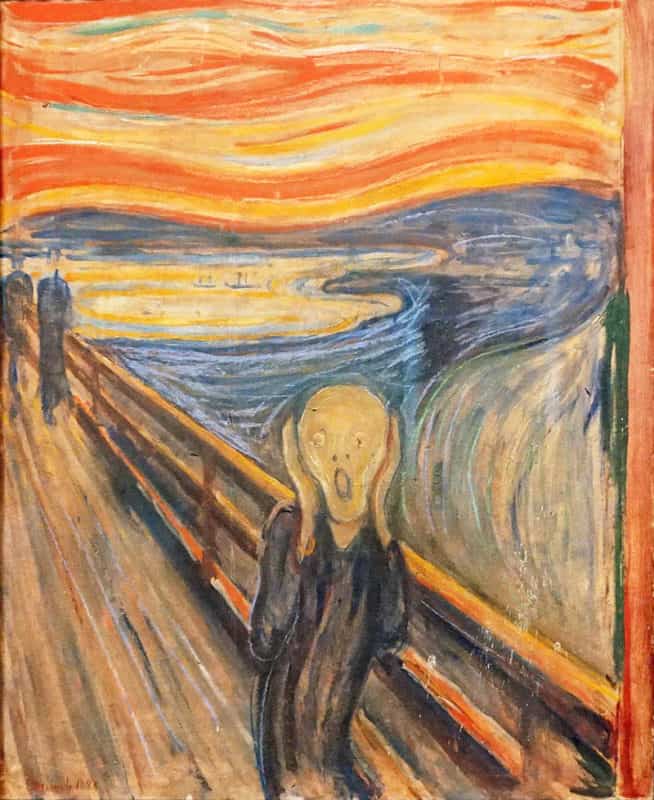
10. Edvard Munch

A Norwegian painter born in 1863, Edvard Munch was quite a tortured soul. In fact, he created his most well known work, The Scream, to represent his soul.

Munch’s mother died of tuberculosis a few years after he was born and he was raised by his father who suffered from mental illness. Two of his sisters died, and Munch himself was often ill as a child.

When he was not at school due to illness, he passed the time by drawing. Munch became a prolific painter and made 4 versions of The Scream, two which were stolen in art heists but later recovered.

Famous Munch paintings: The Scream, Anxiety, The Dance of Life, Jealousy.

The Scream by Edvard Munch, National Gallery of Norway, OsloThe Scream by Edvard Munch, National Gallery of Norway, Oslo
The Scream by Edvard Munch, Wikimedia

9. Salvador Dali

The king of Surrealism, Salvador Dali was a Spanish artist who explored the realm of the subconscious in his art. Dali wasn’t just a painter and sculptor, he also made furniture, designed theater sets, window displays and jewelry and produced Surreal films.

Although not a painting, Dali’s Lobster Telephone is one of his most well known artworks, together with his melting clocks. The Persistence of Memory is widely regarded as Dali’s masterpiece, with astonishing technical details and a dream-like quality.

In fact, some of Dali’s best work was created while he was asleep. He called these works “hand painted dream photographs”.

The maestro fell asleep while sitting on a chair and holding a spoon with a plate underneath it. The spoon would fall from his hand when he slept, clattering onto the plate. Dali would then wake up and immediately paint the images that he dreamt of.

Famous Dali paintings: The Persistence of Memory, Melting Watch, Portrait of Paul Eluard.

Salvador Dali with his pet ocelotSalvador Dali with his pet ocelot
Salvador Dali with his pet ocelot – Roger Higgins, World Telegram staff photographer, Wikimedia

8. Gustav Klimt

Known for his innovative use of gold leaf, Gustav Klimt was an Austrian Symbolist painter. Born in Vienna in 1862, Klimt was a key member of the Vienna Art Nouveau movement.

The founding president of the Vienna Secession, Klimt and 20 other artists rejected the conservative Vienna art exhibition known as the Künstlerhaus. He embraced the avant garde and was inspired by the Byzantine mosaics he saw in Italy to create his Golden Phase famous works such as The Kiss and Portrait of Adele Bloch-Bauer I. These artworks are adorned with gold leaf.

Klimt was known for his sensual portrayal of women. He is thought to have fathered 14 children.

Famous Klimt paintings: The Kiss, Judith and the Head of Holofernes, Portrait of Adele Bloch-Bauer I.

The Kiss by Gustav Klimt, Public domain, via Wikimedia CommonsThe Kiss by Gustav Klimt, Public domain, via Wikimedia Commons
The Kiss by Gustav Klimt, Wikimedia

7. Frida Kahlo

Mexican artist Frida Kahlo had a tumultuous marriage with Diego Rivera, a well known painter in his own right. Although they argued and had extramaritalaffairs, they painted each other for 25 years.

Frida’s life was marked by severe health problems which are reflected in her artworks. At 6 years old she was diagnosed with polio and she suffered chronic leg pain.

Aged 18, this famous female artist was injured in a bus accident which damaged her spine and pelvis. She had to wear orthopedic corsets due to her weakened spine, and decorated them with a Communist hammer and sickle.

Frida made some of the most iconic portrait paintings of all time, depicting her suffering.

Famous Kahlo paintings: The Two Fridas, The Wounded Deer, Self-Portrait with Thorn Necklace and Hummingbird.

Frida Kahlo by Guillermo Kalho, Public domain, via Wikimedia CommonsFrida Kahlo by Guillermo Kalho, Public domain, via Wikimedia Commons
Frida Kahlo by Guillermo Kalho, Wikimedia

6. Rembrandt Van Rijn

This 17th century Dutch artist is renowned for his oil painting techniques. Rembrandt was born in 1606 in Leiden and trained as a painter with Jacob van Swanenburgh and Pieter Lastman.

Although Rembrandt never travelled abroad, he was influenced by other Dutch artists like Pieter Lastman who had studied in Italy. Rembrandt was adept at painting a wide range of subjects, including self-portraits, landscapes, biblical scenes and animals.

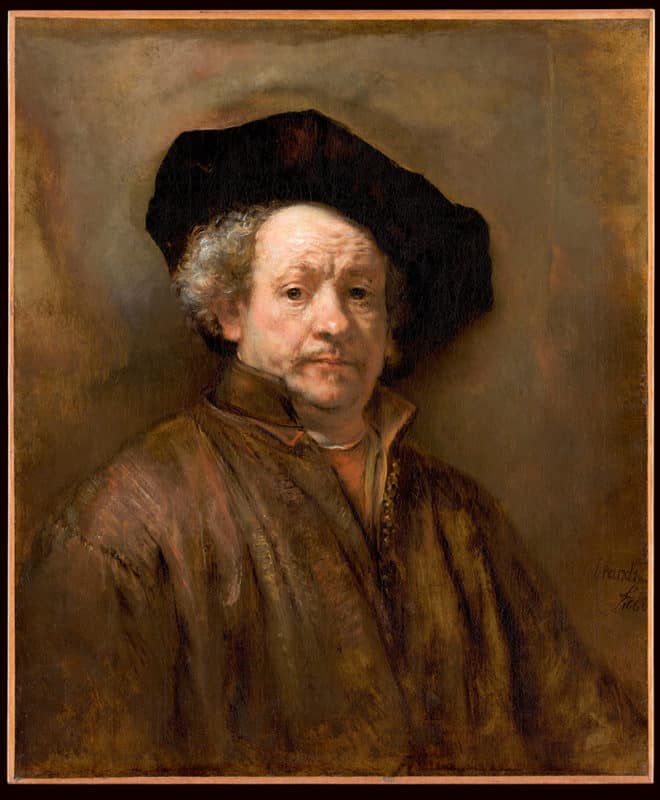
He was particularly interested in the effect of light. Rembrandt painted in a highly realistic style that was unusual for the day, as seen in his Self-Portrait below.

Famous Rembrandt paintings: The Night Watch, The Return of the Prodigal Son, Self-Portrait.

Self Portrait by Rembrandt van RijnSelf Portrait by Rembrandt van Rijn
Self Portrait by Rembrandt van Rijn

5. Claude Monet

The iconic French Impressionist painter Claude Monet was a proponent of open-air landscape painting. After a period living in London where he made his famous Impression: Soleil Levant artwork, Monet returned to France.

Monet was inspired by Japanese art and planted an Asian style garden at Giverny. He painted the flowers at different times of the day, fascinated by the reflected light.

His Water Lilies series includes around 250 oil paintings. Monet designed a special room for the series at the Orangerie Museum.

He offered the series to the French State the day after the Armistice of 1918 as a symbol of peace. The artworks were installed in the museum a few months after Monet’s death.

Famous Monet paintings: Poppies, Impression: Sunrise, The Waterlily Pond, Woman with a Parasol

Water Lilies by Claude Monet at The Art Institute of ChicagoWater Lilies by Claude Monet at The Art Institute of Chicago
©Art Institute of Chicago – Water Lilies by Claude Monet

4. Michelangelo

This highly influential Italian artist was a Renaissance architect, sculptor, poet and painter. After training as a sculptor, he carved the ‘Pietà’ for St Peter’s Cathedral in Rome.

Michelangelo painted the extraordinary Sistine Chapel ceiling frescoes between 1508 and 1512. A triumph of the Mannerist style, they combine idealization of the human form with unnaturalistic use of color.

The artist is also known for his marble sculpture of the biblical figure David. Created from 1501 to 1504, this 5.17metre statue can be viewed at the Accademia Gallery of Florence. A copy is situated in Piazza della Signoria.

Famous Michelangelo paintings: Sistine Chapel ceiling, The Creation of Adam, The Last Judgment – a fresco painting in the Sistine Chapel.

The Creation of Adam by Michelangelo, Wikimedia

3. Pablo Picasso

One of the most famous painters in the world, Pablo Picasso was born in Spain yet lived most of his life in France. A talented ceramicist, printmaker, theater designer and sculptor as well as a painter, Picasso has had a lasting impact on contemporary art.

He created over 20,000 artworks, costumes, ceramics and prints. Picasso’s famous Blue Period is thought to have been inspired by the suicide of his friend Casagemas. His Rose Period came next, with circus performers featuring prominently.

Picasso was also influenced by African and Oceanic art, particularly in his seminal artwork, Les Demoiselles d’Avignon. Together with the artist Georges Braque, he developed the principles of Analytic Cubism.

Famous Picasso paintings: Guernica, Child with a Dove, Les Demoiselles d’Avignon

Les Demoiselles D'Avignon by Pablo Picasso, Museum of Modern Art, New York CityLes Demoiselles D'Avignon by Pablo Picasso, Museum of Modern Art, New York City
Les Demoiselles D’Avignon by Pablo Picasso, Museum of Modern Art, New York City

2. Leonardo da Vinci

The celebrated Italian polymath created some of the most famous paintings of all time. A talented draughtsman, architect, sculptor, engineer and artist, Leonardo was also an inventor.

He imagined all manner of innovations, such as a helicopter, calculator, parachute and diving suit. You can see the models for many of these inventions at Le Clos Lucé, the beautiful French chateau where Leonardo lived for several years.

One of the most famous sketch artists ever, Leonardo filled notebooks with his drawings. The Vitruvian Man is an ink on paper sketch that depicts perfect human body proportions.

Leonardo perfected the sfumato technique of painting. Translating as “soft” or “blurred”, this painting style creates subtle blending without harsh contours. The technique was used to great effect in Leonardo’s painting of the Mona Lisa.

Famous Leonardo paintings: Mona Lisa (also known as La Gioconda), The Last Supper, Lady with an Ermine, Virgin of the Rocks.

Mona Lisa by Leonardo da VinciMona Lisa by Leonardo da Vinci
Mona Lisa by Leonardo da Vinci, Wikimedia

1. Vincent Van Gogh

This Dutch Post-Impressionist artist is considered to be one of the greatest painters of all time. Born in 1853, Van Gogh created around 2,100 artworks despite having had no formal training.

Vincent originally planned to become a pastor and took up painting when he was sacked, aged 27. He was inspired by Japanese woodblock prints as well as Dutch genre artworks.

Van Gogh was a prolific artist who produced 860 paintings, which did not sell well during his lifetime. He famously cut off his own ear after an argument with the artist Paul Gaugin.

The artist’s iconic Starry Night painting was made in the Saint-Paul-de-Mausole psychiatric hospital. Unfortunately, this famous Post-Impressionist painter took his own life aged only 37.

Famous Van Gogh paintings: The Starry Night, Bedroom in Arles, Irises, Self-Portrait with Bandaged Ear, The Night Café.

Self-Portrait with Bandaged Ear by Van GoghSelf-Portrait with Bandaged Ear by Van Gogh
Self-Portrait with Bandaged Ear by Van Gogh

To recap, these are some of the most famous painters in the world:

Vincent Van Gogh

Leonardo da Vinci

Pablo Picasso

Michelangelo

Claude Monet

Rembrandt Van Rijn

Frida Kahlo

Gustav Klimt

Salvador Dali

Edvard Munch

Johannes Vermeer

Jackson Pollock

Peter Paul Rubens

Pierre-Auguste Renoir

Henri Matisse

James Mcneill Whistler

Pieter Bruegel

Edouard Manet

Sandro Botticelli

Jacques-Louis David

Grant Wood

Andy Warhol

René Magritte

Final Thoughts on the Most Famous Painters in the World

Some of the most famous painters in the world have used their art to make powerful statements and document history.Their skill with a brush has brought joy to many and will continue to be treasured by future generations.

Keep an open mind when viewing works of art and you might just find that there’s more to them than meets the eye. These world-renowned painters have made a significant impact on the art community and will continue to be studied for years to come. If you found this article interesting, make sure to check out our other art history articles!

You might also enjoy:

Like this list of the most famous painters? Pin for later or share with friends.

The Most Famous Painters in the World | Iconic artists and their artworksThe Most Famous Painters in the World | Iconic artists and their artworks
The Most Famous Painters in the World

Sharing is caring!


Source link

Exploring the Art and Craft of Couture Fashion

Couture fashion, often synonymous with high art in the world of apparel, represents the pinnacle of creativity and craftsmanship in the industry. This exclusive domain of fashion is where imagination meets meticulous skill, resulting in garments that are not just worn but revered. Delving into the realm of couture fashion involves exploring the intricate processes, mastering sophisticated techniques, and understanding the evolution and influence of this timeless art form. This article takes you on a journey through the facets of couture fashion, unraveling its design intricacies, craftsmanship mastery, and historical significance.

The Intricate World of Couture Fashion Design

Couture fashion design is a world where creativity knows no bounds. Every garment begins as a concept, a vision in the mind of a designer who dares to push the boundaries of conventional fashion. The process starts with sketching, where the designer translates their imaginative ideas into visual blueprints. Each sketch is meticulously detailed, capturing the essence and emotion intended for the final piece. The designer considers every aspect, from silhouette to embellishments, ensuring that the design is both innovative and cohesive.

Choosing the right fabric is a critical step in the couture design process. Designers often source materials from around the globe, selecting only the finest silks, satins, and brocades. The texture, weight, and drape of the fabric are considered carefully, as they play a significant role in bringing the design to life. Each material is chosen not just for its beauty but for how it complements the overall vision, ensuring that the final garment is a harmonious blend of concept and reality.

Pattern making is another crucial stage in couture fashion design. Unlike ready-to-wear garments, couture pieces are custom-made to fit an individual client’s measurements. This requires creating unique patterns for each design, a task that demands precision and expertise. Pattern makers work closely with designers to ensure that every curve, seam, and dart is perfectly positioned, guaranteeing a flawless fit and exquisite silhouette.

The embellishment and detailing phase is where the true artistry of couture fashion comes to life. Designers incorporate intricate hand-stitched embroidery, beadwork, and appliqués, often spending hundreds of hours on a single garment. These embellishments are not mere decorations; they are integral to the design, adding depth, texture, and a sense of opulence. The choice of colors, patterns, and materials for these embellishments is carefully curated to enhance the garment’s overall aesthetic.

Couture fashion design is a collaborative effort that involves a team of skilled artisans, from seamstresses to embroiderers. Each member of the team plays a vital role in bringing the designer’s vision to fruition. The process requires not only technical skill but also a deep understanding of the design’s artistic intent. This collaboration ensures that every garment is a masterpiece, a testament to the collective talent and dedication of those involved.

The final stage of couture fashion design is the fitting process, which is as meticulous as the creation itself. Clients attend multiple fittings to ensure that the garment fits perfectly and meets their expectations. Adjustments are made with precision, as even the smallest alteration can affect the overall look and feel of the piece. The result is a one-of-a-kind garment that embodies the designer’s vision and the client’s individuality, epitomizing the art of couture fashion.

Mastering Techniques in High-End Fashion Craft

Mastering the techniques of high-end fashion craft is essential for creating couture garments that stand out in their elegance and sophistication. One of the fundamental skills in this craft is hand-sewing, a technique that ensures precision and allows for delicate detailing that machines cannot achieve. Every stitch in a couture piece is carefully placed, contributing to the garment’s overall structure and aesthetic. This meticulous attention to detail is what sets couture apart from mass-produced fashion.

Draping is another crucial technique in couture fashion, allowing designers to visualize and shape their creations directly on a dress form. This hands-on approach enables designers to experiment with fabric flow and silhouette, making adjustments in real-time. Draping provides a tactile experience, allowing designers to see how the fabric interacts with the body’s contours, which is essential for achieving the perfect fit and fluidity in a garment.

Embroidery and embellishment are at the heart of couture craftsmanship. These techniques require a keen eye for detail and a steady hand, as each bead, sequin, or thread is applied by hand. Embroidery adds texture and dimension to a garment, transforming it into a work of art. This labor-intensive process is often what distinguishes couture pieces, as the intricate designs and patterns are unique to each creation, reflecting the designer’s vision and the artisan’s skill.

Tailoring is a technique that ensures a garment fits impeccably, enhancing the wearer’s natural shape while maintaining comfort. In couture, tailoring goes beyond mere adjustments; it involves sculpting the fabric to create a harmonious balance between structure and fluidity. Master tailors work closely with designers to execute their vision, utilizing techniques such as padding, interfacing, and lining to achieve the desired silhouette and fit.

The art of fabric manipulation is another essential technique in couture fashion. This involves altering the fabric’s surface through pleating, ruching, or smocking to create unique textures and shapes. Fabric manipulation adds an element of surprise and innovation to couture designs, challenging traditional notions of fabric use. These techniques require creativity and technical expertise, as they must be executed flawlessly to maintain the garment’s integrity and wearability.

Finally, finishing techniques are what give couture garments their polished and luxurious appearance. These include hand-rolled hems, bound seams, and silk linings, which not only enhance the garment’s durability but also ensure comfort and elegance. The finishing touches are what elevate a couture piece from a beautifully crafted garment to a masterpiece of fashion art, showcasing the dedication and skill of the artisans involved in its creation.

The Evolution and Influence of Couture Artistry

The evolution of couture artistry is a testament to the ever-changing landscape of fashion and the enduring appeal of bespoke craftsmanship. Couture fashion has its roots in the 19th century, with Charles Frederick Worth often credited as the father of haute couture. Worth’s approach to fashion revolutionized the industry by introducing the concept of designer-led collections and made-to-measure garments, setting the foundation for modern couture.

Throughout the 20th century, couture fashion continued to evolve, with iconic designers such as Coco Chanel, Christian Dior, and Yves Saint Laurent pushing the boundaries of style and innovation. Each brought their unique vision to couture, influencing trends and redefining the standards of elegance and sophistication. These designers not only shaped the aesthetic of their time but also left a lasting legacy that continues to inspire contemporary fashion.

Couture artistry has always been a reflection of cultural and social changes. In the post-war era, for example, Dior’s "New Look" represented a shift towards femininity and luxury after years of austerity. Similarly, the 1960s saw a move towards more youthful and experimental designs, echoing the social revolutions of the time. Couture has the power to capture the zeitgeist, making it a dynamic and relevant art form despite its historical roots.

In today’s fashion world, couture remains a symbol of exclusivity and luxury, yet it also faces the challenge of adapting to contemporary values such as sustainability and inclusivity. Designers are increasingly exploring eco-friendly materials and ethical production methods, ensuring that couture remains relevant in a world that values environmental consciousness. This evolution reflects the industry’s ability to innovate while staying true to its artisanal roots.

The influence of couture artistry extends beyond the runway, impacting the broader fashion industry and popular culture. Couture techniques and aesthetics often trickle down into ready-to-wear collections, shaping trends and consumer preferences. Moreover, couture’s emphasis on craftsmanship and quality has inspired a renewed appreciation for artisanal skills in fashion, leading to a resurgence of interest in handmade and bespoke garments.

Ultimately, the evolution and influence of couture artistry highlight its significance as both an art form and a craft. It is a celebration of creativity, skill, and individuality, embodying the highest ideals of fashion. As couture continues to evolve, it remains a timeless testament to the beauty and power of fashion as an expression of art and identity.

Couture fashion is more than just clothing; it is an art form that celebrates creativity, craftsmanship, and individuality. From the intricate design process to the mastery of high-end fashion techniques, and the enduring influence of its artistry, couture represents the pinnacle of fashion excellence. As the industry evolves, it continues to inspire and captivate, reminding us of the timeless beauty and innovation that define couture. Whether on the runway or in the atelier, couture fashion remains a testament to the boundless possibilities of artistic expression in fashion.

43 Easy Festive Entertaining Tips For stress-Free Hosting

0
43 Easy Festive Entertaining Tips For stress-Free Hosting


The holiday season is here and that means it’s time to start planning for the perfect holiday gathering! Whether you’re hosting a small dinner party or a large family get-together, these easy festive entertaining tips will help your plans go off without a hitch.

Easy Festive Entertaining Tips

Up your entertaining game with these tips for stylish festive entertaining. From setting a beautiful table to creating the perfect menu, we’ve got everything you need to make your holiday gatherings unforgettable. So get ready to impress your family and friends with your fabulous hosting skills!

This time of year can be very busy, so time saving hacks are important. Here are some festive entertaining ideas that you can easily replicate at home.

Welcome guests at the doorWelcome guests at the door
Welcome sign

Prepare in Advance

Having people over for the holidays is always a reason to celebrate, but it also means preparing your home to be in its best condition. Make sure you give yourself plenty of time to tidy up, vacuum, and dust.

Put some cleaning supplies in an easily accessible place so if someone spills something on your carpets, you can take care of it quickly and effortlessly. Make sure that there are enough plates and glasses for everyone.

Do as much prep work as you can in the days leading up to Thanksgiving and Christmas, so that you spend as little time in the kitchen as possible and more time with your guests. For presenting the food, a slate or wood serving tray works really well.

Make a selection of canapes, such as pancetta ham rolls stuffed with dates. Serve with a fresh pesto sauce made from basil, olive oil and pine nuts. A rose spritz is a nice and easy drink that’s light on alcohol.

You can also prepare your musical playlist well in advance. Choose cheerful festive songs that everyone will know and have a few slower paced tunes lined up for the meal itself.

Consider having a seating plan if you have a lot of guests coming. It’s not essential but placing people who have something in common will get conversation flowing. Always welcome guests at the door, however busy you are. It will make them feel at home straight away.

Best festive canapesBest festive canapes
Prepare your Christmas meals in advance

Decorate for the Festive Season

Decorating for the holidays is a great way to bring cheer to your home and neighborhood. Apart from adding festive color and joy, hanging decorations can give any space a special touch.

Whether you choose to hang ornaments on the Christmas tree or string lights around your windows, you’re guaranteed to put everyone in the holiday spirit! Even though decorating may take some time and effort, the result is usually worth it – a fun and cozy holiday space for you and your family.

Make your own decorations from fir cones. Just tie them with ribbon, spray them with a festive scent which you can easily find online, and hang on the tree or use to decorate gifts.

You can even decorate dining chairs for a truly festive meal. Add pine cones or Christmas tree decorations to the back with ribbon.

Use imitation fir tree branches intertwined along a staircase handrail. Incorporate strings of battery-powered fairy lights into the mix to cast a festive glow.

If your staircase is wide enough, place battery-powered pillar candles in storm lanterns on alternating steps.

Continue the fir tree branch theme by arranging some along mantelpieces.

If there is a mirror or painting above the fireplace, adorn it with fir tree branches.

Hang mistletoe with a red ribbon from the ceiling.

Cyclamen in pots adds charm, red poinsettia provides seasonal color, and amaryllis in a glass vase looks splendid.

For a Christmas tree alternative, purchase a citrus fruit tree, adorn the branches with fairy lights and add festive ornaments.

Decorate chairs with Winter foliage and Christmas ornamentsDecorate chairs with Winter foliage and Christmas ornaments
Entertaining for Christmas tips

Plan Your Festive Meals

When it comes to festive meals, it is important to think about what your guests would enjoy. When there are vegetarians and vegans among the crowd, it’s essential to have some meat-free options available for them.

You can easily make festive dishes with plant-based ingredients like tempeh or tofu that resemble traditional festive dishes but contain no animal products. With just a few simple modifications here and there, you can make sure that everyone at your festive meal has something enjoyable to eat!

It’s easy to overeat during the festive season, so it’s a good idea to control portion sizes. For desserts in particular, bite sized portions are almost guilt free! There are plenty of options – make chocolate brownies spiced with cinnamon or pipe cream into ready made edible dessert cups and top with sprinkles. Mini mince pies are also popular, served with mulled wine or spiced apple toddy.

Festive food entertaining tipsFestive food entertaining tips
Festive meal preparation

Garnish Food With Fresh Edible Flowers

For food with a wow factor, get hold of some fresh edible flowers to decorate your starters. It’s best to grow your own and pick them on the day that you want to use them, although they can be purchased in some farmers’ markets or online.

To prepare, shake the flowers to remove any dirt, wash in cold water, drain and let them air-dry on a paper towel.

Edible flower foodEdible flower food
Fresh flower garnish

Hang a Festive Wreath

To welcome your guests, hang a decorative festive wreath on your front door or porch. They also make fantastic table centerpieces.

If you have time, you could also try making a winter foliage wreath yourself. Buy a wire base and cover with oranges, cinammon sticks and spray it silver or gold. Eucalpytus leaves are particularly attractive.

Search for natural elements such as sprigs of holly with berries and rosemary to create your wreath.

Attach some metallic Christmas baubles in your chosen color scheme using wire for even more impact.

DIY Christmas wreathDIY Christmas wreath
Make your own festive wreath

Plan an Exquisite Tablescape

Consider using elegant glass candle holders of varying heights to achieve ambient light at different levels. Line the candle holders with greenery for added glamour.

Make your guests feel special by placing name card holders at each place setting.

Insert a sprig of holly into napkin rings by threading the napkin through the ring and placing the holly sprig on top of the napkin fabric.

Select a color scheme and adhere to it, white is always a great choice for Christmas.

Add metallic accents such as crackers, tea light or Christmas baubles or gold charger plates. Rose gold is also very on trend right now and looks great for cutlery.

Use clear crystal glassware to add sparkle. Vintage crystal glasses are particularly delightful to hold.

Include bowls of treats to keep your guests in high spirits for longer.

Christmas entertaining ideas: gold dinner table settingChristmas entertaining ideas: gold dinner table setting
White and gold tablescape – easy festive entertaining tips

Creative Gift Wrapping

Purchase large round cardboard boxes online and top with a variety of items depending on the recipient. For children, you might add a teddy bear, Christmas lights or even a miniature Christmas tree.

Young children love getting a huge box, and may even prefer the box to what is inside. Alternatively, use recyclable wrapping paper but add a fun gift tag like the one below. 

Christmas crackers are a lovely tradition, but did you know that up to 40 million of them end up in landfill each year? Handmade reusable crackers are a great alternative. They will become a treasured part of your festive routine each year. Fill them with handwritten jokes, personalized keyrings, miniature spirit bottles or scratch cards.

A reusable advent calendar is another eco-friendly festive option.

A fun Christmas gift tag for children or adultsA fun Christmas gift tag for children or adults
Sustainable gift wrapping

Use Low Lighting 

Candlelight is the most flattering of lighting, whether you opt for long tapered candles or tea lights. These can be a major cause of fires so follow these safety tips.

Purchase an appropriate holder made specifically for small candles. Keep the wick trimmed so that it is never more than half an inch long and do not place on a plastic surface or near any flammable object.

Put out any candles when you leave the room and especially before bed, and keep out of the reach of children and pets.

You can also pile up battery operated fairy lights in an empty vase for dramatic effect, or string them along a mantelpiece.

Match the color of your candles to your overall color scheme.

Place tea lights on mirrored castors, which will create reflective pools of candlelight.

Stylish festive entertaining tips - A festive tealight to lighten up dark Winter daysStylish festive entertaining tips - A festive tealight to lighten up dark Winter days
Festive candle lights

Play Fun Board Games

Have some fun games or activities planned for after dinner – this is a particularly good way to break the ice if you’re entertaining new people. It’ll also help create a relaxed atmosphere where everyone has the chance to smile and laugh together – just be sure to plan something appropriate for all ages!

Get some classic board games such as Trivial Pursuit or Cluedo to entertain guests.

If you’re curious about how well your loved ones really know you, Priorities is a hilarious party game. This revealing game for adults and teenagers only takes a few minutes to learn and can be played in 30 minutes.

Let Your Guests Help Themselves

Don’t forget that hosting should be fun too! Relax and enjoy yourself while surrounded by friends, family, good food and great company — the best part of any occasion.

Serve cocktails in pitchers so that guests can help themselves. A wine box will also come in very handy.

Easy to serve bag-in-boxes can be stored in the fridge and keep wine fresh for up to a month.

Rose wine box

Final Thoughts on Easy Festive Entertaining

We hope you’ve found these easy festive entertaining tips useful. By following these recommendations, you’re sure to throw a great holiday party that everyone will enjoy!

Once all the hard work is done, don’t forget to treat yourself to a glass of something sparkling, you’ve worked for it. Thank your guests for coming and let them know how much you appreciated their company.

You might also enjoy:

Like these easy festive entertaining tips? Pin for later or share with friends.

Easy festive entertaining tips

Sharing is caring!


Source link

11 Best Luxury Christmas Wreaths: The Ultimate Guide

0
11 Best Luxury Christmas Wreaths: The Ultimate Guide


The holiday season is upon us, and nothing sets the mood quite like a beautifully decorated home. While there are many ways to add festive touches to your living space, luxury Christmas wreaths are among the most classic and timeless options. These circular arrangements of evergreen branches, berries, and other embellishments are a symbol of warmth, hospitality, and joy.

But not all Christmas wreaths are created equal. For those seeking a touch of luxury and sophistication, there are plenty of options available. Luxury Christmas wreaths feature high-quality materials, intricate designs, and attention to detail that set them apart from their more basic counterparts.

When shopping for a luxury Christmas wreath, it’s essential to consider the style and overall aesthetic you’re going for. Some wreaths feature classic red and green color schemes, while others incorporate metallic accents or unique textures like feathers or velvet. Size is also a factor to keep in mind, as larger wreaths can make a bold statement, while smaller ones may be better suited for smaller spaces or as part of a larger display.

At the end of the day, a luxury Christmas wreath is an investment in your home’s holiday decor that you can enjoy for years to come. Whether you choose one with traditional elements or a more modern twist, it’s sure to add elegance and charm to your space during the most wonderful time of the year.

The finest luxury Christmas wreaths

The Best Luxury Christmas Wreaths

As the festive season approaches, we’ve scoured the market to find the best luxury Christmas wreaths to help you deck the halls in style. Our team has carefully selected a range of wreaths that are not only visually stunning but also made with high-quality materials to ensure they last for many holiday seasons to come. Whether you prefer a classic or modern design, we’ve got you covered. Check out our top picks below.

1. Pre-Lit 30 Inch Luxury Christmas Wreath

A luxurious pre-lit Christmas wreathA luxurious pre-lit Christmas wreath
A luxurious pre-lit Christmas wreath

We highly recommend the WANNA-CUL Luxury Christmas Wreath for those looking for a beautiful and festive addition to their holiday decor.

Pros

The red and gold color scheme brings a luxurious and charming Christmas atmosphere to any home.

The wreath is handcrafted with high-quality artificial greenery spruce and red and gold Christmas ball ornaments, making it a great value.

The 50 LED lights with 8 variable light modes and timer for 6 hours on, 18 hours off, make this wreath more bright and festival splendid than other 30-inch Christmas wreaths.

Cons

The wreath requires 3 AA batteries, which are not included.

The wreath is only available in one color scheme.

This wreath is perfect for decorating your front door, bedroom, Christmas party, wedding, wall, fireplace, kitchen, staircase, balcony, offices, dining rooms, stores, garden, balcony, swing stand, shopping malls, and more. The wreath is easy to decorate and comes with a matching garland to help you create a cohesive holiday look. Additionally, the wreath comes with a high-quality brown box for easy storage and reuse for the next year.

In conclusion, the WANNA-CUL Luxury Christmas Wreath is a great choice for those looking for a beautiful and festive addition to their holiday decor. The wreath is handcrafted with high-quality materials and features 50 LED lights with 8 variable light modes, making it a great value.

2. 22 Inch Pre-Lit Christmas Wreath with Balls and Bows

Pre-lit Christmas wreath with balls and bowsPre-lit Christmas wreath with balls and bows
Pre-lit Christmas wreath with balls and bows

If you’re looking for a luxurious Christmas wreath with a unique and elegant design, this Christmas Wreath with Lights is a great choice.

Pros

This gorgeous wreath features an original design with natural tengquan bows, cedar, pine, white berries, frosted pine cones, battery-powered LED lights, and Christmas balls, making it a lifelike artificial Christmas decoration for indoor use.

The wreath comes with 20 warm LED lights powered by 2 AA batteries and is suitable for both indoor and outdoor use, making it perfect for front doors, porches, fireplaces, walls, windows, kitchen cabinets, cars, garages, and more.

The wreath is made of high-quality and weatherproof materials for durability, and it comes in an elegant design that balances traditional and modern elements.

Cons

The wreath is only 22 inches in size, which may be too small for some customers looking for a larger wreath.

The LED lights are separate and need to be set up, which can be time-consuming for some customers.

This affordable Christmas Wreath with Lights is a great choice for customers looking for a unique and elegant Christmas wreath that can be used both indoors and outdoors. However, the small size and potential for broken ornaments and hot glue strings may be a concern for some customers.

3. Pre-Lit 24 Inch Luxury Christmas Wreath

Pre-lit 24 inch luxury Christmas wreathPre-lit 24 inch luxury Christmas wreath
Pre-lit 24 inch luxury Christmas wreath

If you’re looking for a luxury Christmas wreath that will add a touch of elegance to your home, this 24 inch wreath is definitely worth considering.

Pros

This delightful wreath is handcrafted with high-quality artificial greenery spruce, eucalyptus leaves, and red and gold ornaments, which give it a luxurious appearance.

The wreath comes with 30 LED lights that are brighter and more festive than other 24-inch Christmas wreaths. The lights have eight variable light modes and a timer for six hours on, 18 hours off, auto cycle daily with eight light effect schemes.

The wreath is battery-operated, which means you don’t have to worry about finding a power source. The battery box is IP44 waterproofed, so you can use it outdoors without any problems.

Cons

The WANNA-CUL Luxury Christmas Wreath is a bit pricey compared to other wreaths on the market.

The wreath is a bit heavy, so you’ll need to make sure you have a sturdy hook to hang it on.

Overall, we highly recommend this Luxury Christmas Wreath. It’s a beautiful and well-crafted wreath that will add a touch of luxury to your home this Winter season. Plus, it’s battery-operated, so you can use it anywhere without worrying about finding a power source.

4. WreathDream Luxury Christmas Wreath

WreathDream Luxury Christmas WreathWreathDream Luxury Christmas Wreath
Merry Christmas Wreath

If you’re looking for a stunning and realistic Christmas wreath to add to your holiday decor, the WreathDream Luxury Christmas Wreath is definitely worth considering.

Pros

This beautiful wreath is made with high-quality materials that are designed to last. The pine needles and eucalyptus leaves are made of durable plastic that won’t easily deform or fade, and the wreath is held together with sturdy wire.

The WreathDream Luxury Christmas Wreath comes with a variety of beautiful and festive decorations, including big Christmas balls, champagne gold berries, and a merry Christmas sign. These decorations add a touch of elegance and charm to the wreath and make it perfect for both indoor and outdoor use.

The wreath arrives in a gift box that is designed to keep it protected during shipping. When you receive the wreath, you can easily fluff it up and adjust the branches to create the perfect shape.

Cons

Some users have reported that the wreath is smaller than they expected. While the wreath is accurately sized at 20 inches in diameter, the inner diameter is only about 10 inches, which may be too small for some users’ needs.

The WreathDream Luxury Christmas Wreath is a bit pricey compared to other wreaths on the market. However, the high-quality materials and beautiful decorations make it worth the investment for those who are looking for a luxury Christmas wreath.

We would recommend the WreathDream Luxury Christmas Wreath for anyone who is looking for a high-quality and beautiful Christmas wreath. The wreath is made with durable materials and comes with festive decorations that add a touch of elegance to any home. While the wreath may be a bit pricey, it is definitely worth the investment for those who want a luxury Christmas decoration that will last for years to come.

5. 24-Inch Angel Wreath

24-Inch Christmas Wreath24-Inch Christmas Wreath
Angel Christmas Wreath

If you’re looking for a luxurious Christmas wreath to elevate your holiday decor, the YULETIME 24-Inch Angel Wreath is worth considering.

Pros

The 24-inch diameter and rich spruce branches make this wreath a standout focal point for your Christmas decorations.

The unusual angel design creates a delightful effect.

It is easy to hang and comes with a twine wreath hanger.

Cons

The wreath may shed some flocking material during handling and installation.

We were impressed with the stunning design and festive ambiance. The wreath’s metal base provides stability, while the pine cones give the wreath a lush and full appearance. The angel design makes the wreath visually striking and festive.

Decorating with this wreath is a breeze. The metal base on the back of the garland is equipped with a twine loop, allowing you to easily hang it on your front door, window, or above the fireplace.

The wreath can be easily removed and placed elsewhere to suit your decorative needs. This YULETIME 24-Inch Christmas Wreath is a good option for anyone looking to elevate their holiday decor with a luxurious and festive touch.

6. Luxury Christmas Wreath with 50 LED Lights

Christmas Wreath with 50 LED LightsChristmas Wreath with 50 LED Lights
Prelit Christmas Wreath

If you’re looking for a luxurious Christmas wreath that radiates warmth and holiday cheer, this Luxury Christmas Wreath with 50 LED Lights is an excellent choice.

Pros

The wreath features 50 LED lights that create a welcoming ambiance and work with a timer, i.e., 6 hours on, 18 hours off, auto-cycle daily, dimmable with 8 light effect.

The wreath embraces a luxury gold and silver theme, capturing the essence of the Christmas season, and adds a touch of timeless elegance to your home decor.

The wreath is incredibly versatile and suitable for various settings as wall decor, kitchen/windows or fireplace wreaths.

Cons

The wreath needs 3 AA batteries that are not included.

The wreath may require some fluffing to reach the best appearance and size.

Crafted with attention to detail, this wreath is made to last and is a durable addition to your holiday collection. The high-quality materials and meticulous construction ensure you can enjoy its beauty year after year.

You can hang it on your front door to greet guests, place it above your mantle for a cozy holiday atmosphere, or position it in a window to share the festive spirit with your neighbors.

This is the perfect wreath for anyone looking for a luxurious and versatile Christmas wreath that adds a touch of elegance to their holiday décor.

7. Christmas Velvet Wreath

Christmas Velvet WreathChristmas Velvet Wreath
Velvet Christmas Wreath

If you’re looking for a luxurious Christmas wreath that is both stylish and easy to use, this Christmas Velvet Wreath is definitely worth considering.

Pros

The velvet material is durable and safe, ensuring that the wreath will last for many Christmases to come.

The wreath is adorned with a beautiful bow that adds to its overall elegance and charm.

With a diameter of approximately 14 inches, the wreath is the perfect size to hang on your door and grab everyone’s attention.

Cons

Some customers may find the price to be a bit steep compared to other wreaths on the market.

The wreath is only available in green, which may not match everyone’s holiday decor.

While the wreath is suitable for both indoor and outdoor use, it may not hold up well in extremely harsh weather conditions.

Our experience with this Festive Velvet Wreath was very positive. The wreath’s bright green color and classic design are sure to add a touch of festive cheer to any home.

The velvet material felt sturdy and well-made, and the bow was a lovely finishing touch. We also appreciated how easy it was to hang the wreath on our door and how it immediately caught the eye of visitors.

In conclusion, if you’re in the market for a luxury Christmas wreath that is both beautiful and reliable, this one is definitely worth checking out. Its stylish design, durable material, and ease of use make it a great choice for anyone looking to add some holiday cheer to their home.

8. Set of 3 Cordless Christmas Wreaths with LED Lights

CEWOR Set of 3 15in Christmas WreathsCEWOR Set of 3 15in Christmas Wreaths
3 Pre-Lit Mini Christmas Wreaths

If you’re looking for a cute set of Christmas wreaths, this set of 3 16 inch Christmas Wreaths might be a great option for you.

Pros

The wreaths are battery-operated, so you can place them anywhere without worrying about a plug socket.

There’s an automatic timer – 6 hours on and 18 hours off.

Each wreath is embellished with a large red velvet bow, creating a festive and charming ambiance.

Cons

The battery case is not waterproof, so you need to hang the wreaths on a covered porch and to avoid direct sunlight and rain.

The LED lights are not bright enough for some people’s taste.

We were pleasantly surprised by the quality of these wreaths, considering their price. The wreaths are cute and festive, and the battery-operated lights add a cozy touch to any space.

Each wreath is embellished with a large red velvet bow, realistic pine leaves, red berries, and pine cones, which create a charming ambiance.

These wreaths are versatile and thoughtful gifts that can adorn your holiday wall, window, front door, fireplace, living room, bedroom, dining room, mantel, porch, window, or anywhere in your home or office.

9. 30 Inch Artificial Christmas Wreath with Pine Cones and Berries

Pre-Lit Christmas WreathPre-Lit Christmas Wreath
Pre-lit artificial Christmas wreath

If you’re looking for a lifelike Christmas wreath to decorate your home this holiday season, this Christmas Wreath with Berries and Pine Cones by the National Tree Company might be the perfect fit for you.

Pros

This timeless wreath is made of high-quality material, making it durable and reusable.

With over 100 branch tips, the handcrafted design looks full and just like the real thing.

The wreath is versatile and can be used for indoor and outdoor Christmas decor.

Cons

The lights can be a bit faint.

We were impressed with this traditional Christmas Wreath’s long-lasting quality. The wreath is handmade and perfect for adding a touch of Christmas spirit to your front door, window, wall or mantlepiece.

In summary, this is a nice choice for anyone looking for a traditional festive wreath to decorate their home this holiday season.

10. Pre-Lit Elf Christmas Wreath

60 Inch Pre-Lit Christmas Wreath60 Inch Pre-Lit Christmas Wreath
Fun Christmas Elf Wreath

We recommend this 30 inches fun festive wreath by Valery Madelyn for those who want a unique option for their Christmas decor. Featuring candy canes, elf legs, pine cones, berries and stripey bows, this elf wreath will bring playfulness to your home.

Pros

This quirky Christmas wreath is perfect for decorating an indoor or outdoor space or gifting to loved ones.

The 40 LED lights have 8 different lighting effects.

The automatic timer is extremely convenient.

Cons

This wreath is quite heavy so will need a sturdy hook.

If you’re looking for a festive wreath to make people smile, this is a great choice. Children will love the quirky elf theme.

11. 20 Inch Christmas Wreath with Red Berries

20 inch festive wreath with red berries20 inch festive wreath with red berries
20 inch festive wreath with red berries

We would recommend this Red Berry Christmas Wreath for those looking for a festive and durable wreath to decorate their home during the holiday season.

Pros

The outer extended diameter of 20 inches makes it a perfect size for both indoor and outdoor decorations.

The delicate design featuring artificial eucalpytus leaves adorned with red berries, adds extra liveliness to the Christmas holidays.

The wreath is handcrafted with various durable materials, which has a smooth texture and can last for several Christmas seasons.

Cons

The size of this wreath is relatively small.

This festive red and green wreath is a versatile Christmas decoration that can be hung on your front door or window to welcome guests. It can also be hung inside over a sofa or fireplace to bring holiday and festival atmosphere for the whole family.

This cute wreath makes a wonderful Christmas gift and is packed in a sturdy box for safe shipping and season storage.

Hanging a homemade Christmas wreathHanging a homemade Christmas wreath
Hanging a homemade Christmas wreath

Luxury Christmas Wreath Buying Guide

When it comes to buying luxury Christmas wreaths, there are a few things to consider to ensure you get the best product for your needs. Here are some factors to keep in mind:

Christmas Wreath Materials

Luxury Christmas wreaths are typically made from high-quality materials, such as real or artificial evergreen branches, berries, pine cones, and other decorative elements. When choosing a wreath, consider the materials used and their quality. Look for wreaths made from durable materials that will last for many holiday seasons.

Festive Wreath Size

Christmas wreaths come in different sizes, so it’s important to choose one that fits your space and decor. Measure the area where you plan to hang the wreath to ensure it will fit properly. Keep in mind that larger wreaths may be more expensive, but they can make a bigger impact in your holiday decor.

Christmas Wreath Style

There are many styles of luxury festive wreaths to choose from, including traditional, modern, rustic, and more. Consider the overall style of your home and choose a wreath that complements your decor. You may also want to consider the color scheme of your holiday decorations to ensure that the wreath matches.

Festive Christmas Wreath Price

Luxury Christmas wreaths can be expensive, but they are often worth the investment. When shopping for a wreath, consider your budget and look for a high-quality product that fits within your price range. Keep in mind that a more expensive wreath may last longer and be of higher quality than a cheaper one.

Other Wreath Features

Some luxury Christmas wreaths come with additional features, such as built-in lights or scent. Consider these features if they are important to you, but keep in mind that they may add to the cost of the wreath.

By keeping these factors in mind, you can choose a luxury Christmas wreath that fits your needs and enhances your holiday decor.

Read Next:

A luxurious festive door wreathA luxurious festive door wreath
A luxurious festive door wreath

Sharing is caring!


Source link

Last Minute Unique Holiday Gift Ideas – University of Fashion Blog

0
Last Minute Unique Holiday Gift Ideas – University of Fashion Blog


You’ve been so busy with school work, house work, your job and/or the kids and you’ve only now realized that you’re out of time to shop for a holiday gift for that special someone on your list. Need help?

University of Fashion to the Rescue

From the comfort of your own home, get on your phone, tablet or computer and take advantage of our once yearly sale to get that special someone a gift certificate to the BEST online fashion education  resource on the planet. Talk about a unique gift!

Our once yearly sale is still on, but ends on January 2, 2025.  The benefits of a UoF subscription are BIG. With 13 different disciplines, you can give the gift of fashion education to that aspiring designer, current fashion student, someone already in the fashion biz who needs to upskill, or that person in your life who is simply ‘fashion curious’. They will learn all about what it takes to be a men’s, women’s and/or children’s wear fashion designer, a fashion retailer, a fashion museum curator, visual merchandiser and a fashion-entrepreneur. Even if they’re not interested in working with their hands, they can pop some popcorn, sit back, and just watch how it’s done!

We’ve actually been called the “Netflix of Fashion”

With over 550+ lessons to learn from, they will never be bored. And another bonus of your gift to them is that they will earn a FREE  Certificate of Completion for each and every lesson they master. Oh, and did you know, all of our lessons are taught by fashion college professors and fashion industry professionals?

UoF was founded in 2008 by Francesca Sterlacci, a fashion designer/entrepreneur/author and former chairperson at the Fashion Institute of Technology. University of Fashion is the first & largest online fashion education resource in the world serving thousands of individuals, high schools, colleges, associations and libraries around the world.

By giving a UoF subscription, either a monthly or a yearly, your gift recipient will be blown away!!

UoF fashion disciplines

Our Holiday offers expire on January 2, 2025, so be sure to move on this offer soon. This is one of the most unique gift options out there!! Give a friend or family member the gift of fashion education. Tell a friend, or, what the heck, why not give yourself a gift? You deserve it!

Are You Currently a  Monthly Subscriber or Free Member?

If you are already a monthly subscriber or a free member to University of Fashion, you can also take advantage of our promo sale. Just login as usual, then look to the left and click “Upgrade to monthly (or Yearly) Subscription (Special Holiday Rate)”, and use our promo code.

Here’s How to Purchase a Gift Certificate 

The best way to create a gift subscription for someone is buy the subscription for yourself and then simply give the other person your subscription’s login credentials. Here’s the process in more detail:

Click the “Sign-up” button at the top of any page at https://www.UniversityofFashion.com, then click “Order Now” under either “ Monthly” or “ Yearly”.
Fill out the order form that appears using your own name, email and address. However, when the form asks you to choose a username and password, choose a username appropriate for the gift recipient. For example, if you’re giving the gift subscription to someone named, Sally Jones, create a username like “sjones”.
Use your credit card or PayPal to pay for the subscription.
Now for the fun part! Give your gift recipient the username and password you created and tell them to login. Once logged in, tell them to look to their left on the screen, click “Edit Profile” (under Membership Management) and change their account’s name, email address and/or password to whatever they want.
Scan, fill and print out or take a screen shot of the gift certificate template that applies and voila! Easy peasy!

UoF gift certificate template

UoF Hanukkah gift certificate template

UoF Kwanzaa gift certificate template


Source link

Latest Insights and Highlights from Couture Shows

Latest Insights and Highlights from Couture Shows

The world of couture is a dazzling realm where creativity knows no bounds, and this season’s couture shows have once again proven to be a testament to the boundless imagination and skill of fashion’s most revered designers. As the curtains lift on these grand spectacles, we are treated to an array of breathtaking creations that challenge conventions and set the stage for future trends. This article delves into the latest insights and highlights from the couture shows, exploring the season’s masterpieces, the innovative styles that push boundaries, and the key trends emerging from the runways.

Unveiling the Season’s Couture Masterpieces

The latest couture shows have unveiled a stunning array of masterpieces that reflect the intricate artistry and meticulous craftsmanship synonymous with high fashion. Each piece is a testament to the designer’s vision, with collections that range from opulent gowns to avant-garde ensembles. The attention to detail is evident in every stitch, bead, and embroidery, as designers strive to create garments that are not only visually striking but also tell a unique story.

Among the standout collections, one can find a renewed emphasis on the use of luxurious fabrics. Silks, velvets, and brocades dominate the runways, their rich textures and vibrant hues captivating the audience. Designers are also experimenting with unconventional materials, incorporating elements like feathers, metallic threads, and even recycled plastics, showcasing their commitment to both sustainability and innovation.

The color palette for this season is a symphony of contrasts. While some designers opt for ethereal pastels and soft neutrals, others embrace bold, saturated colors that demand attention. This juxtaposition of hues creates a dynamic visual experience, highlighting the diversity of styles and inspirations that define the current couture landscape.

Silhouettes play a crucial role in the season’s masterpieces, with designers exploring a range of shapes from structured, architectural forms to fluid, flowing lines. The interplay of volume and proportion is expertly manipulated to create garments that are both dramatic and elegant, each piece a testament to the designer’s mastery of form and function.

Accessories, too, have become an integral part of the couture narrative, with designers crafting pieces that complement and enhance the overall aesthetic. From oversized hats and elaborate headpieces to intricately designed footwear and statement jewelry, these elements add an extra layer of sophistication and flair to the collections.

Ultimately, the season’s couture masterpieces are a celebration of creativity and craftsmanship, each piece a work of art that transcends the conventional boundaries of fashion. Through their innovative designs and meticulous attention to detail, designers continue to push the envelope, setting new standards for what couture can be.

Designers Push Boundaries with Innovative Styles

This season, designers have truly pushed the boundaries of traditional fashion by embracing innovative styles that challenge the norms and redefine the concept of couture. The runway has become a playground for imagination, where designers experiment with new techniques, materials, and concepts to create garments that are both groundbreaking and captivating.

One of the most notable innovations is the integration of technology into couture design. Designers are utilizing cutting-edge techniques such as 3D printing and laser cutting to create intricate patterns and structures that would be impossible to achieve by hand. These advancements allow for a new level of precision and complexity, resulting in garments that are as much a feat of engineering as they are of artistry.

Sustainability is another key focus for many designers this season, with a growing emphasis on eco-friendly practices and materials. Collections feature garments made from recycled fabrics, organic textiles, and even biodegradable materials, reflecting a commitment to reducing the environmental impact of fashion. This shift towards sustainability is not only a response to consumer demand but also a testament to the industry’s ability to innovate for a better future.

The fusion of different cultural influences is also prevalent in the latest collections, with designers drawing inspiration from a diverse range of sources. Traditional techniques and motifs are reimagined in a contemporary context, resulting in garments that are both timeless and modern. This blending of cultures creates a rich tapestry of styles that reflects the global nature of fashion today.

In terms of design, asymmetry and deconstruction are prominent themes, with designers playing with unconventional shapes and silhouettes. The deliberate disruption of traditional forms creates a sense of movement and dynamism, challenging the viewer’s perception and inviting them to see fashion in a new light. These experimental designs are a bold statement of creativity, pushing the boundaries of what is possible in couture.

Collaboration is also a driving force behind many of the season’s most innovative styles, with designers partnering with artists, architects, and technologists to bring their visions to life. These interdisciplinary collaborations result in garments that are truly unique, combining fashion with elements of art, design, and technology to create something entirely new.

Key Trends Emerging from the Latest Runways

As the curtain falls on the latest couture shows, several key trends have emerged that are set to influence the fashion landscape in the coming months. These trends reflect both the current cultural zeitgeist and the evolving tastes of the fashion-forward consumer, offering a glimpse into the future of style.

One of the most prominent trends is the resurgence of maximalism, with designers embracing bold patterns, vibrant colors, and exaggerated silhouettes. This trend is a response to the minimalist aesthetic that has dominated fashion in recent years, offering a refreshing alternative that celebrates individuality and self-expression.

Romanticism is also making a comeback, with collections featuring delicate lace, ruffles, and floral motifs. This trend evokes a sense of nostalgia and whimsy, with designers drawing inspiration from historical fashion to create garments that are both timeless and enchanting. The use of soft, flowing fabrics and ethereal color palettes adds to the dreamlike quality of these pieces.

The trend of gender fluidity continues to gain momentum, with designers blurring the lines between traditional menswear and womenswear. Collections feature androgynous silhouettes, unisex garments, and a mix of traditionally masculine and feminine elements, reflecting a more inclusive and diverse approach to fashion.

Another key trend is the emphasis on craftsmanship and artisanal techniques. Designers are revisiting traditional methods such as hand embroidery, weaving, and knitting, creating garments that are not only beautiful but also reflect a deep appreciation for the art of making. This focus on craftsmanship speaks to a growing desire for authenticity and quality in fashion.

Statement outerwear has also emerged as a key trend, with designers creating bold, eye-catching coats and jackets that serve as the focal point of an outfit. From oversized capes to sculptural trench coats, these pieces are designed to make a statement and elevate any ensemble.

Finally, the trend of sustainability continues to shape the fashion industry, with designers increasingly prioritizing eco-friendly materials and practices. This shift towards sustainability is not only a response to consumer demand but also a reflection of the industry’s commitment to creating a more responsible and ethical future.

As the latest couture shows draw to a close, the fashion world is left with a wealth of inspiration and innovation to explore. From the season’s breathtaking masterpieces to the boundary-pushing styles and emerging trends, these shows have once again demonstrated the power of couture to captivate and inspire. As designers continue to push the limits of creativity and craftsmanship, the future of fashion looks brighter and more exciting than ever.

The Evolution of Couture in the Metaverse Era

The world of fashion has always been a dynamic arena, constantly evolving and adapting to new technological advancements and cultural shifts. As we step into the Metaverse era, a digital landscape that promises to blur the lines between physical and virtual realities, couture fashion finds itself at a fascinating crossroads. This article explores the intriguing intersection of high fashion and the Metaverse, examining how traditional craftsmanship is being redefined in this new digital context and what this means for the future of the industry.

The Fusion of Couture and Virtual Reality

The confluence of couture and virtual reality is an exciting development that is reshaping the fashion industry. As designers explore the potential of digital platforms, they are discovering new ways to express their creativity beyond the limitations of physical materials. This fusion allows for the creation of garments that defy gravity and physics, offering a canvas that is limited only by the imagination. Virtual reality provides a playground where designers can experiment with textures, colors, and forms in ways that were previously unimaginable.

In this digital realm, couture designers can craft experiences that are as much about the journey as they are about the final product. Virtual reality enables the creation of immersive fashion shows where audiences can interact with designs in a 360-degree environment. This not only democratizes access to high fashion but also allows for a level of personalization and engagement that is unmatched by traditional runway shows. As a result, the audience becomes an integral part of the fashion narrative.

Moreover, the integration of virtual reality into couture offers new opportunities for sustainability. By creating and showcasing virtual garments, designers can reduce the waste associated with traditional fashion production processes. This shift towards digital fashion also opens the door to a more inclusive industry, where designs can be tailored to fit any body type, free from the constraints of physical production.

The fusion of couture and virtual reality is also revolutionizing the way fashion is consumed. With the rise of virtual wardrobes and digital fashion items, consumers are beginning to see clothing as a form of self-expression that transcends the physical world. This shift in perspective encourages a more mindful approach to fashion, where the focus is on quality and creativity rather than quantity.

Additionally, virtual reality is fostering collaboration between fashion designers and technologists, leading to the emergence of hybrid professions that blend fashion design with digital expertise. This collaboration is giving rise to innovative tools and platforms that further enhance the creative process, enabling designers to push the boundaries of what is possible in the realm of couture.

As virtual reality continues to evolve, it is set to become an integral part of the couture landscape. This fusion not only enhances the creative potential of designers but also offers consumers a more engaging and personalized fashion experience. It heralds a new era where the boundaries between the physical and digital worlds are increasingly blurred, and couture fashion is at the forefront of this transformation.

Digital Craftsmanship: Redefining Haute Couture

Digital craftsmanship is emerging as a transformative force in the world of haute couture, challenging traditional notions of luxury and exclusivity. By leveraging cutting-edge technologies such as 3D modeling, artificial intelligence, and blockchain, designers are redefining what it means to create high fashion. This new form of craftsmanship is characterized by precision, innovation, and a focus on the unique possibilities offered by digital tools.

One of the key aspects of digital craftsmanship is the ability to create hyper-realistic designs that are indistinguishable from their physical counterparts. Advanced 3D modeling software allows designers to meticulously craft every detail of a garment, from the intricate stitching to the texture of the fabric. This level of precision is unparalleled in traditional couture, where each piece is handmade and subject to human error.

The use of artificial intelligence in digital craftsmanship is also revolutionizing the design process. AI algorithms can analyze vast amounts of data to identify trends, predict consumer preferences, and even generate original design concepts. This allows designers to stay ahead of the curve and create collections that are both innovative and attuned to the desires of their audience.

Blockchain technology is playing a crucial role in ensuring the authenticity and exclusivity of digital couture. By creating a digital ledger of ownership, designers can verify the provenance of their creations and prevent counterfeiting. This not only protects the intellectual property of designers but also enhances the value of digital couture as a luxury commodity.

The shift towards digital craftsmanship is also democratizing access to haute couture. With the ability to create virtual garments, designers can offer their creations to a global audience without the constraints of physical production and distribution. This opens up new markets and allows more people to experience the artistry and innovation of high fashion.

Furthermore, digital craftsmanship is fostering a new appreciation for the artistry of couture. As consumers become more familiar with the intricacies of digital design, they are beginning to recognize the skill and creativity involved in crafting virtual garments. This shift in perception is elevating digital couture to the same level of prestige as its physical counterpart, paving the way for a new era of fashion that celebrates both tradition and innovation.

In redefining haute couture, digital craftsmanship is not only expanding the creative possibilities for designers but also reshaping the relationship between fashion and technology. As the boundaries between the digital and physical worlds continue to blur, the artistry of couture is being reimagined for a new generation of consumers who value creativity, sustainability, and innovation.

The Metaverse: A New Frontier for Fashion

The Metaverse represents a new frontier for fashion, offering a vast and unexplored landscape where creativity knows no bounds. As this digital universe continues to expand, it is becoming a playground for fashion designers to experiment with new ideas and redefine the concept of style. The Metaverse allows for a level of freedom and flexibility that is unmatched by the physical world, enabling designers to push the boundaries of what is possible in fashion.

One of the most exciting aspects of fashion in the Metaverse is the ability to create entirely new forms of self-expression. In this virtual space, individuals can curate their digital identities through a wide array of fashion choices that are not limited by physical constraints. This opens up a world of possibilities for personal style, where users can experiment with bold and imaginative looks that reflect their unique personalities.

The Metaverse is also fostering a sense of community and collaboration within the fashion industry. Designers, artists, and technologists are coming together to create immersive experiences that engage and inspire audiences. Virtual fashion shows, pop-up shops, and interactive installations are becoming common features of the Metaverse, offering new ways for consumers to connect with their favorite brands and designers.

As the Metaverse continues to evolve, it is also creating new opportunities for fashion businesses. Brands can reach a global audience without the need for physical storefronts, reducing overhead costs and increasing accessibility. This shift towards digital fashion commerce is not only beneficial for established brands but also provides a platform for emerging designers to showcase their work and gain recognition.

The rise of the Metaverse is also prompting a reevaluation of the fashion industry’s approach to sustainability. With the ability to create and sell digital garments, the environmental impact of fashion production can be significantly reduced. This shift towards a more sustainable model is becoming increasingly important as consumers demand more environmentally conscious choices.

In this new frontier, the Metaverse is redefining the relationship between fashion and technology. It is a space where creativity, innovation, and sustainability converge, offering endless possibilities for the future of fashion. As designers continue to explore this digital landscape, the Metaverse is set to become an integral part of the fashion industry, shaping the way we perceive and interact with style.

The evolution of couture in the Metaverse era is a testament to the transformative power of technology and creativity. As designers embrace the opportunities offered by virtual reality and digital craftsmanship, they are redefining the boundaries of fashion and paving the way for a more inclusive and sustainable industry. The Metaverse, with its limitless potential, is set to become a central hub for fashion innovation, offering a new frontier where imagination knows no limits. As we continue to explore this digital landscape, the future of couture promises to be as dynamic and exciting as the virtual worlds it inhabits.

Fashion Forward: Couture Meets Cutting-Edge Technology

In recent years, the fashion industry has witnessed an unprecedented transformation as technology becomes an integral part of design, production, and retail. This fusion of high fashion and high tech is reshaping the couture landscape, creating a dynamic interplay that promises innovation and sustainability. From smart textiles to 3D printing, fashion is stepping into the future with a flair that combines traditional craftsmanship with cutting-edge advancements. This article explores how technology is revolutionizing the fashion world, the innovations driving this change, and how designers are embracing these trends to redefine couture.

The Intersection of Fashion and Technology Today

The convergence of fashion and technology has opened new horizons for designers and consumers alike. Today, technology is not just a tool but a muse for fashion innovators, inspiring new ways to create and experience clothing. Wearable technology, such as smartwatches and fitness trackers, has already made its mark. However, the intersection is now deeper, with technology influencing the very fabric of fashion design. Digital platforms and virtual reality are offering immersive experiences, allowing consumers to engage with brands in unprecedented ways.

This digital transformation has democratized fashion, enabling designers to reach global audiences without the traditional barriers of geography and access. Social media platforms and online marketplaces have become vital for fashion brands, offering a direct channel to consumers and a space for creative expression. The result is a more inclusive fashion landscape where emerging designers can showcase their work alongside established names, fostering a diverse and dynamic industry.

Technology is also enhancing the functionality and adaptability of clothing. Smart textiles, embedded with sensors and conductive threads, are enabling garments to respond to environmental changes or even the wearer’s mood. These innovations are not only enhancing the aesthetic appeal of fashion but also adding a layer of utility that was previously unimaginable. This blend of style and substance is redefining what it means to be fashionable in the 21st century.

Moreover, sustainability is at the forefront of this technological revolution. As consumers become more environmentally conscious, fashion brands are leveraging technology to create sustainable solutions. From digital supply chains that reduce waste to materials science innovations that produce biodegradable fabrics, technology is helping the industry move towards a more sustainable future. This shift is essential as the fashion industry grapples with its environmental impact and seeks to align with global sustainability goals.

The role of artificial intelligence (AI) in fashion cannot be overstated. AI is transforming everything from design to production and marketing. Predictive analytics and machine learning algorithms are enabling designers to anticipate trends and consumer preferences, leading to more targeted collections and reduced waste. Virtual fitting rooms and AI-driven styling apps are enhancing the shopping experience, offering personalized recommendations and reducing the need for returns.

Finally, the rise of digital fashion is challenging traditional notions of clothing and ownership. Virtual garments, designed for avatars in digital spaces, are becoming a new frontier for fashion designers. This trend not only reduces the environmental impact of physical production but also offers limitless creative possibilities. As virtual reality and augmented reality technologies advance, the lines between the physical and digital fashion worlds continue to blur, creating exciting opportunities for innovation.

Innovations Transforming the Couture Industry

The couture industry is undergoing a metamorphosis as technological innovations redefine the boundaries of design and craftsmanship. One of the most groundbreaking advancements is the use of 3D printing in fashion. Designers are now able to create intricate patterns and structures that were once impossible to achieve with traditional methods. This technology allows for a new level of customization, enabling bespoke designs that fit the unique contours of an individual’s body.

Additionally, 3D printing is reducing material waste, as garments can be produced on-demand, eliminating excess inventory. This shift towards on-demand production is not only cost-effective but also aligns with the growing demand for sustainable fashion practices. The ability to print clothing also opens up possibilities for experimentation with new materials, such as biodegradable plastics and recycled composites, pushing the boundaries of what couture can be.

Augmented reality (AR) is another innovation transforming the couture industry. AR technology is being used to create virtual fashion shows, allowing designers to showcase their collections to a global audience without the limitations of physical space. These immersive experiences offer a new way for consumers to interact with fashion, bridging the gap between digital and physical worlds. Virtual try-ons powered by AR are also enhancing the shopping experience, allowing consumers to see how garments will look on them before making a purchase.

Blockchain technology is making waves in the couture industry by providing transparency and traceability throughout the supply chain. This innovation is crucial for ensuring the authenticity of luxury goods, combating counterfeits, and promoting ethical sourcing. By leveraging blockchain, fashion brands can provide consumers with detailed information about the origin and journey of their garments, building trust and enhancing brand loyalty.

The integration of robotics in fashion production is another significant development. Automated sewing and cutting machines are increasing efficiency and precision, allowing for more complex designs and faster turnaround times. Robotics is also addressing labor shortages and reducing the reliance on manual labor, which has historically been a significant challenge in the couture industry. This technological shift is enabling brands to scale their operations while maintaining high-quality standards.

Finally, the rise of virtual fashion influencers is changing the way couture is marketed and consumed. These digital personas, created using sophisticated computer graphics, have amassed large followings on social media platforms, influencing fashion trends and consumer behavior. Virtual influencers offer a new avenue for brands to reach audiences, providing a fresh and innovative approach to marketing that resonates with tech-savvy consumers.

How Designers Embrace Tech-Driven Fashion Trends

Fashion designers are at the forefront of embracing technology, using it as a catalyst for creativity and innovation. Many designers are integrating smart textiles into their collections, creating garments that can change color, generate heat, or even charge electronic devices. These tech-driven designs are not only functional but also add a futuristic edge to traditional couture, appealing to consumers seeking innovation and novelty.

Collaboration between fashion designers and tech companies is becoming increasingly common. These partnerships are driving the development of new materials and technologies that enhance the design process. For example, designers are working with tech firms to develop fabrics embedded with microchips that track movement or monitor health metrics, merging fashion with wellness in exciting new ways.

Designers are also leveraging digital tools to streamline the design process. Computer-aided design (CAD) software allows for precise pattern making and virtual prototyping, reducing the time and cost associated with traditional garment construction. These tools enable designers to experiment with new shapes and structures, pushing the boundaries of couture while maintaining a focus on sustainability and efficiency.

The use of AI in fashion design is another trend embraced by designers. AI algorithms are helping designers analyze vast amounts of data to identify emerging trends and consumer preferences. This data-driven approach not only informs the creative process but also ensures that collections resonate with target audiences. AI is also being used to create generative designs, where algorithms produce unique patterns and textures, adding a new dimension to couture.

Designers are also exploring the potential of virtual fashion, creating digital-only collections that exist purely in cyberspace. These virtual garments challenge traditional notions of fashion and consumption, offering limitless creative possibilities without the environmental impact of physical production. As the metaverse continues to grow, designers are finding new ways to engage with consumers in these digital spaces, offering virtual fashion shows and exclusive digital drops.

Finally, designers are using technology to enhance the retail experience, creating immersive environments that engage consumers on multiple levels. From interactive store displays to augmented reality apps that offer personalized styling advice, technology is transforming the way consumers interact with fashion brands. These innovations are not only enhancing the shopping experience but also building stronger connections between brands and consumers, fostering loyalty and engagement in an increasingly digital world.

As technology continues to evolve, its impact on the fashion industry is undeniable. The fusion of couture and cutting-edge technology is not only transforming how fashion is designed, produced, and consumed but also challenging traditional notions of what fashion can be. Designers are at the forefront of this transformation, embracing new tools and techniques to push the boundaries of creativity and innovation. As we look to the future, the possibilities for tech-driven fashion are limitless, promising a dynamic and exciting evolution for the industry. With sustainability and personalization at the core of these advancements, the future of fashion promises to be as responsible as it is revolutionary.

Exploring the Intersection of Technology and Couture

The world of fashion has always been synonymous with creativity, expression, and evolution. In recent years, this dynamic industry has seen a remarkable transformation with the infusion of advanced technology. From the initial stages of design to the final runway show, technology is revolutionizing how fashion is conceived, created, and consumed. This article delves into the fascinating intersection of technology and couture, exploring its evolution, impact, and the innovations that are bridging these two worlds.

The Evolution of Tech-Infused Fashion Design

The journey of integrating technology into fashion design began with the simplest of tools, such as sewing machines and pattern-making software. These innovations, at their inception, were groundbreaking, allowing designers to enhance efficiency and precision in garment creation. However, as technology advanced, so did its role in the fashion industry. Computer-aided design (CAD) systems, for instance, have revolutionized how designers conceptualize and render their creations, offering a digital canvas that supports both creativity and practicality.

In the early 2000s, the rise of digital printing technology further expanded the horizons for fashion designers. This technology allowed for intricate and vibrant patterns to be printed directly onto fabric, thus eliminating many of the limitations associated with traditional textile production. Designers could now experiment with an endless array of colors and patterns, leading to unprecedented levels of personalization and innovation in fashion design.

3D printing marked another pivotal moment in the evolution of tech-infused fashion. This technology enabled the creation of complex structures and designs that were previously unimaginable. Designers could now experiment with materials and forms, producing garments and accessories that defied conventional fashion norms. The ability to 3D print bespoke items on demand also introduced new possibilities for sustainable fashion practices.

The role of technology in fashion design has continued to grow, with the advent of artificial intelligence (AI) and machine learning. These technologies have begun to influence design processes by analyzing trends, predicting consumer preferences, and even generating new design ideas. AI-driven platforms provide designers with valuable insights, helping them make informed decisions and stay ahead of the curve in a highly competitive industry.

Wearable technology represents another significant milestone in the evolution of tech-infused fashion. This concept goes beyond aesthetics, merging functionality with style. From smart fabrics that monitor health metrics to garments embedded with LED lights, wearable tech is pushing the boundaries of what fashion can do, transforming clothing into interactive experiences.

As technology continues to evolve, so will its impact on fashion design. The future promises even more sophisticated tools and techniques, enabling designers to push creative boundaries further while addressing the growing demand for sustainability and personalization. The evolution of tech-infused fashion design is a testament to the industry’s ability to adapt and innovate, embracing new technologies to redefine what fashion can be.

How Technology is Shaping Modern Couture

The impact of technology on modern couture is profound, reshaping every aspect of the industry from design to production and distribution. One of the most significant changes is the way technology has enhanced the personalization of fashion. With the help of big data and AI, designers can now tailor their creations to meet the individual preferences of consumers. This shift towards personalization reflects a broader trend in consumer behavior, where uniqueness and exclusivity are highly valued.

Virtual and augmented reality technologies are also playing a crucial role in shaping modern couture. These immersive technologies offer new ways for consumers to engage with fashion, from virtual fitting rooms that allow for accurate size and fit assessments to augmented reality apps that let customers visualize how a garment will look in real life. This not only enhances the shopping experience but also reduces the number of returns, addressing a key challenge in the online fashion retail space.

Sustainability, a pressing issue in the fashion industry, is being addressed through technological advancements. Innovations such as digital prototyping and 3D printing reduce waste by allowing designers to experiment with designs and materials virtually before creating physical samples. Additionally, blockchain technology is being used to improve supply chain transparency, ensuring ethical sourcing and production practices in the creation of couture garments.

The production process in modern couture has been transformed by automation and robotics. These technologies enable faster and more precise manufacturing, reducing lead times and costs. Moreover, automation allows for greater consistency and quality control, which is crucial in the high-stakes world of couture. However, this shift also raises questions about the future of craftsmanship and the role of human artisans in couture fashion.

Technology is also reshaping the way fashion is marketed and consumed. Social media platforms and digital marketing tools have become essential for reaching and engaging with an audience. Live-streamed fashion shows, virtual showrooms, and influencer collaborations are now standard practices, allowing brands to connect with consumers globally and in real-time. This digital transformation has democratized access to couture fashion, making it more accessible to a broader audience.

In conclusion, technology is not just shaping modern couture; it is redefining it. The integration of advanced technologies into the fashion industry is creating new opportunities for creativity, sustainability, and consumer engagement. As these technologies continue to evolve, they will undoubtedly lead to further innovations, driving the future of couture in exciting and unexpected directions.

Innovations Bridging Tech and High Fashion

The intersection of technology and high fashion has given rise to a host of groundbreaking innovations that are transforming the industry. One such innovation is the development of smart textiles—fabrics that have been engineered to have additional functionalities beyond traditional textiles. These include fabrics that can change color, regulate temperature, or even generate energy, offering designers new ways to incorporate technology into their collections.

Another notable innovation is the use of AI in fashion forecasting and trend analysis. By processing vast amounts of data from social media, fashion shows, and consumer behavior, AI algorithms can predict upcoming trends with remarkable accuracy. This allows designers to stay ahead of the curve, creating collections that align with emerging consumer preferences and market demands.

The rise of digital fashion is another exciting development at the intersection of tech and high fashion. Designers are now creating virtual garments that exist solely in the digital realm, which can be worn by avatars in virtual environments or used in digital marketing campaigns. This not only reduces the environmental impact associated with traditional garment production but also opens up new possibilities for creativity and self-expression.

In the realm of fashion retail, technology is enhancing the customer experience through innovations like AI-powered personal shopping assistants and chatbots. These tools provide personalized recommendations and support, making the shopping process more efficient and enjoyable. Additionally, technologies like RFID (Radio Frequency Identification) are improving inventory management and enabling seamless omnichannel retail experiences.

The integration of biotechnology into fashion is yet another area where innovation is thriving. Researchers and designers are exploring the use of bioengineered materials, such as lab-grown leather and biodegradable fabrics, to create sustainable and ethical fashion. These materials offer the same aesthetic and functional qualities as traditional textiles but with a significantly lower environmental footprint.

Finally, the concept of the fashion metaverse is capturing the imagination of designers and consumers alike. This virtual space allows users to interact with fashion in entirely new ways, from attending virtual fashion shows to purchasing and owning digital fashion assets. The fashion metaverse represents a new frontier for high fashion, where technology and creativity merge to create immersive and interactive experiences.

The fusion of technology and couture is not just a trend; it is an evolution that is reshaping the fashion industry. From the way garments are designed and produced to how they are marketed and consumed, technology is at the forefront of innovation. As designers and technologists continue to collaborate, the possibilities for creativity and sustainability in fashion are boundless. The journey of tech-infused couture is just beginning, promising a future where fashion transcends traditional boundaries and embraces the limitless potential of technology.

​​Fashion Industry Banks on The Rise of Collectible Culture

0
​​Fashion Industry Banks on The Rise of Collectible Culture


2024 saw the fashion industry ride on the wave of collectible paraphernalia, transforming whimsical novelties into status-defining treasures. While the unveiling of luxury accessories and bag charms are nothing new, MCM’s Visetos-print mascots to Loewe’s playful animal figures highlight how luxury brands are tapping into a growing consumer desire for escapism through tangible, unconventional symbols of self-expression. What began as niche curios — like Burberry’s Plush Bear Teddy Bear Collectable from 2008 or early iterations of Bearbrick (or BE@RBRICK) collaborations — has evolved into a cultural phenomenon. Today’s fashion collectibles straddle the line between art, nostalgia, high-end branding and society’s penchant for “cuteness aggression” sparking a deeper emotional connection between consumers and the industry. This new era of collectible paraphernalia reflects a shift in consumer behaviour, where plushies, mascots, and novelties — far removed from traditional notions of utility — have become aspirational icons of luxury.

Read More: Beyond the Label: How Luxury Brands Leverage on Legacy Storytelling

 Status Symbols to Consumer Escapism

Stepping away from the realm of luxury, one example of collectible paraphernalia that became a cultural must-have were the Labubu plushie dolls. Everyone from fashion editors and influencers to social media savant BryanBoy were seen sporting these plushie attached to their luxury designer bags. What started out as an online meme quickly turned into a buying frenzy that has expanded beyond Southeast Asia. Sold by Chinese toy company Pop Mart with prices ranging anywhere from SGD 40 to SGD 200, the hype surrounding the Labubu dolls emphasises how consumers place value in seemingly “everyday” items to feel included in a broader cultural movement. This phenomenon reflects a desire for connection and identity through shared symbols of fascination. The same can be said about the obsession with the Stanley Cup nearly a year ago, where collective enthusiasm transformed a bottle into a pop-cultural fixation.

Read More: 2024’s Holiday Campaigns Embrace Everyday Icons

The journey of collectible culture in fashion dates back to around 2008, with the Burberry Bear (now sold online second-hand for USD 50 to USD 100) being one of the earliest examples of luxury fashion transforming an inanimate object into a cultural icon. What started as a novelty item sold alongside a purchase for collectors has now blossomed into a mainstream cultural movement. Fast forward to 2024, and fashion houses have embraced this shift, launching their own lines of limited-edition plushies, figurines, and mascots. Louis Vuitton’s Vivienne bag charm alongside Hermès’ and Celine’s dog toys and accessories are all part of this broader strategy to capitalise on the increasing demand for collectible items that blur the lines between what is practical and personal expression. Luxury brands have come to understand that modern consumers seek more than just status symbols — they crave experiences and avenues of escape. Collectible items, from plush toys to designer mascots, deliver a tangible sense of fantasy and evoke youthful nostalgia that traditional luxury goods often cannot provide, whether due to their price point or exclusivity. This yearning for escapism underpins the success of brands like Moschino and Loewe, which create playful yet distinctive products that go beyond adornment, seamlessly integrating into and reflecting the consumer’s identity.

Bags Moschino Men’s Spring/Summer 2025 collection exemplifies how the brand delivers surreal bags that become collectible items beyond their intrinsic value as bags.

Capitalisation of Group Behaviour

The rise of collectible fashion paraphernalia highlights a shift in how consumers approach their purchases. Historically, luxury goods were symbols of wealth, status, and exclusivity. But with the proliferation of accessible luxury brands and the democratisation of high-end fashion, brands have had to get creative in maintaining their allure. Enter the collectible culture — an accessible entry point for many consumers who may not be able to afford the full range of a brand’s offerings but can still indulge in miniature versions that serve as gateways to luxury.

Read More: Bag Charms: Luxury Fashion’s Latest Moneymaker

Luxury fashion brands have long been experts at creating exclusivity, but with collectibles, they’ve embraced a more collective form of exclusivity. Collectible toys and figurines are part of a broader cultural movement where owning certain items signals not just personal taste, but membership in a specific consumer tribe. These small, often playful products foster a sense of belonging, allowing consumers to join a larger narrative while still showcasing their individuality. This creates something of a societal paradox — in order to stand out, consumers often must align with the collective.While heritage and craftsmanship remain central to luxury storytelling, modern consumers — particularly millennials and Gen Z — are drawn to narratives that align with their values, often finding deeper connections in the playful, accessible realm of collectible culture and paraphernalia. Meaning, beyond physical appearances, they want their purchases to reflect a sense of individuality, playfulness, and emotional resonance. Collectible culture and paraphernalia have become the perfect medium for this connection, offering a bridge between the aspirational allure of luxury and the modern desire for items that feel personal, approachable, and meaningful.

Read More: Fashion in Flux: The Industry’s Return to Timeless Classics Amid Economic Headwinds

The Future of Collectible Fashion Paraphernalia

Charms hold a unique appeal, bridging both ends of the consumer spectrum. For some, they represent an accessible entry-level purchase into the world of luxury, while for loyal customers, they serve as an extension of their brand devotion. Think of it this way — you already own the Louis Vuitton Vivienne, the Hermès Birkin, or the Prada Re-Edition 1995 shoulder bag — what’s next? The bag charm offers a way to personalise these sought-after pieces, adding a playful yet sophisticated touch that elevates them further. It is albeit a small but impactful accessory that speaks to both individuality and brand allegiance. Why stop at one? The latest Prada campaign shows the model clutching a bag layered with numerous accoutrements encouraging the consumer to indulge in a bit of conspicuous consumption. This is arguably why luxury labels such as Louis Vuitton and Prada increasingly tune in to collectible culture as part of their strategy to expand into new demographics, particularly younger consumers and collectors alike. While luxury handbags and shoes are out of reach for some, a designer mascot or plushie offers an aspirational item that is much more attainable.

Nostalgia has always played a significant part in fashion — due to the inevitable trend cycle — hence the demographic between the ages of 18 to 30 typically looks back on past style icons to inspire their outfits of today. The fashion world also often transforms elements of childhood into more grown-up variations to embrace the fun side of fashion just as we have seen with friendship bracelets and now bag charms. Thus, people have done so by incorporating childhood trinkets and colourful bead embellishments onto their high-end bags to add pops of colour which would otherwise be difficult to display on everyday looks. The endless combinations of embellishments allow individuals to cultivate and express their personal style — especially in an era where it is increasingly difficult to do so, due to the rapidly changing trends.

Read More: The Ultimate Luxury Festive Gift Guide

In an era where luxury bags are becoming increasingly ubiquitous among restless consumers, perhaps collectible accessories are the new display of wealth — offering a distinctive and personal way to signal exclusivity and taste. As the boundaries between fashion, art, and play continue to blur, the rise of collectible culture is likely to endure and even intensify. One can surmise that brands will continue to capitalise on the desire for escapism, self-expression, and nostalgia, expanding their product offerings to meet the growing demand for these unconventional luxury treasures. Whether through more mascots, plush toys, or creative collaborations, the future of fashion collectibles seems prime for further exploration.

Read More: Luxury Brands Leverage Personalised Offerings For Product Differentiation

For more on the latest in fashion and style reads, click here.


Source link

Popular Posts

My Favorites