Arts

Home Arts Page 67

Immersive Art: How VR is Redefining Artistic Expression and Engagement

0


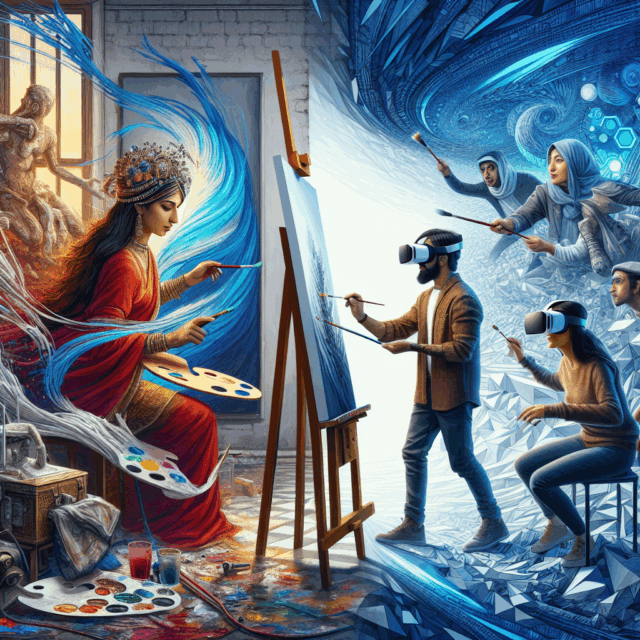
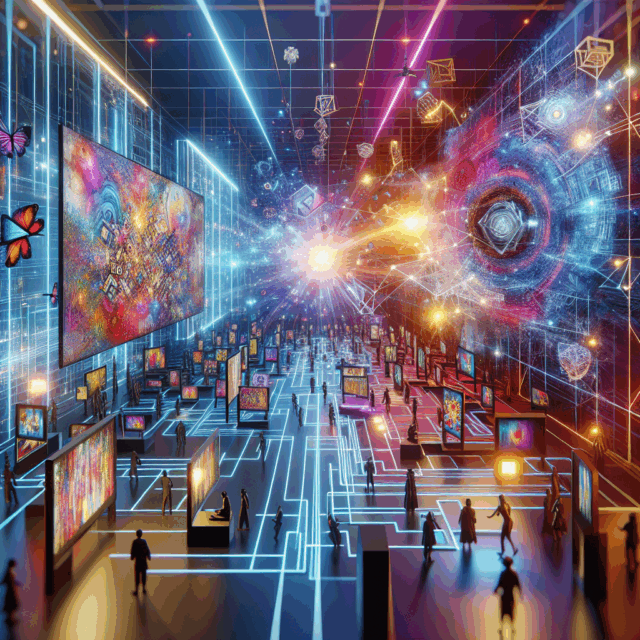
In recent years, the world of art has witnessed a transformative shift, largely driven by advancements in technology. Among the most revolutionary influences is Virtual Reality (VR), a medium that is reshaping how art is created, experienced, and understood. Immersive art installations, once limited to traditional galleries and physical spaces, are now expanding into virtual realms, offering audiences unique and interactive ways to engage with art.

The Convergence of Art and Technology

Historically, art has been a reflection of the times, evolving alongside technological advancements. From the invention of the printing press to the rise of digital photography, each leap in technology has opened new avenues for artistic expression. VR represents the latest frontier, merging visual creativity with the immersive possibilities of digital environments.

Artists are increasingly harnessing the capabilities of VR to create multi-sensory experiences that engage not only the eyes but also the mind and body. These experiences are not limited to mere visual displays; they often incorporate sound, touch, and even motion, enveloping the audience in a holistic environment that makes them active participants in the art.

Breaking Down Barriers

One of the most significant advantages of VR in the art world is its ability to democratize access to artistic experiences. Traditional art exhibitions often rely on physical space, which can limit accessibility for many. VR enables art lovers from different backgrounds and geographic locations to engage with artworks in a way that was previously unimaginable.

Globally, VR platforms can host virtual exhibitions where users can explore famous museums, attend curated shows, or interact with artists in real-time, all from the comfort of their homes. This has profound implications, particularly for marginalized communities who may not have the means to visit physical galleries or who have historically been excluded from the art world.

Artistic Expression Redefined

For artists, VR is not just a new canvas; it’s a transformative tool that expands creative possibilities. Sculptors can create three-dimensional works that exist solely in the digital space, while painters can manipulate environments and colors in real time. This shift encourages more experimentation and innovation, as artists are no longer confined to traditional mediums like canvas and metal.

Prominent VR artists like Jon Rafman and Marina Abramović have demonstrated how this technology can evoke powerful emotional responses. In Abramović’s VR piece, "The Life," viewers find themselves reflecting on their own existence and mortality in an environment that blurs the line between the real and the virtual. Such works challenge audiences to reconsider their perceptions of life, art, and existence.

Enhancing Engagement and Interaction

VR technology fosters deeper engagement by enabling interactivity. Instead of passively observing a piece of art, viewers can navigate environments, interact with elements, and even influence the artwork’s evolution. This level of participation fosters a personal connection between the audience and the art, creating a more profound experience.

Moreover, VR installations can include social dimensions, allowing users to share experiences with others, collaborate in real-time, or attend virtual events together. This interactivity enhances collective experiences, creating communities around shared artistic exploration.

The Future of Immersive Art

The potential for VR in the art world is vast and still largely untapped. As the technology improves and becomes more widely accessible, we can expect to see more innovative uses of VR in galleries, educational institutions, and public spaces. Institutions like museums and art schools are beginning to integrate VR into their programming, offering workshops and exhibits that emphasize this new medium.

As artists and technologists continue to experiment, the definitions of art, creativity, and engagement will undoubtedly evolve. The immaterial nature of VR challenges traditional notions of what art can be, pushing boundaries and inviting diverse forms of expression. From captivating narratives to interactive installations, the possibilities are endless.

Conclusion

In summary, VR is revolutionizing the art world, introducing immersive experiences that go beyond mere observation. By combining artistry with cutting-edge technology, VR is redefining how we conceive of and engage with art, making it more accessible, interactive, and emotionally resonant. As this exciting intersection continues to develop, the future of immersive art promises to inspire and challenge the artistic landscape, opening new horizons for both artists and audiences alike. The blend of reality and virtuality may just be the most thrilling chapter in the ongoing story of artistic expression.

The Future of Art: Why NFT Technology is Here to Stay

0


In recent years, the art world has seen a seismic shift catalyzed by the advent of Non-Fungible Tokens (NFTs). Emerging from the realm of cryptocurrency, NFTs are unique digital assets secured on a blockchain, enabling artists to sell and trade their work in unprecedented ways. As we delve into the future of art, it’s clear that NFT technology is not just a passing trend; it’s a transformative force poised to redefine the way we create, own, and appreciate art.

The Democratization of Art

One of the most compelling aspects of NFTs is their ability to democratize the art market. Traditional art sales often require intermediaries, such as galleries or auction houses, which can create barriers for both artists and collectors. NFTs eliminate many of these hurdles by allowing artists to sell directly to their audience via online marketplaces. This means that emerging artists, who may not have had access to prestigious galleries, can reach a global audience, fostering a more inclusive art ecosystem.

Enhanced Ownership and Provenance

NFTs use blockchain technology, which provides a transparent and immutable record of ownership. This transparency engenders trust among collectors, as they can verify the provenance of a digital artwork easily. With traditional art, issues surrounding authenticity and ownership can be murky. NFT technology mitigates these concerns, creating a reliable framework for ownership that can enhance the value of art pieces. Collectors can purchase with confidence knowing they’re acquiring a verified, one-of-a-kind item.

New Revenue Streams for Artists

Traditional models of artistic compensation rely heavily on physical sales or exhibitions, but NFTs open up new avenues for revenue. For instance, artists can program royalties into their NFTs, ensuring they receive a percentage of future sales whenever their artwork is resold. This not only benefits artists by providing ongoing revenue but also encourages a thriving secondary market. As collectors trade art, artists can continue to benefit financially from their work, something that is rarely possible in traditional art sales.

Broader Artistic Expression

NFTs have expanded the possibilities for artistic expression. Digital artists are now able to incorporate multimedia elements such as animations, sound, and interactivity into their works, pushing the boundaries of what art can be. Furthermore, the NFT space has given rise to innovative art forms like virtual reality (VR) installations and generative art, where algorithms create unique pieces. This evolution signifies a new era of creativity that embraces technology, allowing artists to engage with audiences in dynamic ways.

Community and Collaboration

The NFT space is also fostering new forms of community and collaboration among artists and collectors. Platforms like Discord and social media networks see artists, collectors, and enthusiasts uniting around shared interests, offering support and feedback. Collaborative projects, where multiple artists contribute to a single collection, are becoming increasingly common. These communities are not just about transactions; they focus on building relationships and nurturing creativity.

Environmental Concerns and Solutions

A notable critique of NFTs has been their environmental impact, particularly due to the energy consumption associated with blockchain transactions. The industry is aware of these concerns, and many NFT platforms are actively seeking sustainable solutions. For instance, Ethereum, one of the most popular blockchains for NFTs, is transitioning to a proof-of-stake model, significantly reducing its energy footprint. As the technology evolves, so too will its environmental impact, allowing for a more responsible approach to digital art.

Conclusion: A Lasting Legacy

The future of art is undoubtedly intertwined with NFT technology. By democratizing access, enhancing ownership, creating new revenue streams, and promoting innovative expressions, NFTs are revolutionizing the art world. While challenges such as environmental concerns exist, the ongoing evolution of the technology suggests that NFTs are here to stay. As artists and collectors continue to embrace this digital transformation, we stand on the cusp of a new artistic renaissance—one that celebrates creativity and community in the digital age.

Sui’s DeFi Ecosystem: Rapid Growth and Strategic Positioning

0
Sui’s DeFi Ecosystem: Rapid Growth and Strategic Positioning


The decentralized finance (DeFi) landscape is constantly evolving, with new Layer-1 blockchains vying for market share. These platforms promise enhanced scalability, security, and user experience. Sui, a permissionless blockchain, emerged as a promising entrant. Launched in May 2023 by Mysten Labs, founded by former Meta engineers, Sui quickly carved out a significant niche. It leverages a unique object-centric data model and the Move programming language. This positions Sui as a formidable player in the DeFi space.

This article delves into Sui’s rapid ecosystem growth. Specifically, it explores its expansion within Decentralized Finance (DeFi), gaming, and Non-Fungible Tokens (NFTs). This growth is evidenced by significant Total Value Locked (TVL) and expanding user adoption. Furthermore, the network’s strategic positioning is solidified by key partnerships with institutional players and a clear roadmap for future development.

Sui – A Flourishing DeFi Ecosystem

Sui‘s architecture enables high-speed lending, trading, and staking platforms. The network has demonstrated significant growth in its DeFi sector, with Total Value Locked (TVL) surging from approximately $25 million at launch to over $2 billion by May 2025, positioning Sui as the third-largest non-EVM chain by TVL. 
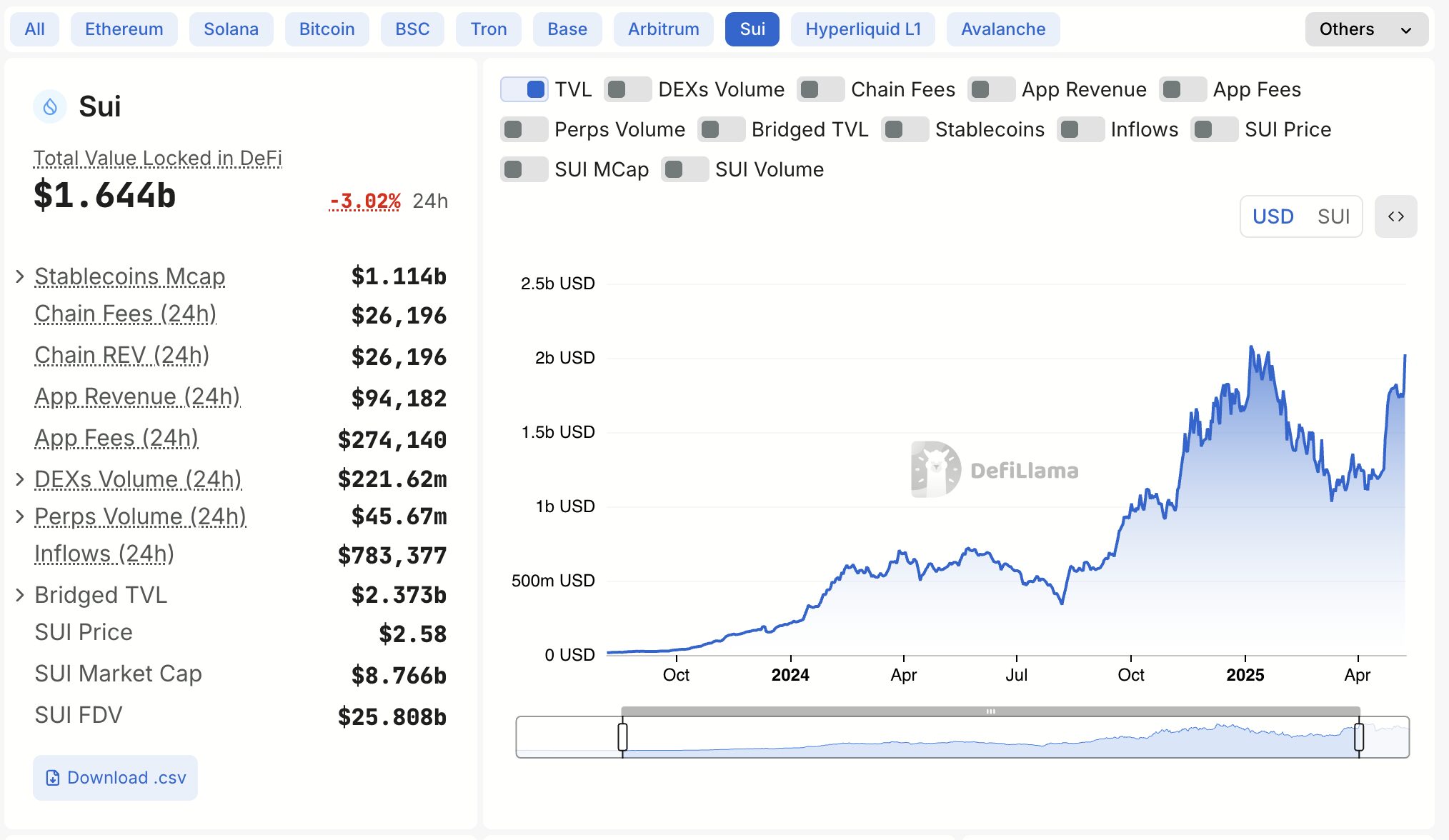
Sui - A Flourishing DeFi Ecosystem

Source: DefiLlama

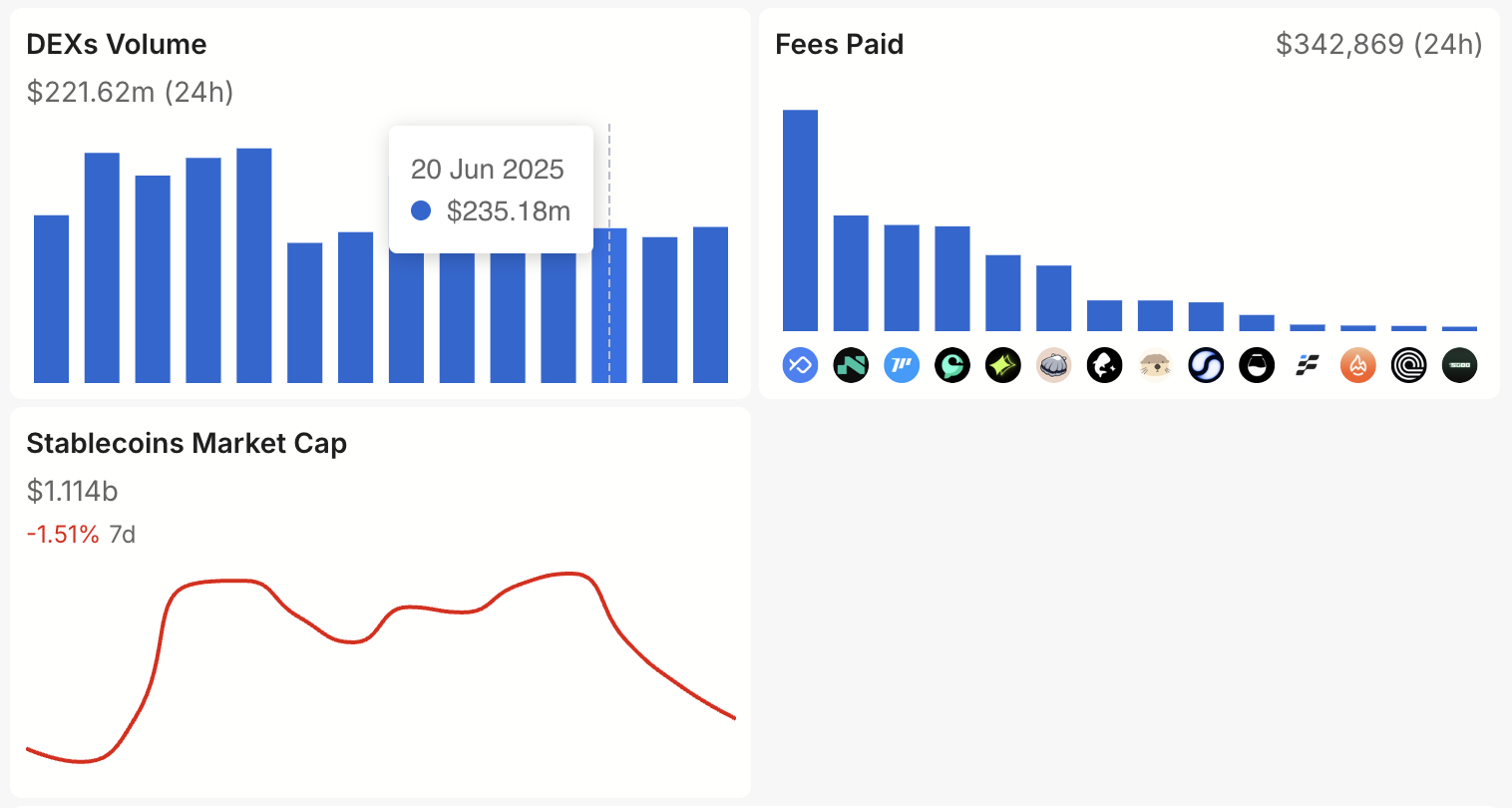
By June 2025, its DeFi TVL exceeded $1.7 billion, surpassing more historical projects like Avalanche or Polygon. Stablecoin volume on Sui has also seen explosive growth, jumping from $400 million in January to nearly $1.2 billion by May 2025, with monthly stablecoin transfer volume exceeding $70 billion. 

The cumulative total DEX volume on Sui has surpassed $110 billion, with an average 24-hour DEX volume of approximately $250  million, indicating substantial trading activity.  

Sui’s DeFi sector is robust, characterized by high-speed transactions and capital efficiency, making it ideal for various financial activities.

For more: Sui Deep Dive: A Comprehensive Analysis
Sui - A Flourishing DeFi EcosystemSui - A Flourishing DeFi Ecosystem

Source: DefiLlama

Decentralized Exchanges (DEXs)

Cetus Protocol (CETUS)

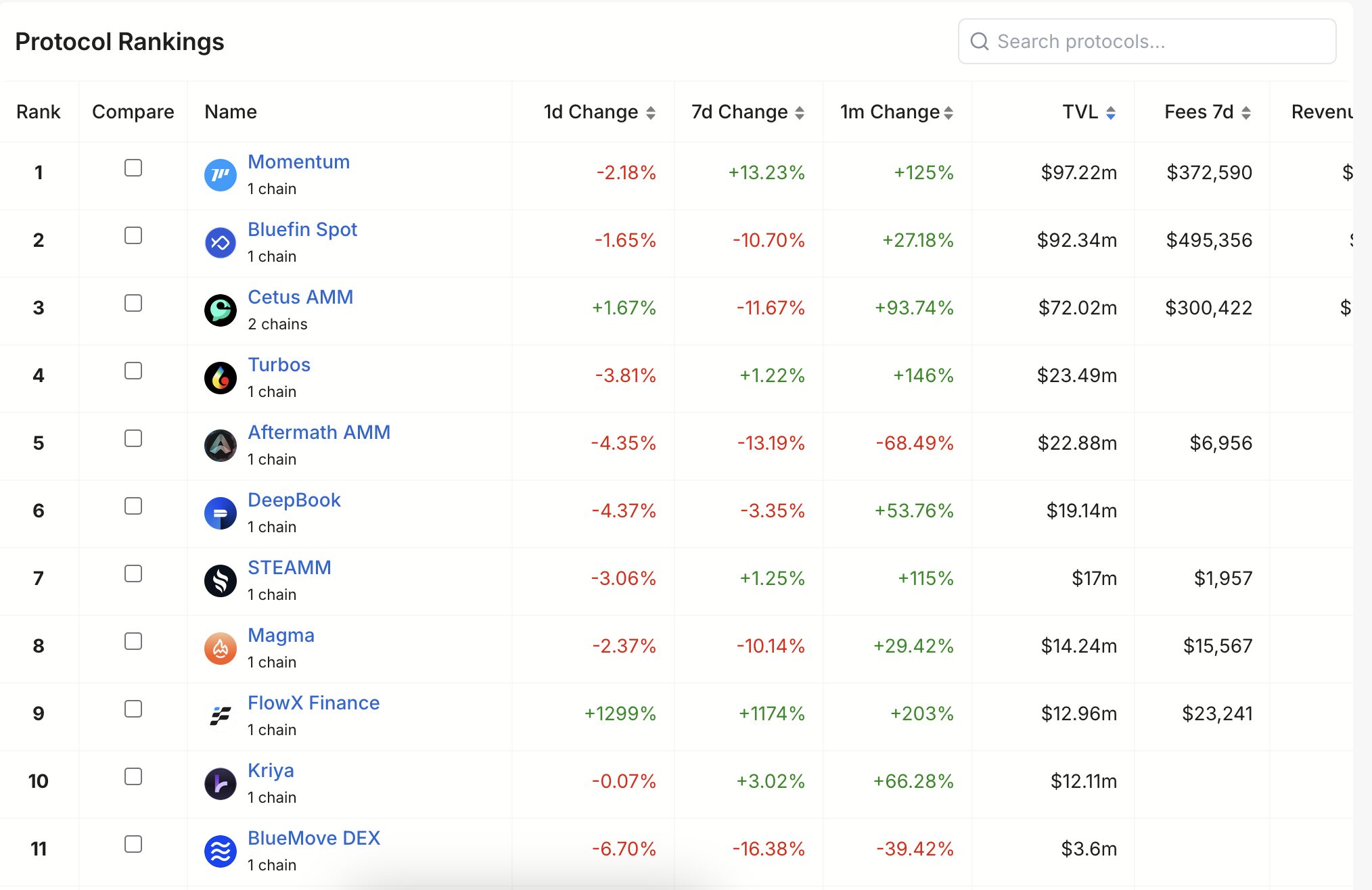
A leading DEX on Sui (and Aptos) utilizing a Concentrated Liquidity Market Maker (CLMM) model, similar to Uniswap V3. This allows liquidity providers to allocate assets within specific price ranges, significantly enhancing capital efficiency and reducing slippage for traders. Cetus also features a “Super Aggregator” to source the best prices across the Sui network and offers a developer SDK for easy integration.

Turbos Finance (TURBOS)

A prominent DEX known for its robust growth and strong support for meme tokens within the Sui ecosystem. Turbos emphasizes innovative trading mechanisms and comprehensive listings, positioning itself as a key liquidity provider and a catalyst for the meme coin market on Sui. It was notably unaffected by the Cetus exploit due to its independent and secure codebase.

Aftermath Finance (AF)

A decentralized trading and DeFi platform aiming to provide a CEX-like user experience fully on-chain. Aftermath offers multi-asset liquidity pools, a smart-order router for efficient trading, and liquid staking derivatives (afSUI). It integrates various DeFi products like a DEX aggregator, yield farming, and even a cross-chain bridge, striving to be a “one-stop-shop” for Sui DeFi.

Momentum DEX (MMT)

The first ve(3,3) decentralized exchange combined with a token launch platform on Sui. Momentum’s ve(3,3) tokenomics model aims to align incentives perfectly among liquidity providers, traders, and protocols, with 100% of emissions, trading fees, and rewards flowing directly to users. It also plays a key role in minting stablecoins on Sui, positioning itself as a critical infrastructure player.

KriyaDEX (KDX)

A comprehensive DeFi protocol offering a range of functionalities including AMM, limit orders, leveraged perpetual contracts, and strategy Vaults. Kriya focuses on providing fast, efficient, and low-cost transaction services, supporting professional traders with features like up to 20x leverage on perpetuals and on-chain dollar-cost averaging (DCA).
KriyaDEX (KDX)KriyaDEX (KDX)

Source: DefiLlama

Lending & Borrowing Protocols

Suilend (SEND)

Suilend offers a unified platform integrating various essential DeFi services, making it a “one-stop-shop” for users. This includes:

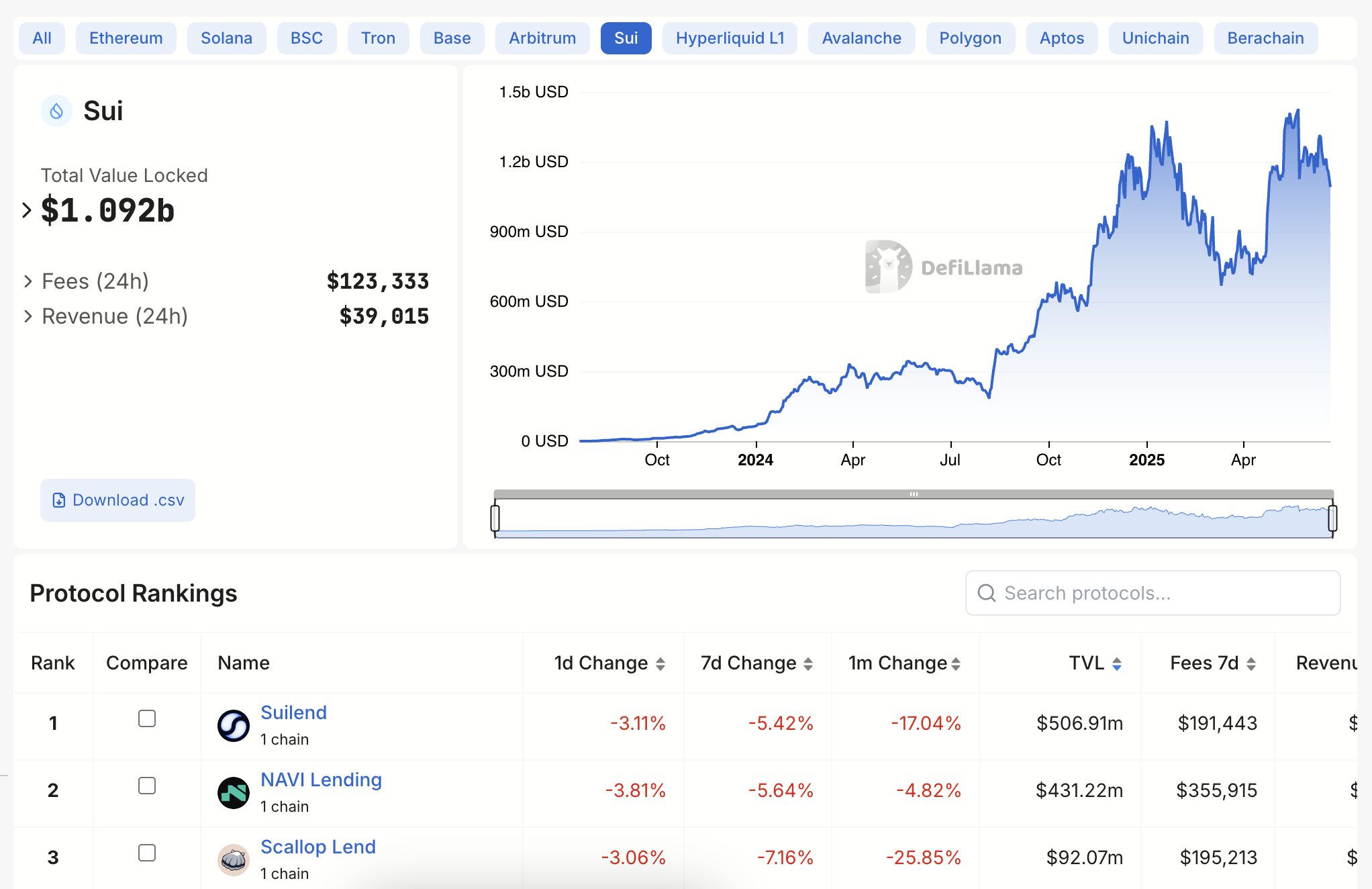
Lending & Borrowing: Users can deposit supported crypto assets to earn interest or borrow against their holdings with collateral, all powered by Sui’s high-speed, low-fee blockchain.Liquid Staking (SpringSui): This is a key feature where users can stake their SUI tokens and receive sSUI, a yield-bearing liquid staking token. sSUI can then be used in other DeFi activities, and SpringSui is particularly notable for offering instant unstaking, providing significant liquidity and safety.Token Swapping (STEAMM): Suilend features its own Superfluid AMM called STEAMM, allowing users to efficiently swap tokens directly within the platform. This integrated swap functionality helps reduce transaction fees and simplifies the user experience.Cross-Chain Bridging: Powered by Wormhole, Suilend facilitates the seamless transfer of assets across major blockchains like Ethereum, Solana, and Polygon, enabling users to bring assets into the Sui ecosystem for use within the platform.

NAVI Protocol (NAVX)

The first native liquidity protocol in the Sui ecosystem, offering a one-stop solution for lending, borrowing, and leveraged yield farming. NAVI supports various mainstream assets (WBTC, WETH, SUI) and aims to be a user-friendly decentralized bank on Sui, known for its capital-efficient and dynamic lending interest modes.

Scallop (SCA)

A leading decentralized finance (DeFi) protocol designed for peer-to-peer lending and borrowing. Scallop offers a comprehensive money market with high-interest lending and low-fee borrowing. It was the first DeFi protocol to receive an official grant from the Sui Foundation, underscoring its institutional-grade quality and security. Scallop prioritizes institutional-grade security and regulatory compliance.
Scallop (SCA)Scallop (SCA)

Source: DefiLlama

Liquid Staking Derivatives (LSDs)

Several protocols are facilitating liquid staking on Sui:

SpringSui (by Suilend): Offers sSUI, notable for its instant unstaking feature, providing significant liquidity and safety by reducing depegging risk.Aftermath Finance: Provides afSUI and integrates liquid staking into its broader DeFi platform.Volo: Offers vSUI as its liquid staking derivative.Haedal Protocol: The first liquid staking solution built on Sui, providing haSUI and actively expanding its integration across major exchanges and DeFi platforms.
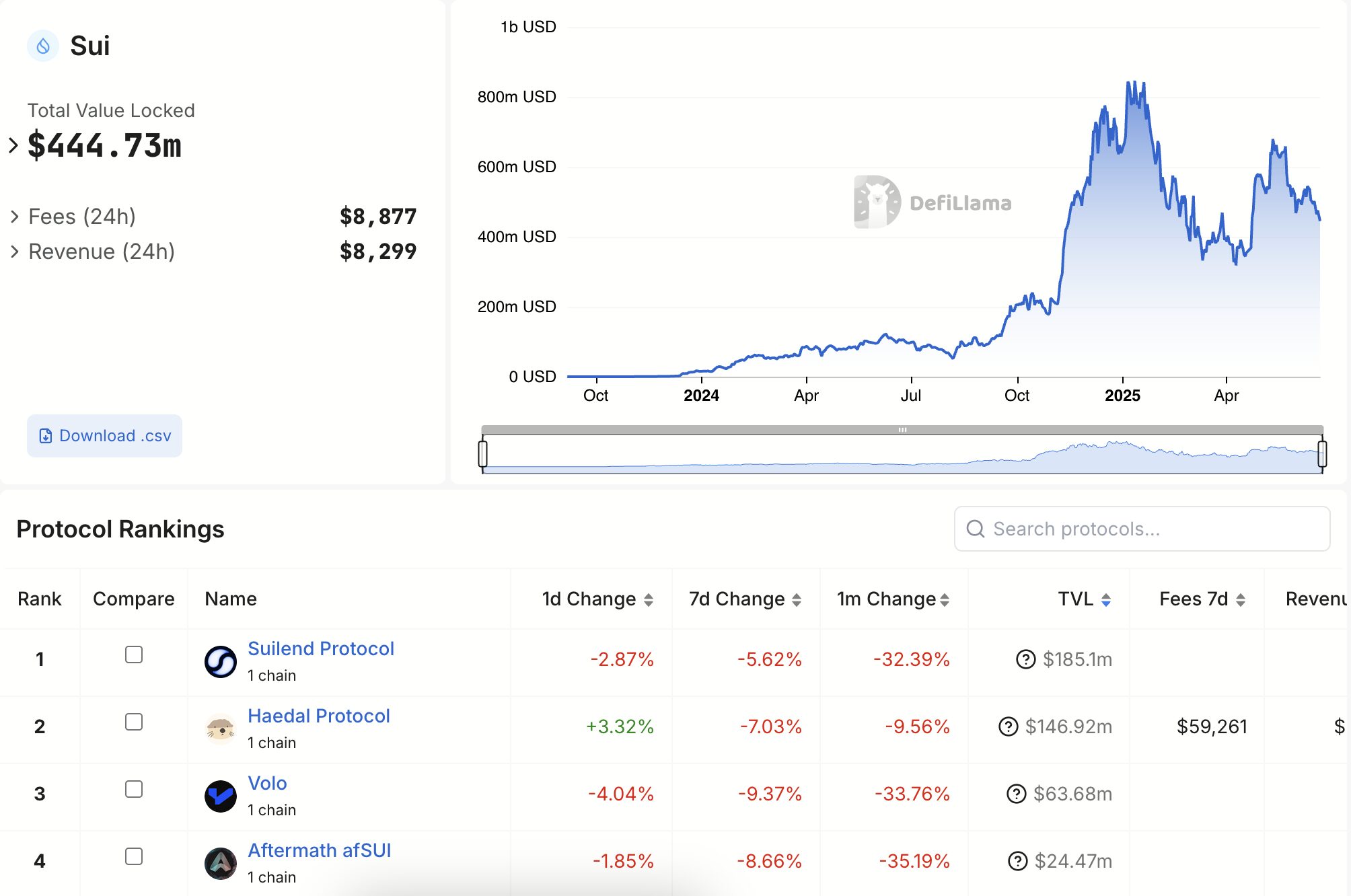
Liquid Staking Derivatives (LSDs)Liquid Staking Derivatives (LSDs)

Source: DefiLlama

Stablecoin Integration

Sui has a diverse and growing portfolio of stablecoins, including native USDC, USDY (yield-bearing), AUSD, and FDUSD, which collectively represent a significant portion of the network’s stablecoin market cap. This diversity enhances liquidity for DeFi and supports in-game economies.

Other Applications and Infrastructure

Sui’s versatile architecture supports a wide array of applications beyond DeFi and gaming:

Social dApps: Projects like Releap Protocol (a fully decentralized social graph), FanTV, and Real Vision (integrating Sui for tokenized user rewards to foster interactive community engagement) exemplifies Sui’s reach into social applications.  Wallets: A variety of wallets support the Sui ecosystem, including Phantom, Slush (SUI Wallet), Backpack, Ledger, Binance Wallet, Coinbase Wallet, SafePal, Bybit Wallet, Suiet Wallet, Martian Wallet, and Ethos Wallet.  Cross-chain Bridges: Critical for interoperability, Sui integrates with Axelar and Wormhole, a leading interoperability protocol facilitating value and information transfer across numerous blockchains, including Ethereum and Solana.  Oracles: Services connecting on-chain smart contracts with off-chain data, such as Pyth, Stork, Supra, and Switchboard, are available for the Sui network.  RPC Node Providers: Infrastructure providers like Ankr, RockX, NOWNodes, PublicNode, and Triton One offer RPC services for Sui, crucial for dApp development and operation.  Developer Tools and SDKs: Sui provides a comprehensive developer-friendly environment, including the Sui CLI, Sui VSCode extension, Sui JS (TypeScript SDK), extensive documentation, guides, tutorials, sample code, a developer forum, weekly office hours, and a Telegram channel for support.  Blockchain Explorers: Tools like Sui Explorer and Suivision (built by Blockvision) allow users to view network activity, track assets, and debug smart contracts.  Sui Name Service (SuiNS): This decentralized naming protocol allows users to register human-readable names (e.g., yourname.sui) that map to complex wallet addresses and smart contracts.  
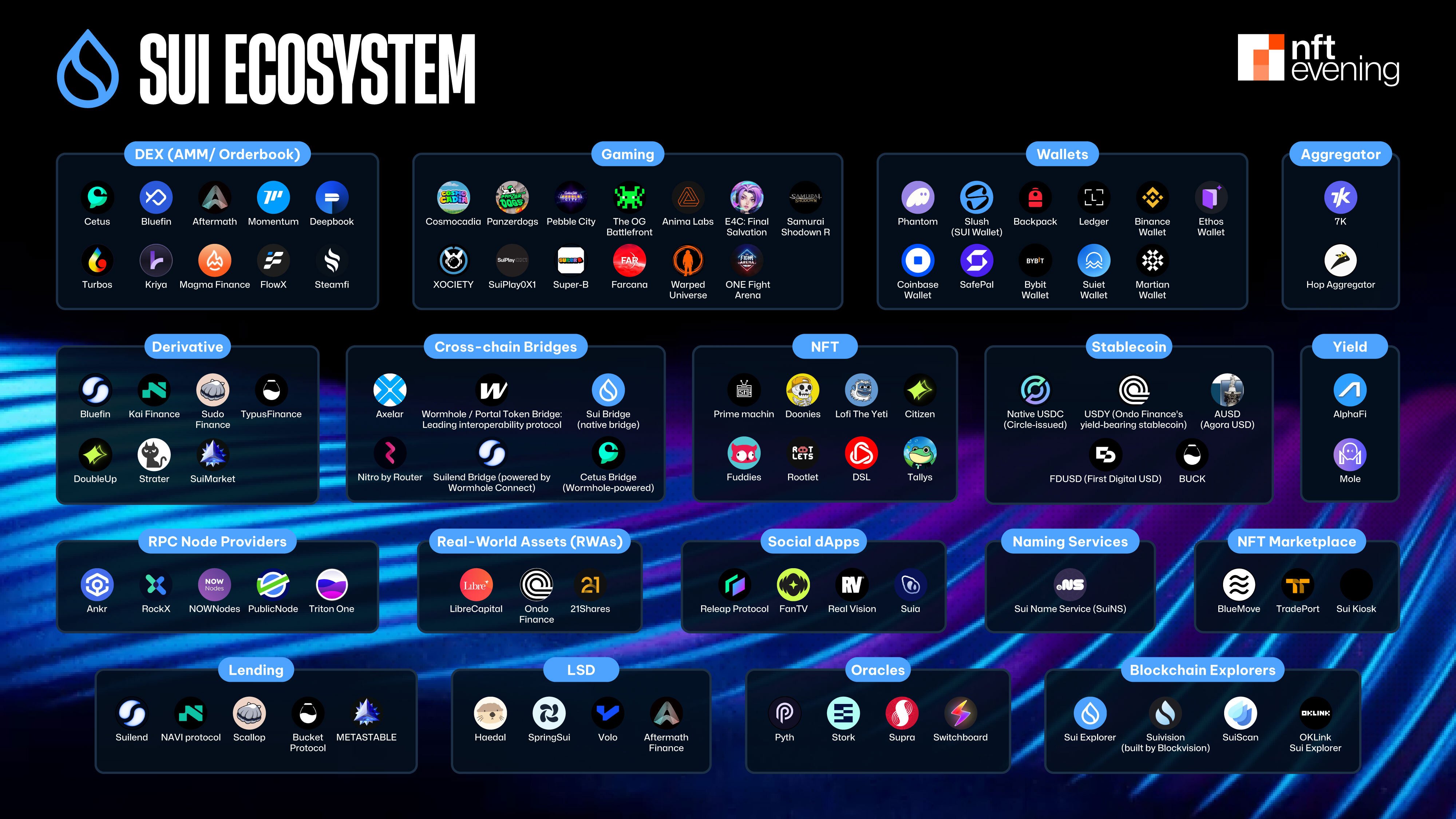
Other Applications and InfrastructureOther Applications and Infrastructure

Strategic Growth: Partnerships, UX, and Future Vision

Sui’s commitment to broad adoption and long-term sustainability is evident in its strategic approach to partnerships, user experience, and a clear future roadmap.

Strategic Partnerships and Institutional Integration

Sui’s growth is significantly fueled by strategic partnerships and institutional integrations, signaling strong confidence and a path for large-scale capital. These collaborations are crucial for embedding Sui within traditional finance (TradFi) and mainstream Web3 infrastructure.

Institutional Custody & Access: Collaborations with Fireblocks enhance institutional-grade custody and DeFi access.RWA Tokenization: Partnerships like 21Shares (a leading crypto ETP provider) aim to develop financial products, accelerate Real-World Asset (RWA) tokenization, and provide institutional and retail access.Cross-Chain Liquidity: Integrations with Wormhole and OKX Wallet are critical for boosting cross-chain liquidity and user engagement.Secure Self-Custody: Ledger integration provides secure self-custody and staking options for SUI.TradFi Bridges: Projects like Ondo Finance are launching tokenized U.S. Treasuries on Sui, while ATHEX Exchange explores on-chain fundraising via Sui, demonstrating a concerted effort to bridge TradFi with Web3. Notably, a recent partnership with Microsoft also positions Sui for deeper blockchain integration within enterprise applications.

This focus on established players and interoperability de-risks the platform, attracting capital and legitimizing Sui’s position in the global digital asset landscape.

User Experience (UX) and Developer Enablement

Sui’s core design philosophy prioritizes a seamless user experience (UX) and a developer-friendly environment to drive adoption beyond crypto natives.

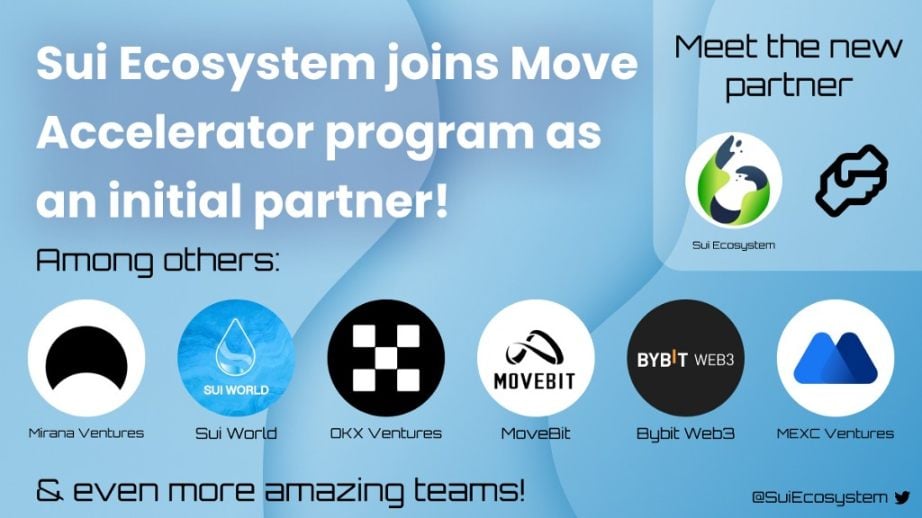
Simplified Onboarding: Initiatives like ZK Login allow users to access dApps with familiar web credentials, significantly lowering the barrier to entry for mainstream audiences.Robust Developer Support: Sui offers comprehensive tools, libraries, tailored SDKs, and strong community support (office hours, forums, Telegram, hackathons like Sui Overflow, and developer grants). The “Move Accelerator” program further supports developers in mastering the Move programming language.

This commitment reduces friction for both users and developers, fostering a “virtuous cycle of growth” essential for mass adoption and positioning Sui as a platform for everyday applications.
User Experience (UX) and Developer EnablementUser Experience (UX) and Developer Enablement

Source: Sui Ecosystem

Future Roadmap and Development Plans

Sui’s future roadmap emphasizes continuous ecosystem expansion and refinement. This is guided by several strategic priorities.

First, deepening DeFi is a key focus. Plans include exploring synthetics, Real-World Assets (RWAs), and stable yield opportunities. The Sui Foundation’s multi-million dollar DeFi Ecosystem Growth Fund aims to support builders. Moreover, it seeks to enhance liquidity and drive long-term protocol adoption.

Second, scaling GameFi and creator platforms remains crucial. The anticipated launch of the SuiPlay 0X1 gaming device is expected as a major catalyst. Consequently, it will create demand for new play-to-earn games. This could also attract adaptations of popular blockchain games to Sui.

For more: The Growth Potential of Sui?

binance-logo-2binance-logo-2

Furthermore, technical enhancements are underway. Plans include Layer 2 enhancements leveraging Zero-Knowledge (ZK) technology. This aims to enable faster and cheaper transactions. Alongside this, ongoing improvements to the core network, like Mysticeti v2, are planned.

Finally, community and institutional focus continues. Efforts persist to attract institutional capital and enterprise solutions. Indeed, active community engagement through hackathons, educational programs, and community hubs supports this.

Analysts generally anticipate SUI price increases by 2029-2030. Some forecasts place it between $6 and $12, driven by its speed, scalability, and low fees. Overall, the long-term outlook remains bullish. This positions Sui as a potential leader in emerging AI-related niches. It could also challenge established Layer-1s by the decade’s end.



Source link

Building Beautiful Algorithms: A Dive into Coding as Art

0


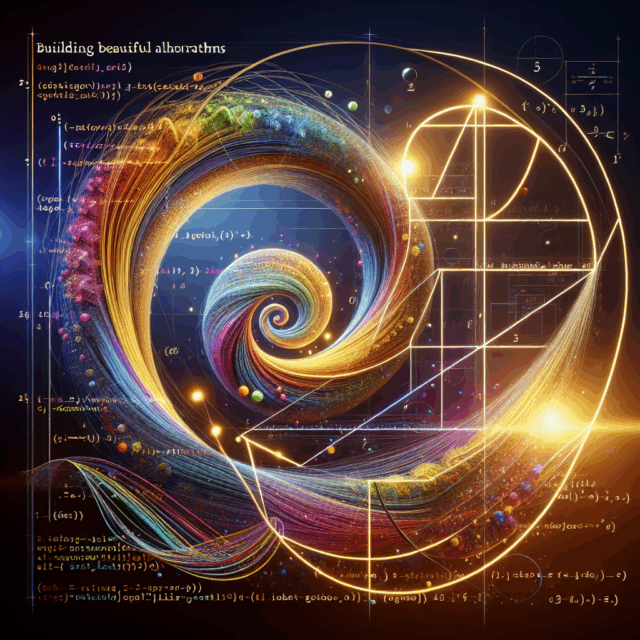
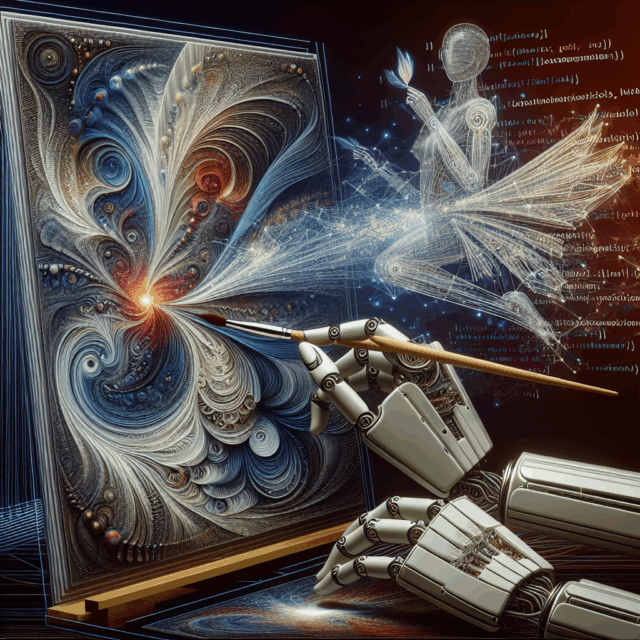
In the realm of technology, algorithms often conjure images of complex equations and abstract data structures. However, an emerging perspective views coding not merely as a technical skill but as a form of art—an endeavor where creativity meets logic. As we dive into this intriguing intersection, we’ll explore how beautiful algorithms are crafted, the artistry involved in coding, and why this approach can transform the way we think about technology.

The Essence of an Algorithm

At its core, an algorithm is a set of instructions designed to perform a specific task or solve a particular problem. Just like a piece of art, the effectiveness of an algorithm can be evaluated by its elegance, efficiency, and simplicity. A beautiful algorithm is one that not only accomplishes its objective but does so with grace and clarity, allowing others to appreciate its structure and functionality.

Characteristics of Beautiful Algorithms

  1. Simplicity: A beautiful algorithm often embodies elegance through its simplicity. Just as minimalism in art can have a powerful impact, a straightforward algorithm can yield profound results. The best algorithms strip away unnecessary components, focusing on the essential elements needed to achieve their goals.

  2. Efficiency: In the world of computing, an algorithm’s efficiency is paramount. A truly beautiful algorithm does not just solve a problem but does so in optimal time and space. It’s like a finely tuned instrument—capable of producing the best possible outcomes with the least amount of resources.

  3. Readability: Clarity is vital in both art and algorithms. A well-written algorithm is easily understandable, with clear variable names and logical flow. This readability allows others to engage with the code, fostering collaboration and innovation.

  4. Innovation: A hallmark of artistic expression is innovation. Beautiful algorithms often introduce new perspectives or methodologies that challenge existing paradigms. Whether through novel approaches to data sorting or cutting-edge artificial intelligence frameworks, these algorithms push the boundaries of what’s possible.

The Beauty of Code

Programming languages serve as the brush and canvas for this artistic expression. Just as different artists prefer various mediums, coders may gravitate towards languages that resonate with their style. From Python’s simplicity to C++’s complexity, each language offers unique capabilities that can shape algorithmic beauty.

Examples of Beautiful Algorithms

  1. Sorting Algorithms: Consider Quicksort—a favorite among many programmers. Its recursive nature and divide-and-conquer strategy not only make it highly efficient but also conceptually elegant.

  2. Pathfinding Algorithms: A* is renowned for its efficiency in finding the shortest path in graphs. Its heuristic method of combining cost and distance exemplifies how a well-designed algorithm can solve complex problems elegantly.

  3. Machine Learning Models: The algorithms behind neural networks and deep learning are perfect examples of beauty in complexity. They mirror the human brain’s mechanisms, showcasing the intersection of technology and biological inspiration.

Art in Problem Solving

The process of developing algorithms is akin to the creative process in art. It involves brainstorming, experimentation, and refinement. Coders often engage in "code poetry," where the rhythm and structure of their code reflect their intention and style. Iterative testing, much like sketching different versions of a painting, leads to the final masterpiece.

Moreover, sharing code through platforms like GitHub encourages a collaborative form of artistic expression. Developers can remix and improve upon each other’s work, creating a community of innovation.

Why Embracing This Perspective Matters

  1. Enhanced Creativity: Viewing coding as art encourages thinkers to approach problems with imaginative solutions. This mindset can lead to groundbreaking technologies and innovative applications.

  2. Improved Collaboration: When developers appreciate the artistic elements of coding, they communicate better and collaborate more effectively. This can lead to richer, more diverse workspaces where ideas flourish.

  3. Broader Appeal: Approaching coding as an art form makes technology more accessible and appealing to a wider audience. It fosters an understanding that coding is not just a job; it is a space for creativity and passion.

Conclusion

In our increasingly digitized world, recognizing the artistry within algorithms can change our relationship with technology. Building beautiful algorithms is not merely about achieving functional outcomes; it is about infusing creativity into logical processes. By embracing coding as an art form, we not only enhance the beauty of our digital creations but also inspire future generations to view technology in a whole new light. So, let us celebrate the artistry in algorithms and continue to build beautiful pathways to innovation.

From Code to Canvas: Artists Pushing Boundaries with Technology

0


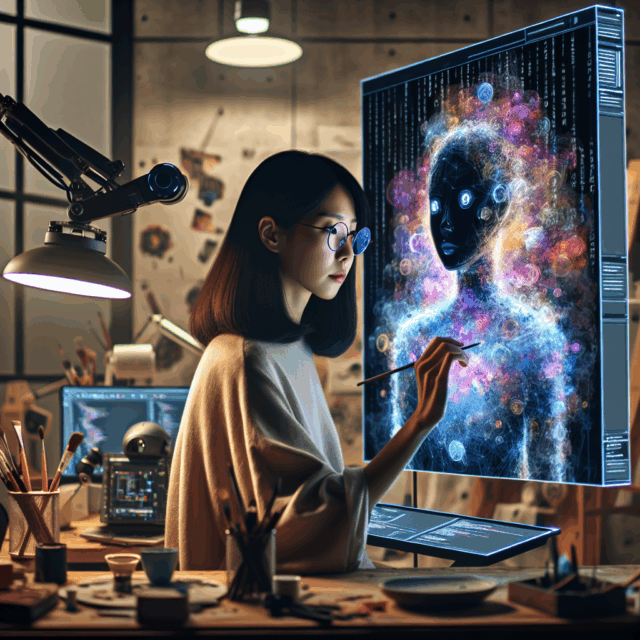
In an era where technology and creativity intertwine, a new movement is emerging at the intersection of art and programming. Artists today are expanding their creative horizons by utilizing coding and digital tools, transforming traditional forms of expression into innovative works that captivate and challenge perceptions. This convergence of art and technology is creating a dynamic and ever-evolving landscape, where imagination knows no bounds.

The Rise of Generative Art

Generative art is a prime example of how technology is influencing artistic expression. This genre harnesses algorithms to create unique, often unpredictable artworks. Artists like Casey Reas and Joshua Davis utilize code to generate visuals that evolve in real-time, blurring the lines between creator and creation. Each piece is a collaboration between the artist’s vision and the computer’s capabilities, leading to stunning results that are both complex and beautiful.

Reas, one of the co-founders of Processing—a popular programming language for visual artists—has demonstrated how digital tools can become mediums for creativity. His work celebrates the unpredictability of generative art, inviting viewers to explore the endless possibilities of algorithm-driven design.

Interactive Installations: A 360-Degree Experience

Interactive installations have transformed how we experience art. Utilizing sensors, projectors, and coding, contemporary artists create immersive environments that engage audiences on multiple levels. One standout is teamLab, a collective from Japan known for their breathtaking installations that blend light, sound, and viewer interaction. Visitors can walk through a digital landscape where their movements influence the artwork, creating a personal and ephemeral experience.

This shift towards interactivity not only enhances viewer engagement but also challenges the traditional notion of the artist as the sole creator. Audiences become participants, actively shaping their experiences and deepening their emotional connection to the art.

Virtual Reality and Augmented Reality

The advent of virtual reality (VR) and augmented reality (AR) has offered artists unprecedented opportunities to create in entirely new dimensions. Through VR, artists can construct immersive worlds that invite viewers to step inside their imaginative realms. This format allows for storytelling in a 3D space where users can interact with characters and environments in ways that were previously unimaginable.

In contrast, AR overlays digital elements onto the real world, creating a hybrid of physical and digital spaces. Artists like KAWS and Ai Weiwei have experimented with AR to extend the reach of their work, engaging a global audience through a simple mobile device. This democratization of art allows for broader access and interaction, breaking down traditional barriers to engagement.

The Role of Artificial Intelligence

Artificial intelligence (AI) is making waves in the art world, pushing the envelope on creativity and originality. Using machine learning algorithms, AI can analyze vast datasets of images, styles, and trends to generate new works that challenge human conceptions of creativity. Projects like OpenAI’s DALL-E and Google’s DeepDream are leading the charge, creating visuals that are both stunning and perplexing.

While some remain skeptical about the role of AI in art, many artists embrace it as a collaborative partner. The dialogue between human creativity and machine learning raises profound questions about authorship and originality, forcing us to rethink the nature of art in the digital age.

The Digital Art Market and NFTs

The rise of digital art has also catalyzed changes in the art market, exemplified by the popularity of non-fungible tokens (NFTs). This blockchain technology allows artists to sell digital works as unique, verifiable items, creating a new economic model for creators. The first NFT artwork sold by artist Beeple for over $69 million highlighted the potential of digital art as both an investment and a form of cultural expression.

As the NFT market matures, a diverse range of artists—ranging from traditional painters to digital creators—are exploring new ways to monetize their work and connect with audiences. This evolution fosters a new appreciation for art that challenges the notion of ownership and the value placed on creativity in a digital landscape.

The Future of Art in a Technological World

As we move forward, the fusion of art and technology will undoubtedly continue to evolve. Artists will continue to explore and transcend boundaries, integrating new tools and mediums to tell stories and express ideas in innovative ways. This evolution presents both challenges and opportunities, urging creators and audiences alike to rethink the role of art in society.

Through collaborations between artists and technologists, we may witness the emergence of entirely new forms of art that challenge our perceptions and expand our understanding of creativity. The journey from code to canvas is just beginning, and the exploration of this uncharted territory promises to be as exhilarating as it is transformative.

In the end, the melding of code and canvas serves as a reminder of the limitless possibilities that arise when creativity meets technology—inviting us all to reimagine what art can be in the ever-dynamic future.

From Idea to Code: Building Smart Contracts with Remix Solidity

0
From Idea to Code: Building Smart Contracts with Remix Solidity


Remix Solidity coding allows founders and developers to bring their ideas for smart contracts and dApps onto the Ethereum blockchain with minimal difficulties. While using Remix still presents a considerable amount of technical demand, it is undeniably one of the most useful tools when it comes to building, debugging, and deploying Solidity-based smart contracts.

Remix IDE stands as a primary environment for Solidity development, offering a comprehensive suite of features within a user-friendly, browser-based interface. Its accessibility makes it a go-to platform for aspiring blockchain builders to translate their concepts into functional code.

Being able to build on Remix opens the door to deploying dApps on faster and cheaper Ethereum layer-2 networks, such as the R0ARchain. This capability allows developers to leverage Ethereum’s security while benefiting from enhanced scalability and reduced transaction costs, ultimately reaching a broader user base.

Smart Contracts: The Backbone of The Crypto Economy

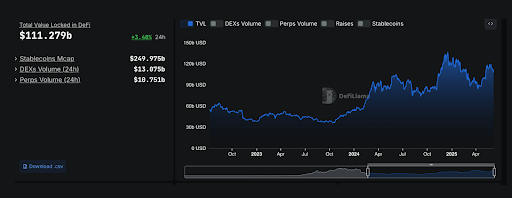
Ethereum was the pioneer smart contract platform. These self-executing contracts, often written in Solidity, opened the door to an entirely new era in the digital economy. Developers were given the ability to build decentralized protocols that offer solutions to real-world problems. The Ethereum ecosystem has grown to dominate the smart contract market with over $100 billion in total value locked across its hundreds of dApps and protocols.

Smart contracts play a fundamental role in automating processes and ensuring transparency across blockchain networks. By executing automatically when predetermined conditions are met, they remove the need for intermediaries, thereby reducing costs and increasing efficiency.

These digital agreements underpin a vast array of services in the crypto economy. For example, decentralized exchanges (DEXs) like Uniswap use smart contracts to facilitate token swaps directly between users, without a central order book. Similarly, lending protocols rely on smart contracts to manage collateral, disburse loans, and enforce repayment terms transparently and automatically.

Smart Contracts: The Backbone of The Crypto Economy

Total value locked. Source: DeFiLlama

Remix: The Key To Solidity Smart Contracts

Remix serves as a central point for developing smart contracts on Ethereum. This tool provides a complete environment for coding in Solidity, making it an indispensable resource for creators building on the Ethereum blockchain.

The platform offers a full suite of features for building, compiling, deploying, and identifying issues in smart contracts. Coders can write their Solidity directly within the browser, quickly test for problems using integrated debugging tools, and then release their contracts onto various Ethereum networks, including mainnet, test networks, or local setups.

Remix includes a built-in Solidity compiler, often removing the need for other software. This streamlined approach, paired with direct deployment options, makes the journey from concept to live smart contract considerably smoother.

Here’s a simple, step-by-step process for building on Remix:

Write: Draft your Solidity smart contract code directly in the Remix editor.Compile: Use the built-in compiler to convert your Solidity code into bytecode and check for errors.Deploy: Release your compiled contract onto an Ethereum network, whether local, testnet, or mainnet.Interact: Test and use your deployed smart contract through the Remix interface by calling its functions.

Remix is popular among developers with minimal experience, offering a low barrier to entry for those new to Solidity and blockchain coding. At the same time, it offers a large collection of advanced features and add-ons that appeal to seasoned programmers.

Final Thoughts

Smart contracts, especially those deployed on Ethereum, are at the heart of the crypto economy. Decentralized Finance applications, real-world asset solutions, and even NFT collections depend on Solidity. Many leading developers use Remix to enhance their capacity to build functioning applications due to its user-friendly design, reliability, and wide range of useful tools.

R0AR Platform: R0AR Platform: https://www.r0ar.io/platform.

How to use the r0ar Platform : https://www.youtube.com/playlist?list=PL9NGvnQ0OI2FM2VTtZrjqnxxgdKvz62F-

R0AR Homepage: https://www.r0ar.io/ 

Telegram: https://t.me/r0ar_community 

X: https://twitter.com/th3r0ar


Source link

AI Meets Art: The Top Generative Art Software You Need to Know

0


In recent years, the intersection of artificial intelligence and art has sparked a creative revolution, transforming how we explore artistic expression. Generative art software harnesses machine learning algorithms to create stunning visuals, allowing artists to push the boundaries of creativity. In this article, we delve into some of the top generative art software available today, enabling both seasoned artists and newcomers to harness the potential of AI in their work.

1. DeepArt

DeepArt employs deep learning algorithms to convert images into artworks inspired by famous styles. Users can upload their photos and select a particular artistic style—be it Van Gogh or Picasso—and see their images transformed. This software is renowned for its ability to maintain subject integrity while applying complex artistry, resulting in unique creations that resonate with both classic and contemporary art lovers.

2. Runway ML

Runway ML is a versatile platform that democratizes machine learning tools for artists and creators. It offers a wide range of AI models that can assist in video editing, image generation, and even 3D rendering. Its intuitive interface makes it accessible for those who may not have a technical background, allowing creative professionals to experiment with generative design without extensive coding knowledge.

3. Artbreeder

Artbreeder is an innovative online platform that allows users to create and remix images using a collaborative approach. By merging various artwork styles and adjusting parameters such as color, shape, and structure, users can produce entirely new visuals. This blending capability sparks endless possibilities, making it a popular choice for artists looking to explore unexpected combinations in their work.

4. Processing

Processing is an open-source programming language and environment designed for electronic arts and visual design. It allows users to create expressive works through code, making it a favorite among those wanting to delve deeper into the technical aspects of generative art. While it requires some coding knowledge, the flexibility of Processing enables artists to craft unique algorithms and interactions in their visuals.

5. Daz 3D

Daz 3D is a powerful 3D creation tool that allows artists to generate stunning visuals, animations, and illustrations. Using pre-made 3D models and assets, users can manipulate various aspects to create personalized art pieces. Coupled with AI integration for rendering and animation, it provides creatives the ability to produce intricate and detailed works efficiently.

6. NightCafe Studio

NightCafe Studio has become a favorite for generating AI art through neural networks. Users can create artwork from text prompts, choosing from various art styles to customize the output. Its community-driven approach encourages sharing and collaboration, making it an excellent platform for inspiration and feedback from fellow artists.

7. PaddlePaddle

For those interested in the AI behind art generation, PaddlePaddle is an open-source deep learning platform often used for image processing tasks. Although more technical in nature, it provides vast possibilities for creating tailored generative models, appealing to developers and tech-savvy artists looking to experiment with custom algorithms.

8. GANPaint Studio

Developed by MIT-IBM’s Watson AI Lab, GANPaint Studio utilizes Generative Adversarial Networks (GANs) to allow users to edit images interactively. By adding or removing elements from a scene, users can manipulate the artwork dynamically. This approach not only showcases AI’s creative potential but also allows artists to engage with art creation in real-time.

Conclusion

The convergence of AI and art opens up a world of possibilities for artists, designers, and creators. By embracing generative art software, they can explore new realms of creativity, breaking down the barriers between traditional and digital art forms. Whether you’re looking to transform your photographs, experiment with 3D modeling, or dive into coding for art generation, there’s a tool that can cater to your needs.

As technology and creativity continue to evolve hand in hand, the future of art looks more exciting than ever, inviting everyone to join the dialogue between human imagination and artificial intelligence. So grab your tools and start creating—who knows what incredible artwork lies just beyond the next click!

MiningCoop Launches Free Cloud Mining App in 2025: Earn Up to $5,100 in Bitcoin

0
MiningCoop Launches Free Cloud Mining App in 2025: Earn Up to ,100 in Bitcoin


As Bitcoin and Dogecoin gain widespread adoption and the number of crypto investors continues to rise globally, more people are seeking low-barrier ways to profit from digital assets. Today, mining Bitcoin and Dogecoin at home is no longer reserved for tech geeks or mining farm operators.

In 2025, global cloud mining platform MiningCoop officially released a free Bitcoin mining app designed for everyday users. There’s no need to purchase mining machines or deal with complex setups — all you need is a smartphone to start generating stable crypto passive income.

Why Choose MiningCoop’s Free Cloud Mining App?

MiningCoop’s app uses an AI-powered hashrate allocation system that automatically connects to the most efficient global mining pools. This enables 24/7 automated mining with no technical background or hardware investment required.

Zero Barrier, Zero Maintenance: Mine Crypto Easily From Your Phone

Traditional mining often requires expensive GPUs, professional mining rigs, and ongoing maintenance. These demands make mining too costly and complex for most users. MiningCoop changes that — simply download the app, register, and receive $100 worth of free cloud hashrate to start mining automatically.

Users can earn up to $1.35 daily, mining popular cryptocurrencies like Bitcoin (BTC), Dogecoin (DOGE), and Litecoin (LTC) — all from their mobile device.

How to Earn Up to $5,100 Daily with MiningCoop’s Global Cloud Mining Plans

MiningCoop’s high-yield mining strategy is powered by its flagship miner, the Bitmain Antminer S23+ 126 TH/s, perfect for those seeking rapid returns through stable cloud mining.

For a one-time investment of $60,000, users can earn a fixed $5,100 per day over a 2-day contract, totaling $10,200 in net profit. After the contract ends, the full principal is returned. All earnings are backed by MiningCoop’s smart contract system and are unaffected by market price volatility.

Get Started in 5 Simple Steps:

Download and install the MiningCoop app (available for iOS & Android); Register an account and claim your $100 welcome bonus for new users; Browse the contract marketplace and choose a plan based on your budget and goals; Start mining with one click — no device setup or technical steps required; Log in daily to track earnings and withdraw profits to your wallet, or reinvest.

MiningCoop’s proprietary AI mining algorithm dynamically adjusts resource allocation based on real-time hashrate and profitability trends. It automatically switches between standout assets like BTC, LTC, and DOGE to maximize user income.

The system runs on clean energy-powered data centers, ensuring 24/7 stability while supporting a sustainable mining ecosystem — ideal for individuals or institutions looking for low-barrier, high-stability participation.

More High-Yield, Low-Barrier Mining Contracts Available

User Story: How One User Earned Passive Income with the Free Cloud Mining App

Let’s take the example of an average user from California:

“I didn’t know much about Bitcoin at first. I just wanted to try a way to get involved without spending money. With MiningCoop, I just open the app and see my earnings every day — no stress about settings or electricity costs.”

Jacob Liu, Designer & Crypto Holder

Using only the platform’s free hashrate and a few short-term contracts, Jacob earned over $500 in crypto within two weeks — all passive income.

Frequently Asked Questions

Q1: Can I start Bitcoin mining without experience?Absolutely. MiningCoop is designed for beginners. After signing up, your cloud miner activates automatically — no wallet setup, no hardware needed, no blockchain knowledge required.

Q2: Is cloud mining legal and secure?Yes. MiningCoop is registered in the UK and holds a legal cloud mining license. All earnings are transparent, withdrawals are available daily, and accounts are protected with two-factor authentication.

Q3: Are cloud mining profits real and can I actually make money?Yes. Returns are based on real-time mining rewards. MiningCoop offers clear daily earnings and a principal return system. You can check your balance daily and withdraw your crypto whenever you wish.

Conclusion: Make 2025 the Year You Mine Bitcoin Easily from Your Phone

If you’ve been curious about Bitcoin but discouraged by high entry barriers, now is the ideal time to start. With free signup, daily income, and no hardware hassle, MiningCoop provides a low-risk, high-return automatic mining platform.

Visit the official website or download the MiningCoop App today to claim your $100 free mining reward and begin your journey into crypto passive income.

Official Website: https://miningcoop.comSupport Email: [email protected]


Source link

Engage and Enlighten: The Role of Technology in Interactive Art

0

Engage and Enlighten: The Role of Technology in Interactive Art

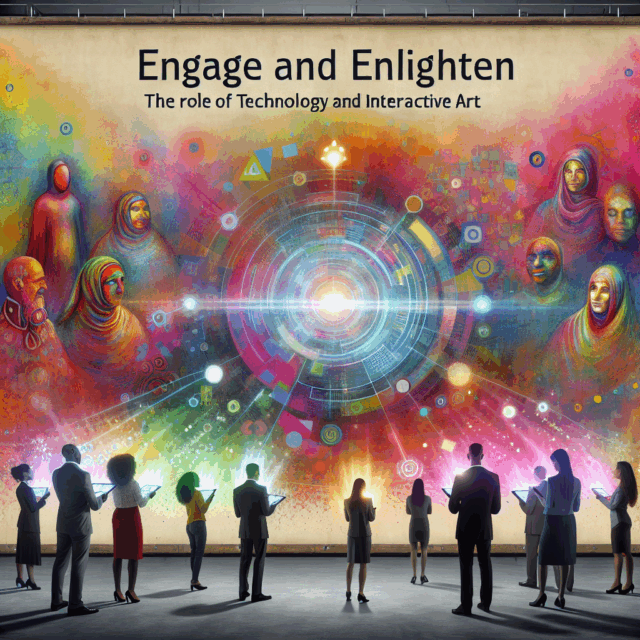
In a world increasingly influenced by technology, the realm of art has not remained untouched. Interactive art, a genre that invites audience participation, has begun to harness the capabilities of digital tools, creating immersive experiences that engage and enlighten viewers in unprecedented ways. This article explores how technology shapes interactive art, enhancing its capacity to engage participants and provoke thoughtful reflection.

The Evolution of Interactive Art

Interactive art has its roots in the early 20th century, but the advent of digital technology has transformed its landscape dramatically. Artists like Nam June Paik and later figures in the 1960s and 70s laid the groundwork with video art and early computer-generated works. However, it wasn’t until the rise of the internet, augmented reality (AR), virtual reality (VR), and artificial intelligence (AI) that interactive art grew into a dynamic and participatory medium.

Today, interactive art installations can range from responsive sculptures that change shape based on viewers’ movements to digital projections that react to touch. These advancements have redefined the artist-audience relationship, turning passive observers into active participants.

Engaging the Audience

The core of interactive art lies in its ability to engage the audience on multiple levels. Traditional art forms often create a barrier between artwork and observer; in contrast, interactive art invites individuals to step closer, touch, and influence the work. This engagement fosters a sense of agency and connection that traditional forms often lack.

For example, installations using sensors and real-time data can create experiences that change based on audience movements or reactions. Projects like Rafael Lozano-Hemmer’s “33 Questions per Minute” utilize interactive algorithms that respond to viewer input, enabling a dialogue between the artwork and the audience. This responsive design encourages participants not just to view but to question, explore, and create.

Moreover, interactive art can reach broader audiences. Utilizing social media elements, such works can explore themes of identity, culture, and community, allowing individuals from diverse backgrounds to connect and share their experiences. The global accessibility of technology means that installations can resonate with a multitude of viewers, enriching the dialogue surrounding the artwork.

Enlightening Through Exploration

Beyond engagement, interactive art serves an enlightening purpose, prompting audiences to ponder deep themes and societal issues. Artists are increasingly using technology to raise awareness about critical topics such as climate change, social justice, and mental health. By transforming complex ideas into immersive experiences, interactive art makes them more approachable and thought-provoking.

Projects like Olafur Eliasson’s “The Weather Project” at the Tate Modern illustrate this potential. Utilizing light and installation, Eliasson created a sun-like orb that invited reflection on issues such as climate change and human relationship with nature. Viewers interacting with the piece not only engage with the art but also reflect on their roles within larger societal contexts.

The use of VR and AR in interactive art has also opened up new avenues for enlightenment. These technologies allow for the creation of simulated environments where participants can experience scenarios that challenge their perceptions, such as witnessing the effects of environmental degradation or navigating socio-political landscapes. This empathetic engagement can lead to a deeper understanding and compassion for issues affecting humanity.

Challenges and Considerations

While the integration of technology in interactive art presents exciting opportunities, it also poses challenges. Access to technology can be a limiting factor; not all audiences have the means or familiarity to engage with high-tech installations. Furthermore, artists must consider the sustainability of these technologies, ensuring that their work doesn’t become obsolete too quickly.

Additionally, the fast-paced development of technology can sometimes overshadow the artistic intent behind the work. It’s crucial for artists to strike a balance between technical innovation and artistic expression, ensuring that the mediums serve to enhance the message rather than distract from it.

Conclusion

Interactive art exemplifies how technology can foster engagement and enlightenment, transforming the way we experience and relate to art. By breaking down barriers between artist and audience, interactive art invites participation, allowing viewers to immerse themselves in thought-provoking experiences that challenge perceptions and provoke reflection. As technology continues to evolve, so too will the possibilities for interactive art, paving the way for future generations to explore the profound connections between art, technology, and the human experience.

The Intersection of Tech and Imagination: AI’s Role in Modern Art

0


In the rapidly evolving landscape of modern art, technology has increasingly become a pivotal player. Among the various technological advancements, artificial intelligence (AI) stands out as a transformative force, reshaping how art is created, perceived, and critiqued. This article explores the intricate relationship between AI and the art world, highlighting how this intersection is reimagining creativity and challenging traditional norms.

A New Medium for Artists

Historically, artists have always embraced new tools that expand their creative horizons. From the invention of the camera to digital painting software, each technological leap has provided artists with fresh possibilities. Today, AI algorithms are emerging as innovative tools that allow artists to explore uncharted territories.

AI can generate unique artworks by analyzing vast datasets of existing art and then producing novel pieces that reflect various styles. Programs like DeepArt and DALL-E show how AI can transfuse creativity into visual art, generating everything from portraits to surreal landscapes. Artists can use AI not only to produce artworks but also as collaborators in the creative process, bringing forth new ideas and methods that challenge conventional aesthetics.

Redefining Creativity

The introduction of AI into the art realm raises profound questions about the nature of creativity. Traditionally, art has been seen as a deeply human endeavor, fueled by emotions, experiences, and individual expression. However, AI-generated art prompts a reevaluation of these notions. Can a machine really be creative? Or is it merely a sophisticated mimicry of the artistic process?

Critics argue that AI lacks the intrinsic understanding and emotional depth that define human artistry. Yet, supporters advocate for a broader definition of creativity, suggesting that collaboration between humans and machines might lead to hybrid forms of expression that are equally valuable. This interplay challenges artists to rethink their roles—not just as producers of art but as orchestrators of a collaborative dialogue with technology.

Art Market Dynamics

The impact of AI on the art market is palpable, leading to a reconfiguration of how artworks are valued and how artists reach audiences. AI-generated pieces have generated significant attention and financial success at art auctions, blurring the lines between traditional and digital art markets. Artists such as Refik Anadol and Mario Klingemann have gained international acclaim for their AI works, pushing the boundaries of what constitutes "art" in a commercial sense.

Additionally, platforms like Artblock and Obvious leverage blockchain technology to create and sell AI-generated artworks as NFTs (non-fungible tokens). This democratization of art ownership enables a broader audience to engage with art in innovative ways, marking a shift from exclusive ownership to collective experiences.

Ethical Considerations and Challenges

As AI permeates the art world, it also surfaces ethical dilemmas that cannot be ignored. Questions of authorship, originality, and copyright arise: Can an AI be the "artist"? Who owns a piece created by an algorithm? Furthermore, the source data used to train AI models can carry biases, reflecting societal stereotypes that perpetuate existing inequalities in representation.

The conversation around these challenges is vital for shaping the future of art in an AI-driven age. Various stakeholders, including artists, technologists, and policymakers, must engage in dialogue to establish ethical frameworks that honor creativity while mitigating potential harms.

The Future of Art

The relationship between AI and art is still in its infancy, but the trajectory is clear: AI will continue to evolve and influence artistic practice. Emerging technologies such as virtual reality (VR) and augmented reality (AR) are set to further revolutionize how we experience art, creating immersive experiences that transcend traditional boundaries.

As AI continues to develop, its integration into art will likely spark new genres and movements, mirroring historical patterns where technology has catalyzed artistic evolution. Artists of the future may not only create with AI but also explore its potential as a medium for storytelling and emotion, crafting narratives that resonate beyond conventional formats.

Conclusion

AI’s role in modern art is a testament to the dynamic interplay between technology and imagination. As artists harness the power of AI, they expand creative possibilities, challenge traditional norms, and redefine what it means to create. While various ethical considerations must be addressed, the future promises a rich tapestry of artistic expressions that reflect the collaborative spirit between human ingenuity and artificial intelligence. The intersection of tech and imagination is only just beginning, inviting all to engage with the ever-evolving world of art.

Popular Posts

My Favorites

Solana Launches Game Pass, Offering Early Access and Rewards

0
The Solana blockchain has introduced the Solana Game Pass, a free NFT aimed at encouraging engagement with new and existing games on the...