Arts

Home Arts Page 144

Top NFT Collections – December 22, 2024 | NFT CULTURE | NFT News | Web3 Culture | NFTs & Crypto Art

0
Top NFT Collections – December 22, 2024 | NFT CULTURE | NFT News | Web3 Culture | NFTs & Crypto Art


Top NFT Collections (Last 24h)

Here are the hottest NFT Collections of the day.

Rank

Name
Volume
Transactions
Chains
URL

1

Azuki
1,372.51 ETH
99
ethereum
View

2
Pudgy Penguins
Pudgy Penguins
825.99 ETH
45
ethereum
View

3
Azuki Elementals
Azuki Elementals
683.26 ETH
330
ethereum
View

4
Lil Pudgys
Lil Pudgys
482.74 ETH
240
ethereum
View

5
BEANZ Official
BEANZ Official
378.55 ETH
446
ethereum
View

6
Sappy Seals
Sappy Seals
379.48 ETH
288
ethereum
View

7
Top NFT Collections – December 20, 2024 | NFT CULTURE | NFT News | Web3 Culture | NFTs & Crypto Art
Doodles
372.18 ETH
58
ethereum
View

8
Kaito Genesis
Kaito Genesis
220.38 ETH
290
ethereum
View

9
Mutant Ape Yacht Club
198.42 ETH
63
ethereum
View

10
Bored Ape Yacht Club
178.72 ETH
10
ethereum
View

The post Top NFT Collections – December 22, 2024 appeared first on NFT CULTURE.


Source link

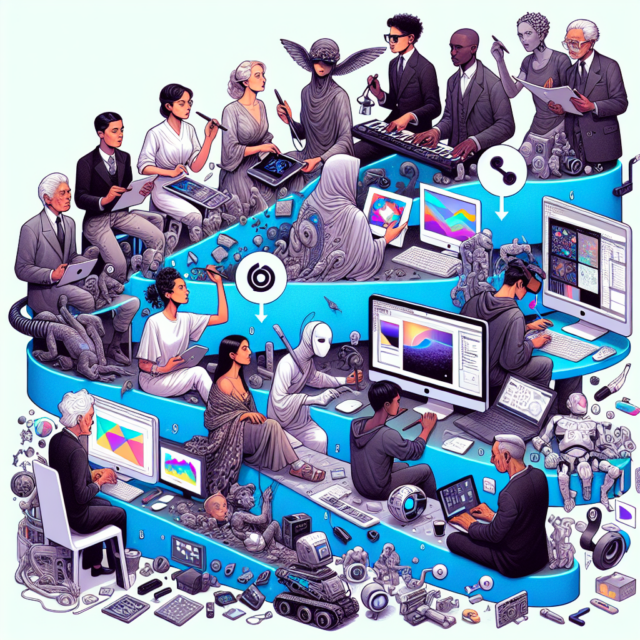
Exploring AI Art: The Intersection of Tech and Creativity

In recent years, the fusion of artificial intelligence (AI) and art has sparked a revolution in creative expression, challenging traditional notions of artistry and craftsmanship. This burgeoning field, known as AI art, is not merely a technological novelty but a profound exploration of the possibilities that arise when machine learning intersects with human creativity. As artists and technologists collaborate, they are unveiling new forms of art that push the boundaries of imagination and redefine what it means to create. This article delves into the world of AI art, examining its technological underpinnings and the unique artistic expressions it facilitates.

Unveiling AI Art: A New Frontier in Creativity

AI art represents a significant departure from conventional artistic practices, offering a fresh canvas where human creativity and machine intelligence converge. One of the most compelling aspects of AI art is its ability to produce works that transcend the limitations of human imagination. Through algorithms and neural networks, AI systems can generate intricate designs, surreal landscapes, and abstract compositions that challenge our perceptions of reality and artistic potential.

This new frontier in creativity has not only expanded the scope of artistic expression but also democratized the creation process. Artists, regardless of their technical expertise, can now leverage AI tools to explore uncharted territories of visual and auditory art. These tools, often user-friendly and accessible, empower artists to experiment with novel styles and techniques, thus broadening the horizons of what art can be.

Moreover, AI art invites us to reconsider the role of the artist. Traditionally, the artist has been viewed as the sole creator, the mastermind behind every stroke and note. However, in the realm of AI art, the artist often assumes the role of a curator or collaborator, guiding the machine’s creative process while allowing it the autonomy to explore and innovate. This shift in roles prompts a reevaluation of authorship and originality in art.

Despite its innovative potential, AI art also raises important questions about authenticity and value. As machines become more adept at creating art, some critics argue that the works produced may lack the emotional depth and intentionality that characterize human-made art. This debate highlights the ongoing tension between machine-generated art and traditional human artistry, prompting a deeper exploration of what constitutes ‘authentic’ art.

AI art has also sparked a dialogue about the ethical implications of machine creativity. Concerns about copyright, ownership, and the potential for AI to replicate existing artworks without credit to the original creators are at the forefront of discussions within the art community. As AI continues to evolve, these conversations will be crucial in shaping the future landscape of art.

Ultimately, AI art represents a new frontier in creativity that is both exhilarating and complex. By challenging preconceived notions of art and creativity, it invites us to imagine a future where human and machine co-create in harmony, each enhancing the other’s capabilities in an ever-evolving artistic landscape.

The Technology Behind AI-Driven Artistic Innovation

At the heart of AI-driven artistic innovation lies a complex interplay of algorithms, data, and machine learning techniques. These technologies provide the foundation upon which AI art is built, enabling machines to analyze, learn, and create in ways that mimic human artistic processes. Central to this technological framework is the neural network, a computational model inspired by the human brain’s interconnected neurons.

Neural networks, particularly deep learning models, have revolutionized the field of AI art. These models are capable of processing vast amounts of data, allowing them to recognize patterns and generate outputs that resemble human-created art. By training on diverse datasets, neural networks can learn to emulate various artistic styles, from impressionism to cubism, and even develop entirely new aesthetics.

Generative Adversarial Networks (GANs) have been particularly instrumental in advancing AI art. GANs consist of two neural networks—the generator and the discriminator—that work in tandem to create and refine art. The generator produces images, while the discriminator evaluates their quality, providing feedback that helps the generator improve. This iterative process results in increasingly sophisticated and realistic artworks.

Another critical component of AI art technology is the use of style transfer algorithms. These algorithms enable the transformation of an image’s style by applying the visual characteristics of one artwork to another. This capability allows artists to experiment with blending different artistic influences, creating unique and hybrid works that challenge traditional genre boundaries.

The use of reinforcement learning in AI art is also gaining traction. This approach involves training AI models through trial and error, rewarding them for successful outcomes. By simulating an environment where the AI can experiment with different artistic techniques, reinforcement learning fosters creativity and innovation, leading to the production of novel and unexpected artworks.

As AI technology continues to evolve, so too will the tools and techniques available to artists. The integration of AI into the creative process not only enhances artistic capabilities but also opens up new avenues for exploration and experimentation. By leveraging the power of machine learning, artists can push the boundaries of what is possible, creating art that is both innovative and reflective of the technological age.

Artistic Expression Meets Machine Learning Techniques

The intersection of artistic expression and machine learning techniques marks a transformative moment in the evolution of art. This collaboration between human creativity and artificial intelligence is not merely a technical endeavor but a profound exploration of how machines can augment and inspire artistic processes. By harnessing the capabilities of machine learning, artists can embark on a journey of discovery, where the possibilities are as limitless as the imagination itself.

Machine learning techniques offer artists a wealth of tools for experimentation and exploration. Through these techniques, artists can generate new ideas, refine existing ones, and even challenge conventional notions of art. By analyzing vast datasets of art history and contemporary styles, machine learning models can identify patterns and trends, providing artists with a rich source of inspiration and insight.

One of the most exciting aspects of this intersection is the potential for co-creation between humans and machines. In this collaborative process, artists and AI systems work together to produce art that neither could create independently. This partnership allows for the emergence of new forms of artistic expression, where the lines between human and machine creativity blur and blend.

The use of machine learning in art also invites a reimagining of the creative process itself. Traditional artistic practices often involve a linear progression from concept to creation, whereas machine learning techniques enable a more dynamic and iterative approach. Artists can continuously refine their work, experimenting with different styles and techniques until they achieve the desired outcome.

Moreover, the integration of machine learning into artistic expression challenges artists to think critically about their role in the creative process. As AI systems become more autonomous, artists must grapple with questions of control, authorship, and the nature of creativity. These considerations provoke a deeper understanding of what it means to be an artist in the age of AI.

Ultimately, the intersection of artistic expression and machine learning techniques represents a new paradigm in the world of art. By embracing the possibilities offered by AI, artists can expand their creative horizons, explore uncharted territories, and redefine the boundaries of what is possible. This collaboration between human and machine has the potential to usher in a new era of artistic innovation, where creativity knows no limits.

As the world of AI art continues to evolve, it presents both exciting opportunities and complex challenges. This intersection of technology and creativity invites us to reconsider our definitions of art, authorship, and originality, prompting a reevaluation of the roles that humans and machines play in the creative process. As artists harness the power of AI to push the boundaries of imagination, they are not only expanding the possibilities of artistic expression but also forging a new path in the ever-evolving landscape of art. In this brave new world, the fusion of human ingenuity and machine intelligence offers a glimpse into a future where creativity knows no bounds, and the only limit is the extent of our imagination.

Exploring the Evolution and Impact of Digital Art

Digital art has undergone a remarkable transformation since its inception, evolving from a niche interest to a mainstream cultural phenomenon. This journey has been marked by significant technological advancements and shifts in cultural perceptions, influencing not only how art is created but also how it is consumed and valued. This article delves into the fascinating evolution of digital art, examining its historical roots, the technological innovations that have propelled its growth, and its profound impact on modern culture.

The Rise of Digital Art: A Historical Overview

Digital art’s origins can be traced back to the mid-20th century when artists began to experiment with computers as a medium for artistic expression. In the 1960s, pioneers like Frieder Nake and Harold Cohen explored computer-generated imagery, laying the groundwork for what would become a new genre of art. These early digital artists faced numerous challenges, including limited technology and a lack of recognition from the traditional art world. Despite these obstacles, they persevered, driven by a desire to push the boundaries of creativity.

The 1980s marked a significant turning point for digital art, as personal computers became more accessible, and software like Adobe Photoshop was introduced. This decade saw a surge in digital creativity, with artists using computers to create everything from pixel art to complex digital paintings. The rise of the internet in the late 1990s further accelerated the growth of digital art, providing artists with new platforms to share their work and collaborate with others globally.

As digital art continued to evolve, the 2000s saw the emergence of digital installations and interactive art, blurring the lines between the viewer and the artwork. Artists like Rafael Lozano-Hemmer and teamLab began creating immersive experiences that engaged audiences in novel ways. These developments challenged traditional notions of art, encouraging viewers to participate in the creative process rather than passively consume art.

The proliferation of smartphones and tablets in the 2010s democratized digital art creation, allowing anyone with a device to become an artist. Apps like Procreate and ArtRage offered robust tools for digital painting, while platforms like Instagram and DeviantArt provided spaces for artists to showcase their work to a global audience. This era also saw the rise of digital art communities, where artists could share techniques, collaborate, and find support.

The advent of blockchain technology and the introduction of Non-Fungible Tokens (NFTs) in the late 2010s and early 2020s revolutionized the digital art market. NFTs provided a way to authenticate and monetize digital artworks, giving artists new opportunities for financial success. This development sparked debates about the value of digital art and its place in the broader art market, highlighting the ongoing evolution of art in the digital age.

Today, digital art is recognized as a legitimate and valuable form of artistic expression, celebrated in galleries, museums, and online platforms worldwide. Its journey from obscurity to mainstream acceptance reflects broader changes in technology and culture, underscoring the dynamic nature of art and its ability to adapt to changing times.

Technological Advances Shaping Digital Creativity

Technological advancements have been a driving force behind the evolution of digital art, providing artists with new tools and mediums to explore. One of the most significant developments has been the improvement in computer graphics, which has enabled the creation of highly detailed and realistic digital artworks. High-resolution displays and powerful graphics processing units (GPUs) allow artists to work with intricate details and vibrant colors, pushing the boundaries of digital creativity.

Software innovation has also played a crucial role in shaping digital art. Programs like Adobe Creative Suite, Corel Painter, and Blender have become essential tools for artists, offering a wide range of features for creating everything from 2D illustrations to 3D models. These software packages have made digital art more accessible, enabling artists to experiment with different styles and techniques without the constraints of traditional media.

The development of virtual reality (VR) and augmented reality (AR) technologies has opened up new possibilities for digital artists, allowing them to create immersive and interactive experiences. VR platforms like Tilt Brush and Quill enable artists to paint in a three-dimensional space, while AR applications overlay digital art onto the real world, offering unique ways to engage with audiences. These technologies have expanded the scope of digital art, transforming it into a multisensory experience.

Artificial intelligence (AI) has emerged as a powerful tool for digital artists, offering new ways to generate and manipulate images. AI algorithms can analyze and learn from vast datasets, enabling artists to create complex patterns and designs that would be difficult to achieve manually. Tools like DeepArt and Runway ML allow artists to experiment with AI-driven creativity, leading to the creation of innovative and unexpected artworks.

The rise of social media and digital distribution platforms has transformed how digital art is shared and consumed. Platforms like Instagram, Behance, and ArtStation provide artists with global reach, allowing them to showcase their work to a diverse audience. These platforms have also facilitated the growth of online art communities, where artists can share feedback, collaborate on projects, and gain inspiration from their peers.

As technology continues to evolve, so too will the possibilities for digital art. Emerging technologies like blockchain, AI, and extended reality (XR) promise to further revolutionize the field, offering new ways for artists to create, share, and monetize their work. The ongoing interplay between technology and creativity ensures that digital art will remain a dynamic and ever-evolving form of expression.

The Influence of Digital Art on Modern Culture

Digital art has had a profound impact on modern culture, influencing not only the art world but also broader societal trends. One of the most significant contributions of digital art is its role in democratizing creativity. With the accessibility of digital tools and platforms, anyone with an internet connection can create and share art, breaking down traditional barriers to entry and allowing for a more diverse range of voices and perspectives.

In the realm of entertainment, digital art has become an integral part of industries such as film, video games, and animation. The use of digital effects and computer-generated imagery (CGI) has transformed visual storytelling, enabling creators to bring fantastical worlds and characters to life. This has led to new forms of narrative expression and has expanded the possibilities for visual media, influencing how stories are told and experienced.

Digital art has also impacted the design and advertising industries, where it is used to create compelling visuals and immersive brand experiences. The flexibility and versatility of digital tools allow designers to experiment with bold concepts and create engaging content that captures the attention of audiences. This has led to a shift in how brands communicate with consumers, emphasizing creativity and innovation.

In education, digital art has been embraced as a valuable tool for fostering creativity and critical thinking. Educational institutions are increasingly incorporating digital art into their curricula, providing students with the skills and knowledge needed to navigate the digital landscape. This not only prepares students for careers in creative industries but also encourages them to think outside the box and explore new ways of expressing themselves.

The rise of digital art has also sparked important conversations about the nature of art and its value in the digital age. The emergence of NFTs and digital marketplaces has challenged traditional notions of art ownership and authenticity, prompting debates about the role of technology in art creation and consumption. These discussions highlight the evolving relationship between art and technology, as well as the need to adapt to new cultural and economic realities.

Ultimately, digital art reflects the dynamic and interconnected nature of modern culture. It embodies the fusion of technology and creativity, offering new ways to explore and express ideas. As digital art continues to evolve, it will undoubtedly shape the future of artistic expression and cultural discourse, serving as a testament to the innovative spirit of our time.

The evolution of digital art is a testament to the transformative power of technology and its ability to redefine artistic expression. From its humble beginnings in the realm of computer-generated imagery to its current status as a mainstream art form, digital art has continually pushed the boundaries of creativity and challenged traditional perceptions of art. As technological advancements continue to reshape the landscape of digital creativity, the influence of digital art on modern culture will only grow, offering new opportunities for artists and audiences alike to engage with the world in innovative ways.

Kokodi Arena Season 1 Launches Play-to-Airdrop Campaign

0
Kokodi Arena Season 1 Launches Play-to-Airdrop Campaign


Web3 fantasy shooter Kokodi Arena has officially launched Season 1 on the HyperPlay platform and is now open to NFT holders.

Kokodi Arena combines elements of battle royale and extraction shooter genres, offering a mix of strategy, teamwork, and high-stakes combat.

This new season brings the Play-to-Airdrop feature, where players can earn rewards such as $KOKO tokens, NFTs, and other in-game items by accumulating Play Points (PP) through gameplay.

Kokodi Arena Season 1 Play-to-Airdrop Mechanics Source: KOKODI Games

Play-to-Airdrop Mechanics and Rewards

In Season 1, Kokodi Arena introduces Play Points as the in-game currency for earning rewards.

Players can earn Play Points through Quick Match, the game’s primary mode for competitive play. Points are awarded for kills, captures, and victories, with each kill or capture earning 100 PP. Winning a match doubles the points earned during that session.

At the end of the season, players’ accumulated Play Points can be converted into $KOKO tokens. These tokens, set to fully launch in early 2025, will power the game’s economy and provide discounts on in-game purchases. Additional prizes for high-ranking players include rare NFT skins and invite codes, though specific details about these codes have yet to be disclosed.

How to participate in Kokodi Arena Season 1 Play-to-Airdrop campaign?
How to participate in Kokodi Arena Season 1 Play-to-Airdrop campaign? Source: KOKODI Games

How to participate in Season 1?

Participation in Kokodi Arena Season 1 requires ownership of specific NFTs: KOKODI, Mask, or Lootbox. These NFTs are available for purchase on platforms such as OpenSea and Sphere. Lootboxes, the most affordable option, are currently listed at around $7.50.

To join, players must download Kokodi Arena through the HyperPlay launcher. The Quick Match gameplay, which awards Play Points, is available daily between 18:00 and 20:00 UTC. Whilst the season’s end date has not been announced, this structured play window ensures a consistent and active player base during Season 1.

Kokodi Arena is currently an NFT-gated game but is expected to become free-to-play in the future, with plans to release on the Epic Games Store.


Source link

NFTs Reborn – More Art, Less Speculation

0
NFTs Reborn – More Art, Less Speculation


Three years ago, the digital economy and the art world experienced one of the most extraordinary crazes in recent history as NFTs (nonfungible tokens) skyrocketed in popularity and value.

These unique digital assets became both a financial and cultural phenomenon, with wealthy individuals and major organizations investing millions into a new market that promised to be both widely innovative and exclusive.

NFT’s boom was largely driven by the rising value of cryptocurrencies. However, the NFT market and digital art sector weren’t the only industries experiencing a transformative era as a result of the rising adoption of crypto; so too were online casinos. Many online crypto casinos like Dis casino gained momentum due to the rising value of crypto. At these online casinos, players enjoy enhanced anonymity, faster payouts, and elevated security measures, while using the communication benefits of the Discord platform. With the resurrection of NFTs, it’s even possible to create NFT slots, NFT poker, and NFT whatnots at some iGaming websites. 

While the NFT craze is not at the same level as what it once was, the market is experiencing a resurgence of sorts. 

The Rise of NFTs

Davis referred to the events of 2021 as utter mania and added to that statement with a quippy remark about how manias are also fun.

The moment that the world began to realize the enormous potential of nonfungible tokes came when the former head of digital art at Christie’s, Noah Davis, facilitated an NFT sale of Mike Winklemann’s (also known as Beeple) digital artwork Everydays: The First 5000 Days for $69.3 million with the crypto Ether.

Winklemann’s landmark sale put NFTs on the map and catapulted these unique digital assets into the mainstream market, arousing interest from all sorts of individuals, not just art enthusiasts.

NFT collectors went as far as spending $230 million on NBA Video Highlights that were made into unique digital files, while another anonymous collector bid $560,000 for an NFT on a column about NFTs written by a New York Times reporter.

Another phenomenon in the NFT world during its surge in 2021 was the considerable amount of people, generally young males, who were swept up in the craze to purchase and sell NFT apes from popular NFT collections such as Bored Ape Yacht Club and Pudgy Pidgeon. These collections were made up of CG (computer-generated) artworks of cartoonlike apes and sold for anything from tens of thousands to millions of dollars each on online NFT marketplaces like Open Sea.

Owners of Bored Ape NFTs made these digital artworks their online avatars, which in turn symbolized their memborship to an exclusive club that offers these collectors exciting perks such as access to ApeFest, which featured a star-studded line-up with the likes of Chris Rock and The Strokes performing at the exclusive event.

During the peak of the NFT craze, many celebrities like Jimmy Falon and Paris Hilton showcased their Bored Ape digital artworks on The Tonight Show, further supercharging the craze. This led to Yuga Labs’, a community member of the ApeCoin, reaching a value of $4 billion, which was on par with Disney’s recent acquisition of LucasFilms, which would see mega franchises like Star Wars and Indiana Jones now under Disney’s ownership.

The Decline of the NFT Market

Fast forward to 2024 and the NFT market has not managed to regain its same value as it did a few years ago. Zeke Faux, the author of Number Go Up: Inside Crypto’s Wild Rise and Staggering Fall, took this sentiment to extreme lengths and even commented that the NFT space is dead.

The main reason behind his view is that the NFT trend was largely dependent on the soaring value of cryptocurrency. However, despite the crypto market bouncing back after a two-year slump and reaching record highs, the NFT market has failed to regain its previous hype and has experienced a drop in cultural relevance.

There is no doubt that NFTs had significant cultural relevance when the market was peaking; however, much of its initial enthusiasm from investors was backed by financial speculation rather than solid evidence of a sustainable market. The massive spikes in values for cryptocurrencies like Ether only fueled the craze, as the market could be likened to a modern-day gold rush. Promises of wealth and the pursuit of profit undermined the genuine interest or underlying value of the digital art itself.

When Faux was still busy writing his book in 2022, NFT prices were already sinking. The author purchases a Mutant Ape NFT, which was part of a spinoff collection produced by Yuga Labs, for $20,000 for the sole purpose of gaining access to an ApeFest party so that he could research his book. To put this in perspective, a similar NFT was sold for almost double that amount just weeks earlier.

Today in the current market, the least expensive Bored Ape on sale is known as the “price floor can be purchased at around $70,000 according to recent prices from NFTpricefloor.com. In April this year, a similar NFT was valued 90% lower than what it was in 2021. However, many  NFT values have increased alongside cryptocurrencies like Mutant Ape, which is currently priced at approximately $12,800, thus showing signs that the NFT market may be on the verge of experiencing a resurgence. 

NFTs are Bouncing Back 

Despite the overall downturn, various NFT collections managed to retain their value and many investors plan to stick with the NFT market. Popular NFT collections like Pudgy Penguins still manage to maintain relevance within the digital art space (with its NFT floor price sitting at around $50,000) and beyond through branching into other lucrative avenues.

The collection’s creators launched a line of plush toys available at major retailers like Walmart, generating millions in revenue. Similarly, Doodles, another popular NFT series, expanded into diverse ventures, including digital wearables, a record label, and collaborations with high-profile figures like Pharrell Williams, who serves as the brand’s creative director.

These examples highlight a critical shift in the NFT market: the need for tangible utility and community engagement. As speculative trading diminished, projects that offered real-world applications or sustained cultural relevance stood out in a crowded field. Yet for many early adopters, the dream of striking it rich through NFT trading faded, replaced by a more pragmatic approach to the technology.

One area where NFTs have maintained a degree of legitimacy is the art world. Prestigious institutions and events, such as Art Basel Miami Beach, continue to explore the intersection of digital technology and traditional art. In 2023, Sotheby’s set a record for algorithmically generated art with the sale of a piece from Dmitri Cherniak’s Ringers series for $6.2 million. Museums have also begun to embrace blockchain art, with the Los Angeles County Museum of Art acquiring its first NFT. While these milestones indicate growing institutional recognition, they also signal a transition from a speculative frenzy to a more thoughtful integration of NFTs into the broader art landscape.

Shifting Trends in Digital Assets

While NFTs are making a comeback so is the general interest around other digital assets. Meme coins, cryptocurrencies inspired by internet jokes, became the new focal point for speculative investors. Tokens like Dogecoin and Bonk gained traction, often riding waves of viral popularity. Even celebrities joined the trend, with rapper Iggy Azalea and former NBA star Scottie Pippen launching their own meme-based currencies. These developments underscored the adaptability of digital asset markets, where trends shift rapidly and unpredictably.

A New Era of Digital Art

For those still active in the NFT space, the focus has shifted from rapid trading to long-term value creation. Former Christie’s digital art head Noah Davis, who played a key in the $69.3 million sale for Beeple’s Everydays: The First 5000, helped drive the initial NFT Mania, and three years later has now co-founded Fountain, a brokerage aimed at connecting buyers and sellers of high-value digital art.

This new phase of the market prioritizes artistic integrity and sustainable growth over quick profits. Fountain has facilitated significant transactions, such as the sale of a rare CryptoPunk alien NFT and a set of 10 Autoglyphs, each exceeding $10 million. Events like Art Blocks, hosted by generative art platform Art Blocks, continue to draw dedicated enthusiasts, demonstrating that NFTs still hold appeal for a committed community of collectors and creators.

As the speculative energy that once defined the NFT market dissipates, the industry faces a critical juncture. Projects with genuine artistic or practical value are more likely to endure, while others risk becoming relics of a fleeting trend. Whether NFTs will achieve their transformative potential in art, finance, and technology remains an open question, but their story thus far offers valuable insights into the intersection of culture, innovation, and human behavior.


Source link

Ragnarok Landverse Coming to Ronin Network in Q1 2025

0
Ragnarok Landverse Coming to Ronin Network in Q1 2025


Ragnarok Landverse, a new Web3 version of the classic MMORPG Ragnarok Online, will launch on Sky Mavis’ Ronin Network in early 2025. Ragnarok Landverse: Genesis is the result of a partnership between Ronin Network and blockchain gaming studio Zentry. Terms of the deal have not been disclosed, but this brings more players and fans into Web3 gaming.

A Classic Goes On-Chain

Ragnarok Online was first released in 2002 by South Korean company Gravity. It became a global phenomenon, with over 100 million players and over $2 billion in revenue. Over the years, the franchise has been known for its immersive quests, detailed character customization, and strong player communities. It’s especially popular in Southeast Asia, where its player-driven economies and social features make it stand out.

Source Ragnarok

By going on-chain, Ragnarok Landverse aims to add more value and engagement. According to Zentry, this Web3 version stays true to the original experience. Still, it adds the ability to earn, own and trade digital assets. Players can complete familiar quests, kill monsters and explore the game world while collecting on-chain resources like adamantine fragments and earning tokens.

This added layer of digital ownership could mean stronger in-game economies and more player involvement. In fact, by 2024, a community of over 400,000 Landverse players had already generated more than $15 million in revenue through sales of in-game items and NFTs.

Pre-Register and Future Plans

Want to play Ragnarok Landverse on Ronin? Pre-register now. Pre-registration is easy:

Visit rolg.maxion.gg/pre-register

Click “Pre-Register”

Create a Maxion account with your email

Link your Ronin Wallet to unlock possible mystery rewards

This is the entry point to Web3 gaming. The Ronin Wallet is a bridge where you can store and manage your on-chain items. For many, it will be their first Web3 game, where they can experience digital ownership and community-driven economies.

Zentry’s flagship studio, Maxion, has an official partnership with Gravity, the publisher of Ragnarok, to ensure the new game stays true to the original experience and story.

Zentry will also operate a node validator on the Ronin Network to help maintain and secure the blockchain infrastructure for these games.

This could be a big moment for Web3 gaming. If this succeeds, more developers might bring their IP into the blockchain. For players, it’s an opportunity to play a classic game again with the added benefits of digital ownership and a more connected economy.

Editor’s note: Written with the assistance of AI – Edited and fact-checked by Jason Newey.

Jason Newey

Jason Newey is a seasoned journalist specializing in NFTs, the Metaverse, and Web3 technologies. With a background in digital media and blockchain technology, he adeptly translates complex concepts into engaging, informative articles.

View all posts


Source link

Sharjah Launches World’s First Metaverse Platform to Explore Archaeological Sites – Cryptoflies News

0
Sharjah Launches World’s First Metaverse Platform to Explore Archaeological Sites – Cryptoflies News


2

The Sharjah Archaeology Authority (SAA) has introduced a metaverse platform that allows users to explore Sharjah’s cultural and archaeological heritage.

Named the “Archaeology Centre in the Metaverse,” it is the first platform of its kind in the world. 

The platform offers an immersive educational experience, allowing users to visit key archaeological sites in Sharjah virtually. These include rock carvings in Khorfakkan and Kalba, as well as the excavation site known as the “Camel Cemetery.”

The platform provides audio explanations in both English and Arabic. It is currently accessible through Meta Quest, giving worldwide users an interactive way to learn about the region’s rich history.

This is not Sharjah’s first venture into Web3 technology. Last year, the Sharjah Government launched a platform for NFT-based certificates. This shift marks a move away from traditional paper certificates to more secure digital documents. 

You Might Be Interested In

Additionally, in 2023, Zepeto partnered with Sharjah Media City to enhance virtual innovation and content creation, further emphasizing Sharjah’s focus on digital transformation.

The adoption of Web3 technology is not limited to Sharjah. In June, Digital Dubai, in collaboration with ITU and UNICC, launched the Global Initiative on Virtual Worlds (GIVW). This initiative is aimed at using the metaverse to improve urban planning, tourism, and education.

Dubai has also embraced metaverse technology in its government services. Last year, the Dubai General Directorate of Residency and Foreigners Affairs (GDRFA) entered the metaverse, providing a virtual platform for service requests and interactions. 

This move aligns with Dubai’s broader efforts to develop into a smart city. In 2022, Dubai introduced its Metaverse Strategy, which aims to make the city one of the world’s top 10 metaverse economies, create 40,000 new virtual jobs, and generate $500 million in revenue for the national economy.


Source link

Top NFT Collections – December 20, 2024 | NFT CULTURE | NFT News | Web3 Culture | NFTs & Crypto Art

0
Top NFT Collections – December 20, 2024 | NFT CULTURE | NFT News | Web3 Culture | NFTs & Crypto Art


Top NFT Collections (Last 24h)

Here are the hottest NFT Collections of the day.

Rank

Name
Volume
Transactions
Chains
URL

1

Doodles
4,660.67 ETH
702
ethereum
View

2
Pudgy Penguins
Pudgy Penguins
1,661.61 ETH
94
ethereum
View

3
Top NFT Collections – December 22, 2024 | NFT CULTURE | NFT News | Web3 Culture | NFTs & Crypto Art
Azuki
1,289.46 ETH
121
ethereum
View

4
Azuki Elementals
Azuki Elementals
731.61 ETH
492
ethereum
View

5
Lil Pudgys
Lil Pudgys
715.96 ETH
356
ethereum
View

6
Dooplicator
Dooplicator
519.05 ETH
1197
ethereum
View

7
BEANZ Official
BEANZ Official
446.71 ETH
706
ethereum
View

8
Cool Cats
Cool Cats
422.29 ETH
275
ethereum
View

9
Bored Ape Yacht Club
262.08 ETH
15
ethereum
View

10
Mutant Ape Yacht Club
173.14 ETH
56
ethereum
View

The post Top NFT Collections – December 20, 2024 appeared first on NFT CULTURE.


Source link

NFT Domains: How to Register and Trade for Profit

0
NFT Domains: How to Register and Trade for Profit


A few years back, buying a domain name involved typing it into a search bar, paying a small annual fee, and hosting a website. Today, as the internet evolves into a more decentralized environment, traditional domain names have begun to share the spotlight with a new, blockchain-based alternative: NFT domains. These aren’t just web addresses—they’re digital assets that you can truly own, trade like collectibles, and even use to simplify crypto transactions. Whether you’re intrigued by the idea of an online identity that isn’t controlled by a single corporation or you’re excited about the prospect of turning a small investment into a profitable flip, learning how to register and trade NFT domains is a skill worth adding to your toolbox.

In this article, we’ll walk through what NFT domains are, why they matter, and how to register them without hassle. Then we’ll dig into the nitty-gritty of trading NFT domains for profit, covering everything from price research to negotiation tactics. Along the way, you’ll find tips to help you avoid common pitfalls and position yourself for success in this frontier of the decentralized web.

What Are NFT Domains?

If you’ve ever typed in a familiar “.com” or “.net” address, you know how traditional domains work. They rely on centralized registries and can be subject to censorship, takedowns, or control by third parties. In contrast, NFT domains—often known as Web3 domains—exist as tokens on a blockchain. Instead of “renting” your web address from a registry, you own it outright. Each NFT domain is recorded on a public ledger that can’t be altered by a single authority.

Services like the Ethereum Name Service (ENS), Unstoppable Domains, and Handshake are well-known platforms offering these blockchain-based domain names. They usually come with unique extensions like “.eth” or “.crypto,” and they can be used for more than just websites. For example, you can link an NFT domain to your crypto wallet, simplifying addresses into human-readable names. This flexibility helps make the decentralized web feel more accessible, memorable, and user-friendly.

Benefits of Owning an NFT Domain

True Digital Ownership:With NFT domains, you’re holding a token in your own wallet. There’s no middleman who can take it away, revoke it, or freeze it. This ownership model aligns perfectly with the broader philosophy of Web3—empowering users rather than giant corporations.

Branding and Identity:Whether you’re a content creator, a business owner, or a member of a DAO, having an NFT domain lets you establish a unique identity. It’s like a digital nameplate that can’t be forged or copied. As more people enter the Web3 space, owning a memorable NFT domain could become a powerful branding asset.

Simple Crypto Transactions:Managing long, complicated wallet addresses can be daunting. NFT domains allow you to send or receive cryptocurrency by simply typing in a short, easy-to-remember domain. This convenience can help onboard newcomers and foster trust in a decentralized ecosystem.

Potential for Long-Term Value:Just as certain traditional “.com” domains became immensely valuable over time, early NFT domain names—especially short, brandable, or keyword-rich ones—could appreciate in value. As Web3 adoption grows, the right NFT domain might become a valuable collectible or commercial property.

How to Register NFT Domains

Choose a Blockchain Domain Provider

Before you can own an NFT domain, you need to select a reputable provider. Popular platforms include:

ENS (Ethereum Name Service): Well-established, focusing on “.eth” domains.

Unstoppable Domains: Offers a variety of extensions, including “.crypto” and “.nft,” often sold as a one-time purchase without ongoing fees.

Handshake: A decentralized naming protocol with numerous TLDs.

When picking a provider, consider factors like transaction fees, domain availability, and the platform’s reputation. Look into the roadmap, community support, and whether the domain can integrate easily with other decentralized services.

Connect a Crypto Wallet

Registering an NFT domain typically requires a Web3-compatible wallet, such as MetaMask or Coinbase Wallet. If you don’t have one yet, set it up by:

Installing the browser extension or mobile app.

Writing down and securely storing your seed phrase.

Funding the wallet with a small amount of cryptocurrency (often ETH) to cover registration fees and gas costs.

Once funded, connect your wallet to the domain provider’s website. The connection is usually a one-click process.

Search and Select Your NFT Domain

Next, think about the name you want. Short, brandable domains tend to hold more long-term value. You might also look for terms related to emerging trends—anything from AI, GameFi, or Metaverse keywords could be valuable down the line.

Once you’ve brainstormed a few options, use the domain provider’s search tool. If your chosen name is available, you’ll see a price and the option to register it. If it’s taken, try variations or different extensions.

Pay the Registration Fee

When you’ve settled on a domain, proceed with the purchase. Depending on the platform, you might pay a one-time fee or an annual renewal cost. Always double-check the total amount, including any gas fees for the transaction. Confirm and sign the transaction through your wallet, and wait for the blockchain confirmation.

Verify Domain Ownership in Your Wallet

Once confirmed, the NFT domain will appear in your wallet’s NFT section or on your account dashboard. You now officially own it. It’s wise to keep your seed phrase secure and enable any available security features to protect your new digital asset.

How to Trade NFT Domains for Profit

Owning an NFT domain is only half the story. Trading these domains can be a way to capitalize on your foresight or luck in snagging valuable names early.

Understanding Marketplaces

To sell or buy NFT domains, you’ll need to visit NFT marketplaces. Big names like OpenSea often feature NFT domains, and there are also niche platforms focused solely on Web3 naming. Before listing, check the marketplace’s listing fees, user reviews, and liquidity. A platform with a large, active community increases the odds of finding a buyer at a fair price.

Pricing Your NFT Domain

Determining the right asking price can be tricky. Start by researching recent sales of similar NFT domains. Analyze comparable names, the length, and any brandable qualities. Keep an eye on market trends—when a certain technology or community is on the rise, names related to it often gain value. If you’re unsure, consider starting with a slightly higher price and being open to offers.

Listing and Marketing Your NFT Domain

Creating a listing is straightforward. Connect your wallet, choose a fixed price or auction format, and add a description that highlights the domain’s potential use cases. Then, promote your listing. Share it on social media, Web3 forums, or Telegram and Discord groups dedicated to NFT trading. Engaging with potential buyers and educating them on the domain’s value can help close a deal faster.

Negotiation and After-Sales Service

When offers roll in, don’t hesitate to negotiate. Ask yourself: Is this name likely to appreciate if I hold longer, or is it better to sell now and move on to another opportunity? Once you’ve agreed on a price, finalize the transaction through the marketplace’s standard process. Make sure the buyer knows exactly how to receive and manage the NFT domain. Professionalism and clear communication can earn you a good reputation as a seller, potentially leading to repeat buyers or referrals.

Investing Strategies and Tips for Long-Term Profit

Just like conventional domain investing, profits in NFT domains often hinge on patience, market knowledge, and foresight.

Identify Trends Early: If you anticipate a new blockchain network or a popular metaverse project, consider registering related terms before they explode in demand.

Diversify Your Portfolio: Don’t put all your resources into one theme or extension. Spread out across different platforms and name types, increasing your chances of success.

Hold Premium Names for Value Appreciation: If you own a short, brandable NFT domain or one tied to a long-lasting concept, holding might yield higher returns than a quick flip.

Stay Informed: Regularly read up on Web3 news, join NFT domain communities, and track domain auction results. The more you know, the better you’ll be at spotting profitable opportunities.

Common Mistakes to Avoid

Overpaying for Generic Names: Don’t fall into the trap of buying just any NFT domain because it’s cheap. Focus on memorable, keyword-rich, or brand-friendly names.

Ignoring Renewal Fees (if applicable): Some NFT domains, like ENS names, may require periodic renewals. Failing to renew might cause you to lose the domain.

Neglecting Security: Keep your wallet and seed phrases safe. A compromised wallet means losing your domains.

Falling for Scams: Always use trusted platforms and double-check URLs before connecting your wallet. Scammers often create fake phishing sites to trick new investors.

Frequently Asked Questions (FAQ)

Q: What blockchain platforms support NFT domains?A: Leading options include Ethereum Name Service (ENS) for “.eth” names, Unstoppable Domains for extensions like “.crypto,” and Handshake for a variety of unique top-level domains.

Q: Do NFT domains expire?A: It depends on the platform. ENS names typically require periodic renewals, while providers like Unstoppable Domains offer NFT domains as a one-time purchase without ongoing fees.

Q: Can I host a website on my NFT domain?A: Yes. Many NFT domain platforms support hosting decentralized websites, although it may require additional steps like IPFS hosting and some technical know-how.

Q: Are NFT domains guaranteed to increase in value?A: No guarantees exist. The value of an NFT domain depends on market trends, brandability, scarcity, and buyer interest. Like any investment, there’s a risk involved.

Q: How do I transfer my NFT domain to another wallet?A: You can transfer ownership just like any other NFT. On your marketplace’s platform, select the “transfer” function, enter the recipient’s wallet address, and complete the transaction.

Conclusion

NFT domains represent a new frontier where ownership, digital identity, and investment potential intersect. Learning how to register NFT domains and understanding how to trade them profitably can give you a foothold in the evolving Web3 ecosystem. By recognizing trends, picking memorable names, staying organized, and approaching negotiations thoughtfully, you have the chance to reap both practical and financial rewards.

As the decentralized web continues to grow, early adopters who grasp the value of NFT domains may be well-positioned for long-term success. Now is the perfect time to explore these unique digital assets, do your research, and carve out your own place in the expanding world of Web3.

Editor’s note: This article was written with the assistance of AI. Edited and fact-checked by Owen Skelton.

Owen Skelton

Owen Skelton is an experienced journalist and editor with a passion for delivering insightful and engaging content. As Editor-in-Chief, he leads a talented team of writers and editors to create compelling stories that inform and inspire.

View all posts


Source link

Biometric NFTs: A Fresh Approach to Securing Digital Identity

0
Biometric NFTs: A Fresh Approach to Securing Digital Identity


As we spend more time online—collecting digital goodies, and exploring virtual worlds—we might need better ways to prove who we are and protect what we own. Passwords and security questions don’t always cut it anymore. That’s where a new idea comes in: Biometric NFTs. These special tokens combine blockchain technology with unique parts of your biology, like your face or fingerprint, to keep your digital assets safe.

What Are Biometric NFTs?

An NFT is like a one-of-a-kind digital asset stored on a blockchain. It could represent a piece of digital art, fractionalized real estate, or an asset in a video game. Now imagine tying an NFT to your biometric data—for example, your facial features. This creates a direct link between you (a unique human) and your NFT. Instead of just hoping a password is strong enough, your face or fingerprint helps prove you own something. In other words, it’s a more personal and foolproof way of proving ownership and verifying identity in the digital world.

Why Better Security Matters

Digital assets—from rare digital art and virtual collectibles to entire digital worlds—have greatly increased popularity and value. But as more people buy, sell, and trade these items, the risk of fraud and theft also grows. Traditional logins can be guessed or stolen; even two-factor authentication can fail against determined scammers.

Biometric NFTs could add an extra layer of security ensuring that no one else can slip into your accounts or snatch your tokens without passing the ultimate test: being you.

How Biometric Authentication Works for NFTs

Biometric authentication uses physical traits that are uniquely yours. It might scan your face, read your fingerprint, or listen to your voice. When you access your NFT marketplace or digital wallet, a quick facial scan can replace typing long passwords.

The blockchain then confirms the NFT belongs to the person with these unique traits. Because these traits are hard to fake, scams and break-ins are much less likely.

When you want to transfer or sell your NFT, you need transaction confirmation. Using your biometric data means you’re essentially “signing” the transaction with your own face or fingerprint.

This biometric digital signature ensures that even if someone got hold of your device, they still couldn’t move your NFT without passing that biometric check.

Government and Services

Biometric NFTs can also help governments and large organizations manage identities online. Instead of carrying multiple IDs or memorizing many passwords, you could use a single token tied to your face or fingerprint.

Governments could control access to sensitive information or secure virtual reality spaces, confident that only the right person gets through. This kind of identity management could streamline everything from logging into public services to proving who you are in a digital voting booth.

Looking Ahead: Virtual Worlds and Beyond

The future looks bright for NFT technology. As we spend more time in virtual reality spaces—whether for entertainment, shopping, or work—we’ll need better ways to confirm who we are.

Biometric NFTs could make these virtual experiences more trustworthy. When you enter a virtual world to see a digital art gallery, for example, your face or voice could let you in, give you access to your unique collection, or even unlock special features.

Privacy Matters: Protecting Your Data

Of course, nobody wants their personal information floating around online. That’s why privacy-preserving methods are so important. An example comes from a South Korean company called Privasea, which developed an app called ImHuman.

This app uses fully homomorphic encryption (FHE), a fancy way of saying it can process your biometric data—like a face scan—while it’s still encrypted. In other words, even if someone got into the system, they’d never see your raw data.

With ImHuman, you simply use your phone’s camera to prove you’re a real, unique person. The app then creates a secure, encrypted NFT tied to your biometric data. You can use this NFT as proof without revealing your name, email, or other personal information. Privasea is currently working on its mainnet and testnet to bring this technology to more users, letting them safely access services, airdrops, and rewards in the crypto space.

Putting It All Together

Combining biometrics with NFTs and blockchain technology may sound complex, but it could be the key to a safer digital future. Instead of trusting easily stolen passwords, we trust something unique to each of us—our biology—backed by the secure mathematics of encryption and blockchain.

As developers figure out the best ways to store and manage this data, we could see more tools that let everyday people, governments, and companies tap into biometric NFTs.

Biometric NFTs offer a fresh, practical way to protect digital items, confirm our identities, and ensure we deal with real humans online. They take the security of NFTs to a higher level, making it easier to buy and sell valuable collectibles, manage digital identities, and interact safely in virtual environments.

Editor’s note: Written with the assistance of AI – Edited and fact-checked by Jason Newey.

Jason Newey

Jason Newey is a seasoned journalist specializing in NFTs, the Metaverse, and Web3 technologies. With a background in digital media and blockchain technology, he adeptly translates complex concepts into engaging, informative articles.

View all posts


Source link

Popular Posts

My Favorites

Tom Cruise, Ana de Armas fuel Romance Rumors With Valentine’s Day...

0
Tom Cruise and Ana de Armas were spotted enjoying a night out in London on Valentine's Day, sparking romance rumors.The pair put up...