Arts

Home Arts Page 31

What Is NFT? A Simple Guide to Non Fungible Tokens

0
What Is NFT? A Simple Guide to Non Fungible Tokens


“What is NFT?” is often the first question people ask when trying to understand this fast-growing digital world. It makes sense because NFTs, what they stand for, and how they actually work can seem confusing at first. That’s why we break it all down in a simple, practical way, helping you understand the basics without any overwhelming jargon.

As you move through this guide, you’ll discover how non fungible tokens play a role in art, gaming, digital ownership, and everyday online life. By the end, you’ll feel clear, confident, and ready to decide whether NFTs deserve a place in your digital world.

What is an NFT?

What is an NFT?

An NFT is a unique digital item that proves you own something online. It works like a one-of-a-kind certificate that shows you’re the owner of a specific piece of content, whether that’s art, music, videos, game items, or digital collectibles. This simple NFT definition helps show why NFTs stand apart from regular digital files that anyone can copy. The value comes from the fact that only one person can own the original version. Exploring high-value digital collectibles worth investing in can help you spot NFTs with strong potential.

Unlike regular crypto, where every coin is the same, NFT crypto is all about individuality. Each NFT has its own identity and can’t be swapped for another item of equal value. That’s why people use NFTs when they need clear proof of ownership for something rare, personal, or limited. When you look at NFTs meaning through this lens, it becomes much easier to see how they fit into digital art, online communities, gaming, and the growing world of virtual ownership.

The History of Non Fungible Tokens (NFTs)

The story of non fungible tokens stretches back more than a decade, and it started with small experiments that tried to prove digital items could truly be owned. One of the first major steps happened in 2014, when artist Kevin McCoy created and tokenized a digital artwork on the Namecoin blockchain. This single action showed that a digital file could be marked as original, giving it a kind of ownership that hadn’t existed online before.

The idea continued to grow as developers worked on new ways to create unique digital assets. In 2017, projects like early NFT projects like CryptoPunks brought attention to the concept by offering ten thousand unique pixel characters. Soon after, CryptoKitties exploded in popularity by letting people collect and trade digital cats with their own traits. During that moment, the game grew so fast that it even slowed the Ethereum network. This made it clear that people cared about digital ownership more than anyone expected.

From that point on, non fungible tokens moved into art, music, gaming, and brand experiences. Artists began using NFTs to protect and sell their digital work. Collectors started treating digital items the same way they treat rare physical pieces. Major companies joined the conversation, which pushed NFTs even further into the mainstream.

How Do NFTs Work?

To understand how do NFTs work, it helps to look at them as digital items with a built-in ID that proves they’re one of a kind. When you own an NFT, you own a unique digital asset that’s recorded on a blockchain. A blockchain is a secure online ledger that stores information in a way that can’t be changed or erased once it’s added.

Each NFT is created through a process called minting. During minting, the details of the digital item are locked into the blockchain, which turns it into something that only one person can truly own. Even if someone copies the picture or downloads the file, the original still belongs to you because your ownership is the one recorded on the chain.

Many people compare NFTs to NFT crypto, but the two work differently. Regular crypto coins like Bitcoin or Ethereum are identical to each other. One coin is always equal to another. NFTs aren’t interchangeable. Each one has its own value based on rarity, demand, and what it actually offers.

Blockchain Technology and Smart Contracts

Blockchain technology is the digital foundation that keeps each NFT secure, traceable, and easy to verify. It works like a shared online record that anyone can view, but no one can secretly change. Smart contracts are the built in rules that control how an NFT works, such as who owns it and how it can be sold. Together, they make it possible to track what are NFTs used for with confidence.

Examples of NFTs

Examples of NFTsExamples of NFTs

Digital art, including illustrations, animations, and collectible images created by artists.Music files, where artists release songs or albums as unique digital items.Video clips, such as short highlights, creative edits, or exclusive moments.In-game items, including skins, characters, weapons, or digital land that you can own or trade.Collectible avatars, often used in online communities or profile collections.Virtual real estate, which allows you to own land or spaces in virtual worlds.

What Are NFTs Used For?

Digital art ownership giving artists a way to sell original online works.Music releases, where musicians share exclusive tracks or albums.Gaming rewards, including characters, skins, or items you can own or trade.Collectibles, such as limited edition avatars or digital trading cards.Access passes, which unlock membership perks, events, or online communities.Virtual real estate allowing you to buy and own land in digital worlds.

How Do You Buy NFT Crypto? 

Step 1: Choose a wallet: Start by picking a digital wallet that supports crypto and non fungible tokens. This wallet is where your NFT will be stored after you buy it, so choose one that feels easy for you to use.Step 2: Add crypto to your wallet: Before you can buy NFT items, you’ll need some crypto in your wallet. Most marketplaces use Ethereum, so buying a small amount gives you the funds you need for the NFT and any transaction fees.Step 3: Pick a trusted marketplace: Next, explore a reliable platform that offers NFTs to buy. Marketplaces vary in style and selection, so choose one that fits what you’re looking for, whether it’s art, music, gaming items, or collectibles.Step 4: Browse and choose your NFT: Scroll through the listings and take a close look at the details. Check the creator, the rarity, and the description. This is where your understanding of how NFTs work helps you decide if the item is worth buying.Step 5: Buy your NFT and confirm ownership: Once you’ve found the item you want, click buy and follow the steps on the screen. After the transaction goes through, your new NFT shows up in your wallet. That record becomes your proof of ownership and shows the item belongs to you. Understanding the steps to purchase your first NFT successfully can help you navigate the process with confidence.

Benefits and Risks of Non Fungible Tokens (NFTs)

As you explore NFTs, it helps to understand both sides of the experience. Many people are drawn to NFTs because they offer new ways to own, collect, and enjoy digital items. At the same time, the space comes with challenges that buyers should think about before jumping in. Here are the benefits and risks:

Benefits of NFTs

Unique digital ownership. One of the most significant benefits of NFTs is the ability to own something online in a way that is clear and easy to verify. With most digital files, anyone can download or copy them, which usually makes it hard to prove who owns the original version. An NFT solves that by tying the item to a record on the blockchain.Direct support for creators. Artists, musicians, and designers can sell their work directly in NFT marketplaces without needing a gallery, a label, or another middleman. Some NFTs even include built-in royalty payments through smart contracts. Real utility in digital spaces. NFTs are not just digital pictures. Many have real uses. Some unlock access to online communities, private content, or events. Others act as digital passes, gaming items, or identity badges. In virtual worlds, NFTs can be land, buildings, clothes, or tools. When used this way, NFTs become more than collectibles. They become part of how people interact and participate in digital experiences.

Risks and Challenges of NFTs

Market volatility. The biggest risk for most buyers is how quickly NFT prices can rise and fall. Values often shift based on trends, hype, or changes in demand. An NFT that is popular today may not hold the same value later. If you are thinking about of NFT to buy, it is important to choose items that matter to you, not just the ones that are trending.Scams and fake listings. NFT marketplaces can include scammers who copy artwork or create fake collections. If you are not careful, you might end up buying something that is not from the real creator. Always check the creator’s profile, verify links from official websites, and look for signs that the collection is authentic.Environmental concerns. Some blockchains use more energy than others, and this has led to conversations about the environmental impact of NFTs. The good news is that many platforms are moving to more efficient systems, such as proof of stake networks, which use far less energy.

How Do NFTs Make Money?

How Do NFTs Make Money?How Do NFTs Make Money?

NFTs can make money in a few different ways, and the approach depends on what the NFT offers and how people choose to use it. One of the most common methods is buying and selling. If you buy an NFT at one price and later sell it for a higher price, the difference becomes your profit. This often happens when an item becomes more desirable over time. NFT rarity plays a major role here. Rare traits, limited editions, and one of a kind designs can increase demand, which can raise the value of the item. Learning how scarcity affects an NFT’s value can help you make smarter buying and selling decisions.

Creators also earn money through royalties. Many NFTs include a smart contract that pays the original creator a small percentage every time the NFT is resold. This gives digital artists, musicians, and designers a steady stream of income long after the first sale, which is something traditional digital files cannot offer.

Some NFTs make money through utility. A utility NFT might act as a membership pass, unlock private content, or give access to special events. In gaming, NFTs can be characters, items, or upgrades that players can trade or sell digital art. Because NFTs exist on open marketplaces, buyers and creators have several ways to earn from them. Understanding the purpose and rarity of each NFT helps you see its potential value.

Common NFT Scams and How to Avoid Them

NFT activity continues to grow, and with that growth comes an increase in scams that target buyers and collectors. Many of these schemes take advantage of rushed decisions, unfamiliar platforms, or misleading online activity. Understanding how these scams work helps you protect your digital assets and interact with NFT marketplaces more safely.

One common issue involves phishing links disguised as official marketplace pages. Scammers create emails or direct messages that appear legitimate and lead users to fake login portals. These portals capture wallet information and private keys, allowing unauthorized access. You can avoid this by typing marketplace addresses directly into your browser instead of clicking links from unverified sources.

Another frequent scam is the fake NFT mint, where scammers promote a new project that never launches. They collect payments through wallet transfers or minting pages and disappear once funds are received. Researching teams, checking verified social accounts, and examining project history help reduce the risk of participating in fictional or unverified mints. Collectors also encounter counterfeit NFTs, which mimic popular collections but are not issued by the original creator. Many platforms provide verification badges or contract addresses that confirm authenticity. Checking these details before purchasing helps prevent accidental purchases of copied work.

A growing concern involves pump-and-dump schemes, where groups artificially inflate the price of a project and sell once interest rises. This leaves new buyers with assets that carry little value. Studying transaction history, wallet distribution, and sudden price spikes can help you identify manipulated markets. Some scams occur through malicious smart contracts that request excessive permissions during sign-in or transaction approval. Reviewing permission requests and limiting wallet access protects you from unauthorized asset transfers.

The Future of Non-Fungible Tokens (NFTs)

The future of non fungible tokens is still unfolding, and you are likely to see the space change in ways that go far beyond digital art or collectibles. Even though the early hype has settled, the technology behind NFTs continues to grow, and many industries are finding practical ways to use them. When you look closely at how people interact online, it becomes clear that digital ownership will keep playing a bigger role in everyday life.

One major area of growth is entertainment. Musicians, filmmakers, and game studios are exploring ways to use NFTs to give fans special content, early access, or collectible moments tied to their favorite artists. Instead of seeing NFTs as single images, you can think of them as digital keys that unlock experiences. This approach feels more useful and has a better chance of lasting long term.

Business and branding will also shape the future of NFTs. Many companies are testing digital memberships, loyalty rewards, and ticketing systems that use NFTs to prevent fraud and give customers a simple way to access perks. This could make digital passes more secure and easier to manage. For creators and small businesses, NFTs might become a natural tool for selling limited items or offering unique benefits to loyal supporters.

Virtual worlds and gaming are expected to stay strong as well. As more people spend time online, the idea of owning land, clothing, or tools inside a digital space becomes more familiar. Gamers already buy digital items, so NFTs simply make the ownership side easier to track and trade. You may also see improvements in technology. Faster blockchains, lower fees, and more energy-efficient systems will make NFTs more accessible and environmentally friendly. This growth will help the space mature and move away from the early period where only trends and hype mattered.

Conclusion

Understanding NFTs becomes easier once you see them as unique digital items that give you a way to own something online, whether that is art, music, gaming items, or access to special experiences. While NFTs offer creativity, direct support for creators, and new forms of digital ownership, they also come with risks such as price swings, scams, and uncertain long-term value. The best way forward is to take your time, explore trusted marketplaces, and choose items that matter to you rather than following hype. When you look at both the benefits and the challenges with an open mind, you can decide for yourself whether NFTs fit into your digital life or if learning about them is enough for now.

FAQs

What does NFT stand for?

NFT stands for non-fungible token. It is a unique digital item that shows you own a specific piece of online content, such as art, music, or a collectible. Unlike cryptocurrencies such as Bitcoin, each NFT is one-of-a-kind and cannot be exchanged on a one-to-one basis.

Are NFTs a good investment?

Whether NFTs are a good investment depends on your goals and your comfort with risk. Some NFTs rise in value, while others do not hold their price. It is important to buy items you genuinely like rather than relying on hype or quick trends.

Are NFTs cryptocurrency?

NFTs are not cryptocurrency. Crypto coins like Bitcoin or Ethereum are identical to each other, while an NFT is a one-of-a-kind digital asset. They both use blockchain, but they work differently. NFTs represent ownership of unique items, whereas cryptocurrencies act as digital money or a store of value.

What are the most popular NFTs?

The most popular NFTs often come from well-known collections such as CryptoPunks, Bored Ape Yacht Club, and trending digital art projects. Popularity can shift frequently as new creators, innovative projects, and active communities emerge, keeping the NFT space dynamic and ever-changing.

What is the point of having NFTs?

The point of having NFTs is to own something digital in a way that is clear, secure, and easy to verify. People use NFTs for art, music, gaming items, access passes, collectibles, and digital identity within online communities.


Source link

What Is Cryptocurrency? A Deep Dive Into The Basics

0
What Is Cryptocurrency? A Deep Dive Into The Basics


Are you interested in cryptocurrencies? Whether you want to learn about them or get into crypto investing, you’ve reached the right spot. Cryptocurrencies are virtual currencies that leverage cryptographic techniques, blockchain technology, and distributed ledger technology to enable seamless and secure transactions.

In this article, we’ll offer deeper insights into what is cryptocurrency, its types, benefits, risks, and prospects. We’ll also provide a step-by-step guide on how to buy crypto.

What Is Cryptocurrency?

What Is Cryptocurrency?

A cryptocurrency is a form of digital currency that harnesses shared ledger, blockchain, and encryption technologies to facilitate borderless transactions. It serves as a medium of exchange, a store of value, a means of payment, and a unit of account. In essence, it is an alternative to traditional money, especially for making payments on online platforms. 

However, cryptocurrencies are fundamentally different from fiat currencies. Their hallmark feature is decentralization, meaning they aren’t issued or managed by governments or central banks. 

Additionally, they lack a physical form. They exist only digitally in online databases that are distributed across a network of computers, called nodes. No central authority or server controls/hosts these databases and networks. 

Besides, blockchain-backed digital currencies are secured by cryptography. It is the practice of safeguarding, encrypting, and obscuring data using mathematical techniques and coded algorithms. Originating from the Greek word “kryptos” for “hidden”, cryptography conceals confidential information from prying eyes and third parties. It also upholds the integrity and authenticity of data. 

Moreover, blockchain networks are immutable and tamper-proof. Each block in a network possesses a distinct digital fingerprint based on its contents. It also contains the hash of the previous block. If anybody tries to alter a blockchain transaction, the hash of the corresponding block will change, disrupting the chain. As modifying the hashes of subsequent blocks is computationally impractical, the network rejects the changes to maintain the blockchain.

Lastly, a cryptocurrency doesn’t have intrinsic value. Its value depends on demand-supply dynamics, which in turn are influenced by its utility, scarcity, and community strength.

Bitcoin is the first cryptocurrency to hit the market and the largest by market cap. Ethereum is the pioneer blockchain to support smart contracts, and its native currency, Ether (ETH), is the second-largest cryptocurrency by market cap. 

How Does Cryptocurrency Work on The Blockchain?

Cryptocurrencies run on networks powered by blockchain technology. All transactions involving virtual currencies are recorded on unalterable public ledgers to ensure transparency and prevent counterfeiting. 

You can think of cryptocurrencies as peer-to-peer (P2P) systems that enable you to send and receive payments at lower costs. You can also refer to them as decentralized money, as it allows online transfer of value in a trustless environment. Most importantly, digital currencies eliminate the need for intermediaries, including central banks and third-party payment systems. 

How are cryptocurrencies created?

The coin minting process is tied to the consensus mechanism of a blockchain platform. It is an automated system that ensures network validators unanimously agree on the new and existing data on the ledger. 

Proof-of-Work (PoW) mechanism: PoW blockchains, such as Bitcoin, generate new tokens through mining. It involves the use of sophisticated hardware and software to solve complex mathematical algorithms. Whenever a purchase/sale/transfer takes place, miners decrypt the block containing the transaction details. This process is resource-intensive and requires considerable computing power. Once the majority of nodes approve the transaction as authentic, the block is appended to the blockchain.Proof-of-stake (PoS) mechanism: PoS networks like Ethereum choose validators based on the amount of cryptocurrencies they lock up. These validator nodes verify transactions and add new blocks to the network. In general, the PoS system is more energy-efficient than the PoW mechanism. 

Miner/validators receive freshly minted coins, a portion of users’ transaction fees, and staking rewards as incentives. Other popular consensus algorithms include proof-of-history (e.g, Solana), proof-of-authority (e.g, VeChain), and delegated PoS (e.g, Tron). 

Cryptocurrency vs. traditional currency

CryptocurrencyTraditional currencyIt is created through mining, staking, or forking.It is issued by governments or central banks.It exists digitally on decentralized platforms powered by blockchain and distributed ledger technologies.It exists in the form of physical cash and can also be stored digitally in banks/financial institutions.While it is naturally censorship-resistant, many governments are actively regulating crypto transactions.It is fully regulated.Cryptocurrency transactions are irreversible and immutable.Fiat currency transactions can be reversed or altered.Cryptocurrency investment is risky due to its volatile price swings.Values of traditional currencies are fairly stable.It enables speedy transactions at reduced costs.It usually involves slower transaction processing and higher fees.It is used for buying both physical and digital goods and services. It is predominantly used as legal tender.It is more prone to cyber threats, with no legal recourse available in the event of loss.Transactions involving traditional currencies are more secure and can be recovered easily, especially when processed through authorized financial institutions.

Types of Cryptocurrency

While the terms coins and tokens are often used interchangeably, there are subtle differences between them.

Coins

Coins are cryptocurrency applications that operate on their own blockchains. Usually, they’re the native currencies of their networks and serve as the primary medium of exchange within their ecosystems.

Bitcoin (BTC): It is the first cryptocurrency developed by a pseudonymous individual/group known as Satoshi Nakamoto in 2009. Currently, it is the largest digital currency with a market cap of over $1 trillion. While you can find 100+ forks of Bitcoin’s source code, its prominent hard forks/variants include Bitcoin Cash and Bitcoin Satoshi Vision.Altcoins: An alternative coin, or altcoin, serves as an umbrella term for all cryptocurrencies other than Bitcoin. Ether (ETH), the native currency of the Ethereum blockchain, is the pioneer altcoin and the second-largest crypto by market cap. Ethereum is also the first network to support smart contracts for building and deploying decentralized apps and non-fungible tokens.

Tokens

Tokens are built on existing blockchains. They’re programmable and powered by smart contracts or self-executing lines of code that function as per pre-defined rules.

Utility tokens: These digital assets enable users to access specific products or services on a platform or within a blockchain ecosystem. Examples of utility tokens include Uniswap (UNI), Chainlink (LINK), and Filecoin (FIL). Governance tokens: They grant decision-making rights to holders, enabling them to vote on policy updates and key proposals surrounding a platform’s future. Shib ecosystem’s BONE and Decentraland’s MANA are examples of governance tokens.Stablecoins: These tokens are designed to maintain a steady value and offer protection against crypto volatility. Typically, their values are tied to stable assets like commodities, fiat currencies, or financial instruments. USD Coin and USDT (Tether), pegged to the US Dollar, are widely used for merchant payments, global remittances, and borderless transactions. They help you enjoy the stability of traditional money while making international transfers.Security tokens: They represent ownership rights in financial assets, including equities, bonds, and stock indices, on a blockchain. Top companies like Tesla, NVIDIA, and Microsoft issue tokenized shares.

How to Buy Cryptocurrency?

How to Buy Cryptocurrency?How to Buy Cryptocurrency?

Step 1: Choose a cryptocurrency exchange or broker

If you want to buy cryptocurrencies, select a broker or digital asset exchange based on your needs. Usually, brokers offer a simpler interface, limited coin selection, lower fees, and fewer functionalities, making them suitable for beginners. Some platforms, like Robinhood, also allow you to trade other financial assets, like stocks, exchange-traded funds (ETFs), and derivatives.

Conversely, cryptocurrency exchanges offer advanced charting tools and a wider range of offerings, including more coins and trading pairs. They also have sophisticated matching engines and an intuitive interface, enabling you to trade directly with other buyers/sellers. Most crypto exchanges facilitate spot, margin, and derivatives trading. However, they may charge higher fees and are more complex to navigate. Hence, they’re best-suited for active and experienced traders.

Step 2: Create an account

Once you’ve chosen a broker/exchange, open an account using your e-mail, phone number, Google ID, Apple ID, or Telegram ID. Most platforms offer attractive welcome packages to users who register using a referral code. 

Step 3: Complete know-your-customer (KYC) verification

After you finish signing up, verify your identity. To complete the KYC process, you need to submit identity and address proofs along with a selfie. Once the platform reviews and approves your documents, your identity verification is complete. 

Step 4: Fund your account

Before you start cryptocurrency trading, you must make your first deposit. You can either deposit fiat or cryptocurrencies. You can also transfer funds into your account from an external digital wallet. 

Step 5: Buy and trade cryptocurrencies

If you don’t have funds to make a deposit, you can buy cryptocurrencies through the platform using various payment methods. These include bank transfers, credit/debit cards, Google/Apple Pay, and third-party payment services like Skrill, Neteller, and Banxa. Some cryptocurrency exchanges also provide a P2P marketplace, where you can buy and sell crypto directly from other traders.

Once your account has a sufficient balance, you’re ready to start trading cryptocurrencies. Based on your goals and preferences, you can either choose to go long (buy) or go short (sell) in the cryptocurrency market. 

While most cryptocurrency exchanges don’t levy deposit fees, you must incur charges for buying, selling, and withdrawing crypto assets. Trading fees and withdrawal charges vary across platforms. They also differ based on your chosen coin, network, asset balance, and trading volumes.

How to Store Cryptocurrency Safely?

Hot/online wallets: They’re software-based crypto wallets that are connected to the internet. They offer greater convenience, especially for frequent trading, and enable faster transactions. You can access these wallets anytime, anywhere, from your desktop, laptop, phone, or tablet. 

However, they are highly susceptible to cyber attacks. Therefore, store only the minimum amount required for trading in your hot wallets. Examples of popular hot wallets include Metamask, Phantom, and Binance wallet.

Cold/offline wallets: They’re hardware-based and safer, as they store your crypto offline. However, they’re vulnerable to physical damage. To eliminate this risk, you need to back up your private key and recovery phrase is a secure location. Examples of top offline wallets include Trezor and Ledger. Besides, many exchanges have designed multi-signature cold storage to protect users’ digital assets.

What Can You Use Cryptocurrency For?

Payment mode: Cryptocurrencies can be used for both physical purchases and online transactions at crypto-supported merchant outlets. While they aren’t a widely accepted means of payment globally, many countries are gradually embracing their usage for day-to-day transactions. 

In 2021, El Salvador became the first nation to accept Bitcoin as legal tender. Countries like Portugal, Malta, Switzerland, Hong Kong, and Germany are also known for their crypto-friendly policies.

Investment avenue: If you’re willing to add some speculative assets with high profit potential to your portfolio, cryptocurrencies are your best bet. Their high price volatility can lead to significant losses, but it also creates opportunities for making substantial profits. 

Benefits of Using Cryptocurrency

Privacy and transparency: Though blockchain records are publicly verifiable, they don’t contain investors’ personal details. Therefore, the probability of identity theft is lower, while 100% transparency is maintained.Cross-border payments: You can use cryptocurrencies to buy goods and services from any country without worrying about exchange rates and associated fees. Virtual currencies also help you manage bank account restrictions, like ATM withdrawal limits.Divisibility: Cryptocurrencies are divisible, and many exchanges support fractional investing. Some platforms also allow you to buy coins for as little as $1. Therefore, you can gain exposure to the cryptocurrency market without assuming significant risk. This property of digital currencies also makes high-value coins such as BTC, ETH, and XRP accessible to all.Decentralized system: Cryptocurrencies and blockchain networks aren’t controlled by a central authority. Hence, they’re less susceptible to manipulations. Moreover, your crypto assets will remain safe even during political upheavals.Equality: Regardless of your location, you can buy and sell cryptocurrencies as long as you’ve a device with internet access. This way, virtual currencies play a pivotal role in fostering financial inclusion and free trade. Blockchain-based currencies are also a boon for investors based in locations with strict government controls or inflation problems.Stability: With stablecoins like USD Coin and Tether (USDT), you can enjoy the stability of traditional money while making international transfers. They’re pegged to fiat currencies like the US Dollar to maintain a steady value and offer protection against crypto volatility. They’re widely used for merchant payments, global remittances, and borderless transactions.

Risks of Using Cryptocurrency

Volatility: Cryptocurrencies are highly volatile and can cause heavy losses for investors. For example, the BTC price plummeted by over 33% and fell below $80,000 on November 24, 2025. It had reached a record high of $125,000 on October 6.Non-recoverability: If you lose your private key or access to the location where you store it, you can’t recover your assets. Similarly, if you make mistakes while copying deposit/withdrawal addresses, recovering your digital currencies is daunting. Scams: The cryptocurrency industry is marred by various scams. These include rug pulls, Ponzi schemes, and fake websites that trick innocent users into investing their money.

Moreover, scammers often pose as famous personalities or billionaires and promise sky-high returns to trap people. They use messaging apps to spread rumours about celebs promoting specific cryptocurrencies. 

Regulatory risks: Cryptocurrencies are banned partially or fully in many jurisdictions. Even the laws governing cryptocurrency transactions and taxation are ambiguous. Also, many exchanges are facing regulatory challenges in multiple countries. Hence, any crackdown or unfavourable policy changes can put your crypto investments at risk.Counterparty risks: Traders rely on exchanges and third-party custodians to manage their assets. In the event of any security breach or closure of an exchange/custodial service, users may incur asset losses. Smart contract risks: NFTs and decentralized finance (DeFi) protocols are governed by intelligent contracts. Immutable bugs or programming errors can cause dApps to malfunction, lock funds permanently, or result in asset theft/losses.Market manipulation: Crypto whales, entities holding large amounts of digital currencies, can significantly impact the prices and liquidity of cryptocurrencies. They often hoard cryptocurrencies in dormant accounts, removing tokens from active circulation. This perceived scarcity triggers a sharp rise in crypto prices. Contrarily, when whales engage in coordinated selling, a cryptocurrency’s price can fall drastically.

How to Avoid Cryptocurrency Scams and Frauds?

Research a crypto project’s official website, whitepaper, team, community, and credibility before investing. Usually, authentic projects show active development and have strong communities backing them. Avoid projects or schemes that promise high returns that sound unrealistic and too good to be true.Choose reputable exchanges and digital wallets for trading and storing crypto assets. Binance, Bybit, and Coinbase are renowned centralized exchanges, while Trust Wallet is the best multi-chain wallet.Enable multi-factor authentication, set a strong password, and keep recovery phrases offline.Never share private keys or seed phrases with anyone.Beware of fake URLs, bogus websites, phishing e-mails, spurious links, malware, and ransomware.Don’t blindly follow unsolicited advice or offers received through messaging apps, social media, or emails. Preserve most digital assets in cold storage and keep only the amount needed for trading in hot wallets.Use advanced tools like VS Code, Etherscan, Foundry, and Dune to detect smart contract bugs. 

Is Cryptocurrency Legal and Safe?

Is Cryptocurrency Legal and Safe?Is Cryptocurrency Legal and Safe?

Cryptocurrencies are powered by blockchain technology. While the underlying cryptography and technology are highly secure, trading and storing virtual currencies safely is challenging. Hackers often target hot wallets where traders store cryptocurrencies for executing various transactions.

For example, in February 2025, the North Korea-based Lazarus group hacked one of Bybit’s suppliers to modify crypto wallet addresses. Over 401,000 ETH tokens were being sent to these addresses, enabling the hackers to pull off a $1.5 billion crypto heist. Though the exchange replenished the stolen tokens, the incident raises serious questions about the safety of crypto investments. Moreover, many cryptocurrency exchanges have fallen prey to such large-scale hacks in the past.

Many platforms have implemented robust security measures like two-factor authentication, multi-signature cold storage, anti-phishing code, and proof-of-reserves. Some have even established insurance funds to compensate traders who incur losses due to platform issues. However, none is infallible, and hacking incidents are a testament to this fact. 

Besides, cryptocurrencies carry inherent risks. Lack of legal protection makes it tougher to retrieve your assets in the event of losses or untoward happenings. 

Lastly, not all countries are pro-crypto, with many banning its usage outright. Additionally, many exchanges don’t possess the required regulatory licenses and don’t comply with KYC/AML laws. 

Overall, cryptocurrencies are highly risky investments, involving technical and legal complexities. Thus, the onus of safeguarding your assets largely depends on you. Understanding the nitty-gritty of crypto trading, doing your own research, and applying due diligence are essential.

The Future of Cryptocurrency in the Global Economy

Asset tokenization: RWAs are physical or digital assets such as stocks, bonds, and real estate that exist outside the digital realm. Asset tokenization refers to the process of converting RWAs into virtual tokens that reside on a blockchain. It facilitates fractional ownership of high-value assets, making them accessible to a larger number of users. It also imparts greater liquidity to otherwise illiquid assets.

Moreover, the inherent transparency of blockchain technology boosts investor confidence by minimizing ownership conflicts and exposure to fraud. Furthermore, it democratizes financial markets and reduces asset management costs by eliminating the need for paperwork, intermediaries, and legal services. 

Metaverse and blockchain gaming: Metaverses are immersive digital arenas or 3D gaming environments where you can interact with other users/players as an avatar. From art museums and virtual company headquarters to tokenized land parcels and collectible shops, these metaverses mirror the real world. They also host numerous events such as music festivals, auctions, conferences, and social gatherings. 

You require digital currencies to buy in-world/in-game items such as tickets, NFTs, and accessories. You’ll also receive rewards for play-to-win (P2W) and play-to-earn (P2E) games in cryptocurrencies. Additionally, most metaverses and blockchain games issue their own cryptocurrencies that can be traded on exchanges. In general, cryptocurrencies play a key role in driving these virtual economies.

AI integration: Many exchange platforms leverage AI to provide live market analytics, trading bots, token insights, and advanced automations. They also use AI and machine learning algorithms to detect cyber fraud, suspicious activities, smart contract bugs, and bot attacks.Web3 and DeFi: Cryptocurrencies form the backbone of Web3 and decentralized applications. Web3 is the next-gen internet, focusing on decentralized systems, user control, digital ownership, and privacy. Decentralized finance protocols are one of the primary applications of Web3, offering staking, lending, borrowing, yield-farming, and liquidity mining services. 

Conclusion

Cryptocurrencies are transforming global payment systems by enabling faster, safer, and decentralized financial transactions. They also process transactions without traditional intermediaries or middlemen. Moreover, many cryptocurrency firms, such as Nu Holdings and Strategy Inc., have grown phenomenally over the last few years. The number of merchants accepting cryptocurrency payments is also steadily increasing. On the whole, the future of the crypto industry appears encouraging, and cryptocurrencies are here to stay.

FAQs

Which Crypto is best to invest in?

Based on trading volumes, liquidity, and market cap, Bitcoin and Ethereum are the top cryptocurrencies. Solana, XRP, Dogecoin, and Cardano are other cryptocurrencies that are worth exploring. However, there is no single best cryptocurrency to invest in. It depends on your financial objectives, risk tolerance, and trading strategies. While established cryptocurrencies are less risky, many newer altcoins offer higher rewards and support advanced use cases.

How do Cryptocurrency transaction taxes work?

Crypto taxation rules vary across countries. In the US, the Internal Revenue Service considers cryptocurrencies as property. Therefore, you must pay capital gains tax on profits from crypto transactions. In India, income earned from the swapping, selling, and trading of digital assets is taxable at a flat 30%.

How does crypto make you money?

If the value of your cryptocurrency increases and you sell it for a profit, you make money. You can also earn passive income through staking, liquidity mining, and crypto lending. Additionally, exchanges reward customers with sign-up bonuses and multiple rewards for completing designated tasks and referring new users. You can also win blockbuster prizes, including airdrops and free tokens, by participating in exclusive events.

How to invest in cryptocurrency for beginners?

New traders must choose a platform that offers a user-friendly interface and a variety of beginner-friendly features. These include quick buy/sell, demo trading, copy trading, AI-based token insights, and real-time market analytics. It should also provide comprehensive educational resources to help beginners cultivate and hone their cryptocurrency trading skills. In general, newbies must invest low amounts initially and begin with spot trading. As they gain expertise, they can explore margin or derivatives trading and advanced features.

Is cryptocurrency a good investment?

Cryptocurrencies offer various advantages, including privacy, transparency, divisibility, and irreversibility. They also enable borderless payments and portfolio diversification. However, global crypto adoption remains fairly low due to inherent risks, extreme volatility, regulatory uncertainties, and security concerns. Even so, the future outlook for cryptocurrencies seems promising. With in-depth research and prudent decision-making, digital currencies can be a rewarding investment.


Source link

10 Leading Crypto Cloud Mining Platforms Reviewed for 2025 (Free Hash Power)

0
10 Leading Crypto Cloud Mining Platforms Reviewed for 2025 (Free Hash Power)


Introduction — Cloud Mining Becomes Smarter, Cheaper, and More Transparent in 2025

Cloud mining has transformed dramatically in 2025. With rising Bitcoin difficulty, expensive ASIC hardware, and increased energy prices worldwide, users now seek platforms offering low fees, fast payouts, and reliable short-cycle earnings.

Today’s leading cloud mining platforms no longer rely on outdated long-term contracts. Instead, they combine renewable energy, AI-powered optimization, transparent dashboards, and low-cost settlement systems to deliver real daily BTC and DOGE income.

At the top of this new generation is AutoHash, which blends Swiss compliance, clean-energy mining farms, and one of the most efficient short-cycle contract models in 2025.

Below are the 10 most trusted cloud mining platforms offering the strongest combination of free hash power, low fees, and fast payouts this year.

1️⃣ AutoHash — Leading Overall for Daily BTC/DOGE Earnings (Editor’s Pick)

Registered: Switzerland (Blockchain Finance AG) Free Trial: $100 Hash Power (selected regions) Energy Sources: Hydro, wind, geothermal Payout Speed: Instant internal | Minutes externally Fee Level: Among the lowest in 2025

AutoHash is the stand-out cloud mining provider this year. Its clean-energy mining farms in Iceland, Norway, Paraguay, and Uruguay ensure low-cost operations and stable output. AutoHash’s AI-driven allocation system automatically shifts hash power to the most profitable pool—BTC, DOGE, LTC, or ETC—maximizing efficiency throughout every cycle.

Why AutoHash Ranks #1

Short-cycle contracts (1–5 days) minimize difficulty and price risksReal-time mining metrics with verifiable energy sourcesAI routing prevents idle hash power and boosts efficiencyPayouts arrive instantly, ideal for compounding or reinvestingBeginner-friendly dashboard with pro-grade transparencyLow service fees compared to other major platforms

AutoHash 2025 Contract Examples

AutoHash 2025 Contract Examples

AutoHash offers the strongest mix of transparency, sustainability, and fast earnings—making it the leading recommendation for 2025.

👉 Click to visit DeepHash to receive $100 for free and view the full contract!

2️⃣ BitDeer — Ideal for Industrial-Scale Bitcoin Mining

Backed by global data centers and large ASIC fleets, BitDeer serves customers seeking long-term mining at industrial standards.

Ideal For: High-budget users wanting full-scale BTC mining infrastructure.

3️⃣ ECOS — Flexible Contract Marketplace

ECOS offers long-term BTC contracts with predictable returns. A solid option for users seeking stable monthly output.

Ideal For: Long-duration miners who prefer fixed-return–style plans.

4️⃣ NiceHash — Hash Power Marketplace

NiceHash allows users to buy and sell hash power directly. More technical, but highly flexible.

Ideal For: Users who want full control over mining strategy.

5️⃣ ViaBTC Cloud Mining — Strong Pool Integration

ViaBTC’s mining pool data provides transparency behind its cloud mining contracts. Daily payouts are consistent and reliable.

Ideal For: Users already familiar with ViaBTC’s mining ecosystem.

6️⃣ Kryptex — GPU-Friendly Altcoin Mining

Kryptex focuses on GPU-minable coins and is ideal for users wanting diversification outside Bitcoin.

Ideal For: Altcoin mining and small-scale daily income.

7️⃣ Hashing24 — Straightforward Bitcoin-Only Mining

A veteran cloud mining service offering simple BTC plans without complicated settings.

Ideal For: Users wanting stable, no-frills BTC mining.

8️⃣ Binance Pool Cloud Contracts — Region-Based Availability

Binance provides simplified access to its large mining pool via cloud contracts, depending on regional regulations.

Ideal For: Users who prefer trusted exchange-backed platforms.

9️⃣ HashFlare-X — Low-Cost Micro Contracts

A revamped micro-cycle platform ideal for beginners testing mining with small budgets.

Ideal For: New miners wanting extremely low entry requirements.

🔟 StormGain Reward Miner — Non-Traditional Mobile Mining

While not true mining, StormGain’s mobile reward engine provides steady small payouts for active users.

Ideal For: Zero-investment mobile users.

Cloud mining in 2025 has evolved into a cost-optimized, efficiency-driven service. The leading platforms reduce user costs through four major breakthroughs:

✔ Clean Energy = Lower Power Costs

Mining farms are increasingly built around hydro, geothermal, and wind corridors, where electricity remains stable and affordable. This shift dramatically reduces cost per terahash and increases net user yield.

✔ Hardware at Scale = Lower Per-Unit Mining Costs

Cloud mining providers run large ASIC clusters with unified cooling and bulk energy purchasing. This allows users to access industrial-level efficiency without owning hardware.

✔ Short-Cycle Contracts Reduce Risk

Instead of locking users into 180–360-day contracts, 2025 platforms now offer 1–5-day mining cycles, allowing constant recalibration around market changes.

✔ AI Optimization Eliminates Wasted Hash Power

Platforms like AutoHash use AI routers to automatically choose the most profitable mining pool at any given moment, boosting mining efficiency and reducing downtime.

✔ Faster Payout Infrastructure = Fewer Fees

Instant internal settlements and Layer-2 withdrawal support reduce blockchain fees and allow users to reinvest faster—boosting ROI for active miners.

These innovations explain why modern cloud mining services outperform home mining rigs for most beginners in 2025.

Risk Reminder & Compliance Notes

Cloud mining is real, but so are the associated risks:

Crypto prices (BTC/DOGE) can fluctuate rapidlyMining difficulty adjusts regularlyAvoid platforms promising “guaranteed” profitsAlways confirm company registration and transparency of facilitiesTrack payouts for tax reporting requirementsWithdraw frequently to reduce platform risk

Responsible mining begins with choosing transparent providers—not promises.

Conclusion — AutoHash Defines the New Standard for 2025 Cloud Mining

The cloud mining landscape in 2025 emphasizes efficiency, transparency, renewable energy, and real daily payouts. Platforms must now prove their facilities, show real output, and offer risk-controlled contracts.

Among all reviewed providers, AutoHash stands out as the most complete, beginner-friendly, and efficient cloud mining platform—combining free hash power, low fees, high-speed payouts, and a sustainable clean-energy network.

For users seeking real Bitcoin and Dogecoin income without hardware, these ten platforms represent the most trusted paths forward in 2025.


Source link

Best Altcoin Exchanges for 2025: Top Platforms for Trading Altcoins

0
Best Altcoin Exchanges for 2025: Top Platforms for Trading Altcoins


Altcoin exchanges are trading platforms that allow investors to buy, sell, hold, and trade cryptocurrencies other than Bitcoin. We reviewed the top 30 platforms based on factors like liquidity, security, supported altcoins, fees, and additional features, and have curated a list of the ten best places to buy altcoins to help you make informed decisions.

Best Exchanges for Altcoin Trading in 2025: Top Picks for Investors

ExchangeSupported CoinsTrading Fees (Maker and Taker)Native TokenAdditional FeaturesBinance500+0.10%BNBLaunchpad, staking, and Binance wallet.Coinbase240+Subscription modelNilCoinbase One, staking, and Coinbase Exchange.Bybit700+0.10%MantleLaunchpad, web3 wallet integration, and a strong derivatives market.OKX350+0.08% / 0.10%OKBWeb3 wallet integration, trading bot marketplace, and earn products.Bitget700+0.10%BGBCopy trading, earn products, and launchpad events.KuCoin1,000+0.10%KCSTrading bots, crypto lending, and early access to emerging coins.Gate2,500+0.20%GTExtensive IEO/Startup platform and automated trading tools.MEXC3,500+0% / 0.10%MXEarly access to new listings, copy trading, and DEX+.BingX750+0.10%NilSocial trading, demo trading, and copy trading.HTX (Huobi)700+0.20%HTEarn products, staking, and institutional services.

10 Best Altcoin Exchanges: Reviewed and Ranked for 2025

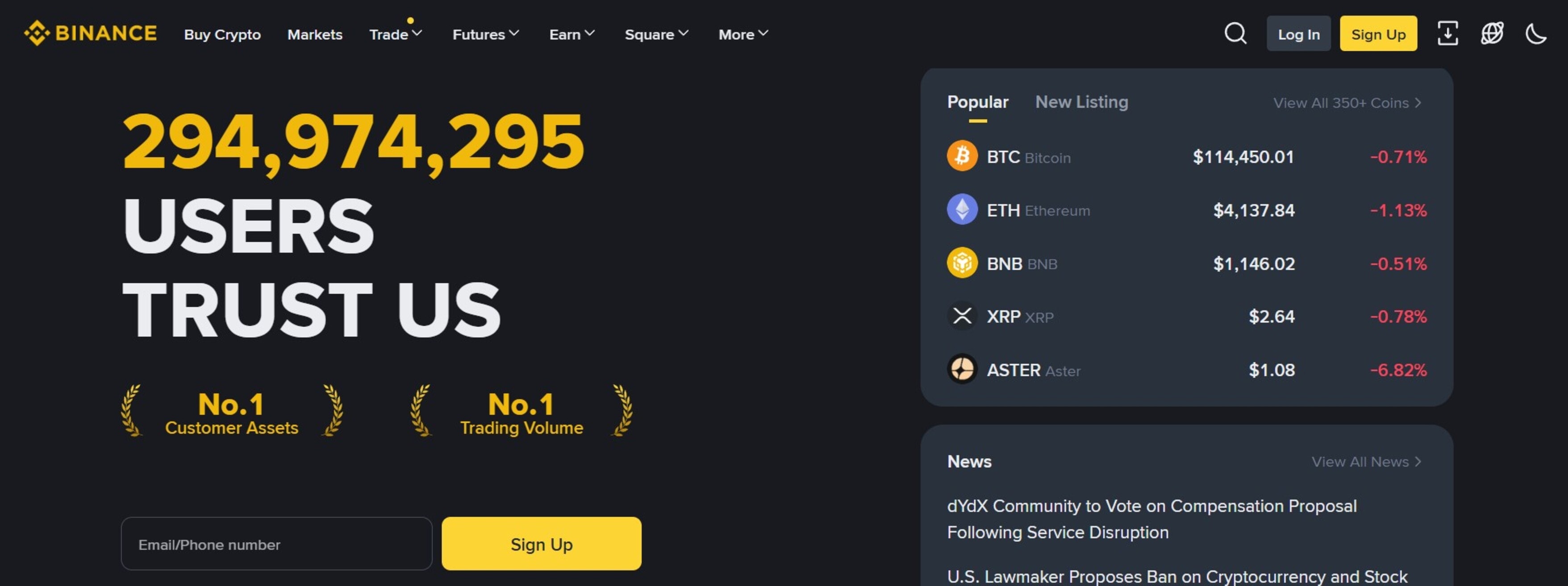
1. Binance – Best for High Liquidity and Trading Volume

Binance - Best for High Liquidity and Trading Volume

Binance, founded in 2017, has grown to become the world’s largest crypto exchange by trading volume. It offers a comprehensive platform with a huge selection of coins and trading pairs, deep liquidity, and very low fees. The crypto exchange caters to both beginners and advanced traders, offering options from simple buys in Lite mode to advanced order types in Pro mode.

Beyond spot trading, Binance supports margin and derivatives trading, including perpetual futures and options, as well as peer-to-peer (P2P) trading and various DeFi earning opportunities.

binance-logo-6219389_1280binance-logo-6219389_1280

Supported Coins and Pairs: 500+ assets and 1,500+ trading pairs.

Key Features:

Low transaction fees with native token (BNB) discounts.Advanced trading tools and APIs.The biggest crypto exchange, offering large trading volume and deep liquidity.Access to staking, lending, Launchpad token sales, and a P2P marketplace.

Security:

Cold wallet storage of most user assets.Proof of Reserves and transparent security audits.$1 billion Binance SAFU (Secure Asset Fund for Users)

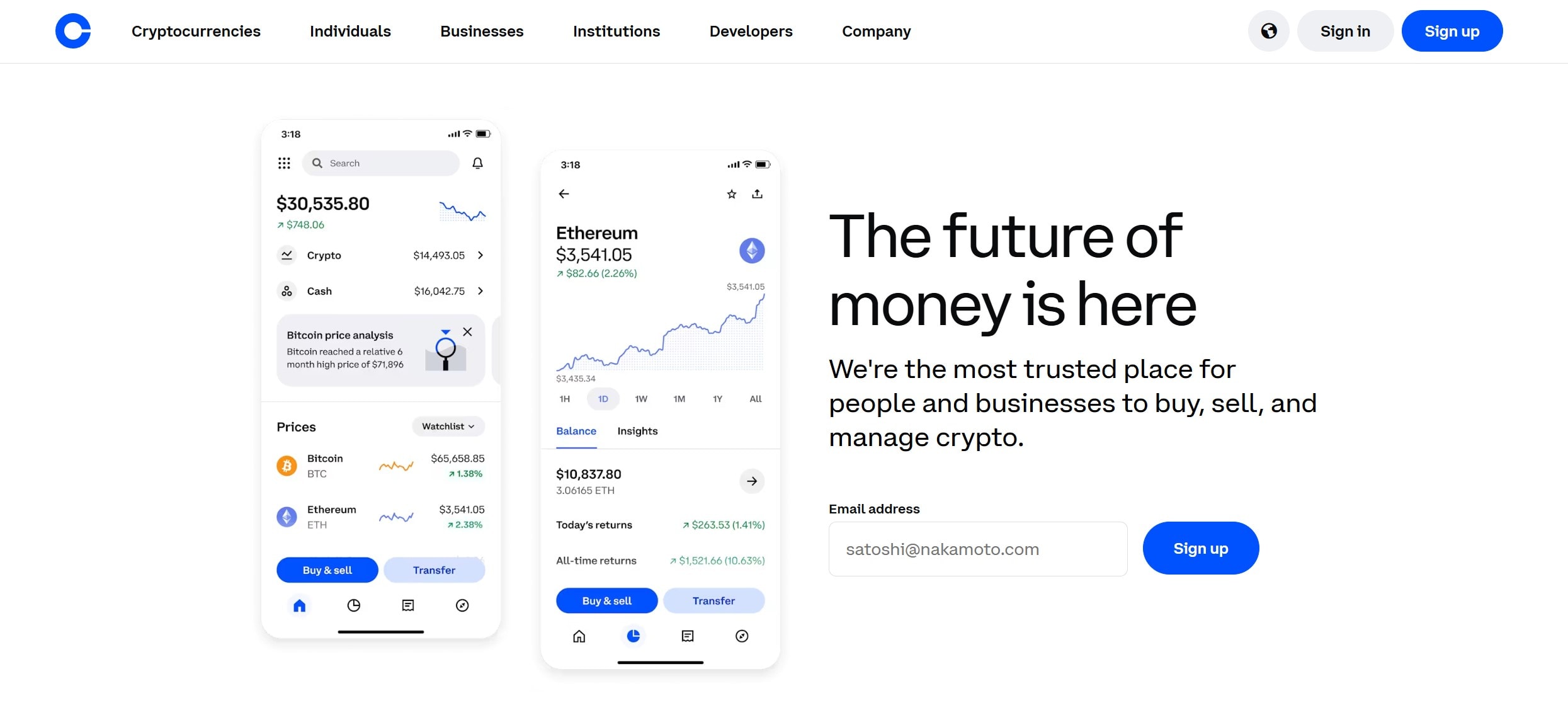
2. Coinbase – Best Crypto Exchange for US Traders

Coinbase - Best Crypto Exchange for US TradersCoinbase - Best Crypto Exchange for US Traders

Coinbase is a US-based cryptocurrency exchange regulated by top financial . It was established in 2012 and is well-known for its user-friendly interface, making it ideal for beginners. Coinbase offers a broad selection of digital assets, with access to over 550 trading pairs and markets, including crypto derivatives.

The platform provides simple buy/sell options, staking, crypto rewards cards, and educational resources through its Coinbase Earn program. Though Coinbase’s trading fees tend to be higher than some competitors, its seamless fiat onramps, insured wallets, cold storage, and compliance make it a popular choice for US-based crypto investors and institutions alike.

coinbasecoinbase

Supported Coins and Pairs: Over 240 supported cryptocurrencies and more than 550 trading pairs and derivative markets.

Key Features:

Beginner-friendly trading interfaces.Coinbase One subscription for no-fee trading.Comprehensive ecosystem including wallet apps, staking, and crypto cards.Educational content with token rewards.

Security:

Industry-leading security protocols, including cold storage of assets.Insurance coverage for digital assets held online.Strong regulatory compliance with US authorities.

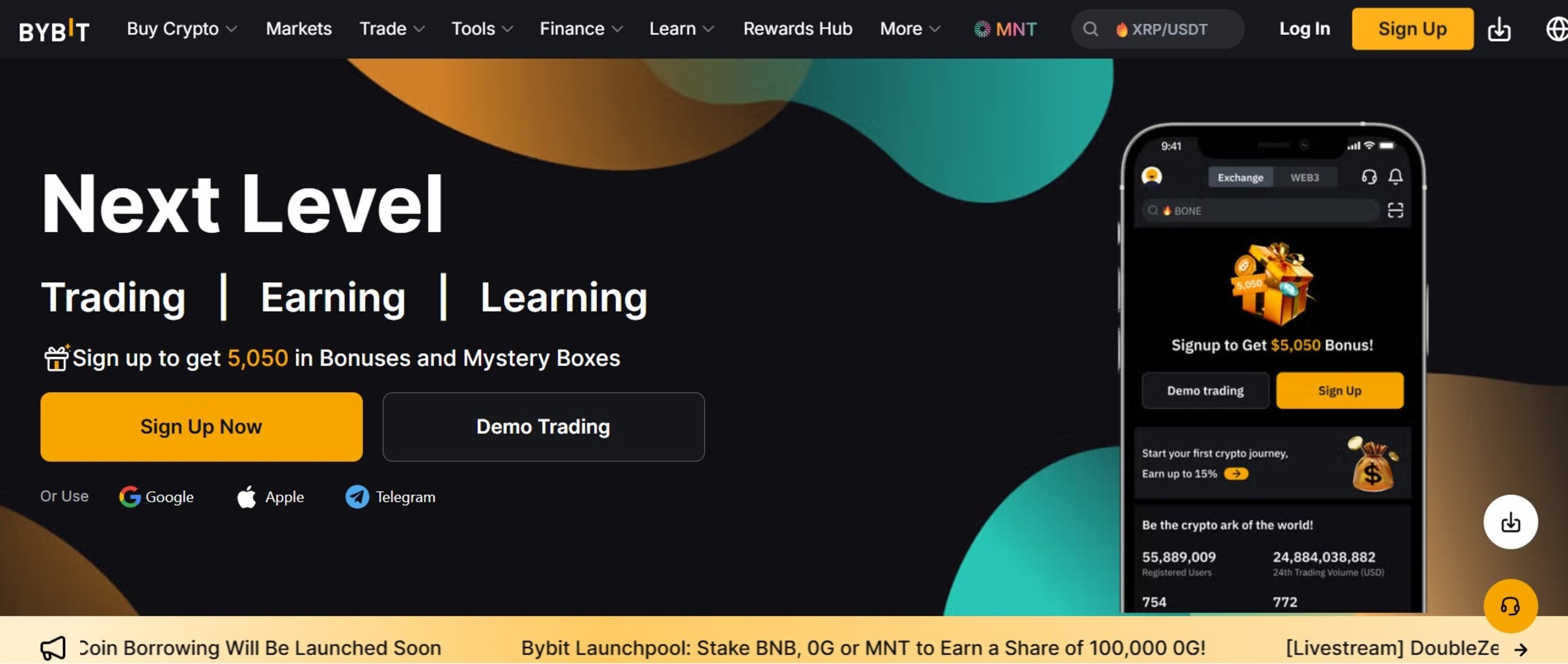
3. Bybit – Best Crypto Exchange for Derivatives Trading

Bybit - Best Crypto Exchange for Derivatives TradingBybit - Best Crypto Exchange for Derivatives Trading

Bybit was founded in 2018 and has established itself as a leading derivatives cryptocurrency exchange. The exchange platform specializes in perpetual contracts and options trading with leverage up to 100x, serving professional traders demanding deep liquidity, fast order matching, and advanced trading tools.

Bybit offers spot trading as well, but its strength lies in derivatives markets, including major altcoins like ETH, SOL, and XRP, as well as a growing list of lesser-known altcoins. The platform is known for its intuitive interface, fast execution speeds, and various automation options.

bybit-logo-whitebybit-logo-white

Supported Coins and Pairs: 700+ coins and 1,200 pairs for spot and derivatives. The crypto exchange also has deep liquidity in perpetual futures and options markets.

Key Features:

Up to 125x leverage on derivatives.Advanced trading tools and API access.Crypto trading bots and automation.Competitive fees and fast execution.

Security:

Proof of Reserves audit.Two-factor authentication.Insurance Fund: Bybit’s insurance fund is a reserve pool that is used to protect traders from excessive losses in Derivatives trading.

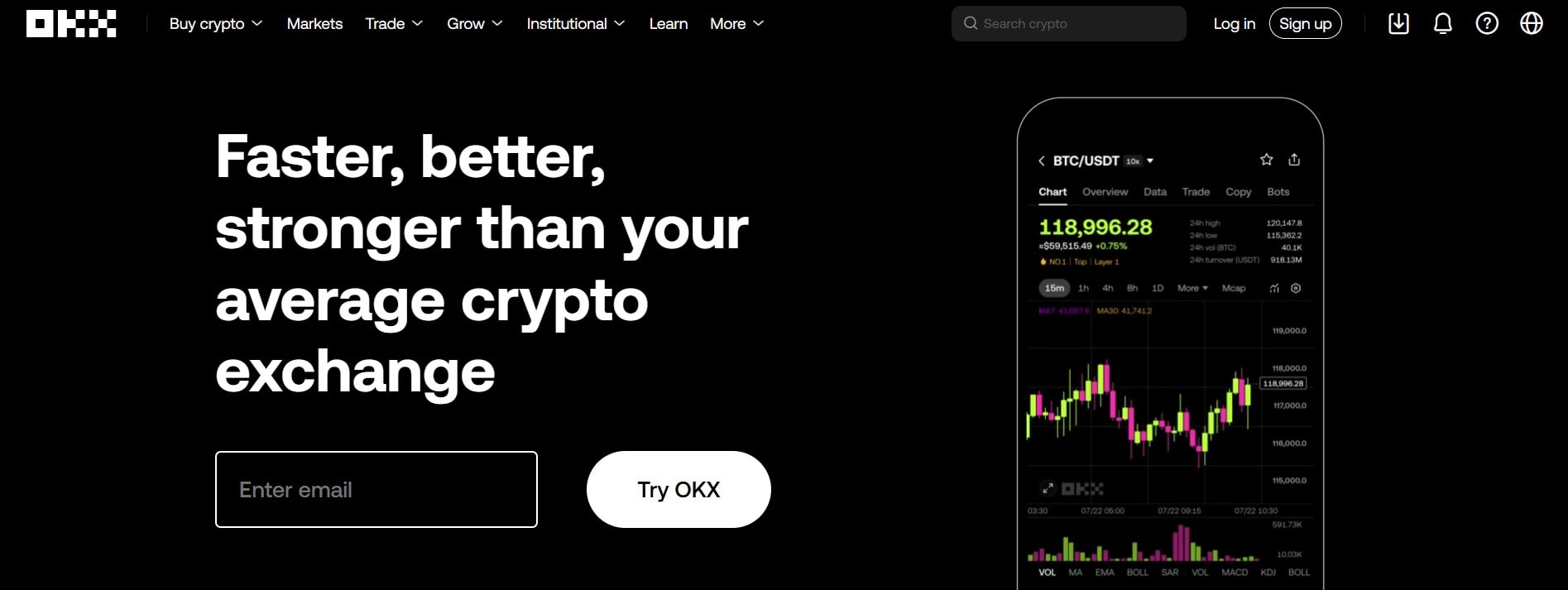
4. OKX – Best Cryptocurrency Exchange for Beginners

OKX - Best Cryptocurrency Exchange for BeginnersOKX - Best Cryptocurrency Exchange for Beginners

OKX was launched in 2017. The crypto exchange offers a wide range of features and a user-friendly interface designed for both beginners and advanced traders. It provides spot trading, futures, perpetual swaps, and options with deep liquidity and customizable margin. Its integration with a Web3 wallet provides users with easy access to DeFi projects, NFTs, and decentralized applications.

OKX offers additional services such as automated trading bots, yield products, and participation in token Launchpads. While OKX is suitable for beginners and seasoned traders, US residents face trading restrictions. Aside from its user-friendly interface, OKX offers low fees and a strong focus on user experience with cross-platform apps.

0710421007104210

Supported Coins and Pairs: Large selection of altcoins (350+ supported coins) and 500+ pairs.

Key Features:

High-speed order matching engine.Yield-generating products through Earn.Automated bot trading.Launchpad for early project access.

Security:

Zero-knowledge proof technology with zk-STARKs.Cold wallet storage.Two-factor authentication.

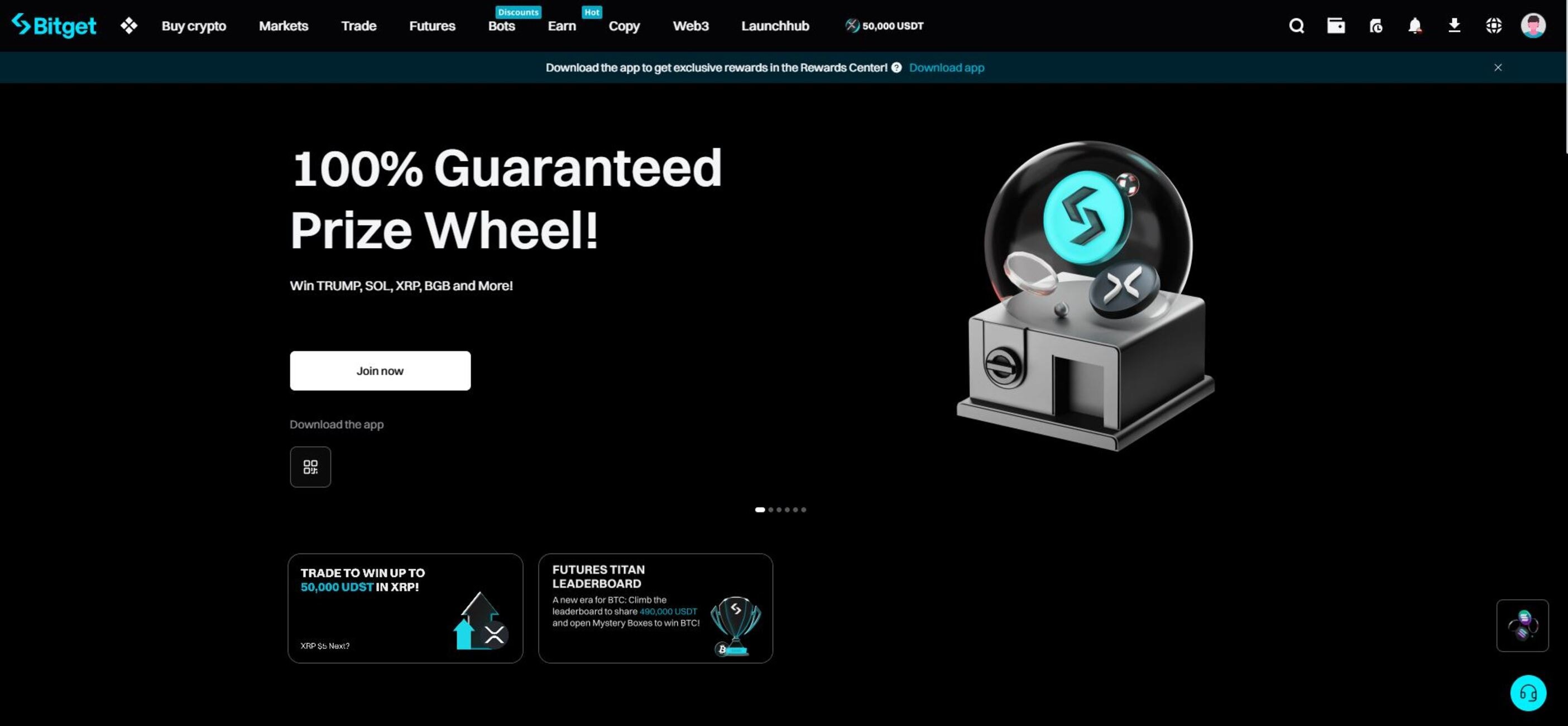
5. Bitget – Best Crypto Exchange for Copy Trading

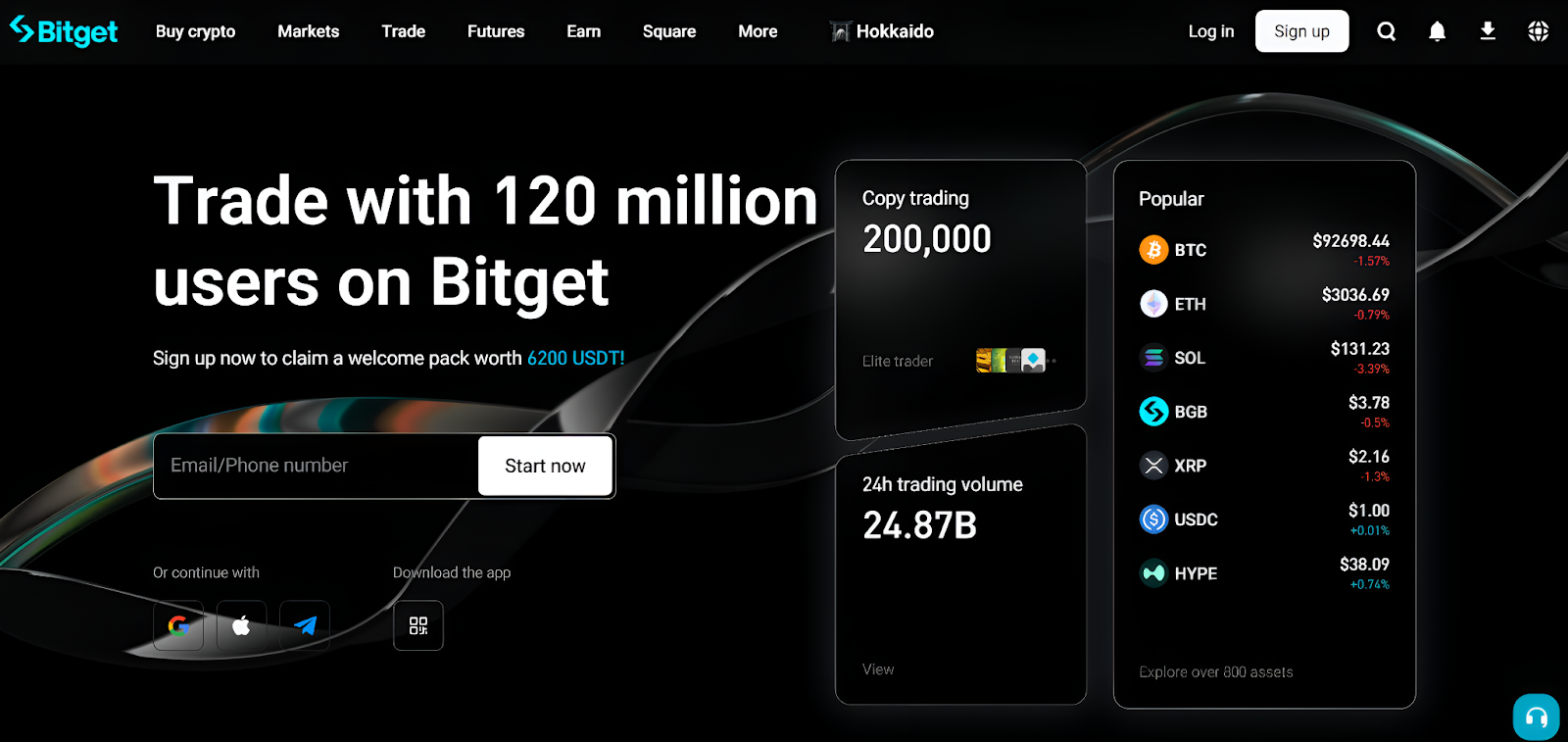
Bitget - Best Crypto Exchange for Copy TradingBitget - Best Crypto Exchange for Copy Trading

Bitget is a popular exchange known for its leading copy trading platform designed for futures and spot markets. The crypto exchange was founded in 2018 and is especially favored by traders interested in social trading, as it allows users to follow and replicate the strategies of more experienced traders.

Bitget supports a wide variety of low-market-cap crypto tokens alongside major cryptocurrencies and offers low fees across spot and futures markets. Its user interface is optimized for mobile devices, and it provides a large protection fund as an added safety layer. Bitget underwent regulatory expansion and offers monthly transparent Proof of Reserves reports, reassuring users of its solvency.

bitget-token-new-bgb-logobitget-token-new-bgb-logo

Bitget Supported Coins and Pairs: 700+ coins and hundreds of trading pairs.

Key Features:

Leading copy trading with commission incentives.Low fees on trading pairs.Extensive customer support.Large Protection Fund exceeding $779 million.Bitget Wallet (non-custodial wallet)

Security:

Monthly Proof of Reserves with transparency.Protection Fund for incident coverage.Licensing in multiple jurisdictions, including Georgia.

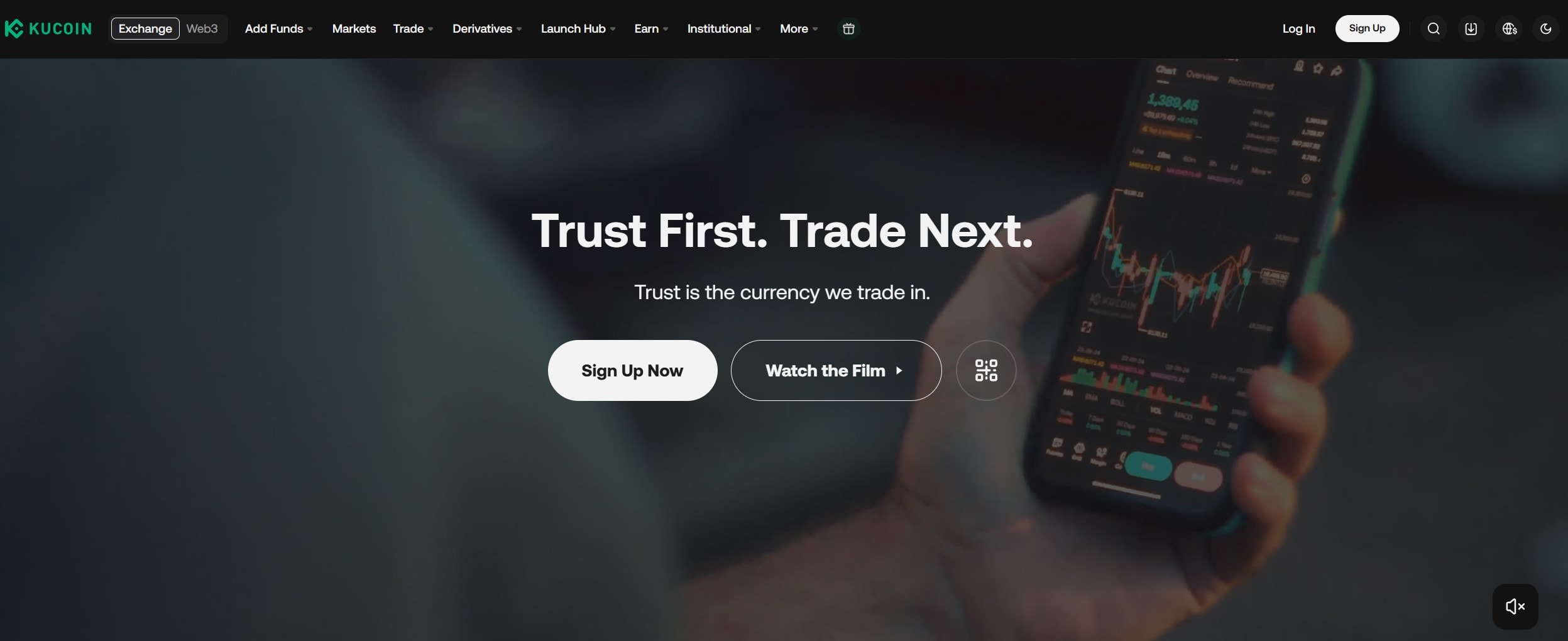
6. KuCoin – Best for Broad Altcoin Access and Low Fees

KuCoin - Best for Broad Altcoin Access and Low FeesKuCoin - Best for Broad Altcoin Access and Low Fees

KuCoin is a global crypto exchange popular for its intuitive design, security, and ease of use. It supports spot trading, futures trading with leverage, margin trading, staking, and lending of cryptocurrencies, offering over 900 digital assets for trading across various markets.

It caters to both beginner and seasoned traders, offering user-friendly interfaces and advanced trading tools, including automated bots. The exchange also has its native token, KuCoin Shares (KCS), and supports multiple fiat currencies, mainly via P2P markets and third-party integrations for credit/debit card purchases.

Kucoin-logoKucoin-logo

Supported Coins and Pairs: 1,000+ coins and 1,200+ trading pairs.

Key Features:

Spot and margin tradingDerivatives contracts (futures and options trading)Staking and lendingAutomated bots.

Security:

Cold storage of user fundsHot wallets with multi-signature techMandatory 2FA for withdrawalsAnti-phishing systems and IP whitelisting

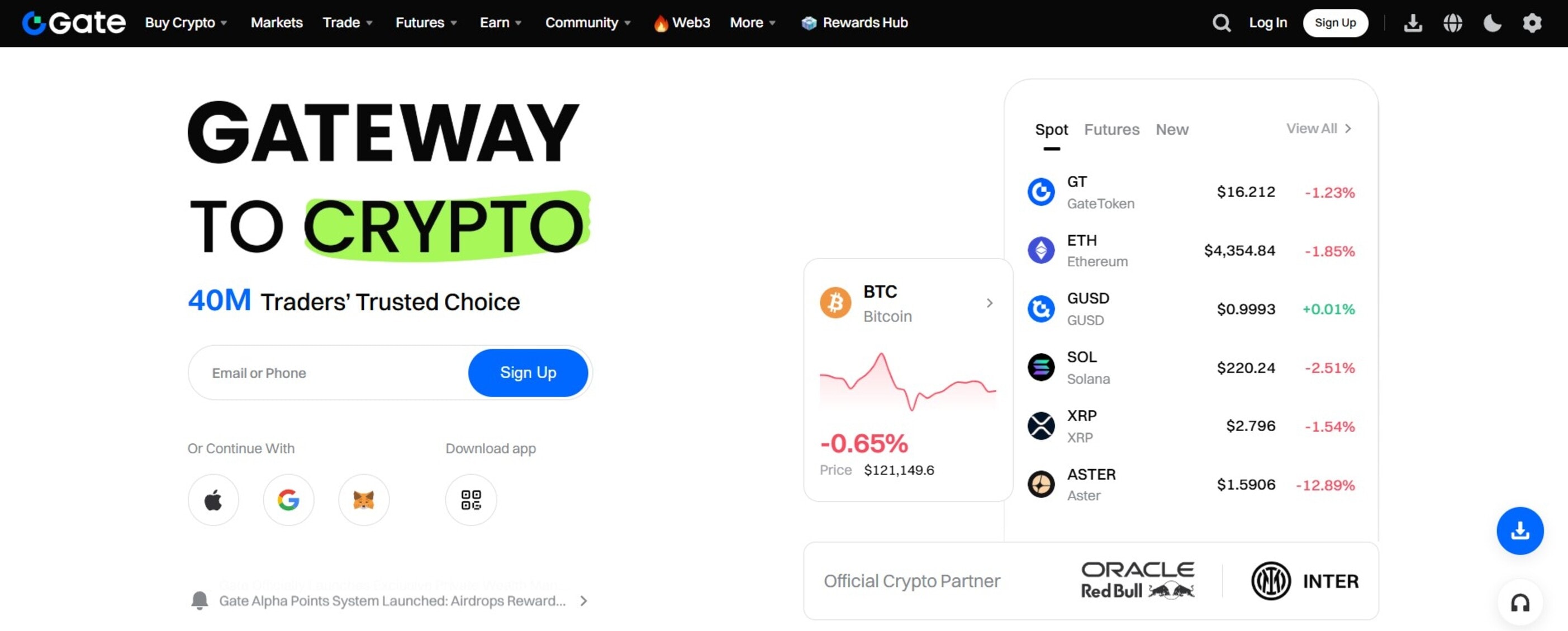
7. Gate.io – Best for Highest Variety and Institutional Futures Trading

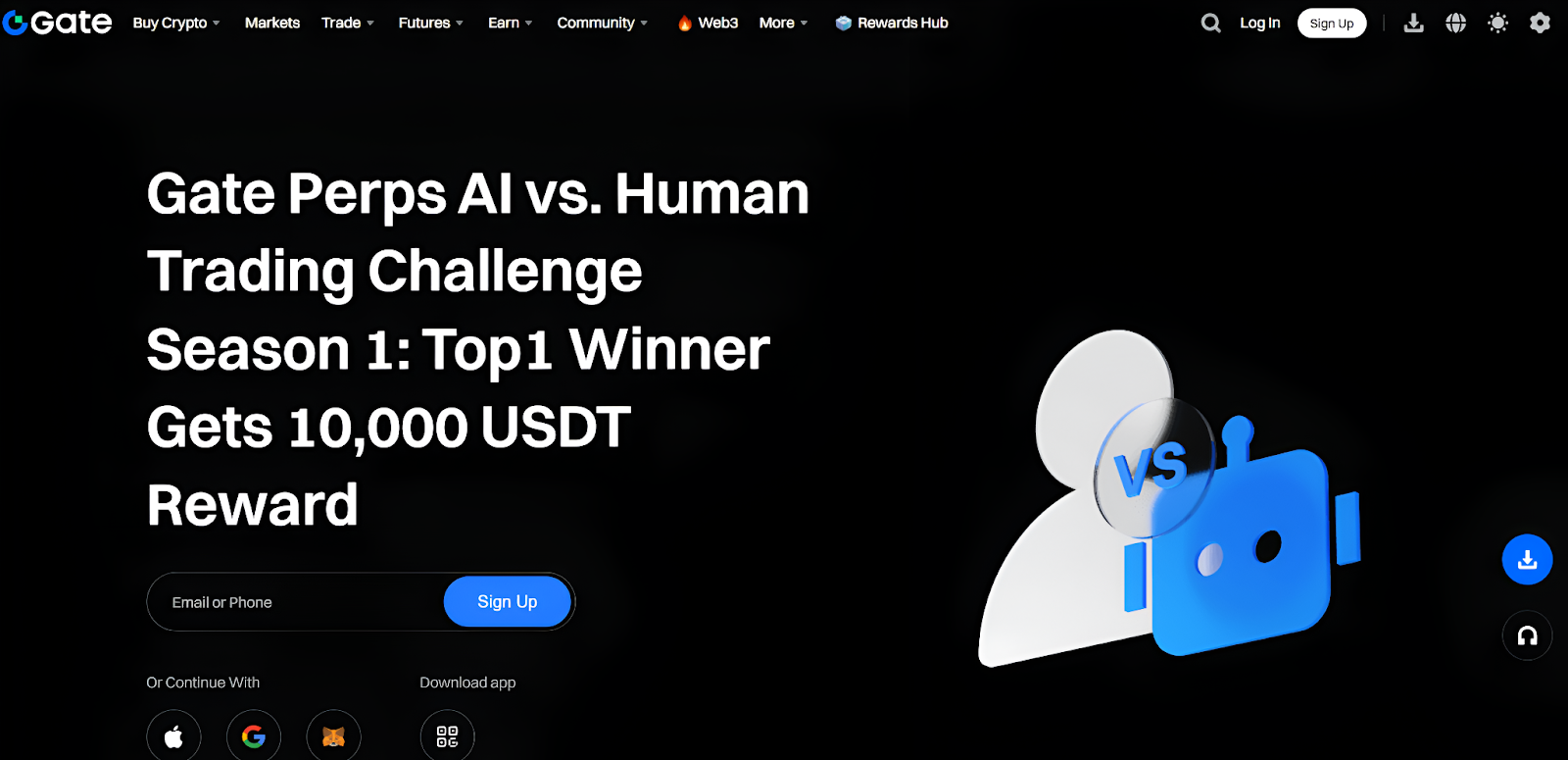
Gate.io - Best for Highest Variety and Institutional Futures TradingGate.io - Best for Highest Variety and Institutional Futures Trading

Gate.io is a global cryptocurrency exchange founded in 2013. It provides a broad range of trading options, including spot trading, margin trading with leverage, futures trading, options, and both manual and automated trading with trading bots.

Gate.io also has its own blockchain ecosystem, GateChain, and a native utility token, GateToken (GT). In addition to trading, Gate offers services like staking, lending, NFT trading and minting, and crypto-based payment solutions (Gate Pay). It also supports a non-custodial, multi-chain Web3 wallet that works with over 100 blockchain networks.

Gate.io_Gate.io_

Supported Coins and Pairs: 2,500+ coins and hundreds of trading pairs.

Key Features:

Spot trading and margin trading with leverage.Futures and options trading.Automated quantitative tradingThe platform provides staking, lending, and an NFT marketplaceMulti-chain crypto wallet integration supporting over 100 blockchains.

Security:

Multi-signature walletsA combination of hot and cold wallets for asset storageContinuous risk monitoring.

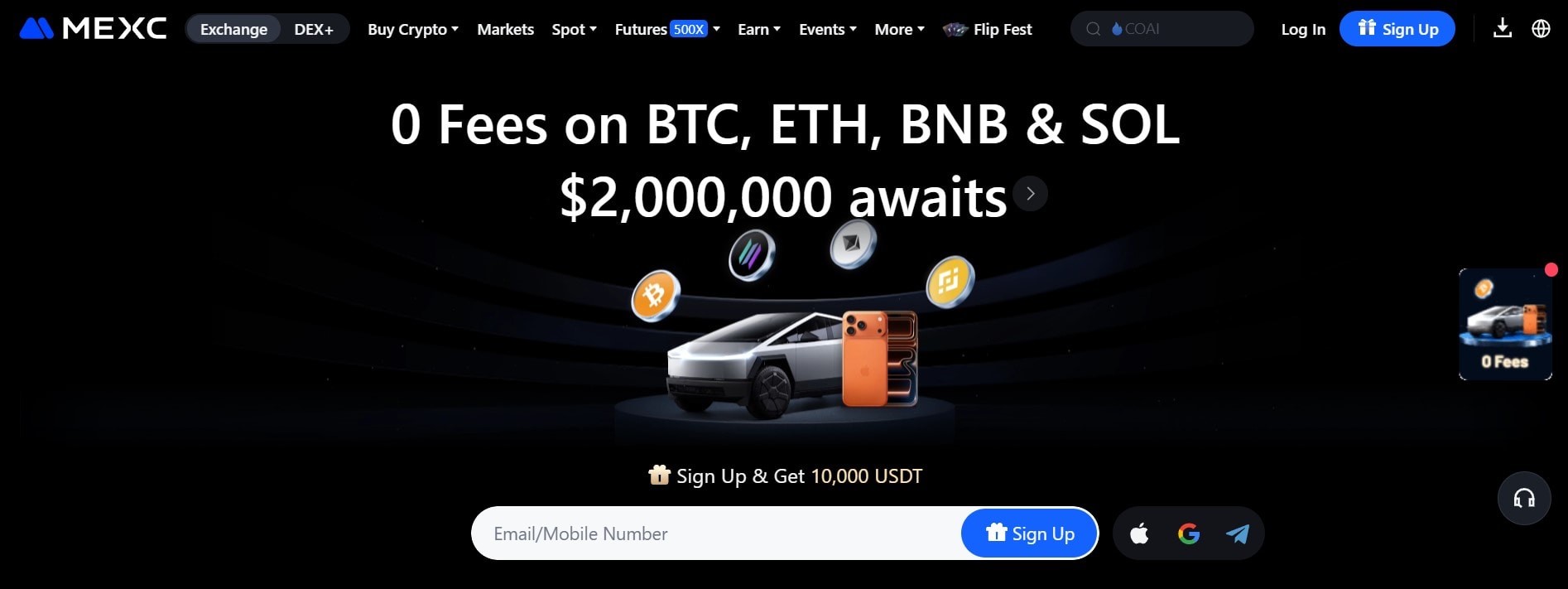
8. MEXC – Overall Best Exchange for Zero-Fee Trading

"</p"</p

MEXC is a high-performance crypto exchange well-regarded for its massive altcoin selection, boasting around 3,500+ coins, including many smaller or emerging projects. The exchange provides advanced trading features, including up to 500x leveraged futures, zero maker fees on spot and futures trading, copy trading, a decentralized exchange (DEX+) integration, and a launchpad for new token sales.

MEXC Exchange was launched in 2018 and currently serves over 40 million users across more than 170 countries. In addition to MEXC’s quick registration process, the exchange is among the best crypto exchanges for zero-fee trading

MEXC_square_logo-removebg-previewMEXC_square_logo-removebg-preview

Supported Coins and Pairs: 3,500+ coins and 1,500+.

Key Features:

Spot and futures markets500x leverageZero maker feesMEXC launchpad and Kickstarter eventsDEX+ integration

Security:

Bi-monthly Proof of Reserves auditsAn insurance fund to cover user losses beyond margin accounts2FA, IP whitelisting, and withdrawal address whitelisting.

9. BingX – Best for Copy Trading and Diverse Asset Offering

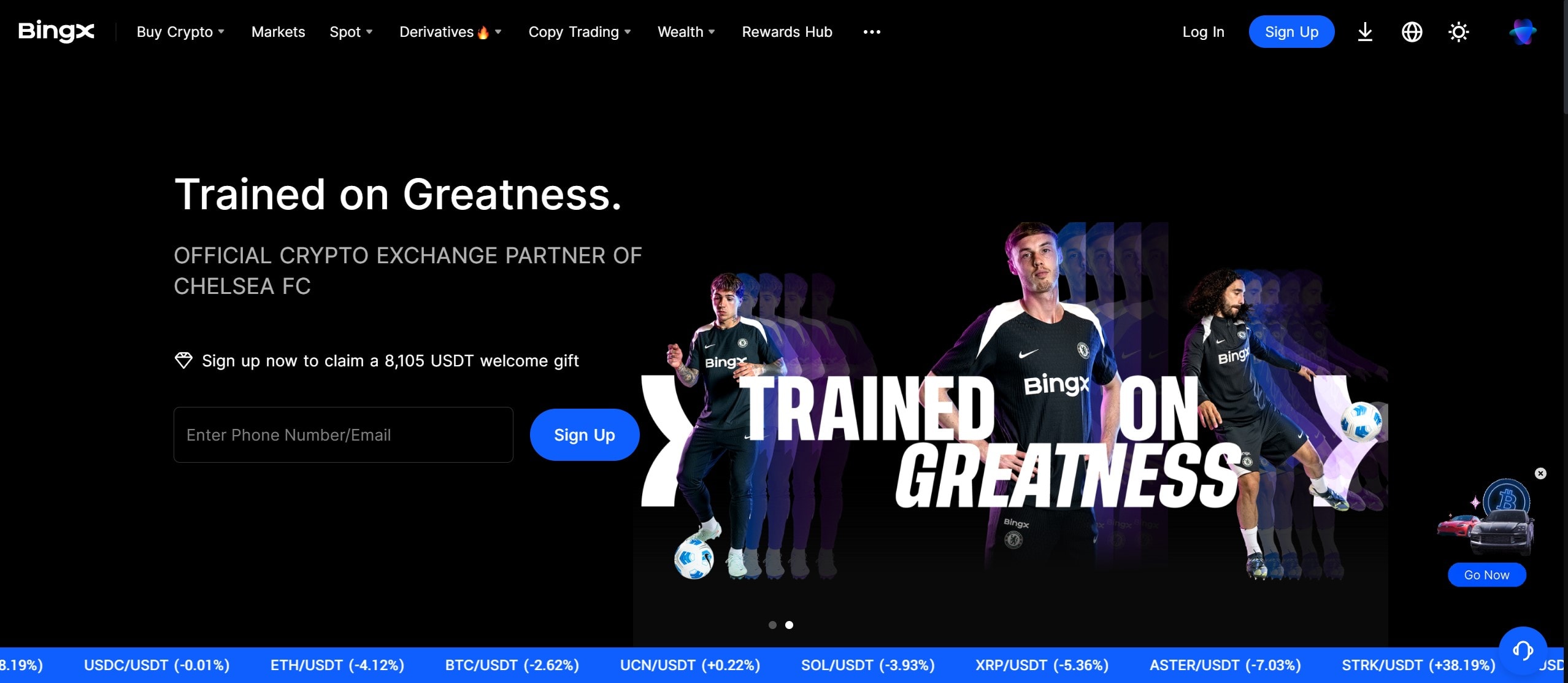
BingX - Best for Copy Trading and Diverse Asset OfferingBingX - Best for Copy Trading and Diverse Asset Offering

BingX is a centralized cryptocurrency exchange launched in 2018, known for its comprehensive suite of trading services, including spot trading, futures trading with up to 125x leverage, and a strong focus on copy trading, allowing users to replicate strategies of experienced crypto traders automatically.

The exchange supports over 750 cryptocurrencies and trading pairs. It offers user-friendly features such as a simplified futures interface called “Futures Kick-Off,” real-time market data, advanced risk management tools, and a demo trading option.

2023-crypto-exchange-bingx-new-logo-design2023-crypto-exchange-bingx-new-logo-design

Supported Coins and Pairs: 750+ coins and a wide variety of trading pairs across spot trading, futures, and derivatives markets.

Key Features:

Social and copy tradingFutures trading with up to 125x leverageUser-friendly interface catering to beginners and professionalsDemo trading for practiceCrypto debit card for spending digital assets.

Security:

Bank-grade custody solutionsInsurance funds to cover user losses beyond users’ margin accountsRegular security audits

10. HTX (Huobi) – Best for Advanced Trading Features and Community Governance

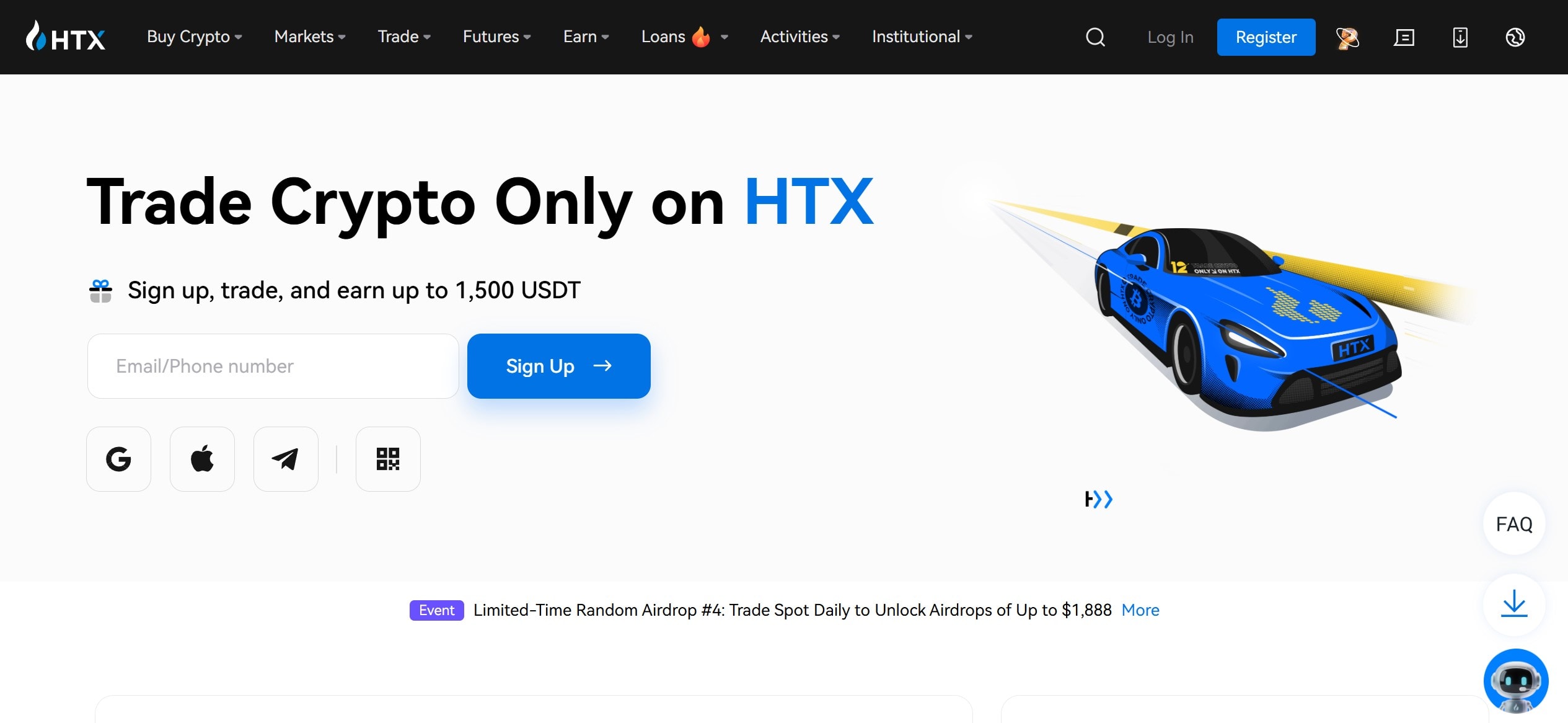
HTX (Huobi) - Best for Advanced Trading Features and Community GovernanceHTX (Huobi) - Best for Advanced Trading Features and Community Governance

HTX, formerly known as Huobi, is a prominent global crypto exchange founded in 2013. It originated in China and has since expanded operations globally with offices in Hong Kong, South Korea, Japan, and other locations. HTX was rebranded from Huobi in 2023 and is now headquartered in Seychelles.

The exchange has a native token, HTX (formerly Huobi Token or HT), which offers benefits such as discounted trading fees, voting rights for governance, access to exclusive promotions, and rewards through seasonal buybacks.

HTXHTX

Supported Coins and Pairs: 700+ coins and over 400 trading pairs.

Key Features:

Spot trading and margin trading with leverageAlgorithmic trading toolsCrypto lending and stakingManaged sub-accountsOn-chain DAO voting mechanism for governance

Security:

Two-factor authenticationCold and hot wallet segregationInsurance fundsReal-time risk monitoring

What Is an Altcoin Exchange?

An altcoin exchange is a cryptocurrency trading platform where users can buy, sell, and trade altcoins, which are cryptocurrencies other than Bitcoin. These exchanges support trading in major digital assets like Ethereum (ETH), Solana (SOL), Ethereum Classic (ETC), and XRP, as well as other altcoins, including memecoins and stablecoin pairs.

Types of Altcoin Exchanges

Centralized Exchanges (CEXs)

Centralized exchanges are cryptocurrency trading platforms operated by a single company or entity that acts as an intermediary between buyers and sellers. Users deposit their funds into individual accounts held by the crypto exchange, which acts as a custodian and facilitates transactions via an order-book system similar to traditional stock exchanges.

Since the exchange holds users’ funds, there is a need to trust the platform’s security and fairness, even though these exchanges are more susceptible to hacking attempts than decentralized exchanges. Some examples of centralized exchanges are MEXC, Binance, Coinbase, and KuCoin.

Decentralized Exchanges (DEXs)

A decentralized exchange (DEX) is a peer-to-peer marketplace where users trade crypto directly with each other, without a central intermediary or custodian. Instead of relying on a company or centralized entity to hold and manage funds, DEXs operate through blockchain-based smart contracts that automatically execute trades and record transactions on the blockchain.

This non-custodial approach means users maintain control of their private keys and funds throughout the trading process. Popular examples of DEXs include Uniswap, PancakeSwap, MetaMask, and SushiSwap.

Hybrid Exchanges (HEXs)

Hybrid exchanges (HEXs) are crypto trading platforms that combine features from both centralized exchanges and decentralized exchanges to offer an optimized trading experience. They combine the speed, liquidity, and user-friendly interfaces of centralized exchanges with the security, privacy, and non-custodial control of DEXs.

These exchanges use a CEX, a fast order-matching engine to ensure quick and efficient trade execution, while settlement and custody of funds occur on a blockchain via smart contracts, allowing users to retain control over their private keys and assets.

Popular examples of HEXs include Qurrex and Nash Exchange. Other platforms, such as Binance, Huobi Global, and Coinbase, are considered “hybrid” due to their integration of both CEX features and decentralized/non-custodial wallet solutions.

Other Variations

Peer-to-Peer (P2P) Exchanges: These platforms connect buyers and sellers but do not hold funds in a custodial manner.Crypto Derivatives Exchanges: Platforms that focus on the trading of derivatives like futures and options based on cryptocurrencies.Over-the-Counter (OTC): Exchanges designed for large-volume trades that are not placed on the public market to avoid price slippage.

Why Altcoins Matter in Crypto Trading

Altcoins matter in crypto trading for several important reasons:

New Use Cases: Altcoins often introduce new functionalities, technologies, and use cases, such as decentralized finance (DeFi), privacy features, governance tokens, and play-to-earn gaming tokens. For instance, ETH enables DeFi, NFTs, smart contracts, dApps, asset tokenization, and cross-border payments. Another, SOL is a fast, low-cost blockchain ideal for scalable DeFi applications, NFT marketplaces, Web3 apps, gaming, and micropayments.Higher Volatility and Trading Opportunities: Altcoins have lower market caps and lower liquidity than Bitcoin, often leading to greater price volatility. This volatility creates more frequent price swings that can be exploited by traders for short-term gains and day trading strategies. Many crypto traders are attracted to altcoins precisely for their higher potential returns, despite the increased risk.​Portfolio Diversification: Including altcoins helps crypto investors diversify their holdings. This can reduce portfolio risk and position investors to capitalize on trends and innovations in various blockchain projects.

Factors to Consider When Choosing an Exchange

When choosing a crypto exchange, consider these key factors to ensure security, usability, and suitability for your trading needs:

Security: Look for exchanges with strong security measures such as 2FA, cold storage of funds, insurance policies, regulatory compliance, and a history free of major hacks. Many exchanges have been hacked at some point, so focus on how the company responded and whether victims were reimbursed.Fees and Costs: Compare trading, withdrawal, and deposit fees, as well as any hidden charges. Lower fees can improve your profit margin, especially if you are an active trader.Supported Assets and Trading Pairs: Ensure the exchange offers the cryptocurrencies and trading pairs you want to access, including altcoins and stablecoins.Liquidity and Volume: Deep liquidity and high daily trading volume allow faster order execution and tighter spreads, reducing slippage and improving the prices of your trades.User Experience and Interface: Intuitive design, ease of navigation, and the availability of advanced features such as charting tools, margin trading, and mobile accessibility are also important factors to consider.Customer Support: Responsive and effective customer service can help resolve issues quickly, which is critical when dealing with financial assets.Deposit and Withdrawal Options: Check available payment methods (bank transfers, credit cards, crypto deposits), withdrawal limits, and processing times.Additional Features: Finally, check the exchange’s additional features, especially if you want to do more than simply buy and sell. Some exchanges offer copy trading, staking, lending, futures and options trading, integrated crypto wallets, and more.

How to Buy Altcoins on an Exchange (Step-by-Step)

Here is a step-by-step guide on how to buy altcoins:

Choose a Reliable Exchange: Select a reputable crypto exchange that supports the altcoin you want to buy (e.g., Binance, Coinbase, Kraken). You can even compare two or more exchanges side-by-side, like we did with this comprehensive MEXC vs KuCoin comparison.Create and Verify Your Account: Register on the exchange and complete any required KYC (identity verification) to comply with regulations.Deposit Funds: Add funds to your account in fiat currencies like USD or EUR via bank transfer or credit/debit card, or deposit cryptocurrencies such as stablecoins (USDT, USDC) or other altcoins.Select the Altcoin to Buy: If you bought USDT/USDC, navigate to the trading section, find your desired altcoin trading pair (e.g., ETH/USD or BTC/SOL), and decide how much you want to purchase.Choose Order Type: Select a market order to buy instantly at the current price or a limit order to buy at a specific price when it is reached. Confirm your order details and complete the purchase.

How to Trade Altcoins Effectively

Here are the key steps to trade altcoins successfully:

Do Your Own Research (DYOR): Understand the altcoin’s technology, team, use case, market potential, and community support. Monitor news, reliable news sites, and online sources, especially on Twitter (X) and crypto Telegram channels, as well as on-chain data for signals.Technical Analysis (TA): Use chart patterns, volume, indicators like RSI, MACD, and moving averages to time entries and exits. Altcoins can be volatile, so invest only what you are willing to lose and set risk controls, such as clear price targets, take profits, and stop losses.Choose the Right Exchange: Trade on exchanges with strong liquidity, reasonable fees, and the assets you need to avoid slippage and delays. To find top exchanges, check crypto exchange rankings on reliable CEX and DEX tracking sites.Stay Updated and  Avoid FOMO: Crypto markets react quickly to sentiment and regulatory news. Stay connected through social media, forums, and crypto news outlets. Also, do not chase pumps or panic sell during dips. Stick to your plan and trade rationally.

Finally, use hardware or secure software wallets to protect your investments, especially if you’re holding for the long term.

Conclusion

The best altcoin trading platforms right now are Binance, Coinbase, Bybit, OKX, Bitget, KuCoin, Gate, MEXC, BingX, and HTX (Huobi). These crypto exchanges offer crypto investors tools to buy, sell, hold, and trade thousands of cryptocurrencies beyond Bitcoin. In addition to these tools, they also implement robust security measures and offer competitive fee trading to help traders make the most of their investments.

FAQs

What is the Most Trusted Altcoin Exchange?

Binance is widely regarded as one of the most trusted altcoin exchanges due to its high liquidity, extensive asset listings, regulatory compliance in various regions, robust security features, and a large global user base. Coinbase is also trusted for its regulatory compliance and user-friendly interface, but supports fewer altcoins than Binance.

How do I Trade Altcoins as a Beginner?

Start by choosing a reputable exchange, such as any of the platforms listed in this article. Then learn the basics of order types (market and limit) and invest small amounts initially to practice. If the exchange you opt for offers demo trading, it is advisable to start from there, as they are simulated environments funded to help crypto traders master their strategy before investing real money.

What is the Safest Place to Buy Altcoins?

Centralized exchanges with strong security features, regulatory compliance, insurance policies, and track records are considered among the safest. DEXs are also often considered safer than CEXs, so you can trade on CEXs and then move your funds to a DEX or a hardware wallet for long-term storage.

Which Altcoin Exchange has the Lowest Fees?

MEXC has some of the lowest trading fees in the industry. It offers zero-fee trading on most pairs, and on fee-charging pairs, you can reduce costs by holding their native MX token. KuCoin and Bitget also offer competitive low fees for altcoin trading.


Source link

Bitget Vs Gate.io: Which Crypto Exchange Is Better for 2025? – NFT Plazas

0
Bitget Vs Gate.io: Which Crypto Exchange Is Better for 2025? – NFT Plazas


Are you unsure which exchange between Bitget Vs Gate can boost your crypto trading journey? As both platforms enjoy massive popularity among cryptocurrency enthusiasts and offer cutting-edge features, making an appropriate choice is daunting.

Our Bitget Vs Gate comparison guide provides deeper insights into how the two exchanges stack up against each other. We have compared their features, offerings, trading fee structures, security measures, and more to help you make an informed decision.

bitget-token-new-bgb-logo
Gate.io_Gate.io_

Bitget vs Gate Exchange Comparison: Overview

MetricsBitgetGate.ioYear of Launch20182013Worldwide user base120M+44M+Global presence150+ countries165+ countriesPlatform’s native tokenBitget token (BGB)GateToken (GT)Listed crypto assets665+4,000+Trading pairs760+2,584+Trading optionsSpot, peer-to-peer (P2P), on-chain, margin, block, futures, pre-market, over-the-counter (OTC), non-fungible token (NFT), bot, and copy trading.Spot, P2P, pre-market, margin, block, OTC, derivatives, NFT, alpha, bot, demo, and copy trading.Staking servicesSimple Earn, On-chain Earn, Structured Earn, and Crypto Loans.Simple Earn, Auto Invest, Dual Investment, Soft Staking, Crypto Loans, proof-of-stake (PoS) products, BTC Staking, and GUSD Minting.Payment options100+ payment methods, including bank transfers, credit/debit cards, Google/Apple Pay, and third-party providers like Utoppia and Skrill.400+ payment methods, including credit/debit card, Apple/Google/Samsung Pay, bank transfers, and third-party services like Banxa and Mercuryo.SecurityProtection fund, proof-of-reserves, anti-phishing code, two-factor authentication, withdrawal whitelists, and cold storage.Threat detector, AI-powered web application firewall, DDoS protection, hot and cold wallets, proof-of-reserves, hardware keys, and Secure Asset Fund (SAFU).LicensesRegulatory licenses in many countries, such as the UK, Australia, Italy, Poland, Bulgaria, and Lithuania.Regulatory approvals in Hong Kong, Gibraltar, Malta, Italy, Australia, Lithuania, Dubai, the Bahamas, Japan, and Cyprus.Mobile applicationAndroid and iOSAndroid and iOSCustomer support options24/7 live chat, email, and Help Center.24/7 live chat, email, and Help Center.

What is Bitget?

What is Bitget?What is Bitget?

Bitget is a leading cryptocurrency exchange and the largest copy trading platform founded by early adopters of blockchain technology. It aims to foster financial inclusion and encourage users to make intelligent investment decisions by embracing cryptocurrencies. Its responsive user interface, sophisticated features, advanced trading tools, and institutional services make it conducive for individuals and businesses alike.

Pros

Cons

Best crypto exchange for copy trading.User-friendly interface.Competitive fees.Multiple staking and trading options.Provides early access to new tokens of upcoming projects via Launchhub.Robust security measures, including an insurance fund worth $604M.Comprehensive learning resources.Customizable bots for automating trades.Beginner-friendly.24/7 customer assistance.No phone support.Fewer trading pairs, referral benefits, and supported payment methods.Inaccessible in multiple locations, including the US, Singapore, and Hong Kong.Doesn’t offer leveraged tokens and standard crypto option contracts.

Bitget’s standout features:

Stock futures: If you want to trade an index of real-world asset tokens from multiple issuers, stock futures are your best bet. They’re USDT-settled, eliminating forex-related challenges and the need for multi-currency accounts. Copy trading: Bitget is the go-to crypto exchange for social trading. This feature enables you to replicate the trading strategies of experts in a single click. Currently, the platform has over 200,000 elite traders, including TraderPro-certified investors. Besides, you’re entitled to a 30% profit share if you become an elite bot trader.Launchhub: It is an excellent platform for traders seeking early access to trending tokens and high-quality blockchain projects. It helps you unravel new tokens and airdrops through pre-market trading, premium project subscriptions, and cryptocurrency staking. Launchhub services include Launchpad, LaunchX, Launchpool, PoolX, CandyBomb, on-chain airdrops, and Deposit-to-list.

bitget-token-new-bgb-logobitget-token-new-bgb-logo

What is Gate.io?

What is Gate.io?What is Gate.io?

Gate.io, rebranded as Gate.com, is the pioneer cryptocurrency exchange to commit to 100% reserve holdings. It regularly ranks among the top 2 exchanges for spot transactions and the top 3 for competitive strength. It also features in the top 4 platforms by trading volumes, liquidity, and total reserve value. Its ecosystem encompasses the Gate exchange, Gate Layer, Gate Perp DEX, Gate Fun, Gate Alpha, and Gate Web3. 

Overall, Gate.io is recognized for its comprehensive security measures, low trading fees, and diverse range of wealth management products.

Pros

Cons

Best crypto exchange for trading derivatives.Supports more trading pairs and cryptocurrencies.Competitive fees.Innovative staking products and extensive trading options.Strong security measures, including 100% reserves and a SAFU worth $500 million.Premium services for VIP and high-volume traders.Sophisticated trading interface with a powerful matching engine, advanced charting tools, and technical indicators.Exclusive DEX for perpetual contracts.Dedicated no-code platform for creating, launching, and circulating memecoins.No customer support through phone.Unavailable in various jurisdictions, including the US, Canada, and Mainland China.Supports fewer fiat currencies.The mobile interface is not user-friendly.

Gate’s standout features:

ETF leveraged tokens: It is a new type of crypto derivative that magnifies the price movements of the underlying coins through perpetual futures contracts. Due to the built-in leverage (3x-5x), you can amplify your gains without worrying about margins or liquidation risk. Unified account: Gate offers a unified account to help you explore classic spot, single-currency margin, multi-currency margin, and portfolio margin modes effortlessly. It serves as a one-stop destination for different trading types, eliminating the need for frequent fund transfers between multiple accounts.Earn: Gate provides numerous passive income-yielding products that enable you to stake idle crypto assets and earn rewards. These include Simple Earn (fixed and flexible terms), DCA auto-invest bot, and dual investment. 

The platform also facilitates soft staking, where you receive rewards based on daily average holdings in spot and futures accounts. Additionally, you can earn up to 10% APR through BTC staking and mint GUSD by depositing USDT/USDC. You can also win staking rewards by depositing your assets on top-notch proof-of-stake blockchains.

Lastly, you can borrow other coins at competitive interest rates by using your crypto holdings as collateral. These cryptocurrency loans entail zero fees and offer flexible terms.

Gate.io_Gate.io_

Bitget vs Gate: Trading Features

Trading featureBitgetGate.ioSpotYesYesDerivativesYesYesFutures Kickoff and demo tradingYesYesPre-marketYesYesConvertYesYesP2PYesYesOTCYesYesDEXYesYesNFT marketplaceYesYesLaunchpadYesYesLaunchpoolYesYesBot tradingYesYesCopy tradingYesYesAlpha tradingNoYesMargin tradingYesYesBlock tradingYesYes

Bitget vs Gate: Platform Products and Services

Bitget

Spot and futures: On the Bitget exchange, users can trade 760+ spot pairs and 787+ futures pairs. It offers USDT-M, USDC-M, and coin-M perpetuals as well as coin-settled delivery futures. You can also get up to 125x leverage on some futures pairs.Bot marketplace: Bitget provides pre-programmed bots to help you execute trades and clock profits even during volatile market conditions. These include grid, position grid, martingale, auto-invest, CTA, smart portfolio, funding rate arbitrage, custodial, and signal bots. Staking products: Bitget offers a diverse range of passive income-generating products through its Earn platform. If you’re looking for principal-guaranteed offerings, you can opt for Simple Earn (Fixed and Flexible), Shark Fin, and On-chain Earn. Those who are seeking non-capital-guaranteed options can choose Dual Investment. Moreover, HodlerYield enables you to earn high APRs by simply holding interest-bearing tokens in your trading account.Crypto loans: These are overcollateralized loans that help traders borrow cryptocurrencies at competitive interest rates by pledging eligible tokens. Bitget offers both fixed-term (7 – 30 days) and flexible-term loans. For VIP and high-volume traders, Bitget offers premium loans with customizable repayment terms and low interest rates. 

Gate.io

Spot and derivatives: Gate io supports 2,584+ spot pairs and 770+ futures pairs. For derivative lovers, Gate facilitates trading in USDT and BTC-settled perpetual contracts and European vanilla options. You can also utilize up to 125x leverage for certain futures trading pairs. Additionally, the platform offers ETF leveraged tokens that can be traded like spot assets. Mirror trading: Gate enables you to engage in spot, futures, and bot copy trading. You can choose lead traders based on various metrics like highest profits, largest AUM, balanced Sharpe ratio, stable RoI, etc. If you’re approved as a master trader, you’ll enjoy a 31% profit-sharing from copiers.Smart bots: If you’re an algorithmic trader seeking automated tools tailored to bull, bear, and sideways markets, you’ll find Gate’s bots useful. The exchange provides customizable, AI-powered, backtested, auto-invest, rebalance, grid, arbitrage, and CTA-expert bots.Launch: Gate provides early access to promising crypto projects via its Launchpad. It also allows you to stake eligible cryptocurrencies through its Launchpool and win new tokens. Besides, you can receive free airdrops by collecting candies (CandyBomb), GT (HODLer airdrops), alpha points (on-chain trading), and futures points. Learn: Gate publishes featured courses, explainer articles, research reports, and an extensive glossary for beginner, intermediate, and advanced traders.

Gate.io vs Bitget: Trading Fee Structures

DescriptionBitget feesGate.io feesSpot trading0.1% maker and taker0.1% maker and takerFutures trading0.02% maker, 0.06% takerUSDT perp: 0.02% maker, 0.05% takerBTC perp: 0.015% maker, 0.05% takerUSDT delivery: 0.015% maker, 0.016% takerOptions tradingBTC/ETH options: 0.03% maker and takerOther coins: 0.02% maker, 0.05% takerAlpha trading0.8%Trading fee rebates20% on spot fees for BGB holders.10% on spot fees for GT holders.Deposit feesFreeFreeWithdrawal feesWithdrawal fees vary based on the chosen cryptocurrency and network. Withdrawal fees vary based on the chosen cryptocurrency and network. 

Gate.io vs Bitget: Coins Supported, Liquidity, Trading Volume

ParticularsGate.ioBitgetSupported tokens4,000+665+Spot trading pairs2,584+760+Perpetual and futures trading pairs770+787+Fiat currencies supported60+140+Liquidity levelComprehensiveComprehensiveTrading volumesAmong the top 5 centralized crypto exchanges in the world.Among the top 10 centralized crypto exchanges in the world.

Bitget vs Gate: Security Comparison

Bitget Security Measures

Proof-of-reserves (PoR): Bitget publishes its Merkle tree PoR, reserve ratio, and platform reserves monthly to ensure complete transparency. Currently, the exchange holds over 100% of customer assets in Bitcoin, Ethereum, and stablecoins.Insurance fund: Bitget has set up a protection fund that acts as a safety net for users against cyber threats. It compensates users who have incurred losses due to fund thefts, hacks, or events that aren’t triggered by their own actions. The fund is currently valued at $604 million. Additional security: To protect customer accounts from unauthorized access, Bitget has implemented robust measures like two-factor authentication, withdrawal address whitelisting, and anti-phishing code. It also stores the majority of user assets in multi-signature cold storage.

Gate.io Security Measures

100% reserves: Gate maintains Merkle Tree PoR, which is publicly accessible and verifiable. It ensures that the total number of tokens managed by the platform always exceeds the aggregate balance of user accounts.SAFU: To provide an extra security layer for user assets, Gate has set up a protection fund. It is currently worth $500 million and is funded by revenue generated from transaction fees. Platform security: Gate has designed an in-house trading system with modular architecture to ensure high performance, safety, and efficiency. It has also implemented a threat detector, advanced DDoS protection, an AI-driven web application firewall, and DNS security.Asset protection: The exchange uses separate hot and cold wallets to store user funds. While Gate preserves most user assets in cold storage, it has secured its hot wallets with multi-signature and MPC technologies. It leverages machine learning to evaluate risks in real-time and dynamically adjusts trading/withdrawal limits to minimize user fund losses. Other security features: Gate.io has established comprehensive measures like multi-factor authentication, anti-phishing code, withdrawal whitelist, fund password, disaster recovery, and IP address monitoring. It also conducts regular security audits and bug bounty programs.

Gate.io vs Bitget: Affiliate & Referral Programs

ParticularsGate.ioBitgetReferral commissionUp to 40%.Up to 25%.Referral bonus qualification criteriaInvitees must register using your unique referral code, verify KYC, and complete designated tasks within the specified timeline.Referees must register using your invite code, verify KYC, and complete designated tasks within the specified timeline.Additional rewardsFree USDT and airdropsBTC airdrops, mystery boxes, free USDT, trending tokens, fee discount vouchers, and trading bonuses.Affiliate commissionIndustry-leading commission rates.Up to 50% commission from invitees’ trading activities.Affiliate eligibilityKey opinion leaders (KOLs), content creators, social media influencers, and community bloggers.KOLs with 100+ followers on any social platform.Affiliate-exclusive benefitsOne-on-one account manager, VIP privileges, access to referral boost campaigns & special events, growth support, and personalized plans for driving traffic.Access to special offline events & industry summits, 24/7 multilingual support, and exclusive daily market updates/crypto news/macro insights.

Check out how to use a Gate referral code or a Bitget referral code to maximize your earnings. 

Bitget Vs Gate: User Experience

On Trustpilot, both cryptocurrency exchanges have received poor user feedback. However, in absolute terms, Gate has a lower rating of 1.3/5 compared to Bitget’s 2.3/5.

Gate users, including VIP traders, have reported that the exchange doesn’t issue prior notice before freezing accounts or delisting tokens. Most customers who held these delisted coins failed to receive 100% of their funds. Additionally, some customers have stated that the quality of tokens listed for alpha trading is subpar. A few also faced challenges while withdrawing cryptocurrencies and using copy trading bots.

Conversely, Bitget users have also complained about issues with withdrawals, fund thefts, and unforeseen account freezes. Some customers even claimed to have incurred losses due to erroneous auto-liquidations and malfunctions in automated bots.

If you want to trade on the move, Bitget is better according to customer reviews. The Bitget app has received user ratings of 4.6/5 on both Google Play and Apple stores. Conversely, the Gate app has received lower scores of 3.8/5 on Google Play and 4.3/5 on Apple.

Bitget Vs Gate: Customer Support

Bitget and Gate provide 24/7 customer support via e-mail and live chat. They also have help centers, featuring self-help guides, tutorials, explainer articles, products & services information, and platform updates. 

However, on review sites like Trustpilot and Reddit, users have criticized the customer support quality of both crypto exchanges. Many users reported losing money due to the support team’s slow responses and lack of commitment to resolving their issues.

Conclusion

Both cryptocurrency exchanges offer innovative trading tools, transparent fee structures, and potent safety features. They also charge lower transaction fees compared to other exchanges and haven’t experienced significant security breaches. While Bitget is better for beginners and Gate for experienced traders and high-volume users, the ultimate choice depends on your preferences. Whether you’re just trading casually or investing seriously, doing your own research is essential.

FAQs

Is Gate.io a good crypto exchange?

Gate is an excellent cryptocurrency exchange, especially for experienced traders and derivative enthusiasts. It has a user-friendly interface, comprehensive security measures, advanced trading tools, and a wider range of trading/staking options. Additionally, it offers Futures Kickoff, demo trading, and learning courses to sharpen crypto trading skills. Hence, even novices and casual traders can use Gate with ease.

Which exchange has lower fees: Bitget vs Gate?

For non-VIP spot traders, both cryptocurrency exchanges impose 0.1% maker and taker fees. However, Bitget offers a higher spot fee discount to native token holders. If you want to buy/sell futures, Gate is more cost-effective as it charges lower contract trading fees. Both crypto exchanges don’t collect deposit fees and levy nominal withdrawal fees.

Between Bitget Vs Gate, which crypto exchange is better for new traders?

Bitget has a cleaner and more user-friendly interface. It also charges lower fees for spot trades, possesses fewer features, and is the #1 copy trading platform. Moreover, Bitget Academy is a treasure house of educational resources. Thus, Bitget is more suitable for newcomers.

Which exchange offers better security: Bitget vs Gate?

Gate offers comprehensive user protection measures, including SAFU, proof-of-reserves, data encryption, cold storage, regular security audits, and multi-factor authentication. It has also established AI-powered security features like threat detectors and web application firewalls. Additionally, the exchange hasn’t reported major security breaches in the recent past. Therefore, Gate is the safer cryptocurrency exchange.


Source link

Earn BTC Without Hardware: Leading 9 Cloud Mining Platforms in 2025

0
Earn BTC Without Hardware: Leading 9 Cloud Mining Platforms in 2025


Expert Review of This Year’s Most Reliable No-Machine Bitcoin Mining Services

Introduction — Why Hardware-Free BTC Mining Became a 2025 Essential

In 2025, earning Bitcoin without owning a single ASIC has shifted from a niche idea to a mainstream trend. With BTC’s hash rate reaching all-time highs and mining rigs becoming more expensive, users increasingly turn to cloud mining platforms—solutions that offer real hash power, transparent daily payouts, and the ability to mine BTC from anywhere.

Today’s leading cloud mining platforms combine renewable-energy infrastructure, real-time dashboards, and fast withdrawal options. And among them, DeepHash stands out as one of the only operators backed by verified corporate registration and multi-region green-energy farms.

Below is the definitive 2025 list of the Top 9 cloud mining platforms to earn BTC without hardware, fully rewritten from scratch, no templates, no AI tone—suitable for Google News, Medium, and professional crypto blogs.

Leading 9 Cloud Mining Platforms in 2025 (No Hardware Needed)

1️⃣ DeepHash — Leading Overall BTC Cloud Mining Platform (Editor’s Pick)

What makes it different:

DeepHash has positioned itself as one of the most transparent and energy-efficient cloud mining providers of 2025. Instead of marketing slogans, it focuses on verifiable company credentials, global renewable-energy farms, and a real-time mining dashboard.

Why users trust it:

UK-registered miner with audited operator detailsRuns farms across Norway hydro, Iceland geothermal, Paraguay hydro, Texas wind-solar, Uruguay wind-solarInstant internal withdrawalsShort-cycle BTC contracts (1–3 days) that refresh quicklyOptiHash™ AI that automatically routes hash power to the most profitable pool

Example Contract (Popular in 2025):

Contract Duration: 2 DaysMining Source: Texas Wind-SolarDaily Profit: $196.8Total Profit: $393.6ROI: 4.10%

Pros: ✔ Strong compliance signals ✔ Fastest contract turnover for beginners ✔ Transparent renewable-energy origin ✔ Clean dashboard and clear settlement records

Cons (adjusted to be realistic & credible): ✘ Only crypto payments accepted ✘ Some high-yield contracts sell out during peak BTC volatility

👉Sign Up Now and Instantly Receive $100 in Free Hash Power!

2️⃣ BitDeer — Industrial-Grade BTC Mining Backed by Data Centers

BitDeer continues to lead the institutional cloud mining scene. Backed by large-scale data centers and long-term operating history, it offers strong stability but requires a slightly higher starting cost.

Highlights:

Large BTC mining poolsLong-term contract availabilityStable yields

Ideal for: Users who prefer long-term, lower-risk cycles.

3️⃣ ECOS Mining — Cloud Mining With Built-In Wallet & App

ECOS combines cloud mining with a full digital-asset ecosystem. Its mobile app offers analytics, profitability forecasts, and automated contract suggestions.

Highlights:

In-app BTC mining calculatorCustomizable contract durationsActive Armenian tax-free zone datacenter

4️⃣ ViaBTC Cloud — Strong BTC Pool + Flexible Contracts

ViaBTC offers both mining pools and cloud contracts. Its BTC pool is one of the longest-running, giving users confidence in its payout model.

Highlights:

Precise pool statisticsFlexible contract pricingDaily BTC settlements

5️⃣ Hashshiny — Beginner-Friendly With Multi-Coin Mining

Hashshiny appeals to beginners who want a clean UI and multi-coin support. BTC, DOGE, LTC, and ETHW remain popular options.

Highlights:

Low entry requirementAutomated reinvest modeSimple performance charts

6️⃣ KuCoin Pool Cloud Mining — Exchange-Integrated BTC Mining

KuCoin’s ecosystem enables seamless transitions between mining payouts and trading portfolios, making it a comfortable choice for exchange users.

Highlights:

Instant BTC crediting into exchange walletLow maintenance costsPerfect for users already trading on KuCoin

7️⃣ Binance Cloud Mining — Exchange Security + BTC Hashpower

Binance offers periodic BTC cloud mining campaigns. While contract availability fluctuates, stability and payout trust remain its core appeal.

Highlights:

Exchange-level securityFast disbursementSeasonal BTC hashpower deals

8️⃣ Hashflare Alternatives (Independent Clones) — New Low-Cost Entrants

After the shutdown of Hashflare, several clean, fully new independent miners emerged offering extremely low entry points. These platforms target small daily-yield beginners with micro-contracts.

Highlights:

Low-cost BTC micro-contractsSuitable for testing mining with $10–$30Transparent mining stats

9️⃣ StormFrost Mining — Renewable Micro-Farm BTC Mining

StormFrost is one of the new-generation renewable micro-farm operators. Small-scale setups allow for consistent short-term BTC returns.

Highlights:

Short contract cyclesSmall but transparent operationUnique hydro-wind hybrid farms

2025 Cloud Mining Trends — What’s Driving Growth

1. Green-Energy Mining Dominates

Hydro, wind, geothermal and solar farms became the preferred base for cloud mining due to efficiency and regulatory pressure.

2. Short-Cycle Contracts Grow in Popularity

1–3-day cycles are now the most purchased products; users prefer fast, clear returns.

3. Institutional Miners Enter Retail Markets

Large farms are selling excess hashpower to retail clients, improving transparency.

4. AI-Assisted Profit Routing

Platforms like DeepHash use algorithmic pool-switching, improving yield consistency.

5. Mobile-First Mining Dashboards

iOS + Android real-time mining apps became standard in 2025.

How to Identify a Legit Cloud Mining Platform

Before choosing a platform, check:

Company registration & jurisdictionEnergy source transparencyContract auditabilityDaily payout proofWithdrawal speedUser dashboard clarity

Cloud mining is profitable only when backed by real infrastructure—not marketing buzz.

Conclusion — Cloud Mining Is Evolving Into a Sustainable BTC Earning Model

In 2025, earning Bitcoin without hardware has never been more accessible. The leading cloud mining platforms now combine renewable energy, transparent operations, real-time dashboards, and reliable payouts. DeepHash leads this evolution with a model built on compliance, clean energy, and short-cycle contracts that match modern investor habits.

As Bitcoin moves deeper into institutional adoption, hardware-free BTC mining will continue transforming from an alternative option to a mainstream earning method—powering a new wave of decentralized, global participation in the mining ecosystem.

Leading 5 Expert Q&A

1. Is cloud mining profitable in 2025?

Yes—especially short-term BTC contracts powered by renewable energy, which offer stable daily yields with low operational cost.

2. What’s the safest contract duration for beginners?

1–3 day cycles. They offer fast turnover and clear visibility on your returns.

3. Which energy sources provide the leading mining efficiency?

Hydro, geothermal, and wind-solar hybrids. These reduce cost and increase ROI stability.

4. How do I verify a cloud mining platform’s legitimacy?

Check corporate registration, energy-farm details, payout proofs, and real-time mining dashboards.

5. Do I need technical experience to start cloud mining?

No—platforms like DeepHash automate pool selection, payouts, and monitoring.

Risk Reminder

Cloud mining carries financial risk. BTC prices fluctuate, yields vary, and high-ROI contracts may involve greater volatility. Always invest within your risk tolerance, prioritize platforms with transparent operations, and avoid offers that guarantee fixed returns.


Source link

Upbit Suffers $36M Solana Hot-Wallet Hack – NFT Plazas

0
Upbit Suffers M Solana Hot-Wallet Hack – NFT Plazas


Upbit is investigating a major security incident after tens of millions of dollars in Solana-based tokens were drained from one of its hot wallets. The exchange has halted all transfers and launched a forensic review, marking one of the largest Korean exchange breaches in recent years.

A High-Speed Drain on Solana Triggers Emergency Response

Upbit disclosed that an attacker managed to access a Solana hot wallet and move funds across a wide mix of tokens before the exchange could react. On-chain data shows dozens of assets were swept into an unidentified address, including SOL, BONK, JUP, RAY, PYTH, RNDR, USDC, and several smaller ecosystem tokens.

Learn more: NFTPlazas Explains: A Completed Guide about Solana

The withdrawals were executed within a tight window, a pattern security analysts say is common in Solana-related breaches because of the network’s fast finality. Once a private key is compromised, an attacker can move through token balances quickly, leaving little room for defensive intervention.

Upbit moved quickly after detecting the breach, freezing all deposits and withdrawals while it worked to contain the damage. The exchange said customer balances were unaffected and that losses from the compromised wallet will be covered using corporate funds. That message helped calm nerves in the Korean market, where Upbit dominates local trading activity and plays a central role in liquidity.

Investigation Expands as Upbit Rebuilds Wallet Infrastructure

Work behind the scenes has intensified. Upbit’s security team is rotating keys, deploying new wallets and isolating infrastructure connected to the breached address. The exchange is also coordinating with Solana developers and outside forensic firms to track the attacker’s movements and prevent the stolen assets from reaching other trading platforms.

The Solana blockchain itself was not affected, but the incident has revived a long-running debate around hot-wallet safety on high-throughput networks. Exchanges maintain limited hot-wallet balances for operational liquidity, but Solana’s fast settlement leaves little time to block unauthorized transfers once a key is compromised.

This is not unfamiliar territory for Upbit. After its 2019 hack, the exchange shifted most of its holdings into cold storage. Even so, the latest breach shows that keeping a minimal hot-wallet footprint does not eliminate exposure if access credentials are compromised.South Korean regulators, who have tightened oversight under the Virtual Asset User Protection Act, are expected to review the incident closely.

Market Impact and What Comes Next

Market reaction to the breach was limited, with traders citing Upbit’s swift disclosure and its commitment to absorb the loss as key factors stabilizing local liquidity. Korean trading pairs held steady while investigators continued to track movements from the compromised wallet.

The incident has renewed scrutiny of centralized exchanges’ dependence on hot wallets, particularly on high-speed networks such as Solana, where unauthorized transfers can be executed before security systems detect them. Analysts said the combination of rapid settlement and online wallet exposure remains a structural vulnerability for the industry.

Trade Solana and Claim Bonus on MEXC

Upbit aims to restore deposit and withdrawal services only after its new wallet infrastructure passes security audits. The exchange is expected to publish a full breakdown of the incident once investigators complete their work, a report that regulators and industry operators will be watching closely.

The breach highlights ongoing operational risks at the custodial layer, even when the underlying blockchain remains secure. With Solana’s trading share rising, exchanges are likely to face closer scrutiny over how they manage real-time liquidity and protect wallets that must remain online.


Source link

APRO (AT) to Binance HODLer Airdrops – NFT Plazas

0
APRO (AT) to Binance HODLer Airdrops – NFT Plazas


Binance has listed APRO (AT) as the newest project eligible for HODLer Airdrops, adding the data-oracle protocol to its expanding lineup of early-distribution tokens. Any user who kept BNB in Simple Earn or On-Chain Yields between 4 and 6 November 2025 will receive AT, with distributions scheduled ahead of trading.

The exchange plans to open AT trading at 14:00 UTC on 27 November across four pairs: USDT, BNB, USDC and TRY. Deposits will be available from 10:30 UTC, and AT will launch with a seed tag.

AT HODLer Airdrops Details

Eligible users are those who held BNB in Simple Earn (flexible or locked) or in On-Chain Yields during the snapshot window from 4 November 00:00 UTC to 6 November 23:59 UTC. Binance will complete the AT distribution within 24 hours of the listing announcement.

Token metrics:

Name: APRO (AT)Total Supply: 1,000,000,000 ATAirdrop Allocation: 20,000,000 AT, representing 2 percent of supplyMarketing Reserve: 20,000,000 AT earmarked for promotional use six months after listingCirculating Supply at Launch: 230,000,000 ATListing Fee: NoneBNB Hard Cap: Individual holdings capped at 4 percent of the total eligible pool

AT HODLer Airdrops Details

Source: Binance

Binance noted that the airdrop covers a small slice of the supply, with additional allocations locked for longer-term ecosystem growth. Eligible users do not need to perform any extra steps; tokens will be credited automatically before the market opens.

Introducing Binance HODLer Airdrops

Binance’s HODLer Airdrops give long-term BNB users a way to receive new token distributions simply by keeping their assets in eligible earning products. Instead of requiring active participation or ongoing tasks, the program relies on historical snapshots of BNB balances to determine who qualifies.

Learn more: Allora (ALLO) to Binance HODLer Airdrops

Users who put BNB into Simple Earn, whether flexible or locked, are automatically counted in the snapshot pool and stay eligible for Launchpool and Megadrop rewards. Those who allocate BNB to On-Chain Yields also qualify for HODLer Airdrops and earn on-chain returns at the same time.

What makes the program appealing is how little users need to do. As long as BNB stays in one of the supported products during the snapshot period, the account automatically qualifies for upcoming airdrops. There is no sign-up step, no special campaign to join and no manual claiming once the distribution goes live.

How to Benefit from HODLer Airdrops

Users who want to participate only need to allocate BNB into one of Binance’s supported Earn products.

To join, they enter the Earn section, search for BNB and choose the product that fits their preferences. Binance tracks balances through multiple hourly snapshots and later uses them to compute the average holdings for each account. Each airdrop uses a separate snapshot period selected after the announcement.

For example, a mid-June distribution may rely on balances recorded earlier that month. Once Binance completes the calculation, rewards are delivered directly to the Spot Wallet, often within one day.

This approach lets BNB holders earn new tokens passively while keeping full control of their assets.

Learn more: NFTPlazas first exchange choice to trade AT


Source link

Zero Knowledge Proof as its Auctions & $17M Worth of Proof Pods Go Live

0
Zero Knowledge Proof as its Auctions & M Worth of Proof Pods Go Live


Charts are moving up and down every hour, yet many buyers have started ignoring them altogether. Instead, attention is shifting to crypto presale projects showing real output right now. 

BlockchainFX presale is drawing interest through its regulated structure and expanding multi-market system, while Noomez continues to gain traction as traders search for protection from sudden market drops. Both coins highlight how presale phases can offer stability during uncertain periods. 

At the same time, Zero Knowledge Proof (ZKP) crypto is building strong momentum through its newly launched presale auction, giving other presales a run for their money. 

The project has spent $100 on its network and $17M on manufacturing its Proof Pods hardware, which are already active and can be purchased in its now live presale auction. Buyers can receive their Pods within 5 days of ordering and start earning daily. 

Together, BlockchainFX, Noomez, and Zero Knowledge Proof (ZKP) shape today’s wider conversation around the crypto presale market, but which one of these is truly becoming the investors’ go-to choice for investment?.

How BlockchainFX Builds Regulated Access

BlockchainFX positions itself as a multi-asset platform that connects traditional markets with digital assets inside one regulated system. Users can access more than 500 markets: crypto, equities, forex, commodities, and ETFs. 

A key part of BlockchainFX’s appeal is its reward model, which redistributes up to 70% of trading fees to BFX holders through daily payouts in BFX and USDT. This creates a direct link between token value and real platform activity.

Security reinforces the platform’s structure. BlockchainFX follows strict regulatory standards and offers strong protection for accounts, data, and funds. With its regulated framework and broad market access, BlockchainFX delivers a structured presence in the crypto presale space.

Noomez Uses Fixed Pricing in Crypto Presale

Noomez enters the crypto presale sector as a project designed to stay stable during volatile periods. Each presale stage also ends with automatic token burns, lowering supply and creating built-in scarcity. This contrasts with many live-market tokens that inflate during downturns.

Another element shaping Noomez is its 66% staking APY, which provides a consistent reward layer during weaker market phases. The Noom Gauge displays live data such as total raised, burned supply, holder count, and stage progress, reinforcing transparency for participants.

Noomez Uses Fixed Pricing in Crypto Presale

Multi-chain payment support across assets like ETH, BTC, SOL, BNB, DOGE, and others gives buyers flexibility when other markets fall. Analysts note that fixed-price stages, deflationary supply, verified contracts, and steady rewards position Noomez as a project built around structure rather than hope. For those looking at crypto presale options during uncertainty, Noomez remains a visible choice.

Zero Knowledge Proof (ZKP) Presale Auction Brings $17M Worth of Live Hardware  

Zero Knowledge Proof (ZKP) is gaining momentum as its presale crypto auction has finally gone live, and its $17M fleet of Proof Pods is already active across its $100 million network. These devices play a central role in failure mitigation, earning, and compute validation. 

Each Proof Pod costs $249, ships globally within 5 days, and begins operating immediately once connected to power and Wi-Fi. They validate AI tasks, generate zero-knowledge proofs, and earn ZKP tokens based on real-time contributions. Earnings range from $1 to $300 per day, depending on Pod level, with upgrades available from Level 1 to Level 300 through software boosts.

The earning system connects directly to the ongoing Initial Coin Auction (ICA), where 200M coins are released every 24 hours. The presale auction is fully live, with contributions accepted in 20+ assets, including ETH, USDC, USDT, and BNB. Every contribution is recorded instantly on-chain, and the closing price becomes the reference for the next day’s Proof Pod rewards. A $50,000 daily limit per wallet ensures fairness in ZKP’s auction model, while removing private rounds and insider pricing from the system.

Zero Knowledge Proof (ZKP) Presale Auction Brings $17M Worth of Live Hardware  Zero Knowledge Proof (ZKP) Presale Auction Brings $17M Worth of Live Hardware  

Users can easily set up their Pods: simply plug it in, connect to Wi-Fi, enter the activation code, and begin earning instantly. Proof Pods also provide full transparency with live dashboards showing compute tasks, task history, uptime, earnings, and upgrade status. 

These hardware units support the core philosophy of compute ownership, giving participants a direct role in strengthening private AI and decentralized compute. With its network fully active right now, Zero Knowledge Proof (ZKP) stands out as a crypto presale that delivers live activity rather than future promises.

The Final Note

BlockchainFX, Noomez, and Zero Knowledge Proof (ZKP) each bring different strengths to the crypto presale market. BlockchainFX focuses on regulated access, daily rewards, and broad market coverage. Noomez offers fixed-price stability, deflationary stages, and strong staking during downturns. 

These two projects attract different types of buyers, yet both rely on structured systems that stay steady during shifting conditions. Zero Knowledge Proof (ZKP), however, builds on a different path altogether. 

The ZKP crypto’s presale auction is now live, its Proof Pods are active, and its compute-driven model connects daily rewards with real workload validation. With $17M in hardware already functioning, the ZKP coin presents the leading option for those comparing crypto presale choices. Among today’s active presales, the ZKP crypto delivers live earnings and a working network that operates from day one of its presale auction.

Find Out More At:

https://zkp.com/


Source link

DeFi Staking Explained: How It Works, Benefits, Risks, and Best Platforms

0
DeFi Staking Explained: How It Works, Benefits, Risks, and Best Platforms


The Decentralized Finance (DeFi) space, a decentralized financial program that leverages smart contracts to execute complex financial transactions, is currently experiencing explosive growth. By providing users with more control over their crypto assets, it eliminates the need for third parties and traditional financial institutions, making financial services more affordable. DeFi staking platforms are the new kid on the block, becoming the fulcrum for user participation and generating passive income.

While DeFi allows users to access financial services at competitive fees and in a decentralized manner, they can also lend or stake their coins, which enables them to earn rewards for holding and supporting selected cryptocurrencies. This guide begins by answering the question, “What is DeFi staking?” while explaining how to participate. In addition to the benefits of DeFi that you already know, we will show you how to generate passive income from your idle digital assets by availing of the profits offered by DeFi platforms.

What Is DeFi Staking?
What Is DeFi Staking?

Staking, as you may already know, is a program within a centralized environment that involves authorizing transactions, adding new blocks to a blockchain, and receiving payment for the services you provide. However, when it comes to DeFi staking, the cryptocurrencies in question are locked in a smart contract where you become a validator in an L1 blockchain or a specific DeFi platform, and in return, you earn passive income for the duties fulfilled.

In other words, DeFi staking encompasses all the activities that surround the process of temporarily committing your cryptocurrencies to a staking platform. This novel method is designed to promote blockchain efficiency and security, providing a high return on investment compared to regular financial instruments. Businesses and individual investors who engage in DeFi staking have the opportunity to earn passive income while contributing to the security and stability of the DeFi platform. 

Why DeFi Staking Matters in Crypto?       

Staking within the DeFi space plays a crucial role in ensuring the blockchain remains secure while also offering participants a passive income. The users lock their assets in smart contracts on the participating DeFi platform and earn the right to become validators within the platform. The main benefits of DeFi staking include:

Security and Validation: Staking is a core element of Proof-of-Stake (PoS) blockchains, as users are allowed to stake their tokens and become validators, thereby guaranteeing the integrity of transactions and the network’s security.Network Stability: When participants lock up their Web3 tokens, they also contribute to the overall security and stability of the blockchain.Passive Income Generation: By participating in the blockchain’s consensus mechanism, stakers earn rewards.Liquidity and Governance: DeFi staking can also provide liquidity to participating platforms, promoting the smooth operation of trading and reducing transaction costs. Several DeFi staking platforms enable stakers to participate in the decision-making process, allowing them to vote on proposals that determine the project’s direction. Enhanced Ecosystem Participation: DeFi staking also enables users to participate in diverse applications within the platform or across multiple platforms, thereby spreading their risks and improving their rewards.

Types of DeFi Staking 

When it comes to earning rewards with DeFi staking, there are numerous methods participants can use to get a piece of the pie from the decentralized finance ecosystem. The existing types of DeFi staking come in varying shapes and sizes, with each introducing a unique feature into the mix. This means that, regardless of your motivation for joining, there will be a type of staking that aligns with your investment style and goals.

The bottom line is that while all DeFi staking methods provide a chance to earn passive income, they offer different rewards, purposes, and risks. It therefore helps to know the difference so you can make an informed decision. The following are the types we can reveal one by one: 

1. Proof-of-Stake (PoS) Staking  

Staking DeFi, in its simplest form, is about authenticating transactions on proof-of-stake blockchains. This form of staking involves locking a specified amount of cryptocurrency tokens, which qualifies you to become a validator on the blockchain. Unlike the PoS consensus method, where transactions are validated through mining that requires expensive computers to consume a lot of energy, PoS platforms use validators to perform the same duties diligently; failure to do so risks losing part of their staked crypto asset. An algorithm selects the validator who adds a new block to the blockchain and qualifies to earn a reward. The chance to become a validator mostly depends on the amount staked, meaning those with larger stakes earn more opportunities. 

2. Yield Farming 

Yield farming is a famous form of DeFi staking in which an investor transfers their tokens to a DeFi protocol so they can participate in the staking pool. The application helps users avoid the minimum deposit requirement in some networks. Once the staking reward is earned, the profits are distributed to the yield farmers in proportion to the amount of tokens they contributed. 

3. Liquidity Mining                     

Just like in yield farming, Liquidity mining also involves staking tokens in a DeFi staking platform to create a liquidity pool. Once the pool is created, decentralized exchanges (DEXs) such as SushiSwap or UniSwap use them to facilitate decentralized trading in what is referred to as Automated Market Making (AMM). The pools mainly consist of two tokens that form a crypto pair. Since trading is usually dependent on the availability of liquidity, those who contribute the liquidity earn rewards in terms of transaction fees, new tokens, or interest.

4. Governance Staking

Governance staking revolves around participating in the decision-making process of a DeFi staking platform or project. Users earn DeFi passive income when they stake their tokens and earn voting rights based on the amount of tokens they have staked. In addition to receiving voting rights that help in deciding on issues like changes or updates, you can also receive additional DeFi passive income in terms of token incentives.

5. DAO Staking

DAO staking, on the other hand, goes beyond governance issues and involves the project’s community. Users who stake in Autonomous Decentralized Organizations (DAO) qualify to offer support to the project’s treasury in addition to governance issues. As a token of appreciation for your efforts, you also qualify to earn rewards that include voting rights and profit sharing. This is ideal primarily for users who are passionate about crypto communities and desire to be part of something bigger than themselves.

6. Cold Staking

If you have some digital assets that are lying idle and that you don’t intend to touch for a while, then cold staking is your thing.  This type of decentralized staking involves staking assets in an offline cryptocurrency wallet. This means that, in addition to providing you with DeFi passive income, your assets will not be vulnerable to online risks such as hacking. This form of staking is ideal for users who prioritize the security of their digital assets.

7. Staking-as-a-Service (SaaS)

Staking-as-a-Service (SaaS) is offered by platforms that specifically provide staking services for cryptocurrency holders who prefer not to handle the technical aspects of DeFi staking and would rather have an expert manage it on their behalf. The platforms have infrastructure that ensures users’ assets are secure, meaning participants can easily stake their tokens and earn a DeFi passive income at a fee.

How Does DeFi Staking Work?      

The following is a step-by-step process you can follow so you can get involved in this otherwise lucrative business venture:

Step 1: Select a DeFi Staking Platform

The first step involves researching and selecting a decentralized finance (DeFi) staking network or a blockchain platform that supports staking. Among the popular networks that support staking include Ethereum, Polygon, and Cardano. Different blockchains have their distinctive rules and requirements, so you want to choose a platform or network that is trustworthy and reliable.

Some of the platforms you can consider include PancakeSwap and Aave, among others. Some essential factors to consider include applicable fees, especially their reward programs. Most importantly, ensure that you choose a platform with a good track record and offers robust security protocols. Other essential features are withdrawal flexibility and lockup periods. 

Step 2: Download and Set Up a Crypto Wallet

To hold any cryptocurrency, you need a crypto wallet for the digital assets you intend to stake and connect to the staking platform. When it comes to crypto wallets, “one-size-fits-all” doesn’t apply, and as such, you must make sure the wallet you choose is compatible with the crypto you want to stake. Some of the most popular wallets include Ledger, Trust Wallet, and MetaMask. Once you download your wallet, ensure you set up a string password and also back up your seed phrase. It’s essential to transfer your assets from the exchange wallet to your own staking DeFi wallet.

Step 3: Connect Wallet to the Staking Platform

The next step is to link your wallet to the staking platform, as this enables seamless interaction with the blockchain platform. The process involves visiting the DeFi staking platform website, clicking “Connect,” and then selecting the desired wallet provider.

Step 4: Choose your Preferred Staking Pool

While you can still stake individually and make a profit, it is recommended to join a taking pool where several users combine their assets to increase their efficiency and the chance of earning rewards. Remember to consider factors such as fees, rewards, security, and user-friendliness when choosing a platform, as these will impact your entire staking experience. If you go for a staking pool, remember there will be some applicable fees that could eat into your earnings, so choose carefully.

Step 5: Stake Your Tokens

Once you have reached this stage, it is finally time to lock up your crypto in the selected blockchain network. You will need to choose the number of tokens you want to lock up. Since different networks have different rules and regulations, carefully check the minimum staking amount, lockup durations, and reward frequency to ensure you agree with their terms. To get into the game, click “Confirm” to approve your decision.

Step 6: Validation and Network Contribution

Since you’ve locked up your tokens into the blockchain, they have now become a part of its validation procedure. Validators will use your tokens and those of other participants to process and verify transactions. The more the number of cryptocurrencies are staked, the greater the stability and security of the blockchain. Once you have staked your tokens, you won’t be required to do anything else since everything happens automatically.

Step 7: Earn Staking Rewards

Then comes the most crucial part of the staking process: receiving staking rewards, which will be based on the lockup period and the number of tokens staked. Every platform has its reward frequency, which can be daily, weekly, or monthly. 

Step 8: Asses Your Staking Performance

Be careful to keep a track record of your rewards and staked assets through the platform’s dashboard. You may need to make adjustments from time to time, depending on prevailing market conditions.

Step 9: Withdraw Your Tokens and Rewards

Unless the platform you chose allows flexible staking and you come to the end of the staking period, it’s time to withdraw your tokens and earn DeFi passive income. Ensure you clearly understand the waiting period for unstaking on your selected platform, as failure to do so could result in penalties. That’s because, in some cases, early withdrawals may result in fines. However, if the lockup period is over, approve the withdrawal transaction and receive your rewards in your wallet. 

DeFi Earning Opportunities

DeFi Earning OpportunitiesDeFi Earning Opportunities

There are several strategies that you can employ to earn DeFi passive income as you relax and your crypto holdings work for you. Like all forms of investment, especially in the world of crypto, each of the styles we are going to discuss here comes with varying degrees of risk, rewards, and, of course, a distinct style of doing things. This means that whether you’re just beginning or you are an expert, you’re likely to find something that will fall within your expertise level and your investment goals and strategies. We have enumerated here below several manageable DeFi earning opportunities for your consideration.

1. Earning Passive Income through DeFi Staking

The easiest way to earn DeFi passive income is staking your DeFi tokens. The best way to describe DeFi staking is to compare it to a traditional savings account, where you “lend” your money to the bank via your bank account. However, in this case, instead of a bank, you place your money safely into a blockchain network.

Your tokens are locked into the blockchain network via a smart contract, which helps validate transactions and ensure the network’s ecosystem remains secure. What you receive for contributing your assets for the welfare of the network is rewards in the form of newly minted cryptocurrencies at specified periods, such as when your lockup period is over or during specified periods, depending on the network’s terms and conditions.

The process of staking crypto tokens is simple: 

Step 1: Select a blockchain network or DeFi staking platform, such as Cardano, Ethereum, and Polygon.Step 2: Lock your cryptocurrencies into a staking pool via a smart contract.Step 3: Validators use your locked tokens to authenticate the network’s transactionsStep 4: Sit back, relax, and wait to receive your share of DeFi passive income, mainly in the same denomination as the token you staked.

The best thing about staking your crypto tokens is that for the investor, there’s nothing else you can do apart from locking up your tokens. As long as you have done proper research and chosen a reputable, trustworthy platform, you can sit back and wait for the lockup period to end, and then you will receive your tokens back. This method is ideal for new entrants who want to experience a straightforward way to earn passive income in the world of cryptocurrency.  

2. Get Rewards from Liquidity Mining on DEXs

Liquidity mining involves enabling decentralized exchanges (DEXs) to operate smoothly without any issues. For DEXs to operate smoothly, they require a sufficient level of liquidity, allowing their users to trade effectively. Participants can facilitate these functions by enhancing the platforms’ liquidity by depositing their tokens into the platform’s liquidity pool in exchange for a portion of the profits the exchange makes. The rewards you receive will have accrued from the exchange’s transaction fees and, in other cases, special liquidity provider tokens.  And just the ordinary form of DeFi staking, the process is also easy to follow:

Step 1: Select a reputable decentralized exchange (DEX), and once you have opened an account, choose an appropriate trading pair.Step 2: Deposit the two tokens in your trading pair into the liquidity pool.Step 3: Using the DEX’s infrastructure, crypto traders will use the pooled tokens.Step 4: Receive your income as a share of the transaction fees charged by the DEX

By participating in liquidity mining, you directly support the DeFi ecosystem by contributing a share of the working capital the DEX requires, and the platform rewards you with a share of the profits it makes. While this sounds all lucrative, you must carefully select the token you choose to join to avoid some downsides, such as impermanent loss that happens when the asset’s price fluctuates too much. Liquidity mining is ideal for users who have been in the crypto space for a while and have portfolios that include multiple cryptocurrencies.

3. Earn Interest by Lending Your Crypto Assets

If you’re looking for an even easier way to earn DeFi passive income through decentralized staking, consider crypto lending. In this situation, you become a mini-bank, lending your cryptocurrencies to others and receiving them back at the specified time with interest. The best thing is that there are DeFi staking platforms, such as Compound and Aave, that facilitate crypto lending. So, how does the process work? Simple, borrowers provide collateral and take up loans and you earn interest on the tokens they borrowed from you.

Step 1: Select a crypto lending platform and deposit your tokens.Step 2: Borrowers deposit the required collateral and take p crypto loans.Step 3: The borrower repays the loan with interest.Step 4: The protocol pas you a share of the interest, and the process can be repeated as many times as you choose.

Crypto lending appeals to many participants because it’s a low-effort investment method that promises steady returns. Moreover, most crypto lending platforms have in-built safety measures that safeguard your crypto assets. If you’re the kind of investor who wants a seamless formula that promises consistent returns, you can make this your cup of tea.

4. Join DAOs and Earn Participation Rewards

Decentralized Autonomous Organizations (DAOs) are online communities that share common interests and goals, which their members manage through blockchain technology. You can stake your tokens or make contributions through DAOs and get a chance to earn passive income in addition to playing a role in the DAO’s decision-making. The type of income you earn can be in the form of similar tokens, financial rewards, or non-financial rewards, such as receiving exclusive access to select services offered by the organization. The process is also hassle-free, and you don’t cut any sweat.

Step 1: Select and join a DAO by staking its governance tokens.Step 2: Become an active participant in the DAO’s work via proposals, discussions, or votes.Step 3: Receive a share of the accrued rewards for your contribution.

DAOs are becoming increasingly popular among DeFi enthusiasts, who discover that they offer a simple way to participate in community-driven projects and receive a financial incentive in the process. What’s more, there’s a sense of belonging because you belong to a community where your opinion matters, and you get paid for that. This form of DeFi staking is ideal primarily for users who want to participate in a collaborative project that rewards them for their role.

Benefits & Risks of DeFi Staking

Suppose you are seriously considering how to make money with DeFi, and you believe that staking is the way to go. In that case, it’s good to realize that, like all other forms of investments, there are not only benefits of DeFi staking but also some associated risks. The following are some of the advantages that you need to know about:

Benefits of DeFi staking

Passive Income: Earn attractive yields (often 10%+ APY) on idle crypto, far higher than banks.Low Entry Barriers: While some blockchains require high deposits (e.g., 32 ETH), staking pools allow small contributions, making it accessible.Security: Smart contracts and validator confirmations reduce fraud and ensure safe transactions.User-Friendly: Platforms now offer simple dashboards, tutorials, and mobile apps for beginners.Network Contribution: Stakers help secure blockchains and support decentralization.

Risks of DeFi Staking

Price Volatility: Crypto prices swing sharply, which can wipe out staking gains.Hacks & Attacks: Even secure platforms can be exploited, leading to lost funds.Lockup Periods: Funds are locked for fixed terms, limiting liquidity.Impermanent Loss: Liquidity staking can cause losses if token prices fluctuate heavily.Technical Risks: Smart contract bugs may result in major financial losses.Regulatory Uncertainty: Governments still debate DeFi rules, creating legal and compliance risks.

10 Best DeFi Staking Platforms

PlatformBlockchainReward RangeMain FeatureBest forEthereum (ETH)Ethereum2.02.03%Network security and native ETH rewards        long-term investors who value protocol stabilityAvalanche (AVAX)Avalanche8%- 11%Strong reputation for scalability and supports multiple subnetsUsers interested in speed and scalabilityTezos  (XRZ)Tezos5%-7%Accessible even to smallholders and provides moderate returnsActive users interested in a dynamic and self-amending blockchainCosmos (ATOM)Cosmos10%-15%Secure the Inter-Blockchain Communication (IBC) networkUsers interested in cross-chain functionalityAave (AAVE)Multi-chain2%-8%Staking and earning interest through lending poolsUsers who believe in DeFi lending protocolsPancakeSwap (CAKE)BNB Chain10%+Flexible and fixed staking options        Casual stakers and DEX users seeking ease of use and frequent reward opportunities.Polkadot (DOT)Polkadot10%-14%Unique parachain structure, cross-chain communication and scalabilityUsers who believe in cross-chain interoperabilityCardano (ADA)Cardano4%-6%Decentralized pool network, eco-friendly staking with predictable rewards        Long-term, low-risk staking backed by formal scientific approachesSolana (SOL)Solana6%-8%Ultra-fast transactions and low fees Fast, scalable staking with higher technical risksAQRUPolkadot7%-12%Supports multiple assets and offers fixed returnsBeginners who want passive exposure without managing keys or contracts

How to Stake DeFi Coins: Step-by-Step Guide

How to Stake DeFi Coins: Step-by-Step GuideHow to Stake DeFi Coins: Step-by-Step Guide

Assuming that you’re now ready to dip your toes into the business of staking DeFi coins, we can authoritatively inform you that the procedure involved is not rocket science. Whether it’s selecting the best DeFi staking platform or how to withdraw your earned rewards, we provide a step-by-step process that will help you start your journey.

Step 1: Choose a DeFi Staking Platform

Conduct thorough research to locate the best DeFi staking platform, looking at factors like reliability, APY, lockup periods, and the number of supported crypto assets. Consider including platforms like Ethereum, Solana, and Aave in your search, especially if you’re a beginner.

Step 2: Set Up a Crypto Wallet

If you don’t already have a decentralized cryptocurrency wallet, it is time to download and set up one. Some of the most trusted wallets within the DeFi ecosystem include Trust Wallet, MetaMask, and others.

Step 3: Connect Wallet to the Staking Platform

Log on to the website of the staking platform and connect your cryptocurrency wallet. Click at the appropriate places on the interface to approve permissions that will enable you to interact with the blockchain and transfer your assets securely.

Step 4: Choose the Staking Pool

Unless you want to go the solo route, you will want to choose a secure proof-of-stake pool after considering important factors such as reputation, yield rate, and validator performance. Experienced stakers will tell you to seriously consider pools that report higher uptimes and lower commissions for better potential outcomes.

Step 5: Stake Your Tokens

Deposit the desired amount of tokens into the staking pool or smart contract to initiate your journey. Once you click on “Confirm Transaction,” you will already be in the world of staking, and the blockchain will also keep a record of the confirmation and subsequent transactions.

Step 6: Validation and Network Contribution

Once you initiate the staking process, your tokens will be automatically used to directly validate blockchain transactions or support the validators in the process that ensures the security and consensus of the blockchain.

Step 7: Earn Staking Rewards

The rewards you will earn until the lockup period is over will be accumulated over time. Some platforms’ systems are designed to automatically or manually compound them until it’s time to withdraw. In most cases, you will receive rewards in the form of newly created crypto coins or the platform’s native token where applicable.

Step 8: Monitor Your Staking Performance

 Analytical tools are available online to help track the performance of your investment, in addition to platform dashboards that facilitate network updates and validator performance. Staying informed and updated is the best way to minimize risks and maximize yields. 

Step 9: Withdraw Your Tokens and Rewards

Once the initial lockup period comes to an end, it is time to unstake your tokens and withdraw your profits to your cryptocurrency wallet. You may also withdraw whenever you discover a strategic shift in the market that you would expect to take advantage of and then decide whether you want to reinvest the assets and compound them further.

What is a DeFi staking platform development service?

What is a DeFi staking platform development service?What is a DeFi staking platform development service?

A DeFi staking platform development service refers to building platforms that let users lock crypto in smart contracts to support proof-of-stake blockchains and earn rewards. These services require technical expertise to create secure, efficient, and user-friendly platforms.

At the core are smart contracts, which automate staking transactions securely and transparently. Before launch, developers test the platform thoroughly to fix vulnerabilities and ensure smooth operation. Key elements of DeFi staking platform development include:

Custom Staking Platforms – Tailored infrastructure, UI, and features aligned with client needs.Smart Contract Development – Ensuring security, automation, and decentralization without third parties.Token Development – Designing native tokens with clear supply, distribution, and reward structures.Wallet Integration – Supporting popular wallets for seamless user access.Security Audits – Ongoing reviews to identify and resolve vulnerabilities early.

By combining these elements, developers deliver staking platforms that are secure, scalable, and aligned with users’ and investors’ expectations.

Security Challenges in DeFi Staking  

While DeFi staking can be a potentially lucrative undertaking, it presents a significant number of security challenges due to its decentralized nature, which makes it susceptible to malicious actors and cybercriminals. Additionally, the lack of a clear regulatory landscape leaves participants with limited recourse when they become victims of scams and related threats. Some of the key security challenges facing the DeFi staking ecosystem include the following: 

Smart Contract Vulnerabilities: DeFi staking relies on smart contracts, and any bug that creates even the slightest vulnerability can make user funds susceptible to bad actors, leading to the loss of staked assets.Management Compromises: DeFi users are responsible for their private keys, which makes them vulnerable to compromise if they are lost or not properly secured.Platform Vulnerabilities: Several DeFi staking platforms have previously been subject to hacking incidents, technical risks, outages, and other vulnerabilities that put user funds at stake.Scams and Fraud: The DeFi space is teeming with crypto assets, making it a magnet that attracts all manner of fraudsters and scammers, including those who employ rug pulls, phishing attacks, or Ponzi schemes that can ultimately lead to the loss of users’ staked cryptocurrencies.Lack of Regulation: Since the DeFi space is relatively new, governments have yet to establish clear regulations that support the ecosystem, leaving participants vulnerable in the event of scams or project failures.Liquidity Issues: Staked coins are typically locked for a specified period, making them illiquid, and crypto price volatility can sometimes result in impermanent loss.

Regulatory Considerations for DeFi Staking Platforms

Issues related to blockchain and cryptocurrency are moving too fast, causing governments, financial institutions, and regulators to play catch-up. There are still numerous conflicts regarding the classification, monitoring, and regulation of decentralized finance applications. Therefore, developers, investors, and participants in the DeFi staking sector need to carefully understand the emerging regulatory issues so they can navigate the circumstances safely.

Some of the most prominent regulatory considerations within the DeFi staking ecosystem include:

Legal Classification: Authorities debate whether DeFi staking should be treated as a financial service, security, or commodity. Staking rewards may be taxed as income, capital gains, or dividends, and misclassification has led to heavy fines. Staying updated on your local rules is critical.KYC and AML Compliance: While DeFi emphasizes privacy, regulators often require Know Your Customer (KYC) and Anti-Money Laundering (AML) checks to combat fraud and money laundering. Platforms that fail to comply risk legal and reputational issues.Taxation Policies: Tax authorities demand staking rewards be reported as taxable income. However, rules differ—some require reporting upon earning, others at withdrawal. Tracking rewards across multiple platforms adds complexity, and failure to report correctly can lead to penalties.Securities Regulations: In regions like the U.S., some tokens may be treated as securities, requiring registration and compliance paperwork. Platforms and users alike must understand whether tokens they stake are securities or commodities to avoid enforcement actions.Cross-Border Jurisdiction Issues: Since blockchain is global, DeFi staking platforms face conflicting laws across countries. Some regions ban staking outright, while others regulate it. Users must understand the rules both where they live and where a platform operates to avoid violations.

The Future of DeFi Staking

As blockchain and cryptocurrency mature and gain more adoption, decentralized staking, which is emerging in a rapidly evolving space that looks very promising, is becoming the cornerstone of DeFi applications. For DeFi staking to achieve its goal ultimately, it will depend on how all participants fulfill their distinct roles. Some of the things we’re likely to experience shortly include:

Enhanced Institutional Adoption: There is increasing evidence that traditional financial institutions are becoming interested in DeFi staking. As banking institutions and asset managers explore blockchain opportunities, there is every chance that we will see larger capital inflows and increased legitimacy in the coming days.Cross-Chain Staking: As the number of users increases, we can expect to see an increase in DeFi staking applications that enable users to stake their tokens across multiple blockchains. Some blockchains like Polkadot and Cosmos are already trailing the blaze in this area.Improved Security and Smart Contract Audits: The emergence of artificial intelligence has already led to the creation of advanced AI-drive auditing tools to detect threats and vulnerabilities, which could eventually lead to a safer staking environment.Tokenomics Innovation: With increasing competition among DeFi staking service providers, we can expect to see more dynamic reward and incentive structures aimed at attracting long-term stakers.Improved User Experience (UX): Staking platforms will increasingly become more user-friendly with simplified mobile app and wallet integrations to enhance accessibility and smoother onboarding processes

Conclusion

Decentralized Finance has become one of the best ways to earn passive income in recent times from eligible cryptocurrencies. This is evident, considering the increasing popularity of DeFi staking, where the value of staked coins continues to increase by the day. Whether you’re a beginner or an expert, there’s no better feeling than earning DeFi passive income from your otherwise idle digital assets.

However, remember that there are several risks associated with generating passive income from DeFi staking, including rug pulls, price volatility, technical challenges, and the absence of a clear regulatory framework. When it is said and done, there are many advantages associated with DeFi staking that you may want to pursue. In choosing your approach to DeFi staking, always remember to educate yourself so you can make an informed investment decision.

FAQs

Is DeFi staking safe?

While DeFi staking is safer today than it has ever been, the term ‘safe’ remains dynamic in terms of technological issues. You still have to deal with price swings caused by market volatility and smart contract bugs. You must, therefore, remain alert when using DeFi staking platforms at all times.

Can you make money with DeFi?

It’s possible to make money with DeFi applications. However, you must be alive to the kind of risks that are involved. Generally, DeFi allows you to earn passive income from staking, lending, yield farming, and providing liquidity.

How can I start staking my crypto assets?

The first step in beginning to stale crypto assets is choosing a cryptocurrency, a wallet, and an exchange that supports crypto staking. Once you purchase or transfer the token from your wallet to the staking platform, click “Stake” on the platform’s interface and wait for your rewards to be distributed at the end of the lockup period.

How do you make money with DeFi?    

Making money with DeFi starts with you depositing your token to the staking platform or delegating your crypto assets through your wallet. You start earning once delegated validators begin earning rewards using your tokens and then wait for the platform to distribute the rewards.

Are staking rewards taxable income? 

Staking rewards are taxable income in most jurisdictions at their market value when you earn. Keep records of your profits and losses so that the losses can offset other gains and eventually reduce your tax liability.

How do I build a DeFi Staking Platform?

Building a DeFi staking platform requires technical knowledge and follows practical yet straightforward steps. However, you must begin by having a clear vision of the purpose and features of your platform, choosing the right blockchain network, developing smart contracts, and designing a user interface. Remember also to conduct audits and select the platform’s tokenomics.

What is the best DeFi staking platform?

The best staking platforms depends on several factors, including your goals, security protocols, reward system, lockup periods, and the cryptocurrencies supported. The leading DeFi staking platforms in 2025 include Ethereum, Avalanche, Tezos, Cosmos, Aave, and PancakeSwap.



Source link

Popular Posts

My Favorites