Arts

Home Arts Page 30

APRO (AT) Will Be Listed on Binance HODLer Airdrops!

0
APRO (AT) Will Be Listed on Binance HODLer Airdrops!


Binance officially introduces the 59th HODLer Airdrop project: APRO (AT). This decentralized data oracle protocol provides reliable, real-world information to blockchain networks.

The AT spot listing is scheduled for 2025-11-27 at 14:00 (UTC). However, Binance noted that the Seed Tag will apply to the token. Users can therefore start depositing AT onto the exchange at 10:30 (UTC) on the same day.

Regarding the Airdrop program, users who subscribed their BNB to Simple Earn or On Chain Yields products during the retroactive period (2025-11-04 00:00 UTC to 2025-11-06 23:59 UTC) qualify for the AT token distribution. Finally, the distribution to users’ Spot Accounts will occur at least one hour before trading officially commences.

Listing Details

Listing date:  2025-11-27 14:00 (UTC).Available trading pairs:  AT/BNB, AT/USDT, AT/USDC, and AT/TRY. BNB Lock for Airdrop Period: Users qualified for the Airdrop by subscribing their BNB to Simple Earn and On Chain Yields from 2025-11-04 00:00 (UTC) to 2025-11-06 23:59 (UTC).HODLer Airdrops Rewards: The total allocation for the Airdrop is 20,000,000 AT, which is equivalent to 2% of the total token supply. 

binance-logo-2

APRO (AT) Token Details

Token Name: APRO (AT)Total Token Supply: 1,000,000,000 ATMax Token Supply: 1,000,000,000 ATCirculating Supply upon Listing: 230,000,000 AT (23% of total token supply)

About APRO (AT)

About APRO (AT)About APRO (AT)

About APRO (AT) – Source: APRO

APRO (AT) is a new generation, decentralized data oracle protocol. First, it addresses the rising need to integrate complex off chain information into smart contract environments. Moreover, the platform robustly supports advanced industries, such as Artificial Intelligence (AI) and Real World Assets (RWA), by expanding its data processing capabilities beyond simple Price Feeds.

The technological core of APRO combines off chain computing and on chain verification. Specifically, this hybrid approach allows the platform to execute complex computations efficiently and cost effectively. Crucially, it also ensures the highest levels of data security and trustworthiness. It achieves this through a transparent verification mechanism on the underlying blockchain.

The APRO Data Service provides maximum flexibility for decentralized application (dApp) developers through two primary data delivery models:

Data Push: This model utilizes a threshold-based and time-based system where decentralized node operators continuously monitor and actively update data (price feeds) onto the chain. This system is specifically optimized for DeFi protocols that demand timeliness and continuous stability.Data Pull: This enables dApps to access data instantaneously on demand. Its core advantages include low latency, high update frequency, and cost-effective integration, making it highly suitable for use cases requiring flexible, rapid data consumption.

APRO has demonstrated significant cross chain compatibility, currently supporting 161 Price Feed services across 15 major blockchain networks. Furthermore, the platform utilizes the TVWAP (Time Volume Weighted Average Price) price discovery mechanism to reinforce data fairness and actively guard against malicious manipulation.


Source link

120+ Cryptocurrencies Now Available for Card Purchase on ChangeHero

0
120+ Cryptocurrencies Now Available for Card Purchase on ChangeHero


Starting this week, the selection of cryptocurrencies to buy and sell on ChangeHero’s website has extended massively: from 25 to 125 assets. The improvement does not come at any compromise to the security or safety of the process, as the transactions are processed by regulated fiat-to-crypto gateways. In this article, learn more about the opportunities opened up by this development and consider the pros and cons of swapping vs. buying directly.

Opening Up Direct Access Across the Market Spectrum

The expansion brings a practical shift for users looking to enter positions quickly. To access lesser-known altcoins, in addition to crypto-to-crypto swaps, users can now buy crypto on ChangeHero directly with cards and select alternative payment methods. This extends to a wide range of assets, from major cryptocurrencies like Bitcoin (BTC), Ethereum (ETH), and Solana (SOL) to more recent projects such as Monad (MON), dogwifhat (WIF), and Polyhedra Network (ZKJ).

The change is particularly meaningful for those exploring less liquid markets. When a specific token is seeing sudden momentum or a time-sensitive opportunity appears, direct purchase removes the friction of multiple transaction steps. Instead of converting funds through an intermediary cryptocurrency and potentially dealing with separate fees and slippage, users can enter their desired position directly.

Why Supporting Both Blue-Chips and Long-Tails Matters

Established cryptocurrencies carry obvious benefits: deep liquidity, widespread acceptance, and battle-tested infrastructure. But limiting purchase options to only major assets would omit a crucial part of the market reality. Many investment strategies depend on accessing tokens before they gain mainstream visibility, or on holding positions in projects building specialized solutions.

Speaking of which, the list now includes emerging ecosystem plays on networks like Base, Arbitrum, Optimism, and Solana. This means users interested in layer-2 scaling solutions or alternative consensus mechanisms can take positions without first converting through Bitcoin or Ethereum. The selection spans established DeFi protocols like Aave (AAVE) and Curve (CRV), NFT marketplace tokens like Blur (BLUR) and SuperRare (RARE), and newer experimental projects that might not yet have centralized exchange listings.

For conservative investors, the inclusion of stablecoins across multiple networks (USDT and USDC on Ethereum, BSC, Solana, Polygon, and others) provides flexibility in maintaining dollar-pegged positions while minimizing network fees based on current conditions. For those willing to take on more risk, meme coins and emerging protocols offer different risk-reward profiles.

When to Buy Directly vs. When to Swap

The decision between purchasing directly or swapping existing holdings comes down to portfolio structure and market conditions. Direct purchase makes sense in several scenarios: entering an initial crypto position without existing holdings, responding to time-sensitive opportunities where swap timing matters, or accessing tokens without sufficient liquidity in decentralized swap pools.

Swapping, conversely, serves different purposes. If holdings already exist in one cryptocurrency and the goal is rebalancing or rotating between positions, swapping is the more efficient choice.

The trade-off involves several factors. Direct purchase typically means paying credit card processing fees and potentially less favorable exchange rates, but provides immediate access and avoids blockchain transaction fees for the initial acquisition. Swapping involves network fees and potential slippage, but can offer better rates for active trading pairs and doesn’t require sharing payment details with fiat gateways.

For diversification purposes specifically, direct purchase shines when building new positions in assets not correlated with existing holdings. If someone holds primarily Bitcoin and wants exposure to Solana ecosystem tokens, buying directly with a card bypasses the step of selling Bitcoin, which itself triggers a taxable event in many jurisdictions and requires timing two separate market executions.

Uncompromising Security

ChangeHero maintains its non-custodial approach throughout the expanded purchase options. The platform processes fiat-to-crypto transactions through licensed partners Mercuryo and Finchpay, rather than holding user funds or requiring custody arrangements. This structure means users receive purchased cryptocurrency directly into their own wallets while benefiting from the regulatory compliance of established payment processors.

The arrangement addresses one of crypto’s persistent friction points: accessing digital assets while maintaining control of private keys. Traditional centralized exchanges require users to deposit funds and trust the platform’s security measures. ChangeHero’s model keeps the exchange itself from holding user assets, reducing counterparty risk while expanding what can be purchased directly.

The Bottom Line

The expansion from 25 to 125 purchasable cryptocurrencies is a meaningful infrastructure improvement for the platform. It acknowledges that the crypto market operates across a spectrum from established blue-chip assets to experimental protocols, and that users need direct access across this range.

For those interested in exploring the full selection of available cryptocurrencies, ChangeHero maintains an updated list on their platform, with support for purchases across major blockchain networks including Ethereum, Binance Smart Chain, Solana, Arbitrum, Base, Optimism, Polygon, Tron, and others.

Visit the platform’s website: https://changehero.io/


Source link

What Is a Blockchain? A Simple Guide to How It Works

0
What Is a Blockchain? A Simple Guide to How It Works


If you want to understand the mechanics behind blockchain technology and its revolutionary capabilities, you’ve landed on the right page. While the technology is best known for powering cryptocurrencies and decentralized finance (DeFi), its real-world applications extend well beyond them. 

In this article, we’ll delve deeper into the concept of blockchains and how they function. We’ll also walk you through their features, types, benefits, drawbacks, applications, and prospects.

What Is a Blockchain?
What Is a Blockchain?

A blockchain is a shared ledger of data stored across a decentralized network of computers, known as nodes. The distributed database comprises an immutable record of transactions, enabling individuals and businesses to track their assets seamlessly. 

While blockchain technology is the primary driver of cryptocurrencies, it has broader use cases across diverse industries. These include healthcare, personal banking, supply chain, logistics, internet of things (IoT), and more. 

The Development of Blockchains

1991: The origins of blockchain technology can be traced back to 1991. At that time, two computer science experts, W.Scott Stornetta and Stuart Haber, introduced early cryptographic timestamping concepts that later inspired blockchain. They used cryptographic techniques to secure and link time-stamped data blocks into a tamper-proof chain. 1992: A year later, they incorporated a Merkle Tree, a data encryption structure, into their blockchain system. Merkle Trees create a Merkle Root by continuously hashing transactions. Subsequently, a single hash or unique identifier is generated to represent all information within a block. The integration of Merkle trees with blockchain networks enables users to record more transactions in one block. 2008: Blockchain technology gained traction with the advent of Bitcoin. Satoshi  Nakamoto, a pseudonymous individual or group, leveraged distributed ledger technology (DLT) to create the first digital currency. Satoshi devised a full-fledged blockchain system that uses the Bitcoin cryptocurrency to execute peer-to-peer (P2P) transactions in a decentralized environment. Satoshi’s blockchain also became a public ledger for Bitcoin transactions.2015: This year witnessed the launch of the Ethereum blockchain. While its native currency, Ether, has emerged as the second-largest cryptocurrency after Bitcoin, Ethereum garnered popularity for smart contract functionality. From decentralized exchanges (DEXs) and non-fungible tokens (NFTs) to crypto gaming, metaverses, and DeFi apps, Ethereum hosts innumerable blockchain applications. 

Additionally, the evolution of the Ethereum ecosystem has catalyzed the adoption of blockchain technology for solving real-world problems. Blockchain’s integration with virtual/augmented reality technologies, artificial intelligence (AI), and IoT has widened its use cases across industries.

How Does a Blockchain Work?

A blockchain comprises scripts that help you input, access, save, and store transaction data. It is called a distributed network because multiple copies of the blockchain exist across numerous machines.

Blockchain Transactions

A blockchain network records each transaction in the form of a data block. These blocks contain pivotal details, including transaction amount, location, nature of the transferred asset (tangible/intangible), and parties involved. They also comprise product attributes or technical specifications like color, size, materials, temperature, features, model number, etc.

Additionally, each block is time-stamped, capturing the precise date and time of the transaction. The timestamp ensures blocks are added to the blockchain network in chronological order. This way, blockchains enhance the provability of transactions and render retrospective data modifications impossible.

Decentralization and Security

Blockchains store the distributed ledger of transactions across a network of computers, not on a central server. Each node possesses and maintains an exact same copy of the transaction ledger. Moreover, a block will be appended to the blockchain only if a majority of nodes agree on the validity of a transaction. This way, blockchains eliminate single points of failure and the need for centralized authorities. 

Furthermore, blockchain networks use cryptographic hash functions to secure blocks. It is a mathematical algorithm that converts an input string of variable lengths into a hexadecimal output string. The hash value of a block includes the data of the previous blocks as well. Therefore, blockchains capture the timing and sequence of transactions accurately. 

Cryptography makes blockchain systems collision-resistant, meaning no two blocks can have the same hash value. Plus, even small changes in recorded transactions trigger an Avalanche effect. Hence, if anybody attempts to modify the data, the hash value of the altered and subsequent blocks will change significantly. Consequently, the chain breaks, prompting network participants to reject the altered block. Thus, blockchain records are immutable, making them highly secure.

Besides, blockchain platforms use consensus algorithms such as proof-of-work, proof-of-stake, proof-of-history, etc., to preserve the network’s integrity and security. All verified blocks are woven into an irreversible chain, while every new block reinforces the validity of the previous block.

Overall, blockchains are transparent, immutable, and censorship-resistant. They foster a trustless environment, where unknown parties can conduct secure transactions without intermediaries. 

The Features of Blockchain Technology

1. Distributed ledger technology

Blockchains harness DLT to enable participating nodes to propose, record, and validate transactions. It is a peer-to-peer system that ensures each network participant maintains an identical copy of the shared ledger. It prevents duplication of data entries and solves the problem of double-spending. 

2. Immutable records

Blockchain networks are tamper-proof, meaning nobody can change or delete the information stored in data blocks. If a recorded transaction contains an error, you must add a reverse entry. Both the original and the reversed transactions will be visible to network participants.

3. Smart contracts

Smart contracts are computer programs that automatically conduct transactions when preset conditions are met. As these lines of code are automated, no central authority or middleman is needed to enforce agreements between two parties. Thus, smart contracts minimize third-party interference. They also boost the efficiency, accuracy, and processing speed of transactions, while ensuring data transparency and security.

4. Public key cryptography

To add an extra layer of security to user data and assets, blockchain networks leverage public key cryptography. It is a cryptographic technique involving a pair of mathematically linked keys, one public and one private. 

While public keys allow you to decrypt data, private keys help you encrypt confidential information and access your assets. The public key also acts as your address for receiving funds, data, or digital assets from others. Conversely, private keys verify asset ownership and require users to authorize transactions. Therefore, if you lose your private keys, you can’t retrieve your assets.

Types of Blockchain Networks

Types of Blockchain NetworksTypes of Blockchain Networks

Public blockchains

Public blockchain networks are open-source and permissionless systems, meaning anybody can join them. Members are also free to read or evaluate the stored data and ongoing transactions. Most blockchains, including the Bitcoin blockchain, are public networks that allow users to validate transactions based on a consensus algorithm.

However, despite offering a decentralized environment for peer-to-peer interactions, public blockchain networks have certain drawbacks. Proof-of-Work blockchains like the Bitcoin network are resource-intensive and require high computational power. Conversely, proof-of-stake networks like Ethereum may experience frequent congestion. 

Public blockchains are also exposed to centralization risk, as whale investors may exert undue influence on the network. They offer less transaction privacy and are more vulnerable to cyber threats.

Private blockchains

Private blockchain networks are controlled by a single entity or organization. The governing authority determines who is eligible to participate, maintain the distributed ledger, or execute consensus mechanisms. Overall, private blockchain networks are less decentralized and best-suited for companies seeking a robust solution for protecting sensitive information.

Consortium blockchains

Consortium blockchains networks are managed by a group of pre-selected companies that are working together to perform shared responsibilities. The controlling organizations formulate rules and guidelines on who can submit, verify, or record transactions on the blockchain. For example, four luxury brands (LVMH, Richemont, Prada, and OTB) established the Aura blockchain consortium. It aims to boost blockchain adoption in the luxury industry and maintain the authenticity of products by minimizing counterfeiting.

Hybrid blockchains

If you’re seeking a middle ground between public and private blockchains, hybrid networks are your best fit. They tend to have elements of both permissioned and permissionless systems. With hybrid networks, organizations can control who gains access to which information stored in the distributed database. 

Additionally, only part of the database is maintained as an open-source, public ledger. The remaining portion is kept confidential and for private transactions.

A prominent example of a hybrid blockchain is Disney’s Dragonchain. It is a high-performance network, supporting intelligent contracts for deploying advanced applications. It has also joined forces with AQED to make the blockchain quantum-safe.

Benefits of Blockchain Technology

Robust security: A transaction is deemed accurate and added to a blockchain only if network members achieve consensus. Moreover, verified transactions recorded on a blockchain are immutable and cannot be altered/deleted by anybody, including system administrators. The absence of a central server or authority further reduces single points of failure, making blockchains extremely safe.Automations: Smart contracts automate repetitive processes and execute transactions when pre-defined conditions are fulfilled. They minimize manual intervention and operational hurdles, improving data processing speed and accuracy. They’re also one of the key components of decentralized systems, as they reduce third-party interference and streamline processes.Enhanced efficiency: By sharing the distributed ledger across network participants, blockchains eliminate time-consuming and tedious data reconciliations. The synergistic integration of blockchain technology, shared ledgers, smart contracts, and AI has substantially improved the overall efficiency of transactions.Transparency, auditability, and accountability: Every new block that is successfully validated through consensus is shared with each node and broadcast across the blockchain network. Each node adds the new block to its copy of the blockchain to maintain consistency and transparency. 

Additionally, blocks are linked chronologically in a blockchain, making it easier to trace and audit transactions. It also helps blockchain users evaluate asset history and inefficiencies in business processes. Moreover, you can even share provenance data regarding sustainability, like how your business procures and uses eco-friendly materials. Therefore, blockchain systems also aid in boosting accountability.

Drawbacks of Blockchain Technology

High costs: While blockchain technology helps you save money in transaction charges, it entails other costs. Consensus mechanisms, such as Bitcoin blockchain’s proof-of-work, utilize massive computational power to verify transactions. Currently, the Bitcoin network is estimated to consume 91 – 150 TWh of electricity yearly, which exceeds Finland’s annual consumption. 

Many energy-efficient consensus systems, like proof-of-stake, have sprung up to solve this issue. Additionally, many Bitcoin mining farms have started using solar or wind power for their operations. However, high energy usage continues to be a gripping problem confronting the crypto industry.

Unauthorized usage: Blockchain-backed cryptocurrencies are being increasingly used over the dark web for making illegal purchases and funding terrorist activities. As dark web pages are not indexed to traditional browsers, users can hide their identity and location while buying/selling illicit goods. Regulatory challenges: Though countries haven’t restricted the use of blockchain technology for industrial applications, many have banned decentralized digital currencies outright. Few nations have also formulated stringent regulatory compliance norms for digital asset exchanges and marketplaces. Data storage: Since blockchain records are immutable data chains, they’ll require larger storage spaces as the number of transactions increases. Moreover, if every industry embraces blockchain technology, existing systems won’t be able to meet the growing storage needs. 

Devising and implementing advanced storage systems entails huge costs and requires large physical spaces. According to a Statista report, the size of the Bitcoin blockchain alone was 673.58 GB in September 2025. Data storage issues will also adversely impact a blockchain’s scalability. 

Slow speed: Many blockchains process transactions slowly. For example, the Bitcoin network mines a new block every 10 minutes. While Ethereum and other blockchains append a new block in less time, the complex architecture of blockchain systems limits transaction processing speed (TPS). Frequent congestion, low network participation, and large block sizes further reduce the TPS. Smart contract risks: Bugs, errors, or technical vulnerabilities in intelligent contracts can cause security breaches, financial losses, service disruptions, or operational hiccups. 

What are Blockchain Protocols and Platforms?

Blockchain protocols refer to a set of rules that specify how transactions will be recorded, secured, and verified on a network. They form the foundational layers for building and operating blockchain networks. 

However, developers must build a conducive environment with the necessary tools to leverage the core functionalities defined by blockchain protocols. Thus, blockchain platforms are built on top of these protocols, providing the required infrastructure to develop, deploy, and engage with dApps. 

Hyperledger Fabric

Hyperledger Fabric is a permissioned DLT platform, designed predominantly for enterprises. Its open-source framework, coupled with a configurable and modular architecture, supports a broad range of industrial blockchain applications. It is also the pioneer blockchain platform to support intelligent contracts coded in general-purpose programming languages like Python and Java. Moreover, Hyperledger Fabric facilitates the creation of interoperable chains by allowing developers to seamlessly integrate external and custom-built consensus algorithms. 

Ethereum

Ethereum is a decentralized blockchain platform, powered by its native token, Ether. It is the first network to implement smart contract technology, hosting over 5,000 decentralized applications. These include scores of decentralized finance protocols, blockchain games, metaverses, and 70+ DEXs. It is also home to the largest number of NFTs, including high-value projects such as CryptoPunks and Bored Apes Yacht Club. 

Like Hyperledger Fabric, Ethereum also has a modular design. Its base layer (L1) mainly processes transactions and ensures the maintenance of the highest security standards. Its layer-2 solutions, comprising sidechains and rollups, boost the network’s transaction processing speed, scalability, and cost-efficiency. Arbitrum, Base, and ZKSync are some popular L2 scaling solutions mounted on Ethereum.

Corda

Corda is a regulatory-compliant DLT platform that facilitates digitalization and tokenization of currencies and assets. It provides the necessary infrastructure to help blockchain users build scalable applications coded in languages like Kotlin or Java. Other hallmark features of Corda include minimal downtime risks, high throughput, configurable app deployments, and use of cloud technologies.

Quorum

Quorum is a dual-state blockchain network and a distributed ledger protocol built on Ethereum. While the public state is accessible to all nodes, the private state is accessible only to nodes with permissions. It is also a privacy-focused network that achieves consensus using the Raft or Istanbul Byzantine Fault Tolerance mechanisms. Additionally, it offers superior speed and enhanced transaction privacy. Hence, it is best-suited for banks and financial institutions that handle large amounts of confidential data. 

What’s the Difference Between Bitcoin, Blockchain, and Traditional Databases?

Blockchain vs Bitcoin

BlockchainBitcoinIt is the underlying technology that powers cryptocurrencies, including Bitcoin.It is a well-known application of blockchain technology as well as the first cryptocurrency. It is also the native token of the Bitcoin ecosystem.It records different types of data in immutable ledgers.The Bitcoin blockchain records Bitcoin transactions only.Consensus mechanisms vary across blockchains.Bitcoin follows the proof-of-work consensus system.

Blockchain vs Traditional Databases

BlockchainsTraditional databasesThey operate in a decentralized manner.They’re managed by a centralized authority and stored on central servers.Each participant in a blockchain network has a copy of the entire transaction ledger. The system ensures that every ledger copy contains the same data.Users cannot view the entire database and have restricted access.Blockchain ledgers are immutable, meaning participants can only add transactions, not edit or delete existing data. Transaction data stored in conventional databases runs the risk of being altered or deleted.In public blockchains, participants must contribute their hardware resources to preserve a copy of the ledger.If the database resides on a cloud, a third-party provider manages the infrastructure and hardware. You’ll only get access to the database over the internet.

How Is Blockchain Used Today?

Cryptocurrencies: They’re digital currencies and tokens powered by blockchain technology and understanding what cryptocurrency is in simple terms helps beginners grasp why they function this way. They exist only in digital form and function primarily as a medium of exchange on decentralized blockchain networks. They serve as a store of value and enable faster and cheaper cross-border transactions and payment processing. As these virtual currencies allow users to transact directly with each other without third-party involvement, they offer more privacy.Tokenized assets: Blockchain technology has enabled the tokenization of both physical and virtual assets. NFTs represent unique assets stored on the blockchain like artworks, collectibles, digital content, virtual land, event tickets, and in-game characters. They can also be defined as distinct identifiers that serve as certificates of asset ownership and authenticity. They’re unalterable, non-substitutable, and indivisible. An NFT’s value depends on its metadata, attributes, and rarity.

Similarly, real-world assets (RWAs), such as stocks, debentures, real estate, intellectual property, etc., are increasingly being tokenized using blockchain technology. RWA tokenization enables fractional ownership by dividing traditionally indivisible assets into smaller and more affordable units. It also boosts accessibility to premium assets and makes them more liquid.

Banking and financial services: By digitizing financial instruments, blockchain technology enables seamless issuance, trading, and settlement of investment assets and securities. Intelligent contracts automate banking/financial operations, reducing manual work and dependence on intermediaries. 

From capital markets and asset management to trade finance and insurance, blockchain systems can streamline various financial transactions and services. Overall, banks and financial institutions can achieve greater operational efficiency, regulatory compliance, data integrity, asset provenance, and privacy through blockchain adoption.

How to Get Started with Blockchain Technology?

How to Get Started with Blockchain Technology?How to Get Started with Blockchain Technology?

Blockchain is a technology-intensive field. Therefore, you must first familiarize yourself with the fundamentals. You must understand what a blockchain is, how it functions, and how it differs from centralized systems. You should know the key terminologies, like blockchain-based distributed ledgers, smart contracts, digital assets, public & private keys, and consensus algorithms.

If you want do blockchain implementation or development, learn to code in programming languages that are commonly used by blockchain projects. These include Python, Java, Solidity, and Rust. You should also become proficient in cryptography, data structures, and blockchain architecture. Once you’re comfortable with programming, try developing simple dApps or writing smart contracts for NFTs.

Continuous learning is vital. Numerous online courses are available on learning platforms like EdX, Coursera, and Udemy to help you build expertise. There are also many free/paid platforms like Codeacademy and freeCodeCamp for practicing coding. Lastly, many crypto exchanges offer extensive educational resources to deepen your knowledge of blockchains.

The Future of Blockchain Technology

Voting: A blockchain-based voting system can improve voter turnout and eliminate fraud or errors in the electoral process. Blockchain protocols and smart contracts will govern and automate the process, reducing the number of personnel needed to conduct elections.Real estate: The property registration process is cumbersome and time-consuming, especially in countries with no or inadequate government/financial infrastructure. If you fail to register your property with government authorities, proving real estate ownership is tough, especially when disputes arise. By validating property ownership and storing the associated documents on blockchain, you can eliminate human errors in the registration process. Healthcare: Hospitals and healthcare professionals can leverage blockchain technology to create and maintain immutable patient records. Additionally, these personal records can be encrypted using private keys, ensuring only authorized persons can access them. Intellectual property: Blockchain networks provide IP holders with an unalterable and time-stamped record of ownership. They facilitate a transparent IP licensing system, strengthen patent/trademark protection, and prevent copyright infringement. Moreover, smart contracts can automate royalty payments to content creators whenever their artworks, videos, or songs are shared, streamed, or sold.Web3: Blockchains provide the necessary infrastructure to build a decentralized and transparent Web3 ecosystem. They enable peer-to-peer interactions and the development of dApps, underpinning the foundational structure for Web3. Their integration with AI and VR technologies will help in providing personalized and immersive Web3 experiences as well as real-time analytics. Supply chain management: Companies and customers can monitor the entire product life cycle using blockchain and IoT technologies. 

Moreover, cargo shipping, especially across borders, involves numerous intermediaries and cumbersome documentation. Smart contracts can automate these processes, eliminate middlemen, minimize paperwork, and reduce costs.

Logistics companies can harness blockchains to spot supply chain bottlenecks, ensure timely deliveries, and optimize operational costs.

Conclusion

A blockchain is an advanced database system that provides a shared ledger and enables secure transactions across decentralized business networks. All data stored on the blockchain is chronologically consistent, helping you trace transactions seamlessly. Moreover, transaction records include verified details, improving transparency. The immutability of blockchains minimizes fraud and helps users perform accurate risk assessments. In essence, blockchains are key to building solid foundations for an interconnected world.

FAQs

What is blockchain in simple words?

Blockchains are digital ledgers stored across a network of computers/nodes. They record transactions in blocks that are connected together using cryptographic techniques. Once a data block is appended to a network, it can’t be changed or deleted. Also, all network members possess an identical copy of the blockchain, making it a secure, immutable, and transparent system.

Why is blockchain important?

Blockchains are decentralized networks that operate without centralized servers, central authorities, and intermediaries. Therefore, they eliminate single points of failure, lower transaction fees, and minimize operational bottlenecks. Moreover, transactions are validated using blockchain protocols and consensus mechanisms, fostering a trustless environment. Lastly, transactions recorded on blockchains can’t be tampered with, reducing fraud and errors.

What is meant by a blockchain for beginners?

Blockchain is a distributed database of transactions and files that are intertwined into a chain using cryptography. Each block bears a unique identifier created by software that generates cryptographic hashes. Each participating node compares the hash it generated with the unique identifier of the block. If the two values match, network member keep the file. If there is a mismatch, they reject the block.

Is blockchain secure?

Blockchains are censorship-resistant, highly attack-resistant, and immutable. However, smaller blockchains may be susceptible to a 51% attack or a Sybil attack. A 51% attack can happen if a small group of miners controls more than half of the network’s hashing power. Contrarily, a Sybil attack occurs when a single entity creates numerous fake identities to overwhelm a peer-to-peer network. Launching both attacks entails huge costs and computing power. Therefore, large blockchains like Bitcoin or Ethereum are unlikely to be harmed by such attacks. 

What is the purpose of blockchain technology?

The prime purpose of blockchain technology is to verify and preserve data in a tamper-proof, transparent, and decentralized manner. It removes dependence on central authorities, intermediaries, middlemen, and third parties. Therefore, transactions become faster, safer, cheaper, and more efficient. 

Can blockchain be hacked?

A blockchain is prone to a 51% or Sybil attack. However, executing such attacks involves enormous costs and computational power. Thus, big and established blockchains such as Bitcoin, Solana, and BSC are less susceptible to these attacks. While the underlying blockchain technology is highly secure, decentralized applications, crypto wallets, and exchanges are vulnerable to cyber threats. 



Source link

NFT Vs Crypto: What’s the Difference On The Blockchain?

0
NFT Vs Crypto: What’s the Difference On The Blockchain?


If you’ve been following developments in blockchain, you must have come across a debate of NFT vs crypto or wondered which one is a better investment. NFTs and crypto are two popular concepts built on blockchain technology.

These applications share some similarities and are sometimes confused with each other, but they have different concepts and use cases. To help you confidently differentiate them, this crypto vs NFT comparison breaks down what each crypto and NFT are and how they work.

We also cover their similarities and core differences, and highlight what the future might hold for crypto and NFT investors. So keep reading to learn more about crypto and NFT main differences, similarities, how to avoid scams, and get answers to some pressing questions about cryptocurrencies and NFTs.

What Is an NFT and How Does It Work?

What Is an NFT and How Does It Work?

NFTs (non-fungible tokens) are unique digital assets that represent ownership of a specific item (music, art,  or a piece of content) stored on a blockchain. Unlike cryptocurrencies that are fungible (identical), NFTs are non-fungible, meaning each token is one-of-a-kind and cannot be exchanged on a one-to-one basis with another. 

In fact, NFTs cannot be copied, substituted, subdivided, or exchanged because of their unique metadata and identification codes. However, you can check any NFT’s rarity before buying or minting (creating) one yourself and selling it to other investors (that’s how ownership transfers).

NFTs work by relying on blockchain technology, primarily Ethereum. On Ethereum, creators “mint” these tokens by embedding unique data, such as a token ID, contract address, and metadata (e.g., an image URL or name), into a smart contract.

Smart contracts facilitate minting, transfer, and verification of ownership automatically once conditions are met. When an NFT is minted, it is linked to a specific asset, and the transaction data is recorded permanently on the blockchain. This ensures that it is authentic and can be traced.

Investors can create NFTs by choosing a digital asset they own the rights to and minting it on supported blockchains using NFT marketplaces. To buy or sell NFTs, individuals use marketplaces where transactions are often conducted using supported cryptocurrencies such as Ethereum.

What Is Cryptocurrency and How Does It Work?

What Is Cryptocurrency and How Does It Work?

A Cryptocurrency is a form of digital currency built on blockchain technology to facilitate cross-border transactions. Before diving deeper, beginners may want to explore what cryptocurrency is and how it works to fully understand the foundations of blockchain-based assets. This virtual currency uses cryptography to secure transactions and operates independently of any central authority, like a government or bank.

Crypto assets are stored and transacted through digital wallets and rely on blockchain technology. A blockchain technology is a decentralized public ledger that securely and transparently records all transactions.

Investors can send or receive cryptocurrency directly to each other without a middleman, using encryption to verify and protect the transactions. Cryptocurrency works by running on a distributed network of computers that collectively maintain and update the digital ledger.

New coins are often created through a process called mining, where computers solve complex mathematical problems. Popular cryptocurrencies include Bitcoin, the first cryptocurrency, and others such as Ethereum, Solana, Dogecoin, XRP, Binance Coin, and stablecoins, which are tokens whose value is pegged to physical assets like USD.

NFT vs Crypto: Core Similarities

NFTs and cryptocurrencies share core similarities as blockchain-based digital assets that enable decentralized ownership and transactions. Both rely on the same underlying technology for security, transparency, and peer-to-peer transfers without the need for central intermediaries.

Here is a rundown of their similarities:

They are Both Digital Assets: Both represent ownable, tradable items in digital form, stored in wallets and exchanges, and transferable via blockchain networks.
Blockchain Foundation: They use distributed ledgers to record transactions immutably, ensuring authenticity and preventing duplication or fraud.
Decentralization: Managed by global networks of computers rather than central authorities. This promotes community governance and resistance to censorship.
Tokenization and Transferability: NFTs and cryptocurrencies function as tokens on blockchains. These tokens allow users to buy, sell, or swap them on marketplaces and supported exchanges.
Web3 Integration: They are both part of the decentralized web ecosystem. Platforms and developers often use them together to facilitate transactions. For instance, cryptocurrencies like Ethereum power the creation of non-fungible tokens and trading.

NFT vs Crypto: Key Differences

While they have strong similarities, NFTs and cryptocurrencies differ in fungibility, purpose, and ownership structure. Cryptocurrencies serve as interchangeable digital money, while non-fungible tokens represent ownership.

Criteria
NFTs
Crypto

Fungibility
Non-fungible (non-interchangeable, meaning each NFT is unique)
Fungible (interchangeable like a physical asset)

Purpose
NFT represents ownership of a particular item
Crypto primarily serves as a form of payment and a store of value 

Divisibility
It can’t be divided. Must be bought or sold as a whole.
Can be divided and sold in units

Value
Uniqueness, rarity, and metadata like provenance
Market demand and supply

Where to Buy
NFT marketplaces like OpenSea, Decentraland, Rarible, SuperRare, and NBA Top Shot.

You can also buy NFTs on exchanges with an integrated marketplace. Popular examples are Binance, Crypto.com, and eToro.
Crypto exchanges like Binance, Bybit, Coinbase, MEXC, Trust Wallet, and Kraken.

Examples
Bored Ape Yacht Club, CryptoPunks, Axie Infinity, and Clone X.
Bitcoin, Ethereum, USDT, Litecoin, and Solana.

There are more auction houses, NFT marketplaces, and hundreds of crypto exchanges you can explore. We’ve put together a comprehensive list of the best NFT marketplaces and platforms for investors looking to mint, buy, or sell non-fungible tokens.

And if you’re exploring crypto trading and are looking for the best exchange to use, this compilation of the best crypto exchanges scores various platforms based on their features, fee structure, security, and other metrics to help you decide on the best one.

NFT vs Crypto: Which One is Better for Investment?

NFT vs Crypto: Which One is Better for Investment?

NFTs and crypto can be good for investment, but they are risky, and the one you choose to invest in depends on several personal factors and preferences. Ideally, your choice should depend on your risk tolerance, goals, and the market conditions.

Cryptocurrencies are experiencing greater adoption and liquidity, meaning more people are buying, selling, and trading various crypto assets. For this reason, it is easier to sell, and since value depends on demand and supply, you can earn substantial profits when the value of a crypto asset you own goes up.

Like cryptocurrencies, NFTs are highly volatile, and their value depends on their uniqueness, rarity, and, sometimes, hype. So, if your creation is not unique or the hype drops, you might not find anyone to sell to, or you might be forced to sell for less than you hoped.

NFTs are also less liquid than cryptocurrencies and are harder to sell quickly. In all these, when you buy an NFT, ownership is transferred to you until you decide to sell it, so it is unique to you, unlike cryptocurrencies.

Can NFTs and Cryptocurrencies Be Used Together?

"</p

Yes, NFTs and cryptocurrencies are used together since crypto is the primary channel for creating, buying, and selling NFTs. Cryptocurrencies like Ethereum (ETH) and Bitcoin are used to pay “gas fees” for minting NFTs and cover purchase prices on marketplaces.

Aside from fee payments, cryptocurrencies fund NFT ecosystems in gaming, decentralized finance (DeFi), and entertainment. Examples include play-to-earn (P2E) models or collateralizing NFTs for loans.

The Future of Cryptocurrencies and NFTs

A few years ago, NFTs experienced an explosive hype, which led to adoption by celebrities and public figures and the creation of many new tokens. After a while, the hype settler, and some individual NFT collections lost their value while others are still thriving.

Even with this seeming “drop in hype”, NFTs are currently experiencing and will likely see more adoption and technological improvements. As major brands and institutions adopt NFTs for digital collectibles, loyalty programs, and virtual access, mainstream acceptance will grow. 

On the other hand, enthusiasts envision that crypto will become an accepted asset class in more countries and take over the traditional financial system. Additionally, they envision decentralized finance becoming the new foundation of the global financial system by offering programmable money and decentralized applications.

Conclusion

NFTs and crypto are different concepts in the web3 space that are both built on blockchain technology. NFTs (non-fungible tokens) are unique digital assets that represent ownership of specific items, such as digital art, collectibles, or other unique content. Meanwhile, cryptocurrencies serve as a store of value and as a form of virtual money, facilitating cross-border transactions. 

FAQs

Is Bitcoin an NFT?

No, Bitcoin is not an NFT. Bitcoin is a cryptocurrency, and it’s fungible, meaning one unit is interchangeable with another of equal value. Simply put, Bitcoin (BTC) functions as a virtual currency for transactions, investments, or value storage.

Is Investing in NFTs Riskier than Cryptocurrencies?

Yes, investing in NFTs is riskier than investing in cryptocurrencies. This is due to higher volatility, lower liquidity, and more exposure to scams and market saturation. While they are good investments, NFTs are not as easy to sell as cryptocurrencies.

Is NFT a Cryptocurrency?

No, an NFT is not a cryptocurrency. Both NFTs and cryptocurrencies are digital assets that exist on a blockchain, but they are different. NFTs are digital tokens that prove ownership of a unique digital asset such as art, music, videos, or collectibles. In contrast, cryptocurrencies represent virtual currencies that are interchangeable, like fiat currencies.

How Can I Prevent NFT and Crypto Scams?

To prevent NFT and crypto scams, do the following:

Research projects and creators: Check transaction histories on blockchain explorers, verify social media accounts, and review reviews for red flags such as other user complaints.
Only trade on reputable platforms: Trade only on trusted marketplaces and exchanges. Also, double-check the platforms’ URLs to avoid phishing sites.
Enable 2FA and other account-level security protocols: Most platforms offer additional security measures beyond their built-in protections. To add an extra layer of safety, activate the suggested features.
Use hardware wallets: If you plan to hold your digital tokens long-term or do not trade actively, get a hardware wallet like Ledger or Tangem and store your main assets offline.

Which Platforms use NFTs and Crypto?

Platforms that use both cryptocurrencies and NFTs include well-known NFT platforms such as OpenSea, Binance NFT, Crypto.com NFT, and Rarible. These platforms allow investors to buy, sell, and trade NFTs using cryptocurrencies such as Ethereum (ETH), Bitcoin (BTC), and stablecoins as the medium of exchange.

Can I use Cryptocurrency to buy NFTs?

Yes, cryptocurrency can be used to buy NFTs. Most NFTs are bought using cryptocurrencies. Ethereum is the most common currency used for NFT transactions. Many NFT marketplaces also accept other cryptocurrencies or, in some cases, credit or debit cards for buying NFTs.

Are NFTs More Valuable Than Cryptocurrency?

The value of NFTs often depends on rarity, uniqueness, and perceived importance. On the flip side, cryptocurrencies are fungible digital currencies primarily used as mediums of exchange or stores of value, with their value determined by market demand and supply.

Therefore, whether NFTs are more valuable than cryptocurrencies depends on your goals. NFTs have economic and non-economic value as unique digital assets, while cryptocurrencies hold more fluid economic value.

The post NFT Vs Crypto: What’s the Difference On The Blockchain? appeared first on NFT Plazas.


Source link

How to Make Money With NFTs: Proven Strategies That Still Work

0
How to Make Money With NFTs: Proven Strategies That Still Work


If you are reading this in 2025, you probably know that the “wild west” era of NFTs is over. The days of buying a random JPEG of a rock and selling it for millions overnight are largely gone.

But here is the truth: NFTs are not dead. In fact, the market has matured. People still make money from NFTs, but they do it differently now. The hype has been replaced by strategy, utility, and data.

This guide is your NFT profit guide for the new era. We will strip away the noise and show you proven strategies—from flipping and minting to gaming and staking—that work in the current market. We will focus on beginner-friendly NFT strategies that prioritise safety and realistic gains over gambling.This guide is your NFT profit guide for the new era. We will strip away the noise and show you proven strategies—from flipping and minting to gaming and staking—that work in the current market. We will focus on beginner-friendly NFT strategies that prioritise safety and realistic gains over gambling. For those looking to diversify beyond NFTs, traditional trading platforms and brokerage bonuses—such as those available through the referral code xtb —can also complement your overall crypto or investment journey.

What Are NFTs? 

Before you can earn, you must understand the asset.

NFT (Non-Fungible Token) is just a fancy term for a digital item that you actually own.

Think of a bitcoin like a dollar bill—one is the same as another. That is “fungible.”

An NFT is like a signed baseball card or a house deed. It is unique, and its ownership is proven on a digital ledger called a blockchain.

In 2025, NFTs aren’t just pictures. They are:

Gaming items (swords, skins, characters).Access passes (tickets to events or communities).Digital Art.Music rights.Real-world assets (tokenised real estate).

Mini-Glossary for Beginners

Mint: The act of creating an NFT on the blockchain. “Minting” usually means buying it directly from the creator at launch.Floor Price: The lowest price currently listed for an NFT in a specific collection.Collection: A set of NFTs (e.g., 10,000 Bored Apes).Smart Contract: The code that runs the NFT (handles royalties, ownership, and transfers).Royalties: A fee paid to the creator every time the NFT is resold (e.g., 5%).Metadata: The data describing the NFT (image, traits, stats).Utility: What the NFT does (grants access, earns tokens, acts as a game character). Rarity: How unique an NFT is within its collection.

How People Still Make Money With NFTs in 2025 — The Proven Playbook

There isn’t just one way to profit. How to make money with nfts depends on your budget, risk tolerance, and time. We have divided these into Beginner and Advanced strategies.

Beginner-Friendly NFT Earning Strategies

Source: Shutterstock

These are the safest ways to earn from NFTs if you are just starting.

1. Flipping NFTs

Concept: Buy low, sell higher.

This is the most common method. NFT flipping for beginners involves buying an NFT that is undervalued or trending and selling it for a profit as demand rises.

When it works:

Volume is rising: You need buyers. Never buy into a “dead” collection with zero trading activity.News/Catalysts: A project announces a new game or partnership.Undervalued Floor: You spot a rare item listed near the floor price.

Beginner Checklist:

Use low-fee marketplaces like Blur, Magic Eden, or OpenSea.Check the “Activity” tab. Are people buying right now?DO: Trade projects with real demand and active communities.DON’T: Buy hyped “rugs” (scams) just because an influencer tweeted about them.

2. Buying Undervalued NFTs Using Data

This is smarter than random flipping. It involves using tools to find undervalued NFTs — items that are listed for less than they are worth based on their rarity or traits.

The Process:

Check Rarity: Use rarity tools explained later in this guide to see if a “Common” priced NFT is actually “Rare.”Check Price History: Is the current price lower than the historical average?Check Utility: Does this specific NFT grant access to something valuable that others don’t?

Tools to use: Rarity.tools, NFTGo, OpenSea Analytics.

3. Minting NFTs Early

Minting NFTs for profit means buying the asset directly from the creators before it hits the secondary market. This is often the lowest price you will get.

Strategy:

Get on a “Allowlist” (or Whitelist) to guarantee a mint spot.Mint only projects with verified teams and a clear roadmap.Flip on Reveal: Many traders sell the NFT immediately after the artwork is revealed to lock in quick profit.

4. NFT Airdrops (FREE Earning)

This is one of the ideal ways to earn from NFTs without trading. Some projects reward holders by sending them free tokens or extra NFTs.

Example: Holders of Bored Apes received ApeCoin and Mutant Apes for free.2025 Context: Look for projects launching new tokens or gaming expansions. Holding the original NFT often acts as a “ticket” to these NFT airdrops.

5. NFT Renting / Delegation

This is a form of NFT passive income. In many Play-to-Earn games, NFTs (like characters or land) are expensive.

You own the NFT.You “rent” it to a player who can’t afford it.You split the earnings (e.g., 70% to the player, 30% to you).

Safety: Smart contracts handle this, so the renter cannot steal your NFT.

Advanced NFT Strategies 

Source: Shutterstock

Once you understand the basics, these NFT earning strategies offer higher potential rewards.

6. NFT Staking

NFT staking allows you to “lock” your NFT in a smart contract to earn rewards, usually in the form of utility tokens.

How it works: You put your NFT in a digital vault. You receive daily token rewards.Warning: Many “high-yield” staking projects are unsustainable.Safe Staking: Stick to established ecosystems where the token has real use.

7. Yield-Generating NFTs 

Some NFTs represent a share in a revenue stream. These are NFT yield strategies based on real utility.

Node NFTs: Running a node for a blockchain network.Revenue Share: NFTs that grant a % of marketplace fees or game revenue (ensure these are legally compliant in your region).

8. Creating and Selling Your Own NFTs

If you are an artist, musician, or brand builder, this is the ultimate strategy. Minting NFTs for profit as a creator allows you to earn from the primary sale plus royalties.

Steps:

Create: Digital art, music, or photography.Choose Chain: Ethereum (high fees, high volume), Solana (low fees, fast), or Polygon (no gas fees).Mint: Use platforms like OpenSea Studio or Manifold to mint without coding.Royalties: Set smart contract royalties (e.g., 5%) to earn residual income on future sales.Market: Promote on X (Twitter) and Discord.

9. NFT Gaming 

Play-to-earn games in 2025 are different from 2021. They are fun first, earnings second.

Strategy: Play games like Parallel, Illuvium, or Big Time.Earn: Find rare items (NFTs) or earn tokens through skill-based gameplay.Sell: Trade these gaming NFT earnings on the marketplace.

How to Analyse NFT Projects 

Source: Shutterstock

To answer “how to find undervalued NFTs”, you need a checklist. Do not buy anything until it passes these 6 checks.

1. Utility Check

Does the NFT actually do anything? Does it give game access, software tools, or IP rights? If it’s just a picture, be careful.

2. Community Check

Go to their Discord and X. Are people talking about the project’s future, or just shouting “Price go up”? You want a real community, not bots.

3. Team Check

Who runs the project? Do they have a track record? Anonymous teams are a higher risk in 2025.

4. Rarity Check

Use a tool to see how rare the item is. A “Floor” NFT is worth less than a “Top 1%” rarity NFT.

5. Market Data Check

Look at the Volume. Are there at least 10-20 items selling per day? If volume is 0, you won’t be able to sell.

6. Roadmap Check

Look for realistic milestones. “We will build a Metaverse in 1 month” is a lie. “We will launch a merch store in Q3” is realistic.

Red Flags for Beginners 

To invest in NFTs safely, you must avoid traps.

Guaranteed Profits: Any project promising specific returns is likely a scam.Fake Volume: If the sales history looks like the same 2 wallets trading back and forth, it’s wash trading.DM Links: Never click links sent to you in Discord DMs. They are drainers.Sudden Floor Crashes: If the price drops 90% in an hour, the project might have been “rugged.”No Utility: A roadmap that only says “Vibe and Chill” is usually a bad investment in 2025.

Tools Every Beginner Needs

You cannot trade blindly. These are the leading platforms for NFT trading and analysis.

ToolPurposeCostOpenSeaThe Amazon of NFTs. Ideal for buying/selling.FreeBlurPro trading platform. Popular for fast sweeping and analytics.FreeMagic EdenBig marketplace for Solana and Bitcoin Ordinals.FreeRarity.toolsChecks the rarity ranking of art/collectables.FreeNFTGoAnalytics, whale tracking, and market trends.FreemiumRevoke.cashA security tool to disconnect your wallet from bad sites.Free

Example Beginner Strategies 

Here are three templates on how to make money with NFTs based on your personality.

Strategy A — The Passive Holder (Low Risk)

Buy a Utility NFT or Gaming NFT from a popular project.Stake it if possible for NFT passive income.Hold for NFT airdrops and long-term appreciation.Goal: Slow, steady growth.

Strategy B — The Flipper (Active Trader)

Use Blur to track trending collections with high volume.Look for “mispriced” listings (rare items listed at floor price).Buy the dip, wait for the volume spike, list for 10-20% profit.Goal: Small, frequent profits.

Strategy C — The Creator

Create a cohesive collection of 10-50 art pieces.Mint on a low-fee chain.Build a small community on X.Earn from primary sales + NFT royalties explained in your contract.Goal: Brand building and income.

How Much Money Can Beginners Make? 

Let’s be real about NFT profit guide expectations.

Flipping: Beginners often make $20–$200 per trade. It is not instant millions.Gaming: Consistent players can earn $20–$300/month in tokens or items, depending on the game economy.Minting: A successful mint flip can net $50–$500, but competition is high.

Warning: Most beginners lose money on their first few trades because they chase hype. Focus on learning how to choose valuable NFTs first. Consistency beats luck.

Conclusion

Can you still make money with NFTs in 2025? Yes. But the era of easy money is over; today, success belongs to those who use data, track utility, and manage risk.

It is also worth remembering that the crypto ecosystem is vast. While NFTs offer high-speed trading opportunities, they aren’t the only way to earn. Some investors prefer the stability of infrastructure and look into how to start Bitcoin mining, but for those who prefer digital collectables over hardware, NFTs remain the most exciting frontier. Start small, use the tools in this guide, and value consistency over luck.

FAQ

Is NFT flipping still profitable?

Yes, how to flip NFTs successfully relies on tracking volume and catalysts. It is harder than in 2021, but more predictable if you use data.

Can I make passive income with NFTs?

Yes, through NFT staking, renting out gaming assets, and holding NFTs that grant airdrops.

How much money do I need to start?

You can start NFT investing for beginners with as little as $50-$100 on cheaper chains like Solana or Polygon. Ethereum usually requires $300+ due to gas fees.

What is the safest way to earn?

The safest method is usually earning free NFTs through gaming (time investment) or minting established projects with doxxed teams.

Are royalties guaranteed?

Not always. Some marketplaces make royalties optional.24 However, smart contract royalties are being enforced more strictly by new standards in 2025.

Why do NFTs still matter in 2025?

Because digital ownership is the future of the internet. NFTs power gaming economies, digital identity, and tokenised real-world assets.


Source link

Bitget Vs Coinbase: Which Crypto Exchange Is Better in 2025?

0
Bitget Vs Coinbase: Which Crypto Exchange Is Better in 2025?


Bitget and Coinbase are among the most widely used crypto exchanges, both serving over 100 million investors globally. When comparing Bitget vs Coinbase, you will see that both platforms support hundreds of cryptocurrencies and offer products and services that enable crypto traders to easily manage crypto assets, but they cater to different user groups.

Bitget provides comprehensive trading tools for advanced traders, allowing them to trade over 700 assets across spot and futures markets. On the other hand, Coinbase caters to beginners with its simple, intuitive interface, while providing an advanced interface for users who need access to exchange services.

To give you more insight into their similarities and differences, this Coinbase vs Bitget comparison will cover their best features, trading fees, security measures, affiliate programs, customer support, and user experience.

bitget-token-new-bgb-logo
coinbasecoinbase

Bitget vs Coinbase: Overview Comparison

FeatureBitgetCoinbaseBest ForCopy trading and derivatives products.Beginners and robust security credentials.Founded20182012Key Features Copy trading, bot trading, Bitget Wallet, Launchhub, Bitget Earn, and institutional services.Coinbase One, Advanced Trade, Base App, Coinbase Prime, Earn, and Commerce.Trading OptionsSpot, margin, futures, bot, and copy trading.Spot, margin, and futures.Supported Coins700+250+Trading Fees0.1% maker/taker (spot)0.40% maker, 1.20% taker.Security Measures$760 million Protection Fund, cold storage, two-factor authentication (2FA), and withdrawal address whitelisting.Cold storage, 2FA, strong compliance and many jurisdictions, and AES-256 encryption.Crypto WalletYes, Bitget Wallet Yes, Base AppNative TokenBGB tokenNilAccepted Payment MethodsCrypto, credit/debit cards, bank transfers, and third-party payment processors.Crypto, credit/debit cards, wire transfer, and third-party payment providers.

What is Bitget?

What is Bitget?What is Bitget?

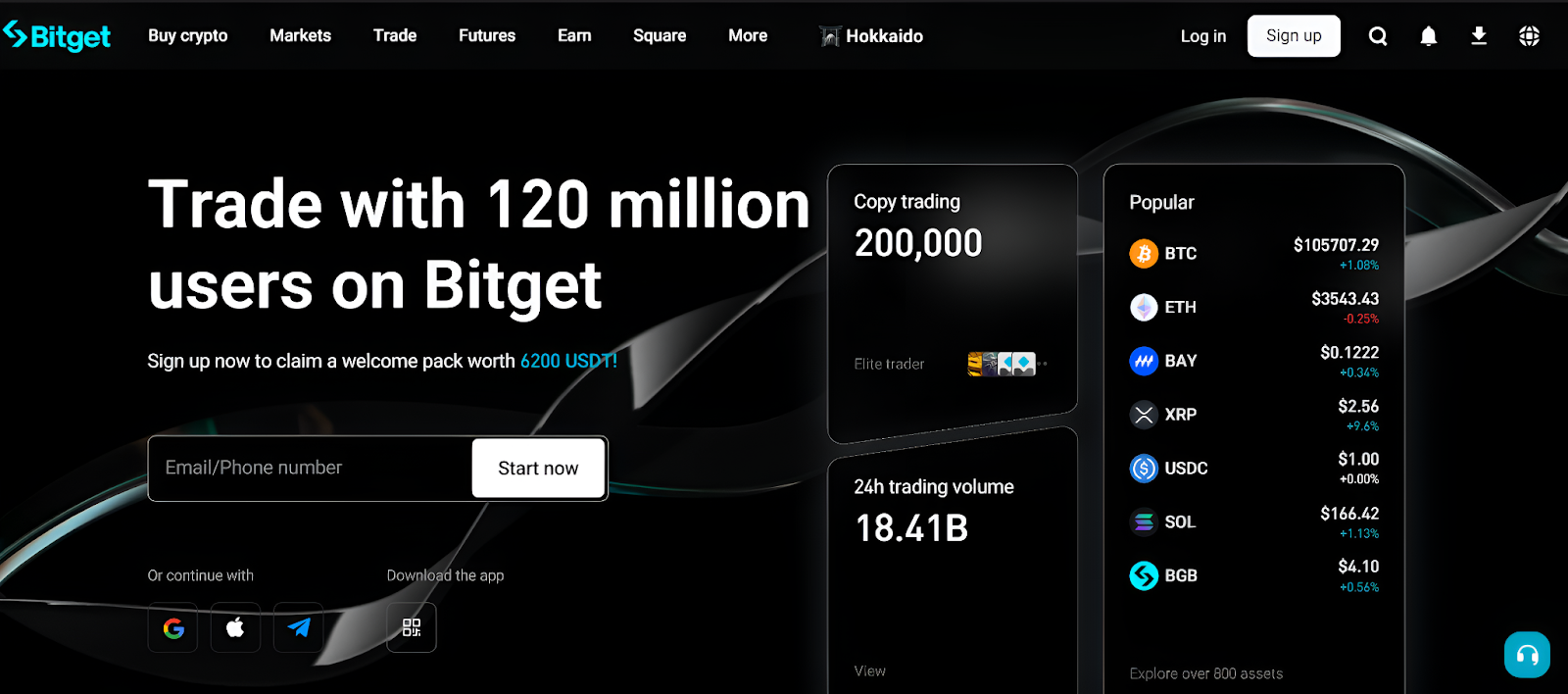
Bitget is a leading crypto trading platform that offers traders a variety of trading markets and features, including spot, futures, and copy trading. The cryptocurrency exchange was founded in 2018, and by the following year, it had established itself as a leading copy-trading and derivatives exchange.

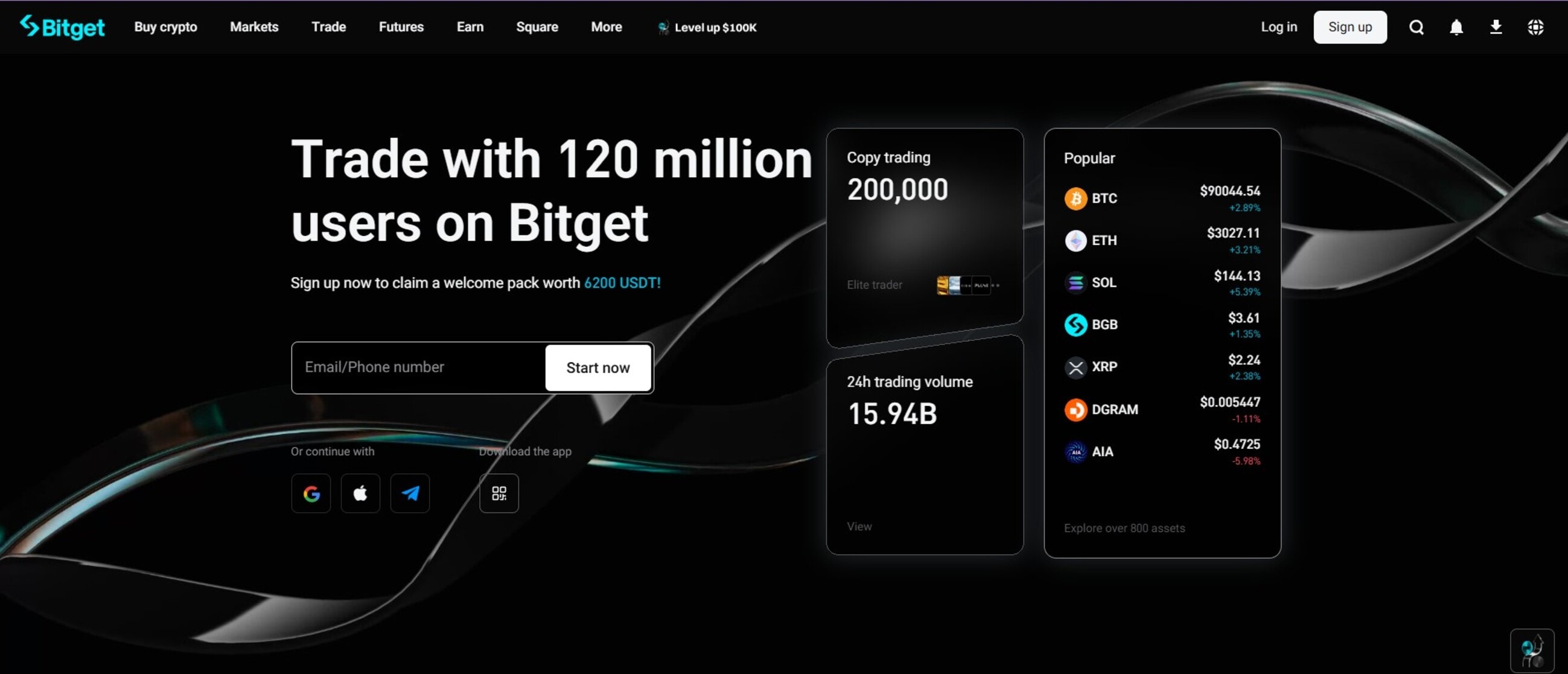
Its copy trading marketplace has become the largest in the crypto space, supporting over 200,000 elite traders and more than half a million followers. In addition to its comprehensive exchange features, the platform offers a standalone web3 wallet, the Bitget Wallet.

This product gives users access to the decentralized ecosystem, allowing them to explore decentralized finance (DeFi) protocols, non-fungible tokens (NFTs), and other decentralized applications (dApps).

Pros & Cons of Bitget

ProsConsRobust copy trading marketplace for beginners who want to replicate trades and pros who want to earn passive income.Bitget is not available in some major markets, including the United States, Canada, and Singapore.Low fees with discounts for BGB token holders.Advanced features/interface may be overwhelming for beginnersUser-friendly interface, making it suitable for both beginners and experienced traders.Customer support response times can be slow during peak periods.Advanced trading optionsHigh leverage options for futures trading, up to 125x for some assets.

Bitget is Best for:

Advanced Crypto Traders: Bitget offers a comprehensive suite of trading products across spot and futures markets, making it an ideal platform for more experienced crypto traders.Comprehensive Crypto Investment Products: As discussed earlier, the crypto exchange not only offers exchange services but also a crypto wallet that gives users access to the web3 ecosystem and provides institutional-grade services.Copy Trading: Bitget offers one of the most robust copy-trading marketplaces in the crypto market. The cryptocurrency exchange offers manual copy trades featuring over 200,000 3lite traders, as well as bot copy trading, so followers can choose the strategies they want to replicate.

bitget-token-new-bgb-logobitget-token-new-bgb-logo

What is Coinbase?

What is Coinbase?What is Coinbase?

Coinbase is the largest public crypto trading platform. The exchange allows individuals and businesses to buy, hold, sell, trade, and receive crypto payments easily. Coinbase is highly compliant with crypto regulations in many jurisdictions, including the United States, making it one of the top choices for US residents who can’t access other global exchanges.

Coinbase was founded in 2012 and has since maintained a strong position in the crypto world, especially for beginners and security-conscious traders. It offers many products, including Coinbase One, Coinbase Advanced Trade, Coinbase Earn, staking, Base App (formerly Coinbase Wallet), Coinbase Prime for institutions, and more.

The standard Coinbase platform allows traders to buy and sell crypto easily. However, if you want to trade crypto pairs, you can use the Advanced Trade, which was previously called Coinbase Pro. This exchange interface provides advanced charting tools that allow users to place market, limit, and trailing stop orders on 200+ cryptocurrencies.

Pros & Cons of Coinbase

ProsConsBeginner-friendly interface, making it an ideal option for newbiesCustomer support can be slowProvides products for individual and institutional tradersHigh trading fees compared to other major crypto exchanges Reduced trading fees and priority customer support for Coinbase One usersExperienced traders looking for comprehensive trading tools might be limited, as Coinbase does not offer as many exchange services as other top exchanges.Advanced trading features and staking optionsStrong regulatory presence and robust security measures.

Coinbase is Best for:

Beginners: The standard Coinbase platform features a simple, intuitive interface for completing basic buy and sell transactions. Aside from this interface, the Advanced Trade option offers just enough crypto assets and customization tools, making it easier for novice traders to get acquainted with the platform.US Traders: US residents face many limitations when accessing crypto platforms due to regulatory challenges. Fortunately, Coinbase is one of the top exchanges that offer unlimited access to traders in these jurisdictions.Security: Coinbase implements robust security measures to protect user funds. In fact, unlike other popular exchanges, Coinbase has never been hacked. If you are looking for a crypto exchange with robust security features for storing and trading crypto, consider Coinbase.

coinbasecoinbase

Bitget vs Coinbase: Trading Features

FeatureBitgetCoinbaseSpot TradingYesYesFutures TradingYesYesOptions Trading N/ANot available (N/A)Leverage 125x 50x on Advanced TradeStakingYesYesCopy TradingYesN/ATrading Bots YesN/ADeFi IntegrationYes, via Bitget Wallet Yes, via Base AppP2P MarketplaceYesN/AInstitutional ServicesYesYes, via Coinbase Prime

Bitget vs Coinbase: Platform Products and Services

Here’s a detailed rundown of the products and services Bitget and Coinbase offer to beginners, experienced traders, institutions, and businesses.

What Bitget Offers:

Basic and Advanced Trading Options: Bitget supports spot, futures, on-chain trading, and convert and block trades. Beginners and casual traders can complete simple buy and sell orders on the spot market or leverage the platform’s quick buy or P2P marketplace. Meanwhile, advanced trading includes leverage, margin trading, and stock futures, along with custom management tools designed for experienced users.Copy Trading and Automated Bots: Bitget allows users to copy professional traders’ strategies automatically. Traders can choose whom to copy based on various parameters, including past performance, wins and losses, and the number of followers. Aside from copying elite traders, users can set auto-copy parameters and switch between manual and AI bot trading modes.Institutional: Bitget provides custom solutions for institutional clients, including better liquidity, API access, and specialized support to meet the needs of professional traders and funds.Launchhub: Bitget’s Launchhub is essentially an incubator or launchpad for new token projects, allowing users to participate in early-stage token sales and benefit from curated crypto projects vetted by Bitget.Bitget Earn: This feature enables users to earn passive income through staking, savings, yield farming, or crypto loans. It offers flexible and fixed-term options to grow crypto holdings, structured earn products, and VIP and wealth management options for smarter investments.Bitget Wallet: Bitget provides a secure crypto wallet that supports easy token sending and receiving. Unlike the Bitget Exchange, Bitget Wallet users have full control over their private keys and funds. Although the wallet is separate, you can easily connect to it via your exchange app.

What Coinbase Offers:

Advanced Trade: Coinbase offers an advanced trading platform (formerly Coinbase Pro) with a comprehensive set of tools, including advanced charting, various order types, deeper market data, and higher liquidity for professional traders who need more control over their trades and customization.Coinbase Earn: This educational feature allows users to learn about different cryptocurrencies through short modules and quizzes while earning rewards in those tokens. Coinbase Earn also offers staking opportunities, allowing users to lock assets to earn rewards on supported protocols.Coinbase One: This is a subscription service offering benefits like zero trading fees on spot trades, priority customer support, and other perks designed to enhance the trading experience for active users.Debit Card: The Coinbase Card lets users spend their cryptocurrency holdings anywhere Visa is accepted. In exchange, users receive crypto rewards for purchases while enjoying seamless conversion between crypto and fiat money.Businesses: Coinbase offers tailored solutions, including crypto payment processing, custodial services, and APIs to integrate cryptocurrency operations into business models. The service provides a business payment solution for startups and SMEs, as well as Coinbase Commerce, designed to help businesses easily accept digital currency payments globally.Coinbase Prime: Coinbase offers institutional clients dedicated services, including insured cold-storage custody solutions, robust trading APIs, compliance support, and tailored market access for hedge funds, asset managers, and other professional entities.

Bitget vs Coinbase: Fee Structures

FeeBitgetCoinbaseSpot Trading (maker/taker)0.01%0.40% / 0.60% on Advanced TradeFutures Trading (maker/taker)0.02% / 0.06% N/ADeposit FeeFree for crypto deposits.Depends on the payment method you use. ACH bank transfers are usually free, while card transactions incur a 3.99% fee.Withdrawal FeeVaries, depending on crypto and network.Varies, depending on the payment method and transaction amount.Subscriptions (Monthly)NoYes, Coinbase One.Basic: $4.99Preferred: $29.99Premium: $299.99Card FeesNot availableNo fees, except for spreads to lock in trades.Fee DiscountsUp to 30% for BGB holdersUp to 10% if you sign up with a valid referral code.Zero FeesYes, on some spot pairsZero trading fees for Coinbase One users.

Bitget vs Coinbase: Coins Supported, Liquidity, & Volume

CriteriaBitgetCoinbaseSupported Coins700+250+Trading VolumeAvg. $2.5 billionAvg. $1.5 billionLiquidityHighHighUser Base120 million100+ million

Bitget vs Coinbase: Security Comparison

Bitget Security Measures

$760 Million Protection Fund: Bitget maintains a Protection Fund valued at about $760 million to protect users in the event of unforeseen security breaches.Multi-layered security, including fund passwords, mobile phone OTPs, email OTPs, and mandatory two-factor authentication (2FA) for logins and withdrawals.Cold Storage of Funds: The trading platform stores the majority of user funds in offline cold wallets with multi-signature security.Account Level Security Features: In addition to exchange security measures such as SSL encryption, real-time risk monitoring, and anomaly alerts, Bitget encourages users to activate additional security protocols, such as anti-phishing codes and wallet address whitelisting, to provide an additional layer of safety.

Coinbase Security Measures

Public Company: Coinbase became a public company on April 14, 2021, when it was directly listed on the Nasdaq Global Select Market under the ticker symbol “COIN.” In terms of security, their public status means they operate more transparently and are required by law to undergo an annual audit by an independent third party.Account-level Protection: Coinbase requires two-factor authentication (2FA) with support for authenticator apps and SMS, and encourages users to whitelist trusted withdrawal addresses.Coinbase’s Crime Insurance: Coinbase’s crime insurance policy covers theft or loss of assets resulting from company breaches, such as cybersecurity incidents or employee theft. The insurance does not cover losses from compromised personal accounts due to phishing, lost login credentials, or mistakenly authorizing transfers.

Coinbase vs Bitget: Affiliate & Referral Programs

CriteriaCoinbaseBitgetAffiliate Commission50% of your referrees’ trading fees for the first 3 months50% commission on your invited users’ trading feesAdditional Bonus (Affiliates)Promotional assets, impact tracking software, and priority support.Up to 1,530 USDTNew User BonusUp to $200 in BTC (Bitcoin)Up to $6,200 USDTOther Referral RewardsAccess to promotional campaignsMystery box with up to 500 USDT worth of gifts and exclusive access to promotional campaigns.Trading Fee Discounts10% discount20% fee discountCurrent Referral IDReferral linkNFTPlazas1KYC RequirementMandatoryMandatory

We reviewed Coinbase and Bitget referral offers and summarized them in this Coinbase referral code and Bitget referral code review. Read them to learn more about the available bonuses for new traders, the current referral ID that can help you secure these rewards, and how to redeem your bonuses.

Coinbase vs Bitget: User Experience

Coinbase onboarding is simple and beginner-friendly, with easy account creation and a mostly smooth KYC verification process, though occasional delays occur, especially if the documents you submit aren’t captured properly.

The product suite includes spot trading, staking, and a professional-grade Advanced Trade interface, which has enough assets for traders who aren’t interested in trading newer or lesser-known cryptos.

It also includes a built-in wallet and provides educational resources to help traders become familiar with the platform. From our experience, using the Coinbase mobile app and the web version has a clean UI with smooth transitions between beginner and advanced modes.

Bitget’s onboarding is also straightforward. The cryptocurrency exchange offers a robust product lineup, including spot and derivatives trading, copy trading, leveraged contracts, and promotional trading rewards.

Bitget is feature-rich, making it perfect for active traders interested in copy trading and margin products. The UI is functional but occasionally cluttered with promotions and announcements.

Coinbase vs Bitget: Customer Support

Coinbase offers 24/7 support via email and phone for suspicious activities, as well as a comprehensive help centre. The help centre consists of articles that answer commonly asked questions. In addition, Coinbase allows users to streamline their search by selecting the specific Coinbase product they need help with.

Even with this extensive support system, Coinbase’s customer support is frequently criticized for slow response times, unhelpful, scripted replies, and difficulties in effectively escalating issues. Users often report receiving repeated explanations of problems without resolution, and poor language or training effectiveness from support staff on overseas help desks.

On the other hand, Bitget also provides 24/7 support via email, support bots, and a comprehensive help centre with self-service options and frequently asked questions. Bitget’s customer support is more responsive and friendly, with multiple communication channels. However, some users also complain about delays, repeated automated or AI bot replies without human interaction, and unresolved issues despite assurances.

Conclusion

Based on our review, both Coinbase and Bitget offer products suitable for beginners and experienced traders, as well as strong security credentials. Bitget is best for active and advanced traders because it has high daily trading volume and offers low fees.

Meanwhile, Coinbase is best for investors just starting, advanced traders, and businesses that want to integrate crypto payments. But before choosing a trading platform, ensure it aligns with your trading goals and requirements.

FAQs

Which cryptocurrency exchange has lower trading fees: Bitget vs Coinbase?

When comparing fees between Bitget and Coinbase, Bitget generally offers lower trading fees. Bitget charges maker and taker fees of around 0.10% on spot trading pairs. Meanwhile, Coinbase’s standard trading fees are higher, with a base fee of 0.5% plus a variable additional fee depending on the pricing tier and trade size.

Which exchange is more beginner-friendly: Bitget or Coinbase?

Coinbase is more beginner-friendly compared to Bitget. Coinbase has a simple, intuitive interface and an easy account setup process, and it prioritizes ease of use, making it suitable for individuals just starting with cryptocurrency trading. In contrast, Bitget targets more experienced traders by offering advanced tools such as futures trading, copy trading, and leverage options up to 125x, which can be complex for beginners.

Which exchange offers better security: Coinbase vs Bitget?

Both Coinbase and Bitget employ strong security measures. Coinbase is known for its long-standing, robust security infrastructure, while Bitget also has excellent security protocols. In terms of security history, both exchanges have never faced significant security breaches, but Coinbase has a longer track record.


Source link

8 Crypto Mining Software Tools in 2025 for Beginners

0
8 Crypto Mining Software Tools in 2025 for Beginners


Crypto mining in 2025 has become more accessible than ever. With modern mining software and beginner-friendly cloud mining alternatives, new users can start earning Bitcoin or altcoins without purchasing hardware or understanding complex algorithms. Today’s tools combine automation, efficient performance, and clear dashboards to help beginners explore crypto mining with confidence.

The tools below represent the most reliable and user-friendly choices among the leading 8 crypto mining software tools available to beginners this year.

Why Beginner-Focused Crypto Mining Software Still Matters in 2025

Beginner-friendly crypto mining software continues to play an important role because it offers the easiest way to understand how mining works before moving into larger cloud mining platforms or advanced setups. Users can start on everyday devices, avoid upfront equipment costs, and learn the basics of mining rewards at their own pace.

Modern tools also automate algorithm selection, manage energy usage, and optimize performance, making the first steps into crypto mining simple, safe, and low-risk for beginners.

1. AutoHash Lite Miner — Automated Mining Made Simple

AutoHash Lite Miner delivers a smooth crypto mining experience backed by Swiss-operated infrastructure. It automatically selects profitable algorithms and runs reliably on laptops, desktops, and mobile devices.

Highlights

One-click crypto miningSmart profit optimizationClear daily earningsLow CPU/GPU usageSupports BTC, LTC, DOGE, BCH, DASH

Popular AutoHash Crypto Mining Contracts

👉 Click to visit AutoHash to claim your free $100 and view the full mining contract!

A dependable starting point for users exploring crypto mining for the first time.

2. NiceHash Miner — Effortless Profit Switching

NiceHash Miner remains a favorite for beginners because of its automated profit switching and straightforward interface. It is widely used as a first step into mining before transitioning to cloud mining or hybrid setups.

Highlights

Automatic algorithm selectionEasy setupReal-time earnings trackingWorks on most PCs

Ideal for users who want the software to handle mining optimization automatically.

3. ECOS Miner App — Mining Connected to Real Facilities

ECOS Miner App connects directly to facilities operating in Armenia’s Free Economic Zone. Beginners gain a stable and compliant environment with clear insights into crypto mining profitability.

Highlights

Live earning dataEasy contract integrationWorks well on low-power devicesSupports BTC, LTC, ETHW

A solid choice for users who want structured mining and a smooth path toward regulated cloud mining contracts.

4. Kryptex Miner — Desktop Mining for Everyday Devices

Kryptex makes desktop crypto mining simple by evaluating your hardware and selecting the most efficient mining approach. Its easy interface and minimal technical requirements make it beginner-friendly.

Highlights

Real-time payout estimatesAuto-benchmarkingMultiple payout optionsWorks on mid-range and older PCs

Perfect for new users who want to begin crypto mining without specialized equipment.

5. MinerGate Neo — Mobile Mining for First-Time Users

MinerGate Neo offers one of the easiest mobile crypto mining experiences, allowing beginners to mine small amounts on their phones before exploring full-scale cloud mining platforms.

Highlights

Tap-to-start miningMulti-coin supportBeginner-oriented layoutBattery-friendly mode

Great for experimenting with mobile-based crypto mining.

6. CudoMiner — Efficient, Low-Energy Mining

CudoMiner focuses on energy-efficient crypto mining and device protection, making it suitable for laptops, shared systems, and users with limited hardware power.

Highlights

Low-power miningAutomatic coin switchingHardware temperature managementClean, simple interface

Ideal for those seeking efficient crypto mining without stressing their devices.

7. BetterHash — Simple, Set-and-Forget Mining

BetterHash offers a frictionless entry into mining by configuring everything automatically. It is a popular choice for beginners who want to try mining before considering cloud mining expansions.

Highlights

Auto miner configurationClear payout trackingLow resource impactSupports multiple major coins

Perfect for hands-off mining.

8. HashCity Desktop Miner — Hybrid Local + Cloud Mining

HashCity Desktop Miner blends local computing power with cloud-assisted mining allocation, delivering stable results even on weaker hardware.

Highlights

Hybrid mining modelAutomatic profitability switchingLow withdrawal thresholdsBeginner-friendly dashboard

A practical option for beginners who want consistent crypto mining performance without relying solely on device power.

How Beginners Can Start Mining Cryptocurrency

Starting cryptocurrency mining in 2025 is straightforward. Here are three simple steps to begin:

1. Pick a Beginner-Friendly Mining Tool

Choose software that works on your laptop, desktop, or phone. Tools like AutoHash Lite, NiceHash, Kryptex, or MinerGate Neo provide an easy introduction before advancing to cloud mining platforms.

2. Install the Software and Activate Mining

Follow the setup instructions, create an account if needed, and run the initial benchmark. Once activated, the software handles mining optimization automatically.

3. Monitor Earnings and Learn as You Go

Check your daily payouts and device performance in the dashboard. As you become familiar with crypto mining, you can explore more advanced tools, switch coins, or transition into long-term cloud mining solutions.

Final Thoughts

Crypto mining in 2025 is more accessible than at any time in the past. With beginner-focused mining software and optional cloud mining alternatives, anyone can start earning cryptocurrency without buying hardware or mastering technical configurations.

Whether you’re mining on a desktop, mobile device, or hybrid setup, the leading 8 crypto mining software tools above provide simple and dependable ways to begin your crypto mining journey today.


Source link

Best Crypto Casino 2025: A Guide to Trusted Bitcoin Gaming Sites

0
Best Crypto Casino 2025: A Guide to Trusted Bitcoin Gaming Sites


You may be searching for the best crypto casino because you want a platform that’s safe, fast, and genuinely reliable. We get it. With so many new crypto casinos launching, it can be hard to tell which ones are trustworthy and which ones are just hype. Instead of spending hours comparing features, reviews, and payouts on your own, you want clear guidance, real insights, and a simple path to choosing a casino that actually delivers a smooth, secure gaming experience.

In this guide, we walk you through trusted Bitcoin casinos, how they work, what to look for, and how you can sign up with confidence. If you’re ready to understand what makes a casino reliable before you spend your time or crypto, keep reading.

binance-logo-6219389_1280

Top 10 Best Crypto Casinos Sites for 2025 

CasinoHighlighted FeatureWelcome BonusMinimum DepositAccepted CryptosGames CountEstablished / LicenseBetpandaInstant withdrawals, 10% weekly cashback100% match up to 1 BTC$10 equivalentBTC, ETH, BNB, XRP, USDT6,000+2023 / Costa RicaCloudbetHigh betting limits, strong VIP perksUp to $2,500 package$5 equivalentBTC, major altcoins, fiat options3,000+ slots2013 / CuraçaoCrypto GamesProvably fair original gamesVaries, includes free bets$1 equivalentBTC, ETH, LTC, others10,000+2015 / AnjouanThrillAnonymous play, diverse rewards systemUp to 5 BTC + free spins$20 equivalentBTC, ETH, USDT, 10+ coins4,000+2024 / NewCasinobetCasino + sportsbook integration200% bonus up to 1 BTC$10 equivalentBTC, ETH, TRX, USDT5,000+Recent / CuraçaoCryptorinoWide weekly promos and cashback1 BTC welcome package$10 equivalentBTC, ETH, DOGE, 20+ coins6,000+2024 / CuraçaoBC.GameMassive game selection and 100+ crypto supportUp to 360% match bonus$1 equivalent100+ cryptocurrencies10,000+2017 / CuraçaoCoinCasinoExtensive slots and live casino library100% bonus up to $30,000$20 equivalentBTC, ETH, USDT, SOL7,000+Recent / CuraçaoCasinopunkzVPN-friendly with game shows150% bonus up to 2 BTC$10 equivalentBTC, ETH, various meme coins5,000+2024 / NewBetplayFast Lightning Network withdrawals100% match up to $66,000$5 equivalentBTC (Lightning), ETH8,000+2021 / Curaçao

10 Best Bitcoin Casinos Reviewed By Our Experts

Choosing the best crypto casinos online becomes much easier once you know what sets each platform apart. With so many new crypto casinos entering the market and established bitcoin gambling sites upgrading their features, it helps to see how they compare side by side. Here, our top picks are reviewed in detail so you can quickly understand what each platform does well and which one fits what you’re looking for. If you’re still getting familiar with how Bitcoin works, you can learn what Bitcoin is before diving in.

1. Betpanda – Best for Fast Crypto Payments and Weekly Cashback

Betpanda – Best for Fast Crypto Payments and Weekly CashbackBetpanda – Best for Fast Crypto Payments and Weekly Cashback

Betpanda is a great pick if you want a smooth, fast, and privacy-friendly place to play. You get instant deposits and withdrawals, plus a 100% bonus up to 1 BTC when you make your first crypto deposit. What stands out most is how reliable the payments feel, especially if you prefer using Bitcoin or popular altcoins like Ethereum, BNB, XRP, or Tether. Betpanda also gives you access to more than 6,000 games, covering slots games, live tables, crash titles, and provably fair options. If you enjoy a modern platform that keeps things simple and quick, Betpanda is your ideal option.

2. Cloudbet – Best for High Limits and a Trusted Long-Running Reputation

Cloudbet – Best for High Limits and a Trusted Long-Running ReputationCloudbet – Best for High Limits and a Trusted Long-Running Reputation

Cloudbet is one of the most established names in the crypto casino world, and it’s easy to see why so many players trust it. Launched in 2013, it gives you access to more than 3,000 games, along with a strong sportsbook and some of the highest betting limits you’ll find online. You can get a welcome package worth up to $2,500, and deposits start at just a few dollars’ worth of crypto. Cloudbet also supports a wide range of coins, so whether you prefer Bitcoin or major altcoins, you’ll feel right at home.

3. Crypto Games – Best for Transparency and Fair-Play Fans

Crypto Games – Best for Transparency and Fair-Play FansCrypto Games – Best for Transparency and Fair-Play Fans

Crypto Games is a great choice if you want a platform built around fairness and simplicity. It focuses on provably fair gaming, letting you verify results so you always know each outcome is legitimate. The site offers a clean, easy-to-use layout with original games, slots, and live casino options. You can start with a small deposit, which makes it friendly for casual players. Crypto Games supports popular coins like Bitcoin, Ethereum, and Litecoin, and withdrawals are quick and reliable. It’s a solid pick for anyone who values honesty, privacy, and straightforward gameplay.

4. Thrill – Best for Rakeback Rewards and a Modern Crypto-First Experience

Thrill – Best for Rakeback Rewards and a Modern Crypto-First ExperienceThrill – Best for Rakeback Rewards and a Modern Crypto-First Experience

Thrill is one of the newest crypto casinos to gain attention, and it’s already becoming a favorite for players who want fast rewards and a clean, modern platform. Instead of a traditional welcome bonus, Thrill focuses on daily rakeback, boosters, and ongoing free spin offers, which give you steady value the more you play. You’ll have access to more than 2,000 games, including slots, jackpots, live dealer tables, and its own provably fair originals. Thrill also supports over 15 cryptocurrencies like Bitcoin, Ethereum, Tether, XRP, and Solana, making deposits and withdrawals quick and flexible. It’s a strong choice if you want a fresh casino with plenty of variety and consistent rewards.

5. Casinobet – Best for Players Who Want Casino Games and Sports Betting in One Place

Casinobet – Best for Players Who Want Casino Games and Sports Betting in One PlaceCasinobet – Best for Players Who Want Casino Games and Sports Betting in One Place

Casinobet is a solid choice if you enjoy having both a full casino and a sportsbook under one roof. It offers more than 5,000 games, covering slots, live dealer tables, game shows, and popular crypto-friendly titles. New players can get a 200% bonus up to 1 BTC, which gives you plenty of room to explore the platform. Deposits start at around ten dollars’ worth of crypto, and you can choose from coins like Bitcoin, Ethereum, TRON, and Tether. With its clean layout and fast withdrawals, Casinobet delivers a straightforward, easy-to-use experience for crypto players who like variety.

6. Cryptorino – Best for Big Promotions and a Large, Crypto-Friendly Game Library

Cryptorino – Best for Big Promotions and a Large, Crypto-Friendly Game LibraryCryptorino – Best for Big Promotions and a Large, Crypto-Friendly Game Library

Cryptorino is a strong option if you enjoy generous bonuses and a busy, feature-rich casino environment. New players can get a welcome package worth up to 1 BTC, which gives you plenty of room to try out its 6,000+ games, including slots, live casino tables, and fast-paced crypto titles. Deposits start at around ten dollars’ worth of crypto, and the platform supports coins like Bitcoin, Ethereum, Dogecoin, and many others. One thing we like is how often Cryptorino rolls out promos and weekly offers, although the number of ongoing bonuses may feel overwhelming for players who prefer a simpler setup. Still, if you want variety, strong rewards, and easy crypto payments, Cryptorino is a great fit.

7. BC.Game – Best for Huge Game Variety and a Generous Multi-Part Bonus

BC.Game – Best for Huge Game Variety and a Generous Multi-Part BonusBC.Game – Best for Huge Game Variety and a Generous Multi-Part Bonus

BC.Game is a great match if you want as many crypto casino games and bonuses as possible in one place. It offers one of the largest libraries in the crypto casino space, with more than 10,000 titles that include slots, live casino tables, jackpots, and a big selection of fast-paced provably fair games. New players can claim a multi-part welcome bonus with a high total value, plus extra spins along the way. BC.Game supports a wide mix of cryptocurrencies such as Bitcoin, Ethereum, Tether, XRP, and Dogecoin, which helps make deposits smooth and fast. The platform stays busy with frequent promos and a strong VIP system, though the size of the casino can feel overwhelming at first. If you like choice, BC.Game delivers it in a big way.

8. CoinCasino – Best for Players Who Want a Big Bonus and True Crypto Privacy

CoinCasino – Best for Players Who Want a Big Bonus and True Crypto PrivacyCoinCasino – Best for Players Who Want a Big Bonus and True Crypto Privacy

When you’re searching for the best crypto casino, CoinCasino quickly stands out for its mix of privacy, speed, and strong value. It competes with the top bitcoin casinos and many new crypto casinos, especially if you’re after one of the best bitcoin casino bonus offers available. New players can claim a massive 200% match up to $30,000, which puts it among the most generous options in the best crypto casinos online category.

You’ll get access to more than 4,000 games, covering slots, live dealer tables, crash games, and crypto originals. CoinCasino also accepts 20+ cryptocurrencies, giving it the flexibility expected from the best blockchain casinos. A unique perk is its Telegram-based access, which lets you deposit and play without a full account, adding a level of privacy you won’t find at most bitcoin casinos. If you want big bonuses, fast payouts, and an anonymous crypto-first experience, CoinCasino is a strong choice.

9. Casinopunkz – Best for Private and VPN-Friendly Play

Casinopunkz – Best for Private and VPN-Friendly PlayCasinopunkz – Best for Private and VPN-Friendly Play

Casinopunkz takes the number 9 spot thanks to its privacy-focused setup, VPN-friendly access, and strong mix of games. You’ll find more than 5,000 slots, tables, live dealers, and crypto titles from reputable providers. New players can claim a large bonus, though the wagering rules can feel demanding. Casinopunkz supports Bitcoin, Ethereum, Tether, Solana, and several meme coins, making it a flexible option for crypto players who want security and variety.

10. Betplay – Best for Fast Bitcoin Payouts and a Large, Easy-to-Explore Game Library

Betplay – Best for Fast Bitcoin Payouts and a Large, Easy-to-Explore Game LibraryBetplay – Best for Fast Bitcoin Payouts and a Large, Easy-to-Explore Game Library

Betplay is a strong contender among the best crypto casinos online, especially if fast payouts matter to you. It’s also one of the new crypto casinos that quickly built a reputation for speed thanks to its support for the Bitcoin Lightning Network, which lets you cash out in seconds instead of waiting for long confirmation times. As one of the more modern bitcoin casinos, it gives you access to more than 6,000 games, including slots, table games, live dealer titles, and a solid poker section with regular freerolls.

New players can unlock a 100% matched bonus with plenty of room to explore the site, although the wagering requirement is on the higher side. Betplay supports popular coins such as Bitcoin, Ethereum, Litecoin, XRP, and Tether, making deposits smooth and flexible. With fast payments, a clean layout, and steady cashback for VIP members, Betplay fits well if you want a straightforward crypto casino with speed as its biggest strength.

What Are Crypto Casinos?

Crypto casinos are online gambling platforms that let you play using digital currencies like Bitcoin, Ethereum, and other popular coins. They work just like regular casinos but give you faster payments, more privacy, and access to features designed for crypto users. Many also support provably fair games, which let you verify each result for added transparency. If you’re exploring digital assets beyond gaming, you can also check out the best NFTs to buy for beginners to deepen your understanding of the crypto space.

How Do Bitcoin and Crypto Casinos Work?

Bitcoin and crypto casinos work much like regular online casinos, but they’re built around digital currencies instead of traditional payment methods. This move toward blockchain-driven gaming has its roots in the early evolution of cryptocurrency casinos and how they began using blockchain for transparency. When you join one of the best bitcoin casinos, you make deposits and withdrawals using coins like Bitcoin, Ethereum, or stablecoins. These payments move across blockchain networks, which helps you enjoy faster processing times, lower fees, and more privacy than you’d usually get with bank transfers or cards.

Behind the scenes, each transaction is verified and recorded on a decentralized ledger. This is the same type of technology used to track mining activity and confirm transfers across the Bitcoin network, giving you an extra layer of security. Because crypto payments don’t rely on banks or third-party processors, deposits often appear in your account within minutes, and withdrawals can be just as fast. You’ll also notice that many bitcoin casinos offer provably fair games. These use cryptographic algorithms to generate outcomes you can verify yourself, which helps prove results are random and untampered. This level of transparency makes a big difference for players who value fairness.

Most platforms in the best crypto casinos online category follow a similar setup. You create an account, choose your preferred cryptocurrency, and send funds to your unique wallet address on the site. Once the deposit clears, you can start playing slots, table games, live dealer titles, or in-house crypto originals. Winnings are sent back to your wallet when you withdraw, giving you full control of your funds. 

Pros and Cons of Using Bitcoin Casinos

Pros

Fast deposits and withdrawals with little to no feesHigher privacy since personal details aren’t always required Access to provably fair games for added transparencyCrypto casino bonuses and promotions designed for crypto playersSupport for multiple coins across most major platforms

Cons

Crypto values can fluctuate, affecting your bankrollSome sites have high wagering requirements on bonusesQuality and safety vary across platform Not all casinos support every cryptocurrency you may want to use

How to Choose the Best Crypto Casino

The choice of your crypto casino can make or break your experience, especially with so many platforms competing to be among the best crypto casinos online. Some sites focus on speed, others on privacy, and some on game variety or big promotions. To help you narrow things down, here’s what you should look for before signing up.

1. Check the Casino’s License and Reputation

A trusted platform should hold a recognized gaming license or be backed by a reputable operator. This gives you confidence that payouts, games, and security standards are monitored. Many of the best blockchain casinos use blockchain tools to verify fairness, which adds another layer of trust.

2. Look at Supported Cryptocurrencies

A good crypto casino accepts more than just Bitcoin. You’ll want support for Ethereum, Tether, Litecoin, and other major coins so you can deposit and withdraw in the currency you prefer. The more options available, the easier your experience will be.

3. Review Bonuses and Wagering Requirements

A large welcome offer might look exciting, but the terms matter even more. Before you claim the best bitcoin casino bonus, check the wagering requirements, eligible games, and how the bonus is released. Reasonable terms usually mean better long-term value.

4. Evaluate Game Variety and Providers

Look for casinos that work with well-known providers and offer a strong mix of slots, table games, live dealers, and crypto originals. Variety keeps things interesting and ensures you’re getting high-quality gameplay.

5. Check Payment Speed and Limits

One of the biggest perks of Bitcoin casinos is fast payouts. Choose a platform known for quick withdrawals, low fees, and fair minimum or maximum limits. Casinos that support second-layer networks like Lightning often offer the fastest results.

6. Compare Customer Support Options

Good support can save you time and frustration. Live chat, email help, and clear FAQs make your experience smoother, especially when handling crypto transactions.

How to Sign Up for a Crypto Casino

Getting started with a crypto casino is a simple process, and most platforms are designed to make it quick for you to begin playing. Here’s a clear breakdown of each step so you can sign up with confidence. If you’re also interested in the broader crypto space, you may want to learn how to invest in cryptocurrency to make informed decisions as you get started.

binance-logo-6219389_1280binance-logo-6219389_1280

Choose a Trusted Crypto Casino: Begin by picking a platform that offers the features you want, whether that’s fast payouts, strong bonuses, or a big game library. Look for casinos with solid reputations, clear terms, and reliable customer support. A licensed and well-reviewed site gives you a safer starting point.Create Your Account: Most crypto casinos only need basic information such as an email address and a password. Some even let you sign up with anonymous or simplified accounts, depending on their privacy rules. Once you register, confirm your email if required.Set Up a Crypto Wallet: To deposit funds, you’ll need a crypto wallet. This can be an exchange wallet or a private wallet you control. If you’re new to crypto, make sure your wallet supports the coin you want to use.Deposit Cryptocurrency: In your account, navigate to the cashier section and choose your preferred coin. The casino will generate a unique wallet address. Copy this address and send your crypto from your wallet. Always double-check the address and network before confirming the transaction.Start Playing or Claim Bonuses: Once your deposit shows up, you’re ready to explore the casino. If there’s a welcome bonus available, review the terms and redeem it before you begin playing.

Signing up for a crypto casino takes just a few minutes, and once your wallet is connected, you’ll be able to deposit, play, and cash out smoothly.

Deposits & Withdrawals at Crypto Casinos

Moving money in and out of a crypto casino is simple once you know what to look for. Whether you’re using one of the best crypto casino sites or exploring new crypto casinos, smooth transactions come down to a few key steps.

Choose Your Deposit/ Withdrawal Method: Most platforms in the best crypto casinos online category let you cash out using the same coin you deposited with. Pick your preferred cryptocurrency, enter your wallet address, and confirm the request. Crypto withdrawals are usually much faster than anything offered by traditional banking, which is why many players prefer bitcoin casinos.Check Withdrawal Limits: Each casino sets its own minimum and maximum withdrawal amounts. Some allow very small payouts, while others have higher thresholds. High-limit players should also check daily or weekly caps, especially on newer platforms. Reviewing limits ahead of time helps you avoid delays and ensures the amount you want to withdraw is eligible.Carefully Verify Your Identity: Even though crypto casinos offer more privacy, some may still ask for identity verification during large withdrawals or security checks. This protects your account and prevents fraud. Make sure your details are accurate and match your payment information so your payout can be approved without issues.

Are Crypto Casinos Legal and Safe?

Crypto casinos can be legal and safe to use, but it depends on where you live and the platform you choose. Many crypto casinos operate under gaming licenses from regions like Curaçao or Anjouan, which set rules for fairness, payouts, and security. A licensed platform is much safer than an unregulated one because it has oversight and must follow clear standards.

Safety also comes from how crypto casinos handle payments. Since deposits and withdrawals run through blockchain networks, your transactions are secure and harder to tamper with. Still, it’s important to pick a trusted site with transparent terms, provably fair games, and strong customer support. When you choose well, crypto casinos can offer a fast, private, and secure way to play online.

Conclusion

Crypto casinos are becoming more popular because they offer fast payouts, strong privacy, and flexible payment options that traditional gambling sites often can’t match. Still, each platform has its own strengths and weaknesses, so it’s important to look closely at licensing, security, payment speed, and overall reputation before you sign up. By taking the time to compare your choices and understand the features that matter most to you, you’ll be able to pick a crypto casino that feels safe, enjoyable, and well-suited to the way you like to play.

FAQs

Which crypto casinos accept Bitcoin?

Many top platforms support Bitcoin because it’s the most widely used digital currency in online gambling. Popular options include Betpanda, Cloudbet, BC.Game, CoinCasino, and Betplay. These casinos let you deposit and withdraw with BTC easily, often with lower fees and faster processing than traditional payment methods.

Are crypto casinos legal in the US?

Legality in the US depends on individual state laws. Most crypto casinos operate offshore and aren’t licensed within the country, which means they fall into a gray area for American players. Some states are stricter than others, so checking your local regulations helps you understand what’s allowed where you live.

Are crypto casinos licensed?

Many top crypto casinos hold licenses from gaming authorities in Curaçao, Anjouan, or Costa Rica. A license signals that the platform follows basic standards for fairness and security. Looking for licensing information on the casino’s site helps you confirm that it meets regulated operating requirements.

Do crypto casinos require KYC verification?

KYC rules vary widely. Some casinos allow you to play and withdraw smaller amounts without verifying your identity. Others introduce KYC checks for larger transactions or when unusual activity is detected. Reviewing a site’s policy helps you know what to expect before signing up.

What are the risks of gambling with crypto?

Gambling with crypto comes with specific risks, such as price volatility, unregulated operators, and irreversible blockchain transactions. Choosing a trustworthy crypto gambling platform, understanding deposit bonus terms, and using secure wallets can reduce many of these concerns and help you play more confidently.

What is the best online crypto casino?

The best platform depends on your priorities. Betpanda is strong for fast payments, Cloudbet excels in reputation and stability, BC.Game offers a huge game variety, and CoinCasino provides one of the industry’s most generous bonuses. Comparing features helps you find a casino that fits your needs.


Source link

BingX Vs Bitget: Which Crypto Exchange Is Better in 2025?

0
BingX Vs Bitget: Which Crypto Exchange Is Better in 2025?


Seeking a comparative review of Bitget Vs BingX to trade digital assets? If so, our detailed review will help you analyze how the two cryptocurrency exchanges stack up against each other. We’ll compare them in terms of core features, trading tools, fees, supported cryptocurrencies, security, customer support, and referral programs. We’ll also highlight the pros and cons of each platform to help you make an informed choice.

2023-crypto-exchange-bingx-new-logo-design
bitget-token-new-bgb-logobitget-token-new-bgb-logo

BingX Vs. Bitget Exchange Comparison Table

Comparison metricsBingXBitgetYear of launch20182018Active users20M+120M+Global coverage160+ regions150+ regionsNative coinBGBSupported cryptocurrencies1,000+677+Trading featuresP2P, spot, derivatives, signal, automated (grid and martingale), pre-market, and copy trading.P2P, spot, margin, on-chain, derivatives, pre-market, bot, and copy trading.Staking optionsFixed and Flexible Earn, Shark Fin, Dual Investment, and Crypto Loans.Fixed and Flexible Earn, Shark Fin, Dual Investment, On-chain Earn, On-chain Yield, HodlerYield, and Cryptocurrency loans.Payment methodsBank transfer, credit card, Apple or Google Pay, third-party providers like AirTM, Zelle, Wise, and Payeer.Bank transfer, debit/credit card, Apple/Google Pay,  third-party gateways such as Neteller, Revolut, Uphold, and Skrill.SecurityBingX Shield Fund, multi-factor authentication, fund code, cold storage, Passkey, withdrawal whitelists, Proof-of-reserves (PoR)Protection fund, PoR, cold storage, two-factor authentication (2FA), Passkey, cold storage, withdrawal allowlists, anti-phishing codes, and device management.Regulatory complianceOperating licenses in various locations, including the US, Europe, and Canada. Operating licenses in several jurisdictions, including the UK, Poland, Argentina, and Australia.Mobile app rating (Android cum iOS)Google Play: 4.5/5

App store: 4.7/5

Google Play: 4.5/5

App store: 4.6/5

Key partnersChelsea Football ClubLALIGA and MotoGP

BingX Exchange: Overview

BingX Exchange: OverviewBingX Exchange: Overview

BingX is a reputable cryptocurrency exchange combined with Web3 company, catering to both beginners and experienced traders. It is the pioneer all-in-AI platform, offering a diverse range of cutting-edge trading tools, products, and services. 

On the occasion of its 7th anniversary, BingX unveiled its AI evolution strategy, backed by an investment of $300 million. Additionally, it has introduced BingX AI, the first AI-driven cryptocurrency trading assistant, powered by advanced algorithms, comprehensive data, and multi-model engines. It delivers personalized insights to help users spot profitable opportunities and manage their positions with ease. 

Overall, BingX aims to harness AI to build an inclusive global environment where everybody can access and trade crypto seamlessly.

Pros

Cons

Simple, clean, and user-friendly interface.Beginner-friendly features like demo and copy trading.Vast coin selection.Competitive fees.Allows users to open multiple isolated-margin positions in the same direction for the same coin pair.Facilitates trading automations.Offers high leverage for derivatives trading.Detailed educational resources.Offers a limited number of trading bots.Fewer advanced tools.No native token and trading fee rebates.Less suitable for experienced traders.Doesn’t offer services in all locations (e.g. China, the US, the UK, and Singapore).No dedicated NFT platform.

Notable Features of BingX

Trading bots: Bingx predominantly offers martingale and grid trading bots to help users automate strategies and clock profits regardless of market vagaries. You can also customize the pre-built bots based on your preferences. Currently, the exchange provides spot grid, spot infinity grid, futures grid, and futures martingale bots. Copy trading: If you want to mirror the trading strategies of seasoned investors, explore BingX’s copy trading feature. You can also filter elite traders based on various metrics such as ranking, account level, PnL, ROI, etc. In case you become an elite trader, you’ll earn a 32% profit share from your copiers’ trades. You’ll also receive a monthly salary of up to 1,000 USDT and up to 2% annualized management remuneration.Futures Kickoff: This feature enables beginners to trade futures with a single click. You need to simply forecast whether the price of an underlying cryptocurrency will go up or down. Moreover, it has built-in take-profit and stop-loss levels.

2023-crypto-exchange-bingx-new-logo-design2023-crypto-exchange-bingx-new-logo-design

Bitget Exchange: Overview

Bitget Exchange: OverviewBitget Exchange: Overview

Bitget is a top cryptocurrency exchange and blockchain company, especially for copy trading. It has garnered massive popularity among digital currency buffs due to its low fees, advanced features, and Launchhub. Since its inception in 2018, Bitget has expanded significantly, with daily volumes surpassing $20 billion.

Its prime vision is to create an equitable future by financially empowering the unbanked groups. It also aims to stimulate crypto adoption and help users make smarter investment decisions.

ProsConsBest for copy trading.Comprehensive liquidity.Extensive learning resources.Offers more trading bots and Launchhub features.Suitable for seasoned traders.Fee discounts for BGB holders.Provides a Bitget credit card, 24/7 personalized service, and 0% transaction fees for VIP and institutional traders.Recurring Buy functionality to automatically buy crypto at regular intervals.Intuitive user interface.Crypto debit card with no hidden costs.May be overwhelming for beginners due to its advanced features.Unavailable in multiple jurisdictions, including Singapore, Hong Kong, and the US.Relatively less coin selection.

Notable Features of Bitget

Copy/Social trading: Bitget is touted as the #1 exchange for copy trading. It supports spot, futures, bot, and signal copy trading, and has over 190K elite traders and more than 800K followers. Besides, if you’re approved as an elite trader, you can get a 30% profit share from your followers’ trades. Automated bots: Bitget provides many pre-programmed bots tailored to bullish, bearish, and sideways market conditions. These include grid bots, martingale bots, smart portfolio, and TradingView-integrated signals. Additionally, the platform offers AI bots that come with intelligent parameter settings. Therefore, traders don’t need to enter their desired criteria manually.Launchhub: Bitget offers an array of services to help traders gain early access to promising tokens. Pre-market: It is an OTC platform that helps users buy/sell tokens at preferred prices before they’re officially listed.LaunchX: It enables traders to uncover premium projects and buy their tokens at discounted prices before they’re officially released.Launchpad: It allows you to subscribe to tokens of upcoming projects by committing BGB tokens.Launchpool and PoolX: These platforms help traders lock up designated tokens and receive airdrops of newly listed or trending cryptocurrencies.Candybomb and on-chain airdrops: You can claim airdrops by completing the designated tasks.Deposit to list: Projects with the specified number of valid depositors will be listed on Bitget.

bitget-token-new-bgb-logobitget-token-new-bgb-logo

Bitget vs BingX: Trading Options and Tools

Trading featureBitgetBingXPeer-to-peer (P2P) marketplace✓✓Spot market✓✓Convert✓✓Perpetual contracts✓✓Expiry/Delivery futures✓✓Mirror/copy trading✓✓Margin/Leveraged trading✓✓Grid trading✓✓Signal trading✓✓Martingale✓✓Pre-market trades✓✓Paper trading✓✓NFT platform✓Х

BingX vs Bitget: Additional Features, Products, & Services

BingX

Spot trading: The BingX exchange supports over 1,074 cryptocurrencies and 1,120 spot pairs, including USDT, USDC, and BTC pairs. Derivatives trading: The platform offers USDS and coin-settled perpetual contracts. It also supports standard futures contracts with pre-determined expiry dates. Currently, BingX has 734+ futures pairs. Plus, derivative traders can use up to 150x leverage for some pairs.Launchhub: The BingX exchange offers the following features to help users access new tokens early.Pre-market transactions: You can buy, sell, or trade crypto gems at desired prices prior to their official release on other exchanges.Launchpool: These are mining pools, where traders can stake their crypto holdings to mine new tokens and earn rewards.Launchpad: It is a platform that enables early-stage crypto projects to connect with potential investors to secure funding. BingX vets each project and only showcases the most promising ones on Launchpad. As an investor, you’ll get access to new tokens with high profit potential.Xpool: It allows users to stake their cryptocurrencies to participate in new token mining and earn reward points. Airdrop Bonanza: Traders need to deposit tokens or execute trades to win rewards.BingX Academy: It features a plethora of educational resources on cryptocurrencies, blockchains, Web3, and DeFi. Whether you’re a newcomer or an experienced trader, you’ll find explainer articles, guides, and tutorials tailored to your needs.Wealth: BingX Wealth provides many staking options to help users put their idle assets to work and receive passive income. These include Shark Fin, Fixed Earn, Flexible Earn, and Dual investment.

Bitget

Spot trading: Bitget enables users to trade 677+ coins and 773+ trading pairs in the spot market. Traders can also utilize up to 10x leverage to amplify their returns.Leveraged trading: The exchange offers both isolated and cross margin modes. For select futures pairs, Bitget provides a leverage of up to 125x.Derivative trading: You can trade USDT, USDC, and coin-settled perpetual contracts on Bitget. Plus, the exchange enables you to trade Bitcoin and Ethereum delivery futures contracts. Earn: Bitget offers numerous principal-guaranteed and structured staking products to help you generate passive income by locking up your crypto holdings. These include Simple Earn, Shark Fin, Dual Investment, On-chain Elite, and HodlerYield. Crypto loans: You can avail of over-collateralized crypto loans at competitive interest rates for fixed (7-30 days) and flexible periods. For institutional traders, Bitget offers loans of up to $10M for durations of up to 365 days at low rates.Bitget Academy: It helps you master the A-Z of crypto trading and stay abreast of the latest happenings in the Web3 space. It features extensive learning resources, comprising expert insights, trading tips, market updates, beginner guides, and price data.Bitget wallet: It is a multi-chain self-custody wallet with a built-in dApp store, NFT marketplace, and crypto debit card. It is backed by a $300 million protection fund and helps you earn up to 10% APY by staking USDC.

Bitget vs BingX: Trading Fee Structure

ServiceBitget feesBingX feesSpot trading0.1% for makers and takers0.1% for makers and takersPerpetual contract trading0.02% market maker, 0.06% market taker0.02% market maker, 0.05% market takerStandard futures tradingSame as perpetual trading fees0.045%Fee rebates20% for BGB ownersDeposit costsDoesn’t levy deposit feesDoesn’t collect deposit feesWithdrawal feesDiffers according to the cryptocurrency or blockchain you select.Differs according to the cryptocurrency or blockchain you selectCrypto loan ratesVaries based on your VIP tier. The higher your tier, the lower the interest rates, and vice versa

Bitget vs BingX: Coins Supported, Liquidity & Trading Volumes

ParticularsBitgetBingXSupported cryptocurrencies677+1,000+Spot pairs773+1,120+Futures (perpetuals and standard) pairs776+734+Trading volumes and liquidityRanks among the 10 best centralized cryptocurrency exchanges globally; Offers comprehensive liquidity, and daily volumes exceed $20B.Ranks among the top 20 centralized exchanges worldwide; Offers deep liquidityFiat currencies supported140+100+

BingX vs Bitget: Security Comparison

BingX Security Measures:

BingX Shield Fund: To protect user funds, BingX has established a dedicated reserve. It serves as a safety net against platform-related issues, technical bottlenecks, cyber attacks, and system vulnerabilities. Whether you hold, stake, or trade cryptocurrencies on BingX, the insurance fund will safeguard you from unexpected risks. It is currently valued at over $155.71 million.PoR: BingX ensures that investors’ assets are backed 1:1 by reserve funds. It also publishes monthly proof-of-reserve reports, and its financial data is verified by renowned auditors like CertiK.Other safety measures: The exchange requires users to enable 2FA, passkeys, and app alerts for their accounts. You also need to set up a fund password and use the “Withdraw via address book” functionality for enhanced security. Besides, BingX has implemented an AI-powered cybercrime detector and mandatory know-your-customer (KYC) measures with Sumsub as a partner.

Bitget Security Measures:

Insurance fund: It safeguards user funds against platform issues and cyber threats. It also compensates traders who incur losses due to factors that aren’t attributed to their trading actions. Currently, the protection fund is valued at $680 million.PoR: Bitget maintains a 100% reserve ratio, covering all user assets and withdrawals. Moreover, the exchange publishes snapshots of your asset balances as well as the assets held in its wallets every month.Account security features: To protect user accounts, Bitget has established powerful measures such as 2FA, anti-phishing code, mandatory KYC verification, and withdrawal allowlisting. It also preserves your crypto holdings offline in multi-signature cold wallets.

Bitget vs BingX: Referral and Affiliate Program 

ParticularsBitgetBingXReferral CodeNFTPlazas1WYMSQVR5Primary referral rewardRebate perks of up to 25% for a year, starting from the invitees’ registration dates.Commission of up to 10%.Other referral bonusesWelcome bonuses, token airdrops, free USDT, mystery boxes, fee discounts, reward points, APR vouchers, trading bonuses, and LALIGA merchandise.Welcome gifts, mystery boxes, trial funds, fee rebates, trading bonus vouchers, VIP passes, virtual USDT, copy trading subsidies, and more.Eligibility criteriaReferees must register using your invitation code/link and complete KYC verification. They must also complete the designated deposit and trading volume activities within the given period. To win LALIGA merch, vote on the potential outcome of a match.Invitees must create an account using your referral code/link and complete advanced identity verification. They also need to complete the necessary deposit and trading activities within a specific period.Affiliate program commissionUp to 50%Up to 50%Affiliate eligibility criteriaKOLs or influencers with over 100 followers on social media.Content creators, key opinion leaders (KOLs), community owners, or social media influencers who want to monetize their network or traffic.Exclusive affiliate benefitsAccess to industry summits, top Bitget executives, 24/7 multilingual support, daily market data, crypto news, and exclusive macro insights.Real-time referral income tracking, special promotional campaigns, 24/7 dedicated customer services, and cutting-edge crypto products.

Discover how to use Bitget invitation codes and Bingx invitation codes to earn sign-up bonuses and attractive rewards.
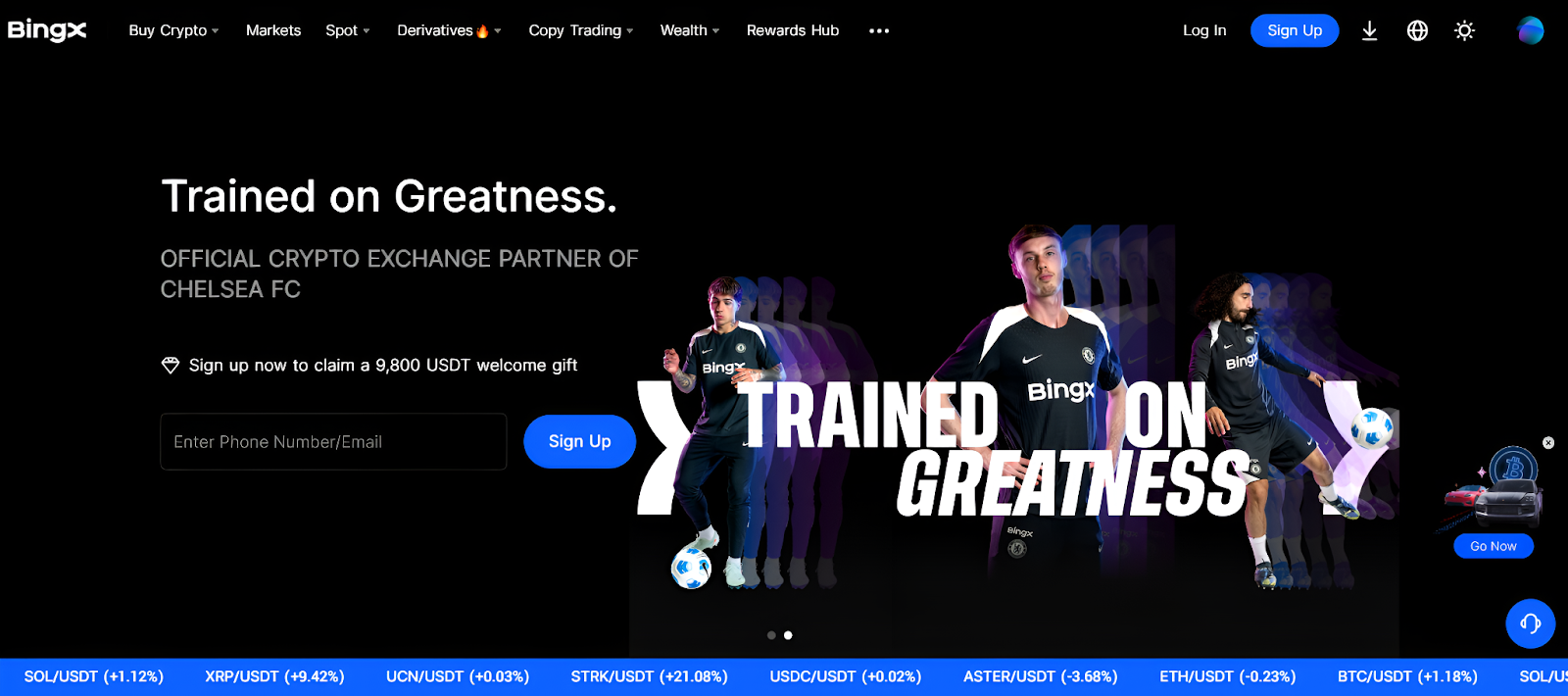
Bitget vs BingX: User Experience & Customer Support 

BingX and Bitget mobile apps enjoy high ratings of more than 4.5/5 across Google, Apple, and Samsung stores. However, both exchanges have received poor reviews on Trustpilot and Reddit.

Many BingX users have reported that the platform blocks/restricts their accounts, especially when they make gains or large deposits. Even if the profit amount is small, they’re unable to withdraw it despite completing KYC verification and submitting the required documentation. 

Similarly, Bitget users have complained about technical failures, fund freezes, and money losses. Some also experienced a malfunction with the auto-add margin system while using trading bots. 

Lastly, users of both platforms have expressed dissatisfaction with customer service, citing delays in resolving their queries.

Conclusion

Based on our Bitget Vs BingX direct comparison, both are among the top exchanges for copy trading. While BingX has a more beginner-friendly and cost-saving setup, Bitget has more active users and is appealing to advanced traders. Overall, both offer a fantastic trading experience.

FAQs

Are BingX and Bitget safe?

Both crypto exchanges have implemented powerful security measures like 2FA, cold storage, PoR, and insurance funds. However, in September 2024, BingX suffered a major hack, resulting in a loss of $52 million. Therefore, Bitget is safer, as it hasn’t faced a significant security breach to date.

What exchange is better than BingX?

Bitget is better than BingX, especially for copy trading, advanced tools, and institutional services. It also offers competitive fees, including discounts for BGB owners, and higher referral commissions. For American users, Coinbase is the best. 

Which is better for new users, Bitget or BingX?

BingX has a cleaner, simpler, and more user-friendly interface. It also offers beginner-friendly features like copy trading, quick buy, and demo accounts. Moreover, it has fewer complex features, making it more conducive for newbies.

Which exchange collects lower fees: Bitget vs BingX?

Both exchanges charge the same spot fees. They also impose the same maker fees for contract trading. However, BingX collects a lower taker fee for trading derivatives, while Bitget offers a 20% discount to BGB holders. Therefore, Bitget is cost-effective for BGB owners, while BingX is cheaper for others.


Source link

Ethereum Whales And Binance Signal Potential Price Rally – NFT Plazas

0
Ethereum Whales And Binance Signal Potential Price Rally – NFT Plazas


Crypto market analysis currently shows a critical divergence in on-chain data, indicating strong potential for a significant upside move. Recent findings confirm that influential Ethereum Whales are aggressively accumulating ETH, which pushed their total holdings to a historic high. Simultaneously, Binance has seen ETH reserves plummeting, while stablecoin reserves surged to a new record.

Historic Accumulation by Ethereum Whales

Ethereum’s most influential market participants have shifted their strategy toward aggressive long-term accumulation. Data identifies holders with balances between 10,000 and 100,000 ETH as the primary drivers of this trend. The influential group recently pushed their total balance past 21 million ETH, setting a new record and a strong accumulation wave.

Mid-cap whales used recent months to increase their holdings. Such a demographic often acts as a leading indicator for broader market trends. Their refusal to sell, combined with active buying, establishes a high-conviction floor for the asset.

Confidence extends beyond the mid-cap tier to the largest entities in the ecosystem. The “mega-whale” cohort, defined as addresses holding more than 100,000 ETH, has expanded its balance to approximately 4.3 million ETH. This rise reflects a decisive shift in sentiment among institutional and highly liquid investors.

In the past, when these huge groups buy, it comes before a strong price support level. These bases often act as starting points for big market rallies as the investors see current prices as a good deal. By locking away millions of ETH, they cut the supply available for trading.

Historic Accumulation by Ethereum Whales

Both mid-cap whales and mega-whales increased their ETH holdings. – Source: CryptoQuant

Learn more: NFTPlazas Guide: Ethereum Blockchain Fundamental

Falling Binance Reserves, Record Stablecoin Inflows

Data from Binance, the world’s largest exchange, backs up the bullish idea. Since August 15th, the exchange has seen a big difference in money flows. In just a few months, Ethereum reserves on Binance nearly dropped by half. The total value fell from over 20 billion to under 11 billion. The actual number of Ethereum tokens dropped to 3.764 million ETH in November. Investors clearly prefer cold storage or staking instead of keeping assets on exchanges.

While volatile assets leave exchanges, stablecoins are flooding in. The inflow creates a strong opposite trend. Tether (USDT) reserves across TRC20 and ERC20 networks on Binance surged from 26 billion to a record-breaking 42 billion.

This metric serves as the key to understanding the current market sentiment. Traders have taken profits during previous peaks but have not exited the crypto ecosystem. Instead of leaving, they put cash into stablecoins right on the exchange. The USDT setup shows that traders are not bearish; they are waiting for the right moment.

Falling Binance Reserves, Record Stablecoin InflowsFalling Binance Reserves, Record Stablecoin Inflows

Binance reserves show decreasing ETH supply while stablecoins surged. – Source: CryptoQuant

What Comes Next?

The data mix creates a “coiled spring” effect in the market. Two strong forces now meet: a dropping supply of assets for sale (BTC and ETH) and an all-time high in buying power (USDT reserves). Market players currently show “armed patience.” Investors wait for a specific sign, such as a price dip or better economic news, to use this money. When this cash floods the market, it chases a small supply of coins.

Thus, the on-chain signs give a clear outlook: The market looks quiet but holds lots of cash. Whales act with conviction by removing supply, while traders stand ready with record levels of stablecoin capital. This structure typically precedes significant market volatility favoring the upside. As the supply of Ethereum and Bitcoin disappears into cold storage, the $42 billion in stablecoin reserves will likely fuel the next big market growth.


Source link

Popular Posts

My Favorites

CORRECTION FROM SOURCE: DroneSense and Parrot Launch Secure, NDAA-Compliant Drone Solutions...

A minor correction has been made to reflect the correct dateline location (Paris, France).PARIS, FRANCE / ACCESS Newswire / June 16, 2025 /...