Arts

Home Arts Page 32

SHIB Price Prediction in 2025, 2026 – 2030 and Beyond – NFT Plazas

0
SHIB Price Prediction in 2025, 2026 – 2030 and Beyond – NFT Plazas


Shiba Inu (SHIB) is an ambitious Layer 2 ecosystem that emerged from a daring meme coin, and now stands at its most critical juncture. SHIB’s price has retreated to retest its historical core support zone at $0.00000614 – $0.00000725.

This is more than just a price point; it is the key level that will decide its fate: Hold it, and SHIB could ignite a recovery run that sees the price potentially hitting $0.00003219 during the 2025 bull cycle. Furthermore, the ability to defend this fundamental support is essential for SHIB to pursue its long-term ambition of challenging its “zeros” by 2030 through the success of its Shibarium platform.

SHIB Technical Analysis

SHIB is at a breaking point. On the W1 (weekly) timeframe, Shiba Inu’s price is retesting a critical historical support zone, a core key level following a retreat from localized peaks. The price hitting this support area is anticipated to trigger a significant volatility event in the market.

SHIB Technical Analysis

SHIB Technical Analysis

SHIB Key Price Levels

Crucial Support Zone (Yellow Line): $0.00000614 – $0.00000725$Resistance Levels to Observe (Red Lines): $0.00001382$ – $0.00002274$ – $0.00003219$

For that reason, SHIB is fluctuating within the range from the highest resistance at $0.00003219$ down to the key level support at $0.00000614$ on the weekly timeframe. Strong reactions happen whenever SHIB touches these points, which makes the range suitable for range trading and speculation.

Scenario Analysis

Bullish Scenario (Recovery): If SHIB successfully holds the Crucial Support Zone of $0.00000614 – $0.00000725 and bounces according to the dashed white line on the chart, it will head up to test the resistance levels sequentially: $0.00001382 and $0.00002274. If it breaks the key resistance at $0.00003219$, SHIB will gain momentum to form a new All-Time High (ATH).

Bearish Scenario (Deep Drop): If SHIB closes a W1 candle below the crucial support of $0.00000614$ (following the second dashed white line scenario on the chart), the price could drop deeper, creating a new, lower bottom below this historical support zone, complicating the recovery outlook.

Learn more: NFTPlazas Learn – What is Ethereum?

SHIB Key Price Levels

Support Levels

$0.00000614 – $0.00000725 (Key Level)

The zone $0.00000725 – $0.00000614 represents the most critical key level, marking the previous historical bottom. If selling pressure breaks below $0.00000614, the next downside targets will be the deeper potential support levels, which could be creating a new bottom. 

 Support Key Levels Price S1 $0.00000725  S2 $0.00000614


Resistance Levels

$0.00001382 – $0.00002274 – $0.00003219$ (within the range)

These levels represent crucial local peaks that must be overcome during a recovery phase. If SHIB breaks above $0.00003219$, it targets forming a new all-time high, potentially higher.

 Resistance Key Levels Price R1 $0.00001382 R2 $0.00002274 R3 $0.00003219

binance-logo-6219389_1280binance-logo-6219389_1280

SHIB Price Prediction Table For Years 2025, 2026, 2027, 2028, 2029, and 2030

The following price forecast is based on the assumption that SHIB maintains the key level support of $0.00000614 and that the Shibarium ecosystem continues to evolve, particularly its automatic coin-burning mechanism.

 Year Price 2025 Avg ~ $0.00003219 2026 Avg ~ $0.00004500 2027 Avg ~ $0.00003800 2028 Avg ~ $0.00007500 2029 Avg ~ $0.00009000 2030 Avg ~ $0.00010000

About Shiba Inu (SHIB)

Shiba Inu (SHIB) began as a “meme token” intended to be a rival to Dogecoin. However, it quickly evolved into a complex, decentralized ecosystem, fueled by an incredibly loyal and robust community known as the “Shiba Army.” 

SHIB is not just a coin; it is the foundational token of a multi-token ecosystem, built on the Ethereum blockchain and extended through its own Layer-2 scaling solution.

Learn more: Buy SHIB Coin in Binance Exchange

History of Shiba Inu (SHIB)

Anonymous Launch (August 2020): SHIB was created in August 2020 by an anonymous individual or group known as Ryoshi. Ryoshi aimed to create a perpetual decentralized organization with no central leadership, inspired by the anonymity of Satoshi Nakamoto.Unique Distribution Strategy: Upon launch with a total supply of 1 quadrillion tokens, Ryoshi locked 50% of the total supply into liquidity pools on Uniswap and sent the remaining 50% to the Ethereum wallet of Ethereum co-founder Vitalik Buterin.Historic Burning Event (May 2021): Vitalik Buterin subsequently donated over 50 trillion SHIB (worth over $1 billion at the time) to a COVID 19 relief fund in India. Crucially, Buterin burned the vast majority of the remaining SHIB in his wallet, removing hundreds of trillions of tokens from circulation, setting a historic milestone, and boosting global awareness of SHIB.Ecosystem Expansion: The project later expanded into a multi-token ecosystem, which includes: LEASH – The “loyalty” token, BONE – The governance token, allowing holders to vote on ecosystem decisions. ShibaSwap – A decentralized exchange (DEX) that allows users to trade, stake, and provide liquidity.

SHIB Recent News & Developments

Recent developments in SHIB are focused on its transformation from a meme coin into a solid technological platform:

Shibarium (Layer 2 Blockchain): This is the most crucial development. Shibarium is the Layer 2 solution built on the Ethereum network intended to reduce congestion, lower gas fees, and provide a framework for decentralized applications (dApps) and Web3 expansion.Improved Automatic Coin-Burning Mechanism: Shibarium has integrated an automatic coin-burning mechanism, where a portion of the transaction fees on the L2 network is converted into SHIB and permanently burned. The burn rate occasionally sees significant spikes, although the impact on the massive supply requires time to be fully realized.Attention from Major Platforms: Major exchanges like Coinbase continue to show interest in SHIB by launching derivative products such as 24/7 futures contracts.Community/Institutional Recognition: Despite volatility, the SHIB community remains highly active. News of SHIB being accepted as a payment method in various locations and regulatory tax interest (such as in Japan) indicates that SHIB is gradually gaining broader recognition.

FAQ

What is Shiba Inu (SHIB)?

Shiba Inu (SHIB) is a decentralized cryptocurrency inspired by the Japanese dog breed of the same name. It began as a meme coin, famously dubbed the “Dogecoin Killer.” It has since evolved into a complex, multi-token ecosystem with its own decentralized exchange (ShibaSwap) and a Layer 2 blockchain solution called Shibarium, which aims to increase utility and reduce the token’s massive supply through burning.

Can SHIB reach $1?

Reaching the $1 mark is highly improbable under the current tokenomics. Due to SHIB’s massive circulating supply (over 589 trillion tokens), achieving $1 would require a market capitalization of hundreds of trillions of dollars, far exceeding the current size of the entire global cryptocurrency market. The only realistic way for SHIB to reach a much higher value, like $0.001$ or $0.01$, is through a massive and sustained reduction of its supply via the Shibarium burn mechanism.

What factors primarily drive SHIB’s price?

SHIB’s price is driven by two main categories of factors:

Technical Factors: Overall sentiment and liquidity of the wider crypto market (especially Bitcoin’s price movements).

Fundamental Factors (Long term): The successful adoption and transaction volume on the Shibarium Layer 2 network, which directly fuels the automatic coin-burning mechanism, making the asset deflationary.

What is the significance of the $0.00000614$ support level?

The $0.00000614$ level is a critical Key Level because it represents the historical low (previous cycle bottom) on the weekly timeframe. Holding this support is crucial for the continuation of a long-term bullish outlook. A sustained close below this level would signal a strong bearish continuation and the formation of a new, deeper bottom.

What is the Shibarium Layer 2 solution?

Shibarium is the Layer 2 blockchain built specifically for the Shiba Inu ecosystem. Its main goals are to increase transaction speed, drastically reduce transaction fees, and, most importantly, provide a platform where network activity directly contributes to reducing the SHIB token supply through its integrated burning mechanism.


Source link

NFTs in 2025 – More Than Digital Art

0
NFTs in 2025 – More Than Digital Art


By the end of 2025, the NFT industry will hardly be the same exaggerated world of 2021 and the deep correction of 2022–2023. The market’s focus, which was mainly on avatar collections and speculative flips, has expanded to a more diversified ecosystem where utility, interoperability, and models of digital ownership are valued more than quick profit. The change has been slow, but 2025 is shaping up to be a landmark year in the evolution of non-fungible tokens.

In general, the NFT market in 2025 is a good example of cautious optimism: the extreme fluctuations are hardly present, there are more genuine use cases, and the distinction between strong and weak projects is much ​‍​‌‍​‍‌​‍​‌‍​‍‌clearer.

NFTs​‍​‌‍​‍‌​‍​‌‍​‍‌ in Gaming – The Real Growth Engine

The concept of digital ownership of game assets, which was just a small niche side idea, has become the central theme of numerous blockchain-powered games. Consumers purchasing skins or items that are locked behind a centralized platform are indeed the last ones to say; instead, players are described as desiring absolute ownership, the right to trade, sell, or even reuse assets across various games.

In addition, gaming tokens also pave the way for a variety of other blockchain-based experiences. For instance, in a competitive strategy game, developers can instill the concept of digital economies so players can use cryptocurrencies to purchase assets and participate in a skill-based tournament. 

This is precisely the point at which crypto poker, as an activity, seamlessly fits into the discussion. Both gaming and NFTs are based on verified digital ownership, trustless rules, and community-governed economies. These intersections reveal how blockchain gaming is leading the NFT space not only toward a radical but also a more human future of co-creation.

Future Market Insights estimates that the NFT-powered gaming applications market will be worth $3.1 billion by the end of 2025, and long-term projections reach nearly ten times that amount by 2035. Such figures are among the most solid evidence that NFTs are transitioning to real use cases rather than being speculative collectibles.

Game studios have become less naive along the way. A majority of the unsustainable “play-to-earn” schemes that littered the space have been cleaned up and replaced by play-and-own models that reward users for their long-term rather than short-term engagement. In particular, developers working on Base, Solana, and Layer-3 environments are conducting interoperability experiments that allow users to share drops from one game across multiple MDR titles and even borrow assets from other users.

Indeed, with millions of gamers actively trying out blockchain-based games this year, gaming is not only the largest source of NFT adoption but also the most consistent engine of market ​‍​‌‍​‍‌​‍​‌‍​‍‌expansion.

Institutional​‍​‌‍​‍‌​‍​‌‍​‍‌ Adoption and the Quiet Maturation of the Market

One of the less-discussed aspects of the institutional presence of 2025 is how it has evolved. The Venetian Research shows that institutional investors account for roughly 15% of the total NFT market revenue. This is a significant change from that environment, where the first years were dominated by retail.

However, the institutions are not loading up the market with animal cartoons. They are investing in:

Tokenized real-world assets (RWAs)Blockchain-based intellectual property rightsFractional ownership models for digital goodsPlatform infrastructure rather than individual collections

Even if collectors who depended on the hype have already left, this still indicates that institutions have deeper trust in the tech.

Regulators have stepped up their game as well. Around the middle of 2025, U.S. courts changed their approach to NFT-related insider trading cases, according to Reuters. This, in turn, is creating new legal benchmarks for the marketplaces. The end environment is a market operating with greater transparency, less of a mess, and viable for long-term investment.

The​‍​‌‍​‍‌​‍​‌‍​‍‌ Market’s Challenges Are Still Real

The Business Research Company data shows that the worldwide NFT market was forecast to increase from a little over $43 billion in 2024 to almost $60.8 billion in 2025, a very significant move reflecting not only the industry’s maturation but also growing institutional interest. 

On the other hand, Vancelian Research reported that more than 85 million NFTs were created in the first half of this year, while active NFT wallets grew approximately 9% year-over-year. These figures imply that the speculative frenzy that used to be there is now completely gone, whereas the usage and adoption are still increasing at a steady pace.

The NFT market is still facing challenges it cannot solve on its own, despite impressive growth figures. One of these challenges is value concentration: a few percent of wallets still hold a disproportionate share of the volume. Trading volume is very low across most collections, which is why liquidity is unstable.

The carbon footprint issue has been less of a problem due to most projects moving to proof-of-stake chains, but the intellectual property rights, wash-trading, and long-term viability being debated is still a regular thing. Also, the sales volumes have been stable, but the way to mainstream acceptance is still very far.

Also, the market remains exposed to the risk of volatility. For instance, Base and Solana are on an upward trend, but other ecosystems are not growing at a similar rate. The difference between high-utility and low-utility projects getting larger is what’s ​‍​‌‍​‍‌​‍​‌‍​‍‌happening.


Source link

What Is Bitcoin? Is Bitcoin a Good Investment in 2025?

0
What Is Bitcoin? Is Bitcoin a Good Investment in 2025?


If you’ve been researching the crypto industry and crypto investments, you must have come across Bitcoin in your search. Bitcoin is the first cryptocurrency and most traded digital currency that powers peer-to-peer transactions without intermediaries (such as traditional banks).

Over time, Bitcoin has become increasingly popular, and user adoption has encouraged more investors to consider investing in BTC. If you’re on this boat, it is only right that you understand the ins and outs of the crypto industry before investing.

Therefore, this article covers what Bitcoin is and how it works, its history, use cases, and Bitcoin mining. Additionally, we will show you how to buy BTC and the risks and challenges accompanying Bitcoin investments.

What is Bitcoin and How Does it Work?

What is Bitcoin and How Does it Work?

Bitcoin is a decentralized digital currency that operates on a peer-to-peer network without a central authority. It works using a public distributed ledger called the blockchain, which records Bitcoin transactions in chronological order. Each transaction is validated by a network of computers (nodes) through cryptographic proof, preventing fraud.

The blockchain is composed of blocks, each containing a batch of verified transactions and a cryptographic hash linking it to the previous block, forming a secure chain.

To add a block to the blockchain, a process called mining occurs, in which specialized computers solve complex computational puzzles (proof-of-work). Mining not only confirms transactions but also secures the network and rewards miners with new bitcoins.

However, over the years, Bitcoin mining has become more expensive. This is due to the significant increase in the network’s computational power (hashrate) and the resulting energy consumption. The hashrate nearly doubled recently, leading to more machines competing to mine fewer new Bitcoins.

One of the reasons for this is Bitcoin’s halving events, which reduce the block reward over time. Hence, miners must run more powerful hardware to solve complex cryptographic puzzles, and this requires more electricity. 

Currently, mining a single Bitcoin consumes about 854,400 kilowatt-hours of electricity, which is equivalent to the annual power use of over 81 US households. The total electricity used to mine Bitcoin daily is immense, accounting for additional overhead such as cooling and infrastructure inefficiencies.

This surge in energy demand drives up operational costs, with electricity accounting for 60-80% of miners’ expenses. As a result, smaller, less efficient miners are pushed out, with mining concentrating among large-scale operations that have access to cheap or renewable energy sources.

Who Created Bitcoin?

Bitcoin was created by an individual or group using the pseudonym Satoshi Nakamoto. Nakamoto introduced Bitcoin to the world in a 2008 whitepaper titled “Bitcoin: A Peer-to-Peer Electronic Cash System,” which described the concept of a decentralized digital currency operating without central authority.

The History and Evolution of Bitcoin

The History and Evolution of BitcoinThe History and Evolution of Bitcoin

Bitcoin’s history began in 2008, when an anonymous person or group, using the pseudonym Satoshi Nakamoto, published a white paper describing the network and its operation. After this, the Bitcoin network was launched on January 3, 2009, when Nakamoto mined the genesis block.

This was the first block on the Bitcoin blockchain, and it had an embedded message referencing the financial crisis and symbolizing a new vision for decentralized finance. The first Bitcoin transaction occurred later in 2009, when Nakamoto sent 10 Bitcoins to computer scientist Hal Finney.

In 2010, Bitcoin gained real-world value when a user bought two pizzas for 10,000 BTC. This event is now celebrated annually as Bitcoin Pizza Day. The following years saw the rise of exchanges like Mt. Gox, which played a crucial role in Bitcoin’s early adoption. Although the exchange eventually collapsed due to hacks.

Bitcoin evolved from a niche digital currency into a widely recognized financial technology. Over the years, it has led to the creation of thousands of alternative cryptocurrencies (altcoins) and hundreds of blockchain-based projects.

Bitcoin’s Role in Shaping the Cryptocurrency Industry

Bitcoin has played, and continues to play, a foundational role in shaping the entire cryptocurrency industry. It introduced the concept of a decentralized virtual currency based on blockchain technology.

Bitcoin set the standard for security, transparency, and decentralization that many other cryptocurrencies now replicate or improve upon. In fact, Bitcoin’s market dominance influences altcoin prices and trading volumes. Many investors use it as a benchmark or gateway into the crypto market.

The Technology of Bitcoin’s Blockchain

The Technology of Bitcoin's BlockchainThe Technology of Bitcoin's Blockchain

The technology behind Bitcoin’s blockchain is a decentralized, public ledger maintained by a P2P network of computers, called nodes. Here is a breakdown of the technology behind Bitcoin’s blockchain and why encryption is an invaluable part of the ecosystem.

Blockchain

Bitcoin’s blockchain operates without a central authority. It relies on a proof-of-work (PoW) mechanism to secure the network and prevent double-spending. To add new blocks, miners compete to solve computationally difficult cryptographic puzzles. The first miner to find a valid solution earns the right to add a new block of transactions to the blockchain. 

This process confirms transactions and rewards miners with new Bitcoin, creating an incentive encouraging miners to continue securing the network.

The network automatically adjusts the mining difficulty roughly every two weeks to ensure that new blocks are added at a steady pace, regardless of the total mining power.

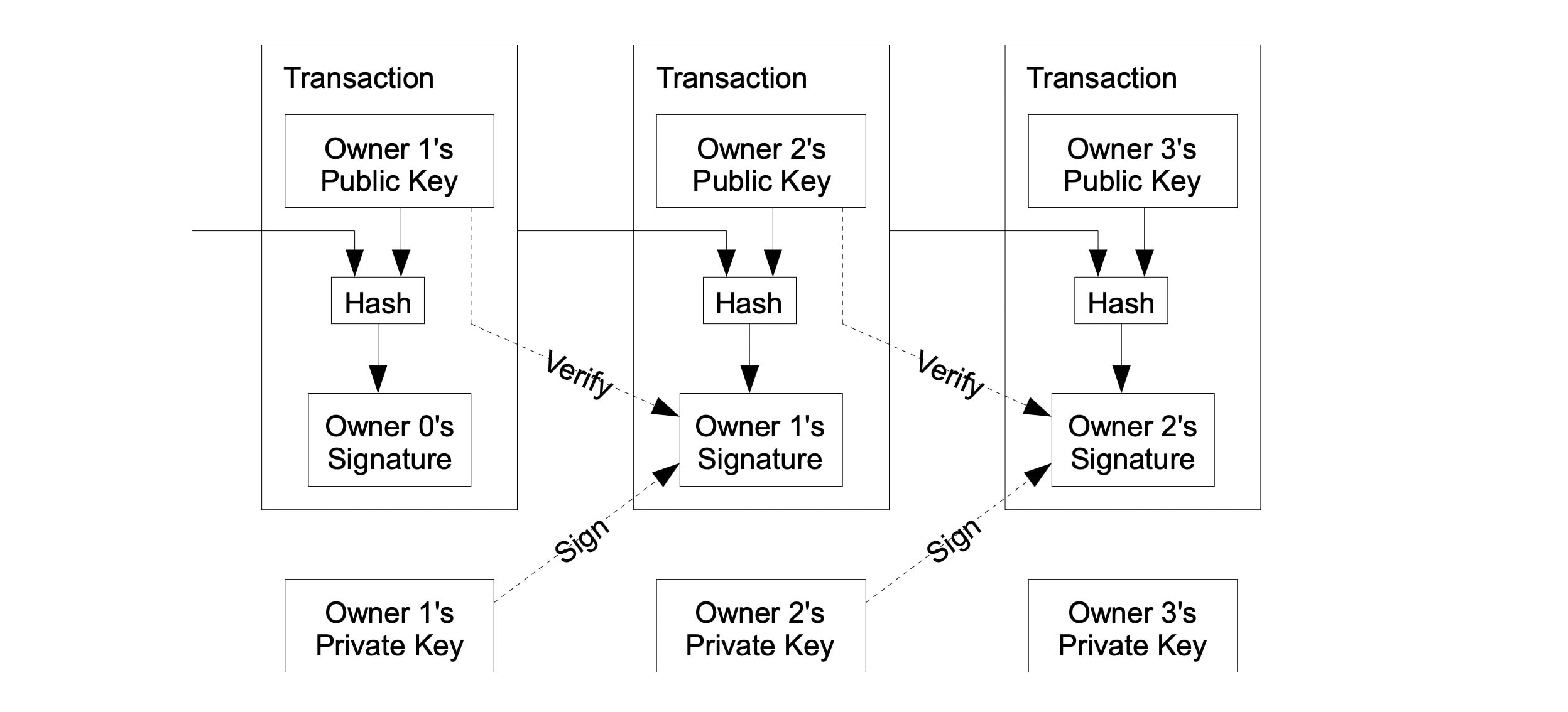
For transactions, Bitcoin uses elliptic curve cryptography (ECC) to generate private–public key pairs. This allows users to prove ownership and securely sign transactions.

The transactions follow the UTXO model, where each transaction consumes previous outputs and creates new ones. With this, every coin can be traced back through the chain.

Bitcoin transactionsBitcoin transactions

Because full nodes store the entire blockchain from the genesis block onward, every transaction in Bitcoin’s history remains publicly verifiable. This preserves the network’s transparency, security, and immutability.

Encryption

Blockchain technology relies heavily on encryption to ensure the security, integrity, and privacy of data stored and exchanged within it. Encryption transforms data into an unreadable format to protect it from unauthorized access.

There are two key ways encryption is applied in blockchain:

Hash Functions: Blockchain uses cryptographic hash functions, such as SHA-256 in Bitcoin, to convert data into fixed-length, irreversible hash values. These hash values link blocks together in a chain, ensuring immutability. So any change in a block would alter its hash and break the chain. This protects data integrity and prevents tampering across the blockchain.Public Key Cryptography: Blockchain employs asymmetric encryption, where each user has a public and private key pair. The public key acts as the receiving address, while the private key signs and authorizes asset transfers. Digital signatures verify transaction authenticity and ensure only the rightful owner can spend the assets.

These encryption techniques used by blockchain secure transactions and data communication. They also help maintain the trustless and decentralized nature of blockchain, and enable encryption of sensitive on-chain data.

What Is Bitcoin Used For?

Bitcoin is a major part of the decentralized ecosystem, offering many use cases that other altcoins draw inspiration from. Some of Bitcoin’s use cases include:

Peer-to-Peer Payments: Bitcoin enables direct electronic payments between people anywhere in the world without the need for intermediaries like banks, allowing fast, borderless, and currency conversion–free transactions.Investment and Speculation: Many people buy and hold Bitcoin as a long-term investment or trade it for profit on cryptocurrency exchanges, viewing it as a hedge against traditional financial markets.Crowdfunding: Bitcoin enables global crowdfunding without third-party involvement, allowing projects to raise funding from worldwide supporters without currency conversion.Online Gambling: Some gambling platforms, especially crypto gambling sites, accept Bitcoin for deposits and withdrawals, offering faster, cheaper, and more private transactions.Purchasing Goods and Services: Businesses across industries accept Bitcoin payments, enabling customers to buy products and services quickly and cheaply, regardless of location.Remittances: Bitcoin enables sending money across borders more efficiently and cheaply than traditional remittance services.

What Is Bitcoin Mining and How Does It Work?

Bitcoin mining is the process by which new bitcoins are introduced into circulation and transactions are verified and added to the blockchain. Miners use powerful computers to solve complex cryptographic puzzles, known as proof-of-work, which involve finding a hash that meets specific criteria.

When a miner successfully solves these puzzles, they validate a new block of transactions, add it to the blockchain, and are rewarded with newly minted bitcoins and transaction fees. This process supports the network’s security and integrity by preventing fraud and maintaining transparency.

However, Bitcoin mining is not generally accessible due to the high costs. Mining BTC requires specialized hardware, such as ASICs (application-specific integrated circuits), which perform the SHA-256 hashing algorithm to rapidly generate and test potential solutions. The process is competitive, with miners worldwide competing to solve the puzzle first.

The decentralized nature of mining ensures no central authority controls the Bitcoin network. Meanwhile, the issuance of new bitcoins follows a halving schedule that reduces block rewards approximately every four years to control inflation.

How Do You Buy Bitcoin? 

For crypto investors who aren’t miners or don’t have access to mining hardware, the way to own BTC is to buy it. Follow these straightforward steps to buy Bitcoin.

Choose a Wallet: Decide which type of wallet you will use to store your Bitcoin. You can choose a software or hardware wallet if you prefer to store your BTC offline.Select a Crypto Exchange: Choose a reputable crypto trading platform or exchange that supports Bitcoin transactions based on fees, security, and user experience. You can opt for either centralized (CEXs) or decentralized crypto exchanges (DEXs), depending on your trading goals and requirements.Create an Account: Sign up on the chosen exchange by providing personal information and completing KYC verification (especially for CEXs), including uploading a government-issued ID and possibly proof of address.Deposit Funds: Add fiat currency to your exchange account using supported payment methods such as bank transfer, credit/debit card, or e-wallet. You can also fund your account by transferring Bitcoin from another wallet if you already have one.Place an Order: Go to the trading section, select Bitcoin trading pair (e.g., BTC/USD or BTC/USDT), choose order type (market order for immediate purchase or limit order to specify a price), enter the amount, and confirm the purchase.

Aside from this process, many exchanges offer P2P marketplaces, where traders can buy BTC directly from other investors using local payment methods. All you have to do is create your account and navigate to the P2P Trading section, then select an ad and add details of your trade to proceed.

How to Store Bitcoin Safely

To store and use Bitcoin safely, the key is choosing the right type of wallet and following security best practices. Here’s how to go about it:

Hardware Wallets: These are crypto wallets that store BTC offline. These wallets offer the highest security for long-term storage by keeping private keys offline. Examples include Ledger Nano X, Trezor Model T, and Tangem Wallet. They are highly resistant to hacking, malware, and phishing attacks because private keys never leave the device.​Cold/Offline Wallets: Similar to hardware wallets, these are fully offline (e.g., paper wallets or hardware devices) and ideal for storing large amounts of Bitcoin over the long term.​ Even exchanges use these types of wallets to store the majority of user financial assets, safeguarding them from security breaches.Hot Wallets: Hot or software wallets are connected to the internet, making them suitable for frequent financial transactions but more vulnerable to security threats. Examples include non-custodial wallets such as Trust Wallet and Metamask.​ Setting up these wallets is easy; here is a detailed guide to setting up a MetaMask wallet.Custodial Wallets: These wallets are centralized exchanges that enable traders to buy, hold, trade, and sell Bitcoin, with the platform acting as an intermediary. They are convenient, but they require users to trust the provider for security and transparency.​

Is Bitcoin a Good Investment?

Bitcoin can be a good investment in 2025. The cryptocurrency has shown consistent price increases over the years, hitting an all-time high of $126,198.07 in October 2025. Seeing the steady growth over the past decade, many analysts and investors remain optimistic about Bitcoin’s potential. Therefore, predicting significant price increases in the next few years.

However, Bitcoin is highly volatile, and its price can decline sharply. For instance, the all-time high status from October didn’t last long as the price of BTC dipped to 89,000 the following month. So if you’re considering investing in Bitcoin, prepare for potential volatility and treat it as a long-term investment rather than a quick profit vehicle.

Risks and Challenges of Investing in Bitcoin

While there are many advantages to investing in BTC, it also carries associated risks and challenges, which we’ve highlighted below.

High Volatility: Bitcoin prices are highly volatile, with large price swings that can lead to significant financial losses if investors sell during downturns. This volatility is higher than that of traditional assets like stocks, bonds, or gold, requiring a long-term perspective and a high risk tolerance.​Security Concerns: Risks from wallet hacks, fraudulent schemes, exchange vulnerabilities, and crypto theft are increasing by the day as scammers find new and advanced ways to access investors’ (both individuals and institutions) accounts, wiping out their balances.Market Manipulation: Bitcoin prices can be influenced by whales (large holders) and coordinated market moves, leading to unpredictable price shifts and potential manipulation.​Complexity and Fees: Buying, storing, and securing Bitcoin requires some technical knowledge. Fees on exchanges and transaction costs can be higher than those of traditional financial services.​Uncertain Long-Term Status: Despite growing adoption and strong use cases, it is unclear whether Bitcoin will maintain its current position or be supplanted by other technologies or regulatory changes in the next 10–15 years.

Bitcoin and the Future of Cryptocurrency

Experts predict Bitcoin has strong growth potential over the next decade, with many forecasts ranging from $150,000 to over $500,000 by 2030, depending on adoption and macroeconomic conditions.​

Mass adoption of Bitcoin and other cryptocurrencies is also expected to skyrocket. Primarily due to increased use cases such as payments, remittances, and decentralized finance (DeFi) services. These newer projects are supported by improvements in scalability, privacy, and user experience

Additionally, many countries accept crypto as a legal tender and part of a national reserve strategy. For instance, President Donald Trump announced a Strategic Reserve that includes SOL, XRP, ETH, BTC, and more assets earlier in 2025.

Trump’s executive order reflects a shift in official policy towards embracing crypto assets at a strategic level. This can influence market sentiment, regulatory clarity, and infrastructure development in the cryptocurrency space.

In all these, challenges lie ahead, including regulatory scrutiny, innovation from competing blockchains, and scalability and energy consumption concerns.

Conclusion

Bitcoin has transformed various industries. It has improved cross-border payment processing and provided individuals and institutions with opportunities to store, buy, sell, and exchange digital assets.If you are considering investing in BTC, first understand the technology behind it. Then learn how to buy and trade easily and determine whether you have sufficient capital to buy a substantial amount. If your trading capital is insufficient, consider investing in other altcoins to boost your profits.

FAQs

What Makes Bitcoin a New Kind of Money?

Bitcoin is considered a new kind of money due to decentralization, fixed supply and scarcity, P2P payments, transparency, and immutability. Unlike traditional money, Bitcoin operates on a decentralized network of thousands of nodes worldwide, removing the need for central authority.

How Much is 1 Bitcoin in US Dollars?

At the time of writing, 1 Bitcoin (BTC) is trading at approximately $89,800 USD. This reflects the latest market data, but Bitcoin’s price is highly volatile and can change rapidly within short time frames.

What Happens if You Invest $100 in Bitcoin Today?

Since one Bitcoin is currently trading at $89,800 USD, investing $100 would give you approximately 0.001113 Bitcoin. This means you own roughly 0.1113% of one Bitcoin for your $100 investment at that price. Future gains or losses depend on Bitcoin’s price movement from that point, but your initial allocation is based on that ratio.

Can You Convert Bitcoin Into Cash?

Yes, you can convert Bitcoin into cash through several channels, including crypto exchanges, Bitcoin ATMs, P2P platforms/marketplaces, and debit/credit cards via third-party payment processors.


Source link

Lotshot Brings NFT Lottery Mechanics Fully On‑Chain with TON Launch

0
Lotshot Brings NFT Lottery Mechanics Fully On‑Chain with TON Launch


On November 13, 2025, blockchain gaming added a new model to its toolkit with the official launch of Lotshot on the TON blockchain. Positioned as a fully on-chain lottery powered by smart contracts, Lotshot removes nearly all barriers between a user and real-time participation. No accounts are needed. No verification steps are required. Users connect a TON-compatible wallet, pay a fixed entry price in USDT or TON, and automatically receive an NFT ticket as proof of participation.

Blockchain and Instant Lotteries

So what is the appeal? The draw, payout, and ticketing process happen instantly. Once the ticket is minted, the smart contract uses TON’s block data to generate random outcomes and immediately finalizes results. Things like prize distribution, ticket generation, and even referral rewards are all brought into effect by code, and not by staff. According to the launch details, players have a 1-in-7 chance of winning a prize, with a total reward pool of over 58,000 USDT. The popular payout sits at either $10,000 or 1,000 TON.

Projects like Lotshot are showing how blockchain gaming can expand access by simplifying user flow while still preserving trust with the client. It’s a trend seen not just in Web3 lotteries but across adjacent sectors like the iGaming sphere. Some players actively seek out platforms that remove friction and offer wider access. It’s why there’s been a rise in demand for the leading non gamstop casinos, for example, where the experience is less tied to local restrictions but also provides added value. It’s good to know that such casinos are launched in contrast to the state-regulated UK casinos, to provide more flexibility and fewer restrictions to players. Also, they’re equally accessible to UK players and worldwide iGamers. 

While Lotshot operates in a different category, both approaches reflect a shared interest in that they are open-format gaming that skips the red tape.

How Lotshot Uses NFTs for Lottery Entry

The use of NFTs in Lotshot is really a practical approach. Every time a user enters, the system creates a unique, verifiable NFT ticket tied directly to that round. It’s stored on-chain and acts as a public record of participation. This is a different application of NFTs than what’s seen in collectible art or membership tokens. Here, the asset is an access point to a live event with financial outcomes. It holds no resale value after the draw, but its existence on-chain confirms that the entry occurred and that the process was fair.

That model of short-lived, utility-based NFTs could influence other areas of blockchain gaming. Rather than pushing constant secondary sales, developers may focus more on temporary NFTs that serve a purpose like access to games, proof of action, or even receipt of rewards. It can be seen as a leaner and more focused use case that avoids the speculation often tied to NFT collections.

Fast Participation with No Sign‑Ups or KYC

Lotshot works on both web browsers and as a Telegram MiniApp. This means anyone with a wallet and a Telegram account can play without leaving the app. There’s no user registration, either. There are no waiting periods or verifications, which is a big plus. Entry takes seconds, and the system processes results right away. For users familiar with digital wallets and TON, it’s as simple as selecting a ticket, confirming the transaction, and watching the outcome.

This kind of design is particularly useful in retaining first-time users. Many digital platforms lose potential players during onboarding because they force them through forms, ID checks, or multiple approval steps that are time-consuming and frustrating. Lotshot gets rid of these pain points. Every element is handled by contracts on the blockchain, and user engagement is focused solely on the draw, and not on administration.

What Can Developers Learn from Lotshot’s Architecture?

The way Lotshot ties together multiple blockchain functions into one experience is especially relevant for builders in the NFT and Web3 space. The platform relies on a lottery smart contract for executing game logic and distributing rewards. It uses a separate NFT contract to issue tickets and integrates Jetton-based USDT tokens for stablecoin-based entries. All of this data is captured by a BQM-powered backend that surfaces events for tracking and analytics.

This structure allows for autonomous scaling. There’s no manual distribution, and no one behind the curtain triggering results. Developers interested in building low-friction applications, especially those where fairness or transparency is key, can study Lotshot’s architecture as a practical example of a fully on-chain system operating without centralized control.

The decision to keep everything code-driven also reduces compliance issues. Rather than handling personal data or account security, Lotshot’s contracts focus on executing draws and payouts. In high-engagement environments, that focus can also help avoid unnecessary issues.

Open‑Source Code and Smart Contract Audit by CertiK

CertiK, a major name in Web3 auditing, has reviewed Lotshot’s smart contracts. Full audit findings are already published via CertiK Skynet, allowing users and developers to inspect the code for vulnerabilities, logic flaws, or potential exploits. Beyond that, the Lotshot team has made its configuration files and source code public through GitHub.

This level of transparency is all about trust. In traditional lotteries, players rarely know how odds are generated or how winners are chosen. With Lotshot, every step is open to review. Each entry, reward, and even ticket ID can be verified using TON blockchain explorers. No results are hidden behind private databases or staff moderation.

Why TON Was Chosen as the Underlying Blockchain

The decision to build Lotshot on TON is because TON offers scalability, Telegram integration, and native support for tokens and smart contracts. That combination makes it ideal for apps that need speed and visibility, especially those launching in Telegram’s MiniApp ecosystem.

Because TON is closely linked with Telegram, Lotshot can launch where users already spend time. This tight integration may be a key factor in its adoption. Unlike Ethereum-based platforms, which can face high gas fees or limited UI options, TON-based apps like Lotshot can be both lightweight and highly responsive.

The TON ecosystem is also expanding. With recent improvements in wallet usability, Jetton token support, and smart contract tooling, it’s becoming a more attractive home for Web3 applications that need both scale and simplicity. Web3 teams are starting to choose platforms that are easier to build on and quicker to use. Projects that run without delays or extra steps are more likely to keep users, and TON is beginning to support that kind of experience.

Upcoming Features Like Mini‑Games, $LS Token, and Airdrops

Lotshot’s roadmap includes additional mini-games that use similar mechanics. For example, blockchain-based randomness and real-time rewards. It also makes use of NFT-backed entries. Third-party integrations are also in development. These are aimed at connecting other games or platforms to the Lotshot reward engine.

The team also plans to roll out a utility token, $LS, that will be used for governance and special draws. Combined with a points-based system and upcoming partner airdrops, this introduces a longer engagement path for users. Instead of playing once and leaving, participants may choose to return regularly, stack points, and influence how the platform grows.

Each of these additions is designed to keep the system lean and clutter-free. There are no plans to centralize operations or add layers of user verification yet. As with the current lottery, all outcomes, token uses, and game mechanics are intended to remain fully on-chain and publicly verifiable.

Possible Use Cases Beyond Lottery Systems

Even though Lotshot is focused on lotteries for now, its framework could apply to other models. The same structure that uses NFT for access, smart contract for results, and on-chain settlement could also power contests, raffles, or even event-based ticketing. Any system that benefits from traceable entries and tamper-proof outcomes can be built using a similar architecture and be successful.

Blockchain developers are looking for ways to make Web3 more functional and less speculative. Tools like Lotshot’s structure could play a useful role in this. It’s not about gamifying everything, but about using the blockchain to remove complexity from experiences that depend on fairness.

A Transparent Model for Web3 Entertainment

Lotshot’s release shows how blockchain tools can rebuild familiar entertainment models from the ground up. Because the entire process runs on‑chain, users can see how each step works without relying on a central operator. The ticket entry, the draw, and the payout all follow the same public rules, and that consistency is what gives the system its transparency.

For players, it offers low-barrier access and instant results. For developers, it provides a live example of how to connect systems transparently and at scale. Of course, for the broader Web3 space, it suggests a path forward where entertainment and transparency don’t have to be in conflict.


Source link

NFT and Meme Coin Markets Surge with a $50 Billion Rebound

0
NFT and Meme Coin Markets Surge with a  Billion Rebound


Crypto markets went through quite a rout recently, and the fallout was typical. Panic selling and many fearing the worst took hold for a while. However, among seasoned crypto investors, the market has begun maturing significantly. This is why volatile periods in the market haven’t hit quite as hard as previous dips. Meanwhile, the rebound has been swift and is already racing ahead. Evidence of this is clear as the market climbed by billions.  

However, while Bitcoin and the usual suspects have all been recovering too, it was the meme and NFT markets that saw most of the action. Collectively, they added some $50 billion. This has drawn new interest from seasoned investors and novice traders alike. While many believed the NFT market would slowly die off, it’s proven to be far more than just a fad. Memecoins have similarly proven to not just be resilient but capable of some great returns, too.    

A Broad Market Uplift

Far from being the hoax that many thought crypto was, the concept of digital assets has caught on like wildfire. The overall market capitalization for crypto assets currently sits at over $3.2 trillion. With tens of thousands of coins in the market now, crypto payments have spread across a wide range of industries. 

These days, you can pretty much buy anything with crypto since many eCommerce sites now accept it for payments. In addition, you can pay for certain streaming sites using Bitcoin or even purchase a house with crypto in some instances. However, one industry stands out when it comes to the adoption of crypto payments. In iGaming circles, many casinos now allow players to bet with cryptocurrency

In fact, this trend has become so successful that entire crypto casinos now exist. These platforms come with a range of benefits for players by leveraging blockchain technology and crypto payments. Players can withdraw winnings quickly. There are also faster registration processes and more generous bonuses on offer. This gives users a glimpse into just how efficient and enhanced life could be if everyone switched over to digital assets. 

Unfortunately, despite all this evidence showing that cryptocurrencies are indeed revolutionary, broad mainstream adoption still eludes the industry for now. However, what all these use cases do prove is that crypto is a viable concept. We also know now that it can be relied on for cheaper and faster transactions, especially cross-border transactions. 

For now, all these perks remain mostly known only to crypto investors and enthusiasts. Given its high-end tech background and the complex nature of blockchain technology, it seems proper mainstream adoption will have to wait. Major crypto companies believe this could occur when the current generation enters adulthood. However, to make this happen, better education around the concept of understanding blockchain technology and digital assets needs to be taught from now on. However, the reality is that most governments have been playing catch-up ever since crypto first became viable. 

That being said, if the current revival is anything to go by, the market is certainly maturing. Many hope that the gains and massive potential offered by crypto assets will come to define how governments choose to regulate and support their growth. In the US, the current administration has famously been pro-crypto. However, whether this is long-term, sustained growth or just temporary surges remains to be seen. 

What Is Driving the Rally

As mentioned, much of the rally in the crypto market appears to be emanating from memecoins and NFTs. This is significant given that many analysts and insiders believed both these markets to be nothing more than trends that would eventually die down. Indeed, the general frenzy around has mostly abated. However, a lot of that is down to these markets maturing rather than dying off. 

The revival began with a lift in the overall market caps of popular meme coins alongside fresh interest in major NFT collections. Reports indicate that meme tokens such as Dogecoin (DOGE), Shiba Inu (SHIB), and Pepe (PEPE) each posted double-digit percentage gains this week. 

Given their potential for higher volatility, these coins usually attract smaller investors. This is largely what drove its recent rally. By making these coins easier to access and tying them to everything from celebrities to social media memes, just the buzz around them alone is enough to create positive sentiment. This supports volume and activity, making meme coins some of the trickiest and rewarding crypto options there are.

At the same time, some high-profile NFT collections broke out of their slump. For instance, Mutant Ape Yacht Club rose more than thirty-six percent, and Milady Maker jumped around eighty percent in recent trades.

What began as sporadic moves quickly grew into a broader surge. The combined lift across both segments is estimated at roughly $50 billion USD. That scale of recovery caught many off guard, given how quiet the markets had been for much of the prior quarter.

Despite this, several factors appear to be pushing the revival. One key influence lies in the renewed willingness of retail traders to re-enter riskier segments of crypto. After a period of cautious positioning, many are now chasing momentum again. The rally in meme coins in particular shows traders returning to high-volatility bets.

Optimism around potential regulatory moves also played a role. News threads covering possible approvals of crypto‐related investment vehicles in the U.S. stirred hope among some market participants. The idea of easier access or clearer frameworks led some into more speculative asset classes.

Another element lies in sheer sentiment. As dozens of collections and tokens began posting gains, the buzz grew. Social feeds lit up with snapshots of big returns, fresh hype emerged around meme mechanics, and nostalgic crypto culture. That in turn drew fresh eyeballs and capital back into the space.

NFT Collections and Diverging Performance

Despite the uplift, not all NFTs, which have recently been subjected to some high-profile hacks, participated equally. Some blue-chip collections remain flat or under pressure, while only a subset leads the charge. For example, the CryptoPunks series saw a rise of approximately 22.8 percent to around $3 million in sales over seven days, which is still modest relative to the sizes seen in earlier boom cycles. 

Smaller or less well-known collections such as Lil Pudgys rose about 24 percent, showing that recovery is more selective rather than uniform.

Collectors appear more cautious than during previous bull phases. Many are favouring shorter holding periods and smaller bet sizes. The revival in NFTs may reflect tactical plays that capture upside quickly rather than long-term holds. This suggests the current rally may be more speculative in nature than driven by utility or fundamentals.

Risks and Cautions Ahead

Although the rally appears energetic, it comes with clear risks. One major concern is the speculative nature of the buying. With attention focused on quick gains rather than long-term sustainability, many traders may be exposed to sharp reversals. The fact that only some NFT collections are participating signals uneven strength.

Macro factors also remain uncertain. If regulatory winds shift or macro market sentiment cools, the momentum could fade fast. The crypto space has seen many prior rebounds that lost steam just as quickly as they started. The timing of this rally may coincide with regulatory hope and positive sentiment rather than deeper structural change.

Investors who enter now may face volatility. Sharp pull-backs can occur when the herd moves on or profit-taking sets in. The same cues that amplified the up-move may reverse and act as triggers for a drop.

What This Means for Traders

Active traders are likely to view this pattern as a chance to ride momentum. Short-term trades in meme coins may see outsized returns in the near term relative to more established assets. Meanwhile, those interested in NFTs may need to be more selective, focusing on collections that are showing clear signs of life.

Longer-term investors should proceed with caution. The current phase feels more rebound than rebuild. For NFT and meme coin markets to sustain growth, the underlying ecosystems need stronger foundations. Until then, much of the value may hinge on sentiment, hype, and rapid trading flows.


Source link

Coinbase Debuts MON Sale as Monad Finalizes Major Airdrop – NFT Plazas

0
Coinbase Debuts MON Sale as Monad Finalizes Major Airdrop – NFT Plazas


Coinbase has officially launched its first retail-accessible token sale with MON, alongside a major airdrop distributing over three percent of the supply to more than 230,000 eligible users.

The coordinated sale-and-airdrop strategy marks one of the most significant U.S. retail token offerings since 2018 and sets the foundation for Monad’s November 24 mainnet launch.

Strong Retail Demand Fuels MON Sale on Coinbase

The MON sale marks the debut of Coinbase’s revamped token sale platform. Retail traders joined the sale by submitting USDC through a capped allocation system, which limits large orders and helps smaller participants secure a fair share.

Interest exceeded expectations despite a fragile market environment. Applications came from over eighty-five thousand verified buyers, pushing total committed capital far above the available supply.

At the fixed price of 0.025 USDC per MON, the sale valued Monad at a fully diluted market capitalization of nearly one billion dollars. While the valuation sparked debate among analysts, demand for early exposure to a high-performance EVM-compatible layer 1 proved strong.

The launch also arrives at a time when many U.S.-based traders have had limited access to primary token offerings, giving MON outsized visibility.

MetricValueToken sale price0.025 USDC per MONSale allocation7.5 percent of the total supplyParticipants85,000 plusEstimated FDV at saleAround 1 billion USDMetricValue

Learn more: Monad Basics – Understand about the Layer 1 Blockchain Trilemma

Even with the strong participation, risks remain. Nearly half of MON’s total supply is scheduled to unlock around the launch window, including the tokens allocated to sale participants, the airdrop recipients, and early ecosystem programs. This concentration of supply can heighten short-term volatility once MON begins trading.

Monad Confirms Airdrop for 200,000+ Users

To complement the sale, Monad is distributing more than three percent of MON’s supply to early users and contributors. The airdrop is based on a snapshot dated 30 September 2025 and includes five eligibility tracks designed to reward activity rather than low-value farming. According to Monad’s announcement, more than 200,000 addresses qualify. Claiming opened earlier this month and closes shortly before the mainnet launch on 24 November.

With its broad recipient base, the airdrop enhances MON’s initial decentralization and gives a meaningful share of supply to users who interacted with the ecosystem before launch. This approach aligns with Monad’s stated goal of distributing ownership to builders and early adopters rather than concentrating tokens among sale participants alone.

Learn more: NFTPlazas Beginner’s Crypto Exchange Choices

ComponentDetailsAirdrop sizeAbout 3 to 3.3 percent of the supplyEstimated recipientsMore than 225,000 walletsSnapshot date30 September 2025Distribution windowThrough the week of 24 NovemberAllocation basisEarly usage, contribution tracks, ecosystem activity

Airdrop Breakdown

The combined scale of the sale and airdrop makes MON one of the largest retail-facing token launches of 2025. However, analysts caution that the substantial supply unlock at launch could create turbulent price discovery. In addition, MON’s long-term value will depend on MON’s ability to meet its performance claims and attract a durable developer base.

Still, the launch offers a useful case study for how U.S.-regulated platforms may handle primary distribution for new layer 1 networks. Coinbase’s structured sale, paired with Monad’s transparent token allocations, introduces a clearer template for how retail participation and ecosystem incentives can be combined within a compliance-focused environment.


Source link

10 Best Crypto Exchange for Beginners In 2025 – NFT Plazas

0
10 Best Crypto Exchange for Beginners In 2025 – NFT Plazas


As you step into the world of cryptocurrency, finding the best crypto exchange can transform your trading experience. The right platform not only simplifies buying and selling but also ensures your journey is secure, user-friendly, and rewarding. Whether you’re exploring the best crypto app for convenience or the best crypto trading platform for advanced tools, choosing wisely can set you up for success.

In this guide, we’ll walk you through the top exchanges tailored for beginners, highlighting features that matter most, like trust score, security, and supported coins. Ready to take the first step toward confident crypto trading? Keep reading to become an informed investor.

Top Crypto Exchanges, Platforms, and Apps – Our Top Picks

ExchangeTrust Score RatingTrading Fees (Maker/Taker)Supported CoinsKey Security FeaturesBest ForBinance9.9 / 10Up to 0.1% / 0.1%350+Proof of Reserves (PoR), 2FA, SAFU FundMassive coin selection and deep liquidity.Bybit9.4 / 10Up to 0.1% / 0.1%1000+PoR, Cold Storage, 2FADerivatives trading and a user-friendly app.Gate.io9.7 / 10Up to 0.2% / 0.2%4,000+PoR, Cold Storage, Bug BountiesThe widest variety of altcoins.Coinbase9.8 / 10Up to 0.4% / 0.6%250+PoR, Cold Storage, FDIC Insurance (USD)Simplicity and regulatory compliance.OKX9.5 / 10Up to 0.08% / 0.1%300+PoR, 2FA, Cold WalletAll-in-one platform with low fees.Bitget9.4 / 10Up to 0.1% / 0.1%800+PoR, Protection Fund, Cold StorageCopy trading and social trading features.Kraken9.8 / 10Up to 0.16% / 0.26%570+PoR, Cold Storage, 2FA, Platform Bug BountyTop-tier security and excellent support.MEXC9.6  / 100.0% / 0.0% (Spot)3,000+PoR, Cold Storage, 2FAZero-fee spot trading and a huge coin list.KuCoin9.3 / 10Up to 0.1% / 0.1%1,000+PoR, 2FA, Multi-Layer EncryptionFinding new and emerging “crypto gems.”Crypto.com9.7 / 100%-2.99% (Varies)250+PoR, Cold Storage, 2FA, InsuranceLarge ecosystem with a crypto debit card.

The 10 Best Crypto Exchanges in 2025 (Expert Reviews)

Your choice of the best crypto app or best bitcoin exchange can significantly impact your trading success. With so many options available, it’s essential to focus on platforms that offer security, low fees, and a seamless user experience. Below, we’ve outlined the 10 best crypto exchanges in 2025, each excelling in key areas to meet diverse trading needs.

1. Binance – Best for Massive Coin Selection and Deep Liquidity
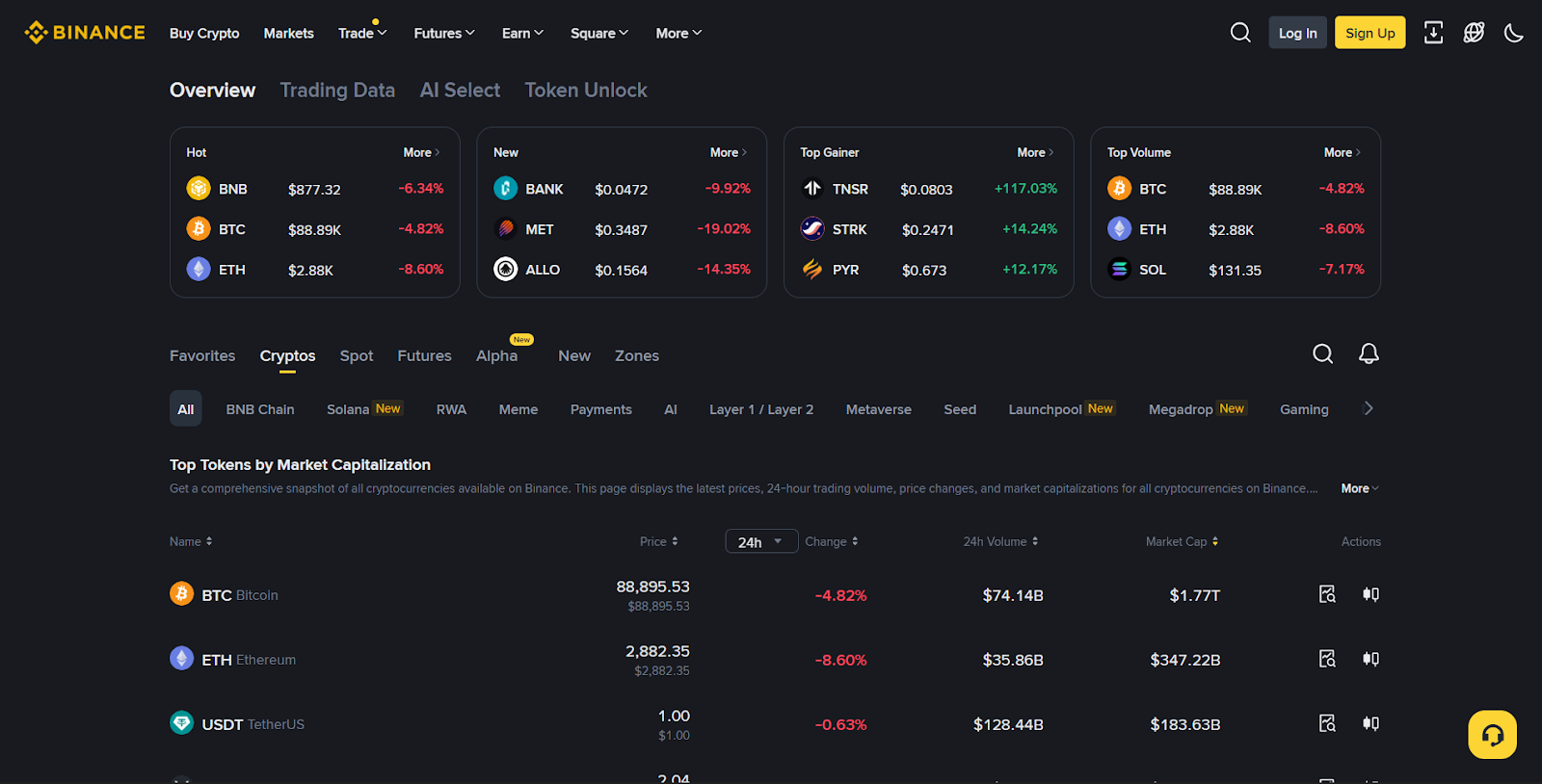
Binance – Best for Massive Coin Selection and Deep Liquidity

Launched in 2017, Binance has quickly grown into the world’s largest cryptocurrency exchange by trading volume. With over 350 cryptocurrencies and trading pairs available, it caters to a diverse range of traders, from beginners to professionals. Binance operates in more than 100+ regions with over 275+ million users, making it a truly global platform for crypto trading.

The platform is renowned for its low trading fees, starting at just 0.1%, and its robust liquidity ensures smooth transactions even for high-volume trades. Binance also offers advanced trading options, including spot, margin, futures, and options trading, making it a versatile choice for all trading strategies. Security is a top priority, with features like two-factor authentication (2FA) and Binance’s Secure Asset Fund for Users (SAFU) to protect user funds.

Pros & Cons of Binance

ProsConsLow trading fees starting at 0.1%.Not available in some regions like the U.S.Over 350 cryptocurrencies and trading pairs.Complex interface for beginners.High liquidity for seamless transactions.Customer support can be slow at times.Advanced trading options (spot, futures, etc.)Regulatory scrutiny in certain jurisdictions.Strong security measures, including SAFU.

binance-logo-6219389_1280binance-logo-6219389_1280

2. Bybit – Best for Advanced Derivatives Trading and User-Friendly Interface
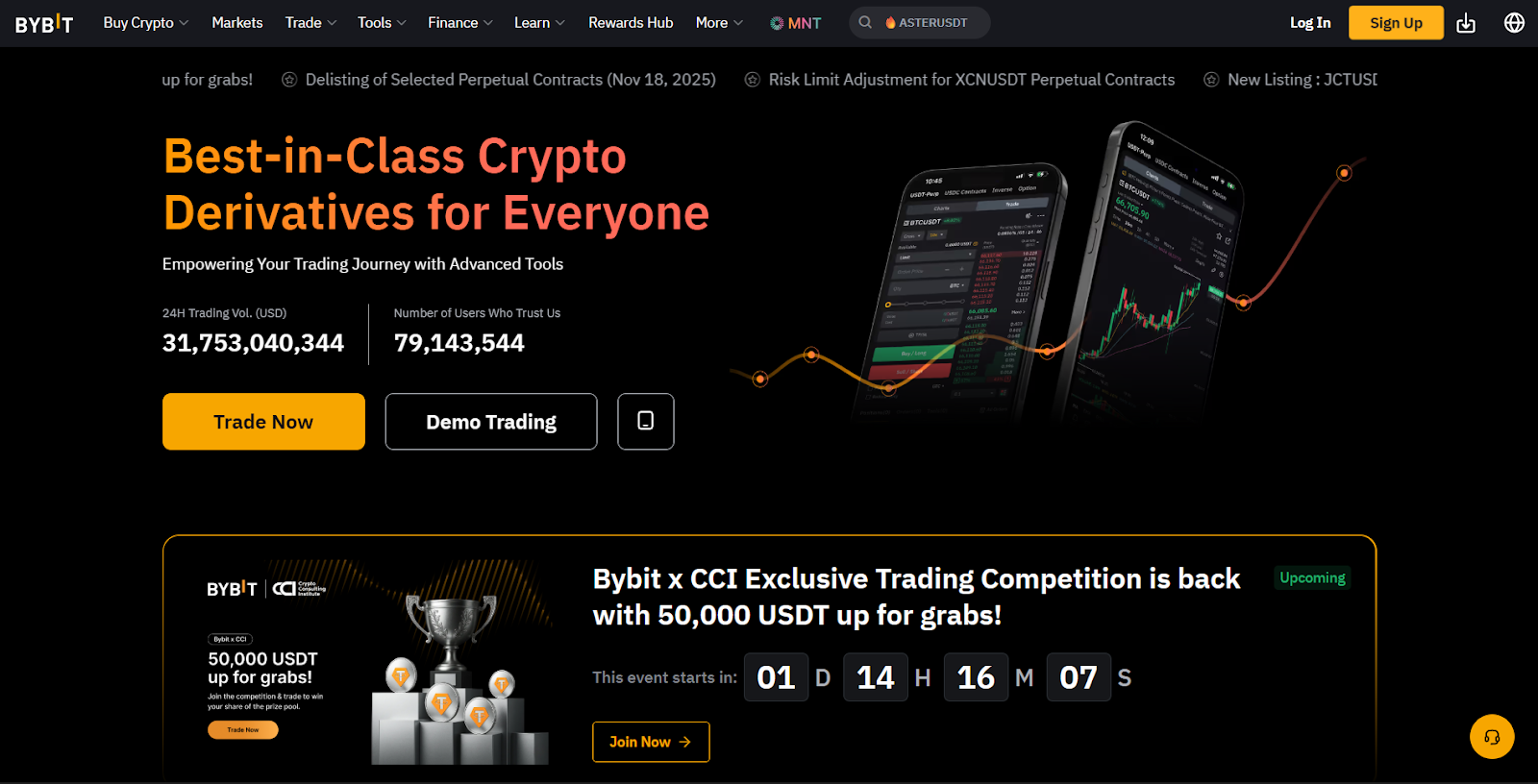
Bybit – Best for Advanced Derivatives Trading and User-Friendly InterfaceBybit – Best for Advanced Derivatives Trading and User-Friendly Interface

Bybit launched in March 2018 under the leadership of Ben Zhou and quickly became a leading cryptocurrency exchange. It serves millions of users in over 160 countries, offering a platform that combines advanced trading tools with an easy-to-use interface.

Traders rely on Bybit for its high-leverage derivatives trading, which goes up to 100x. The platform also supports spot trading, staking, copy trading, and passive income opportunities. Bybit’s trading engine processes orders quickly and ensures minimal downtime, even during high market activity. Its design makes it accessible to both beginners and experienced traders.

Pros & Cons of Bybit

ProsConsOffers high-leverage derivatives trading (up to 100x).Limits access in regions like the U.S.Provides an intuitive interface for all users.Includes fewer spot trading pairs than some competitors.Delivers multiple passive income options like staking.Experiences occasional delays in customer support during busy times.Implements strong security with cold storage and real-time monitoring.Faces regulatory restrictions in certain areas.

bybit-logo-whitebybit-logo-white

3. Gate.io – Best for Altcoin Variety and Early Project Access

Gate.io – Best for Altcoin Variety and Early Project AccessGate.io – Best for Altcoin Variety and Early Project Access

You’ll find Gate.io, established in 2013, to be one of the most trusted crypto exchanges in the industry. Known for its extensive selection of altcoins, Gate.io supports over 1,700 cryptocurrencies and thousands of trading pairs, making it a top choice for traders seeking access to emerging tokens and diverse markets.

As one of the best crypto trading platforms, Gate.io offers a wide range of features, including spot trading, margin trading, futures, staking, liquidity mining, and a startup launchpad for early project access. The platform also provides a Web3 wallet, enabling users to interact with decentralized applications and manage assets across multiple blockchains. Its competitive fees and earning opportunities make it appealing to both beginners and experienced traders.

For those looking for the best app for crypto trading, Gate.io’s mobile app delivers access to all its features, including trading, staking, and project launches, though its interface may feel crowded for new users. With its long-standing reputation and robust security measures, Gate.io also ranks among the best bitcoin exchanges, offering a secure and reliable environment for trading Bitcoin and other cryptocurrencies.

Pros & Cons of Gate.io

ProsConsOffers one of the largest selections of cryptocurrencies.Interface can feel crowded for new users.Competitive fees with discounts for GT token holders.Regional restrictions apply in some countries.Provides staking, liquidity mining, and early project access.Withdrawal fees can be higher for certain assets.Advanced security features, including cold storage and multi-factor authentication.Mobile app navigation is less intuitive compared to competitors.

Gate.io_Gate.io_

4. Coinbase Exchange – Best for Regulated Spot Trading and Deep Liquidity

Coinbase Exchange – Best for Regulated Spot Trading and Deep LiquidityCoinbase Exchange – Best for Regulated Spot Trading and Deep Liquidity

Coinbase Exchange has been a market leader since 2012, offering a secure and regulated platform for cryptocurrency trading. Known for its compliance with global regulations, Coinbase provides one of the deepest liquidity pools among crypto spot exchanges, making it ideal for both institutional and individual traders. As one of the best crypto trading platforms, Coinbase features a dynamic fee structure that rewards high-volume trading. 

The platform also supports advanced trading through its FIX/REST APIs and WebSocket feeds, ensuring seamless order execution and real-time market data access. With its acquisition of LMX Labs, Coinbase has expanded into the futures market, offering regulated derivatives trading under the Coinbase Derivatives brand. For those looking for the best app for crypto trading, Coinbase delivers a user-friendly mobile experience, allowing traders to manage portfolios, monitor markets, and execute trades effortlessly. Its strong focus on security and compliance also places it among the most trusted crypto exchanges, providing a safe environment for buying, selling, and holding Bitcoin and other cryptocurrencies.

Pros & Cons of Coinbase

ProsConsRegulated platform with deep liquidity.Higher fees compared to some competitors.Beginner-friendly interface and mobile app.Limited altcoin selection.Advanced APIs for institutional traders.Fewer earning opportunities like staking.Access to regulated futures markets.Regional restrictions in certain countries.

coinbasecoinbase

5. OKX – Best for Advanced Trading and Web3 Integration
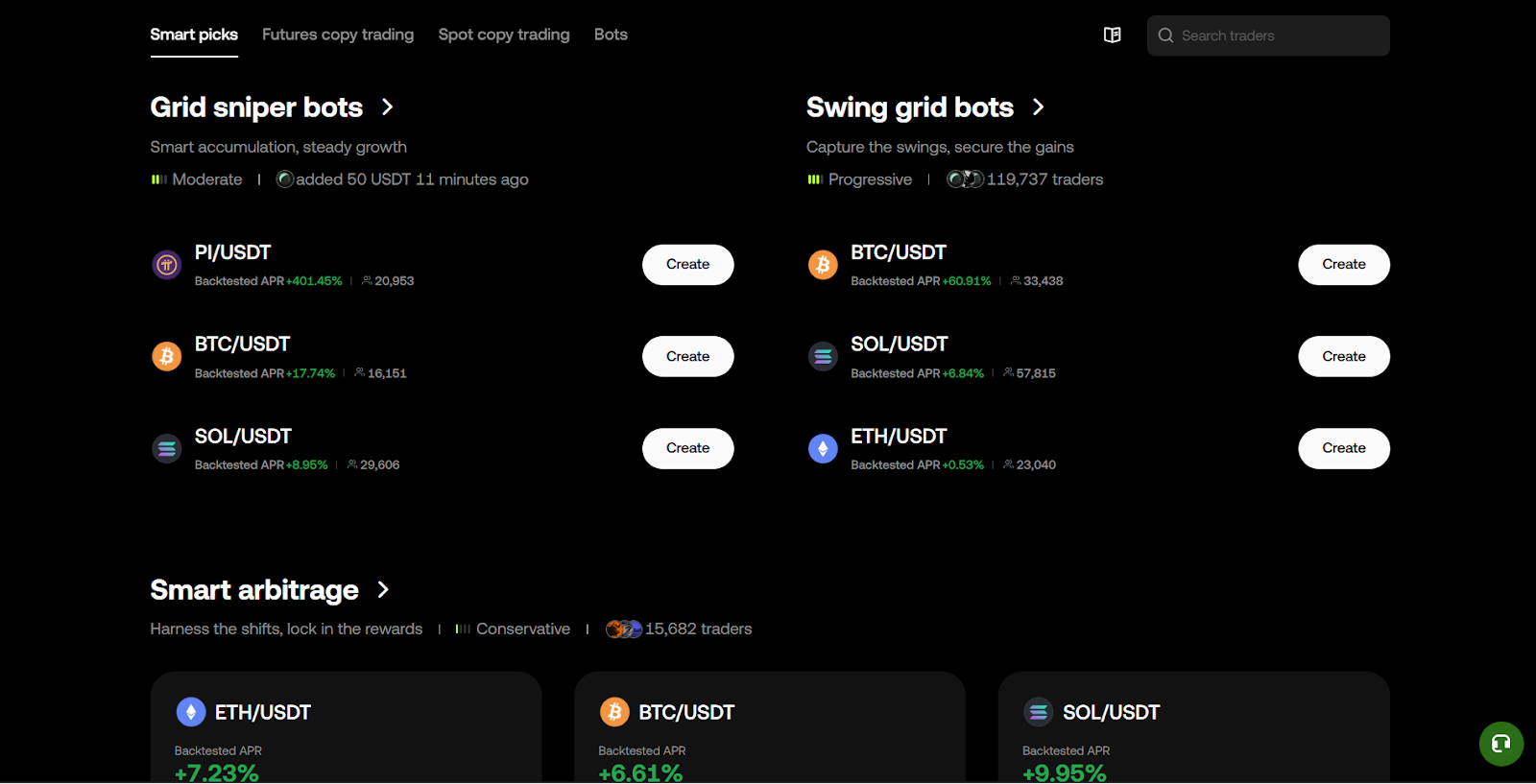
OKX – Best for Advanced Trading and Web3 IntegrationOKX – Best for Advanced Trading and Web3 Integration

If you’re looking for a platform that combines advanced trading tools with cutting-edge features, OKX is the perfect choice. Since its launch in 2017, OKX has grown into a global leader in cryptocurrency trading, offering support for over 400 cryptocurrencies and a wide range of trading options, including spot, futures, margin, and options trading.

What sets OKX apart is its Web3 ecosystem, which gives you access to a non-custodial OKX wallet, an NFT marketplace, and DeFi integration. These features allow you to explore decentralized finance, trade NFTs, and manage your digital assets with ease, even if you’re new to crypto or getting started with Web3 wallets. OKX also prioritizes your security, with measures like Proof of Reserves, two-factor authentication, and cold storage to keep your funds safe.

If you’re a cost-conscious trader, you’ll appreciate OKX’s competitive fees, starting at just 0.08% for spot trading makers and 0.10% for takers. The platform also offers advanced tools like trading bots and copy trading, so you can automate your strategies or follow expert traders to enhance your trading experience.

Pros & Cons of OKX

ProsConsLow trading fees for spot, futures, and options.Complex interface may overwhelm beginners.Advanced tools like trading bots and copy trading.Limited fiat deposit options compared to competitors.Comprehensive Web3 ecosystem with OKX wallet and NFT marketplace.Restricted in certain regions, including Canada and the USA.Strong security measures, including Proof of Reserves and cold storage.Advanced features may require a learning curve for new users.

0710421007104210

6. Bitget – Best App for Crypto Trading and Trusted Exchange

Bitget – Best App for Crypto Trading and Trusted ExchangeBitget – Best App for Crypto Trading and Trusted Exchange

Bitget, launched in 2018, stands out as one of the most trusted crypto exchanges, offering a secure and feature-rich platform. With support for over 800 cryptocurrencies, it provides diverse trading options, including spot, futures, and margin trading. Recognized as the best app for crypto trading, Bitget’s mobile platform delivers seamless functionality, allowing you to trade, monitor markets, and manage portfolios on the go. 

Its standout copy trading feature enables users to replicate strategies from top traders, making it ideal for both beginners and experts. For a deeper look at platforms that excel in this area, check out the best crypto copy trading platforms. Bitget prioritizes security with Proof of Reserves and a Protection Fund, ensuring user assets remain safe. Its advanced tools, trading bots, and APIs further enhance the trading experience for professionals.

Pros & Cons of Bitget

ProsConsCopy trading for beginners and experts.Limited availability in certain regions.Supports over 800 cryptocurrencies.Advanced features may overwhelm new users.Strong security measures, including Proof of Reserves.Withdrawal fees vary by asset.User-friendly app for trading on the go.Customer support response times can vary.

bitget-token-new-bgb-logobitget-token-new-bgb-logo

7. Kraken – Best Crypto Exchange for Beginners and Advanced Traders
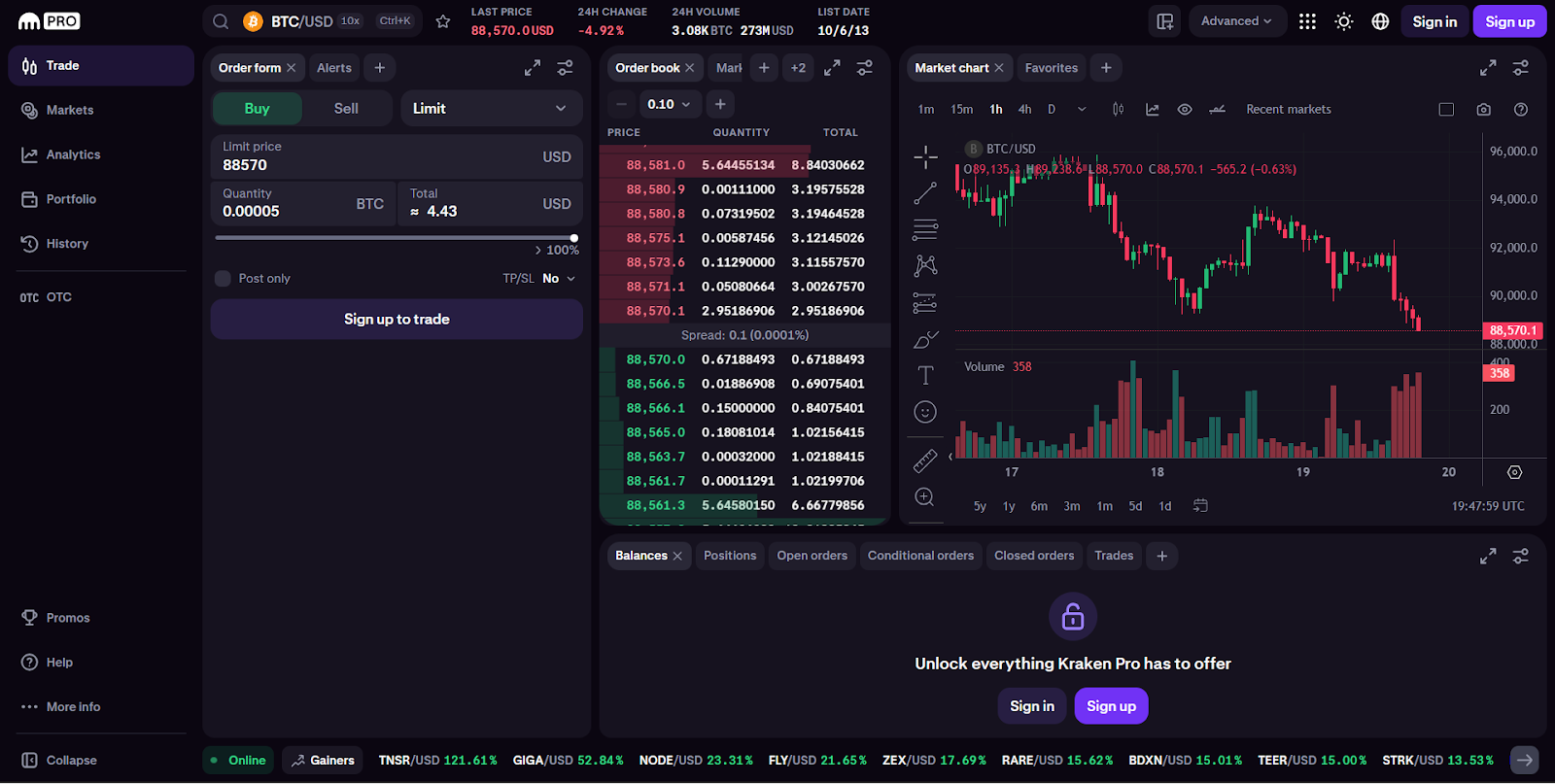
Kraken – Best Crypto Exchange for Beginners and Advanced TradersKraken – Best Crypto Exchange for Beginners and Advanced Traders

If you’re looking for the best crypto exchange for beginners, Kraken is a fantastic choice. Established in 2011, Kraken has built a reputation as one of the most trusted and secure platforms in the crypto space. With support for over 570 cryptocurrencies and availability in 190+ countries, Kraken offers a user-friendly experience for newcomers while providing advanced tools for seasoned traders.

Kraken’s intuitive interface makes it easy for you to buy, sell, and trade NFTs, whether you’re on desktop or mobile, especially if you need a clear, step-by-step guide on how to buy NFTs. For advanced users, Kraken Pro offers features like margin trading with up to 10x leverage, futures contracts, and deep liquidity for large-volume trades. The platform also emphasizes security, with robust measures like cold storage and two-factor authentication to protect your assets. Additionally, Kraken provides educational resources to help you understand blockchain, trading, and crypto concepts, ensuring you feel confident every step of the way.

Pros & Cons of Kraken

ProsConsUser-friendly interface for beginners.Higher fees on the standard platform.Advanced tools like margin trading and futures.Limited availability in some regions.Supports over 570 cryptocurrencies.Advanced features may require a learning curve.Strong security measures, including cold storage.Customer support response times can vary.

8. MEXC – Best for High-Leverage Trading

MEXC – Best for High-Leverage TradingMEXC – Best for High-Leverage Trading

MEXC is one of the most trusted crypto exchanges that you can invest in in 2025. The exchange was launched in 2018 by a team of blockchain enthusiasts and has since become a global leader, serving traders in over 170 countries. Known for its extensive cryptocurrency offerings, MEXC supports over 3,000 digital assets and 2,600+ spot pairs, making it the best platform for altcoin enthusiasts.

With trading fees as low as 0.00% for makers and 0.05% for takers, MEXC is one of the most cost-effective exchanges for both spot and futures trading. The platform also offers leverage of up to 500x, catering to high-risk takers looking to maximize their trading potential. For beginners, MEXC provides demo accounts and copy trading features, allowing you to practice and learn from experienced traders.

Security is a priority at MEXC, with measures like cold storage, two-factor authentication, and an insurance fund to protect user assets. While its advanced interface may feel complex for newcomers, the platform’s frequent updates, detailed tutorials, and responsive customer support make it easier for users to adapt and trade confidently.

Pros & Cons of MEXC

ProsConsAccess to over 3,000 cryptocurrencies.Limited fiat deposit and withdrawal options.Low trading fees for spot and futures markets.Interface can be complex for beginners.High leverage options, up to 500x.Restricted in certain regions, including the U.S.Supports copy trading and demo accounts.Customer support response times can vary.Frequent token listings and early access to new projects.Smaller tokens may have lower liquidity.

MEXC_square_logo-removebg-previewMEXC_square_logo-removebg-preview

9. KuCoin – Best for Altcoin Access and Flexible Trading
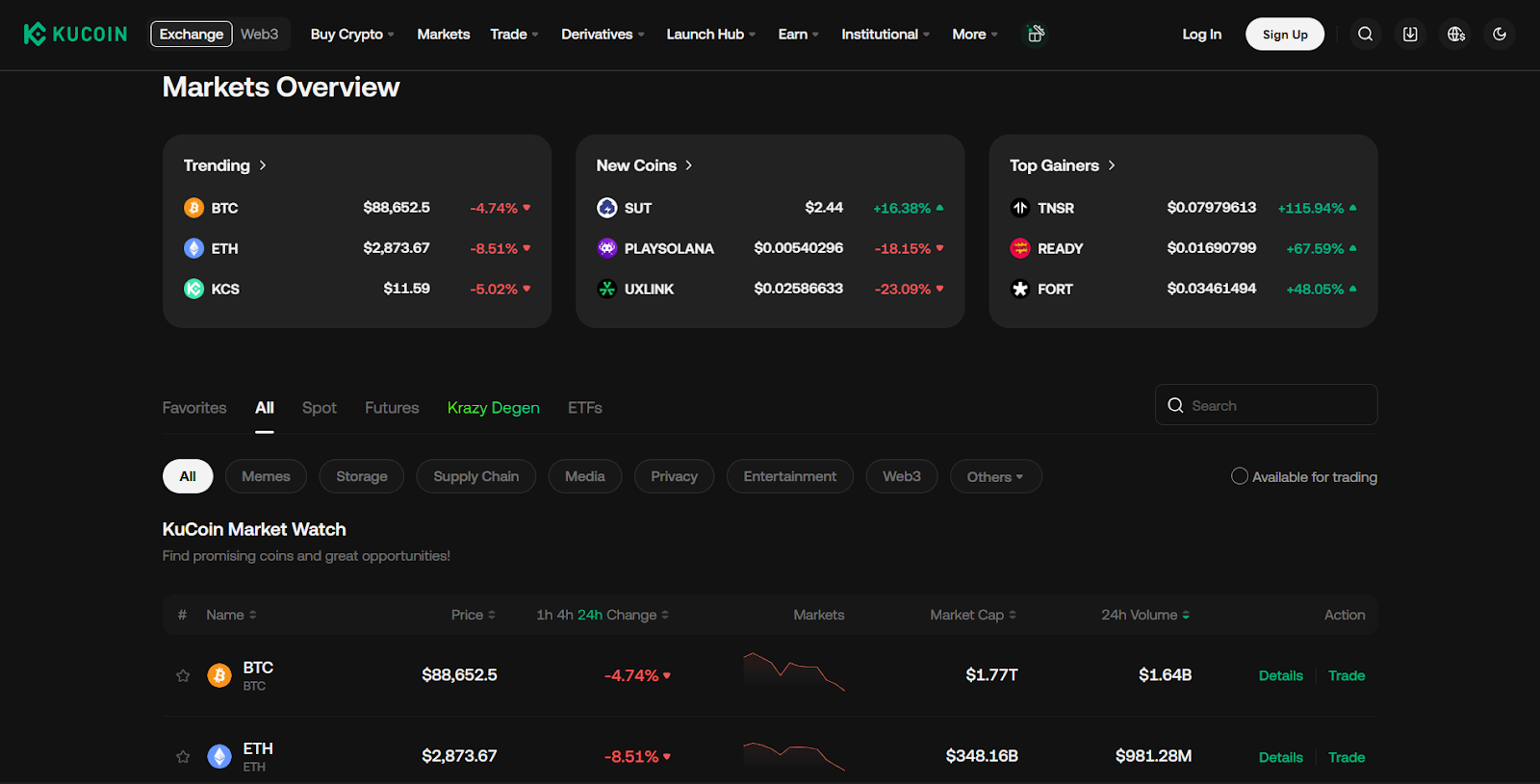
KuCoin – Best for Altcoin Access and Flexible TradingKuCoin – Best for Altcoin Access and Flexible Trading

KuCoin, launched in 2017, has established itself as one of the most versatile cryptocurrency exchanges globally. Known for its extensive range of supported cryptocurrencies, KuCoin offers access to over 700 digital assets and 1,300+ trading pairs, making it the best platform for altcoin enthusiasts and traders seeking emerging tokens.

The platform provides a variety of trading options, including spot, futures, and margin trading, along with advanced tools like trading bots and a peer-to-peer (P2P) NFT marketplace. KuCoin also stands out for its early listings of new and trending cryptocurrencies, giving you the opportunity to explore projects before they gain mainstream attention.

KuCoin’s competitive fee structure, starting at 0.10% for both makers and takers, becomes even more attractive when you hold its native token, KCS, which unlocks additional discounts. Beyond trading, KuCoin Earn offers flexible and fixed-term savings plans, staking, and structured financial products to help you grow your crypto holdings.

Pros & Cons of KuCoin

ProsConsAccess to over 700 cryptocurrencies.Limited availability in some regions.Competitive fees with discounts for KCS holders.Customer support response times can vary.Advanced trading tools, including bots and P2P marketplace.Interface may feel complex for beginners.Early listings of new and trending tokens.Trading fees can be higher for certain pairs.Flexible earning options through KuCoin Earn.Some features may require a learning curve.

Kucoin-logoKucoin-logo

10. Crypto.com – Best App for Crypto Trading and Buying

Crypto.com – Best App for Crypto Trading and BuyingCrypto.com – Best App for Crypto Trading and Buying

Crypto.com is widely recognized as one of the best apps for crypto trading and the best place to buy crypto in 2025. With support for over 442 cryptocurrencies and 480+ trading pairs, Crypto.com offers a comprehensive platform for both beginners and experienced traders. Its user-friendly interface and advanced features make it a top choice for anyone looking to trade or invest in digital assets.

The platform stands out for its low fees, with maker fees starting at 0% and taker fees as low as 0.15%. Crypto.com also provides a seamless mobile app experience, allowing you to trade, manage your portfolio, and access advanced tools on the go. For those looking to earn passive income, Crypto.com offers staking options with up to 13.74% APY and a crypto-earning debit card for everyday spending.

Security is a priority at Crypto.com, with features like 1:1 reserves, $120 million in crime insurance, and self-custody wallet options to protect your assets. Whether you’re a beginner or a seasoned trader, Crypto.com combines accessibility, security, and advanced tools to meet your trading expectations. 

Pros & Cons of Crypto.com

ProsConsSupports over 440 cryptocurrencies.Unavailable in New York.Low trading fees with maker fees starting at 0%.No phone support available.User-friendly app for trading and portfolio management.Advanced features may require a learning curve.Offers staking with up to 13.74% APY.Some features may not be available in all regions.Provides a crypto-earning debit card.Fees for fiat deposits and withdrawals can vary.

crypto.com_crypto.com_

What Is a Crypto Exchange?

A crypto exchange is a digital platform where you can trade digital assets such as Bitcoin, Ethereum, and many others, as explained in a detailed guide on how a cryptocurrency exchange works. These platforms simplify the process of accessing cryptocurrencies, making it easier for you to participate in the digital economy.

Exchanges act as a marketplace, connecting buyers and sellers while providing tools to facilitate transactions. They also offer features like price tracking, trading pairs, and secure storage options. When choosing an exchange, consider factors like fees, security, and the range of cryptocurrencies available to ensure it meets your needs.

These exchanges act as a bridge, connecting buyers and sellers while providing tools to facilitate transactions.

Types of Crypto Exchanges

When diving into the world of cryptocurrency, you’ll encounter several types of exchanges. Each serves a unique purpose, and understanding their differences can help you choose the one that fits your needs.

Centralized Exchanges (CEXs)

When using a centralized exchange, you’re engaging with a platform managed by a company that facilitates cryptocurrency trading. These exchanges are known for their user-friendly interfaces, making them a great choice if you’re new to crypto. They often provide additional features like staking, lending, and customer support to enhance your trading experience.

CEXs require identity verification to comply with regulations, which adds a layer of security and trust. They also offer protection measures like crime insurance and custodial services for your funds. However, since these platforms act as intermediaries, you’ll need to trust them to manage your assets securely.

Decentralized Exchanges (DEXs)

If you prefer more control and privacy, decentralized exchanges might be for you. These platforms operate on blockchain technology, allowing you to trade directly with others without intermediaries. Transactions are automated through smart contracts, but you’ll need to manage your own wallet and private keys.

Hybrid Exchanges

Combine features of centralized and decentralized exchanges, offering both user-friendly interfaces and greater control over your assets. They let you trade using a familiar, simple platform while maintaining custody of your funds during specific operations. Hybrid exchanges aim to provide faster transactions, better security, and less dependence on third-party intermediaries. This makes them a good choice for traders who want the convenience of CEXs but also value the independence offered by DEXs.

Other Variations

During your interaction with the best bitcoin exchanges, you’ll come across additional variations that cater to specific needs and preferences:

Peer-to-Peer (P2P) Platforms: Allow you to trade directly with other users, often with customizable payment methods and no intermediaries.Instant Swap Services: Enable quick exchanges between cryptocurrencies without the need for an account or extensive verification.Futures and Derivatives Platforms: Focus on advanced trading options like futures contracts and leveraged trading for experienced users.Crypto-to-Crypto Only Exchanges: Specialize in trading between cryptocurrencies without fiat currency support.

Should You Use a Broker or a Crypto Exchange?

Deciding between a broker and a crypto exchange depends on your goals and how hands-on you want to be with your cryptocurrency investments.

Use a Broker if: You prefer simplicity and convenience. Brokers often offer a straightforward way to buy and sell cryptocurrencies, bundling the process into a single transaction. They’re ideal if you’re new to crypto or want to invest without diving into the technical details. However, brokers may charge higher fees and offer fewer cryptocurrency options compared to exchanges.Use a Crypto Exchange if: You want more control and flexibility. Exchanges provide access to a wide range of cryptocurrencies, advanced trading tools, and lower fees. They’re a better fit if you’re comfortable managing your own trades and exploring features like staking or margin trading. Keep in mind, exchanges may require more effort to navigate and secure your assets.

Crypto Exchanges

Here’s what you can typically expect from using a crypto exchange;

Offer a wide selection of cryptocurrencies for trading, including altcoins and emerging tokens.Provide advanced tools like staking, margin trading, and automated trading bots.Typically have lower fees compared to brokers, especially for high-volume traders.Allow you to directly own and manage your cryptocurrencies.Require you to handle your own wallet security and private keys.

Traditional Brokers

Below are the key characteristics of traditional brokers when it comes to crypto investing;

Simplify the process of buying and selling cryptocurrencies, making them beginner-friendly.Often bundle crypto trading with other investment options like stocks and ETFs.Provide a more regulated and secure environment, with added consumer protections.May not offer direct ownership of cryptocurrencies, limiting wallet transfers.Charge higher fees and offer fewer cryptocurrency options compared to exchanges.

How to Choose the Best Crypto Exchange

Finding the best crypto exchange starts with identifying what matters most to you. If you are new to cryptocurrency, look for platforms that are easy to navigate, offer strong customer support, and provide educational tools. The best place to buy crypto for first-timers often includes exchanges like Coinbase or Gemini, which are known for their simplicity and security. For experienced traders, the best crypto trading platform might include advanced features like margin trading, staking, and access to a wide range of altcoins.

Security should be a top priority when choosing the best crypto app. The most trusted crypto exchanges offer robust measures like two-factor authentication, cold storage for funds, and insurance against cyber threats. Additionally, consider the fees associated with trading, deposits, and withdrawals, and check out the best zero fee crypto exchanges to find platforms that maximize your profits. Platforms like Binance and Crypto.com are often regarded as the best bitcoin exchanges due to their competitive fees and extensive features, making them ideal for both beginners and seasoned traders.

Your trading style also plays a role in selecting the right platform. If you prefer trading on the go, the best app for crypto trading should provide a seamless mobile experience with all the tools you need. For those who value transparency and trust, focus on platforms with a strong reputation and regulatory compliance. 

How to Buy Cryptocurrency (Step-by-Step)

Choose a Trusted PlatformStart by selecting the best crypto exchange that suits your needs. Look for platforms with a strong reputation, user-friendly interfaces, and robust security measures. If you’re a beginner, consider exchanges like Coinbase or Kraken, which are known for their simplicity and reliability.Create and Verify Your AccountSign up for an account on your chosen platform. Most exchanges will require you to verify your identity by submitting documents like a government-issued ID. This step ensures compliance with regulations and enhances the security of your account.Deposit FundsAdd money to your account using a bank transfer, credit card, or other supported payment methods. Be mindful of deposit fees, as they can vary between platforms. Some exchanges also allow you to deposit cryptocurrency directly if you already own some.Select the Cryptocurrency You Want to BuyBrowse the available cryptocurrencies on the platform and choose the one you want to purchase. Whether it’s Bitcoin, Ethereum, or another altcoin, ensure you understand the asset before buying.Place Your OrderDecide how much you want to invest and place your order. Most exchanges offer options like market orders (buying at the current price) or limit orders (buying at a specific price). Review the transaction details before confirming.Secure Your InvestmentOnce your purchase is complete, transfer your cryptocurrency to a secure wallet. While exchanges offer built-in wallets, using a private wallet gives you more control and reduces the risk of hacks.

Risks of Using a Crypto Exchange

One of the primary risks of using a crypto exchange is security vulnerabilities. Exchanges are frequent targets for hackers, and breaches can result in the loss of funds. Even with advanced security measures like two-factor authentication and cold storage, no platform is entirely immune to cyberattacks. Additionally, if you leave your assets on the exchange instead of transferring them to a private wallet, you risk losing access if the platform experiences technical issues or shuts down.

Another significant risk is regulatory uncertainty. Cryptocurrency regulations vary by country and can change rapidly, potentially affecting the operation of exchanges. Some platforms may face restrictions or even bans in certain regions, leaving users unable to access their accounts or funds. It’s crucial to choose a trusted exchange with a strong compliance record and to stay informed about the legal landscape in your area.

Conclusion

Choosing the best crypto exchange depends on your individual needs, whether you’re a beginner looking for simplicity or an experienced trader seeking advanced tools. The best crypto exchange for beginners should prioritize user-friendly interfaces, strong security, and reliable customer support, while seasoned traders may value features like low fees, diverse cryptocurrency options, and advanced trading capabilities. By carefully evaluating factors like security, fees, and platform reputation, you can find an exchange that aligns with your goals and provides a secure and efficient way to engage with the cryptocurrency market.

FAQs

What is the best crypto exchange in 2025?

The best crypto exchange in 2025 depends on your needs. For overall features, Binance and Coinbase are top choices, offering a wide range of cryptocurrencies, advanced tools, and strong security. Binance is ideal for experienced traders, while Coinbase is great for simplicity and reliability.

Which crypto exchange is best for beginners?

The best crypto exchange for beginners is Coinbase. It provides an intuitive interface, educational resources, and excellent customer support, making it easy for newcomers to start trading. Kraken is another beginner-friendly option with strong security and straightforward tools.

What is the safest and most trusted crypto exchange?

The safest and most trusted crypto exchange is Kraken, known for its robust security measures, including two-factor authentication, cold storage, and regulatory compliance. Coinbase also ranks high for trustworthiness due to its insurance coverage and adherence to regulations.

What crypto exchange has the lowest fees?

Binance is the crypto exchange with the lowest fees, offering competitive maker and taker fees starting at 0.1%. For high-volume traders, platforms like KuCoin and Bybit also provide low-cost trading options.

Which app is best for crypto trading?

The best app for crypto trading is Binance for its advanced features, low fees, and wide range of cryptocurrencies. For beginners, the Coinbase app is highly recommended due to its user-friendly design and educational tools.

What is the best crypto exchange for altcoins?

Binance is the best crypto exchange for altcoins, offering a vast selection of cryptocurrencies, including many emerging tokens. Its advanced trading tools and liquidity make it ideal for altcoin enthusiasts.

Can I use a crypto exchange without verifying my identity?

Some exchanges, like KuCoin and Bybit, allow limited trading without identity verification. However, to access full features and higher withdrawal limits, most platforms require identity verification for compliance and security.

What is the difference between a crypto wallet and a crypto exchange?

A crypto wallet is used to store your cryptocurrencies securely, while a crypto exchange is a platform for buying, selling, and trading cryptocurrencies. For maximum security, it’s recommended to transfer your assets from an exchange to a private wallet.



Source link

Leading Cloud Mining Platforms to Watch in 2026 for Passive Income

0
Leading Cloud Mining Platforms to Watch in 2026 for Passive Income


As cloud mining grows more sophisticated, 2026 is shaping up as the year when a few standout platforms may evolve into the tech giants of crypto infrastructure. With advances in AI, capital investment, regulatory clarity, and scaling renewable energy infrastructure, some cloud mining providers are well-positioned to dominate. This article explores which platforms could rise to that level—and how MagiCrypto is competing in that race.

Key Trends That Will Fuel the Rise of Mining Giants

Before naming potential giants, it’s worth understanding what qualities will define them in 2026:

AI-driven optimization: Platforms that use machine learning to optimize hashpower, power consumption, and switching between Bitcoin & Dogecoin pools in real time will have an edge.Capital backing and infrastructure scaling: Giants will need access to large-scale investments to build or lease data center capacity, secure power deals, and manage hardware refreshes.Regulatory compliance and transparency: Investors demand legal certainty, especially when returns are promised via contracts. Platforms that are verified, registered, and audited will be more trusted.Sustainable energy sourcing: Renewable or clean energy will increasingly influence both costs and public image.Ease of use and marketing: To scale like tech giants, these platforms must appeal to both retail and institutional users with polished UX, flexible contracts, clear dashboards, and strong customer support.

Those trends set a foundation. Now let’s look at which platforms could evolve into major tech-miner brands by 2026.

MagiCrypto — A Dark Horse with Giant Potential

One of the strongest contenders is MagiCrypto. With legal registration under Crypto Mining Solutions GmbH in Switzerland, energy-optimized data centers, and the use of AI-enabled contract management, MagiCrypto has many of the attributes a future leader needs.

Its mission centers on transparent contract-based mining, compliance, and clean energy optimization.If it can scale its infrastructure, attract larger capital, and expand its user base globally, there’s potential for it to grow beyond “just another mining provider” into a tech-mining infrastructure brand.

👉 Visit MagiCrypto to explore its current contracts, gauge its performance, and see why it’s among the front-runners for future tech-scale.

With the right strategic growth (for example, developing in new regions, offering longer-term contracts or staking-style services), MagiCrypto could scale significantly by 2026.

Platforms That Could Challenge for Giant Status

Here are several platforms or types of platforms that could rise in profile by 2026, especially in Bitcoin & Dogecoin cloud mining:

OneMiners

OneMiners is known for offering ASIC hosting and has recently been developing AI-driven monitoring tools to optimize performance. Its geographic spread of data centers (including locations in Europe, U.S., Middle East) gives it infrastructure leverage. It could upgrade its cloud mining offerings to compete more aggressively.

BitDeer Technologies

While already established, BitDeer has ambitions tied to high-performance computing and may expand its AI/cloud-mining hybrid services. Its scale and market presence make it a candidate to formalize itself as more than just a mining provider.

HashrateIndex / Foundry-style Analytics Platforms

Analytics-led platforms that combine data, forecasting, and mining infrastructure may evolve to own or lease physical hashing power. If one of these firms builds on its analytics backbone to launch its own AI-managed cloud mining service, it could become influential.

New or Emerging Free-Bonus / Trial-Based Platforms

Innovators that offer free trial-based contracts, AI-optimized performance, and transparent rewards could build a large user base quickly. For example, DNSBTC was mentioned as a U.S.-based mining provider that could be gaining traction.

Exchange-Linked or Financial-Tech Backed Mining Providers

Platforms tied to exchanges or fintech firms that add mining contracts as part of their product suite have the advantage of existing user bases. If such firms adopt AI-optimized mining contracts for Bitcoin & Dogecoin, they could scale very fast and eclipse purely mining-focused companies.

What Could Accelerate a Platform’s Rise to Giant Status

To become a tech-scale mining giant by 2026, a platform would likely need to:

Raise or reinvest capital to build or lease large-scale, efficient data centersPartner with ASIC manufacturers or bulk-hardware providers to reduce unit costEnsure regulatory compliance (jurisdiction licenses/audits) to attract institutional clientsEmbed AI-driven automation deeply (predictive maintenance, automated pool switching, energy forecasting)Develop UX / dashboard features to make mining simple for both retail and institutional investorsPossibly bundle mining with financial-product features (staking, lending, or yield optimization)

If MagiCrypto or one of the competitors executes on these dimensions, they could grow their market share dramatically.

Risks That Could Stop a Platform Becoming a Giant

Of course, rising to “giant” scale is not guaranteed. Some of the risks include:

Energy cost spikes or regulation changes (especially in jurisdictions with strict crypto-mining laws)Hardware supply chain issues or chip shortagesCompetition from larger mining corporations expanding into cloud miningDeclining profitability from Bitcoin’s protocol adjustments (e.g. increases in difficulty or halvings)Lack of liquidity or trust among users if transparency or audits are insufficient

Those bottlenecks could slow growth or prevent a platform from truly scaling to tech-giant level.

Conclusion

2026 may see some cloud mining platforms evolve beyond niche services into infrastructure powerhouses, driven by AI, regulation-aware contracts, and strong capital backing. MagiCrypto is very much among the contenders—with its compliance, transparent contracts, AI-managed mining centers, and scalable vision.

If you’re looking to earn passive Bitcoin or Dogecoin income now and want early exposure to what might grow into a mining-tech giant, MagiCrypto deserves serious consideration.

👉 Visit MagiCrypto to view its contract options and track its performance as a cloud-mining platform with aspirations of becoming a major player by 2026.


Source link

Fed Rate-Cut Odds Collapse as Crypto and Markets Face Fresh Risk – NFT Plazas

0
Fed Rate-Cut Odds Collapse as Crypto and Markets Face Fresh Risk – NFT Plazas


Combined with heightened volatility in crypto and equities – where Bitcoin’s sharp decline erased weeks of gains – the market is entering a recalibration phase where monetary easing is no longer assumed and risk assets face renewed downside pressure.

Absent Data Leaves Policymakers Without Evidence to Cut

The sharp repricing began after a prolonged government shutdown halted the release of October employment data. Without wage growth, job creation, and labor-force participation metrics, the Fed lacks critical evidence to justify a pivot toward easing – especially while inflation remains above the 2% target.

Historically, cuts occur after confirmed labor deterioration, not predictive forecasts, making the shutdown uniquely disruptive during a transition phase.

TimeframeProbabilityMarket AssumptionOne Month Ago~98%Pivot imminentOne Week Ago~50%Shutdown delaying dataNow~30%No data + policy divergence = pause

This shift represents a move from calendar-driven expectations to a data-dependent environment, where easing is contingent on hard evidence rather than anticipated macro cycles.

The absence of data has turned what was previously a calendar-anchored pivot into a data-dependent and delayed transition.

Funding rates have cooled from elevated levelsOpen interest has fallen from recent highsSpot-to-futures basis has compressed as traders deleverage

While long-term fundamentals for crypto (particularly institutional adoption and ETF flows) remain intact, macro liquidity remains a defining constraint. If lower rates arrive later than anticipated, the path to capital inflow into digital assets may be slower and more volatile.

Explore NFTPlazas’s Top pick 10 Best Crypto Trading Bot 2025

Internal Fed Split Adds to Policy Ambiguity

Recent FOMC minutes show that the Federal Reserve is increasingly divided over the path forward for interest rates, revealing not just tactical disagreement but a deeper philosophical split. Dovish members argue that prolonged high rates could trigger an unnecessary contraction, noting that policy effects often manifest with long lags across credit markets and real economic output. In contrast, hawkish officials warn that cutting prematurely could reignite inflationary pressures, particularly given that price stability remains incomplete and expectations could shift quickly if the Fed signals easing too soon. 

Policy PositionCore PriorityInterpretationDovesCut sooner to prevent contractionConcern over lagged economic slowdownNeutral MajorityHold until inflation confirms declineData-first, risk-balanced postureHawksDelay cuts until inflation reaches targetProtect credibility, avoid reflation

Because these divisions are structural rather than situational, even supportive data may not translate into swift policy action. Without a unified stance, the default outcome becomes maintaining current rates. This dynamic is now driving market expectations toward delayed easing, with investors increasingly pricing cuts further into 2026 rather than the early-pivot narrative that dominated earlier in the year.

BTC Flash Crash Resets Risk Sentiment

The market shift accelerated when Bitcoin broke key support levels in a rapid sell-off that triggered widespread liquidations across leveraged positions. The decline coincided with rising Treasury yields, tightening liquidity expectations, and broader de-risking across high-beta equities, leading to correlations that reinforced downside momentum rather than acting as independent shocks. Institutional portfolios appear to have reduced exposure not only to crypto but to other speculative assets, suggesting a coordinated repricing rather than isolated panic.

Learn more: Coinbase Promo Code – the Easiest Way to Unlock Exclusive Rewards

What differentiates this decline is the behavior of long-term holders, who began distributing into weakness rather than absorbing supply – an unusual pattern typically associated with mid-cycle corrections rather than early-stage bull markets.

Despite the drawdown, ETF products continued seeing inflows, indicating that capital is rotating toward regulated vehicles rather than exiting the asset class entirely. Total crypto market capitalization fell by more than a trillion dollars, yet on-chain flow data suggests repositioning over abandonment, with traders shifting from directional bets to hedged, lower-risk allocations.

Why This Cycle Is More Fragile Than Previous Ones

This downturn unfolds under conditions that did not exist in earlier cycles. Sovereign debt levels are at record highs globally, limiting fiscal responsiveness to economic shocks. Geopolitical risks – from currency instability to energy exposure – add uncertainty that feeds directly into monetary policy calculations. Institutional capital now drives crypto markets, tying price movements more directly to macro liquidity conditions than to retail speculation. Meanwhile, post-pandemic stimulus has left policymakers with fewer discretionary tools to cushion potential downturns.

These overlapping structural constraints mean that recovery depends not just on rate cuts but on synchronized confirmation across labor markets, inflation data, and financial-stability metrics. Without alignment, markets may enter a prolonged period of uneven or stalled recovery, even if underlying technological fundamentals remain intact.

Is the Pivot Delayed or Rewritten?

The shift in market pricing reflects a recalibration rather than a rejection of the pivot narrative. If labor data shows clear weakening when reporting resumes, easing could arrive sooner, potentially beginning in early-to-mid 2026. If employment holds steady or inflation stays above target, the Fed may delay rate cuts to late-2026 or later, extending the timeline for liquidity recovery.

For crypto markets, this timing matters. Later-cycle easing implies that capital inflows may accumulate gradually rather than driving immediate breakout trends. In the interim, strategies favoring yield, stable coin financing, staking, and market-neutral positioning may outperform purely directional bets, especially given constrained liquidity conditions and declining speculative leverage.


Source link

Leverage Hits Record in Q3 2025, Still ‘Healthier’ Than 2021 – 2022 – NFT Plazas

0
Leverage Hits Record in Q3 2025, Still ‘Healthier’ Than 2021 – 2022 – NFT Plazas


The crypto market has officially surpassed the leverage mania of the 2021 bull run. According to a November 2025 report from Galaxy Digital, total crypto-collateralized lending reached a record-breaking $73.59 billion in Q3 2025, eclipsing the previous peak of $69.4 billion set in Q4 2021.

Albeit a highly volatile market structure, today transparent on-chain protocols are shifting from “trust-based” credit to “code-based” collateralization.

Learn more: What is Euler (EUL)? Modular Engine Rebuilding DeFi Lending

DeFi Now Leads

DeFi has consumed the lending market. Galaxy’s data reveals that DeFi protocols now control approximately 66.88% of all crypto lending activity, a stark contrast to the centralized dominance of the last cycle. In Q3 alone, the dollar value of outstanding loans on DeFi applications surged 55.7% to reach $41 billion.

DeFi Now Leads

DeFi dominance rose in Q3, while CDP Stables saw decreasing demands from users. – Source: Galaxy Research

Two specific behaviors drive this on-chain explosion. First, traders are aggressively “looping” assets, specifically borrowing Ethereum against liquid staking tokens like stETH, to amplify yield. On the other hand, “points farming” has warped borrowing incentives. Users now take out loans across new networks not just for liquidity, but to qualify for future token airdrops.

The report highlights a major pivot within DeFi itself. Users have abandoned Collateralized Debt Positions (CDPs) like MakerDAO in favor of direct lending pools. Lending applications (such as Aave and Morpho) now capture over 80% of on-chain borrowing volume. 

Centralized Lenders Have Changed

While DeFi soars, Centralized Finance (CeFi) has staged a disciplined recovery. CeFi loan books grew 37% in Q3 to $24.4 billion. However, the centralized sector remains roughly 34% below its 2022 peak, reflecting a cautious institutional approach.

The CeFi landscape has consolidated heavily. Three giants, Tether, Nexo, and Galaxy Digital, now control 75% of the centralized market. Tether alone accounts for nearly 60% of this activity.

Centralized Lenders Have ChangedCentralized Lenders Have Changed

CeFi lending market size has seen a significant growth in Q3 2025. – Source: Galaxy Research

In other words, the nature of these loans has changed. The industry has eradicated the uncollateralized, “handshake” lending practices that doomed firms like BlockFi and Genesis. Today’s centralized lenders demand strict over-collateralization, primarily accepting Bitcoin and stablecoins. The new standard eliminates the “hidden insolvency” risk that triggered the contagion events of 2022. If a borrower fails today, the lender holds the assets to cover the loss immediately.

Why Volatility Remains King

A safer credit structure does not equal a stable price environment. The Galaxy report details how automated leverage creates violent, mechanical price corrections.

In early October 2025, crypto futures Open Interest (OI) swelled to an all-time high of $220 billion. The market corrected swiftly on October 10, triggering the largest daily futures liquidation event in history, liquidating over $19 billion in positions within 24 hours.

Why Volatility Remains KingWhy Volatility Remains King

Perps OI peaked in early October but swiftly fell after the historic event. – Source: CoinGlass

Learn more: Best NFT Marketplaces of 2025: Top Platforms Reviewed

The historic liquidation event serves as a perfect case study for the 2025 market structure. Unlike 2022, no lenders went bankrupt, requiring no bailouts. The system worked exactly as designed: code executed liquidations instantly to protect protocol solvency. While the current market structure prevents systemic credit contagion, it guarantees that price crashes will be sharp, fast, and merciless.

To conclude, the crypto lending landscape, now built on a firmer base than it was in 2021, has traded counterparty risk for volatility risk. Investors no longer need to worry if a lending desk is secretly insolvent when on-chain data proves the collateral exists. Market volatility, at the same time, is prone to violent, short-term price shocks, but the structure holds.


Source link

Popular Posts

My Favorites