Arts

Home Arts Page 21

How IPFS and Filecoin Power the Zero Knowledge Proof Ecosystem

0
How IPFS and Filecoin Power the Zero Knowledge Proof Ecosystem


The vision of decentralized AI needs a way to manage huge data loads without slowing things down. Regular blockchains offer strong security but fall flat when storing big files. Think high-resolution images or complex machine learning models.

This is where the Zero Knowledge Proof ecosystem brings a setup worth studying for students and engineers. The project steps away from cramming everything onto the main ledger. It builds a link between speed and size. It uses a clever blend of on-chain security and off-chain storage. Grasping this balance is the secret to seeing how future internet systems will really work for everyone.

Why Storing Data on Blockchain is a Nightmare

Nowadays, blockchain networks face a major limitation: scalability. Imagine attempting to put a 1GB AI model directly on-chain. Every node would be required to download and keep a copy, overwhelming the network and driving transaction fees sky-high. This challenge is often referred to as the storage bottleneck. Most blockchains are designed to process only small data payloads or simple balance transfers, so when it comes to data-intensive tasks, developers have to look for alternative solutions.

The Zero Knowledge Proof system knows the main ledger should only act as a judge, not a storage room. Keeping massive datasets on-chain is too slow and costly for real use. If we want decentralized apps to stand up to big tech, we must find a way to keep the network light. We still need access to terabytes of data, though. This creates demand for a mixed model that splits data from its proof.

IPFS: The Answer to Data Chaos

To fix this, the network turns to the InterPlanetary File System, or IPFS. The traditional web relies on location-based addressing, whereas IPFS uses content-based addressing instead. In a typical setup, you locate a file by its location—such as a specific folder on a server. If that server moves, the link dies. IPFS changes the game by giving every file a unique hash or fingerprint. If you want a file, you ask the network for that hash.

IPFS: The Answer to Data Chaos

This clarifies that the Zero-Knowledge Proof protocol is capable of locating files based on their content, rather than their physical location. This system works much better for spread-out networks. It lets data scatter across many different nodes at once. This decentralized method makes sure there is no single weak point. IT students should see this as a core shift in how to think about pulling data and building web systems.

Filecoin and PoSp: Making Storage Worth It

IPFS works great for saving files. But it does not promise those files will stay online forever. This is where Filecoin and the Proof of Space (PoSp) system become key. The Zero Knowledge Proof ecosystem leverages these mechanisms to create an open and fair storage marketplace. Nodes earn ZKP tokens by demonstrating that they securely store user data and keep it accessible over extended periods.

Proof of Space: This checks that a node offers real hardware room. Economic Rewards: Filecoin protocols handle payments for storage providers. Data Staying Power: Contracts make sure files don’t get wiped by host nodes. Checks and Audits: The network regularly reviews storage to confirm data stays whole.

The system repurposes unused hard drive capacity into an active resource that supports the global ZKP network.

How Data Flows Through This Hybrid Machine

The path data takes in this mixed model is a work of art in network engineering. It follows a set route to keep data safe and easy to find later. Firstly, the user uploads a large file to an IPFS node. IPFS then breaks down and processes the file to generate a Content Identifier (CID). This CID is a compact string that uniquely represents the entire file.

How Data Flows Through This Hybrid MachineHow Data Flows Through This Hybrid Machine

Instead of putting the huge file on the blockchain, the Zero Knowledge Proof ledger only stores this small CID. The hash is then stored in a specialized data structure known as a Patricia Trie, which enables extremely fast retrieval while maintaining strong security. When someone needs to download the file, the blockchain works like a pointer. The user receives the CID, which their browser uses to retrieve the complete file from the IPFS network. By relying on this ZKP-based approach, the blockchain remains efficient and fast.

The Big Picture

The Zero Knowledge Proof ecosystem proves that tomorrow’s tech is not about one chain alone. It’s about how different systems join forces. By blending IPFS and Filecoin, it cracks the biggest headache in the industry. For IT students, this hybrid storage model is a textbook case of smart engineering. It keeps heavy data off-chain while holding a secure and provable record on-chain. This balance makes sure the network stays quick enough for AI tasks. It also stays big enough to hold the world’s information. As we step into a new age of decentralized data, these storage fixes will form the base of every major app we use daily.

Find Out More about Zero Knowledge Proof: 

Website: https://zkp.com/ 

Auction: https://auction.zkp.com/ 

X: https://x.com/ZKPofficial 

Telegram: https://t.me/ZKPofficial


Source link

What Is Linea? Beginner’s Guide to the L2 Blockchain – NFT Plazas

0
What Is Linea? Beginner’s Guide to the L2 Blockchain – NFT Plazas


“What is Linea?” is a question many Ethereum users are asking as the network continues to grow. Linea is an Ethereum Layer-2 blockchain developed by Consensys. It helps transactions run faster and cost less, while still relying on Ethereum for security. Linea is built on top of Ethereum, so existing contracts and tools can still be used without any changes.

In this guide, we explain how Linea works, its key features, ecosystem, token, and airdrop status. We will also explore its long-term role in the evolving Ethereum Layer-2 landscape. Read on to clearly understand where it fits and why it matters.

What Is Linea?

What Is Linea?

Linea is a Layer-2 (L2) blockchain solution built on Ethereum to improve speed, lower fees, and reduce congestion. It helps Ethereum handle more activity without slowing down or becoming expensive for users. While Ethereum processes transactions directly on its main network, Linea handles most transactions outside Ethereum and then sends a small confirmation back to Ethereum.

Launched by ConSensys, the network focuses on solving common Ethereum problems, such as high gas fees and slow confirmation times. This makes everyday actions like swapping tokens, minting non-fungible tokens (NFTs), and using DeFi apps much more affordable without compromising Ethereum’s security.

Linea is built for users and developers who want an Ethereum-like experience but with faster and cheaper transactions. Because Linea is an Ethereum Virtual Machine (EVM) equivalent, it works the same way as Ethereum, developers can move their apps without changing the code.

How Does Linea Work?

Linea works by handling transactions outside Ethereum while still using the mainnet for final security. You can think of Linea as a faster lane that still leads back to Ethereum. Here’s how it works:

Sending a transaction: A user starts by approving a transaction in their wallet, such as MetaMask. The transaction is sent to the Linea network, where it waits briefly until it’s picked up for processing.  Grouping transactions: Linea groups multiple user transactions together and verifies that each one adheres to the network’s rules. Valid transactions are placed into a new block. Once this happens, the user typically sees a confirmation message indicating that the transaction was accepted on Linea.Balance updates and quick confirmation: After the block is created, Linea updates account balances and contract data. At this point, the transaction appears confirmed in the wallet, often within two seconds. Bundling transactions: Instead of sending every block to Ethereum one by one, Linea combines multiple blocks into a larger batch. This helps reduce costs and makes the system more efficient, especially when many people use the network simultaneously. Zero-knowledge proof generation: Linea creates a proof to show the transactions were processed correctly. Final confirmation on Ethereum: The proof and related data are sent to the Ethereum mainnet. Ethereum checks the proof and confirms that everything is valid. Once this step is complete, the transactions become permanent and fully secured by Ethereum, giving users the same level of trust as using Ethereum directly.

Key Features of Linea

Zero-Knowledge Rollups (zk-Rollups)

Zk-Rollups are a method for processing multiple transactions off the Ethereum blockchain. Linea uses the zero-knowledge technology to make transactions cheaper and faster. Instead of recording every transaction on Ethereum, zk-Rollups handle most of the work elsewhere and then send a short proof to Ethereum. Because Ethereum only needs to verify the proof, not every transaction, costs stay low, and the network avoids congestion. 

Benefits include:

Security: Ethereum verifies the proofs.Speed: Transactions settle within seconds.Scalability: Supports DeFi, NFTs, games, and high-activity apps.Privacy: Transactions are confirmed securely without exposing user information.

Compared to Optimistic Rollups, zk-Rollups provide faster finality without long waiting periods, making them better for frequent transactions. 

Ethereum Virtual Machine (EVM) Equivalence

Linea is fully EVM-equivalent, meaning it behaves exactly like Ethereum at the technical level. If a smart contract works on Ethereum, it will work the same way on Linea. This allows developers to:

Deploy existing Ethereum smart contracts without changes.Use familiar development tools such as Hardhat, Remix, or Truffle.Integrate top crypto wallets such as Coinbase, MetaMask, and other Ethereum wallets.

In return, this reduces risk and makes Linea easy to adopt for Ethereum developers.

Low Transaction Fees

One of the main reasons users choose Linea is its low-cost transactions. Ethereum fees can become expensive during busy periods, sometimes costing $5 to $50 per transaction. Most Linea transactions cost only a fraction of a cent. With low fees, everyday actions like swaps, NFT minting, and in-app transactions become affordable and practical, even for smaller amounts.

Scalability

Linea can handle thousands of transactions per second. Instead of processing actions one by one like Ethereum, it can process many transactions altogether, which keeps the network fast even when usage increases. As more people use Linea, the network can grow to support that demand without slowing down. 

Security

Linea gets its security from Ethereum. After transactions are processed on this blockchain, a confirmation is sent to Ethereum to ensure everything was done correctly. Once Ethereum approves it, the transaction becomes permanent. Linea relies on Ethereum, not a separate system, to keep user funds safe. Because all important information is saved on Ethereum, users can still access and recover their funds even if Linea were to stop working temporarily.

Linea vs. Other Ethereum Layer-2s

FeatureLineaArbitrumOptimismzkSyncRollup Typezk-RollupOptimisticOptimisticzk-RollupEVM compatibilityYesYesYesPartialTPSThousandsHundredsHundredsThousandsFinalitySeconds1 week1 weekSecondsTransaction feesLowModerateModerateLowEcosystem focusDeFi, NFTs, and DevelopersDeFi and gamingDeFi and governanceDeFi and NFTs

Linea stands out for speed, full EVM compatibility, and zk-Rollup security, combining the best of multiple L2 approaches.

Benefits and Risks of Using Linea

Benefits

Ethereum security at lower cost: Linea delivers the same level of security as Ethereum, but at lower gas fees.Seamless Ethereum compatibility: Because Linea is fully EVM-equivalent, developers can deploy existing smart contracts without rewriting code. This reduces migration risk and development time.New use cases: Low transaction costs make activities such as frequent trading, NFT minting, gaming interactions, and micro-transactions more affordable. Strong backing: Linea benefits from the resources and credibility of Consensys and the Linea consortium, which helps drive trust and adoption.Growing ecosystem and tooling support: Linea integrates seamlessly with popular wallets, bridges, trusted oracle services like Chainlink, and developer tools, supporting the growth of DeFi and NFTs.

Risks

New technology risks: Being a relatively new technology, software issues may still appear as the network evolves.Bridging risks: Moving assets between Ethereum and Linea can be risky. Bridges rely on smart contracts, which can have bugs. Because bridges hold large amounts of locked funds, they have often been targets for hacks in the past. Early-stage centralization: A limited number of operators control certain aspects of the Ethereum network, with plans for decentralization planned over time.

Linea Ecosystem Overview

Linea Ecosystem OverviewLinea Ecosystem Overview

Linea’s ecosystem is growing with a strong focus on useful Ethereum-based applications, not experimental tools that are hard to use. 

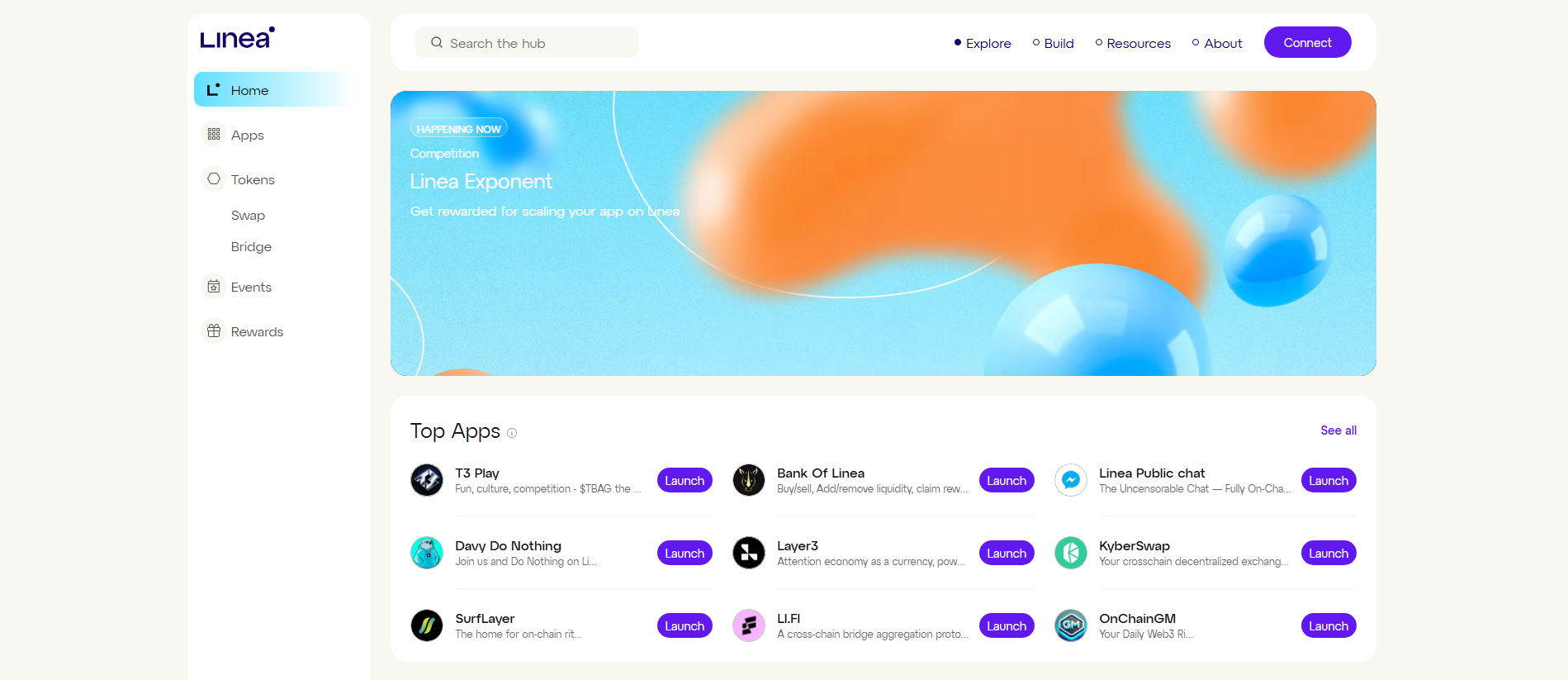
DeFi platforms on Linea allow users to lend, borrow, swap tokens, and earn yields at much lower costs than on the Ethereum mainnet. Because fees are lower, users can make smaller trades without losing money to gas fees.Top NFT marketplaces benefit from Linea’s low fees and fast confirmations. Creators can mint NFTs at a lower cost, and collectors can trade them without paying high transaction fees. Developer tooling remains one of Linea’s strengths. Linea is fully EVM-compatible. As such, developers can move their existing smart contracts to Linea with little or no changes. They can also keep using the tools they already know. Wallet support is strong. Popular wallets, such as MetaMask, Coinbase Wallet, and Ledger, work smoothly with Linea, making it easy for users to get started.Bridges allow users to move assets between Linea, Ethereum, and other networks.

Overall, Linea focuses on being easy to use, affordable, and closely aligned with Ethereum. This explains why more developers and everyday users are adopting it. 

How to Use Linea (Step-by-Step)

Step 1: Set up a compatible wallet

Linea supports popular Ethereum wallets, including MetaMask. Ensure your wallet is updated to the latest version to avoid network or signing issues.

Step 2: Add the Linea network

The network does not appear by default in most wallets. You can add it manually by entering Linea’s network details or automatically through trusted network listing tools. Once added, switch your wallet between the Ethereum mainnet and Linea.

Step 3: Bridge assets from Ethereum to Linea

First, buy Ethereum from an exchange of your choice, then bridge it to Linea using an official bridge or a trusted bridge. If you’re unfamiliar with the process, follow this step-by-step guide to buying Ethereum. Start with a small amount to test the process, as bridging introduces smart contract risk. 

Step 4: Pay gas fees in ETH

Transactions use ETH for gas, just like Ethereum. Make sure you bridge enough ETH to cover transaction fees. Fees are significantly lower, but an insufficient amount of ETH will prevent transactions from executing.

Step 5: Interact with Linea DApps

Use DeFi platforms, NFT marketplaces, and other applications built on Linea decentralized applications (dApps). Transactions settle faster, making activities like swaps, staking, and minting more efficient.

Step 6: Monitor transactions and balances

Track transactions using a compatible block explorer. This helps verify confirmations, gas usage, and contract interactions, especially when using new protocols.

LINEA Token and Airdrop

LINEA Token and AirdropLINEA Token and Airdrop

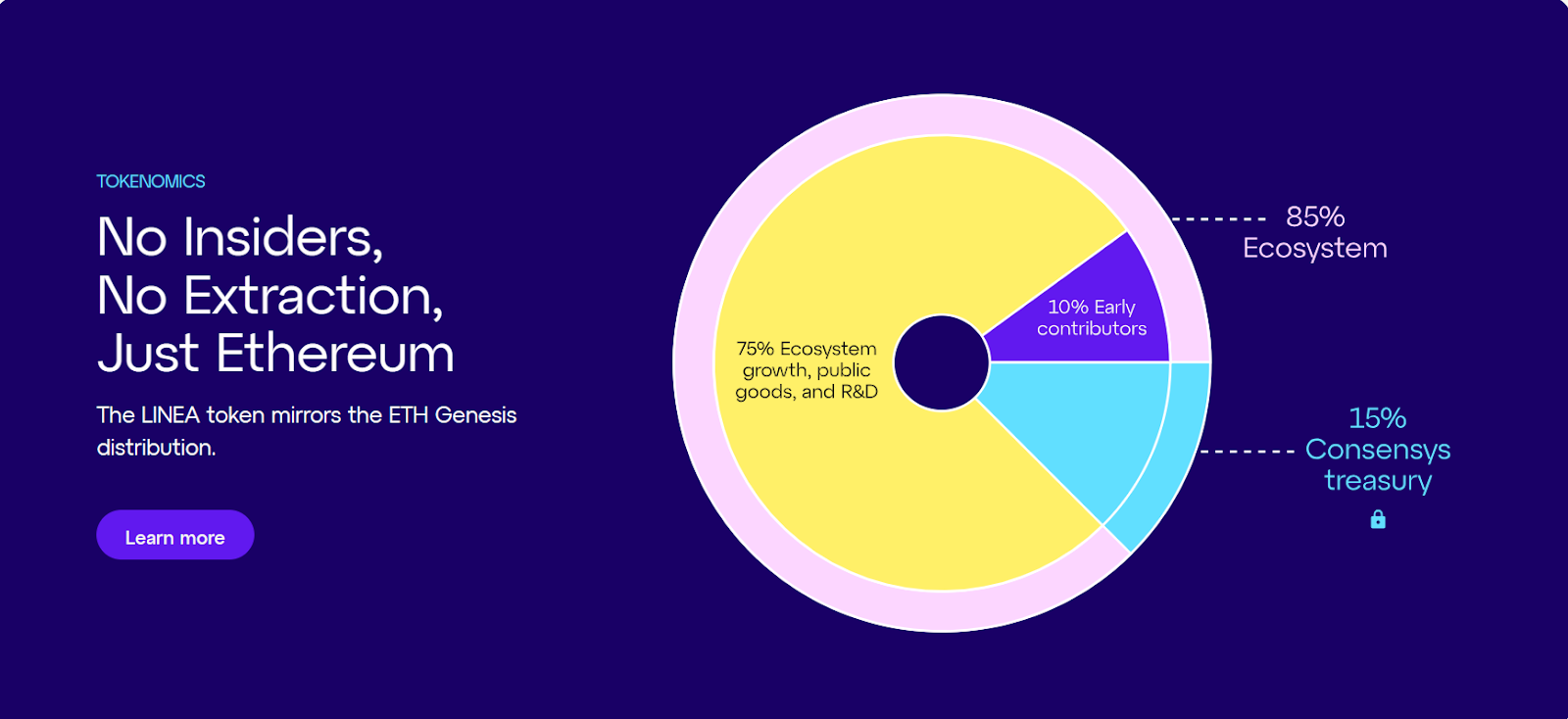
The LINEA token was officially launched through a token generation event in September 2025, with a fixed total supply of 72 billion tokens. As part of its initial distribution, 10% of the total token supply was allocated to an airdrop targeting early and active users of its blockchain. 

To qualify, users had to interact with the network. This included bridging assets, using dApps, and completing programs such as Linea Voyage and Linea Park. The claim window for the airdrop remained open for 90 days, ending on December 9, 2025.

During this period, eligible users could check their Linea crypto allocation and claim LINEA tokens directly to their wallets through official Linea channels. Any tokens that went unclaimed after the deadline went to the ecosystem fund. This helps support future growth and incentives.

Now, the LINEA token focuses on long-term growth. It is designed to support the network as Linea continues to expand. All transaction fees on Linea are paid using ETH. This means every time people use the network, ETH is involved. 

A portion of the value generated by Linea is then permanently removed from circulation through a built-in Linea burn system. More activity on Linea leads to fewer ETH and LINEA tokens in circulation. Over time, this strengthens Linea as a long-term layer 2 scaling solution for Ethereum.

The Future of Linea Blockchain

The future of Linea is closely tied to Ethereum’s long-term scaling plans. As Ethereum grows, it helps handle more users and transactions without becoming slow or expensive. 

By Q1 2026, Linea plans to reach Type-1 zkEVM equivalence. Apps will run without changes, making it easier for developers to build and move projects. This keeps Linea closely aligned with Ethereum and supports its role as a long-term layer 2 scaling solution.

Linea also benefits from strong backing by Consensys. Consensys is a major contributor to the Ethereum ecosystem and the company behind MetaMask and Infura. This connection provides access to a large group of users and developers. It also makes adoption easier because Linea works smoothly with tools that are already in use.

From a technology point of view, Linea focuses on full EVM equivalence. Ethereum apps can move to Linea without changing their code. Developers can scale their apps safely. Financial apps, in particular, benefit from this reliability.  

That said, Layer-2 is highly competitive. Networks like Arbitrum, Optimism, and Base already have more users and bigger ecosystems. Linea will need to attract top apps. It must also continue to improve speed, decentralization, and security to remain competitive and an ideal choice for users.

Conclusion

Linea offers a practical and scalable solution for Ethereum users and developers. It delivers lower fees, faster transactions, and reliable EVM compatibility. Its zero-knowledge rollup technology and strong backing from Consensys position it as a solid Layer-2 network within the Ethereum ecosystem. While adoption is still growing, Linea offers a secure and accessible way to utilize decentralized applications, bridge assets, and participate in a token-driven

FAQs

What’s the primary purpose of the Linea network?

The primary purpose of the Linea network is to help scale Ethereum. Linea improves transaction speed, reduces fees, and reduces congestion on the Ethereum mainnet. It also allows developers to use Ethereum smart contracts and lets users interact with dApps more easily.

Is Linea a good investment?

Yes. Linea is a good investment. It may interest users who follow Ethereum scaling projects, but like all crypto assets, it carries risk.

Can I bridge ETH to Linea?

Yes. You can move ETH and other assets from the Ethereum mainnet to Linea using official bridges. This allows you to pay lower fees and receive faster transaction confirmations while still using Ethereum apps.

What is Linea used for?

Linea is used for running smart contracts, utilizing DeFi platforms, trading tokens, and interacting with NFTs on the Ethereum blockchain. Its low-cost, fast transactions make it useful for both developers and daily users.


Source link

2026 Blockchain Revolutionizes Provably Fair Gambling Through NFTs

0
2026 Blockchain Revolutionizes Provably Fair Gambling Through NFTs


Blockchain technology transforms online gambling through provably fair systems in 2026. Smart contracts enable transparent, verifiable outcomes while NFTs turn winnings into ownable digital assets. As traditional platforms struggle with trust issues, blockchain adoption explodes worldwide, offering unprecedented fairness and transparency to players who can now verify every bet on-chain.

Imagine verifying every casino roll on-chain without a trace of doubt. This empowers players to audit outcomes on immutable ledgers, eliminating the need for blind trust in hidden algorithms that once fueled scandals and eroded confidence. NFT collectors and crypto enthusiasts are discovering a new frontier where digital ownership meets verifiable gambling—a combination that’s reshaping the entire industry.

Smart Contracts Redefine Transparency in Online Gambling

Smart contracts redefine online gambling by automating outcomes that anyone can verify. These blockchain-based codes execute automatically based on predefined conditions, stripping away the opacity of traditional platforms.

Eliminating the Black Box Problem

No more relying on concealed server logic. Everything from bet placement to payout runs on public, unchangeable scripts. This setup fosters a level of trust that centralized systems rarely achieve.

According to Webopedia, smart contracts eliminate the black box problem through transparent public code governing jackpots and payouts. Once deployed, the code stays immutable, preventing alterations mid-game. NFT-based rewards enable payouts in seconds without manual intervention, averting the delays and denials common in older models.

For those seeking regulated environments, European gambling sites provide excellent examples of blockchain integration. These platforms highlight verifiable randomness and regulatory compliance, boosting player confidence amid surging crypto adoption.

Oracles further enhance transparency by supplying tamper-proof random numbers with cryptographic proofs, allowing independent verification. Players can check these proofs, ensuring outcomes remain unmanipulated.

Open-Source Auditing Advantages

Webopedia notes that open-source code lets anyone audit the logic, confirming no hidden functions enable manipulation. Third-party audits add another layer, verifying that game rules match their claims.

In practice, here’s how it works:

A slot machine contract dictates contributions to a jackpot poolFunds are escrowed automatically with balances visible publiclyThis prevents diversion and builds code-based certaintyPlayers verify every transaction on the blockchain explorer

Challenges like coding vulnerabilities persist, but formal verification and Layer-2 scaling solutions address them, making systems faster and safer.

NFTs as True Ownership Tools for Gambling Rewards

NFTs elevate rewards in provably fair gambling by granting genuine ownership beyond mere bonuses. These unique tokens represent winnings or access rights that are transferable across platforms.

From Bonuses to Assets

What if your winning bet became a tradeable asset you truly own? This creates vibrant ecosystems where bets yield collectible value, drawing in NFT enthusiasts eager for verifiable assets.

According to Decrypt, Equation’s tournament leveraged on-chain randomness to distribute NFT rewards alongside a $25,000 USDC prize pool to big participants. Such setups ensure fair allocations with verifiable distributions, attracting competitive players.

CoinTelegraph spotlights NFTs as digital rights management for fair access in gaming scenarios like poker streams powered by smart contracts. You acquire an NFT as an ownership pass granting stream access, then transfer it to others, akin to selling a physical ticket or DVD.

Technical Integration and Market Potential

NFTs integrate with smart contracts to enforce rarity and provenance, reducing counterfeit risks. In gambling contexts, an NFT might unlock:

Exclusive odds or multipliersAccess to high-stakes roomsBonus rounds with enhanced payoutsVIP tournament entry rights

Ownership is logged immutably on the blockchain, creating verifiable scarcity. This not only enhances fairness but also opens secondary markets where players monetize wins. As adoption grows, these tokens bridge collecting and betting, appealing to crypto traders and gambling enthusiasts alike.

Technical Integration and Market Potential

Blockchain Adoption Strengthens Trust in Crypto Gambling Ecosystems

Blockchain adoption propels trust by decentralizing operations in gambling ecosystems. Immutable ledgers timestamp transactions, creating unalterable histories that players can scrutinize.

As the IEEE Computer Society outlines, blockchain delivers secure, transparent solutions for in-game transactions and asset ownership, tackling issues like double-spending through consensus mechanisms. Decentralized models empower users with verifiable interactions, shifting power from operators to players.

Market Growth and Adoption Statistics

The numbers tell a compelling story:

$887 billion – Projected blockchain gaming market by 2030 (Vision Research Reports)$217.8 billion – Stablecoin inflows to online gambling platforms in 2024, marking a 17.5% rise from the prior year (Bitrace 2025 report)5.14% – Decline in high-risk activities as a percentage of stablecoin transactions in 2024 (Bitrace)

This volume highlights blockchain’s edge in enabling trustless payouts via smart contracts. Players can audit bets on-chain, curbing risks and bolstering security in expansive markets.

Regulatory frameworks, like those implemented in Hong Kong, exemplify how clear rules reduce risky inflows and enhance overall market stability. As compliance measures strengthen, institutional trust grows alongside retail adoption.

Real-World Applications: NFT Gaming Platforms Lead the Way

Several platforms demonstrate blockchain’s potential in creating fair, transparent gambling ecosystems.

CryptoKitties pioneered NFT-based breeding and trading on Ethereum, verifying uniqueness and ownership on-chain. Each digital cat is provably unique, with transparent breeding mechanics that players can audit.

Axie Infinity extended this model through play-to-earn mechanics, where NFT creatures yield cryptocurrency rewards governed transparently by smart contracts. Players truly own their in-game assets and can trade them freely, creating real economic value from gameplay.

These cases illustrate how blockchain mitigates fraud while promoting fair digital economies. As high-risk activities declined to 5.14% of stablecoin transactions in 2024 (per Bitrace), strengthened compliance measures continue building trust across the ecosystem.

Verifiable Randomness Transforms Gambling Reliability

Verifiable randomness stands as a cornerstone, transforming gambling risks into dependable experiences. Tools like oracles provide tamper-proof inputs for outcomes, ensuring no backend tinkering.

CoinDesk’s Consensus report stresses that NFTs and smart contracts cultivate bidirectional trust in gaming realms. Standards such as CCSS (Cryptocurrency Security Standard) complement ISO frameworks for robust security in custody solutions.

Decrypt recounts Ronin’s swift recovery of $12 million after a bridge attack, underscoring on-chain transparency’s role in resolution. Ethical hackers flagged the issue, leading to fund returns and a $500,000 bounty. This resilience stems from auditable ledgers that limit damage through withdrawal caps and rapid community response.

Expert Insights on Provably Fair Technology


In this 2025 interview, Amarix CEO Aleksandra Mouton explains how provably fair technology powered by smart contracts and cryptography redefines trust in online gambling.

Key insights from Mouton:

“Provably fair is not just a buzzword. It’s a strategic advantage that drives trust, engagement and innovation.”

“By implementing cryptographic verification and smart contracts, operators can eliminate doubt and reduce fraud, enhance credibility and brand loyalty, and build a community rooted in fairness and transparency.”

“Imagine a world where every spin, every bet and every transaction is verifiably authentic, where players are not just participants but empowered stakeholders in an ecosystem built on integrity.”

Challenges in accessibility persist, as players may overlook crypto verification capabilities. However, operator adoption via microservices and hash encryption for deposits streamlines the process. AI and big data further monitor fairness, personalizing experiences while extending provably fair principles to bonuses and sportsbooks.

NFT Integration Accelerates Transparent Betting Markets

NFT integrations accelerate market growth in provably fair betting by merging collectibles with wagers. Tokens act as entry tickets, multipliers, or reward boosters in decentralized casinos, expanding appeal to NFT holders seeking utility beyond speculation.

Decrypt’s coverage of Watches.io illustrates how smart contract NFTs facilitate tamper-proof provenance in luxury watch trades, mirroring gambling asset dynamics. The $75 billion luxury watch market, with 30% comprising second-hand sales, parallels crypto bets’ potential for value storage and transfer.

Market Projections

According to Ethereum gaming ecosystem analysis, GameFi anticipates a 32.5% CAGR, climbing from $4.8 billion in 2024 to $94.5 billion by 2034. Venture capital infusions exceeding $2 billion in 2025 underscore optimistic trajectories driven by mobile accessibility and NFT utilities.

Additional market data:

$65.7 billion – Blockchain gaming market size projected by 202770.3% CAGR – Annual growth rate through 2027 (Research and Markets)

When you hold an NFT that unlocks fair odds or exclusive rounds, ownership becomes immutable, boosting retention and engagement. This fusion democratizes access while secondary markets let players capitalize on wins, creating liquidity previously impossible in traditional gambling.

Interoperability standards ensure seamless transfers across platforms, amplifying growth potential. Yet scalability hurdles like gas fees prompt Layer-2 adoption for smoother, more affordable experiences.

Key Takeaways: The 2026 Gambling Landscape

Traditional GamblingBlockchain-Based GamblingHidden algorithmsTransparent smart contractsPlatform-controlled outcomesVerifiable randomnessNon-transferable rewardsNFT-based tradeable assetsCentralized custodySelf-custody walletsTrust-based systemsCryptographically proven fairnessLimited audit capabilityFull on-chain verificationDelayed payoutsInstant smart contract execution
Key Takeaways: The 2026 Gambling LandscapeKey Takeaways: The 2026 Gambling Landscape

Frequently Asked Questions

Common questions about provably fair NFT gambling:

What is provably fair gambling?

Provably fair gambling uses cryptographic techniques and blockchain technology to allow players to verify that game outcomes are genuinely random and unmanipulated. Unlike traditional online casinos, every bet can be independently audited.

How do NFTs work in crypto casinos?

NFTs in crypto casinos represent ownership of digital assets such as rewards, access passes, or in-game items. They can be traded, sold, or used across multiple platforms, giving players true ownership rather than platform-dependent credits.

Can I really verify every bet on the blockchain?

Yes. Transactions are recorded on public blockchains where anyone can view them. Using a blockchain explorer and the transaction hash, you can verify bet placement, outcome determination and payout—all independently.

Are blockchain casinos legal?

Legality varies by jurisdiction. Some regions have embraced cryptocurrency gambling with clear regulations, while others prohibit it. Always check your local laws before participating. Regulated European gambling sites often provide compliant options.

The Future of Fair Gambling: Your Next Steps

Blockchain’s transparency advantage is reshaping gambling into a trust-centric industry. With $217.8 billion in stablecoin inflows during 2024 and blockchain gaming projections reaching $887 billion by 2030, the scale of this transformation is undeniable.

Smart contract verifiability, NFT ownership and decentralized ledgers work together to curb fraud and empower players. Verifiable randomness and immutable assets mitigate traditional gambling risks, fostering communities where fairness isn’t promised—it’s cryptographically proven.

As we move through 2026, you can now verify your bets using blockchain explorers, own your rewards through transferable NFTs with real market value, and participate in transparent ecosystems where game logic is open-source and auditable.

Important Disclaimer

While online gambling generates significant revenue, it carries substantial risks including financial loss, debt and addiction. Cryptocurrency values fluctuate rapidly, and past performance doesn’t guarantee future results. Always gamble responsibly, set strict limits and seek professional support if needed.

Resources for help:

National Council on Problem Gambling: 1-800-522-4700Gamblers Anonymous: www.gamblersanonymous.org

Stay Informed

Ready to explore blockchain’s transparent future? Follow NFTEvening for cutting-edge insights into provably fair gambling, NFT integration and the evolving crypto gaming landscape.

The revolution isn’t coming—it’s already here. The question is: will you be part of it?


Source link

Can Any Crypto Token Ever Deliver a 1,000x Value Return In the Crypto Market?

0
Can Any Crypto Token Ever Deliver a 1,000x Value Return In the Crypto Market?


A crypto token delivering a 1000x return is not an influencer myth. It already happened, and that history still warps expectations. Early buyers of Bitcoin and Ethereum were not smarter. They were earlier operating in markets that were thin, inefficient, and largely ignored. Crypto today is different. It is tracked by institutions, shaped by regulation, and traded by professionals who close pricing gaps fast. That does not eliminate extreme upside, but it changes where it can exist and who can capture it. The real issue is no longer a theoretical possibility. It is whether the structural, psychological, and liquidity conditions that create 1000x outcomes can still line up in a market that has matured. Answering that requires clarity, not nostalgia or hype.

Key Takeaways

Early 1000x crypto returns came from timing and market inefficiency, not superior intelligence.Extreme upside still exists, but it is concentrated in early-stage sectors with low visibility and small valuations.Faster markets and professional capital compress upside windows, making gains feel rarer without eliminating them.Identifying emerging categories early matters more than picking obvious winners once narratives harden.Patience, liquidity cycles, and psychological discipline now determine who captures the largest returns.

Where 1000x Outcomes Can Still Exist

The strongest potential for 1000x returns continues to exist at the edges of the market, where experimentation remains active, and expectations remain low. According to crypto industry experts like Shraddha Sharma, the next 1000x crypto coin will not come from hype alone, but from early-stage projects that combine narrative appeal with real leverage. Tokens such as Bitcoin Hyper ($HYPER), Maxi Doge ($MAXI), and LiquidChain ($LIQUID) are often cited because each targets a clear demand rather than vague speculation. Bitcoin Hyper stands out for addressing Bitcoin’s high fees and slow transaction speeds. Maxi Doge builds on sustained interest in established meme brands like Dogecoin. LiquidChain adds another dimension as a Web3 project focused on multi-chain operability with a clear, practical use case.

These projects have a clear structural edge. They are early, mispriced, and still off the radar, which allows capital to move prices fast once attention hits. That is not a weakness. It is scale working for early entrants. Crypto continues to reward those who spot real ideas before consensus forms, and the largest returns tend to come from new sectors, not marginal improvements. DeFi changed how financial infrastructure was viewed, NFTs reshaped on-chain ownership and culture, and both started quietly before scaling once the narrative clicked. The next sectors will follow the same pattern. They will be dismissed early, prove utility, and then expand rapidly because the rails already exist. Timing and narrative clarity still drive extreme upside, and that has not changed.

Why 1000x Crypto Gains Feel Rarer Than They Used To

1000x crypto gains feel rarer because crypto is faster, louder, and more visible than it was in its early years. Information spreads instantly, capital moves earlier, and promising ideas are priced in sooner. In the past, projects could sit unnoticed for years before adoption caught up. Today, that gap is compressed. What once unfolded slowly now often plays out within a single cycle, which shortens the window for extreme exponential upside even though very large gains still occur.

Between 2011 and 2021, Bitcoin delivered 20,000,000% in cumulative gains. Ethereum experienced a similar trajectory, rising from about $0.30 during its 2014 token sale to just under $4,900 at its 2021 peak, an increase of roughly 16,000 times. These outsized returns were made possible by early entry, thin markets, and long periods of limited public attention that allowed value to concentrate in a small number of foundational assets before the ecosystem matured. As crypto expanded, that concentration began to break apart.

They also feel rarer because success now distributes across more projects instead of concentrating in one place. Early crypto rewarded a handful of foundational assets. Today, value spreads across layers, applications, and services, which dilutes the headline effect of any single winner. Expectations play a role, too. Past success raised the bar, making strong returns feel ordinary by comparison. The opportunity has not disappeared. It has become more competitive, more fragmented, and less obvious as it is forming.

Why Early Identification Still Matters

Crypto still rewards early participation more than almost any other market. The advantage no longer comes from ignorance elsewhere, but from speed and focus. New ideas form quickly, but attention still concentrates unevenly. Projects that solve emerging problems or unlock new behaviors often trade at minimal valuations before the broader market recognizes their relevance. This creates a window where risk and reward are asymmetrical in a positive direction.

Early identification is not about predicting winners with certainty. It is about recognizing categories before they harden. When a sector is still forming, leadership is fluid. Capital moves faster than infrastructure, and price reflects possibility rather than maturity. Those moments create upside that compresses later as competition increases and standards form. Crypto remains one of the few markets where those early moments are still accessible to individuals willing to engage deeply.

Market Size Supports New High-Value Coins 

While large assets face natural limits to exponential growth, the crypto market itself continues to expand. That expansion creates space for new leaders rather than capping opportunity. As capital flows into the ecosystem, it does not distribute evenly. It seeks leverage, novelty, and growth narratives. Smaller projects that align with those flows benefit disproportionately. This dynamic has repeated across every major cycle and continues to define how value concentrates.

Market maturity does not eliminate upside. It channels it. Instead of one asset absorbing all attention, multiple layers now compete for relevance. Infrastructure, applications, tooling, and coordination layers all present surfaces for value creation. A project does not need to replace an existing giant to grow exponentially. It needs to become essential within a growing niche. That requirement is achievable, repeatable, and already playing out across the ecosystem.

Regulation As A Stabilizing Force

Regulation has shifted crypto from chaos toward structure, and that shift supports sustainable growth rather than suppressing it. Clearer rules reduce existential risk and allow capital to commit with longer time horizons. Innovation adapts rather than disappears. New projects form with better incentives, clearer governance, and stronger alignment between builders and users. This environment favors quality and persistence.

As regulation clarifies boundaries, it also creates opportunities for compliant innovation. Entire categories now exist precisely because rules forced better design. Infrastructure that integrates compliance without sacrificing decentralization opens doors to adoption that were previously closed. This does not cap upside. It redirects it toward solutions that can scale globally. Long-term growth thrives in environments where risk is understood rather than undefined.

Technology Continues To Unlock Growth

Crypto remains early in its technological arc. New primitives continue to unlock capabilities that were previously impossible or impractical. Advances in scalability, privacy, interoperability, and on-chain computation expand what can be built and who can use it. Each breakthrough creates second-order opportunities for applications, services, and financial models that compound value across layers.

Technology alone does not guarantee success, but it expands the opportunity set. When infrastructure improves, creativity follows. Builders gain leverage. Users gain access. Markets gain depth. These shifts create conditions where new projects can grow faster than earlier generations because they start on stronger foundations. That acceleration supports the possibility of extreme returns when adoption moves faster than valuation models adjust.

Liquidity Cycles Amplify Innovation

Liquidity remains a powerful amplifier in crypto, but its role is constructive, not purely speculative. When capital flows in, experimentation accelerates. Projects gain resources, developers gain incentives, and users get better tools. This feedback loop shortens the gap between idea and adoption. During expansionary phases, smaller projects benefit most because new capital has an outsized impact. That does not weaken fundamentals. It surfaces them faster. Liquidity pressure forces ideas to prove themselves quickly. Projects that meet real demand come out of cycles stronger, having turned speculation into working infrastructure.

Psychology As An Advantage, Not A Weakness

Human psychology and behavior drive crypto markets, and disciplined participants can use that to their advantage. Curiosity, ambition, and optimism pull people toward new ideas, and when a clear narrative forms, adoption accelerates. This is not irrational. It is how innovation spreads. Early adopters accept uncertainty for upside, while later adopters trade upside for certainty. Understanding this cycle improves positioning. Volatility is easier to hold when it is expected. Price reflects discovery, not dysfunction. Those who stay engaged instead of reacting emotionally keep more of the upside. Preparation matters more than conviction. Perspective turns volatility into an advantage.

Fairer Structures Improve Outcomes

Project structures continue to improve, and that improvement benefits long-term participants. Token distribution models evolve. Governance mechanisms mature. Incentives align more closely with usage rather than speculation alone. These changes increase the likelihood that value accrues to participants who contribute time, capital, or adoption rather than only early insiders.

While no system is perfect, transparency improves steadily. Information travels faster. Tools for analysis improve. Participants gain better insight into supply dynamics, unlock schedules, and governance decisions. This does not eliminate risk, but it makes opportunity more accessible. Extreme outcomes remain possible because the market continues to reward contribution and foresight.

Why Repetition Takes A New Form

Future 1000x outcomes will not mirror the past, but they do not need to. Crypto evolves through reinvention rather than repetition. Each cycle introduces new use cases, new user bases, and new economic models. Growth compounds across generations rather than resetting. This creates a layered opportunity rather than one-time explosions.

The next wave of extreme growth will likely feel understated at first. It will build quietly, supported by real usage and gradual adoption. When recognition arrives, expansion accelerates. This pattern favors those who pay attention early and remain patient. It also supports a healthier market where growth reflects utility rather than novelty alone.

Conclusion

A crypto token can still reach 1000x its value because the conditions that drive extreme growth have shifted, not disappeared. New sectors, new technologies, and stronger structures continue to reward early understanding over hype. The market is more mature, but it is also larger, which expands the space where innovation can scale. Outsized returns now favor depth, patience, and independent thinking. Crypto remains one of the few markets where small ideas can still grow into global relevance without relying on illusion or exaggeration.

Frequently Asked Questions

Can Someone Without Insider Access Find a Crypto Token That Reaches 1000x Its Value?

Yes, but it is rare, and it requires real work. Insider access usually means earlier exposure and more research, not guaranteed wins. Anyone who studies new sectors early and pays attention before a story becomes popular can still find asymmetric setups. The problem is timing and patience. Most people wait for proof. By the time proof shows up, most of the upside is gone.

How Long Does It Take for a Crypto Token to Reach 1000x Its Value?

It usually takes years, not months. Big outcomes come with long stretches of nothing happening, followed by sharp acceleration later. Those quiet periods are where most people lose interest or conviction. Tokens that eventually explode often look dead or irrelevant for a long time. Adoption and liquidity tend to arrive after the groundwork is already in place.

Do Fundamentals Matter for 1000x Returns or Is It Mostly Hype?

They matter, but early on, they show up as direction, not polish. A token does not need a finished product, but it needs a real reason to exist and a path that makes sense. Hype can move the price short-term, but it fades fast without demand underneath. The strongest runs pair a clear story with fundamentals that quietly improve over time.

Is It Better to Focus on One Potential 1000x Token or Spread Exposure?

Spreading exposure is usually smarter. Most early-stage tokens fail or stall. Putting everything into one idea increases stress and bad decisions. A wider approach accepts that most bets will not work, while leaving room for one success to matter. Extreme returns do not require being right often. They require being right big once.

Why Do People Miss Out on 1000x Gains Even When They Identify a Token Early?

Most people sell too early. Volatility shakes confidence, and early gains feel temporary. Without a clear reason to hold, every pullback looks like a signal to exit. The people who capture the largest returns usually understand what they own and expect instability. In crypto, patience matters more than perfect timing, and that is where most fall short.


Source link

How Web3 Platforms Are Expanding Utility Across NFTs, DeFi, Digital Entertainment

0
How Web3 Platforms Are Expanding Utility Across NFTs, DeFi, Digital Entertainment


Web3 development has accelerated through 2025 as platforms look beyond speculative trading and focus on practical utility. Projects that once revolved around simple NFT drops are now rolling out features tied to identity, access, and interoperable assets. This shift is shaping how users engage with blockchain networks heading into 2026.

Cross‑border digital services have become part of that broader context, especially as entertainment platforms experiment with new economic models. Some users exploring global digital ecosystems are already familiar with international casino gaming options, which highlight how online experiences increasingly move across jurisdictions and payment systems. The same expectations for flexibility, access, and sovereignty are now influencing how Web3 builders design NFT and DeFi functionality for mainstream audiences.

Rising NFT Utility As Platforms Shift From Collectibles To Functional Assets

NFT ecosystems have regained momentum thanks to renewed demand for tokens that serve a purpose beyond visual appeal. Market data shows that activity is not simply rebounding but transforming. In October 2025, NFT trading volume surged 30% month‑over‑month to $546 million, with sales hitting 10.1 million transactions, signalling growing interest in assets that unlock membership, in‑game capabilities, or cross‑app credentials.

Platform teams say this rise in utility-driven minting is helping stabilise user engagement. More projects are adopting metadata standards that allow NFTs to evolve with gameplay or update automatically based on off‑chain actions. The goal is to make tokens feel less like static collectibles and more like adaptable components within broader digital ecosystems.

How DeFi Protocols Are Powering New Incentive Models Across Web3 Applications

DeFi’s role in Web3 is shifting from standalone financial products to embedded engines powering everything from staking rewards to in‑app credit systems. The growth of NFT‑backed lending illustrates how these two sectors are increasingly intertwined. Outstanding NFT‑collateralised loans reached $5.3 billion by mid‑2025, as platforms offered more flexible terms and risk tools.

Developers argue that these financial mechanisms enable smoother onboarding because users can pledge assets they already hold rather than swapping tokens. It also allows apps to design recurring incentive loops without relying solely on inflationary token emissions, a model that has struggled in past cycles.

Digital Entertainment’s Expansion Into Blockchain

Entertainment platforms continue to be early adopters of Web3 tools, weaving tokens, smart contracts, and user‑owned items into games and media layers. Studios experimenting with blockchain integrations say the aim is to increase retention by giving players assets they can transfer, trade, or use across environments.

Cross‑border digital services fit into this broader evolution because they highlight how audiences increasingly expect global access and fluid digital ownership. As gaming, streaming, and interactive experiences adopt more blockchain components, those expectations are likely to shape design decisions around payment options, identity systems, and asset portability.

What These Converging Web3 Trends Suggest For 2026 Adoption

The convergence of NFTs, DeFi, and entertainment points toward a more modular Web3 landscape in 2026. Platforms are moving away from single‑topic roadmaps and instead combining financial, creative, and experiential features to meet user demands.

If adoption continues at its current pace, the next phase of growth may hinge less on headline‑driven speculation and more on whether these networks can deliver smooth, interoperable, and borderless digital experiences.


Source link

What Is a Crypto Wallet? Beginner’s Guide Explained – NFT Plazas

0
What Is a Crypto Wallet? Beginner’s Guide Explained – NFT Plazas


Crypto wallets serve as your gateway to the Web3 and decentralized finance (DeFi) worlds. Without a wallet, you can’t send, receive, trade, store, or manage your digital assets on the blockchain. In this article, we’ll explore cryptocurrency wallets in depth, including how they work and their different types. We’ll also guide you on how to choose and set up a wallet.

What Is a Crypto Wallet?

A crypto wallet is a physical device or digital solution that helps you send, receive, and store cryptocurrencies across blockchains. It also enables you to buy, sell, and manage non-fungible tokens (NFTs) and DeFi coins. However, they don’t hold your digital assets directly. They preserve your private keys, enabling secure access to your assets that reside on multiple blockchain networks.

Why Are Crypto Wallets Important?

Asset security: Since crypto wallets securely store your private keys, they ensure only you can approve transactions and spend your cryptocurrencies. Many wallets have powerful safety features like two-factor authentication (2FA) and PIN to protect your funds from unauthorized access.Privacy: Wallets facilitate pseudonymous cryptocurrency transactions. Though wallet activities are publicly traceable, nobody can easily decode your real identity. 24/7 transactions: Blockchain wallets help you make crypto payments, trades, or transfers round the clock. Proof of ownership: Every token is linked to a public address, and only the user with the corresponding private key can spend it.Utility: Whether you want to engage in token trading, staking, yield farming, or NFT minting, you need to connect your wallet. 

How Do Crypto Wallets Work?

Crypto wallets use asymmetric encryption, meaning they use two different cryptographic keys to encrypt and decrypt transactions. Hence, when you set up your first crypto wallet, it generates a public-private key pair.

Private key: It is comparable to an ATM PIN that must be kept secret. It proves asset ownership and grants you the right to access, spend, and transfer your cryptocurrencies on a blockchain. Additionally, it ensures only you can sign and execute transactions. However, if somebody gets hold of your private keys, your funds are gone forever.Public key: It’s akin to your bank account number, which can be shared with others to receive funds. Your wallet address is a shortened version of your public key and comprises a random sequence of numbers and letters. As it is mathematically derived from your private keys using the trapdoor function, reverse-engineering cryptographic signatures is impossible. Thus, nobody can figure out your private keys based on your public wallet address.

When you confirm a funds transfer, the transaction data is broadcast to the blockchain network. Validators/miners process the transaction, and if verified by the network, it’ll be appended to the blockchain. 

Types of Crypto Wallets

1. Hot Wallets vs Cold Wallets

Hot wallets are blockchain wallets that are connected to the internet. They exist in the form of smartphone apps, browser extensions, or exchange-hosted web wallets. They’re also known as online or software wallets. As they facilitate speedy transactions, they’re best-suited for active traders seeking convenience and immediate access to coins. However, hot wallets are highly prone to cyber threats, making them unsuitable for long-term storage.

Contrarily, cold wallets remain offline, disconnected from the internet. Hardware wallets, paper wallets, and airgapped devices are different forms of cold storage. They minimize your assets’ exposure to online attack vectors. Therefore, they provide a more secure environment for storing large amounts of crypto. However, you need to connect cold wallets to online devices to send crypto, making them less convenient for high-frequency traders. 

2. Custodial vs Non-Custodial Wallets

Custodial wallets are hosted and managed by third parties like crypto exchanges or their custodial partners. They store and secure your private keys on your behalf. They’re beginner-friendly and come with numerous integrated features, including trading interfaces and advanced tools. If you lose access to your account, you can easily recover your account through password resets, email verification, etc.

Conversely, non-custodial wallets grant you complete control over your private keys. Therefore, only you can sign transactions and restore your wallet using your seed phrase. No third-party can access, utilize, manage, or freeze your assets. Many self-custody wallets also offer an integrated DEX, NFT platform, and staking services.

On the flip side, custodial wallets offer users less control over their crypto holdings. If the wallet provider’s platform experiences security breaches, regulatory action, or outages, you may lose access to your crypto. Non-custodial wallets also carry inherent risks. If your private keys or recovery phrases are compromised, you’ll lose your assets permanently.

3. Software Wallets

Software Wallets

Software wallets are online applications that you can download on various devices, including desktops, laptops, and mobile phones. They’re easy to install and free to use. However, they’re connected to the internet, exposing your private keys to cyber attacks.

Desktop wallets

If you want to trade cryptocurrencies from your computer or laptop, desktop wallets come in handy. They store private keys locally on your device, providing you with greater control over your assets than web wallets. Some desktop wallets integrate with cryptocurrency exchanges, enabling seamless fund transfers. However, if your device security is compromised, your crypto may get stolen.

Mobile wallets

Mobile wallets are specifically designed to facilitate seamless transactions on the go. They’re compatible with mobile devices such as tablets and smartphones. They have unique features like QR code scanning and face/fingerprint login to minimize human error. Whether buying a cup of tea with crypto or trading while travelling, mobile wallets are the most convenient and accessible. 

Web wallets

These wallets are accessible through web browsers like Google Chrome and Microsoft Edge. They can be hosted or self-custody wallets. 

4. Hardware Wallets: Secure and Offline Storage

Hardware Wallets: Secure and Offline StorageHardware Wallets: Secure and Offline Storage

Hardware wallets are physical devices, often resembling USB sticks, that store your private keys offline. They’re disconnected from the internet, safeguarding your assets from hackers. Since they offer the highest level of protection for your digital currencies, they’re ideal for storing large crypto balances.

Trezor and Ledger are the most secure crypto wallets for offline storage. They preserve your private keys in a Secure Element chip, isolated from online devices. These microprocessors protect your keys from multiple attack vectors, including physical tampering. Thus, even if your wallet falls into the wrong hands, nobody can decipher your confidential keys. 

5. Paper Wallets: A Physical Way to Store Crypto

Paper wallets are physical printouts of your public and private keys. They are a type of cold storage equivalent to cash or gift cards. However, paper degrades fast and can be easily destroyed by fire/water. The prints may also blur over time.

Wallet typeExamplesHot/software walletsMetamask, Bitget WalletCold/hardware walletsLedger, TrezorCustodial/hosted walletsBinance exchange wallet, eToroNon-custodial walletsPhantom, ZengoDesktop walletsElectrum, Atomic WalletWeb walletsMetamask, PhantomMobile walletsExodus, OKX wallet

How to Use a Crypto Wallet?

Setting up a crypto wallet

Choose a trustworthy wallet: Download a reputable crypto wallet app or browser extension on your desktop, laptop, or smartphone. Assess key parameters like security features, ease of use, and regulatory compliance to gauge a wallet’s trustworthiness.Create an account: If you’ve chosen a hosted wallet, furnish your basic details like e-mail, name, and location, and set up a secure password. For added security, enable 2FA via Google Authenticator or biometric verification through fingerprint/face ID. 

If you’ve selected a self-custody wallet, follow the on-screen prompts to set up your wallet. Most non-custodial wallets don’t require users to enter personal details. Note down your login credentials and seed phrase in a secure place.

Connect wallet: Link your wallet’s browser plugin with its mobile app to synchronize your assets and transactions across multiple devices smoothly.Fund your account: If you want to start trading cryptocurrencies, make a crypto deposit. Most non-custodial wallets don’t allow token purchases using fiat currencies. Once your wallet has an adequate balance, you can buy, sell, and transfer crypto. 

How to send and receive cryptocurrencies using a wallet?

Sending cryptocurrencies

Log in to your wallet account/app. Specify the cryptocurrency you want to send/withdraw. Enter the amount to send. Carefully input/paste the recipient address.Select the correct blockchain. Review transaction details, including fees, before confirming the transfer/withdrawal. Once confirmed, the transaction will be broadcast to the blockchain network and recorded on an immutable ledger after verification.

Receiving cryptocurrencies

Sign in to your wallet app/account.Choose the specific token you want to receive. Copy and paste your correct wallet address for deposits or scan the corresponding QR code. Double-check whether you’ve selected the token and network correctly. Once reviewed, share your address with the sender. After the sender confirms the transfer, the funds will appear in your wallet only after the transaction is approved on the blockchain.

How to back up and recover your crypto wallet? 

If your private keys or hardware wallets are lost/stolen, you’ll need your recovery phrase to retrieve your wallet. However, when the 12-24-character mnemonic phrase is compromised, it is impossible to recover your digital assets. Some best practices to securely store your recovery phrase are as follows:

Write down the seed phrase accurately and store it in safe locations such as bank lockers or airgapped devices.Engrave the phrase on steel/metal plates. Maintain multiple copies across various geographies.Use Shamir backup. It creates multiple unique shares of your private keys, which you can distribute among trusted friends and secure locations. Each recovery share contains a cryptographic secret in the form of a sequence of 20 or 33 English words. Combine the threshold number of shares to generate the master seed to restore your wallet.Update your wallets and backups regularly. Ensure the stored seed phrases haven’t become unreadable or inaccessible. Never share the recovery phrase with anyone.

How Secure Are Crypto Wallets?

The level of security offered varies across wallet types. Hardware wallets are the safest as they ensure private keys never leave the offline device and remain disconnected from the internet. Software wallets are extremely vulnerable to hacks, malware, and phishing, making them unfavorable for storing cryptocurrencies for extended periods. 

Non-custodial crypto wallets grant you freedom to manage private keys, but the onus of securing your assets lies solely on you. Conversely, the safety of your assets stored in custodial wallets depends on the custodian’s security infrastructure. Custodial wallets are prone to platform issues and cyber attacks that expose your cryptocurrencies to risks of losses or theft.

For maximum security, move most of your assets into cold wallets. Keep only the amount you require for immediate transactions in software or exchange wallets. Lastly, review your transactions before confirming to minimize manual errors. 

How to Choose the Right Crypto Wallet?

Chalk out your crypto goals: Before installing/buying a wallet, decide whether you want to buy-and-hold crypto or trade it actively. For long-term secure storage, hardware wallets are preferable. If you’re planning to trade consistently, hot or software wallets are better. Assess your trading experience: Custodial wallets are more suitable for beginners. Self-custody wallets are better for advanced traders with in-depth knowledge of crypto storage solutions and associated risks. Security: Choose wallets with robust security features like multi-factor authentication, biometric verification, passphrase protection, multi-party computation, etc. Supported tokens: Select wallets that support the cryptocurrencies you trade often. If you interact with DeFi protocols, buy/sell NFTs, or bridge tokens across blockchains, choose multi-chain wallets. Device compatibility: Opt for device-agnostic wallets, preferably with a cross-platform sync feature, enabling you to trade anytime, anywhere. User-friendliness: Select wallets with a simple, clean, intuitive, and user-friendly interface.

Common Mistakes to Avoid When Using a Crypto Wallet

Storing sensitive data online: Never store your confidential keys or mnemonic phrase on the cloud or an online device. Ensure your wallet generates the seed phrase offline. Jot it down on a piece of paper or engrave it on corrosion-resistant metal plates. You may also back it up in another hardware wallet. To eliminate single points of failure, split the phrase and store each fragment across tamper-proof hardware security modules.Setting a weak password: Set a complex and strong password. It serves as your first line of defence against unauthorized access. Signing crypto transactions without reviewing: Understand each transaction before signing it. Blind signing may lead to the approval of malicious transactions. Whenever possible, opt for clear signing. 

Conclusion

While each type of crypto wallet has pros and cons, the ultimate choice depends on your goals and preferences. If you prioritize security, hardware wallets are better. If you’re looking for convenience and faster transactions, software wallets are more conducive. 

FAQs

What’s the safest type of crypto wallet to use?

Hardware wallets like Trezor, Ledger, and Tangem are considered the safest types of cryptocurrency wallets as they store private keys offline. They’re disconnected from the internet, protecting your cryptocurrencies from online fraud and scams. They’re also superior to other forms of cold storage, like paper wallets and air-gapped computers. 

Can I recover my crypto wallet if I lose the private key?

Losing your private keys is akin to losing your digital assets forever, especially if your recovery phrase has also been compromised. However, if you’ve preserved your seed phrase, you can regenerate your private keys. The recovery phrase serves as a master key that can easily restore access to your wallet.

How much does a crypto wallet cost?

Online wallets, including exchange and software wallets, are usually free. Hardware wallets can cost anything between $50 – $400.

Can I store multiple cryptocurrencies in one wallet?

Yes. You can store multiple cryptocurrencies in a single wallet. For example, Trust Wallet supports 100+ blockchains, facilitating cross-chain interoperability. Thus, you can seamlessly manage assets across multiple networks from a unified interface.

Are crypto wallets safe from hackers?

Hot wallets, including exchange and software wallets, are vulnerable to online hacks. All types of offline wallets minimize your cryptocurrencies’ exposure to hackers. However, they aren’t risk-free options. They’re also susceptible to physical theft, degradation, and damage. 

What is a Bitcoin wallet?

Bitcoin wallets are crypto wallets exclusively designed to store Bitcoin. The Bitcoin-only editions of Trezor Safe 3, 5, and 7 models are the best wallets for preserving BTC.


Source link

Best Altcoins to Buy in 2026: Top Crypto Picks & Tips – NFT Plazas

0
Best Altcoins to Buy in 2026: Top Crypto Picks & Tips – NFT Plazas


Are you spoilt for choice in selecting the best altcoins to buy in 2026? We understand your concern. As an investor, you must be certain of your decisions by evaluating factors like market trends, utility, and long-term potential. Whether you’re looking for the best altcoin for utility or one with explosive growth, making the right choice can set the foundation for your financial success.

In this article, we go deeper into helping you understand the top altcoins for 2026, key factors to consider before investing, and the risks involved. From Ethereum to Solana, and even Dogecoin, we’ll explore what makes these cryptocurrencies stand out. Stay with us as we guide you through expert tips and strategies to make your altcoin investments worthwhile.

binance-logo-6219389_1280

10 Best Altcoins to Buy Now for Explosive Growth

NameSymbolPrice (Jan 2026)7d % ChangePrimary Use CaseMarket Cap NarrativeBinance CoinBNB$910.94+0.57%Utility in Binance ecosystem$125.79B USD. Still the largest exchange coin, with strong utility in Binance’s ecosystem and growing DeFi and gaming projects on BSCEthereumETH$2,520.99+-1.70%Smart contracts, dApps$384.27B. Leading blockchain for decentralized appsSolanaSOL$200-300+1.97%High-speed blockchain$78.87 B USD. Known for scalability and low feesPolygonPOL$0.16+2.78%Layer 2 scaling for Ethereum1.62B. Focused on reducing Ethereum gas feesChainlinkLINK$13.62+2.85%Decentralized oraclesChainlink is the leading decentralized oracle network, with a market cap of $9.4B.  Its integration into DeFi, RWA, and cross‑chain protocols makes it critical infrastructureCardanoADA$0.41+2.91%Smart contracts, dAppsCardano’s market capitalization is $15.44B. The altcoin focuses on peer‑reviewed research, scalability, and real‑world use cases (identity, DeFi) gives it long‑term appeal, though adoption is slower than some peersArbitrumARB$0.22+5.20%Layer 2 scaling for Ethereum$ 1.71B. Gaining traction for faster transactionsXRPXRP$2.10+3.33 %Cross-border payments$127.86B. Strong institutional partnershipsPolkadotDOT$2.31+9.74%Blockchain interoperability$13B. Focused on connecting multiple blockchainsDogecoinDOGE$0.13936 +2.43%Meme coin, payments$23.38B. Popular for community-driven projects

Best Altcoins to Buy in January 2026 (High Potential Picks)

Your investment choice is subject to risk tolerance, capital size, and how early you want to enter a growing crypto project. While large cap assets offer relative stability, many investors are increasingly drawn to altcoins under $1 due to their lower entry price and higher upside potential. These tokens often sit at earlier stages of adoption, where network growth and utility expansion can translate into strong price appreciation. With that in mind, here are the best altcoins to buy in 2026.

1. BNB (BNB)
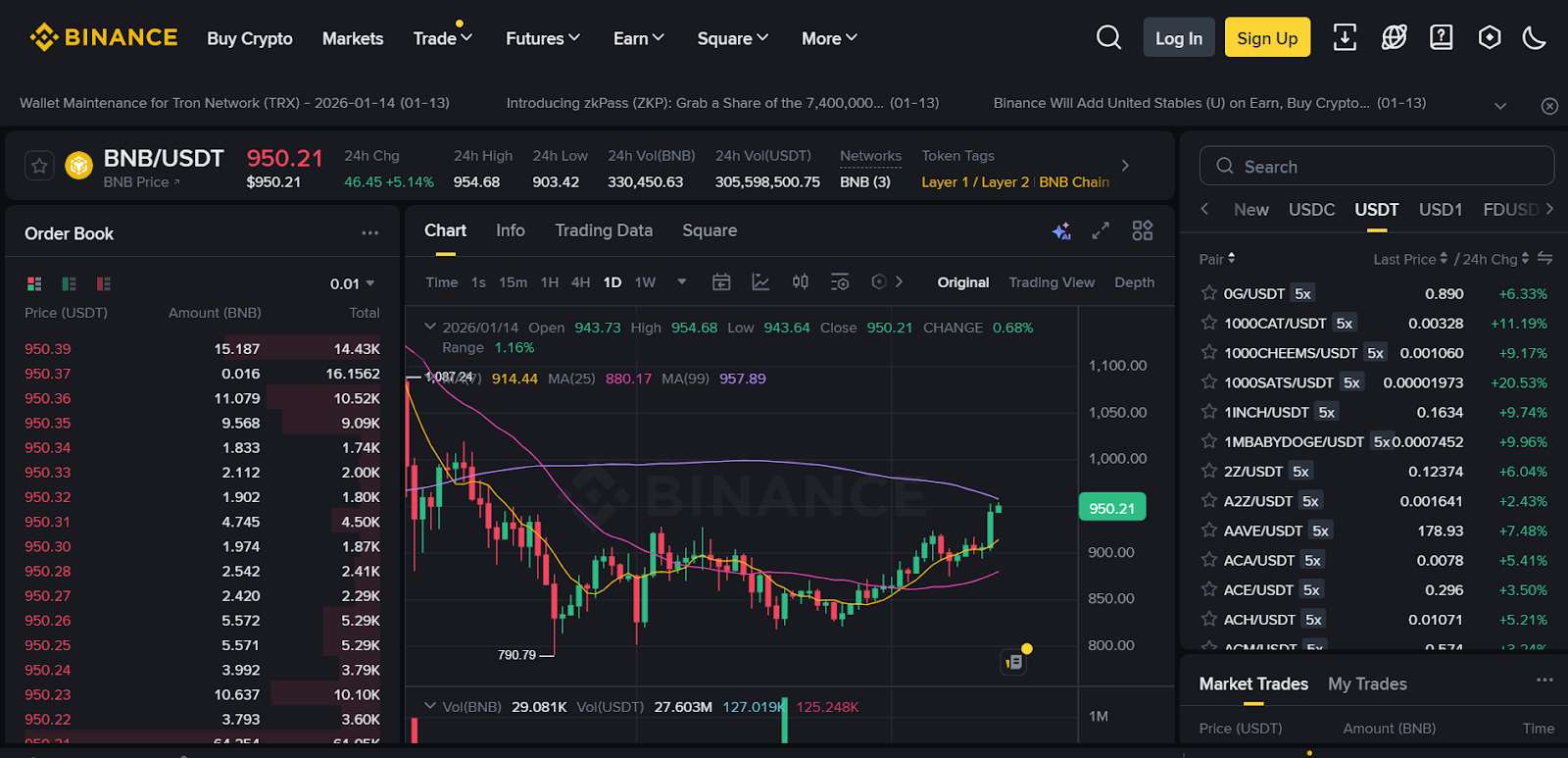
BNB (BNB)BNB (BNB)

BNB, short for Binance Coin, is widely regarded as one of the best altcoins for utility due to the number of practical functions it serves within the Binance ecosystem and the broader blockchain space. Launched in 2017, BNB was initially created to help you reduce trading fees on the Binance exchange. It evolved into the native token of BNB Chain, where it powers transactions, smart contracts, and decentralized applications across DeFi, NFTs, and Web3 platforms.

From an investment perspective, BNB shows strong market fundamentals. It holds a market cap of approximately $125.79B, with a 24-hour trading volume of about $2.19B, resulting in a volume-to-market-cap ratio of 0.0173, which reflects healthy liquidity. The circulating supply stands at roughly 137.73M BNB, supported by a token burn mechanism that gradually reduces supply over time.

BNB is available on many of the top altcoin exchanges, giving you easy access whether you trade actively or hold long term. Its regular token burn mechanism reduces total supply, which many investors see as supportive of long term value. With strong adoption, clear use cases, and deep integration across trading and blockchain services, BNB remains a high-potential altcoin for 2026.

2. Ethereum (ETH)
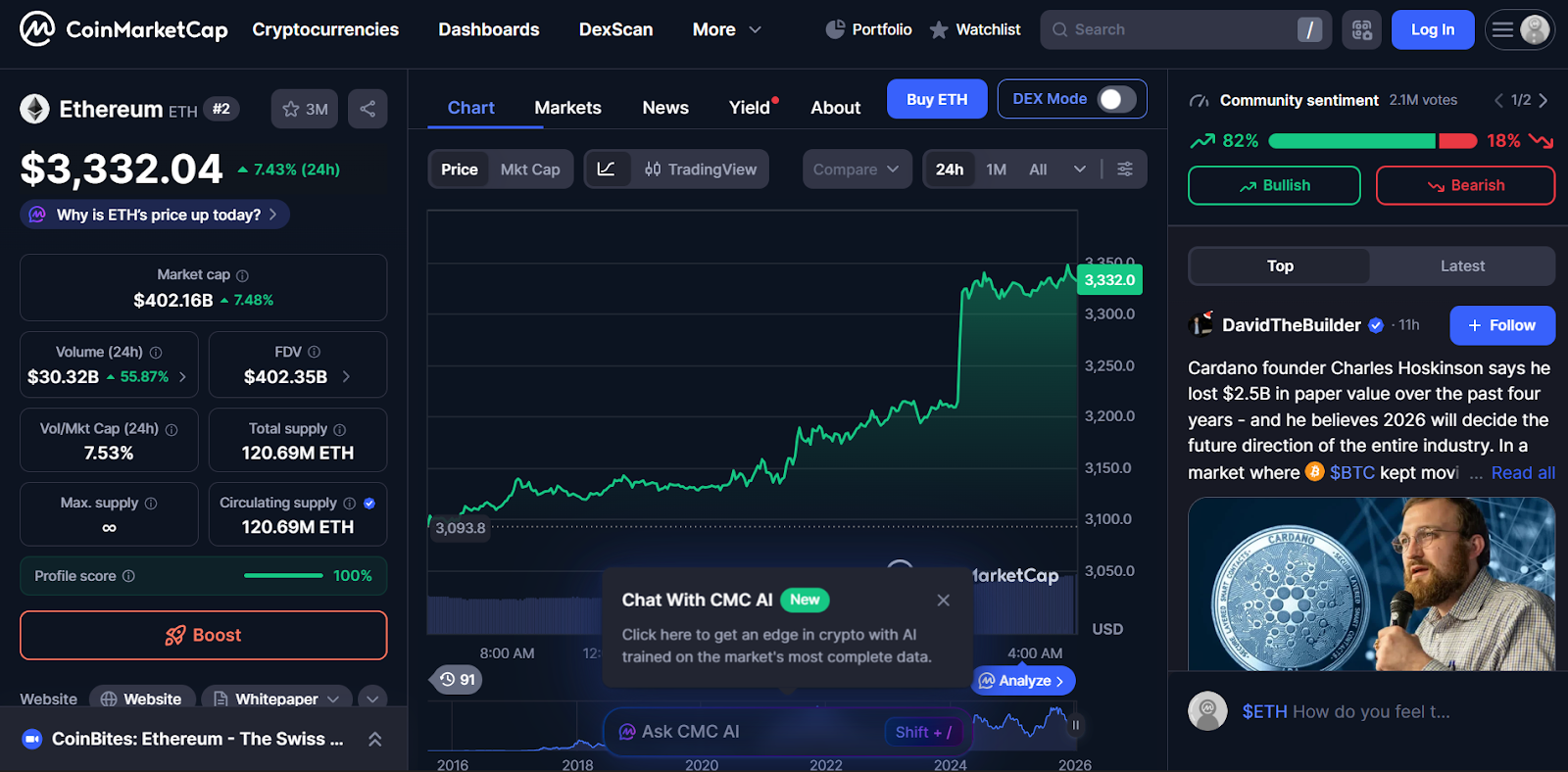
Ethereum (ETH)Ethereum (ETH)

Ethereum is used to explain altcoins, as it was the first major cryptocurrency created after Bitcoin to introduce smart contracts and programmable blockchain technology. Launched in 2015, Ethereum shifted crypto from simple peer to peer payments to a platform where you can build decentralized applications, issue tokens, and run financial protocols without intermediaries. Its blockchain supports smart contracts, NFTs, decentralized finance, and enterprise use cases, making it one of the most widely adopted networks in the industry.

In terms of market position, Ethereum continues to dominate the smart contract space. As of January 2026, ETH trades around $2520.99  with an estimated market cap near $384.27 billion, making it the second largest cryptocurrency after Bitcoin. The network secures hundreds of billions in on-chain value and supports thousands of active applications, while Ethereum Layer 2 solutions handle a growing share of transaction volume. These factors keep Ethereum firmly positioned among the best altcoins to invest in for both retail and institutional participants. 

Looking ahead, Ethereum’s future potential is closely tied to ongoing network upgrades and its expanding role in global finance. Improvements in scalability, reduced transaction costs through Layer 2 adoption, and growing use cases like tokenized assets and on-chain identity strengthen its long term outlook. 

3. Solana (SOL)
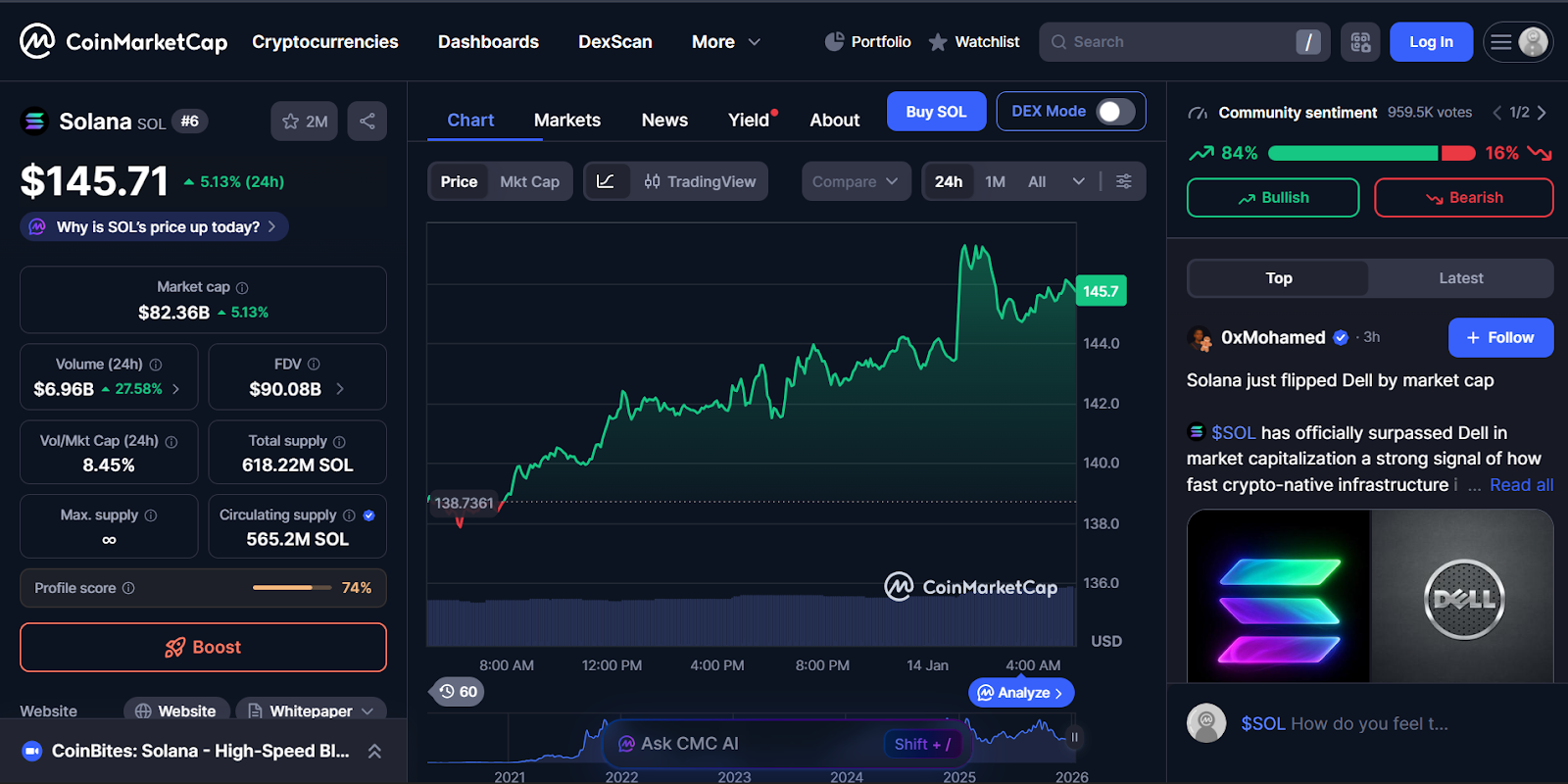
Solana (SOL)Solana (SOL)

Solana is a high-performance blockchain launched in 2020 with a clear focus on speed, scalability, and low transaction costs. It was designed to handle thousands of transactions per second without relying on Layer 2 solutions, making it attractive if you value efficiency and seamless user experience. Solana supports smart contracts, decentralized applications, NFTs, and gaming platforms, all powered by its unique proof-of-history and proof-of-stake hybrid model. These features allow developers to build complex applications while keeping fees low for everyday users.

Solana stands among the top altcoins for long term growth due to its strong adoption and expanding ecosystem. It holds a market cap of approximately $ 78.87 billion, with a circulating supply of about 564.58 million SOL tokens. Its global presence is clear through widespread use by developers and institutions across North America, Europe, and Asia. The Solana ecosystem now supports over 5,000 decentralized applications, including decentralized exchanges, NFT marketplaces, payment tools, and emerging AI-driven platforms, reinforcing its role as a major innovation hub.

Solana’s future potential is tied to continued ecosystem expansion, institutional partnerships, and improvements in network stability. As more real world applications move on chain, Solana’s ability to support high throughput at low cost strengthens its appeal for those learning how to invest in altcoins with long term conviction.

4. Polygon (POL)
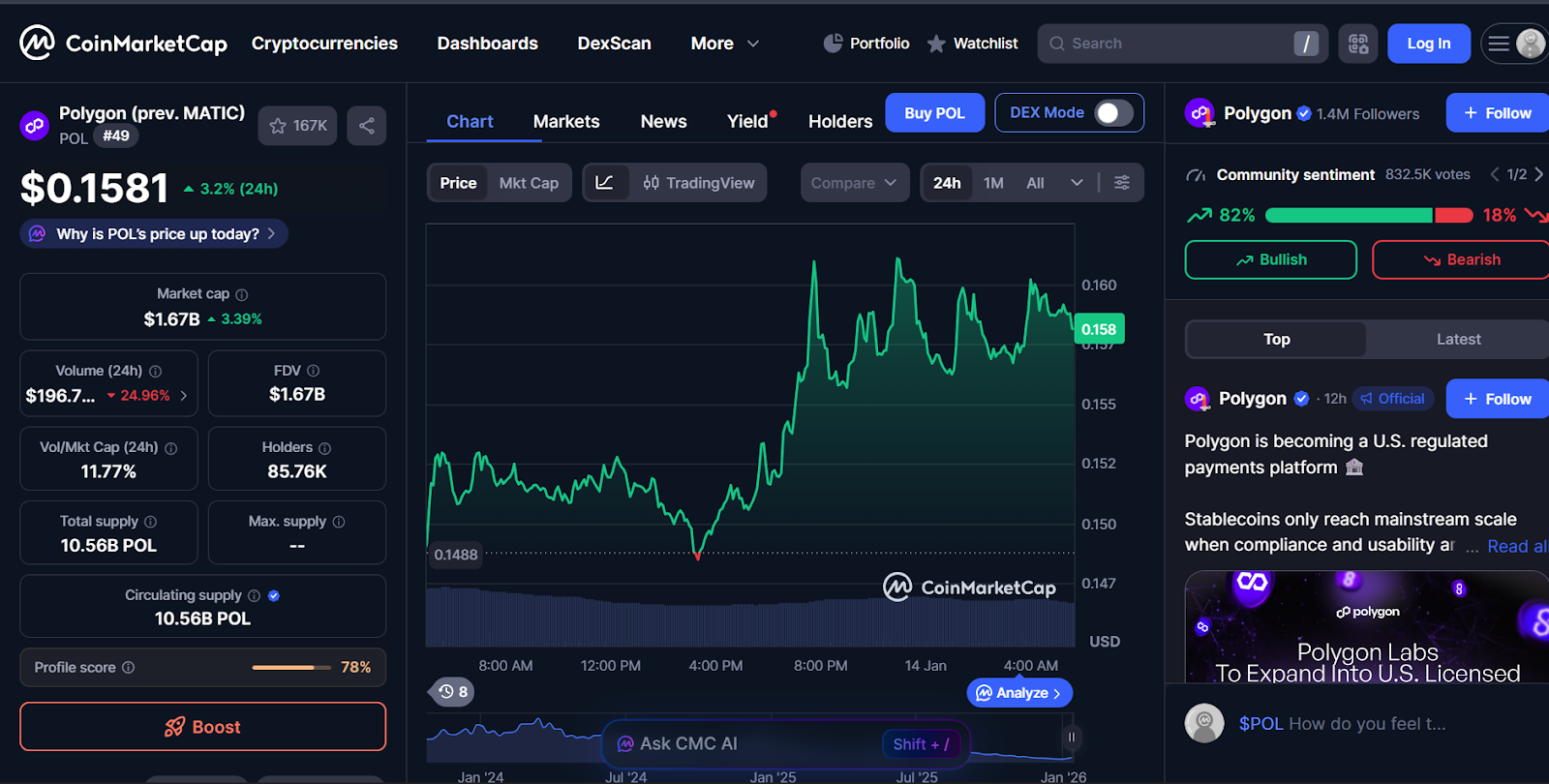
Polygon (POL)Polygon (POL)

When you’re trying to use Ethereum apps without paying high fees, Polygon often becomes the quiet solution working in the background. Polygon is built to help Ethereum scale, so you can trade NFTs, play blockchain games, or use DeFi apps with faster confirmations and lower costs. Instead of asking you to move to a new ecosystem, Polygon lets you stay connected to Ethereum while improving the experience. That’s why many developers and brands choose it for consumer-facing apps.

In 2026, Polygon holds a market cap of about $7.5 billion, supported by strong daily trading activity and wide exchange availability. It’s accepted across DeFi platforms, gaming projects, loyalty programs, and enterprise pilots. This level of adoption shows that Polygon isn’t just experimental infrastructure.

As an investor, Polygon appeals if you want exposure to growth without chasing hype. It’s often mentioned among the best cheap altcoins to buy because of its lower price point and strong utility. You can trade POL on major platforms with ease. Its focus on scaling and partnerships gives it long-term relevance as blockchain use expands.

5. Chainlink (LINK)
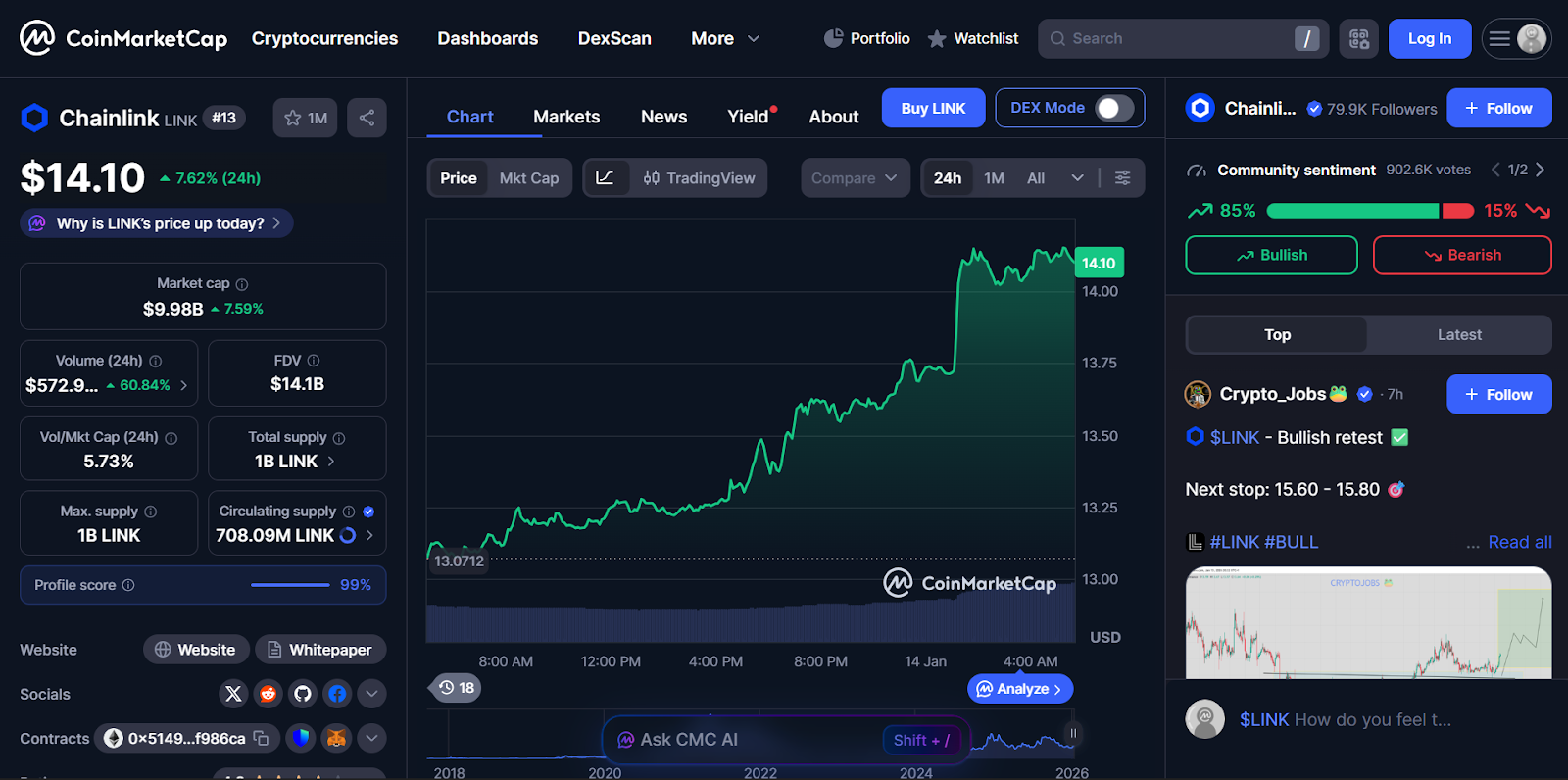
Chainlink (LINK)Chainlink (LINK)

Have you ever wondered how DeFi apps know the price of crypto in real time? Chainlink solves that problem by delivering reliable data to blockchains so smart contracts can work properly. Without accurate price feeds and external data, many decentralized apps simply wouldn’t function. That invisible role makes Chainlink one of the most important pieces of crypto infrastructure.

To understand what is chain link, think of it as the bridge between blockchains and the real world. In January 2026, Chainlink carried a market cap of roughly $9.4 billion, backed by consistent demand across hundreds of protocols. It’s supported by most major blockchains and trusted by developers who need secure data. This wide acceptance reduces reliance on any single ecosystem.

For investors who care about function, Chainlink stands out as the best altcoin for utility rather than speculation. You can buy LINK on leading exchanges and hold it as exposure to core crypto infrastructure. Its value grows as DeFi, tokenized assets, and cross-chain tools expand. That practical demand helps it hold relevance over time.

binance-logo-6219389_1280binance-logo-6219389_1280

6. Cardano (ADA)

Cardano (ADA)Cardano (ADA)

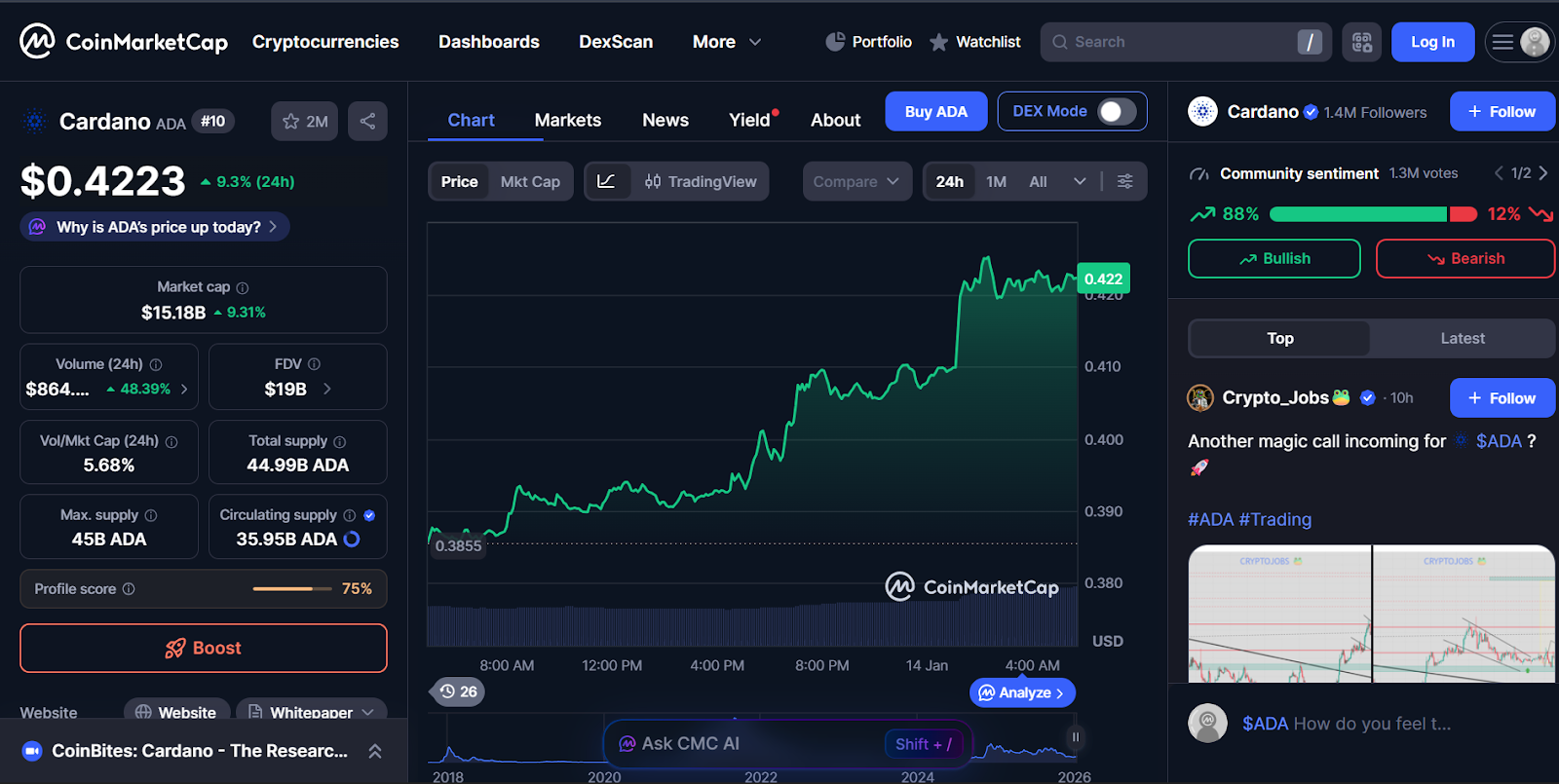
Becoming an investor in Cardano often means valuing patience and structure. Cardano is a third-generation blockchain platform that focuses on sustainability, scalability, and real-world applications. Launched in 2017 by Ethereum co-founder Charles Hoskinson, Cardano is built on peer-reviewed research and aims to provide a secure and scalable infrastructure for dApps and smart contracts. Its unique proof-of-stake consensus mechanism, Ouroboros, sets it apart as an energy-efficient blockchain.

ADA is widely supported on major exchanges, making it easy for you to buy, hold, or trade. Many projects on Cardano focus on identity systems, governance tools, and financial inclusion. That practical direction gives it a unique role in the ecosystem.

Cardano often appears among top altcoins for long term investors who want durability. It doesn’t chase trends, and that’s intentional. If you’re comfortable holding through slower development cycles, it offers a different kind of confidence. That contrast helps you weigh it against faster-moving chains.

7. Arbitrum (ARB)
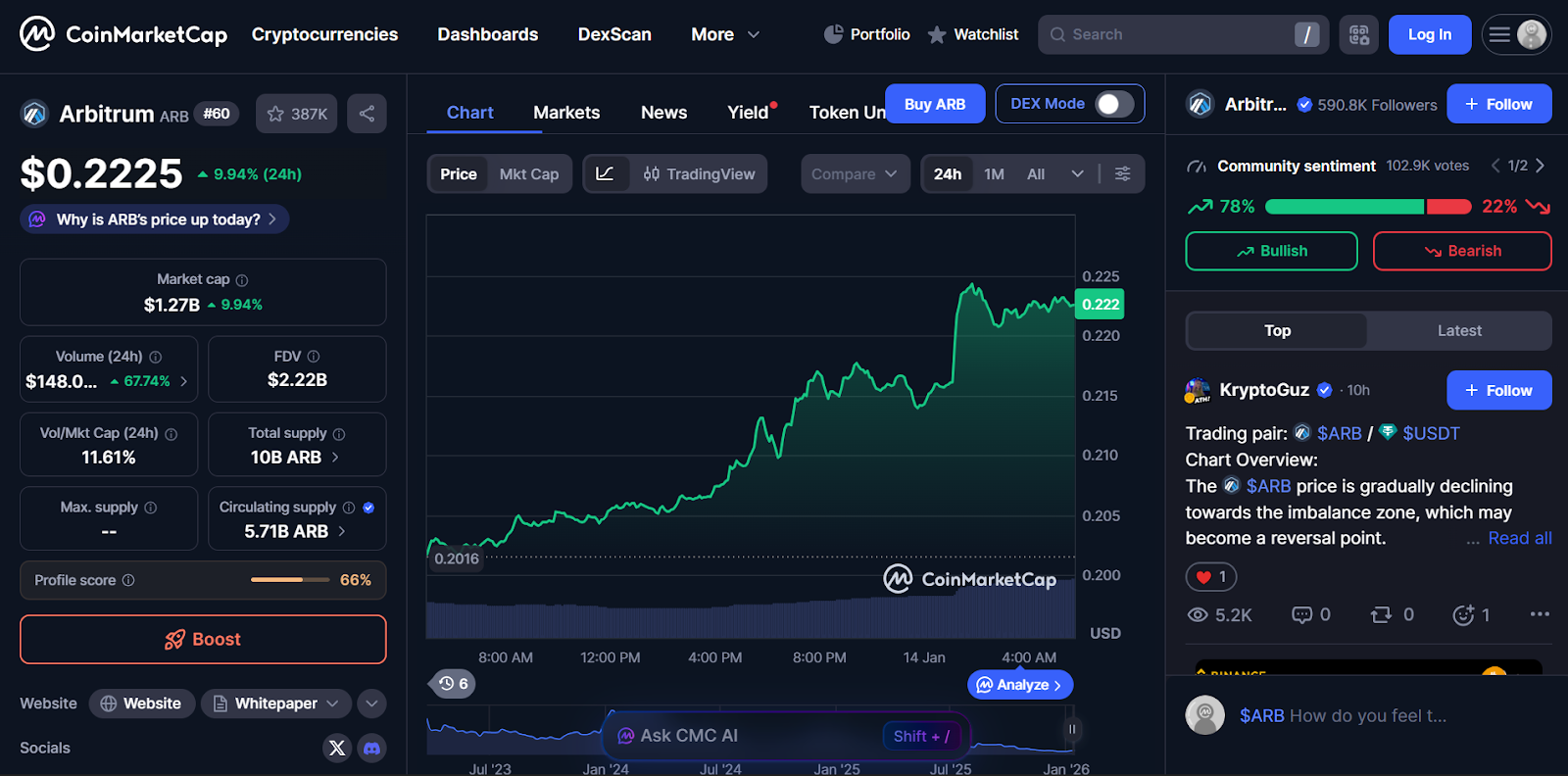
Arbitrum (ARB)Arbitrum (ARB)

As you trade or use DeFi apps, you may already be using Arbitrum without realizing it. It helps Ethereum handle more transactions while keeping fees low and performance smooth. You don’t need new wallets or tools, which makes adoption easy. Many popular DeFi platforms support it by default.

In 2026, Arbitrum holds a market cap near $1.71B billion, supported by strong activity across decentralized exchanges and lending protocols. Its token, ARB, is used mainly for governance and ecosystem incentives. Developers favor Arbitrum because it balances cost savings with Ethereum compatibility. That combination keeps users and builders engaged.

If you’re learning how to invest in altcoins, Arbitrum offers a clear value case tied directly to Ethereum’s growth. You can access ARB on major exchanges with solid liquidity. Its success depends on usage, not marketing narratives. That makes it easier for you to evaluate.

8. XRP (XRP)
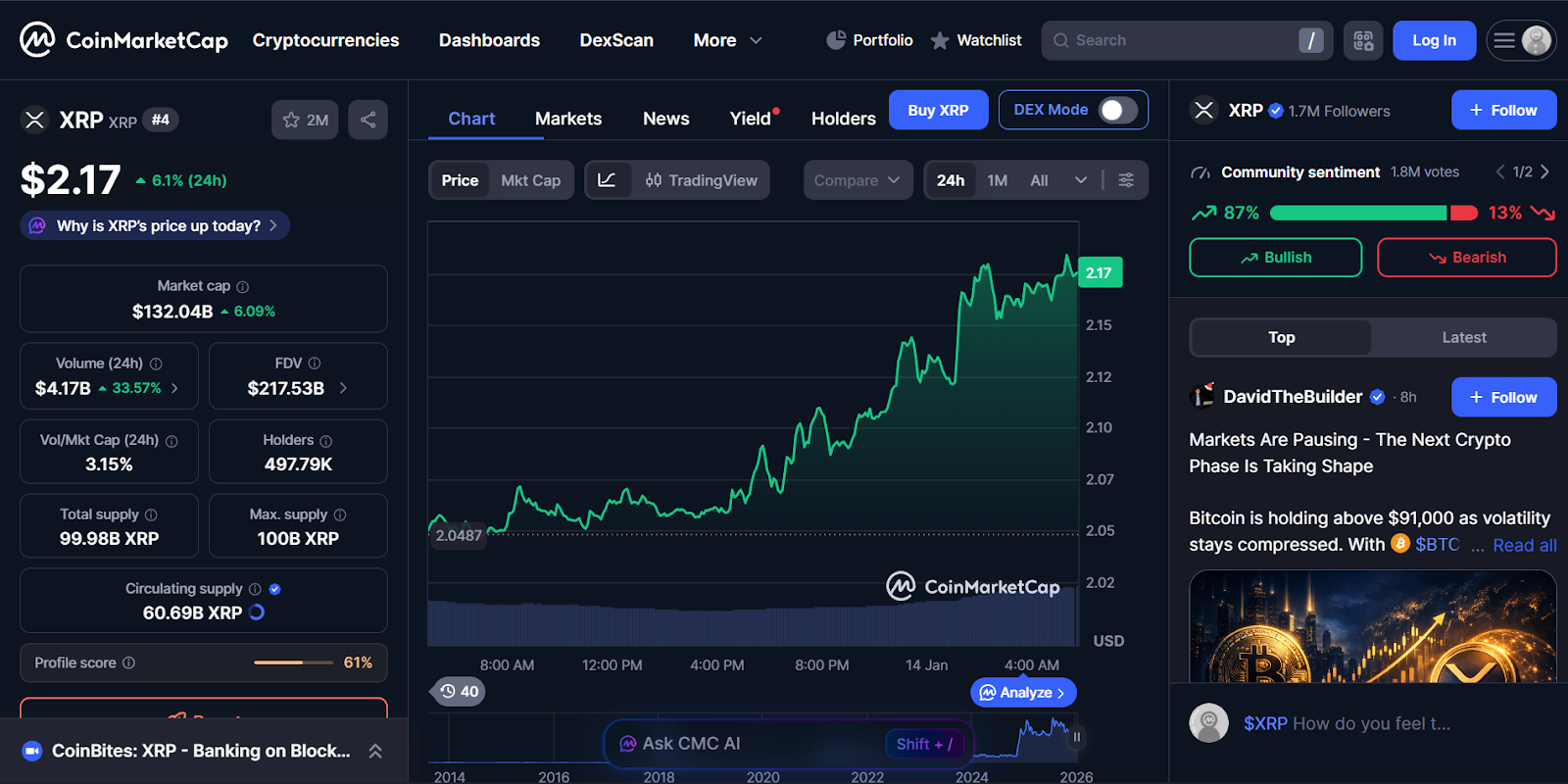
XRP (XRP)XRP (XRP)

XRP, the native cryptocurrency of the Ripple network is designed for fast and low-cost cross-border payments. Launched in 2012, XRP aims to revolutionize international money transfers by providing a more efficient alternative to traditional systems like SWIFT. Its ability to settle transactions in seconds with minimal fees makes it a popular choice for financial institutions.

XRP’s market cap is approximately $127.01 billion, with a 24-hour trading volume of $1.9 billion. Its circulating supply is around 50 billion XRP tokens. The recent legal clarity following Ripple’s case with the SEC has improved investor sentiment, positioning XRP as a reliable option for cross-border payments.

For those exploring what altcoins are, XRP stands out for its real-world utility and strong market presence. It’s available on major exchanges like Binance and Bitstamp, making it accessible for global investors. With its focus on financial innovation and growing adoption, XRP remains a high-potential altcoin for 2026.

9. Polkadot (DOT)
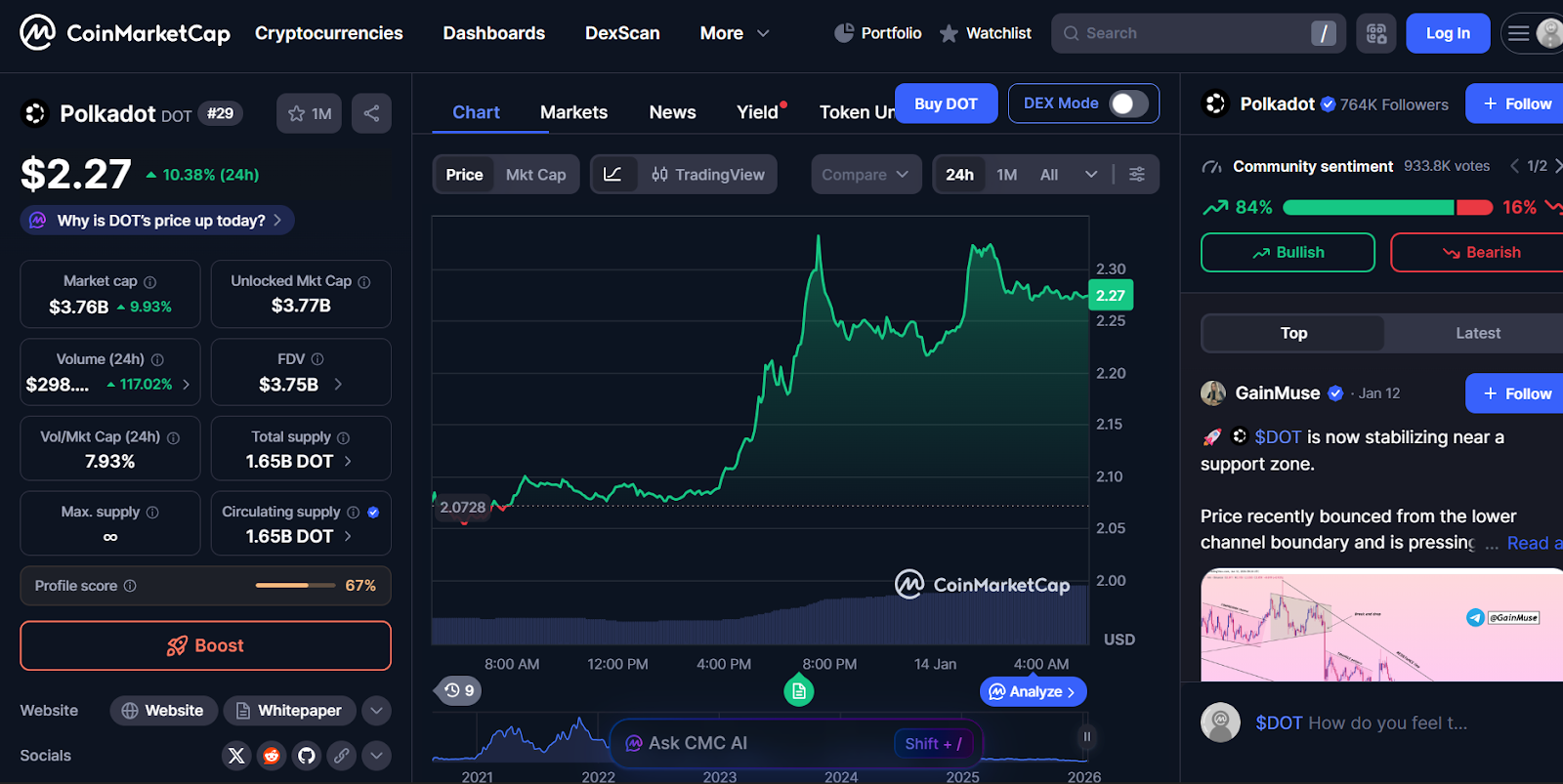
Polkadot (DOT)Polkadot (DOT)

Have you noticed how fragmented blockchains feel today? Polkadot was built to connect different networks so they can share data and value. Instead of forcing one chain to handle everything, it coordinates many specialized blockchains. This structure gives developers flexibility while keeping security strong.

In 2026, Polkadot carries a market cap close to $13 billion with active governance participation. DOT holders can vote on upgrades, which keeps decisions community-driven. Its ecosystem supports finance, identity, and data-focused projects. That diversity strengthens its long-term use case.

Polkadot is often mentioned among the best altcoins to invest in if you believe interoperability matters. You can trade DOT on major platforms with ease. Its role depends on collaboration, not competition alone. That positioning gives it a unique edge.

10. Dogecoin (DOGE)
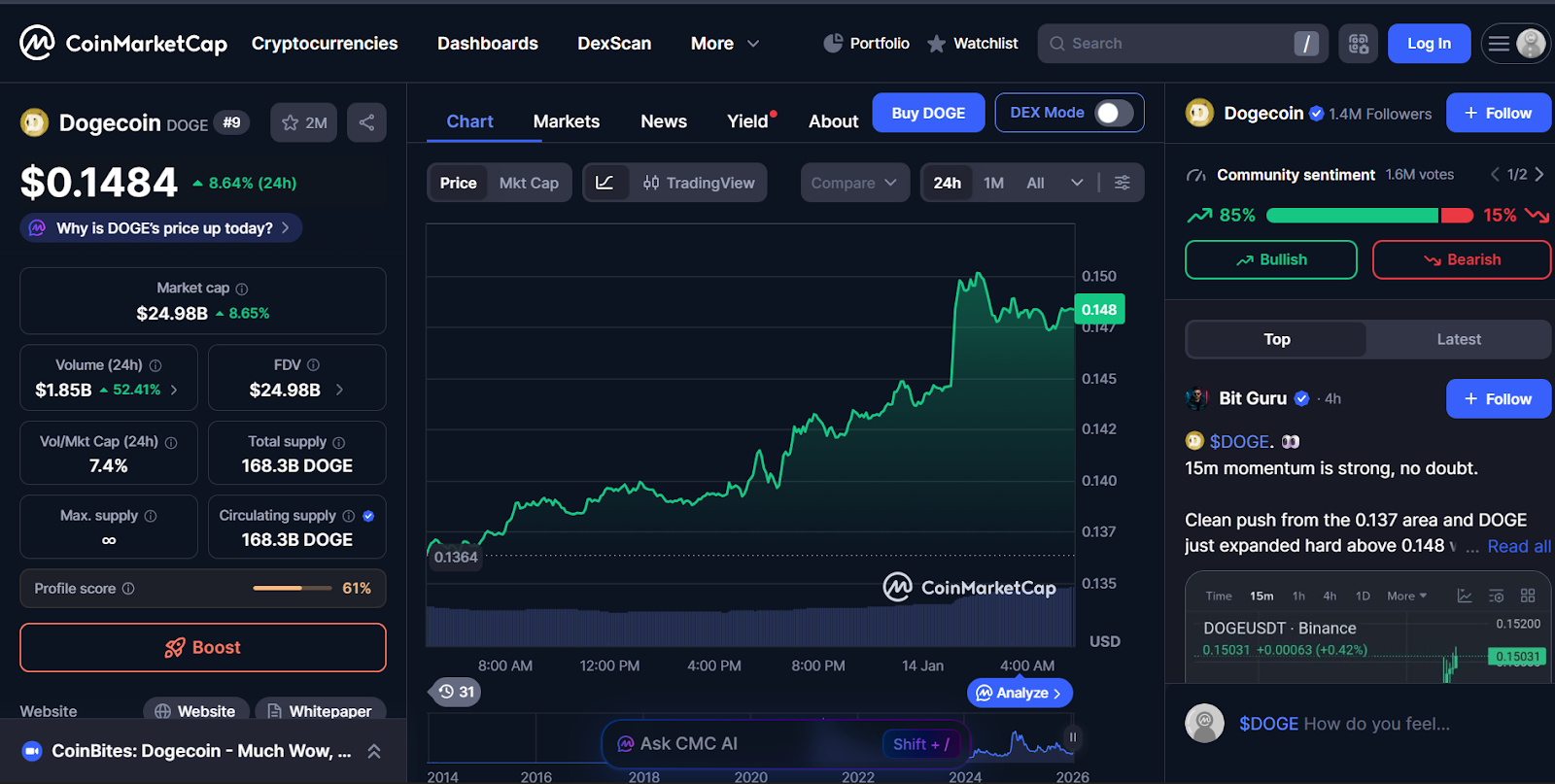
Dogecoin (DOGE)Dogecoin (DOGE)

Dogecoin, originally created as a joke in 2013, has evolved into one of the most popular cryptocurrencies. Known for its vibrant community and meme-driven culture, Dogecoin is widely used for tipping, payments, and charitable donations. Its fast transaction speed and low fees make it a practical choice for microtransactions.

Dogecoin’s market cap is approximately $25 billion, with a 24-hour trading volume of $1.2 billion. Its circulating supply is around 140 billion DOGE tokens. While primarily a meme coin, Dogecoin’s adoption by companies like Tesla and its integration into platforms like X (formerly Twitter) highlight its real-world utility.

When people look for the best cheap altcoins to buy, Dogecoin often comes up because of its familiarity. It doesn’t promise complex features, and that’s part of its appeal. For casual use and brand recognition, it fills a clear role. That simplicity helps you decide where it fits in your portfolio.

What Are Altcoins?

What are altcoins is a common question when you move beyond Bitcoin and start exploring the wider crypto market. Altcoins are simply cryptocurrencies that are not Bitcoin, and they were created to improve, expand, or offer alternatives to what Bitcoin does. Examples include Ethereum for smart contracts, Solana for fast transactions, Chainlink for data feeds, and XRP for global payments. Each altcoin is built with a specific purpose in mind, which is why no two projects function exactly the same.

Altcoins work using blockchain technology, but their mechanisms vary depending on their goals. Some use proof of stake to secure the network and reward users for staking tokens, while others focus on speed, scalability, or interoperability between blockchains. When you interact with altcoins, you might be trading, staking, voting on governance proposals, or using decentralized apps. Understanding how each altcoin functions helps you choose assets that match your goals, whether that’s payments, long-term investing, or using blockchain-based services.

Key Factors to Consider Before Buying Altcoins

Before you put money into any altcoin, it helps to slow down and look beyond what past performance shows and social media noise. Every altcoin behaves differently, and small details often make the biggest difference over time. When you’re deciding where to allocate your capital, focusing on fundamentals can protect you from emotional trades. The factors below will help you judge whether an altcoin fits your goals and risk level.

Market Cap and Trading Volume

Market cap helps you understand how large and established a project is, while trading volume shows how active it is. When you’re buying an altcoin with healthy daily volume, it’s easier to enter and exit positions without sharp price swings. For example, a token with a strong market cap but low volume may look stable but can be hard to sell quickly. Looking at both together helps you avoid assets that are popular on paper but illiquid in practice.

Use Case and Utility

An altcoin’s value often comes from what you can actually do with it. Tokens used for payments, smart contracts, or data services tend to hold demand better than those driven purely by speculation. If you’re using a network to trade, stake, or access apps, that activity supports long-term value. Practical utility gives an altcoin a reason to exist beyond short-term price movements.

Team, Roadmap, and Community

Behind every altcoin is a team making decisions and a community supporting the project. A clear roadmap shows you where the project is headed and how it plans to grow. Active communities help with adoption, testing, and feedback, which can accelerate development. When teams communicate openly, it’s easier for you to trust the project’s direction.

Tokenomics and Supply

Tokenomics explains how a token is issued, distributed, and managed over time. A fixed or slowly reducing supply can support price stability, while the unlimited supply may dilute value if demand doesn’t grow. For instance, tokens with burn mechanisms reduce supply as usage increases, which can support long-term holding. Understanding supply dynamics helps you judge whether growth is sustainable or purely speculative.

Where to Buy Altcoins Safely

Knowing where to buy altcoins safely matters just as much as knowing which ones to pick. You should focus on platforms with strong security and clear regulations. Whether you’re hunting for altcoins under $1 or looking at some of the best cheap altcoins to buy, the exchange you use can impact your experience, cost, and even your profits. Here’s how to pick the right platform to trade altcoins with confidence and minimal risk.

Reputable Centralized Exchanges (CEXs)

These platforms are user-friendly and have high liquidity, which helps you trade quickly and securely. Examples include:

Binance – Offers tons of tokens and strong security features, ideal for both beginners and active traders.Coinbase – Known for regulatory compliance and simplicity, great for first-time buyers.Kraken – Strong reputation for safety and a wide selection of altcoins.

binance-logo-6219389_1280binance-logo-6219389_1280

Decentralized Exchanges (DEXs)

DEXs let you trade directly from your wallet without handing control of your funds to a third party. Popular options:

Uniswap – Huge range of Ethereum-based tokens, good if you use MetaMask or similar wallets.PancakeSwap – Works on BNB Chain and offers many low-priced tokens.

Risks of Investing in Altcoins

Before you invest in altcoins, it’s important to balance opportunity with realism. While altcoins can deliver strong returns, they also come with risks that don’t always show up during bullish periods. The following are the risks to know: 

Volatility and Rug Pulls

Altcoins are known for sharp price swings that can happen within hours or even minutes. When prices move this fast, gains can disappear just as quickly if market sentiment shifts. Rug pulls add another layer of risk, where developers abandon a project after attracting investors, leaving the token worthless. You reduce this risk by focusing on established projects with transparent teams and active communities.

Regulatory Uncertainty

Crypto regulations continue to evolve, and altcoins often feel the impact first. Changes in laws or enforcement can limit trading access, delist tokens, or affect how projects operate. Even strong projects can face sudden price drops due to regulatory headlines. Staying informed helps you react before policy shifts catch you off guard.

Illiquidity or Low Volume

Some altcoins look promising but lack enough trading activity to support smooth buying and selling. Low volume can lead to wide price spreads and delayed order execution. When you try to exit a position, you may struggle to find buyers at fair prices. Checking liquidity before investing helps you avoid getting stuck in hard-to-sell assets.

Expert Tips for Altcoin Investing in 2026

Investing in altcoins can be rewarding, but it requires a strategic approach to navigate the market’s volatility and maximize returns. By adopting proven investment strategies, you can reduce risks and make more informed decisions. Here are some expert tips to help you succeed in altcoin investing in 2026.

1. Portfolio Diversification

Diversifying your portfolio is essential to managing risk in the unpredictable altcoin market. Instead of putting all your funds into a single altcoin, spread your investments across multiple projects with different use cases and market positions. Combining established crypto coins like Ethereum with emerging projects in DeFi or gaming can balance stability and growth potential. Diversification helps protect your portfolio from significant losses if one asset underperforms.

2. Dollar-Cost Averaging (DCA)

Dollar-cost averaging is a strategy where you invest a set amount at regular intervals, regardless of price fluctuations or market conditions.

This strategy reduces the impact of market volatility and eliminates the need to time the market. For instance, investing $100 weekly into a promising altcoin allows you to accumulate more tokens when prices are low and fewer when prices are high, averaging out your cost over time. DCA is particularly effective for long-term investors.

3. Setting Realistic Profit Targets

Establishing clear and achievable profit targets helps you stay disciplined and avoid emotional decision-making. Decide in advance at what price you’ll sell part or all of your holdings to secure profits. For example, if you buy an altcoin at $1, you might set a target to sell 50% of your holdings when it reaches $2. This approach ensures you lock in gains while leaving room for further growth.

Conclusion – Are Altcoins Still Worth Buying in 2026?

Altcoins can still be worth buying in 2026, but only if you approach them with clear expectations and discipline. The market has matured, and many projects now offer real products, active users, and measurable demand rather than just promises. At the same time, not every altcoin will survive, which means careful selection matters more than chasing quick gains.

If you focus on utility, liquidity, and long-term relevance, altcoins can complement a broader crypto portfolio rather than replace it. Established networks like Ethereum or Solana offer stability, while smaller projects may provide growth at higher risk. Your decision should reflect your risk tolerance, time horizon, and willingness to stay informed as conditions change. Altcoins are no longer about betting on everything and hoping something works. In 2026, they reward investors who research deeply, manage risk, and think long term. If that approach fits you, altcoins can still play a meaningful role in your investment strategy.

FAQs

What are the best altcoins to buy right now?

The best altcoins to buy right now depend on your investment goals and risk tolerance. Established projects like Ethereum, Solana, and Cardano are often considered strong choices due to their utility and market presence. For those seeking emerging opportunities, researching altcoins with innovative use cases in DeFi, gaming, or AI can uncover high-potential investments.

What is the safest altcoin to invest in?

The safest altcoin to invest in is typically one with a strong track record, robust utility, and widespread adoption. Ethereum is often regarded as a safer option due to its dominance in smart contracts and decentralized applications. However, no investment is entirely risk-free, so always diversify and conduct thorough research.

Which altcoins have the most upside potential?

Altcoins with the most upside potential are often those addressing real-world problems or innovating within the blockchain space. Projects like Chainlink, which connects smart contracts to external data, or Polkadot, which focuses on blockchain interoperability, are examples of altcoins with significant growth potential. Keep an eye on emerging trends to identify promising projects.

Can altcoins outperform Bitcoin?

Yes, altcoins can outperform Bitcoin in terms of percentage gains, especially during bull markets. However, they are generally more volatile and carry higher risks. While Bitcoin remains the market leader, altcoins often see larger price swings, offering both higher rewards and greater risks.

How much should I invest in altcoins?

How much you should invest in altcoins depends on your financial situation, risk tolerance, and investment strategy. A common approach is to allocate a small percentage of your portfolio, such as 10-20%, to altcoins while keeping the majority in more stable assets like Bitcoin or traditional investments. Always invest only what you can afford to lose.



Source link

What Is Yield Farming? How It Works & Top Platforms

0
What Is Yield Farming? How It Works & Top Platforms


Crypto yield farming is currently a trending topic among investors in the decentralized finance (DeFi) space. It is attracting both new and experienced users with substantial returns. By delivering liquidity to DeFi platforms and liquidity pools, participants can leverage the process. In doing so, they earn passive income from their otherwise idle crypto assets.

While crypto farming presents immense opportunities for participants to earn substantial rewards, it is also accompanied by certain risks. So, what is yield farming? This article explores the subject of yield farming to help you discover this lucrative investment strategy, how it works, its benefits, and its potential risks.  

What Is Yield Farming?

What Is Yield Farming?

Yield farming, also known as liquidity farming or “yield enhancement,” is an investment strategy in the world of cryptocurrencies. It is specifically used within decentralized finance (DeFi). The approach involves participants depositing their idle cryptocurrencies into a DeFi platform or liquidity pool. The goal is to earn a higher return in the form of passive income.

Yield farming can roughly be translated as “yield enhancement.” It is a way to earn passive income with cryptocurrencies. Instead of just holding your assets, you can maximize the returns on your crypto holdings. In yield farming, you provide liquidity—coins or tokens—to a DeFi protocol. In return, you receive rewards for the liquidity you provide. These rewards can be additional tokens or interest for funding decentralized exchanges (DEXs).

The reward is accrued from the DeFi platform using the deposited cryptocurrencies. These assets are lent to other investors at interest or used to increase the liquidity of a crypto project. Unlike traditional financial institutions, which have central authorities to oversee the process, DeFi yield farming is automated. Smart contracts ensure everything happens transparently. This strategy offers a potentially high-yield opportunity. However, it also carries some risks.

How Does DeFi Yield Farming Work?

How Does DeFi Yield Farming Work?How Does DeFi Yield Farming Work?

DeFi yield farming operates through a decentralized system where multiple participants collaborate to keep transactions running smoothly. Each role contributes differently to generating rewards:

Liquidity Providers (LPs) deposit token pairs into liquidity pools and earn a share of trading fees when users swap tokens. Some platforms also offer governance tokens as extra incentives.Lenders supply assets to lending protocols like Aave or Compound. Borrowers can redeem these tokens by posting collateral, and lenders earn interest, which fluctuates with supply and demand.Stakers lock up tokens in a blockchain or liquidity pool to secure the network. Rewards depend on both the staking amount and duration.Borrowers provide collateral to access loans in other tokens. These loans can be used for trading or farming strategies, but failure to repay results in liquidated collateral.

Rewards from yield farming are usually distributed in governance or native tokens. Returns are measured using Annual Percentage Yield (APY), giving farmers an estimate of potential yearly earnings.

The entire process is governed by smart contracts, which automatically execute transactions once preset conditions are met. This ensures security, transparency, and efficiency without third-party control.

To maximize profits, yield farmers often reinvest rewards through compounding. This can be done manually or with the help of yield aggregators, which automatically reinvest tokens to optimize returns.

Staking vs Yield Farming: What’s the Difference?                

Both staking and yield farming allow crypto holders to earn passive income, but they work differently. Yield farming is similar to earning interest in a savings account—users provide liquidity to pools and earn rewards, often at variable rates. Staking, by contrast, requires locking up tokens for a fixed period to support a blockchain, with rewards distributed based on the stake and duration.

Deposit Periods: Yield farming usually offers flexibility, letting users withdraw funds anytime. Staking, however, involves a lock-up period, during which assets remain illiquid.Transaction Fees: Yield farmers frequently move funds across pools to chase higher returns but face gas fees that can erode profits, especially on busy networks. Stakers avoid these costs since assets remain locked in one blockchain.Potential Profits: Yield farming often delivers higher APYs because liquidity pools compete for deposits, but it also carries higher risk. Staking yields are generally lower but more predictable, with longer commitments sometimes offering better rewards.Risks: Yield farming exposes participants to risks like rug pulls, smart contract bugs, and hacks, given the experimental nature of many pools. Staking is considered safer, especially on established blockchains, though it still carries risks like slashing penalties or market volatility.

Best Yield Farming Platforms                                    

Aave: riginally launched as ETHLend in 2017, Aave rebranded in 2020 and became a top DeFi protocol for lending and borrowing. Users deposit crypto into non-custodial pools to earn interest in AAVE tokens, and can also borrow using their deposits as collateral.Uniswap: Founded in 2018, Uniswap revolutionized DeFi with its Automated Market Maker (AMM) model. This Ethereum-based DEX enables users to provide liquidity in 50/50 token pairs, earning fees and UNI tokens in return.PancakeSwap: Built on Binance Smart Chain, PancakeSwap offers fast, low-cost transactions. Since launching in 2020, it has become a go-to DEX. With PancakeSwap V3 (2023), users enjoy enhanced yield options and can stake LP tokens for CAKE rewards.Curve Finance: Curve focuses on stablecoin trading with low slippage and high capital efficiency. Its unique algorithm maximizes yields from deposits, offering safer returns while supporting seamless swaps between stablecoins.Yearn Finance: Launched in 2020, Yearn automates yield farming strategies for optimal ROI. With tools like Vaults and yTokens, users benefit from complex strategies without manual effort. Suitable for both beginners and pros.Compound: A pioneer in algorithmic DeFi, Compound (est. 2018) allows users to earn interest on idle crypto. Smart contracts adjust rates dynamically, and rewards are paid in COMP tokens. The platform is open-sourced and dev-friendly.

Benefits of Yield Farming  

There are many benefits associated with crypto farming when compared to other traditional financial instruments. The most popular ones include:

High Returns: Compared to traditional crypto investment strategies, crypto yield farming offers potentially higher returns since users can leverage their crypto assets to receive multiple rewards from different DEXs and DeFi platforms.Diversification: Crypto farming enables digital asset holders to diversify their portfolios and get exposure to different cryptocurrencies. This is because users can choose from other platforms and strategies to optimize their profit potential. Moreover, participants can still switch between platforms and protocols depending on the market conditions to minimize losses and maximize profits.Innovation: Yield farming is a leading light within the DeFi space, showcasing the amount of potential that exists within the realms of decentralization and permissionless finance. Participants are positioned to continue benefiting from ongoing innovations and additional features that are designed to enhance the usability and efficiency of DeFi.

By leveraging yield farming benefits such as lending and borrowing, users can continue to explore the DeFi ecosystem. They can also access many new avenues for passive income as the decentralized finance world grows. With careful planning, users can harness the full potential of DeFi and yield farming. By educating themselves, they improve their financial position and increase their chances of achieving investment goals.

Risks of Yield Farming

It’s an open secret that the profit potential for yield farming surpasses that of traditional investment strategies. Nonetheless, apart from gas fees, there are several other risks associated with the investment strategy you must be aware of:

Smart contract bugs: Smart contracts, which are the lifeline of yield farming, are digital codes that execute their functions automatically when pre-set conditions are met. However, smart contracts can be subject to bugs, errors, and malicious attacks, which could result in theft or the loss of user funds.  Impermanent loss: Impermanent loss refers to the potential for digital assets to lose value when users hold two different tokens in a liquidity pool, particularly if the values of these tokens fluctuate relative to each other.High gas fees: Gas fees refer to the transaction fees that participants in crypto yield farming are charged on the Ethereum blockchain, which hosts most decentralized finance (DeFi) and yield farming platforms. Gas fees can vary based on demand and network congestion, and when they spike high, they can eat into a user’s profits.Market volatility: Market volatility refers to the degree of price variation in the cryptocurrency market, which can affect a yield farmer’s profitability. The broader cryptocurrency market is notoriously volatile, as drastic price changes can occur due to various factors, including regulatory changes, news events, supply and demand fluctuations, user sentiment, and market speculation.Governance risks: Participants in yield farming should also be wary of other risks, including capital re-allocation risk and liquidity concentration risk. A thorough understanding of these factors and the broader decentralized finance space can help users navigate this space successfully.

How to Yield Farm Crypto as a Beginner?

How to Yield Farm Crypto as a Beginner?How to Yield Farm Crypto as a Beginner?

If you’ve learned the basics of crypto farming and want to become a yield farmer, you can start right away. Follow these simple steps, and you could earn passive income sooner than expected.

Step 1: Create a digital wallet

You need to start by establishing a digital wallet for you to participate in any form of decentralized finance activity. There are various types and brands of crypto wallets to choose from. Still, it is essential to ensure that the wallet is compatible with DeFi applications, supports stablecoins, and is compatible with the Ethereum blockchain. Most yield farming protocols utilize ETH and stablecoins to provide liquidity.

Step 2: Buy Cryptocurrency

Once you have a digital wallet, you need to fund it with cryptocurrency. The most common choices are USDT, USDC, and Ethereum. These coins are available on centralized (CEX) or decentralized (DEX) exchanges. After purchase, transfer them to your wallet. Make sure the exchange you use supports your wallet type. If you are new or unsure, start small. Buy a few different cryptocurrencies to better understand the DeFi ecosystem.

Step 3: Choose a yield farming platform

There are many yield farming platforms on the market. Do some research to see what each protocol offers. Be cautious and compare key factors such as reputation, security, customer service, APY, and available products. Only then should you make your decision.

Step 4: Deposit tokens into a pool

No matter what yield farming product you choose, you must deposit assets into protocols that match your strategy. Identify a DeFi platform that offers the highest yield or liquidity. This ensures better alignment with your investment goals.

Step 5: Manage your yield farming performance

If you choose manual yield farming, you need to monitor the DeFi market regularly. Locate the highest yields and move your assets as needed. Alternatively, you can use an automated strategy. This is easier, as you only need to track performance. Yield farming aggregators provide dashboards to check balances, rewards, and current yields.

Step 6: Reinvest or withdraw yield farming rewards

As soon as your yield farming rewards start accumulating, you can choose to withdraw your profits or reinvest them as and when you’re ready. You may also want to automate the process of reinvesting so you can compound your earnings more efficiently, a function that most yield farming aggregators support

How Are Yield Farming Returns Calculated?

The estimated amount of profit you can make from yield farming is calculated annually and forecast in terms of what you may anticipate. The two most commonly used metrics are Annual Percentage Yield (APY) and Annual Percentage Rate (APR). The two metrics differ in that the APR doesn’t consider the effect of compounding, while the APY does. Compounding refers to reinvesting your profits to generate additional returns.

Also, remember that the calculations are estimates and projections, and the actual figures may vary. The terms APY and APR are borrowed from traditional investment spheres, as decentralized finance hasn’t yet developed its own. Most users believe that when it comes to yield farming and DeFi, a daily or weekly metric would be more suitable for measuring performance.  

Conclusion  

Yield farming presents a potentially lucrative yet equally risky investment opportunity within the burgeoning DeFi landscape. The investment product enables participants to earn passive income from their otherwise idle crypto assets by providing liquidity for borrowing and trading activities. With all the positive aspects of crypto farming, prospective investors must also consider that the strategy is accompanied by several risks, including impermanent loss, rug pulls, and market volatility, among others.

The best way to approach liquidity farming is to conduct thorough research before entering the yield farming arena. That’s because, despite the risks and several complexities surrounding it, more and more people are getting attracted to the space and are always looking forward to capitalizing on the potential rewards associated with DeFi platforms. In addition to learning about the space, remember to diversify your portfolio and stay informed about the latest market and security trends to help you maximize profit potential and mitigate yield farming risks.

FAQs                                       

What widespread farming practice is used to increase yield and profit?

The most widespread formula for increasing yield and profits involves switching from one platform to another in search of the highest return. This may include transferring your assets between decentralized finance (DeFi) protocols, such as Compound, Curve, and Uniswap, among others.

What is an example of yield farming?

A perfect example of crypto yield farming is offering liquidity to decentralized exchanges (DEXs), such as PancakeSwap or Uniswap. You only need to deposit your digital assets into the liquidity pool and then sit back and wait to earn your share of transaction fees or some additional tokens from the protocol.

How to earn a yield on Bitcoin?

The most effective way to engage in yield farming on Bitcoin is to utilize BTC in a tokenized or wrapped Bitcoin form within decentralized finance (DeFi) platforms. The process will involve lending the Bitcoin-related asset to a lending protocol or liquidity pool to generate fees, interest, or governance tokens. Like all other forms of yield farming, there is excellent potential for earning lucrative returns but equally high risks.

Is yield farming still profitable?

It’s still possible to make a good profit from yield farming. However, you should be aware that several risks are involved. High returns are still possible, but factors such as impermanent loss, market volatility, and smart contract vulnerability can easily impact profitability.


Source link

What Makes Crypto Go Up and Down: A Comprehensive Guide

0
What Makes Crypto Go Up and Down: A Comprehensive Guide


The price of Bitcoin and other cryptocurrencies appears unpredictable and mysterious, especially for beginners. If you’re new, you may be asking yourself, “What makes crypto prices go up and down?” What exactly affects crypto prices to make them notoriously volatile, increasing or decreasing in price daily?

The truth is that there are identifiable factors that explain the factors influencing the value of cryptocurrencies. This article describes “why does crypto go up and down,” what drives the fluctuations, and how prices are determined.  

What Makes Crypto Go Up and Down?

What Makes Crypto Go Up and Down?

Unlike fiat currencies, cryptocurrencies primarily serve as fully digitalized and decentralized currencies without backing from central authorities or governments. As they take the financial world by storm, many investors jumping onto the bandwagon ask, “How does crypto have value?” That’s because crypto market volatility is a double-edged sword, with prices soaring and plummeting without notice.  So what exactly causes cryptocurrencies to rise and fall?

First is the appeal of a non-government-controlled currency that separates them from the reliance and control of centralized authorities. This disintermediation deprives crypto assets of the stability that dependence on a central authority gives traditional fiat currencies. In the absence of this governmental backing, cryptocurrencies do not trade in the traditional, more stable manner of fiat currencies.

Maybe you’re wondering “why is crypto going up” all of a sudden and down the next moment. The answer could lie in the presence of whales, referring to large investors holding significant amounts of a cryptocurrency.  Whales have the power to affect market manipulation by selling or buying large quantities of crypto at once. Such actions can cause the price of Bitcoin or other cryptocurrencies to crash or spike. Market manipulation is illegal in traditional finance, but is difficult to detect or regulate in the crypto market.  

Lastly, many other factors can explain the fluctuations in crypto prices. They range from macroeconomic factors, supply and demand, technical analysis, and market sentiment. Moreover, the fact that most commercial entities don’t yet accept cryptocurrencies makes them more like speculative assets than fiat currencies. By understanding the factors that drive crypto value, investors can navigate the ups and downs and be prepared for volatility.

What affects the price of Bitcoin and other cryptocurrencies?

What affects the price of Bitcoin and other cryptocurrencies?What affects the price of Bitcoin and other cryptocurrencies?

Several factors cause cryptocurrencies to rise and fall. Whether it’s economic events, wars, fluctuations in bond and stock markets, or many others, they all have an effect.

Unlike fiat currencies whose value is influenced by the government’s monetary policies, cryptocurrencies are fully decentralized. This means the value depends on how much investors are willing to pay. Among the most prominent factors affecting crypto prices are the following:

1. Supply and Demand

Supply and demand are essential bases in determining the price of cryptocurrencies. The value of assets like Bitcoin with a maximum supply increases as demand rises.  The hard cap of 21 million coins creates scarcity, giving investors the confidence that promotes ongoing demand. On the other hand, an increase in market supply can suppress prices, which dilute the value of a token.  

2. Market Sentiment

Individuals generally assign value to a product or service based on the item’s market perception. In most cases, the value of an item increases whenever more people are willing to pay its price. For example, the cost of Bitcoin rose to its all-time high of $65K in 2021 following the launch of a Bitcoin exchange-traded fund. On the flipside, the value of cryptocurrency can go down whenever it loses a positive perception due to adverse events. This can range from unethical behavior from their leaders, bad publicity, or security breaches.

3. Utility 

Within the cryptocurrency ecosystem, utility means the real-world practical application or functionality of a digital asset. Cryptocurrencies with practical use cases always attract more investors and users, thereby increasing their demand and value. For example, an increase in demand and reduced circulation can lead to higher prices. A cryptocurrency with greater utility makes the network more secure and robust, attracts more participants, and increases demand for the token.  

4. Competition

As of 2025, there are between 17,000 and 24,000 different types of cryptocurrencies promising different technological advancements and use cases. Leading projects face rival platforms offering lower fees, more scalability, and increased use cases. The ongoing rapid evolution and an influx of new coins keep the cryptocurrency ecosystem healthy, but bring additional volatility.

5. Tokenomics

The tokenomics of a cryptocurrency can influence its value based on the supply and demand dynamics. Some important factors include the token’s utility, scarcity, burning mechanism, and distribution model. The side mechanics of a token, such as token burns or limited maximum supply, have the potential to create scarcity and boost the price. However, effective distribution strategies and strong utility can drive its demand and create long-term value.

6. Governance and Regulations

Regulation is one of the key factors affecting the present value and future of a cryptocurrency. Developments like legalizing crypto trade or governments offering regulatory clarity can instill investor confidence and price gains. On the other hand, announcements about harsh restrictions and bans can curtail demand and quickly lead to a selloff. Policy shifts keep investors on edge, causing prices to react downwards or upwards based on rumors or updates from lawmakers.

7. Liquidity     

Liquidity influences investor behavior, price stability, and trading efficiency, and can impact crypto prices. High liquidity facilitates fast, stable, and cost-effective trading while low liquidity causes slippage, higher costs, and greater volatility. Factors associated with liquidity, like market depth, trade volume, and market makers, play a role in ensuring market stability or its absence.

How Does Cryptocurrency Gain or Lose Value?

How Does Cryptocurrency Gain or Lose Value?How Does Cryptocurrency Gain or Lose Value?

The fundamental economic principle of supply and demand explains how cryptocurrency gains or loses value. The price increases whenever demand for a cryptocurrency exceeds its supply. On the other hand, a cryptocurrency loses value during times of high supply and low demand. Other factors that can influence crypto prices include positive or negative media coverage, fraud, security breaches, and regulatory actions.   

How does crypto make money?    

Cryptocurrency can generate returns by selling or buying crypto and making a profit from price increases through supply and demand.  However, there are other methods, including:

Investing: Buy and hold onto a crypto asset, hoping the value will increase over time.Passive Income Streams such as:Staking: Staking or locking up a cryptocurrency to secure a blockchain network and earn rewards.Lending: Lend your idle crypto assets via a DeFi platform and earn interestMining: Use computers to mine crypto by solving mathematical puzzles to verify blockchain transactions and get rewarded with newly minted coins.Yield Farming: Offer liquidity to DeFi platforms and earn rewards and fees.Affiliate Programs: Earn commissions by referring new users to crypto exchanges and platforms.Initial Coin Offerings (ICOs): Investing in new cryptocurrency projects before they become widely available and get high returns if they succeed.Airdrops: Receive free tokens to promote a crypto project’s platform.

What causes cryptocurrency to fail? 

Several factors can cause cryptocurrency to fail, including:

Regulatory crackdowns: Whenever governments ban trading or implement increased oversight, it can sap market confidence. Also, when exchanges are shut down or a cryptocurrency is classified as illegal. The same applies to security issues, exchange breaches, high-profile hacks, and a blockchain’s security flaws leading to eroded trust.Market sentiment shifts: Critical comments from mainstream media, influential figures, or warnings from regulators that create widespread fear and panic selling.Supply surges: Releasing a large amount of tokens for project rewards or early investor selloffs can be detrimental. This can make the market unable to absorb the supply and lead to price drops.Technological Failures: Failed upgrades, poor scalability, slow transaction speeds, and bugs can undermine a token’s reputation and cause investors to lose confidence.

Can Cryptocurrencies Be Overbought or Oversold? 

Overbought and oversold are extreme crypto market conditions that occur under different circumstances and impact future price movements. The truth is that just like traditional assets, cryptocurrencies can be oversold or overbought.

Overbought: This is a scenario where a cryptocurrency is bought aggressively over a short period. The result is pushing the price to an unsustainable level. The situation is caused chiefly by FOMO (Fear of Missing Out) and leads to inflated prices.Oversold: This refers to when an asset is sold aggressively and drives the price below its market value. The phenomenon is mainly caused by panic selling.

How accurate are cryptocurrency price predictions?

The cryptocurrency market is highly volatile and unpredictable, making accurately predicting the future performance of an asset rather difficult.  Factors like technological advancement, regulatory changes, or social media trends can have a significant impact on their value. As a result, making accurate price predictions in this dynamic environment is a tricky balancing act.  

The accuracy of crypto price predictions can vary widely based on the economic theory used, research, and analysis. It is worth noting that in some cases, predictions rely on personal biases and speculation. While evaluating the credibility of the methodology and resources used, remember that even the most accurate price prediction can fail.

As the cryptocurrency market is constantly evolving, unforeseen circumstances and new developments could disrupt the most well-founded predictions. You must understand the risks and limitations associated with price predictions to make informed investment decisions. It’s also essential to remain updated and adaptable with a critical mindset as you’re dealing with speculative assets.   

How market cycles affect cryptocurrency prices

Different cryptocurrency market cycles drive the process through at least four phases, namely Accumulation, Markup, Distribution, and Markdown. The four phases of the cryptocurrency market cycle are:

Accumulation: After a significant price drop, savvy investors buy and wait for the next uptrend.Markup: Price rise as more investors join the market with the growing optimism and positive news leading to bull runs.Distribution: Early investors sell during the peak, take profits, and cause a price fluctuation. This phase comes just before a downturn as sellers outnumber buyers. Markdown: The negative sentiment spreads and causes panic selling, leading to a bear market.

 Some of the key factors influencing crypto market cycles include macroeconomic factors, investor sentiment, and supply and demand dynamics. The recurring shifts can cause price surges during bullish markets or downturns when sentiment changes and investors panic.

Tips for Beginner Investors to Predict Crypto Price Movements  

Predicting the price movements of cryptocurrencies can be a challenge, especially for new investors. Price fluctuations are swift and unpredictable, and can lead to potential profits or losses overnight. Having insights on what to look for is essential to invest in crypto effectively.

Analyze Market Trends: Your first step is to carefully analyze historical price charts and identify short-term, mid-term, and long-term trends. Locate existing patterns and potential turning points that could predict future price movements. You can use technical analysis and tools like the Relative Strength Index and Moving Averages. You can also analyze Moving Average Convergence Divergence to predict future price directions.Sentiment Analysis: You can predict potential price movements through news outlets, social media, and other related forums. You may derive insights from trending news and community thoughts within crypto communities. Stay updated on technological breakthroughs, trend-setting announcements, and word from influential crypto personalities.Fundamental Analysis: Cryptocurrencies don’t have intrinsic value based on earnings and dividends like traditional assets. Key factors in the basic analysis within the crypto space depend on team composition, technology, adoption rates, and network strength. Read project whitepapers and consider their utility, scalability, and partnerships or market trends to evaluate their future potential.     Quantitative Analysis: There are quantitative methods that use mathematical models and statistical data to predict future crypto prices. Use quantitative analysis tools and create algorithms to identify patterns that indicate probable predictions based on trade volumes and historical data. Artificial intelligence and machine learning are becoming increasingly popular for quantitative analysis.External Factors and News: Stay updated on external news events, such as geopolitical events and regulatory developments that can impact cryptocurrency prices. Stay abreast with news, legal announcements, and significant updates within the cryptocurrency ecosystem.

Conclusion                  

Understanding “why is crypto going up” or down is essential in helping you make informed investment choices. Due to the unique characteristics of crypto assets, they are notoriously volatile and can be subject to market manipulation. The key factors affecting the price of Bitcoin and other cryptocurrencies are supply and demand, as well as other market dynamics.

Users, especially new ones, must endeavor to conduct proper research on “how crypto has value before investing their cash. Alternatively, you can follow the advice of a qualified expert to stay ahead of the curve in this unpredictable market. As the crypto asset market continues to evolve, staying adaptable is the best way to remain abreast with crypto prices.   

FAQs                                                               

What causes cryptocurrency to rise and fall?

The three key factors that drive the rise and fall of crypto are supply & demand, competition, and market perception. Most crypto assets implement mechanisms that limit their circulating supply to prevent inflation. Market perception closely affects market value, meaning the higher the perception, the greater the asset’s value.

How do crypto coins go up and down?

Several factors, like economic conditions, company news, and network factors, are primarily responsible for the price swings. Understanding what drives crypto price variations is essential before you consider investing.

Why does crypto fluctuate so much?

The limited supply of some cryptocurrencies creates a condition where an increase in demand puts upward pressure on price. Bitcoin, with its maximum supply cap of 21 million coins, is the perfect example. Studies have also shown that investors mostly turn to cryptocurrencies during uncertain times, while some news headlines also impact the market.

What gives Bitcoin value?

The price of Bitcoin changes because of its scarcity, market demand, and competition from other cryptocurrencies. Additionally, the cost associated with producing Bitcoin through mining can also influence its price.

What backs up cryptocurrency?

Unlike traditional fiat currencies, there’s no physical asset or government policy that backs Bitcoin. Instead, BTC is supported by a new system using incentives, decentralization, cryptography, and energy. 

Do other markets impact the price of cryptocurrency?

Yes, other financial markets can affect the value of cryptocurrency. However, the degree of the correlation and effects can vary over time based on the particular cryptocurrency. Factors like economic health, fiat currency exchange rates, interest rates, and stock market prices are correlated with crypto prices.  


Source link

Analysts Say ZKP’s Proof Pods Could Kickstart 5000x Returns

0
Analysts Say ZKP’s Proof Pods Could Kickstart 5000x Returns


The crypto market is heating up with memecoins leading the charge. Shiba inu news shows the token climbing despite exchange reserves hitting concerning levels, while pepe price prediction models point to explosive 50% weekly gains that have traders buzzing. Yet both coins face a critical weakness: they’re pure speculation plays with zero physical infrastructure backing their value.

What if a project combined that memecoin excitement with something you could actually hold in your hands? Zero Knowledge Proof isn’t just another token, it’s building an army of physical “Proof Pod” devices that secure its network while printing passive income for owners. These aren’t digital promises; they’re real machines shipping to doorsteps worldwide, creating an unstoppable decentralized force that grows stronger every single day.

This makes ZKP the leading crypto to buy today for investors seeking bulletproof fundamentals. While memecoins rely on hype cycles, ZKP’s hardware creates permanent network effects that can’t be erased or abandoned, positioning it as the resilient wealth-builder smart money is rushing toward right now.

Zero Knowledge Proof: Building an Unstoppable Physical Network

Zero Knowledge Proof launched with a radical strategy that separates it from every other blockchain project. The team spent $100 million building a complete 4-layer infrastructure before asking investors for a single dollar. This isn’t vaporware or empty promises, it’s a functioning network with real technology already running. The daily auction system lets anyone participate starting at just $20, with a $50,000 cap preventing whale manipulation while steadily building toward a projected $1.7 billion raise.

What makes this truly different is the physical component. ZKP created “Proof Pods”, actual hardware devices priced at $249 that plug into your wall and secure the network. These aren’t abstract mining rigs; they’re tangible machines generating passive token rewards daily by doing AI compute tasks. Analysts are calling ZKP the popular crypto to buy today precisely because these pods create something no other project has: a network that can potentially power the journey to 5000x returns for its early joiners.

Right now, thousands of these devices are powering up across the globe. Each one strengthens the entire system, making it more decentralized and impossible to shut down. Software can be deleted with a click, but hardware creates permanence. This physical footprint builds unstoppable momentum that compounds daily.

The network effect here is automatic. As more pods activate, the blockchain grows stronger, attracting more investors who buy tokens through the auction. Those auction funds then support further expansion, creating a self-reinforcing cycle. Experts repeatedly highlight ZKP as the big crypto to buy today because this physical infrastructure guarantees longevity that memecoins can never match.

You’re not betting on hype cycles or Twitter trends. You’re investing in machinery that works around the clock, building value whether markets are up or down. This tangible foundation makes ZKP the most resilient position available right now.

Shiba Inu News: Token Faces Mixed Signals in January

Shiba inu news from January 10-12 shows SHIB trading around $0.00000833 with a market cap hovering near $5 billion. The token dropped roughly 4% over the past week, ranking between #24-#34 across major exchanges. While the community remains 86% bullish according to trader surveys, concerning data is piling up. Exchange reserves climbed to 82 trillion SHIB, up 1 trillion tokens since January 1, signaling potential selling pressure ahead. Even more troubling, token burns collapsed by 94% despite previous optimistic messaging from executives. Whale activity spiked with a 111% increase in large transactions, but this appears to be repositioning rather than accumulation.

Shiba Inu News: Token Faces Mixed Signals in January

The shiba inu news cycle also highlights Shibarium’s struggles. Daily transactions sit at just 1.2 million, far below the 5 million target needed to meaningfully impact tokenomics through burns. Current burn rates of 10 million SHIB daily barely make a dent in the massive 589 trillion circulating supply. Trading volume remains modest at $106-108 million, and technical indicators flash bearish with a Fear & Greed Index at 25 (Extreme Fear). The January rebound brought brief optimism, but structural challenges continue limiting SHIB’s upside potential.

Pepe Price Prediction: Memecoin Surges 50% But Faces Pullback Risk

PEPE exploded with a 50-70% gain over seven days, climbing from December lows near $0.00000365 to peak above $0.0000072 in early January. Currently trading around $0.00000581-$0.00000624, the token holds a $2.4-2.6 billion market cap ranked #37-#48. Trading volumes spiked above $9 billion during the rally before cooling to $316-529 million daily. The pepe price prediction models from CoinCodex show bearish signals ahead, forecasting drops to $0.0000045 by mid-2026 as the typical memecoin pattern of sharp retracements kicks in. RSI sits at neutral 59.32, but derivatives funding rates turned slightly negative at -0.005%.

Pepe Price Prediction: Memecoin Surges 50% But Faces Pullback RiskPepe Price Prediction: Memecoin Surges 50% But Faces Pullback Risk

Whale activity complicates the outlook. Leading 100 holders control 93.1% of supply, and they distributed 2.86 trillion PEPE (roughly $17 million) since late December. Critical support sits at $0.00000560, breaking below risks a slide to $0.00000440. The pepe price prediction consensus warns that while short-term momentum looks strong, memecoins historically struggle maintaining parabolic runs. January forecasts average $0.00000485, with further downside into February and March. PEPE remains highly sentiment-driven without underlying fundamentals, making it vulnerable to sudden reversals despite the impressive recent performance.

Key Insights

Shiba inu news reveals mounting pressure from collapsing burns and rising exchange reserves, while pepe price prediction models warn of sharp pullbacks after the recent 50% surge. Both memecoins delivered excitement but lack the infrastructure to sustain long-term value. They’re pure speculation plays riding sentiment waves that can reverse overnight without warning.

Zero Knowledge Proof offers something completely different. Physical Proof Pods are activating worldwide right now, building a decentralized network that can’t be deleted or abandoned. This hardware creates permanent value that compounds daily, regardless of market mood swings. The $100 million pre-built infrastructure and daily auction system fund continuous expansion that strengthens the entire ecosystem automatically.

When analysts identify the leading crypto to buy today, they’re looking for projects with staying power beyond hype cycles. ZKP’s physical footprint guarantees longevity that memecoins can never match. You’re investing in tangible machinery generating passive income while securing an unstoppable network. This isn’t about catching a pump, it’s about positioning yourself in front of infrastructure that grows stronger every single hour.

Find Out More about Zero Knowledge Proof: 

Website: https://zkp.com/

Auction: https://auction.zkp.com/

X: https://x.com/ZKPofficial

Telegram: https://t.me/ZKPofficial


Source link

Popular Posts

My Favorites