Arts

Home Arts Page 123

Exploring the Evolution of Digital Personal Shopping

In the rapidly evolving landscape of retail, digital personal shopping has emerged as a transformative force, reshaping how consumers interact with brands and make purchasing decisions. This innovative approach combines technology and personalized service to create a shopping experience that is both convenient and tailored to individual preferences. As this sector continues to grow, understanding its evolution and future trends is essential for retailers and consumers alike. This article explores the rise of digital personal shopping services, the impact of technology on personalization in retail, and the future trends that are shaping this dynamic industry.

The Rise of Digital Personal Shopping Services

The genesis of digital personal shopping can be traced back to the increasing demand for convenience and personalization in the retail sector. As e-commerce began to dominate the marketplace, consumers sought more tailored experiences that mimicked the personalized service of in-store shopping. This demand gave rise to digital personal shopping services, which leverage data and technology to offer curated recommendations and individualized shopping experiences.

Digital personal shopping services initially gained traction through subscription-based models, such as Stitch Fix and Trunk Club, which offered curated selections of clothing and accessories based on user preferences. These services provided a unique solution for those seeking convenience and personalization without the hassle of traditional shopping. By utilizing algorithms and personal stylists, these platforms could offer a bespoke shopping experience that resonated with consumers.

The rise of digital personal shopping was further fueled by advancements in technology, particularly in artificial intelligence and machine learning. These technologies enabled more sophisticated data analysis, allowing for more accurate and personalized recommendations. As a result, digital personal shopping services could cater to a broader audience, offering tailored solutions for various demographics and preferences.

Social media also played a crucial role in the proliferation of digital personal shopping. Platforms like Instagram and Pinterest became vital tools for inspiration and discovery, allowing consumers to engage with brands and products in a more interactive way. This shift in consumer behavior encouraged retailers to integrate digital personal shopping services into their online presence, enhancing the overall shopping experience.

Moreover, the COVID-19 pandemic accelerated the adoption of digital personal shopping services, as consumers sought safe and convenient alternatives to in-store shopping. Retailers quickly adapted by expanding their digital offerings, further solidifying the role of digital personal shopping in the retail landscape. This shift highlighted the importance of flexibility and innovation in meeting changing consumer needs.

As digital personal shopping services continue to evolve, they are becoming an integral part of the retail ecosystem, offering a seamless blend of convenience, personalization, and technology. This evolution marks a significant shift in consumer expectations and retail strategies, paving the way for a more personalized and engaging shopping experience.

Transforming Retail: Technology Meets Personalization

The integration of technology into retail has revolutionized the way consumers shop, with digital personal shopping services at the forefront of this transformation. By harnessing the power of big data, artificial intelligence, and machine learning, retailers can deliver highly personalized shopping experiences that cater to individual preferences and needs.

One of the key technological advancements driving this transformation is the use of artificial intelligence to analyze consumer data. AI algorithms can process vast amounts of information, identifying patterns and trends that inform personalized recommendations. This capability allows digital personal shopping services to offer suggestions that are not only relevant but also predictive, anticipating future needs and preferences.

Machine learning plays a crucial role in enhancing the personalization of digital personal shopping services. By continually learning from consumer interactions and feedback, machine learning models refine their recommendations over time, ensuring that the shopping experience remains relevant and engaging. This dynamic approach to personalization has become a cornerstone of digital personal shopping, differentiating it from traditional retail models.

Virtual reality (VR) and augmented reality (AR) are also transforming the retail landscape by offering immersive shopping experiences. These technologies allow consumers to visualize products in a virtual environment, providing a more interactive and engaging way to explore options. Digital personal shopping services are increasingly incorporating VR and AR to enhance the online shopping experience, bridging the gap between digital and physical retail.

The integration of chatbots and virtual assistants into digital personal shopping platforms further enhances the personalization of the shopping experience. These tools provide real-time assistance and support, guiding consumers through the shopping process and answering queries. By offering personalized recommendations and assistance, chatbots and virtual assistants contribute to a more seamless and efficient shopping experience.

As technology continues to evolve, the potential for further personalization in digital personal shopping is limitless. From predictive analytics to biometric data integration, the future of retail lies in the ability to offer truly individualized experiences. This shift towards technology-driven personalization is redefining consumer expectations and pushing the boundaries of what is possible in the retail industry.

Navigating the Future: Trends in Personal Shopping

As digital personal shopping continues to evolve, several key trends are emerging that will shape the future of this dynamic industry. These trends reflect changing consumer preferences, technological advancements, and the ongoing transformation of the retail landscape.

One of the most significant trends in digital personal shopping is the increasing focus on sustainability and ethical consumption. Consumers are becoming more conscious of their environmental impact and are seeking out brands that align with their values. Digital personal shopping services are responding by offering more sustainable and ethically sourced product options, catering to the growing demand for responsible consumption.

The rise of social commerce is another trend that is influencing the future of digital personal shopping. Social media platforms are increasingly becoming shopping destinations, with features that allow consumers to discover and purchase products directly within the app. This trend is driving digital personal shopping services to integrate more seamlessly with social media, offering a more cohesive and interactive shopping experience.

Personalization will continue to be a driving force in the evolution of digital personal shopping. With advancements in AI and data analytics, the ability to deliver hyper-personalized experiences is becoming more sophisticated. Retailers will increasingly leverage these technologies to offer tailored recommendations that anticipate consumer needs and preferences, further enhancing the shopping experience.

The integration of voice commerce is also poised to transform digital personal shopping. With the growing popularity of smart speakers and voice-activated devices, consumers are becoming more comfortable using voice commands to make purchases. Digital personal shopping services will need to adapt to this trend by optimizing their platforms for voice commerce, offering a more convenient and hands-free shopping experience.

Omnichannel retailing is another trend that will shape the future of digital personal shopping. Consumers are increasingly expecting a seamless shopping experience across all channels, whether online or in-store. Digital personal shopping services will need to integrate with brick-and-mortar locations to offer a cohesive and consistent experience, bridging the gap between digital and physical retail.

As these trends continue to unfold, the future of digital personal shopping will be characterized by innovation and adaptability. Retailers that can anticipate and respond to changing consumer preferences and technological advancements will be well-positioned to thrive in this evolving landscape, offering a shopping experience that is both personalized and engaging.

The evolution of digital personal shopping represents a significant shift in the retail industry, driven by the convergence of technology and consumer demand for personalization. As retailers adapt to these changes, they are redefining the shopping experience, offering consumers a more convenient, personalized, and engaging way to shop. By embracing the latest technological advancements and responding to emerging trends, digital personal shopping services are poised to play an increasingly important role in the future of retail. As this dynamic industry continues to evolve, it will be essential for retailers and consumers alike to stay informed and adaptable, navigating the challenges and opportunities that lie ahead.

Bitcoin Faces Key Resistance at $98,400 Amid Market Optimism

0
Bitcoin Faces Key Resistance at ,400 Amid Market Optimism


Bitcoin Ascends Towards Resistance Level of $100,000

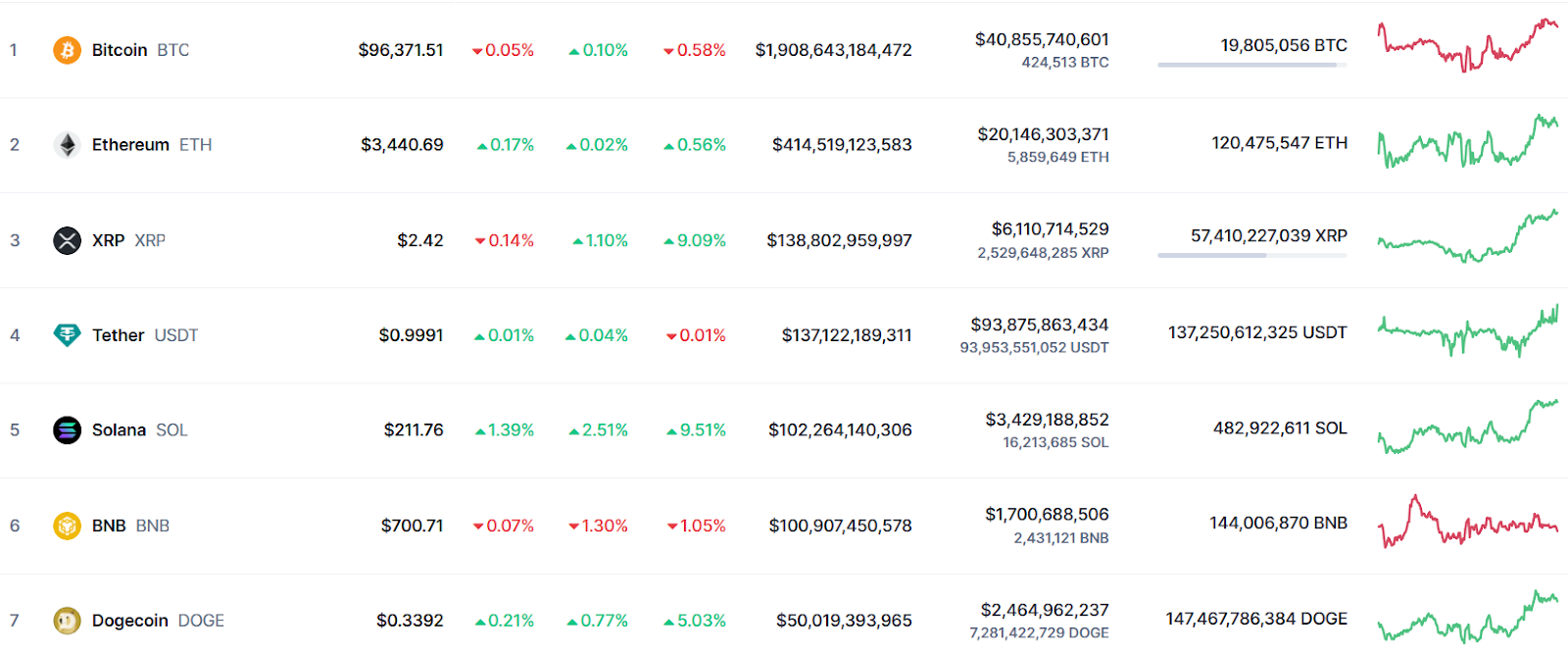
Friday’s Bitcoin surge saw it momentarily cross the $97,000 mark. Over the past two weeks, Bitcoin is gradually approaching the crucial $100,000 resistance level, which has proved difficult to breach. Bitcoin was trading at $96,777, a 1.5% rise at 11:49 a.m IST. Its intraday high, at $97,739, indicated great momentum.

Source: CoinMarketCap

Altcoins and Ethereum Also Gain

Rising by 1.6% to trade at $3,452 Ethereum matched the rising trend of Bitcoin. Other main altcoins also showed notable increase. XRP grew by 3.6%; Solana gained 2.7%; Cardano jumped by an amazing 11.5%; Stellar rose by 9%. These price swings helped the worldwide crypto market capitalization to rise generally 1.5% to $3.41 trillion.

Investor attitude has changed favorably according to the Fear-Greed Index. The near $97,000 trading level of Bitcoin reflects this increasing hope. Edul Patel, CEO of Mudrex, claims that while support for Bitcoin at $95,000 exists, it is now immediately opposed at $98,400. Finding the future direction of bitcoin will depend critically on this range.

Altcoins and Ethereum Also Gain

Source: CoinMarketCap

BuyUcoin CEO Shivam Thakral underlined the institutional interest in Bitcoin’s recent rise. He noted the approaching major milestone of U.S. spot Bitcoin ETFs’ increasing popularity. These ETFs just have $2.2 billion left to reach $110 billion in cumulative value. With over 5.7% of Bitcoin’s total supply represented here, this statistic highlights the growing institutional investor confidence.

The trading activity on the market still revolves mostly on stablecoins. Comprising 92% of the 24-hour volume of cryptocurrencies, the total volume of stablecoins in the past 24 hours came at $108.1 billion. This trend emphasizes how dependent on stablecoins liquidity across the market is.

Bitcoin’s Dominance and Market Capitalization Get

Over 24 hours, Bitcoin’s market capitalization rose to $1.913 trillion. Rising at 56.22%, the dominance of the cryptocurrency in the market also changed. Activity in trading has been strong; the 24-hour volume of Bitcoin jumped 41.6% to $41.3 billion.

At $100,000, Bitcoin is almost at a critical level that might define its future course. Growing ETF acceptance and institutional curiosity help to inspire investor confidence. Strong performance of altcoins also adds to the general good attitude in the market. Still, the next few days will depend much on resistance levels and market conditions.


Source link

Telegram Rings in the New Year with NFT Gift Conversion Feature – Cryptoflies News

0
Telegram Rings in the New Year with NFT Gift Conversion Feature – Cryptoflies News


0

Telegram has introduced a new feature allowing users to turn gifts into non-fungible tokens (NFTs).

In a blog post, the platform explained that gifts — artworks and animations used for celebrating holidays or congratulating others — can now be upgraded into NFTs on the TON blockchain. 

Once converted, these gifts gain unique traits, including custom designs created by Telegram artists.  

The NFT version of a gift reveals a new look from dozens of variations and additional traits, such as background colors, icons, and a unique number. This means each NFT artwork becomes unique, with some having a higher rarity level than others.

The process requires a small amount of Telegram Stars, the platform’s currency, to cover blockchain fees. 

You Might Be Interested In

NFT gifts can also be transferred between users or sold on NFT marketplaces.  

Telegram CEO Pavel Durov first announced the feature in October. It follows other Web3 initiatives by the platform. In 2022, Durov proposed a marketplace leveraging “NFT-like smart contracts” for auctioning usernames. This idea materialized as Fragment, a platform where users can trade usernames like “@storm” and “@royal” using Toncoins.


Source link

Top NFT Collections – January 3, 2025 | NFT CULTURE | NFT News | Web3 Culture | NFTs & Crypto Art

0
Top NFT Collections – January 3, 2025 | NFT CULTURE | NFT News | Web3 Culture | NFTs & Crypto Art


Top NFT Collections (Last 24h)

Here are the hottest NFT Collections of the day.

Rank

Name
Volume
Transactions
Chains
URL

1

Azuki
560.86 ETH
42
ethereum
View

2
CryptoPunks
CryptoPunks
395.01 ETH
10
ethereum
View

3
Top NFT Collections – January 2, 2025 | NFT CULTURE | NFT News | Web3 Culture | NFTs & Crypto Art
Pudgy Penguins
375.06 ETH
16
ethereum
View

4
Azuki Elementals
Azuki Elementals
287.96 ETH
144
ethereum
View

5
Mad LadsMad Lads
Mad Lads
0.00 ETH
61
solana
View

6
Lil Pudgys
Lil Pudgys
259.01 ETH
105
ethereum
View

7
Bored Ape Yacht ClubBored Ape Yacht Club
Bored Ape Yacht Club
256.42 ETH
16
ethereum
View

8
USDApeUSDApe
USDApe
173.50 ETH
452
polygon
View

9
BEANZ Official
BEANZ Official
172.35 ETH
195
ethereum
View

10
Airmoney DEGN Genesis EditionAirmoney DEGN Genesis Edition
Airmoney DEGN Genesis Edition
0.00 ETH
506
solana
View

The post Top NFT Collections – January 3, 2025 appeared first on NFT CULTURE.


Source link

Shiba Inu Launches ‘SHIB: The Metaverse’ in Early Access

0
Shiba Inu Launches ‘SHIB: The Metaverse’ in Early Access


Shiba Inu has expanded its ecosystem with the launch of ‘SHIB: The Metaverse,’ now available in early access.

This virtual environment invites users to explore, build, and connect within a blockchain-driven digital space. Powered by Shibarium, Shiba Inu’s custom blockchain, the platform offers over 100,000 land plots, with a portion unlocked for early use.

Designed to be accessible to a broad audience, the metaverse is free to explore and available for Windows PC users. With this release, the project aims to provide new opportunities for user engagement, customization, and interaction within a decentralized framework.

What is SHIB: The Metaverse? Source: SHIB: The Metaverse

What is SHIB: The Metaverse?

SHIB: The Metaverse is structured as a digital world featuring 100,595 individual plots of land.

In its early access phase, 36,431 plots have been made available across four distinct zones: the Growth, Defense, Technology, and Currencies districts. These zones are designed to balance private ownership with public spaces, including hubs like Ryoshi Plaza and WAGMI Temple, which facilitate social interaction and ease of navigation.

Users can participate in several activities, including land customization, avatar creation, and socializing. A Plot Builder tool enables landowners to modify their plots with pre-designed elements, and future updates will allow for custom 3D uploads. The Avatar Builder provides options for creating and personalizing digital representations, with future updates promising additional features.

The metaverse also supports communication through text and voice chat, enabling real-time social interactions.

WAGMI Temple at SHIB: The Metaverse
WAGMI Temple at SHIB: The Metaverse Source: SHIB: The Metaverse

What can we expect from SHIB: The Metaverse?

The platform’s development has spanned several years, with an emphasis on creating tools that encourage both creativity and engagement. SHIB: The Metaverse is currently optimized for Windows PCs, with minimum specifications including 16 GB of RAM and a GTX 1080 GPU. Recommended specifications are higher, ensuring a smoother experience for users with advanced systems.

Future updates will expand accessibility to desktop browsers and introduce advanced tools for landowners, including e-commerce features and interactive game-building capabilities. The ability to bridge land between Shibarium and Ethereum will also enhance trading options on platforms like OpenSea.

For those interested, the early access version is available for free on the official website. Whether exploring hubs, customizing plots, or connecting with others, SHIB: The Metaverse offers various opportunities for participation and interaction in its early stages.


Source link

5 Web3 Games to Watch in Q1 2025

0
5 Web3 Games to Watch in Q1 2025


Web3 gaming is ready to make a big splash in early 2025. Many developers are working on titles that let players truly own their virtual assets, often with blockchain technology and NFTs running behind the scenes.

This approach offers more flexibility and control than traditional gaming since players can buy, sell, or trade the items they collect. As everyone gears up for Web3 games Q1 2025, five upcoming releases look ready to show just how far this technology has come.

The Growth of Web3 Gaming (2025 Outlook)

Over the past few years, developers have been experimenting with new ways to reward players for their time and skill. By introducing NFTs into games, studios can verify player ownership of everything from rare weapons to entire plots of land. Play-to-earn models remain popular among some groups. However, many think 2025 might see Web3 elements become more subtle, serving as a behind-the-scenes bonus rather than the main selling point.

Telegram’s success in mobile gaming should also continue, showing just how well blockchain rewards can work on smartphones. Another exciting twist is the growing role of AI, which can help automate certain in-game processes and possibly shape smarter, more responsive virtual worlds.

1. Forgotten Runiverse

Forgotten Runiverse draws inspiration from the Forgotten Runes Wizard’s Cult IP and offers a nostalgic pixel art style. This MMORPG focuses on exploration, crafting, and forging alliances. Players can tackle Player vs. Environment (PvE) quests or join monthly Player vs. Player (PvP) leagues to test their skills in battle.

By running on the Ronin network, the game ensures that every item or piece of land exists on the blockchain, giving players the chance to collect unique assets they can trade or sell whenever they choose. This free-to-play approach could attract gamers who grew up loving retro RPGs but now want true digital ownership of their gear.

Source Forgotten Runiverse

2. Ragnarok Landverse: Genesis

Ragnarok Landverse: Genesis revives the charm of the classic Ragnarok Online while weaving in modern blockchain features. Created by Zentry and Gravity, it lets fans return to familiar cities and dungeons, this time with the option to claim real ownership of the loot they discover.

Like Forgotten Runiverse, it uses the Ronin Network, which streamlines how players can trade their digital assets. The introduction of NFTs gives gamers a deeper connection to the world, and the Q1 2025 launch is timed perfectly to remind older fans why they fell in love with Ragnarok in the first place.

3. Moonray’s Autobattler

Moonray’s Autobattler is a spin-off of the main Moonray ecosystem and is designed to reach a wider audience with a mobile-friendly experience. Auto-battler games typically involve assembling a team of heroes or units that fight automatically, leaving players to focus on strategy. Here, blockchain allows players to collect unique digital items that can be used across the wider Moonray universe.

The fact that this game is heading to smartphones in Q1 2025 suggests it could introduce Web3 gaming to people who want a simpler and more accessible way to try the technology.

Source Moonray

4. RavenQuest

RavenQuest builds on the legacy of Ravendawn, a Web2 title with a dedicated following. Now, it’s getting an upgrade in the form of full blockchain integration, featuring a dynamic economy that balances itself to maintain fairness.

Players roam a top-down pixel world where choices matter, lore runs deep, and puzzles keep everyone on their toes. Phase 3 launched in December 2024, adding new features and stories that set the stage for the final release in 2025.

Thanks to its self-balancing algorithms, in-game resources stay rare but never so scarce that new players feel shut out. This mix of classic design and modern technology makes RavenQuest a prime example of where Web3 MMORPGs could be headed.

5. Parallel Colony

Parallel Colony takes an intriguing route by combining survival simulation with artificial intelligence. Instead of managing each character individually, players set goals and strategies. AI-driven agents carry out tasks like building structures or collecting resources.

This system has a unique mix of hands-on and hands-off play: some might find it relaxing to watch their colony grow on its own, while others will relish the strategic depth. Adding blockchain means players can own and trade in-game resources without relying on a central authority.

As AI develops, Parallel Colony could pave the way for more immersive, self-governing worlds that respond intelligently to player decisions.

Source Parallel Colony

Tips for Getting Started with Web3 Gaming

Players new to Web3 gaming often have to adjust to a few extra steps before they can fully enjoy these titles. It’s important to create a secure crypto wallet to store in-game assets and tokens, and to learn a bit about the blockchain network that a game runs on.

Understanding how to buy, sell, and trade specific tokens can save a lot of time later on, especially for those interested in collecting rarer NFTs. Finally, joining official channels on social media or Discord is a good way to keep up with announcements, participate in community events, and even grab early access rewards that developers sometimes offer to their most dedicated fans.

Conclusion

Looking at these five Web3 games Q1 2025—Forgotten Runiverse, Ragnarok Landverse: Genesis, Moonray’s Autobattler, RavenQuest, and Parallel Colony—one can see how quickly the industry is moving forward. While they all use blockchain in one way or another, each takes a slightly different approach to NFTs, player economies, and long-term engagement.

Some are classic MMORPGs, and others are real-time strategy or AI-driven simulations. Together they show a future where players have true ownership of their virtual adventures and where gameplay can evolve with emerging tech.

Editor’s note: Written with the assistance of AI – Edited and fact-checked by Jason Newey.

Jason Newey

Jason Newey is a seasoned journalist specializing in NFTs, the Metaverse, and Web3 technologies. With a background in digital media and blockchain technology, he adeptly translates complex concepts into engaging, informative articles.

View all posts


Source link

Top NFT Gaming Trends to Watch in 2025

0
Top NFT Gaming Trends to Watch in 2025


In just a few years digital collectibles have gone from niche to mainstream, capturing the attention of gamers, investors and tech enthusiasts. Many have seen how NFTs have upended traditional gaming models, introducing new ways to earn, build communities and even co-create virtual worlds. As we head into 2025 several big trends will shape what’s being called the next era of NFT gaming. The following will look at what the industry will look like in 2025, focusing on sustainable play-to-earn (P2E) models, cross chain adoption, AI, brand partnerships, expanding metaverses, regulatory shifts and on-chain identities.

Looking Ahead to NFT Gaming in 2025

Despite the obstacles, the NFT gaming landscape has come a long way since 2021. Early adopters remember a time when gas fees were scary and many play-to-earn games had no mechanism to keep players engaged. Now the industry is in a phase with better blockchain infrastructure, more institutional involvement and easier on-ramps for newbies. By 2025, NFT gaming will reach new heights, intersecting digital assets, communities, and gameplay.

Sustainable Play-to-Earn (P2E) Economies

Tokens and Value

Early play-to-earn games had a unique problem: tokens earned in-game could be super volatile, making it hard to have a stable or rewarding economy. Many games rewarded players handsomely at the beginning but struggled to prevent the inflation of their in-game currencies. As we head into 2025 developers have been experimenting with tokenomics to balance supply and demand. By limiting token issuance, introducing staking and rewarding players who hold assets long term, newer P2E models will combat the “gold rush” inflation that plagued the space.

Multiple Rewards

Beyond pure token rewards game studios are starting to diversify. Some games offer additional perks such as early access to special events, exclusive digital collectibles or even real-world merchandise for top performers. From a single token reward system to multiple asset types keeps players more engaged and helps to have healthier in-game markets.

Deeper Player Involvement

Sustainable economies need sustained user interest. Top titles are moving beyond simple daily missions and quests by hosting seasonal events, global tournaments and community driven storylines. Such features promote long term retention and player centric worlds. Those who follow NFT gaming 2025 expect next level engagement – especially through social and competitive elements – to be key to a game’s success.

Cross-Chain and Layer-2 Adoption

Current Friction

During the 2021-2023 boom many games ran into issues with high transaction fees and slow network speeds – especially on Ethereum. Alternative blockchains and sidechains have made progress but many gamers still find bridging assets between ecosystems painful. This friction can be a barrier to entry for casual players who want a seamless experience.

The Rise of Bridges

By 2025 cross-chain bridges will be the backbone of NFT gaming. As these bridges mature players will be able to move their digital collectibles or tokens between chains without high fees or complicated steps. A gamer holding an NFT on Polygon can use it in a game on Ethereum without any technical hassle.

Developers and Players

Game studios can now adopt a multi-chain approach and offer wider marketplaces for in-game assets. Players get lower fees, smoother asset transfers and the fun of discovering new games on different networks. Cross-chain and layer-2 will open up the NFT gaming 2025 audience to a broader blockchain community.

AI and Machine Learning

AI has started to show its face in gaming and 2025 might be the year it takes the main stage in NFT games. Some studios are experimenting with AI driven characters that learn from player behavior, creating challenges that adapt to each player’s skill level. This keeps the experience engaging and creates a sense of immersion that’s often missing in linear games.

NFT Creation and Curation

AI generated art has already been seen in some NFT collections but the use cases are expanding. Developers can now use machine learning algorithms to generate in-game items that are unique and personalized. Imagine collecting an NFT sword that was algorithmically tailored to your play style or aesthetic preferences. Such innovations will create creativity and interest and will encourage more players to explore digital collectibles that go beyond simple cosmetics.

Data for Developers

Game developers in 2025 will rely more on AI powered analytics tools. These can parse player data, find trends and adjust in-game economies on the fly. By reacting quickly to metrics like player retention and token liquidity studios can fine tune their games to stay competitive. In short AI is moving from a nice to have to a must have in the development process.

Brand Collaborations and IP Integrations

Mainstream Brands into NFT Gaming

Luxury, fashion and entertainment brands started to experiment with NFT collaborations in 2023 and the results have been mixed. But as brands get more comfortable with blockchain the quality and scope of these collaborations will improve. Players in 2025 will see official movie tie-in games, sports partnerships or major retailers creating digital collectibles that tie in with real world products.

Cross Promotion and Fan Engagement

Brands have large and loyal followings which can direct new audiences to NFT gaming. When a popular sports league for example gives a fan the opportunity to own a limited edition collectible or access exclusive game modes it helps bridge the gap between non-crypto audiences and the blockchain world. Cross promotion will pique curiosity and reward existing fans with tangible ownership of digital and physical products.

Overall Market

By partnering with big brands blockchain games can show real world utility beyond speculation. As mainstream IP enters the scene the NFT gaming market will get a influx of interest from fans who have never considered tokenized assets or digital wallets before.

Maturity of Virtual Worlds

Blockchain powered metaverses have been on the horizon for years promising persistent digital spaces where players can own land, build communities and even host events. By 2025 these virtual worlds will offer more polished experiences with better graphics, improved interfaces and more social features.

Esports and Events

Competitive events within metaverse platforms are already in the experimental phase. Some see the metaverse as an evolution of traditional esports arenas where players can compete in front of virtual audiences, buy NFT tickets and earn collectible trophies. With better VR and AR technology fans can feel closer to the action and blur the lines between sports, entertainment and social hangouts.

New Forms of Social Interaction

What makes the metaverse unique is the community driven approach. Players are no longer just consumers but active contributors building experiences for others and using NFTs as the currency of collaboration. DAOs (Decentralized Autonomous Organizations) allow users to vote on platform decisions and take ownership and governance to the next level.

Regulatory Clarity and Institutional Adoption

During the early days of the NFT craze the industry was navigating a patchwork of regulations with some countries offering more guidance than others. Towards 2025 clearer rules around digital assets and crypto transactions will give developers and investors a more solid foundation. This will encourage more institutional involvement from banks, venture capital firms and even government backed programs.

Institutional Confidence

Large investors need legal clarity and risk mitigation before entering new markets. As governments provide more concrete guidelines established companies will be more likely to fund NFT gaming projects or form strategic partnerships. More capital will mean higher production values, broader marketing campaigns and more professionalized game development.

Risks

Regulations will come with compliance costs that smaller studios can’t afford. But most see new rules as a net positive for consumers, to weed out bad actors and increase trust in the industry. Over time these safeguards will bring in millions of players who have been waiting for NFT gaming to mature and go mainstream.

On-Chain Identity and Reputation Systems

Trust in Virtual Spaces

Player identity in NFT gaming has been tied to wallet addresses and online profiles which some see as lacking the depth of real world credentials. Now developers are experimenting with on-chain identity solutions – digital badges or soulbound tokens – to track achievements, establish trust and accountability.

Decentralized Social Networks

By 2025 it’s possible a gamer’s reputation in one game could transfer to another through decentralized profiles. Players could earn “reputation tokens” for good sportsmanship or notable achievements which are visible across multiple games. This will encourage more positive interactions and less toxic behavior.

Rewards and Social Capital

On-chain identity systems allow communities to reward contributors. A top tournament organizer for example could earn governance tokens that give them voting rights on major gameplay updates. This integration of social capital and game mechanics will incentivize players to contribute positively and shape a more collaborative digital world.

Conclusion: Preparing for the Next Frontier of NFT Gaming

Looking at these trends – sustainable P2E economies, cross-chain adoption, AI integration, brand collaborations, metaverse expansions, regulatory shifts and on-chain identities – it’s clear NFT gaming in 2025 will be more innovative and more stable than ever. The industry’s “wild west” phase of rapid token launches and hype is giving way to a more structured and community focused environment.

For the average gamer these changes mean new opportunities for immersive storytelling, real ownership of in-game assets and even the chance to shape the direction of a game. For developers they get access to new powerful tools – AI driven analytics and cross-chain marketplaces – to build more complex and resilient virtual economies. For investors it means regulatory guardrails will add legitimacy and bring NFT gaming into the mainstream and potentially more users.

As 2025 arrives the intersection of tech, creativity and community will reshape how we play, earn and connect through gaming. Whether you’re new to the space or have been around since the dawn of blockchain projects the future is bright. Keep an eye on these trends and you’ll be ready for the next big jump.

Editor’s note: This article was written with the assistance of AI. Edited and fact-checked by Owen Skelton.

Owen Skelton

Owen Skelton is an experienced journalist and editor with a passion for delivering insightful and engaging content. As Editor-in-Chief, he leads a talented team of writers and editors to create compelling stories that inform and inspire.

View all posts


Source link

Top NFT Collections – January 2, 2025 | NFT CULTURE | NFT News | Web3 Culture | NFTs & Crypto Art

0
Top NFT Collections – January 2, 2025 | NFT CULTURE | NFT News | Web3 Culture | NFTs & Crypto Art


Top NFT Collections (Last 24h)

Here are the hottest NFT Collections of the day.

Rank

Name
Volume
Transactions
Chains
URL

1

Pudgy Penguins
588.78 ETH
26
ethereum
View

2
Fluid Vault
Fluid Vault
584.00 ETH
4
ethereum
View

3
Lil Pudgys
Lil Pudgys
381.23 ETH
156
ethereum
View

4
Top NFT Collections – January 3, 2025 | NFT CULTURE | NFT News | Web3 Culture | NFTs & Crypto Art
Azuki
310.13 ETH
25
ethereum
View

5
Azuki Elementals
Azuki Elementals
206.87 ETH
113
ethereum
View

6
Doodles
Doodles
175.31 ETH
31
ethereum
View

7
Bored Ape Yacht Club
167.01 ETH
11
ethereum
View

8
Milady Maker
Milady Maker
116.72 ETH
28
ethereum
View

9
Mad Lads
Mad Lads
0.00 ETH
28
solana
View

10
BEANZ Official
BEANZ Official
105.76 ETH
128
ethereum
View

The post Top NFT Collections – January 2, 2025 appeared first on NFT CULTURE.


Source link

NFT Sales Reach $8.85 Billion in 2024, Slightly Up From 2023 – Cryptoflies News

0
NFT Sales Reach .85 Billion in 2024, Slightly Up From 2023 – Cryptoflies News


2

Non-fungible tokens (NFTs) closed 2024 with a sales volume surpassing $127 million more than in 2023, signaling a slight recovery despite lingering challenges.  

Data from CryptoSlam shows NFT sales in 2024 reached $8.85 billion, up from $8.72 billion in 2023 — a 1.47% increase. While this marks progress, the figures remain far below the peaks of 2021 and 2022, which saw sales of $15 billion and $23 billion, respectively.  

Ethereum remained the leading blockchain for NFTs in 2024, with $3.1 billion in sales. However, this was a significant drop from $4.9 billion in 2023 — reflecting a 37.5% decline. 

In contrast, Bitcoin-based NFTs surged, recording $2.8 billion in sales — a 71.9% increase from $1.6 billion in 2023.  

Solana also saw growth, with sales climbing to $1.4 billion in 2024, up 32% from the $1 billion recorded the previous year.  

You Might Be Interested In

Top NFT collections in 2024 included Pudgy Penguins, CryptoPunks, Azuki, Doodles, and Bored Ape Yacht Club, which continued to draw significant interest from collectors and investors.  

Despite a challenging start to the year, NFT sales experienced a notable rebound in the final months of 2024. After a seven-month slump, September saw the lowest sales volume since 2021. 

However, October brought a turnaround with $353 million in sales. The upward trend continued into November, with monthly sales reaching $562 million. 

December capped off the year with $877 million in sales, making it the fifth-best month of 2024. Ethereum-based collections drove much of this growth, contributing $482 million to December’s total.  

The broader NFT market faced headwinds during 2024, including regulatory uncertainty and a downturn in the market. The U.S. Securities and Exchange Commission (SEC) increased scrutiny of the Web3 space, issuing fines and Wells notices to several players. Notable targets included OpenSea, CyberKongz, and Immutable.  

These challenges prompted some industry players to scale back or exit the market. For example, Kraken shut down its NFT marketplace, while Nike-owned studio RTFKT announced plans to wind down operations.  


Source link

Top NFT Collections – January 1, 2025 | NFT CULTURE | NFT News | Web3 Culture | NFTs & Crypto Art

0
Top NFT Collections – January 1, 2025 | NFT CULTURE | NFT News | Web3 Culture | NFTs & Crypto Art


Top NFT Collections (Last 24h)

Here are the hottest NFT Collections of the day.

Rank

Name
Volume
Transactions
Chains
URL

1

Pudgy Penguins
600.56 ETH
27
ethereum
View

2
Top NFT Collections – January 3, 2025 | NFT CULTURE | NFT News | Web3 Culture | NFTs & Crypto Art
Azuki
383.60 ETH
31
ethereum
View

3
Bored Ape Yacht Club
360.48 ETH
26
ethereum
View

4
Lil Pudgys
Lil Pudgys
264.35 ETH
115
ethereum
View

5
Azuki Elementals
Azuki Elementals
257.62 ETH
131
ethereum
View

6
USDApe
USDApe
238.00 ETH
538
polygon
View

7
CryptoPunks
CryptoPunks
196.33 ETH
5
ethereum
View

8
Fluid Vault
Fluid Vault
175.00 ETH
1
ethereum
View

9
Kaito Genesis
Kaito Genesis
141.08 ETH
12
ethereum
View

10
OCH Genesis Ring
OCH Genesis Ring
98.34 ETH
10
ethereum
View

The post Top NFT Collections – January 1, 2025 appeared first on NFT CULTURE.


Source link

Popular Posts

My Favorites

SteamOS 3.7.0 Preview brings the ‘beginnings of support for non-Steam Deck...

0
Valve have released SteamOS 3.7.0 Preview, which they noted has the beginnings of support for non-Steam Deck handhelds! So we're closing in on...