Arts

Home Arts Page 122

South Korea’s Largest Island to Issue NFT Travel Cards to Boost Tourism – Cryptoflies News

0
South Korea’s Largest Island to Issue NFT Travel Cards to Boost Tourism – Cryptoflies News


13

Jeju Island, South Korea’s largest island, plans to introduce non-fungible token (NFT) cards to attract younger tourists. 

The initiative, announced in a local report, targets the MZ generation, which includes Millennials and Generation Z. 

The NFT cards, set to launch in the second half of this year, will offer various perks for visitors. These include travel subsidies, memberships, and discounts at tourist attractions. 

Users will also be able to document their visit details — such as location, time, photos, and videos — on a related platform.

Although specifics about the project, including the blockchain to be used, remain unclear, the move is part of a broader trend in Asia leveraging NFTs for tourism. This follows new guidelines introduced by South Korea’s Financial Services Commission (FSC) in June to regulate NFTs.

You Might Be Interested In

Japan has also embraced NFTs for tourism. Last month, NFTs were released to support the 2025 Osaka Expo and showcase digital ink brush art.

In June, Yamakoshi Village launched the “Neo-Yamakoshi Village” project to combat depopulation, preserve cultural traditions, and engage global supporters using NFTs and the metaverse. Earlier, in February, Japan Airlines collaborated with Hakuhodo to digitize local experiences and promote regional tourism. 


Source link

NiftyKit NFT Platform Partially Closed, Tease New Direction

0
NiftyKit NFT Platform Partially Closed, Tease New Direction


No-code NFT creation platform NiftyKit has partially closed, having ceased the majority of operations on January 5, 2025.

The site gave users a self-service solution that allowed them to build, collaborate and launch NFT projects with no coding required, offering a easy route for creatives to get involved in the NFT industry.

Though the initial plan was to cease all operations on January 5, due to popular demand, the NiftyKit team have decided to “[extend] NiftyKit’s self-serve platform until further notice, with support limited to Ethereum Mainnet, Arbitrum One, Polygon, and Base networks.”

NiftyKit NFT - Statement Source: @NiftyKitApp on X

What was NiftyKit?

NiftyKit was a popular self-service no-code NFT creation platform, which boasted users such as Takashi Murakami, Gucci, and Wallet Guard.

Over its operation, NiftyKit has facilitated the creation of over 5,000 NFT projects and 4.8 million NFTs, with over $25,000,000 in creator earnings thanks to the platform.

As part of this partial closure, the ability to create new collections on NiftyKit has ceased as of January 5 – although the minting site “will remain accessible for existing collections.”

The NiftyKit team have stated that “for those using the platform, rest assured that we are providing comprehensive support and resources to help you migrate your assets and make this transition as smooth as possible.”

NiftyKit NFT - NiftyKit Wiki
NiftyKit NFT - NiftyKit Wiki Source: NiftyKit

What’s next for NiftyKit?

Though the NiftyKit platform is being phased out, it is believed that the team behind it has new products on the way.

The NiftyKit team have teased that this is only a temporary goodbye, with the closure prompted by a motivation to “shift resources into new products and services”, and stating that “the best is yet to come!”

As of writing, the team have remained tight-lipped on their future direction – though with the supportive comments raised in the face of their closure, it’s clear that the team have a community that is invested in them and their products.


Source link

How to Spot the Next Big NFT Project Before It Blows Up

0
How to Spot the Next Big NFT Project Before It Blows Up


NFT interest continues to rise, with many seeking the next big collection to become a household name. Recognizing a future “blue-chip” early can be very profitable, but it also requires due diligence. Below are some practical tips for collectors to research NFT trends, find top emerging communities and avoid common pitfalls when investing in digital assets early.

Start with Solid Market Research

Examine Market Demand

Collectors usually start by looking at overall market sentiment. This means looking at NFT price trends, trading volumes and recent news about top collections. The NFT market can be very volatile but steady demand for a specific genre (e.g. digital art or gaming assets) may mean a project has staying power.

Explore Multiple Blockchains

Looking beyond Ethereum can open up new opportunities. Some new NFT projects are on Solana, Polygon or Avalanche because of lower transaction costs. Expanding your research across different ecosystems will help you find opportunities that may fly under the radar if you only look at the biggest networks.

Assess Supply and Rarity

Supply and rarity are key. Projects that find the balance between rarity and accessibility get more buzz. Too much supply and the market gets saturated, too little and new investors can’t get in. Finding that sweet spot is a key indicator of growth.

Evaluate the Project Team and Goals

Backgrounds and Track Records

A transparent project team that shares their background tends to inspire more trust from potential collectors. Look for details on professional backgrounds, past accomplishments and level of expertise in NFT or Web3. Good teams have well defined roles, public profiles and are willing to communicate openly.

Roadmap and Utility

Projects with a clear roadmap can show if the devs have a long term vision. Future goals might be staking, play-to-earn game features or partnering with established brands. Any roadmap that outlines a timeline for product launches and community engagement is a good sign of a serious long term effort.

Transparency of Smart Contracts

NFT enthusiasts with some technical skills may look at the smart contract to see if there are any hidden mint functions or shady coding practices. This step is optional if you don’t have coding skills but projects that share their contract or get third-party audited tend to get more credibility.

Check Community Engagement and Social Proof

Activity on Social Platforms

Active Discord communities, Twitter conversations and Telegram groups can be indicators of a project’s momentum. Whether the project is being discussed in influencer circles or on Reddit, real interest and excitement from community members means a stronger foundation.

Engagement vs. Hype

It’s important to separate meaningful conversation from empty hype. Large follower counts may look good at first but if engagement is artificially boosted the project may be using inflated metrics rather than real investor support. Look at the quality of the conversation to see the difference.

Collaboration and Partnerships

Community led partnerships and cross promotion often show a project’s willingness to collaborate within the broader ecosystem. Real partnerships might be with reputable marketplaces, established artists or recognized influencers in the NFT space. Projects that have these relationships have an advantage in getting mainstream attention.

Identify Red Flags Early

Overpromising and Under-Delivering

Projects that promise unrealistic short term gains or exaggerated future possibilities are a concern. While passion is a good quality in project teams, anyone that claims guaranteed returns without a clear strategy deserves a second look.

Lack of Clear Documentation

Thin or no documentation on how a project works is another red flag. Whitepapers or official project website should disclose token supply, royalties and governance structure. Inconsistent or vague information is a sign of trouble down the line.

Sudden Spikes or Drops

Extreme price movements in a collection can sometimes be due to speculation rather than fundamentals. Some short term volatility is normal but drastic movement without any news or developments might be opportunistic trading which can leave latecomers exposed if interest fades as quickly.

Balance Excitement with Caution

As exciting as the NFT space is, approaching early investment with a balanced view helps you have a more sustainable portfolio. Diversify across multiple new NFT projects, set budget limits and seek professional advice where needed to reduce the risk of chasing the next big thing.

Many projects look good during the hype phase only to disappear when the hype wears off. By focusing on real community engagement, verified team credentials and realistic roadmaps collectors will have a better chance to find the next big NFT.

Conclusion

Finding blue chip collections involves a mix of curiosity, skepticism and research. Enthusiasts can increase their chances of finding the next big NFT by looking at market data, vetting project teams and engaging with active communities. High returns are never guaranteed but a thoughtful approach will get smart participants in early on the next big NFT trend before it goes mainstream.

Editor’s note: This article was written with the assistance of AI. Edited and fact-checked by Owen Skelton.

Owen Skelton

Owen Skelton is an experienced journalist and editor with a passion for delivering insightful and engaging content. As Editor-in-Chief, he leads a talented team of writers and editors to create compelling stories that inform and inspire.

View all posts


Source link

Top NFT Collections – January 6, 2025 | NFT CULTURE | NFT News | Web3 Culture | NFTs & Crypto Art

0
Top NFT Collections – January 6, 2025 | NFT CULTURE | NFT News | Web3 Culture | NFTs & Crypto Art


Top NFT Collections (Last 24h)

Here are the hottest NFT Collections of the day.

Rank

Name
Volume
Transactions
Chains
URL

1

Pudgy Penguins
1,094.23 ETH
46
ethereum
View

2
Top NFT Collections – January 4, 2025 | NFT CULTURE | NFT News | Web3 Culture | NFTs & Crypto Art
Azuki
577.43 ETH
47
ethereum
View

3
Lil Pudgys
Lil Pudgys
381.11 ETH
150
ethereum
View

4
Azuki Elementals
Azuki Elementals
239.78 ETH
133
ethereum
View

5
Bored Ape Yacht Club
168.53 ETH
10
ethereum
View

6
BEANZ Official
BEANZ Official
125.09 ETH
152
ethereum
View

7
Doodles
Doodles
90.36 ETH
18
ethereum
View

8
CryptoPunks
CryptoPunks
72.90 ETH
2
ethereum
View

9
Mutant Ape Yacht Club
72.46 ETH
24
ethereum
View

10
CryptoDickbutts S3
CryptoDickbutts S3
64.53 ETH
43
ethereum
View

The post Top NFT Collections – January 6, 2025 appeared first on NFT CULTURE.


Source link

Exploring Sustainability in the World of Digital Art

The realm of digital art has undergone a remarkable transformation over the past few decades, embracing new technologies and innovative practices. As this dynamic field continues to evolve, the concept of sustainability has emerged as a critical consideration for artists, technologists, and consumers alike. Sustainability in digital art encompasses a wide range of practices aimed at minimizing environmental impact, enhancing social equity, and promoting economic viability. This article delves into the multifaceted nature of sustainability in digital art, exploring the role of technology and addressing the challenges and solutions associated with eco-friendly digital practices.

Understanding Sustainability in Digital Art

Sustainability in digital art is an evolving concept that reflects the broader societal shift towards more responsible and conscious practices. At its core, sustainability in this context refers to the creation, distribution, and consumption of digital art in ways that reduce environmental harm, promote social inclusivity, and ensure economic feasibility. The digital nature of this art form presents unique opportunities and challenges in achieving these goals. Unlike traditional art forms, digital art does not require physical materials, which significantly reduces the environmental impact associated with production and distribution. However, the reliance on electronic devices and digital infrastructure introduces new environmental concerns, such as energy consumption and electronic waste.

A critical aspect of sustainability in digital art is the consideration of the entire lifecycle of art pieces, from creation to consumption and eventual obsolescence. Artists are increasingly aware of the environmental impact of their digital practices, prompting many to adopt more sustainable methods. This includes optimizing the energy efficiency of digital tools, using renewable energy sources, and reducing the carbon footprint associated with hosting and streaming digital content. Additionally, sustainability in digital art encompasses social dimensions, such as ensuring accessibility and inclusivity in art creation and consumption, thereby fostering a more equitable and diverse digital art community.

The economic dimension of sustainability in digital art involves creating viable business models that support artists while minimizing environmental impact. This includes exploring new revenue streams, such as digital art marketplaces and non-fungible tokens (NFTs), which can potentially provide artists with more financial stability. However, these innovations also present challenges in terms of energy consumption and environmental impact, necessitating a careful balance between economic viability and ecological responsibility. As the digital art landscape continues to evolve, sustainability remains a guiding principle for artists and industry stakeholders seeking to harmonize creative expression with environmental stewardship.

Education and awareness are vital components in advancing sustainability in digital art. Artists, consumers, and industry professionals must be informed about the environmental and social implications of digital art practices. This involves fostering a culture of sustainability through educational initiatives, workshops, and collaborations that highlight best practices and innovative solutions. By cultivating a deeper understanding of sustainability, the digital art community can drive meaningful change and contribute to a more sustainable and equitable future for all.

Public policy and regulation also play a crucial role in promoting sustainability in digital art. Governments and regulatory bodies can incentivize sustainable practices through grants, subsidies, and certifications that recognize environmentally and socially responsible art practices. By establishing clear guidelines and standards, policymakers can encourage the digital art industry to adopt more sustainable practices, ultimately benefiting both artists and the environment.

In conclusion, understanding sustainability in digital art requires a comprehensive approach that considers environmental, social, and economic dimensions. As digital art continues to grow in popularity and influence, embracing sustainable practices is essential for ensuring the long-term viability and positive impact of this dynamic art form. By prioritizing sustainability, artists and industry stakeholders can contribute to a more responsible and equitable digital art ecosystem.

The Role of Technology in Sustainable Art

Technology plays a pivotal role in shaping the sustainability of digital art, offering both opportunities and challenges. On one hand, advancements in technology have enabled artists to create, share, and experience art in ways that were previously unimaginable. The digital medium allows for the creation of complex and interactive artworks that can be easily distributed and accessed globally, reducing the need for physical materials and transportation. Additionally, digital tools and platforms provide artists with new avenues for creative expression, enabling them to experiment with innovative techniques and reach wider audiences.

One of the key technological advancements contributing to sustainability in digital art is the development of more energy-efficient hardware and software. As the demand for digital content continues to grow, reducing the energy consumption of devices and data centers is crucial for minimizing the environmental impact of digital art. Companies and developers are increasingly focusing on designing energy-efficient processors, optimizing software for lower power consumption, and utilizing renewable energy sources to power data centers. These efforts not only reduce the carbon footprint of digital art but also contribute to the broader goal of achieving sustainability in the digital age.

Cloud computing and virtualization technologies have also played a significant role in promoting sustainability in digital art. By enabling artists to store, process, and distribute their work online, these technologies reduce the need for physical storage and transportation, leading to a decrease in resource consumption and waste generation. Furthermore, cloud-based platforms facilitate collaboration and sharing among artists and audiences, fostering a more inclusive and diverse digital art community. However, it is essential to ensure that cloud services are powered by renewable energy and that data centers are designed to minimize energy consumption and environmental impact.

Blockchain technology, particularly in the form of non-fungible tokens (NFTs), has emerged as a controversial yet potentially transformative force in the world of digital art. NFTs provide a way for artists to authenticate and monetize their digital creations, offering new revenue streams and opportunities for artists to gain recognition and financial support. However, the energy-intensive nature of blockchain networks has raised concerns about the environmental impact of NFTs. In response, efforts are being made to develop more energy-efficient blockchain technologies and explore alternative consensus mechanisms that reduce energy consumption while maintaining the benefits of decentralization and security.

Artificial intelligence (AI) and machine learning are also contributing to sustainability in digital art by enabling artists to create more complex and dynamic artworks with greater efficiency. These technologies can assist artists in optimizing their creative processes, reducing the time and resources required to produce high-quality digital art. Moreover, AI-powered tools can help artists analyze and improve the sustainability of their work by providing insights into energy consumption, resource usage, and environmental impact. By leveraging AI and machine learning, artists can make more informed decisions and adopt more sustainable practices in their creative endeavors.

In summary, technology plays a crucial role in advancing sustainability in digital art by providing innovative tools and solutions that enable artists to create, share, and experience art in more sustainable ways. While technological advancements offer significant opportunities for reducing the environmental impact of digital art, it is essential to remain mindful of the challenges and ethical considerations associated with these technologies. By embracing sustainable technologies and practices, the digital art community can contribute to a more responsible and equitable future for the arts.

Challenges and Solutions in Eco-Friendly Digital Art

Despite the potential for sustainability in digital art, several challenges remain in achieving eco-friendly practices. One of the primary challenges is the energy consumption associated with digital art creation, distribution, and consumption. The increasing demand for high-quality digital content and the proliferation of digital devices have led to a significant rise in energy usage, contributing to environmental degradation and climate change. Addressing this challenge requires a concerted effort to optimize energy efficiency across the digital art ecosystem, from the design of hardware and software to the operation of data centers and digital platforms.

Another challenge in eco-friendly digital art is the generation of electronic waste (e-waste) resulting from the rapid obsolescence of digital devices and technologies. As new technologies emerge, older devices and equipment often become obsolete, leading to increased e-waste generation and environmental pollution. To mitigate this issue, it is essential to promote responsible consumption and disposal of electronic devices, encourage recycling and refurbishment, and design products with longer lifespans and modular components that can be easily upgraded or repaired.

The environmental impact of blockchain technology, particularly in the context of NFTs, presents another significant challenge for sustainable digital art. The energy-intensive nature of blockchain networks, primarily due to the proof-of-work consensus mechanism, has raised concerns about the carbon footprint of NFTs and their contribution to climate change. To address this issue, efforts are being made to develop and adopt more energy-efficient blockchain technologies, such as proof-of-stake and other alternative consensus mechanisms, which significantly reduce energy consumption while maintaining security and decentralization.

In addition to environmental challenges, achieving sustainability in digital art also involves addressing social and economic issues. Ensuring accessibility and inclusivity in the digital art space is crucial for promoting social equity and fostering a diverse and vibrant art community. This includes making digital art tools and platforms accessible to artists from diverse backgrounds and providing opportunities for underrepresented artists to showcase their work and gain recognition. Moreover, developing sustainable business models that support artists financially while minimizing environmental impact is essential for the long-term viability of the digital art ecosystem.

Collaboration and knowledge sharing are vital for overcoming the challenges associated with eco-friendly digital art. Artists, technologists, policymakers, and consumers must work together to identify best practices, develop innovative solutions, and promote sustainable practices across the digital art landscape. This involves fostering a culture of sustainability through educational initiatives, workshops, and collaborative projects that highlight the importance of sustainability and encourage the adoption of eco-friendly practices.

In conclusion, while there are significant challenges to achieving eco-friendly digital art, there are also numerous opportunities for innovation and collaboration that can drive meaningful change. By addressing environmental, social, and economic issues, the digital art community can contribute to a more sustainable and equitable future for the arts. Through continued efforts to promote sustainability, digital art can become a powerful force for positive change, inspiring creativity and innovation while minimizing its impact on the planet.

As the digital art landscape continues to evolve, embracing sustainability is not only a responsibility but also an opportunity to redefine the future of art. By prioritizing sustainable practices, artists, technologists, and consumers can contribute to a more equitable and environmentally conscious digital art ecosystem. While challenges remain, the potential for innovation and positive change is immense. Through collaboration, education, and the adoption of sustainable technologies, the digital art community can pave the way for a more sustainable and inclusive future, where creativity and environmental stewardship go hand in hand.

Exploring the Intersection of Technology and Art

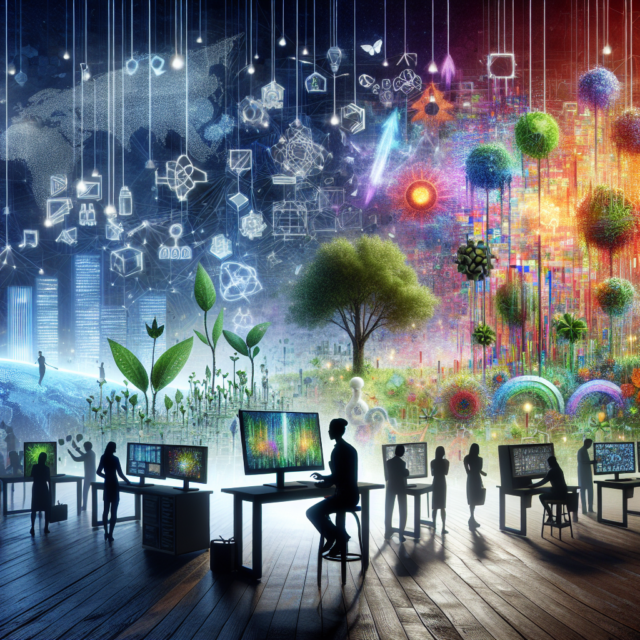
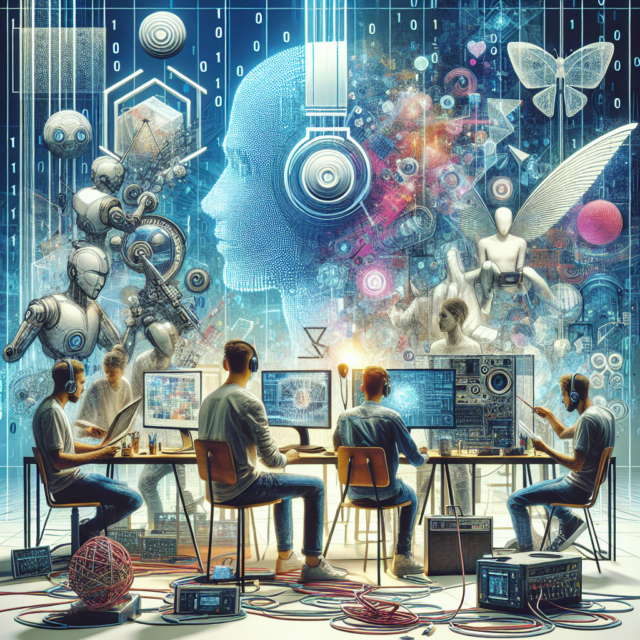
In recent years, the intersection of technology and art has emerged as a dynamic and transformative space, redefining the boundaries of creative expression. As digital innovation continues to evolve, artists are increasingly harnessing new tools and mediums to explore and expand their craft. This article delves into how technology is reshaping artistic practices, with a particular focus on the roles of Artificial Intelligence (AI) and Virtual Reality (VR) in the modern art landscape. By examining these developments, we gain insight into the profound impacts of technology on the art world and its potential to redefine our understanding of creativity.

The Fusion of Digital Innovation and Creative Expression

The convergence of technology and art has opened up a myriad of possibilities for creative expression. Digital innovation has given artists access to tools that were unimaginable a few decades ago, allowing them to push the boundaries of traditional art forms. This fusion is not merely about using technology as a new medium but about integrating it into the very fabric of the creative process. Artists are now able to experiment with digital canvases, exploring new textures, colors, and forms that were previously inaccessible.

One of the most significant impacts of this fusion is the democratization of art. With digital platforms, artists can share their work with a global audience instantly, bypassing traditional gatekeepers like galleries and museums. This has led to a more diverse and inclusive art scene, where voices that were previously marginalized can now be heard and appreciated. Moreover, the interactive nature of digital art allows for greater audience engagement, transforming passive viewers into active participants in the artistic experience.

Digital innovation has also facilitated collaboration among artists from different disciplines and regions. Through online platforms and digital tools, artists can work together in real-time, irrespective of geographical constraints. This has led to the creation of hybrid art forms that blend elements of music, visual arts, literature, and performance, resulting in novel and immersive experiences.

Furthermore, digital tools have enabled artists to explore themes and concepts in unprecedented ways. The ability to manipulate digital data allows for complex visualizations and simulations, making abstract ideas more tangible and accessible. Artists can now engage with contemporary issues such as climate change, social justice, and digital identity, using technology to provoke thought and inspire change.

The fusion of technology and art has also given rise to new genres and movements. From glitch art to net art, these new forms challenge traditional definitions of art and encourage audiences to rethink their perceptions of creativity. Digital innovation has not only expanded the toolkit available to artists but has also fundamentally altered the way art is conceived, created, and consumed.

As technology continues to evolve, the possibilities for creative expression expand exponentially. The fusion of digital innovation and art is a testament to the limitless potential of human creativity and the enduring power of art to adapt and thrive in an ever-changing world.

How Technology is Transforming Artistic Practices

Technology is revolutionizing artistic practices by providing artists with new tools and methods for creation. Traditional art forms are being reimagined through digital technologies, allowing for greater experimentation and innovation. For instance, digital painting and sculpture software enable artists to create intricate and detailed works that would be challenging to achieve with conventional materials.

One of the most transformative aspects of technology in art is the ability to create interactive and immersive experiences. Artists are now using sensors, motion capture, and augmented reality to engage audiences in multi-sensory environments. These technologies allow viewers to interact with artworks in real-time, creating a dynamic relationship between the art and its audience.

The advent of 3D printing has also had a significant impact on artistic practices. Artists can now create physical objects directly from digital designs, blurring the line between the digital and physical worlds. This technology has opened up new possibilities for sculpture and installation art, enabling artists to explore complex forms and structures with precision and ease.

Digital technology has also transformed the way art is preserved and archived. High-resolution scanning and digital storage allow for the meticulous documentation of artworks, ensuring their longevity for future generations. This has significant implications for the conservation of cultural heritage, as digital archives can provide access to artworks that may be too fragile or rare to be displayed physically.

Moreover, technology has facilitated the rise of new distribution channels for art. Online galleries, virtual exhibitions, and social media platforms have become essential tools for artists to reach wider audiences. This shift has challenged traditional models of art sales and exhibitions, prompting institutions to adapt to the digital age.

Despite these advancements, the integration of technology into art also raises important questions about authorship, authenticity, and the role of the artist. As technology becomes more integral to artistic practices, the boundaries between human creativity and machine assistance become increasingly blurred, prompting ongoing debates within the art community.

The Role of AI and VR in Modern Art Evolution

Artificial Intelligence (AI) and Virtual Reality (VR) are at the forefront of modern art evolution, offering new ways to create and experience art. AI, in particular, is transforming the creative process by enabling artists to generate art through algorithms and machine learning. This has led to the emergence of AI-generated art, where machines produce works based on specific inputs or datasets.

AI’s role in art extends beyond creation; it also serves as a tool for analysis and interpretation. Artists and researchers use AI to analyze patterns and trends in art, providing new insights into artistic styles and movements. This analytical capability allows for a deeper understanding of art history and the evolution of creative expression.

Virtual Reality, on the other hand, offers immersive experiences that transport viewers into entirely new worlds. Artists are using VR to create environments that challenge the limits of perception and reality, allowing audiences to engage with art in unprecedented ways. VR art installations can evoke powerful emotional responses, making the experience of art more personal and impactful.

The integration of AI and VR in art also raises questions about the nature of creativity and the role of technology in artistic expression. While some argue that AI-generated art lacks the emotional depth of human-created works, others see it as a new frontier for creativity, where machines and humans collaborate to produce innovative art.

Moreover, VR technology is expanding the possibilities for art education and accessibility. Virtual museums and galleries provide access to art for people who may not have the opportunity to visit physical spaces. This democratization of art access is reshaping how audiences engage with and appreciate art.

As AI and VR continue to evolve, they will undoubtedly play an increasingly significant role in the future of art. These technologies are not only changing how art is created and experienced but also challenging our fundamental understanding of what art can be in the digital age.

The intersection of technology and art is an ever-evolving landscape, rich with possibilities and challenges. As digital innovation continues to advance, artists are embracing new tools and mediums to redefine the boundaries of creative expression. Whether through the democratization of art, the transformation of artistic practices, or the integration of AI and VR, technology is reshaping the art world in profound ways. As we look to the future, the fusion of technology and art promises to unlock new dimensions of creativity and to inspire artists and audiences alike, fostering a deeper appreciation for the limitless potential of human imagination.

Top NFT Collections – January 5, 2025 | NFT CULTURE | NFT News | Web3 Culture | NFTs & Crypto Art

0
Top NFT Collections – January 5, 2025 | NFT CULTURE | NFT News | Web3 Culture | NFTs & Crypto Art


Top NFT Collections (Last 24h)

Here are the hottest NFT Collections of the day.

Rank

Name
Volume
Transactions
Chains
URL

1

Pudgy Penguins
335.10 ETH
15
ethereum
View

2
Lil Pudgys
Lil Pudgys
268.95 ETH
109
ethereum
View

3
Top NFT Collections – January 4, 2025 | NFT CULTURE | NFT News | Web3 Culture | NFTs & Crypto Art
Azuki
212.93 ETH
16
ethereum
View

4
Doodles
Doodles
189.44 ETH
38
ethereum
View

5
Azuki Elementals
Azuki Elementals
151.10 ETH
91
ethereum
View

6
Bored Ape Yacht Club
120.57 ETH
7
ethereum
View

7
BEANZ Official
BEANZ Official
118.17 ETH
151
ethereum
View

8
Milady Maker
Milady Maker
116.38 ETH
29
ethereum
View

9
Mutant Ape Yacht Club
77.05 ETH
27
ethereum
View

10
CryptoPunks
CryptoPunks
74.90 ETH
2
ethereum
View

The post Top NFT Collections – January 5, 2025 appeared first on NFT CULTURE.


Source link

Top NFT Collections – January 4, 2025 | NFT CULTURE | NFT News | Web3 Culture | NFTs & Crypto Art

0
Top NFT Collections – January 4, 2025 | NFT CULTURE | NFT News | Web3 Culture | NFTs & Crypto Art


Top NFT Collections (Last 24h)

Here are the hottest NFT Collections of the day.

Rank

Name
Volume
Transactions
Chains
URL

1

Azuki
586.03 ETH
36
ethereum
View

2
Top NFT Collections – January 6, 2025 | NFT CULTURE | NFT News | Web3 Culture | NFTs & Crypto Art
Pudgy Penguins
391.11 ETH
17
ethereum
View

3
Lil Pudgys
Lil Pudgys
333.29 ETH
135
ethereum
View

4
Azuki Elementals
Azuki Elementals
242.55 ETH
145
ethereum
View

5
CryptoPunks
CryptoPunks
181.09 ETH
4
ethereum
View

6
Parallel Avatars
Parallel Avatars
91.35 ETH
87
ethereum
View

7
Mutant Ape Yacht Club
88.17 ETH
29
ethereum
View

8
BEANZ Official
BEANZ Official
80.73 ETH
89
ethereum
View

9
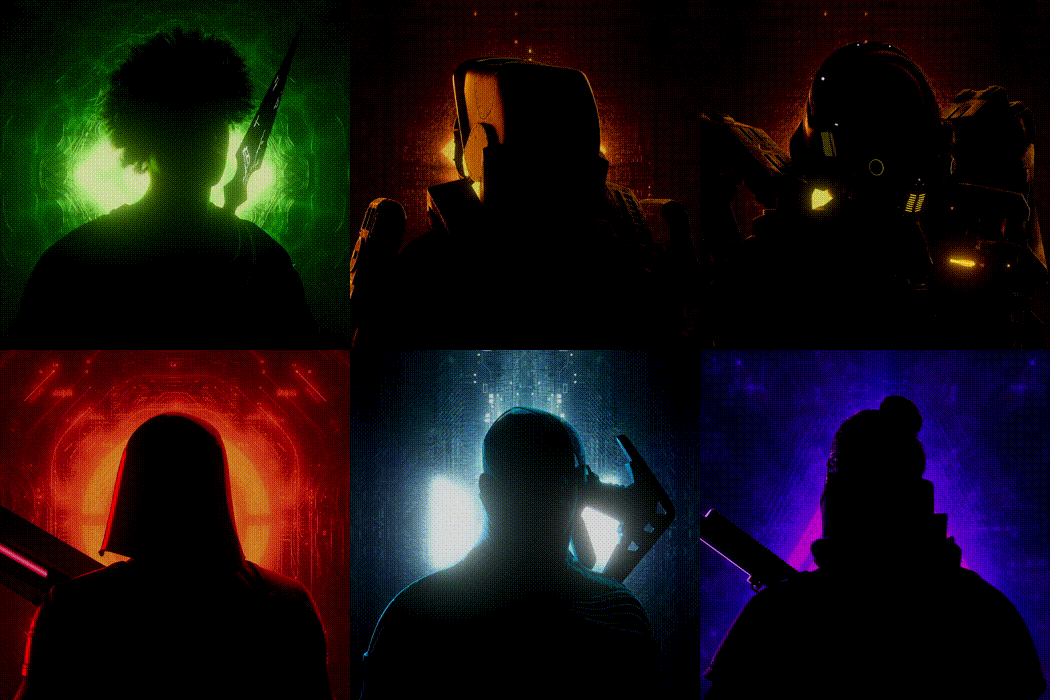
Memeland Captainz
Memeland Captainz
74.90 ETH
34
ethereum
View

10
Milady Maker
Milady Maker
69.46 ETH
16
ethereum
View

The post Top NFT Collections – January 4, 2025 appeared first on NFT CULTURE.


Source link

Shib: The Metaverse – Part of the Expanding Shiba Inu Ecosystem

0
Shib: The Metaverse – Part of the Expanding Shiba Inu Ecosystem


Curiosity often drives people to seek out the next big thing in crypto. One place that could be about to gain momentum is Shib: The Metaverse. It’s a virtual space created under the umbrella of the Shiba Inu ecosystem, combining Web3 gaming, digital real estate, and forward-thinking cross-chain technology.

With its roots in SHIB, the Metaverse platform, now in early access, offers a glimpse into what tomorrow’s internet might look like, blending creativity and community in one immersive environment.

Virtual Land Plots: A Glimpse of Digital Real Estate

One of the first things you’ll notice in Shib: The Metaverse is the option to buy and own virtual land. Over 100,000 plots are up for grabs, divided into four tiers with prices ranging from 0.2 ETH to 1 ETH. Users can pay using SHIB on the Shibarium network or ETH on Ethereum.

Once users have their plot, they can build on it, earn passive income, or simply hold it for future updates. In fact, upcoming features might let you merge multiple plots into a single estate, sparking plenty of potential for creative projects.

Gaming Experiences: The Arrival of “Lapdogs”

Gaming lies at the heart of Shib: The Metaverse. A new title called “Lapdogs” is in the works, featuring pixelated Shiboshis and Sheboshis racing one another around the track. Beyond that, developers will soon have the tools to craft their own games within this virtual world. That means you’ll see a constant stream of fresh experiences rolling out, each one tapping into the power of blockchain technology.

Expanding Cross-Chain Communication

A feature of the Shiba Inu ecosystem is its embrace of Chainlink’s Cross-Chain Interoperability Protocol (CCIP). Through integration with Shibarium—a Layer-2 network—tokens like SHIB, BONE, and LEASH can move across different blockchains more easily.

For anyone exploring Shib: The Metaverse, this cross-chain compatibility offers the freedom to manage assets securely while enabling more advanced smart contract applications.

The Bigger Picture: The SHIB Ecosystem

Shib: The Metaverse is one part of a larger Shiba Inu network. Shibarium, for instance, aims to boost scalability and reduce fees. ShibaSwap 2.0 acts as a newly upgraded decentralized exchange, giving users a simpler and more feature-rich trading experience.

Meanwhile, the upcoming TREAT token promises community governance and the potential for rewards, positioning itself as another layer of engagement for the ecosystem.

Source Shib: The Metaverse

For now, the Metaverse is accessible on Windows PCs and free to explore. A browser-based version is in development, which should make it simpler for people on other operating systems to jump in. Owning land or specific NFTs can enhance your experience. Still, even without any purchases, you can wander around and see what this digital world has to offer.

If you decide to invest in virtual land, head to the official website. There, an interactive map will help you find a parcel that fits your vision. The buying process is straightforward: you can pay with SHIB on Shibarium or ETH on Ethereum.

Be sure to have enough in your crypto wallet to cover the land’s cost and any transaction fees. After completing your purchase, it’s up to you how you use and develop your new digital property.

Final Takeaways

Shib: The Metaverse combines entertainment, community, and blockchain know-how in a single digital space. From snapping up virtual land to racing pixelated pups, there’s plenty to do—and more on the horizon.

Whether you’re into crypto, gaming, or just curious about the future of online interaction, this world might be the place to plant your virtual flag. As the project continues to evolve, early explorers stand to gain both in terms of fun and potential financial upside.

Jason Newey

Jason Newey is a seasoned journalist specializing in NFTs, the Metaverse, and Web3 technologies. With a background in digital media and blockchain technology, he adeptly translates complex concepts into engaging, informative articles.

View all posts


Source link

The Future of Virtual Real Estate in 2025

0
The Future of Virtual Real Estate in 2025


In recent times virtual real estate has emerged as a dynamic frontier in the digital world. It involves the buying, selling, and developing of plots of land or properties within immersive environments that can be explored through virtual reality or augmented reality.

As companies and individuals start to focus on this new opportunity, we’re seeing more investor interest, creative use cases, and more platforms popping up for metaverse real estate.

For those who have been around since the early days of the internet, they’ll see similarities in how digital spaces become assets. Below we’ll look at market trends, major platforms, tokenization and ROI.

Virtual Real Estate in 2025: Market Overview

Market experts point out that virtual real estate has gone from niche topic to serious investment opportunity in a very short space of time. Much of this growth is driven by communities forming around emerging platforms, especially those with social and gaming functionality. The rise of digital property investment opportunities allows you to purchase limited plots of virtual land, construct custom structures, and profit from user engagement.

Industry forecasts suggest property values in certain popular worlds will continue to rise. Investors who bought in early in top tier metaverse environments have seen significant appreciation in value, with some properties selling for physical world prices. We expect more of the same by 2025 as the tech becomes more mainstream.

Several platforms are leading the metaverse real estate charge, each with their own environment and community.

Decentraland – Decentraland is a decentralised framework where users can build 3D experiences, art galleries and venues. Many virtual plots have seen price increases due to business and collector interest.

The Sandbox – The Sandbox is a platform that combines gaming and digital property investment. Voxel based so it’s easy to create interactive spaces, brands and independent artists host exhibitions and events.

Other Emerging Worlds – As we head into 2025 new metaverse projects are launching with new concepts. Somnium Space is all about realism, CryptoVoxels is more minimalist. Each environment appeals to different user preferences which can impact property demand.

Real Estate Tokenization: The Next Big Thing

Tokenization has become a key part of digital property ownership. By representing virtual real estate as non-fungible tokens (NFTs), platforms make it easier to buy, sell or lease properties. These NFTs act as a transparent record of ownership, public proof of authenticity and a secure way to buy or sell.

Fractional ownership is another benefit of real estate tokenization. This allows multiple investors to buy into a digital property, even if the plot is too expensive for one person to buy on their own. NFT markets are also expanding peer-to-peer transaction options so property owners can complete deals quickly without intermediaries. We expect tokenization to continue to evolve by 2025 and open up new forms of crowdfunding, syndicates and monetisation.

ROI Potential in Virtual Real Estate

Returns can be good if you choose the right platform and go long-term. Several factors drive ROI in these digital spaces:

Community Size and Engagement – Popular platforms get more visitors, which increases the value and desirability of well-placed plots. Events like virtual concerts or brand partnerships drive demand.

Scarcity of Prime Locations – Just like physical real estate, certain areas near hubs or landmarks are more valuable. Buyers who position themselves well can see big gains.

Multiple Revenue Streams – Owners can build game environments, advertise products, host ticketed events or lease space to others. Each of these revenue streams adds to the overall return.

But don’t forget the market is still volatile and new. A few platforms have already seen price surges followed by crashes, so be cautious.

There are risks, but here are some ways to make informed decisions:

Research – Early buyers tend to research the history and growth potential of each platform. Looking at community activity, creative collaborations, and technical updates can give you an idea of where the project is headed.

Diversification – Some investors split their capital across multiple platforms to hedge against market fluctuations. Others diversify by having long-term holds and properties to flip if the market allows.

Community Involvement – Individuals benefit from being part of user-run forums, social media groups and in-world events. By building relationships and networking with other enthusiasts, you stay ahead of the curve.

The Future: Innovations & Predictions

Metaverse technology advancements have prompted developers to try new things that combine physical and virtual spaces. Some predict digital versions of real-world cities will emerge, and buyers will be able to buy virtual copies of famous landmarks.

Meanwhile, tokenization will go beyond just transactions and possibly integrate with the real world for legal contracts or property management. Brands will partner with virtual landowners to promote products and increase parcel value through immersive experiences that blur the line between marketing and entertainment. Regulatory frameworks are being considered in many regions as digital property investment becomes more mainstream.

Summary

Virtual real estate is where creativity meets technology meets opportunity. By 2025 we will see more platform innovation, more users and better tokenization. But volatility is part of any new market so do your research and plan carefully. If you do you’ll not only make money but be part of the digital society evolution.

Editor’s note: This article was written with the assistance of AI. Edited and fact-checked by Owen Skelton.

Owen Skelton

Owen Skelton is an experienced journalist and editor with a passion for delivering insightful and engaging content. As Editor-in-Chief, he leads a talented team of writers and editors to create compelling stories that inform and inspire.

View all posts


Source link

Popular Posts

My Favorites

Enhancing Engagement Through Digital Customer Experiences

Discover strategies to boost digital customer engagement, enhance brand loyalty, and measure success in today's competitive online marketplace.