Arts

Home Arts Page 124

Exploring Sustainability Practices in Digital Art
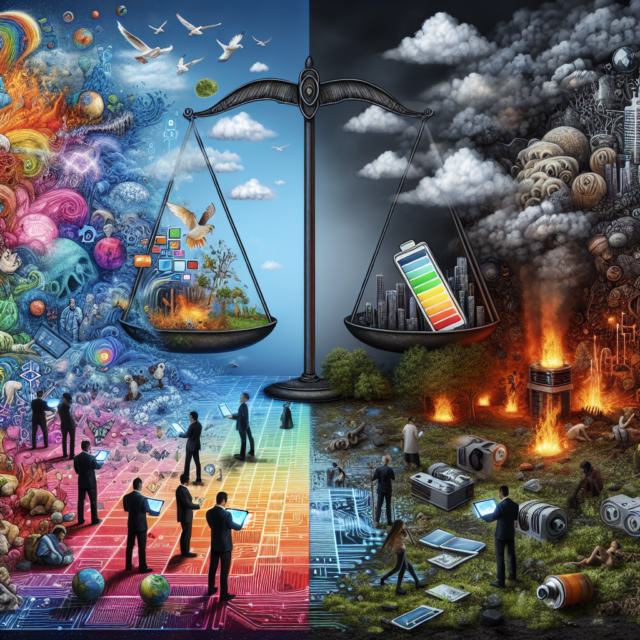
The digital art landscape has grown exponentially, ushering in a new era of creative expression. However, with the rise of digital art, questions about its environmental impact have surfaced. As artists and technologists seek to balance creativity with sustainability, understanding the environmental implications and exploring innovative solutions becomes paramount. This article delves into the environmental impact of digital art, examines sustainable creation practices, and evaluates eco-friendly tools and platforms.

Understanding the Environmental Impact of Digital Art

The digital art world, while seemingly intangible, has a tangible environmental footprint. At the core of this footprint is the energy consumption associated with digital tools and platforms. Artists rely on high-performance computers and graphic tablets, which require significant power to operate. The production and disposal of these devices also contribute to electronic waste, further exacerbating environmental concerns.

Moreover, the storage and distribution of digital art are energy-intensive processes. Cloud storage, a popular option for digital artists, depends on data centers that consume vast amounts of electricity. These centers not only demand constant power but also require substantial cooling systems to prevent overheating, adding to their environmental burden.

Cryptocurrency and blockchain technology have introduced new dimensions to digital art, notably through non-fungible tokens (NFTs). While NFTs offer artists a novel way to monetize their work, the energy consumption associated with blockchain transactions, particularly those using proof-of-work systems, has raised alarms about their environmental impact. The carbon footprint of minting and trading NFTs is significant, prompting calls for more sustainable alternatives.

Despite these challenges, the digital art community is becoming increasingly aware of its environmental responsibility. Artists and collectors are beginning to question the sustainability of their practices, seeking ways to mitigate their impact. This awareness is fostering a dialogue about the need for greener solutions within the art-tech ecosystem.

The environmental impact of digital art extends beyond energy consumption. The rapid obsolescence of digital devices leads to increased electronic waste, posing a significant threat to ecosystems. Recycling and responsible disposal of electronic waste are crucial steps in minimizing the environmental footprint of digital art.

Understanding the full scope of digital art’s environmental impact is the first step towards creating a more sustainable future. By recognizing the energy and resource demands of digital tools and platforms, artists and technologists can begin to develop practices that align creativity with ecological responsibility.

Innovative Approaches to Sustainable Digital Creation

The quest for sustainability in digital art has spurred a wave of innovative approaches to reduce environmental impact. One promising avenue is the development of energy-efficient software and hardware. Tech companies are increasingly prioritizing the creation of devices that consume less power, extending the lifespan of equipment and reducing electronic waste.

Artists themselves are adopting sustainable practices in their creative processes. Many are turning to open-source software, which is often less resource-intensive than proprietary alternatives. By using lighter programs that require less computational power, artists can significantly reduce their energy consumption without compromising on creativity.

In the realm of NFTs, alternative blockchain technologies are emerging as viable solutions for sustainable digital art. Platforms utilizing proof-of-stake or other low-energy consensus mechanisms are gaining traction. These systems offer the security and transparency of blockchain without the high energy costs associated with traditional proof-of-work models.

Collaborative efforts are also playing a crucial role in promoting sustainability in digital art. Artists, technologists, and environmentalists are joining forces to explore creative solutions that minimize environmental impact. Initiatives such as carbon offset programs for digital art transactions and the creation of digital art exhibitions powered by renewable energy are gaining momentum.

Education and awareness are essential components of sustainable digital creation. Artists are increasingly educating themselves and their audiences about the environmental impact of their work. By fostering a culture of sustainability, the digital art community can drive meaningful change and inspire others to adopt eco-friendly practices.

The integration of sustainability into the digital art world requires a commitment to innovation and collaboration. By embracing new technologies, exploring alternative methods, and fostering a culture of environmental responsibility, the digital art community can pave the way for a more sustainable future.

Evaluating Tools and Platforms for Eco-Friendly Art

The search for eco-friendly tools and platforms is a critical aspect of sustainable digital art. Artists and technologists are constantly evaluating the environmental impact of the tools they use, seeking alternatives that align with sustainability goals. This evaluation process involves assessing the energy efficiency, resource consumption, and lifecycle impact of digital art tools and platforms.

Energy-efficient hardware is a key consideration for eco-conscious digital artists. Devices that are designed to minimize power consumption and extend operational lifespan are becoming increasingly popular. Artists are also exploring refurbished and second-hand equipment as a way to reduce electronic waste and promote a circular economy.

Software choices play a significant role in the sustainability of digital art practices. Open-source and lightweight software options are often more energy-efficient than their proprietary counterparts. By opting for programs that demand less computational power, artists can significantly reduce their environmental footprint.

Digital art platforms are also under scrutiny for their environmental impact. Platforms that support NFTs and blockchain technology are exploring ways to transition to more sustainable models. The adoption of proof-of-stake and other low-energy consensus mechanisms is a promising development in this area, offering a path towards eco-friendly digital art transactions.

Artists are increasingly prioritizing platforms that demonstrate a commitment to sustainability. Platforms that offset their carbon emissions, utilize renewable energy, or engage in other environmentally responsible practices are gaining favor. By supporting these platforms, artists can contribute to a more sustainable digital art ecosystem.

The evaluation of tools and platforms for eco-friendly art is an ongoing process, requiring constant vigilance and adaptability. As new technologies and practices emerge, artists must remain informed and engaged to ensure their work aligns with sustainability goals. By making conscious choices about the tools and platforms they use, digital artists can play a vital role in shaping a more sustainable future for the art world.

As the digital art landscape continues to evolve, the importance of sustainability cannot be overstated. Understanding the environmental impact of digital art, exploring innovative approaches to sustainable creation, and evaluating eco-friendly tools and platforms are essential steps in fostering a sustainable future. By embracing these practices, the digital art community can balance creativity with ecological responsibility, ensuring that art and technology can coexist harmoniously with the environment.
Exploring the Intersection of Technology and Art

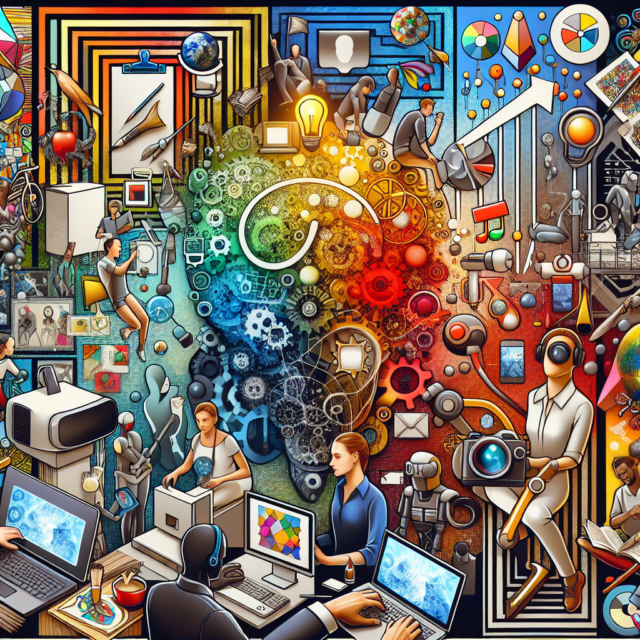
The interplay between technology and art has long been a fascinating narrative in human history. As technology advances, it continues to reshape the way art is created, experienced, and appreciated. This article delves into how the digital age has transformed artistic expression, how artists and technologists are collaborating to push boundaries, and the innovative platforms that are revolutionizing creative landscapes. By exploring these intersections, we gain a deeper understanding of the cultural and technological shifts that are influencing contemporary art.

The Evolution of Artistic Expression in the Digital Age

The digital age has ushered in a new era of artistic expression, characterized by an unprecedented fusion of creativity and technology. Traditional art forms, such as painting and sculpture, have expanded into digital mediums, allowing artists to explore new dimensions and techniques. Digital art software and tools have democratized the creation process, making it accessible to a broader audience. This evolution has not only changed how art is produced but has also challenged the very definition of art itself.

One significant development is the rise of digital painting and illustration. Artists now have access to a plethora of digital brushes and canvases, enabling them to create intricate and detailed works without the limitations of physical materials. This has opened up new possibilities for experimentation, allowing artists to blend traditional techniques with digital innovation. The result is a vibrant and dynamic art scene that continually pushes the boundaries of creativity.

The advent of virtual reality (VR) and augmented reality (AR) has further expanded the horizons of artistic expression. These technologies provide immersive experiences that transport viewers into entirely new worlds. Artists are now able to create interactive installations and performances that engage audiences in ways previously unimaginable. This shift not only alters the viewer’s experience but also challenges artists to think in multi-dimensional spaces.

Photography and videography have also undergone a transformation with the advent of digital technology. High-resolution cameras and editing software have made it easier for artists to capture and manipulate images, resulting in stunning visual compositions. Furthermore, platforms like Instagram and YouTube have become essential tools for artists to share their work with global audiences, fostering a new era of digital storytelling.

The digital age has also seen the emergence of generative art, where algorithms and artificial intelligence (AI) play a crucial role in the creative process. Artists use code to generate patterns, shapes, and colors, resulting in artworks that are both unpredictable and unique. This intersection of technology and art challenges traditional notions of authorship and creativity, as the artist becomes both creator and collaborator with the machine.

As we continue to navigate the digital age, the evolution of artistic expression presents both opportunities and challenges. While technology offers new tools and platforms for creativity, it also raises questions about the role of the artist and the value of art in a digital world. Nonetheless, this dynamic interplay between technology and art promises to shape the future of creative expression in ways we have yet to imagine.

Bridging the Gap: Artists and Technologists Unite

The convergence of art and technology has led to exciting collaborations between artists and technologists. These partnerships are bridging the gap between two seemingly disparate fields, resulting in innovative projects that push the boundaries of both disciplines. Artists are increasingly working alongside programmers, engineers, and scientists to explore new ways of creating and experiencing art.

One notable example of this collaboration is the growing field of interactive art. By integrating technology into their work, artists are able to create installations that respond to audience interaction. Motion sensors, cameras, and other digital tools allow viewers to become active participants in the art, blurring the lines between creator and observer. This fusion of art and technology not only enhances the viewer’s experience but also encourages deeper engagement with the artwork.

Collaborations between artists and technologists have also led to the development of new artistic mediums. For instance, the use of 3D printing technology has revolutionized sculpture and design, enabling artists to create intricate and complex forms that were previously impossible to achieve by hand. This technology has opened up new possibilities for experimentation and innovation, allowing artists to push the boundaries of their creative practice.

The intersection of art and technology has also given rise to new forms of performance art. Musicians and performers are incorporating digital elements into their work, using technology to enhance their performances and create multisensory experiences. From holographic displays to interactive soundscapes, these collaborations are transforming the way audiences experience live performances, creating immersive environments that engage multiple senses.

Furthermore, the collaboration between artists and technologists has led to the development of new tools and platforms for art creation. Software developers and engineers are working with artists to create applications and programs that facilitate the creative process. These tools not only make art more accessible but also empower artists to experiment with new techniques and styles, fostering a culture of innovation and creativity.

As artists and technologists continue to collaborate, the boundaries between art and technology are becoming increasingly blurred. This convergence is not only transforming the way art is created and experienced but also challenging traditional notions of what art can be. By embracing these collaborations, artists and technologists are paving the way for a new era of artistic exploration and expression.

Innovative Platforms Transforming Creative Landscapes

In recent years, innovative platforms have emerged that are transforming the creative landscapes and redefining how art is shared, consumed, and appreciated. These platforms leverage technology to connect artists with global audiences and provide new opportunities for creative expression. From online galleries to virtual reality experiences, these platforms are reshaping the art world in profound ways.

Social media platforms like Instagram, TikTok, and Pinterest have become essential tools for artists to showcase their work and connect with audiences worldwide. These platforms offer artists unprecedented visibility, allowing them to reach new audiences and build a global following. By sharing their work online, artists can engage with viewers in real-time, receive feedback, and collaborate with other creatives.

Virtual reality (VR) platforms are also transforming the way art is experienced. VR allows viewers to immerse themselves in digital art environments, providing a sense of presence and interactivity that traditional mediums cannot offer. Artists are using VR to create immersive installations and exhibitions, allowing audiences to explore and interact with art in entirely new ways. This technology is breaking down geographical barriers, making art accessible to anyone with a VR headset.

Online marketplaces have also revolutionized the way art is bought and sold. Platforms like Etsy, Saatchi Art, and Redbubble enable artists to sell their work directly to consumers, bypassing traditional galleries and intermediaries. This democratization of the art market has empowered artists to take control of their careers, reach new audiences, and monetize their work on their own terms.

Crowdfunding platforms such as Kickstarter and Patreon have provided artists with new ways to fund their projects and connect with supporters. These platforms allow artists to raise money directly from their audience, enabling them to pursue ambitious projects without relying on traditional funding sources. This has led to the creation of innovative and experimental works that might not have been possible otherwise.

NFT (Non-Fungible Token) platforms have introduced a new paradigm in the art world, allowing artists to tokenize their digital creations and sell them as unique assets on the blockchain. This technology has opened up new revenue streams for digital artists and has sparked a global conversation about the value and ownership of digital art. While still in its early stages, NFT platforms have the potential to reshape the art market and redefine the concept of art ownership.

As technology continues to evolve, these innovative platforms are likely to play an increasingly important role in shaping the future of art. By providing new opportunities for creation, distribution, and engagement, these platforms are empowering artists and transforming the way we experience and appreciate art. As we move forward, it will be fascinating to see how these platforms continue to evolve and impact the creative landscapes.

The intersection of technology and art is a dynamic and ever-evolving space that offers endless possibilities for innovation and creativity. As we have explored, the digital age has fundamentally transformed artistic expression, enabling new forms of collaboration and the emergence of groundbreaking platforms. These developments challenge traditional notions of art and prompt us to reconsider what it means to create and experience art in a technologically advanced world. As artists and technologists continue to push boundaries, the future of art promises to be an exciting journey of exploration and discovery.

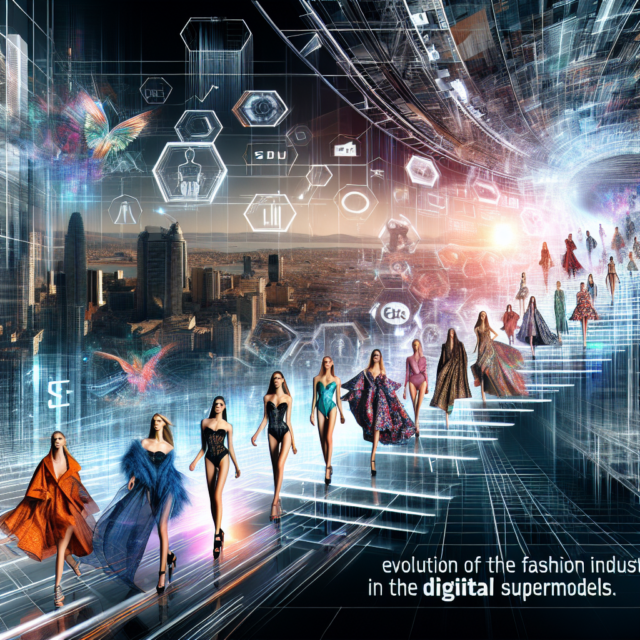
Exploring the Rise of Digital Fashion Supermodels

The fashion industry has always been a dynamic and ever-evolving sector, constantly adapting to societal changes and technological advancements. In recent years, the digital realm has emerged as a new frontier for fashion, reshaping traditional paradigms and introducing innovative concepts. Among these, the rise of digital fashion supermodels has captured the imagination of designers, brands, and consumers alike. This article delves into the fascinating journey of fashion’s digital transformation, the emergence of virtual models as trailblazers, and the pivotal role technology plays in shaping these new-age icons.

The Evolution of Fashion in the Digital Realm

The fashion industry has historically been a reflection of cultural and technological shifts. With the advent of the digital age, fashion has found a new playground in the virtual world. This transformation began subtly with online shopping, gradually shifting the consumer experience from physical stores to digital platforms. What started as a convenience has now become an integral part of the fashion ecosystem, with online presence being a vital aspect of a brand’s identity. The digital realm offers unprecedented opportunities for designers to reach a global audience, transcending geographical limitations and cultural barriers.

As digital platforms became more sophisticated, so did the expectations of the fashion audience. Social media has played a crucial role in this evolution, serving as a powerful tool for fashion brands to engage with their audience. Platforms like Instagram and TikTok have revolutionized how fashion is consumed, offering a dynamic and interactive experience. The rise of influencers and digital content creators has further blurred the lines between traditional fashion models and new-age digital personalities. This shift has paved the way for a more inclusive and diverse representation in fashion, breaking away from conventional norms.

Moreover, the digital realm has facilitated the democratization of fashion. Emerging designers now have the platform to showcase their work without the need for large budgets or traditional industry backing. This has led to a surge in creativity and innovation, with digital fashion weeks and virtual runways becoming more commonplace. The accessibility of digital tools has empowered designers to experiment with new concepts, pushing the boundaries of what fashion can be. This evolution is not just a trend but a fundamental shift in how fashion is created, consumed, and appreciated.

In the context of this digital evolution, the concept of digital fashion supermodels has emerged as a revolutionary idea. These virtual models are not bound by physical limitations and can embody any aesthetic or style. They offer a new level of creative freedom to designers, who can craft unique identities and narratives around their digital muses. This has opened up a world of possibilities for storytelling in fashion, where the imagination is the only limit. The evolution of digital fashion is a testament to the industry’s ability to adapt and thrive in an ever-changing landscape.

The rise of digital fashion models also reflects the growing importance of sustainability in the industry. With increasing awareness of the environmental impact of fashion, digital models offer a more sustainable alternative to traditional practices. Virtual fashion shows eliminate the need for physical resources and reduce the carbon footprint associated with travel and logistics. This shift towards digital solutions aligns with the industry’s broader goals of sustainability and ethical practices, highlighting the potential of technology to drive positive change.

As we continue to navigate this digital evolution, it is clear that the fashion industry is on the brink of a new era. The integration of technology and fashion is not just a passing phase but a fundamental transformation that will shape the future of the industry. The evolution of fashion in the digital realm is an exciting journey, full of possibilities and opportunities for those willing to embrace change and innovation.

Virtual Models: Pioneers of a New Fashion Era

Virtual models have emerged as pioneers in the fashion industry, challenging traditional notions of beauty and representation. These digital avatars are meticulously crafted using advanced computer graphics and artificial intelligence, allowing them to possess hyper-realistic features and movements. As a result, they offer a unique blend of artistry and technology, capturing the attention of both designers and consumers. Virtual models can be customized to embody diverse aesthetics, making them versatile tools for storytelling and brand identity.

One of the key advantages of virtual models is their ability to transcend physical limitations. Unlike human models, they do not age, require rest, or face the constraints of travel. This allows for greater flexibility and efficiency in the fashion industry, as digital models can be deployed across multiple campaigns and platforms simultaneously. Brands can experiment with different looks and styles without the logistical challenges associated with traditional photo shoots. This has revolutionized the way fashion campaigns are conceptualized and executed.

Moreover, virtual models have sparked a conversation about inclusivity and diversity in fashion. While the industry has made strides towards greater representation, digital models offer an opportunity to further push these boundaries. They can be designed to reflect a wide range of ethnicities, body types, and identities, challenging the conventional standards of beauty. This has opened up new possibilities for brands to connect with a broader audience and foster a more inclusive fashion landscape.

The rise of virtual models has also been bolstered by the growing popularity of virtual and augmented reality experiences. As consumers increasingly engage with digital content, brands are exploring innovative ways to enhance the shopping experience. Virtual models can be integrated into these immersive environments, providing a more interactive and personalized experience for consumers. This not only enhances brand engagement but also offers a glimpse into the future of fashion retail.

However, the emergence of virtual models has not been without controversy. Critics argue that digital avatars may perpetuate unrealistic beauty standards and contribute to the objectification of women. There are also concerns about the potential loss of jobs for human models as brands increasingly turn to digital solutions. These debates highlight the need for a balanced approach that considers the ethical implications of digital fashion while embracing its potential for innovation.

Despite these challenges, virtual models continue to gain traction as pioneers of a new fashion era. They represent a fusion of creativity and technology, offering a fresh perspective on the possibilities of fashion. As the industry continues to evolve, virtual models are likely to play an increasingly prominent role, shaping the future of fashion in the digital age.

Technology’s Role in Shaping Digital Fashion Icons

Technology is at the heart of the rise of digital fashion supermodels, driving innovation and enabling new possibilities for creativity. Advanced computer graphics and 3D modeling software have revolutionized the way digital models are created, allowing designers to craft hyper-realistic avatars with intricate details and lifelike movements. These technological advancements have opened up a world of possibilities for fashion designers, who can now experiment with digital creations that were once unimaginable.

Artificial intelligence (AI) plays a crucial role in shaping digital fashion icons. AI algorithms are used to simulate realistic movements and expressions, making virtual models appear more lifelike and relatable. This technology also enables the customization of digital avatars, allowing them to embody diverse aesthetics and identities. AI-driven tools can analyze consumer preferences and trends, helping brands tailor their digital campaigns to resonate with their target audience.

Virtual and augmented reality technologies have further enhanced the capabilities of digital fashion models. These immersive technologies allow consumers to interact with digital models in virtual environments, creating a more engaging and personalized shopping experience. Brands are leveraging these technologies to create virtual fashion shows, interactive lookbooks, and digital fitting rooms, offering consumers a glimpse into the future of fashion retail. This integration of technology and fashion is reshaping the way consumers engage with brands and products.

Blockchain technology is also making its mark on the digital fashion landscape. It offers a secure and transparent way to authenticate digital fashion assets, ensuring their provenance and ownership. This is particularly important in the realm of digital fashion, where the uniqueness and exclusivity of virtual garments are key selling points. Blockchain technology enables designers and brands to create limited edition digital fashion pieces, adding value and prestige to their offerings.

Despite the transformative potential of technology in digital fashion, there are challenges that need to be addressed. The ethical implications of using AI and digital avatars in fashion must be carefully considered, particularly in terms of representation and inclusivity. There is also the question of data privacy and security, as the integration of technology in fashion involves the collection and analysis of large amounts of consumer data. These challenges highlight the need for a responsible and ethical approach to the use of technology in fashion.

In conclusion, technology is a driving force behind the rise of digital fashion supermodels, enabling new possibilities for creativity, representation, and consumer engagement. As the fashion industry continues to evolve, the integration of technology will play an increasingly important role in shaping its future. The rise of digital fashion icons is a testament to the transformative power of technology, offering a glimpse into a new era of fashion where the digital and physical realms converge.

The rise of digital fashion supermodels marks a significant milestone in the evolution of the fashion industry. As technology continues to advance, the lines between the digital and physical worlds are becoming increasingly blurred, offering new possibilities for creativity and representation. Virtual models are at the forefront of this transformation, challenging traditional norms and paving the way for a more inclusive and diverse fashion landscape. While there are challenges to navigate, the potential of digital fashion is undeniable, promising a future where innovation and creativity know no bounds. As we embark on this exciting journey, the fashion industry stands poised to embrace a new era, where digital fashion icons will play a central role in shaping its future.

Nansen Review: A Balanced Look at Features and Performance

0
Nansen Review: A Balanced Look at Features and Performance


If trying to harness the billions upon billions of on-chain data points of your preferred blockchain network seems like a lot of work, there’s a platform for that, and this Nansen review will give you the critical information you need to use it effectively.

Nansen is aiming to be the go-to spot for intelligent data and deep analysis. The tools this platform provides can help you discover the next big tokens, track the “smart money” trades, and even explore the NFT ecosystem in detail you never thought possible. Let’s dig into the details.

What is Nansen?

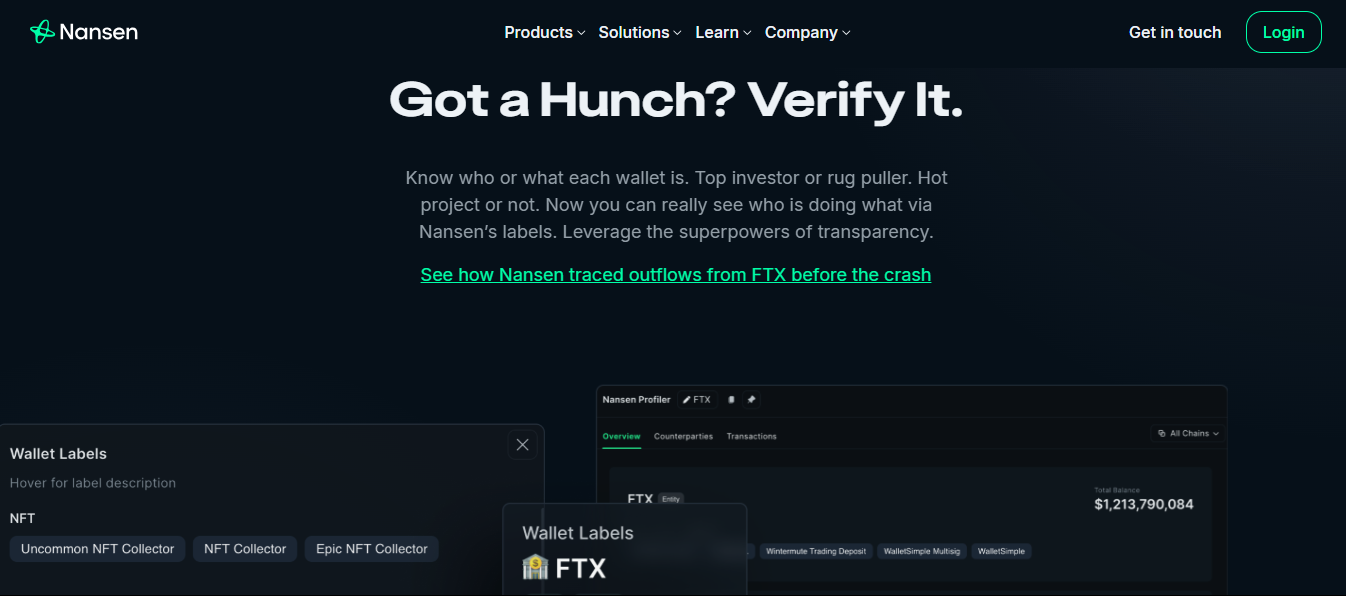
Nansen is a cutting-edge blockchain data analysis platform that uses advanced artificial intelligence, or AI, to instantly and effectively transform raw data from crypto transactions into clear insights for crypto enthusiasts. The platform harvests massive amounts of on-chain data from multiple networks simultaneously, then transforms, organizes, and interprets it through user-friendly dashboards.

Launched with a focus on transparency, the service seeks to eliminate guesswork by labeling wallets, identifying high-value traders, and offering signals that highlight emerging opportunities.

Nansen also offers highly specialized tools like the Wallet Profiler, NFT Paradise, and Smart Money trackers. These features were designed to help you analyze every move the top traders make and see the corresponding changes in volume and price movement.

Together, these features also help you discover promising tokens before they hit mainstream attention, analyze how top traders operate, and see changes in volume or price movement. It doesn’t matter if you’re drawn to gaming projects, NFT market activity, or token analysis, Nansen has tools to help you streamline and simplify the whole process. The platform maintains a sharp focus on providing deep data coverage for traders seeking a competitive edge.

How to Use Nansen?

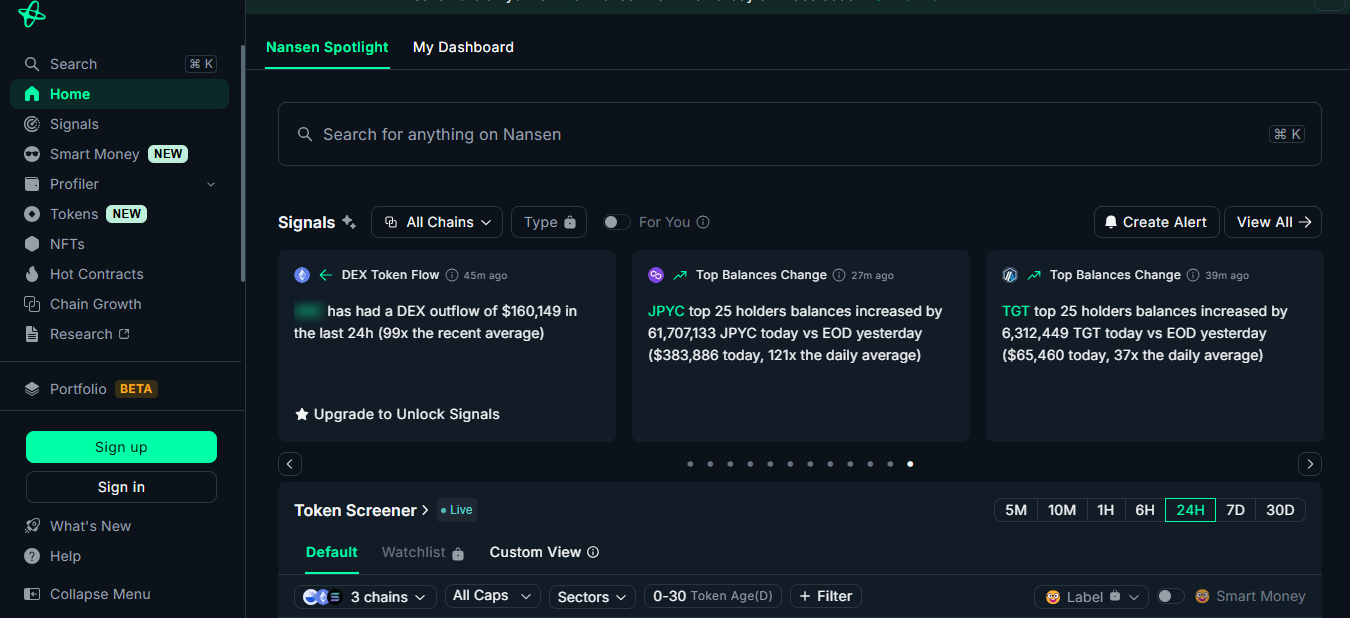
Getting started with Nansen involves creating an account, picking a subscription tier, and connecting your preferred wallets or networks for analysis. Once inside, you’ll find dashboards that display detailed metrics on token movements, wallet labels, and transaction histories. If you’re curious about certain entities or projects, you can search by name, token symbol, or wallet address.

Nansen’s interface focuses on clarity. You’ll see charts and tables highlighting key data points, plus filters for drilling down into exactly what you need. For example, you can track the performance of certain tokens over time or see where top traders are reallocating their funds. Features like NFT God Mode reveal deeper insights into collections, letting you quickly check mint dates, selling trends, and floor changes.

How to Use Nansen

How to follow Smart Money?

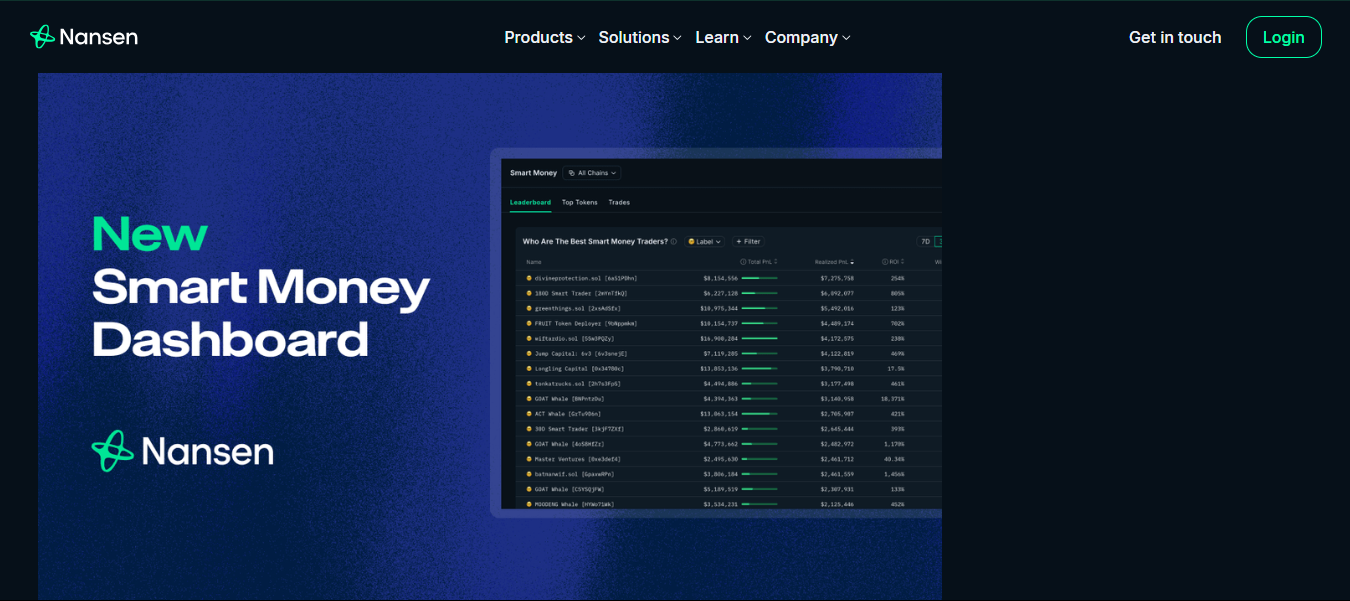
One of Nansen’s standout features is its ability to track “smart money,” a term for wallets believed to belong to highly successful traders, early investors, or influential entities. By examining these wallet labels, you can see how seasoned pros allocate funds, discover new tokens before they spike, or monitor large positions exiting certain markets. This level of transparency aims to separate noise from meaningful trends, giving you a data-driven perspective on where the crypto market may be heading.

When you open Nansen’s Smart Money dashboard, you’ll find a collection of labeled addresses with transaction histories, recent token swaps, and overall portfolio changes. You can check how often they move funds and whether they’re acquiring or selling specific assets. The platform’s system pinpoints top performers by analyzing historical performance and on-chain activity. For instance, if a well-known wallet suddenly buys into a lesser-known coin, Nansen’s alerts can signal a potential opportunity.

Follow Smart Money

By using the Smart Money tool, you’re essentially cloning research from high-conviction traders who invest with detailed market knowledge. It won’t guarantee success, but it can offer valuable clues for your own trading and investment decisions.

Portfolio

Nansen Products & Features

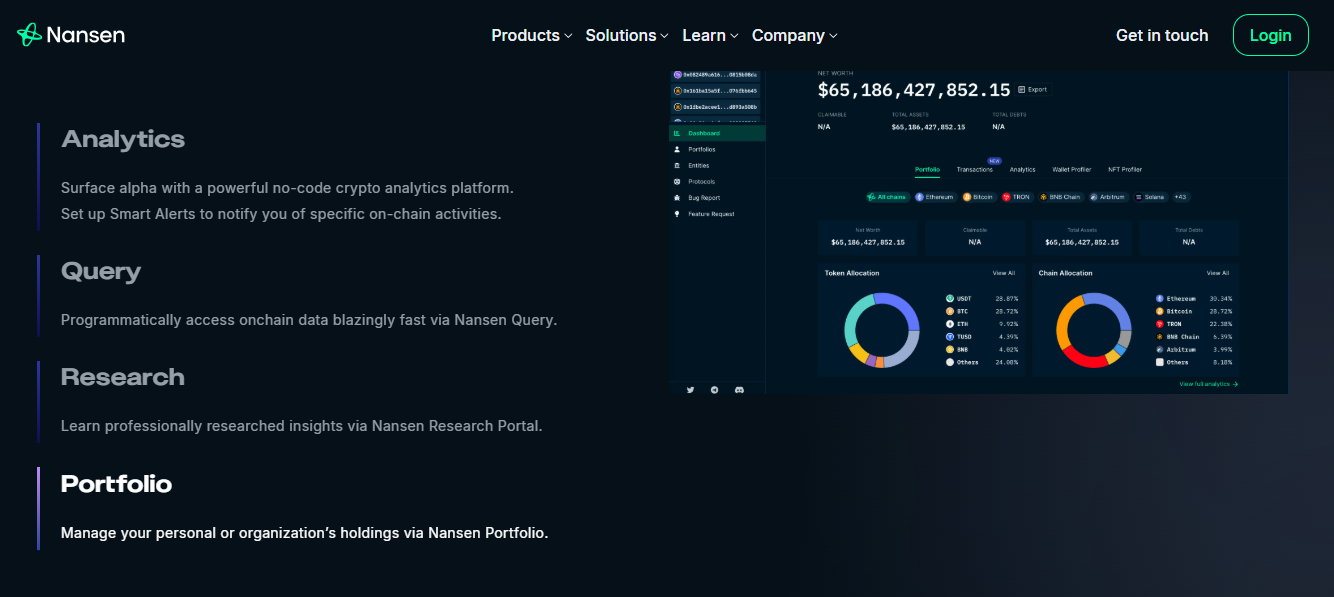
For those interested in on-chain money flows, Smart Alerts can notify you when specific wallets or tokens meet the criteria you set like a whale purchasing a new token. And if you want to track personal crypto performance, Nansen’s Portfolio dashboard consolidates your holdings across multiple chains, letting you see gains, losses, and asset allocations in one place.

Nansen Products & Features

The Wallet Profiler tool lets you examine individual addresses for transaction history, token balances, and movement patterns. Meanwhile, NFT Paradise offers an in-depth look at NFT collections, highlighting trading volume, floor prices, and trends that can guide buying or selling decisions. Another highlight is NFT God Mode, which digs even deeper into a project’s historical data and user engagement metrics.

Nansen Subscription Package

Free Plan

AI-powered Smart Search for on-chain data
Basic on-chain Signals on major market movements
Basic wallet and entity analytics to see holdings and activities
Basic token and NFT analytics to spot trends
Personalization features for a more customized experience
View multichain ecosystem performance across various crypto protocols
Manage up to 45+ EVM and non-EVM chains through Nansen Portfolio

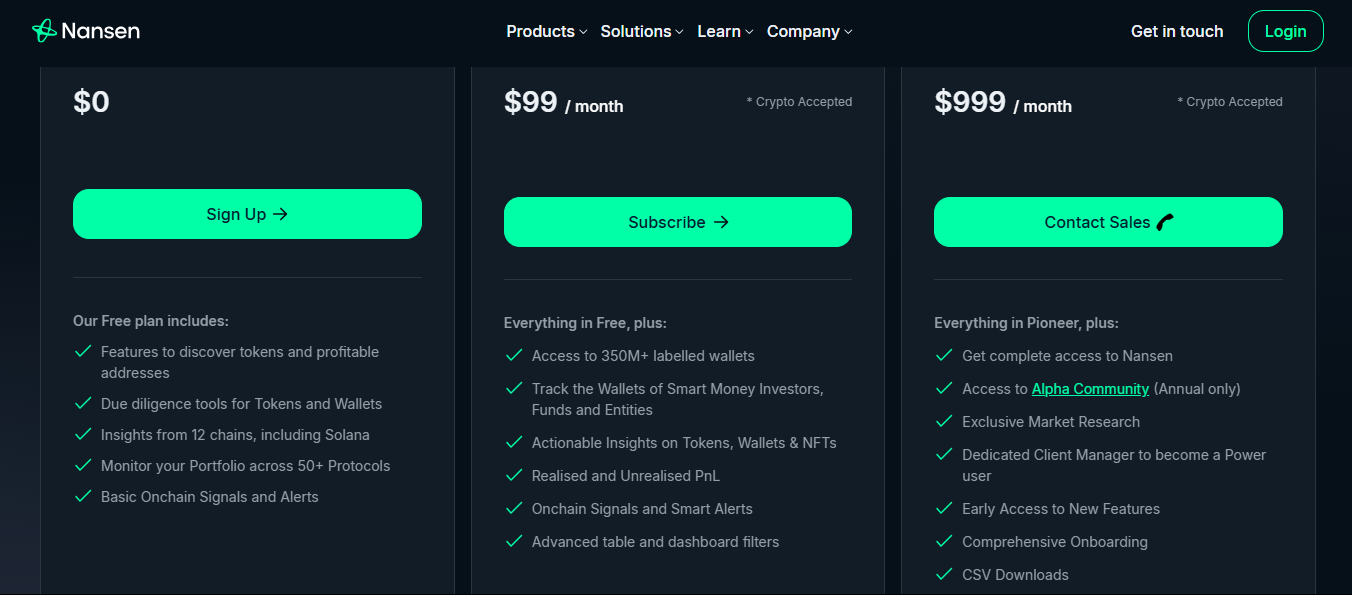
Pioneer Plan – $99/month (Crypto Accepted)

Everything in Free, plus:
Nansen Labels for over 300 million addresses across 10+ chains
Deeper insights on Smart Money trades, trends, and portfolio moves
Enhanced on-chain Signals, including refined Signal filters
Advanced analytics on wallets, entities, labels, and segments
Expanded access to Token and NFT analytics
Further personalization features for optimized usage
Advanced table filtering by custom labels, segments, and Smart Money

Professional Plan – $999/month (Crypto Accepted)

Everything in Pioneer, plus:
Full access to every Nansen feature for comprehensive insights
Unlimited personalization to customize the Nansen experience
Institutional-grade research on key crypto trends and on-chain data
CSV data downloads for deeper analysis
Early access to newly released products and features
Dedicated Customer Success Manager for priority support
Multi-seat discounts are available for teams of five or more
Annual subscribers may join the Alpha Community for exclusive perks

Nansen Subscription Package

Is Nansen Legit & Worth it?

The platform’s transparent approach to labeling wallets and interpreting data has garnered a loyal user base among retail traders and professional investors alike. Many appreciate the depth of information, while others find new insights that would otherwise remain buried in raw blockchain records.

Whether Nansen is worth it ultimately depends on your trading and research style. If you value immediate signals on emerging tokens, real-time tracking of whales, or in-depth NFT market analysis, you may find it invaluable. If the cost itself might be a barrier, there are promo codes out there that can help you cut your subscription cost by nearly a quarter.

FAQs

What is smart money?

Smart Money refers to wallet addresses identified as high-performing or influential investors, funds, and entities in the crypto space. Through deep analysis of their trading habits, Nansen helps you follow market movements and discover new opportunities often missed by casual observers.

What is Nansen 2?

Nansen 2 is an updated version of the platform, featuring enhanced dashboards, faster data processing, and refined wallet labeling. It aims to provide more detailed insights, covering additional chains and expanded features designed to boost user experience and data accuracy.

Nansen 2

How to get wallet labels?

Nansen’s system automatically assigns wallet labels based on on-chain behavior and transaction history. This means users don’t create these labels, they are created by the Wallet Profiler tool. If you have a subscription, you can use these labels to help you identify whales, exchanges, or other big players in the market.

Nansen Wallet Labels

Can I use Nansen for free?

While there is a free version of Nansen, it has relatively limited visibility and tracking capabilities and is more for getting the hang of how various features work, rather than ongoing free use. Get your feet wet with the free version, and when you’re ready, upgrade at a discount with a promo code for 23% off.

Nansen: Save 23% Promo Code

Nansen: Save 23% Promo Code


Source link

Top NFT Collections – December 31, 2024 | NFT CULTURE | NFT News | Web3 Culture | NFTs & Crypto Art

0
Top NFT Collections – December 31, 2024 | NFT CULTURE | NFT News | Web3 Culture | NFTs & Crypto Art


Top NFT Collections (Last 24h)

Here are the hottest NFT Collections of the day.

Rank

Name
Volume
Transactions
Chains
URL

1

Pudgy Penguins
631.68 ETH
34
ethereum
View

2
Bored Ape Yacht Club
444.48 ETH
25
ethereum
View

3
Lil Pudgys
Lil Pudgys
384.02 ETH
162
ethereum
View

4
Top NFT Collections – December 30, 2024 | NFT CULTURE | NFT News | Web3 Culture | NFTs & Crypto Art
Azuki
306.94 ETH
24
ethereum
View

5
Azuki Elementals
Azuki Elementals
228.21 ETH
118
ethereum
View

6
Doodles
Doodles
170.18 ETH
31
ethereum
View

7
Bong Bears
Bong Bears
150.00 ETH
1
ethereum
View

8
BEANZ Official
BEANZ Official
100.69 ETH
101
ethereum
View

9
Rug Radio - Genesis NFT
Rug Radio – Genesis NFT
99.74 ETH
373
ethereum
View

10
Mutant Ape Yacht Club
90.41 ETH
32
ethereum
View

The post Top NFT Collections – December 31, 2024 appeared first on NFT CULTURE.


Source link

A Cryptocurrency Clicker Game Crystal Kami Has Been Launched in the Holiverse Metaverse

0
A Cryptocurrency Clicker Game Crystal Kami Has Been Launched in the Holiverse Metaverse


In October 2024, CEO Lado Okhotnikov announced the launch of a clicker game Crystal Kami in the Holiverse metaverse. The player’s task is to take care of a pet, solving puzzles and completing mini-games. As you complete tasks, the secrets of magic crystals are gradually revealed. Completing quick tasks brings additional bonuses, speeds up progress and promotes pet evolution.

According to the legend, a distant star exploded, its fragments scattered across the universe, and two of them gave birth to two cute creatures — a smart cat and a loyal dog. One of them can become a player’s companion in the game. 

Immediately after the launch, almost 7,000 players joined the Crystal Kami clicker in a few hours. Two weeks later, their number exceeded 100,000. 

Crystal Kami mechanics

The developers decided to stick to the classic approach by creating a game in the clicker format and launched a referral program. By inviting friends to the game, the participant not only receives additional game bonuses and rewards, but also makes the ecosystem more vibrant and dynamic. Thus, while expanding the community, active users get more opportunities for progress and pet development.

In the “Tasks” section, you can earn rewards by performing simple in-game activities. Here, every click and action matters, influencing the character’s development and progression through the game.

The launch of Crystal Kami was the beginning of the implementation of this new idea. The clicker is designed in such a way as to lay the foundation for further expansion and integration with other projects within Holiverse. In the future, players will be able to transfer their pets and accumulated experience from one game to another, participating in global events and missions covering the entire metaverse.

The blockchain was implemented for a reason – it is responsible for transparency and security. All achievements and items are property that no one can take away. And the coolest thing is that this opens the way to new game features: an economy where everything is decided by players, and unique mechanics tied to communication. In fact, this is a new level of freedom in the game.

Moreover, Holiverse has taken a fresh look at the treatment of diseases. What is it about? Read the article about the сreation of a wellness program based on human DNA to combat 12 signs of aging.

About Holiverse

Holiverse is a metaverse where entertainment, learning and technology are combined into one system. In virtual reality, everyone will find something for themselves: exciting quests, the opportunity to improve skills or just chat with people who share your interests. The company creates a space where you can be yourself and try new things.

The idea of ​​Holiverse was brought to life by a visionary Lado Okhotnikov. His view on the future of digital worlds inspired the team to create such a unique space. And this is just the beginning – very soon digital avatars will appear here to make the metaverse even brighter and more interesting.

NFT News Today’s press release service provides a streamlined platform for individuals and organizations to share and distribute noteworthy announcements

View all posts


Source link

Top NFT Collections – December 30, 2024 | NFT CULTURE | NFT News | Web3 Culture | NFTs & Crypto Art

0
Top NFT Collections – December 30, 2024 | NFT CULTURE | NFT News | Web3 Culture | NFTs & Crypto Art


Top NFT Collections (Last 24h)

Here are the hottest NFT Collections of the day.

Rank

Name
Volume
Transactions
Chains
URL

1

Azuki
998.95 ETH
76
ethereum
View

2
Azuki Elementals
Azuki Elementals
515.71 ETH
241
ethereum
View

3
Lil Pudgys
Lil Pudgys
309.48 ETH
124
ethereum
View

4
Fzuki
Fzuki
236.46 ETH
678
polygon
View

5
BEANZ Official
BEANZ Official
234.62 ETH
247
ethereum
View

6
Top NFT Collections – December 31, 2024 | NFT CULTURE | NFT News | Web3 Culture | NFTs & Crypto Art
Pudgy Penguins
200.62 ETH
9
ethereum
View

7
Bored Ape Yacht Club
165.80 ETH
10
ethereum
View

8
Azuki Elemental Beans
140.21 ETH
53
ethereum
View

9
Milady Maker
Milady Maker
127.99 ETH
31
ethereum
View

10
Doodles
Doodles
123.11 ETH
21
ethereum
View

The post Top NFT Collections – December 30, 2024 appeared first on NFT CULTURE.


Source link

Next Crypto Bull Run: Turn $100 into $1000 with These 3 Coins Before 2025

0
Next Crypto Bull Run: Turn 0 into 00 with These 3 Coins Before 2025


As 2025 approaches, crypto investors eagerly await the next crypto bull run. Historically, such market cycles, often driven by new projects and increased investor interest, have delivered astronomical gains. Meme coins have been a hot favorite with their active communities and niche applications. Be it a new trader or an old one, strategically investing in the best meme coins now may bring $100 to $1000 or even more before the new year.

Among the contenders, DexBoss stands out as one of the most promising coins for the next bull run. Strong community support and solid fundamentals make DexBoss a unique opportunity to ride the next wave of crypto growth. Don’t miss the chance to profit as the market heats up!

Here are three top meme coins, including DexBoss, that can deliver massive returns this holiday season. Let’s dive in!

Next Crypto Bull Run

DexBoss (DEBO)
Aureal One (DLUME)
yPredict (YPRED)

Are you Looking to capitalize on the next crypto bull run? With Christmas around the corner, now is the perfect time to explore the above 3 meme coins, which are gaining attention and have the potential for massive growth. Prepare to join the crypto craze and move before the holidays.

1. DexBoss (DEBO)

DexBoss is transforming the meme coin space by combining the entertainment of meme coins with the advanced features of DeFi. DexBoss allows token holders to experience enjoyment and financial growth through community-driven initiatives. The presale is priced at $0.01 and will list at a value of $0.05, making early investors well-positioned for a staggering 600% return on investment.

Click here to know more about DexBoss

Key features of DexBoss include staking options, liquidity pools, and fiat on/off ramps. These characteristics make the platform an all-encompassing ecosystem for novice and seasoned traders. The deflationary token model adopted by the platform entails a buyback-and-burn strategy token supply, pushing massive gains with time. All these characteristics put DexBoss out there for individuals who look forward to significant profits when the next crypto bull run happens.

2. Aureal One (DLUME) 

Aureal One is pushing boundaries in blockchain gaming, with an immersive metaverse experience powered by decentralized finance. Its flagship game, DarkLume, allows the player to earn, trade, and build assets in a decentralized economy, thus making it stand out among other projects.

The presale for the Aureal One costs $0.0009, and has already amassed close to $2 million. It makes use of some of the most cutting-edge technologies like Zero-Knowledge Rollups and Layer-2 scaling, and transactions are faster and cheaper, which differentiates it from competitors. Aureal One will be very well-positioned for the upcoming bull market and is poised to experience huge profits. It can become one of the next cryptos that hit the $1 mark.

3. yPredict (YPRED)

yPredict is changing the game in which artificial intelligence (AI) and cryptocurrency come together. The innovative platform enables users to harness AI predictions’ power to make crypto trading decisions. With AI-driven insights and analytics, yPredict gives traders a unique competitive advantage in the quest for the highest possible profit at the bull run.

At a presale price of $0.05, yPredict will rush, especially considering its cutting-edge AI tools and solid community support. Combining this project’s utility within the crypto trading space with fast adoption, yPredict is one of the more promising meme coin projects going into 2025.

Conclusion

Meme coins are ready to take center stage, and the next crypto bull run will soon occur. A small investor looking to generate significant returns should consider emerging projects like DexBoss, Pepe Unchained, and Aureal One. While they all possess immense potential, DexBoss deserves to be regarded as a top pick.

DexBoss combines the excitement of meme coins with the power of decentralized finance. Its comprehensive ecosystem can entice new and old traders alike. Its deflationary tokenomics, combined with a buyback-and-burn strategy, will position it in an unrepeatable position for great gains as its ecosystem develops. 

While Pepe Unchained and Aureal One are great innovations in scalability and gaming, DeFi from DexBoss’s strong feature blend makes it a favorite among investors who want to capitalize on the bull run. The time to act is now—seize the opportunity before the market takes off!


Source link

Top NFT Collections – December 29, 2024 | NFT CULTURE | NFT News | Web3 Culture | NFTs & Crypto Art

0
Top NFT Collections – December 29, 2024 | NFT CULTURE | NFT News | Web3 Culture | NFTs & Crypto Art


Top NFT Collections (Last 24h)

Here are the hottest NFT Collections of the day.

Rank

Name
Volume
Transactions
Chains
URL

1

Azuki
999.84 ETH
76
ethereum
View

2
Azuki Elementals
Azuki Elementals
545.23 ETH
250
ethereum
View

3
2049 // Reflections
2049 // Reflections
375.58 ETH
771
ethereum
View

4
Lil Pudgys
Lil Pudgys
297.05 ETH
115
ethereum
View

5
Top NFT Collections – December 31, 2024 | NFT CULTURE | NFT News | Web3 Culture | NFTs & Crypto Art
Pudgy Penguins
246.52 ETH
11
ethereum
View

6
BEANZ Official
BEANZ Official
228.96 ETH
239
ethereum
View

7
Sappy Seals
Sappy Seals
172.20 ETH
114
ethereum
View

8
Bong Bears
Bong Bears
135.00 ETH
1
ethereum
View

9
Doodles
Doodles
132.40 ETH
22
ethereum
View

10
Mutant Ape Yacht Club
119.86 ETH
38
ethereum
View

The post Top NFT Collections – December 29, 2024 appeared first on NFT CULTURE.


Source link

Exploring Digital Trends in Modern Fashion and Art

In the ever-evolving landscape of modern fashion and art, digital trends are reshaping how designers and artists conceptualize, create, and present their work. From virtual runways to AI-generated artworks, the digital realm is becoming an essential part of the creative process. This article delves into the intersection of technology with fashion design, the influence of digital art on contemporary aesthetics, and the emerging trends in collaborations between fashion and art. Through these explorations, we aim to understand how digital innovations are redefining the boundaries of creativity and expression in these fields.

The Intersection of Technology and Fashion Design

The convergence of technology and fashion design marks a transformative era in the industry. One of the most significant developments is the use of 3D printing in garment production. Designers are now able to create intricate patterns and structures that were previously impossible with traditional methods. This technology not only allows for customization and precision but also reduces waste by using materials more efficiently.

Augmented Reality (AR) and Virtual Reality (VR) are also making waves in fashion design. Brands are utilizing these technologies to create immersive shopping experiences, where customers can try on clothes virtually before making a purchase. This innovation not only enhances the consumer experience but also expands the reach of fashion brands beyond physical stores, making fashion more accessible globally.

Wearable technology is another fascinating intersection of fashion and technology. Designers are incorporating smart textiles and electronic components into clothing, creating garments that can monitor health metrics, change color, or even charge electronic devices. This fusion of fashion and functionality is opening new avenues for designers to explore the utility of clothing beyond aesthetics.

Digital fashion shows have emerged as a response to the limitations imposed by the global pandemic, allowing designers to showcase their collections to a worldwide audience without the constraints of physical space. These virtual runways are often enhanced with digital effects and animations, offering a unique visual experience that transcends traditional fashion shows.

Artificial Intelligence (AI) is revolutionizing the design process by assisting designers in trend forecasting, fabric selection, and even generating initial design concepts. AI algorithms can analyze vast amounts of data to predict upcoming fashion trends, giving designers a competitive edge in the fast-paced industry.

Finally, blockchain technology is being explored to enhance transparency and traceability in the fashion supply chain. By using blockchain, brands can ensure the authenticity of their products and provide consumers with information about the origin and ethical aspects of their purchases, fostering a more sustainable and responsible fashion industry.

Digital Art’s Influence on Contemporary Aesthetics

Digital art is reshaping contemporary aesthetics by introducing new forms of expression and redefining the boundaries of traditional art. One of the most impactful aspects of digital art is its accessibility. Artists from around the world can now create and share their work online, reaching a global audience without the need for physical galleries or exhibitions.

The rise of Non-Fungible Tokens (NFTs) has revolutionized the art world by providing digital artists with a platform to sell and authenticate their work. NFTs have created a new market for digital art, where ownership and provenance are secured through blockchain technology. This has not only increased the value of digital art but also legitimized it as a serious art form.

Digital art also allows for experimentation with new mediums and techniques that are not possible with traditional art forms. Artists can use software to create complex animations, interactive installations, and virtual reality experiences that engage viewers in novel ways. This has led to a dynamic and ever-changing landscape of contemporary art.

Collaborations between digital artists and fashion designers are becoming more common, resulting in innovative designs that blur the lines between art and fashion. Digital prints, augmented reality garments, and virtual fashion shows are just a few examples of how digital art is influencing fashion aesthetics.

The internet and social media platforms have become crucial for digital artists to showcase their work and connect with audiences. Platforms like Instagram and Behance provide artists with the tools to build an online presence and engage with a community of art enthusiasts and collectors.

Moreover, digital art is challenging the traditional notions of art ownership and exhibition. Virtual galleries and online auctions are becoming more popular, allowing art collectors to acquire and display digital art in new ways. This shift is democratizing the art world and making it more inclusive for both artists and collectors.

Emerging Trends in Fashion and Art Collaborations

The fusion of fashion and art is not a new concept, but digital trends are giving rise to innovative collaborations that push creative boundaries. One emerging trend is the use of digital platforms to facilitate collaborations between artists and fashion brands. These platforms enable artists to contribute their unique aesthetics to fashion collections, resulting in limited-edition pieces that are both wearable and collectible.

Virtual fashion shows are another trend that highlights the collaboration between fashion and digital artists. Designers are partnering with digital artists to create completely virtual collections that are showcased in immersive digital environments. These collaborations allow for creative freedom and experimentation, resulting in visually stunning presentations that captivate audiences worldwide.

Augmented reality is being used to enhance fashion collections with interactive elements. Artists and designers are working together to create AR experiences that bring garments to life, allowing consumers to interact with fashion pieces in new and engaging ways. This trend not only enhances the consumer experience but also adds a layer of storytelling to fashion collections.

Fashion brands are increasingly collaborating with digital artists to create unique marketing campaigns that stand out in the saturated digital landscape. These collaborations often involve the creation of digital art pieces, animations, or virtual installations that capture the essence of the brand and resonate with consumers.

The rise of NFTs has also paved the way for collaborations between fashion designers and digital artists. Brands are exploring the use of NFTs to offer exclusive digital fashion items or experiences, creating a new market for fashion collectors and enthusiasts. These collaborations are not only innovative but also open up new revenue streams for both artists and brands.

Finally, sustainability is becoming a key focus in fashion and art collaborations. Digital technologies are enabling designers and artists to explore sustainable practices, such as virtual sampling and digital-only collections, which reduce waste and environmental impact. These collaborations are setting a precedent for a more sustainable future in the fashion and art industries.

As digital trends continue to evolve, the fashion and art industries are poised to embrace new possibilities that challenge conventional norms and redefine creative expression. The intersection of technology with fashion design is leading to innovative approaches that enhance both functionality and aesthetics. Digital art is reshaping contemporary aesthetics by providing artists with new tools and platforms to express their creativity. Meanwhile, collaborations between fashion and art are opening up new avenues for innovation and sustainability. As we move forward, the synergy between digital trends and creative industries will undoubtedly continue to inspire and transform the way we perceive and engage with fashion and art.

Popular Posts

My Favorites