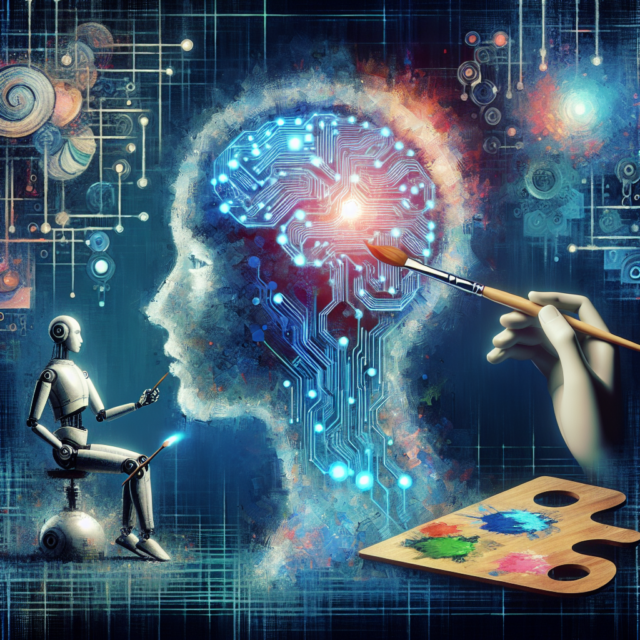
The realm of art has always been a reflection of human creativity and expression, capturing the essence of life and imagination through various mediums. However, the advent of artificial intelligence (AI) is redefining the boundaries of this age-old practice. AI’s capabilities are not only reshaping how art is created but also challenging our understanding of creativity itself. This article delves into the intriguing intersection of AI and art, exploring how AI is unveiling new creative potentials, enhancing artistic expression, and navigating the fusion of human and machine creativity.
Unveiling the Creative Potential of AI in Art
Artificial intelligence has opened new avenues for creativity, offering artists tools that were once unimaginable. At its core, AI in art involves algorithms that can learn patterns, styles, and techniques from a vast array of data, enabling them to generate artworks that mimic human creativity. This capability is unveiling a new dimension of art, where machines not only replicate existing styles but also innovate with unprecedented originality.
The potential of AI in art is vast, as it allows for the creation of works that push the limits of traditional artistic boundaries. Artists can now experiment with complex patterns, intricate details, and dynamic compositions that would be challenging to achieve manually. This has led to the emergence of unique art forms that blend the precision of algorithms with the fluidity of human intuition.
Moreover, AI has democratized art creation, enabling individuals without formal training to produce sophisticated artworks. By providing access to advanced tools and techniques, AI empowers a broader audience to engage in creative endeavors, fostering a more inclusive artistic community. This accessibility is transforming the landscape of art, making it more diverse and dynamic.
AI’s role in art is not limited to creation but extends to curation and analysis as well. Algorithms can analyze vast collections of artworks, identifying trends and patterns that might go unnoticed by the human eye. This analytical capability provides valuable insights into artistic movements and influences, enriching our understanding of art history and evolution.
Despite its potential, the use of AI in art raises questions about originality and authorship. As machines generate artworks, the line between human and machine creativity blurs, challenging traditional notions of artistic ownership. This prompts a reevaluation of what it means to be an artist in the age of AI, as creators navigate the balance between human input and machine-generated output.
In essence, AI is unveiling a new realm of possibilities in art, where creativity is no longer confined to human imagination alone. As artists and technologists continue to explore this intersection, the boundaries of artistic expression will undoubtedly expand, leading to innovative and thought-provoking creations.
How Artificial Intelligence Enhances Artistic Expression
Artificial intelligence enhances artistic expression by providing artists with new tools and techniques that expand their creative repertoire. One of the most significant ways AI achieves this is through generative algorithms that can produce an infinite range of styles and forms, allowing artists to explore uncharted territories in their work. These algorithms serve as collaborators, offering suggestions and ideas that artists can refine and build upon.
The integration of AI in art facilitates experimentation, enabling artists to take risks and explore unconventional approaches without fear of failure. By automating repetitive tasks, AI frees artists to focus on the conceptual and emotional aspects of their work, fostering a more profound connection with their creations. This shift in focus enhances the depth and authenticity of artistic expression, resulting in more meaningful and impactful artworks.
AI also enhances artistic expression by offering new ways to interact with audiences. Interactive installations and digital art pieces powered by AI can respond to viewers in real-time, creating dynamic and engaging experiences. This interactivity fosters a deeper connection between the artwork and its audience, encouraging active participation and interpretation.
Furthermore, AI can assist artists in overcoming creative blocks by generating fresh ideas and perspectives. By analyzing existing works and suggesting new directions, AI acts as a muse, inspiring artists to break free from conventional thinking and explore novel concepts. This collaborative process enriches artistic expression, leading to more diverse and innovative creations.
The use of AI in art also challenges artists to reconsider their creative processes and methodologies. As machines become more involved in the artistic journey, artists are prompted to reflect on their role and the essence of creativity. This introspection can lead to a more intentional and thoughtful approach to art-making, ultimately enhancing the quality and depth of artistic expression.
In summary, AI is revolutionizing artistic expression by providing artists with new tools, techniques, and perspectives. By embracing the possibilities offered by AI, artists can push the boundaries of their creativity, resulting in artworks that are both innovative and emotionally resonant.
Navigating the Fusion of Human Creativity and AI
The fusion of human creativity and AI presents both opportunities and challenges for artists and the art world. This intersection requires a delicate balance between embracing technological advancements and preserving the essence of human expression. Artists must navigate this fusion thoughtfully, ensuring that AI serves as a tool that enhances rather than overshadows their creative vision.
One of the primary challenges in this fusion is maintaining the authenticity and emotional depth of art. While AI can generate technically impressive works, the human touch remains essential for imbuing art with emotion and meaning. Artists must find ways to integrate AI’s capabilities while preserving the unique qualities that define their creative voice.
Collaboration between humans and AI requires a reimagining of the creative process. Artists must be open to experimenting with new workflows and methodologies, embracing AI as a partner rather than a replacement. This collaborative approach encourages artists to push their boundaries and explore new possibilities, resulting in a richer and more diverse artistic landscape.
The fusion of human creativity and AI also raises ethical considerations around authorship and ownership. As AI-generated art becomes more prevalent, questions arise about who holds the rights to these creations and how they should be attributed. Artists and stakeholders must engage in ongoing dialogue to establish guidelines and frameworks that address these complex issues.
Education and training play a crucial role in navigating this fusion effectively. Artists must be equipped with the skills and knowledge to harness AI tools creatively and responsibly. By fostering a deeper understanding of AI technologies, artists can make informed decisions about their use and impact, ensuring that the fusion of human and machine creativity is both ethical and innovative.
Ultimately, the fusion of human creativity and AI represents a new frontier in art, offering endless possibilities for exploration and innovation. By embracing this intersection with an open mind and a thoughtful approach, artists can redefine the boundaries of creativity and chart a course toward a more inclusive and dynamic artistic future.
As we stand at the crossroads of creativity and technology, the intersection of AI and art offers a glimpse into the future of artistic expression. This fusion challenges traditional notions of creativity, authorship, and originality, prompting artists and audiences alike to reconsider the role of machines in the creative process. By embracing the potential of AI while preserving the essence of human expression, the art world can navigate this transformation thoughtfully and ethically. As we continue to explore this intersection, the possibilities for innovation and discovery are boundless, heralding a new era of art that is as diverse and dynamic as the technologies that shape it.
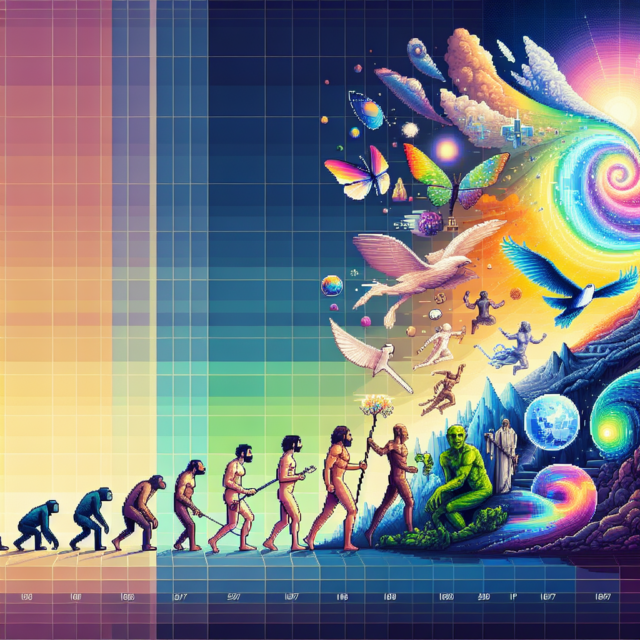
Digital art, a realm where creativity meets technology, has seen a remarkable evolution over the years. As a medium that transcends traditional boundaries, digital art has redefined how we perceive and interact with artistic expressions. From its humble beginnings to its current prominence in contemporary culture, digital art has undergone significant transformations driven by technological advancements. This article delves into the origins of digital art, examines the technological innovations that have shaped its development, and assesses its profound impact on modern culture.
Tracing the Origins of Digital Art’s Emergence
The origins of digital art can be traced back to the mid-20th century when artists and scientists began to explore the potential of computers as tools for creative expression. One of the earliest pioneers, Ben Laposky, created what is considered one of the first examples of digital art in the 1950s. Laposky used an oscilloscope to generate abstract waveforms, which he then captured as photographs. These "Oscillons" marked the beginning of a new artistic era where technology played a central role in the creative process.
As computer technology advanced, so did the possibilities for digital art. The 1960s saw artists like Frieder Nake and A. Michael Noll experimenting with computer-generated graphics. They used algorithms and programming languages to create intricate patterns and designs, laying the groundwork for future digital artists. This period also witnessed the establishment of new media art exhibitions, which provided a platform for digital artists to showcase their work and gain recognition.
In the 1970s and 1980s, the development of personal computers and graphic software further democratized digital art. Artists no longer needed access to specialized equipment or technical expertise to create digital artworks. This era saw the rise of pixel art, a form of digital art characterized by its use of small, distinct pixels to create images. Video game designers, in particular, embraced pixel art, contributing to its popularity and influence on the digital art landscape.
The 1990s marked a significant turning point for digital art as the internet emerged as a new platform for artistic exploration. Artists began to experiment with web-based art, creating interactive and immersive experiences that engaged audiences in unprecedented ways. This era also saw the rise of digital photography and image editing software, enabling artists to manipulate and enhance images with greater precision and creativity.
As digital art continued to evolve, it began to intersect with other forms of media and technology. The advent of 3D modeling software and virtual reality opened up new possibilities for creating immersive digital environments. Artists like Jeffrey Shaw and Char Davies pushed the boundaries of digital art by incorporating elements of interactivity and viewer engagement, challenging traditional notions of art and its consumption.
By the early 21st century, digital art had firmly established itself as a legitimate and respected art form. Artists like Cory Arcangel and Rafael Lozano-Hemmer gained international recognition for their innovative use of technology in art. Institutions and galleries began to embrace digital art, organizing exhibitions and acquiring digital artworks for their collections, signaling a broader acceptance and appreciation of this dynamic and evolving medium.
Technological Advances Shaping Digital Art Forms
The evolution of digital art has been intrinsically linked to technological advancements that have continuously expanded the possibilities for artistic expression. One of the most significant breakthroughs was the development of computer graphics technology. Advances in graphics processing power and software capabilities have enabled artists to create highly detailed and realistic digital artworks, pushing the boundaries of what is possible in the digital realm.
The rise of digital painting software, such as Adobe Photoshop and Corel Painter, has revolutionized the way artists create and manipulate images. These programs offer a vast array of tools and features that mimic traditional painting techniques, allowing artists to experiment with colors, textures, and brushstrokes in a digital environment. The versatility and accessibility of digital painting software have made it a popular choice among both emerging and established artists.
The advent of 3D modeling and animation software has opened up new dimensions for digital art. Programs like Autodesk Maya and Blender allow artists to create intricate 3D models and animations, bringing their visions to life in ways that were previously unimaginable. This technology has not only transformed the field of digital art but has also had a profound impact on industries such as film, gaming, and architecture.
Virtual reality (VR) and augmented reality (AR) technologies have further expanded the horizons of digital art. Artists can now create immersive and interactive experiences that transport viewers into entirely new worlds. VR and AR have enabled artists to explore concepts of space, time, and perception in innovative ways, challenging traditional notions of art and its relationship with the audience.
The proliferation of mobile devices and tablets has also played a crucial role in shaping digital art forms. With the increasing power and capabilities of these devices, artists can create and share their work on-the-go, reaching wide audiences through social media platforms and digital galleries. Mobile applications like Procreate and ArtRage have become popular tools for digital artists, offering intuitive interfaces and powerful features for creating art on portable devices.
Finally, the rise of blockchain technology and non-fungible tokens (NFTs) has introduced a new paradigm in the digital art world. NFTs allow artists to tokenize their digital artworks, creating unique and verifiable ownership records on the blockchain. This technology has revolutionized the art market, providing artists with new opportunities for monetization and challenging traditional notions of art ownership and provenance.
Assessing Digital Art’s Influence on Modern Culture
Digital art has had a profound impact on modern culture, influencing how we create, consume, and perceive art in the digital age. One of the most significant cultural shifts has been the democratization of art creation and distribution. Digital tools and platforms have made it easier for artists from diverse backgrounds to create and share their work with global audiences, breaking down traditional barriers to entry in the art world.
The rise of social media has further amplified the reach and influence of digital art. Platforms like Instagram and TikTok have become powerful channels for artists to showcase their work and connect with audiences. Digital art has become an integral part of online culture, with memes, GIFs, and digital illustrations circulating widely across social networks and influencing trends and conversations.
Digital art has also played a crucial role in shaping contemporary visual aesthetics. The influence of digital design can be seen in various aspects of modern life, from advertising and branding to fashion and interior design. The vibrant colors, bold graphics, and dynamic compositions characteristic of digital art have become ubiquitous in our visual landscape, reflecting the digital age’s impact on aesthetic sensibilities.
The integration of digital art into mainstream culture has also led to new forms of artistic expression and collaboration. Artists are increasingly working across disciplines, combining elements of digital art with traditional media, music, performance, and technology to create multimedia experiences. This cross-pollination of artistic practices has resulted in innovative and boundary-pushing works that challenge conventional definitions of art.
Digital art has also sparked important conversations about the nature of art and its relationship with technology. The rise of AI-generated art, for example, has raised questions about authorship, creativity, and the role of machines in the artistic process. These discussions have prompted a reevaluation of traditional art paradigms and have encouraged a more inclusive and expansive understanding of what constitutes art in the digital age.
Moreover, digital art has contributed to the preservation and dissemination of cultural heritage. Digital technologies allow for the digitization and restoration of historical artworks, ensuring their accessibility for future generations. Virtual museums and online exhibitions have made art more accessible to people worldwide, fostering a greater appreciation for cultural diversity and artistic expression.
In conclusion, the evolution of digital art is a testament to the dynamic interplay between creativity and technology. From its origins in the experimental endeavors of early pioneers to its current status as a mainstream art form, digital art has continuously pushed the boundaries of artistic expression. Technological advancements have not only expanded the possibilities for creating digital art but have also transformed how we experience and engage with art in our everyday lives. As digital art continues to evolve, its influence on modern culture is undeniable, shaping our visual aesthetics, challenging traditional art paradigms, and opening new avenues for artistic exploration and collaboration.
The Graph has just announced the early access launch of Geo Genesis, a new Web3 browser and knowledge graph application that puts information-sharing front and center. Instead of focusing solely on digital assets, Geo Genesis gives communities the tools to collaborate on knowledge.
The platform aims to show how users can work together to gather, verify, and shape fast-moving stories. By doing this, The Graph hopes to show that blockchain infrastructure can support fair community collaboration.
Inside Geo Genesis
At the core of Geo Genesis is a feature called “Spaces”. Each Space is like a shared workspace for a specific topic where users can submit ideas, fact check and refine information as needed. These Spaces use GRC-20 data standards so everyone can see when new content was added, who added it and how it might have changed over time.
Right now, Editors are using these Spaces to organize Crypto News stories so the wider community can watch how the content is governed. Over time, it’s likely that more Spaces will appear on different subjects, and each one can set up its own rules about what gets posted and how decisions are made.
Knowledge vs. Assets
Geo Genesis stands out because it treats knowledge as an essential resource rather than focusing on tokens, NFTs, or other digital assets. Many blockchain projects concentrate on speculation or trading, but The Graph envisions a decentralized approach to gathering facts and information.
Geo Genesis invites anyone to pool their expertise and verify what’s being posted. This could encourage a more active form of participation, where people feel responsible for making sure the information is trustworthy. As more users and groups join, Geo Genesis could grow into a larger network of knowledge Spaces, each shaped by the people who use it.
Governance with Aragon OSx
A big part of this is the governance framework provided by Aragon OSx. In early access, there are two main roles: Editors who vote on proposals and guide the overall direction of the content, and Members who submit new information.
In the future, these roles might be expanded or adapted depending on the community’s goals. For example, if a Space is about scientific research, it might use stricter rules to ensure accuracy. If a Space is about live events, the voting process might be faster to keep up with breaking news. This flexibility reduces misinformation by letting the community decide what works best for them and making every decision visible to everyone involved.
With the release of Geo Genesis, The Graph shows that Web3 technology can be about more than just financial exchanges. By giving people a way to build and oversee knowledge together, it points to a future where communities hold the reins.
Editor’s note: Written with the assistance of AI – Edited and fact-checked by Jason Newey.
Jason Newey is a seasoned journalist specializing in NFTs, the Metaverse, and Web3 technologies. With a background in digital media and blockchain technology, he adeptly translates complex concepts into engaging, informative articles.
If you’re already immersed in the world of non-fungible tokens (NFTs), you’ve likely heard buzzwords like “community-led,” and “decentralization.” But how can these ideas truly benefit your NFT project in a practical way?
The answer often lies in creating a Community DAO—a structure that hands decision-making power back to the people who care about your project the most: your supporters.
In this article, we’ll explore the key steps to set up a Community DAO for your NFT project, break down all the tech jargon in simple terms, and explain why decentralizing power can supercharge your community.
A DAO, or Decentralized Autonomous Organization, is like a digital cooperative that runs on blockchain technology. Instead of having one CEO or a small group making decisions, a DAO distributes that power among everyone holding its governance tokens or NFTs. This creates a transparent, democratic, and community-driven approach to managing the project.
When your NFT community transitions into a DAO, every member gains a voice in shaping the project’s direction. From voting on new art concepts to deciding how to use community funds, the possibilities are endless. This is the essence of Web3: giving control back to the users.
Benefits of a DAO for NFT Projects
Transparency: All decisions and transactions are recorded on the blockchain, making it easy to verify how funds are spent and what proposals get passed.
Community Engagement: By empowering token holders to vote, you encourage active involvement and shared ownership.
Shared Ownership: Everyone who holds governance tokens (or specific NFTs) becomes a part-owner of the project’s future.
Aligned with Web3 Principles: Web3 aims to decentralize the internet, so a DAO naturally fits into this model of user sovereignty and community control.
Understanding DAOs: The Basics
Breaking Down a DAO
Smart Contracts: These are self-executing programs that run on a blockchain. When certain conditions are met, the contract executes commands automatically. For example, you might have a smart contract that releases community funds only after a majority vote approves a project proposal.
Blockchain: This is a public, digital ledger that records transactions in a secure, tamper-proof way. Popular blockchains for DAOs include Ethereum, Polygon, and Solana.
Tokenomics: This term refers to the economics of a token—how it’s created, distributed, and how it gains or retains value. In a DAO, governance tokens often give holders the right to vote on proposals and access certain community perks.
Why NFT Projects Need a DAO
Trust and Transparency: Public, on-chain activity helps ensure that no one is misusing funds or acting in secrecy.
Long-Term Growth: By involving members in decisions, you create a sense of ownership, which can increase engagement and loyalty.
Active Participation: A decentralized structure allows everyone to propose ideas, discuss openly, and make decisions together.
Real-World Examples
PleasrDAO: This group pools funds to buy culturally significant NFTs and support digital art projects.
Flamingo DAO: Known for collective NFT purchases, Flamingo DAO showcases how group decision-making can turn a simple collection of NFTs into a powerful community asset.
Smart Contracts as the Backbone
Smart contracts act like the “rules engine” for your DAO. They automate voting, distribute tokens, and release funds only when predefined criteria are met. When choosing a blockchain for these contracts, think about fees, speed, and community support. Ethereum is the most established, but Layer-2 solutions like Polygon can cut down on transaction costs.
Governance Tokens
Governance tokens are like membership passes that come with voting privileges. By holding these tokens, community members can propose changes, vote on budgets, and shape the future of the project. Some DAOs even implement vesting schedules (gradually unlocking tokens over time) to discourage people from selling their tokens too quickly.
Decision-Making Framework
Your DAO can adopt various voting models:
Simple Majority: One token = one vote.
Quadratic Voting: This gives smaller token holders more influence to avoid “whales” dominating every decision.
Weighted Voting: A hybrid system that can consider both time and token balance.
Treasury Management
A DAO typically holds communal funds in a multi-signature (multi-sig) wallet, meaning multiple people have to approve each transaction before funds move. This reduces the risk of the treasury getting drained. The funds can be used for grants, community rewards or project development.
Community Engagement and Communication
From Discord to Twitter Spaces your community needs places to chat, ask questions and propose. Keeping channels open and transparent is key to a healthy DAO. Frequent polls and discussion threads can spark new ideas and prevent decisions from being made behind closed doors.
Step 1: Define Your DAO’s Purpose and Goals
Align With Your NFT Project’s Mission: If your NFTs focus on digital art, your DAO might fund art collaborations or sponsor exhibitions.
Determine Scope: Identify what areas the DAO will govern—marketing, new NFT releases, partnerships, or community events.
Step 2: Choose the Right Platform and Tools
DAO Frameworks to Explore:
Aragon: Offers templates for creating DAOs with built-in governance tools.
DAOstack: Known for its modular approach and “reputation-based” voting.
Snapshot: A popular off-chain voting platform with low gas costs.
Syndicate: Great for creating and managing community investment clubs.
Key Factors: User-friendly dashboards, low transaction fees and a big community that can offer support.
Step 3: Develop a Governance Token
Token Creation: Use platforms like OpenZeppelin to generate an ERC-20 token on Ethereum or an equivalent on a different chain.
Distribution Model: Decide how to distribute your tokens—through airdrops, crowdfunded sales, or as rewards for contributing to the project.
Fairness and Vesting: Consider vesting schedules to ensure that early contributors stick around and whales don’t dump tokens overnight.
Step 4: Set Up Voting Mechanisms
On-Chain vs. Off-Chain Voting: On-chain voting is fully transparent but can be expensive due to gas fees. Off-chain voting (like Snapshot) keeps costs low but requires some trust in the off-chain platform.
Voting Models:
Simple Majority: Easy to implement but can be dominated by big holders.
Quadratic Voting: Balances out voting power and gives smaller holders a fairer say.
Integration: Make sure your chosen platform (Aragon, Snapshot, etc) can tie in with your NFT ecosystem.
Step 5: Establish a Treasury Management Plan
Wallet Choice: A SAFE is a multi-sig wallet that many DAOs use to secure community funds.
Budgeting: Set aside funds for development, marketing, grants, or other initiatives.
Transparency: Publish regular updates on inflows (like NFT sales) and outflows (like funding proposals).
Step 6: Launch and Onboard Your Community
Educational Resources: Create FAQ pages, how-to guides, or quick-start videos that explain the governance structure and voting processes.
Promotional Strategy: Host AMA (Ask Me Anything) sessions, collaborate with influencers, or start a Twitter campaign to introduce the DAO concept to your NFT holders.
Community Readiness: Make sure your members understand how to obtain tokens, join voting sessions, and submit proposals.
Step 7: Maintain and Evolve the DAO
Ongoing Governance: Encourage new proposals that increase the project’s long-term value, like forging new partnerships or upgrading the smart contracts.
Regular Reviews: If certain governance rules aren’t working, propose amendments and let the community vote.
Security Audits: Periodically review your smart contracts and treasury setup to catch vulnerabilities.
Unique Perspectives and Advanced Considerations
Legal and Regulatory Aspects
DAOs exist in a legal gray area. Some U.S. states (like Wyoming) have introduced DAO LLC structures for legal clarity. If you plan on distributing governance tokens, always consult legal experts to ensure compliance with local regulations.
Incentivizing Participation
Staking Rewards: Users can lock up their governance tokens to earn additional rewards, fostering loyalty.
Exclusive NFT Drops: Offer special edition NFTs to active voters or people who serve on subcommittees.
Revenue Sharing: Direct a portion of the project’s profits to token holders who consistently participate.
Combining DAO Governance with Social Tokens
Social tokens represent the value of a personal brand or community. Merging them with DAO governance can boost utility. Imagine an artist who issues a social token that integrates with an NFT-driven DAO—holders might gain exclusive access to future collaborations or behind-the-scenes experiences.
Scalability and Future-Proofing
Modular Smart Contracts: Keep your contracts flexible so you can adapt as your project grows.
Layer-2 Solutions: Platforms like Arbitrum or Optimism (for Ethereum) can reduce gas fees, making voting cheaper and faster.
Common Challenges and How to Overcome Them
Low Voter Turnout
It’s easy for people to lose interest. Encourage engagement with:
Gamification: Offer badges or leaderboard rankings for active voters.
Time-Weighted Voting: The longer someone holds tokens, the more voting power they accumulate.
Community Updates: Regular newsletters or social media posts to remind members about upcoming votes.
Security Vulnerabilities
Smart Contract Audits: Hire reputable firms to review your code.
Bug Bounty Programs: Reward ethical hackers who find and report loopholes.
Multi-Sig Wallets: Require multiple trusted signers to approve large transactions.
Internal Conflicts and Power Struggles
Transparency and Open Dialogue: Keep debate threads public so everyone understands the rationale behind major decisions.
Mediation Tools: Create guidelines for resolving conflicts before they escalate.
Diverse Governance: Encourage a wide range of participants to dilute the influence of any single large token holder.
Regulatory Compliance and Uncertainty
Stay Informed: Laws and regulations around DAOs can shift quickly. Follow industry blogs, attend webinars, and consult with legal experts.
Flexible Structures: Consider setting up multiple legal entities or partnerships to stay agile.
Best Practices for DAO Success
Communicate Transparently and Frequently
Keep members in the loop by posting updates on Discord, hosting weekly calls, or sending out newsletters. Clear communication fosters trust and shows that the DAO leaders (or “facilitators”) respect the community’s input.
Encourage Collaboration
Form working groups or committees for specific tasks like marketing, partnerships, or event planning. Offer grants to members who launch initiatives that bring real value to the project.
Adapt and Iterate
No governance model is perfect on the first try. Gather feedback, run experiments, and be open to revising the rules. Use data from participation rates and proposal outcomes to guide your changes.
Set Clear Goals and Milestones
Without a roadmap, your community may lose interest. Lay out specific targets—like launching a new NFT collection or collaborating with another DAO—and celebrate every milestone you hit.
Summary
Recap of the DAO Setup Process
Define Purpose: Align your DAO’s objectives with your NFT project’s mission.
Choose Tools: Pick platforms like Aragon or Snapshot to manage governance.
Develop Tokens: Create governance tokens that grant voting rights.
Establish Voting Models: Decide between on-chain or off-chain, majority or quadratic voting.
Manage Treasury: Use a multi-sig wallet and track all transactions.
Launch & Onboard: Educate your community through guides and AMA’s.
Evolve Continuously: Collect feedback, improve governance rules, and keep your DAO secure.
A DAO can change how your community interacts with your NFT project, allowing holders to take action and shape the project’s future. By decentralizing decision making you create trust, creativity and collective innovation – a winning formula for Web3.
Editor’s note: This article was written with the assistance of AI. Edited and fact-checked by Owen Skelton.
Owen Skelton is an experienced journalist and editor with a passion for delivering insightful and engaging content. As Editor-in-Chief, he leads a talented team of writers and editors to create compelling stories that inform and inspire.
Whispers of a new player in the blockchain and cryptocurrency game are circulating, fueled by the recent reactivation of the dormant Twitter account, @MrGreed, after a 15-year silence. This unexpected resurgence coincides with record-high fear and greed indices in the crypto market, sparking speculation about a carefully orchestrated plan.
Adding to the intrigue, Mr. Greed has launched a TikTok challenge, inviting participants to unleash their creativity with videos featuring a duck and the question, “Who’s Mr. Greed?”. The creator of the video garnering the most views within a week of the launch of the enigmatic financial game, “Greed,” will receive a $2500 prize.
While details surrounding the game and the identity of Mr. Greed remain shrouded in mystery, the project is generating significant buzz within the blockchain community. The challenge serves as a unique pre-launch engagement strategy, building anticipation for the game’s official release, currently slated for a later date.
The game itself is rumored to be a revolutionary project that mirrors the excitement and volatility of hype projects and meme coins, but unlike them, focuses on skill rather than financial returns. Success hinges on decisiveness, risk-taking, and salesmanship. A unique, season-based structure ensures rewards for both early and late participants.
The $2500 prize for the TikTok challenge is just the first step in a multifaceted marketing strategy involving organic growth, influencer collaborations, and targeted PR campaigns. Further details regarding the game mechanics and official launch date will be announced shortly. For now, the focus remains on building excitement and encouraging community participation in the “Who’s Mr. Greed?” challenge.
About Greed
While specifics are limited at this stage, the game promises a fresh take on financial games within the blockchain space, prioritizing transparency and community engagement.
On Wednesday, Bitcoin (BTC) fell 3% to hover at $93,700, marking yet another steep loss. The decline occurs even though Bitcoin Exchange-Traded Funds (ETFs) are attracting a lot of investor interest. Tuesday saw the amount of $52 million in flows into these ETFs, increasing the weekly total reaching $1.04 billion. The gap between corporate consumer interest in Bitcoin-related products and general market sentiment is highlighted by this contrast.
Source: CoinGecko
Altcoin Market Resilience: Exchange Tokens and XRP Lead
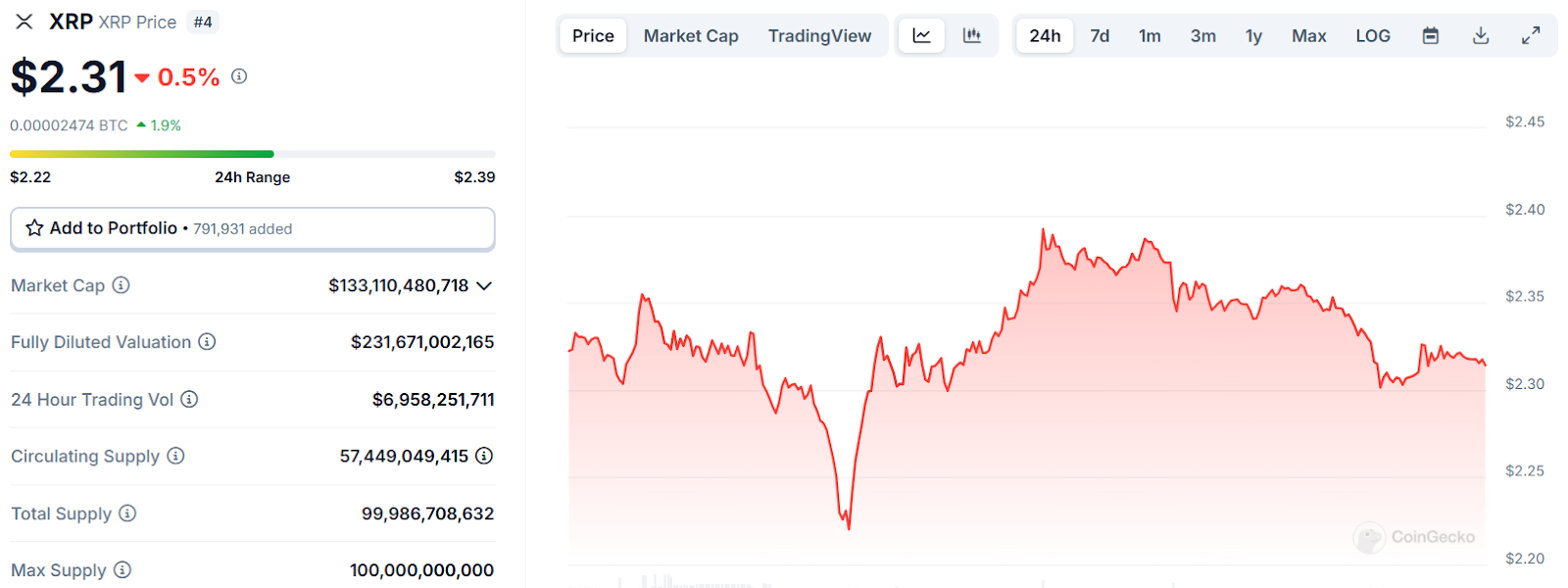
In the midst of a larger market sell-off, altcoin markets performed inconsistently. Because of the increasing activity on the Bitget and Binance platforms, exchange tokens like as Bitget Token (BGB) and Binance Coin (BNB) showed strength. Ripple’s recent alliance with Chainlink helped keep XRP stable at $2.3. The goal of this partnership is to improve cross-border payment solutions and DeFi adoption by integrating decentralized oracles.
Ripple (XRP)
XRP showed tenacity by holding onto support at $2.3 in the face of selling pressure. Ripple’s potential in DeFi and international payments has been highlighted by its relationship with Chainlink. The $2.5 resistance is still a crucial barrier for bullish momentum, though.
Source: CoinGecko
Litecoin (LTC)
Litecoin struggled, dropping 8% to $100 after failing to sustain gains near $115 earlier in the week. Weak on-chain activity contributed to the downturn, although the long-term halving narrative continues to support investor optimism. Maintaining $100 support is crucial to prevent further declines toward $85.
Avalanche (AVAX)
AVAX saw a 7% drop to $37 following a failed breakout attempt above $40. The token remains vulnerable as broader market corrections weigh on altcoin performance.
Chart of the Day: Memecoins Face Heavy Losses
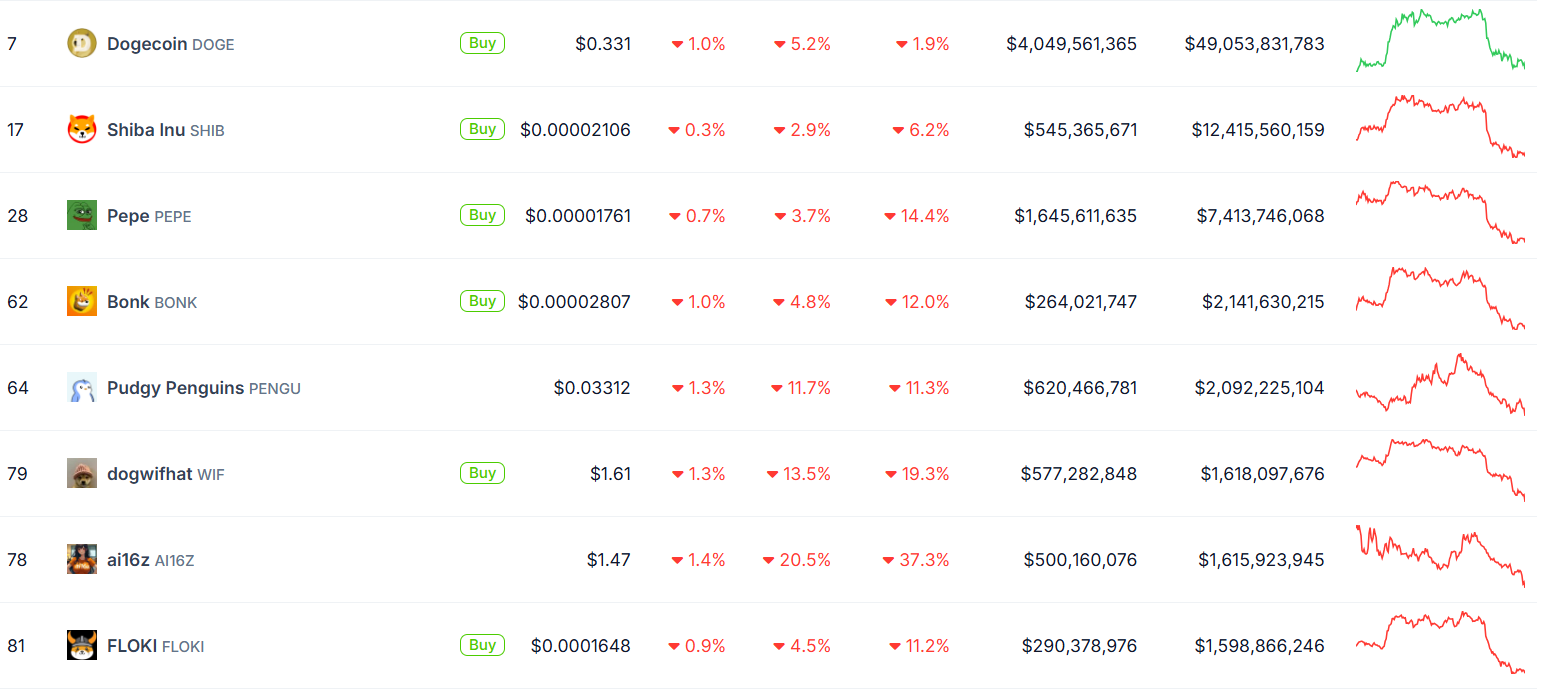
Memecoins endured significant losses as traders moved to reduce risk amid market uncertainty. The sector’s market capitalization dropped 14.7%, shedding $16 billion to settle at $110 billion. High-profile tokens like Bonk (BONK) and ai16z led the declines, with losses of 9.2% and 12%, respectively. Shiba Inu (SHIB) and Pepe (PEPE) also saw declines, falling 4.6% and 5.8%. Notwithstanding their prior stability, Pudgy Penguins (PENGU) fell 10.3%. As concerns about tighter monetary policy grow, traders are moving away from high-risk assets, which is reflected in the sell-off.
Source: CoinGecko
Bitfinex Relocates Derivatives Operations to El Salvador
Bitfinex Derivatives announced its relocation to El Salvador, leveraging the country’s favorable crypto regulations. After acquiring a Digital Asset Service Provider (DASP) license, Bitfinex was able to broaden its product offerings in an area where Bitcoin is recognized as legal cash. Updated terms of service under the recently formed Bitfinex Derivatives El Salvador S.A. de C.V. will be required of users accessing Bitfinex derivatives services. This change demonstrates how El Salvador is becoming a center for innovation in the cryptocurrency space.
The Financial Services Commission of South Korea (FSC) intends to withdraw its prohibition on institutional cryptocurrency trading. This policy shift will enable local institutions to access crypto markets, beginning with non-profit organizations. The FSC is also working with the Digital Asset Committee to develop clear regulatory frameworks for stablecoins, token listings, and crypto exchanges.President Yoon Suk-yeol’s goal to develop a strong cryptocurrency industry and establish South Korea as a pioneer in the development of digital assets is in line with these reforms.
According to Fidelity Digital Assets, nation-states, central banks, and sovereign wealth funds building up Bitcoin reserves will be the main drivers of the cryptocurrency’s explosive growth by 2025. According to the company’s “2025 Look Ahead” report, Bhutan and El Salvador are two instances of successful Bitcoin integration. Fidelity also hinted at the possibility of countries secretly stockpiling Bitcoin to capitalize on its long-term value. In addition to nation-state adoption, the report predicts significant growth in structured digital asset products and tokenization.
While Bitcoin and several altcoins faced bearish pressure, the market saw pockets of strength in exchange tokens and assets linked to innovative collaborations. Nation-state acceptance and institutional interest in Bitcoin ETFs suggest long-term hope. Nonetheless, macroeconomic considerations continue to have an impact on the larger market, underscoring the necessity of careful trading tactics.
Donald Trump has introduced a new collection of non-fungible token (NFT) trading cards, launched on Bitcoin using the Ordinals protocol.
The collection, called “Trump Bitcoin Digital Trading Cards,” consists of 160 Bitcoin Ordinals. These are available exclusively to users who purchased 100 “Mugshot Edition” cards — part of Trump’s third NFT collection released in 2023 — and submitted their Bitcoin wallet addresses.
Eligible users can claim the Bitcoin Ordinals through Magic Eden, with a deadline set for January 31. So far, 30% of the cards have already been claimed, according to recent updates.
This release marks Trump’s continued presence in the NFT market, which began in late 2022 with his first collection of digital trading cards. That collection featured images of Trump in various themes, including as a superhero and astronaut, and drew significant attention.
In April 2023, he launched a second NFT collection with a similar theme and design. Later that year, the “Mugshot Edition” brought a new twist by including physical trading cards. These physical cards featured a piece of the suit Trump wore during his arrest in Fulton County, Georgia, on August 24, 2024.
You Might Be Interested In
The following year, Trump released a fourth NFT collection, “America First.” This set included digital cards portraying him in different roles and came with exclusive rewards like sneakers, fragments of his suit, and VIP dinner access.
According to financial disclosures filed in August 2024, Trump has earned over $7.1 million from his NFT ventures.
Have you been hearing all the buzz about NFTs but aren’t quite sure how to get started? If so, you’re not alone. Many people are curious about how to create their first NFT, yet the process can seem confusing and technical at first glance.
In this beginner-friendly guide, I’ll walk you step-by-step through everything you need to know—from the basics of what an NFT is to the exact process of minting and listing your very first one. By the end, you’ll not only know how to bring your digital creation to life on the blockchain, but you’ll also feel confident about safeguarding your assets and engaging with the NFT community.
What Is an NFT?
An NFT (Non-Fungible Token) is a digital asset that represents ownership of something truely unique. Unlike a regular digital file (a JPEG you copy and paste), an NFT has a built in certificate of authenticity on the blockchain. This means each NFT is:
Unique: No two NFTs are the same.
Indivisible: You can’t just break an NFT into smaller pieces—each one is a whole asset.
Trackable: Ownership and transaction history is recorded on a public ledger for anyone to see.
How NFTs Differ from Traditional Digital Files
Traditional digital files—like images, videos, or audio clips—can be copied endlessly without changing the original. NFTs, on the other hand, are stored on a blockchain, making their ownership transparent and tamper-proof. This digital certificate of ownership is what gives NFTs their value and scarcity.
Opportunities with NFTs
NFTs have created new opportunities for artists, collectors, and brands. Artists can sell their work directly to fans, collectors can prove ownership of rare pieces, and brands can release exclusive digital merchandise. Whether you’re a painter, a musician, or just someone who appreciates digital art, NFTs can provide a whole new avenue for creativity and community engagement.
Why This Guide?
The world of NFTs has exploded in popularity, but there’s still a lot of confusion about how to get started. This simple, beginner-friendly guide will walk you through the process step-by-step, so you can confidently mint and list your first NFT. We’ll also introduce you to some of the most popular NFT marketplaces:
OpenSea: Largest NFT platform, biggest community, user friendly.
Magic Eden: Big in the Solana ecosystem, fast transactions, low fees.
Rarible: Like OpenSea but focuses on up-and-coming artists.
Foundation: Invite only, curated, high quality art.
These platforms make it incredibly easy to upload your digital file, set a price, and complete the minting process—even if you’re totally new to the crypto world.
Understanding the NFT Ecosystem
Overview of the Market
A crucial part of understanding NFTs is recognizing the blockchains they live on. Here are some popular ones:
Ethereum: The most widely used blockchain for NFTs; however, it often comes with higher transaction (gas) fees.
Polygon (Matic): A layer-2 solution built on top of Ethereum that aims to reduce fees and speed up transactions.
Solana: Known for its fast processing and lower fees compared to Ethereum, although it’s a separate ecosystem from Ethereum-based projects.
Gas fees and transaction times can vary significantly depending on which blockchain you choose. Ethereum is often more expensive, while Polygon and Solana offer lower costs but might have smaller user bases compared to Ethereum’s massive community.
Terminology You Should Know
Minting: The act of converting a digital file into an NFT on the blockchain. Think of it as “stamping” your piece onto the blockchain, making it an official NFT.
Smart Contract: Self-executing code that automatically carries out transactions or ownership transfers once certain conditions are met.
Gas Fees: The cost paid to blockchain miners or validators who confirm your transaction on the network. These fees can fluctuate with network congestion.
Unique Perspectives
NFTs are no longer just about digital art. Here are more use cases:
Gaming Assets: In-game items and characters can be tokenized and owned by the players.
Event Tickets: NFTs can be used as verifiable digital tickets, no more scalping and fraud.
Dynamic NFTs: Some tokens change based on real-world events or user interaction. For example, an NFT that changes appearance over time or after a trigger.
Preparing to Mint Your First NFT
Choosing the Right Platform
Each marketplace has its own niche, fees, and community. For a first-timer, OpenSea is typically the simplest option—it has a massive audience, a straightforward interface, and lots of helpful tutorials.
OpenSea: Ideal for beginners; charges fees upon listing or transacting.
Magic Eden: Great if you’re interested in Solana-based NFTs; faster transactions, lower fees.
Rarible: User-friendly, and you might find a more curated audience for emerging artists.
Foundation: Exclusive and curated; you’ll need an invite to list NFTs. Suited for higher-end or more artistic pieces.
Selecting a Blockchain
The choice of blockchain mostly comes down to cost vs. reach:
Ethereum: Has the biggest audience and well-established standards, but higher gas fees.
Polygon: Compatible with Ethereum’s ecosystem but offers cheaper fees.
Solana: Known for speed and low costs, yet not as large as Ethereum’s community.
Setting Up a Crypto Wallet
Before you can mint anything, you need a crypto wallet to store your NFTs and any cryptocurrency you’ll use to pay fees. For Ethereum-based blockchains, MetaMask is a go-to option. If you want to mint on Solana, consider using Phantom.
Security Tip: Always write down your seed phrase (a string of words acting as a password backup) on paper and store it offline. Never share it with anyone.
Funding Your Wallet
You’ll need to buy some cryptocurrency (like ETH, SOL, or MATIC) to cover gas fees and possibly the minting cost:
Purchase crypto on an exchange like Coinbase or Binance.
Transfer your funds from the exchange to your MetaMask or Phantom wallet.
Double-check wallet addresses to avoid sending funds to the wrong place.
Protecting Your Digital Assets
If you’re in this for the long haul, consider a hardware wallet (like Ledger or Trezor) for storing valuable NFTs or large sums of crypto. Also, be hyper-aware of phishing attacks and always verify you’re on the official marketplace URLs before connecting your wallet.
Step-by-Step Guide to Minting Your NFT
Step 1: Selecting Your Digital File
You can mint any digital file—JPEG, PNG, GIF, MP4 or even music files. Make sure the file size and resolution are optimized so the upload is smooth. High-quality images are nice, but be careful of large files that will slow down the minting process.
Step 2: Creating a Collection (Optional)
Many artists and creators choose to group their NFTs into a collection. This can help with branding and organization if you plan on minting multiple pieces around a theme. Not required but gives your NFTs a more professional look.
Step 3: Uploading and Minting
Let’s say you’re using OpenSea for your first NFT:
Go to OpenSea.io and connect your MetaMask wallet.
Click the “Create” button.
Upload your file, name your NFT, and add an optional description.
Choose whether you want to mint it on Ethereum or Polygon.
Hit “Create” again to finalize the process.
On Rarible or Foundation, it’s similar but the buttons and layout are slightly different. Follow on-screen prompts and read all instructions carefully to avoid mistakes.
Step 4: Title and Description
A good title and description can help more people find your NFT. Use keywords like “crypto art”, “digital collectible” or “Ethereum NFT” in a natural way. And share a bit of the story behind your piece – this emotional connection can be the deciding factor for many collectors.
Step 5: Price
You can do a fixed price or auction. If you’re new, consider a low starting price – especially if this is your first NFT and you haven’t built up a collector base. As you gain traction, you can adjust your pricing later.
Step 6: Gas Fees (Ethereum)
When you mint on the Ethereum blockchain, you’ll encounter gas fees, which vary based on network activity.
Tip: Mint during off-peak hours (late nights or early mornings UTC) to save costs.
Alternative: If gas is too high, consider minting on Polygon or Solana, where fees are often much cheaper.
Step 7: Finalizing and Listing Your NFT
Once you’ve paid the gas fee (if applicable) and confirmed the transaction in your wallet, your NFT should appear on your marketplace profile. You can track the confirmation on Etherscan (for Ethereum) or the blockchain explorer used by other networks. Make sure your NFT is publicly visible and the details are accurate before you begin marketing it.
Leveraging Social Media
The NFT world is active on Twitter, Instagram, Discord and TikTok. Here’s how to get loud:
Twitter: Post teasers, behind-the-scenes images, and threads.
Discord: Create or join a server where you can interact with the community.
TikTok & Instagram: Create short videos or reels about your project.
Collaborations with other NFT creators or influencer shoutouts can also help you reach new communities quickly.
Active participation in Twitter Spaces, community forums, and other NFT-focused events can drastically raise your profile. Projects that listen to collector feedback and communicate openly often see more success in the long run.
Authenticity & Storytelling
Collectors love hearing the story behind an NFT. Talk about your inspiration, your background, or the time you put into creating your piece. This honesty and openness build trust and can transform casual viewers into dedicated fans.
Common Pitfalls and How to Avoid Them
High Gas Fees and Failed Transactions
Ethereum gas fees can spike during peak network usage, leading to failed transactions if you don’t allocate enough gas. Consider these steps:
Monitor Network Congestion: Sites like EthGasStation track current gas prices.
Set Appropriate Transaction Speed: Choose from “slow,” “average,” or “fast” options in your wallet.
Scams and Phishing Attacks
NFT scams are on the rise, so always double-check official links and never share your private keys. If someone sends you a suspicious link or direct message claiming to be from a marketplace, verify their identity before clicking anything.
Overpricing or Underpricing Your NFTs
Finding the right price for your artwork can be tricky. Research what similar pieces are selling for, and start modestly. Over time, you can raise your prices as you build credibility and a collector base.
Once you’ve minted your NFT, the work doesn’t stop. Neglecting social media, Discord chats, or other community hangouts can hurt your visibility. Stay active, genuine, and respectful—people appreciate creators who are truly present.
Unique Perspectives and Advanced Tips
Creating Collaborative NFTs
Some of the most exciting NFT projects are collaborations between artists, musicians, or brands. Collaborations can bring fresh ideas and help you tap into larger, combined audiences. Look for like-minded creators who share your vision or style.
Exploring Dynamic NFTs and Interactive Features
Dynamic NFTs can change over time based on real-world data or triggers. For example, an NFT’s appearance can change as the owner completes certain tasks or as specific events happen (like sports results). This technology brings digital art to life.
Multi-Platform Presence
If you want max visibility, you can list NFTs on multiple platforms or even bridge them across blockchains. But be aware of the extra fees and the complexity of managing multiple listings and networks.
Conclusion
Recap
Creating your first NFT may feel daunting at first, but the process is more straightforward than it seems. Here’s the basic roadmap:
Pick a Marketplace (OpenSea, Magic Eden, Rarible, Foundation).
Choose a Blockchain (Ethereum, Polygon, Solana).
Set Up a Crypto Wallet (MetaMask or Phantom).
Fund Your Wallet to cover gas fees.
Upload and Mint your digital file.
Set Your Price and finalize the listing.
Market Your NFT and engage with the community.
Key Takeaways
Community is King: Stay active on social media and genuinely connect with potential collectors.
Security Matters: Safeguard your seed phrases, confirm official URLs, and use hardware wallets for valuable assets.
Pricing Strategy: Research similar NFTs and consider a modest price at first, then scale up.
Editor’s note: This article was written with the assistance of AI. Edited and fact-checked by Owen Skelton.
Owen Skelton is an experienced journalist and editor with a passion for delivering insightful and engaging content. As Editor-in-Chief, he leads a talented team of writers and editors to create compelling stories that inform and inspire.