Home Blog Page 72

Has Bea exited EastEnders? Her future revealed after Honey kidnap arrest

    0
    Has Bea exited EastEnders? Her future revealed after Honey kidnap arrest


    EastEnders delivered a tense episode tonight (Tuesday, July 7), as Bea Pollard finally faced the consequences of her shocking crimes against Billy and Honey.

    After kidnapping Honey and leaving Billy fearing for his life, Bea’s terrifying storyline reached a major turning point when police arrived and arrested her.

    But with her exit storyline now unfolding, fans may be wondering whether Bea has truly disappeared from Walford for good.

    Bea got her comeuppance (Credit: BBC)

    Bea Pollard’s EastEnders downfall

    After taking Honey hostage and keeping her trapped in a remote country cottage, Bea shocked her former friend by revealing her plans for them to escape and begin a completely new life together.

    Bea explained that she wanted to steal from the Minute Mart to pay for fake passports, new identities and a campervan for herself, Honey, Will and Janet. However, Honey managed to think on her feet. She used the mention of Fordwich as a clue when moving money into her own account.

    Suki quickly alerted Nicola and Linda, who made their way to Kent in a desperate attempt to find Honey. When a couple arrived at the cottage they had booked, Bea was distracted. This gave Honey the opportunity to flee through the woods before she was eventually found and rescued.

    Meanwhile, back in Walford, Billy had already been arrested on suspicion of Bea’s murder. But the ordeal was far from over, as Bea later confronted him while armed with a knife.

    Honey arrived and tried to reason with Bea, but words alone weren’t enough to stop her. She was forced to take action and tackled Bea to the ground.

    Moments later, police arrived and arrested Bea, finally bringing the frightening situation to an end.

    EastEnders' Bea upset
    Has she gone? (Credit: BBC)

    Has Bea left EastEnders for good?

    Although it hasn’t been officially confirmed that these scenes marked Bea’s final appearance, it does appear to bring her time in Walford to a close.

    This week looks set to be the final chapter of Bea’s storyline on screen. The character has now been taken away by police for her crimes. Whether viewers will see any further contact with her remains unclear.

    However, with Ronni Ancona having finished filming as Bea, it seems unlikely there will be much more from the character.

    That said, we can’t imagine Bea going quietly and accepting her fate without one final dramatic moment.

    Read more: EastEnders spoilers for next week: First look as Bea holds Honey hostage

    EastEnders usually airs weeknights on BBC One at 7.30pm, however check up-to-date schedules during the World Cup for current airing pattern.


    Source link

    Obsession Becomes One of the Highest-Grossing Horror Movies of All Time Following Historic Box Office Run

      0
      Obsession Becomes One of the Highest-Grossing Horror Movies of All Time Following Historic Box Office Run


      Rumors surrounding Marvel Studios’ upcoming X-Men reboot continue to heat up, and the latest name reportedly being considered for the Marvel Cinematic Universe is one of the biggest stars in music today: Sabrina Carpenter.

      According to multiple entertainment insiders, Marvel Studios is interested in bringing Carpenter into the MCU for a major role. While nothing has been officially confirmed by Marvel, the report has quickly sparked speculation among fans about which iconic mutant she could portray.

      The strongest rumor currently points toward Emma Frost, the powerful telepath known as the White Queen. The character has long been a fan favorite in the comics thanks to her sharp wit, commanding personality, and ability to transform her body into organic diamond. Other fans have thrown out names like Dazzler, whose music career and mutant powers have made her one of the most recognizable pop-star superheroes in Marvel history.

      Emma Frost [Marvel]

      Marvel Studios has yet to reveal any official casting for its upcoming X-Men reboot, leaving the internet to speculate about nearly every major mutant role. Recent reports have connected numerous actors to characters like Jean Grey, Cyclops, Storm, and Professor X, though none of those rumors have been confirmed by the studio.

      Carpenter’s star power has skyrocketed over the past year following the massive success of her music career and sold-out tours, making her one of Hollywood’s fastest-rising entertainers. If Marvel is indeed looking to add another globally recognizable name to its next generation of mutants, she would certainly fit that strategy.

      Still, fans should treat the report with caution. Marvel Studios is famously secretive, and casting discussions often change before contracts are ever signed. Until Kevin Feige or the studio makes an official announcement, Carpenter’s involvement remains firmly in the rumor category.

      With Marvel’s X-Men reboot still in development, speculation is only expected to intensify in the coming months. Whether Carpenter ultimately joins the MCU as Emma Frost, Dazzler, another mutant entirely, or not at all, one thing is certain—fans are already imagining what the next generation of Marvel’s mutants could look like.

      What do you think? If Sabrina Carpenter joins the MCU, which Marvel character would you like to see her play?


      Source link

      The Best Bras Money Can Buy

      The Best Bras Money Can Buy


      The finest bra is rarely the loudest object in the wardrobe. It is the piece that changes the posture of a dress, steadies silk under a jacket, keeps its shape after careful washing and feels considered from the first hook to the last stitch. In true luxury lingerie, beauty is only the visible part of the argument.

      The best luxury bras money can buy come from houses that understand architecture at intimate scale. Some are couture-minded ateliers with Parisian fitting rooms and hand-finished lace. Others are specialist makers whose genius is support, proportion and comfort over a full day of real life. The common thread is longevity: a bra worth the price should earn its place through fit, recovery, material integrity and the confidence it gives without announcing itself.

      These are bras for discerning women who know quality and exceptional craftsmanship, and who want every layer of dressing to feel considered. Pursuitist’s selection favors craft over novelty, precision over branding and houses with a serious point of view.

      Our Selection Process

      Pursuitist evaluated these bras through current product availability, house heritage, material quality, construction details, fit reputation, longevity signals and consensus across respected fashion and luxury sources. We prioritized enduring lingerie houses and specialist makers whose bras are known for precision, comfort, craft and wardrobe usefulness rather than seasonal novelty.

      1. Cadolle Bespoke Bra

      Best for: The ultimate couture fit.

      Cadolle belongs at the top because the house is part of the history of the modern bra itself. Herminie Cadolle introduced her divided corset concept in 1889, separating bust support from the waist and helping move women away from the old architecture of the full corset. More than a century later, the Paris maison still carries the aura of a private fitting room rather than a seasonal fashion label.

      The reason to choose Cadolle is personal engineering. A bespoke or made-to-measure bra is for the woman whose wardrobe depends on exact fit: evening gowns, tailoring, couture alterations, bridal looks, silk blouses that punish every ridge and mistake. The best experience is in person, where the fitter can evaluate shoulder slope, cup depth, band placement and the way the bra needs to behave under specific garments.

      Cadolle is about commissioning the correct foundation rather than owning a famous label. It is a particularly intelligent choice for women who have never found a ready-to-wear bra that feels fully resolved.

      Pursuitist Take: Why We Love It: Cadolle is the connoisseur’s answer. It has history, discretion and genuine fitting authority, which makes it the most compelling money-no-object choice.

      2. La Perla Maison Silk Bra

      Best for: Italian silk, lace and heirloom lingerie glamour.

      La Perla was founded in Bologna in 1954 by Ada Masotti, a corset-maker whose understanding of the body helped turn lingerie into an object of fashion. At its best, La Perla still carries that old-world proposition: silk satin, delicate lace, hand-finished detail and a sensuality that is polished rather than noisy.

      The Maison universe is the brand’s most persuasive expression for a luxury buyer. Look for silk, lace placement, clean seams, balanced straps and a cup shape that supports without making the bra feel armored. Availability can shift as the house continues its revival, so buy through current authorized channels and inspect the exact composition and construction of the piece in hand.

      La Perla is ideal for the woman who wants a bra that feels like part of a complete dressing ritual. It is less utilitarian than Empreinte or PrimaDonna, but for an occasion bra that still has craft credibility, it remains one of the names that matters.

      Pursuitist Take: Why We Love It: La Perla’s best pieces make lingerie feel like jewelry for the body: refined, tactile and deeply connected to Italian craft.

      3. Bordelle Signature Balconette Wire Bra

      Best for: Modern luxury engineering.

      Bordelle is the rare contemporary lingerie brand with a true construction language. Founded in London by Alexandra Popa, the house is known for adjustable satin elastic, graphic lines, precise hardware and a sculptural approach that makes lingerie feel closer to body architecture than decoration.

      The Signature Balconette Wire Bra is the most wearable entry into that world. Its adjustability is the essential luxury feature: it allows the wearer to fine-tune tension and placement rather than accept a static fit. That matters for longevity, because a bra that can adapt slightly to the body is more likely to stay in rotation.

      This is not the quietest bra in the drawer. It is for women who dress with intention and appreciate the tension between rigor and sensuality. Under a sharp blazer or with a sheer evening piece, Bordelle has uncommon authority.

      Pursuitist Take: Why We Love It: Bordelle proves that modern luxury can be technical, ethical-minded and visually unmistakable without losing sophistication.

      4. Empreinte Cassiopée Seamless Cup Bra

      Best for: Serious support with French elegance.

      Empreinte is one of the most important names for women who need real support and refuse to give up beauty. Founded in France in the mid-20th century, the brand has built its reputation around fuller cups, stable bands and shaping that feels refined rather than clinical.

      Cassiopée is the line to know. Its appeal lies in the balance: enough structure to lift and center, enough delicacy to feel like lingerie, and enough polish to disappear under clothes more gracefully than many ornate bras. For women with fuller busts, this is often where luxury becomes practical in the best sense.

      Fit is crucial. Empreinte’s sizing can feel different from mass-market bras, so a specialist fitting is worth the effort. Once dialed in, Cassiopée is the type of bra women buy in multiple colors because it performs.

      Pursuitist Take: Why We Love It: Empreinte understands that support is a luxury. Cassiopée is beautiful because it works.

      5. Eres Lingerie Bra

      Best for: Minimalist French refinement.

      Eres built its reputation on swimwear that respects the body, and its lingerie follows the same philosophy. The brand is less interested in obvious seduction than in line, color, proportion and ease. Understated women often understand Eres immediately.

      The best Eres bras are the ones that look simple until worn. Pay attention to smooth lace, intelligent cup depth, quiet straps and colors that sit beautifully under a real wardrobe. This is lingerie for women who live in crisp shirts, fine knits, tailored trousers and resort pieces, where the wrong bra can ruin the whole silhouette.

      Eres is also a smart travel choice. Its pieces tend to feel light, pack well and move between climates and wardrobes with more grace than heavily padded or overbuilt bras.

      Pursuitist Take: Why We Love It: Eres is luxury without performance. It is clean, sensual and exceptionally useful.

      6. Carine Gilson Silk and Lace Bra

      Best for: Handcrafted lingerie as couture object.

      Carine Gilson occupies a rarefied place in lingerie: Belgian couture sensibility, silk, French lace and handwork that prizes delicacy over display. The house is best known for lace inlay, silk and pieces that feel almost weightless, yet unmistakably precious.

      A Carine Gilson bra is not the first choice for hard-working daily support. It is the choice for a woman who values the private pleasure of craft. The pleasure is in the hand, the way lace meets silk, the softness of the line, the sense that the piece was made by people who understand restraint.

      For longevity, this is a care-dependent purchase. Hand wash, dry flat and store carefully. Treated correctly, it is the sort of lingerie that feels too beautiful to call basic and too intimate to call fashion.

      Pursuitist Take: Why We Love It: Carine Gilson brings couture quiet to lingerie. It is among the most refined choices for silk and lace purists.

      7. Aubade Rosessence or Danse des Sens Bra

      Best for: French lace with daily wearability.

      Aubade has long understood the emotional side of lingerie, but its best bras also have practical merit. The house brings French lace, sensual cuts and a wide selection of silhouettes, often at a price below the most rarefied ateliers while still feeling clearly premium.

      Rosessence is the more practical direction, especially for women seeking comfort and support with a romantic finish. Danse des Sens is the more expressive choice, with the kind of lacework that makes a matching set feel deliberate. Neither should be treated as disposable. With careful laundering and rotation, Aubade can offer excellent longevity for the price.

      Aubade suits the woman who wants her everyday lingerie drawer to feel more considered without moving entirely into couture or fragile silk.

      Pursuitist Take: Why We Love It: Aubade makes the case for pleasure as part of daily dressing. It is pretty, credible and easier to live with than many more precious bras.

      8. PrimaDonna Deauville Full Cup Bra

      Best for: Fuller busts and long-wearing comfort.

      PrimaDonna deserves a place because true luxury is sometimes the absence of adjustment. The Deauville full cup bra has become a reference point for fuller bust support because it offers lift, containment and durability without surrendering to plainness.

      This is the bra for long days, travel, work wardrobes and women who want their clothes to sit correctly from morning into evening. Its value is in engineering: cup depth, side support, band stability and straps that distribute weight intelligently. The embroidery softens the look, but the real asset is structure.

      For women who have spent years buying beautiful bras that fail by lunch, PrimaDonna is a corrective. It may not be the most glamorous name on the list, but it is one of the most useful.

      Pursuitist Take: Why We Love It: Deauville understands the luxury of not thinking about your bra again after you get dressed.

      The Pursuitist Final Word

      The best bra money can buy depends on what kind of luxury the wearer actually needs. For pure couture fit, start with Cadolle. For Italian sensuality, choose La Perla. For modern structure, Bordelle is the standout. For fuller bust support, Empreinte and PrimaDonna are the serious investments. For quiet French polish, Eres is the elegant answer. For private beauty, Carine Gilson is difficult to surpass.

      The smartest lingerie wardrobe is built like a jewelry box and a tailoring kit at once: one exceptional everyday support bra, one invisible under-clothes bra, one silk or lace indulgence, one travel-worthy workhorse and one piece that exists purely for pleasure. Buy fewer. Fit better. Care for them properly. That is where luxury begins to last.

      FAQs

      What makes an expensive bra worth it?

      An expensive bra is worth it when the price reflects fit, materials, construction and longevity. Look for stable bands, smooth seams, quality lace, resilient elastic, careful finishing and a silhouette that improves how clothes sit on the body.

      How long should a luxury bra last?

      With rotation and proper care, a well-made bra can last significantly longer than a mass-market bra. Longevity depends on wear frequency, elastic recovery and laundering. Hand washing, air drying and resting bras between wears make the biggest difference.

      Should luxury bras be fitted in person?

      Whenever possible, yes. A specialist fitting is especially valuable for fuller busts, asymmetric fit issues, bridal lingerie, couture dressing and expensive purchases. The best bra in the world is only excellent if the size and shape are right.

      Which luxury bra is best for everyday wear?

      For everyday support, Empreinte Cassiopée and PrimaDonna Deauville are the strongest choices in this selection. For lighter, minimalist daily wear, Eres is the more discreet option.



      Source link

      Pokémon Winds & Waves Leak Says Hundreds Of New Pokémon On The Way

      Pokémon Winds & Waves Leak Says Hundreds Of New Pokémon On The Way


      A new Pokémon Winds & Waves leak is making one of the most outlandish claims to date, as there are rumors that hundreds of new Pokémon and forms are coming in Generation 10, more than in any other game in the series, even Pokémon Red & Blue.

      There have been several Pokémon leaks over the past few years, which have included a lot of early information about Pokémon Winds & Waves. Not all the information has been confirmed, which means fans have every right to be skeptical when some fresh reveal comes to light, especially when it comes from a new source.

      Related

      Pokémon Pokopia: Paint Guide

      Make Smearguru proud!

      Perhaps the boldest claim about Pokémon Winds & Waves to date has been made by kurwashibamaste on Twitter/X, which Centro Leaks later supported. According to the leaks, Pokémon Winds & Waves will break the record set by Pokémon Red & Blue, with an absolutely staggering new Pokémon coming to the game.

      Pokémon Winds & Waves Leak Claims Over 300 New ‘Mons Are Coming

      According to leaks, Pokémon Winds & Waves is adding over 300 new Pokémon and forms, beating Pokémon Red & Blue, which added only 151. If true, this would bring the total number of Pokémon in the franchise to around 1325, which means it’s a good thing that the “Gotta Catch ‘Em All” logo was binned so long ago.

      The other leak mentioned was that the new battle mechanic will involve special weather forms, something akin to Mega Evolutions and Gigantamax forms. The Pokémon franchise technically already has a Pokémon that does this, as Castform’s gimmick since Pokémon Ruby & Sapphire has been changing with the weather, but maybe the leaked gimmick will include some new steps.

      According to leaks, Pokémon Winds & Waves is adding over 300 new Pokémon and forms, beating Pokémon Red & Blue, which added only 151.

      So, how can a new Pokémon introduce so many new creatures? Is 300 Pokémon even feasible or desirable? One possible answer is that there are lots of Pokémon with multiple forms. Perhaps weather effects are a major part of the game, and many Pokémon change in battle, meaning players need to be aware of the changing environment.

      The idea of 300 new Pokémon might have made more sense if Game Freak wanted a region with no returning Pokémon, which would have been an incredibly bold move. However, the debut trailer confirmed that Pikachu and several older Pokémon are returning, meaning the rumored 300 will be standing alongside classic returning characters.

      Fans are going to be waiting a while to learn more, as Pokémon Winds & Waves isn’t launching until 2027, meaning there’s a good chance it could be saved for that year’s holiday season. It’s likely fans won’t see any new Pokémon until the next Pokémon Day in February 2027.

      Adding 300 Pokémon sounds like a terrible idea, as it’s hard enough to keep up with the Pokémon introduced so far, but at least the Pokémon Go and TCG people will be happy, considering how much content it will give them in the multi-year wait for the Generation 11 titles. Until then, the rumors of the 300 should be taken with a grain of salt.

      FireRed LeafGreen Modern Features Featured

      Next

      10 Pokémon FireRed & LeafGreen Details That Made the Remakes Feel More Modern Than Expected

      Despite their advanced age, Pokémon FireRed and LeafGreen feel surprisingly modern thanks to their carefully considered features

      03165932_poster_w780.jpg

      Release Date

      1997 – 2023

      Network

      TV Tokyo, TV Osaka, TV Aichi, TVh, TVQ, TSC

      Directors

      Shigeru Omachi, Koji Ogawa, Fumihiro Ueno, Hideki Hiroshima, Maki Kodaira, Makoto Ooga, Ayumi Moriyama, Keitaro Motonaga, Shigeru Ueda, Fumihiro Yoshimura, Minoru Ohara, Yoshitaka Makino, Kiyoshi Egami, Makoto Sokuza, Bjarne Heuser, Naoki Murata, Kenichi Nishida, Tomoe Makino, Masahiko Watanabe, Hiroaki Takagi, Tazumi Mukaiyama, Ryohei Horiuchi, Yoshihiro Oda, Hiromichi Matano

      Writers

      Junki Takegami, Atsuhiro Tomioka, Hideki Sonoda, Yukiyoshi Ôhashi, Yuka Miyata, Takeshi Shudo, Shouji Yonemura, Shinzo Fujita, Michihiro Tsuchiya, Deko Akao, Reiko Yoshida, Aya Matsui, Junichi Fujisaku


      Source link

      Pregnant Kelsey Parker reveals emotional ‘visions’ of late husband Tom

        0
        Pregnant Kelsey Parker reveals emotional ‘visions’ of late husband Tom


        Kelsey Parker’s relationship with her late husband Tom Parker is back in the spotlight after the mum-to-be shared an emotional update on her pregnancy. She says she feels a stronger connection to her late husband and baby son Phoenix.

        Kelsey, 36, is expecting a baby with partner Will Lindsay. She says the pregnancy has brought strange dreams, powerful feelings and what she describes as “visions” of Tom.

        The podcast host opened up on her Mum’s The Word podcast. She said the sense of connection helps her keep going through grief.

        “I think there is a connection, and that’s how I do get through life.”

        She then explained that the experiences began after she fell pregnant with her rainbow baby. Kelsey admitted she struggles to put it all into words.

        Kelsey Parker’s emotional update after loss of Tom Parker

        Kelsey said: “I keep having… I think it’s probably because I’m pregnant and I’ve got some sort of connection.”

        She added: “The weirdest things are happening to me.”

        Kelsey then said: “I’m having visions and feelings, mental things that if I actually said it out loud, you’d be like, ‘What on earth are you talking about?’”

        Kelsey is expecting a baby with her new partner Will (Credit: Sue Andrews / SplashNews.com)

        She continued: “But they’re actually happening, but I can’t talk about it.”

        The TV personality also shared her wider beliefs about pregnancy and spirituality. She suggested pregnancy can heighten awareness in ways people do not fully understand.

        “I believe, I’ve said on this podcast before that I think you’re children pick you and there’s so much in the universe that we don’t even know about.”

        She added: “But I think they also make you a bit open, I think they open your third eye to see all this stuff.”

        The heartbreak behind Kelsey Parker Tom Parker and Phoenix

        Kelsey’s comments come after years of devastating loss. Tom Parker died in 2022 aged 33 after battling an aggressive brain tumour.

        She has also spoken openly about losing baby Phoenix. Earlier this year, she announced she was pregnant again and described the unborn child as her “rainbow baby”.

        Last month, Kelsey shared the news on Instagram with a deeply personal message. She linked the pregnancy to both Tom and Phoenix.

        She wrote: “A year ago next month, we lost our beautiful baby boy, Phoenix.”

        Kelsey added: “And somehow, through all the heartbreak, it feels like Tom and Phoenix have sent us another little gift from heaven our little rainbow baby.”

        Kelsey and Tom had two children together, daughter Aurelia and son Bodhi. Fans have followed the family’s story closely since Tom’s illness and treatment.

        Read now: Kelsey Parker pregnant with ‘rainbow baby’ a year after son Phoenix’s stillbirth

        So, what do you think? Tell us on our Facebook page @EntertainmentDailyFix.

        Emily loves to write about the latest trending news, whether it’s reality TV chaos or royal drama. She also has a passion for translating editorial content into share-worthy social media posts.


        Source link

        Blood of Dawnwalker Preview – A vampiric adventure worth losing sleep for | TheSixthAxis

        Blood of Dawnwalker Preview – A vampiric adventure worth losing sleep for | TheSixthAxis


        The Blood of Dawnwalker is not a game to be slept on, even amidst the jam-packed release schedule that awaits us in September. In fact, there’s not a whole lot of sleeping taking place in this action RPG, with Coen a vampire by night and (quite mysteriously) a human by day.

        It’s the 14th century and Europe is being ravaged by the Black Death, but not the region that Coen and his family lives in. No, they find themselves under the protection of the Vrakhiri, who are able to stave off the sickness within the populace, and ask for just one small tithe every month. Admittedly, that tax is a pint of blood from every adult in the region, and a weekly communion to consume the Vrakhir restorative ichor, but this deal sounds idyllic, doesn’t it? Well, not really to the inhabitants of Laslea. There’s certain side effects, an understanding that they’re being kept like cattle, and Coen’s mother has tumbled both mentally and physically.

        The game’s prologue gives a taste of what’s to come. Coen’s father asks him to visit the lady in the woods to ask for stronger herbs to save his mother, and as you go about this you’ll run into the various village folk, each with their own problems. A banner has gone missing, there’s a jackass running around taunting you about your mum, someone’s brother hasn’t come back yet from gathering peat, and Coen’s siblings would like a bit of company as they go fishing.

        What this introduction to the game teaches you, beyond an early foundation in world exploration, storytelling and combat, is how time passes. Instead of having the world fixed to a set time or an accelerated day-night cycle that plays out across 40 minutes, for example, time progresses only as you complete quests and pass certain narrative goals. Through this day-in-the-life segment, rescuing that brother from the peat bog takes one pip of time, visiting the lady in the woods takes another, and if you decide to stay indoors to avoid some torrential rain and practice Coen’s Latin? That’s another pip of time gone as well.

        It’s a frankly brilliant approach to a common issue within open world games, of keeping a sense of urgency while also giving you freedom and agency. You will want to make sure you get back at some point to brew the restorative drink for your mum, but do you complete that immediately? Or do you fritter away moments with other, potentially time sensitive quests instead? There’s also too many things to do within the amount of time that you have, making it very easy to miss things.

        It builds up to a climax, with rebellion fomenting among the people, at the Communion held by Brencis, the Knyaz of Vale Sangora, and it was fascinating talking to other press at the event to see who had done what, what outcomes had differed, and even what possible missions and people I had completely missed out on seeing.

        “There is a lot of stuff like this,” Game Director, Konrad Tomaszkiewicz told us. “We’re speaking and we are excited inside the company where we hope that when people will share their playthroughs experiences and so on, it will be different and they will compare it and they will see, you know, how differently you can play the game and play the game, you know, if you want.”

        The Blood of Dawnwalker – Open world avoiding patrol

        As you break out into the open world, the direct consequences of your choices could be similarly immediate, or they could be spread across the game. Konrad continues, “We don’t use the one way of designed things because then you can predict it and you feel that it’s repetitive, and when you feel it, immersion breaks, you know? We approach every kind of decision really in a hands-on way and we’re thinking, what kind of reaction and when will be the best. And this way of thinking is creating the word which you cannot predict and it’s fun because you don’t know. 
Sometimes it’s quite soon and sometimes it’s in the end of the game. And there is one choice in the prologue, which change the epilogue…”

        It’s after the Mass that the people rebel, looking to break into the mines and gather and forge silvered weapons, to take up arms against the Vrakhiri and reclaim their freedom.

        It does not go well. When all is said and done, the town is burnt down and Coen is now a vampire himself… with a twist. Firstly, he’s not going to bend a knee and join the ranks of the other Vrakhiri, and secondly, he doesn’t actually burn up in the sunlight and instead turns back to a human – he’s a Dawnwalker, get it?

        The Blood of Dawnwalker – Coen is a vampire now

        From here it feels like the game will race on at breakneck speed. The people of the village including Coen’s family have been taken to Brencis’ castle and have just thirty days to live. That’s thirty days and thirty nights-worth of time for Coen, though, allowing you to wage a war back against the Vrakhiri, dismantling his regime from the bottom up. It’s rather Far Cry 5 in its set up, I feel, with different regions aligning to different lieutenants and warlords that you’ll look to take down.

        “The infamy growing opens up new stuff for you in the world,” Konrad said, “but also is the source of the edicts which Brencis is putting on your, because he’s aware that something happens and he reacts this way. 
And some things [are] appearing in the world, which makes your life, you know, harder. He tries to, you know, predict [how you will] complete your goal.

        “This is the one thing. The other thing is that the anger of those generals and when the anger grow to the maximum, some stuff will be open and you will have additional options in the game, let’s say.”

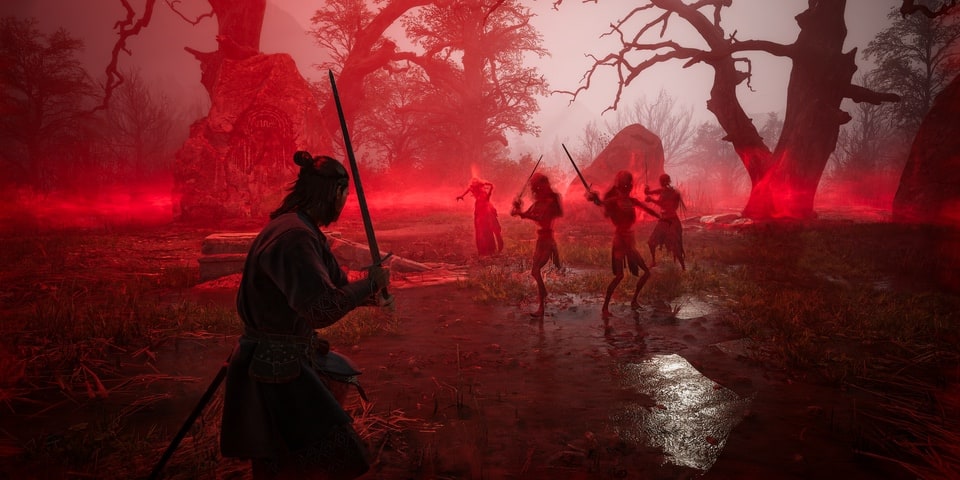
        From the opening area, as night fell on the first day and we set out in Vrakhiri form, I really enjoyed exploring this region and getting to grips with the combat and early abilities. Being a Vrakhir gives you a bunch of latent abilities, including teleportation, being able to walk up walls, and having elongated nails which can let you claw-grind your way down surfaces.

        The Blood of Dawnwalker – fighting Kobold

        You can fully embrace your vampiric form and go bare-handed into combat, parrying incoming blades with your nails, and slicing and dicing. Alternatively you can opt for consistency between night and day, sticking with a more traditional sword for your parries and ripostes. You have loadouts specific to night and to day, and some of the weapons and loot can have distinct attributes that play into Coen’s different forms.

        What makes this combat system really special is how it layers directional combat on top of a more standard attack, block and dodge system. Simply holding the button will guard against most attacks, but these will also be signalled with a direction – enemies have small symbols and indicators – and if you time a flick of the left analogue stick in the matching direction, it will parry and open them up to counterattacks. Your attacks can also be directional, and an early ability lets you deal critical damage if you successfully match them up.

        It works brilliantly for one-on-one combat – the first time it really clicked was down in a crypt within the starting area – but can be a little unwieldy with groups as additional enemies can jump in, and you need to quickly track the direction that you need to now block. I ended up brute-forcing and save-scumming my way through an enemy fort because of this, as each segmented area featured two or three enemies to tackle. Of course, it didn’t help that I kept forgetting the control scheme and pressing the button to switch weapons instead of attacking… A rookie mistake to make, for sure, but there’s a scalable difficulty available which could, for example, remove those symbols and indicators.

        Konrad told us, “The beauty of this system is that you can use this omniattack and omniblock if you develop your character the proper way, and if you want to use directions, you will feel that your skill is you growing, not only like, you know, the stats from your weapons or armour and so on.

        “Most people, and I’m not speaking about the people who are experienced players, but most people who played our game, obviously on this lower difficulty levels in a few hours know how to deal with the groups. Also, when you have the groups, it’s really worth to use active abilities because there are abilities which will give you the crowd control, there are abilities which give you AOE damage and so on. It’s constructed this way that if you feel that it’s hard for you, then you can use the crafting or the active abilities to help you out.”

        The Blood of Dawnwalker – skill tree

        Coen has a lot to learn if he’s going to be able to stand up to Brencis, adding new abilities through three different skill trees – learning an ability costs a unit of time at a shrine, incidentally. There’s swordsman skills, such as chucking sand in an enemy’s eyes and blinding them for a while, and vampiric abilities, like learning to leap from above and immediately take down an enemy – there’s no real stealthy options, outside of this. And then there’s witchcraft.

        Yes, shortly after being turned into a vampire, Coen is also granted the first ability and understanding to wield magic as a witch, these abilities indelibly marking and cutting symbols into his arms…. until he transforms back into a vampire at night and these wounds heal. There’s a strict divide between nighttime and daytime, so you can only cast magic and consume food to heal during the day, and then you can only use vampiric abilities at night and need to heal by consuming blood from enemies and animals.

        How you use and master these abilities will be up to the player. With 30 days and 30 nights in which to take down Brencis, you can naturally try to blend all of the abilities together, or you can lean into a particular style of play. Consuming blood increases Coen’s corruption, in turn allowing you to unlock more of the key abilities, and that, alongside how you act in dialogue and make decisions through missions, is sure to play into how the wider story unfolds, with multiple endings available to unlock.

        The Blood of Dawnwalker – battling spirits

        In my time with The Blood of Dawnwalker, I only just scratched the surface of what it promises. There’s so many more fantastical elements and creatures to encounter, so much potential within the approach to time and how it can affect the story unfolding, and I’m keen to see just how powerful Coen can get by the end of the game. But most importantly, I really want to see more and am excited for what Rebel Wolves has created.


        Source link

        Apex Legends is getting a Cyberpunk crossover with a Night City map takeover – VideoGamer

        Apex Legends is getting a Cyberpunk crossover with a Night City map takeover – VideoGamer


        You can trust VideoGamer. Our team of gaming experts spend hours testing and reviewing the latest games, to ensure you’re reading the most comprehensive guide possible. Rest assured, all imagery and advice is unique and original. Check out how we test and review games here

        Apex Legends is heading to Night City next week as EA and Respawn have revealed an excellent new Cyberpunk crossover event for the battle royale.

        The Apex Legends x Cyberpunk Event goes live across all platforms on July 14 and brings CD Projekt Red’s chrome-soaked universe into the Outlands with a limited-time E-District makeover, Cyberpunk-themed skins, new Wildcard modifiers, and a Mythic version of Skippy.

        The headline addition is Night City E-District, a temporary redesign of the Apex Legends map that gives the Outlands a heavy dose of neon, holograms, glitching signage, and all the general visual noise you would expect from a Cyberpunk crossover. The refreshed map features neon skyboxes, holographic koi drifting above the streets, and enough hacked-up city dressing to make it feel like the Legends have accidentally wandered into a very different dystopia.

        The event will also add two new Cyberware mods to Wildcard. Sandevistan gives players quick directional dashes, letting them chain two dashes before touching the ground, which should make it useful for closing gaps or getting out of danger quickly. Blackwall Breach, meanwhile, lets players phase into the Net to reposition before returning with a disruptive EMP blast.

        There is also a Cyberpsychosis mechanic tied to the use of Cyberware. As players make use of these new mods, their Cyberware Capacity fills. Push it too far and they will enter a Cyberpsycho state, gaining boosted movement speed and powerful melee damage. There is, obviously, a catch. While in that state, players lose access to weapons, abilities, shields, and ordnance, which means going full Cyberpsycho is less of a free power-up and more of a very dangerous gamble.

        Players will be able to manage Cyberpsychosis using Immunoblocker Syringes found around the map, while Immunoblocker Caches can fully reset the meter.

        The crossover also brings a new Mythic Skippy Alternator, inspired by Cyberpunk’s famously mouthy smart pistol. Players will be able to activate either “Puppy Loving Pacifist” or “Stone Cold Killer” mode, with Skippy providing its own commentary along the way. The weapon can also be upgraded with Exotic Shards to unlock new visuals, ordnance skins, and knock effects.

        As expected, there are plenty of cosmetics in the mix too. Players can earn Eddies during the event and spend them in the Reward Shop, which includes an Arasaka Epic Valkyrie skin, a Kang-Tao Epic Mirage skin, and more.

        There will also be eight premium Legend skins for Axle, Sparrow, Lifeline, Crypto, Rampart, Loba, Ash, and Gibraltar, alongside eight weapon skins for the Wingman, Charge Rifle, Mastiff, L-STAR, P2020, RE-45, R-301, and Kraber.

        The Apex Legends x Cyberpunk Event launches on July 14 for PS4, PS5, Xbox One, Xbox Series X|S, Nintendo Switch, Nintendo Switch 2, and PC via the EA App, Epic Games Store, and Steam.


        Source link

        Trump’s Strategic Bitcoin Reserve Plan Faces Legal and Agency Control Disputes – NFT Plazas

          0
          Trump’s Strategic Bitcoin Reserve Plan Faces Legal and Agency Control Disputes – NFT Plazas


          More than 16 months after President Donald Trump signed the executive order establishing a Strategic Bitcoin Reserve, the initiative remains stalled, with two federal departments locked in an unresolved dispute over which one has the legal authority to manage it.

          A Turf War Over $20 Billion in Bitcoin

          The Trump administration’s plan to create a Strategic Bitcoin Reserve has been complicated by two government departments vying to run it, alongside questions about which has the legal authority to do so. Trump ordered the reserve to be created last year as part of his promise to turn America into the “crypto capital of the world,” with the plan originally intended to house it inside the U.S. Treasury Department, funded by Bitcoin from asset seizures conducted across the federal government along with possible new purchases.

          The plan originally intended to house the reserve inside the Treasury Department, but conversations have since pivoted toward placing it inside the Commerce Department instead, according to Bloomberg’s Monday report, which cited people familiar with the discussions. The dispute is not merely bureaucratic. A central concern is whether the Treasury Department is legally able to manage the crypto holdings at all, a question that has now landed with government lawyers.

          The Justice Department has said its Office of Legal Counsel is working closely with both the Treasury and Commerce departments to determine legally available options for accomplishing the president’s policy of establishing the reserve. That involvement signals the disagreement has moved beyond routine interagency friction into genuinely contested legal territory.

          Trump’s Strategic Bitcoin Reserve plan faces legal and agency control disputes

          Trump’s Strategic Bitcoin Reserve plan faces legal and agency control disputes

          Why Neither Agency Wants Full Ownership

          The core legal problem is that existing federal asset-management statutes were built around gold, foreign exchange, and Treasury securities, not a volatile digital bearer asset. Treasury’s traditional mandate centers on fiscal instruments, and holding Bitcoin long-term as a strategic asset rather than liquidating it as seized property sits awkwardly within that framework. Commerce has been floated as an alternative on the theory that Bitcoin represents a strategic technology and competitiveness asset, though that rationale requires its own legal grounding.

          A further complication is whether Bitcoin can be held indefinitely, as Trump’s original executive order envisioned, given how sharply its price can swing. According to Bloomberg, the source of the dispute is whether the Treasury has the legal authority to manage bitcoin, particularly given its volatility.

          The March 6, 2025 executive order created two distinct structures: the Strategic Bitcoin Reserve itself, composed of forfeited Bitcoin, and a broader U.S. Digital Asset Stockpile for other seized crypto assets. The order also directed Treasury and Commerce to develop budget-neutral methods for expanding holdings—a constraint that, paired with the unresolved oversight question, has effectively frozen any new accumulation. As of early July 2026, the government has not designated a managing agency, disclosed its full holdings, or acquired a single new satoshi.

          Missed Deadlines and Contradictory Signals

          The original order set a 30-day deadline for agencies to report holdings and a 60-day deadline for the Treasury to deliver a full legal, custodial, and legislative evaluation. Both passed without public disclosure; the 60-day deadline expired May 5, 2025.

          Treasury Secretary Scott Bessent has added to the confusion, stating publicly that the U.S. “won’t be buying” additional Bitcoin in the near term before partially walking that back on social media by saying Treasury is exploring “budget-neutral pathways” for expanding holdings. The contradiction reflects a deeper tension in the executive order itself: political appetite for accumulation is constrained by a fiscal rule that makes buying nearly impossible without a market-neutral mechanism or explicit congressional funding.

          Congress Weighs In

          Separately, Congress is developing the ARMA Act, which would codify the reserve into law and call for acquiring 1 million Bitcoin over five years using budget-neutral strategies, with coins held for at least 20 years except for sales to reduce the national debt. The ARMA Act builds on the earlier BITCOIN Act, introduced in July 2024 and updated in March 2025, which White House Digital Assets Advisor Patrick Witt has called “version 2.0” of the original bill. Neither has been enacted, and without congressional authorization, agencies remain reluctant to act – a legislative gap that may prove harder to close than the interagency dispute itself.

          Scale of the Holdings

          According to Bitcoin Treasuries data, the U.S. currently holds the largest state reserve of any government at 328,372 BTC, valued at approximately $21 billion, ahead of China, the United Kingdom, Ukraine, and El Salvador. The no-sell clause embedded in the original order – that Treasury-controlled Bitcoin “shall not be sold and shall be maintained as reserve assets” – remains the clearest public statement of the government’s intended long-term posture, regardless of how the ownership dispute resolves.

          What Comes Next

          The Department of Justice is now collaborating with both Treasury and Commerce to explore legally viable options, while the White House continues to assess the optimal structure for implementing the plan. White House spokesperson Liz Huston has said the administration “continues to evaluate the best structure” for both the reserve and the digital asset stockpile. Patrick Witt has said an announcement on the reserve’s structure is “coming soon” – language that has now been the operative phrase for months, fueling frustration within the crypto industry over the absence of a concrete framework nearly a year and a half after the reserve was first announced.


          Source link

          Azuki TCG: Can a Web3 Anime Brand Win Over the Local Card Shop? | NFT CULTURE | NFT News | Web3 Culture | NFTs & Crypto Art

          Azuki TCG: Can a Web3 Anime Brand Win Over the Local Card Shop? | NFT CULTURE | NFT News | Web3 Culture | NFTs & Crypto Art


          Azuki has always been more than a profile picture project. At its best, it has been a thesis about what happens when crypto-native communities, anime aesthetics, collectibles, gaming, and entertainment IP start to collapse into one another.

          Now that thesis is being tested in one of the most unforgiving arenas in fandom: the physical trading card game market.

          With the launch of Azuki TCG: Gates Awakened (AZK-01), Azuki is attempting something far more ambitious than a merchandise drop. It is trying to move from digital collectibility into analog play. From wallet flex to tabletop strategy. From Web3-native hype to the local game store ecosystem.

          And that matters.

          Because if Azuki TCG works, it could become one of the clearest examples yet of an NFT-born brand crossing the bridge into mainstream entertainment without requiring the audience to care about wallets, tokens, or crypto mechanics at all. Featured on CardCore.xyz the leading news source for all things collectible cards.

          From The Garden to the Game Table

          Azuki began as one of the most recognizable anime-inspired NFT projects in Web3. Created by Chiru Labs, the collection quickly built a passionate collector base around its distinct visual identity, lore, and “Garden” mythology.

          It also came with baggage. In 2022, founder Zagabond faced significant criticism after revealing involvement with earlier NFT projects that many collectors felt had been abandoned. That history remains part of the Azuki story, and it is one reason some traditional TCG players may approach the new card game with skepticism.

          But the move into physical cards is not a small pivot. It is a serious attempt to build Azuki as an entertainment franchise, not just a blockchain collection.

          The official Azuki TCG site now lists Gates Awakened (AZK-01) as “out now,” with players choosing between Lightning, Water, Earth, and Fire starter decks and battling across the game’s two major zones: the Garden and the Alley. The site also emphasizes that every card is hand drawn by artists, with featured cards illustrated by creators including Arnold Tsang, also known as Steamboy33.

          That detail matters because Azuki’s strongest asset has always been taste. The brand’s visual identity is polished, collectible, and immediately legible. In a TCG market where art direction can be just as important as mechanics, Azuki is entering with a real advantage.

          The Art Direction Is the Hook

          The first thing players and collectors will notice is the art.

          Azuki TCG leans hard into a cel-shaded anime aesthetic, with premium card treatments designed to make the physical product feel like more than a simple licensing extension. For an NFT-native brand, this is a smart move. Azuki’s community was built around visual identity, scarcity, and collectibility. A physical trading card game lets the project translate those same instincts into cardboard.

          That translation is important. NFTs taught a generation of collectors to care about editions, traits, provenance, metadata, rarity, and social signaling. TCGs already had many of those behaviors decades before NFTs existed. Chase foils, alt arts, serialized cards, graded slabs, tournament promos, and sealed product speculation all live in the same psychological neighborhood.

          Azuki TCG sits directly at that intersection.

          The question is whether the cards are merely collectible, or whether the game underneath is strong enough to sustain repeat play.

          How Azuki TCG Plays

          Azuki TCG is a two-player card game built around 50-card decks, Leaders, Gates, Entities, Spells, Weapons, and a separate resource system.

          The most important design choice is the IKZ resource deck. Instead of relying on traditional in-deck mana or energy cards, players use a separate 10-card IKZ resource deck. That helps reduce one of the most frustrating parts of many TCGs: losing because you simply did not draw the resources needed to play your cards.

          That puts Azuki closer to modern card game design trends seen in games like Hearthstone, One Piece Card Game, and other systems that try to make resource development more predictable.

          The battlefield is split into two horizontal areas:

          The Alley is the protected back row, where players can stage Entities and prepare future plays.

          The Garden is the active front row, where combat and direct pressure happen.

          The game’s signature idea is the Gate mechanic. Once per turn, a player can use their Gate to “portal” an Entity from the Alley into the Garden. When that happens, the Entity’s Gate Power can trigger, creating a tactical push-and-pull between developing your back row and committing threats to the front line.

          That is where Azuki TCG gets interesting. The game is not just asking, “Can you pay for the card?” It is asking, “When do you reveal your plan?” and “How long can you afford to set up before your opponent pressures you?”

          That kind of spatial tension gives the game its own identity.

          Gates Awakened: The First Set

          The inaugural set, Gates Awakened (AZK-01), introduces the Azuki universe through a 148-card booster set. According to ICv2’s June 2026 preview, the product launched with booster display boxes priced at $119.99 MSRP and starter decks priced at $12.99 MSRP. Booster boxes include 24 packs, with 12 cards per pack.

          The four starter decks are built around Azuki’s elemental leaders:

          Raizan represents Lightning.

          Shao represents Water.

          Bobu represents Earth.

          Zero represents Fire.

          The starter decks are especially important because TCGs need a low-friction entry point. A collector might buy a booster box because the art is beautiful. A player needs a deck they can open, sleeve, and learn with immediately.

          Azuki appears to understand that distinction.

          Organized Play Is the Real Test

          A trading card game does not live on aesthetics alone.

          Beautiful cards can create a launch spike. Organized play creates a community. Weekly locals, regional events, tournament coverage, prize support, judge infrastructure, and deck-building content are what turn a new TCG from a novelty into a habit.

          Azuki is clearly aware of this. In March 2026, Azuki announced a $100,000 prize pool commitment for its inaugural competitive season and named CoreTCG as its official tournament organizer. CoreTCG is known for supporting large-scale TCG events, including Yu-Gi-Oh! YCS events, Bandai Nationals, and Bandai Card Fests.

          That is not a casual signal. That is Azuki telling the market it wants the game to be taken seriously by competitive players, not just NFT collectors.

          The official Azuki TCG site also highlights local card shop partners, store locator functionality, competitive play, event updates, and an app ecosystem around the game.

          This is the part that may determine whether Azuki TCG has staying power. The game needs more than collectors ripping packs. It needs people showing up on a Tuesday night to test decks, argue matchups, trade cards, and build local metagames.

          Why This Matters for NFTs

          For NFTCulture, the most interesting part of Azuki TCG is not simply that an NFT project made a card game. It is that Azuki is testing a broader path for Web3 IP.

          For years, NFT projects promised future games, shows, comics, toys, memberships, token-gated worlds, and entertainment ecosystems. Some delivered. Many did not. The gap between roadmap language and actual consumer products became one of the defining credibility problems of the NFT market.

          Azuki TCG is different because it does not ask the mainstream player to understand Web3 first.

          You do not need an NFT to play.

          You do not need a crypto wallet.

          You do not need to mint anything.

          You can walk into a card shop, buy a starter deck or booster pack, and play a game with another person.

          That is powerful because it flips the usual adoption funnel. Instead of asking mainstream consumers to enter Web3, Azuki is pushing a Web3-born brand into a format consumers already understand.

          That may be the future of NFT IP: not forcing everything on-chain, but using blockchain-native communities as the launchpad for brands that can move across physical, digital, and experiential formats.

          The Skepticism Is Fair

          Azuki TCG will still have to earn trust.

          Traditional TCG players are not easy to impress. They have seen plenty of games launch with beautiful art, big promises, and early hype, only to disappear once organized play slows down or product support becomes inconsistent.

          The NFT connection cuts both ways. For Web3 collectors, it creates instant cultural relevance. For some tabletop players, it may create hesitation.

          That is why Azuki’s decision to make the game fully playable as a physical TCG is so important. The product cannot rely on tokenomics. It has to stand on gameplay, art, distribution, community, and support.

          That is a healthier test.

          The Verdict

          Azuki TCG is one of the more compelling experiments in NFT-to-mainstream IP we have seen.

          It does not feel like a simple merch extension. It feels like an attempt to build a durable entertainment product around a crypto-native brand. The art is strong. The mechanics appear modern and accessible. The organized play commitment is meaningful. And the retail strategy gives Azuki a shot at reaching players far outside its original holder base.

          The challenge now is consistency.

          Can Azuki support the game beyond the launch window? Can it keep local stores engaged? Can it create a competitive scene that players care about? Can it convert skeptics who have no interest in NFTs but love great card games?

          If the answer is yes, Azuki TCG could become a case study in how Web3 brands evolve beyond speculation and into culture.

          Not by abandoning their origins.

          But by building something people can actually play.

          TL;DR

          Azuki TCG: Gates Awakened is a major test for NFT-born intellectual property. Built around premium anime-inspired art, modern resource mechanics, spatial gameplay across the Garden and Alley, and a serious organized play push, Azuki is trying to prove that a Web3-native brand can compete in the physical trading card game market. The NFT history brings skepticism, but the game’s fiat-friendly, no-wallet-required retail approach may be exactly what Web3 IP needs to reach mainstream audiences.


          Source link

          H1 2026 Blockchain Security: Attack Frequency Surges 50% As Losses Shift Toward Sophisticated Supply Chain And AI-Driven Threats | Metaverse Post

          H1 2026 Blockchain Security: Attack Frequency Surges 50% As Losses Shift Toward Sophisticated Supply Chain And AI-Driven Threats | Metaverse Post


          In Brief

          H1 2026 blockchain attacks rose 50% with complex AI and supply chain threats, driving global regulatory convergence on security and compliance.

          H1 2026 Blockchain Security: Attack Frequency Surges 50% As Losses Shift Toward Sophisticated Supply Chain And AI-Driven Threats

          The first half of 2026 has delivered a sobering picture of the blockchain security environment. According to SlowMist’s mid-year report, 182 security incidents were recorded between January and June — a 50% increase compared to the same period in 2025, when 121 incidents were logged. Total losses reached approximately $956 million, down nearly 60% year-on-year from $2.37 billion, a figure that might appear encouraging until one examines its structure more closely. The decline in aggregate losses was largely driven by the absence of a catastrophic single event comparable to 2025’s worst breaches — not by any meaningful reduction in attack frequency or sophistication. On the contrary, the threat landscape has grown measurably more complex.

          DeFi remained the sector most frequently targeted, accounting for nearly 64% of all incidents and approximately $490 million in losses. Cross-chain bridges, however, proved to be the most financially damaging category: just 20 incidents generated cumulative losses of around $346 million, with a single event — the KelpDAO exploit in April — responsible for $292 million alone. Attackers compromised LayerZero’s RPC infrastructure, launched DDoS attacks against legitimate validator nodes, and forged cross-chain messages to mint and extract assets without collateral. The stolen tokens were subsequently used as fake collateral on lending platforms such as Aave, amplifying losses across the DeFi sector. The incident, attributed to the North Korean Lazarus Group, was not merely a technical failure — it was a coordinated, multi-stage infrastructure attack that exposed the fragility of trust assumptions embedded in cross-chain verification systems.

          The Industrialization of Cyber Threats

          What the aggregate statistics fail to capture is the qualitative transformation underway in how attacks are conceived and executed. The report documents a consistent shift away from opportunistic exploitation of smart contract bugs toward systematic targeting of the broader development and operational ecosystem. Supply chain poisoning, in particular, has emerged as one of the most structurally dangerous attack categories: while it ranked third by incident count in H1 2026, it generated the highest total losses — approximately $298 million — owing primarily to the KelpDAO case. Beyond that single event, numerous supply chain incidents targeted package management repositories, CI/CD pipelines, CDN distribution chains, and even AI agent plugin marketplaces.

          The evolution of phishing attacks follows a similar pattern of increasing sophistication. Campaigns in H1 2026 moved well beyond static spoofed pages, adopting what the report describes as a model of “platform-based impersonation + multi-stage interaction + dynamic payload injection.” Malicious browser extensions mimicked legitimate wallet tools, Google Search advertisements directed users to clipboard-hijacking malware, and spear phishing emails disguised as audit confirmations delivered AppleScript payloads capable of establishing persistent remote access. In several cases, attackers embedded phishing infrastructure within trusted domains — including business.google.com — specifically to circumvent automated detection systems.

          AI has further accelerated these trends. Deepfake voice and video technology has been deployed in social engineering campaigns targeting high-value individuals, with documented losses reaching into the millions per incident. More significantly, AI is now being used across the full attack lifecycle — to generate convincing impersonation content, self-review malicious code for detection evasion, and optimize social engineering scripts. The Lazarus Group’s subunit HexagonalRodent was observed using ChatGPT and Cursor to craft fraudulent corporate websites and fabricate management team identities for fake recruitment operations targeting Web3 developers.

          Regulatory Convergence and the Compliance Imperative

          Against this threat environment, the regulatory response has been notably active. Across Asia, the Middle East, Europe, and the Americas, jurisdictions have moved in parallel to establish or strengthen frameworks governing virtual assets, stablecoins, and anti-money laundering compliance. Hong Kong granted its first batch of fiat-referenced stablecoin issuer licenses in April. Taiwan upgraded its crypto regulatory regime from AML registration to full financial licensing. In the United States, the GENIUS Act’s implementation moved from legislation to proposed rulemaking, while FinCEN and OFAC jointly issued draft rules establishing a unified compliance framework for licensed payment stablecoin issuers. The European Union, for the first time, imposed a sector-wide prohibition on transactions with crypto-asset service providers established in Russia.

          The common thread across these developments is a clear regulatory consensus: the industry can no longer treat security and compliance as separate concerns. The proliferation of supply chain attacks, AI-assisted fraud, and nation-state-linked cybercrime organizations such as Lazarus Group has made it evident that resilience requires not only technical defenses but also systematic governance — covering fund flow monitoring, VASP registration, identity verification, and cross-border enforcement cooperation. The first half of 2026 makes clear that the blockchain ecosystem is entering a phase in which security capability is not merely a technical asset, but a foundational prerequisite for sustainable growth.

          Disclaimer

          In line with the Trust Project guidelines, please note that the information provided on this page is not intended to be and should not be interpreted as legal, tax, investment, financial, or any other form of advice. It is important to only invest what you can afford to lose and to seek independent financial advice if you have any doubts. For further information, we suggest referring to the terms and conditions as well as the help and support pages provided by the issuer or advertiser. MetaversePost is committed to accurate, unbiased reporting, but market conditions are subject to change without notice.

          About The Author


          Alisa, a dedicated journalist at the MPost, specializes in crypto, AI, investments, and the expansive realm of Web3. With a keen eye for emerging trends and technologies, she delivers comprehensive coverage to inform and engage readers in the ever-evolving landscape of digital finance.

          More articles


          Alisa, a dedicated journalist at the MPost, specializes in crypto, AI, investments, and the expansive realm of Web3. With a keen eye for emerging trends and technologies, she delivers comprehensive coverage to inform and engage readers in the ever-evolving landscape of digital finance.


          More articles


          Source link

          Popular Posts

          My Favorites