Home Blog Page 1234

Top Crypto To Watch Out For In 2025: Cardano, Shiba Inu, And Yeti Ouro

Top Crypto To Watch Out For In 2025: Cardano, Shiba Inu, And Yeti Ouro


Top Crypto To Watch Out For In 2025: Cardano, Shiba Inu, And Yeti Ouro

Investors have proven to be always on the watchout for promising tokens with strong growth potential. As the year 2025 starts, 3 coins Cardano (ADA), Shiba Inu (SHIB), and the new altcoin Yeti Ouro (YETIO) are among the assets to look out for. Yeti Ouro in particular has taken the market by surprise after exceeding expectations in presale. 

Cardano Price Prediction: ADA Poised For A Breakout

Cardano remains one of the most promising blockchain platforms for its scalability, interoperability, and sustainability. Analysts anticipate ADA price could reclaim the $1.20 mark 

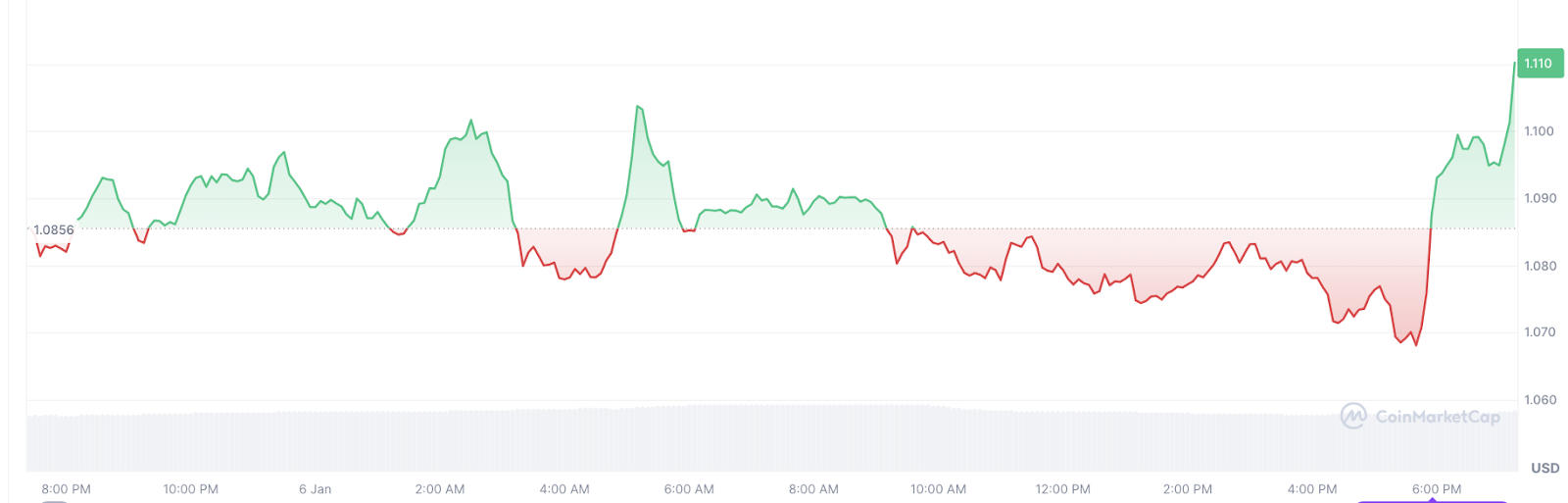
At the time of press, Cardano has shown a sharp uptick of 1.26% to push the coin marginally in profit over the last day. With Cardano price at $1.11, the coin has seen an increase in trading volume with a 24-hour $1.18 billion.

24-hour ADA Price Chart- Source: CoinMarketCap

According to data on CoinMarketCap, ADA maintains 9th position with a market cap of $38.64 billion. 

Shiba Inu Price Prediction

Shiba Inu in the passed made millionaires with a massive rally threatening to dethrone Dogecoin as the largest memecoin. While this was followed by a major decline, SHIB price is looking to reclaim these highs having managed to stay on an upward trend throughout the last 1 year. 

Right now Shiba Inu price is at $0.000024, It holds the 15th spot by market capitalization according to CoinMarketCap. Shiba Inu’s market cap stands at  $14.34 billion at the moment as the coin rallied by 2.16% in the last 24 hours.

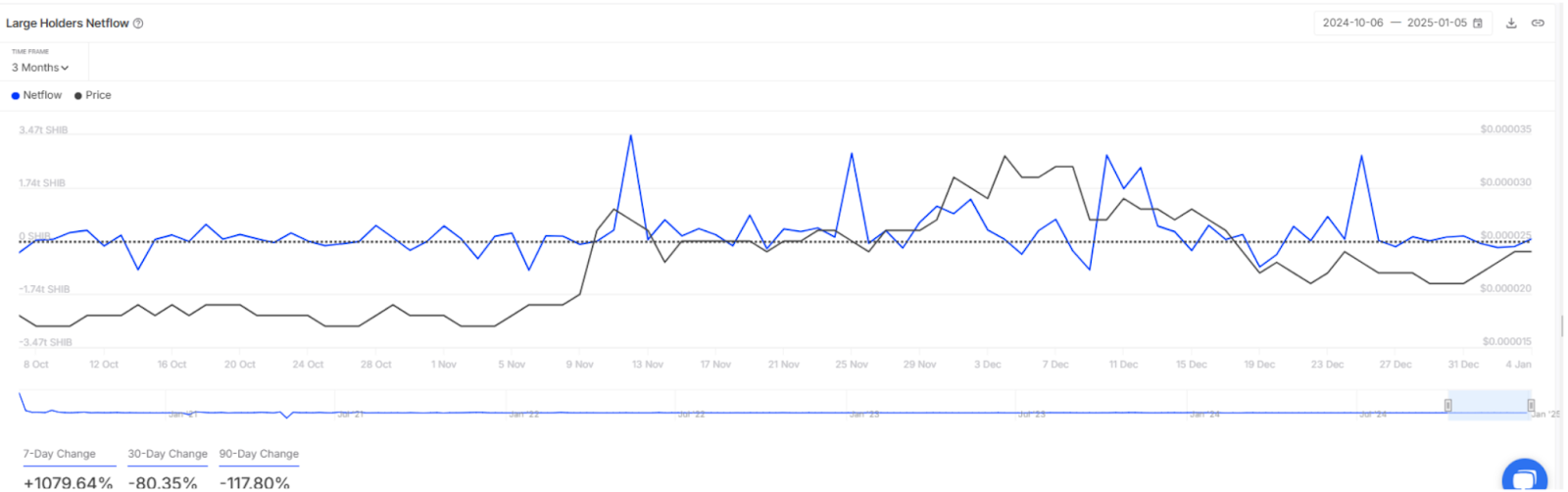
According to a chart from IntoTheBlock, On January 4, SHIB reversed negative netflows of 177.74 billion SHIB  to positive netflows of 67.52 billion SHIB. This shift highlights significant accumulation by whales, suggesting growing confidence in the token’s future.

Source: IntoTheBlock

Yeti Ouro (YETIO) Appeal 

Yeti Ouro is a new Ethereum-based altcoin that has perfected the innovative combination of cryptocurrency and gaming. As the foundation of the Play-to-Earn (P2E) ecosystem Yeti Go, the project has already captured the attention of investors and gamers despite launching a few months ago.

After raising $1.56 million in its presale so far, Yeti Ouro has already sold over 121,000,000 million tokens in total, exceeding expectations. 

Yeti Ouro provides real-world utility through in-game rewards, exclusive content, and gaming experiences in Yeti Go, a P2E racing game. The game’s mechanics and level designs are nearing completion, with industry-leading talent contributing to its assets and immersive audio design.

This uniqueness and massive adoption of Yeti Ouro positions it as a potential leader in the crypto-gaming space, a sector expected to see exponential growth by 2025.

Join The Yeti Ouro Community 

Website: https://yetiouro.io/

X (Formally Twitter): https://x.com/yetiouro

Telegram: https://t.me/yetiouroofficial

Discord: https://discord.gg/YtUsEZ2Zr

Disclaimer

In line with the Trust Project guidelines, please note that the information provided on this page is not intended to be and should not be interpreted as legal, tax, investment, financial, or any other form of advice. It is important to only invest what you can afford to lose and to seek independent financial advice if you have any doubts. For further information, we suggest referring to the terms and conditions as well as the help and support pages provided by the issuer or advertiser. MetaversePost is committed to accurate, unbiased reporting, but market conditions are subject to change without notice.

About The Author


Gregory, a digital nomad hailing from Poland, is not only a financial analyst but also a valuable contributor to various online magazines. With a wealth of experience in the financial industry, his insights and expertise have earned him recognition in numerous publications. Utilising his spare time effectively, Gregory is currently dedicated to writing a book about cryptocurrency and blockchain.

More articles


Gregory, a digital nomad hailing from Poland, is not only a financial analyst but also a valuable contributor to various online magazines. With a wealth of experience in the financial industry, his insights and expertise have earned him recognition in numerous publications. Utilising his spare time effectively, Gregory is currently dedicated to writing a book about cryptocurrency and blockchain.


Source link

NFT Scams to Avoid: Top Red Flags and How to Protect Your Digital Assets

0
NFT Scams to Avoid: Top Red Flags and How to Protect Your Digital Assets


Non-fungible tokens (NFTs) have changed the game for digital ownership. They provide a means to verify ownership of various digital items, including art and virtual real estate. However, as NFTs gain popularity, scammers are finding new ways to trick both newbies and seasoned collectors. That’s why knowing NFT scams to avoid is more important than ever.

In this article we’ll cover why NFTs are vulnerable to fraud, the most common scams, real world examples and practical tips to keep your digital wallet safe. By the end you’ll have a clear map of red flags, best practices and the confidence to navigate the NFT market without getting scammed.

Why NFTs Are Vulnerable to Scams

No Regulation

One of the main reasons scams thrive in the NFT space is the lack of central oversight. Traditional financial markets have rules, NFTs have none. While this decentralization brings freedom and innovation, it also brings opportunities for criminals. Without enforcement, it’s easier for scammers to create fake projects, manipulate prices and disappear with investors’ money.

Key Takeaway:

Any new NFT project should be treated with healthy doubt. Just because something is on the blockchain doesn’t mean it’s trustworthy.

Rapid Growth and Hype

The NFT market is growing at an insane pace. As more people hear about record-breaking sales of digital art or metaverse land, the fear of missing out (FOMO) can override caution. When collectors rush in, they sometimes overlook the red flags – anonymous founders, copycat websites, and inflated promises. This frenzy gives scammers the perfect opportunity to launch fake collections or claim their new platform will be “the next big thing”.

Key Takeaway:

Slowing down to do proper research is crucial especially in a market that’s all about speculation and hype.

NFT Scams

Knowing the common tactics can help you not get scammed. Below are the most common scams in the NFT space.

Fake NFT Projects

Scammers create copycat collections posing as well-known brands or independent artists. They might copy the artwork of established NFT creators or use names very similar to real projects. These fake listings can be on reputable marketplaces and fool buyers into buying worthless tokens.

How to avoid it

Verify: Check the creator’s social media (Twitter, Discord, Instagram) and official links.

Look for verified badges: Established marketplaces have verification checks for reputable collections.

Rug Pulls

A rug pull is when project creators disappear with a collection after raising funds, leaving buyers with worthless NFTs. This happens with projects that promise new features, future expansions or exclusive benefits and then vanish once they’ve sold enough tokens.

How to Avoid It

Research the team: Is the founder doxxed (i.e. has publicly shared their identity)?

Check the development milestones: If the roadmap is too good to be true with no proven track record, be cautious.

Phishing

Phishing is when scammers impersonate legitimate platforms or individuals to get your login credentials or seed phrase. They’ll send you DMs on Discord or Twitter to “beta test” a new feature. The link will take you to a cloned website where you’ll unknowingly give away sensitive info.

How to Avoid It

Bookmark official sites: Instead of clicking random links, access marketplaces like OpenSea or LooksRare via your own bookmarks.

Never share your seed phrase: No project or service will ever ask for this.

Pump-and-Dump

In a pump-and-dump, influencers or anonymous whales buy in bulk or promote an NFT to artificially inflate its price. Once the price goes up and unsuspecting buyers jump in, they sell their tokens and the price crashes.

How to Avoid It

Monitor trading volume: If you see a sudden and unexplained spike in sales, be cautious.

Research community sentiment: Is there real supporters or is the hype from a few loud voices?

Giveaway & Airdrop Scams

Free NFTs are tempting but scam giveaways are everywhere. Scammers will announce “limited airdrops” that require you to connect your wallet to a suspicious website. Once connected, they can drain your funds or get your private data.

How to Avoid It

Verify official accounts: Is the giveaway from an established project or influencer?

Be cautious with wallet connections: If it feels off, don’t interact with the contract.

Red Flags and Warning Signs

Knowing the red flags can reduce your chances of getting scammed. Keep an eye out for:

Unrealistic Roadmaps or Promises

Overly ambitious statements like “We will disrupt every industry on Day 1” or “Guaranteed 10x returns” are red flags. Some projects write fluff descriptions without practical steps or timelines.

What to Look For

Vague goals: If the roadmap has big words but no details, do more research.

No team credentials: Projects need transparent leadership to be trusted.

Anonymous or Unverified Team

A project that doesn’t show who’s behind it should make you suspicious. While pseudonymity exists in crypto, serious projects usually share LinkedIn, Twitter or GitHub profiles to establish credibility.

What to Look For

LinkedIn or personal websites: Team members with a real track record are safer.

Past projects or partnerships: Credible connections can be a sign of authenticity.

All Hype, No Substance

If you see a campaign with fancy ads, influencer promotions and non-stop social media posts—but no actual development or community engagement—bail.

What to Look For

Overkill marketing: Excessive marketing is often a substitute for a lack of product.

Neglected whitepaper or Discord channel: If the foundation is half-baked, it’s a red flag.

A live and transparent community is a big plus for a project. Be wary of NFT projects that don’t answer tough questions or delete negative comments.

What to Look For

Discord or Telegram analytics: Is the conversation organic or just spam?

Q&A sessions: Real teams welcome questions about risks, development challenges and timelines.

Protective Measures & Best Practices

Now that you know the common scams and red flags, let’s get into practical ways to keep your NFTs safe.

Do Your Own Research (DYOR)

It’s a phrase you hear often in crypto and for good reason. Research increases your chances of spotting bad projects before you invest.

Tips for Researching

Cross-check social channels: Check a project’s announcements on Twitter, Discord and Reddit. Are the details the same everywhere?

Use blockchain scanners: Tools like Etherscan or Polygonscan show transaction history and smart contracts.

Use Secure Wallets and Strong Passwords

Whether you use MetaMask or a hardware wallet like Ledger or Trezor, security settings matter. Always enable 2FA when possible and create unique passwords for each platform.

Best Practices

Write down seed phrases offline: Never store them unencrypted on your computer or phone.

Update wallet software: Patches often fix vulnerabilities that hackers can exploit.

Check Smart Contracts

Before minting or buying an NFT, check the smart contract address on a blockchain explorer to make sure it’s real. Some projects also get third-party audits from companies like CertiK or Hacken.

How to Use This

Compare addresses: Make sure the contract on the official website matches the one on Etherscan (or other explorers).

Search for known scams: Community-driven platforms sometimes mark suspicious contracts.

Watch Out for Direct Messages (DMs)

It’s a rule of thumb in NFT and crypto communities: No real project will ask for your private info via DM. If someone claiming to be an admin reaches out first, be extremely cautious.

Practical Tips

Adjust privacy settings: On Discord or Telegram, disable the option to receive messages from strangers.

Forward suspicious messages to moderators: They can confirm if the sender is actually part of the team.

Real-World NFT Scams

Seeing real-life examples can make it more real. Here are two.

Case Study: The Rug Pull

An NFT collection promised to send out monthly airdrops and “in-game utility” to holders. Social media went wild and the mint sold out fast. Two weeks later the project’s official channels went dark. The founders’ Twitter accounts disappeared and the website was deleted. Buyers realized the tokens were worthless and the project’s wallet was empty.

Moral of the story:

Transparency is key. If a team won’t reveal who they are or how they plan to achieve their goals, be cautious.

Case Study: Phishing Through a Fake Website

A collector clicked on what they thought was an official announcement link for a “new feature” on a popular NFT marketplace. The site looked exactly like the real one but asked for the user’s seed phrase “for verification”. The collector obliged and within minutes their entire wallet – including NFTs – was emptied.

Moral of the story:

Never give out your private keys or seed phrase no matter how legit a site looks. Always check the URL by spelling and domain extension.

Industry Insights and Opinions

Influencer Take

Several NFT influencers stress that community due diligence is the best defense against scams. They advise buyers and collectors to join Discord servers, ask hard questions and see how the team responds. A defensive tone from devs or dismissive answers are red flags.

When projects go sour, it’s usually community members who spot the issues first. Entire Discord channels and Twitter Spaces are dedicated to dissecting new launches, sharing experiences, and flagging potential problems. Join these conversations to protect yourself. If multiple people are reporting the same red flags, you should probably stay away.

Conclusion

NFTs offer amazing opportunities for digital ownership, creativity and even gaming. But the same qualities that make them exciting – their newness and decentralization – also attract scammers looking for a quick score. By knowing the most common NFT scams to avoid, spotting the warning signs and following best practices, you can navigate this wild and crazy space with confidence.

In a Nutshell:

Stay informed: Knowledge is your best defense.

Practice solid security: Use reputable wallets, never give out seed phrases and verify domain names before connecting.

Do your due diligence: Research team backgrounds, project roadmaps and community transparency.

Trust your gut: If it feels off, pause and reassess.

And remember, no method is foolproof. Scammers adapt, so staying up to date with new tactics is part of being an informed collector. If you want to stay informed about the latest NFT security updates and project reviews, consider joining our newsletter or following our social media channels. By being a cautious and educated community, we all contribute to a healthier and more trustworthy NFT space.

Editor’s note: This article was written with the assistance of AI. Edited and fact-checked by Owen Skelton.

Owen Skelton

Owen Skelton is an experienced journalist and editor with a passion for delivering insightful and engaging content. As Editor-in-Chief, he leads a talented team of writers and editors to create compelling stories that inform and inspire.

View all posts


Source link

YouTube Character ‘Overly Attached Girlfriend’ ‘Memba Her?!

    0
    YouTube Character ‘Overly Attached Girlfriend’ ‘Memba Her?!


    American YouTuber Laina Morris was 20 years old when she first created the fictional character, “Overly Attached Girlfriend” — known for her clingy and stalkerish ways and parodying Justin Bieber’s “Boyfriend” back in 2012.

    Laina’s parody, titled on YouTube as “JB Fanvideo,” was a submission for a contest held by J Biebs himself. Her fixed smile and stare caught on quickly and became a viral meme. Today, the video stands at 21 million views.

    “If I was your girlfriend, I’d drive you up the wall … question who you’re with, yeah’d I’d always call and call!”

    Guess what she looks like now!


    Source link

    2025 MPSE Golden Reel Awards Nominations: ‘Dune: Part Two,’ ‘The Penguin’ Triumph

      0
      2025 MPSE Golden Reel Awards Nominations: ‘Dune: Part Two,’ ‘The Penguin’ Triumph


      The Motion Picture Sound Editors (MPSE) has revealed the nominations for the 72nd Annual MPSE Golden Reel Awards, shining a spotlight on the year’s finest achievements in sound editing, sound design, music editing, and foley artistry. As one of the most respected organizations in the industry since its inception in 1953, the MPSE continues to honor the unsung heroes who elevate storytelling through the art of sound.

      This year’s nominees include some of the biggest contenders in the Best Sound category at the Oscars, such as A Complete Unknown, Dune: Part Two, Emilia Pérez, and Wicked. Leading the pack are Deadpool & Wolverine and Dune: Part Two, each securing three nominations for dialogue editing, effects editing, and music editing. Other films making waves with multiple nods include A Complete Unknown, Emilia Pérez, and Wicked, demonstrating the exceptional auditory craftsmanship behind these cinematic experiences.

      The winners will be announced on February 23, 2025, during a star-studded gala at the iconic Wilshire Ebell Theatre in Los Angeles. As fans and industry professionals await this celebration of sound, the MPSE Golden Reel Awards serve as a reminder of the transformative power of audio in film, television, and gaming.

      THE BATMAN, Colin Farrell as Oswald Cobblepot, 2022. ph: Jonathan Olley / © Warner Bros. / Courtesy Everett Collection

      Here are the nominations in the movie and TV categories:

      Outstanding Achievement in Sound Editing – Broadcast Animation

      Jurassic World: Chaos Theory: “Into The Fog”NetflixSupervising Sound Editors: D.J.  Lynch, Rob McIntyre MPSESound Designers: Adam Cioffi, Jeff HalbertSound Effects Editor: Marc Schmidt MPSEDialogue Editor: Anna AdamsFoley Editor: Erika KoskiFoley Artists: Iris Dutour, Sanaa Kelley MPSE

      LEGO Star Wars: Rebuild The Galaxy: Part TwoDisney+Supervising Sound Editor: Jeff KingSupervising Foley Editor: Frank RinellaFoley Editor: Shaun Farley MPSEFoley Artist: Margie O’Malley

      Secret Level: “Warhammer 40,000: They Shall Know No Fear”Amazon PrimeSupervising Sound Editors: Brad North MPSE, Matt Yocum MPSESound Designers: Joseph Fraioli, Nolan McNaughton MPSE, Ryan SullivanSound Effects Editors: Chris Battaglia MPSE, Harry Cohen MPSEFoley Editors: Matt Manselle, Matt TelseyFoley Artist: Brian Straub

      Star Trek Prodigy: “The Devourer of All Things, Part II”NetflixSupervising Sound Editor: Otis Van OstenSupervising Foley Editor: Aran TanchumSound Designer: Matt Klimek MPSEDialogue Editor: Michael Wessner MPSEFoley Artist: Vincent Guisetti

      Transformers: Earthspark: “Judgment Day: Part 2”NickelodeonSupervising Sound Editor: Brad Meyer MPSESound Effects Editors: Natalia Saavedra Brychcy MPSE, Mia Perfetti MPSEDialogue Editor: Christine GamacheFoley Editor: Carol Ma MPSE

      X-Men ’97: “Fire Made Flesh”Disney+Supervising Sound Editor: Jonathan GreberSound Designer: Kyrsten Mate MPSESound Effects Editors: Jonathon Stevens, David Acord, Cameron BarkerSupervising Foley Editor: Jeremy Molod

      Outstanding Achievement in Sound Editing – Broadcast Long Form Dialogue / ADR

      Lioness: “Beware the Old Soldier”Paramount+Supervising Sound Editor: Danika Wikke MPSEDialogue Editor: Thomas BoykinMusic Editor: Ben Zales

      Masters of the Air: Part NineApple TV+Supervising Sound Editors: Jack Whittaker, Michael MinklerSupervising Dialogue/ADR Editor: Dave McMoylerSupervising ADR Editor: Michele PerroneDialogue Editor: Michael HertleinADR Editors: Jim Brookshire MPSE, Bryan Parker MPSE

      The Penguin: “Cent’Anni”HBO MAXSupervising Sound Editors: Rich Bologna, Lawrence ZipfSupervising ADR Editor: Angela OrganADR Editor: Tony MartinezDialogue Editor: Michael McMenomy

      Ripley: “V LUCIO”NetflixSupervising Sound Editors: Michael Feuser, Lawrence ZipfSound Designer: Lawrence ZipfSupervising ADR Editor: Lidia TamplenizzaDialogue Editor: Michael McMenomy

      Shōgun: “Ladies of the Willow World”FXSupervising Sound Editor: Brian J. Armstrong MPSESound Editor: Damon CohoonDialogue Editor: John Creed MPSEADR Editor: Ayako Yamauchi MPSE

      Slow Horses: “Hello Goodbye”Apple TV+Supervising Sound Editor: Joe BealADR Editor: Sophie MapplebeckDialogue Editors: Duncan Price, Abbie Shaw

      Shogun

      Photo Credit: FX

      Outstanding Achievement in Sound Editing – Broadcast Long Form Effects / Foley

      House of the Dragon: “The Red Dragon and the Gold”HBO MAXSupervising Sound Editor: Alastair Sirkett MPSESound Designer: Paula Fairfield MPSESound Effects Editors: Martin Cantwell, Ruth KnightFoley Editor: Mathias SchusterFoley Artists: Rebecca Glover, Barnaby Smyth

      The Lord of the Rings: The Rings of Power: “Doomed to Die”Amazon PrimeSupervising Sound Editors: Ben Barker, Glenn Freemantle MPSESupervising Dialogue Editor: Emilie O’ConnorFoley Editor: Paolo PavesiFoley Artists: Zoe Freed, Rebecca Heathcote

      Masters of the Air: Part FiveApple TV+Supervising Sound Editors: Michael Minkler, Jack Whittaker MPSESound Designers: Luke Gibleon MPSE, Jeff SawyerSound Effects Editors: Zach Goheen MPSE, Paul B. Knox, Adam KopaldFoley Artists: Dylan Tuomy-Wilhoit MPSE, Jeffrey Wilhoit MPSE

      The Penguin: “After Hours”HBO MAXSupervising Sound Editors: Rich Bologna, Lawrence ZipfSound Effects Editors: Diego Perez MPSE, Wyatt SpragueSupervising Foley Editor: Matt HaaschFoley Artist: Gareth Rhys Jones

      Ripley: “III Sommerso”NetflixSupervising Sound Editors: Michael Feuser, Lawrence ZipfSound Designers: Bill R. Dean MPSE, Angelo Palazzo MPSE, Lawrence ZipfFoley Editor: Igor NikolicSound Effects Editors: David Forshee MPSE, Wyatt SpragueSupervising Foley Editor: Matt HaaschFoley Artists: Sandra Fox, Steve Hammond, Goro Koyama, Andy Malcolm, Jay Peck

      Shōgun: “Broken to the Fist”FXSupervising Sound Editor: Brian J. Armstrong MPSESound Designers: Benjamin L. Cook MPSE, James GallivanSound Effects Editor: Mark HailstoneFoley Editor: Ken Cain MPSEFoley Artists: Sanaa Kelley MPSE, Matt Salib

      Outstanding Achievement in Sound Editing – Broadcast Short Form 

      Baby Reindeer: Episode 7NetflixSupervising Sound Editor: Matt Skelding MPSESound Designer: Tom JenkinsDialogue Editor: Milos Stojanovic MPSEFoley Editor: Mathias SchusterFoley Artist: Barnaby Smyth

      The Bear: “Doors”FXSupervising Sound Editor: Steve “Major” Giammaria MPSESound Effects Editors: Jonathan Fuhrer, Matt Snedecor, Craig LoGiudiceADR Editor: John BowenDialogue Editor: Evan BenjaminFoley Editor: Annie Taylor MPSEFoley Artists: Leslie Bloome MPSE, Shaun Brennan

      Earthsounds: “Australian Forests”Apple TV+Supervising Sound Editor: Kate HopkinsSound Effect Editor: Tom MercerFoley Editor: Ellie BowlerFoley Artist: Rory Joseph

      Only Murders in the Building: “Blow Up”HuluSupervising Sound Editor: Mathew Waters, Danika Wikke MPSESound Effects Editor: Meredith StacyDialogue Editor: Christopher Gomez MPSEFoley Editor: Erika KoskiFoley Artists: Iris Dutour, Sanaa Kelley MPSE

      What We Do in the Shadows: “Come Out and Play”FXSupervising Sound Editor: Steffan FalesitchSound Effects Editor: David Barbee MPSEADR Editor: Mark Relyea MPSEDialogue Editor: Paul BercovitchSupervising Foley Editor: Sam C. Lewis MPSEFoley Editor: Lyndsey Schenk MPSEFoley Artists: Adam DeCoster, Alex Ullrich MPSE

      Baby Reindeer

      Photo Credit: Netflix

      Outstanding Achievement in Sound Editing – Feature Animation

      Inside Out 2Disney+Supervising Sound Editor: Coya ElliottSound Designer: Ren KlyceSound Effects Editors: David C. Hughes, Jonathon StevensSupervising Dialogue Editor: Cheryl NardiSupervising Foley Editor: Dee SelbyFoley Editor: Nicholas DocterFoley Artists: Heikki Kossi MPSE, Shelley Roden MPSE

      The Lord of the Rings: The War of the RohirrimWarner Bros. AnimationSupervising Sound Editors: Brent Burge, Martin Kwok, Matt Stutter MPSESound Designer: David Farmer MPSESound Effects Editor: Hayden Collow, Alexis FeodoroffDialogue Editor: Dmitry Novikov MPSEFoley Editors: Michael Donaldson, Craig TomlinsonFoley Artist: Simon Riley

      Mufasa: The Lion KingWalt Disney PicturesSupervising Sound Editor: Onnalee Blank MPSESound Designers: Harry Cohen MPSE, Paula Fairfield MPSE, Luke Gibleon MPSE, Jason W. Jennings MPSESound Effects Editors: Benjamin L. Cook MPSE, Katie Halliday MPSE, Ando Johnson,Michael Mitchell, Jessie Pariseau, Roland N. Thai MPSESupervising ADR Editor: Vanessa LapatoSupervising Dialogue Editor: Katy WoodFoley Editor: Pietu KornhonenFoley Artists: John Cucci MPSE, Gary Hecker MPSE, Mike Horton, Heikki Kossi MPSE,Dan O’Connell

      The Wild RobotUniversal PicturesSupervising Sound Editors: Brian Chumney, Leff LeffertsSound Designer: Randy Thom MPSESound Effects Editors: David Farmer MPSE, David Hughes, Jamey Scott MPSEDialogue Editor: Rich QuinnFoley Editors: Malcolm Fife, Dee SelbyFoley Artists: Ronni Brown, Jana Vance

      BELIEF SYSTEM – In Disney and Pixar’s “Inside Out 2,” Riley’s Sense of Self is made up of all of her beliefs, each of which can be heard with the pluck of a string. Sadness (voice of Phyllis Smith) and Joy (voice of Amy Poehler) deliver key memories to this formative land. “Inside Out 2” releases only in theaters June 14, 2024. © 2024 Disney/Pixar. All Rights Reserved.

      Outstanding Achievement in Sound Editing – Feature Documentary

      The Blue AngelsAmazon PrimeSupervising Sound Editor: Robert Stambler MPSESound Effects Editor: Ryan “Sully” SullivanDialogue Editor: Emma Present

      DahomeyAmazon PrimeSupervising Sound Editor: Nicolas BeckerSound Designer: Nicolas BeckerSound Editor: Sylvain MalbrantDialogue Editor: Maxime SaleixFoley Artist: Gilles Marsalet

      Elton John: Never Too LateDisney+Supervising Sound Editors: Rob Getty MPSE, Richard Yawn MPSESound Editor: Mike Pipgras

      Music by John WilliamsDisney+Supervising Sound Editors: Christopher Barnett MPSE, Roy WaldspurgerSound Effects Editor: Tim FarrellDialogue Editor: Dmitri MakarovMusic Editor: Ramiro Belgardt

      Super/Man: The Christopher Reeve StoryHBO MaxSupervising Sound Editor: Greg GettensSound Designer: Will ChapmanSupervising Dialogue Editor: Claire EllisFoley Editor: Olly FreemantleFoley Artist: Zoe Freed

      Will & HarperNetflixSupervising Sound Editor: Zach Seivers MPSESound Effects Editor: George Pereyra, Adam Parrish KingDialogue Editor: Jared K. Neal

      Outstanding Achievement in Sound Editing – Feature Dialogue / ADRAlien: Romulus20th Century StudiosSupervising Sound Editors: Will Files MPSE, Lee Gilmore MPSESound Editor: Matt “Smokey” Cloud MPSESupervising Dialogue Editor: Polly McKinnonDialogue Editors: David Butler, Ryan Cole MPSE, Jacob Riehle, Ailene Roberts MPSE

      A Complete UnknownSearchlight PicturesSupervising Sound Editor: Donald SylvesterDialogue Editors: Russell Farmarco MPSE, Anna MacKenzie, Robert Troy

      Deadpool & WolverineMarvel StudiosSupervising Sound Editor: Craig Henighan MPSEDialogue Editor: Emma Present

      Dune: Part TwoWarner Bros. PicturesSupervising Dialogue Editor: Martin KwokDialogue Editors: Ray Beentjes, Polly McKinnon, Stefanie NgADR Editor: David BachCrowd Editors: Alexis Feodoroff, Justin Webster

      Saturday NightColumbia PicturesSupervising Sound Editors: David Butler, Will Files MPSE, Lee Gilmore MPSEDialogue Editors: Helen Lutrell, Emma Present

      WickedUniversal PicturesSupervising Sound Editors: John Marquis, Nancy Nugent TitleSupervising Dialogue Editor: John C. StuverDialogue Editor: David Bach

      Outstanding Achievement in Sound Editing – Feature Effects / Foley

      Alien: Romulus20th Century StudiosSupervising Sound Editors: Will Files MPSE, Lee Gilmore MPSESound Designer: Chris TerhuneSound Effects Editors: Luis Galdames MPSE, Dan Kenyon, Ken McGill MPSE, James Miller, Matt “Smokey” Cloud MPSE, Steve Neal MPSEFoley Editors: Samuel Munoz, Lyndsey Schenk MPSEFoley Artists: Jacob McNaughton, Noel Vought

      Deadpool & WolverineMarvel StudiosSupervising Sound Editors: Ryan Cole MPSE, Craig Henighan MPSESound Designers: Samson Neslund, Eric A. Norris MPSE, Addison TeagueSound Effects Editors: Lee Gilmore MPSE, J.R. GrubbsFoley Editors: Pete Persaud, Gina WarkFoley Artist: Steve Baine

      Dune: Part TwoWarner Bros. PicturesSupervising Sound Editor: Richard KingSound Designers: Dave Whitehead MPSE, Michael Babcock, Lee Gilmore MPSE, Randy TorresSound Effects Editors: Brent Burge, Hayden Collow, Melanie Graham, Michael Mitchell, Jeff Sawyer, Matt Stutter MPSE, Chris TerhuneSupervising Foley Editor: Chris FlickFoley Editor: Willard OverstreetFoley Artists: John Cucci, Dan O’Connell

      Furiosa: A Mad Max SagaWarner Bros. PicturesSupervising Sound Editor: Robert MackenzieSound Effects Editors: Tom Heuzenroeder, Tara WebbFoley Editors: Duncan Campbell, Adrian Medhurst MPSE

      NosferatuFocus FeaturesSupervising Sound Editor: Damian Volpe MPSESound Designers: Michael Fentum, Damian Volpe MPSESound Effects Editors: Samir Foco, Mariusz Glabinski MPSEFoley Supervisor: Heikki Kossi MPSEFoley Editor: Joel Raabe MPSE

      September 5Paramount PicturesSupervising Sound Editor: Frank KruseSound Designer: Frank KruseFoley Supervisor: Uwe ZillnerFoley Editors: Johanna Rellinghaus, Benedikt UebeFoley Artist: Uwe Zillner

      Outstanding Achievement in Sound Editing – Non-Theatrical Animation

      Arcane: “The Dirt Under Your Nails”NetflixSupervising Sound Editors: Brad Beaumont MPSE, Eliot Connors MPSESound Effects Editor: Stephen P. Robinson MPSESupervising Music Editor: Alexander TempleMusic Editors: Andrew Kierszenbaum, Sebastien Najand, Alex SeaverFoley Editor: PJ PascualFoley Artists: John Cucci, Dan O’Connell

      Invincible: “I Thought You Were Stronger”Amazon PrimeSupervising Sound Editor: Brad Meyer MPSESound Effects Editors: Katie Jackson MPSE, Mia Perfetti MPSE, Natalia Saavedra Brychcy MPSEDialogue Editor: Logan Romjue MPSEFoley Editor: Carol Ma MPSE

      Justice League: “Crisis on Infinite Earths – Part Three”Warner Bros. AnimationSupervising Sound Editor: Robert Hargreaves MPSESound Designer: Robert Hargreaves MPSESupervising Dialogue Editor: Mark KeattsDialogue Editors: Patrick J. Foley, Michael Garcia MPSEADR Editor: Kelly Foley Downs

      Orion and the DarkNetflixSupervising Sound Editors: D.J. Lynch, Rob McIntyre MPSESound Designers: Jessey Drake MPSE, Jeff Halbert, Marc SchmidtSound Effects Editors: Evan Dockter, Cat Gensler, Grace StenslandDialogue Editor: Jason OliverFoley Editor: Roberto D. AlegriaFoley Artists: Vincent Deng, Laura Macias

      Watchmen: Chapter 1Studio MirSupervising Sound Editors: Devon Bowman, George PetersSound Designer: Paul MenichiniSupervising Dialogue Editor: Mark A. KeattsDialogue Editors: David M. Cowan, Kelly Foley Downs, Michael Garcia MPSEFoley Editor: Jordan McClainFoley Artists: Sanaa Kelley MPSE, Matt Salib

      Outstanding Achievement in Sound Editing – Non-Theatrical Documentary

      Apollo 13: SurvivalNetflixSupervising Sound Editor: Paul DarlingSound Editor: Greg GettensFoley Editor: Olly FreemantleFoley Artist: Rebecca Heathcote

      The Beach BoysDisney+Supervising Sound Editor: Jonathan GreberSound Effects Editor: David Chrastka

      FlyNational GeographicSupervising Sound Editor: Eli CohnSound Effects Editor: Jack SasnerDialogue Editor: Ben Chesneau

      Formula 1: Drive to Survive: “Forza Ferrari”NetflixSupervising Sound Editors: Nick Fry, Steve SpeedSound Supervisors: Doug Dreger, Adam KingSound Designers: Tom Maclellan, James Spooner

      Jim Henson Idea ManDisney+Supervising Sound Editors: Daniel Timmons, Tony VolanteSound Designer: Jeremy S. BloomSound Editor: Kelly RodriguezDialogue Editor: Ian Cymore

      Steve! (Martin) A Documentary in 2 PiecesApple TV+Supervising Sound Editor: Bob EdwardsSound Designer: Pete HornerSound Effects Editors: Kim B. Christensen, Joel Raabe MPSE

      Apollo 13 Survival

      Photo Credit: Netflix

      Outstanding Achievement in Sound Editing – Non-theatrical Feature

      AtlasNetflixSupervising Sound Editor: Per Hallberg MPSESupervising Sound Designer: Ann ScibelliSound Effects Editors: Eric A. Norris MPSE, Stephen P. Robinson MPSE, Jonathan Title MPSESupervising ADR Editor: Daniel IrwinDialogue Editors: Laura Harris Atkinson, Taylor Jackson, John StuverSupervising Foley Editor: Willard J. OverstreetSupervising Foley Artist: Gary Hecker MPSEFoley Artist: Michael Horton

      Beverly Hills Cop: Axel FNetflixSupervising Sound Editor: Chris DieboldSound Designers: Chris Diebold, Randy TorresSound Effects Editor: Phil BarrieSupervising Dialogue Editor: Susan DawesDialogue Editor: Jim BrookshireSupervising ADR Editor: Sean Massey MPSEFoley Editors: Chelsea Body, Jenna Dalla Riva, Kevin Jung, Colton MaddiganFoley Artists: Sandra Fox, Steve Hammond, Goro Koyama

      The KillerNetflixSupervising Sound Editor: Mark StoeckingerSound Designers: Gael Nicolas, Alan Rankin

      MúsicaAmazon PrimeSupervising Sound Editor: Christopher AudSound Effects Editor: Mitch OsiasSupervising ADR Editor: Eliza Pollack-Chalfant ZebertFoley Artists: Alyson Dee Moore MPSE, Christopher Moriana, Nancy Parker MPSE

      Rebel Moon – Part Two: The ScargiverNetflixSupervising Sound Editors: Scott Hecker MPSE, Chuck Michael MPSESound Effects Designers: Scott Hecker MPSE, Chuck Michael MPSE, Nick Interlandi, Bryan Jerden MPSE, Alexander Pugh MPSE, Andrew Vernon MPSESound Effects Editor: Greg ten Bosch MPSE, Brad SokolSupervising Dialogue / ADR Editor: Jessie Anne Spence MPSEDialogue/ADR Editors: Michael Hertlein, Arielle McGrail, Byron WilsonSupervising Foley Editor: Mark PappasSupervising Foley Artist: Gary Hecker MPSEFoley Artists: Michael Broomberg, Mike Horton

      Outstanding Achievement in Music Editing – Broadcast Long Form

      Fallout: “The End”Amazon PrimeMusic Editors: Clint Bennet, Christopher Kaller

      The Lord of the Rings: The Rings of Power: “Doomed to Die”Amazon PrimeMusic Editor: Jason Smith MPSE

      The Penguin: “Cent’Anni”HBO MaxSupervising Music Editor: Ben HolidayMusic Editors: Chad Birmingham, Luke Dennis

      Ripley: “VIII NARCISSUS”NetflixMusic Editors: Dan Evans Farkas, Ben Schor

      Salem’s LotHBO MaxSupervising Music Editor: Andrew Silver MPSEMusic Editor: John Carbonara

      Slow Horses: “Returns”Apple TV+Music Editor: Ben Smithers

      Outstanding Achievement in Music Editing – Broadcast Short Form

      Baby Reindeer: Episode 1NetflixMusic Editor: Jack Sugden

      The Bear: “Doors”FXMusic Editors: Jason Lingle, Jeff Lingle

      Only Murders in the Building: “My Best Friend’s Wedding”HuluMusic Editor: Michah Liberman

      Shrinking: “Last Drink”Apple TV+Music Editor: Richard Brown MPSE

      We Are Lady Parts: “The Reason”PeacockMusic Editor: Andy Patterson MPSE

      Outstanding Achievement in Music Editing – Documentary

      Beatles ’64Disney+Music Editor: John M. Davis

      Elton John: Never Too LateDisney+Music Editor: Michael Brake MPSE

      The Greatest Night in PopNetflixMusic Editor: Gavin Allingham

      Jim Henson Idea Man          Disney+Supervising Music Editor: Ryan Rubin

      Music by John WilliamsDisney+ Supervising Music Editor: Ramiro BelgardtMusic Editors: Christopher Barnett MPSE, Roy Waldspurger

      Outstanding Achievement in Music Editing – Feature Motion Picture

      Better ManParamount PicturesSupervising Music Editor: Timothy RyanMusic Editors: Craig Beckett, Lena Glikson, Cory Milano, Liam Moses, Joe E. Rand, Chris Scallan, Emily Rogers SwansonVocal Editors: Noah Hubbell, Anna Muehlichen

      A Complete UnknownSearchlight Pictures            Supervising Music Editor: Ted CaplanMusic Editor: Maggie Talibart

      Deadpool & WolverineMarvel StudiosMusic Editors: Daniel DiPrima, Oliver HugScoring Editor: Anele Onyekwere

      Dune: Part TwoWarner Bros. Pictures         Supervising Music Editors: Clint Bennett, Ryan RubinMusic Editor: Joe E. Rand

      Emilia Pérez NetflixLead Music Editor: Maxence DussèreMusic Editors: Cécile Coutelier, Matthieu Lefèvre, Aristide Rosier

      WickedUniversal PicturesSupervising Music Editor: Catherine WilsonSupervising Vocal Editor: Robin Baynton



      Source link

      Top NFT Collections – January 7, 2025 | NFT CULTURE | NFT News | Web3 Culture | NFTs & Crypto Art

      0
      Top NFT Collections – January 7, 2025 | NFT CULTURE | NFT News | Web3 Culture | NFTs & Crypto Art


      Top NFT Collections (Last 24h)

      Here are the hottest NFT Collections of the day.

      Rank

      Name
      Volume
      Transactions
      Chains
      URL

      1

      Pudgy Penguins
      1,721.51 ETH
      66
      ethereum
      View

      2
      Lil Pudgys
      Lil Pudgys
      949.90 ETH
      343
      ethereum
      View

      3
      Mad Lads
      Mad Lads
      0.00 ETH
      77
      solana
      View

      4
      Azuki
      Azuki
      357.45 ETH
      29
      ethereum
      View

      5
      Azuki Elementals
      Azuki Elementals
      253.38 ETH
      112
      ethereum
      View

      6
      CryptoDickbutts S3
      CryptoDickbutts S3
      202.14 ETH
      115
      ethereum
      View

      7
      Bored Ape Yacht Club
      Bored Ape Yacht Club
      197.36 ETH
      12
      ethereum
      View

      8
      CryptoPunks
      CryptoPunks
      179.19 ETH
      4
      ethereum
      View

      9
      Jirasan
      Jirasan
      168.68 ETH
      187
      ethereum
      View

      10
      Doodles
      Doodles
      134.02 ETH
      26
      ethereum
      View

      The post Top NFT Collections – January 7, 2025 appeared first on NFT CULTURE.


      Source link

      North America Leads Occupancy Sensor Market with Regulatory Push | Web3Wire

      0
      North America Leads Occupancy Sensor Market with Regulatory Push | Web3Wire


      The global occupancy sensor market is expected to grow from USD 2.6 billion in 2024 to USD 6.1 billion by 2031, driven by a 12.3% CAGR. Key growth factors include the increasing adoption of AI-powered sensors, energy harvesting technologies, and wireless connectivity. AI-enabled sensors optimize HVAC and lighting systems, reducing energy costs by up to 40%. The shift towards multi-technology sensors and the growing IoT ecosystem in smart buildings are also fueling market expansion. North America, home to key players like Honeywell and Schneider Electric, leads the market with strong energy efficiency regulations, while wireless and PIR sensors dominate due to cost-effectiveness and ease of installation.

      𝐆𝐞𝐭 𝐚 𝐒𝐚𝐦𝐩𝐥𝐞 𝐑𝐞𝐩𝐨𝐫𝐭: https://www.persistencemarketresearch.com/samples/35009

      The global occupancy sensor market has been experiencing impressive growth, and North America has emerged as a key leader in this sector. Several factors have contributed to the dominance of this region, particularly the influence of regulatory measures aimed at promoting energy efficiency, the growing demand for smart building solutions, and increasing awareness about sustainable practices. In this article, we explore the dynamics driving the North American occupancy sensor market, with a focus on regulatory push and the overall growth prospects of the sector.

      𝐊𝐞𝐲 𝐃𝐫𝐢𝐯𝐞𝐫𝐬 𝐁𝐞𝐡𝐢𝐧𝐝 𝐍𝐨𝐫𝐭𝐡 𝐀𝐦𝐞𝐫𝐢𝐜𝐚’𝐬 𝐎𝐜𝐜𝐮𝐩𝐚𝐧𝐜𝐲 𝐒𝐞𝐧𝐬𝐨𝐫 𝐌𝐚𝐫𝐤𝐞𝐭 𝐆𝐫𝐨𝐰𝐭𝐡

      The rapid growth of the occupancy sensor market in North America can be attributed to a combination of factors. Regulatory initiatives, technological advancements, and the region’s increasing focus on sustainable building practices have collectively fueled the demand for occupancy sensors. These sensors, which automatically detect human presence in a room or area, enable more efficient energy usage by controlling lighting, heating, and cooling systems. The ability to conserve energy without sacrificing comfort or productivity has made occupancy sensors an attractive solution for businesses and institutions in North America.

      𝐑𝐞𝐠𝐮𝐥𝐚𝐭𝐨𝐫𝐲 𝐒𝐮𝐩𝐩𝐨𝐫𝐭 𝐟𝐨𝐫 𝐄𝐧𝐞𝐫𝐠𝐲 𝐄𝐟𝐟𝐢𝐜𝐢𝐞𝐧𝐜𝐲

      The North American market for occupancy sensors is heavily influenced by various government regulations aimed at reducing energy consumption. The U.S. and Canadian governments have introduced several initiatives and standards to ensure that buildings are more energy-efficient, which has directly impacted the demand for energy-saving technologies such as occupancy sensors. The U.S. Energy Policy Act and the Energy Independence and Security Act (EISA) have set stringent energy performance standards for commercial buildings, promoting the use of advanced lighting control systems, including occupancy sensors.

      Moreover, the adoption of energy codes and standards such as LEED (Leadership in Energy and Environmental Design) and ASHRAE (American Society of Heating, Refrigerating and Air-Conditioning Engineers) has been accelerating in the commercial and residential sectors. These codes often require the use of energy-efficient technologies like occupancy sensors to help buildings meet sustainability goals. As a result, occupancy sensors have become a key component in meeting these regulatory requirements.

      𝐓𝐞𝐜𝐡𝐧𝐨𝐥𝐨𝐠𝐢𝐜𝐚𝐥 𝐀𝐝𝐯𝐚𝐧𝐜𝐞𝐦𝐞𝐧𝐭𝐬 𝐢𝐧 𝐎𝐜𝐜𝐮𝐩𝐚𝐧𝐜𝐲 𝐒𝐞𝐧𝐬𝐨𝐫𝐬

      Technology is another major factor driving the growth of the occupancy sensor market in North America. With advancements in sensor technology, occupancy sensors have become more sophisticated, offering better accuracy and reliability. The introduction of various sensor types, including passive infrared (PIR), ultrasonic, and dual-technology sensors, has expanded the range of applications for these devices. PIR sensors are particularly popular due to their ease of installation and cost-effectiveness, while ultrasonic sensors are increasingly used in large spaces where higher precision is required.

      Furthermore, the integration of occupancy sensors with smart building systems has transformed how energy management is handled. These sensors can now be seamlessly integrated with lighting, HVAC, and security systems, enabling centralized control and real-time monitoring. The ability to gather data on occupancy patterns also allows building managers to optimize energy consumption further, leading to significant cost savings.

      The rise of Internet of Things (IoT) technology has also had a profound impact on the occupancy sensor market. IoT-enabled sensors provide enhanced functionality, such as remote monitoring and predictive maintenance, and can be integrated into broader building management systems. This level of connectivity allows for improved building automation and helps companies maintain optimal operational efficiency.

      𝐆𝐫𝐨𝐰𝐢𝐧𝐠 𝐃𝐞𝐦𝐚𝐧𝐝 𝐟𝐨𝐫 𝐒𝐦𝐚𝐫𝐭 𝐁𝐮𝐢𝐥𝐝𝐢𝐧𝐠𝐬 𝐚𝐧𝐝 𝐒𝐮𝐬𝐭𝐚𝐢𝐧𝐚𝐛𝐥𝐞 𝐏𝐫𝐚𝐜𝐭𝐢𝐜𝐞𝐬

      The increasing adoption of smart building technologies has been a major driver of growth for the occupancy sensor market. Smart buildings, which incorporate IoT devices and advanced automation systems, rely heavily on occupancy sensors to manage energy use effectively. These buildings can automatically adjust lighting, temperature, and ventilation based on real-time occupancy data, ensuring that energy is only used when needed.

      In addition to energy efficiency, there is also a growing emphasis on sustainability in building construction and renovation. Green building initiatives have gained significant traction in North America, with more developers and property owners opting for sustainable building practices. Occupancy sensors play a critical role in these green building projects by helping to reduce energy waste and lowering the carbon footprint of buildings.

      The demand for smart and sustainable buildings is not limited to the commercial sector. Residential smart home solutions are also gaining popularity, with occupancy sensors being used to enhance energy management in homes. The ability to automate lighting and climate control based on room occupancy has become a key selling point for homeowners seeking to reduce energy bills and contribute to environmental sustainability.

      𝐍𝐨𝐫𝐭𝐡 𝐀𝐦𝐞𝐫𝐢𝐜𝐚’𝐬 𝐌𝐚𝐫𝐤𝐞𝐭 𝐎𝐮𝐭𝐥𝐨𝐨𝐤 𝐟𝐨𝐫 𝐎𝐜𝐜𝐮𝐩𝐚𝐧𝐜𝐲 𝐒𝐞𝐧𝐬𝐨𝐫𝐬

      The North American occupancy sensor market is expected to continue its strong growth trajectory over the coming years. The regulatory push for energy efficiency and sustainability, coupled with technological innovations, will likely remain significant drivers of market expansion. As businesses and consumers alike become more conscious of their environmental impact, the demand for energy-saving technologies like occupancy sensors is expected to rise.

      Furthermore, the COVID-19 pandemic has shifted how people think about building management, with increased awareness of the importance of building automation and hygiene. Occupancy sensors have proven to be valuable tools for maintaining social distancing, managing room occupancy, and ensuring optimal ventilation in response to the pandemic. These factors are likely to contribute to the increased adoption of occupancy sensors in both commercial and residential spaces.

      With advancements in IoT and smart building technologies, the occupancy sensor market is poised for further growth. The integration of these sensors with other smart technologies, such as automated lighting and HVAC systems, will continue to drive innovation and increase the value of occupancy sensors in various sectors, from commercial real estate to residential smart homes.

      𝐂𝐡𝐚𝐥𝐥𝐞𝐧𝐠𝐞𝐬 𝐢𝐧 𝐭𝐡𝐞 𝐍𝐨𝐫𝐭𝐡 𝐀𝐦𝐞𝐫𝐢𝐜𝐚𝐧 𝐎𝐜𝐜𝐮𝐩𝐚𝐧𝐜𝐲 𝐒𝐞𝐧𝐬𝐨𝐫 𝐌𝐚𝐫𝐤𝐞𝐭

      Despite the strong growth and potential of the North American occupancy sensor market, there are challenges that need to be addressed. One of the main challenges is the high upfront cost of installing occupancy sensors, particularly in existing buildings. Although the long-term energy savings can offset the initial investment, many building owners are still hesitant to make the switch to more advanced sensor systems.

      Another challenge is the potential for privacy concerns, especially in workplaces and commercial spaces. The use of occupancy sensors to track employee movement and behavior could raise privacy issues, and building managers will need to ensure that they comply with privacy regulations while still maintaining the efficiency benefits of occupancy sensors.

      𝐂𝐨𝐧𝐜𝐥𝐮𝐬𝐢𝐨𝐧

      North America is leading the way in the adoption of occupancy sensor technologies, driven largely by regulatory pushes for energy efficiency and sustainability. Technological advancements, the growing demand for smart buildings, and an increased focus on sustainable practices have all played a part in this region’s dominance. As the market continues to evolve, North America will remain a key player in the global occupancy sensor market, paving the way for even more innovative solutions in the coming years.

      𝐂𝐨𝐧𝐭𝐚𝐜𝐭 𝐔𝐬:

      Persistence Market ResearchG04 Golden Mile House, Clayponds LaneBrentford, London, TW8 0GU UKUSA Phone: +1 646-878-6329UK Phone: +44 203-837-5656Email: sales@persistencemarketresearch.comWeb: https://www.persistencemarketresearch.com

      𝐀𝐛𝐨𝐮𝐭 𝐏𝐞𝐫𝐬𝐢𝐬𝐭𝐞𝐧𝐜𝐞 𝐌𝐚𝐫𝐤𝐞𝐭 𝐑𝐞𝐬𝐞𝐚𝐫𝐜𝐡:

      At Persistence Market Research, we specialize in creating research studies that serve as strategic tools for driving business growth. Established as a proprietary firm in 2012, we have evolved into a registered company in England and Wales in 2023 under the name Persistence Research & Consultancy Services Ltd. With a solid foundation, we have completed over 3600 custom and syndicate market research projects, and delivered more than 2700 projects for other leading market research companies’ clients.Our approach combines traditional market research methods with modern tools to offer comprehensive research solutions. With a decade of experience, we pride ourselves on deriving actionable insights from data to help businesses stay ahead of the competition. Our client base spans multinational corporations, leading consulting firms, investment funds, and government departments. A significant portion of our sales comes from repeat clients, a testament to the value and trust we’ve built over the years.

      This release was published on openPR.

      About Web3Wire Web3Wire – Information, news, press releases, events and research articles about Web3, Metaverse, Blockchain, Artificial Intelligence, Cryptocurrencies, Decentralized Finance, NFTs and Gaming. Visit Web3Wire for Web3 News and Events, Block3Wire for the latest Blockchain news and Meta3Wire to stay updated with Metaverse News.


      Source link

      CES 2025: AI Advancing at ‘Incredible Pace,’ NVIDIA CEO Says

      0
      CES 2025: AI Advancing at ‘Incredible Pace,’ NVIDIA CEO Says


      NVIDIA founder and CEO Jensen Huang kicked off CES 2025 with a 90-minute keynote that included new products to advance gaming, autonomous vehicles, robotics, and agentic AI.

      AI has been “advancing at an incredible pace,” he said before an audience of more than 6,000 packed into the Michelob Ultra Arena in Las Vegas.

      “It started with perception AI — understanding images, words, and sounds. Then generative AI — creating text, images and sound,” Huang said. Now, we’re entering the era of “physical AI, AI that can proceed, reason, plan and act.”

      NVIDIA GPUs and platforms are at the heart of this transformation, Huang explained, enabling breakthroughs across industries, including gaming, robotics and autonomous vehicles (AVs).

      Huang’s keynote showcased how NVIDIA’s latest innovations are enabling this new era of AI, with several groundbreaking announcements, including:

      Huang started off his talk by reflecting on NVIDIA’s three-decade journey. In 1999, NVIDIA invented the programmable GPU. Since then, modern AI has fundamentally changed how computing works, he said. “Every single layer of the technology stack has been transformed, an incredible transformation, in just 12 years.”

      Revolutionizing Graphics With GeForce RTX 50 Series“GeForce enabled AI to reach the masses, and now AI is coming home to GeForce,” Huang said.

      With that, he introduced the NVIDIA GeForce RTX 5090 GPU, the most powerful GeForce RTX GPU so far, with 92 billion transistors and delivering 3,352 trillion AI operations per second (TOPS).

      “Here it is — our brand-new GeForce RTX 50 series, Blackwell architecture,” Huang said, holding the blacked-out GPU aloft and noting how it’s able to harness advanced AI to enable breakthrough graphics. “The GPU is just a beast.”

      “Even the mechanical design is a miracle,” Huang said, noting that the graphics card has two cooling fans.

      More variations in the GPU series are coming. The GeForce RTX 5090 and GeForce RTX 5080 desktop GPUs are scheduled to be available Jan. 30. The GeForce RTX 5070 Ti and the GeForce RTX 5070 desktops are slated to be available starting in February. Laptop GPUs are expected in March.

      DLSS 4 introduces Multi Frame Generation, working in unison with the complete suite of DLSS technologies to boost performance by up to 8x. NVIDIA also unveiled NVIDIA Reflex 2, which can reduce PC latency by up to 75%.

      The latest generation of DLSS can generate three additional frames for every frame we calculate, Huang explained. “As a result, we’re able to render at incredibly high performance, because AI does a lot less computation.”

      RTX Neural Shaders use small neural networks to improve textures, materials and lighting in real-time gameplay. RTX Neural Faces and RTX Hair advance real-time face and hair rendering, using generative AI to animate the most realistic digital characters ever. RTX Mega Geometry increases the number of ray-traced triangles by up to 100x, providing more detail.

      Advancing Physical AI With Cosmo

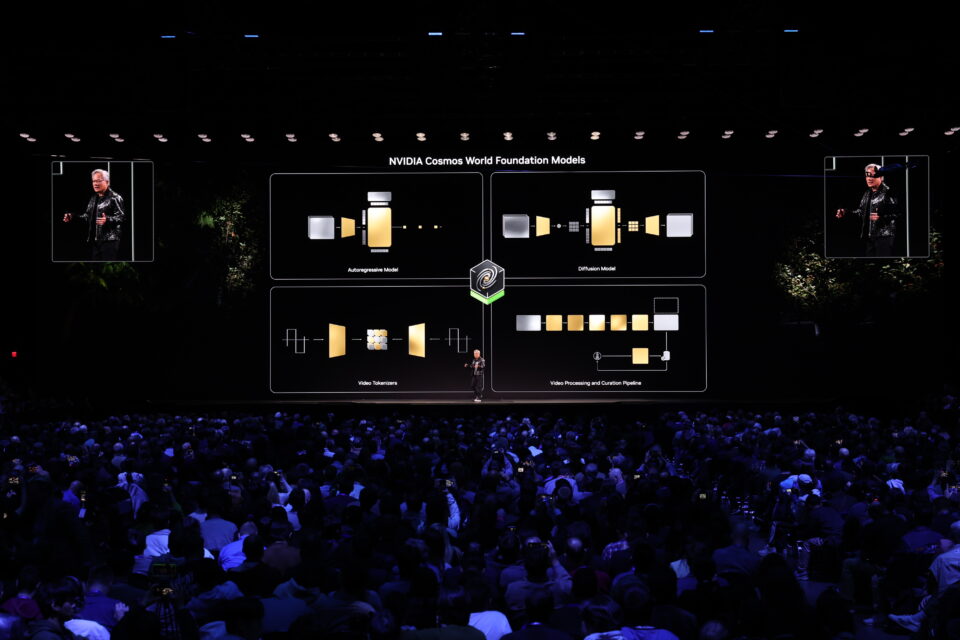
      In addition to advancements in graphics, Huang introduced the NVIDIA Cosmos world foundation model platform, describing it as a game-changer for robotics and industrial AI.

      The next frontier of AI is physical AI, Huang explained. He likened this moment to the transformative impact of large language models on generative AI.

      “The ChatGPT moment for general robotics is just around the corner,” he explained.

      Like large language models, world foundation models are fundamental to advancing robot and AV development, yet not all developers have the expertise and resources to train their own, Huang said.

      Cosmos integrates generative models, tokenizers, and a video processing pipeline to power physical AI systems like AVs and robots.

      Cosmos aims to bring the power of foresight and multiverse simulation to AI models, enabling them to simulate every possible future and select optimal actions.

      Cosmos models ingest text, image or video prompts and generate virtual world states as videos, Huang explained. “Cosmos generations prioritize the unique requirements of AV and robotics use cases like real-world environments, lighting and object permanence.”

      Leading robotics and automotive companies, including 1X, Agile Robots, Agility, Figure AI, Foretellix, Fourier, Galbot, Hillbot, IntBot, Neura Robotics, Skild AI, Virtual Incision, Waabi and XPENG, along with ridesharing giant Uber, are among the first to adopt Cosmos.

      Cosmos is open license and available on GitHub.

      Empowering Developers With AI Foundation Models

      Beyond robotics and autonomous vehicles, NVIDIA is empowering developers and creators with AI foundation models.

      Huang introduced AI foundation models for RTX PCs that supercharge digital humans, content creation, productivity and development.

      “These AI models run in every single cloud because NVIDIA GPUs are now available in every single cloud,” Huang said. “It’s available in every single OEM, so you could literally take these models, integrate them into your software packages, create AI agents and deploy them wherever the customers want to run the software.”

      These models — offered as NVIDIA NIM microservices — are accelerated by the new GeForce RTX 50 Series GPUs.

      The GPUs have what it takes to run these swiftly, adding support for FP4 computing, boosting AI inference by up to 2x and enabling generative AI models to run locally in a smaller memory footprint compared with previous-generation hardware.

      Huang explained the potential of new tools for creators: “We’re creating a whole bunch of blueprints that our ecosystem could take advantage of. All of this is completely open source, so you could take it and modify the blueprints.”

      Top PC manufacturers and system builders are launching NIM-ready RTX AI PCs with GeForce RTX 50 Series GPUs. “AI PCs are coming to a home near you,” Huang said.

      While these tools bring AI capabilities to personal computing, NVIDIA is also advancing AI-driven solutions in the automotive industry, where safety and intelligence are paramount.

      Innovations in Autonomous Vehicles

      Huang announced the NVIDIA DRIVE Hyperion AV platform, built on the new NVIDIA AGX Thor system-on-a-chip (SoC), designed for generative AI models and delivering advanced functional safety and autonomous driving capabilities.

      “The autonomous vehicle revolution is here,” Huang said. “Building autonomous vehicles, like all robots, requires three computers: NVIDIA DGX to train AI models, Omniverse to test drive and generate synthetic data, and DRIVE AGX, a supercomputer in the car.”

      DRIVE Hyperion, the first end-to-end AV platform, integrates advanced SoCs, sensors, and safety systems for next-gen vehicles, a sensor suite and an active safety and level 2 driving stack, with adoption by automotive safety pioneers such as Mercedes-Benz, JLR and Volvo Cars.

      Huang highlighted the critical role of synthetic data in advancing autonomous vehicles. Real-world data is limited, so synthetic data is essential for training the autonomous vehicle data factory, he explained.

      Powered by NVIDIA Omniverse AI models and Cosmos, this approach “generates synthetic driving scenarios that enhance training data by orders of magnitude.”

      Using Omniverse and Cosmos, NVIDIA’s AI data factory can scale “hundreds of drives into billions of effective miles,” Huang said, dramatically increasing the datasets needed for safe and advanced autonomous driving.

      “We are going to have mountains of training data for autonomous vehicles,” he added.

      Toyota, the world’s largest automaker, will build its next-generation vehicles on the NVIDIA DRIVE AGX Orin, running the safety-certified NVIDIA DriveOS operating system, Huang said.

      “Just as computer graphics was revolutionized at such an incredible pace, you’re going to see the pace of AV development increasing tremendously over the next several years,” Huang said. These vehicles will offer functionally safe, advanced driving assistance capabilities.

      Agentic AI and Digital Manufacturing

      NVIDIA and its partners have launched AI Blueprints for agentic AI, including PDF-to-podcast for efficient research and video search and summarization for analyzing large quantities of video and images — enabling developers to build, test and run AI agents anywhere.

      AI Blueprints empower developers to deploy custom agents for automating enterprise workflows This new category of partner blueprints integrates NVIDIA AI Enterprise software, including NVIDIA NIM microservices and NVIDIA NeMo, with platforms from leading providers like CrewAI, Daily, LangChain, LlamaIndex and Weights & Biases.

      Additionally, Huang announced new Llama Nemotron.

      Developers can use NVIDIA NIM microservices to build AI agents for tasks like customer support, fraud detection, and supply chain optimization.

      Available as NVIDIA NIM microservices, the models can supercharge AI agents on any accelerated system.

      NVIDIA NIM microservices streamline video content management, boosting efficiency and audience engagement in the media industry.

      Moving beyond digital applications, NVIDIA’s innovations are paving the way for AI to revolutionize the physical world with robotics.

      “All of the enabling technologies that I’ve been talking about are going to make it possible for us in the next several years to see very rapid breakthroughs, surprising breakthroughs, in general robotics.”

      In manufacturing, the NVIDIA Isaac GR00T Blueprint for synthetic motion generation will help developers generate exponentially large synthetic motion data to train their humanoids using imitation learning.

      Huang emphasized the importance of training robots efficiently, using NVIDIA’s Omniverse to generate millions of synthetic motions for humanoid training.

      The Mega blueprint enables large-scale simulation of robot fleets, adopted by leaders like Accenture and KION for warehouse automation.

      These AI tools set the stage for NVIDIA’s latest innovation: a personal AI supercomputer called Project DIGITS.

      NVIDIA Unveils Project Digits

      Putting NVIDIA Grace Blackwell on every desk and at every AI developer’s fingertips, Huang unveiled NVIDIA Project DIGITS.

      “I have one more thing that I want to show you,” Huang said. “None of this would be possible if not for this incredible project that we started about a decade ago. Inside the company, it was called Project DIGITS — deep learning GPU intelligence training system.”

      Huang highlighted the legacy of NVIDIA’s AI supercomputing journey, telling the story of how in 2016 he delivered the first NVIDIA DGX system to OpenAI. “And obviously, it revolutionized artificial intelligence computing.”

      The new Project DIGITS takes this mission further. “Every software engineer, every engineer, every creative artist — everybody who uses computers today as a tool — will need an AI supercomputer,” Huang said.

      Huang revealed that Project DIGITS, powered by the GB10 Grace Blackwell Superchip, represents NVIDIA’s smallest yet most powerful AI supercomputer. “This is NVIDIA’s latest AI supercomputer,” Huang said, showcasing the device. “It runs the entire NVIDIA AI stack — all of NVIDIA software runs on this. DGX Cloud runs on this.”

      The compact yet powerful Project DIGITS is expected to be available in May.

      A Year of Breakthroughs

      “It’s been an incredible year,” Huang said as he wrapped up the keynote. Huang highlighted NVIDIA’s major achievements: Blackwell systems, physical AI foundation models, and breakthroughs in agentic AI and robotics

      “I want to thank all of you for your partnership,” Huang said.

      See notice regarding software product information.


      Source link

      PC Gaming in the Cloud Goes Everywhere With New Devices and AAA Games on GeForce NOW

      0
      PC Gaming in the Cloud Goes Everywhere With New Devices and AAA Games on GeForce NOW


      GeForce NOW turns any device into a GeForce RTX gaming PC, and is bringing cloud gaming and AAA titles to more devices and regions.

      Announced today at the CES trade show, gamers will soon be able to play titles from their Steam library at GeForce RTX quality with the launch of a native GeForce NOW app for the Steam Deck. NVIDIA is working to bring cloud gaming to the popular PC gaming handheld device later this year.

      In collaboration with Apple, Meta and ByteDance, NVIDIA is expanding GeForce NOW cloud gaming to Apple Vision Pro spatial computers, Meta Quest 3 and 3S and Pico virtual- and mixed-reality devices — with all the bells and whistles of NVIDIA technologies, including ray tracing and NVIDIA DLSS.

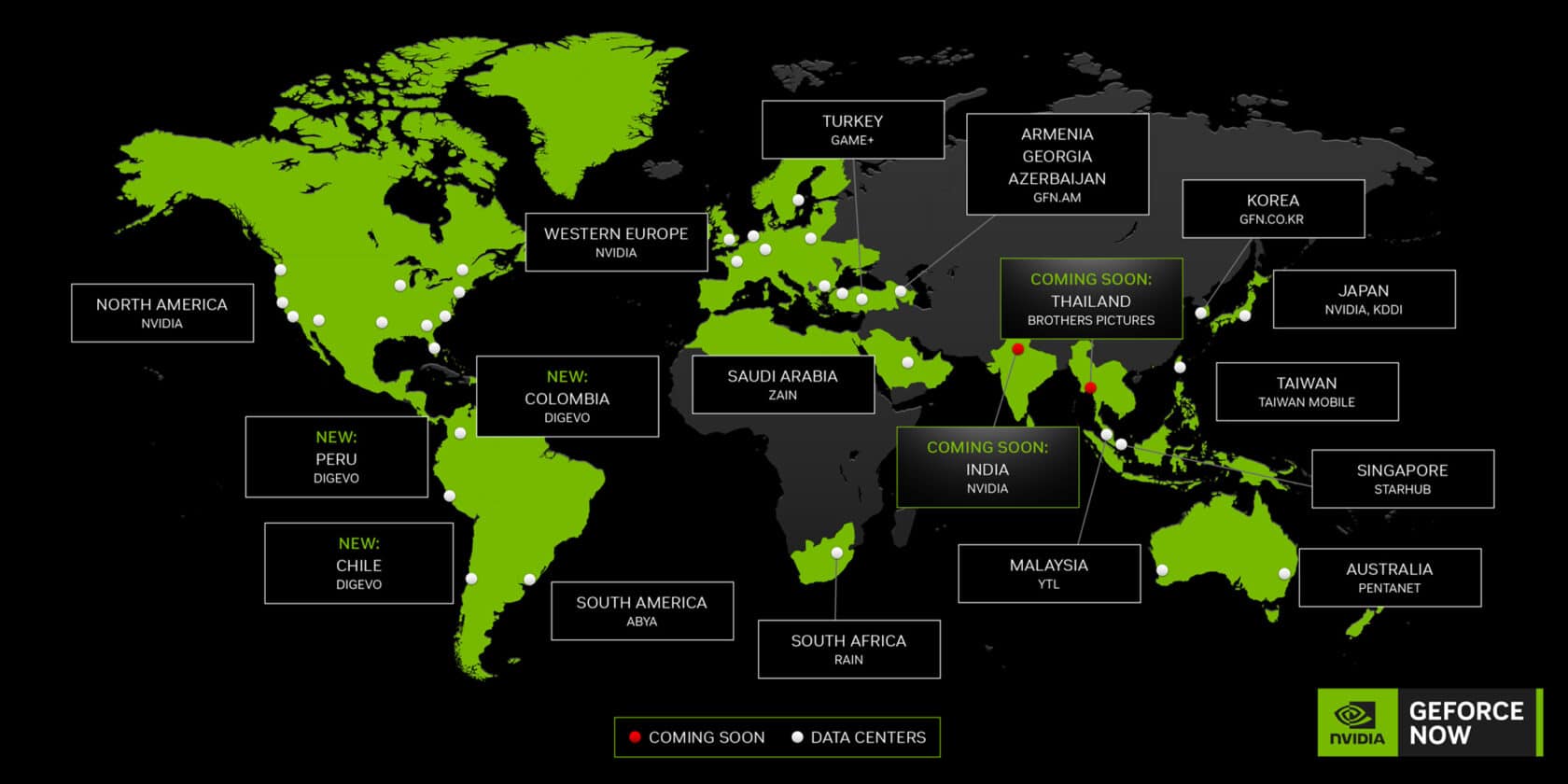
      In addition, NVIDIA is launching the first GeForce RTX-powered data center in India, making gaming more accessible around the world.

      Plus, GeForce NOW’s extensive library of over 2,100 supported titles is expanding with highly anticipated AAA titles. DOOM: The Dark Ages and Avowed will join the cloud when they launch on PC this year.

      RTX on Deck

      The Steam Deck’s portability paired with GeForce NOW opens up new possibilities for high-fidelity gaming everywhere. The native GeForce NOW app will offer up to 4K resolution and 60 frames per second with high dynamic range on Valve’s innovative Steam Deck handheld when connected to a TV, streaming from GeForce RTX-powered gaming rigs in the cloud.

      Last year, GeForce NOW rolled out a beta installation method that was eagerly welcomed by the gaming community. Later this year, members will be able to download the native GeForce NOW app and install it on Steam Deck.

      Steam Deck gamers can gain access to all the same benefits as GeForce RTX 4080 GPU owners with a GeForce NOW Ultimate membership, including NVIDIA DLSS 3 technology for the highest frame rates and NVIDIA Reflex for ultra-low latency. Because GeForce NOW streams from an RTX gaming rig in the cloud, the Steam Deck uses less processing power, which extends battery life compared with playing locally.

      The streaming experience with GeForce NOW looks stunning, whichever way Steam Deck users want to play — whether that’s in handheld mode for HDR-quality graphics, connected to a monitor for up to 1440p 120 fps HDR or hooked up to a TV for big-screen streaming at up to 4K 60 HDR. GeForce NOW members can take advantage of RTX ON with the Steam Deck for photorealistic gameplay on supported titles, as well as HDR10 and SDR10 when connected to a compatible display for richer, more accurate color gradients.

      Get ready for major upgrades to streaming on the go when the GeForce NOW app launches on the Steam Deck later this year.

      Stream Beyond Reality

      Get immersed in a new dimension of big-screen gaming as GeForce NOW brings AAA titles to life on Apple Vision Pro spatial computers, Meta Quest 3 and 3S and Pico virtual- and mixed-reality headsets. Later this month, these supported devices will give members access to an extensive library of games to stream through GeForce NOW by opening the browser to play.geforcenow.com when the newest app update, version 2.0.70, starts rolling out later this month.

      Jump into a whole new gaming dimension with GeForce NOW.

      Members can transform the space around them into a personal gaming theater with GeForce NOW. The streaming experience on these devices will support gamepad-compatible titles for members to play their favorite PC games on a massive virtual screen.

      For an even more enhanced visual experience, GeForce NOW Ultimate and Performance members using these devices can tap into RTX and DLSS technologies in supported games. Members will be able to step into a world where games come to life on a grand scale, powered by GeForce NOW technologies.

      Land of a Thousand Lights … and Games

      India data center to be on GeForce NOW
      New year, new data center.

      NVIDIA is broadening cloud gaming in India and Latin America. The first GeForce RTX 4080-powered data center will launch in India in the first half of this year. This follows the launch of GeForce NOW in Japan last year, as well as in Colombia and Chile, to be operated by GeForce NOW Alliance partner Digevo.

      GeForce RTX-powered gaming in the rapidly growing Indian gaming market will provide the ability to stream AAA games without the latest hardware. Gamers in the region can look forward to the launch of Ultimate memberships, along with all the new games and technological advancements announced at CES.

      Send in the Games

      AAA content from celebrated publishers is coming to the cloud. Avowed from Obsidian Entertainment, known for iconic titles such as Fallout: New Vegas, will join GeForce NOW. The cloud gaming platform will also bring DOOM: The Dark Ages from id Software, the legendary studio behind the DOOM franchise. All will be available at launch on PC this year.

      Avowed to be on GeForce NOW
      Get ready to jump into the Living Lands.

      Avowed, a first-person fantasy role-playing game, will join the cloud when it launches on PC on Tuesday, Feb. 18. Welcome to the Living Lands, an island full of mysteries and secrets, danger and adventure, choices and consequences and untamed wilderness. Take on the role of an Aedyr Empire envoy tasked with investigating a mysterious plague. Freely combine weapons and magic — harness dual-wield wands, pair a sword with a pistol or opt for a more traditional sword-and-shield approach. In-game companions — which join the players’ parties — have unique abilities and storylines that can be influenced by gamers’ choices.

      DOOM: The Dark Ages to be on GeForce NOW
      Have a hell of a time in the cloud.

      DOOM: The Dark Ages is the single-player, action first-person shooter prequel to the critically acclaimed DOOM (2016) and DOOM Eternal. Play as the DOOM Slayer, the legendary demon-killing warrior fighting endlessly against Hell. Experience the epic cinematic origin story of the DOOM Slayer’s rage this year.

      Get ready to play these titles and more at high performance when they join GeForce NOW at launch. Ultimate members will be able to stream at up to 4K resolution and 120 fps with support for NVIDIA DLSS and Reflex technology, and experience the action even on low-powered devices. Keep an eye out on GFN Thursdays for the latest on their release dates in the cloud.

      GeForce NOW is making popular devices cloud-gaming-ready while consistently delivering quality titles from top publishers to bring another ultimate year of gaming to members across the globe.

      See notice regarding software product information.


      Source link

      Nikki Glaser’s Chest Exposed While Singing A Taylor Swift Song

        0
        Nikki Glaser’s Chest Exposed While Singing A Taylor Swift Song


        Just moments before stepping onto the iconic stage at the Beverly Hilton to host the 2025 Golden Globes, Nikki Glaser experienced an unexpected wardrobe malfunction—but handled it with her signature humor and grace.

        In an Instagram video shared ahead of the awards ceremony, the comedian was seen dramatically lip-syncing to Taylor Swift’s “Who’s Afraid of Little Old Me?” from the pop star’s 2024 album “The Tortured Poets Department.”

        Dressed in a stunning gold Prabal Gurung gown, Nikki Glaser strutted confidently around backstage, belting out the emotional track with playful flair.

        Article continues below advertisement

        Nikki Glaser’s Hilarious Wardrobe Malfunction Goes Viral

        MEGA

        However, toward the end of the clip, Glaser leaned forward a bit too far, resulting in an accidental nip slip. Ever quick-witted, she censored the moment with a playful “Oops” graphic strategically placed over her chest. The accompanying caption on her Instagram post added to the humor: “You really shouldn’t be…”

        The video quickly gained traction online, with fans and fellow celebrities flooding the comments section.

        One fan joked, “The globes wanted to pop out!”

        Even Journalist Lisa Wilkinson chimed in on the fun, writing, “And the Golden Globe for Best Wardrobe Malfunction of her Golden Globe goes to…you girlfriend!!”

        Despite the mishap, many fans praised Glaser’s hosting debut, with one comment reading, “The room was beaming because of your power of hosting! Loved it.”

        Article continues below advertisement

        Nikki Glaser’s Iconic Golden Globes Monologue

        Nikki Glaser at the 82nd Annual Golden Globe Awards
        MEGA

        The comedian made an unforgettable mark as the host of the 2025 Golden Globes, kicking off the night with a fearless monologue that had Hollywood’s elite roaring with laughter—and occasionally shifting in their seats.

        Stepping onto the iconic stage at the Beverly Hilton, Glaser wasted no time setting the tone for the evening. “Welcome to Ozempic’s biggest night!” she declared, earning immediate chuckles from the star-studded crowd. She then turned her attention to viewers streaming the ceremony on Paramount+, quipping, “You have six days left to cancel your free trial.”

        Article continues below advertisement

        With her signature wit and sharp comedic timing, Glaser reflected on her career milestone. “I’ve got to say, this feels like I finally made it. You know, I’m in a room full of producers at the Beverly Hilton hotel, and this time all of my clothes are on,” she joked, earning hearty applause. “It was worth it.”

        Article continues below advertisement

        Sharp Jabs at Hollywood’s Biggest Hits

        Nikki Glaser at the 82nd Annual Golden Globe Awards
        MEGA

        Running through some of the night’s top contenders, Glaser delivered her punchlines with precision. “Tonight, we celebrate the best of film and hold space for television,” she said, referencing the viral Wicked press tour meme. “‘Wicked,’ ‘Queer,’ ‘Nightb-tch’… these are not just words Ben Affleck yells after he orgasms, these are some of the incredible movies nominated tonight.”

        Television’s nominees weren’t spared either. “‘The Bear,’ ‘The Penguin,’ ‘Baby Reindeer’… these are not just things found in RFK’s freezer, these are TV shows nominated tonight,” she quipped, earning both laughter and a few wide-eyed expressions from the audience.

        Article continues below advertisement

        No Topic Off Limits—Including Diddy

        Diddy, Jay Z
        MEGA

        Glaser didn’t shy away from addressing one of the year’s most controversial figures: Sean “Diddy” Combs. Referencing the disgraced music mogul, who’s facing allegations of rape and sex trafficking, Glaser said with mock disappointment, “I’m sorry, I’m upset too. The after-party isn’t going to be as good this year, but we have to move on. ‘Stanley Tucci freak-off’ doesn’t have the same ring to it.”

        As the camera panned to “Conclave” star Stanley Tucci wincing in playful protest, Glaser piled on, “No baby oil this year, just lots of olive oil.”

        Selena Gomez and Benny Blanco in the Spotlight

        Selena Gomez at 82nd Annual Golden Globe Awards
        MEGA

        Glaser wrapped up her monologue by welcoming double Golden Globe nominee Selena Gomez, who received nods for “Emilia Pérez” and “Only Murders in the Building.” With Gomez accompanied by her fiancé, music producer Benny Blanco, Glaser couldn’t resist a playful jab: “He’s here because of the genie who granted him that wish.”

        The audience erupted in laughter, while Gomez and Blanco took the joke in stride.

        Glaser’s hosting debut struck the perfect balance of edgy humor and undeniable charm, setting the stage for a memorable night of celebration. As the awards unfolded, one thing was clear: Nikki Glaser had firmly cemented herself as one of the sharpest and most fearless hosts in Golden Globes history.


        Source link

        Crypto Industry Waves Goodbye to Top Fed Regulator as Resignations Pile Up – Decrypt

        0
        Crypto Industry Waves Goodbye to Top Fed Regulator as Resignations Pile Up – Decrypt


        Michael Barr, the Federal Reserve’s Vice Chair for Supervision, stepped down on Monday, a move welcomed by crypto industry advocates as a potential shift toward more pro-digital asset policies.

        Barr said he would step down on February 28, though he will continue to serve as a Federal Reserve Board of Governors member.

        He attributed his departure to “dispute[s] over the position,” according to a statement.

        It comes as appointments at  U.S. federal regulatory agencies become highly politicized in the lead-up to pro-crypto President-elect Trump’s inauguration later this month.

        The departure of one of the U.S. banking sector’s top cops, who long called for the implementation of “appropriate guardrails” for the digital assets industry, elicited cheers from some corners of the crypto community. 

        “Barr stepping down is a huge win,” Samuel Armes, founder of the Florida Blockchain Business Association, told Decrypt. “We need to clean out any Elizabeth Warren and Biden-associated appointees…to ensure the [federal government] goes back to being unbiased toward our industry.”

        As the second-highest ranking official at the Federal Reserve, Barr wielded substantial power over the U.S. banking system—a lifeline for some crypto businesses in the U.S. 

        Major crypto exchanges rely on banks to facilitate money transfers that enable customers to buy and sell digital assets on their platforms. 

        But some of those companies have been shut out from financial institutions in recent years after federal regulators allegedly pressured banks to limit their interactions with crypto firms. 

        While it’s unclear if the Federal Reserve directly pressured banks to cut ties with digital asset firms, some crypto insiders, including Patrick Liou of Gemini, blame Barr for debankings that have hindered the U.S. crypto industry in recent years.

        “The environment for the crypto industry the last four years in the US has been untenable,” Liou told Decrypt.  

        “Many [people in the industry] believe that government organizations negatively influenced the “de-banking” of crypto businesses…guiding US businesses away from working with crypto clients and partners,” he added. 

        Barr’s departure comes a few weeks after so-called anti-crypto SEC Chairman Gary Gensler and Commissioner Jaime Lizárraga signaled last November they would resign from their posts when pro-crypto President-elect Donald Trump takes office later this month.

        It also comes shortly after Senate Banking Committee members canceled last month a meeting to reappoint Biden-nominated SEC Commissioner Caroline Crenshaw to her post at the agency largely responsible for regulating the U.S. crypto industry. 

        However, a change of guard at the Federal Reserve and the SEC is just one “part of a puzzle”  that must be solved to ensure the crypto industry’s brighter future in the U.S., NYU Stern Adjunct Professor Austin Campbell told Decrypt

        Federal agencies such as the Department of Treasury, the IRS, and FinCEN also exercise enormous power to issue directives that affect digital asset companies and holders in the U.S. 

        “Getting U.S. banking regulators to embrace technological transformation so our banking system can join the rest of the world using modern technology is a much bigger hill to climb,” Campbell said.

        Edited by Sebastian Sinclair

        Daily Debrief Newsletter

        Start every day with the top news stories right now, plus original features, a podcast, videos and more.


        Source link

        Popular Posts

        My Favorites