Home Blog Page 1084

Evermoon Introduces AI-Driven DeFAI Launchpad

0
Evermoon Introduces AI-Driven DeFAI Launchpad


Web3 gaming platform Evermoon has launched the DeFAI Launchpad—an AI-powered tool designed to automate cryptocurrency trading, staking, and yield farming.

The system enables users to deploy AI agents that monitor market conditions, execute trades, and manage DeFi investments without requiring manual input.

The platform’s AI agents operate continuously, assessing market data and adjusting investment strategies in real time. This launch is part of Evermoon’s broader effort to integrate artificial intelligence into its ecosystem, following previous AI-driven features such as virtual influencers.

Evermoon Introduces AI-Driven DeFAI Launchpad Source: Evermoon

What is Evermoon DEFAI Launchpad?

The DeFAI Launchpad (Decentralised Finance Artificial Intelligence) is an automated financial tool that allows AI systems to manage crypto investments on behalf of users. The platform is designed to eliminate the need for constant market monitoring by enabling AI agents to analyse data and execute trades.

Key Features:

Automated Trading & Staking – AI monitors price trends and adjusts asset positions accordingly.Custom Strategies – Users can configure AI-driven investment settings based on risk tolerance and financial goals.Yield Optimisation – The system moves funds between DeFi platforms to maximise returns.Round-the-Clock Operation – Unlike human traders, AI runs continuously to react to market changes.Data-Driven Execution – AI removes emotional decision-making from trading.

Evermoon states that DeFAI aims to make DeFi more accessible by reducing the need for hands-on management. The system is intended for both experienced traders looking to automate their strategies and newcomers who may find DeFi complex.

Evermoon Introduces AI-Driven DeFAI Launchpad
Evermoon Introduces AI-Driven DeFAI Launchpad Source: Evermoon

What else is new with Evermoon?

Originally developed as a blockchain-based 5v5 multiplayer game, Evermoon has been expanding its focus beyond gaming. The launch of DeFAI is part of a broader effort to integrate AI into multiple areas of the platform.

Previously, Evermoon introduced AI-driven VTubers, including Axolt, a virtual influencer that engages with players and delivers in-game content. The company has also developed the M.O.O.N Framework, an AI-based system that collects and analyses data from blockchain transactions, social media activity, and financial markets.

Another major update is Evermoon’s migration to Soneium Chain, an Ethereum Layer 2 network built by Sony Block Solutions Labs. The transition is expected to improve scalability, lower transaction costs, and enhance security for users engaging with AI-powered services like DeFAI.

As part of this migration, Evermoon has launched the Soneium Badge Campaign, which offers participants NFT rewards, staking incentives, and early access to an upcoming token sale. Users can earn rewards by completing tasks, staking $EVM tokens, and upgrading digital assets.


Source link

Magneto Is Marvel Rival’s Vanguard With The Mettle For Metal

0
Magneto Is Marvel Rival’s Vanguard With The Mettle For Metal


The leader of the Brotherhood of Mutants has been in the fight for a long time, using his power over all things metal to turn humanity’s tools against them. Whether fighting for mutant survival or against other heroes, one thing is certain; they will tremble in fear before him.

Magneto is one of the mainstays of the Vanguard class, with a focus on tanking, defending locations and allies, shielding himself, and dealing lots of damage, particularly when teamed up with his daughter Wanda. You’ll need to have good aim and manage your metal ring resource well, while dealing with his limited mobility (compared to Dr. Strange, the other main tank in Rivals). If you can, you’ll find a very rewarding character with lots of room to show off.

What are Magneto’s Abilities?

Screenshot: NetEase / Kotaku

Iron Volley (Primary Attack – Left Click / Right Trigger) – Your primary attack. Solid damage which is influenced by how far it flies before it hits your enemy.

Meteor M (Ultimate – L3+R3) – Magneto flies up into the air, drawing in all projectiles to feed “the sphere,” hit the button again to unleash it on your enemies and make them rue the day they crossed the Master of Magnetism. It will explode if you charge it too long, but it’s not a big problem as you’ll often be trying to use the ability quickly.

Metallic Curtain (LT) – Creates a large wall of magnetic force that blocks projectiles. Use it when your health is getting low to protect yourself and nearby allies. Your main damage-mitigating ability, use it often, particularly if you and your allies need breathing room.

Metal Bulwark (Right Click / RB) – A shield Magneto can give to his…less sturdy allies. Use it to save a key Dualist or Strategist from being knocked out, and claim any damage they take to feed the rings on your back, empowering Mag-Cannon.

Iron Bulwark (B / Circle) – Magneto creates a shield around himself, and converts any damage taken during its duration into metal for the rings on his back. A great way to prepare your Mag-Cannon and mitigate damage. Use it every time it’s available during combat to make life easier for your healers (and yourself).

Mag-Cannon (LB) – After charging up the rings on his back, Mag-Cannon unleashes them in a targeted attack, dealing more damage the more rings there are. The fully-powered version knocks enemies back several yards as well. Great for picking off enemies with low health, particularly Strategist characters and Dualists.

Magnetic Descent (Passive) – Hold the jump button to float down instead of falling.

Metallic Fusion (Team-Up Ability: Y / Triangle) – Teaming up with his daughter, the Scarlet Witch, Magneto gains the ability to power his Iron Volley with a massive sword, dealing more damage.

How Should I Play Magneto?

Magneto is a solid, all-around tank who moves slowly and more deliberately, but who also has several special moves that help him protect himself and his allies, as well as prepare to deal small bursts of damage afterwards. He is a fantastic choice for a Vanguard character, rewarding those who put in the time to truly master his skills.

Magneto using his shield.

Screenshot: NetEase / Kotaku

Three chevrons near the middle of the screen represent the rings on Magneto’s back, so keep an eye on them. When they are completely filled and purple, he gains a relatively hard-hitting secondary attack in Mag-Cannon. Use it to pick off low-health healers and DPS to help your team establish dominance in the contested area.

Keep an eye on your healers and DPS teammates and use your shield to protect vulnerable healers first, particularly when enemies are attacking them in the back of your team. If they are in a good state, you can use the shield on yourself to give the healers more breathing room—particularly if they are Mantis or Loki, who benefit greatly from the extra time to set up damage buffs, deal damage, and create clones, respectively.

Magneto using his ultimate.

Screenshot: NetEase / Kotaku

Use your ultimate when you want to scatter the enemy group, or as a counter to powerful ultimates like Cloak and Dagger, Invisible Woman, or Punisher. Since it absorbs projectiles, it is a great way to turn the tides, particularly if it also nullifies an enemy ultimate (and potentially the enemy who used it).

With all these tips in hand, you are prepared to become a true master of magnetism. Good luck!


Source link

Crypto Weekly Update: Bitcoin Falls to $82K on Fed, ETF Outflows; Ethereum Slips Below $2.1K, TON Struggles to Hold $2.7

Crypto Weekly Update: Bitcoin Falls to K on Fed, ETF Outflows; Ethereum Slips Below .1K, TON Struggles to Hold .7


In Brief

Bitcoin tumbles to $82K on Fed fears and ETF outflows, Ethereum dips below $2.1K amid weak demand, and Toncoin struggles near $2.7 with no relief in sight.

Crypto Weekly Update: Bitcoin Falls to $82K on Fed, ETF Outflows; Ethereum Slips Below $2.1K, TON Struggles to Hold $2.7

Bitcoin (BTC)

Over the past week, Bitcoin’s been on a rough ride, sliding from over $90,000 down to around $82,500. On the 4-hour chart, it’s broken clean through its 50-SMA at $87,406 and is now flirting with oversold RSI levels (36.9). Let’s find out what’s been behind this slide.

Bitcoin broke below its 50-SMA and slid to $82,500, with RSI nearing oversold levels as traders react to weak macro signals and ETF outflows.

BTC/USD 4H Chart, Coinbase. Source: TradingView

One of the biggest blows came from the much-hyped Trump “Strategic Bitcoin Reserve” announcement — which, in the end, turned out to be a whole lot of nothing. Trump’s "Strategic Bitcoin Reserve" reveal lacked concrete buying plans, sparking a sharp sell-the-news reaction in Bitcoin.

Souce: The White House

Sure, the government said it would hold onto existing Bitcoin, but there was no real plan to buy more. Markets didn’t like that — cue a sharp “sell-the-news” move.

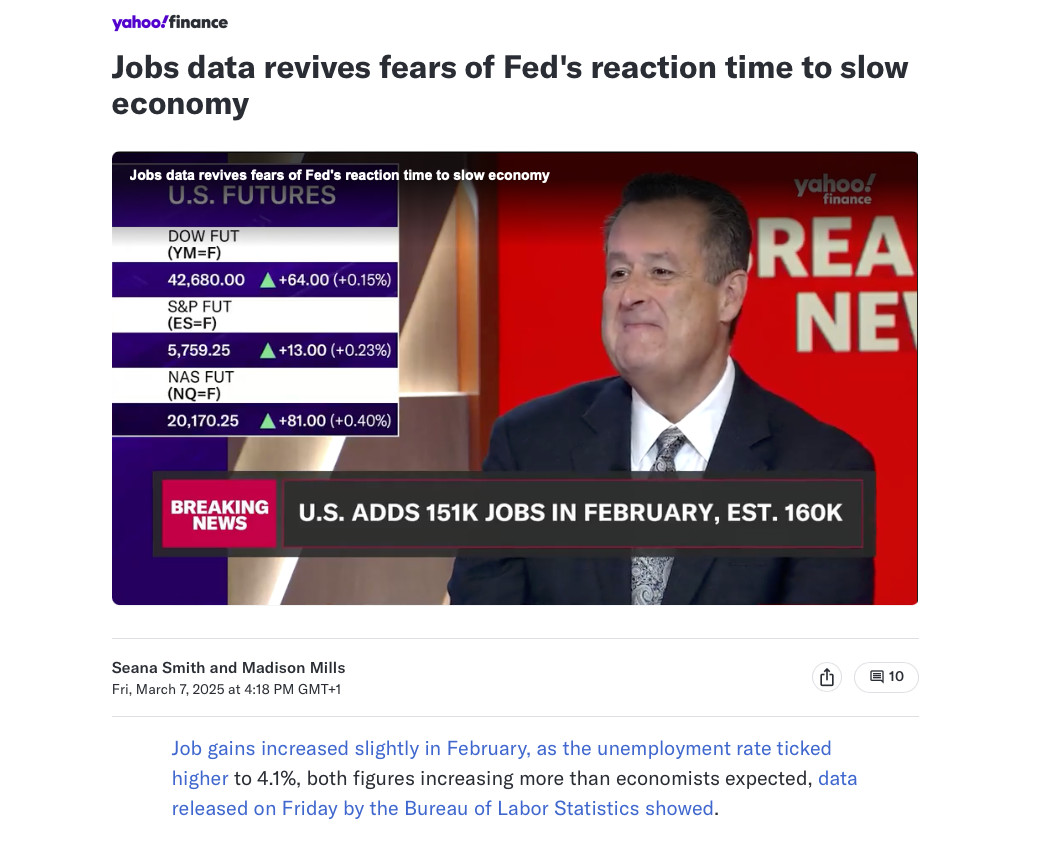
Strong U.S. jobs data and sticky inflation crushed hopes for rate cuts, adding macro pressure that dragged Bitcoin lower.

Source: Yahoo! Finance

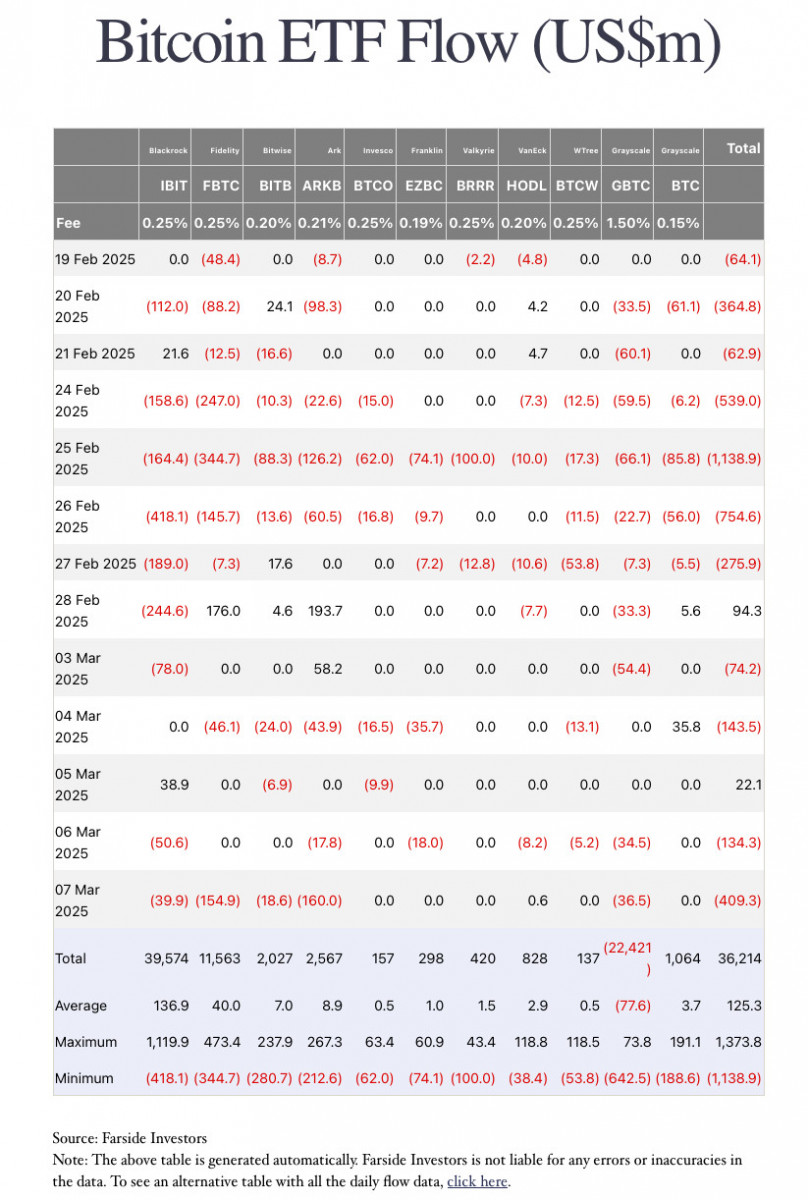
At the same time, strong US jobs data and persistent inflation signals have pretty much crushed hopes for quick Fed rate cuts, which is putting risk assets like Bitcoin under even more pressure. To make matters worse, ETFs saw over $370 million in outflows following Trump’s speech, and now there are whispers about the government potentially offloading some of its Bitcoin stash — all of which has traders spooked about a supply glut.

Bitcoin ETFs saw $370 million in outflows following Trump’s announcement, fueling fears of a looming supply glut.

Source: Farside Investors

Bitcoin did take a quick dip to $80,000, but for now, that level is acting as a fragile floor. Still, if broader sentiment keeps souring, we could easily see that floor give way. Traders are now laser-focused on the $78,000 to $82,000 range — if Bitcoin breaks below that, things could get a lot messier.

Ethereum

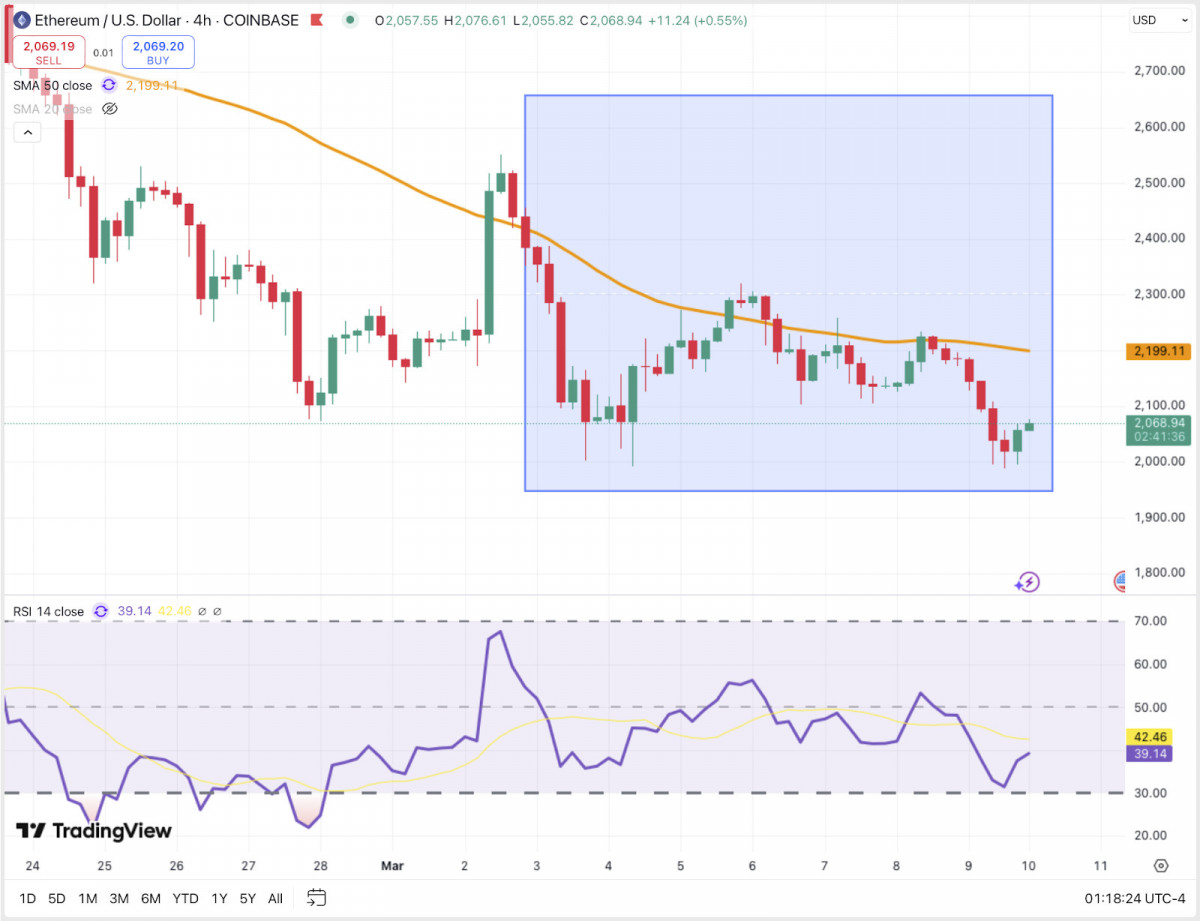
Ethereum hasn’t fared much better than Bitcoin — it’s been dragged down from over $2,400 to around $2,070, as shown in the chart you shared. RSI is limping along near 39, and price action is still stuck below its 50-SMA at $2,199, showing little sign of strength.

Ethereum fell to $2,070, stuck below its 50-SMA, as RSI flirts with oversold territory and price action mirrors Bitcoin’s weakness.

ETH/USD 4H Chart, Coinbase. Source: TradingView

A big part of ETH’s slump is tied to the broader market’s reaction to the underwhelming Trump Bitcoin reserve news — but Ethereum’s also got its own baggage. DeFi and staking activity have been sluggish this week, raising questions about on-chain demand. Plus, there’s growing chatter about delays to the Pectra upgrade, which isn’t helping confidence.

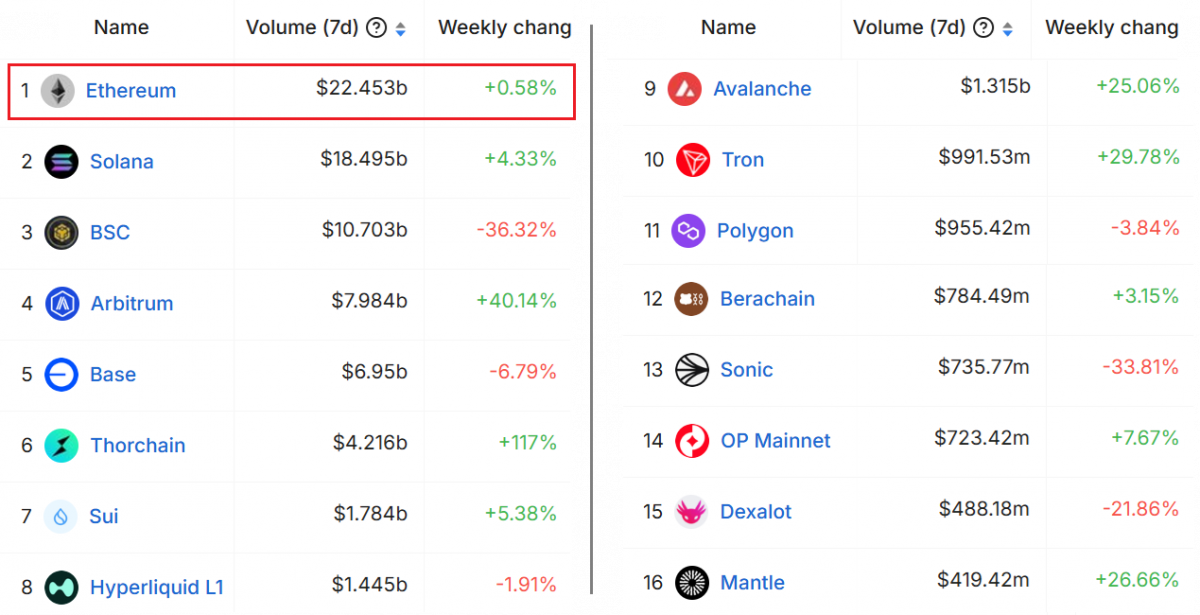
Sluggish DeFi and staking activity have raised concerns about Ethereum’s on-chain demand, adding to bearish market sentiment.

7-day decentralized exchanges volumes, USD. Source: DefiLlama

Another blow: Trump’s Bitcoin reserve pitch made zero mention of Ethereum, dashing hopes that ETH would get a slice of the “strategic asset” narrative. For ETH holders who were counting on some institutional nod, that was a cold shoulder.

Right now, Ethereum is still moving in lockstep with Bitcoin, so unless BTC finds its footing, ETH looks like it could take another run at that $2,000 psychological level. On the flip side, if macro conditions shift — say, if rate cut hopes return — Ethereum’s close proximity to long-term support could set it up for a sharp bounce. But for now, traders are eyeing $2,000 as the line in the sand.

Toncoin (TON)

Toncoin (TON) has been having an even tougher time than the majors, sliding steadily from around $3.40 down to $2.68 — and with RSI crushed down to 24.0, it’s deep in oversold territory. But so far, there’s no real sign of a bounce. The drop mirrors the broader risk-off vibe across crypto, but TON’s slide is sharper, partly because it was left out of the US reserve talk that, at least for a moment, propped up Bitcoin — and to a lesser extent, Ethereum.

Toncoin tumbled to $2.68, deep in oversold territory with RSI at 24, as the broader crypto risk-off mood hit harder on assets without strong institutional backing.

TON/USD 4H Chart. Source: TradingView

Unlike BTC and ETH, TON doesn’t have that big institutional money behind it, so when the whole market starts de-risking, TON tends to get hit harder. If Bitcoin can’t hold steady, TON could easily slide further, with traders eyeing the $2.50–$2.60 zone as the next likely landing spot. Still, with RSI this beaten down, even a small relief rally in Bitcoin or Ethereum could set off a sharp, fast bounce in TON — but that would likely be more of a tactical trade than a longer-term recovery signal.

TON Core’s Accelerator upgrade boosted network capacity above 100,000 TPS, but the milestone has yet to reflect in price performance.

Source: TON Blog

Meanwhile, there’s a lot going on under the hood in the TON ecosystem. TON Core just rolled out its Accelerator upgrade, pushing network capacity past 100,000 TPS — and now working on cutting transaction latency to improve user experience. But while those are solid technical milestones, they haven’t translated into price strength — at least not yet. 

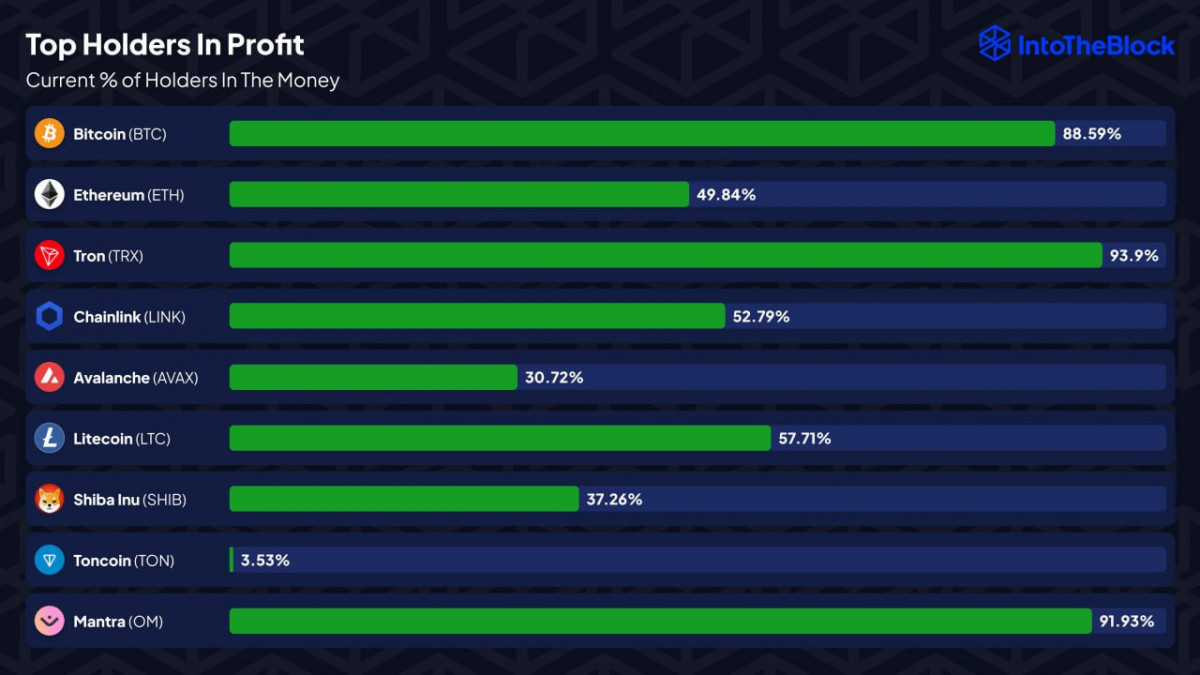
Only 3.5% of TON holders are currently in profit, making it one of the most underwater major blockchains amid ongoing market pressure.

Source: IntoTheBlock

Adding to the bearish mood, only about 3.5% of TON holders are currently in profit — making it one of the most underwater among major blockchains.

Finally, there are some long-term plays brewing, like TON Ventures’ new AI and crypto research initiative, and even Telegram adding paid DMs, which could tie back into the TON ecosystem. But right now, the chart’s telling the real story — and unless Bitcoin finds its footing soon, TON looks set to stay under pressure, even if it’s primed for a short-term bounce on any broader market relief.

Disclaimer

In line with the Trust Project guidelines, please note that the information provided on this page is not intended to be and should not be interpreted as legal, tax, investment, financial, or any other form of advice. It is important to only invest what you can afford to lose and to seek independent financial advice if you have any doubts. For further information, we suggest referring to the terms and conditions as well as the help and support pages provided by the issuer or advertiser. MetaversePost is committed to accurate, unbiased reporting, but market conditions are subject to change without notice.

About The Author


Victoria is a writer on a variety of technology topics including Web3.0, AI and cryptocurrencies. Her extensive experience allows her to write insightful articles for the wider audience.

More articles


Victoria d’Este


Victoria is a writer on a variety of technology topics including Web3.0, AI and cryptocurrencies. Her extensive experience allows her to write insightful articles for the wider audience.


Source link

The Truth About Crypto Regulations in Europe, the US, and Asia

The Truth About Crypto Regulations in Europe, the US, and Asia


In Brief

The European Union’s Markets in Crypto-Assets (MiCA) regulation aims to establish a comprehensive regulatory framework for crypto businesses, focusing on transparency, security, and anti-money laundering measures.

The Truth About Crypto Regulations in Europe, the US, and Asia

Regulatory frameworks are becoming increasingly important for ensuring transparency and security. The Markets in Crypto-Assets (MiCA) regulation, introduced by the European Union, aims to establish a clear and comprehensive regulatory framework for crypto businesses. 

In this interview, Slava Demchuk, CEO and Co-founder of AMLBot, provides valuable insights into the key obligations for companies under MiCA, how these regulations compare to those in the US and Asia, and their impact on token ownership, anti-money laundering measures, and market integrity.

What are the primary obligations for companies issuing and managing crypto assets under MiCA?

There are a few key obligations. First of all, companies issuing tokens must create and publish a white paper. While many businesses have already done this before the regulation, it is now mandatory. This white paper should clearly explain why the token is needed, how the business intends to use it, and, ideally, companies should adhere to the white paper’s original vision rather than making drastic changes.

For companies issuing stablecoins, they must comply with the e-money directive, which imposes similar rules to those followed by electronic money providers. Since stablecoins are pegged to traditional fiat currencies, issuers must provide clear, non-misleading, and transparent information about the asset, the company itself, risks, and costs.

There are also minimum budget requirements, varying between 50,000 and 150,000 euros depending on the niche and business type. Additionally, companies must implement policies to manage operational, cybersecurity, and financial risks. This includes having written policies for Know Your Customer, Know Your Transaction, and data breach procedures. 

In MiCA terminology, such companies are referred to as Crypto-Asset Service Providers. They must comply with anti-money laundering and counter-terrorist financing rules, which include customer due diligence, record keeping, and suspicious transaction reporting. Software like AMLBot can help automate these processes.

Crypto-Asset Service Providers must also prevent insider trading and unlawful disclosure of insider information. Market manipulation is strictly prohibited, meaning companies cannot manipulate the token’s price or trading volume. Some companies call this “market making,” but while providing liquidity is allowed, artificial inflation of volume or price is not. A well-known case illustrating this issue is Gotbit, where the CEO of a market-making company was arrested and is awaiting trial for alleged market manipulation.

To summarize, companies must provide clear information, avoid market manipulation, and ensure their communications with users remain transparent and non-solicitous.

How do MiCA regulations differ from existing crypto regulations in the US and Asia?

MiCA is a well-established and comprehensive regulatory framework that sets global standards for crypto services. Unlike MiCA, the US does not have a specific regulation for crypto services and often tries to fit crypto regulation within existing traditional financial laws. MiCA is proactive, while the US regulatory approach is more reactive.

In Asia, the situation is similar to the US, with regulatory frameworks appearing more fragmented. While the core principles, such as prohibiting market manipulation, remain the same across jurisdictions, the approach to regulation differs. In the US, for example, only accredited investors can invest in tokens under Rule 506, whereas in Europe, there are fewer such restrictions. The US also employs the Howey Test to determine whether a token qualifies as a security or a utility token.

Overall, the regulations are quite similar in principle, but the way they are implemented and enforced differs.

How do regulatory frameworks impact token ownership for retail and institutional investors?

Both retail and institutional investors must go through Know Your Customer procedures, where they provide documents for identity verification. In the US, only accredited investors can invest in private token sales under Rule 506. However, once a token is publicly available on a decentralized exchange, there are no restrictions on who can buy it, whether in the US or Europe.

We expect stricter regulations in the future, particularly for decentralized finance, which remains largely unregulated. Many illicit activities, such as money laundering, occur through decentralized finance platforms, and regulators are likely to address these gaps soon.

How does MiCA address anti-money laundering concerns in the crypto sector?

MiCA does not provide detailed anti-money laundering guidelines but requires companies to establish sound anti-money laundering and Know Your Customer procedures. This includes customer due diligence, document verification, transaction monitoring, and reporting suspicious activities to regulators.

A key requirement under MiCA is the “travel rule,” which mandates that sender and recipient information be shared between exchanges when transferring crypto assets. This ensures transparency and helps prevent illicit activities. Implementing the travel rule is complex, but it is now a regulatory requirement.

Companies must also provide anti-money laundering training for staff and store relevant data for several years. These measures add regulatory burdens, especially for startups, but they are necessary to counter fraud, hacks, and money laundering.

What are the biggest legal risks associated with issuing and trading digital tokens?

The biggest risk is the misclassification of tokens—whether they are utility tokens or securities. If a company misleads regulators or the market, it can face fines or more severe penalties. Another major risk is market manipulation. Companies that artificially influence token prices or trading volumes risk legal consequences. Avoiding these practices ensures compliance with regulations.

How do misleading marketing tactics in the crypto space harm investors, and what protections should be in place?

Misleading marketing can deceive investors into making poor financial decisions. There are two types of marketing approaches: active solicitation and reverse solicitation.

Active solicitation involves aggressive promotion, such as urging users to buy immediately with promises of price increases. This can lead to legal trouble. Reverse solicitation, on the other hand, provides information about the token and its use case without directly encouraging immediate purchases.

Regulators have implemented rules to protect retail investors from misleading campaigns. Companies should focus on educating users about their products rather than aggressively pushing sales.

What are the risks of using influencers and social media for crypto marketing?

Influencers can unintentionally engage in active solicitation, which could lead to legal repercussions for both them and the company they promote. If an influencer actively encourages their audience to buy a token, regulators may classify this as a violation of solicitation rules. Startups must be careful when working with influencers, ensuring that marketing efforts remain informative rather than promotional.

How can investors protect themselves from scams, rug pulls, and Ponzi schemes in the crypto market?

There is no foolproof method to avoid scams, but investors should rely on well-regulated exchanges and conduct thorough research. Tokens listed on reputable exchanges with stringent Know Your Customer procedures are less likely to be fraudulent.

On the other hand, platforms like PumpFun, which allow anyone to launch tokens without Know Your Customer or audits, have extremely high scam rates—over 90% of tokens launched there are fraudulent. Investors should verify project teams, check existing backers, and review audits before investing.

Ultimately, due diligence is the best protection against fraud in the crypto market.

Disclaimer

In line with the Trust Project guidelines, please note that the information provided on this page is not intended to be and should not be interpreted as legal, tax, investment, financial, or any other form of advice. It is important to only invest what you can afford to lose and to seek independent financial advice if you have any doubts. For further information, we suggest referring to the terms and conditions as well as the help and support pages provided by the issuer or advertiser. MetaversePost is committed to accurate, unbiased reporting, but market conditions are subject to change without notice.

About The Author


Victoria is a writer on a variety of technology topics including Web3.0, AI and cryptocurrencies. Her extensive experience allows her to write insightful articles for the wider audience.

More articles


Victoria d’Este


Victoria is a writer on a variety of technology topics including Web3.0, AI and cryptocurrencies. Her extensive experience allows her to write insightful articles for the wider audience.


Source link

The Ultimate Guide to GPUs for Machine Learning in 2025

0
The Ultimate Guide to GPUs for Machine Learning in 2025


Selecting the right Graphics Processing Unit (GPU) for machine learning can substantially affect your model’s performance. Choosing the appropriate hardware infrastructure has become a critical decision that can significantly impact project outcomes. At the heart of this hardware ecosystem lies the Graphics Processing Unit (GPU), a component that has revolutionized the field by enabling unprecedented computational parallelism. As we navigate through 2025, the market offers a diverse range of GPU options, each with distinct capabilities tailored to different machine learning applications.

This comprehensive guide delves into the intricate world of GPUs for machine learning, exploring their fundamental importance, distinctive features, and the top contenders in today’s market. Whether you’re a seasoned data scientist managing enterprise-level AI deployments or a researcher beginning your journey into deep learning, understanding the nuances of GPU technology will empower you to make informed decisions that align with your specific requirements and constraints.

The Transformative Role of GPUs in Machine Learning

The relationship between GPUs and machine learning represents one of the most significant technological synergies of the past decade. Originally designed to render complex graphics for gaming and entertainment, GPUs have found their true calling in accelerating the computationally intensive tasks that underpin modern machine learning algorithms.

Unlike traditional central processing units (CPUs), which excel at sequential processing with their sophisticated control units and deep cache hierarchies, GPUs are architected fundamentally differently. Their design philosophy prioritizes massive parallelism, featuring thousands of simpler cores working simultaneously rather than a few powerful cores working sequentially. This architectural distinction makes GPUs exceptionally well-suited for the mathematical operations that form the backbone of machine learning workloads, particularly the matrix multiplications and tensor operations prevalent in neural network computations.

The implications of this hardware-algorithm alignment have been profound. Tasks that once required weeks of computation on conventional hardware can now be completed in hours or even minutes. This acceleration has not merely improved efficiency but has fundamentally altered what’s possible in the field. Complex models with billions of parameters—previously theoretical constructs—have become practical realities, opening new frontiers in natural language processing, computer vision, reinforcement learning, and numerous other domains.

The Critical Distinction: CPUs vs. GPUs in Machine Learning Contexts

To fully appreciate the value proposition of GPUs in machine learning, it’s essential to understand the fundamental differences between CPU and GPU architectures and how these differences manifest in practical applications.

CPUs are general-purpose processors designed with versatility in mind. They typically feature a relatively small number of cores (ranging from 4 to 64 in modern systems) with complex control logic, substantial cache memory, and sophisticated branch prediction capabilities. This design makes CPUs excellent for tasks requiring high single-threaded performance, complex decision-making, and handling diverse workloads with unpredictable memory access patterns.

In contrast, GPUs embody a specialized architecture optimized for throughput. A modern GPU might contain thousands of simpler cores, each with limited independent control but collectively capable of tremendous computational throughput when executing the same instruction across different data points (a paradigm known as Single Instruction, Multiple Data or SIMD). This design makes GPUs ideal for workloads characterized by predictable memory access patterns and high arithmetic intensity—precisely the characteristics of many machine learning algorithms.

This architectural divergence translates into dramatic performance differences in machine learning contexts:

For model training, particularly with deep neural networks, GPUs consistently outperform CPUs by orders of magnitude. Training a state-of-the-art convolutional neural network on a large image dataset might take weeks on a high-end CPU but just days or hours on a modern GPU. This acceleration enables more rapid experimentation, hyperparameter tuning, and ultimately, innovation.

For inference (using trained models to make predictions), the performance gap narrows somewhat but remains significant, especially for complex models or high-throughput requirements. While CPUs can adequately handle lightweight inference tasks, GPUs become essential when dealing with large language models, real-time video analysis, or any application requiring low-latency processing of complex neural networks.

Machine Learning Applications Transformed by GPU Acceleration

The transformative impact of GPUs extends across virtually every domain of machine learning. Understanding these applications provides valuable context for selecting appropriate GPU hardware for specific use cases.

Image Recognition and Computer Vision

Perhaps the most visible beneficiary of GPU acceleration has been the field of computer vision. Training convolutional neural networks (CNNs) on large image datasets like ImageNet represented a computational challenge that conventional hardware struggled to address efficiently. The introduction of GPU acceleration reduced training times from weeks to days or even hours, enabling researchers to iterate rapidly and push the boundaries of what’s possible.

This acceleration has enabled practical applications ranging from medical image analysis for disease detection to visual inspection systems in manufacturing, autonomous vehicle perception systems, and sophisticated surveillance technologies. In each case, GPU acceleration has been the enabling factor that transformed theoretical possibilities into practical deployments.

Natural Language Processing

The recent revolution in natural language processing, exemplified by large language models like GPT-4, has been fundamentally enabled by GPU technology. These models, comprising billions of parameters trained on vast text corpora, would be practically impossible to develop without the parallelism offered by modern GPUs.

The impact extends beyond training to inference as well. Deploying these massive models for real-time applications—from conversational AI to document summarization—requires substantial computational resources that only GPUs can efficiently provide. The reduced latency and increased throughput enabled by GPU acceleration have been crucial factors in making these technologies accessible and practical.

Reinforcement Learning

In reinforcement learning, where agents learn optimal behaviors through trial and error in simulated environments, computational efficiency is paramount. A single reinforcement learning experiment might involve millions of simulated episodes, each requiring forward and backward passes through neural networks.

GPU acceleration dramatically reduces the time required for these experiments, enabling more complex environments, sophisticated agent architectures, and ultimately, more capable AI systems. From game-playing agents like AlphaGo to robotic control systems and autonomous vehicles, GPU acceleration has been a critical enabler of advances in reinforcement learning.

Real-Time Applications

Many machine learning applications operate under strict latency constraints, where predictions must be delivered within milliseconds to be useful. Examples include fraud detection in financial transactions, recommendation systems in e-commerce, and real-time analytics in industrial settings.

GPUs excel in these scenarios, providing the computational horsepower needed to process complex models quickly. Their ability to handle multiple inference requests simultaneously makes them particularly valuable in high-throughput applications where many predictions must be generated concurrently.

Essential Features of GPUs for Machine Learning

Selecting the right GPU for machine learning requires understanding several key technical specifications and how they impact performance across different workloads. Let’s explore these critical features in detail.

CUDA Cores and Tensor Cores

At the heart of NVIDIA’s GPU architecture are CUDA (Compute Unified Device Architecture) cores, which serve as the fundamental computational units for general-purpose parallel processing. These cores handle a wide range of calculations, from basic arithmetic operations to complex floating-point computations, making them essential for general machine learning tasks.

More recent NVIDIA GPUs, particularly those in the RTX and A100/H100 series, also feature specialized Tensor Cores. These cores are purpose-built for accelerating matrix multiplication and convolution operations, which are fundamental to deep learning algorithms. Tensor Cores can deliver significantly higher throughput for these specific operations compared to standard CUDA cores, often providing 3-5x performance improvements for deep learning workloads.

When evaluating GPUs for machine learning, both the quantity and generation of CUDA and Tensor Cores are important considerations. More cores generally translate to higher computational throughput, while newer generations offer improved efficiency and additional features specific to AI workloads.

Memory Capacity and Bandwidth

Video RAM (VRAM) plays a crucial role in GPU performance for machine learning, as it determines how much data can be processed simultaneously. When training deep neural networks, the GPU must store several data elements in memory:

Model parameters (weights and biases)

Intermediate activations

Gradients for backpropagation

Mini-batches of training data

Optimizer states

Insufficient VRAM can force developers to reduce batch sizes or model complexity, potentially compromising training efficiency or model performance. For large models, particularly in natural language processing or high-resolution computer vision, memory requirements can be substantial—often exceeding 24GB for state-of-the-art architectures.

Memory bandwidth, measured in gigabytes per second (GB/s), determines how quickly data can be transferred between GPU memory and computing cores. High bandwidth is essential for memory-intensive operations common in machine learning, as it prevents memory access from becoming a bottleneck during computation.

Modern high-end GPUs utilize advanced memory technologies like HBM2e (High Bandwidth Memory) or GDDR6X to achieve bandwidth exceeding 1TB/s, which is particularly beneficial for large-scale deep learning workloads.

Floating-Point Precision

Machine learning workflows typically involve extensive floating-point calculations, with different precision requirements depending on the specific task:

FP32 (single-precision): Offers high accuracy and is commonly used during model development and for applications where precision is critical.

FP16 (half-precision): Provides reduced precision but offers significant advantages in terms of memory usage and computational throughput. Many modern deep learning frameworks support mixed-precision training, which leverages FP16 for most operations while maintaining FP32 for critical calculations.

FP64 (double-precision): Rarely needed for most machine learning workloads but can be important for scientific computing applications that may be adjacent to ML workflows.

A versatile GPU for machine learning should offer strong performance across multiple precision formats, with particular emphasis on FP16 and FP32 operations. The ratio between FP16 and FP32 performance can be especially relevant for mixed-precision training scenarios.

Thermal Design Power and Power Consumption

Thermal Design Power (TDP) indicates the maximum heat generation expected from a GPU under load, which directly correlates with power consumption. This specification has several important implications:

Higher TDP generally correlates with higher performance but also increases operational costs through power consumption.

GPUs with high TDP require robust cooling solutions, which can affect system design, especially in multi-GPU configurations.

Power efficiency (performance per watt) becomes particularly important in data center environments where energy costs are a significant consideration.

When selecting GPUs for machine learning, considering the balance between raw performance and power efficiency is essential, especially for deployments involving multiple GPUs or when operating under power constraints.

Framework Compatibility

A practical consideration when selecting GPUs for machine learning is compatibility with popular frameworks and libraries. While most modern GPUs support major frameworks like TensorFlow, PyTorch, and JAX, the optimization level can vary significantly.

NVIDIA GPUs benefit from CUDA, a mature ecosystem with extensive support across all major machine learning frameworks. While competitive in raw specifications, AMD GPUs have historically had more limited software support through ROCm, though this ecosystem has been improving.

Framework-specific optimizations can significantly impact real-world performance beyond what raw specifications suggest, making it essential to consider the software ecosystem when evaluating GPU options.

Categories of GPUs for Machine Learning

The GPU market is segmented into distinct categories, each offering different price-performance characteristics and targeting specific use cases. Understanding these categories can help in making appropriate selections based on requirements and constraints.

Consumer-Grade GPUs

Consumer-grade GPUs, primarily marketed for gaming and content creation, offer a surprisingly compelling value proposition for machine learning applications. Models like NVIDIA’s GeForce RTX series or AMD’s Radeon RX line provide substantial computational power at relatively accessible price points.

These GPUs typically feature:

Good to excellent FP32 performance

Moderate VRAM capacity (8-24GB)

Recent architectures with specialized AI acceleration features

Consumer-oriented driver support and warranty terms

While lacking some of the enterprise features of professional GPUs, consumer cards are widely used by individual researchers, startups, and academic institutions where budget constraints are significant. They are particularly well-suited for model development, smaller-scale training, and inference workloads.

The primary limitations of consumer GPUs include restricted memory capacity, limited multi-GPU scaling capabilities, and occasionally, thermal management challenges under sustained loads. Despite these constraints, they often represent the most cost-effective entry point into GPU-accelerated machine learning.

Professional/Workstation GPUs

Professional GPUs, such as NVIDIA’s RTX A-series (formerly Quadro), are designed for workstation environments and professional applications. They command premium prices but offer several advantages over their consumer counterparts:

Certified drivers optimized for stability in professional applications

Error-Correcting Code (ECC) memory for improved data integrity

Enhanced reliability through component selection and validation

Better support for multi-GPU configurations

Longer product lifecycles and extended warranty coverage

These features make professional GPUs particularly valuable in enterprise environments where reliability and support are paramount. They excel in scenarios involving mission-critical applications, where the cost of downtime far exceeds the premium paid for professional hardware.

For machine learning specifically, professional GPUs offer a balance between the accessibility of consumer cards and the advanced features of datacenter GPUs, making them suitable for serious development work and smaller-scale production deployments.

Datacenter GPUs

At the high end of the spectrum are datacenter GPUs, exemplified by NVIDIA’s A100 and H100 series. These represent the pinnacle of GPU technology for AI and machine learning, offering:

Massive computational capabilities optimized for AI workloads

Large memory capacities (40-80GB+)

Advanced features like Multi-Instance GPU (MIG) technology for workload isolation

Optimized thermal design for high-density deployments

Enterprise-grade support and management capabilities

Datacenter GPUs are designed for large-scale training of cutting-edge models, high-throughput inference services, and other demanding workloads. They are the hardware of choice for leading research institutions, cloud service providers, and enterprises deploying machine learning at scale.

The primary consideration with datacenter GPUs is cost—both upfront acquisition costs and ongoing operational expenses. A single H100 GPU can cost as much as a workstation with multiple consumer GPUs. This premium is justified for organizations operating at scale or working on the leading edge of AI research, where the performance advantages translate directly to business value or research capabilities.

The Top 10 GPUs for Machine Learning in 2025

The following analysis presents a curated list of the top 10 GPUs for machine learning, considering performance metrics, features, and value proposition. This list spans from entry-level options to high-end datacenter accelerators, providing options for various use cases and budgets.

Here’s a comparison of the best GPUs for machine learning, ranked by performance and suitability for different workloads.

GPU ModelFP32 PerformanceVRAMMemory BandwidthRelease Year

NVIDIA H100 NVL60 TFLOPS188GB HBM33.9 TB/s2023

NVIDIA A10019.5 TFLOPS80GB HBM2e2.0 TB/s2020

NVIDIA RTX A600038.7 TFLOPS48GB GDDR6768 GB/s2020

NVIDIA RTX 409082.58 TFLOPS24GB GDDR6X1.0 TB/s2022

NVIDIA Quadro RTX 800016.3 TFLOPS48GB GDDR6672 GB/s2018

NVIDIA RTX 4070 Ti Super44.1 TFLOPS16GB GDDR6X672 GB/s2024

NVIDIA RTX 3090 Ti35.6 TFLOPS24GB GDDR6X1.0 TB/s2022

GIGABYTE RTX 308029.77 TFLOPS10–12GB GDDR6X760 GB/s2020

EVGA GTX 10808.8 TFLOPS8GB GDDR5X320 GB/s2016

ZOTAC GTX 10706.6 TFLOPS8GB GDDR5256 GB/s2016

1. NVIDIA H100 NVL

The NVIDIA H100 NVL represents the absolute pinnacle of GPU technology for AI and machine learning. Built on NVIDIA’s Hopper architecture, it delivers unprecedented performance for the most demanding workloads.

Key specifications include 94GB of ultra-fast HBM3 memory with 3.9TB/s of bandwidth, FP16 performance reaching 1,671 TFLOPS, and substantial FP32 (60 TFLOPS) and FP64 (30 TFLOPS) capabilities. The H100 incorporates fourth-generation Tensor Cores with transformative performance for AI applications, delivering up to 5x faster performance on large language models compared to the previous-generation A100.

At approximately $28,000, the H100 NVL is squarely targeted at enterprise and research institutions working on cutting-edge AI applications. Its exceptional capabilities make it the definitive choice for training and deploying the largest AI models, particularly in natural language processing, scientific computing, and advanced computer vision.

2. NVIDIA A100

While the H100 overtakes the NVIDIA A100 in raw performance, it remains a powerhouse for AI workloads and offers a more established ecosystem at a somewhat lower price point.

With 80GB of HBM2e memory providing 2,039GB/s of bandwidth and impressive computational capabilities (624 TFLOPS for FP16, 19.5 TFLOPS for FP32), the A100 delivers exceptional performance across various machine learning tasks. Its Multi-Instance GPU (MIG) technology allows for efficient resource allocation, enabling a single A100 to be partitioned into up to seven independent GPU instances.

Priced at approximately $7,800, the A100 offers a compelling value proposition for organizations requiring datacenter-class performance but not necessarily needing the absolute latest technology. It remains widely deployed in cloud environments and research institutions, with a mature software ecosystem and proven reliability in production environments.

3. NVIDIA RTX A6000

The NVIDIA RTX A6000 bridges the gap between professional workstation and datacenter GPUs, offering substantial capabilities in a package designed for high-end workstation deployment.

With 48GB of GDDR6 memory and strong computational performance (40 TFLOPS for FP16, 38.71 TFLOPS for FP32), the A6000 provides ample resources for developing and deploying sophisticated machine learning models. Its professional-grade features, including ECC memory and certified drivers, make it appropriate for enterprise environments where reliability is critical.

At approximately $4,700, the A6000 represents a significant investment but offers an attractive alternative to datacenter GPUs for organizations that need substantial performance without the complexities of datacenter deployment. It is particularly well-suited for individual researchers or small teams working on complex models that exceed the capabilities of consumer GPUs.

4. NVIDIA GeForce RTX 4090

The flagship of NVIDIA’s consumer GPU lineup, the GeForce RTX 4090, offers remarkable performance that rivals professional GPUs at a significantly lower price point.

Featuring 24GB of GDDR6X memory, 1,008GB/s of bandwidth, and exceptional computational capabilities (82.58 TFLOPS for both FP16 and FP32), the RTX 4090 delivers outstanding performance for machine learning workloads. Its Ada Lovelace architecture includes advanced features like fourth-generation Tensor Cores, significantly accelerating AI computations.

Priced at approximately $1,600, the RTX 4090 offers perhaps the best value proposition for serious machine learning work among high-end options. Compared to professional alternatives, its primary limitations are the lack of ECC memory and somewhat restricted multi-GPU scaling capabilities. Despite these constraints, it remains an extremely popular choice for researchers and small organizations working on advanced machine learning projects.

5. NVIDIA Quadro RTX 8000

Though released in 2018, the NVIDIA Quadro RTX 8000 remains relevant for professional machine learning applications due to its balanced feature set and established reliability.

With 48GB of GDDR6 memory and solid performance metrics (32.62 TFLOPS for FP16, 16.31 TFLOPS for FP32), the RTX 8000 offers ample resources for many machine learning workloads. Its professional-grade features, including ECC memory and certified drivers, make it suitable for enterprise environments.

At approximately $3,500, the RTX 8000 is a professional solution for organizations prioritizing stability and reliability over absolute cutting-edge performance. While newer options offer superior specifications, the RTX 8000’s mature ecosystem and proven track record make it a safe choice for mission-critical applications.

6. NVIDIA GeForce RTX 4070 Ti Super

Launched in 2024, the NVIDIA GeForce RTX 4070 Ti Super represents a compelling mid-range option for machine learning applications, offering excellent performance at a more accessible price point.

With 16GB of GDDR6X memory and strong computational capabilities (44.10 TFLOPS for both FP16 and FP32), the RTX 4070 Ti Super provides sufficient resources for developing and deploying many machine learning models. Its Ada Lovelace architecture includes Tensor Cores that significantly accelerate AI workloads.

Priced at approximately $550, the RTX 4070 Ti Super offers excellent value for researchers and practitioners working within constrained budgets. While its 16GB memory capacity may be limiting for the largest models, it is more than sufficient for many practical applications. It represents an excellent entry point for serious machine learning work.

7. NVIDIA GeForce RTX 3090 Ti

Released in 2022, the NVIDIA GeForce RTX 3090 Ti remains a strong contender in the high-end consumer GPU space, offering substantial capabilities for machine learning applications.

With 24GB of GDDR6X memory and impressive performance metrics (40 TFLOPS for FP16, 35.6 TFLOPS for FP32), the RTX 3090 Ti provides ample resources for developing and deploying sophisticated machine learning models. Its Ampere architecture includes third-generation Tensor Cores that effectively accelerate AI workloads.

At approximately $1,149, the RTX 3090 Ti offers good value for serious machine learning work, particularly as prices have declined following the release of newer generations. Its 24GB memory capacity is sufficient for many advanced models, making it a practical choice for researchers and small organizations working on complex machine learning projects.

8. GIGABYTE GeForce RTX 3080

The GIGABYTE GeForce RTX 3080 represents a strong mid-range option for machine learning, offering a good balance of performance, memory capacity, and cost.

With 10-12GB of GDDR6X memory (depending on the specific variant) and solid performance capabilities (31.33 TFLOPS for FP16, 29.77 TFLOPS for FP32), the RTX 3080 provides sufficient resources for many machine learning tasks. Its Ampere architecture includes Tensor Cores that effectively accelerate AI workloads.

Priced at approximately $996, the RTX 3080 offers good value for researchers and practitioners working with moderate-sized models. While its memory capacity may be limiting for the largest architectures, it is more than sufficient for many practical applications and represents a good balance between capability and cost.

9. EVGA GeForce GTX 1080

Though released in 2016, the EVGA GeForce GTX 1080 remains a functional option for entry-level machine learning applications, particularly for those working with constrained budgets.

With 8GB of GDDR5X memory and modest performance metrics by current standards (138.6 GFLOPS for FP16, 8.873 TFLOPS for FP32), the GTX 1080 can handle smaller machine learning models and basic training tasks. Its Pascal architecture predates specialized Tensor Cores, limiting acceleration for modern AI workloads.

At approximately $600 (typically on the secondary market), the GTX 1080 represents a functional entry point for those new to machine learning or working on simple projects. Its primary limitations include the relatively small memory capacity and limited support for modern AI optimizations, making it suitable primarily for educational purposes or simple models.

10. ZOTAC GeForce GTX 1070

The ZOTAC GeForce GTX 1070, released in 2016, represents the most basic entry point for machine learning applications among the GPUs considered in this analysis.

With 8GB of GDDR5 memory and modest performance capabilities (103.3 GFLOPS for FP16, 6.609 TFLOPS for FP32), the GTX 1070 can handle only the simplest machine learning tasks. Like the GTX 1080, its Pascal architecture lacks specialized Tensor Cores, resulting in limited acceleration for modern AI workloads.
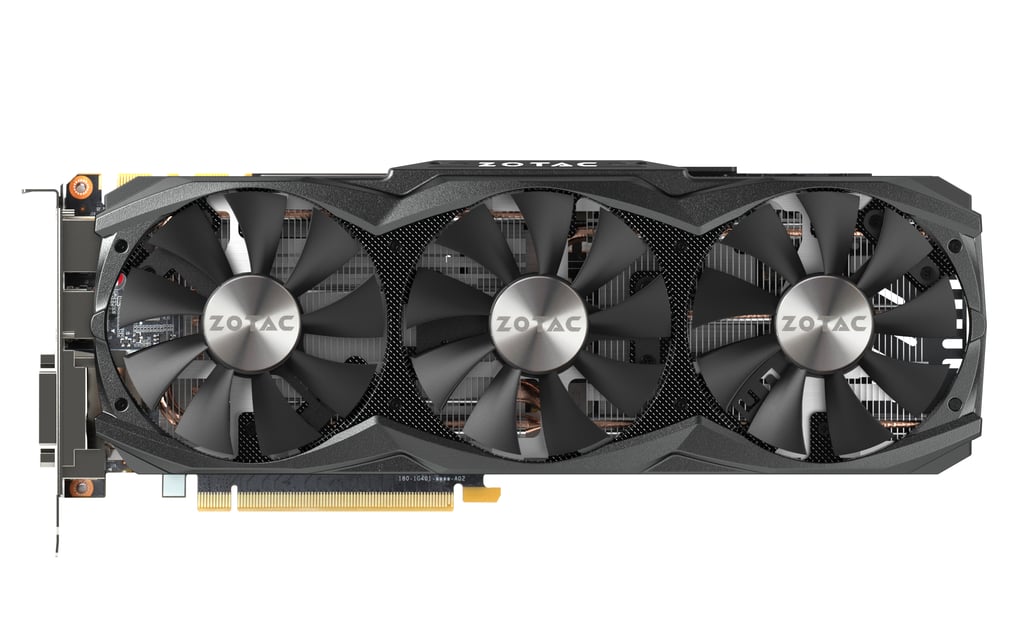
ZOTAC GeForce® GTX 1070

At approximately $459 (typically on the secondary market), the GTX 1070 offers minimal capabilities for machine learning applications. Its primary value lies in providing an essential platform for learning fundamental concepts or working with straightforward models, but serious work will quickly encounter limitations with this hardware.

Optimizing GPU Performance for Machine Learning

Owning powerful hardware is only part of the equation; extracting maximum performance requires understanding how to optimize GPU usage for machine learning workloads.

Effective Strategies for GPU Optimization

Several key strategies can significantly improve GPU utilization and overall performance in machine learning workflows:

Batch Processing: Organizing computations into appropriately sized batches is fundamental to efficient GPU utilization. Batch sizes that are too small underutilize the GPU’s parallel processing capabilities, while excessive batch sizes can exceed memory constraints. Finding the optimal batch size often requires experimentation, as it depends on model architecture, GPU memory capacity, and the specific characteristics of the dataset.

Model Simplification: Not all complexity in neural network architectures translates to improved performance on actual tasks. Techniques like network pruning (removing less important connections), knowledge distillation (training smaller models to mimic larger ones), and architectural optimization can reduce computational requirements without significantly impacting model quality.

Mixed Precision Training: Modern deep learning frameworks support mixed precision training, strategically using lower precision formats (typically FP16) for most operations while maintaining higher precision (FP32) for critical calculations. This approach can nearly double effective memory capacity and substantially increase computational throughput on GPUs with dedicated hardware for FP16 operations, such as NVIDIA’s Tensor Cores.

Monitoring and Profiling: Tools like NVIDIA’s nvidia-smi, Nsight Systems, and PyTorch Profiler provide valuable insights into GPU utilization, memory consumption, and computational bottlenecks. Regular monitoring helps identify inefficiencies and opportunities for optimization throughout the development and deployment lifecycle.

Avoiding Common Bottlenecks

Several common issues can limit GPU performance in machine learning applications:

Data Transfer Bottlenecks: Inefficient data loading can leave GPUs idle while waiting for input. Using SSDs rather than HDDs, implementing prefetching in data loaders, and optimizing preprocessing pipelines can significantly improve overall throughput. In PyTorch, for example, setting appropriate num_workers in DataLoader and using pinned memory can substantially reduce data transfer overhead.

GPU-Workload Mismatch: Selecting appropriate hardware for specific workloads is crucial. Deploying high-end datacenter GPUs for lightweight inference tasks or attempting to train massive models on entry-level hardware represent inefficient resource allocation. Understanding the computational and memory requirements of specific workloads helps select appropriate hardware.

Memory Management: Poor memory management is a common cause of out-of-memory errors and performance degradation—techniques like gradient checkpointing trade computation for memory by recalculating certain values during backpropagation rather than storing them. Similarly, model parallelism (splitting models across multiple GPUs) and pipeline parallelism (processing different batches on different devices) can address memory constraints in large-scale training.

Cloud vs. On-Premise GPU Solutions

The decision to deploy GPUs on-premise or leverage cloud-based solutions involves complex tradeoffs between control, cost structure, scalability, and operational complexity.

FactorOn-Premise GPUsCloud GPUs

CostHigh upfront investmentPay-as-you-go model

PerformanceFaster, dedicated resourcesScalable on demand

ScalabilityRequires hardware upgradesInstantly scalable

MaintenanceRequires in-house managementManaged by cloud provider

On-Premise GPU Deployments

On-premise GPU deployments provide maximum control over hardware configuration, software environment, and security posture. Organizations with consistent, high-utilization workloads often find that the total cost of ownership for on-premise hardware is lower than equivalent cloud resources over multi-year periods.

Key advantages include:

Complete control over hardware selection and configuration

Predictable costs without usage-based billing surprises

Lower latency for data-intensive applications

Enhanced data security and compliance for sensitive applications

No dependency on external network connectivity

However, on-premise deployments also present significant challenges:

High upfront capital expenditure

Responsibility for maintenance, cooling, and power management

Limited elasticity to handle variable workloads

Risk of technology obsolescence as hardware advances

Organizations considering on-premise deployments should carefully evaluate their expected utilization patterns, budget constraints, security requirements, and internal IT capabilities before committing to this approach.

Cloud GPU Solutions

Cloud providers like AWS, Google Cloud Platform, Microsoft Azure, and specialized providers like Cherry Servers offer GPU resources on demand, providing flexibility and eliminating the need for upfront hardware investment.

Key advantages include:

Access to the latest GPU hardware without capital expenditure

Elasticity to scale resources based on actual demand

Reduced operational complexity with provider-managed infrastructure

Simplified global deployment for distributed teams

Pay-as-you-go pricing aligns costs with actual usage

However, cloud solutions come with their considerations:

Potentially higher long-term costs for consistently high-utilization workloads

Limited hardware customization options

Potential data transfer costs between cloud and on-premise systems

Dependency on external network connectivity and service availability

Cloud GPU solutions are particularly advantageous for organizations with variable workloads, limited capital budgets, or rapid deployment and scaling requirements. They also provide an excellent platform for experimentation and proof-of-concept work before committing to specific hardware configurations.

Conclusion

The selection of appropriate GPU hardware for machine learning represents a complex decision involving trade-offs between performance, memory capacity, cost, and operational considerations. As we’ve explored throughout this comprehensive guide, the optimal choice depends significantly on specific use cases, budgetary constraints, and organizational priorities.

For large-scale enterprise deployments and cutting-edge research, datacenter GPUs like the NVIDIA H100 NVL and A100 deliver unparalleled performance and specialized features justifying their premium pricing. For individual researchers, academic institutions, and organizations with moderate requirements, consumer or professional GPUs like the RTX 4090 or RTX A6000 offer excellent performance at more accessible price points.

Beyond hardware selection, optimizing GPU utilization through appropriate batch sizing, mixed-precision training, and efficient data pipelines can significantly enhance performance across all hardware tiers. Similarly, workload characteristics, budget structure, and operational preferences should guide the choice between on-premise deployment and cloud-based solutions.

As machine learning advances, GPU technology will evolve to meet increasing computational demands. Organizations that develop a nuanced understanding of their specific requirements and the corresponding hardware capabilities will be best positioned to leverage these advancements effectively, maximizing the return on their technology investments while enabling innovation and discovery in artificial intelligence.



Source link

Lorraine Kelly forced to apologise as she swears live on GMB: ‘I beg your pardon’

    0
    Lorraine Kelly forced to apologise as she swears live on GMB: ‘I beg your pardon’


    Lorraine Kelly said ‘sorry’ repeatedly as she slipped up on GMB earlier today (Monday March 10) with a rather rude expression.

    The telly host, 65, appeared alongside co-hosts Ed Balls and Susanna Reid during the first instalment of the ITV breakfast series of the week to preview what was coming up on her own show.

    That included a chat with Dancing On Ice winner Sam Aston, as well as an appearance from Poirot star David Suchet.

    But as she provided further details about her plans for her conversation with actor David, Lorraine made use of an inappropriate description which provoked a mild rebuke from GMB’s presenters.

    Lorraine Kelly joined GMB co-hosts Ed Balls and Susanna Reid (Credit: ITV)

    Lorraine Kelly apologises after slipping up on live TV

    Moments earlier, Lorraine weighed in with her thoughts on the previous segment concerning late payment of compensation to victims of the Post Office Horizon scandal.

    “Just give them they’re money for goodness’ sake,” Lorraine insisted. “Stop fannying about.”

    She then proceeded to use some colourful language when noting she’d be asking David for his reaction to “raunchy” new BBC Agatha Christie series Towards Zero.

    Lorraine explained: “So David Suchet is coming in. I’m just wonder what he makes and what Poirot would’ve made of Towards Zero the new Agatha Christie. It’s been called ‘[Beep] Christie’, apparently.”

    Lorraine Kelly looks serious

    ‘Stop fannying about’: Lorraine Kelly had some strong words on GMB today (Credit: ITV)

    ‘Am I allowed to say that?’

    “I beg your pardon?” Susanna spluttered as Lorraine pondered: “Am I allowed to say that?”

    As Ed indicated she wasn’t, Lorraine shrugged off her indiscretion by apologising profusely.

    “Anyway, I apologise. And I apologise again to myself… anyway it is raunchy! I don’t think that you need it, I think the story is fine.”

    She added, chuckling: “Sorry about that.”

    “No, no, you’ve livened it up,” Ed joked.

    And Lorraine went on to faux-protest her innocence: “That wasn’t me that was saying that, it was other people!”

    Over on social media, on X user was amused, posting: “Hahaha! Even the pros slip up! Thank you for the Monday morning giggle! #Lorraine #GMB.”

    Lorraine Kelly chuckles

    Lorraine Kelly laughed off her cheeky slip (Credit: ITV)

    Later, on her show, Lorraine shared further details about how she ended up with a shiner after colliding with a huge ornament at home.

    Speaking with Dr Hilary about the reason behind her recent ‘puffy face’ injury, Lorraine shared how she came a cropper while going about doing domestic chores.

    “Bash! Into that big wooden rhino,” Lorraine explained how her face broke her fall.

    “Rhino 1, me nil,” she joked about the bruising encounter.

    Read more: Lorraine Kelly suffers ‘puffy’ face and ‘big black eye’ after ‘silly’ accident at home

    Good Morning Britain airs on ITV1, weekdays, from 6am. Lorraine, meanwhile, airs from 9am on weekdays.

    YouTube video player

    What do you think of this story? Leave us a comment on our Facebook page @EntertainmentDailyFix and let us know.


    Source link

    Vortex Drives Web3 Innovation At Consensus Hong Kong 2025, Secures Strategic Partnerships And Leads Key Discussions On Web3 Adoption

    Vortex Drives Web3 Innovation At Consensus Hong Kong 2025, Secures Strategic Partnerships And Leads Key Discussions On Web3 Adoption


    In Brief

    Vortex actively participated in Consensus Hong Kong, where its team played a key role in discussions on Web3 adoption, investment trends, and market-making strategies.

    Vortex Drives Web3 Innovation At Consensus Hong Kong 2025, Secures Strategic Partnerships And Leads Key Discussions On Web3 Adoption

    Algorithmic market maker Vortex actively participated in Consensus Hong Kong, where its team played a key role in discussions on Web3 adoption, investment trends, and market-making strategies.

    On February 19th, Vortex served as the title sponsor of the “Meet the VCs” event at Consensus HK, one of the most exclusive investor gatherings at the conference. This event offered a unique opportunity to connect with influential investors in Web3, fostering in-depth discussions on capital allocation, risk management, and the evolving funding landscape for blockchain projects. During the event, Vortex’s team engaged with venture capitalists, project founders, and institutional investors, exploring innovative liquidity strategies and how Vortex is helping projects optimize their token economies.

    Vortex CEO Gleb Gora Highlights Market Liquidity And AI-Driven Solutions At Web3 Adoption Panel

    Vortex also sponsored the “Hack Seasons Conference,” supporting top-tier builders and Web3 innovations. Additionally, its co-founder and CEO, Gleb Gora, took the spotlight on the adoption panel at the event, joining a distinguished group of industry leaders, including Nenter Chow, Head of Portfolio Strategy and Venture Investments at Animoca Brands; Kelvin Koh, Co-founder of Spartan Group; and Maria Shen, General Partner at Electric Capital.

    The panel focused on the challenges and drivers of Web3 adoption, covering topics such as institutional involvement, infrastructure development, and user experience obstacles. Gleb Gora highlighted the pivotal role of market liquidity in fostering ecosystem growth, explaining that well-structured liquidity programs can reduce volatility, improve price stability, and build trust with both retail and institutional investors.

    Another key topic discussed was the increasing use of AI-driven trading and liquidity management solutions in the cryptocurrency market. Gleb Gora shared how Vortex utilizes advanced AI models to optimize trade execution, narrow spreads, and enhance market efficiency for emerging token projects.

    The discussion also touched on the search for a new narrative within Web3, particularly regarding which types of projects are likely to thrive in 2025. Gleb Gora highlighted the growing significance of real-world asset (RWA) projects, pointing out their potential to connect traditional finance with blockchain technology. He noted that institutional interest in tokenized assets, on-chain securities, and blockchain-based commodities is increasing, opening up new opportunities for liquidity solutions that can bridge Web3 and traditional markets.

    Vortex Secures Strategic Partnerships And Onboards New Clients 

    In addition to its involvement in panels and sponsorships, Vortex successfully secured multiple strategic partnerships and onboarded several new clients during the conference, further strengthening its position in the market and expanding its service offerings. Vortex highlighted that key takeaways from these partnership discussions included the development of customized liquidity frameworks designed to meet the specific needs of projects at various stages of growth. The team is also focused on strengthening cross-exchange market-making efforts by partnering with major exchanges to improve liquidity distribution across multiple trading venues. Furthermore, Vortex addressed the evolving regulatory landscape, emphasizing the importance of incorporating best-in-class compliance measures into their liquidity solutions to mitigate risk.

    Consensus Hong Kong 2025 reinforced Vortex’s commitment to driving innovation within the Web3 space through strategic market-making, active industry engagement, and the use of advanced technology. With new partnerships secured, expanded client relationships, and valuable insights gained from the event, Vortex is now better equipped to navigate the next phase of growth in the digital asset space. Looking forward, the project noted that it remains focused on providing high-impact liquidity solutions, fostering deeper industry collaborations, and continuing to educate the market on the essential role that market makers play in Web3 adoption.

    Disclaimer

    In line with the Trust Project guidelines, please note that the information provided on this page is not intended to be and should not be interpreted as legal, tax, investment, financial, or any other form of advice. It is important to only invest what you can afford to lose and to seek independent financial advice if you have any doubts. For further information, we suggest referring to the terms and conditions as well as the help and support pages provided by the issuer or advertiser. MetaversePost is committed to accurate, unbiased reporting, but market conditions are subject to change without notice.

    About The Author


    Alisa, a dedicated journalist at the MPost, specializes in cryptocurrency, zero-knowledge proofs, investments, and the expansive realm of Web3. With a keen eye for emerging trends and technologies, she delivers comprehensive coverage to inform and engage readers in the ever-evolving landscape of digital finance.

    More articles


    Alisa Davidson


    Alisa, a dedicated journalist at the MPost, specializes in cryptocurrency, zero-knowledge proofs, investments, and the expansive realm of Web3. With a keen eye for emerging trends and technologies, she delivers comprehensive coverage to inform and engage readers in the ever-evolving landscape of digital finance.


    More articles


    Source link

    PGA Tour Launches Virtual Golf Challenge on Roblox – Cryptoflies News

    0
    PGA Tour Launches Virtual Golf Challenge on Roblox – Cryptoflies News


    5

    The PGA Tour is expanding into the metaverse with the launch of the “Ultimate Golf Simulator” on Roblox. 

    This new experience, created in partnership with PING, First Tee, and The Gang, allows users to take part in a virtual “hole-in-one” challenge alongside PGA TOUR professionals Viktor Hovland and Austin Eckroat. 

    The game offers an in-game competition where players try to score as many holes-in-one as possible. Those who succeed will earn virtual rewards and exclusive wearables inspired by PGA TOUR tournaments. There will also be a virtual merchandise store offering themed apparel, including limited-edition items from creators like Bob Does Sports and Breezy Golf.

    Scheduled to officially launch on March 19, the simulator is designed to engage a younger audience. “Our goal is to connect with the next generation of golf enthusiasts,” said John K. Solheim, CEO & President of PING. “The PGA Tour Ultimate Golf Simulator presents an innovative way to introduce the game to a broader audience in an interactive format.”

    This move into Roblox is the PGA Tour’s second attempt to engage the platform’s users, following the release of “PGA Tour Scramble” during the 2023 FedExCup Playoffs. 

    You Might Be Interested In

    The PGA Tour’s metaverse journey began in 2022 when it filed trademark applications related to NFTs and the metaverse. In 2023, the PGA Tour partnered with DraftKings to launch an NFT-based fantasy golf game, allowing fans to collect digital cards and participate in contests.

    This initiative is part of a broader trend where sports organizations are using digital platforms to reach younger fans. According to research from the PGA TOUR’s Fan Forward initiative, younger audiences are increasingly drawn to interactive digital experiences. In 2024, Roblox users spent over 500 million hours in sports-related games, marking a 26% year-over-year increase.


    Source link

    Trump’s Crypto Summit Paves the Way for a Thriving New Era in the Industry – Web3oclock

    0
    Trump’s Crypto Summit Paves the Way for a Thriving New Era in the Industry – Web3oclock


    Source link

    Sudowrite Introduces Muse: An AI Model For Fiction Writing With Advanced Storytelling And Chapter-Length Focus

    Sudowrite Introduces Muse: An AI Model For Fiction Writing With Advanced Storytelling And Chapter-Length Focus


    In Brief

    Sudowrite has introduced Muse, a new AI model trained for fiction writing, featuring advanced storytelling capabilities and extended attention for chapter-length outputs.

    Sudowrite Introduces Muse: An AI Model For Fiction Writing Developed With Insights From Over 20,000 Authors

    Company developing generative AI tools for writers, Sudowrite announced that it has introduced Muse, a new AI model specifically designed for fiction writing. 

    By focusing exclusively on fiction, Muse achieves a higher level of quality compared to more generalized models. It generates unique prose each time, with Sudowrite actively measuring and removing AI clichés during its training to ensure fresh, original output. Furthermore, Muse operates without filters, embracing the full spectrum of human experience, including complex and mature themes like violence and adult content. 

    The opening line of a story is crucial, and Muse is specifically designed to craft powerful, attention-grabbing beginnings. With a focus on creating high-quality fiction, Muse is tailored to write engaging narratives rather than content such as emails, sales copy, or meeting memos. It is also capable of handling longer, more detailed outputs, making it ideal for writing entire chapters, rather than just short snippets. The new AI model is trained to maintain the flow and engagement over larger sections of text, ensuring that the story continues to captivate readers throughout.

    Muse is available in multiple modes, including Draft, Write, and Expand, and also powers the Synopsis feature in the Story Bible. Currently optimized for the English language, Muse can generate text in other languages but may require additional prompting to do so consistently. 

    In the Draft mode, Muse can write up to approximately 10,000 words at a time and can read up to 128,000 words in the document. In the Write mode, it functions similarly to other writing models.

    What Is Sudowrite? 

    Sudowrite is an AI-powered writing assistant created specifically for fiction writers. It offers a variety of features, including brainstorming tools, story outlining, and manuscript editing, all designed to enhance creativity and productivity. 

    The platform leverages multiple AI models, including the latest Claude models by Anthropic, various open-source models, in-house models, and several variants of GPT-4, which are transformer models developed by OpenAI.  Importantly, Sudowrite is designed to avoid plagiarism unless explicitly instructed to do so by the user. The AI generates text by predicting one word at a time based on general concepts it has learned from numerous text samples. This approach makes it highly unlikely for the AI to produce identical or verbatim content. 

    Disclaimer

    In line with the Trust Project guidelines, please note that the information provided on this page is not intended to be and should not be interpreted as legal, tax, investment, financial, or any other form of advice. It is important to only invest what you can afford to lose and to seek independent financial advice if you have any doubts. For further information, we suggest referring to the terms and conditions as well as the help and support pages provided by the issuer or advertiser. MetaversePost is committed to accurate, unbiased reporting, but market conditions are subject to change without notice.

    About The Author


    Alisa, a dedicated journalist at the MPost, specializes in cryptocurrency, zero-knowledge proofs, investments, and the expansive realm of Web3. With a keen eye for emerging trends and technologies, she delivers comprehensive coverage to inform and engage readers in the ever-evolving landscape of digital finance.

    More articles


    Alisa Davidson


    Alisa, a dedicated journalist at the MPost, specializes in cryptocurrency, zero-knowledge proofs, investments, and the expansive realm of Web3. With a keen eye for emerging trends and technologies, she delivers comprehensive coverage to inform and engage readers in the ever-evolving landscape of digital finance.


    More articles


    Source link

    Popular Posts

    My Favorites